
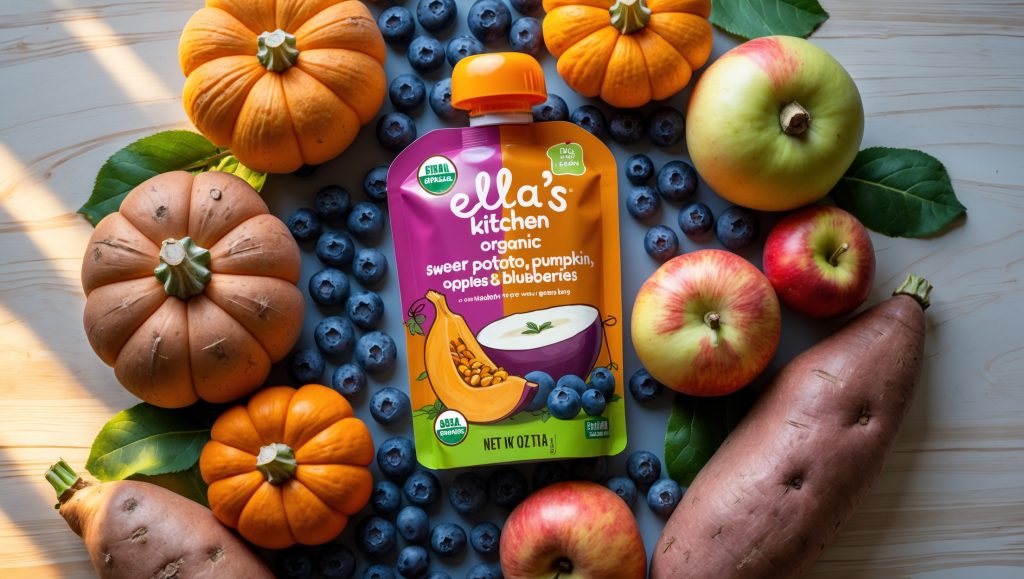
Overview
Ella’s Kitchen has built a reputation for creating organic, flavor-forward baby foods that appeal to both parents and curious little eaters. Their Organic Sweet Potato, Pumpkin, Apples & Blueberries Baby Food Pouch stands out for its bold color, balanced ingredient blend, and sensory-pleasing flavors. Designed for babies starting solids and older, this pouch aims to introduce diverse tastes and nutrients in a convenient, mess-free format. In this review, we explore how this product fits into the world of sensory play, nutrition, and everyday family life in 2025.
Ingredients & Nutrition
This pouch features a thoughtfully curated blend of organic vegetables and fruits:
- Organic sweet potatoes
- Organic pumpkins
- Organic apples
- Organic blueberries
- A dash of lemon juice concentrate (for freshness)
All ingredients are USDA Organic Certified and non-GMO. There are no added sugars, salts, artificial flavors, or preservatives. Each pouch (4 oz/113g) contains approximately:
- Calories: 60
- Carbohydrates: 14g (including 9g natural sugars)
- Fiber: 2g
- Protein: 1g
- Fat: 0g
- Vitamin A (from sweet potato and pumpkin): 70% DV
- Vitamin C: 15% DV
This blend delivers a spectrum of nutrients, especially Vitamin A and C, supporting immune health and vision. The high vegetable content offers variety beyond typical fruit-only purees, while the fruit balances the flavor.
Taste & Texture
The combination of sweet potato, pumpkin, apple, and blueberry creates a vibrant orange-purple hue with a naturally sweet and subtly earthy aroma. On tasting, the pouch delivers a gentle sweetness from apple and blueberry, layered with the creamy smoothness and slight earthiness of sweet potato and pumpkin. The puree is silky and well-blended with a very mild, fine texture—no chunks, making it suitable for babies just starting solids and those progressing to more complex flavors.
Parents have remarked that the flavor profile is approachable for babies while still introducing less common tastes (like pumpkin) in a familiar, fruit-forward way. Some parents even use a small spoon to encourage self-feeding, allowing for a sensory experience in both taste and touch.
Convenience & Storage
One of the strengths of Ella’s Kitchen pouches is their grab-and-go design. The resealable cap makes it simple to portion out feeds and store leftovers in the refrigerator for up to 24 hours after opening. The pouch is lightweight, fits easily in diaper bags, and is ideal for travel or on-the-go meals. No refrigeration is required until opened, and the pouch is shelf-stable for months, making bulk storage practical for busy families.
The squeezable pouch allows for direct feeding or spoon use, depending on your baby’s developmental stage and your preference. The packaging is BPA-free and designed for minimal mess, though always supervise babies when feeding from a pouch.
Pros & Cons
Pros
- USDA Organic and non-GMO certified ingredients
- Balanced blend of vegetables and fruits for taste and nutrition
- No added sugars, salt, or artificial additives
- Smooth, approachable texture for new eaters
- Shelf-stable, portable, and convenient for busy families
- Supports sensory exploration with vibrant color and flavor variety
Cons
- Contains natural sugars from fruit—may be sweeter than some parents prefer
- Pouch feeding may discourage spoon skills if overused
- Not suitable for babies with certain allergies (e.g., pumpkin or blueberry sensitivity)
- Price is higher than some conventional brands
Alternatives & Similar Products
Parents seeking similar blends or alternatives may wish to explore:
- Peter Rabbit Organics Sweet Potato, Corn & Apple – Another organic pouch with a veggie and fruit blend, but no pumpkin or blueberry.
- Gerber Organic 2nd Foods Pumpkin, Banana & Carrot – For babies ready for thicker purees and a different mix of veggies and fruits.
- Plum Organics Stage 2 Apple & Carrot – A simpler blend, suitable for earlier stages or babies with food sensitivities.
- Homemade veggie-fruit purees – For parents who prefer to make their own blends and control texture and ingredient sourcing.
When choosing alternatives, look for blends that balance vegetables and fruits, avoid added sugars or salt, and match your baby’s developmental stage and dietary needs.
Verdict
Ella’s Kitchen Organic Sweet Potato, Pumpkin, Apples & Blueberries Baby Food Pouch is a standout choice for families seeking variety, nutrition, and convenience. Its vibrant flavor and color encourage sensory exploration, while the balanced ingredient list supports a diverse palate from an early age. The smooth texture is ideal for babies just starting solids, and the on-the-go pouch format suits modern family life. While the price may be higher than non-organic alternatives, the quality of ingredients and thoughtful blend justify the investment for many parents.
For caregivers focused on introducing new flavors and textures in a safe, convenient, and sensory-rich way, this pouch deserves a place in your baby’s mealtime rotation.
FAQ
+Is this pouch suitable for babies just starting solids?
+Does the pouch contain any common allergens?
+How long can I store the pouch after opening?
+Can this pouch be used for sensory play or self-feeding?
+Is this product recyclable?
+Does it require refrigeration before opening?
+Can older kids or toddlers enjoy this pouch?

Ella’s Kitchen Organic Sweet Potato, Pumpkin, Apples & Blueberries Baby Food Pouch is a vibrant, thoughtfully crafted choice for parents seeking wholesome nutrition for their little ones. This blend stands out for its unique combination of sweet potato and pumpkin—both rich in vitamins and fiber—balanced with the natural sweetness of apples and blueberries. The result is a flavor profile that gently introduces babies to a wider range of tastes, encouraging adventurous eating from the start.
Parents will appreciate the organic ingredients and the absence of added sugars or artificial additives, making this pouch a trustworthy option for developing palates. The smooth texture is ideal for babies exploring solids, while the convenient, mess-free pouch design supports on-the-go feeding. Ella’s Kitchen also prioritizes sustainability, with packaging that reflects a commitment to environmental responsibility.
In a market crowded with repetitive flavors, this inventive mix helps expand your baby’s food horizons while delivering essential nutrients. For parents eager to nurture healthy eating habits and curiosity in their children, Ella’s Kitchen offers both peace of mind and a splash of color at mealtime.
- Organic, nutrient-rich ingredients with no added sugar
- Unique flavor blend encourages adventurous eating
- Convenient, eco-conscious pouch for easy feeding
- Supports healthy development and taste exploration
With the pouch being shelf-stable, how long would it keep unopened in a typical pantry, and would bulk buying several at a time for busy weeks be reasonable in terms of freshness and safety?
You’re being thoughtful about both convenience and your baby’s safety. Unopened Ella’s Kitchen pouches are usually shelf-stable for 9–12 months; check the best-before date printed on each pouch and store them in a cool, dry pantry away from direct sunlight. Buying in bulk can work well if you rotate your stock, using the oldest pouches first. Never use a pouch past its expiration date or if it’s bloated, leaking, or smells off when opened. Always supervise babies when feeding directly from a pouch. This isn’t medical advice; if you’re concerned, check in with your pediatrician.
For parents with early risers, do you have suggestions for integrating this pouch into a quiet morning routine without making a mess or waking up the rest of the family? I am looking for low-key activities that keep my baby settled while still introducing new flavors.
Early mornings with a wakeful baby can be tough, and it’s great you want to keep things calm and tidy. Try offering the Ella’s Kitchen pouch while your baby sits in a high chair near you, perhaps with soft music or a dim light on. Let your baby practice self-feeding with the pouch if they are developmentally ready, but supervise closely to avoid spills and choking. You can also use a silicone spoon to offer small tastes directly from the pouch. For quiet engagement, bring out a favorite board book or soft toy for gentle distraction. This isn’t medical advice; if you’re concerned, check in with your pediatrician.
I noticed the pouch is recommended for babies starting solids and older. Would it be suitable for my toddler as a recurrent snack at daycare, or do you think the texture and portion size are more targeted for younger infants?
You’re thoughtful to consider whether this pouch is right for your toddler’s needs. The smooth texture and small portion size are designed for babies just starting solids, but older toddlers can still enjoy these pouches, especially if they like pureed textures. For a more satisfying snack, you could pair the pouch with finger foods like whole grain crackers or banana slices. Always supervise your child while eating pouches to prevent choking. Check the ingredients for any potential allergens, and make sure your toddler’s diet offers opportunities to practice chewing and try varied textures. This isn’t medical advice; if you’re concerned, check in with your pediatrician.
Could I pack this pouch in my diaper bag for daycare and have it stay safe at room temperature until lunchtime, or does it need to be refrigerated as soon as we leave the house in the morning?
It’s great you’re thinking about keeping your baby’s food safe and fresh. Most baby food pouches like Ella’s Kitchen are shelf-stable until opened, so you can keep the unopened pouch in your diaper bag at room temperature until lunchtime. Once opened, it should be refrigerated and used within 24 hours. Double-check the packaging for specific directions, as some varieties may have unique storage needs. Always supervise your child while eating and be cautious if the pouch looks damaged or swollen. This isn’t medical advice; if you’re concerned, check in with your pediatrician.
My toddler is very sensitive to new textures and strong flavors. From your experience, is this Ella’s Kitchen pouch gentle enough for picky eaters or those with sensory processing challenges, or would you recommend introducing it more gradually alongside plainer options?
It’s completely understandable to want gentle, positive experiences with food for your sensitive toddler. The Ella’s Kitchen pouch features a smooth, puree-like texture, which many picky eaters find easier to manage, but it does combine several flavors that might taste strong to a child with sensory sensitivities. I suggest offering a small spoonful alongside a familiar, milder puree at first, observing your toddler’s response without pressure. You could also let your child explore the pouch by smelling or touching it before tasting. Always supervise closely and check the ingredients for any personal allergens. This isn’t medical advice; if you’re concerned, check in with your pediatrician.
The review talks about a mix of sweet potato, pumpkin, apples, and blueberries. Are there similar organic pouches from Ella’s Kitchen or other brands with comparable vegetable content but at a lower price point?
It makes sense to want nutritious options that fit your budget. You can look for pouches labeled as Stage 2 or 3 with mixed vegetables and fruits—many brands, including store brands, offer combos with sweet potato, pumpkin, or squash blended with apple or berries. Always check the ingredient list to compare vegetable content and ensure there are no added sugars. For infants under 12 months, verify that the pouch is age-appropriate and watch for potential allergens. If price is a big concern, you might also consider making simple purees at home. This isn’t medical advice; if you’re concerned, check in with your pediatrician.
I have been looking for ways to add more vegetable flavors to my toddler’s snacks. If my child is sensitive to textures, are there any Montessori-inspired tips for using this puree beyond just serving it from the pouch to help with sensory exploration?
It’s great that you want to introduce more vegetable flavors and support your child’s sensory exploration. For a texture-sensitive toddler, try offering the puree on a shallow plate with a child-sized spoon so they can practice touching and scooping at their own pace. You could also let them dip soft, safe finger foods like banana slices or teething crackers into the puree, encouraging gentle exposure to new textures. For a Montessori touch, invite your child to help squeeze the pouch into a small bowl, fostering independence. Always supervise closely to ensure safety and watch for any allergic reactions. This isn’t medical advice; if you’re concerned, check in with your pediatrician.
My toddler can be very sensitive to certain textures and strong flavors, and sometimes even the color of foods puts them off. Does this recipe have more of an earthy taste from the pumpkin and sweet potato, or do the apple and blueberry dominate? I’d love to know what to expect before trying it.
It’s completely understandable to want to know what flavors and textures to expect when introducing new foods to a sensitive toddler. Based on the review, this pouch blends the earthy notes of sweet potato and pumpkin with the naturally sweet and tangy flavors of apple and blueberry. The fruit tends to soften the overall taste, making it mildly sweet rather than strongly earthy. The texture is smooth and pureed, designed for toddlers, but you can try a small taste yourself first. If your child reacts to color, you might notice a gentle orange-purple hue. This isn’t medical advice; if you’re concerned about allergies or sensitivities, please check with your pediatrician.
With so much focus on convenient pouches, do you think products like this can replace sit-down spoon feeding in terms of supporting developmental skills, or should they really be used alongside other mealtime routines?
You’re right to think about how feeding methods impact your baby’s development. While pouches like Ella’s Kitchen are a handy option, it’s important to also include traditional spoon feeding and shared mealtimes. Try offering purees from a spoon to encourage oral motor skills, and let your baby self-feed with safe finger foods for hand-eye coordination. Supervised family meals support social and language development. Pouches can be part of a varied routine but shouldn’t fully replace interactive feeding. This isn’t medical advice; if you’re concerned, check in with your pediatrician.
Since the article mentions using a spoon to encourage self-feeding, do you recommend removing the cap completely during serving, or is it safer to keep it out of reach as soon as you open the pouch?
—keeping feeding time safe is so important. After opening the pouch, it’s best to remove the cap completely and place it well out of your baby’s reach. The small cap poses a choking hazard, especially for babies and toddlers who love exploring objects with their mouths. Offer the food on a spoon or let your baby try self-feeding with appropriate toddler utensils while you supervise closely. Always check the texture and temperature before serving. This isn’t medical advice; if you’re concerned, check in with your pediatrician.
Since the pouch contains apples and blueberries along with vegetables, is there any chance the natural sugars could make a baby expect sweeter tastes and reject more savory traditional dishes my family sometimes serves?
It’s a thoughtful question to wonder how fruit-based baby foods might influence your child’s taste preferences. To help your baby enjoy both sweet and savory flavors: 1) Offer a variety of foods, including plain vegetables and more savory dishes, alongside fruit-based options. 2) Introduce new flavors gradually, repeating exposures even if your baby refuses at first. 3) For babies around 6 months and up, serve homemade purees or mashed family foods when possible, so your child gets used to the flavors your family enjoys. 4) Always supervise meals and check for allergens. This isn’t medical advice; if you’re concerned, check in with your pediatrician.
How does this Ella’s Kitchen pouch compare nutritionally and in taste to making homemade blends at home, especially for parents trying to balance convenience with variety?
It’s understandable to want both nutritious and convenient options for your baby. The Ella’s Kitchen pouch offers a consistent blend of fruits and veggies with no added sugar or salt, which is similar to many homemade purees, though homemade blends let you control texture, flavor combinations, and ingredient freshness. If variety is your goal, you might rotate between pouches and simple homemade mixes, or add a spoonful of yogurt or grains to the pouch for new flavors. Always check labels for allergens and supervise eating to avoid choking. This isn’t medical advice; if you’re concerned, check in with your pediatrician.
I noticed the pouch is shelf-stable for months, but if I were to buy in bulk for our family, what’s the best way to organize and rotate these at home to make sure we use them before they expire?
It’s great that you’re thinking ahead to keep your baby’s food fresh and safe. First, store unopened pouches in a cool, dry place out of direct sunlight. Arrange them in a bin or basket with the earliest expiration dates at the front—use these first. Set a reminder to check your stash monthly and move newer pouches behind older ones. Avoid stacking too high so pouches aren’t damaged. Always check for a swollen pouch or odd smell before serving. This isn’t medical advice; if you’re concerned, check in with your pediatrician.
When my 4-year-old wants a snack while watching a short episode on TV, would it be better to offer this Ella’s Kitchen pouch during screen time, or should I keep snacks like this only for unplugged moments? I want to encourage mindful eating but also make things practical.
You’re thoughtful to want mindful eating while keeping things practical for your child. For a 4-year-old, it helps to encourage eating at the table without screens, so they can focus on their hunger cues and enjoy the flavors and textures—even with a convenient pouch like this. If you do offer a snack during screen time, sit with your child and chat about the food to bring some awareness. Try to reserve at least some snack times for unplugged moments to build healthy habits. Be sure to supervise for safety, as squeezing too quickly can lead to choking. This isn’t medical advice; if you’re concerned, check in with your pediatrician.
Budget-wise, would you say buying these pouches in bulk makes sense for families who want quick bedtime snacks? Or are there other, more affordable options with similar calming flavors and nutrient blends?
It’s smart to look for budget-friendly ways to offer nutritious quick snacks at bedtime. Buying Ella’s Kitchen pouches in bulk can lower the price per pouch, but costs can still add up over time. You might also try making your own puree blends using sweet potato, pumpkin, and apple at home if you have the time—these can be prepared in batches and frozen in small portions. Plain applesauce, mashed banana, or yogurt (if dairy is safe and age-appropriate) are gentle, affordable alternatives. Always supervise little ones when eating, especially under 12 months, and check texture for safety. This isn’t medical advice; if you’re concerned, check in with your pediatrician.
When introducing diverse flavors like pumpkin and sweet potato alongside toy rotation at home, is it helpful to include toys that match the colors or textures of foods my baby is trying? Would that support sensory development?
Your idea to pair food exploration with toys that match in color or texture is both creative and supportive of sensory development. Try offering safe, age-appropriate toys in shades of orange or with soft, bumpy textures during mealtime or play. Show your baby how to touch and observe these toys while tasting new foods. Keep all toys clean and free of small parts or choking hazards. Rotate in a variety of colors and sensory experiences to keep things interesting. This isn’t medical advice; if you’re concerned, check in with your pediatrician.
Our budget is pretty tight right now, so I’m trying to figure out if these pouches are cost-effective for daily use compared to other brands or making purees at home. Do you have any insights on how long one pouch realistically lasts with a 7-month-old?
It’s very thoughtful to consider both nutrition and budget when feeding your baby. For a 7-month-old, one Ella’s Kitchen pouch typically provides one meal or two small servings, depending on your baby’s appetite. Most babies at this age might eat about half a pouch at a time, but some finish a whole pouch in one sitting. If you’re using these daily, costs can add up compared to making purees at home, though pouches offer convenience and less prep time. Be sure to refrigerate any opened, unused portion and use within 24 hours for safety. This isn’t medical advice; if you’re concerned, check in with your pediatrician.
My 14-month-old is really suspicious of anything too orange or purple in color. Has anyone found that the bright color of this pouch makes babies more or less interested in trying it? I am curious how the hue affects first impressions at this age.
It’s completely normal for toddlers to be cautious about unfamiliar or brightly colored foods. At 14 months, children often rely on sight just as much as taste, so a vivid orange or purple pouch can sometimes trigger hesitation. Try serving a small amount alongside a familiar food, or let your child touch and play with the pouch first. You could also mix a little of the puree into something they already enjoy, gradually increasing the portion. Always supervise to ensure safety, and remember, repeated gentle exposure usually helps. This isn’t medical advice; if you’re concerned, check in with your pediatrician.
Can you suggest how to work this pouch into a daily snack routine without overdoing the fruit sugars? I am trying to balance convenience with a varied diet for my two-year-old.
It’s thoughtful that you’re aiming for both convenience and a balanced diet for your toddler. To use Ella’s Kitchen pouch as a snack, try offering half a pouch with a protein-rich food like yogurt or cottage cheese to balance the fruit sugars. Rotate with veggie-forward snacks—think cucumber slices or hummus with whole-grain crackers. Limit the pouch to once per day and offer water instead of juice. Always supervise your two-year-old while eating and check for any sensitivities to ingredients. This isn’t medical advice; if you’re concerned, check in with your pediatrician.
Sometimes my child gets overwhelmed if snack time feels rushed or messy. Is there a preferred routine or way to offer this pouch to help reduce stress and support positive feeding experiences?
It’s understandable to want snack times to be calm and enjoyable for your child. Try offering the pouch in a quiet spot, away from distractions, and give your child a few minutes to settle before you begin. Let them hold or explore the pouch at their own pace—this can help them feel more in control. Keep wipes handy for quick clean-ups, and use a bib or mat to catch spills. For younger babies, supervise closely to ensure safe eating and avoid choking. This isn’t medical advice; if you’re worried about feeding habits, check in with your pediatrician.
We’re trying to keep our grocery budget tight with twins. Would buying these Ella’s Kitchen pouches in bulk save much, and do they really stay fresh for months unopened? Any tips for storing a larger supply?
It makes sense to look for savings when feeding twins, and buying pouches in bulk can sometimes help. Ella’s Kitchen pouches usually have a long shelf life unopened—often up to a year—but always check the expiration date. Store unopened pouches in a cool, dry place away from sunlight, and keep them out of reach of little hands. Rotate your stock so older pouches get used first. Once opened, refrigerate and use within 24 hours. This isn’t medical advice; if you have concerns about storage or freshness, your pediatrician can help.
For a 10-month-old who still struggles with chunkier textures, is it better to stick with purees like this pouch or should I sometimes try mashing whole foods to help my baby progress with textures?
It’s understandable to want to help your 10-month-old get comfortable with new textures. You can continue offering smooth purees like the Ella’s Kitchen pouch, but also gradually introduce gently mashed foods—things like soft, fork-mashed sweet potato or ripe banana—alongside purees. Start with a very soft, lumpy texture and small amounts, watching closely to ensure safe swallowing. Always supervise and avoid foods that could be choking hazards. Over time, increasing texture helps babies build oral skills, but every child progresses at their own pace. This isn’t medical advice; if you’re concerned, check in with your pediatrician.
How could I introduce this pouch and its vibrant colors as part of a sensory play activity for my baby, especially if they tend to be sensitive to new textures or strong smells?
It’s wonderful that you want to make new foods a fun, low-pressure experience for your sensitive baby. Start by letting your baby look at the unopened pouch, noticing its bright packaging and colors. Next, squeeze a small amount onto a clean plate or tray and let your baby touch it with a spoon or their fingers—no need to eat it right away. Talk about the colors and squishy feel together, and keep the activity short and positive. For babies under one, always supervise closely and watch for any reactions. This isn’t medical advice; if you’re concerned, check in with your pediatrician.
For parents managing a tight grocery budget, do you suggest rotating budget-friendly homemade purees with store-bought pouches like Ella’s Kitchen? How might this approach impact a baby’s acceptance of new flavors during toy and feeding rotations?
Balancing nutrition and budget is a very real concern for many parents. Rotating homemade purees with store-bought options like Ella’s Kitchen can be a sensible approach. Try preparing simple purees using seasonal produce and gradually introduce pouches with novel flavors to keep things interesting. Offer familiar and new tastes side by side, and let your baby explore different textures during both play and mealtime. Always supervise closely, especially with new foods, and watch for any allergies. This flexible routine can help your baby become more open to new flavors over time. This isn’t medical advice; if you have concerns about feeding or nutrition, please consult your pediatrician.