
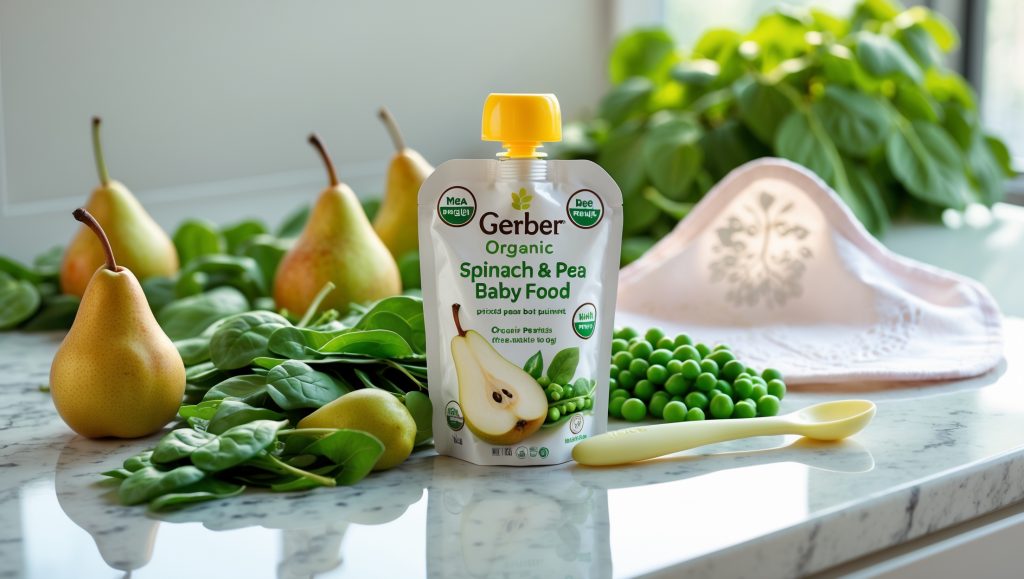
Overview
Finding a nutrient-rich, palatable green veggie blend can be a challenge for families introducing solids. Gerber’s Organic Pear, Spinach & Pea Baby Food Pouch is designed for babies 6 months and older, offering a gentle introduction to leafy greens with the sweetness of pear and the earthy undertones of spinach and peas. This review covers every aspect of this popular U.S. baby food pouch, from its ingredient profile to its real-world convenience and storage, and helps families decide if it’s a fit for their routine.
Ingredients & Nutrition
Ingredients: Organic pear puree, organic spinach puree, organic pea puree, ascorbic acid (Vitamin C to maintain color and freshness), and citric acid.
Gerber prioritizes organic produce, with no added sugars, artificial colors, or preservatives. The ingredient list is short and transparent, which appeals to parents seeking whole, minimally processed options.
Nutrition Highlights (per pouch, 3.5 oz/99g):
- Calories: 60
- Total Sugars: 10g (naturally occurring from fruit and vegetables)
- Dietary Fiber: 2g
- Protein: 1g
- Fat: 0g
- Sodium: 10mg
- Vitamin C: 25% Daily Value
- Iron: 2% Daily Value
This pouch delivers vitamin C to support iron absorption and immune function, and provides a modest amount of fiber for digestive health. The blend is naturally sweetened by pear, making it approachable for babies who are just starting to taste green vegetables.
Taste & Texture
Gerber’s Pear, Spinach & Pea blend has a smooth, pourable puree consistency. The flavor profile leans primarily sweet from the pear, with subtle green notes from spinach and pea. This makes it a gentle way to introduce leafy greens without an overpowering “vegetable” taste, which can help minimize resistance from babies new to these flavors.
Parents often report that babies accept this pouch more readily than straight green vegetable purees. The texture is ideal for spoon-feeding or self-feeding from the pouch (with supervision), and it’s free from lumps or grittiness.
Convenience & Storage
The squeeze pouch format is well-suited for families on the go. It doesn’t require refrigeration until opened and is easy to pack in a diaper bag or lunchbox. The twist-off cap is large enough to avoid choking hazards, but supervision is still recommended.
After opening, any unused portion can be refrigerated and should be consumed within 24 hours. The pouch is not designed for microwaving or freezing, though the puree can be squeezed onto a spoon or into a bowl for portioning.
The pouch is lightweight, non-breakable, and resealable, making it practical for travel, daycare, or quick meals at home.
Pros & Cons
Pros
- Certified organic fruits and vegetables
- No added sugar, artificial colors, or preservatives
- Gentle, naturally sweet flavor encourages acceptance of greens
- Portable, resealable pouch ideal for on-the-go feeding
- Simple, transparent ingredient list
- Widely available at national retailers and online
Cons
- Primarily fruit-based, so lower in vegetable content than some savory blends
- Single-serve pouches can be less eco-friendly
- Texture may be too thin for older toddlers seeking more complex foods
- Not suitable for babies with pear, pea, or spinach allergies
Alternatives & Similar Products
Families looking for similar blends may consider:
- Beech-Nut Naturals Just Spinach, Zucchini & Peas – A veggie-forward option with minimal fruit content for a more savory experience.
- Earth’s Best Organic Sweet Potato & Spinach – Combines leafy greens with sweet potato for a different taste and texture.
- Happy Baby Organics Pears, Kale & Spinach – Includes kale for an extra green boost, with similar sweetness from pears.
- Homemade Purees – For parents who prefer to make baby food at home, blending steamed spinach, peas, and pears can offer a fresh alternative.
Each alternative has unique attributes, whether it’s a higher vegetable content, an emphasis on different greens, or a thicker consistency for more advanced eaters.
Verdict
Gerber Organic Pear, Spinach & Pea Baby Food Pouch stands out as a mild, approachable way to help babies develop a taste for green vegetables. The blend’s gentle sweetness, organic sourcing, and convenient packaging make it a reliable staple for families seeking nutritious options without added sugars or preservatives. While it may not satisfy older toddlers or those ready for chunkier meals, it’s an excellent choice for introducing solids and building a foundation for healthy eating habits.
Families who value convenience, transparency, and a positive first experience with greens will appreciate this pouch. As with all baby foods, rotating in a variety of flavors and textures is recommended to support broad palate development.
FAQ
+Is Gerber Organic Pear, Spinach & Pea suitable as a first food?
+Does this pouch contain any added sugars or salt?
+Can I freeze the pouch for later use?
+How long does the pouch last once opened?
+Is the pouch recyclable?
+Can my baby self-feed from the pouch?
+Does this pouch contain common allergens?

Gerber Organic Pear, Spinach & Pea Baby Food Pouch is an excellent choice for parents looking to introduce their little ones to green vegetables in a gentle, approachable way. The combination of sweet pear with the mild flavors of spinach and pea creates a balanced taste that appeals to babies’ developing palates, making those first “green” experiences positive rather than daunting. As a parent, I appreciate that the pouch is USDA certified organic and contains no added sugars, artificial flavors, or preservatives, giving peace of mind about what goes into my child’s body.
The texture is smooth and easy for babies to swallow, and the convenient pouch design makes feeding on-the-go simple and mess-free. The subtle green color may even help set the stage for accepting a wider variety of vegetables later on. Gerber’s thoughtful blend ensures that nutrition isn’t sacrificed for taste, providing a source of Vitamin C and fiber while being gentle on tiny tummies. For parents navigating the early stages of solids, this baby food pouch strikes a wonderful balance between nutrition, convenience, and baby-friendly flavor.
- USDA certified organic with no added sugars
- Sweet, mild taste encourages acceptance of greens
- Convenient, mess-free pouch for on-the-go feeding
- Supports healthy early eating habits
Since these pouches are single-serve, do you have any tips for minimizing waste or creative ways to use the leftovers in toddler snacks or family recipes?
It’s great that you’re thinking about reducing waste and making the most of baby food pouches. If your toddler doesn’t finish a pouch, you can refrigerate leftovers (use within 24 hours) and stir them into oatmeal or yogurt. For older toddlers, try spreading the puree on whole grain toast, or mixing it into pancake or muffin batter for added nutrition. You can also freeze leftovers in ice cube trays for later use in smoothies. Always supervise young children while eating and check for any choking hazards. This isn’t medical advice; if you’re concerned, check in with your pediatrician.
For families with a tight evening schedule, does this pouch keep well in the fridge if I portion it out for use over two nights, or would you recommend using a fresh pouch each time for best quality?
It’s completely understandable to want to save time on busy evenings. Once opened, Gerber Organic Pear, Spinach & Pea pouches can be resealed and stored in the refrigerator, but it’s best to use the contents within 24 hours for freshness and safety. If you plan to portion it out over two nights, make sure to use a clean spoon, refrigerate promptly, and check for any change in smell or texture before serving. For infants under one year, extra care with storage and hygiene is especially important. This isn’t medical advice; if you’re concerned, check in with your pediatrician.
Does the pouch stay fresh for several days in the refrigerator if my baby only eats a small amount at a time, or should I plan on using the whole thing within 24 hours as recommended?
It’s great that you’re thinking about freshness and your baby’s safety. Unsealed baby food pouches like the Gerber Organic Pear, Spinach & Pea should be refrigerated right after opening and used within 24 hours, as recommended on the packaging. This helps prevent bacterial growth, which is especially important for infants’ developing immune systems. Always squeeze any remaining food into a clean spoon or bowl instead of letting your baby eat directly from the pouch, as saliva can introduce bacteria. If you notice any changes in smell or appearance, discard the pouch. This isn’t medical advice; if you’re concerned, check in with your pediatrician.
We often travel between my house and grandma’s, and I want to keep things familiar for my child. Are there any simple games or rituals you’d suggest to make introducing this pouch a consistent and positive experience across different settings?
It’s wonderful that you want to create a sense of familiarity for your child during transitions. Try introducing a simple mealtime routine, like singing a short song before opening the pouch, or encouraging your child to help by holding the pouch or cap if age-appropriate. You could have a favorite bib or placemat that travels with you, making each feeding time feel special and predictable. For older infants, letting them explore the pouch with their hands (with close supervision) can foster consistency and comfort. Always supervise to prevent choking and watch for any food sensitivities. This isn’t medical advice; if you’re concerned, check in with your pediatrician.
The pouch isn’t freezer safe, but would squeezing leftovers into a silicone ice cube tray and freezing them work for small portion serving later, or does that affect the taste or nutrition?
You’re thoughtfully looking for ways to avoid waste and serve the right portions. Transferring leftover puree into a clean, food-grade silicone ice cube tray is a practical way to freeze small servings. This process is generally safe for babies 6 months and older, as long as you handle it hygienically and thaw portions in the fridge or warm water (never at room temperature). Freezing may slightly change texture and, to a lesser degree, taste, but the nutrition remains mostly intact if used within 1–2 months. Always check for any signs of spoilage before serving. This isn’t medical advice; if you’re concerned, check in with your pediatrician.
We’re on a tight grocery budget. Do you find single pouches like this more cost effective than buying fresh veggies and making multiple servings at home, once you factor in convenience and storage?
It’s understandable to want the best for your baby while staying on budget. Store-bought pouches like Gerber Organic Pear, Spinach & Pea offer convenience and less prep time, but making baby food at home from fresh or frozen vegetables is usually more cost-effective, especially if you make larger batches and freeze portions for later. If you have the time and access to a blender, homemade purees let you control ingredients and save money. Just be mindful of food safety, storage, and age-appropriate textures. This isn’t medical advice; if you’re concerned, check in with your pediatrician.
For families who use toy or meal kit subscriptions, do you see advantages to sticking with subscription-based baby food deliveries versus buying individual Gerber pouches as needed?
—choosing convenience versus flexibility is a common concern for parents. If you use subscription-based baby food deliveries, you might appreciate the time savings and regular supply, which can help maintain a consistent feeding routine. Subscriptions can also expose your baby to a wider variety of flavors, which supports palate development. On the other hand, buying Gerber pouches as needed gives you more control over what your baby eats day-to-day and allows for quick adjustments if your baby’s tastes or needs change. For young infants, always check ingredient lists for allergens and supervise mealtimes. This isn’t medical advice; if you’re concerned, check in with your pediatrician.
We’re trying to introduce more greens at snack time. Would you recommend using this pouch as an afternoon snack for a 2-year-old, or is it better suited for meal times? How filling do you find it for older toddlers?
It’s great that you’re encouraging more greens at snack time. For a 2-year-old, the Gerber Organic Pear, Spinach & Pea pouch can work as a light snack, though it may not be very filling for older toddlers since it’s mostly pureed fruit and veggies. Consider pairing it with something more substantial, like whole grain crackers or yogurt, to help satisfy growing appetites. Always supervise your child with pouches to avoid choking, and check the texture for age appropriateness. This isn’t medical advice; if you’re concerned, check in with your pediatrician.
I try to limit sugary snacks, even from fruit, since we have screen time every afternoon as a calming transition. With 10 grams of sugar per pouch, would this be too much before a quiet activity, or is it still a good snack for balancing energy and focus?
It’s thoughtful of you to consider both nutrition and your child’s routine. While 10 grams of naturally occurring fruit sugar isn’t excessive for most babies or toddlers, you may want to pair the pouch with a protein-rich snack like plain yogurt or a few soft cheese cubes to help maintain steady energy and focus before screen time. Offer the pouch at least 20–30 minutes before quiet activities to avoid a rush of energy. Gerber’s blend is gentle and age-appropriate for babies six months and up, but always supervise and check for any sensitivities. This isn’t medical advice; if you’re concerned, check in with your pediatrician.
With the naturally sweet flavor from pears, would babies develop a preference for sweeter purees over pure vegetable ones? I’d love some advice on how to balance their exposure to both sweet and less sweet greens during the first year.
You’re thoughtful to consider how flavors now might shape your baby’s preferences later. Try offering a variety of purees, sometimes serving greens alone and sometimes mixed with fruit for a gentler taste. Alternate between sweeter blends (like pear-spinach-pea) and pure greens (like plain peas or spinach), taking cues from your baby’s reactions. Introduce new flavors multiple times, as it can take several tries for babies to accept less sweet vegetables. Always watch for any allergic reactions, and ensure the texture is age-appropriate. This isn’t medical advice; if you’re concerned, check in with your pediatrician.
Would this pouch be suitable for a toddler who’s had some trouble with texture or gagging on chunkier foods, or is there another Gerber option you’d recommend for kids with sensory sensitivities?
It’s completely understandable to look for foods that your toddler will safely accept when they’ve had trouble with texture or gagging. The Gerber Organic Pear, Spinach & Pea pouch is very smooth and pureed, making it a gentle option for toddlers with sensory sensitivities. Start by offering small tastes and let your child lead the pace. Serve the pouch chilled or at room temperature to see which feels best for them. Always supervise during eating. Gerber also offers other Stage 2 and 3 purees, but check labels to be sure they are fully smooth rather than having bits. This isn’t medical advice; if you’re concerned, check in with your pediatrician.
For families with early risers, do you think this baby food pouch works well as a quiet pre-breakfast snack to tide babies over until the rest of the house is up? How long does it seem to keep little ones satisfied?
It makes sense to want something quick and quiet for early risers. The Gerber Organic Pear, Spinach & Pea pouch is a smooth, mild option that many babies 6 months and up tolerate well. For pre-breakfast, offer the pouch while supervising your baby upright, and check that your baby can handle purees safely. These pouches may tide little ones over for about 30–60 minutes, depending on your baby’s appetite—some babies may need more, while others are content. Always watch for hunger cues and follow safe feeding practices. This isn’t medical advice; if you’re concerned, check in with your pediatrician.
Is this pouch suitable for toddlers who are a bit older, like my three-year-old, or is it mostly aimed at infants? I want to encourage veggies but worry about whether the nutrition is enough for a preschooler’s needs.
It makes sense to want healthy veggie options for your three-year-old. While the Gerber Organic Pear, Spinach & Pea pouch is safe for older toddlers and can be a convenient snack, keep in mind that its nutrition is designed for infants—meaning it may not fully meet the needs of a preschooler. You could use it as part of a snack, but try to also offer a variety of whole fruits, veggies, proteins, and grains. Always supervise pouch use to prevent choking. This isn’t medical advice; if you have concerns about your child’s nutrition, check in with your pediatrician.
My toddler is pretty picky and usually only eats sweet fruits. If I use this pouch as a way to introduce greens, will it make it harder for him to eat plain veggies later, since this has a stronger pear taste?
It’s understandable to worry about your toddler developing a preference for sweeter flavors. To help broaden his palate, you might offer a small spoonful of the pouch alongside plain steamed veggies, so he gets used to both tastes. Gradually increase the amount of plain veggies over time. Encourage playful exploration—let him touch and smell the greens before eating. For toddlers, it’s normal to need multiple exposures to new flavors, so patience is key. This pouch has a mild veggie taste, but it’s not likely to prevent future acceptance if you keep offering plain veggies too. This isn’t medical advice; if you’re concerned, check in with your pediatrician.
I noticed the pouch is organic and relatively affordable, but I’m wondering how it compares to making a homemade pear and spinach puree in terms of nutrition and cost for families using a lot of these each week.
Your focus on both nutrition and budget for your baby is so thoughtful. Store-bought organic pouches like Gerber’s are convenient and offer consistent nutrition, though homemade purees can sometimes have a fresher taste and allow you to control every ingredient. If you make puree at home using ripe pears and fresh spinach, you might save a little money, especially if buying in bulk, but it does take time and careful washing/blending for safety. Both options are age-appropriate for babies 6 months and up, as long as you avoid added salt and sugar and ensure a smooth texture. This isn’t medical advice; if you have specific concerns, check in with your pediatrician.
My toddler is super active and loves exploring textures with his hands. Would this pouch work well for sensory play, like squeezing onto a tray for finger painting, or does it get too runny and messy? I’d like to incorporate some food-based sensory activities into our routine.
It’s wonderful that you want to support your toddler’s sensory exploration. The Gerber Organic Pear, Spinach & Pea pouch has a smooth, somewhat runny texture, which can be fun for finger painting but may get quite messy—so a large tray and easy-to-clean surface are helpful. Try squeezing small amounts onto a tray, encouraging gentle finger movements, and supervising closely to avoid slips or excessive tasting. For more control, offer spoons or let your child ‘draw’ with their fingers. Always check for allergic reactions, and keep wipes or washcloths handy. This isn’t medical advice; if you have concerns, check in with your pediatrician.
My baby seems to prefer room temperature foods early in the morning. Is it safe to leave this pouch out overnight if I know we will use it first thing, or should it stay in the fridge until just before serving?
It’s understandable to want to make mornings easier for your baby. For safety, Gerber Organic Pear, Spinach & Pea pouches should be stored in the fridge after opening, and unopened pouches kept at room temperature but not above 85°F. Leaving an unopened pouch out overnight in a cool, dry place is generally safe, but if your home gets warm, refrigeration is more reliable. Never leave opened food out overnight, as bacteria can grow quickly. To serve at room temperature, you can take the pouch out of the fridge 10–15 minutes before feeding. This isn’t medical advice; for specific concerns, check in with your pediatrician.
How does the price point of this Gerber organic pouch compare to similar organic green vegetable purees from other brands? We’re trying to stick to a budget but also want good quality baby food.
It’s completely understandable to want high-quality baby food without overspending. In our review, the Gerber Organic Pear, Spinach & Pea pouch was similar in price to other leading organic brands like Happy Baby or Earth’s Best—usually between $1.50 and $2 per pouch, depending on the store or multipack deals. If you’re on a budget, watch for sales and consider buying in bulk, but always check expiration dates. No matter the brand, ensure the puree suits your baby’s age and contains no added sugars, artificial ingredients, or potential allergens. This isn’t medical advice; if you’re concerned, check in with your pediatrician.
I noticed the pouch is recommended for babies six months and up, but how can I adapt the experience for a slightly older baby who already wants more independence at mealtime? Are there ways to encourage self-feeding while still keeping things safe and manageable with this pouch format?
It’s wonderful that you’re supporting your baby’s growing independence at mealtimes. For older babies, try letting them hold the pouch themselves while you gently guide their hands at first. You can also squeeze a little puree onto a spoon and encourage your baby to feed themselves, which builds coordination. Another idea is to offer the puree on a silicone-tipped spoon or on a suction plate for dipping, reducing mess but allowing practice. Always supervise closely to prevent choking and ensure the cap is out of reach, as it poses a choking hazard. This isn’t medical advice; if you’re concerned, check in with your pediatrician.
For children with mild sensory issues around textures, is this puree truly smooth enough, or is there any fibrousness from the spinach or peas that could pose a challenge?
Your concern about texture sensitivity is very understandable. The Gerber Organic Pear, Spinach & Pea pouch is generally very smooth, but some children with sensory sensitivities may still notice a slight thickness or tiny traces of fiber from the spinach and peas. Try offering a small spoonful first to see your child’s reaction. You can also press the puree through a very fine mesh strainer for extra smoothness. Always supervise during feeding, and if your child consistently struggles with textures, it’s okay to pause and try again later. This isn’t medical advice; if you’re concerned, check in with your pediatrician.
Do you think this pouch would work if offered straight from the fridge for an early breakfast, or should I let it come to room temperature? I’m trying to avoid any loud prep and keep things peaceful before the whole house wakes up.
Your effort to keep mornings calm for your baby is wonderful. You can safely offer the Gerber Organic Pear, Spinach & Pea pouch straight from the fridge; most babies tolerate cool purees well, especially if they’re used to it. If your child is sensitive to cold, you could let the pouch sit at room temperature for a few minutes first—no need for loud prep. Always check the pouch for freshness, and supervise your baby during feeding to prevent choking. This isn’t medical advice; if you’re concerned, check in with your pediatrician.
The review says the pouch is pourable and smooth, but my daughter sometimes gets upset by even slight changes in texture. Are there any tiny bits or graininess at all, or is it completely uniform? We have to be careful so she doesn’t reject the pouch based on texture alone.
It’s completely understandable to want to avoid any surprises with texture, especially for little ones sensitive to changes. Based on the Gerber Organic Pear, Spinach & Pea pouch review, the puree is described as very smooth and pourable, with no noticeable bits or graininess—making it suitable for babies who need uniform textures. To be sure, you can squeeze a little onto a spoon and check it yourself before offering it to your daughter. Always supervise her during feeding and, whenever you introduce a new food, start with a small amount. This isn’t medical advice; if you’re concerned, check in with your pediatrician.
My toddler sometimes gets a rash around her mouth with certain fruits. Have you heard of any sensitivities or reactions to this Gerber pouch, especially with the pear or citric acid content?
It’s understandable to be cautious when you notice rashes after certain foods. While pear is generally well-tolerated, some toddlers can react to fruits with mild sensitivities, and citric acid (used as a preservative) can sometimes irritate sensitive skin, especially around the mouth. To help, try offering a small amount first and watch for any signs of redness or rash. After eating, gently wipe your child’s mouth to remove any residue. Always supervise snack time to monitor reactions. If a rash appears, stop the food and consult your pediatrician. This isn’t medical advice; if you’re concerned, reach out to your healthcare provider for guidance.
Would storing an opened pouch overnight in the fridge affect the taste or texture by the next evening if I want to use it as part of our bedtime snack routine? I am trying to minimize waste and keep things simple.
It’s great that you’re aiming to reduce waste and keep your routine simple. Once opened, refrigerating the pouch is safe for up to 24 hours, but the taste and texture may change—purees can separate or become less appealing, especially by the next evening. To minimize this, squeeze out any air before sealing, store upright, and stir well before serving. Always check for any changes in smell or appearance before offering it to your child, and supervise eating to avoid choking. This isn’t medical advice; if you’re concerned, check in with your pediatrician.
Are there any other baby food pouches you’d recommend that are similarly mild and smooth but feature different vegetables? We want to gradually help our child accept more variety, but strong flavors and textures are sometimes a problem.
It’s great you want to gently introduce more variety while being mindful of your child’s sensitivity to strong flavors and textures. Try pouches with mild vegetables like sweet potato, carrot, or butternut squash paired with apple or pear for sweetness—these are usually smooth and subtle. Look for single-vegetable options to spot preferences and possible allergens. For children under 12 months, avoid added salt, sugar, or honey, and always supervise to prevent choking. Gradually rotate new flavors every few days while watching for reactions. This isn’t medical advice; if you’re concerned, check in with your pediatrician.
If my toddler refuses thicker textures, is it okay to keep offering this type of smooth puree pouch, or should I be encouraging more textured foods at her age? Would this pouch still be suitable around age three as part of a meal or snack?
It’s understandable to worry when your toddler prefers smooth textures. At age three, children typically benefit from exploring more textured foods to support oral development, but it’s okay to use smooth pouches like the Gerber Organic Pear, Spinach & Pea as part of a meal or snack, especially if that’s what your child accepts. Try offering small amounts of soft, mashed, or finely chopped foods alongside the puree, encouraging but not forcing tasting. Supervise closely to ensure safety and avoid choking hazards. Gradually mixing tiny bits of soft food into the puree can help with the transition. This isn’t medical advice; if you’re concerned, check in with your pediatrician.
For families on a budget who want to encourage quiet, independent snacking, would you say this pouch offers good value compared to making homemade purees, especially considering convenience and storage?
It’s great that you’re looking for budget-friendly, independent snacking options for your little one. Store-bought pouches like Gerber Organic Pear, Spinach & Pea do offer convenience, longer shelf life, and less prep time compared to homemade purees—which can be helpful for busy families. If your child is over 6 months and sitting up, supervised pouch snacking can support independence. However, making purees at home may save money in the long run, especially if you batch cook and store portions safely. Always supervise to avoid choking, and check the pouch ingredients for any potential allergens. This isn’t medical advice; if you’re concerned, check in with your pediatrician.
We are trying to introduce more vegetables at dinner but sometimes go over our grocery budget. Is this particular Gerber pouch more cost-effective for regular use, or would you suggest making something similar at home to save money in the long run?
It’s great that you’re looking for ways to include more vegetables while staying within your budget. Pre-made pouches like Gerber’s are convenient and safe, especially for babies just starting solids, but making your own purees at home can be more cost-effective long-term. If you try homemade, steam and blend simple combinations (like pear, spinach, peas) and freeze portions for easy use. Always ensure textures are age-appropriate and avoid added salt or sugar. Supervise your baby during meals and watch for any signs of allergies. This isn’t medical advice; if you’re concerned, check in with your pediatrician.
We started using this pouch during nap drop with our twelve-month-old, but I worry the sweetness from the pear is setting high expectations for veggie flavors. Do you have any tips for balancing sweet and more savory purees when babies are resisting greens at bedtime or other routine transitions?
It’s understandable to want your child to develop a taste for veggies, not just sweeter foods. Try offering small tastes of plain veggie purees before giving sweeter blends, especially during transitions like bedtime. You can also mix a less-sweet veggie puree with the pouch to gradually adjust the flavor. Keep portions small and avoid pressuring your child—sometimes it takes many tries before little ones accept new flavors. At twelve months, it’s safe to explore textures, so offering soft-cooked finger foods like peas or small spinach pieces can help, always with supervision. This isn’t medical advice; if you’re concerned, check in with your pediatrician.
I noticed the pouch is not intended for freezing. If I buy several at once during a sale, how long is the shelf life unopened, and do you have tips on efficient storage for busy parents?
It’s great that you’re planning ahead and thinking about safe storage. Unopened Gerber Organic Pear, Spinach & Pea Pouches typically have a shelf life of about 12 months, but always check the ‘best by’ date printed on each pouch. For efficient storage, keep pouches upright in a cool, dry pantry, away from direct sunlight. Consider organizing them by expiration date and using the oldest first. Avoid stacking heavy items on top to prevent any pouch damage. Remember, never freeze these pouches, and discard any if the packaging is swollen or leaking. This isn’t medical advice; if you’re concerned, check in with your pediatrician.
How well does this Gerber pouch fit into a bedtime routine for babies who might be sensitive to new textures or flavors, especially when you’re speaking two languages? Sometimes certain foods can hype my little one up just before bed, so I’m looking for tips.
You’re wise to consider how new foods and routines can impact bedtime, especially with a sensitive little one. For babies new to flavors or textures, offer the Gerber pouch earlier in the evening rather than right before bed to watch for any reactions or excitement. Use familiar words in both your languages when introducing the pouch—this can help soothe and reassure your baby. Go slowly, offering just a small amount at first, and watch cues for overstimulation. Always supervise and ensure your baby is seated safely during feeding. This isn’t medical advice; if you’re concerned, check in with your pediatrician.
Our family is on a tight budget, and pouches can add up. Do you think this product is worth buying regularly, or would making a similar blend at home be just as nutritious and convenient?
It’s absolutely understandable to weigh cost and nutrition when choosing baby food. Making a simple pear, spinach, and pea blend at home can be just as nutritious as store-bought pouches, as long as you use ripe fruit and veggies, cook spinach and peas until soft, and blend thoroughly for a smooth, safe texture. Homemade blends let you control ingredients and save money, but they do require prep and safe storage. Store-bought pouches offer convenience, especially for outings, but you’re paying for that ease. Either option can be healthy for babies 6 months and up—just avoid added salt, sugar, or choking hazards. This isn’t medical advice; if you’re concerned, check in with your pediatrician.
I am curious how this pouch might fit into a daily solid food routine. Would you use it as a main veggie serving, a snack, or mix it with cereals for extra nutrition?
It’s great that you’re thinking about how to thoughtfully include new foods in your baby’s routine. The Gerber Organic Pear, Spinach & Pea pouch can be used in a few flexible ways: as a veggie-forward snack between meals, mixed into iron-fortified cereal for extra flavor and nutrition, or as a side alongside other solids at mealtimes. For babies 6 months and older, always supervise eating and offer a variety of textures as they grow. Remember, this pouch shouldn’t be the only vegetable source every day—variety helps develop taste and nutrition. This isn’t medical advice; if you have questions about your baby’s diet, check in with your pediatrician.
My baby is just starting solids but has shown some sensitivity to certain textures. Do you find the consistency of this pouch suitable for babies who might be particular about smoothness, or would you recommend an even thinner puree for early eaters?
It’s understandable to feel cautious when your baby is sensitive to textures while starting solids. The Gerber Organic Pear, Spinach & Pea pouch is quite smooth, but some babies new to solids may still prefer an even thinner consistency. You might try thinning the puree further with a bit of breast milk or formula, serving only a small spoonful at a time. Always watch closely for any signs of discomfort or allergy, and introduce new foods one at a time. This pouch is generally safe for early eaters, but every baby is different. This isn’t medical advice; if you’re concerned, check in with your pediatrician.
We are raising our baby to speak both Spanish and English, and I like to include a short story or song before naps and bedtime. Would offering this pouch as part of our pre-nap or bedtime routine help reinforce positive associations with green veggies, or would the natural sugars make it less ideal right before sleep?
It’s wonderful that you’re building positive routines around food and language with your baby. Serving the Gerber Organic Pear, Spinach & Pea pouch as part of your pre-nap or bedtime ritual can help your child develop positive associations with green veggies, especially when paired with familiar songs or stories in both languages. To avoid any chance of natural sugars disrupting sleep, try offering the pouch a little earlier—about 20–30 minutes before naptime—and then follow with your calming story or song. Always supervise closely and check the pouch’s temperature and freshness. This isn’t medical advice; if you’re concerned, check in with your pediatrician.
I usually prep snacks for multiple ages. Is this Gerber blend suitable for older siblings, like preschoolers, or is it formulated mainly for infants under one year?
It’s great that you’re thinking about snack options for all your kids. The Gerber Organic Pear, Spinach & Pea pouch is safe for preschoolers and contains simple, wholesome ingredients, so older siblings can enjoy it too. However, because it’s formulated for infants, it’s milder in taste and texture, which older children might find less satisfying compared to more complex snacks. Always supervise to prevent pouch misuse, and consider pairing it with more age-appropriate foods to meet preschoolers’ nutritional needs. This isn’t medical advice; if you’re concerned, check in with your pediatrician.
Is there an age when it makes sense to transition away from these pouches, or can toddlers enjoy them as snacks too? I’m trying to pick gifts that still get used as the baby grows.
You’re thoughtful to consider how long these pouches will be useful as a gift. While Gerber Organic Pear, Spinach & Pea pouches are safe for babies starting solids (around 6 months), many toddlers enjoy them as snacks up to age 2 or even 3. By toddlerhood, it’s helpful to balance pouches with more textured foods to support chewing and oral development, always supervising to avoid choking. For older toddlers, you might also include snacks they can self-feed. This isn’t medical advice; if you’re concerned, check in with your pediatrician.
Since these pouches need to be used within 24 hours after opening, how do you recommend storing any leftovers if my baby only eats half during an early morning feeding? Is it safe to pour some into a separate container ahead of time for less mess?
It’s completely understandable to want safe, tidy feeding options when your baby doesn’t finish a pouch in one sitting. After opening, refrigerate any leftovers in a clean, airtight container right away—do not leave the pouch out at room temperature. It’s best not to pre-portion ahead of time to prevent bacteria growth, but you can pour the desired amount into a separate sterile container just before feeding. Always use a spoon to avoid introducing germs. For infants under one year, discard any unused food after 24 hours. This isn’t medical advice; if you’re concerned, check in with your pediatrician.
I noticed you mentioned the pouch shouldn’t be frozen. Is there a quality or sensory reason for that? I sometimes freeze homemade pouches to use later, and my little one prefers cold foods.
It’s great you’re thinking about how food texture and temperature affect your little one’s experience. With store-bought pouches like Gerber Organic Pear, Spinach & Pea, freezing can cause separation or change the texture, making it gritty or watery once thawed. The pouch’s packaging isn’t always designed for freezing, which could affect quality or safety. For homemade pouches, freezing is usually fine if you use safe containers and thaw safely, but always check for texture changes and spoilage. Offer cold foods if your baby prefers, but make sure textures remain smooth and safe for their age. This isn’t medical advice; if you’re concerned, check in with your pediatrician.
We travel a lot and use baby food pouches on the go. How do you suggest keeping track of the caps so none end up loose in the car or stroller where a toddler could find and accidentally choke on one?
It’s great that you’re thinking ahead about safety with those small caps while traveling. To help prevent loose caps, try designating a zippered pouch or resealable bag just for used caps and keep it in your diaper bag. As soon as you open a pouch, place the cap directly in the bag. Encourage older toddlers to help with this routine to build the habit. Regularly check your car and stroller for any stray caps, especially under seats. Always supervise snack times to ensure your little one doesn’t get ahold of a cap. This isn’t medical advice; if you have safety concerns, talk to your pediatrician.
If my baby doesn’t finish a pouch in one sitting, is transferring the leftovers to a separate container more space-efficient or is it best to just keep it in the original pouch in the refrigerator?
It’s great that you’re thinking about safe and efficient food storage for your baby. If your baby doesn’t finish the pouch, it’s generally safest to keep leftovers in the original pouch, reseal tightly, and refrigerate promptly—this helps reduce contamination and keeps track of freshness. Only transfer to a separate clean container if the pouch is damaged or hard to seal, and always label with the date. Discard any leftovers after 24 hours to prevent spoilage. Make sure the pouch hasn’t directly touched your baby’s mouth, as that can introduce bacteria. This isn’t medical advice; if you’re concerned, check in with your pediatrician.
We’re just starting solids at 6 months, but I’m wondering if this pouch still appeals to older babies or even toddlers. Did you find that the flavor or calorie content was enough for children past the beginner stage, or does it feel more suited just for early eaters?
It’s great that you’re thinking ahead about your child’s changing needs as they grow. The Gerber Organic Pear, Spinach & Pea pouch is mild and smooth, making it ideal for starting solids at 6 months, but older babies and toddlers often crave more complex flavors and textures. For little ones past the beginner stage, you might use this pouch as a snack or mix it into oatmeal or yogurt for extra nutrition. Calorie content is on the lighter side, so it may not be filling enough as a standalone meal for toddlers. Always supervise eating and ensure new foods match your child’s developmental stage. This isn’t medical advice; if you’re concerned, check in with your pediatrician.
For families trying to stick to a budget, how does the cost of these Gerber Organic pouches compare to buying and blending organic fruits and veggies at home? Are there advantages in terms of convenience that make the price worthwhile?
You’re thoughtful to weigh both budget and convenience when choosing baby foods. Homemade purees with organic produce are usually less expensive per serving, especially if bought in bulk or seasonally, though prices can vary by region. However, Gerber Organic pouches offer convenience—you save time on prep, blending, and cleanup, and they’re easy to take on-the-go. For families with tight schedules or travel needs, this can be worth the extra cost. Always supervise during feeding and check for pouch integrity. This isn’t medical advice; if you’re concerned, check in with your pediatrician.
I’m always cautious with new foods because my little one is easily startled by strong smells or flavors. Would you say the spinach or peas come through in the aroma, or is it mostly pear even when you first open the pouch?
It’s great that you’re mindful of your little one’s sensitivities to new smells and flavors. In our review, we noted that the aroma of this pouch is mostly mild and sweet, with pear being the dominant scent right when you open it. The spinach and peas are present but much subtler, so strong veggie smells are unlikely to startle a baby. For a gentle introduction, try offering a small amount at room temperature and watch your baby’s reaction. Always supervise closely, and remember that each baby is unique. This isn’t medical advice; if you’re concerned, check in with your pediatrician.
My baby tends to be sensitive to textures and gets overwhelmed by new foods, especially when grandparents introduce something unfamiliar. Is the puree’s smooth and pourable consistency usually well accepted by babies with mild sensory issues, or should we introduce it slowly?
It’s understandable to want a gentle approach if your baby is sensitive to new textures and foods. The Gerber Organic Pear, Spinach & Pea pouch is known for a smooth, pourable consistency, which many babies with mild texture sensitivities tolerate better than chunkier options. Still, introduce it gradually—start with a very small amount on a spoon, and let your baby explore at their own pace. Keep mealtimes calm and predictable, and consider introducing new foods yourself before others do. Always watch closely for any signs of discomfort, and remember that every baby is different. This isn’t medical advice; if you’re concerned, check in with your pediatrician.
Our toddler is very sensitive to new textures and flavors. Is this puree mild enough for kids who are picky about green vegetables, or should we expect any resistance to the spinach and pea flavor?
It’s completely normal to be concerned when your toddler is sensitive to new tastes and textures. The Gerber Organic Pear, Spinach & Pea pouch blends sweet pear with milder hints of spinach and pea, making the flavor gentler than plain green veggies. Start by offering a small amount on a spoon or even letting your child touch and smell it first. If your toddler resists, try mixing a bit into a familiar favorite puree. Always supervise closely, and watch for any signs of allergies or discomfort. This isn’t medical advice; if you’re concerned, check in with your pediatrician.
The packaging is convenient, but are there any tips for reducing waste or clutter from these single-use pouches, especially when we’re using them a lot during busy weeks? I’m trying to keep our kitchen organized while still prioritizing convenience.
It’s great that you’re looking for ways to balance convenience with reducing waste and clutter. Try collecting used pouches in a dedicated container and drop them off at a pouch recycling program if available. Store unopened pouches in clear bins or stackable containers to keep your kitchen organized. You could also limit daily use by supplementing with homemade purees in reusable containers when possible. Always supervise your baby and check pouches for damage before use. This isn’t medical advice; if you’re concerned, check in with your pediatrician.
Is it okay to offer this pouch to my 14-month-old as an afternoon snack, or is it meant more for younger babies just starting solids? I’m curious about how it fits into daily meal routines for older toddlers.
It’s great that you’re thinking about how snacks fit into your toddler’s routine. At 14 months, your child can safely enjoy the Gerber Organic Pear, Spinach & Pea pouch as an occasional snack, even though it’s often marketed for younger babies. Try offering it alongside soft finger foods or with a spoon to encourage self-feeding skills. Make sure to supervise your toddler while eating, and check the pouch for any signs of spoilage or damaged packaging. If you have concerns about portion sizes or balanced nutrition as your child grows, a quick chat with your pediatrician is always helpful. This isn’t medical advice; if you’re concerned, check in with your pediatrician.
If we usually serve homemade purees, how might rotating in the Gerber organic pouch once or twice a week impact a baby’s openness to new leafy greens? Interested in ways to increase variety without overwhelming our child.
It’s wonderful that you’re thinking about expanding your baby’s palate in a thoughtful way. Introducing the Gerber Organic Pear, Spinach & Pea pouch once or twice a week can gently increase exposure to leafy greens without putting too much pressure on your child. Try offering the pouch alongside familiar homemade purees so the new flavors feel safe. Watch for your baby’s cues and go at their pace, keeping portions small. For variety, consider blending your own purees with different greens or mixing a little pouch puree into your homemade blends. Always supervise mealtimes and check for any sensitivities. This isn’t medical advice; if you’re concerned, check in with your pediatrician.
We’re always balancing convenience with nutrition, especially during busy afternoons. Could you share how this pouch could work into a screen-free snack break, perhaps paired with other foods to make it more filling for an active 4-year-old?
Balancing convenience and nutrition for an energetic 4-year-old is a thoughtful goal. You could offer the Gerber pouch alongside easy finger foods like whole grain crackers, cheese slices, or cut-up fruit for a more filling, balanced snack. Make snack time engaging by sitting together, chatting, or playing a simple game instead of using screens. Encourage your child to help choose or prepare their snack, which supports independence and healthy habits. For this age, supervise eating to prevent choking, and check for any potential food allergies. This isn’t medical advice; if you have concerns about nutrition or your child’s eating habits, consult your pediatrician.
The article mentions that the pouches are resealable and good for on-the-go feeding, but do you have any tips for families who are trying to avoid plastic and prefer wooden or other eco-friendly feeding tools? Are there sustainable alternatives that offer the same level of convenience?
It’s great that you’re aiming to be eco-friendly while feeding your baby. You might try transferring purees into small, reusable glass or stainless steel containers with tight-fitting lids; these are safe and portable. For feeding, choose bamboo or wooden spoons—just be sure they’re smooth and free from splinters. Silicone pouches are another non-plastic, reusable alternative, but always check they’re food-grade and BPA-free. For convenience, prep portions at home and bring an ice pack if you’ll be out longer. As always, watch for any wear or potential hazards with feeding tools. This isn’t medical advice; if you’re concerned, check in with your pediatrician.
My son has been hesitant with green veggies in purees before, but he did okay with apple-based flavors. Does the sweetness from the pears really mask the spinach and peas, or is there still a strong vegetable aftertaste that toddlers might refuse?
It’s completely normal for little ones to be wary of green veggies, even in purees. In this pouch, the natural sweetness from the pears is quite prominent and helps soften the earthy taste of spinach and peas, but some toddlers with sensitive palates may still notice a mild vegetable aftertaste. You might try offering a small taste first, letting your child self-feed to increase curiosity, and pairing the pouch with a familiar favorite. For toddlers, always supervise and ensure they’re seated while eating. This isn’t medical advice; if you’re concerned, check in with your pediatrician.
If my toddler doesn’t finish the whole pouch at once, can the leftover puree be safely frozen for later use, or would freezing alter the taste or texture significantly?
It’s great that you’re thinking about how to safely store leftover baby food. If your toddler hasn’t eaten directly from the pouch, you can transfer the unused puree into a clean, airtight container and freeze it for later. Freezing is generally safe, but the texture may become a bit more watery or separated when thawed; stirring can help. Always thaw in the fridge, use within 24 hours, and avoid refreezing. For safety, discard any puree that was in contact with your child’s mouth. This isn’t medical advice; if you’re concerned, check in with your pediatrician.
Do you have any advice for incorporating this pouch into a bilingual bedtime routine without making food the central comfort? We want to encourage language and healthy habits but avoid night snacking becoming a sleep cue.
It’s thoughtful that you want to encourage language and healthy routines without making food the main comfort before sleep. Try using the Gerber pouch earlier in the evening, perhaps as part of a shared snack-time conversation in both languages before starting the bedtime routine. After eating, transition to calming bilingual activities like reading a short story or singing lullabies. Make bedtime about connection and winding down rather than food. For babies under one, supervise closely and ensure they sit upright while eating. This isn’t medical advice; if you’re concerned, check in with your pediatrician.
Does introducing this sweeter green blend make it harder to get toddlers interested in less sweet vegetables later on, or have you found it actually helps expand their palate as part of a travel kit?
—many parents wonder about the long-term impact of sweeter baby food blends. Introducing gentle, slightly sweet green blends like Gerber’s can help toddlers become familiar with the taste and color of vegetables, especially when on the go. To support palate expansion, offer a wide range of veggies, including less sweet options, as finger foods alongside pouches. Gradually increase exposure to new flavors and textures, and let your toddler see you enjoying vegetables too. Always supervise eating, and watch for potential allergens. This isn’t medical advice; if you have concerns about your child’s eating habits, check with your pediatrician.
How does this compare nutritionally and taste-wise to other green-based pouches on the market? I’m trying to figure out which is the best way to introduce greens to a toddler who’s been hesitant so far.
It’s great that you’re thoughtfully comparing options to help your toddler try greens. The Gerber Organic Pear, Spinach & Pea pouch stands out for its mild, slightly sweet taste thanks to the pear, which can make greens more appealing to hesitant eaters. Compared to some green-based pouches, it’s lower in added sugars and uses simple, organic ingredients. When introducing greens, start with small tastes, offer the pouch at a calm time, and consider pairing it with familiar foods. Always watch closely for any reactions, especially if your child has food allergies, and supervise to prevent choking. This isn’t medical advice; if you’re concerned, check in with your pediatrician.
Could you clarify if the cap is securely attached when first opened? I worry about small parts at daycare and want to make sure it won’t come loose easily if the pouch is used for self-feeding.
It’s very thoughtful to be cautious about small parts, especially in a daycare setting. The Gerber Organic Pear, Spinach & Pea pouch has a cap that is securely fastened and tamper-evident when unopened, but once removed, it is a separate piece and could pose a choking hazard if left within reach of babies or toddlers. For self-feeding, supervise closely and remove the cap completely before handing the pouch to your child. Always make sure any caregivers are aware of this safety step. This isn’t medical advice; if you have ongoing concerns, please check with your pediatrician or daycare staff.
My child sometimes refuses to eat green foods. Would it be beneficial to combine this pouch with other textures or flavors, or is it better to offer it on its own when introducing new vegetables?
It’s understandable to want to make green foods more appealing for your child. You might start by offering the Gerber Organic Pear, Spinach & Pea pouch on its own to help your child get used to the flavor of greens without distractions. If refusal continues, try mixing a small amount with a familiar food or a different texture, like mashed sweet potato, to ease the transition. Always watch for texture or ingredient sensitivities, especially for babies under 12 months. Introduce new foods one at a time and with patience. This isn’t medical advice; if you’re concerned, check in with your pediatrician.
For babies who are still a bit wary of thicker textures, do you think mixing this pouch with a little breast milk or formula would change how well it’s accepted, or does it have a pretty loose consistency right out of the package?
It’s completely normal to want to make new foods easier for your baby to accept, especially when they’re still getting used to thicker textures. The Gerber Organic Pear, Spinach & Pea pouch is already quite smooth and thin, but if your baby prefers an even looser consistency, mixing in a small amount of breast milk or formula is a safe and gentle way to help. Start with just a teaspoon, mix well, and offer with a spoon while supervising closely to avoid choking. Always introduce new foods one at a time to watch for any allergic reactions. This isn’t medical advice; if you have any concerns or notice feeding difficulties, please consult your pediatrician.
Have you found that introducing this pouch helped encourage acceptance of other green veggies later on? I’m trying to plan ahead since both my twins are on different feeding schedules and need pouches that will grow with them.
It’s great that you’re planning ahead to help your twins accept more greens. Many parents report that gentle, familiar flavors like those in this pouch can make later introductions to green veggies a bit smoother. Try offering the pouch alongside a spoon so your twins get used to both textures and tastes. Rotate the pouch with mashed or steamed green vegetables when age-appropriate (usually after 6 months), watching for readiness and any sensitivities. Always supervise, check for allergies, and avoid pieces that could be a choking hazard. This isn’t medical advice; if you’re concerned, check in with your pediatrician.
I’m curious if there is a safety concern with the twist-off cap if an older sibling gets a hold of it. Is there a recommended way to store unopened and opened pouches to keep them out of reach from curious toddlers?
You’re right to consider the safety of small parts like twist-off caps around young children. To prevent choking hazards, always keep both unopened and opened pouches—and their caps—well out of reach of toddlers and older siblings. Store unopened pouches in a high cabinet or locked pantry. After opening, reseal and place the pouch in the refrigerator, again out of children’s reach. Always supervise snack and meal times, and discard caps immediately after opening. This isn’t medical advice; if you’re concerned, check in with your pediatrician.
I noticed the pouch needs to be finished within 24 hours once opened. If my baby only eats a couple of spoonfuls at a time, do you have tips for safe storage and minimizing waste with these pouches?
It makes sense to want to avoid waste, especially when your baby eats only small amounts. After opening, keep the pouch capped tightly and store it in the refrigerator right away—never leave it at room temperature. To help minimize waste, squeeze a small portion into a clean bowl instead of letting your baby eat directly from the pouch, which helps prevent contamination. Use a clean spoon for each feeding. Always discard any leftovers from the bowl and finish the pouch within 24 hours. For very young babies, extra caution with storage and cleanliness is important. This isn’t medical advice; if you have concerns, check in with your pediatrician.
My toddler is a bit picky with textures and sometimes gags on smoother purees. Do you have any tips on transitioning from this Gerber pouch to more textured green veggies, or should I be adding anything to make it chunkier as they get older?
You’re not alone—many parents worry about picky eating and texture issues. To help your toddler transition from smooth purees like the Gerber pouch, you could gradually mash cooked peas or soft pear into the puree to add gentle lumps. Offer small, very soft-cooked pieces of green veggies (like diced spinach or peas) alongside the pouch for safe exploration. Always supervise eating to reduce choking risks, especially as textures change. Avoid adding hard chunks or foods that are tough to chew. This isn’t medical advice; if you’re concerned about ongoing gagging or feeding difficulties, check in with your pediatrician.
If my child is particularly hesitant about green veggies, is it better to mix this pouch with something familiar like oatmeal, or serve it alone at first? I am hoping to build a positive association but want to avoid food battles.
It’s wonderful that you’re aiming to create positive experiences with green veggies. For hesitant eaters, starting by mixing the Gerber Pear, Spinach & Pea pouch with a familiar food like oatmeal can make the flavors less overwhelming and help your child feel safe trying something new. Gradually increase the amount of the pouch over time, watching your child’s cues. As they adjust, you can offer a small taste of the pouch on its own alongside their favorite food. Always supervise meals and ensure the texture is age-appropriate to reduce choking risk. This isn’t medical advice; if you’re concerned, check in with your pediatrician.
Do you have any suggestions for storing opened pouches during a toy or feeding rotation? For example, if my baby only eats half and I want to offer the rest again later, what’s the best way to keep it fresh and safe?
It’s great that you’re thinking ahead about food safety during feedings. If your baby doesn’t finish a Gerber pouch, cap it tightly and refrigerate right away—most brands recommend using the remainder within 24 hours. Label the pouch with the date and time you opened it. Store it upright to prevent leaks, and always check for signs of spoilage before offering it again. Only serve directly from the pouch once; if your baby’s mouth touches the spout, bacteria can get inside, so discard any leftovers from those pouches. This isn’t medical advice; if you’re concerned, check in with your pediatrician.
We sometimes send our baby to her grandparents, who love to prepare traditional homemade meals. How does this pouch compare nutritionally to basic homemade veggie purees, especially if we want to balance convenience with family recipes?
It’s wonderful that your baby enjoys both homemade meals and convenient options. Gerber Organic Pear, Spinach & Pea pouches use organic ingredients and are designed for balanced nutrition, but homemade veggie purees let you control texture and ingredients, which can be helpful for allergens or family preferences. To balance both, you might alternate between pouches and family recipes, ensure purees are smooth for infants under 8 months, and watch for added salt or sugar in homemade foods. Always supervise meals and introduce new ingredients one at a time. This isn’t medical advice; if you’re concerned, check in with your pediatrician.
If my toddler doesn’t finish the whole pouch in one sitting, is it okay to offer the rest to them again the next day, or is there a risk the flavor or nutrition will be affected after refrigeration?
It’s great that you’re thinking about food safety and nutrition for your toddler. If your child doesn’t finish the pouch, you can refrigerate the remainder right away and offer it within 24 hours. Make sure to screw the cap back on tightly and label the pouch with the date and time. The texture or flavor might change slightly after refrigeration, but the nutrition stays mostly intact if used promptly. Always check for any off smells or signs of spoilage before serving again, and avoid feeding directly from the pouch to minimize bacteria. This isn’t medical advice; if you’re concerned, check in with your pediatrician.
Do you have any tips for transitioning a baby from this kind of sweet green blend onto more vegetable-forward purees, especially if they seem to love the fruitier taste right now?
It’s completely normal to want your baby to enjoy more veggie-forward flavors after starting with sweeter blends. Try gradually increasing the proportion of vegetables in homemade purees, mixing a little less fruit each time. Offer veggie-only purees when your baby is happiest and hungriest, such as after a nap. Model enjoyment by tasting veggies together, using positive facial expressions. Remember to watch for baby’s readiness cues and go at their pace, as taste preferences develop over time. Always ensure new purees are smooth and safe for your baby’s age. This isn’t medical advice; if you’re concerned, check in with your pediatrician.
My baby is 7 months old and just starting solids, but she tends to gag on slightly thicker purees. Is the smooth texture of this pouch truly comparable to homemade purees, or would you recommend thinning it out further for sensitive babies?
It’s completely normal to worry when your baby gags on new textures—many parents experience this. The Gerber Organic Pear, Spinach & Pea pouch has a very smooth consistency, similar to well-blended homemade purees. However, since your baby is just starting out and is sensitive to thicker textures, it’s perfectly fine to thin the puree further with a bit of breast milk, formula, or water until she gets used to it. Always supervise closely during feeding, and start with small spoonfuls. Every baby develops at their own pace, so go slowly and watch for readiness cues. This isn’t medical advice; if you’re concerned, check in with your pediatrician.
My baby is almost 10 months old and starting to want more texture in her food. Is this pouch suitable for older infants, or is it better to move on to chunkier blends for their development?
It’s great that you’re noticing your baby’s readiness for more textures—this is an important part of feeding development. The Gerber Organic Pear, Spinach & Pea pouch is smooth and designed for early eaters, so by 10 months, many babies are ready to explore chunkier blends or soft finger foods to help practice chewing skills. You might offer this pouch alongside mashed veggies, soft diced fruit, or small pieces of cooked pasta, always supervising for safety. Each baby is different, so watch for signs of readiness and go at their pace. This isn’t medical advice; if you have concerns, check in with your pediatrician.
We’re working on exposing our baby to more green vegetables, but sometimes sensory sensitivities pop up—especially with new flavors or thicker textures. How does this puree compare to homemade blends in terms of smell, color, and overall sensory experience?
It’s great that you’re being mindful of your baby’s sensory sensitivities with new veggies. Compared to many homemade blends, the Gerber Organic Pear, Spinach & Pea puree tends to have a mild, slightly sweet aroma and a smooth, even texture—often less intense than homemade versions that might be chunkier or have a stronger vegetable smell. The color is a gentle green, not too bright or dull, which can help some babies feel more comfortable. Always start with a small amount and watch your baby’s cues; serving it at room temperature can also reduce sensory surprises. This isn’t medical advice; if you’re concerned, check in with your pediatrician.
Sometimes convenience pouches can get pricey if you use them daily. Do you think the nutrition and ease of this Gerber blend justifies the cost, or are there more budget-friendly ways to introduce similar flavors at home?
You’re wise to consider both nutrition and cost when choosing daily foods for your baby. The Gerber pouch offers balanced greens and fruit in a safe, age-appropriate puree, but making similar blends at home can be more budget-friendly if you have the time. Try steaming and pureeing fresh or frozen pears, spinach, and peas, ensuring a smooth texture to reduce choking risk. Serve immediately or store small portions in the fridge or freezer. Always watch for potential allergies with new foods. This isn’t medical advice; if you’re concerned, check in with your pediatrician.
I’m trying to keep baby food costs reasonable. Are there any budget-friendly alternatives with a similar nutrition profile to this Gerber pouch, or is the organic label worth spending a little more?
It’s great that you’re prioritizing both your baby’s nutrition and your budget. You can make similar purees at home by steaming and blending pears, spinach, and peas—just be sure to use fresh or frozen produce and avoid added salt or sugar. Store-bought non-organic pouches with comparable ingredients can also be a safe option if you check for quality and minimal additives. For most healthy babies, both organic and conventional produce are considered safe; organic can reduce pesticide exposure but isn’t always necessary. Always introduce new foods one at a time and watch for allergies. This isn’t medical advice; if you’re concerned, check in with your pediatrician.
We like the pouch format for travel, but small items like caps make me nervous. Are there age guidelines for when it’s okay to let babies hold the pouch themselves? Do you ever recommend transferring the puree to a bowl to avoid exposure to small parts?
You’re thoughtful to consider your baby’s safety with pouch caps. Most pouches are labeled safe for babies over 6 months with adult supervision, but the caps can be a choking hazard for children under 3. For younger babies, it’s best to squeeze the puree into a spoon or bowl and feed them directly. If you do let an older baby self-feed, always supervise closely, and keep caps far out of reach. Transferring the puree to a bowl is a safe, simple option, especially for little ones who are still exploring objects with their mouths. This isn’t medical advice; if you have concerns, check in with your pediatrician.
My baby is sensitive to new textures and can be picky about consistency. You mention the puree is smooth and pourable—have you found this texture works well for babies who are transitioning from milk to solids and may have sensory issues?
It’s completely understandable to be mindful about texture when your baby is sensitive or picky. The Gerber Organic Pear, Spinach & Pea pouch is very smooth and pourable, which can help babies who are just moving from milk to solids or have sensory preferences. Start by offering a small spoonful, letting your baby touch and taste at their own pace. You can mix the puree with a bit of formula or breast milk to make it even thinner at first, then gradually thicken as your baby gets used to it. Always supervise closely and watch for any signs of discomfort or allergy. This isn’t medical advice; if you’re concerned, check in with your pediatrician.
When storing an opened pouch in the fridge, do you have any tips for making sure it stays fresh and hygienic for the full 24 hours? Sometimes I worry about bacteria, especially if my baby has eaten directly from the pouch.
It’s great that you’re thinking carefully about food safety for your baby. If your baby has eaten directly from the pouch, bacteria from their mouth can get inside—so try to squeeze the portion you’ll use into a clean bowl or spoon, rather than letting your baby eat straight from the pouch. Reseal the pouch tightly, store it upright in the coldest part of your fridge, and use it within 24 hours. Always check for changes in smell or texture before serving again. This isn’t medical advice; if you’re concerned, check in with your pediatrician.
My toddler sometimes gets wound up after dinner, so I wonder if serving this pouch as an evening snack would help with a calmer bedtime routine. Do you have guidance on scheduling this kind of veggie and fruit puree before bed for a 3-year-old?
You’re thoughtful to consider how evening snacks might affect your toddler’s bedtime routine. For a 3-year-old, offering the Gerber Pear, Spinach & Pea pouch about 30–60 minutes before bedtime can be a gentle, light option if your child prefers a small snack. Watch for signs of hunger or fullness—avoid forcing food if your child isn’t interested, as this can disrupt routines. Make sure your child sits upright to eat and supervise for safe swallowing, especially if they’re still mastering pouch self-feeding. Every child reacts differently to foods in the evening, so observe whether this snack seems to calm or energize your toddler. This isn’t medical advice; if you’re concerned, check in with your pediatrician.
For families with several young children, does buying these pouches in bulk help save money compared to preparing fresh veggie purees at home, or do the costs still add up quickly over time?
Your question about balancing convenience and cost is a thoughtful one for busy families. Buying Gerber Organic Pear, Spinach & Pea pouches in bulk can save some money compared to individual purchases, but making fresh veggie purees at home is generally more cost-effective over time, especially when feeding several young children. Batch-preparing and freezing your own purees can stretch your budget further, though it takes more time and planning. If you do use pouches, check expiration dates and supervise younger children to avoid choking on the cap. This isn’t medical advice; if you’re concerned, check in with your pediatrician.
If my baby is just starting to practice squeezing pouches independently, do you have any tricks to help them build fine-motor skills without making too much of a mess? I want to encourage self-feeding but still keep things manageable at mealtime.
It’s wonderful that you’re encouraging your baby’s independence with self-feeding. To help build fine-motor skills and minimize mess, try placing the pouch in your child’s hand and guiding their squeeze at first, gradually reducing your support. Use a silicone pouch holder for extra grip and to prevent over-squeezing. Offer the pouch while your baby is seated upright in a high chair with a washable bib and tray. Practice with small amounts at a time, so there’s less to spill if accidents happen. Always supervise closely, as pouches can be a choking hazard if not used properly. This isn’t medical advice; if you’re concerned, check in with your pediatrician.
My toddler likes to feed herself directly from pouches but also loves exploring new textures. Are there suggestions for using this puree in hands-on food play, since the texture is smooth?
It’s wonderful that your toddler is curious about self-feeding and new textures. To encourage hands-on food play with this smooth puree, you could: offer the puree alongside soft finger foods like small pieces of steamed veggies or toast for dipping; spread the puree on a silicone mat or plate and let your child use clean fingers or a spoon to swirl and taste; fill a reusable pouch with the puree and let your toddler practice squeezing it onto crackers; or use the puree as a ‘paint’ for food-safe art with veggie sticks. Make sure your toddler is supervised and that all items are age-appropriate to prevent choking. This isn’t medical advice; if you’re concerned, check in with your pediatrician.
For parents introducing solids, is this pouch suitable for babies starting at 6 months, or would you suggest waiting a bit longer if my baby has only had single-ingredient purees so far?
It’s great that you’re being thoughtful about your baby’s transition to solids. If your baby is just starting with single-ingredient purees at 6 months, it’s usually best to introduce new foods one at a time to watch for possible reactions or sensitivities. After your baby has safely tried each ingredient in this pouch (pear, spinach, and pea) separately for a few days each, you can offer this blend. Make sure the texture is smooth and that your baby is always supervised while eating. This isn’t medical advice; if you have concerns or notice any reactions, check in with your pediatrician.
If my baby doesn’t finish a pouch in one sitting, is it okay to store the leftover puree in a separate container, or does it need to stay in the original pouch to remain fresh for the next meal?
It’s smart to think about safe storage for your baby’s food. If your baby has eaten directly from the pouch, bacteria from their mouth can get inside, so it’s safest to refrigerate leftovers in a clean, airtight container right away and use them within 24 hours. If the pouch hasn’t touched your baby’s mouth, you can also just reseal it and refrigerate. Always check for any changes in smell or texture before serving again. This advice is for babies starting solids, usually around 6 months and older. This isn’t medical advice; if you’re concerned, check in with your pediatrician.
With the pouch’s resealable design, is it safe to portion some puree into a bowl and refrigerate the rest, or would transferring increase the risk of bacterial contamination if it’s not all used within 24 hours?
You’re right to be cautious about food safety when portioning baby food. If you squeeze puree from the pouch directly into a clean bowl (without touching the spout to the spoon or bowl), refrigerate the remainder in the original pouch immediately, and use it within 24 hours. Always check for changes in smell or texture before offering leftovers. Avoid dipping a used spoon back into the pouch, as this can introduce bacteria. This approach is generally safe for infants over 6 months, but this isn’t medical advice; if you’re concerned, check in with your pediatrician.
My toddler is just starting potty training and sometimes gets constipated. Do you think the fiber in this pouch is enough to help keep things moving for a 2.5-year-old, or would you suggest pairing it with other foods?
It’s understandable to want to support your toddler’s digestion during potty training. While this Gerber pouch does contain some fiber from pears, spinach, and peas, most pouches are designed for younger babies and may not provide enough fiber for a 2.5-year-old by themselves. Try pairing the pouch with other fiber-rich foods like whole grain toast, soft cooked veggies, or fruit slices. Offer water regularly, and supervise to prevent choking. This isn’t medical advice; if constipation continues or worsens, please check in with your pediatrician.
My little one is very sensitive to textures and sometimes gags with anything slightly thick or grainy. Based on your review, is the puree in this pouch totally smooth, or could there be any tiny spinach or pea bits that might trigger a sensory reaction?
It’s understandable to want to avoid anything that might make feeding time stressful for your little one. Based on my review, Gerber Organic Pear, Spinach & Pea pouches are generally described as smooth, but some parents note there can occasionally be faint bits due to the spinach and peas. To help your texture-sensitive child, you could squeeze a small amount onto a spoon and inspect it first, stir vigorously or even press it through a fine mesh sieve to ensure extra smoothness, and introduce just a tiny taste at first to watch for any reaction. Always supervise closely when trying a new food and check for any allergy concerns. This isn’t medical advice; if you’re concerned, check in with your pediatrician.
If my baby only eats half of the pouch and I refrigerate the rest, can I offer it again the next day for practice with baby spoons, or is it best to discard whatever is left?
It’s great that you’re encouraging your baby to practice with spoons. Once a baby has eaten directly from a pouch, bacteria from their mouth can enter the remaining food, which can make it unsafe to save and reuse, even if refrigerated. To safely reuse unused food, squeeze a portion into a separate bowl before feeding and store the untouched remainder in the fridge for up to 24 hours. Always check the texture and smell before offering it again. This isn’t medical advice; if you’re concerned, check in with your pediatrician.
If my toddler has just started potty training, is it better to serve the pouch at specific times of day to avoid accidents, and do you have any tips for scheduling snacks like this while staying on a potty routine?
It’s great that you’re thinking about how snacks fit into your toddler’s potty training routine. To help avoid accidents, offer snacks like the Gerber pouch at predictable times, such as mid-morning or afternoon, and encourage a potty visit before and after eating. Try to keep snacks and drinks at least an hour apart from nap or bedtime. Watch for cues that your child needs the potty after snacks, as some kids may need to go soon after eating. Always supervise closely, since pouches can be a choking hazard. This isn’t medical advice; if you’re concerned, check in with your pediatrician.
If my baby seems sensitive to new textures, is it okay to try mixing this Gerber pouch with a little breastmilk or formula at first, or would that affect the nutritional benefits or flavor profile too much?
It’s understandable to want to make new textures easier for your baby. Mixing the Gerber Organic Pear, Spinach & Pea pouch with a bit of breastmilk or formula is a safe and gentle way to introduce it, especially for babies ages 6 months and up. This can help ease the transition to solids without significantly impacting the nutrition or overall flavor—just add a small amount to adjust the texture gradually. Make sure the mixture is smooth to avoid any choking risk, and always supervise feeding. This isn’t medical advice; if you’re concerned, check in with your pediatrician.