
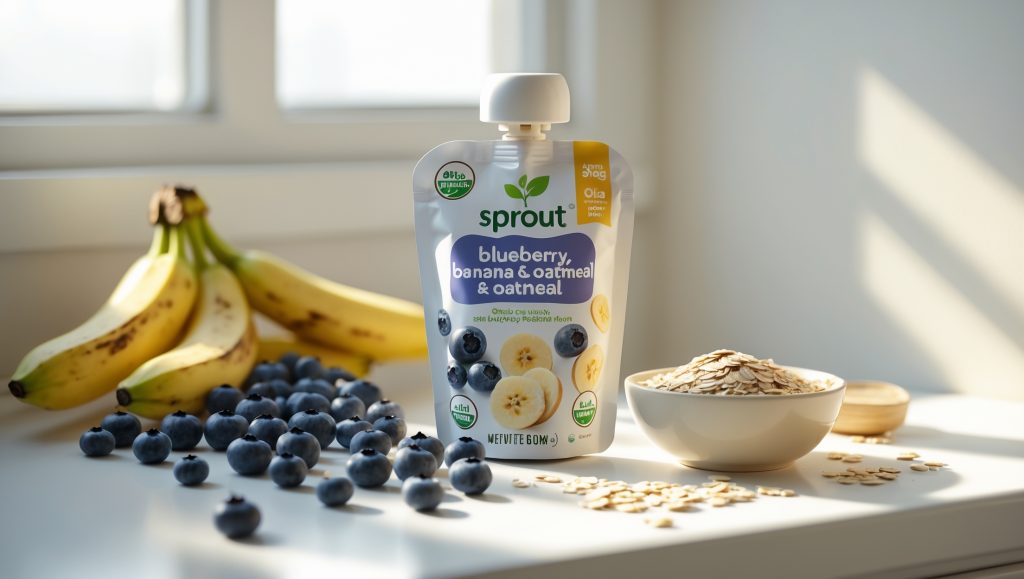
Overview
The Sprout Organic Stage 2 Blueberry, Banana & Oatmeal Baby Food Pouch is a popular choice among health-conscious parents seeking organic, minimally processed first foods for their little ones. Designed for babies aged 6 months and up, this pouch combines three familiar ingredients—blueberries, bananas, and whole grain oats—into a smooth, spoonable blend. Sprout’s commitment to transparency in sourcing and its USDA Organic certification have made its products a staple on supermarket shelves and in online carts across the U.S. in 2025. But does this pouch live up to its promises of nutrition, taste, and convenience? We put it to the test from every angle.
Ingredients & Nutrition
Ingredients: Organic bananas, organic blueberries, organic whole grain oats, organic lemon juice concentrate, water.
- Certified USDA Organic
- No added sugar or artificial flavors
- Vegan and dairy-free
- Non-GMO ingredients
The ingredient list is refreshingly short and simple, making it easy for parents to identify what’s inside. Bananas provide natural sweetness and potassium, blueberries are rich in vitamin C and antioxidants, and oats add fiber and iron. Each pouch (113g) delivers approximately 80 calories, 1g protein, 18g carbohydrates (8g natural sugars), 2g fiber, and 0g added sugar. The absence of dairy and nuts makes this pouch a suitable option for many families managing food allergies.
Sprout’s Stage 2 line is intended for babies who have already tried single-ingredient purees and are ready for more complex blends and textures. This pouch is gluten-free, and the oats are processed in a dedicated facility to reduce cross-contamination risk. The product is shelf-stable and contains no preservatives beyond natural lemon juice concentrate for freshness.
Taste & Texture
Babies are naturally drawn to the gentle sweetness of ripe bananas, and this pouch delivers on that front. The banana flavor is the most prominent, with subtle tartness from blueberries and a mild, earthy undertone from the oats. The overall flavor is well-balanced—not too sweet, and not bland—making it approachable for babies developing their palates.
The texture is smooth but not runny, with a slight thickness from the oats that makes it easy to spoon-feed or self-feed with a pouch. Parents report that the blend is less watery than some fruit-only options, helping to keep mealtime less messy. There are no noticeable chunks, and the consistency supports oral motor skill development while remaining safe for babies new to thicker purees.
Convenience & Storage
Sprout’s pouch design is travel-friendly and mess-minimizing. The twist-off cap is large enough to prevent choking hazards, and the pouch fits easily into diaper bags and lunch boxes. The product does not require refrigeration before opening, making it suitable for outings or daycare snacks.
Once opened, the pouch should be refrigerated and consumed within 24 hours for optimal freshness. Most parents find the serving size appropriate for a single feeding, but if your baby doesn’t finish the pouch in one sitting, resealing is straightforward. The pouch’s BPA-free packaging is recyclable in some municipal programs, though not universally accepted.
Pros & Cons
Pros
- Certified USDA Organic and Non-GMO verified
- No added sugar or artificial flavors
- Simple, transparent ingredient list
- Rich in fiber and vitamin C
- Allergy-friendly: dairy-free, nut-free, and gluten-free
- Convenient, portable packaging
Cons
- Limited protein content (1g per pouch)
- Packaging not curbside recyclable everywhere
- More expensive than non-organic brands
- Texture may be too thick for some younger babies
Alternatives & Similar Products
Families looking for organic, fruit-and-grain baby food blends have several options in 2025. Comparable products include:
- Peter Rabbit Organics Banana & Oatmeal Pouch: Similar flavor profile with slightly thinner texture.
- Happy Tot Organics Clearly Crafted Bananas, Blueberries & Oats: Also offers transparent sourcing and a smooth blend, with a touch more blueberry flavor.
- Gerber Organic Oatmeal Banana Berry Pouch: A budget-friendly alternative, though not always as thick in texture.
- Homemade purees: Parents with time and access to fresh produce may opt for homemade blends using certified organic ingredients and rolled oats.
When considering alternatives, compare ingredient lists, texture, price, and packaging sustainability. If your baby has specific dietary needs, consult a pediatrician or registered dietitian for tailored guidance.
Verdict
The Sprout Organic Stage 2 Blueberry, Banana & Oatmeal Baby Food Pouch stands out for its thoughtful ingredient sourcing, balanced nutrition, and parent-friendly packaging. While it’s not the least expensive option on the market, its clean label and allergy-friendly formulation earn high marks. The gentle flavor and satisfying texture support healthy eating habits and self-feeding skills. For parents seeking an organic, minimally processed fruit-and-grain pouch, this product is a reliable and nutritious choice in 2025.
FAQ
+Is this pouch suitable for babies under 6 months?
+Does the product contain any added sugar or salt?
+What allergens are present in this pouch?
+How do I store the pouch after opening?
+Can my baby self-feed with this pouch?
+Is the packaging recyclable?
+How does the taste compare to homemade purees?

Sprout Organic Stage 2 Blueberry, Banana & Oatmeal Baby Food Pouch is a standout option for parents seeking a nutritious, convenient meal for their little ones. This blend combines organic blueberries and bananas with hearty oatmeal, offering a balanced mix of fruit sweetness and whole grain goodness. Parents will appreciate that Sprout uses non-GMO, certified organic ingredients, and avoids added sugars or artificial flavors—helping to build healthy eating habits from the start.
The texture is smooth and easy for babies aged 6 months and older to enjoy, especially those transitioning to thicker purees. The pouch design is practical for on-the-go families, making it simple to feed your baby anywhere, anytime, with minimal mess. Many parents notice their children love the naturally sweet taste, and the inclusion of oats provides a gentle introduction to grains, supporting satiety and sustained energy.
In a crowded market, Sprout’s commitment to clean ingredients and eco-friendly packaging really stands out. While some babies may prefer chunkier textures as they grow, this pouch is an excellent choice for early stage eaters and busy parents who value both nutrition and convenience.
- Certified organic and non-GMO ingredients
- No added sugar or artificial flavors
- Easy, mess-free pouch for feeding anywhere
- Balanced blend of fruit and whole grains
With the pouch being shelf-stable, is there any difference in taste or texture if I refrigerate it before serving? I am considering using it as a cool treat before bedtime during warmer months, but I do not want it to change the sensory experience too much.
It’s thoughtful that you’re considering your baby’s sensory experience and bedtime routine. Refrigerating the Sprout Organic Stage 2 pouch will make it cooler and slightly thicker, but it shouldn’t change the overall taste or texture significantly—just a bit more like chilled pudding. Many babies enjoy cold foods, especially in warm weather, but always check the pouch for any changes before serving. For little ones just starting on solids, ensure the temperature isn’t too cold, and supervise for any unusual reactions. This isn’t medical advice; if you’re concerned, check in with your pediatrician.
You mentioned there are no preservatives other than lemon juice concentrate. Does that impact the taste? My baby is very particular about tangy or citrusy flavors, so I’m wondering if this pouch has a noticeable lemon taste.
It’s great that you’re paying close attention to your baby’s flavor preferences—this helps make mealtimes smoother. The lemon juice concentrate in the Sprout Organic Stage 2 Blueberry, Banana & Oatmeal pouch is there to help preserve freshness, not to add flavor. Most babies won’t notice a strong lemon or citrus taste, as it’s used in very small amounts and the natural sweetness of banana and mildness of oatmeal balance it out. Still, every baby is different, so you might want to taste a small amount first before offering it to your child. Always supervise during feeding, especially with new foods. This isn’t medical advice; if you’re concerned, check in with your pediatrician.
Since my baby spends a lot of time with grandparents who speak little English, I am wondering if there are pictorial instructions or clear visual cues on the pouch for safe handling and storage after opening.
You’re being very thoughtful about making feeding safe and easy for your baby’s grandparents. The Sprout Organic Stage 2 pouch packaging mainly uses written instructions in English, with only a few small icons (like ‘refrigerate after opening’) that may not be very obvious without reading the text. To help, you could show your parents how to reseal the pouch, store it in the fridge after opening, and use within 24 hours. Labeling the pouch with a simple drawing or time can also help. Always supervise meals to prevent choking and avoid leaving the pouch out at room temperature for long. This isn’t medical advice; if you’re concerned, check in with your pediatrician.
We’re starting daycare soon, and I’m wondering if these Sprout pouches are okay to send for lunchtime since my one-year-old is still getting used to thicker textures. Do most daycares allow pouches like this, and how well does the food hold up if it sits in a lunchbox for a few hours?
It’s completely natural to want your little one’s lunches to be safe and easy as they start daycare. Most daycares do allow pouches, but checking with your center about their specific food policies is important, as some only permit certain brands or require food to be served in bowls. The Sprout pouch you mentioned is suitable for a one-year-old still adjusting to texture, though you might want to supervise initial tries if your child is still learning to self-feed. The pouch is shelf-stable until opened, so it should be fine in a lunchbox for a few hours, but placing it with an ice pack is safest. This isn’t medical advice; if you’re concerned, check in with your pediatrician.
Since the oats are gluten-free and processed in a dedicated facility, how common is cross-contamination with wheat in products like this? My family is trying to keep things as safe as possible due to sensitivities.
You’re absolutely right to be mindful about cross-contamination when managing sensitivities. While Sprout Organic’s oats are labeled gluten-free and processed in a dedicated facility, there is always a small risk of cross-contamination unless the entire supply chain is strictly controlled. Check for official gluten-free certification on the packaging. Before introducing, monitor ingredients lists closely for any changes. If your child has celiac disease or severe allergies, consider discussing new foods with your pediatrician or allergist. This isn’t medical advice; if you’re concerned, check in with your pediatrician.
My daughter has had reactions to certain fruits in the past. Are there any cross-contamination risks with common allergens like strawberries or nuts during the manufacturing process for this pouch?
It’s completely understandable to be cautious when your child has had reactions before. According to the manufacturer, Sprout Organic Stage 2 Blueberry, Banana & Oatmeal pouches are made without common allergens like strawberries or nuts as ingredients. However, manufacturing facilities sometimes process multiple products, so cross-contamination is possible. Always check the product’s label for allergen statements or warnings about shared equipment. Introduce any new food at home and watch for symptoms, especially in children under 12 months. For peace of mind, you can contact Sprout directly to ask about their allergen control practices. This isn’t medical advice; if you’re concerned, check in with your pediatrician.
My little one is 17 months and has already started eating some finger foods. Would the texture of this pouch still be suitable, or should we be focusing more on chunkier options at this stage? I want to make sure we’re encouraging proper chewing.
You’re thoughtful to consider how food texture supports your child’s chewing skills. At 17 months, most toddlers benefit from practicing with chunkier, lumpy textures and soft finger foods to strengthen oral muscles and encourage self-feeding. You can still offer the pouch occasionally, but try to prioritize meals with soft, diced fruits, cooked veggies, and small pieces of bread or pasta. If using the pouch, consider mixing it into oatmeal or yogurt to add texture. Always supervise meals and avoid foods that could be choking hazards. This isn’t medical advice; if you’re concerned, check in with your pediatrician.
How does this pouch compare to other organic options in terms of cost and convenience, especially when you consider how many snacks an active toddler goes through in a week? Is it worth stocking up in bulk, or are there alternatives that last longer once opened?
You’re thoughtful to compare cost and convenience, especially with how quickly toddlers go through snacks. This pouch is mid-range in price among organic options and very convenient for on-the-go use, but like many fruit-and-oat pouches, it needs refrigeration after opening and should be used within 24 hours. If your toddler doesn’t finish a pouch in one sitting, some reusable snack containers or shelf-stable items like organic rice cakes or freeze-dried fruit may last longer after opening. Always check for age-appropriateness and watch for choking hazards. This isn’t medical advice; if you’re concerned, check in with your pediatrician.
One of my twins has mild sensory issues and rejects grainy or lumpy baby food. How is the oat texture in this pouch compared to other brands? Is it completely smooth or are there occasional bits from the oats?
It’s understandable to want baby food with the right texture for a child with sensory sensitivities. The Sprout Organic Stage 2 Blueberry, Banana & Oatmeal pouch is generally smoother than some grain-based options, but you may notice some very fine oat bits—more like a soft puree than a perfectly silky blend. For children sensitive to even a tiny amount of texture, you might try squeezing a bit onto a spoon and feeling for bits before offering it. Always supervise closely, and consider blending the pouch further at home if needed. This isn’t medical advice; if you’re concerned, check in with your pediatrician.
The review says this pouch is travel-friendly, which is great for park outings. For caregivers like me who sometimes have to pack snacks in advance, how long would you feel comfortable keeping an unopened pouch in a diaper bag on a warm afternoon before it should be refrigerated?
It’s smart to plan ahead for snacks during outings. For unopened pouches like Sprout Organic Stage 2, they are shelf-stable and can typically be kept at room temperature for several hours, but if your diaper bag gets quite warm (over 75°F/24°C), I would try to use the pouch within 2–4 hours. Always check the pouch for any swelling or damage before offering it. For babies under 12 months, safety is extra important, so consider using an insulated bag or adding a small ice pack. This isn’t medical advice; if you’re concerned, check in with your pediatrician.
My daughter is just turning 7 months and still adjusting to more than one new food at a time. Is this blueberry, banana, and oatmeal mix suitable for babies who haven’t tried oats before, or should I offer oatmeal separately first?
It’s great that you’re being thoughtful about introducing new foods to your daughter. For babies around 7 months, it’s wise to introduce single ingredients one at a time to watch for any allergic reactions or sensitivities. Since your daughter hasn’t tried oats before, consider offering plain oatmeal separately first for a few days before trying the mixed pouch. This way, you can monitor for any signs of intolerance or allergies. Always supervise meals and look out for reactions such as rash, vomiting, or diarrhea. This isn’t medical advice; if you’re concerned, check in with your pediatrician.
Are there benefits to involving older siblings in pretend play with real baby food pouches, such as modeling tasting or caring behaviors, or would you recommend choosing different props for older children to join in the fun?
It’s wonderful that you want to include older siblings in caring routines and pretend play. Involving them with real baby food pouches can help model positive eating habits and nurturing behaviors, but it’s best to supervise closely to prevent messes or accidental consumption of too much baby food. For older children, you might offer empty, clean pouches or age-appropriate play food instead—this keeps play safe and engaging while letting them imitate caring roles. Always check for any allergies or choking hazards, and make sure play is developmentally suitable. This isn’t medical advice; if you’re concerned, check in with your pediatrician.
that this pouch is shelf-stable, but sometimes we buy in bulk and rotate snacks for budget reasons. If I include this as part of our evening routine, how long does an unopened pouch usually last and does that change how you introduce new foods in a bilingual household?
It’s thoughtful to plan ahead and manage your pantry for both budget and routine. Unopened Sprout Organic Stage 2 pouches are usually shelf-stable for many months—check the printed expiration date for specifics, and always store them in a cool, dry spot. When introducing new foods, especially in a bilingual household, try offering one new pouch flavor at a time and talk about the ingredients in both languages to build familiarity. For babies 6 months and up, introduce new foods when your child is alert and not too tired. Always supervise for allergies, texture, and choking risks. This isn’t medical advice; if you’re concerned, check in with your pediatrician.
I noticed the pouch is shelf-stable, but once it’s opened and refrigerated, does it maintain its consistency and flavor overnight? Sometimes my child only eats half in the morning, and I wonder if it holds up for a quiet snack the next day.
It’s understandable to want to save leftovers for your child’s next snack. After opening, the Sprout Organic Stage 2 pouch should be tightly resealed and refrigerated; it can generally maintain its consistency and flavor overnight, though oats may thicken slightly, and some separation can occur. Before serving again, shake or stir well and check for any off smells or changes in appearance. Always use a clean spoon, and discard the rest if your child eats straight from the pouch to avoid bacteria. This is safe for babies 6 months and older when refrigerated and eaten within 24 hours. This isn’t medical advice; if you’re concerned, check in with your pediatrician.
We’re just starting to combine new foods after single-ingredient purees. Is there a recommended time of day for trying potentially allergenic ingredients like oats or new fruits like blueberries, in case we need to monitor any delayed reactions?
It’s great that you’re thinking ahead about food introductions and safety. When trying potentially allergenic foods or new fruits like blueberries, aim to offer them early in the day—breakfast or lunch works well—so you have plenty of time to watch for any reactions. Start with a small amount and avoid introducing more than one new ingredient at a time. Keep your baby nearby for at least two hours following the meal so you can monitor for any symptoms like rashes, swelling, or changes in breathing. Always supervise your baby closely during and after meals. This isn’t medical advice; if you’re concerned, check in with your pediatrician.
I noticed that the pouch needs to be used within 24 hours after opening. If my active toddler only eats half during one sitting, is it safe to offer the rest later as a snack the next day? How do other parents usually manage leftover portions?
It’s great that you’re thinking about food safety for your toddler. Once opened, it’s best to refrigerate the pouch right away and use the rest within 24 hours. Always squeeze the remaining puree into a clean container (not back into the pouch if your toddler has eaten directly from it) to avoid germs. Before serving leftovers, check for any off smells or changes in texture. Many parents portion the pouch into smaller servings ahead of time to reduce waste. This isn’t medical advice; if you’re concerned, check in with your pediatrician.
For families dealing with oat sensitivity or gluten concerns, could you clarify how Sprout ensures their oats are safe from cross-contamination? The article mentioned a dedicated facility, but I’m a bit nervous since my toddler has a mild oat reaction.
It’s completely understandable to feel anxious about oat sensitivity and possible cross-contamination, especially with a little one. According to Sprout, their oats are processed in a dedicated gluten-free facility to minimize cross-contamination risks. However, for children with a history of oat reactions, I’d recommend: 1) contacting Sprout directly to confirm current manufacturing practices; 2) asking for information on their allergen testing protocols; 3) always introducing new foods slowly and watching for any reactions; and 4) keeping your pediatrician informed. This isn’t medical advice; if you’re concerned, check in with your pediatrician before trying new oat-containing foods.
If I open a pouch but my toddler only eats half, can I safely put the leftovers in a sippy cup or storage container, or does it have to stay in the original pouch in the fridge?
It’s great that you’re thinking about food safety for your toddler. Once opened, you can transfer the leftover puree from the pouch into a clean, airtight storage container or a covered sippy cup and refrigerate it right away. Just make sure to use it within 24 hours, and always check for any signs of spoilage before serving. Avoid leaving the puree at room temperature for too long. This approach is safe for toddlers as long as you handle and store it properly. This isn’t medical advice; if you’re concerned, check in with your pediatrician.
Is there any risk of the pouch leaking or bursting if it’s tossed around in a backpack or diaper bag during a long car ride? We travel a lot and I want to make sure it will stay mess-free with a busy toddler grabbing for snacks.
It’s understandable to want a mess-free snack, especially with a busy toddler on the go. While Sprout Organic pouches are designed to be durable and generally hold up well in bags, no pouch is fully leak-proof if it’s punctured or squeezed too hard. To minimize risk, pack the pouch upright in a separate zip-top bag, avoid sharp objects nearby, and check the seal before handing it to your toddler. Always supervise your child when eating to prevent choking. This isn’t medical advice; if you’re concerned, check in with your pediatrician.
With such a simple ingredient list, can this pouch realistically be used as an on-the-go snack for older toddlers who might want heartier textures, or would you recommend combining it with other finger foods for more variety?
—it’s thoughtful to consider both nutrition and your toddler’s changing texture preferences. For older toddlers, this pouch is safe but may feel too smooth and light as a stand-alone snack. You can serve it alongside age-appropriate finger foods like small pieces of soft fruit, whole grain crackers, or cheese for added variety and texture. Always supervise during meals to prevent choking, and check for any food allergies. This isn’t medical advice; if you’re concerned, check in with your pediatrician.
Do you think this Stage 2 pouch is filling enough as a standalone midday snack for a busy toddler at daycare, or should I send something else along with it to keep my little one satisfied until pickup?
It’s great that you’re thinking about keeping your toddler satisfied during daycare. While the Sprout Organic Stage 2 pouch offers a healthy mix of fruit and oats, most toddlers—especially those older than 12 months—may need a bit more substance for a midday snack. You could pair the pouch with a simple finger food like small pieces of soft fruit, a few whole grain crackers, or cooked veggie sticks to make it more filling. Always consider choking risks by cutting foods into safe, age-appropriate sizes, and check for any daycare food policies and allergens. This isn’t medical advice; if you’re concerned, check in with your pediatrician.
Since there’s no added sugar, does the natural sweetness from the banana and blueberry appeal to most babies, or do some need extra encouragement to accept the flavor? Any playful ways to introduce less sweet blends at home?
—many babies do enjoy the gentle sweetness from fruits like banana and blueberry, but some may need a little extra time or encouragement to accept new or less sweet flavors. Try offering a small spoonful alongside familiar foods, making funny faces or playful sounds during tasting, or letting your baby touch and explore the pouch (with supervision). You can also mix a sweeter puree with a less sweet one and gradually shift the ratio. For little ones around 6–8 months, keep portions small and watch for any reactions. This isn’t medical advice; if you’re concerned, check in with your pediatrician.
My child has mild nut allergies and we always double-check for cross-contamination. You mentioned the oats are processed in a separate facility. Has there been positive feedback from allergy-prone families about the safety of this pouch for regular bedtime use?
It’s very thoughtful to prioritize your child’s safety around allergies. In our review, we noted that the oats in this pouch are processed in a dedicated oat facility, which helps reduce—but doesn’t completely eliminate—cross-contamination risks. Some allergy-prone families have reported positive experiences, but reactions can vary widely. For regular bedtime use, read the latest packaging and contact the manufacturer to confirm current allergen controls. Introduce new foods during daytime, with supervision, to spot any reactions. This isn’t medical advice; if you’re concerned, check in with your pediatrician.
Since this pouch uses natural sources for iron instead of fortification, would you suggest pairing it with other iron-rich foods during the same meal, or is it enough for a single serving?
It’s great that you’re thinking about your baby’s iron needs. While this pouch offers some naturally occurring iron, babies—especially around 6–12 months—often need more than what fruits and oats provide. Try pairing the pouch with iron-rich foods like pureed meats, cooked lentils, or iron-fortified cereals in the same meal to help meet your baby’s daily needs. For better absorption, serving vitamin C-rich foods like strawberries or oranges can help too. Always supervise your baby while eating and introduce new foods gradually to watch for any allergies. This isn’t medical advice; if you’re concerned about iron intake, check in with your pediatrician.
We’re on a pretty tight grocery budget and I’m wondering how these Sprout Organic Stage 2 pouches compare in cost and overall value to homemade blends using similar ingredients. Are there advantages that really make the store-bought version worth it beyond just the convenience?
It’s understandable to want the best nutrition for your baby while also sticking to a budget. Making homemade blueberry, banana, and oatmeal blends is often more cost-effective, especially if you buy ingredients in bulk. Store-bought pouches like Sprout Organic offer the advantages of convenience, consistent texture, and sealed safety (helpful for travel or emergencies). Homemade blends let you control freshness and ingredient quality but require more prep time and careful attention to texture, especially for babies under one year. Always check for potential allergens and ensure a smooth puree for younger babies. This isn’t medical advice; if you have any concerns about your baby’s nutrition, check in with your pediatrician.
My toddler has sensory sensitivities and prefers predictable flavors and textures before bed to avoid overstimulation. Do you think this blend would be gentle enough to keep evenings calm, or have other parents reported issues with texture or taste for older kids?
You’re thoughtful to consider your toddler’s sensory needs, especially before bed. Sprout Organic Stage 2 Blueberry, Banana & Oatmeal is smooth and mild, designed for younger babies, so many parents find it gentle and predictable in both taste and texture. For toddlers, you might want to first offer a small amount during the day to see how your child responds before making it part of the bedtime routine. The texture is typically consistent, but always check for any changes before serving. Remember, each child is different—if you notice any discomfort or strong reactions, pause and consult your pediatrician. This isn’t medical advice; if you’re concerned, check in with your pediatrician.
If I wanted to build a weekly meal plan that regularly includes this Sprout pouch, would you recommend alternating it with other fruit and grain combinations? Or could that create monotony in nutrition or taste for a developing palate?
You’re thoughtful to consider variety for your baby’s nutrition and palate development. Rotating the Sprout pouch with other fruit and grain blends is a great idea, as it exposes your baby to different flavors, nutrients, and textures—especially important around 6-12 months. Aim to offer a range of fruits, grains, and proteins throughout the week, being mindful of potential allergens and ensuring age-appropriate textures. Always supervise mealtimes and introduce new foods one at a time to watch for reactions. This isn’t medical advice; for specific dietary concerns, please consult your pediatrician.
Is there any concern about the caps being a choking hazard if older toddlers decide to reuse them for play, even though they’re said to be large enough for safety? I’m wondering about real-life experiences after repeated use.
It’s wise to think about potential choking hazards, especially as curious toddlers explore and reuse things like pouch caps. While Sprout’s caps are designed to be large enough to reduce choking risk, supervision is still important, especially if the caps are used as toys. If your toddler likes to put objects in their mouth or chews on items, keep the caps out of reach after use. Regularly check for any damage or wear, since broken pieces could become a hazard. As children grow and develop safer play habits, risks do go down, but it’s best to stay cautious. This isn’t medical advice; if you’re concerned, check in with your pediatrician.
My toddler is in the picky eating phase and usually spits out anything with a gritty or odd texture. Can you give more detail about how noticeable the oatmeal is in this pouch? Is it completely smooth, or could a texture-sensitive baby notice the oats?
You’re right to think about texture when your toddler is sensitive—many little ones react strongly to anything even slightly gritty. In this pouch, the oatmeal is blended in, so the texture is mostly smooth, but some children with strong preferences might still notice a faint thickness or tiny bits. If your toddler is especially sensitive, try serving a small amount first and watch their reaction. You can also squeeze the pouch onto a spoon to check the texture before offering it. Always supervise at this age to ensure safety. This isn’t medical advice; if you’re concerned, check in with your pediatrician.
I’m trying to keep our grocery budget in check and usually buy baby food in bulk. Do you know if there are cost-effective options for buying several of these pouches at once, or if Sprout offers larger packs?
It makes sense to want to balance your baby’s nutrition with your family’s budget. Many retailers and online stores do offer multipacks or bulk options for Sprout Organic baby food pouches, which can help lower the cost per pouch. Look for sales or subscribe-and-save programs, and compare prices at different stores. Some club stores may also carry larger packs, though selection can vary. Always check the expiration dates and storage instructions, especially if you’re buying in bulk. This isn’t medical advice; if you have concerns about your baby’s nutrition or feeding, check in with your pediatrician.
Is it safe to let my child self-feed with these pouches, or should parents stick to spoon-feeding to avoid possible choking issues from sucking too quickly?
Your question about safe feeding with pouches shows real thoughtfulness. For older babies (usually 8 months and up) who can sit upright and show good hand-mouth coordination, supervised self-feeding with pouches can support independence. Always have your child seated and closely watched while eating. Offer the pouch slowly, helping them pace their sucking, and never leave them unattended. For younger or less coordinated babies, it’s safer to spoon-feed to reduce choking risk. If you ever notice coughing, gagging, or difficulty breathing, stop feeding and seek help. This isn’t medical advice; if you’re concerned, check in with your pediatrician.
I’m a bit concerned about the natural sweetness from the banana and blueberry. For toddlers who already have a sweet tooth, does using this pouch regularly make it harder to introduce more savory foods?
Your concern about encouraging a preference for sweet flavors is understandable, especially with naturally sweet ingredients like banana and blueberry. To help balance your toddler’s palate, try serving this pouch alongside or after savory foods instead of as the main item. Offer a variety of textures and tastes at mealtimes, including vegetables and grains without added fruit. Limit how often you offer fruit-based pouches, rotating with more savory or less sweet options. Always supervise your toddler when eating, and be mindful of any allergens. This isn’t medical advice; if you’re concerned, check in with your pediatrician.
Our family is careful about food smells and textures because my baby is easily put off by anything too intense or sticky. Compared to plain banana or oat purees, does this blend have any odors or stickiness that stand out?
It’s great that you’re tuned in to your baby’s sensitivities with food smells and textures. Compared to plain banana or oat purees, the Sprout Organic Stage 2 Blueberry, Banana & Oatmeal pouch has a mild, slightly fruity aroma—blueberry is subtle, and banana is familiar, so nothing too strong or sharp. The texture is smooth and not overly sticky, thanks to the oatmeal blending, but it may be a bit thicker than plain fruit purees. Try a small amount first, and serve at room temperature to keep odors mild. Always supervise your baby and watch for any reactions. This isn’t medical advice; if you’re concerned, check in with your pediatrician.
We go through a lot of pouches when we’re out, and I worry about food waste if my baby doesn’t finish one. If refrigerated after opening, have you found the texture or flavor changes noticeably the next day, or is it still appealing enough for fussy toddlers?
It’s completely understandable to want to minimize waste while making sure your little one’s food stays appealing. After opening and refrigerating the Sprout Blueberry, Banana & Oatmeal pouch, I’ve found the texture can thicken slightly and the flavors may mellow, but most toddlers still find it palatable the next day, especially if served at room temperature. Stir well before serving, and always check for any off smells or signs of spoilage. Be sure to use within 24 hours and supervise your child when eating pouches to prevent choking. This isn’t medical advice; if you’re concerned, check in with your pediatrician.
This product is marketed as convenient for travel and outings. If my baby is used to more interactive, open-ended mealtime experiences at home, could switching to a pouch on the go affect their sensory engagement or willingness to try new textures later on?
You’re thoughtful to consider how travel snacks might influence your baby’s eating habits. To keep sensory engagement high, try offering the pouch alongside a small spoon so your baby can still self-feed. Let them touch and smell the food before eating. If possible, pair the pouch with simple finger foods when out, like soft fruit pieces. Reserve pouch-only meals for occasional use so your baby keeps exploring textures at home and on the go. All foods should be age-appropriate, with close supervision to prevent choking. This isn’t medical advice; if you’re concerned, check in with your pediatrician.
My toddler is really active and loves feeding herself, but sensory textures can sometimes overwhelm her. Does the texture of the Sprout Blueberry, Banana & Oatmeal pouch work well for little ones who dislike gritty or lumpy foods, or is it pretty smooth throughout?
It’s great that you’re tuning in to your toddler’s sensory needs while supporting her independence. The Sprout Blueberry, Banana & Oatmeal pouch is designed for Stage 2 eaters and typically has a smooth, even texture with very fine oat particles rather than noticeable lumps or grit, which many texture-sensitive toddlers tolerate well. You can try offering a small amount to see how she responds, and consider serving it chilled or at room temperature, as temperature can also affect texture perception. Always supervise feeding to prevent choking, and remember all children are different—if she refuses it, that’s okay. This isn’t medical advice; if you’re concerned, check in with your pediatrician.
One concern for me is the possibility of choking with thicker purees, especially when my baby tries to self-feed from a pouch. Based on your review, do you feel the texture is truly safe for independent eating, or is spoon-feeding better at this stage?
It’s completely understandable to be cautious about choking risks with thicker purees and self-feeding. Based on the review, the Sprout Organic Stage 2 Blueberry, Banana & Oatmeal pouch has a slightly thicker texture due to the oatmeal, which can be more challenging for younger babies or those new to pouches. For babies just starting Stage 2 foods (usually around 6-8 months), spoon-feeding is often safer so you can monitor pace and swallowing. If your baby is developmentally ready to self-feed, always supervise closely, offer small squeezes at a time, and never leave your baby unattended with the pouch. This isn’t medical advice; if you’re concerned, check in with your pediatrician.
I see that this blend does not have any added sugars or artificial flavors, which is reassuring. Are there any differences in how babies respond to the natural sweetness compared to more traditional fruit-only purees when it comes to trying new foods?
—it’s natural to wonder how different blends affect your baby’s food experiences. Natural sweetness from whole fruits and grains, like in this pouch, can help babies accept new flavors without overwhelming their palate. To encourage openness to new foods, offer a variety of single-ingredient purees along with blends, introduce new foods slowly, and watch for preferences. The slight oat flavor and thicker texture may be new to some babies, so gentle, repeated tasting is helpful. Always supervise feedings and check for any signs of allergies. This isn’t medical advice; if you’re concerned, check in with your pediatrician.
We care for our grandson a few days each week and usually batch-prepare snacks. Is it okay to freeze half-used pouches after opening, or does that change the taste or consistency?
It’s great that you’re planning ahead for your grandson’s snacks. Once a baby food pouch is opened, freezing what’s left is generally safe, but the texture may change—oatmeal-based purees can become thicker or grainier after thawing. If you choose to freeze, transfer the unused portion to a clean, airtight container, label it, and thaw in the fridge before serving. Always check for any unusual smell or separation before feeding, and never refreeze thawed food. For babies under 12 months, be extra cautious about freshness and hygiene. This isn’t medical advice; if you’re concerned, check in with your pediatrician.
Since the Sprout pouch is aimed at babies 6 months and older who have already tried single-ingredient purees, how do you suggest introducing this more complex blend to a baby who is still getting used to new flavors and textures? Would it make sense to mix it with a familiar single-ingredient puree the first few times?
You’re thoughtful to support your baby as they try new flavors and textures. To ease the transition, you can mix a small amount of the Sprout pouch into a familiar single-ingredient puree your baby already enjoys, gradually increasing the ratio as they get used to the new blend. Offer just a few spoonfuls at first and watch for signs of acceptance or discomfort. Always supervise closely, and check the ingredients for any new foods your baby hasn’t tried individually yet. This isn’t medical advice; if you have concerns about allergies or reactions, please consult your pediatrician.
My baby has some minor skin reactions to certain foods, and we’re cautious about new ingredients. I see Sprout says the oats are processed in a dedicated facility. Has anyone’s baby with mild sensitivities handled this pouch okay?
It’s absolutely understandable to be cautious when your baby has shown sensitivities. While the Sprout pouch uses oats processed in a dedicated facility, each child can react differently, even to seemingly safe foods. To introduce this pouch, try offering a small amount and watch for any reactions over 24 hours. Always introduce new foods singly, waiting a few days before adding another. Check the full ingredient list for anything you’ve seen reactions to before. If your baby’s reactions have been more than mild or involve skin swelling, consult your pediatrician before trying new blends. This isn’t medical advice; if you’re concerned, check in with your pediatrician.
We often use safe kitchen tools as props for our baby’s imaginative play. Do you think older babies could pretend to cook or shop using these pouches, and does that support their understanding of real-life routines?
You’re encouraging your baby to learn through play, which is wonderful. For older babies—around 10 months and up—pretending to shop or cook with empty, clean pouches can help them explore everyday routines and build early social and cognitive skills. Supervise closely to be sure the cap is removed and all parts are too large to swallow. Try setting up a simple “kitchen” or “market” with soft items and demonstrate actions like stirring or exchanging food. Narrate what you’re doing to connect play with real-life language. This isn’t medical advice; if you’re concerned, check in with your pediatrician.
My toddler is very active and loves exploring new foods by squeezing and playing with pouches before eating. Does the Sprout Stage 2 pouch hold up well if it gets handled roughly, or is it likely to burst or leak when squeezed a lot by little hands?
It’s great that your toddler is curious and enjoys exploring new foods. The Sprout Stage 2 pouch is designed for babies and toddlers, but like most baby food pouches, it can leak or burst if squeezed very hard or chewed on, especially by energetic little hands. To help, you might supervise closely during snack time, model gentle squeezing, and encourage your child to eat at the table. For extra safety, check the pouch for damage before opening, and avoid letting your child play with it unsupervised. This isn’t medical advice; if you’re concerned, check in with your pediatrician.
My toddler is very sensitive to textures and refuses most baby foods that are too thick. Is the oatmeal in this Sprout pouch noticeable enough that it might bother a particularly picky eater, or is it completely smooth once blended?
It’s understandable to feel concerned when your toddler is sensitive to textures. The Sprout Organic Stage 2 Blueberry, Banana & Oatmeal pouch is generally blended to a smooth consistency, but you may still notice a mild thickness from the oatmeal. For especially picky eaters, try squeezing a small amount onto a spoon to check the texture first. If it feels too thick, you can mix in a little water or breast milk to thin it out safely. Always supervise your child during meals and watch for any signs of discomfort or allergies. This isn’t medical advice; if you’re concerned, check in with your pediatrician.
Sometimes my child gets fixated and refuses to eat anything but banana flavors for a week. Do you think repeatedly offering the same pouch affects their willingness to try new flavors, or is this a normal toddler phase?
It’s very normal for toddlers to get stuck on one favorite flavor for a while, so you’re not alone in this. To help them expand their palate: first, keep offering small tastes of new foods alongside their preferred banana pouch without pressure. Second, try mixing a tiny amount of a new flavor into the familiar banana one. Third, sit and eat a variety of foods together, modeling curiosity about new tastes. Remember, preferences can change suddenly at this age. The Sprout pouch is safe for little ones, but always supervise and check for allergies. This isn’t medical advice; if you’re concerned, check in with your pediatrician.
I’m interested in the shelf-stable promise of this pouch. For road trips or long outings with twins, can the unopened product withstand being in a warm car for several hours, or does it need to stay cool to keep the quality and safety intact?
It’s great that you’re planning ahead for safe and easy feeding during outings with your twins. Sprout Organic Stage 2 pouches are shelf-stable and designed to be safe at room temperature, but most manufacturers recommend avoiding prolonged exposure to high heat, like a hot car, as this can affect both quality and safety. For road trips, try packing the unopened pouches in a small cooler bag with an ice pack, especially in warm weather. Rotate pouches so older ones get used first, and always check that the pouch is intact and not swollen before serving. This isn’t medical advice; if you have concerns, check in with your pediatrician.
My child has some sensory sensitivities and is particular about food textures. Based on your review, do you think the consistency of this pouch might be too thick for a kid who prefers thinner purees, or does it blend out smoothly enough?
It’s completely understandable to want to match food textures to your child’s sensory needs. The Sprout Organic Stage 2 Blueberry, Banana & Oatmeal pouch has a smooth but slightly thicker consistency due to the added oatmeal—thicker than Stage 1 purees, but not lumpy. You can try warming the pouch gently and stirring before serving, or mixing in a bit of breast milk, formula, or water to thin it further for your child. Always supervise during feeding to ensure safe swallowing, especially with textured foods. This isn’t medical advice; if you’re concerned, check in with your pediatrician.
Sometimes sweeter fruits can be too intense for my baby. With banana as the main flavor, is it mellow enough for kids who are easily bothered by strong tastes, or is the blueberry more pronounced?
It’s completely understandable to want gentle flavors for a sensitive palate. In this pouch, banana is the main ingredient and tends to provide a smooth, mellow base, while the blueberry flavor is subtle and not overpowering. Here’s what you can do: offer a small spoonful first and watch your baby’s reaction; try mixing the pouch with a mild plain oatmeal to soften the flavors further; always check the texture to make sure it’s suitable for your baby’s age and avoid offering alone if your baby is under 6 months. Each baby is unique, so gradual introduction is key. This isn’t medical advice; if you’re concerned, check in with your pediatrician.
I noticed it’s vegan and allergy-friendly, but I’m a little paranoid about oats and cross-contamination. Has anyone with sensitive kiddos had a reaction, or found any trace amounts of other allergens in this specific pouch?
It’s completely understandable to be extra cautious with food sensitivities. While Sprout Organic’s Stage 2 Blueberry, Banana & Oatmeal pouch is marketed as vegan and allergy-friendly, oat-based products can carry a risk of cross-contamination, especially with gluten or other grains. I recommend checking the packaging for allergen statements and contacting the manufacturer for their latest processing information. For very sensitive children, introduce new foods in small amounts and monitor for any reaction, ideally under supervision. Always keep emergency medication nearby if your child has a history of severe allergies. This isn’t medical advice; if you’re concerned, check in with your pediatrician.
We go through baby food pouches pretty fast, but sometimes we forget a half-used pouch in the diaper bag. If it’s been more than a couple hours at room temp after opening, is it better to toss it or is it still safe within the 24 hours?
It’s very understandable to want to avoid wasting baby food, especially with how quickly pouches get used. For safety, once a pouch is opened and your baby has eaten from it, it should be refrigerated right away and used within 24 hours. If a half-used pouch has been left at room temperature for more than two hours, it’s safest to throw it out, as bacteria can grow quickly. Always check for changes in smell, color, or texture before serving. This isn’t medical advice; if you’re concerned, check in with your pediatrician.
Does the larger twist-off cap on the Sprout pouch mean it’s safer for independent eating with older children, or is there still a choking risk to be aware of if my preschooler is eating unsupervised at playgroup?
It’s great that you’re thinking about safety as your preschooler becomes more independent. The larger twist-off cap on Sprout pouches does reduce choking risk compared to smaller caps, but it is still considered a potential hazard if swallowed. For preschoolers, the risk is lower than with infants or toddlers, but supervision is still best, especially in group settings where distractions are common. Encourage your child to put the cap aside before eating and check that teachers or caregivers know to watch for proper use. Always discard caps promptly. This isn’t medical advice; if you’re concerned, check in with your pediatrician.
How do you recommend introducing this pouch if my little one is sensitive to new textures and sometimes gags on oatmeal-type blends? Should I mix it with a smoother puree the first couple of times?
You’re thoughtful to consider your little one’s texture sensitivities. Start by offering just a small amount of the pouch mixed with a familiar, very smooth puree—this can make the texture less challenging at first. Gradually increase the ratio of the Sprout pouch to the smoother puree over several days as your baby gets used to it. Always watch closely for gagging or discomfort, and keep mealtimes calm and low-pressure. This pouch is designed for babies around 6 months and older, but every child is different—go at your baby’s pace. This isn’t medical advice; if you’re concerned, check in with your pediatrician.
I noticed the ingredients are pretty straightforward, but I’m curious how this pouch compares to making blueberry, banana, and oat purees at home, both nutritionally and taste-wise. Is there a significant difference that would matter for my baby’s development?
It’s great that you’re thinking carefully about your baby’s nutrition and taste experiences. Store-bought pouches like Sprout Organic Stage 2 are convenient and generally balanced, but homemade purees can let you control texture, freshness, and exposure to single ingredients. Nutritionally, both options are safe for most babies 6 months and up, though homemade may retain slightly more nutrients and varied flavors, supporting taste development. Always make sure homemade foods are blended smoothly and free of choking hazards. This isn’t medical advice; if you’re concerned, check in with your pediatrician.
For families on a tight grocery budget, does this Sprout pouch offer good value compared to making a similar blend at home or buying other brands in bulk? Any tips on how to stretch its use with older toddlers?
It’s understandable to want the best nutrition for your child while sticking to a budget. While the Sprout pouch is convenient and made with organic ingredients, making a similar blend at home—using oats, ripe banana, and blueberries—can be more cost-effective, especially if you buy in bulk. For older toddlers, try mixing the pouch contents with plain yogurt or warm oatmeal to make it more filling and stretch it further. Always supervise toddlers while eating to prevent choking, and check for any allergies to the listed ingredients. This isn’t medical advice; if you’re concerned, check in with your pediatrician.
I know this pouch is dairy- and nut-free, but I was wondering how confident I can be about cross-contamination for kids with severe allergies, especially if grandparents might offer different foods at their home. Does Sprout provide details about their allergen testing or facility practices for extra peace of mind?
It’s understandable to want reassurance about food safety for children with severe allergies. Sprout Organic’s packaging highlights major allergens, but they do not always publish thorough details about cross-contamination risks or specific facility practices on their pouches. For extra caution, you can: 1) Contact Sprout’s customer service directly to ask about their allergen control and testing procedures; 2) Remind caregivers to read labels carefully every time, as ingredients or processes can change; 3) Consider sending safe, pre-approved foods with your child when visiting others. For babies and toddlers, always supervise eating and monitor for any allergic reactions. This isn’t medical advice; if you’re concerned, check in with your pediatrician.
We have a family history of oat sensitivity. Even though the oats are processed in a dedicated facility, is there any risk of cross-contact or reactions for sensitive babies?
It’s completely understandable to be concerned about oats if your family has a history of sensitivity. Even with oats processed in a dedicated facility, there is still a small chance of trace allergens or an unexpected reaction. If your baby is over 6 months and you want to try this pouch, introduce just a tiny amount—maybe a half teaspoon—while watching closely for any signs of a reaction (like rash, vomiting, fussiness, or difficulty breathing). Wait at least 3 days before introducing any other new foods. If your baby is under a year or has a diagnosed oat allergy, it’s safest to avoid oats altogether. This isn’t medical advice; if you’re concerned, check in with your pediatrician.
My baby is very sensitive to texture and often rejects grainy or lumpy foods. Based on your description, would this pouch’s consistency likely be accepted by kids with sensory food aversions, or would a fruit-only puree be a safer starting point?
It’s understandable to want to make mealtimes more comfortable for your little one with sensory sensitivities. The Sprout Organic Stage 2 Blueberry, Banana & Oatmeal pouch does have a slightly thicker texture due to the added oatmeal, which may feel grainy compared to a fruit-only puree. For babies who are sensitive to texture or just starting solids, a smoother, single-ingredient fruit puree is usually a gentler starting point. Introduce new textures slowly and always supervise your baby while eating. If you notice ongoing difficulties, consult your pediatrician or a feeding specialist—this isn’t medical advice.
Sometimes my baby doesn’t finish a pouch in one sitting. If I refrigerate the rest, is there an easy way to keep track of how long it’s been open, or should I write the date directly on the pouch?
It’s great that you’re thinking about safe storage for your baby’s food. After opening a pouch, refrigerate it right away and use the rest within 24 hours. Writing the date and time directly on the pouch with a marker is a simple and effective way to keep track. You could also set a reminder on your phone as a backup. Make sure to reseal the pouch tightly and keep it out of reach of little hands. This isn’t medical advice; if you’re concerned, check in with your pediatrician.
The pouch is described as being smooth but slightly thick from the oats. Has anyone had issues with their baby gagging or struggling with this texture, especially if they’re used to really thin purees?
It’s completely normal to worry about how your baby will handle a new, thicker texture. To help your little one adjust, try mixing a small amount of the pouch with breastmilk or formula to thin it out at first. Offer small spoonfuls and watch your baby’s cues, allowing them to explore the new texture at their own pace. Always supervise your baby while eating and avoid pouches if your child isn’t developmentally ready for thicker purees. If gagging seems frequent or severe, pause and consult your pediatrician. This isn’t medical advice; if you’re concerned, check in with your pediatrician.
If my toddler has already been introduced to single-ingredient oats and fruits separately, how should I watch for any new reactions when trying this blended pouch for the first time, especially since it has a few ingredients together?
It’s wise to be cautious when introducing a blend, even if your toddler has tried the separate ingredients before. Start by offering a small amount and watch for any signs of allergy or intolerance—such as rash, vomiting, diarrhea, or swelling—for at least 24 hours. Make sure to introduce the pouch when your child isn’t sick and hasn’t tried any other new foods that day. Since pouches can occasionally have trace new ingredients (like added vitamin blends or lemon juice), check the label carefully. This food is generally safe for toddlers, but always supervise for choking, and if you notice any unusual reaction, stop and consult your pediatrician. This isn’t medical advice; if you’re concerned, check in with your pediatrician.
If my toddler likes to self-feed but sometimes squeezes the pouch too hard, is there a mess-free way to use the Sprout pouch on the go? Do you recommend any tools or tips to help a 2-year-old handle it more independently without spilling everywhere during travel?
It’s great that you’re encouraging your toddler’s independence with self-feeding. For travel, try pairing the pouch with a reusable silicone pouch topper or spoon attachment—these slow the flow and reduce spills if squeezed too hard. You can also help your child practice gentle squeezing at home, modeling and assisting as needed. For added control, consider transferring the contents to a small, lidded snack cup with a spoon. Always supervise toddlers with pouches to avoid choking, and check for allergies or sensitivities to the ingredients. This isn’t medical advice; if you’re concerned, check in with your pediatrician.
We usually save pouches like these for outings, but sometimes screen time overlaps with snack time. Is it practical to let a 4-year-old self-feed with this pouch while watching an educational show, or would you suggest a more involved, structured snack to encourage mindful eating?
It’s thoughtful that you’re considering how and when your child eats. At age 4, your child can safely self-feed from a pouch, but pairing snacks with screen time may make it harder for them to tune in to their hunger and fullness cues. When possible, offer the pouch during a pause or before the show, encouraging conversation about the flavors and textures. For structured snacks, sitting together at the table—even briefly—helps build mindful eating habits. This isn’t medical advice; if you’re concerned about your child’s eating patterns, check in with your pediatrician.
If I open a pouch and my child only eats a few spoonfuls, can I safely store the rest in the fridge for another meal the next day, or is it best to discard leftovers?
It’s great that you’re thinking about food safety for your little one. Once a baby food pouch has been opened and your child has eaten from it, bacteria from their mouth can get inside. If you squeeze food onto a spoon and avoid double-dipping, you can safely cover and refrigerate the rest for up to 24 hours. If your baby ate directly from the pouch, it’s safest to discard any leftovers. Always check the pouch for any changes in smell or texture before serving again. This isn’t medical advice; if you’re unsure, your pediatrician can offer guidance.
I’m weighing the choice between wooden and plastic toys mainly because of their environmental impact. Since this food pouch is shelf-stable and comes in single-use packaging, do you have any insights on how its packaging compares sustainability-wise to reusable snack containers or more eco-friendly baby food packaging options?
It’s thoughtful that you’re considering the environmental impact of your baby’s food packaging. Single-use pouches like this are convenient but generally harder to recycle and less sustainable than reusable containers. You might try buying baby food in bulk glass jars or making your own, then storing portions in washable, reusable snack containers. For outings, some parents use refillable silicone pouches. Always check that any container you use is BPA-free and suitable for your baby’s age and feeding abilities. This isn’t medical advice; if you have any concerns about feeding or materials, check with your pediatrician.
Does this blend work well for older babies or toddlers as a snack, or is it strictly geared toward infants just moving past single-ingredient purees? I care for a 15-month-old who still likes pouches as a snack once in a while.
It’s great that you’re thinking about the right snack options for your 15-month-old. This Sprout Organic Stage 2 pouch is safe for toddlers and can be offered occasionally as a snack, though it’s originally designed for babies just starting combinations after single-ingredient purees. For a 15-month-old, offer the pouch alongside other textures, like soft fruits or finger foods, to encourage chewing skills. Always supervise during snack time and check the pouch for any signs of damage before serving. This isn’t medical advice; if you’re concerned, check in with your pediatrician.
For a child with mild sensory sensitivities, especially to smells, do you find that the blueberry and banana scent in this pouch is strong, or is it pretty mild? Sometimes strong fruit smells can affect how much they want to eat.
It’s thoughtful of you to consider your child’s sensory sensitivities around food smells. The Sprout Organic Stage 2 Blueberry, Banana & Oatmeal pouch typically has a mild scent, with the oatmeal helping to balance out the fruit aromas. To make it easier, you could open the pouch away from your child to minimize the initial scent, serve a small amount in an open bowl to let the aroma dissipate, and gradually introduce the pouch alongside other familiar foods. Always supervise closely, and remember each child’s sensory response is unique. This isn’t medical advice; if you’re concerned, check in with your pediatrician.
How do you recommend storing unused portions of the pouch to reduce waste? Sometimes my baby doesn’t finish a whole pouch in one sitting, and I worry about spoilage or food waste over time.
It’s great that you’re mindful about both your baby’s safety and reducing food waste. After your baby has eaten from the pouch, reseal it tightly and refrigerate any leftovers right away—ideally, use a clean spoon to portion out what you think your baby will eat, which reduces bacterial contamination. For stage 2 foods, it’s generally safe to keep the refrigerated portion for up to 24 hours, but always check for signs of spoilage like changes in smell or texture. Be sure to label and date the pouch to keep track. This isn’t medical advice; if you’re unsure or notice anything unusual, consult your pediatrician.
I noticed the pouch packaging is plastic. I’m trying to reduce our family’s use of plastic and usually gravitate toward wooden or reusable options whenever I can. Do you have any recommendations for minimizing waste with baby food pouches, or are there sustainable alternatives you’d suggest for on-the-go feeding?
It’s wonderful that you’re mindful of your family’s environmental impact. For reducing waste with baby food pouches, you might try reusable silicone pouches, which you can fill with homemade purees and wash after use—these are safe for most babies around 6 months and up, just supervise to ensure safe handling. If you use single-use pouches, look for recycling programs in your area that accept them. For feeding on the go, small stainless steel containers or glass jars with secure lids are also good options, though watch for breakability and check that your child can handle them safely. This isn’t medical advice; if you have concerns about feeding methods or materials, check with your pediatrician.
I noticed that many pouches have similar caps, and I always supervise, but accidents can happen fast. How confident should parents feel about leaving the cap within reach if siblings are around, or should it be discarded right away?
You’re right to be cautious about the risk of choking from pouch caps, especially with siblings nearby. The caps on most baby food pouches, including this one, are small and present a choking hazard for young children. Always discard the cap immediately after opening, keeping it out of reach of all children. If an older sibling helps at mealtime, remind them not to leave caps lying around. Even with supervision, it’s safest to remove potential hazards before they become an issue. This isn’t medical advice; if you’re concerned, check in with your pediatrician.
For families on a budget, do you feel these organic pouches are cost-effective compared to making homemade fruit and oat purees, or are there financial tradeoffs I should consider if using them regularly for a toddler?
It’s smart to consider your budget when planning regular meals for your toddler. Store-bought organic pouches like Sprout are convenient and safe, but typically cost more per serving than making purees at home from whole fruits and oats. You could try making larger batches yourself and freezing portions to save money. If you use pouches for outings or emergencies, you might balance convenience and cost. Always check the pouch ingredients and monitor for choking risks, especially if your child is under 2. This isn’t medical advice; if you have concerns about nutrition or food safety, your pediatrician can help.
For families with a limited food budget, do you think incorporating this pouch into a snack rotation is cost-effective compared to making our own blueberry, banana, and oatmeal puree at home?
It’s thoughtful to consider your family budget when planning healthy snacks. Making blueberry, banana, and oatmeal puree at home is usually more cost-effective, especially if you buy ingredients in bulk or when they’re in season. Homemade purees give you control over texture, portion size, and possible allergens. If you do use pouches occasionally, remember to check the ingredient list for added sugars or preservatives, and supervise younger babies to avoid choking risks. This isn’t medical advice; if you’re concerned, check in with your pediatrician.
My son is sensitive to new textures and sometimes refuses foods that are too thick or sticky. How does the oatmeal in this blend affect the consistency compared to other fruit-only baby food pouches?
It’s completely understandable to be cautious when your little one is sensitive to new textures. The oatmeal in this blend does make the consistency a bit thicker and heartier than fruit-only pouches, which are usually smooth and more liquid. If your son struggles with thicker purees, try squeezing a small amount into a bowl and mixing in a little breast milk, formula, or water to thin it out. Offer tiny spoonfuls and watch his cues, letting him set the pace. Introduce new textures gradually to help him adjust. Always supervise closely and ensure the consistency is safe for his age. This isn’t medical advice; if you’re concerned, check in with your pediatrician.
I noticed that the pouch is labeled as Stage 2 and is recommended for babies who have already tried single-ingredient purees. Would it be okay to occasionally give this to my 2-year-old as a quick snack, or is it too basic for a toddler’s nutritional needs?
It’s great that you’re thinking about your toddler’s nutrition and snack choices. While Stage 2 pouches like this one are designed for babies who are newer to solids, it’s generally safe to offer them to a 2-year-old occasionally, as long as your child doesn’t have allergies to any of the ingredients. Keep in mind that toddlers benefit from more variety and textured foods to support their development, so try to offer snacks with more complex textures and nutrients most of the time. Always supervise your child while eating pouches to avoid choking. This isn’t medical advice; if you’re concerned, check in with your pediatrician.
My baby sometimes rejects chunkier purees. You mentioned the texture is thicker than fruit-only options—do you have any tips for helping babies who struggle with the transition to thicker blends like this one?
It’s completely normal for babies to be unsure about thicker purees at first. Try mixing a small amount of the blueberry, banana & oatmeal blend with a thinner puree your baby already enjoys to gradually introduce the new texture. Offer only a spoonful or two at first, and always let your baby set the pace. Make sure your baby is developmentally ready for thicker purees—usually around 6–8 months, sitting up with support, and showing interest in food. Always supervise your baby closely during feeding to prevent choking. This isn’t medical advice; if you’re concerned, check in with your pediatrician.
For families trying to stick to a budget, how does the Sprout Organic Stage 2 pouch compare in terms of price and serving size to making a similar blend at home? Is the convenience worth the extra cost?
It’s understandable to want the best for your baby while also watching your budget. Making a blueberry, banana, and oatmeal blend at home can be more economical per serving, especially if you buy ingredients in bulk, though it does require extra time for prep and cleanup. The Sprout Organic Stage 2 pouch offers a convenient, pre-measured serving—great for outings or busy days—but it is usually more expensive ounce for ounce. For infants 6 months and up, homemade blends can be just as safe and nutritious if you follow food safety and texture guidelines. This isn’t medical advice; if you have concerns about nutrition or preparation, consult your pediatrician.
Since the oats are processed in a dedicated facility to reduce cross-contamination, do you know if Sprout does any additional testing to check for trace amounts of gluten? My family is extra cautious because we have celiac on one side.
It’s completely understandable to be extra vigilant about gluten exposure with a family history of celiac. Sprout states their oats are processed in a dedicated facility, but they don’t publicly specify if additional batch testing for gluten traces is done. For babies with celiac risk, it’s important to look for products labeled ‘certified gluten-free’ and check with the manufacturer directly for up-to-date testing protocols. Always introduce new foods one at a time and watch for any signs of reaction. This isn’t medical advice; if you’re concerned, check in with your pediatrician.
If my baby didn’t finish a pouch in one sitting, could I safely use the leftovers in another meal later, or even mix it into oatmeal or yogurt the next day? Are there creative storage-friendly ways to use up an opened pouch?
It’s great that you’re thinking about both safety and minimizing waste. If your baby didn’t finish the pouch, refrigerate the leftovers right away and use them within 24 hours—this is safest for babies around 6–12 months. You can mix the leftover puree into oatmeal, yogurt, or even spread a thin layer on toast for older babies, but always use a clean spoon to avoid introducing bacteria. Store opened pouches in an airtight container, not the original pouch, for best freshness. This isn’t medical advice; if you’re concerned, check in with your pediatrician.
Is this pouch a good idea to use as a small treat or snack reward after successful potty tries, or would you suggest something less sweet during this training phase?
It’s great that you’re thinking carefully about snack choices during potty training. Using the Sprout Organic Stage 2 Blueberry, Banana & Oatmeal pouch as an occasional reward is fine for babies six months and up, as long as you supervise and ensure your child can manage pureed textures safely. To keep treats from feeling like a bribe or promoting a preference for sweets, you might also try non-food rewards—like extra praise, stickers, or a favorite song. If you do use pouches, balance them with less sweet snacks during the day. This isn’t medical advice; if you have concerns about diet or potty training, please consult your pediatrician.
My toddler is just starting to potty train and we spend a lot of time out and about. Since this Sprout pouch is described as mess-minimizing, do you have any tips on how best to incorporate it into on-the-go snacks without creating a mess or interrupting new potty routines?
It’s great that you want to support your toddler’s potty training while managing snacks on the go. To keep things easy, offer the pouch either right before you leave or after a potty break to help avoid urgent bathroom needs mid-snack. Show your child how to hold and squeeze the pouch gently—some toddlers benefit from you holding it for them at first. Bring wipes and a resealable bag for used pouches, just in case of spills. Since this food is smooth and designed for little ones, it’s age-appropriate, but always supervise to prevent choking. This isn’t medical advice; if you’re concerned, check in with your pediatrician.
We have a family history of gluten sensitivity—since the pouch says it is gluten-free and the oats are processed in a dedicated facility, is it safe for babies with mild gluten intolerance, or should I still check with the pediatrician before introducing this blend?
It’s very thoughtful of you to check ingredient and facility details with a family history of gluten sensitivity. While this pouch is labeled gluten-free and the oats are processed in a dedicated facility, some babies with gluten intolerance can still react to trace amounts. For a baby who is just starting solids or has a known sensitivity, start with a small amount and watch closely for any signs of reaction. Always introduce new foods one at a time, and keep an eye out for skin, digestive, or respiratory symptoms. This isn’t medical advice; if you’re concerned, please speak with your pediatrician before trying this blend.
For families on a budget, do you think these Sprout pouches offer better value than making similar blends at home, especially considering organic ingredients?
It’s understandable to want the best nutrition for your baby while also keeping an eye on costs. If you have time and access to organic produce, making similar blends at home can often be more budget-friendly, especially in larger batches. However, Sprout pouches do offer convenience, consistent texture, and pre-measured organic ingredients, which some parents find reassuring. For younger babies, always ensure a very smooth blend and avoid honey or choking hazards. If you have concerns about cost, nutrition, or preparing safe homemade food, it’s wise to consult your pediatrician. This isn’t medical advice; if you’re concerned, check in with your pediatrician.
Is this pouch suitable as part of a breakfast routine for a toddler, or would you suggest supplementing it with something else to make the meal more filling for active days?
—it’s wonderful that you want your toddler’s breakfast to be both nutritious and satisfying. The Sprout Organic Stage 2 pouch offers fruit and whole grains, which is suitable for toddlers, but for busy days it may not be filling enough on its own. You could supplement it with a serving of whole milk yogurt, scrambled eggs, or some soft-cut fruit for added protein and healthy fat. Always supervise meals and ensure foods are age-appropriate to prevent choking. This isn’t medical advice; if you’re concerned, check in with your pediatrician.
My toddler has a really hard time with new textures and tends to gag easily, especially when oats are involved. Do you have any tips for helping sensory-sensitive kids adjust to this pouch’s consistency, or is it best to stick with smoother fruit-only blends for now?
It’s understandable to feel concerned when your child has a hard time with new textures. You might try offering a tiny taste on a spoon alongside a familiar smooth puree, letting your toddler explore the consistency at their own pace. Gradually increase the amount as they become more comfortable, and praise their efforts rather than focusing on the outcome. If gagging is frequent or severe, it’s okay to stick with smoother blends and revisit textured foods later. Always supervise to ensure safety and avoid choking. This isn’t medical advice; if you’re concerned, check in with your pediatrician.
Sometimes we end up with extra pouches after outings. If my child doesn’t finish a pouch at dinner, is it safe to refrigerate the rest for use the next bedtime, or should we only keep it for 24 hours?
It’s completely understandable to want to reduce waste while keeping your child safe. For Sprout Organic Stage 2 pouches, if your baby has eaten directly from the pouch, bacteria from their mouth can enter, so it’s safest to refrigerate the pouch right away and use the remainder within 24 hours. Always reseal tightly and check for changes in smell or texture before offering it again. For infants under 1 year, extra caution is important since their immune systems are more vulnerable. This isn’t medical advice; if you’re concerned, check in with your pediatrician.
Compared to fruit-only pouch options, do you feel the added oats in this blend help maintain fullness longer, or have you found babies still want another snack before naps or nighttime sleep? I’m trying to avoid offering too many snacks close to bedtime.
You’re thoughtful to consider how the oats might help your baby feel fuller before sleep. The added oats in this pouch do provide more fiber and some complex carbohydrates compared to fruit-only options, which can mildly support longer-lasting fullness for many babies, especially around 8 months and up. Try offering the pouch about 30–60 minutes before nap or bedtime, watching if your baby seems satisfied. Every baby’s appetite varies, so some may still want a small snack. Always supervise pouch feeding, and check for texture and ingredient suitability for your child’s age. This isn’t medical advice; if you’re concerned, check in with your pediatrician.
I noticed the pouch is shelf-stable before opening, which is super convenient. If I incorporate it into our bedtime routine right after a bilingual story, how strict do I need to be about refrigerating leftovers and using them up within 24 hours?
It’s great that you’re thinking about convenience and food safety for your bedtime routine. Once you open the pouch, it’s important to refrigerate any leftovers right away and use them within 24 hours—the texture and perishable ingredients can spoil quickly, even if they seem fine. Always use a clean spoon to avoid introducing bacteria, and never feed straight from the pouch if you plan to save any. For babies under 12 months, food safety is especially crucial, so when in doubt, discard any unused portion. This isn’t medical advice; if you’re concerned, check in with your pediatrician.
I noticed the pouch is labeled as gluten-free and processed in a dedicated facility. If our family is concerned about cross-contamination due to celiac disease, how reliable has Sprout been in your experience with preventing trace gluten in their baby food?
It’s so important to feel confident about food safety when managing celiac disease in your family. Sprout Organic clearly labels their pouches as gluten-free and states they use dedicated facilities, which is very reassuring. For extra caution, I suggest checking the packaging for allergen statements each time, contacting Sprout’s customer service for up-to-date manufacturing info, and watching for any changes in labeling. Always introduce new foods gradually, monitoring for reactions. These pouches are made for babies around 6 months and up, but consult your pediatrician for advice specific to your child’s needs. This isn’t medical advice; if you’re concerned, check in with your pediatrician.
Since the pouch uses lemon juice concentrate for preservation, do you think the citrus could be irritating for some babies, or is it such a small amount that most infants tolerate it well?
It’s thoughtful to consider how ingredients like lemon juice concentrate might affect your baby. In most baby foods, the amount of citrus used for preservation is very small and generally well tolerated by infants starting Stage 2 foods (typically 6+ months). However, a few sensitive babies might experience mild irritation or diaper rash. If your baby has a known sensitivity to citrus or shows redness around the mouth or diaper area after eating, pause and try again later. Always introduce new foods one at a time and watch for reactions. This isn’t medical advice; if you’re concerned, check in with your pediatrician.
My toddler is very active and loves to self-feed, sometimes making a huge mess with runnier purees. Based on your review, do you think the thicker texture of this pouch really helps cut down on spills during sensory play sessions, especially when squeezing directly from the pouch?
You’re doing a great job supporting your toddler’s independence, even when things get messy. The thicker texture of the Sprout Blueberry, Banana & Oatmeal pouch can help reduce spills compared to runnier purees, especially when your child squeezes directly from the pouch. Try supervising closely and encourage gentle squeezing with both hands to minimize mess. You can also guide them to take small sips instead of big squeezes. For extra security, offer the pouch over a washable surface or bib. This texture is safe and age-appropriate for toddlers, but always watch for any choking risks. This isn’t medical advice; if you’re concerned, check in with your pediatrician.
I watch a toddler who struggles with chunkier textures—do you think the slight thickness from the oats in this Sprout pouch would be an issue for babies sensitive to texture changes, or does it remain completely smooth when spoon-feeding?
It’s great that you’re attentive to the toddler’s sensitivity with textures. The Sprout Organic Stage 2 Blueberry, Banana & Oatmeal pouch is generally smooth, but the oats give it a subtle thickness—it’s not completely liquid, though there shouldn’t be obvious chunks. Try spoon-feeding a small amount first to watch for their reaction, and you can mix in a little breast milk or formula to thin the texture if needed. Always supervise closely and check for any signs of gagging or refusal. This isn’t medical advice; if you’re concerned, check in with your pediatrician.
My toddler is still sensitive to certain textures. How does the thickness of this oatmeal blend compare to other Stage 2 fruit pouches? Would you recommend adding breast milk or water to thin it out if needed?
It’s understandable to want to make sure your toddler feels comfortable with food textures. The Sprout Organic Stage 2 Blueberry, Banana & Oatmeal pouch is a bit thicker than most plain fruit pouches because of the added oatmeal, which can be challenging for texture-sensitive little ones. If your child prefers smoother foods, you can stir in a small amount of breast milk or water to thin the mixture—start with a teaspoon at a time and mix well. Always supervise your toddler while eating and check for any clumps before serving. This isn’t medical advice; if you’re concerned, check in with your pediatrician.
My little one has some mild sensitivities and tends to react to foods with too many ingredients. Were there any parent reviews mentioning digestive upsets or fussiness after using this specific pouch?
It’s completely understandable to be cautious about introducing new foods when your baby has sensitivities. In our review of the Sprout Organic Stage 2 Blueberry, Banana & Oatmeal pouch, I did not come across parent reviews specifically mentioning digestive upsets or fussiness tied to this product. If you decide to try it, introduce only a small amount at first, watch closely for any reactions, and keep a food diary to track patterns. This pouch is designed for babies 6 months and up, but always supervise and check for individual allergens. This isn’t medical advice; if you’re concerned, check in with your pediatrician.
My toddler is very sensitive to textures and usually rejects anything even a little gritty or lumpy. Based on your description, how smooth is this particular pouch compared to other oat-based blends, and do you think it works for kids who are really picky about texture?
It’s completely understandable to want a pouch that works for your child’s texture sensitivities. The Sprout Organic Stage 2 Blueberry, Banana & Oatmeal pouch is smoother than some other oat-based blends, with the oatmeal blended finely so it’s not gritty or lumpy. For very sensitive toddlers, you might try squeezing a bit onto a spoon to check consistency before offering, and serve it at room temperature for a softer feel. Always supervise, and introduce new foods gradually to watch for any reactions or preferences. This isn’t medical advice; if you’re concerned, check in with your pediatrician.
Does the use of oats in this blend make it more filling compared to single-fruit pouches? I’m trying to figure out if this could serve as a more substantial meal or if it’s better suited as a snack between feedings.
It’s thoughtful to consider how filling a pouch will be for your baby’s needs. The inclusion of oats in this blend can make it a bit more substantial than single-fruit pouches, as oats add fiber and complex carbohydrates that help with satiety. For babies around 6 months and older who are ready for textured foods, this pouch may work well as a more satisfying snack or a light meal, but it likely won’t replace a full meal with a wider variety of nutrients. Always supervise your baby during feeding and watch for any signs of oat allergy. This isn’t medical advice; if you’re concerned, check in with your pediatrician.
If you split a pouch between two feedings, how do you handle storage and reheating safely, especially when sharing childcare between home and grandparents’ house? Is there a best practice for keeping it fresh on busy days?
It’s great that you’re thinking about safe storage when sharing feedings across different homes. After opening a pouch, refrigerate any leftovers right away in a clean, sealed container and use within 24 hours. If you need to take it to grandparents’ house, pack it in a small cooler or insulated bag with an ice pack. To reheat, warm the portion gently by placing the container in warm water rather than microwaving, which can cause hot spots. Always check the temperature before serving and discard any uneaten, warmed leftovers. This isn’t medical advice; if you have concerns, check in with your pediatrician.
My toddler is still learning to accept new textures and sometimes gags on thicker purees. Would you recommend slowly mixing this pouch with a thinner puree at first, or is the consistency gentle enough for kids who are sensitive to texture changes?
It’s completely normal for toddlers to need time adjusting to new textures. The Sprout Organic Stage 2 pouch has a thicker, oatmeal-like consistency, which some texture-sensitive kids may find challenging at first. You can try mixing a small amount of this pouch with a thinner puree or breastmilk/formula to help your child ease into it. Offer tiny spoonfuls and let your toddler set the pace. Always supervise to ensure safe eating, and avoid forcing bites if your child gags. This isn’t medical advice; if you’re concerned, check in with your pediatrician.
I noticed the article says that the oats are processed in a dedicated facility to prevent cross-contamination. My daughter has a sensitivity to gluten—have you found this pouch safe for little ones with gluten issues, or should I still be cautious?
It’s completely understandable to be extra careful when your child has a gluten sensitivity. While the article highlights that Sprout Organic processes oats in a dedicated facility to minimize cross-contamination, I recommend you still read the packaging thoroughly for any allergy statements and consult with your pediatrician before introducing this pouch. Start by offering a small amount and observe for any reactions, always under supervision. If your daughter’s sensitivity is severe, erring on the side of caution is wise. This isn’t medical advice; if you’re concerned, it’s best to check in with your pediatrician.
I have a toddler who always wants to taste whatever I am feeding the baby. Is it okay for older siblings to have these pouches too, or are they only balanced for babies under a year?
It’s wonderful that your toddler is interested in trying new foods alongside your baby. While Sprout Organic Stage 2 pouches are designed with infants’ nutritional needs in mind, it’s generally safe for toddlers to have occasional tastes, especially since these pouches contain simple, recognizable ingredients. For a toddler’s regular diet, offer a wider variety of textures and foods to support their development. Watch for any potential allergens and supervise eating to prevent choking. This isn’t medical advice; if you have specific nutrition concerns, check in with your pediatrician.
How does this blueberry, banana, and oatmeal blend compare to offering babies more open-ended food experiences, like whole bananas or homemade oatmeal with fruit, in terms of encouraging food curiosity and self-feeding skills?
You’re asking an important question about fostering food curiosity and self-feeding. While the Sprout Stage 2 pouch offers convenience and balanced nutrition, whole foods like sliced banana or homemade oatmeal with diced fruit let babies explore different textures, shapes, and colors, which can nurture curiosity and fine motor skills. For babies 6 months and up, try offering small, soft pieces on a safe, supervised surface and let your child touch and taste at their own pace. You might alternate between pouches and finger foods, depending on your day. Always supervise closely and avoid choking hazards. This isn’t medical advice; if you’re concerned, check in with your pediatrician.
For parents on a tighter budget, how does this Sprout Stage 2 pouch compare in price to similar organic blends, and do you think it’s worth paying more for the simpler ingredient list?
It’s completely understandable to weigh cost and ingredients when choosing baby food. Compared to other organic blends, the Sprout Stage 2 pouch is often priced a bit higher, mainly because of its simpler, fewer-ingredient recipe. If avoiding additives and keeping food close to homemade is your priority, paying a little more may feel worthwhile. However, many budget-friendly organic options are nutritionally adequate, as long as you check labels for added sugars or unnecessary fillers. For babies 6 months and up, safety is key—always supervise eating and watch for allergens. This isn’t medical advice; if you’re concerned, check in with your pediatrician.