
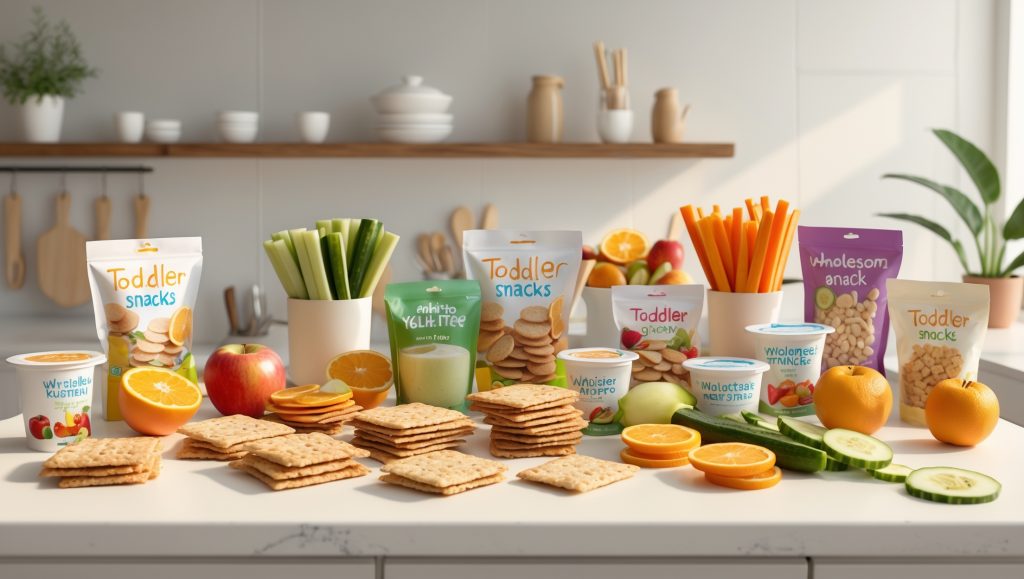
How We Chose
Our top toddler snack picks for 2025 are based on age-appropriateness, safety, wholesome ingredients, developmental value, convenience, and overall value. We included a mix of organic, budget-friendly, and specialty options, prioritizing snacks that are easy for little hands to manage and fit for busy family routines. All options emphasize safe textures, clear labeling, and a focus on common allergens. This list is intended as a practical guide for families; always read labels and consult your pediatrician for specific concerns.
1. Earth’s Best Organic Sunny Days Snack Bars — Fruit-Filled Soft Bars
Why it stands out
These soft-baked bars are easy to chew and come in kid-friendly flavors like apple and strawberry. Individually wrapped, they’re perfect for diaper bags or lunchboxes.
Best for
- On-the-go families
- Toddlers transitioning to more complex textures
Key notes
- Age/Stage: 12+ months
- Materials/Ingredients: Organic fruit puree, whole grains, no artificial flavors
- Strengths: Soft, portable, organic
- Trade-offs: Contains wheat; not suitable for gluten allergies
2. HappyTot Super Bellies Pouches — Veggie & Fruit Blend with Prebiotics
Why it stands out
Convenient squeeze pouches combine fruits, veggies, and prebiotics for digestive support. Clear labeling and simple ingredients make it a parent favorite.
Best for
- Picky eaters
- Travel or daycare snacks
Key notes
- Age/Stage: 12+ months
- Materials/Ingredients: Organic fruits, veggies, prebiotics
- Strengths: Balanced nutrition, easy to eat, shelf-stable
- Trade-offs: Not a substitute for whole fruits/veggies
3. Gerber Lil’ Crunchies — Baked Corn Snack Sticks
Why it stands out
These melt-in-the-mouth snacks are a safe, fun way for toddlers to practice self-feeding and develop their pincer grasp. Several savory flavors available.
Best for
- Independent snackers
- Mess-free snacking
Key notes
- Age/Stage: 12+ months
- Materials/Ingredients: Cornmeal, sunflower oil, real cheese (some flavors)
- Strengths: Dissolves easily, promotes self-feeding
- Trade-offs: Low protein; not suitable for dairy allergies
4. Once Upon a Farm Organic Dairy-Free Yogurt Alternative — Plant-Based Pouches
Why it stands out
Dairy-free, organic, and cold-pressed for optimal freshness, these pouches offer a creamy snack for kids with dairy sensitivities.
Best for
- Families seeking dairy alternatives
- Allergen-aware households
Key notes
- Age/Stage: 12+ months
- Materials/Ingredients: Coconut milk, fruit puree, no added sugar
- Strengths: Allergen-friendly, organic, no refrigeration needed until opened
- Trade-offs: Short shelf-life after opening
5. Annie’s Organic Cheddar Bunnies — Classic Crunchy Crackers
Why it stands out
With their cute shapes and familiar cheddar flavor, these crackers are an affordable, kid-approved staple.
Best for
- Lunchboxes and car snacks
- Kids who love crunchy textures
Key notes
- Age/Stage: 18+ months (must be able to chew crunchy foods)
- Materials/Ingredients: Organic wheat, real cheese
- Strengths: Organic, fun shapes, good value
- Trade-offs: Contains wheat and dairy
6. Plum Organics Mighty Snack Bars — Whole Grain Bars with Super Seeds
Why it stands out
These snack bars offer fiber and omega-3s from chia and flax, with a soft texture that’s easy for toddlers to manage.
Best for
- On-the-go nutrition
- Kids needing extra fiber
Key notes
- Age/Stage: 12+ months
- Materials/Ingredients: Whole grains, chia, flax, fruit puree
- Strengths: Nutrient-dense, soft texture
- Trade-offs: May be messy if squished
7. Little Bellies Organic Puff Corn — Light, Dissolvable Puffs
Why it stands out
These organic puffs dissolve quickly for safe self-feeding and are made with simple, non-GMO ingredients.
Best for
- Early snackers
- Parents seeking minimal ingredients
Key notes
- Age/Stage: 12+ months
- Materials/Ingredients: Organic corn, sunflower oil
- Strengths: Dissolves easily, organic, allergen-friendly
- Trade-offs: Low in protein
8. Stonyfield Organic YoBaby Yogurt — Cultured Dairy Cups
Why it stands out
With live active cultures and whole milk, YoBaby is a creamy, probiotic-rich snack that supports gut health for toddlers.
Best for
- Serving at home
- Kids needing more calcium and probiotics
Key notes
- Age/Stage: 12+ months
- Materials/Ingredients: Whole milk, fruit puree, live cultures
- Strengths: Probiotics, organic, creamy
- Trade-offs: Requires refrigeration, contains dairy
9. MadeGood Granola Minis — Allergen-Friendly, Bite-Sized Clusters
Why it stands out
Free from most common allergens (including nuts, dairy, and gluten), these granola minis are safe for playdates and packed with hidden veggies.
Best for
- Allergy-aware families
- School and daycare snacks
Key notes
- Age/Stage: 18+ months (due to chewy texture)
- Materials/Ingredients: Gluten-free oats, fruits, vegetables
- Strengths: Allergen-friendly, bite-sized, vegetables
- Trade-offs: Dense texture may not suit younger toddlers
10. Simple Truth Organic Sliced Apples — Fresh, Pre-Packaged Fruit
Why it stands out
Pre-sliced and packaged for convenience, these apples offer a fresh, minimally processed snack that’s easy to grab and go.
Best for
- Busy mornings
- Introducing fresh fruit textures
Key notes
- Age/Stage: 12+ months (ensure slices are age-appropriate)
- Materials/Ingredients: 100% fresh apples, no preservatives
- Strengths: Fresh, portable, vitamin C
- Trade-offs: Must be consumed quickly to avoid browning
Buying Tips
When choosing toddler snacks, always check age grading and stage recommendations on packaging. Look for allergens (wheat, dairy, nuts, soy, etc.) and read labels carefully. Consider your child’s texture readiness—start with soft or dissolvable options for younger toddlers and introduce crunchy or chewy snacks as skills develop. Durability and convenience matter for busy routines: shelf-stable pouches, individually wrapped bars, and pre-sliced fruits make on-the-go feeding easier. For home, refrigerated yogurt or fresh fruits add variety. Clean-up is easier with resealable packaging, and proper storage helps avoid spoilage.
Verdict
Every toddler and family routine is unique. For active families, pouches, snack bars, and puffs are great grab-and-go choices. For home, yogurt and fresh fruit promote variety and nutrition. Allergy-aware picks like MadeGood Minis help ensure safety during group snacks. Always supervise snack time, introduce new foods gradually, and adjust for your child’s preferences and developmental stage. This is not medical advice. For dietary concerns or allergies, consult your pediatrician.
With twins on opposite nap schedules, sometimes one toddler is snacking while the other is just waking up and not super hungry yet. Are any of these snacks okay to leave out safely for a bit, or do you have tips for keeping things convenient but still fresh when routines are unpredictable?
It’s understandable to want snack time to be flexible with unpredictable routines and twins on different schedules. To keep snacks safe and fresh, choose options that don’t spoil quickly, like dry whole grain crackers or freeze-dried fruit, and avoid perishable foods (like dairy or cut fruit) sitting out for more than an hour. Store prepped snacks in small, covered containers so you can offer them as needed. Use an insulated cooler bag with an ice pack if you want to keep perishable snacks handy. Always supervise toddlers while eating to prevent choking. This isn’t medical advice; if you have food safety or nutrition concerns, please consult your pediatrician.
Do you have any suggestions for offering these snacks as part of a calming bedtime routine? I am trying to avoid anything too stimulating close to bedtime for my toddler, but sometimes a small snack helps her settle down.
It’s great that you’re mindful of creating a calming bedtime routine for your toddler. To keep snacks soothing, choose options from the article that are low in sugar and not too crunchy, like a small bowl of plain yogurt or a few slices of ripe banana. Offer the snack about 30 minutes before bedtime to allow time for digestion. Serve it in a quiet, dim area to reinforce the bedtime mood, and keep portions small to avoid an upset tummy. Always supervise your toddler when eating to prevent choking, especially with soft fruits or dairy. This isn’t medical advice; if you’re concerned, check in with your pediatrician.