
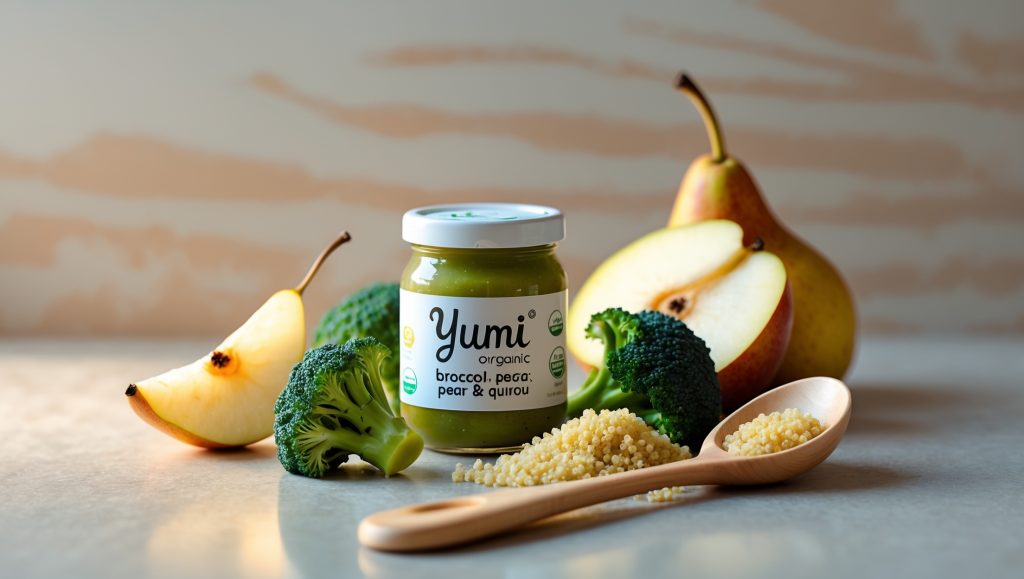
Overview
Yumi’s Organic Broccoli, Pear & Quinoa Baby Food is a thoughtfully crafted blend designed for babies ready to explore new flavors and textures. Inspired by whole-food nutrition and Montessori values—such as fostering independence and curiosity—this blend aims to introduce green vegetables alongside subtly sweet fruit and gentle grains. In the crowded landscape of organic baby foods in the US, Yumi positions itself as a fresh, minimally processed option that emphasizes clean ingredients and transparency. This review delves into its nutritional value, sensory experience, and how it fits into busy family life in 2025.
Ingredients & Nutrition
Yumi’s Organic Broccoli, Pear & Quinoa Baby Food is made with USDA-certified organic broccoli, pears, and cooked quinoa, blended with a touch of filtered water. The ingredient list is refreshingly short, reflecting a commitment to whole foods without added sugars, salt, or artificial preservatives. Each 4-ounce jar delivers a balanced mix of vitamins, minerals, and fiber crucial for early development:
- Broccoli is rich in vitamin C, vitamin K, folate, and fiber—supporting immune health and gentle digestion.
- Pear adds natural sweetness, vitamin C, and additional fiber, making the blend more palatable for little ones starting solids.
- Quinoa contributes plant-based protein, iron, and essential amino acids, promoting healthy growth and sustained energy.
The blend is free from major allergens (like dairy, soy, and nuts) and is suitable for most babies beginning solids, typically around 6 months—though age and readiness should always be discussed with a pediatrician. Yumi also conducts third-party testing for heavy metals, a growing concern among US families.
Taste & Texture
Yumi’s blend strikes a careful balance between earthy, savory notes from broccoli and the gentle sweetness of pear. The result is a mild flavor profile that can help broaden your baby’s palate, especially for families seeking to introduce green vegetables early. Quinoa adds a subtle nuttiness and rounds out the taste without overwhelming the more delicate flavors.
The texture is smooth but slightly thick, thanks to the presence of pureed quinoa. This consistency supports both spoon-feeding and self-feeding (with pre-loaded spoons or as a dip), aligning well with Montessori-inspired approaches that encourage babies to engage with food independently. There are no large lumps or gritty pieces, making it an accessible option for early eaters developing oral-motor skills.
Convenience & Storage
Each portion is packaged in a recyclable glass jar with a secure twist-off lid, supporting sustainability and freshness. Jars are delivered chilled and should be refrigerated upon arrival. Once opened, the blend remains fresh for up to 24 hours in the refrigerator. Unopened, jars typically stay fresh for up to 7 days in the fridge, as Yumi products are made in small batches and do not contain preservatives. This means a shorter shelf life compared to shelf-stable pouches or jars, but the trade-off is fresher taste and minimal processing.
For busy families, Yumi offers subscription-based delivery with flexible options—pause, skip, or change flavors as your baby’s preferences evolve. The jars travel well for outings if kept cold in an insulated bag, but are best consumed at home or places with refrigeration. Feeding directly from the jar is convenient, but Montessori-minded families may prefer to portion the puree into a small bowl to encourage self-feeding and table participation.
Pros & Cons
Pros
- Organic and minimally processed ingredients with no added sugars or preservatives
- Balanced nutrition with vegetables, fruit, and plant-based protein
- Short, transparent ingredient list—easy for parents to understand
- Fresh, appealing flavor and smooth texture suitable for early eaters
- Montessori-friendly: supports independent feeding and sensory exploration
- Glass packaging is recyclable and keeps food fresh
Cons
- Shorter shelf life compared to shelf-stable baby foods
- Requires refrigeration, limiting portability for travel or daycare
- Higher price point than many mass-market baby food brands
- Availability may be limited to online orders or select urban areas
Alternatives & Similar Products
Families seeking similar blends have a growing selection of organic baby foods that feature vegetables and grains. Notable alternatives include:
- Once Upon a Farm Green Kale & Apples – Another chilled, fresh option with a focus on greens and fruit. Slightly different flavor profile but a similar commitment to whole foods.
- Serenity Kids Organic Sweet Potato, Spinach & Chicken – For those who want a savory blend with added protein (animal-based), also shelf-stable and convenient.
- Homemade Purees – Steaming and blending your own broccoli, pear, and quinoa at home gives full control over texture and ingredient sources, though it requires more prep time.
- Bella Baby Organic Broccoli, Apple & Millet Puree – A shelf-stable pouch with a similar combination of flavors, but with millet in place of quinoa.
Each alternative has its own trade-offs in terms of cost, convenience, shelf life, and ingredient transparency. Yumi stands out for its fresh, cold-pressed approach and Montessori-friendly packaging.
Verdict
Yumi Organic Broccoli, Pear & Quinoa Baby Food offers a nutritious, flavorful introduction to green vegetables that aligns with Montessori values of independence and sensory exploration. Its clean ingredient list and fresh taste make it an appealing option for families who prioritize whole foods and transparency. While the need for refrigeration and a higher price point may not work for every family, those seeking premium, minimally processed options will appreciate Yumi’s thoughtful approach. The blend’s texture and flavor are likely to please both babies and parents eager to cultivate adventurous eating habits from the start.
FAQ
+Is Yumi Organic Broccoli, Pear & Quinoa suitable for babies with allergies?
+How do I serve this baby food in a Montessori-inspired way?
+How long does the product last once opened?
+Can I freeze Yumi baby food jars for longer storage?
+Does this blend contain added sugars or salt?
+Is the glass packaging recyclable?
+How does the price compare to other baby foods?

Yumi Organic Broccoli, Pear & Quinoa Baby Food stands out as a thoughtfully crafted choice for parents seeking wholesome nutrition for their little ones. This blend combines the gentle earthiness of organic broccoli with the natural sweetness of pear and the hearty nourishment of quinoa, introducing babies to a spectrum of flavors and nutrients. The texture is smooth and palatable, making it ideal for infants learning to enjoy solids. Yumi’s commitment to using only organic, non-GMO ingredients ensures that each pouch is free from artificial additives or preservatives, giving parents peace of mind about what’s going into their baby’s diet.
The inclusion of quinoa is especially noteworthy—it’s a complete protein and a source of essential amino acids, which are vital for growth and development. Meanwhile, broccoli provides fiber and vitamin C, and pear adds a gentle sweetness along with additional vitamins. This combination supports digestive health and early palate development, helping babies cultivate a taste for greens from the start. For parents in the US who value convenience without compromising on quality, Yumi’s blend is a reliable, nutritious option for their little learners.
- Certified organic and non-GMO ingredients
- Rich in protein, fiber, and essential vitamins
- Gentle, baby-friendly taste and texture
- Supports early palate and digestive health
My 14-month-old is very sensitive to green veggies and can be picky with new textures. Do you have any tips for introducing this blend without triggering gagging or refusal? I noticed the article mentioned a slightly thick texture – could that be too challenging for some picky eaters at this age?
It’s completely normal to worry when your toddler resists greens or new textures. Try offering very small spoonfuls of the Yumi blend alongside familiar favorites, so the new taste isn’t overwhelming. You can thin the texture with a bit of breastmilk, formula, or water to make it less thick for sensitive eaters. Allow your child to play with and touch the food, since sensory exploration can reduce anxiety. Sit together during meals and stay neutral if they refuse—gentle persistence is key at this age. Always supervise to prevent choking, and ensure any added ingredients are age-appropriate. This isn’t medical advice; if you’re concerned, check in with your pediatrician.
Since Yumi jars need to be used within 24 hours of opening, would you recommend using leftovers for a quiet snack later the same morning, or do you have ideas for incorporating them into other low-key, early activities?
It’s great that you’re thinking about minimizing waste and making the most of your Yumi jars. For infants over 6 months, you can safely offer the leftovers as a snack later the same morning if they’ve been refrigerated and not left out. Alternatively, use a small spoonful as a dip for soft, age-appropriate finger foods, or let your baby explore the texture with supervised self-feeding during play. Always ensure any utensils and surfaces are clean, and discard the food if your child has double-dipped from the jar. This isn’t medical advice; if you’re unsure, your pediatrician can give more guidance.
My child is sensitive to strong flavors and sometimes refuses greens. Does the pear in this blend do enough to mellow out the broccoli taste, or would it still be considered bold for picky eaters?
It’s understandable to be cautious when introducing greens to a child with flavor sensitivities. In this blend, the natural sweetness of pear does help mellow the broccoli, making the overall taste milder than plain broccoli puree. You might start by offering a small spoonful and watching your child’s reaction. If they seem hesitant, try mixing the blend with a familiar fruit puree to further soften the taste. For babies under one year, always monitor for any reaction and watch for appropriate texture. This isn’t medical advice; if you have concerns about your child’s eating habits, check in with your pediatrician.
My pediatrician mentioned watching out for heavy metals in baby food. You wrote that Yumi does third-party testing—are the results available to parents, and how often are these tests done for each batch?
It’s so important to feel confident about the safety of what your baby eats. Yumi does state that they use third-party labs to test for heavy metals, and this helps ensure higher safety standards. However, test results are not routinely published for each batch; you can reach out directly to Yumi’s customer service to request more detailed information about specific testing frequency and results. Always supervise babies when trying new foods and consult your pediatrician if you have concerns. This isn’t medical advice; if you’re worried, check in with your pediatrician.
With the focus on independence and letting babies self-feed, how do you recommend minimizing any accidental access to the glass jar lids, especially since those could become a small-parts hazard during busy family meals?
You’re right to be cautious about small-parts hazards like glass jar lids during self-feeding. Try opening all jars yourself before placing them out of your child’s reach. Offer food in shallow, baby-safe bowls or on a silicone mat instead of directly from the jar. Supervise closely, especially if older siblings are present, to ensure lids don’t end up near little hands. Clean up lids as soon as jars are empty, and keep a designated spot for them away from the eating area. This isn’t medical advice; if you’re concerned, check in with your pediatrician.
Can this Yumi blend be served both cold and slightly warmed, or does heating it affect the taste and texture? My little one is sometimes hesitant with colder foods and I want to encourage self-feeding.
It’s very understandable to want your baby to enjoy mealtimes, especially when introducing new flavors and textures. Yumi’s Broccoli, Pear & Quinoa blend can be served cold or gently warmed—warming it slightly (not hot) may enhance aroma and make the consistency smoother, which can help encourage self-feeding. Always mix well and test the temperature before serving to avoid any hot spots. For safety, avoid overheating or microwaving in the pouch. At around 6 months and up, babies can safely explore temperature and texture variations with close supervision. This isn’t medical advice; if you’re concerned, check in with your pediatrician.
Considering the short fridge life and the use of glass jars, how does Yumi compare in terms of cost per serving or convenience with similar organic baby food brands on the market?
You’re making a thoughtful comparison for your baby’s nutrition and your family’s routine. Yumi’s glass jars and short fridge life mean you’ll need to refrigerate opened jars promptly and use them within 24 hours, which can be less flexible than shelf-stable pouches. In terms of cost, Yumi’s price per serving is often higher than some major organic brands, largely due to its fresh, small-batch model and premium packaging. For convenience, single-serve pouches from other brands might better suit busy days or travel, but always check labels for age-appropriateness and avoid glass near young children. This isn’t medical advice; if you have further questions, your pediatrician can offer guidance.
We’re on a tight budget and making some of our own baby food, but I’m tempted by the convenience of Yumi. Would you say the cost is justified compared to homemade purees, particularly considering the organic ingredients and third-party metals testing?
You’re thoughtful to weigh convenience, budget, and safety for your baby’s food. Homemade purees can be very affordable and let you control ingredients, but using Yumi offers peace of mind with their certified organic produce and third-party metals testing—important for infants sensitive to contaminants. If cost is a concern, you might try a mix: make most purees at home and use Yumi for peace of mind on certain foods, like root veggies or rice, which can have higher metal risks. Always check age recommendations and watch for any allergies. This isn’t medical advice; if you’re concerned, check in with your pediatrician.
My twins have different preferences when it comes to textures—one likes things smooth, the other sometimes gags on thicker foods. Would this blend work for both, or is there a way to thin it out further without compromising nutrition or taste?
It’s completely normal for twins to have different texture preferences at this age, and you’re thoughtful to consider both their needs. Yumi’s Broccoli, Pear & Quinoa blend is designed to be smooth, but if one of your little ones needs an even thinner texture, you can stir in a small amount of breast milk, formula, or water to adjust consistency without diluting nutrition or taste. Start with a teaspoon at a time and mix well. Always supervise during feeding to ensure safety, especially if gagging has occurred. This isn’t medical advice; if you’re concerned about persistent gagging or feeding challenges, check in with your pediatrician.
We’re trying to introduce more green veggies, but my two-year-old sometimes refuses anything green. Any tips on making this blend more appealing? Is it okay to mix it into oatmeal or yogurt without losing the nutritional benefits?
It’s very common for toddlers to go through phases of refusing green foods, and you’re not alone in wanting to encourage more variety. You might try serving the blend alongside a favorite food, mixing small amounts into oatmeal or plain yogurt to mellow the flavor and color, or letting your child help stir it in to boost interest. Mixing the Yumi blend into oatmeal or yogurt is fine—the nutrients will remain, though heating the blend at high temperatures for a long time might reduce some vitamin content, so gentle warming is best. At two years old, always supervise for texture and choking risks. This isn’t medical advice; if you’re concerned, check in with your pediatrician.
My daughter is two and sometimes picky about green veggies. Does the pear in this blend really mask the broccoli taste enough for kids who are hesitant, or is the broccoli flavor pretty strong? Any feedback from families with veggie-averse toddlers?
It’s completely normal to worry about picky eating, especially with green veggies. In the Yumi blend, the pear does add natural sweetness and tends to soften the broccoli flavor, making it less intense for most toddlers. Many parents notice their veggie-hesitant little ones are more willing to try this blend than plain greens. If you’re introducing it, try offering just a spoonful alongside familiar favorites, and serve it when your daughter is hungry. For a two-year-old, this texture is age-appropriate and safe, but supervise closely as always. This isn’t medical advice; if you’re concerned, check in with your pediatrician.
My pediatrician keeps emphasizing iron for early development, and many baby cereals in the US are fortified specifically for this purpose. Would choosing a product like Yumi still offer enough iron, or is cereal a better staple when iron is the main concern?
It’s great that you’re focusing on your baby’s iron needs, as iron is so important for early development. While Yumi’s Broccoli, Pear & Quinoa blend provides some plant-based iron, many baby cereals in the US are fortified and may offer higher, consistent iron levels per serving. If iron is your main concern, you might use an iron-fortified cereal as a staple and offer blends like Yumi as a complement for variety. For babies under 1, always supervise eating and watch for readiness cues. This isn’t medical advice; if you’re unsure about your baby’s iron intake, checking in with your pediatrician is a smart next step.
We’re introducing green vegetables right now, but my daughter often makes faces with broccoli flavors. Would you say the pear in this blend is sweet enough to mask the broccoli taste, or would it be better to start with more fruit-forward options?
It’s very normal for babies to react strongly to new vegetable flavors, especially with greens like broccoli. The pear in the Yumi blend does add natural sweetness, which can help soften the broccoli’s taste, but your daughter may still notice the green flavor. You could start by mixing a small amount of this blend with a fruit-forward puree your baby already enjoys, gradually increasing the veggie blend over several tries. Always watch for your baby’s cues and go slowly—repeated gentle exposure often helps. Make sure all foods are the right texture for her age and supervise closely. This isn’t medical advice; if you’re concerned, check in with your pediatrician.
My 10-month-old is pretty sensitive to textures, sometimes gagging on thicker purees. How would you describe the actual mouthfeel of this blend compared to homemade steamed broccoli and pear, and would it work for babies still struggling with chunkier foods?
It’s completely understandable to be cautious when your baby is sensitive to textures. Compared to homemade steamed broccoli and pear, Yumi’s Organic Broccoli, Pear & Quinoa blend is smoother and more uniform, with a very fine, almost velvety consistency—much closer to a stage 2 or smooth stage 3 puree, rather than a chunky mash. For a 10-month-old still working through texture aversions, this could be less triggering than homemade blends that may have small lumps or stringy bits. Try offering a tiny spoonful at first and watch for cues, always supervising closely. This isn’t medical advice; if you’re concerned, check in with your pediatrician.
My baby is approaching 10 months and starting to eat more chunkier textures. Would this blend still be a good fit, or should I be looking for something with more varied consistency to better support oral-motor development at this age?
It’s great that you’re thinking about supporting your baby’s oral-motor development as textures become more important around 10 months. The Yumi Organic Broccoli, Pear & Quinoa blend is quite smooth, so you might consider mashing it lightly with a fork or mixing in small, soft chunks of cooked vegetables or fruit to encourage chewing skills. Try offering finger foods like soft-cooked veggies or ripe fruit pieces alongside purees as well. Always supervise closely, and avoid foods that are choking hazards. This isn’t medical advice; if you’re concerned, check in with your pediatrician.
I see Yumi jars are free from major allergens, but I’m curious about how you handle introducing this kind of green blend to a picky eater, especially one who sometimes rejects vegetables due to texture or taste. Any tips for encouraging acceptance?
It’s great that you’re looking for ways to help your picky eater try new veggies. Start by offering a very small taste—just a tiny spoonful—without pressure to finish. Describe the texture and flavor in positive, neutral words, like smooth or fresh, so your child knows what to expect. Try serving the blend alongside a familiar favorite, so it feels less intimidating, and allow your child to touch or play with the puree if they want. If your child is old enough, you might let them help you spoon it out, which can increase interest. Always supervise closely, and remember, repeated gentle exposure is key. This isn’t medical advice; if you’re concerned, check in with your pediatrician.
For families concerned about heavy metals in baby food, does regularly rotating Yumi’s jars with homemade purees or other brands help reduce overall exposure, or is it better to stick with one trusted source like Yumi for peace of mind?
Your concern about heavy metals in baby food is very understandable. Rotating among different baby foods—including Yumi, homemade purees, and other reputable brands—can minimize ongoing exposure by reducing the risk of repeated intake from a single source. If making homemade purees, use a variety of fruits and veggies, and wash them well. Always introduce new foods one at a time and watch for any allergic reactions. For babies under one, avoid possible choking hazards and honey. This isn’t medical advice; if you’re worried about heavy metals or your baby’s nutrition, check in with your pediatrician.
Is this Yumi blend a good option for introducing self-feeding with pre-loaded spoons, or is it better suited to adult-led spoon feeding? I’m trying to encourage independence at mealtime and want something manageable for tiny hands.
It’s wonderful you’re encouraging your little one’s independence at mealtime. The Yumi Organic Broccoli, Pear & Quinoa blend has a smooth but slightly thicker texture, which generally works well for pre-loaded spoons—great for babies around 6 months and up who are starting solids. Try loading a small spoon and handing it to your child; supervise closely to support safe self-feeding and minimize mess. If the texture seems too runny, you can chill it slightly to firm it up a bit. Always watch for any signs of difficulty or allergies. This isn’t medical advice; if you have concerns about readiness or safety, check in with your pediatrician.
You mention that the jars stay fresh for only 7 days unopened in the fridge—how does that compare to other organic baby foods? I’m trying to decide if this is practical for our meal planning routine.
It’s thoughtful of you to consider freshness when planning your baby’s meals. Many organic refrigerated baby foods have a similar shelf life—typically 5 to 10 days unopened in the fridge—because they avoid preservatives. Shelf-stable options last much longer but often use different processing methods. If you choose Yumi, try to buy only what you’ll use within a week and label jars with the purchase date. Always check for spoilage before serving, and supervise feeding. This isn’t medical advice; if you’re concerned, check in with your pediatrician.
I’m planning meals for my busy mornings before daycare drop-off. Does this blend work well as a quick breakfast on its own, or should I offer another protein source alongside it to keep my child full until lunchtime?
It’s great that you’re thinking ahead about a nourishing breakfast for your child. The Yumi Organic Broccoli, Pear & Quinoa blend offers gentle plant-based nutrition and some protein from quinoa, but young children—especially toddlers—may need a bit more protein or healthy fat to stay full until lunchtime. You might pair it with a little full-fat yogurt, a mashed hard-boiled egg if age-appropriate, or a thin smear of nut butter (if already safely introduced and allergy-cleared). Always watch for choking hazards with these add-ons, especially for babies under one. This isn’t medical advice; if you’re concerned, check in with your pediatrician.
As a parent with twins on different nap schedules, I’m always looking for baby foods that simplify meal prep. How does Yumi’s broccoli, pear, and quinoa blend hold up if I need to feed one twin now and the other several hours later? Does the texture or taste change after sitting in the fridge for a bit?
Managing different nap times is a real challenge, and finding flexible baby foods can help a lot. Yumi’s broccoli, pear, and quinoa blend is designed to be refrigerated and can be safely stored for up to 24 hours after opening. Between feeds, keep the unused portion tightly sealed in the fridge. Before serving the next meal, stir gently to even out any separation and check the texture—it may thicken slightly as it sits, but this is normal. If it looks too thick, a small splash of breast milk or formula can help. Always taste or smell before serving to be sure it’s still fresh. This isn’t medical advice; if you have concerns about storage or reactions, reach out to your pediatrician.
If we’re using empty Yumi jars for sensory play, are there any household items you recommend for safe, supervised pretend play that aligns with Montessori principles? I’d love some ideas for making cleanup easy too.
It’s wonderful that you’re looking for creative, safe ways to extend play with everyday items. For Montessori-inspired, supervised sensory play with clean Yumi jars, try filling them with dry pasta, rice, or beans, but always supervise closely to prevent choking (best for toddlers over 18 months). You can also use cotton balls, pom-poms, or large buttons for less mess and easy pickup—avoid small items for children under 3. For pretend play, water with a drop of food coloring can mimic pouring exercises. To make cleanup easy, use a large tray or shallow bin to contain spills, and encourage your child to help with sorting and putting things away. This isn’t medical advice; if you’re concerned, check in with your pediatrician.
Do you think this blend would still be suitable for a slightly older toddler who is used to chunkier textures, or is it mainly ideal for babies just starting solids?
It’s great that you’re thinking about the right texture for your toddler’s stage. While Yumi’s Organic Broccoli, Pear & Quinoa blend is designed for babies beginning solids and is quite smooth, you can certainly use it for older toddlers too, especially if you mix it with chunkier foods or use it as a topping on oatmeal or yogurt. Always supervise meals and check for any possible allergens. If your child prefers finger foods, you might also offer the puree alongside soft-cooked veggies or fruit pieces. This isn’t medical advice; please consult your pediatrician if you have concerns about your child’s eating skills or preferences.
The piece mentions third-party testing for heavy metals, which is reassuring. Could you clarify if the results of those tests are available for parents to see, and how often these tests are conducted on batches?
It’s thoughtful to want transparency about what your baby eats. According to the article, Yumi states they use third-party testing for heavy metals, but batch-specific test results are not publicly posted for parents. Generally, companies like Yumi test batches regularly, but the exact frequency may vary, so reaching out to their customer service for details is a good step. If your child has specific sensitivities or you’re concerned about contaminants, talk with your pediatrician. This isn’t medical advice; if you’re concerned, check in with your pediatrician.
My baby is sensitive to certain textures and sometimes gags with thicker foods. Since you mentioned that the puree is slightly thick from the quinoa, can the texture be easily thinned out at home without compromising nutrition?
It’s completely understandable to want to make new foods easier for your baby if they have texture sensitivities. To thin the Yumi Broccoli, Pear & Quinoa puree, you can gently stir in a little breast milk, formula, or filtered water until you reach a smoother consistency. Add just a small amount at a time to avoid making it too runny. Warming the puree slightly can also help even out the texture. Always supervise your baby while eating and check for any signs of discomfort or allergies. This isn’t medical advice; if you’re concerned, check in with your pediatrician.
My four-year-old sometimes struggles with new textures, especially anything that feels grainy. Based on your review, do you think the pureed quinoa might present any issues for kids who are extra sensitive to textures, or does it blend in smoothly with the rest of the ingredients?
It’s very normal for young children to be sensitive to certain textures, especially at age four. According to my review, the Yumi Organic Broccoli, Pear & Quinoa blend is pureed to a smooth consistency, with the quinoa well-blended and not noticeably grainy. If your child is especially sensitive, you might try offering a small amount first, watching their reaction, and mixing it with a familiar favorite if needed. Always supervise eating to ensure safety. This isn’t medical advice; if you’re concerned, check in with your pediatrician.