
Introduction
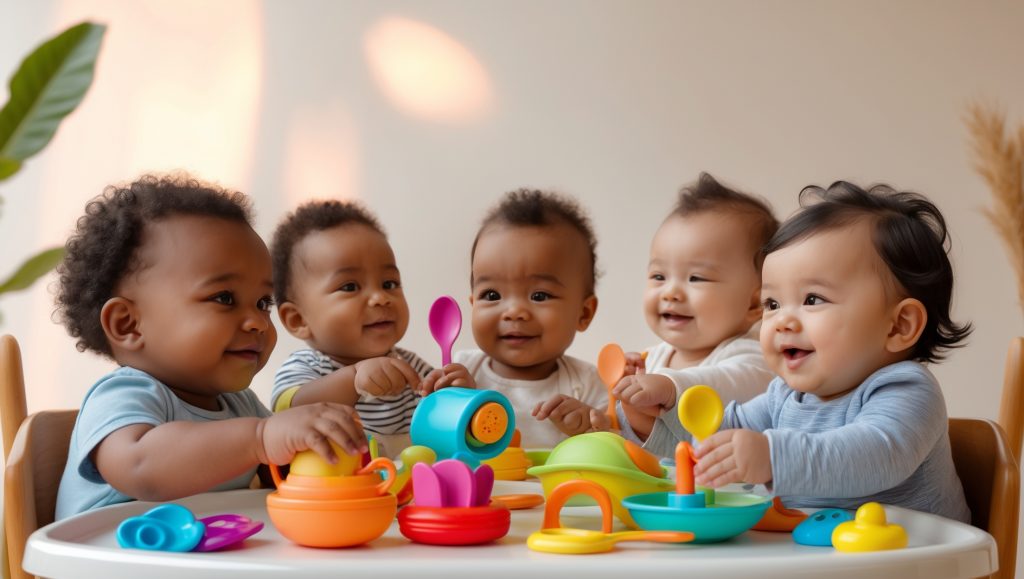
Introducing solids is a significant milestone in every baby’s development, signaling the transition from exclusive milk feeding to a world of new tastes, textures, and skills. While much attention is given to food choices and schedules, the role of toys and play during this period is often overlooked. Thoughtfully selected toys can help babies build the fine motor skills, sensory awareness, and confidence needed to explore new foods. This article offers evidence-informed guidance for families in the US who are seeking to support their baby’s mealtime journey through purposeful play and age-appropriate toys.
The Role of Play in the Introduction of Solids
Play is central to how babies learn, and introducing solids is no exception. Toys and playful experiences can make mealtimes enjoyable, reduce anxiety about new foods, and foster developmental skills that underpin successful eating. As babies transition to solids, they are working on:
- Developing hand-to-mouth coordination
- Exploring different textures with fingers and mouths
- Building grip strength for holding utensils and cups
- Practicing chewing, biting, and self-feeding
- Becoming comfortable with the sensory aspects of food (sight, smell, touch, taste)
By choosing toys that support these skills, families can make the transition smoother and more engaging for their babies.
Types of Toys to Support Motor and Sensory Skills at Mealtimes
1. Grasping and Manipulative Toys
Babies need to learn how to pick up small objects, a skill directly related to self-feeding. Toys that encourage the pincer grasp (thumb and forefinger) or palmar grasp (whole hand) can help. Examples include:
- Soft silicone stacking rings or cups
- Easy-grip rattles or textured balls
- Large, food-safe beads for threading and handling (supervised play only)
These toys not only build hand strength and dexterity but also introduce babies to the concept of holding and releasing objects—key for picking up food.
2. Sensory Play Items
Babies explore new foods with all their senses. Sensory toys that offer different textures, temperatures, and shapes can help them adjust to the varied sensations of eating. Consider:
- Food-safe teethers with bumps, ridges, or varied surfaces
- Water mats or sensory boards with safe, edible elements (like frozen fruits in mesh feeders)
- Soft, squishy blocks or fabric books featuring food imagery
Offering a range of sensory experiences through play can reduce resistance to unfamiliar foods and make mealtimes more positive.
3. Mealtime Tools as Toys
Utensils, open cups, and divided plates designed for babies can double as developmental toys. Letting your baby handle (and play with) their spoon, fork, or cup before and during meals helps them get comfortable with these tools, turning feeding into a playful learning opportunity. Look for:
- Soft-tipped spoons with chunky handles for easy gripping
- Trainer cups with removable lids and handles
- Plates with suction bases that invite self-feeding without frustration
Allowing your baby to explore these items through play—even outside of mealtimes—can build familiarity and reduce mealtime stress.
Safety Considerations for Toys During Solids Introduction
As babies become more mobile and curious, toy safety becomes especially important. When selecting toys for this stage, keep the following in mind:
- Material safety: Choose toys that are BPA-free, phthalate-free, and made from materials safe for mouthing.
- Size: Avoid toys with small parts that could pose a choking hazard. Any toy that fits entirely into a toilet paper roll should be kept away from babies under 12 months.
- Cleanability: Select toys that are dishwasher-safe or easy to wash, as they will frequently come into contact with food and saliva.
- Supervision: Always supervise play, especially when toys are used near food or during mealtimes.
Regularly inspect toys for signs of wear or damage, and replace items that are cracked, chipped, or otherwise compromised.
Age-Appropriate Toy Recommendations for Babies Starting Solids
6–9 Months: Early Explorers
- Soft silicone teethers: Help with sore gums and introduce texture.
- Easy-grip rattles: Support hand control and auditory exploration.
- Textured balls: Encourage grasping, rolling, and gentle mouthing.
- Beginner spoons: Chunky handles for little hands (let baby practice holding and mouthing).
9–12 Months: Budding Feeders
- Stacking cups: Great for play and introducing scooping motions.
- Food-safe sensory mats: Develop tactile awareness and comfort with messiness.
- Trainer cups: Encourage sipping and self-feeding skills.
- Suctions bowls/plates: Let baby practice scooping and picking up finger foods.
12+ Months: Confident Tasters
- Utensil sets: Lightweight forks and spoons for practicing self-feeding.
- Play food sets: Soft, safe play foods for pretend mealtime play.
- Interactive mealtime toys: Toy plates, cups, and utensils for role-playing.
- Food puzzles: Chunky wooden or silicone puzzles with food-shaped pieces.
Always adjust toy choices to your baby’s unique development and interests, and consult with your pediatrician about any concerns regarding feeding or play.
Creating Positive Mealtime Routines with Play
Integrating play into mealtimes can make the introduction of solids less stressful for both babies and caregivers. Here are some ways to foster a playful, supportive atmosphere:
- Let your baby explore their utensils and cups before serving food, turning them into familiar objects.
- Describe what you and your baby are doing—narrate the sights, sounds, and textures of both toys and foods.
- Sing songs or play gentle games (like peekaboo) to keep mealtimes joyful and low-pressure.
- Encourage your baby to touch, smell, and even squish their food—sensory play is part of learning to eat.
- Offer praise for effort and exploration, not just for eating.
Remember, the goal is to support your baby’s curiosity and self-confidence as they navigate new experiences at the table.
Common Mistakes
- Offering toys with small, detachable parts that can pose a choking hazard.
- Using toys that are difficult to clean, leading to potential hygiene issues.
- Forcing play or mealtime activities that make your baby uncomfortable or anxious.
- Neglecting to introduce mealtime tools (spoons, cups) as part of play.
- Overstimulating your baby with noisy, flashing toys during meals—simplicity often works best.
- Leaving babies unattended with toys or feeding tools during mealtimes.
- Ignoring your baby’s cues of hunger, fullness, or readiness for solids and new experiences.
Quick Checklist
- Choose toys made from food-safe, non-toxic materials.
- Ensure all toys are large enough to avoid choking risk.
- Regularly clean and inspect toys used for teething and mealtime play.
- Introduce utensils and cups as toys before expecting self-feeding.
- Prioritize simple, sensory-rich toys over complex electronic gadgets.
- Supervise play and eating at all times.
- Pay attention to your baby’s comfort and interest levels—let them lead.
FAQ
+Can toys really help my baby learn to eat?
+What materials should I look for in toys for babies starting solids?
+How do I know if a toy is safe for my baby during mealtimes?
+Should I let my baby play with their spoon or cup outside of meals?
+What are some signs my baby is ready for solids and related play?
+Can play help with picky eating as my baby gets older?
+What should I do if my baby gets frustrated with mealtime toys?
Conclusion
The journey into solids is about more than just nutrition—it’s an adventure in sensory exploration, skill-building, and family connection. By selecting toys that are safe, age-appropriate, and designed for sensory and motor development, families can support their baby’s transition to solids with confidence. Remember, every baby is unique. Let your child’s curiosity and comfort guide your choices, and enjoy the playful messiness of this special stage together.

Choosing the right toys for babies who are beginning their solid food journey is an exciting milestone for families. As little ones explore new tastes and textures, the toys they interact with can play a supportive role in developing healthy eating habits and essential skills. Evidence suggests that toys designed for self-feeding—such as soft spoons, silicone feeders, and textured teething rings—can encourage curiosity and hand-to-mouth coordination. When selecting toys, prioritize those that are easy to clean, free from small parts, and made of non-toxic materials. These choices not only ensure safety but also create a positive environment for sensory exploration.
It’s also important to choose toys that promote independent exploration rather than passive entertainment. For example, stacking cups and soft blocks can be incorporated into mealtime, helping babies learn about cause and effect, grasping, and even early concepts of volume and size. Above all, toys should support your baby’s developmental stage, making mealtimes both engaging and stress-free. With a thoughtful approach, families can foster learning, safety, and joy as their baby navigates the world of solids.
- Prioritize safety: Choose non-toxic, easy-to-clean toys without small parts.
- Encourage exploration: Select toys that promote self-feeding and sensory play.
- Support skill-building: Integrate toys that foster hand-eye coordination and problem-solving.
- Align with development: Pick toys suited to your baby’s current abilities and interests.
My child is sensitive to new textures and gags easily when trying new foods. Are there certain types of sensory toys or play strategies you have found especially helpful for kids who are more hesitant about textures?
It’s completely understandable to want to support your child through texture sensitivities during mealtimes. Try offering soft, easy-to-clean sensory toys like silicone teethers or food-grade textured spoons for your baby to explore with their hands and mouth, always under supervision. Messy play with edible items—such as letting your child squish cooked vegetables or yogurt—can help desensitize them to new textures in a low-pressure way. Go slowly, letting your child lead, and celebrate small steps. Always choose toys and foods that are safe for your child’s age and check for choking hazards. This isn’t medical advice; if you’re concerned, check in with your pediatrician.
I’m a little torn between buying silicone stacking toys and textured balls for my 8-month-old. Is one better than the other for supporting self-feeding skills, or should I rotate both types during the week to cover different developmental needs?
You’re thoughtful to consider which toys will best support your baby’s development at this stage. Silicone stacking toys help build fine motor coordination and hand strength, which are important for self-feeding. Textured balls encourage grasping and tactile exploration, supporting sensory skills needed for handling different foods. Rotating both types during the week allows your 8-month-old to practice a wider range of movements and sensations—just be sure both toys are large enough to prevent choking and made from safe, non-toxic materials. This isn’t medical advice; if you’re concerned, check in with your pediatrician.
Do you have advice for parents on a tight budget who want to prioritize just a few toys from your suggestions to support a baby’s transition to solids without overbuying or cramming our living space?
It’s thoughtful to want to support your baby’s transition to solids without overbuying or crowding your space. Focus first on a high-quality silicone or easy-to-clean plastic feeding set (spoon, bowl, cup) sized for little hands. Add one or two textured teethers or soft self-feeding toys that double as safe mouthing tools, which are helpful for both soothing and exploring new textures. A washable silicone mat is another versatile option to keep mealtimes tidy. Always check for age-appropriate sizing, avoid small detachable parts, and supervise your baby during use. This isn’t medical advice; if you’re concerned, check in with your pediatrician.
Are there specific safety features I need to look for when choosing sensory toys or food-safe beads for supervised play at this age? I worry about choking hazards—how can I make sure these toys are really safe for my toddler?
It’s completely understandable to be concerned about choking hazards at this stage. For toddlers starting solids, always choose toys or beads that are too large to fit through a toilet paper roll, as this helps prevent choking. Look for products labeled as non-toxic and food-grade, and avoid items with small detachable parts. Check that all pieces are securely attached and inspect toys regularly for any signs of wear or breakage. Always supervise your toddler during play, especially with sensory items. This isn’t medical advice; if you’re concerned, check in with your pediatrician.
Some wooden toys seem more expensive and harder to clean than plastic options. Are there specific benefits to choosing wood for babies during the solid food stage, or can plastic work just as well for skill development?
You’re asking a great question about toy materials as your baby starts solids. Both wood and plastic toys can support skill development like grasping and hand-eye coordination. Wooden toys are often more durable and free from some chemicals, but they can be harder to clean thoroughly after mealtimes, especially if food gets stuck in crevices. Plastic toys are usually easier to sanitize, which can be helpful with messy eaters. For babies under one, always check that toys have no small parts or sharp edges and supervise closely. Ultimately, either material can be appropriate as long as the toy is safe and easy to clean. This isn’t medical advice; if you have concerns, check with your pediatrician.
Are there safety concerns with certain mealtime play tools when combining them with iron-rich purees versus cereals? For example, could some toys be better suited for thicker purees compared to more liquid cereals?
You’re right to consider safety when choosing play tools for different food textures. For thicker purees, sturdy silicone or plastic spoons and teethers (BPA-free, easy to clean, no small parts) can be easier for babies to handle. With liquid cereals, avoid toys with holes or seams where liquid can pool and grow bacteria, and steer clear of plush or absorbent toys that are hard to clean. Always supervise closely, rinse toys after use, and check for signs of wear. This isn’t medical advice; if you’re concerned, check in with your pediatrician.
Should I be rotating these kinds of toys throughout the day, or is it more helpful to keep them just for mealtimes to make the association with new foods stronger for my toddler?
It’s great that you’re thinking about how toy routines can support your toddler’s learning around new foods. To strengthen the association, try keeping these specific toys just for mealtimes, so your child connects them with eating and exploring new foods. You can rotate other toys during playtime to keep things interesting. For safety, always supervise closely and make sure all toys used at meals are easy to clean and free from small parts. This isn’t medical advice; if you’re concerned, check in with your pediatrician.
You mention food-safe teethers and large beads for building grip strength. Are there any guidelines for the minimum size a toy should be to avoid choking accidents for babies in this developmental stage?
You’re right to be mindful about toy size when your baby is starting solids and exploring with their hands and mouth. To reduce choking risk, toys and parts should be at least 1.25 inches (3.2 cm) in diameter and 2.25 inches (5.7 cm) in length—bigger than a standard choke tube or a film canister. Always check toys for removable small parts, supervise play closely, and avoid anything that can fit through a toilet paper roll. Opt for food-safe, non-toxic materials and smooth textures. This isn’t medical advice; if you’re concerned, check in with your pediatrician.
We usually have quiet mornings at home before the rest of the family wakes up. Do you have recommendations for specific toys from your list that will help my 8-month-old practice self-feeding skills without making too much noise or mess during this early time of day?
It’s wonderful that you’re looking for calm ways to support your baby’s self-feeding in the mornings. For an 8-month-old, consider offering soft, easy-grip silicone spoons or textured teething feeders with chilled fruit—they’re quiet and limit mess. Suction-based silicone bowls or mats can also help prevent spills. Cloth bibs or a washable play mat under the high chair can further contain any drops. Always supervise closely at this age to prevent choking. This isn’t medical advice; if you’re concerned, check in with your pediatrician.
Could you give advice on what kind of labels or warnings I should look for on packaging to help parents like me avoid toys with small detachable parts, especially for babies who are just starting to explore solids?
It’s great that you’re thinking about keeping your baby safe as they explore new foods and toys. When choosing toys, look for labels that say “not suitable for children under 3 years” or “choking hazard—small parts.” Packaging should clearly list age recommendations and sometimes include a small parts warning symbol. Check for ASTM or EN71 safety certification, which means the toy meets safety standards. Avoid toys with detachable components or loose pieces that could fit in a baby’s mouth. Always supervise playtime, especially during this curious stage. This isn’t medical advice; if you’re concerned, check in with your pediatrician.
I’m concerned about the safety of using larger beads or silicone stacking cups when my baby still puts everything in her mouth. What should I look for to make sure these toys are safe for supervised play?
It’s understandable to worry when your baby mouths toys as she explores. For safe supervised play, choose toys that are too large to fit entirely in her mouth to prevent choking. Check that beads or stacking cups are at least 1.75 inches in diameter, have no detachable small pieces, and are made from non-toxic, BPA-free silicone or plastic. Inspect toys regularly for any damage or loose parts. Always supervise closely, and remember, this isn’t medical advice; if you have concerns, consult your pediatrician.
Are there certain affordable brands or materials you would recommend for first-time buyers looking for safe, food-grade stacking rings or water mats for babies starting solids in the US?
It’s wonderful that you’re prioritizing safety and quality as your baby explores new textures. Look for stacking rings made from food-grade silicone or BPA-free plastic—these are usually safe for mouthing and easy to clean. For water mats, choose models labeled as PVC-free and check for strong, leak-proof seals. Always supervise during play, and avoid items with small detachable parts for babies under 12 months. Check for third-party safety certifications, like ASTM or CPSIA compliance, when shopping. This isn’t medical advice; if you’re concerned, check in with your pediatrician.
Is it helpful to rotate which toys are available during mealtimes, or should I keep the same set out consistently to build familiarity with feeding tools and textures?
It’s great that you’re thinking about how toy choices can support your baby’s experience with solids. Rotating toys during mealtimes can keep your baby engaged and curious, while keeping a few familiar feeding tools and textured toys helps build comfort and recognition. You might try offering a mix: keep core feeding items the same for consistency, but swap in one or two safe, age-appropriate exploratory toys each week. Always supervise closely, especially with textured items that could pose a choking risk. This isn’t medical advice; if you’re concerned, check in with your pediatrician.
Are silicone stacking cups still appropriate for a 2-year-old who has been eating solids for several months, or should we look for more challenging manipulative toys to keep building her skills?
It’s wonderful that you’re thinking ahead about supporting your 2-year-old’s development. Silicone stacking cups remain safe and can encourage creative play, but at her age, you can also introduce more complex manipulative toys. Try puzzles with larger pieces, interlocking blocks, or toys that encourage twisting and turning. Always supervise play and ensure all pieces are too large to swallow, checking for wear or damage. Mixing newer toys with familiar favorites keeps play engaging and developmentally appropriate. This isn’t medical advice; if you’re concerned, check in with your pediatrician.
You mention letting babies play with utensils before meals. For evening routines, is it helpful to give my child her spoon or cup during quiet time before bed, or could that make her more restless?
You’re thoughtful to consider how evening routines affect your child’s settling down for sleep. If your baby is very young (under 12 months), it’s usually better to keep stimulating objects like spoons and cups for daytime or mealtime play, as they can encourage active exploration and make winding down harder. For quiet time before bed, try soft, soothing toys or gentle books instead. If you do offer a spoon or cup, supervise closely and observe your child’s cues—if she becomes more playful or restless, save those items for earlier in the day. This isn’t medical advice; if you’re concerned, check in with your pediatrician.
My toddler is about to start potty training, and he’s also practicing picking up little foods like peas during meals. Would some of the manipulative toys you mention help with both these milestones, or should I look for toys designed specifically for potty training and self-feeding separately?
It’s great that you’re supporting your toddler through both potty training and self-feeding. Many manipulative toys—like stacking cups, shape sorters, or chunky puzzles—can help build fine motor skills useful for self-feeding and handling clothing during potty time. Choose toys without small parts to avoid choking hazards, and supervise during play. For potty training specifically, consider storybooks or dolls that model bathroom routines alongside hands-on toys. Remember, every child develops at their own pace. This isn’t medical advice; if you’re concerned, check in with your pediatrician.
For families on a tight budget, is it more effective to invest in a few high-quality grasping and sensory toys recommended for starting solids, or would opting for a rotating toy subscription be a better value in the long run?
It’s understandable to want to make the most of your budget while supporting your baby’s development. If funds are limited, investing in a few well-made, easy-to-clean grasping and sensory toys designed for starting solids—like textured silicone spoons or soft teethers—can be both safe and developmentally appropriate, especially for babies under one year. You can rotate these toys yourself to keep things fresh. Toy subscriptions can offer variety but sometimes cost more over time and may include items not suited for your child’s specific stage. Remember, simple household items (like spoons or soft cloths) can also encourage sensory exploration. This isn’t medical advice; if you’re concerned, check in with your pediatrician.
Are there any safety concerns with letting my toddler play with food-safe beads or stacking toys during meal prep? I get worried about choking hazards even though I supervise, but they seem to help her get interested in eating.
Your concern about choking hazards is very valid, especially as toddlers explore by mouthing toys. For safety, choose beads and stacking toys that are too large to fit entirely in your child’s mouth—ideally over 1.25 inches in diameter. Make sure all toys are labeled non-toxic and food-safe, with no small detachable parts. Always supervise closely, and regularly inspect toys for wear or breakage. Limiting play to a high chair or safe space can also help. This isn’t medical advice; if you’re concerned, check in with your pediatrician.
You talk about letting babies play with utensils like spoons and cups before using them for eating. At what age should I start encouraging this kind of play, and should the toys be different for a baby younger than nine months?
It’s great that you want to support your baby’s exploration as they start solids. Most babies show interest in handling spoons and cups as early as 6 months, which is a safe time to introduce utensils for play under supervision. For babies younger than 9 months, choose lightweight, soft, and easy-to-grip utensils—silicone or plastic ones designed for infants, with no small parts or sharp edges. Always supervise your baby to prevent choking. As your baby nears 9 months and beyond, you can offer slightly heavier spoons and open cups as their coordination improves. This isn’t medical advice; if you’re concerned, check in with your pediatrician.
If a baby is delayed in fine motor milestones but is starting solids, should we modify the types of toys offered, or just stick with the same recommendations until their skills catch up?
It’s understandable to wonder if toy choices should change when fine motor skills are developing more slowly. You can offer toys that are a bit easier to grasp, like larger textured rings or soft blocks, so your baby can participate without frustration. Look for items that encourage practicing picking up, transferring, or banging—simple actions that build coordination. Supervise closely to avoid choking hazards, especially with smaller pieces, and always check toys for age appropriateness. Keep introducing new textures and shapes, while also offering safe self-feeding opportunities. This isn’t medical advice; if you’re concerned, check in with your pediatrician.
My partner and I each use our home languages during bedtime routines. Are there specific toys from your recommendations that could help reinforce vocabulary around foods and mealtime in both languages during that quiet time?
It’s wonderful that you’re supporting your baby’s language development in both home languages during bedtime. For gentle reinforcement, consider using plush food toys or soft fabric books featuring mealtime themes from the article. These are quiet, safe for young babies, and let you talk about foods in both languages as you name, point, and explore together. Keep the toys simple and avoid small parts or noisy features to maintain a soothing bedtime atmosphere. This isn’t medical advice; if you’re concerned, check in with your pediatrician.
At what age should we start letting our baby play with utensils as toys, and are there any signs that they might be ready to safely practice with a cup or spoon on their own?
You’re thoughtful to wonder about the right time for introducing utensils as playthings. Most babies can begin exploring safe, baby-friendly utensils and cups around 6–9 months, especially as they start solids. Watch for signs of readiness like reaching for objects, sitting up with minimal support, and showing interest in feeding themselves. Start with soft, easy-grip spoons or silicone cups—always supervise closely and avoid items with small, detachable parts. Offer utensils during mealtimes and let your baby practice at their own pace. This isn’t medical advice; if you’re concerned, check in with your pediatrician.
Are there any budget-friendly options for toys or utensils that really help with developing a pincer grasp, or do most parents see success with homemade solutions like chunky beads or DIY textured toys?
It’s great that you want to support your baby’s pincer grasp without overspending. Many families do see success with safe, homemade options like large, smooth beads, chunky pasta, or fabric scraps with different textures—just be sure all items are too big to swallow and supervise closely. For utensils, soft-handled baby spoons or even thick, short crayons work well and are usually affordable. You can also offer finger foods like pea-sized pieces of soft fruit during meals to practice fine motor skills. This isn’t medical advice; if you’re concerned, check in with your pediatrician.
Do you recommend prioritizing wooden or plastic utensils and cups as toys for babies just starting solids? I am trying to balance environmental impact with ease of use and cleaning, especially since utensils often end up in the mouth.
It’s thoughtful to consider both safety and environmental impact as your baby starts solids. For young babies, choose utensils and cups designed specifically for infants—these are safer for mouthing. Wooden options can be eco-friendly, but ensure they have a smooth finish, are free from splinters, and use non-toxic, food-safe coatings. Plastic products should be BPA-free and easy to clean. Always supervise to prevent choking. Whichever material you choose, cleaning thoroughly after each use is key. This isn’t medical advice; if you’re concerned, check in with your pediatrician.
Can you recommend any easy-to-clean or dishwasher-safe toys from the examples you listed? With all the mess that comes with solids, I want to make sure the toys are safe and hygienic but still engaging for a sensory-sensitive child.
It makes sense to want toys that are both easy to clean and suitable for your sensory-sensitive baby, especially during messy mealtimes. Soft silicone teethers and textured silicone sensory balls from the article are usually dishwasher-safe and non-porous, making them easy to sanitize. Simple food-grade silicone stacking cups or rings also work well and don’t trap food particles. Always double-check manufacturer guidelines to confirm dishwasher safety, and avoid toys with small holes that can trap moisture or mold. Supervise play to ensure safety, especially as your baby explores with their mouth. This isn’t medical advice; if you’re concerned, check in with your pediatrician.
What is the safest way to introduce food-safe beads or threading toys to a two-year-old who still puts everything in her mouth? I’m a little nervous about choking hazards but want to help her with that fine motor pincer grasp you mentioned.
Your caution about choking hazards is completely understandable, especially at this age. For a two-year-old who still mouths objects, always use large, food-grade silicone or wooden beads that are too big to fit fully in her mouth—ideally, beads at least 1.75 inches in diameter. Supervise closely during play, and offer just a few beads at a time to minimize risk. You can start by threading together or using lacing sticks that have short cords, so she’s never left alone with them. If you’re unsure if a bead is too small, do the ‘toilet paper roll test’—if it fits through, it’s too risky. This isn’t medical advice; if you’re worried, consult your pediatrician.
My baby has a mild aversion to sticky textures and can get really fussy at mealtimes. Are there particular sensory toys or play routines you would recommend to help ease him into more comfortable exploration with different foods?
It’s understandable to want mealtimes to feel easier and more enjoyable for your baby. Try offering soft, dry-textured sensory toys like silicone teethers or textured balls during playtime to help your little one explore new sensations in a low-pressure way. You can also set up sensory bins with safe, dry foods (like cooked pasta or puffs) for supervised play, gradually introducing slightly sticky items as your baby becomes more comfortable. Let your baby lead the pace, and always supervise closely to prevent choking or mouthing hazards. This isn’t medical advice; if you’re concerned, check in with your pediatrician.
When you mention large, food-safe beads for threading, how can I be sure they are safe enough for supervised play at this age? Are there specific features or certifications I should look for to avoid choking hazards?
It’s completely understandable to want extra assurance about safety at this stage. For babies starting solids, choose beads that are at least 1.25 inches (about 3 cm) in diameter, as this size reduces choking risk. Look for beads labeled as BPA-free, non-toxic, and food-grade, and ideally certified by recognized safety standards like ASTM or EN71. Always inspect for smooth, seamless surfaces and sturdy threading cords. Supervise closely and store beads safely when not in use. This isn’t medical advice; if you’re concerned, check in with your pediatrician.
My baby spends time with both us and her grandparents, and their feeding routines include a mix of Western and cultural dishes. Should we adjust the kinds of sensory or gripping toys she uses depending on what foods she’s learning to self-feed?
It’s wonderful that your baby is experiencing a variety of foods and family routines. You don’t need to change sensory or gripping toys based on specific cuisines, but you can offer toys that mimic common feeding tools she’ll use—such as soft spoons, cups, or graspable blocks—to help her practice skills for all types of foods. Prioritize toys that are easy to clean, the right size for her age (to prevent choking), and free of small parts. Supervise play to be sure everything stays safe. This isn’t medical advice; if you’re concerned, check in with your pediatrician.
I am always looking to save on space and budget with twins. Are there any multifunctional toys or mealtime items you recommend that can double up as playtime tools, or should I invest in separate sets for solids and general play?
It’s great that you’re thinking about ways to save space and money with twins—those are real challenges! Consider silicone suction plates or bowls: they’re safe for solids (BPA-free, easy to clean) and, once dry, can be used for stacking or sorting games during playtime. Soft silicone spoons can become teething toys or pretend play items too. Just supervise to ensure safe use and check regularly for wear-and-tear. For babies starting solids, always watch for choking hazards and choose sturdy items free from small detachable parts. This isn’t medical advice; if you’re concerned, check in with your pediatrician.
At what age can babies safely start using regular kitchen items like plastic measuring cups or spoons for play during meals, under supervision?
You’re thoughtful to consider safety as your baby explores new objects at mealtimes. Most babies around 6 months, once sitting with support and starting solids, can safely use sturdy plastic measuring cups or spoons for play under close supervision. Choose items without sharp edges, small parts, or loose handles, and avoid anything that could pose a choking hazard. Wash items thoroughly before use, and watch for signs of biting or mouthing that could damage the plastic. Always supervise closely to prevent accidents. This isn’t medical advice; if you’re concerned, check in with your pediatrician.
I’m concerned about safety with toys around food, especially as my baby loves to chew on everything. Are there specific safety certifications or materials I should look for when choosing manipulative or sensory toys for the table?
It’s completely understandable to be extra cautious as your baby explores both food and toys with their mouth. Look for toys labeled BPA-free, phthalate-free, and made from food-grade silicone or untreated wood, which are generally safer for mouthing. Check for ASTM F963 or EN71 safety certifications, which indicate compliance with rigorous toy safety standards. Choose toys without small detachable parts to prevent choking, and avoid painted surfaces unless labeled non-toxic. Always supervise your baby at the table and clean toys regularly. This isn’t medical advice; if you’re concerned, check in with your pediatrician.
My toddler has some difficulty with fine motor skills and is not yet using a pincer grasp. Are there specific grasping toys you recommend that might make finger foods less overwhelming for him as he starts solids?
It’s completely understandable to want to help your toddler feel more confident with finger foods as they develop fine motor skills. You might try offering soft, chunky grasping toys—such as large, textured silicone rings or chunky wooden blocks—that are easy for little hands to hold. Practice together by placing small, safe (non-chokable) finger foods on a highchair tray, encouraging picking up with the whole hand at first. Gradually introduce foods cut into stick shapes so he can use a palmar grasp, which often comes before the pincer. Always supervise closely during play and meals to ensure safety. This isn’t medical advice; if you’re concerned, check in with your pediatrician.
Is there a specific age when it’s best to introduce silicone stacking rings or cups, or can these be used safely before solids are started? I’m curious if early exposure impacts readiness for self-feeding.
It’s great that you’re thinking about timing and safety with toys like silicone stacking rings or cups. Most silicone stacking toys are safe for babies to explore as soon as they can sit with support and grasp objects, which is often around 6 months, but always check for manufacturer age recommendations and supervise play. Before solids, these toys can support fine motor skills, mouthing, and hand-eye coordination—the same skills needed for self-feeding. Early exposure doesn’t make a big difference in feeding readiness, but it can help your baby get comfortable with new textures and shapes. This isn’t medical advice; if you’re concerned, check in with your pediatrician.
When you mention using sensory toys with edible elements like frozen fruits in mesh feeders, how do you balance letting a toddler join in with a newborn who is still mouthing everything? I want them both included but worry about choking and cleanup.
It’s completely understandable to want both your toddler and newborn to share in sensory play safely. For the newborn, always use age-appropriate feeders and supervise closely—mesh feeders are designed to reduce choking risk, but never leave your baby unattended. For your toddler, offer similar foods in larger, easy-to-hold pieces or mesh feeders, reminding them to sit while eating. Set up a space with washable mats for easier cleanup and encourage hand wiping after play. If you’re ever unsure about food size or readiness, consult your pediatrician, as this isn’t medical advice.
I see you recommend food-safe beads and silicone stacking rings. Are there specific brands or certifications I should look for to make sure these toys are truly safe for mouthing and handling during meals?
It’s great that you want to be sure your baby’s toys are safe for mouthing and meal times. Look for toys labeled as food-grade silicone or BPA-free, and check for certifications like CPSIA or EN71, which indicate they meet strict safety standards. Choose products from reputable brands with clear labeling and avoid anything with small parts that could be a choking hazard. Always inspect toys for wear or damage before use and supervise your baby during play, especially around food. This isn’t medical advice; if you’re concerned, check in with your pediatrician.
Do wooden grasping toys typically need different cleaning routines than plastic ones after being used during meals? I’m wondering what’s more practical day-to-day for busy parents.
—keeping feeding toys clean is so important, and it can feel overwhelming for busy parents. Wooden grasping toys usually need a gentler cleaning routine than plastic: wipe them with a damp cloth and mild soap, then dry thoroughly, as soaking can cause wood to crack or warp. Plastic toys are often dishwasher-safe or can be washed with hot, soapy water and rinsed thoroughly. For day-to-day use at mealtime, plastic may be more practical if you want something quick and easy. Always check for age-appropriateness, loose parts, and any finishes on wooden toys that could wear down. This isn’t medical advice; if you have concerns, check in with your pediatrician.
If my baby seems more interested in playing with their spoon than using it to eat, should I encourage this kind of play before meals, or is it better to only let them handle utensils during mealtime?
It’s completely normal to wonder how to balance play and mealtime routines with utensils. Letting your baby play with their spoon before meals can actually be helpful—it gives them a chance to explore safely and build familiarity with the utensil without pressure. Try offering the spoon for supervised play when your baby is calm and alert, then gradually introduce it at the table. Always supervise to prevent choking or mouthing hazards, and choose utensils designed for your baby’s age. Remember, practicing these skills is part of their learning. This isn’t medical advice; if you have concerns about your baby’s eating or development, check in with your pediatrician.
If my toddler seems more interested in playing with their silicone cups and utensils than actually eating, should I limit toy play during meals, or is it okay to let them keep exploring as part of the mealtime routine?
It’s completely understandable to wonder whether play at the table is helpful or distracting for your toddler. Exploring cups and utensils is a normal part of learning to eat and can actually support fine motor skills and familiarity with new foods. You might allow some play at the start of the meal, then gently guide your child toward tasting or eating. Keep mealtime toys limited to safe, food-grade, easy-to-clean items appropriate for your toddler’s age, and supervise closely. If play is taking over and little eating happens, try offering toys before or after meals instead. This isn’t medical advice; if you’re concerned, check in with your pediatrician.
Are there certain types of sensory play items that can help if my baby seems a bit overwhelmed by new textures or messy foods during meals?
It’s completely normal to worry if your baby seems overwhelmed by textures or messy foods. Try starting with dry, easy-to-clean sensory play items like textured silicone mats or soft cloths so your baby can explore with their hands before meals. Let your baby touch and squish safe, edible items like cooked pasta or steamed veggies, always under close supervision. Introduce new textures one at a time to avoid overstimulation. For babies under 12 months, avoid small or hard pieces to prevent choking. This isn’t medical advice; if you’re concerned, check in with your pediatrician.
For families on a tight budget, are there any simple household items that can safely double as sensory or grasping toys to help with solids introduction?
It’s great that you’re looking for creative, budget-friendly ways to support your baby’s development during solids introduction. Everyday items like clean wooden spoons, silicone spatulas (without small detachable parts), or plastic measuring cups can be excellent for baby to grasp and explore textures. Let your baby hold a (clean) spoon or cup while you feed them, letting them practice bringing it to their mouth. Always supervise closely, avoid items with sharp edges or choking hazards, and wash thoroughly before use. Remember, these activities are best for babies who can sit with minimal support. This isn’t medical advice; if you have concerns about safety or development, reach out to your pediatrician.
Is it better to invest in special baby plates and cups designed for play and feeding, or are simple stacking cups and household items just as effective for building fine motor and mealtime skills? I am trying to keep things budget-friendly.
It’s great that you’re thinking about both skill-building and your budget. You don’t need to buy all specialized feeding gear—simple stacking cups, safe spoons, and unbreakable household items work well for babies starting solids and practicing fine motor skills, as long as they’re free of sharp edges and small parts. Let your baby explore safe utensils and containers during meals and play, washing everything thoroughly between uses. If you do purchase baby plates or cups, choose those that are easy to grip and free from harmful chemicals like BPA. Always supervise to prevent choking. This isn’t medical advice; if you’re concerned, check in with your pediatrician.
You mention texture exploration with sensory toys, but my baby seems sensitive to certain materials and food textures. Do you have suggestions for introducing toys that help with both texture aversion and encouraging iron intake from cereals or purees?
It’s completely understandable to feel concerned when your baby shows sensitivity to textures. Try offering soft, easy-to-clean silicone or cloth sensory toys that don’t overwhelm your baby—let your baby touch them at their own pace. When exploring new foods like iron-fortified cereals, start with very smooth purees and gradually thicken the texture as your baby becomes more comfortable. You might also put a small dab of cereal on a toy spoon or textured teether to bridge the sensory experience. Always supervise and choose age-appropriate, non-chokable toys. This isn’t medical advice; if you’re concerned, check in with your pediatrician.
My daughter dislikes getting her hands messy with food textures. Would incorporating sensory toys with similar textures help her become more comfortable during meals, or should I wait until she shows more interest in self-feeding?
It’s understandable to want your daughter to feel comfortable exploring new textures as she begins solids. You can introduce sensory toys with similar textures (like soft silicone or squishy materials) during playtime, allowing her to explore without pressure, which may help her gradually get used to the sensations. Keep these sessions short and low-stress, and always supervise to ensure she doesn’t mouth unsafe objects. Offer her chances to touch food at mealtimes, but let her set the pace—never force contact. If she strongly resists, it’s OK to wait and try again later. This isn’t medical advice; if you’re concerned, check in with your pediatrician.
My toddler is almost three but still struggles with open cups and utensils. Are the toy recommendations here still appropriate for older toddlers, or should I be looking for different things?
It’s completely understandable to want the best tools for your toddler’s development. While many toys and utensils designed for babies starting solids can still be useful for older toddlers, you might consider options that offer more challenge—such as slightly heavier, wider-handled utensils and larger, more stable open cups. Practice together using play foods or water for fun, low-pressure skill-building. Always supervise mealtimes and watch for choking hazards or breakable materials. Every child develops at their own pace, and it’s okay if mastery takes time. This isn’t medical advice; if you’re concerned, check in with your pediatrician.
Our baby sometimes seems overwhelmed by messy textures or cold foods. Are there sensory toys or tips you recommend for gently helping sensitive babies get more comfortable with new sensations at mealtimes?
It’s understandable to want mealtimes to feel comfortable for your baby, especially if they seem sensitive to new sensations. Start by offering one new texture at a time, like letting your baby touch soft silicone spoons or textured teething toys before meals. You can use clean, damp washcloths or textured baby-safe mats for gentle exploration, always staying nearby. Gradually introduce slightly different temperatures, such as room temperature before cold, and keep sessions short and positive. All items should be baby-safe, non-toxic, and free of small parts. This isn’t medical advice; if you’re concerned, check in with your pediatrician.
My two-year-old is starting to show more interest in using her own spoon during meals, but she tends to play with it more than actually eating. Is there a way to balance letting her experiment with utensils while still encouraging her to eat enough at mealtime?
It’s completely normal for toddlers to be curious and playful as they learn new skills like using utensils. You can help her by offering her own child-safe spoon at each meal, demonstrating how you use yours, and giving gentle encouragement without pressure. Try serving foods with easy textures for scooping, such as mashed potatoes or yogurt, to make success more likely. If she gets distracted, offer finger foods alongside so she can still eat while exploring utensils. Always supervise to ensure safety, and remember that play is part of learning at this age. This isn’t medical advice; if you’re concerned, check in with your pediatrician.
My toddler throws most of her toys and utensils across the kitchen when I try to involve her at mealtime. Are there any types of play-based objects or materials you recommend that might help her engage with solids without making such a huge mess?
It’s understandable to want less mess and more engagement during mealtimes. Try offering sturdy, easy-to-clean toys like silicone suction plates or textured spoons that stick to the table—these are safe for toddlers and can be fun to explore. You might also provide soft, food-safe play objects (like silicone stacking cups) for hands-on discovery alongside solids. Modeling how to use these items and praising any small attempts at participation can help. Always supervise closely and keep choking hazards out of reach. This isn’t medical advice; if you’re concerned, check in with your pediatrician.
Do you have any advice for introducing sensory play with food-related toys to a two-year-old who is already showing texture sensitivities and sometimes refuses to touch certain foods?
It’s completely understandable to want to support your two-year-old with sensory sensitivities as they explore new textures. Start with dry, less-messy food toys like felt fruits or chunky wooden vegetables to let your child play without pressure. Gradually introduce slightly more textured items, such as soft silicone play food, allowing your child to touch at their own pace. Always supervise to prevent mouthing small pieces, and keep sessions brief and positive, focusing on fun rather than eating. Remember, every child’s comfort with textures grows differently. This isn’t medical advice; if you’re concerned, check in with your pediatrician.
How do silicone stacking toys compare to traditional wooden blocks in terms of safety and encouraging motor skills for mealtime readiness in toddlers?
It’s great that you’re thinking about both safety and skill-building for your toddler. Silicone stacking toys are soft, easy to clean, and gentle on gums—ideal for younger toddlers and safe for mouthing. Wooden blocks are sturdy and offer a different tactile feel; just make sure they’re smooth, well-finished, and too large to swallow. Both types encourage fine motor skills, which help with mealtime tasks like grasping food and utensils. Offer both under supervision and watch for signs of wear, especially with wooden toys. This isn’t medical advice; if you’re concerned, check in with your pediatrician.
My toddler sometimes throws everything off the high chair during meals. Are there toys or tools that help keep things from ending up on the floor, especially for parents who can only afford a few items?
It’s understandable to want mealtimes to be less messy and stressful. For toddlers, try using suction-based plates or bowls that stick firmly to the highchair tray—they’re generally affordable and safe for little ones. Attaching toys with short, food-safe straps or suction bases can also help, but ensure there are no small parts or choking hazards. Keep only one or two items on the tray at a time to minimize temptation to throw. Supervision is important at this age, as toddlers are still exploring cause and effect. This isn’t medical advice; if you’re concerned, check in with your pediatrician.
How do you recommend adjusting the types of toys for babies who start solids a little earlier or later than average? Should the kind of manipulative toys change based on their age or developmental pace?
It’s great that you want to match toys to your baby’s unique timing and needs as they start solids. Focus on toys that support both their developmental stage and new skills, not just their age. For early starters, choose larger, easy-to-grasp toys and textured teethers that are safe for mouthing, always avoiding small parts or choking hazards. If your baby starts solids later, offer toys that encourage hand-to-mouth coordination and safe exploration, watching closely for readiness cues. Regularly check toys for wear and clean them often since they may end up in your baby’s mouth. This isn’t medical advice; if you’re concerned, check in with your pediatrician.
Are there specific types of beginner utensils or cups that might work better for babies on a budget, or even items that store easily in a small kitchen? I want to help my baby practice without buying a lot of extra gear.
You’re thoughtful to support your baby’s self-feeding skills while keeping things practical and budget-friendly. Look for spoons with soft, shallow tips—they’re gentle on gums and easy for small hands to grasp. Silicone or plastic infant cups without valves are lightweight and simple to clean; an open cup or small shot glass can also work with supervision. Stacking or nesting cups and utensils save storage space. Always supervise mealtimes, and avoid anything with small parts. This isn’t medical advice; if you’re concerned, check in with your pediatrician.
My baby seems very sensitive to new textures and gets upset by some sensory toys. Do you have advice on how to rotate or introduce such toys more gradually without overwhelming her during mealtimes?
You’re thoughtful to notice your baby’s sensitivity and want to ease her experiences. Try introducing just one new textured toy at a time, away from mealtimes, so she can explore it when she’s relaxed. Start with softer or more familiar textures and let her touch them with your support—no pressure to engage if she seems hesitant. Keep play sessions brief (just a few minutes) and watch her cues, offering praise for any curiosity. For mealtimes, stick to familiar items until she’s more comfortable. Always supervise to ensure safety, especially with small parts or chewable toys. This isn’t medical advice; if you’re concerned, check in with your pediatrician.
Can you recommend affordable options for parents on a budget who still want to provide purposeful play toys for developing fine motor skills during the introduction of solids? Are DIY alternatives effective and safe?
It’s wonderful that you’re mindful of both your budget and your baby’s development. For fine motor skills during the introduction of solids, consider simple household items: plastic measuring spoons, small cups, or silicone muffin liners (always supervise to prevent choking). DIY toys like a sensory bin with cooked pasta or rice can encourage grasping and pinching, but use large pieces and always watch closely. Avoid anything with sharp edges or small detachable parts. Homemade busy boards with big buttons or ribbons can be helpful too. This isn’t medical advice; if you have concerns about safety or your baby’s development, check in with your pediatrician.
My toddler is starting potty training right as we’re introducing solids and more independent eating. Do you have suggestions for toys or mealtime tools that would work well for both skills so we are not overloaded with too many different products at the table?
You’re wise to look for ways to simplify mealtimes while supporting both potty training and independent eating. Try choosing easy-to-clean, non-slip plates or divided silicone mats—these encourage self-feeding and are simple to wipe down if accidents happen. Sturdy step stools (with adult supervision) can help your toddler reach the sink to wash hands before and after meals or potty trips. Consider fun, easy-grip cups or utensils your child can use at both the table and the potty area for practicing pouring or wiping. Always check that items are age-appropriate and free from small parts or choking hazards. This isn’t medical advice; if you’re concerned, check in with your pediatrician.
Do you have advice on how to fit playtime with mealtime tools into our routine without making meals too long or overstimulating my baby?
It’s great that you’re thinking about balancing play and mealtime for your baby’s development. Try introducing mealtime tools as toys for a few minutes before meals, letting your baby explore spoons or soft silicone cups in a calm setting. During meals, keep the environment simple and minimize distractions by turning off background noise and using just one tool at a time. Pay attention to your baby’s signs of fullness or overstimulation, such as turning away or fussiness, and end play if these appear. For young babies, limit combined play and eating sessions to about 10-15 minutes. This isn’t medical advice; if you’re concerned, check in with your pediatrician.
My child is very interested in handling their own spoon and cup, but sometimes gets frustrated. At what age should I expect them to manage these tools more independently, or should I keep letting them play with them even if it gets messy?
It’s wonderful that you’re supporting your child’s interest in self-feeding—frustration is very normal at this stage. Most babies begin to practice with spoons and cups around 6–9 months, but full independence can take well into toddlerhood. Keep offering these tools during meals, allowing for messy practice, as this builds both confidence and fine motor skills. Choose utensils sized for babies and supervise closely to keep things safe. This isn’t medical advice; if you’re concerned, check in with your pediatrician.
You mentioned sensory toys with edible elements like frozen fruit in mesh feeders. If my baby tends to gag when exploring new textures, do you recommend starting with particular textures or temperatures to ease him into it?
It’s completely normal to worry when your baby gags on new textures. Try starting with very smooth or slightly mashed foods in the mesh feeder, and offer them at room temperature to reduce sensory overload. Gradually introduce cool (not frozen) soft foods as your baby becomes more comfortable, always watching closely for safety. Wait until your baby confidently manages these before trying frozen fruit. Remember, gagging helps babies learn to manage different textures but supervision is key. This isn’t medical advice; if you’re concerned, check in with your pediatrician.
For families with older siblings in the home, how can we minimize the risk of small toys or parts getting mixed in with a younger baby’s mealtime play area? Do you suggest any specific routines or storage strategies to help prevent choking incidents?
You’re right to be mindful about choking risks when there are older siblings and baby mealtime play involved. Try these steps: Set a clear rule that small toys stay in a separate, older-child-only area—maybe a special basket out of baby’s reach. Before mealtime, ask older siblings to do a quick toy check and clear the space. Store small parts in labeled, high-up containers with lids. Use a wipeable, designated mat for baby’s play area to catch anything stray. Always supervise closely, as babies explore everything with their mouths. This isn’t medical advice; if you’re concerned, check in with your pediatrician.
Do you recommend adjusting the types of toys as babies get older and more skilled at eating solids, or is it fine to keep offering the same rattles and cups for several months? I want to make sure the toys stay developmentally appropriate.
It’s wonderful that you’re thinking about keeping your baby’s playtime both safe and developmentally appropriate. As babies get older and more skilled at eating solids, it’s a good idea to gradually introduce more complex toys that match their growing abilities—think textured blocks, stacking cups, or simple cause-and-effect toys. You can still keep familiar rattles and cups for comfort, but rotating in new options encourages exploration and fine motor skills. Always check for age-appropriate labeling and avoid toys with small parts or choking hazards. This isn’t medical advice; if you’re concerned, check in with your pediatrician.
You suggest using plates with suction bases, but I’ve found my toddler loves pulling on anything attached to her tray. Are there alternatives that still help with mealtime play but are less tempting for her to toss?
It’s understandable to want mealtimes to be engaging but a little less messy. Instead of suction plates, you could try using silicone placemats that stick flat to the tray, making them harder to grab and toss. You can also offer small, easy-to-clean bowls or plates that aren’t easily tipped but can be removed without force. Giving your toddler a small amount of food directly on the tray lets her explore textures safely. Consider rotating a few mealtime-safe play items, like silicone spoons or sensory cups, to keep her hands busy. Always supervise closely, and choose items free from choking hazards or allergens. This isn’t medical advice; if you’re concerned, check in with your pediatrician.
Do you have any advice on how often we should rotate sensory toys and mealtime tools for a seven-month-old who gets bored quickly? I want to keep things fresh without overwhelming my baby with too many choices during solids introduction.
You’re thoughtful to keep your baby’s experiences engaging but not overwhelming. For a seven-month-old, try introducing two or three sensory toys and mealtime tools at each meal, rotating items every few days rather than daily. Watch your baby’s cues—if interest wanes, swap one item at a time. Simple, familiar objects are best at this age, as too many new choices can be distracting or frustrating. Always supervise closely, and ensure all items are safe for mouthing and free of choking hazards. This isn’t medical advice; if you’re concerned, check in with your pediatrician.
You mention using food-safe beads for supervised play to help with motor skills when babies start solids. How can I make sure these types of toys are truly safe for my 4-year-old, and are there specific materials or brands to look for when shopping in the US?
It’s great that you want to ensure your child’s toys are truly safe. For a 4-year-old, choose beads that are large enough to prevent choking and are labeled as non-toxic and food-safe, such as silicone or untreated wood. Always check for a CPSIA compliance label, and avoid beads with sharp edges or small detachable parts. Supervise play, especially if younger siblings are around. Wash new beads before use and inspect regularly for damage. This isn’t medical advice; if you have concerns, please consult your pediatrician.
If we’re trying to keep toy purchases budget-friendly, which single type of toy from your recommendations would you say provides the most developmental benefit for babies starting solids?
It’s great that you’re thinking about both your baby’s development and your budget. For babies starting solids, a set of food-safe silicone stacking cups offers a lot of developmental value. These cups can double as teethers, be used for scooping and pouring to practice fine motor skills, and even work for early cause-and-effect play. They’re easy to clean and free of small parts, making them safe for little ones exploring new textures. Always supervise play, especially when introducing new objects. This isn’t medical advice; if you’re concerned, check in with your pediatrician.
My toddler is really curious about different textures but sometimes gets overwhelmed when things get too messy at meals. Are there particular sensory toys you recommend that can ease babies into tolerating different food textures over time?
It’s great that you’re noticing your toddler’s curiosity and sensitivity around textures. To help ease them into tolerating different food sensations, try introducing washable sensory toys like silicone stacking cups or textured balls during playtime—these can mimic food textures without the pressure of eating. Gradually offer items with varying textures, such as soft sponges or mesh sensory feeders, while supervising closely to ensure safety. Keep sessions short and positive, letting your child lead the pace. Always choose toys labeled safe for toddlers and free of small parts or allergens. This isn’t medical advice; if you’re concerned, check in with your pediatrician.
My child gets overwhelmed by strong smells and unusual food textures. Are there specific sensory toys that work best for helping kids gradually adjust to these sensations at mealtimes?
It’s completely understandable to want to help your child feel more comfortable with new smells and textures. Try offering sensory toys like silicone or rubber food-shaped teethers for safe exploration of textures, and fill small containers with mild-smelling herbs (like basil or mint) for gentle scent introduction. Soft-textured play food or textured balls can help your child get used to different sensations with less pressure. Always supervise play, especially with small items and babies under 12 months, and keep fragrances non-irritating and food-safe. This isn’t medical advice; if you’re concerned, check in with your pediatrician.
We’re starting potty training at the same time as introducing solids, and I’m wondering if any of the suggested toys or sensory play items double as helpful tools for potty training too, or would that be confusing for my toddler?
It’s understandable to want to simplify things during big transitions like starting solids and potty training. Some suggested toys—such as washable sensory bins or soft dolls—can be used in both contexts, as long as you keep routines clear. For example, try using one set of toys for mealtime exploration and a different set for potty time, making sure each is age-appropriate and easy to clean. Avoid food-shaped toys in the bathroom to prevent confusion. Always supervise closely, especially with sensory items and small parts. This isn’t medical advice; if you’re concerned, check in with your pediatrician.
My baby gets overwhelmed by some new textures and becomes fussy when exposed to too many different sensations at once. Would you recommend introducing new sensory toys gradually, and if so, how should I pace it to support her comfort at mealtimes?
It’s completely understandable to want to support your baby when she feels overwhelmed by new textures and sensations. Yes, gradual introduction is key: start by offering just one new sensory toy at a time, ideally outside mealtimes so she can explore without pressure. Once she seems comfortable, you might then introduce that toy or a similar texture during meals. Watch her cues—if she seems stressed, pause and return later. Always choose age-appropriate toys without small parts, and supervise her play to keep things safe. This isn’t medical advice; if you’re concerned, check in with your pediatrician.
A lot of the suggested toys are silicone or plastic. How can I be sure the materials are food-safe, especially if my toddler puts them in her mouth while playing at the table?
It’s understandable to want to be sure your toddler’s toys are truly food-safe. First, check for reputable safety certifications like BPA-free, phthalate-free, or FDA-approved food-grade labeling on packaging. Always inspect toys for any cracks or worn areas before use, as damaged surfaces can harbor bacteria. Wash silicone and plastic toys regularly with warm, soapy water, and avoid toys with small parts that could detach. For toddlers, choose larger, sturdy toys to reduce choking risk. This isn’t medical advice; if you’re concerned, check in with your pediatrician.
If a baby seems easily overwhelmed by new textures, would prioritizing sensory toys over more traditional educational toys be helpful, or could including both types make the transition smoother?
It’s completely normal to worry when your baby seems overwhelmed by new textures. You might find it helpful to start with a few simple sensory toys, like soft cloths or textured teethers, to gently introduce touch sensations in a playful way. Including traditional educational toys—such as stacking cups or simple rattles—can also be beneficial, as long as they’re not overwhelming and are appropriate for your baby’s age and developmental stage. Alternate between both types and observe your baby’s reactions, always supervising closely and avoiding toys with small parts or potential allergens. This isn’t medical advice; if you’re concerned, check in with your pediatrician.
When it comes to babies who might be more sensitive to new textures or sounds, do you have advice on choosing toys that would gently encourage exploration without causing discomfort, especially for bilingual households where we sometimes narrate in two languages?
It’s thoughtful to support your baby’s comfort as they explore new textures and sounds. Start with soft, simple toys—like smooth wooden rattles or plush teethers—that have gentle textures and create quiet sounds. Introduce one new toy at a time and observe your baby’s response, letting them explore at their own pace. Narrate play in both languages using a calm, reassuring tone, and pause if your baby seems overwhelmed. Always supervise play, especially with toys intended for infants, to ensure safety. This isn’t medical advice; if you’re concerned, check in with your pediatrician.
Do you have any tips for making a routine out of using these toys around mealtimes, or should we let babies explore them freely before and after meals instead?
It’s great that you’re thinking about how to make playtime with feeding toys part of your baby’s day. You might start by offering the toys just before mealtimes to help your baby get curious and comfortable with new textures. You can also let your baby explore them freely after meals, when there’s no pressure to eat, which can build positive associations. Consistency—using the toys at similar times each day—can help establish a gentle routine. Always supervise closely, especially with younger babies or toys that have small parts. This isn’t medical advice; if you have concerns, check in with your pediatrician.
When selecting textured or silicone toys for babies who are still learning to chew and explore with their mouths, how do I judge whether an item could become a choking hazard if a piece broke off? Would you recommend inspecting toys before every use?
You’re right to be cautious about choking hazards as your baby explores new textures with their mouth. Always check that any silicone or textured toy is labeled as suitable for your child’s age, with no small detachable parts. Before each use, inspect toys for cracks, loose pieces, or signs of wear that could break off and pose a risk. Choose toys made from high-quality, food-grade silicone and avoid any with seams that could split. Supervise play closely when your baby is mouthing toys. This isn’t medical advice; if you’re concerned, check in with your pediatrician.
How do I know when my baby is ready to handle more complex mealtime tools like divided plates or open cups? Is there a recommended age range, or should I watch for certain motor skills before introducing them as toys?
It’s great that you want to support your baby’s development at mealtime. Look for readiness signs like sitting up with minimal support, picking up small items with fingers (pincer grasp), and showing interest in self-feeding before introducing divided plates or open cups. Most babies show these skills between 8 and 12 months, but every child develops at their own pace. Start with lightweight, easy-to-grip options and always supervise closely for safety. Avoid toys or tools with small parts that could be choking hazards. This isn’t medical advice; if you’re concerned, check in with your pediatrician.
Do you have any tips for fitting sensory play into an already hectic mealtime schedule? Sometimes I barely manage the food part, so I’m not sure how to add extra activities.
It’s completely understandable to feel stretched during mealtimes, especially when starting solids. Try letting your baby touch, squish, and explore safe foods with their hands as part of the meal—this counts as sensory play and requires no extra setup. Offer just one or two new textures at a time to avoid overwhelming both of you. Keep cleanup simple by using a washable mat or bib. For infants, always supervise closely to prevent choking or unsafe mouthing. Remember, even a few minutes of sensory experience is valuable. This isn’t medical advice; if you’re concerned, check in with your pediatrician.
Can the same toys that help with hand-to-mouth coordination also be used outside of mealtimes, or is it better to keep certain toys specific to eating routines to avoid confusion?
It’s thoughtful to consider how toys support your baby’s learning across different routines. You can use hand-to-mouth coordination toys both during and outside mealtimes, but keeping a few toys specific to eating can help signal that it’s time to focus on food. Try offering highchair-safe teethers or spoons only for meals, while using similar textured toys for play. Always supervise closely and check toys for cleanliness, especially with babies under one year. This isn’t medical advice; if you have concerns about your child’s routines, check in with your pediatrician.
You mention sensory play items like water mats and edible elements. My child sometimes gets overstimulated by new textures. Do you have advice for introducing these sensory toys gradually to avoid overwhelming my baby during meals?
It’s completely understandable to want to make sensory play enjoyable and not overwhelming for your baby. Start by offering just one new texture at a time, and let your baby explore it with hands before mealtimes when they’re calm. Keep sessions short—just a few minutes—then gradually increase as your baby grows more comfortable. Offer praise for any interaction, but stop if they show signs of discomfort. Always supervise closely, especially with edible elements, to ensure safety. Remember, some babies need more time to adjust, and that’s okay. This isn’t medical advice; if you’re concerned, check in with your pediatrician.
If my baby seems hesitant to try new textures with actual food, should I introduce more sensory toys first or keep offering a variety of foods at the same time? I would love a bit more guidance on how to balance this as we start solids.
It’s completely normal to wonder how best to support your baby as they explore new textures. You can offer both: keep presenting a variety of safe, age-appropriate solid foods without pressure, while also providing sensory toys designed for mouthing and tactile play. Choose toys made from safe, easy-to-clean materials with no small parts. This helps your baby build comfort with different sensations in a low-stress way. Let your baby lead the pace and try to make mealtimes relaxed and positive. This isn’t medical advice; if you’re concerned, check in with your pediatrician.
My baby is really interested in our kitchen utensils when we’re eating, but I’m not sure which items are appropriate for pretend play at this stage. Are there everyday objects that you’d recommend letting them explore while being supervised?
It’s wonderful that your baby is curious about kitchen utensils—this is a sign of healthy exploration. For little ones starting solids, look for safe, sturdy objects such as large wooden spoons, silicone spatulas, or plastic measuring cups (without detachable parts). Always avoid sharp or breakable items, and supervise closely to prevent choking or injury. Choose items that are too big to fit entirely in your baby’s mouth and easy to clean, as they’ll likely be mouthed. This isn’t medical advice; if you have safety concerns or notice any signs of discomfort, reach out to your pediatrician.
Is there any evidence that open-ended toys like stacking cups are more beneficial for babies starting solids compared to traditional educational toys? I would love to know how each type supports self-feeding skills.
Your curiosity about how different toys support your baby’s self-feeding skills is thoughtful and important. Open-ended toys like stacking cups encourage babies to grasp, release, and coordinate their hands, which can build the fine motor control needed for picking up food. Traditional educational toys, like shape sorters, also promote hand-eye coordination but may focus more on problem-solving than finger strength and dexterity. Both types can be helpful, but for self-feeding, toys that require pinching, scooping, or transferring objects are especially useful. Always choose toys without small parts and supervise play to ensure safety. This isn’t medical advice; if you’re concerned, check in with your pediatrician.
Do you have recommendations for adjusting the types or sizes of utensils and cups as babies grow? I want to be sure that I am providing the right challenge for their development without making it too difficult.
It’s great that you want to support your baby’s self-feeding development thoughtfully. Start with small, soft-tipped spoons and shallow bowls so your baby has an easier time scooping at first. As their skills improve, try wider, slightly heavier utensils and open cups with easy-to-grip handles, making sure they fit comfortably in your baby’s hand. Gradually introduce more challenging shapes or sizes, watching for signs of frustration or readiness. Always supervise to prevent choking, and avoid utensils with sharp edges or detachable small parts. This isn’t medical advice; if you’re concerned, check in with your pediatrician.
My toddler is extremely active during mealtimes and tends to throw anything within reach—even sensory toys and utensils. Do you have suggestions for toys that might actually keep his attention longer at the table, or should I rotate options each meal?
It’s completely normal to feel challenged by an active toddler at mealtime. Try offering just one simple, easy-to-clean sensory toy at a time, such as a soft silicone teether or textured rattle without small parts, to reduce overwhelm and distractions. Rotating toys each meal can help keep his interest fresh—just make sure each toy is safe for his age and free of choking hazards. You might also involve him in mealtime by letting him choose the toy before sitting down. Always supervise, and remove toys if throwing becomes too disruptive. This isn’t medical advice; if you’re concerned, check in with your pediatrician.
When deciding between wooden and plastic toys to support babies as they start solids, are there significant sustainability differences parents should consider, especially when looking for products that are both eco-friendly and food-safe?
You’re wise to think about sustainability and safety as your baby starts solids. Wooden toys often have a smaller environmental footprint and are biodegradable, but check they’re unfinished or coated only with food-grade finishes to keep them safe for mouthing. Some plastic toys are recyclable and labeled food-safe, but avoid those with BPA, phthalates, or strong chemical smells. Always supervise your baby and choose toys large enough to prevent choking. This isn’t medical advice; if you’re concerned, check in with your pediatrician.
My toddler is just starting potty training and we’re also working on self-feeding during meals. Do you have advice on which toys or mealtime tools listed here would best help with both eating skills and encouraging independence for potty training?
It’s great that you’re supporting your toddler’s independence with both self-feeding and potty training. For eating skills, choose sturdy, easy-grip utensils and suction-base bowls from the article, as they help little hands practice scooping and self-feeding safely. For potty training, simple doll toys with removable clothing can let your child practice ‘potty time’ in play, which reinforces these new routines. All items should be free from small, detachable parts to avoid choking hazards for toddlers. This isn’t medical advice; if you’re concerned, check in with your pediatrician.
Do you have any tips for families with limited kitchen or play space on how to store all the sensory toys and mealtime tools you recommend for babies starting solids, without creating clutter?
It’s understandable to want a tidy space while supporting your baby’s development. First, select a few versatile toys and mealtime tools that serve multiple purposes to reduce the number of items. Second, use clear, stackable bins or soft baskets that can slide under a crib or in a kitchen cabinet for easy access and visibility. Third, rotate toys and tools every few days, storing the rest out of sight so your baby stays engaged and you avoid clutter. Finally, regularly check that items remain age-appropriate and safe—remove anything with loose parts or wear. This isn’t medical advice; if you’re concerned, check in with your pediatrician.
My baby loves exploring textures, but sometimes I am anxious about letting her play with objects around food. Are there any specific signs parents should watch for that indicate a toy could be a choking hazard, even if it is labeled for babies?
It’s completely normal to feel cautious about toys near food, especially as your baby explores new textures. Even if a toy is labeled for babies, check that it is larger than your baby’s mouth, with no small detachable parts, loose filling, or pieces that could break off. Ensure seams are secure and watch for wear or damage over time. Always supervise closely during play, especially if your baby likes mouthing objects. This isn’t medical advice; if you’re concerned, check in with your pediatrician.
I noticed you mentioned using food-safe beads for threading under supervision. My twins often put non-food items straight into their mouths. How do I keep twin play safe and still encourage those fine motor skills without constant worry about choking hazards?
It’s completely understandable to be concerned about choking hazards, especially with twins who explore by mouthing objects. Try offering larger food-safe items like silicone rings or chunky wooden beads that are too big to swallow. Always supervise closely, keep small parts out of reach, and limit play to a safe, contained area like a highchair tray. You can also encourage fine motor skills by letting them poke soft foods or use chunky spoons. Remember, safety comes first at this stage. This isn’t medical advice; if you’re concerned, check in with your pediatrician.
Can these toy suggestions be adjusted for babies who are a little ahead or behind in their fine motor development? I’m not sure if my daughter’s skills are quite on track for her age, so I want to make sure I’m picking the right things.
It’s completely understandable to want toys that match your daughter’s unique pace of development. For babies ahead in fine motor skills, try toys with smaller pieces to grasp (under careful supervision) or stacking cups that require more precision. If she’s still working on these skills, choose larger, easy-to-hold items like soft blocks or textured rings. Always check for age recommendations and avoid toys with small parts for babies under 12 months. Observe her play to see what feels challenging but not frustrating. This isn’t medical advice; if you’re concerned, check in with your pediatrician.
I noticed the article mentions food-safe beads and textured toys. What safety considerations should I keep in mind when choosing these for a baby who still mouths everything? Are there specific materials or certifications to look for?
It’s so wise to think about safety as your baby explores with their mouth. Choose toys and beads labeled BPA-free and phthalate-free, and opt for food-grade silicone or untreated wood, as these materials are safer for mouthing. Look for certifications like ASTM or EN71, which show the toy meets safety standards. Avoid toys with small parts or detachable pieces to prevent choking, and regularly inspect toys for wear or damage. Always supervise play at this age. This isn’t medical advice; if you’re concerned, check in with your pediatrician.
How often should I encourage my toddler to play with utensils or open cups before meals to help them get comfortable, or is it okay if this only happens during mealtimes?
It’s great that you want to help your toddler get comfortable with utensils and open cups. Offering practice both during and outside of meals can be helpful, but it’s perfectly fine if play only happens at mealtimes. If you’d like to add more practice, try short, supervised play sessions with clean utensils or cups during playtime, even with water or soft toys. Keep it low-pressure, age-appropriate, and make sure everything is safe for your toddler’s age—watch for choking hazards and sharp edges. This isn’t medical advice; if you’re concerned, check in with your pediatrician.
My toddler tends to throw everything off the high chair, including toys and utensils. Do you have any recommendations for toys mentioned in the article that are more durable or easier to clean, especially for frequent mealtime messes?
It’s completely normal for toddlers to explore by dropping or throwing items during meals. For mealtime, try using solid silicone teethers or textured spoons—both are durable and easy to clean, even after messy spills. Soft, one-piece rattles also work well, as they don’t trap food or liquids and can be wiped or rinsed quickly. Avoid toys with small removable parts or fabric elements, which can be harder to clean and may pose a choking risk. This isn’t medical advice; if you’re concerned, check in with your pediatrician.
Would you recommend introducing these grasping and sensory toys right at the start of solids, or is there a particular age or developmental stage when they’re most effective? My toddler is a bit older than most starting solids, so I wonder if anything should be adjusted based on that.
It’s completely normal to wonder about timing, especially when your child is starting solids a bit later. Grasping and sensory toys are most useful when babies show interest in reaching, picking up small objects, and bringing items to their mouth—typically around 6 months, but they can be introduced whenever your child starts exploring solids. For toddlers, you may want to choose toys that are a little larger and offer more challenge, like stacking cups or textured blocks, while still avoiding small pieces and choking hazards. Always supervise eating and play, and check toys for age-appropriate safety. This isn’t medical advice; if you’re concerned, check in with your pediatrician.
How can I tell which grasping toys are developmentally appropriate as my baby grows? Should I swap out toys as her skills improve, or can most of these toys be used throughout the whole transition to solids?
It’s great that you’re thinking about your baby’s changing abilities as she starts solids. As your baby’s grasp develops, start with lightweight, easy-to-hold toys with large handles or loops, then gradually introduce toys that encourage a pincer grasp or require more precise finger movements. Swapping out toys as her skills improve can keep her challenged and engaged, but it’s fine to keep a few old favorites for comfort. Always make sure toys are free of small parts, easy to clean, and safe to mouth. This isn’t medical advice; if you’re concerned, check in with your pediatrician.
I see you mention using silicone stacking cups and soft-tipped spoons for sensory play. Are there any key differences in how these types of items support sensory-sensitive babies, or is it mostly about letting them explore at their own pace?
Your attention to your baby’s sensory sensitivities shows real care. Silicone stacking cups offer more varied sensory experiences—textures, shapes, and sometimes gentle resistance—while soft-tipped spoons mainly introduce smoothness and temperature. For sensory-sensitive babies, start with one item at a time, let your child lead, and watch for signs of overwhelm. Always supervise closely, ensure the toys are free of small parts, and clean them regularly. This approach helps your baby feel safe exploring new sensations. This isn’t medical advice; if you’re concerned, check in with your pediatrician.
Would you recommend introducing mealtime toys during every meal, or is it better to limit them to certain times to avoid overstimulation or distraction from eating?
You’re thoughtful to consider how mealtime toys might affect your baby’s eating experience. To support healthy eating habits, try offering toys only when your baby is waiting for food or gets fussy, rather than during the whole meal—this keeps their focus on food. Choose simple, easy-to-clean toys that can’t break apart or be swallowed, and reserve noisy or overly stimulating toys for playtime. Watch your baby’s cues; if they seem more interested in the toy than eating, it may be time to put the toy away. This isn’t medical advice; if you have concerns about your baby’s eating or attention at meals, check in with your pediatrician.
You mention trainer cups and divided plates as both tools and toys. Does it matter if I go with silicone, plastic, or stainless steel for these items in terms of grip or sensory development, especially for a younger two-year-old?
Your attention to your child’s sensory needs and safety is wonderful. For a younger two-year-old, silicone is soft, easy to grip, and gentle on gums, making it ideal for self-feeding and exploring. Plastic is lightweight and often textured for grip but be sure it’s BPA-free. Stainless steel is durable and safe but can be heavier and colder to the touch, which some young children may not like. Always supervise mealtimes, check for small parts, and ensure all materials are food-grade, with no sharp edges. This isn’t medical advice; if you’re concerned, check in with your pediatrician.
Do you have any advice on storing all these mealtime toys, especially since my kitchen space is pretty limited? Any tips for keeping everything organized and within reach but not overwhelming my child?
It’s great that you’re thinking about both organization and your child’s comfort during mealtimes. Try using a small basket or caddy that can sit on a low shelf or counter, so toys are easy to grab but feel contained. Rotate just a few toys at a time to keep options fresh and prevent clutter—store the rest out of sight. Choose easy-to-clean bins or containers, since mealtime toys often get messy. Make sure any storage solution keeps small parts out of reach of younger babies for safety. This isn’t medical advice; if you’re concerned, check in with your pediatrician.
My baby sometimes gets overwhelmed by different textures, both in foods and in play. If she refuses to touch certain sensory toys or food textures, should I keep trying to offer them, or focus on ones she seems comfortable with instead?
It’s understandable to feel concerned when your baby is hesitant with new textures. Start by offering the textures she’s already comfortable with, and gently introduce new ones alongside familiar favorites without pressure. Allow her to explore at her own pace—sometimes just looking or poking is a big step. Keep play and mealtimes positive, and avoid forcing contact. Always supervise closely to ensure safety, especially with small toys and new foods. This isn’t medical advice; if you’re concerned or her sensitivities seem intense, check in with your pediatrician.
Is there any research or expert advice on whether letting my baby play with real mealtime utensils versus specialized baby utensils makes a difference in their development? We’re trying to figure out if we need to invest in a full set of baby feeding gear.
It’s great that you’re thinking carefully about your baby’s development as they start solids. Research and expert advice suggest that letting babies explore both real and baby utensils can help them develop fine motor skills, but safety is key. For younger babies, baby utensils are often safer due to size, softer materials, and lack of small parts or sharp edges. As your child gets older and more coordinated, supervised play with real utensils can build confidence and independence. You don’t need a full set—just a few safe, easy-to-grip options are enough. This isn’t medical advice; if you’re concerned, check in with your pediatrician.
If my baby seems to get more distracted by toys during breakfast, should I limit certain types at mealtime or is there a way to use them so they still help with eating skills?
It’s completely normal to worry when mealtime distractions make feeding harder. Try offering only simple, low-stimulation toys—such as a soft textured spoon or silicone teether—so your baby can explore with their hands and mouth while still focusing on eating. Remove very bright, noisy, or interactive toys from the table, as these may overwhelm or distract your baby. Sit together and demonstrate eating so your baby learns by watching you. Always supervise closely to prevent choking or mouthing of unsafe items. This isn’t medical advice; if you’re concerned, check in with your pediatrician.
I noticed you mention food-safe beads for threading and handling, but I worry about the choking risk. Are there specific safety guidelines to keep in mind if I want to try these kinds of toys while supervising my toddler?
Your concern about choking is completely valid, especially with toddlers who explore with their mouths. When using food-safe beads, always supervise closely and choose beads larger than 1.25 inches (about 3 cm) in diameter to reduce choking risk. Opt for smooth, non-toxic materials without small detachable parts, and avoid any beads that can fit inside a toilet paper roll. Check toys regularly for wear and discard if damaged. Threading activities are best for children over 18 months, but readiness varies—watch for your child’s ability to handle objects safely. This isn’t medical advice; if you’re concerned, check in with your pediatrician.
I am always worried about small parts when picking toys for my baby, especially now that everything goes straight into her mouth during mealtimes. Could you share tips on how to tell if a toy is truly safe from a choking hazard perspective?
It’s completely understandable to worry about choking hazards, especially when your baby is eager to explore with her mouth. To check toy safety, look for toys labeled for your baby’s age—these are tested for small parts. Avoid toys that have removable pieces or could break into small chunks. Use the toilet paper roll test: if a toy (or any part) fits inside the roll, it’s too small for babies under three. Always supervise closely during play, especially at mealtimes. This isn’t medical advice; if you’re concerned, check in with your pediatrician.
If my baby seems sensitive to new textures, especially mushy foods or toys with unusual surfaces, do you suggest introducing these sensory items gradually? How can I adapt toy rotation to support a child who is more hesitant about new sensations?
It’s completely normal to worry when your baby seems sensitive to new textures. Try introducing new foods or toys one at a time, starting with textures closest to what your baby already likes. Offer these items briefly and let your baby explore at their own pace—no pressure to touch or taste. During toy rotation, keep familiar favorites available while adding just one new sensory toy at a time. Supervise play to ensure safety, especially with small parts or sticky textures. This isn’t medical advice; if you’re concerned, check in with your pediatrician.
My toddler sometimes resists trying new textures during mealtime. Could you share more suggestions on sensory toys that might help lessen texture aversion, especially if she seems sensitive to both touch and temperature?
It’s completely normal to worry when your toddler is hesitant about new food textures. To gently support her, start with sensory toys like soft silicone feeders or textured chewable toys, which let her explore various textures with her hands and mouth safely. Use play dough or edible sensory bins (think cooked pasta, mashed fruit, or oatmeal at different temperatures) for supervised tactile play. Offer chilled and room-temperature teethers to help her get comfortable with temperature contrasts. Always supervise closely to prevent choking, and choose toys designed specifically for her age group. This isn’t medical advice; if you’re concerned, check in with your pediatrician.
Our home is already filling up with baby items, so I’m wondering—do you find that monthly toy subscriptions tend to lead to more clutter, or do they help by rotating out old toys as new ones arrive? How many of these developmentally supportive toys does a baby genuinely need during this solids stage?
It’s understandable to want both a stimulating environment and a clutter-free home. Monthly toy subscriptions can help by rotating toys so your baby gets new experiences while you return or store old ones, but some families do find they accumulate faster than expected. For babies starting solids—typically around 6 months—just a few well-chosen, safe, easy-to-clean toys that encourage mouthing, grasping, and exploring textures are enough. Focus on quality and variety, not quantity, and watch for choking hazards. If you notice overwhelm or disinterest, rotating toys yourself every couple of weeks is often just as effective. This isn’t medical advice; if you’re concerned, check in with your pediatrician.
With limited space in our kitchen, I am trying to avoid too much clutter. Which two or three multi-purpose toys from your recommendations would you say are most essential for encouraging self-feeding and sensory comfort during mealtimes?
You’re wise to prioritize essentials in a small kitchen space. For encouraging self-feeding and sensory comfort, I suggest starting with a silicone suction plate, which doubles as a sensory surface and eating tool, and a set of soft-grip baby spoons that can be used for feeding, mouthing, and sensory play. If you have room for one more, a teething-safe, easy-to-clean sensory ball can help soothe gums and serve as a mealtime fidget. All are safe for babies starting solids when used with supervision. This isn’t medical advice; if you’re concerned, check in with your pediatrician.