
Introduction
Montessori-inspired toys have become increasingly popular among parents seeking to foster independence, curiosity, and practical life skills in their children. Rooted in the educational philosophy of Dr. Maria Montessori, these toys are thoughtfully designed to encourage self-directed exploration and hands-on learning. Choosing the right toys and creating a Montessori-friendly environment at home can make a significant difference in your child’s development. This article will guide you through the essentials of Montessori toys, how to choose and use them, and practical tips for supporting your child’s growth through play.
What Are Montessori Toys?
Key Principles of Montessori Toys
Montessori toys are crafted with a clear purpose: to help children learn through play by engaging their senses, encouraging problem-solving, and supporting age-appropriate independence. These toys are usually made from natural, durable materials like wood, metal, or fabric, and are designed to be simple, purposeful, and open-ended.
- Realistic and Simple: Toys reflect real objects and avoid unnecessary bells and whistles.
- Promote Independence: Child-sized and easy to manipulate, fostering self-reliance.
- Encourage Focus: Built to help children concentrate on a single activity.
- Open-Ended Play: Allow for creative, imaginative exploration.
Examples of Montessori Toys
- Stacking and nesting blocks
- Shape sorters
- Wooden puzzles with knobs
- Lock boxes and latches
- Practical life tools (child-sized brooms, pitchers, or kitchen tools)
- Musical instruments (e.g., bells, maracas)
Benefits of Montessori Toys
Fostering Independence
Montessori toys are intentionally designed to be easy for young hands to use, giving children the confidence to try new tasks on their own. This promotes a sense of accomplishment and fosters self-esteem.
Supporting Cognitive and Physical Development
Through repetition, sorting, stacking, and manipulating objects, children develop fine motor skills, hand-eye coordination, and problem-solving abilities. Many Montessori toys also introduce concepts of size, color, texture, and sequence.
Encouraging Concentration and Focus
By offering toys that engage rather than distract, children learn to focus their attention and complete tasks—skills that are foundational for later academic and life success.
Safe, Thoughtful Materials
Montessori toys are often made from natural materials, avoiding harmful chemicals and plastics. Always check for age grading, sturdy construction, and smooth finishes when selecting toys for your child.
Setting Up a Montessori Toy Space at Home
Organize with Purpose
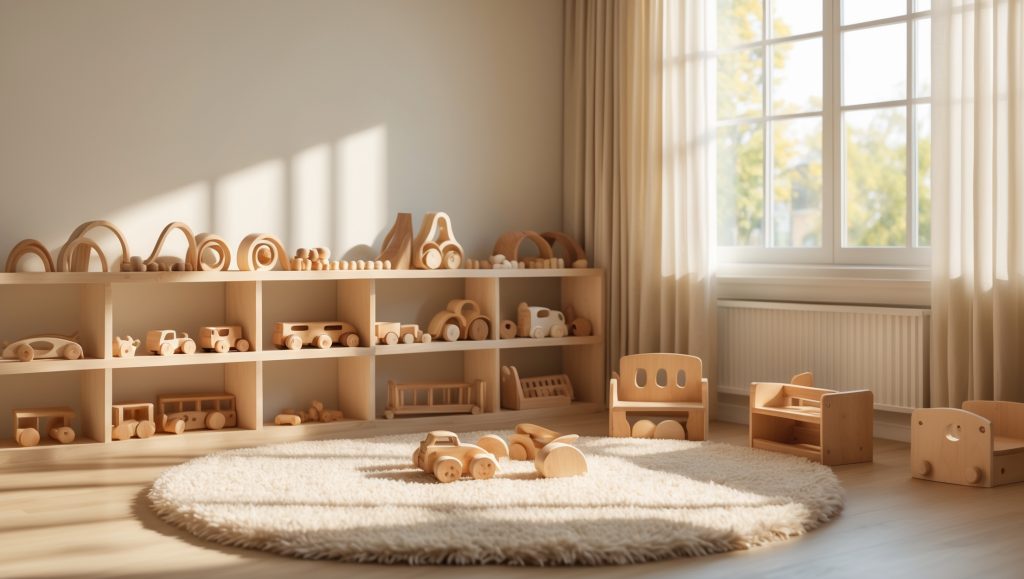
Arrange toys on low, accessible shelves so your child can choose and return items independently. Store toys in baskets or trays to encourage tidiness and ownership over their play space.
Choose Age-Appropriate Toys
Montessori toys are most effective when matched to your child’s current developmental stage. For infants, focus on sensory toys and grasping objects. Toddlers benefit from stacking toys, puzzles, and practical life activities. Preschoolers can handle more complex tasks like lacing beads, counting games, and early construction sets.
Rotate Toys Regularly
Too many choices can overwhelm young children. Offer a selection of 6–8 toys at a time, rotating them every couple of weeks to maintain interest and challenge.
Encourage Independence
Demonstrate how to use each toy, then allow your child to explore independently. Step in only when necessary for safety or gentle redirection.
Safety and Quality Considerations
Check for Age Grading and Choking Hazards
Always observe the manufacturer’s recommended age range, especially for toys with small parts. For children under three, avoid toys with pieces that could pose a choking risk.
Prioritize Materials and Construction
Choose toys made from high-quality wood, metal, or fabric, finished with non-toxic paints or dyes. Inspect toys regularly for splinters, loose parts, or sharp edges.
Supervise When Needed
While Montessori toys are designed for independent play, young children still need supervision to ensure safety, especially when exploring new materials or activities.
Montessori Toy Recommendations by Age
0–12 Months
- Grasping rings and rattles (natural wood, easy to hold)
- Soft fabric balls
- Montessori mobiles for visual tracking
12–24 Months
- Simple wooden puzzles with large knobs
- Stacking cups and blocks
- Ring stackers
- Shape sorters
2–4 Years
- Practical life tools (watering can, sweeping set)
- Lock boxes and latches
- Lacing beads
- Simple musical instruments
4–6 Years
- Counting beads
- Simple construction sets (no small parts)
- Sequencing cards
- Early math and language puzzles
Common Mistakes
- Offering too many toys at once, leading to overstimulation
- Selecting toys that are not age-appropriate or safe
- Choosing flashy, electronic, or distracting toys instead of simple, purposeful ones
- Not rotating toys, causing boredom or lack of engagement
- Not supervising young children with new or complex toys
- Forgetting to check for wear, loose parts, or choking hazards
- Assuming all “wooden” toys are Montessori-aligned without considering the purpose or design
Quick Checklist
- Choose toys made from safe, natural materials
- Match toys to your child’s developmental stage
- Limit selections on shelves to 6–8 toys at a time
- Store toys within your child’s reach for independent access
- Rotate toys every 2–3 weeks to maintain interest
- Inspect toys regularly for safety and durability
- Supervise play, especially with new or complex toys
- Demonstrate, then step back to allow independent exploration
FAQ
- Are all wooden toys Montessori?
- No. While many Montessori toys are wooden, the key is purposeful, simple design that promotes real-world learning and independence—not just material.
- How do I know if a toy is Montessori-aligned?
- Look for toys that are simple, realistic, open-ended, and encourage hands-on, independent activity. Avoid electronic, flashy, or overly complex toys.
- Is it expensive to set up a Montessori toy area at home?
- Not necessarily. Focus on a few well-made, multi-use toys. Everyday household items (like pitchers, sponges, or brushes) can also be Montessori-friendly.
- How often should I introduce new toys?
- Rotate toys every 2–3 weeks or when you notice your child losing interest. Observe what engages your child and adapt your selections.
- Can I use Montessori toys with siblings of different ages?
- Yes, but supervise play to ensure safety, especially if younger children might access toys with small parts intended for older kids.
- Do Montessori toys replace all other types of play?
- No. Montessori toys are a great foundation, but open-ended, imaginative, and outdoor play are also important for well-rounded development.
- What if my child prefers electronic or character-based toys?
- It’s normal for children to be drawn to many types of toys. Use Montessori toys to offer balance, foster independence, and encourage focused play.
Conclusion
Bringing Montessori toys into your home can open up a world of independent, joyful learning for your child. By selecting simple, purposeful toys and creating a supportive environment, you encourage creativity, problem-solving, and self-confidence. Remember, the best toy is one that meets your child where they are and allows them to explore at their own pace. Observe, rotate, and enjoy watching your child’s growth through play.
This article is for informational purposes only and is not medical advice. For safety or developmental concerns, please consult your pediatrician.
Are there any particular Montessori toy recommendations or adjustments you would suggest for a child who tends to put everything in their mouth? I’m especially concerned about safety and material durability.
It’s completely understandable to be concerned about safety and durability when your child mouths toys. For little ones in this stage, choose large, solid wood Montessori toys without small or detachable parts—think chunky rings, smooth blocks, or sturdy grasping beads. Opt for toys finished with non-toxic, food-grade materials. Avoid anything painted with chips or soft enough to bite pieces off. Always supervise play, and regularly inspect toys for wear or damage. This isn’t medical advice; if you’re concerned, check in with your pediatrician.
I’m curious whether Montessori toys made with natural materials might still have scents or textures that could bother sensory-sensitive children. Is there anything I should look out for when choosing materials?
Your attention to your child’s sensory needs is so important. When choosing Montessori toys for sensory-sensitive children, consider opting for materials like unfinished wood or organic cotton, as these tend to have milder scents and simple textures. Avoid toys with strong varnishes, essential oils, or dyed fabrics, which can be triggering. Always check for rough edges or splinters and supervise play with smaller pieces. Let your child touch and smell new toys before introducing them fully. This isn’t medical advice; if you’re concerned, check in with your pediatrician.
I noticed the article mentions both open-ended play and practical life tools as part of Montessori toys. How do I decide whether to focus more on open-ended toys versus educational or skill-specific ones as my child gets older?
It’s great that you’re thinking carefully about how to support your child’s play and learning needs as they grow. For younger children, open-ended toys like blocks or scarves encourage creativity and exploration. As your child gets older and shows interest in everyday tasks, gradually introduce practical life tools—like child-sized kitchen or cleaning items—always ensuring they’re safe and age-appropriate. Observe what engages your child most: if they love imaginative scenarios, continue with open-ended options; if they want to imitate adult tasks, add more skill-specific tools. You can balance both types, adjusting as their interests and skills develop. This isn’t medical advice; if you’re concerned, check in with your pediatrician.