
Introduction
Montessori toys have become increasingly popular among families seeking to foster independent learning, creativity, and holistic development in children. Rooted in the educational philosophy of Dr. Maria Montessori, these toys are thoughtfully designed to stimulate cognitive, physical, and emotional growth by encouraging children to explore at their own pace. In this article, we’ll explore what sets Montessori toys apart, how to select age-appropriate options, and evidence-informed tips for integrating Montessori principles into your child’s playtime in 2025.
What Makes a Toy Montessori?
Montessori toys are much more than just wooden blocks or simple puzzles. Their design is intentional, aligning with principles that support a child’s natural curiosity and drive to learn. Here are the hallmarks of Montessori toys:
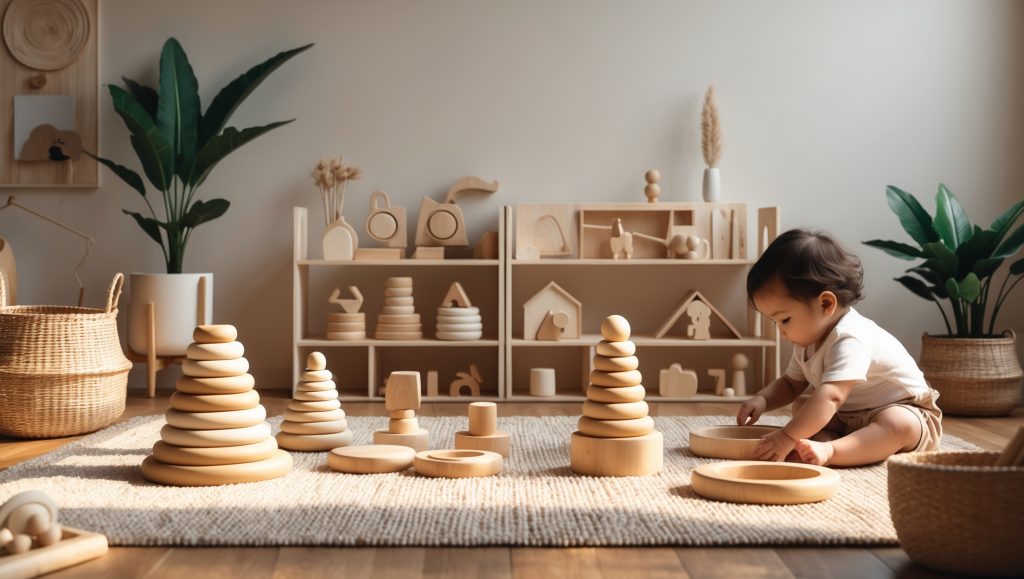
- Purposeful Design: Toys are typically made from natural materials, such as wood, metal, or cotton, and feature simple shapes and muted colors. This reduces unnecessary sensory overload and helps children focus on the activity.
- Real-World Connection: Many Montessori toys mimic real-life objects or activities, allowing children to practice skills they observe in adults—like preparing food, cleaning, or building.
- Single Skill Focus: Each toy is designed to target a specific developmental area, such as fine motor skills, hand-eye coordination, or problem-solving, without adding distracting elements.
- Self-Correction: Montessori toys often allow children to recognize and correct their own mistakes, promoting confidence and independence.
- Open-Ended Play: Many Montessori-inspired toys encourage creative exploration and multiple uses, supporting the child’s imagination and adaptability.
Developmental Benefits of Montessori Toys
Montessori toys are celebrated for their ability to support key areas of early childhood development. Here’s how:
- Fine and Gross Motor Skill Development: Activities like threading beads, stacking rings, or transferring objects with tongs refine coordination and dexterity.
- Cognitive Growth: Puzzles, shape sorters, and sequence boards foster logical thinking, memory, and concentration.
- Language Enrichment: Realistic playsets and household tools provide opportunities for vocabulary building through hands-on experiences and conversations.
- Social-Emotional Skills: By engaging in purposeful play, children learn patience, persistence, and the satisfaction of mastering new skills independently.
- Sensory Exploration: Toys made from natural materials offer varied textures, weights, and temperatures, supporting sensory integration and awareness.
Choosing Age-Appropriate Montessori Toys
Selecting the right Montessori toys involves understanding your child’s current developmental stage and interests. Below are some age-based recommendations to guide your choices:
Infants (0–12 months)
- Grasping Toys: Simple, lightweight wooden rattles or rings support early grasp reflexes.
- Mobiles: High-contrast or black-and-white mobiles encourage visual tracking and focus.
- Object Permanence Boxes: These introduce the concept that objects exist even when out of sight.
Toddlers (12–36 months)
- Nesting and Stacking Toys: Cups, blocks, and rings help hone hand-eye coordination.
- Simple Puzzles: Large knobs and basic shapes support problem-solving and matching skills.
- Practical Life Tools: Child-sized brooms, pitchers, or dressing frames promote independence.
Preschoolers (3–6 years)
- More Complex Puzzles: Interlocking shapes or layered puzzles challenge spatial reasoning.
- Sensory Bins: Activities involving sand, water, or natural objects support exploration and scientific thinking.
- Role-Play Sets: Miniature kitchen tools or gardening kits connect play with real-world activities.
Always observe your child’s interests and readiness for new challenges, adjusting toy selections accordingly. Montessori encourages following the child’s lead while gently introducing new materials as they show interest and capability.
Integrating Montessori Principles at Home
Adopting Montessori-inspired practices can be simple and rewarding for families. Here’s how you can create a Montessori-friendly environment and approach to play at home:
- Prepare the Environment: Organize toys on low, accessible shelves. Limit the number of toys available at one time to reduce overwhelm and promote focused play.
- Follow the Child: Observe your child’s preferences and developmental needs. Offer toys that match their current skills and interests.
- Encourage Independence: Choose toys and tools that allow your child to complete tasks on their own, such as pouring water from a small pitcher or dressing themselves with practice frames.
- Model and Step Back: Demonstrate how to use a new toy, then allow your child uninterrupted time to explore and practice.
- Respect the Process: Value effort over outcome. Let your child repeat activities as many times as they wish, supporting their natural learning rhythm.
Common Mistakes
- Overloading the Play Space: Too many toys can overwhelm children and diminish the depth of their play. Aim for a curated selection that rotates as interests change.
- Choosing Toys That Are Too Advanced: Introducing materials that don’t match your child’s current abilities can lead to frustration. Select toys based on observation and readiness, not age labels alone.
- Focusing Only on Aesthetics: While Montessori toys are often beautiful, prioritize function and developmental value over looks.
- Directing Play Too Much: Montessori encourages self-directed exploration. Avoid taking over activities or correcting mistakes immediately—let children discover solutions independently.
- Neglecting Practical Life Activities: Everyday tasks like pouring, sweeping, or dressing are essential Montessori experiences that build real-world skills and confidence.
- Assuming All Wooden Toys Are Montessori: Not every wooden or minimalist toy aligns with Montessori principles. Look for toys that are purposeful, self-correcting, and developmentally appropriate.
Quick Checklist
- Is the toy made from safe, durable, and natural materials?
- Does it focus on a single skill or concept?
- Is the toy open-ended or does it allow for self-correction?
- Is it appropriate for your child’s current developmental stage?
- Does it encourage independence and real-world learning?
- Is your play space organized and accessible for your child?
- Are you observing your child’s interests and rotating toys as needed?
- Do you allow your child uninterrupted time to explore and practice?
FAQ
+What age is best to start introducing Montessori toys?
+Are Montessori toys only made from wood?
+Can Montessori toys be used alongside other types of toys?
+How often should I rotate Montessori toys?
+Do Montessori toys support children with different learning styles?
+How do I know if a toy is truly Montessori-aligned?
+Are Montessori toys expensive?
Conclusion
Montessori toys offer families a thoughtful, evidence-informed approach to supporting children’s development through play. By choosing toys that nurture independence, curiosity, and real-world skills, parents can help children build confidence and a lifelong love of learning. Remember, the heart of Montessori is following the child—observe, adapt, and enjoy the journey of discovery together in your home, one purposeful play experience at a time.

Montessori Toys: Nurturing Independent Play and Learning in 2025
Montessori toys continue to be a cornerstone for nurturing independent play and learning among children in the US. As we move into 2025, parents and educators are increasingly drawn to toys that emphasize open-ended exploration, natural materials, and purposeful design. Montessori-inspired toys encourage children to engage with their environment, make choices, and develop critical thinking skills at their own pace. These toys—ranging from wooden stacking blocks to practical life tools—are intentionally simple, allowing kids to focus on mastering one concept at a time.
One of the greatest strengths of Montessori toys is their ability to foster self-motivation and concentration. Instead of overwhelming children with flashing lights or loud sounds, these toys invite children to manipulate, experiment, and discover. This hands-on approach helps build fine motor skills, spatial reasoning, and confidence, laying a strong foundation for lifelong learning. In 2025, brands are innovating with eco-friendly materials and adaptive designs while staying true to Montessori principles. By choosing Montessori toys, families can create an environment where children thrive as independent, curious learners.
- Encourages hands-on, independent exploration
- Promotes concentration and self-confidence
- Supports eco-friendly and sustainable play
- Adapts to each child’s unique learning pace
You mention that Montessori toys often use natural materials. Are there certain materials or toy types you would recommend avoiding in the evening if my toddler has trouble calming down due to sensory sensitivity?
It’s wise to consider how your toddler’s sensory sensitivity affects their ability to wind down in the evening. To help promote calm, avoid Montessori toys with rough or scratchy textures, strong scents (like some woods or paints), or materials that make loud, clattering sounds—these can be stimulating for sensitive children. Opt for soft, smooth wooden or cloth toys and steer clear of toys with flashing lights or vibrating features. Always supervise play, especially with small parts, and check for non-toxic finishes to ensure safety. This isn’t medical advice; if you’re concerned, check in with your pediatrician.
Are there budget-friendly Montessori toy options that still meet the purposeful design guidelines described here? I want to be mindful of costs without sacrificing quality.
It’s wonderful that you want quality Montessori toys while keeping your budget in mind. Look for simple, open-ended items like wooden blocks, nesting cups, or stacking rings—these are often affordable and fit Montessori principles of purposeful, hands-on learning. Everyday household objects, like measuring cups or cloth napkins, can also be used for sorting or practical life activities. If you make toys yourself, choose safe, non-toxic materials, especially for babies or toddlers who mouth objects. Always supervise play and check for small parts that could pose a choking risk. This isn’t medical advice; if you’re concerned, check in with your pediatrician.
I’m interested in trying some Montessori toys but need to stay within a budget and conserve space. Do you have recommendations for versatile Montessori toys that cover multiple skills and are worth the investment for families with more than one young child?
It’s wonderful that you want to support your children’s learning while being mindful of budget and space. Look for open-ended toys like wooden blocks, nesting cups, or stacking rings; these can encourage creativity, problem-solving, and fine motor skills across ages. A simple set of child-friendly kitchen tools or a low shelf for self-serve activities can promote independence for siblings. Choose natural materials and avoid small parts for little ones under three. Rotate toys to keep interest high without adding clutter. This isn’t medical advice; if you’re concerned, check in with your pediatrician.
I struggle with getting my toddler to nap and settle down at bedtime, and I’m wondering if you have any recommendations on which Montessori toys might help with creating a calming routine at these times.
It’s understandable to want bedtime and naptime to be more peaceful for your toddler. You might try introducing soft sensory toys, like fabric balls or plush stacking blocks, during your calming routine—these encourage gentle touch and slow play. Simple wooden puzzles with large pieces can help focus their mind without overstimulating. You could also use Montessori-inspired picture books with realistic images for quiet reading together. Always ensure toys are age-appropriate, free from small parts, and check for allergies or sensitivities to materials. This isn’t medical advice; if you’re concerned, check in with your pediatrician.
I would love to integrate Montessori principles into our daily schedule, but we have limited time for structured play. How do you suggest balancing independent play with the need for parent involvement, especially when encouraging language in toddlers like mine?
It’s understandable to want to support your toddler’s language and independence, even with a busy schedule. Try setting up a small shelf with a few Montessori-style toys that your child can reach and explore safely on their own, choosing toys with no small parts or choking hazards. While your toddler plays, narrate your actions or comment on what they’re doing, using simple language. Dedicate a brief, consistent daily window—even 10–15 minutes—for focused play together, modeling turn-taking and new words. Encourage independent play at other times, staying nearby for supervision. This isn’t medical advice; if you’re concerned, check in with your pediatrician.
Would you recommend prioritizing Montessori toys over other types of educational toys, or is it beneficial to mix both approaches for a balanced play experience?
It’s great that you’re thinking about how to create a balanced play environment for your child. Mixing Montessori toys with other educational toys can be very beneficial, as each supports learning in different ways. Try rotating toys to observe what your child engages with most and offer a variety of textures and activities appropriate for their age. Make sure all toys are safe—watch for small parts with younger children and avoid allergens. Most importantly, follow your child’s interests and developmental stage. This isn’t medical advice; if you’re concerned, check in with your pediatrician.
Are there recommendations for rotating or organizing Montessori toys at home, especially if we have limited space and want to avoid overwhelming our child with too many choices at once?
It’s thoughtful that you want to create a calm, organized play space for your child. Try displaying just a few toys at a time—three to five options is usually enough for toddlers. Store the rest out of sight, and swap them every week or two to keep things fresh. Use low shelves or small baskets for easy access and tidy up together, making it part of your routine. Always check toys for age-appropriateness and avoid items with small parts for children under three. This isn’t medical advice; if you’re concerned, check in with your pediatrician.
When offering Montessori sensory toys to my 9-month-old, should I avoid using them immediately after trying new foods that might be sticky or allergenic? Could food residues pose an issue with certain toy materials compared to plastic options?
You’re right to think about both cleanliness and safety when offering sensory toys to your 9-month-old after meals. After trying new or sticky foods, gently wipe your baby’s hands and face before play to avoid transferring food residues, which can harbor allergens or make toys harder to clean. Montessori toys made from wood or fabric generally absorb moisture more than plastic and can be trickier to sanitize if they get sticky. Choose toys labeled as safe for infants, and check that all materials can be easily wiped clean. Always supervise your baby during playtime. This isn’t medical advice; if you’re concerned, check in with your pediatrician.
My child has some sensory sensitivities and often avoids certain textured toys. Do Montessori toys offer enough variety in texture and weight to accommodate children who might be very particular about what they touch?
It’s completely understandable to want toys that respect your child’s sensory preferences. Montessori toys generally come in a range of materials—like wood, fabric, and metal—so you can select items with smoother or firmer textures if your child avoids soft or rough surfaces. Choose toys with consistent, predictable textures and avoid any with small parts or loose fibers that might be overwhelming or unsafe. Observe your child’s responses during play, and gradually introduce new textures in a low-pressure way, always allowing them to opt out. This isn’t medical advice; if you’re concerned, check in with your pediatrician.
My three-year-old has some sensory sensitivities along with speech delays. Since Montessori toys are made from various natural materials, are there certain textures or types that are usually best tolerated by kids with sensory issues?
It’s thoughtful of you to consider your child’s sensory needs when choosing toys. For many three-year-olds with sensory sensitivities, smooth wooden toys or soft cotton materials are often less overwhelming than rough or highly textured items. Start by offering one new texture at a time, and observe your child’s reactions closely. Avoid toys with strong smells, heavy varnishes, or small detachable parts, as these can be uncomfortable or unsafe. Choose toys that are easy to clean, which can also help if your child is sensitive to sticky or dirty surfaces. This isn’t medical advice; if you’re concerned, check in with your pediatrician.
Do you have advice for parents on budget-friendly Montessori toy options that would still support my one-year-old’s independence, especially now that we’ll need duplicates for both home and daycare?
It’s great that you want to encourage independence for your one-year-old, even with budget considerations. Try simple household items, like wooden spoons, stacking cups, or fabric scraps, as safe, Montessori-inspired toys. You can also DIY sensory bottles using tightly sealed plastic containers filled with rice or pasta (always supervise closely). Thrift stores often have quality wooden toys—just check for small parts and rough edges. Rotating a few toys between home and daycare can also keep things fresh without needing many duplicates. This isn’t medical advice; if you’re concerned, check in with your pediatrician.
My 15 month old tends to get overwhelmed by certain textures and noises. Do you have suggestions for Montessori toys that are especially calming or less likely to overstimulate a sensitive toddler?
It’s completely understandable to want soothing, gentle toys for your sensitive toddler. For a 15-month-old, look for Montessori toys made from natural materials like unfinished wood or soft fabric, as these tend to have neutral textures and muted colors. Simple stacking cups, wooden puzzles with large pieces, or fabric balls are less likely to overstimulate. Avoid toys that light up, make electronic sounds, or have rough or highly varied textures. Always supervise play to ensure safety, especially if your child still mouths toys. This isn’t medical advice; if your child’s sensitivities seem extreme or worrying, check in with your pediatrician.
Could you clarify how to tell when a Montessori toy is too advanced or too simple for a 7-month-old? Are there certain cues I should watch for that mean my baby is ready to move on to something more challenging?
You’re being thoughtful about meeting your baby’s needs, which is wonderful. For a 7-month-old, a Montessori toy might be too advanced if your baby seems frustrated, uninterested, or ignores it entirely. If a toy is too simple, your baby might lose interest quickly or master it right away. Watch for cues like focused attention, repeated attempts, or trying new ways to use the toy—these suggest the toy is at the right challenge level. When you see your baby getting bored or easily completing the activity, it might be time to try something a bit more complex. Always supervise closely to keep play safe and make sure toys are free of small parts. This isn’t medical advice; if you’re concerned, check in with your pediatrician.
You mention natural materials and muted colors as helpful for avoiding sensory overload. Are there specific brands or types of Montessori toys you’d recommend for children who might find certain wood finishes or paint smells overwhelming?
You’re thoughtful to consider how certain finishes or scents might affect your child’s comfort. Start by choosing toys labeled as unfinished or treated only with food-grade oils like beeswax, which are often gentler on sensitive senses. Opt for brands that specifically state their products are free from chemical varnishes and strong-smelling paints. Before introducing a toy, let it air out in a well-ventilated area and do a quick smell check yourself. For babies and toddlers, always double-check that toys are age-appropriate, with no small parts and safe, non-toxic materials. This isn’t medical advice; if you’re concerned, check in with your pediatrician.
Since many Montessori toys are open-ended or mimic real-life activities, are there specific household items that would be safe and effective to use for pretend play with toddlers?
What a thoughtful question about using everyday items for pretend play. For toddlers, you can safely offer wooden spoons, small mixing bowls, or plastic measuring cups for kitchen play, always avoiding sharp edges or breakable items. Large, clean cardboard boxes make wonderful forts or pretend vehicles. For dressing up, soft hats or scarves (with supervision) are great. Make sure all items are too large to swallow, free of choking hazards, and easy to clean. This isn’t medical advice; if you’re concerned, check in with your pediatrician.
I’m on a budget and short on storage space with two little ones. Are there a few versatile Montessori toys you would suggest that work well across different ages so both my baby and toddler can benefit?
It’s understandable to want toys that work for both your baby and toddler, especially with space and budget in mind. Look for sturdy wooden stacking rings, simple nesting cups, and large knobbed puzzles—each encourages problem-solving and can be enjoyed at different ages with supervision. A set of soft blocks or a shape sorter (with large, non-choking-hazard pieces) also offers open-ended play and skill-building for both children. Rotate toys to keep things fresh and avoid clutter. Always check for safe materials and age-appropriate sizes. This isn’t medical advice; if you’re concerned, check in with your pediatrician.
With toddlers developing at their own pace, how can I tell if my child is ready to move on to more complex Montessori activities, especially when it comes to skills like pouring or threading beads? Are there any signs or milestones I should look for?
It’s thoughtful to tune into your toddler’s readiness for new challenges. Watch for signs like improved hand-eye coordination, ability to grasp and release objects intentionally, and showing curiosity about what you’re doing. If your child can pour water between cups with minimal spills or string a few large beads with focus, it may be time to explore more complex activities. Keep materials age-appropriate—use large, safe beads and supervise closely to avoid choking hazards. Let your child move at their own pace and celebrate small successes. This isn’t medical advice; if you’re concerned, check in with your pediatrician.
Are there Montessori-inspired toys that help children who are sensitive to certain textures or sounds? I’d appreciate tips for supporting sensory needs while sticking to Montessori principles.
You’re thoughtful to consider your child’s sensory sensitivities while choosing Montessori-inspired toys. Start with simple wooden blocks or puzzles that offer smooth, natural textures—these are safe and calming for most ages. Choose toys with minimal or no sound, avoiding bells, crinkly materials, or noisy mechanisms. Rotate different materials (like soft cotton or felt) to gently support exploration, but observe your child’s reactions and remove anything that causes discomfort. Always supervise young children to ensure safety with small parts. This isn’t medical advice; if you’re concerned, check in with your pediatrician.
My daughter is drawn to brightly colored toys with electronics and music, but I’ve read Montessori toys tend to be simpler and more muted. Is it okay to mix both types at home, or could that be confusing for her learning?
It’s completely normal to wonder if mixing toy types will affect your daughter’s learning. Many families find a balance by offering both colorful, electronic toys and simpler Montessori-style toys. You might try rotating toys so she can focus on a few at a time, creating a calm space with the Montessori materials, and saving electronic toys for specific playtimes. Notice what holds her attention and sparks creativity. For toddlers and preschoolers, variety is fine as long as toys are age-appropriate and safe. This isn’t medical advice; if you’re concerned, check in with your pediatrician.
I’m interested in sticking to a smaller toy budget. Are there any Montessori toys that grow with a child over multiple developmental stages, or is it best to buy new ones for each age group?
It’s great that you’re thinking about budget and long-term use when choosing toys. Many classic Montessori materials, like wooden blocks, stacking cups, or open-ended items such as a push cart or simple puzzles, can be enjoyed in different ways as children grow—just supervise closely with small parts if your child is under three. Rotate and reintroduce toys to match changing skills, and let your child use them creatively. This isn’t medical advice; if you’re concerned, check in with your pediatrician.
For families on a tight budget, which types of Montessori-inspired toys provide the most developmental benefit for toddlers, and are there DIY alternatives you would suggest to capture the key principles mentioned in the article?
It’s wonderful that you want to support your toddler’s development while being mindful of your budget. Focus on simple items that encourage exploration—wooden blocks, stacking cups, or sorting objects by color and size. Everyday household items like spoons, fabric scraps, or safe containers can become excellent DIY Montessori tools for practicing pouring, transferring, and sensory play. Ensure materials are large enough to avoid choking hazards and supervise closely. Remember, fostering independence and hands-on learning matters more than buying special toys. This isn’t medical advice; if you’re concerned, check in with your pediatrician.
Would you recommend rotating Montessori toys on a weekly basis to keep children engaged, or is it better for their development to allow longer access to the same toys?
—you’re clearly thinking about how to support your child’s curiosity and focus. Rotating Montessori toys every week can help maintain interest, but for many children, longer access (2–4 weeks) allows deeper engagement and mastery of skills. Watch how your child interacts: if they’re still exploring or problem-solving, it’s okay to leave the toy out longer. For toddlers under three, keep rotations simple and supervise for safety, especially with smaller pieces. Remember, every child is different, so flexibility is key. This isn’t medical advice; if you’re concerned, check in with your pediatrician.
I noticed the article mentions toys that allow for self-correction and independence. Is it necessary to introduce these features right away, or should I adapt the play depending on my child’s current frustration tolerance and ability to focus?
You’re thoughtful to consider your child’s frustration tolerance and focus when introducing Montessori toys. Start by observing how your child reacts to new challenges—if they become easily upset, it’s okay to introduce self-correcting features gradually. Begin with simpler toys and activities, offering encouragement and gentle guidance. As your child’s concentration and confidence grow, increase the complexity and independence. Always ensure the toys are age-appropriate, with no small parts for younger children and safe materials. This isn’t medical advice; if you’re concerned, check in with your pediatrician.
Since wooden toys are mentioned as being more aligned with Montessori principles, would mixing in some plastic toys for practical reasons undermine the approach or the developmental benefits for my toddler? I’m wondering if there’s a balance that works for both sustainability and learning.
It’s great that you’re thoughtful about balancing practicality, sustainability, and your child’s development. Including some plastic toys alongside wooden ones can work well—focus on choosing simple, open-ended plastic toys without flashing lights or distracting sounds, as these better align with Montessori principles. Prioritize toys that encourage hands-on manipulation and independence. For toddlers, confirm that all toys are free from small parts and toxins. Rotate toys so your child doesn’t get overwhelmed, and store them neatly to support focus. This isn’t medical advice; if you’re concerned, check in with your pediatrician.
I noticed the article highlights the importance of open-ended play in Montessori toys. How do these toys compare to more traditional educational toys that focus on numbers or the alphabet in terms of preparing children for school readiness?
Your question about preparing children for school readiness is a thoughtful one. Montessori toys encourage open-ended play, which helps children develop problem-solving, creativity, and independence—skills that support lifelong learning. To balance this with traditional toys: 1) Offer both types, allowing your child to explore freely with Montessori toys while also gradually introducing numbers and letters through play. 2) Integrate learning into daily routines, like counting snacks or naming colors during activities. 3) For preschoolers, choose age-appropriate toys without small parts and always supervise play. Open-ended toys nurture foundational skills that support later academic learning. This isn’t medical advice; if you’re concerned, check in with your pediatrician.
If space is limited in my travel bag, do you have tips for prioritizing which Montessori toys to bring that support both fine and gross motor skills for a toddler around age two?
It’s great that you want to support your toddler’s development, even when traveling with limited space. For a two-year-old, prioritize compact toys that can be used in multiple ways. Consider bringing a small set of wooden stacking rings (fine motor), a soft ball (gross motor), and a few nesting cups that can double for scooping or building (both skills). All should be free of small parts and safe for mouthing. Choose toys that encourage open-ended play, so your child can engage creatively. This isn’t medical advice; if you’re concerned, check in with your pediatrician.
I’d love advice on storing and organizing all these wooden toys. What’s the best way to keep them accessible for independent play, but also tidy enough that I don’t trip over blocks at 2 a.m.?
It’s completely understandable to want your child’s toys accessible for play but not scattered underfoot. Try using low, open shelves so your child can see and reach toys independently, which encourages Montessori-style self-directed play. Sort toys by type into shallow baskets or trays to make cleanup easier for little hands. Rotate a few toys at a time on the shelves and store extras out of sight, reducing clutter and keeping play fresh. For safety, ensure storage units are stable and have no small detachable parts if your child is under three. This isn’t medical advice; if you’re concerned, check in with your pediatrician.
I am curious about how to adjust Montessori toy choices as my child grows. If a toddler seems to master certain fine motor toys quickly, is it appropriate to introduce more challenging activities ahead of typical age recommendations?
It’s great that you’re noticing your child’s progress and want to support their learning. If your toddler easily masters fine motor toys, you can introduce slightly more challenging activities, but make sure they are still safe—avoid small parts that pose choking hazards, and supervise play closely. Gradually offer toys that build on existing skills, like puzzles with more pieces or simple real-life tasks (pouring, sorting). Watch for signs of frustration; if your child seems overwhelmed, scale back and revisit later. Remember, every child develops at their own pace. This isn’t medical advice; if you’re concerned, check in with your pediatrician.
If grandparents bring handmade toys from overseas that might not meet US safety standards, but are culturally meaningful, how can I evaluate whether they are still appropriate within a Montessori approach?
It’s wonderful you’re honoring both safety and cultural heritage in your child’s playthings. First, inspect each toy for small parts, sharp edges, or splinters, as these can be choking or injury hazards, especially for children under 3. Second, check for non-toxic materials—avoid painted surfaces unless you’re certain about the type of paint used. Third, supervise initial play to observe how your child interacts with each toy. Finally, consider if the toy encourages open-ended exploration, a key Montessori principle. This isn’t medical advice; if you’re concerned, check in with your pediatrician.
If my child is very sensitive to certain textures or sounds, how can I adapt Montessori toy choices so that playtime remains enjoyable and doesn’t interfere with his wind-down time before naps or bed?
It’s understandable to want playtime to feel soothing and not overwhelming for your sensitive child. Start by choosing Montessori toys made from soft, smooth materials like natural, unfinished wood or fabric, avoiding rough or scratchy surfaces. Opt for toys that are visually engaging but quiet, steering clear of anything with bells, rattles, or loud pieces. Offer just one or two toys at a time in a gentle, uncluttered space, so your child can focus without feeling overstimulated. Always supervise to ensure safety, especially if your child is under three or still mouthing objects. This isn’t medical advice; if you’re concerned, check in with your pediatrician.
I noticed the article talks about choosing age-appropriate Montessori toys. My 4-year-old is really interested in building things, but sometimes seems to get frustrated with some of the more advanced puzzles. How do I know when to introduce more challenging toys versus sticking with simpler options for his age?
It’s wonderful that your child is showing an interest in building and puzzles—frustration can be part of learning new skills. Start by offering toys that are just a little more complex than what he has mastered, watching for signs of engagement rather than overwhelm. If he gets very frustrated, return to simpler options and practice together before trying again. Mix in familiar toys with new ones to build confidence. Always check that toys are safe for his age, with no small parts or sharp edges, and supervise play as needed. This isn’t medical advice; if you’re concerned, check in with your pediatrician.
We have limited storage in our apartment. Which Montessori toys do you find offer the most versatility for independent play without taking up much space or requiring a lot of setup?
It’s great that you’re looking for versatile, space-saving options for your child. Consider open-ended toys like wooden stacking blocks, nesting cups, or a simple set of sensory balls—these can be used in many ways for independent play and learning. A small tray with scooping or sorting activities can also fit easily on a shelf and encourages fine motor skills. For toddlers, a set of wooden animals or vehicles allows for imaginative play without bulky storage needs. Always check age recommendations and supervise with smaller pieces to ensure safety. This isn’t medical advice; if you’re concerned, check in with your pediatrician.
Safety is a big concern in our home, especially with a little one who puts everything in his mouth. Are there specific safety standards or certifications to look for when choosing Montessori toys made from wood or metal, especially for active toddlers who love rough play?
It’s completely understandable to be extra careful with a toddler who explores by mouthing objects. Look for wooden or metal toys labeled as ASTM F963 or EN71 certified, which means they’ve passed safety tests for toxins, choking hazards, and durability. Choose toys with smooth, splinter-free finishes and non-toxic, lead-free paints. For toddlers, avoid small parts, detachable pieces, or toys with sharp edges. Always supervise play, especially if your child is very active. This isn’t medical advice; if you’re concerned, check in with your pediatrician.
How do you suggest adjusting the introduction of Montessori toys for children who may have sensory sensitivities, particularly those who are overwhelmed by touch or sound? Are there specific materials or toy types you’d recommend starting with?
It’s thoughtful to consider sensory sensitivities when introducing Montessori toys. Begin by choosing toys made from smooth, natural materials like untreated wood or soft fabric, avoiding strong textures or loud mechanisms. Offer just one new toy at a time in a quiet, clutter-free space, and let your child explore it at their own pace without pressure. Watch for signs of discomfort, and remove any item that seems overwhelming. For children under three, ensure parts are large and non-toxic. This isn’t medical advice; if you’re concerned, check in with your pediatrician.
With limited storage space at home, I worry about accumulating too many toys. Do you have any tips for rotating Montessori toys or storing them in a way that still encourages my child’s independence?
It’s understandable to be concerned about clutter while supporting your child’s independent play. Try selecting a few Montessori toys at a time, placing them on low shelves or in open bins your child can access safely. Rotate toys every couple of weeks to keep play fresh—store unused items in a labeled box out of sight. Encourage your child to help choose and tidy up toys, building responsibility. For toddlers and preschoolers, limit toys with small parts to supervised times. This isn’t medical advice; if you’re concerned, check in with your pediatrician.
Sometimes my toddler gets overwhelmed by bright colors and noisy toys. Do you have recommendations for Montessori toys that work especially well for sensory-sensitive kids, or adjustments that help make playtime feel calmer?
It’s completely understandable to want a calmer play environment for your sensory-sensitive toddler. Try offering toys in natural materials and muted colors, such as wooden stacking rings or cloth dolls, to avoid overstimulation. Choose toys with simple designs and no electronic sounds or flashing lights. Present just a few toys at a time on low shelves, keeping the play space uncluttered. You might also create a cozy play nook with a soft rug and minimal distractions. Always supervise play with small parts, and ensure all materials are age-appropriate and free from choking hazards. This isn’t medical advice; if you’re concerned, check in with your pediatrician.
Would you recommend introducing Montessori toys for a 3-year-old who mostly gravitates toward loud and colorful plastic toys? I am curious about how to gently transition to more purposeful, muted options without causing frustration.
It’s great that you’re mindful about guiding your child toward more purposeful play. For a gentle transition, try introducing one Montessori toy at a time, keeping it visible and accessible alongside their favorite toys. Involve your child in choosing or setting up the new toy to increase their interest and sense of ownership. Play together initially to model how to use the toy, emphasizing open-ended exploration. Choose Montessori toys suited for a 3-year-old, avoiding small parts and ensuring safe, non-toxic materials. Remember, it’s normal for preferences to shift gradually. This isn’t medical advice; if you’re concerned, check in with your pediatrician.
Our child is sensitive to textures and sounds, and sometimes the bathroom environment seems overstimulating during potty training. Are there sensory-friendly Montessori toys or materials that could help make this process calmer and more inviting?
It’s completely understandable to want to make potty training more comfortable for your sensory-sensitive child. Try introducing soft-textured, easy-to-clean fabrics as potty time mats or seat covers to make the space gentler. Offer a simple, quiet Montessori-style sensory basket with smooth wooden objects or fabric squares for your child to hold while sitting. Use visual cues like picture cards for each potty step, which reduce reliance on noisy or distracting prompts. Keep any sensory toys free of small parts and easy to sanitize, and supervise closely during use. This isn’t medical advice; if you’re concerned, check in with your pediatrician.
When choosing Montessori toys to include in our bilingual bedtime routine, is it better to focus on toys with single-skill focus or would more open-ended toys better support calm, independent winding down for sleep?
It’s wonderful that you’re thinking about how toys can support a peaceful, bilingual bedtime routine. For winding down before sleep, single-skill Montessori toys—such as simple puzzles or shape sorters—can gently engage your child without overstimulating them, making them ideal for calm, independent play. Open-ended toys are fantastic for creative exploration, but they may excite some children right before bed. Choose age-appropriate materials with soft textures, avoid small parts if your child is under three, and supervise as needed. This isn’t medical advice; if you have concerns about your child’s sleep routine, consult your pediatrician.
Montessori toys made from natural materials sound great, but the prices can add up quickly. Are there budget-friendly alternatives or ways to make or repurpose everyday household items into Montessori-inspired toys for play and learning?
It’s completely understandable to want Montessori-inspired play without overspending. You can create learning experiences at home by using items like wooden spoons, measuring cups, or fabric squares for sorting, scooping, and sensory play. Egg cartons work well for color sorting with pom-poms or buttons (for ages 3+ due to choking risk). Simple puzzles can be made from cardboard, and you can fill small jars with rice for a sensory shaker. Always supervise play, especially with small or breakable items, and check for sharp edges or loose parts. This isn’t medical advice; if you’re concerned, check in with your pediatrician.
Our child is eager to help with food prep but our schedule means playtime sometimes happens late in the day at the grandparents’ house. Are there Montessori toys or activities you’d suggest for winding down that still encourage practical life skills?
It’s wonderful that your child wants to help out—even at the end of a busy day. For winding down while building practical life skills, consider soft, quiet Montessori-inspired activities like pouring water between cups, simple spooning of dry beans (with close supervision for choking risks if under age 3), or matching and folding small washcloths. Wooden play food sets with Velcro can offer safe, gentle food prep practice. Choose calm routines, keep materials age-appropriate, and use natural textures for a soothing sensory experience. This isn’t medical advice; if you’re concerned, check in with your pediatrician.
My preschooler is very sensitive to rough textures and certain materials. Are there any specific recommendations for Montessori toys that provide sensory exploration but are particularly gentle or soothing to the touch for sensitive kids?
It’s completely understandable to want sensory-friendly options for your sensitive preschooler. Look for Montessori toys made from smooth, natural woods finished with non-toxic oils, as these tend to feel gentle and are safe for young children. Soft fabric toys, like cotton or wool balls, fabric stacking blocks, or felt sensory mats, can offer soothing textures without overwhelming your child. Avoid toys with rough burlap, coarse sandpaper, or hard plastic parts. Always supervise sensory play and introduce new textures gradually, watching your child’s reactions. This isn’t medical advice; if you’re concerned, check in with your pediatrician.
I noticed you mentioned that Montessori toys often use natural materials like wood or cotton. My 9-month-old occasionally puts everything in her mouth. Are there specific types of wood or finishes I should look for when introducing these toys, especially concerning potential allergens?
You’re right to be mindful since babies explore the world by mouthing toys. For a 9-month-old, look for Montessori toys made from solid woods like maple, beech, or birch, as these are less likely to splinter and are generally safe. Choose toys finished with food-grade oils (like beeswax or linseed oil) rather than paints or varnishes, and avoid anything with small parts or glued-on decorations. If your child has known allergies (for example, to nuts), avoid finishes containing nut oils. Always supervise play and inspect toys for wear. This isn’t medical advice; if you’re concerned, check in with your pediatrician.
How do the sensory benefits of Montessori toys compare for children who are particularly sensitive to textures or temperatures? Are there certain materials or toy types I should avoid or focus on for a child with mild sensory aversions?
It’s thoughtful of you to consider your child’s sensory sensitivities when choosing Montessori toys. For children sensitive to textures or temperatures, start with toys made from smooth, natural materials like polished wood or soft cotton, as these are usually less overwhelming. Avoid toys with rough, fuzzy, or sticky surfaces and those that change temperature quickly, such as metal objects. Offer one new texture at a time and observe your child’s reactions, adjusting based on comfort. Always supervise play to ensure your child feels safe exploring. This isn’t medical advice; if you’re concerned, check in with your pediatrician.
My child is really sensitive to loud noises and bright colors. You mention that Montessori toys tend to have muted colors and simple designs, but are there specific types you recommend for children with sensory sensitivities?
You’re thoughtful to consider your child’s sensory sensitivities when choosing toys. For children sensitive to loud noises and bright colors, Montessori toys made from natural wood, in neutral tones, are a great choice. Try simple shapes, stacking blocks, or nesting cups with smooth finishes—avoid toys with bells, electronic sounds, or flashing lights. Sensory bins with soft fabrics or sand, under supervision, can also be calming. Always check for age-appropriate size and safe, non-toxic materials. This isn’t medical advice; if you’re concerned, check in with your pediatrician.
I noticed the article talks about selecting age-appropriate toys, but my child is almost three and still struggles with fine motor tasks that are common for younger kids. Should I stick to toys for his chronological age or choose items based on his current skills?
You’re thoughtful to consider your child’s unique pace with fine motor development. It’s perfectly appropriate to select toys and activities that match your child’s current skill level rather than just their age. Start by observing which fine motor tasks your child enjoys and can manage, then choose toys that gently stretch those abilities without causing frustration. Look for Montessori toys with larger pieces or simpler mechanisms and gradually offer more challenging options as confidence grows. Always ensure the toys are safe for your child’s age—watch for choking hazards and supervise play. This isn’t medical advice; if you’re concerned, check in with your pediatrician.
Our toddler is close in age to the next developmental stage you described. Is it better to get toys for their current age or choose ones slightly ahead to encourage growth, or does that risk overwhelming them?
It’s wonderful that you’re thinking about supporting your toddler’s growth and independence. The best approach is to mostly select toys that match your child’s current developmental stage, as these will feel manageable and satisfying. You can include one or two toys from the next stage, but watch how your child responds and step in if they seem frustrated or disinterested. Make sure all toys are safe for your child’s age—check for small parts, sturdy construction, and non-toxic materials. Every child develops at their own pace, so follow their cues. This isn’t medical advice; if you’re concerned, check in with your pediatrician.
My child can be sensitive to certain textures and even muted colors. Are there ways to adapt Montessori toy choices for kids with sensory processing issues while still following the philosophy outlined in the article?
It’s great that you’re mindful of your child’s sensory needs. Try selecting Montessori-inspired toys in materials and finishes that your child tolerates, such as smooth wood or soft fabrics. Opt for items in colors your child finds comfortable, even if they’re not traditional Montessori neutrals. Offer new textures gently, letting your child lead the pace and observing their reactions. Always supervise play and check for safety, especially with unique materials. This isn’t medical advice; if you’re concerned, check in with your pediatrician.
Could you clarify how to introduce new Montessori toys to a toddler when they already have favorites? My 13-month-old gets attached to certain toys and ignores anything new, so I’m wondering if there’s a suggested way to rotate or present Montessori toys to encourage curiosity.
It’s understandable to want your toddler to explore new toys, especially when they have strong favorites. Try introducing one new Montessori toy at a time, placing it within easy reach while quietly putting away one or two older toys to reduce overwhelm. Sit with your child and model how to use the new toy, then step back and let them explore at their own pace. Rotating toys every week or two keeps things fresh without overcrowding. For a 13-month-old, check that toys are safe from choking hazards and made of non-toxic materials. This isn’t medical advice; if you’re concerned, check in with your pediatrician.
Since the article mentions choosing age-appropriate Montessori toys, how should I adjust toy selection for a toddler who seems ahead in fine motor skills but still seeks intense sensory experiences?
It’s wonderful that you’re noticing your toddler’s unique strengths and interests. For a child with advanced fine motor skills and strong sensory needs, offer Montessori toys that challenge small hand movements, like lacing beads or locks boards, but also provide materials with varied textures—think fabric swatches, sandpaper letters, or sensory bins with safe objects. Rotate in toys that combine both, such as knobbed puzzles with different surfaces. Always watch for choking hazards and avoid small pieces for children under three. Every child’s needs are different, so follow your child’s cues and comfort. This isn’t medical advice; if you’re concerned, check in with your pediatrician.
I am curious about adapting Montessori toy choices as my child gets older. How can I transition from basic household-based Montessori play to more complex activities as their skills develop?
It’s wonderful that you’re thinking ahead about supporting your child’s growing skills. As your child develops, you can gradually introduce more complex Montessori activities by observing what interests them and offering toys that match their new abilities. Try rotating materials: swap out simple household items for toys with more steps, like puzzles, sorting games, or simple tools. Encourage practical life skills, such as pouring, sweeping, or food preparation, which can be made more challenging over time. Always check that new toys are age-appropriate—avoid small parts for younger children and supervise new activities for safety. This isn’t medical advice; if you’re concerned, check in with your pediatrician.
Could you clarify how to incorporate self-correcting Montessori toys into a daily play routine? I am trying to create a predictable schedule for my preschooler but want to keep early mornings peaceful and engaging.
It’s wonderful that you want peaceful, engaging mornings for your preschooler. To use self-correcting Montessori toys, try setting out one or two choices the night before so your child can select independently. Keep the area uncluttered and demonstrate how to use the toy slowly, then step back and let your child explore. Offer gentle encouragement if needed, but allow mistakes—these toys are designed for self-discovery. For preschoolers, make sure all pieces are safe (no small parts, choking hazards), and supervise as they learn. This isn’t medical advice; if you’re concerned, check in with your pediatrician.
When introducing Montessori toys that mimic real-life activities, like cleaning or food prep, is it better to keep those available year-round or rotate them seasonally to align with what children observe adults doing at home?
You’re thoughtful to consider aligning toys with your child’s real-life observations. For most young children, keeping Montessori practical life toys available year-round is helpful—they love repeating real tasks and learn best through consistent practice. You can gently rotate or highlight certain toys seasonally, such as gardening tools in spring or baking sets during the holidays, to reflect what’s happening at home. Just ensure all tools are safe and sized for your child’s age, and supervise closely during use. This isn’t medical advice; if you’re concerned, check in with your pediatrician.
If my toddler seems to lose interest quickly in single-skill Montessori toys, is it okay to introduce a few multi-purpose toys, or should I try rotating the Montessori toys more often to keep things fresh?
It’s understandable to want to keep your toddler engaged and curious during playtime. You might try rotating Montessori toys more frequently to see if novelty helps rekindle interest—switching toys every few days can make them feel new again. Introducing a few safe, age-appropriate multi-purpose toys is also fine, as long as they support open-ended play and don’t have small parts that could be choking hazards. Observe which types of toys spark your child’s curiosity the most. This isn’t medical advice; if you’re concerned, check in with your pediatrician.
My child is two and tends to get overwhelmed by loud, colorful toys. Would switching to toys made from natural materials with simple designs really help with focus and sensory overload, or is there a transition period where they might be less interested?
It’s understandable to want to reduce your child’s overwhelm and support their focus. At age two, many children find simple, natural-material toys less overstimulating and easier to engage with, but it’s common for there to be a brief transition period where your child seems less interested. To help, introduce just one or two Montessori-style toys at a time; play together first to model new ways of exploring; rotate toys so the play space stays uncluttered; and allow your child to adjust at their own pace. Always check for small parts to ensure safety. This isn’t medical advice; if you’re concerned, check in with your pediatrician.
For parents who are short on space, do you have tips on organizing or storing Montessori toys so children can still independently access a variety of options without clutter?
It’s great that you want your child to have independent access to Montessori toys, even in a small space. Try using low, open shelves or baskets to display a few toys at a time, rotating them every week or so to keep things fresh without overwhelming your child. Choose toys with multiple uses—like stacking cups or wooden blocks—to maximize play options with minimal clutter. Make sure items are easy to reach and safe for your child’s age, avoiding small pieces for younger children. Remember, this isn’t medical advice; if you have concerns about your child’s development, check in with your pediatrician.
When it comes to open-ended play with household items, are there specific tips for encouraging pretend play with things like kitchen utensils or cleaning tools while still keeping safety in mind for toddlers?
It’s wonderful that you want to encourage pretend play using everyday items. For toddlers, use only child-safe kitchen utensils (like wooden spoons or silicone spatulas) and avoid anything sharp, heavy, or breakable. Offer a small basket of safe cleaning tools, such as a soft duster or a mini broom with smooth edges. Always supervise to prevent mouthing or throwing objects. Set up a simple ‘play kitchen’ area, modeling gentle play and naming the actions. Rotate items to keep things interesting. This isn’t medical advice; if you’re concerned, check in with your pediatrician.
Is there a noticeable difference in developmental benefits between Montessori toys made from wood versus those made from safe plastic, especially for families on a tighter budget?
Your attention to both safety and developmental benefits is so thoughtful. For most children, the main developmental value of Montessori toys comes from how they’re used, not the material itself. If you choose safe, durable plastic toys, make sure they have simple designs and allow your child to explore and problem-solve independently. Wooden toys often have a pleasing texture and weight, but well-made plastic options can also promote fine motor skills and creativity. Always check for age-appropriate sizes to prevent choking hazards and avoid toys with sharp edges. This isn’t medical advice; if you have specific concerns, your pediatrician can help.
My two-year-old is very drawn to bright, flashy toys, but I would like to introduce more Montessori-style options. How can I help her transition to enjoying toys with muted colors and simpler designs as described in the article?
It’s wonderful that you’re noticing your daughter’s preferences and want to introduce her to Montessori-style toys. Start by placing just one or two Montessori toys out at a time in a calm, uncluttered play area. Play alongside her, modeling how to use the toy in simple, engaging ways—this encourages curiosity and connection. Gradually rotate out the flashy toys so she doesn’t feel overwhelmed by change. Celebrate her exploration and let her lead at her own pace. At age two, always supervise for safety, especially with small parts. This isn’t medical advice; if you’re concerned, check in with your pediatrician.
My 15-month-old is very picky about textures and sometimes refuses to touch toys made from wood or cotton. Do you have any suggestions for introducing Montessori toys when my child seems sensitive to the feel of natural materials?
It’s understandable to feel concerned when your toddler seems sensitive to different toy textures. Start by letting your child observe you gently exploring wooden or cotton toys without pressure to touch them. You can offer choices between materials, and try presenting toys alongside familiar favorites to build comfort. Look for Montessori toys made of smoother wood or blended fabrics for a gentler sensory experience. Always supervise play to ensure safety, especially with new sensations. This isn’t medical advice; if you’re concerned about sensory sensitivities, check in with your pediatrician.
Are there specific guidelines for making sure household items used for pretend play are safe but still developmentally appropriate for preschoolers?
You’re right to think carefully about safety and developmental fit when offering household items for pretend play. First, choose sturdy items without sharp edges, small parts, or breakable materials to reduce choking and injury risks. Second, avoid items with toxic finishes or that could splinter or shatter (like glass). Third, for preschoolers, select objects that match their motor skills and imagination—think wooden spoons, clean pots, or fabric scraps. Supervise play, especially with novel items, and regularly inspect for wear or damage. This isn’t medical advice; if you’re concerned, check in with your pediatrician.
My child is still learning to manage textures and sometimes struggles with thicker purees. Would letting them practice with cereal offer similar sensory and coordination benefits as Montessori toys, and is there a difference regarding iron absorption?
It’s great that you’re attentive to your child’s sensory and feeding development. Practicing with cereal can help build coordination and give sensory feedback, much like some Montessori toys, especially for young toddlers. However, cereals often differ in texture and nutritional content, and iron absorption from fortified cereals may not be as efficient as from other sources. If your child is still adjusting to textures, offer small amounts with close supervision to watch for choking. Pair cereal with vitamin C-rich fruits to help iron absorption. This isn’t medical advice; if you’re concerned, check in with your pediatrician.
When it comes to integrating Montessori principles into daily routines, how would you suggest balancing mealtime (which can be quite messy and distracting for my 10-month-old) with open-ended play using Montessori toys? Should cleanup and toy time be kept separate, or can they be combined in some way to reinforce independence?
It’s understandable to want mealtimes to feel calmer and more purposeful, especially with a curious 10-month-old. At this age, keeping mealtime and toy play mostly separate helps minimize distractions and choking risks, but you can weave in Montessori principles like independence and order. For example, involve your baby in simple cleanup after eating—handing you a wipe or placing a cup on the table. After cleanup, transition to open-ended play with safe, easy-to-clean Montessori toys, so your child learns routines and boundaries. Always supervise closely due to age and safety. This isn’t medical advice; if you’re concerned, check in with your pediatrician.
Montessori toys often seem higher-quality but pricier. For a family on a budget, are there particular types of Montessori toys that offer the most developmental benefit for a 9-month-old, or ideas for homemade options?
It’s great that you’re looking for budget-friendly ways to support your baby’s development. For a 9-month-old, simple Montessori-inspired toys like wooden rings, fabric scarves for peekaboo, or stacking cups offer lots of learning without being expensive. You can also make your own by filling a small container with safe household objects like large wooden spoons or soft balls for exploration. Always ensure homemade toys are too big to swallow, have no sharp edges, and are free of choking hazards. This isn’t medical advice; if you’re concerned, check in with your pediatrician.
You mention self-correcting toys for building independence. Could you give an example of how a 2-year-old would actually use this feature? Sometimes I’m not sure if my child even notices when she puts something in the wrong spot.
It’s completely normal to wonder how a toddler interacts with self-correcting toys at this age. For example, a simple wooden shape puzzle is self-correcting: if your 2-year-old tries to fit a square block into a round hole, it won’t fit, gently letting her know to try again. You can sit nearby and let her experiment, offering encouragement when she notices a piece fits. At this age, noticing mistakes might take time—patience is key, and praise her efforts rather than outcomes. Always supervise play to watch for small pieces and ensure safety. This isn’t medical advice; if you’re concerned, check in with your pediatrician.
You mention that Montessori toys have a single skill focus. At my baby’s age (7 months), is it better to have just one or two of these toys available at a time, or should I rotate them more frequently to keep her interested?
You’re thoughtful to consider how many toys to offer your 7-month-old. At this age, having just one or two Montessori toys out at a time is usually best, as too many choices can be overwhelming. Every week or so, you can gently rotate in a new toy to spark her curiosity without overstimulating her. Make sure each toy is safe for mouthing, without small parts or rough edges. Always supervise play, as babies explore with all their senses. This isn’t medical advice; if you’re concerned, check in with your pediatrician.
Could you share tips on choosing Montessori toys that specifically foster calm and relaxation before bed, especially for a bilingual family? My preschooler tends to get too excited if the toys are too stimulating, so I am searching for the right balance.
It’s wonderful that you’re looking for ways to help your preschooler wind down with the right toys. Try selecting simple, open-ended toys like wooden puzzles, soft fabric dolls, or stacking blocks in muted colors to avoid overstimulation. Choose toys that invite quiet play, such as threading beads (large enough for safety), matching games, or calm sensory bottles. For your bilingual family, consider picture cards or story stones featuring both languages for gentle, shared storytelling. Always supervise play before bedtime, and make sure toys have no small parts or allergens. This isn’t medical advice; if you’re concerned, check in with your pediatrician.
You mentioned the importance of age-appropriate choices, but how flexible are Montessori toy age recommendations? My 18-month-old seems to get bored quickly with toys listed for her age group.
It’s understandable to want toys that truly engage your child’s curiosity. Montessori age recommendations are helpful guidelines, but every child develops at their own pace, and flexibility is allowed. Try observing which skills interest your daughter—if she shows readiness, you can offer slightly more challenging toys under supervision. Introduce one new activity at a time, watch for signs of frustration or disinterest, and rotate toys to maintain novelty. Always ensure small parts are avoided to prevent choking. This isn’t medical advice; if you’re concerned, check in with your pediatrician.
Since our living space is shared with grandparents, storage is limited and some toys need to be rotated. Are there recommendations for choosing Montessori toys that are flexible and easy to store while still supporting my child’s development?
You’re thoughtful to want toys that fit your space and still help your child learn. Choose a few high-quality, open-ended Montessori toys—like nesting cups, wooden blocks, or stacking rings—that can be used in multiple ways and stored compactly. Look for toys without many loose parts, and store them in small baskets or clear bins for easy access and cleanup. Rotate just a handful of toys at a time so your child doesn’t get overwhelmed and the play area stays tidy. Always check that toys are age-appropriate and safe for your child to handle independently. This isn’t medical advice; if you’re concerned, check in with your pediatrician.
Some Montessori toys are quite an investment, especially those made from natural materials. Are there budget-friendly options that still encourage the kind of open-ended, real-world connection you mention, specifically useful for meal or feeding routines at this age?
It’s understandable to want meaningful Montessori-inspired toys without spending a lot. For feeding routines, try simple, child-sized utensils and cups made from safe materials—wood or stainless steel are great options, but BPA-free plastic works too. Let your child help set the table with a placemat and napkin, or practice pouring water between small pitchers. Offer real fruits or vegetables to explore textures safely under supervision. These activities encourage independence and real-world skills, even on a budget. Always choose items free from choking hazards and suitable for your child’s age. This isn’t medical advice; if you’re concerned, check in with your pediatrician.
When setting up a play routine, do you recommend having set times for Montessori toy activities versus free play or screen time? I want to help my child have a balanced daily schedule.
It’s wonderful that you’re aiming for a balanced daily routine for your child. Consider setting up predictable blocks of time for Montessori toy activities—these can be short, focused sessions suited to your child’s age and attention span, followed by periods of free play. For younger children, 15–30 minutes of structured play is often enough. Limit screen time according to age guidelines, and always supervise. Observe your child’s cues; flexibility helps prevent frustration. Most importantly, ensure toys are safe, free from small parts or hazards, and appropriate for your child’s developmental stage. This isn’t medical advice; if you’re concerned, check in with your pediatrician.
We are raising our son with both Spanish and English, and I’m interested in how Montessori principles might guide our choice of quiet toys for pre-nap routines. Are there bilingual-specific resources or toys you suggest that also fulfill the Montessori approach?
It’s wonderful that you’re nurturing both languages and seeking a calm pre-nap routine. Montessori encourages real-world, sensory-rich materials, so look for simple, hands-on toys that don’t talk or light up, but can be used in either language—like wooden puzzles with animal or everyday object pieces you can name together in Spanish and English. Books with clear pictures and minimal text in both languages are excellent, too. You might also label shelves or baskets in both languages to reinforce vocabulary. For pre-nap, choose soft, safe, and quiet items like fabric matching cards or a basket of textured objects to explore together. This isn’t medical advice; if you have concerns, check in with your pediatrician.
If my toddler is ahead in certain skills but behind in others, how should I adjust the type of Montessori toys I choose to best support their unique development?
It’s wonderful that you’re tuned in to your toddler’s unique skills and needs. To support both strengths and areas for growth, try offering Montessori toys that match your child’s current abilities while gently encouraging new challenges. Choose toys with adjustable difficulty, like stacking blocks or sorting trays, so you can adapt play as needed. Pair familiar activities with new textures or shapes to spark curiosity without overwhelming them. Observe which toys hold their interest and rotate materials regularly to keep engagement high. Always check for safe, age-appropriate pieces and supervise play, especially with small parts. This isn’t medical advice; if you’re concerned, check in with your pediatrician.
How do I know when a child is ready to move from simpler Montessori toys, like rattles and rings, to those that encourage more advanced skills like puzzles or sequence boards? Sometimes it is hard to tell if the interest is genuine or just curiosity about new things.
It’s completely natural to wonder when your child is ready for more advanced Montessori toys. Look for signs such as your child mastering their current toys easily, showing longer focus, or trying to solve simple problems. Introduce new toys one at a time and observe if your child actively explores or uses them purposefully. Offer puzzles or sequence boards with large, safe pieces and supervise closely, especially if your child still mouths objects. If your child loses interest, that’s okay—rotate toys and try again after a few weeks. This isn’t medical advice; if you’re concerned, check in with your pediatrician.
Do you have any advice for keeping Montessori play engaging for twins with different energy levels, especially during independent playtime when their routines do not line up perfectly?
It’s understandable to want both twins to enjoy Montessori play, even when their energy levels and routines differ. Try setting up separate play areas with activities tailored to each child’s current mood—one could have quiet puzzles, while the other explores more hands-on activities. Rotate toys regularly to keep interest fresh, and encourage independent choices so each twin feels in control of their play. Supervise closely, especially if any materials have small parts or new textures. Remember, it’s normal for routines to be a bit out of sync. This isn’t medical advice; if you’re concerned, check in with your pediatrician.
Does the article’s advice about selecting age-appropriate Montessori toys change if my child is focusing heavily on potty training milestones? Should activities shift to support more self-care skills at this stage?
It’s great that you’re supporting your child’s potty training journey. While the article’s advice about choosing age-appropriate Montessori toys still applies, you can add activities that foster self-care skills. Look for toys and materials that encourage dressing, undressing, and hand-washing, such as simple dressing frames or child-sized brushes. Practice these skills together in a relaxed, playful way. Keep objects safe and free from small parts or choking hazards, especially for little ones. Remember, children master self-care at their own pace. This isn’t medical advice; if you’re concerned, check in with your pediatrician.
Plastic toys are often lighter and easier to clean, but I worry about the environmental impact. Are there any sustainable plastic Montessori toy options available, or should parents really stick to wood for both environmental and developmental reasons?
You’re thoughtful to consider both your child’s development and the planet. While traditional Montessori toys are often wooden for their durability and sensory appeal, some companies now offer sustainable plastic options made from recycled or bio-based materials. If you choose plastic, look for BPA-free, phthalate-free, and certified non-toxic products, and always supervise play—especially with younger children who might mouth objects. Wooden toys still tend to offer richer textures and are usually biodegradable, but a mix can work if you prioritize safety and sustainability. This isn’t medical advice; if you’re concerned, check in with your pediatrician.
You mentioned that Montessori toys often have muted colors and simple designs to reduce sensory overload. Would these types of toys be suitable for wind-down time before sleep, or are there other features I should look for to encourage relaxation?
You’re thoughtful to consider how toys can support your child’s bedtime routine. Montessori toys with muted colors and simple designs can be calming and suitable for wind-down time, as they help minimize stimulation. For relaxation, choose toys made of natural materials with soft textures, avoid anything that makes noise or lights up, and keep options limited to avoid overwhelming choices. For toddlers and preschoolers, supervised use of soft fabric toys or simple wooden objects can be soothing. This isn’t medical advice; if you have specific concerns about your child’s sleep, please check in with your pediatrician.
I noticed you mention selecting age-appropriate Montessori toys, but how often should I reassess which toys are right for my child? She seems to grow out of things so quickly, and I don’t want to overbuy.
It’s completely understandable to want to keep up with your child’s rapid growth while not accumulating too many toys. Reassess your child’s toys every two to three months or when you notice she loses interest or easily masters a material. Watch for signs that she’s ready for more challenge, like completing puzzles quickly or using objects in new ways. Rotate toys in and out rather than buying new ones, and choose versatile items that can be used in multiple ways. Always check that toys remain safe and suitable for her age as she develops. This isn’t medical advice; if you’re concerned, check in with your pediatrician.
Do you have any suggestions on how to set up a Montessori-inspired bathroom routine for a toddler who is just starting to potty train? I want to make it as stress-free and child-led as possible.
It’s wonderful that you want to make potty training calm and empowering for your toddler. Start by placing a child-sized potty or toilet seat in the bathroom, within easy reach. Keep a low shelf or basket with extra underwear, wipes, and toilet paper so your child can help themselves. Show your toddler how to pull pants up and down, and let them practice these steps at their own pace. Use a sturdy step stool for safe handwashing and drying, and keep soap and a towel accessible. Always supervise to prevent slips or misuse. This isn’t medical advice; if you’re concerned, check in with your pediatrician.
Do you recommend setting a specific time each day for Montessori-style pretend play with real-life household items, or is it better to let children access these props freely throughout the day?
It’s great that you’re thinking about how to encourage pretend play with real-life items. For most children, having free access to safe, age-appropriate household props supports independence, creativity, and self-directed learning, which aligns with Montessori principles. Set up a low, accessible shelf with non-breakable, clean items like wooden spoons, small bowls, or fabric napkins. Supervise younger children closely, especially with small or heavy objects, and rotate props occasionally to keep interest fresh. A set time isn’t usually necessary unless your child thrives on routine or needs help with transitions. This isn’t medical advice; reach out to your pediatrician if you have specific concerns.
How can we incorporate Montessori toys into our bilingual nap or bedtime routine? I am curious if certain toys work better for calming activities, and if it’s helpful to use language-based toys for this time of day.
It’s wonderful that you’re looking to support both relaxation and bilingual development at nap or bedtime. For calming routines, choose Montessori toys made of soft materials and gentle colors, like fabric books or wooden animal figures, and use them for quiet storytelling in both languages. Keep toys simple and avoid those with small pieces for children under 3 or anything too stimulating. You can also use picture cards or matching games featuring familiar words in both languages, keeping interactions slow and soothing. Remember to supervise play and follow your child’s cues for winding down. This isn’t medical advice; if you’re concerned, check in with your pediatrician.
You mentioned that many Montessori toys are designed to focus on a single skill area, while other educational toys seem to combine multiple skills in one product. How do these approaches compare in terms of supporting holistic development, and is one better for certain ages?
You’re thoughtfully considering how toys shape your child’s development. Montessori toys often isolate one skill, supporting deep focus and mastery—especially helpful for toddlers (1–3 years) who thrive on repetition and clear goals. Toys that combine multiple skills can be engaging for preschoolers and older children (3+), encouraging creativity and flexible thinking. Both approaches can nurture holistic growth when chosen for your child’s age and needs. Always supervise play with small parts for children under 3. This isn’t medical advice; if you have specific concerns, check in with your pediatrician.
My toddler has some sensitivities to textures and loud sounds. Are Montessori toys generally suitable for children with mild sensory issues, or should I be looking for particular features to avoid overwhelming her?
It’s thoughtful of you to consider your toddler’s sensory needs when choosing toys. Montessori toys are often made from natural materials and designed to be simple, quiet, and gentle, which can be a good fit for kids with mild sensitivities. Look for toys with smooth, non-irritating textures and avoid those with rough surfaces or fuzzy fabrics if those bother your child. Choose toys that do not have bells, whistles, or crinkly parts to help minimize overwhelming sounds. Always supervise your toddler to ensure safety, especially with new materials. This isn’t medical advice; if you’re concerned, check in with your pediatrician.
How can I tell when my preschooler is ready to move on to more challenging Montessori toys, especially if her interests seem to shift quickly? Is there a guideline for balancing her age with her developmental stage when rotating toys?
You’re thoughtful to notice your preschooler’s changing interests and want to support her growth. Watch for signs she’s mastered a toy—like boredom, quick frustration, or creative use beyond its intended purpose—before introducing more challenging options. Choose toys just above her current skills, but stay mindful of small parts and complex mechanisms, especially for ages 3–5. Rotate toys based on her curiosity and engagement, but revisit old favorites as her understanding deepens. Every child develops at their own pace, so age ranges are guidelines, not rules. This isn’t medical advice; if you’re concerned, check in with your pediatrician.
My child often gets overwhelmed by loud or bright toys, so we try to keep things calm at home. You mention muted colors and natural materials—are there any specific Montessori toys that are especially gentle on the senses, or tips to avoid overstimulation when introducing new ones?
It’s wonderful that you’re mindful of your child’s sensitivities and want to provide a calming environment. For gentle sensory experiences, look for Montessori toys made from unfinished wood, cotton, or wool in soft, muted shades—think stacking cups, shape sorters, or simple puzzles. Introduce one toy at a time, allowing your child to explore at their own pace. Limit battery-operated toys and those with bright lights or sounds. Observe your child’s reactions and remove items that seem overwhelming. Always supervise play to ensure safety, especially with younger children or toys with small parts. This isn’t medical advice; if you’re concerned, check in with your pediatrician.
When introducing Montessori toys like tongs or threading beads for fine-motor skill building, are there specific ages when these tools are most beneficial, or is it more about observing my child’s individual readiness?
It’s great that you’re thinking carefully about your child’s fine-motor development. While Montessori toys like tongs and threading beads are often suitable for ages 2 to 4, it’s even more important to watch your child’s individual readiness—look for signs of interest, safe grasping, and basic hand-eye coordination. Start with larger, easy-to-grasp tools before introducing smaller pieces, and always supervise closely to prevent choking hazards, especially with beads. Adjust challenges as your child gains confidence. This isn’t medical advice; if you’re concerned, check in with your pediatrician.
Are there any Montessori-inspired toy options or storage solutions you recommend for parents of multiples who are tight on space but still want to offer a variety of self-directed activities?
It makes sense to want Montessori-inspired activities for your little ones, even with limited space. Try rotating a few open-ended toys on a low shelf so children can choose and return items independently. Multipurpose toys, like stacking cups or wooden blocks, encourage creativity and can be shared among siblings. Use clear bins or baskets to keep materials organized and accessible. Consider wall-mounted shelves to free up floor space and ensure everything is safely within reach. Always supervise young children and avoid small parts that could be a choking hazard. This isn’t medical advice; if you have specific concerns, reach out to your pediatrician.
Montessori toys are often made of natural materials, but I worry about keeping them clean and stored safely in a busy home. Do you have any practical tips about maintenance and organizing these toys for caregivers?
It’s completely understandable to want your child’s toys to be clean and safely organized, especially in a busy home. For maintenance, wipe wooden or natural material toys with a damp cloth and mild soap; let them air dry fully before play. Store toys in low, open bins so your child can access and return them independently, which supports Montessori principles. Rotate toys every few weeks to keep play fresh and reduce clutter. Be sure to check regularly for loose parts or splinters, especially for younger children. This isn’t medical advice; if you’re concerned, check in with your pediatrician.
I noticed the article mentions that Montessori toys often have a single skill focus. How can I tell if a toy is too simple or not challenging enough for my child as they get older and their abilities develop?
It’s wonderful that you’re tuned in to your child’s changing needs and development. As your child grows, observe their engagement: if they lose interest quickly or seem bored, the toy may be too simple. Try offering toys with a slightly higher level of challenge, such as puzzles with more pieces or tools for more complex tasks. Rotate toys regularly to keep things fresh and notice which ones sustain your child’s focus. Always make sure any new toys are safe for your child’s age, avoiding small parts for younger children. This isn’t medical advice; if you’re concerned, check in with your pediatrician.
I noticed you discuss selecting age-appropriate options. If my child seems to outgrow toys quickly, how often should I rotate or update Montessori toys to keep them challenging but not frustrating? Is there a guideline for how often to change things up?
It’s great that you want to keep your child engaged without overwhelming them. Try observing your child’s interest and mastery: when a toy no longer holds their attention or they use it with ease, it may be time to introduce something new. For many children, rotating toys every 2–4 weeks works well, but if your child outgrows toys quickly, you might rotate a bit more often. Always ensure new items are safe and suitable for your child’s developmental stage, avoiding small parts or choking hazards for younger kids. This isn’t medical advice; if you’re concerned, check in with your pediatrician.
If I have concerns about the environmental impact of both wooden and plastic toys, are there particular certifications or brands you recommend for parents in the US who want to balance sustainability and safety for Montessori-style toys?
It’s great that you’re thinking about both sustainability and safety in choosing Montessori-style toys for your child. First, look for certifications like FSC (Forest Stewardship Council) for responsibly sourced wood and Greenguard Gold for low chemical emissions. The ASTM F963 mark also signals toy safety. Step-by-step: 1) Check product labels for these certifications, 2) Research brands with transparent sourcing and manufacturing, 3) Prioritize simple designs with non-toxic paints and finishes, 4) Choose toys with minimal packaging. Always consider your child’s age and avoid small parts for younger children. This isn’t medical advice; if you’re concerned, check in with your pediatrician.
Your article highlights the developmental benefits of toys like shape sorters and puzzles. For families in the US, what safety guidelines should we follow to avoid toys with small parts that might be choking hazards for young children?
You’re right to prioritize safety when choosing toys for young children. For kids under age 3, always check that toys are labeled as suitable for their age and meet ASTM or CPSC safety standards. Avoid any toy with small, detachable pieces that can fit through a toilet paper roll, as these pose choking risks. Inspect toys for loose parts or sharp edges before play, and supervise your child closely, especially if siblings have older toys nearby. This isn’t medical advice; if you’re concerned, check in with your pediatrician.
We live in a small apartment and space is limited. Do you have any practical suggestions for organizing or rotating Montessori toys so that they are accessible, but not overwhelming for a toddler?
It’s understandable to want your toddler’s play space to feel calm and inviting, even in a smaller apartment. Try selecting just a few Montessori toys (4–6) to display on low, open shelves at your child’s eye level. Store the rest in a closet or bin, and rotate new toys in every week or two to keep things interesting. Use simple baskets or trays for toys with multiple parts so your toddler can easily put them back. Make sure all toys are age-appropriate and safe—no small pieces or choking hazards for young toddlers. This isn’t medical advice; if you’re concerned, check in with your pediatrician.
Are there specific types of Montessori toys that would be safe and suitable for a very active two-year-old who still puts things in his mouth quite a bit? I worry about small parts and choking hazards with some wooden toys.
It’s completely understandable to be concerned about choking hazards for a busy toddler who mouths objects. For a very active two-year-old, choose Montessori toys made of large, solid, non-toxic materials—look for items like chunky wooden stacking blocks, knobbed puzzles with big pieces, shape sorters with oversized pieces, and sturdy nesting cups. Always check that all parts are larger than your child’s mouth (bigger than 1.25 inches in diameter), avoid toys with detachable small parts or beads, and supervise play to ensure safety. Remember, every child develops at their own pace—if you have specific worries, it’s a good idea to ask your pediatrician. This isn’t medical advice.
We have a small apartment and I’m trying to simplify our play space, especially for nighttime routines. Which Montessori toys offer the most versatility for both independent play and pre-bed wind down without requiring a lot of storage?
It’s wonderful that you’re thinking about simplifying your space to support peaceful nighttime routines. For a small apartment, consider a set of wooden stacking blocks, a Montessori sensory basket with soft fabrics and simple objects, or a few open-ended toys like a nesting cup set. These can be used for independent play and also for calming activities before bed, such as gentle sorting or building together. Choose age-appropriate pieces without small parts for safety, and keep just a few items out at a time to make cleanup and storage easier. This isn’t medical advice; if you’re concerned, check in with your pediatrician.
Can you give some tips on how to rotate Montessori toys at home? How often should I swap them out to keep my child engaged but not overwhelmed?
It’s great that you want to keep your child engaged without overwhelming them. Try displaying only a few toys at a time on low shelves your child can reach, and store the rest out of sight. Every 2 to 4 weeks, observe which toys your child is using most and least, then swap out the less-used ones for something different. Notice your child’s interests or developmental needs and choose toys accordingly. For safety, make sure all rotated toys are age-appropriate, free of small parts for little ones, and have no broken pieces. This isn’t medical advice; if you’re concerned, check in with your pediatrician.
My toddler has a speech delay and sometimes gets frustrated with toys that feel too advanced for her. How can I adjust Montessori toy activities to better match her pace and help build her language skills without overwhelming her?
It’s understandable to want activities that support your child’s development at her own pace. Start by choosing Montessori toys with simple functions and clear cause-and-effect, like stacking cups or shape sorters, and use short, clear words to describe each action as you play together. Offer only one or two toys at a time to reduce overwhelm, and label items or actions as she uses them—like saying block or stack. Follow her lead, letting her show interest before adding new words or steps. Always supervise play to ensure safety, especially with small parts. This isn’t medical advice; if you’re concerned, check in with your pediatrician.
You brought up self-correcting toys. What are some examples of how parents can calmly encourage kids to use these toys independently without stepping in to help too soon?
You’re thoughtful to want your child to build confidence with self-correcting toys. Try setting up the activity in a quiet area and say, ‘Let’s see what you discover!’ Step back and observe, only offering help if your child asks directly or seems truly frustrated. Gently narrate what you notice, like ‘You’re matching the colors’ or ‘That piece doesn’t fit yet.’ For toddlers, keep toys simple to avoid overwhelm, and always supervise to ensure safety with small parts. Remember, a little struggle is part of the learning process. This isn’t medical advice; if you’re concerned, check in with your pediatrician.
The article mentions real-life connection as a key feature of Montessori toys. How can we adapt these toys as children grow, especially if they master the skills they were designed for earlier than expected?
It’s wonderful that you’re noticing your child’s progress and want to keep their toys engaging. To adapt Montessori toys as your child grows, try introducing more complex real-life activities, like moving from simple wooden fruit to real food prep with safe utensils. Rotate toys regularly to offer new challenges, such as adding counting or sorting tasks to familiar objects. Invite your child to use the toys in imaginative ways, encouraging open-ended play. Always ensure materials are safe for their age and supervise when introducing new tools. This isn’t medical advice; if you’re concerned, check in with your pediatrician.
If my child has a hard time staying engaged with a single toy, is it okay to rotate between different Montessori options, or would that disrupt the focus and self-correction principles you mentioned?
It’s completely understandable to want to help your child stay interested while supporting their development. Rotating Montessori toys is actually a helpful strategy—just do it thoughtfully. Try offering two or three toys at a time, and rotate others every week or so to keep the environment fresh. Arrange toys on low, accessible shelves so your child can choose independently, supporting focus and self-correction. Make sure each toy matches your child’s current developmental stage and avoid small parts if your child is under three. This approach can foster engagement without overwhelming them. This isn’t medical advice; if you’re concerned, check in with your pediatrician.
Is it possible to rotate a smaller selection of Montessori toys to maintain my child’s interest, or does the philosophy recommend having everything visible and accessible at all times?
You’re thoughtful to want to keep your child engaged while respecting Montessori principles. Rotating a smaller, intentional selection of Montessori toys is actually recommended—it helps prevent overwhelm and supports deeper, focused play. Choose a few age-appropriate toys that foster different skills, and display them neatly on low shelves for easy access. Swap them out every week or two based on your child’s interests and developmental stage. Always check that toys are safe for your child’s age, avoiding small parts and ensuring sturdy construction. This isn’t medical advice; if you’re concerned, check in with your pediatrician.
My neighbor’s child gets easily overwhelmed by different textures and sounds. Are there certain Montessori materials that are better for kids with mild sensory sensitivities?
It’s great that you’re thinking about how to support a child with sensory sensitivities. For kids who are easily overwhelmed, choose Montessori materials with smooth, uniform textures, like wooden blocks or stacking cups, and avoid items with rough surfaces or loud noises. Introduce one toy at a time in a calm environment, letting the child explore at their own pace. Soft cloth puzzles or simple nesting toys can also be soothing. Always supervise play, watching for signs of discomfort. This isn’t medical advice; if you’re concerned about sensory issues, check in with your pediatrician.
Your article mentions threading beads and transferring objects for fine motor development. Is there an age where these activities become less of a choking concern, or should they always be closely supervised?
You are right to be mindful about choking risks with activities like threading beads and transferring objects. For most children, small objects are considered a choking hazard until at least age three, and sometimes longer if a child still mouths toys. Always choose beads and objects larger than your child’s mouth, even for older toddlers. Supervision remains important, as even preschoolers can act impulsively. As your child shows maturity and no longer puts objects in their mouth, you can gradually allow more independence, but close supervision is safest until at least age four. This isn’t medical advice; if you’re concerned, check in with your pediatrician.
I’m working on blending Spanish and English into our bedtime routine and love the idea of using Montessori toys that encourage independent play. Are there specific types of Montessori toys that work well during calming routines like naps or bedtime, especially for bilingual toddlers?
It’s wonderful that you’re supporting your child’s bilingual development and bedtime routine. For calming routines, consider soft Montessori toys like fabric matching cards or sensory baskets with textured items labeled in both Spanish and English. Simple wooden puzzles with bilingual labels can also encourage quiet, independent play before sleep. For toddlers, choose toys without bright lights or loud sounds, and avoid items with small parts. Keep play gentle and supervised, and use toys as a bridge for soothing conversation in both languages. This isn’t medical advice; if you’re concerned, check in with your pediatrician.
If my three-year-old seems more interested in open-ended play than toys designed for a single skill, is it okay to focus mostly on those types of toys? Or should I make sure to include specific fine-motor activities too?
It’s wonderful that you’re noticing your child’s play preferences and want to support their growth. At age three, open-ended toys are excellent for creativity and independent thinking, and it’s perfectly fine to focus on these, as long as your child has some opportunities for fine-motor skill practice too. You might try offering open-ended materials that naturally engage fine-motor skills, like building blocks, play dough, or art supplies, always supervised for safety. Mixing in a few simple, skill-building activities—like stringing large beads or using child-safe tongs—can be beneficial. This isn’t medical advice; if you have concerns about development, it’s best to check in with your pediatrician.
Could you elaborate on how to introduce self-correcting Montessori toys to a two-year-old without making them feel frustrated if they do not figure out the solution right away?
It’s natural to want your two-year-old to feel encouraged, not frustrated, with self-correcting Montessori toys. Start by choosing toys with large pieces to minimize overwhelm and maintain safety. Sit close by, modeling calm curiosity if a piece doesn’t fit, and use gentle language like, ‘Let’s try together.’ Offer limited choices and let your child explore without correcting every mistake. Celebrate effort, not just the outcome, and take breaks if signs of frustration appear. This isn’t medical advice; if you’re concerned, check in with your pediatrician.
How can I tell if a Montessori toy is challenging enough—but not too frustrating—for a two-year-old who is just starting to show interest in puzzles and sorting activities?
It’s great that you want to support your child’s curiosity without overwhelming them. For a two-year-old new to puzzles and sorting, start with toys that have large, easy-to-grasp pieces and a clear, achievable goal—like a simple 2-4 piece wooden puzzle or basic shape sorter. Observe if your child can engage with minimal help but still needs to try a few times; this sweet spot signals appropriate challenge. If frustration arises quickly or pieces don’t fit easily, try simplifying or joining in to model. Always supervise to ensure safety, as small parts can be a hazard. This isn’t medical advice; if you’re concerned, check in with your pediatrician.
My toddler is very energetic and tends to move quickly from one activity to the next. Do you have any suggestions for adapting Montessori toys or principles to better engage active kids who might not sit still for long?
It’s completely normal for energetic toddlers to have short attention spans and a need for movement. Try offering Montessori toys that involve whole-body activity, like sorting objects while standing or moving, or stacking blocks on the floor. Rotate toys frequently to keep their interest fresh, and set up activities on a low table or mat so your child can move freely. Break tasks into small, achievable steps, and allow them to explore at their own pace. Always supervise to ensure toys are safe, with no small parts or choking hazards. This isn’t medical advice; if you’re concerned, check in with your pediatrician.
For families with limited space, do you have tips on storing or organizing Montessori toys and household pretend play props so they are easily accessible but not overwhelming for children?
It’s great that you want to make play inviting yet manageable in a small space. Try rotating toys: keep a few out on low, open shelves and store the rest in bins, swapping them every week or two. Use shallow baskets or trays so children can see each item and put it back easily. Multi-use furniture, like a bench with storage inside, can hold pretend play props neatly. Always check that storage solutions are sturdy and safe for your child’s age to avoid tipping or trapping little fingers. This isn’t medical advice; if you have concerns about your child’s play environment, your pediatrician can help.