
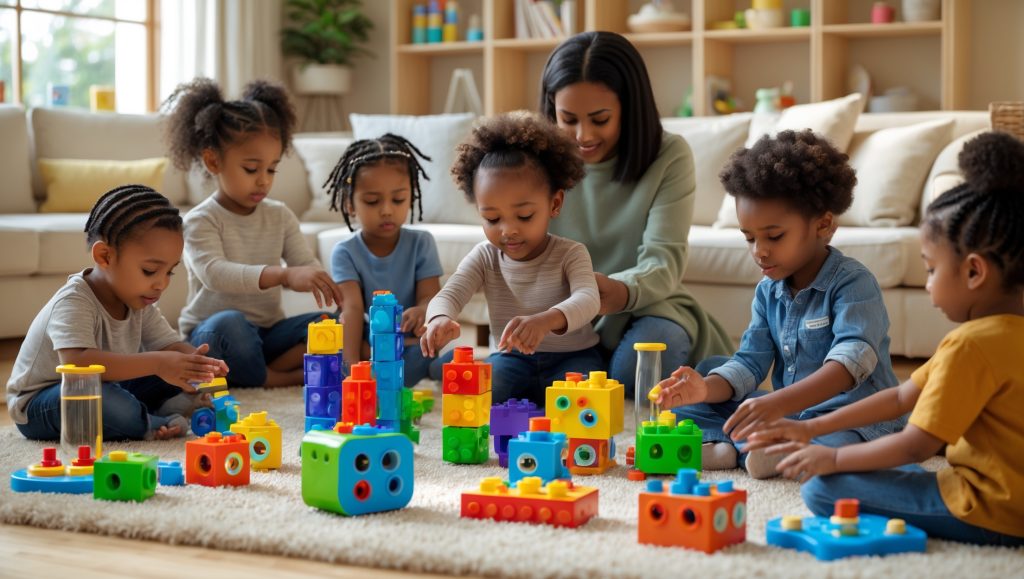
Key Takeaways
- STEM toys nurture curiosity, problem-solving, and foundational skills from an early age.
- Choosing age-appropriate and open-ended toys supports effective learning and engagement.
- STEM play can be integrated into daily routines without expensive materials.
- Parental encouragement and involvement are key to fostering a love of STEM.
- Balancing guided activities with unstructured play helps children develop independence and creativity.
Introduction
As technology and innovation continue to shape our world, nurturing children’s interest in science, technology, engineering, and math (STEM) from an early age is more important than ever. STEM toys offer a playful, hands-on way for children to explore these subjects, sparking curiosity and building foundational skills that last a lifetime. For parents, understanding how to select and use STEM toys can make a meaningful difference in supporting their child’s development and confidence.
Understanding STEM Toys
What Are STEM Toys?
STEM toys are designed to engage children in activities related to science, technology, engineering, and math. These toys can range from simple stacking blocks and shape sorters for toddlers to coding robots and chemistry kits for older children. The goal is to encourage exploration, experimentation, and problem-solving through play.
Why Do STEM Toys Matter?
Engaging with STEM toys helps children develop critical thinking, creativity, and perseverance. Research shows that early exposure to STEM concepts can foster a lifelong love of learning and boost skills such as spatial awareness, logical reasoning, and collaboration. By making STEM learning fun and accessible, parents can help break down barriers and support children of all backgrounds and abilities.
Choosing Age-Appropriate STEM Toys
Infants and Toddlers (0-3 Years)
For the youngest children, focus on toys that encourage sensory exploration and cause-and-effect learning. Soft blocks, stacking rings, and simple shape sorters help build fine motor skills and introduce basic concepts like size, shape, and balance. Always ensure toys are safe, non-toxic, and free of small parts that could pose a choking hazard.
Preschoolers (3-5 Years)
Preschoolers are ready for more complex building sets, magnetic tiles, and beginner science kits. Look for toys that encourage sorting, pattern recognition, and simple problem-solving. Interactive storybooks with STEM themes or basic coding toys can also nurture early interest in technology and storytelling.
Early Elementary (6-8 Years)
At this stage, children can handle more challenging construction sets, beginner robotics, and hands-on science experiments. Kits that involve building bridges, circuits, or simple machines foster creativity and introduce engineering principles in a tangible way. Board games with math or logic elements can also be highly engaging.
Integrating STEM Play at Home
Making STEM Part of Everyday Life
You don’t need a dedicated STEM corner or expensive toys to encourage learning. Everyday activities—like cooking, gardening, or sorting laundry—offer opportunities to discuss measurements, patterns, and cause-and-effect. Encourage your child to ask questions, make predictions, and test their ideas in daily routines.
Supporting Your Child’s Interests
Observe what fascinates your child and offer toys or activities that align with their interests. If they love building, introduce new materials or challenges. For kids curious about nature, try simple science experiments or outdoor exploration kits. Follow their lead and celebrate effort, not just outcomes.
Common Mistakes
- Choosing toys that are too advanced or too simple for your child’s developmental stage
- Focusing only on high-tech or expensive options, overlooking simple, open-ended toys
- Directing play too much instead of allowing children to experiment and explore independently
- Overloading children with too many structured activities, leaving little time for free play
- Neglecting to check for age-appropriate safety features and materials
Quick Checklist
- Match toys to your child’s age, interests, and developmental stage
- Prioritize open-ended toys that encourage creativity and experimentation
- Incorporate STEM concepts into daily routines and conversations
- Balance guided activities with plenty of unstructured playtime
- Regularly inspect toys for safety and durability
- Encourage questions, exploration, and persistence in problem-solving
Conclusion
STEM toys can be a joyful and effective way to nurture your child’s curiosity, confidence, and foundational skills. By choosing age-appropriate options, integrating STEM play into everyday life, and supporting your child’s interests, you can help lay the groundwork for a lifelong love of learning. Remember, your encouragement and engagement make all the difference—enjoy exploring, building, and discovering together!
FAQ
What are some simple STEM toys for toddlers?
Simple STEM toys for toddlers include stacking blocks, shape sorters, nesting cups, and magnetic tiles. These toys support early problem-solving, coordination, and understanding of basic concepts like size and shape.
How can I tell if a STEM toy is age-appropriate?
Check the manufacturer’s recommended age range and assess whether the toy matches your child’s interests and skills. Look for toys that challenge your child without causing frustration, and always prioritize safety.
Do I need expensive toys to support STEM learning?
No, many effective STEM toys are simple and affordable. Everyday objects like measuring cups, building blocks, or even household items can be used creatively to explore STEM concepts through play.
How much should I guide my child during STEM play?
Offer gentle guidance and encouragement, but allow your child plenty of freedom to experiment and solve problems independently. This builds confidence and critical thinking skills.
Can STEM toys help with social skills?
Yes, many STEM toys encourage collaboration, sharing, and communication, especially when children work together on building or problem-solving activities.
Are there STEM toys suitable for children with different abilities?
Absolutely. Many STEM toys are adaptable and can be used by children with a range of abilities. Look for toys with large pieces, simple instructions, and sensory-friendly materials as needed.
How can I integrate STEM learning into daily routines?
Talk about measurements while cooking, sort laundry by color or size, or explore patterns in nature. Everyday moments are great opportunities to introduce STEM concepts in a playful way.

This post highlights the wonderful potential of STEM toys to nurture curiosity and foundational skills in children of all ages. While choosing age-appropriate options is key, it’s equally important to remember that the most meaningful learning comes from shared experiences—when families play, build, and discover together. Engaging with your child during STEM play can spark conversations, boost confidence, and foster a lifelong love of exploration.
- Rotate toys regularly: Introducing a variety of STEM toys over time keeps play fresh and encourages different types of problem-solving.
- Follow your child’s interests: Notice which toys or topics excite your child and use those as a springboard for deeper learning.
- Embrace open-ended play: Simple blocks or loose parts often inspire more creativity than toys with a single solution.
- Celebrate effort and teamwork: Praise your child for trying new things and working through challenges together, rather than focusing on “getting it right.”
For a language-delayed toddler, would you recommend focusing more on hands-on building sets or interactive storybooks with STEM themes, or is it better to try both and see which sparks more interest?
It’s understandable to want the best support for your language-delayed toddler. Trying both hands-on building sets and interactive STEM-themed storybooks can be very helpful, as each promotes different skills—building sets encourage problem-solving and motor skills, while storybooks support vocabulary and listening. Offer each option during playtime, watch for which one your child prefers, and join in to model language, narrate actions, and gently prompt turn-taking. Always choose toys labeled safe for your child’s age to avoid choking hazards and supervise play. This isn’t medical advice; if you’re concerned, check in with your pediatrician.
I noticed your article mentions incorporating STEM play into daily routines without expensive materials. Could you give some concrete examples of how to do this for a very young, active toddler with a short attention span?
You’re thoughtful to look for simple ways to support your toddler’s learning. For a young, active child, try stacking plastic cups or bowls together to explore size and balance, or let your child transfer water between containers during bath time to build problem-solving skills. Offer safe household objects to sort by color or shape, and make simple ramps with cardboard for rolling balls and cars, discussing which goes faster. Always supervise closely and avoid small pieces to ensure safety. This isn’t medical advice; if you’re concerned, check in with your pediatrician.
Are there key differences I should keep in mind between STEM toys designed for infants compared to those for toddlers, especially around safety and developmental benefits?
You’re right to think about the differences between STEM toys for infants and toddlers, especially for safety and developmental reasons. For infants, look for toys that are large, soft, and free of small parts to avoid choking hazards; sensory and cause-and-effect toys work best at this age. For toddlers, toys can include more complex shapes and stacking or building components, but should still be sturdy and easy to clean. Always supervise play and check for age recommendations from the manufacturer. This isn’t medical advice; if you’re concerned, check in with your pediatrician.
You mentioned integrating STEM play into daily routines without needing expensive materials. Could you share some examples of easy, low-budget STEM activities that work well for toddlers who crave a lot of sensory input?
You’re thoughtful for wanting affordable, hands-on STEM activities for your sensory-seeking toddler. Try scooping and pouring water between different containers to explore volume and cause-and-effect. Create a sorting game with safe household items by color or shape for early math skills. Use large blocks or empty boxes for stacking and building, encouraging problem-solving. Let them experiment with playdough or homemade dough for tactile science fun—just supervise closely to prevent mouthing. Always check materials for choking hazards and supervise play. This isn’t medical advice; if you’re concerned, check in with your pediatrician.
Some STEM toys for toddlers seem pricey. Are there budget-friendly options suitable for a one-year-old that still help build those important early skills?
You’re absolutely right to look for affordable ways to support your child’s early learning. For a one-year-old, consider simple, open-ended toys like stacking cups, large wooden blocks, or nesting bowls—these encourage problem-solving and fine motor skills. Homemade options like filling and dumping containers or exploring safe household objects (like large, clean measuring spoons) can be just as effective. Always supervise closely to avoid choking hazards, and choose items that are too large to swallow and free of small parts. This isn’t medical advice; if you’re concerned, check in with your pediatrician.
My child is pretty sensitive to certain textures and sounds. Are there specific types of STEM toys for toddlers that tend to be less overwhelming for kids with sensory sensitivities?
It’s great that you’re considering your child’s sensory needs when choosing STEM toys. For toddlers with sensitivities, start with toys made from smooth, soft materials, like silicone or cloth, and avoid those with rough textures or loud, unpredictable noises. Simple stacking blocks, large interlocking pieces, or water play sets can offer sensory-friendly STEM exploration without overwhelming stimulation. Always supervise play and check that the toys are age-appropriate—large enough to prevent choking, and free from strong scents or harsh lights. This isn’t medical advice; if you’re concerned, check in with your pediatrician.
Is it helpful to involve children in choosing their own STEM toys, or is it better for parents to select a few and rotate them to match developmental stages? I am hoping to encourage some independence but also keep things manageable during our daily routines.
You’re thoughtful to want both independence and a manageable routine. For young children, it’s helpful to offer a small, parent-curated selection of STEM toys that match their age and developmental stage, then let them pick from those options. This supports safe exploration and decision-making without overwhelming them. Rotating toys keeps interest fresh and routines smoother. Supervise closely with toys that have small parts or complex features, especially for toddlers. This isn’t medical advice; if you’re concerned, check in with your pediatrician.
With so many STEM toys on the market, it’s easy to get overwhelmed. How can I assess whether a particular toy is genuinely educational and age-appropriate versus one that simply claims to be STEM-related?
It’s completely understandable to feel overwhelmed by the choices. To assess a STEM toy, first check the age recommendation and ensure there are no small parts or hazards for your child’s age. Second, look for toys that encourage hands-on problem-solving or exploration, rather than just flashing lights or sounds. Third, see if the toy allows open-ended play (building, experimenting, asking questions) instead of giving only one way to use it. Finally, review whether the toy builds specific skills like counting, sorting, or simple coding. This isn’t medical advice; if you’re unsure, your pediatrician can help guide you.
Budget and space are tight in our house with two cribs and all the twin gear. Do you recommend any versatile, easy-to-store STEM toys that work for a range of ages or can adapt as twins grow at different paces?
It’s wonderful that you’re looking for flexible STEM toys that will fit your family’s needs and limited space. Stackable blocks, like large wooden or silicone sets, encourage problem-solving for toddlers and can be used for building, sorting, and imaginative play as your twins grow. Simple nesting cups or bowls are another great choice—they’re easy to store and can teach size concepts, pouring, and even basic math games later on. Magnetic tiles (with careful supervision for little ones) are also highly adaptable and pack away compactly. Always check manufacturer age guidelines for small parts and supervise play to ensure safety. This isn’t medical advice; if you’re concerned, check in with your pediatrician.
For children who are sensitive to loud noises or certain textures, are there particular types of STEM toys that work well for building curiosity without causing sensory overload?
It’s thoughtful to consider your child’s sensory sensitivities while nurturing their curiosity. Look for STEM toys made from soft, smooth materials without rough or sticky textures, such as silicone building blocks or wooden puzzles. Choose quiet activities like magnetic tiles, simple stacking cups, or open-ended construction sets that do not require batteries or make sounds. Sensory bins with dry rice or beans can also be inviting if your child tolerates those sensations. Always supervise play, especially with small parts and younger children, and introduce new textures slowly to gauge comfort. This isn’t medical advice; if you’re concerned, check in with your pediatrician.
The article mentions integrating STEM play into daily routines. I often struggle to fit new activities into our busy schedule. Do you have any tips for making STEM play part of everyday moments like mealtime or bath time for a young toddler?
It’s completely understandable to feel stretched for time during a busy day. To weave STEM play into daily routines with your toddler, you might narrate simple counting or color games at mealtime (like sorting fruit by color), let them scoop and pour water during bath time to explore cause and effect, or name shapes and textures of foods together. Keep activities brief and interactive, focusing on safe, age-appropriate materials free from choking hazards. Remember, everyday moments can be learning opportunities. This isn’t medical advice; if you’re concerned, check in with your pediatrician.
Do you have suggestions for rotating STEM toys for kids who are sensitive to sensory input? For example, my preschooler is easily overstimulated by noisy or brightly colored toys. How can I make sure the options I leave out support STEM learning without causing overload?
It’s wonderful that you’re tuning into your child’s sensory needs while encouraging STEM learning. Try choosing toys in calm, muted colors and made from natural materials like wood. Opt for quiet toys—such as simple building blocks, nesting cups, or cause-and-effect puzzles with gentle actions. Rotate out toys with flashing lights or electronic sounds, and instead offer one or two open-ended options at a time to reduce overwhelm. Always supervise play to ensure age-appropriateness and safety, especially with small parts. This isn’t medical advice; if you’re concerned, check in with your pediatrician.
I noticed the article recommends mixing guided activities with unstructured play. How much time should a preschooler spend with a STEM toy each day, and do you suggest setting a strict time limit for screen-based STEM activities?
It’s great that you’re thinking about balancing structure and free play for your preschooler. For hands-on STEM toys, 30–60 minutes a day—broken into shorter sessions—can be engaging without overwhelming your child. Let them lead during unstructured play, but offer gentle guidance during more complex activities. For screen-based STEM toys, aim for 20–30 minutes daily and keep content age-appropriate, watching together when possible. Always supervise to ensure safety and encourage breaks to protect their eyes and promote movement. This isn’t medical advice; if you’re concerned, check in with your pediatrician.
You mentioned the importance of sensory exploration with STEM toys for toddlers. Are there specific rotation strategies for kids who have sensory sensitivities, so they don’t feel overstimulated by too many new toys at once?
It’s great that you’re thinking about your toddler’s sensory needs when introducing STEM toys. Start by offering only one or two toys with familiar textures and sounds, giving your child time to get comfortable. Rotate toys every few days instead of daily to avoid overwhelming them, and keep unused toys out of sight. Watch for signs of sensory overload, like fussiness or withdrawal, and adjust the pace if needed. Always choose age-appropriate, non-toxic, and easy-to-clean toys, and supervise play closely. This isn’t medical advice; if you’re concerned, check in with your pediatrician.
I have twins who are on different nap and bedtime schedules, so our play sessions are rarely at the same time. Do you have any tips for integrating STEM activities when one child is awake and the other is sleeping, especially when they are in different age ranges?
It’s understandable to want both your twins to benefit from STEM play, even with different schedules. Try setting up simple, independent activities that can be cleaned up or paused easily—like stacking cups, shape sorters, or water play. When the younger child is awake, supervise with age-appropriate, non-chokable items. For the older child, rotate in more complex activities like basic building kits or puzzles during their solo time. You might also keep a STEM activity box tailored to each child’s age for quick setup. Always supervise closely, especially with small parts. This isn’t medical advice; if you have concerns, check in with your pediatrician.
Do you have suggestions for how to incorporate more STEM concepts into playtime using regular household items, especially for families on a tight budget who may not be able to invest in specialized toys?
It’s wonderful that you’re looking for creative ways to introduce STEM concepts without extra expense. Try building towers or bridges with plastic cups or boxes to explore engineering. Use measuring cups and kitchen spoons for simple water or sand experiments to teach about volume and cause-effect. Gather safe household objects like buttons or pasta for sorting and counting activities. Create ramps with cardboard and observe how different objects roll to discuss motion and gravity. For toddlers and preschoolers, always supervise closely and avoid small items that could be choking hazards. This isn’t medical advice; if you’re concerned, check in with your pediatrician.
You mention integrating STEM play into daily routines. What are some easy, practical examples for busy families who may not have time or space for big projects at home?
It’s completely understandable to seek simple ways to include STEM play in a busy schedule. Try narrating simple science during daily tasks—like pointing out how water changes when boiling pasta. Involve your child in sorting laundry by color or size, which builds early math skills. Let your child help measure ingredients while cooking for hands-on practice. Use building blocks or recycled containers for quick engineering play that can be tidied easily. Always supervise young children and avoid small items that could be a choking hazard. This isn’t medical advice; if you’re concerned, check in with your pediatrician.
You mentioned simple tools and household materials can support STEM learning. How can I use things like child-safe scissors or tongs to build fine motor skills and curiosity in daily activities?
It’s wonderful that you want to nurture both fine motor skills and curiosity at home. Try inviting your child to cut playdough or soft paper with child-safe scissors—this builds hand strength and coordination. Offer tongs for sorting pom-poms, cotton balls, or snacks by color or size, which encourages precision and problem-solving. Supervise closely, especially with small objects or sharp edges, and choose tools designed for your child’s age. Simple kitchen tasks, like picking up pasta or transferring beans between bowls, also add fun, hands-on STEM moments. This isn’t medical advice; if you’re concerned, check in with your pediatrician.
You mention integrating STEM play into daily routines for infants and toddlers. Could you give examples of how I might combine mealtime with STEM activities for a 10-month-old, especially when introducing new foods and managing the mess?
It’s great that you want to make mealtime both fun and educational for your baby. For a 10-month-old, you might let your baby touch, squish, and explore different textures of safe, soft foods—this sensory play supports early science learning. Try naming colors, counting bites, or sorting bite-sized pieces on the tray. Show cause and effect by demonstrating what happens if they drop food or stir with a baby spoon. Always supervise closely to prevent choking, and avoid foods that are hard or small. This isn’t medical advice; if you have concerns about introducing new foods or your baby’s development, please check with your pediatrician.
My toddler is at the potty training stage and we are constantly in different rooms for bathroom trips. Are there any portable STEM toys you recommend that are easy to carry around the house and still engage a 2-year-old?
You’re doing a great job supporting your toddler during potty training while wanting to keep playtime engaging. Look for lightweight, easy-to-clean STEM toys like simple stacking cups, nesting blocks, or a small set of snap-together gears that your child can bring from room to room. A sturdy sensory board with switches, zippers, or latches can also be both portable and captivating. Make sure all pieces are large enough to avoid choking hazards and that the toys are free from small detachable parts. Always supervise play, especially in the bathroom. This isn’t medical advice; if you have concerns, check in with your pediatrician.
Safety is a big concern since my baby loves to grab and throw her food—and her toys—while eating. Are there any specific STEM toys that hold up well to this kind of rough handling and are also easy to disinfect after messy meals?
It’s understandable to want durable, safe toys when your baby loves to throw things during meals. For this stage, look for STEM toys made of solid, BPA-free plastic or silicone that can withstand tossing and banging—think chunky blocks, large stacking rings, or simple shape sorters. Choose toys without small pieces, keeping choking hazards in mind for infants and toddlers. After messy meals, these toys can be easily washed with soap and water or wiped down with a disinfectant. Always supervise play during meals, and avoid toys with batteries or electronic parts at the table. This isn’t medical advice; if you’re concerned, check in with your pediatrician.
I noticed you suggest incorporating STEM into daily routines without expensive materials. Could you give some examples of simple, sensory-friendly STEM play ideas I could include in a bedtime or after-school routine for my young child?
It’s wonderful that you want to make STEM play part of your child’s daily routine in an accessible way. For a sensory-friendly, simple approach, try these: Build patterns or towers with soft blocks or pillows; explore water play with cups during bath time to teach about volume and cause-and-effect; sort socks or toys by color or size for math concepts; or use a flashlight to make shadow shapes and talk about light. Always supervise closely, especially with loose parts, and choose activities that match your child’s age and sensory comfort. This isn’t medical advice; if you’re concerned, check in with your pediatrician.
I noticed the article emphasized integrating STEM play into daily routines. For working parents with busy schedules, do you have any practical suggestions for fitting these kinds of activities in without feeling overwhelmed?
It’s completely understandable to feel stretched for time as a working parent. To weave STEM play into your day, try using bath time for simple sink-or-float experiments, or involve your child in sorting laundry by size or color. Cooking together can spark conversations about measurements and cause-and-effect. Even a few minutes building with blocks after dinner encourages engineering thinking. Choose activities that fit your child’s age—keep pieces large for toddlers and supervise closely. This isn’t medical advice; if you’re concerned, check in with your pediatrician.
My child sometimes prefers open-ended pretend play with common objects like pillows or laundry baskets over more structured STEM toys. Should I encourage this or try to introduce more STEM concepts into their favorite games?
It’s wonderful that you’re noticing your child’s play preferences and want to support their learning. Open-ended pretend play with everyday objects is actually great for creativity, problem-solving, and early STEM skills like spatial awareness. You can gently introduce STEM concepts by joining their play: build a ‘fort’ together and talk about shapes, balance, or how to make it sturdier, or use laundry baskets for sorting by size or color. Always keep safety in mind, making sure objects are age-appropriate and free of hazards. This isn’t medical advice; if you’re concerned, check in with your pediatrician.
You mention that STEM play can be integrated into daily routines without expensive materials. Could you give some examples of simple, everyday STEM activities I could do at home with my toddler?
It’s great that you want to foster STEM skills with your toddler using simple activities at home. Try letting your child scoop and pour water between cups during bath time to explore volume and cause-and-effect. Build towers with blocks or even plastic containers to introduce balance and counting. Go on a nature walk to collect leaves and sort them by size or color. You can also let your toddler help stir and mix ingredients when cooking, which encourages observation and prediction. Always supervise closely, especially with small items or water, and choose safe, age-appropriate materials. This isn’t medical advice; if you’re concerned, check in with your pediatrician.
When sharing caregiving with grandparents who often make traditional meals and do hands-on activities, how can we make STEM toys part of daily routines without overwhelming everyone or interfering with family traditions?
It’s wonderful that you value both family traditions and introducing STEM play. Try setting aside a short, relaxed time each day—maybe after a meal—for exploring a simple STEM toy together. Choose toys that fit your child’s age and are easy for grandparents to use, avoiding small pieces for little ones. Invite grandparents to join in by connecting the toy’s activity to a tradition, like building a bridge after reading a family story. Keep sessions brief and low-pressure, and reassure everyone that enjoying time together matters most. This isn’t medical advice; if you’re concerned, check in with your pediatrician.
Sometimes managing two little ones with different nap schedules makes it tough to fit in hands-on STEM activities every day. Are there quick, practical ways to weave STEM play into our daily routine without feeling overwhelmed?
It’s understandable to feel stretched managing different nap schedules and wanting meaningful play for both children. Try keeping a small basket of age-appropriate STEM toys or household items nearby for easy, spontaneous play—think stacking cups, measuring spoons, or blocks. You can narrate simple STEM concepts during everyday routines, like sorting laundry by color or counting steps as you walk together. For safety, supervise closely and avoid small pieces for children under three. Even brief, playful moments count toward STEM learning. This isn’t medical advice; if you’re concerned, check in with your pediatrician.
When selecting STEM toys for toddlers, do you recommend any particular types that are especially good for children who are sensitive to certain textures or sounds? My twins often have different sensory preferences, so suggestions for accommodating this would be helpful.
You’re thoughtful to consider your twins’ sensory sensitivities while choosing STEM toys. Start with toys made of smooth, soft materials like silicone or fabric if they dislike rough or hard textures. Look for toys with adjustable or quiet sound features, or ones that are silent, to avoid overwhelming them. Sensory bins with varied but gentle textures (like water beads or rice) can be offered with close supervision. Offer choices and watch your twins’ reactions, letting them explore at their own pace. Always check toys for small parts and age-appropriate labeling. This isn’t medical advice; if you’re concerned, check in with your pediatrician.
My child just turned two, but sometimes the age ranges on toys seem off compared to her skill level. How do I know when to introduce certain types of STEM toys, especially if she seems more or less interested than the typical toddler?
It’s great that you’re noticing your child’s unique interests and abilities. Start by watching how she interacts with toys—if she gets frustrated or bored quickly, the toy may not be the right fit yet. Choose toys without small parts, as these are safer for two-year-olds. Introduce simple STEM toys like stacking cups, cause-and-effect toys, and large building blocks, and see how she responds. If she seems ready, you can slowly try more complex options, but always supervise play and follow basic safety guidelines. This isn’t medical advice; if you’re concerned, check in with your pediatrician.
With limited storage space at home, do you have tips for choosing STEM toys that are versatile and don’t take up much room, but can still be used in different ways as my child grows?
It’s great that you want to make the most of limited space while supporting your child’s learning. Look for open-ended toys like building blocks or magnetic tiles—they can be used for simple stacking with toddlers and more complex creations as your child grows. Choose sets with pieces that are easy to store together in a small bin. Opt for toys without many tiny parts to reduce clutter and choking risks, especially for younger children. Multi-use kits, like simple gears or basic science tools, can be adapted for different ages with supervision. This isn’t medical advice; if you have concerns, check in with your pediatrician.
When it comes to iron intake for my baby, I hear that both cereals and purees can be good options. Is there a difference in how iron from these foods might contribute to the cognitive growth that you mention is supported by STEM toys?
It’s wonderful that you’re mindful about your baby’s iron intake and its role in brain development. Both iron-fortified cereals and purees (like meats, beans, or certain vegetables) provide important iron, but the type of iron differs: cereals usually supply non-heme iron, while purees from meats have heme iron, which the body absorbs more easily. To support cognitive growth, offer a mix of both types if possible, and pair non-heme sources (like cereals) with vitamin C-rich foods to boost absorption. Always ensure foods are age-appropriate in texture and avoid choking hazards. This isn’t medical advice; if you’re concerned, check in with your pediatrician.
My toddler is extremely active and loves sensory play, but gets bored with traditional stackers and shape sorters quickly. Are there specific STEM toys that hold the attention of high-energy toddlers without creating too much mess or chaos at home?
It’s great that you want to nurture your toddler’s curiosity in ways that fit their active style. For high-energy toddlers, consider STEM toys like magnetic tiles, which can be built and rebuilt in endless ways, or gear sets that click together and move with a turn—these keep little hands busy and minds engaged. Simple circuit toys with large parts (for ages 2+) can offer safe, hands-on experimentation. Sensory bins with easy-to-clean items like large plastic nuts and bolts or water beads designed for toddlers add tactile interest without major mess. Always supervise play to prevent choking, and avoid small parts. This isn’t medical advice; if you’re concerned, check in with your pediatrician.
With so many STEM toys available, how can parents make sure the toys they pick are genuinely safe for toddlers, especially those interested in putting things in their mouths?
It’s completely natural to worry about toy safety when toddlers are curious and often explore by mouthing objects. First, always check the age recommendations on STEM toys and choose those labeled specifically for toddlers. Second, inspect toys for small parts, loose pieces, or batteries that could be choking hazards. Third, favor toys made of non-toxic, BPA-free materials, and avoid those with paint that could chip. Fourth, supervise playtime closely, especially with new toys. Finally, regularly check toys for wear and tear. This isn’t medical advice; if you’re concerned, check in with your pediatrician.
My child tends to get bored quickly with toys, but loves unstructured play. How can I introduce more STEM-focused activities that still allow for lots of independence and spontaneous exploration for a toddler?
It’s wonderful that you’re tuned in to your toddler’s preference for unstructured play and want to nurture their curiosity. Try offering open-ended STEM toys like large building blocks or simple stacking cups—these let your child experiment freely. You might set up a sensory bin with safe materials such as rice, large spoons, and cups for scooping and pouring. Rotating the toys weekly can keep things fresh and engaging. Always supervise play closely to ensure safety, especially with small parts or messy materials. This isn’t medical advice; if you’re concerned, check in with your pediatrician.