
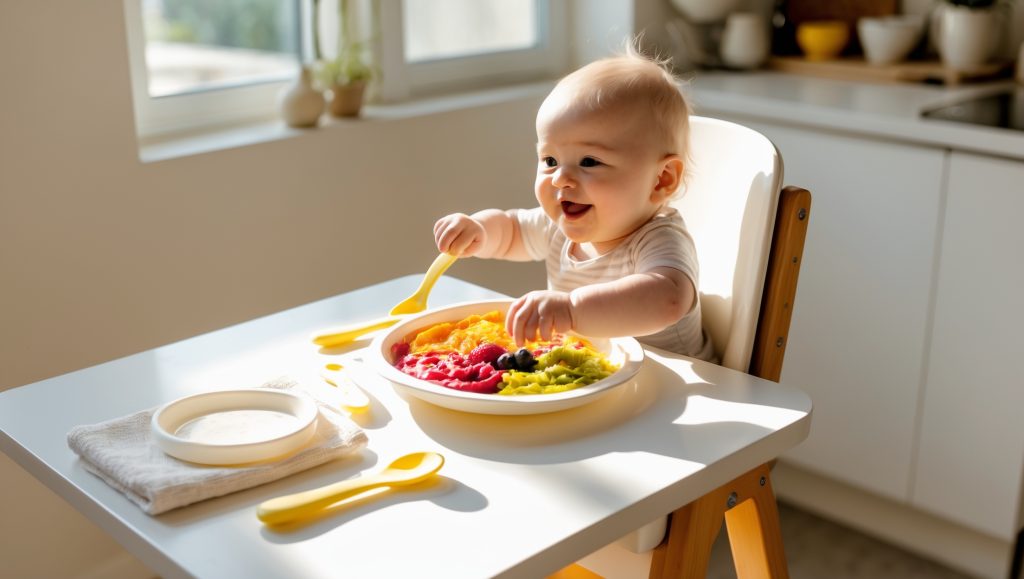
How We Chose
Introducing solids is a major milestone for babies and families alike. With so many products and playful tools on the market, we focused on those that make the process less stressful and more enjoyable—for both babies and caregivers. Our selections are based on parent feedback, durability, safety, ease of cleaning, and how well they support self-feeding and sensory exploration. We prioritized products suitable for U.S. families, considering evidence-informed recommendations for first foods and feeding methods. This list is not medical advice, but rather a practical roundup of items that have consistently earned parent trust during the transition to solids in 2025.
#1 Stokke Tripp Trapp High Chair — Supportive & Grows With Your Child
Why it stands out
This iconic high chair is beloved for its ergonomic design and adjustability, ensuring babies sit safely and comfortably at the table. Its sturdy build and timeless style mean it can be used well beyond the baby years.
Best for
- Families seeking a long-lasting, adaptable high chair
- Babies ready for supported sitting at mealtimes
- Parents wanting a chair that blends into home décor
Key notes
- Age/Stage: 6 months and up (with baby set)
- Materials/Ingredients: Solid wood, BPA/BPS-free plastics
- Strengths: Adjustable, durable, easy to clean, supports baby’s posture
- Trade-offs: Higher price point; accessories (like tray/baby set) sold separately
#2 ezpz First Foods Set — All-in-One Suction Plate & Utensil Kit
Why it stands out
This silicone set includes a bowl, cup, and utensils perfectly sized for little hands. The strong suction base helps keep food on the table (not the floor), supporting independent eating and minimizing spills.
Best for
- Babies learning to self-feed
- Families wanting easy cleanup and dishwasher-safe products
- Introducing both purees and finger foods
Key notes
- Age/Stage: 4–12 months (and up)
- Materials/Ingredients: 100% food-grade silicone
- Strengths: Stays put, helps develop fine motor skills, reduces mess
- Trade-offs: Needs a flat surface for best suction; can stain with some foods
#3 NumNum Pre-Spoon GOOtensils — Sensory Self-Feeding Tools
Why it stands out
Unlike traditional spoons, these pre-spoons are designed for scooping and dipping, making them ideal for babies exploring textures and learning to bring food to their mouths independently.
Best for
- Babies just starting solids
- Encouraging self-feeding and sensory play
- Families practicing baby-led weaning or purees
Key notes
- Age/Stage: 6 months and up
- Materials/Ingredients: BPA/BPS/PVC/phthalate-free silicone and nylon
- Strengths: Easy grip, safe for gums, dishwasher safe
- Trade-offs: Not ideal for thin liquids; works best with thicker foods
#4 IKEA Antilop High Chair — Affordable, Simple, & Easy to Clean
Why it stands out
A favorite among parents for its budget-friendly price and minimalist design, this chair is lightweight, easy to assemble, and can be wiped clean in seconds.
Best for
- Families on a budget
- Small spaces or travel
- Quick and easy cleanup
Key notes
- Age/Stage: 6 months and up (with proper sitting support)
- Materials/Ingredients: BPA-free plastic, steel legs
- Strengths: Lightweight, compact, affordable, easy to sanitize
- Trade-offs: Less adjustable, basic footrest, minimal padding
#5 Beaba Babycook Solo — Compact, All-in-One Baby Food Maker
Why it stands out
This countertop appliance steams, blends, reheats, and defrosts food in under 20 minutes, allowing parents to prepare fresh purees and soft finger foods with minimal effort.
Best for
- Families making homemade baby food
- Those looking for a space-saving appliance
- Quick, batch-cooking of fruits, veggies, and proteins
Key notes
- Age/Stage: 6 months and up
- Materials/Ingredients: BPA/lead/phthalate-free plastic, stainless steel blade
- Strengths: Multi-functional, user-friendly, easy to clean
- Trade-offs: Limited batch size; higher upfront cost
#6 Bumkins Waterproof Sleeved Bibs — Full-Coverage, Mess-Free Feeding
Why it stands out
These lightweight, quick-drying bibs protect baby’s clothes (and yours) from spills and splatters. The long sleeves and pocket catch most of what doesn’t make it to baby’s mouth.
Best for
- Messy eaters and adventurous feeders
- Families wanting less laundry
- On-the-go or daycare use
Key notes
- Age/Stage: 6–24 months
- Materials/Ingredients: Waterproof polyester, BPA/PVC-free
- Strengths: Covers arms and lap, machine washable, quick-dry
- Trade-offs: Can feel warm in summer; fit varies by baby size
#7 Olababy Training Spoon — Flexible, Baby-Led Weaning Favorite
Why it stands out
Its soft, flexible tip and ergonomic handle make scooping and self-feeding easier for little hands. The playful design encourages exploration and independence at mealtime.
Best for
- Babies eager to self-feed
- Baby-led weaning and transitional feeding
- Families valuing comfort and safety in utensils
Key notes
- Age/Stage: 6 months and up
- Materials/Ingredients: 100% food-grade silicone
- Strengths: Flexible, gentle on gums, dishwasher safe
- Trade-offs: Not as effective with thin foods; may stain with strong colors
#8 Munchkin Stay Put Suction Bowls — Secure & Stackable Feeding Solution
Why it stands out
This set of colorful bowls stays in place with a strong suction base, making them a favorite for babies learning to scoop and parents hoping to contain the mess.
Best for
- Babies who love to throw dishes
- Families looking for stackable, space-saving storage
- Introducing thicker purees and soft solids
Key notes
- Age/Stage: 6 months and up
- Materials/Ingredients: BPA-free plastic, rubber suction
- Strengths: Affordable, strong suction, dishwasher safe
- Trade-offs: Not microwave safe; suction may weaken on textured surfaces
#9 Lalo Suction Plate — Divided, Minimalist, and Durable
Why it stands out
This sturdy, divided plate features a powerful suction base and simple lines that blend seamlessly into modern kitchens while keeping foods separated for picky eaters.
Best for
- Babies exploring multiple tastes and textures
- Families valuing aesthetics and function
- Encouraging independent eating
Key notes
- Age/Stage: 6 months and up
- Materials/Ingredients: 100% food-grade silicone
- Strengths: Stays put, easy-grip sides, dishwasher/microwave safe
- Trade-offs: Higher price for a single plate; suction best on smooth surfaces
#10 Learning Resources New Sprouts Food Set — Playful Food Exploration
Why it stands out
This toy set introduces babies and toddlers to the concept of food, utensils, and mealtime routines through safe, colorful pretend play—supporting familiarity and curiosity around solids.
Best for
- Older babies and toddlers interested in imitation
- Families wanting to model healthy eating habits
- Building language and social skills around mealtimes
Key notes
- Age/Stage: 18 months and up (supervised play for younger babies)
- Materials/Ingredients: BPA-free, toddler-safe plastic
- Strengths: Durable, easy to clean, encourages food confidence through play
- Trade-offs: Not for actual eating; small pieces require supervision
Buying Tips
- Prioritize safety and materials: Choose products that are BPA/BPS/PVC/phthalate-free and designed for food contact.
- Think about longevity: Some items, like adjustable high chairs, may serve your family for years, while others (like bibs or starter spoons) may be outgrown quickly.
- Match to your space: Consider the size and cleaning needs of high chairs, bowls, and food makers—especially if you have a small kitchen.
- Ease of use matters: Look for products that are dishwasher safe and easy to assemble or disassemble for cleaning.
- Encourage exploration: Playful products and utensils can reduce stress and build confidence for babies starting solids.
- Trial and error is normal: Every baby is different. It may take some time to find the products your child prefers.
Verdict
Introducing solids can be messy, exciting, and sometimes overwhelming. The right products can make a big difference, helping babies build positive associations with food and giving caregivers peace of mind. Whether you’re starting with purees, finger foods, or a combination, these tools and toys are designed to support safe, enjoyable, and developmentally appropriate first food experiences. Remember, there’s no one-size-fits-all approach—choose what works best for your family’s needs and routines.
FAQ
+When should I start offering my baby solids?
+What is the difference between baby-led weaning and traditional spoon-feeding?
+Are silicone feeding products safe for babies?
+How can I reduce the mess when introducing solids?
+Do I need a special baby food maker?
+What should I look for in a high chair?
+Is it okay for my baby to play with food?

Introducing solids is a significant milestone for both babies and parents, and having the right tools can make the process smoother and more enjoyable. The latest 2025 guide to practical products for baby’s first foods emphasizes items that blend safety, functionality, and fun. Silicone suction plates and bowls, for instance, help prevent spills and encourage self-feeding. Soft-tipped spoons designed for little mouths make the transition gentle and comfortable. High chairs with adjustable features are essential for accommodating growing babies and making mealtimes stress-free.
Toys also play a vital role in this journey. Food-grade silicone teething toys shaped like fruits and veggies not only soothe sore gums but also familiarize babies with new foods through play. Sensory toys that mimic the texture of real foods can spark curiosity and reduce reluctance to try new tastes. As your baby explores solids, these thoughtfully chosen tools and toys foster independence, build positive associations with eating, and support developmental milestones. Investing in well-designed feeding products ensures that introducing solids is safe, enjoyable, and a precious bonding experience for the whole family.
- Silicone suction plates and bowls for mess-free meals
- Soft-tipped feeding spoons for gentle first tastes
- Adjustable high chairs for comfort and safety
- Food-shaped teething and sensory toys to encourage exploration
I noticed you mentioned that the Stokke Tripp Trapp high chair grows with your child, but is it comfortable and secure enough for a squirmy 7-month-old who’s still working on stable sitting? Would you suggest adding the baby set or any other accessories for extra support at this early stage?
You’re absolutely right to prioritize comfort and security for your little one as they’re learning to sit. For a 7-month-old who isn’t fully stable, I recommend using the Stokke Tripp Trapp Baby Set, which adds a supportive high back and safety harness to keep your baby upright and secure. Consider adding a cushion for extra comfort, but make sure everything fits snugly to avoid any slipping. Always supervise mealtimes and check that your baby’s feet can rest (even lightly) on the footrest for stability. This isn’t medical advice; if you’re concerned, check in with your pediatrician.
Do you have any advice on how to limit the number of feeding tools we buy, especially when counter space is tight? It seems easy to accumulate a lot of products when starting solids, and I want to keep things manageable.
It’s completely understandable to want to keep your space manageable as you start solids with your baby. Focus on 1–2 easy-to-clean spoons, a suction bowl, and a sturdy, easy-to-wash bib—these basics cover most needs for starting out. Skip specialty gadgets unless a specific need arises, and opt for stackable or collapsible items to save space. Store feeding tools in a small basket or caddy so they’re easy to access and tidy. Make sure all items are age-appropriate and free of small parts. This isn’t medical advice; if you’re concerned, check in with your pediatrician.
We do baby-led weaning and sometimes travel to relatives’ homes. Can the NumNum Pre-Spoon GOOtensils be used with a variety of food textures, or do they really only work well with thick purees and not soft solids?
It’s great that you’re thinking ahead about feeding tools while traveling with your baby. The NumNum Pre-Spoon GOOtensils are best for thick purees, yogurts, and mashed foods—they help babies practice self-feeding without much scooping required. For soft solids or chunkier foods, your baby might have more difficulty picking up enough to eat, so consider also bringing a silicone-tipped spoon or letting your child use their hands for those textures. Always supervise closely to ensure safety, especially with new foods or utensils. This isn’t medical advice; if you’re concerned, check in with your pediatrician.
For parents like me introducing solids at slightly different times due to twins’ unique readiness cues, can these recommended tools be easily adjusted for one baby starting at 4 months and the other at 6 months, especially the utensils and plates?
It’s completely understandable to want flexible tools when your twins are ready for solids at different times. Most of the utensils and plates listed in the article are designed to be safe for a range of ages—just be sure to choose ones that are labeled safe for babies as young as 4 months and free of choking hazards or small parts. Start with soft-tipped spoons and shallow, suction-based plates for your younger twin, and gradually introduce divided or larger plates for your older baby as they gain skills. Always supervise meals, check for wear or damage, and wash tools thoroughly between uses. This isn’t medical advice; if you’re concerned, check in with your pediatrician.
I noticed that purees and finger foods are both mentioned for early self-feeding. From an iron intake perspective, do cereals or purees tend to be more effective for babies around 6 months? I’m trying to plan first foods and want to make sure my baby is getting enough iron.
It’s wonderful that you’re planning for your baby’s iron needs as you start solids. Around 6 months, iron-fortified baby cereals are a reliable source of iron because they’re specifically formulated for infants, and the iron is often more easily absorbed, especially when served with vitamin C-rich purees like pear or apple. Purees of meats, beans, or lentils are also excellent sources of iron, often naturally higher than cereals, and can be introduced safely if they are very smooth and free of lumps. Offering a mix of both can help meet iron needs and support self-feeding skills. Always supervise closely, and check texture for age-appropriateness. This isn’t medical advice; if you’re concerned, check in with your pediatrician.
We travel a lot to visit grandparents, so I’m curious—how easy is it to transport the Stokke Tripp Trapp high chair or the IKEA Antilop? Do you have any advice for families who need portable feeding gear?
It’s great that you’re thinking ahead about feeding on the go. Both the Stokke Tripp Trapp and IKEA Antilop are sturdy at home but not designed for frequent travel—the Tripp Trapp is heavy and doesn’t fold, while the Antilop is lighter but still fairly bulky. For portability, consider a compact, foldable booster seat or a travel high chair that secures to a regular dining chair. Make sure any travel seat has secure straps, is easy to clean, and is suitable for your baby’s age and weight. Always supervise mealtimes, especially outside your usual setup. This isn’t medical advice; if you’re concerned, check in with your pediatrician.
For families starting solids with purees but planning to transition to finger foods soon, do any of these tools stand out as more versatile for both stages, or would we need to add new products as our baby’s skills change?
It’s great that you’re planning ahead for your baby’s transition from purees to finger foods. Several tools from the article, like silicone spoons with easy-grip handles and divided suction plates, are versatile and work well for both feeding stages. Soft-tipped spoons help early on, while plates and silicone bibs remain useful as self-feeding begins. Look for cups with handles and shallow training bowls, which support skill development through both stages. Always supervise meals and check product labels for age and safety recommendations. This isn’t medical advice; if you have concerns about feeding or readiness, check in with your pediatrician.
With so many feeding tools and toys on the market, how can I tell which are genuinely educational versus just entertaining? Are there signs that a toy or utensil actually supports skills like self-feeding or sensory exploration?
It’s great that you want to choose feeding tools and toys that truly help your baby learn. Look for items that encourage your baby to grip, scoop, or hold food, like easy-to-grasp spoons, divided plates, or cups with handles. For toys, opt for those with different textures and safe materials that babies can mouth, squeeze, or manipulate. Check that all items are age-appropriate, free from choking hazards, and easy to clean. Pay attention to how your baby interacts—genuine learning often involves a bit of mess and lots of hands-on discovery. This isn’t medical advice; if you’re concerned, check in with your pediatrician.
Since self-feeding can get messy, do you have tips for minimizing clutter and storing utensils like the NumNum GOOtensils so they don’t take over kitchen drawers? I’m always looking for practical ways to keep feeding time streamlined.
It’s understandable to want to keep feeding time organized, especially with all the little utensils involved. Try using a small, lidded container or divided bin in a dedicated kitchen drawer to corral items like the NumNum GOOtensils—this keeps them accessible but contained. Consider an upright utensil holder or a silicone caddy on the counter for quick-dry storage between washes. Rotating a few utensils at a time and storing extras elsewhere reduces clutter. Always wash and dry thoroughly to prevent mold, and keep utensils out of baby’s reach when not supervised. This isn’t medical advice; if you’re concerned, check in with your pediatrician.
I noticed the ezpz set can stain with some foods. Does anyone have tips for removing stubborn stains from silicone, or would it be better to choose something else for colorful purees?
It’s understandable to want feeding tools that stay clean and look inviting for your baby. To remove stains from silicone like the ezpz set, try soaking the items in a mixture of baking soda and warm water, then scrub gently with a soft sponge. You can also leave them in sunlight for several hours, as this can naturally help lift stains. For very persistent spots, a diluted white vinegar soak may help, but always rinse thoroughly. These methods are generally safe for babies over 6 months, but inspect for any residue before use. This isn’t medical advice; if you’re concerned, check in with your pediatrician.
My toddler is on the smaller side for her age—would the Stokke Tripp Trapp still work well for her, or should I wait until she’s a bit bigger? I’m not sure about the fit for petite babies just starting solids.
It’s understandable to want your petite toddler to feel comfortable and secure during mealtimes. The Stokke Tripp Trapp is designed to be adjustable and can fit smaller babies with the addition of the baby set and harness for extra support. Make sure the footrest is properly positioned so her feet are supported, and always use the harness to keep her safe. Double-check that she can sit upright without slumping, as this is important for safe swallowing. This isn’t medical advice; if you’re concerned, check in with your pediatrician.
My kitchen table isn’t completely smooth—do the suction bowls and plates actually work well on textured surfaces, or will we end up dealing with tossed plates at every meal?
It’s understandable to want mealtimes to be as mess-free as possible when starting solids. Suction bowls and plates work best on very smooth, non-porous surfaces, so a textured table may make it harder for them to stick securely. You can try these steps: 1) Clean and dry both the table and the suction base before use; 2) Test different spots to find the smoothest area; 3) Consider using a portable, smooth placemat under the bowl for better suction. Always supervise your baby during meals, as determined little hands might still manage to lift the plate. This isn’t medical advice; if you’re concerned, check in with your pediatrician.
We have limited kitchen space, so I’m curious if the ezpz First Foods Set stacks or stores compactly with other feeding gear when not in use. Do you have any storage or organization tips for keeping things tidy as we start introducing solids?
You’re right to think ahead about storage as you start solids—feeding gear can quickly add up in a small kitchen. The ezpz First Foods Set is fairly compact: the mat and bowl nest together, and the utensils are small, so the set stacks neatly. Try designating a shallow bin or drawer organizer just for baby feeding items, keeping everything together and easy to find. Avoid overfilling so items air-dry well and stay clean. If you store utensils upright in a cup, make sure it’s out of baby’s reach for safety. This isn’t medical advice; if you have concerns, check in with your pediatrician.
If my baby is a bit younger than 6 months but showing interest in food, is it safe to start with tools like the NumNum GOOtensils, or should we wait until she can sit up completely unassisted?
Noticing your baby’s interest in food is exciting—a sign she’s getting ready for solids. For safety, most experts recommend waiting until your baby can sit up with minimal support and has good head control before starting solids or using tools like the NumNum GOOtensils. If she’s not quite there yet, let her explore utensils during playtime (with supervision) but hold off on actual feeding until these developmental signs are clear. Always check for readiness cues and avoid introducing solids before 4 months. This isn’t medical advice; if you’re unsure, your pediatrician can help guide you.
We’re considering between the Stokke Tripp Trapp and the IKEA Antilop high chair. For a sensory-seeking toddler who likes to climb, is one safer or more stable than the other for busy mealtimes?
It’s great that you’re thinking about your toddler’s safety and sensory needs at mealtimes. For active, sensory-seeking toddlers who like to climb, the Stokke Tripp Trapp tends to be more stable because of its heavier weight and adjustable footrest, which can help ground busy feet. Make sure to use the harness with either chair and always supervise mealtimes closely. The IKEA Antilop is lightweight and easy to clean, but may tip more easily if a child tries to climb in or out. Both should be placed on even floors, clear of hazards. This isn’t medical advice; if you have specific concerns about your child’s safety, check in with your pediatrician.
Do any of these products support self-feeding for kids with sensory sensitivities to certain food textures, or would I need to look for something more specialized?
It’s great that you’re thinking about your child’s unique sensory needs when introducing solids. Several products in the article, such as silicone spoons, suction plates with divided sections, and textured teething feeders, are designed to make self-feeding easier and less overwhelming for babies sensitive to textures. Start with softer, smooth foods in easy-grip feeders, and offer only a little at a time. Always supervise closely, especially if your child is prone to mouthing or gagging. If you’re finding your child is still struggling or avoiding foods, you might consider consulting an occupational therapist with feeding experience. This isn’t medical advice; if you’re concerned, check in with your pediatrician.
If my child refuses most purees and only likes finger foods, would the products on your list still be useful, or should I focus on a different set of tools for self-feeding practice?
It’s understandable to wonder if puree-focused products are right for a finger-food-loving baby. Many items from the list, like suction plates, soft-tipped spoons for dipping, and easy-grip cups, are great for self-feeding and can support your child’s interest in finger foods. You might prioritize divided plates and silicone bibs to minimize mess and encourage independence. Always choose products designed for baby-safe materials and supervise meals to prevent choking. This isn’t medical advice; if you’re concerned, check in with your pediatrician.
Budget is a real concern for some families in our community. Are there any practical ways to achieve a similar setup to your top picks (like the Tripp Trapp chair and suction plates) on a tighter budget, without sacrificing safety or ease of cleaning?
Your focus on affordability while ensuring safety and ease is so important. Consider borrowing or buying a sturdy secondhand high chair—many regular high chairs can be safely adapted with rolled towels for support, as long as they’re stable and easy to clean. For plates, look for basic silicone or plastic dishes labeled BPA-free; you can add a damp washcloth underneath to reduce slipping. Soft-tipped spoons and bibs can often be found at discount stores. Supervise your baby closely during meals to stay safe. This isn’t medical advice; if you’re unsure about product safety, check in with your pediatrician.
Our baby sometimes eats with grandparents who use different sitting arrangements at their home. How adaptable are the Stokke Tripp Trapp and IKEA Antilop high chairs if we need to move them between houses, and are there accessories that help with portability or storage?
It’s understandable to want a high chair setup that works smoothly across different homes. The IKEA Antilop is known for being lightweight and easy to disassemble, making it simple to transport or store; you can remove the legs and tray quickly. The Stokke Tripp Trapp is sturdier and heavier, so less ideal for frequent moves, though you can get travel bags or cushions for easier carrying and added comfort. For both chairs, ensure all parts are reassembled securely, and always supervise your baby, checking for age-appropriate fit and stability each time. This isn’t medical advice; if you’re concerned, check in with your pediatrician.
Do you have suggestions for encouraging sensory play at mealtime if we do not have specialized items like the NumNum Pre-Spoon GOOtensils on hand? Are there safe household utensils that work well for this purpose?
It’s great that you want to encourage sensory play at mealtime, even without special utensils. You can safely use a regular baby spoon, a soft silicone spatula, or even a clean measuring spoon for gentle dipping and scooping—just ensure any item is lightweight, has no sharp edges, and is easy for your baby to grasp. Let your baby explore foods with clean hands, spreading mashed foods onto a highchair tray for tactile play. Always supervise closely to prevent choking or accidental swallowing of inappropriate objects. Remember, this isn’t medical advice; if you’re concerned, check in with your pediatrician.
Are any of these products particularly helpful for children who are sensitive to textures or have mild sensory aversions, which sometimes pop up during potty training and mealtime?
It’s absolutely understandable to want to support a child with sensory sensitivities during mealtime. Many products in the guide—like silicone spoons, textured teethers, and suction plates—can help your child gradually get used to new textures at their own pace. Start with soft, smooth foods and let your child explore utensils and feeding toys with their hands first. Sit with your child and model touching and tasting new foods, keeping mealtimes relaxed. Always supervise closely and choose products free from small parts and allergens. This isn’t medical advice; if you’re concerned, check in with your pediatrician.
For toddlers who get easily overstimulated by textures or strong flavors, do you have advice on which of these products might best support a calmer sensory experience, especially when introducing new foods?
It’s great that you’re thinking about how to make mealtimes comfortable for your sensory-sensitive toddler. Start with soft-tipped silicone spoons and divided suction plates from the article—they help keep foods separate and textures predictable. Offer familiar, mild-flavored foods first, using the silicone feeder to gradually introduce new tastes in a gentler way. Keep the environment calm: dim lights if needed and offer food one type at a time. Always supervise closely to ensure safety, and choose products free of small parts or potential allergens. This isn’t medical advice; if you’re concerned, check in with your pediatrician.
Can you share tips on how to encourage independent eating for a 4-year-old who sometimes still wants to use their hands instead of utensils, especially when playing at the table becomes more interesting than the food itself?
It’s understandable to want your 4-year-old to build independent eating skills. Try offering child-sized utensils with easy-grip handles to make eating feel manageable. Set clear, simple rules like ‘food stays on the plate’ and encourage gentle reminders when play takes over. Offer bite-sized, easy-to-spear foods to boost utensil success, and praise small efforts rather than focusing on messes. Mealtimes can be kept short and free from distractions like toys on the table, helping your child stay engaged with eating. Since 4-year-olds are still refining fine motor skills, patience and consistency are key. This isn’t medical advice; if you’re concerned, check in with your pediatrician.
We have a tiny kitchen with not much storage space. Between the ezpz First Foods set and other plates or bowls listed, do you know which is most compact for stacking or storing after meals?
It’s understandable to want feeding tools that fit your small kitchen. The ezpz First Foods set is known for its all-in-one design, but the plate and bowl are shallow and nest together, making them fairly compact. From the article, traditional silicone plates or suction bowls are typically bulkier and less stackable unless designed to nest. Look for sets that are flat or specifically labeled as stackable, and consider flexible silicone over rigid plastic for easier storage. Always check that items are safe for baby’s age and easy to clean. This isn’t medical advice; if you’re concerned, check in with your pediatrician.
As someone with limited storage space, I’m debating whether I really need separate sets for allergens or if the main feeding kits on this list are easy enough to clean thoroughly between uses. Any suggestions on keeping things safe and simple when switching between foods?
You’re being thoughtful about safety and practicality, which is so important. For most families, you do not need separate feeding sets for different foods or allergens—thorough washing with hot, soapy water is usually enough to prevent cross-contact. Try these steps: (1) Wash all feeding items right after use and inspect for residue. (2) Choose kits from the article that are dishwasher safe for easier deep cleaning. (3) If your baby has a diagnosed allergy or family history, consult your pediatrician about stricter precautions. (4) Always supervise mealtime and watch for reactions. This isn’t medical advice; if you’re concerned, check in with your pediatrician.
I noticed that some high chairs like the Stokke Tripp Trapp and the IKEA Antilop are both mentioned. Can you share more about how they compare in terms of everyday cleaning and whether either one is easier to store in a smaller kitchen?
—choosing a high chair that fits your space and is easy to clean can make mealtimes much smoother. The IKEA Antilop is very straightforward to wipe down, has fewer crevices, and the legs detach easily for compact storage, making it ideal for small kitchens. The Stokke Tripp Trapp offers more adjustability and a sturdier build, but it has more nooks that may require extra attention when cleaning and does not fold for storage. Both are safe for babies starting solids, but always supervise and check for secure assembly. This isn’t medical advice; if you’re concerned, check in with your pediatrician.
My toddler has a language delay and sometimes gets frustrated at mealtime. Do you have any suggestions for making the transition to solids more engaging and less stressful, especially when it comes to encouraging communication and interaction during meals?
It’s completely understandable to want mealtimes to feel positive and supportive, especially when your toddler is facing a language delay. Try offering simple choices, like letting your child point to which spoon or food they want, to encourage communication without pressure. Use sturdy, easy-to-grip utensils and suction plates to help your toddler gain independence without frustration. Narrate what you’re doing (“I’m scooping the banana!”) and pause to give your child time to respond in their own way, whether by gesture or sound. Keep toys or books with food pictures nearby to prompt fun, low-pressure interactions. Always supervise closely to ensure safety during meals. This isn’t medical advice; if you’re concerned, check in with your pediatrician.
We have very limited kitchen space. Are any of these feeding products particularly easy to store or stack away when not in use? I’m hoping to keep our counters clear without sacrificing convenience at mealtime.
It’s completely understandable to want your kitchen to stay organized and clutter-free while introducing solids. For small spaces, opt for stackable silicone bowls and collapsible bibs—they tuck neatly into drawers. Look for flat plate designs that can nest, and select utensils that come in compact cases. A portable, easy-clean high chair that clips onto your table can save floor space. Always check that products are BPA-free and safe for your baby’s age. This isn’t medical advice; if you’re concerned, check in with your pediatrician.
My 14-month-old throws his bowl every time we try self-feeding, even with the suction plates. Do you have any tips for getting the ezpz First Foods Set to stay put better, or are there other products you would recommend for very determined throwers?
It’s so common for toddlers to test boundaries by throwing their bowls—this stage is all about exploring cause and effect. To help, try dampening the surface before pressing the ezpz First Foods Set down to create a stronger seal, and make sure both the table and mat are completely clean and flat. You might also move mealtime to a high chair tray instead of a textured table. For especially determined throwers, some parents find a heavier silicone bowl or even stainless steel options with tight suction work better. Always supervise closely to avoid choking hazards, and keep mealtimes relaxed and positive. This isn’t medical advice; if you’re concerned, check in with your pediatrician.
For families with limited kitchen storage, how bulky are the high chairs on your list when not in use? Do you have any tips for minimizing clutter during those early months of introducing solids?
It’s completely understandable to want to avoid clutter, especially with limited kitchen space. In the article, several high chairs are designed to be compact—some fold flat or have a slim profile for easy storage, while others clip onto existing chairs and can be tucked away. If space is tight, consider a booster seat that straps to a dining chair or a foldable travel high chair. Store feeding essentials in a clear bin so you can grab only what you need for each meal. Always check that any seat you choose is safe and age-appropriate for your baby’s size and stage. This isn’t medical advice; if you’re concerned, check in with your pediatrician.
I am trying to avoid clutter in our dining area and wonder whether the Stokke Tripp Trapp or the IKEA Antilop is a better pick for a small space. Does either one tuck away easily after meals or stack for storage?
It’s great that you’re thinking ahead about keeping your dining area tidy as you introduce solids. The IKEA Antilop is lightweight and can be taken apart or stacked with other Antilop chairs for easy storage, making it a practical choice for small spaces. The Stokke Tripp Trapp, while compact, is designed to stay at the table and does not stack or fold away, though it does push in closely. For either option, ensure the chair is stable and safe for your baby’s age and weight. This isn’t medical advice; if you’re unsure, check with your pediatrician or a child safety expert.
My child gets overstimulated easily with new textures and foods. Would the NumNum GOOtensils help gradually introduce different sensations or might they be too much at once for a sensory-sensitive baby?
You’re thoughtful to consider your baby’s sensory needs as you introduce solids. The NumNum GOOtensils are designed to be gentle for beginners, but for a sensory-sensitive baby, go slowly: first let your child touch and explore the GOOtensils without food, then add small amounts of smooth purees. Watch for signs of discomfort, and offer only one new texture at a time. Always supervise closely, and pause if your baby seems overwhelmed. Every child is different; if you have ongoing concerns about feeding or sensory responses, reach out to your pediatrician. This isn’t medical advice.
Can you clarify how to clean the Stokke Tripp Trapp chair properly? Are there any safety concerns with food getting stuck in the cracks, or tips to keep it hygienic as our toddler feeds herself?
It’s great that you’re thinking about keeping your toddler’s eating space clean and safe. Wipe the Stokke Tripp Trapp chair down after each meal with a damp cloth, making sure to get into the seams and under the seat where crumbs hide. Remove the tray and any cushions for separate cleaning—most can be washed with mild soap and water. Use a soft-bristled brush or a toothbrush for food trapped in small cracks. Check for buildup regularly to avoid mold or bacteria. The chair is sturdy, but always supervise your toddler during meals. This isn’t medical advice; if you’re concerned, check in with your pediatrician.
How does the Stokke Tripp Trapp high chair compare with more affordable options like the IKEA Antilop in terms of cleaning and everyday practicality for messy mealtimes?
—making mealtimes less stressful is a top priority for many parents. The Stokke Tripp Trapp is sturdy, adjustable, and blends in well with family dining, but its design has more crevices that can trap food, making it a bit trickier to clean after messy meals. The IKEA Antilop, on the other hand, is very simple and lightweight with fewer parts, so wiping it down is usually faster. For either chair, using a washable bib and a splat mat under the eating area can help. Always ensure high chairs are assembled correctly and supervised during use. This isn’t medical advice; if you’re concerned, check in with your pediatrician.
I noticed the Stokke Tripp Trapp high chair is described as growing with your child. Is it comfortable for older toddlers during quieter evening meals, or would switching to a booster seat be a better option for a calming bedtime routine?
It’s thoughtful to consider your toddler’s comfort and routine at mealtime. The Stokke Tripp Trapp is designed to adjust as your child grows, providing ergonomic support for older toddlers by allowing both feet to rest flat on the adjustable footrest. To ensure a calm evening meal, check that the chair’s seat and footrest are at the right height for your child and that they can sit comfortably for the whole meal. A booster seat can also work, especially if your child is eager to sit at the main table, but make sure it fits securely and safely. Either option can be soothing if it helps your child feel included and settled. This isn’t medical advice; if you’re concerned, check in with your pediatrician.
Can you share if the products featured accommodate parents who need to clear and reset the eating area quickly? During potty training, we often have to pause meals, so products that are fast to clean or move would really help our family routine.
It makes sense to want quick-clean products, especially when you’re juggling potty training and mealtimes. Many of the featured items—like silicone mats, wipeable bibs, and suction plates—are designed to be easy to rinse or wipe down, so you can clear the eating area fast. Bowls and utensils that are dishwasher-safe can be popped in right after use. Lightweight booster seats with removable trays are also included; they’re quick to move or clean in a pinch. Always supervise your child around small parts and check for safe materials. This isn’t medical advice; if you’re concerned, check in with your pediatrician.
Do you have any advice on how to keep early morning self-feeding sessions quiet? We have older kids sleeping nearby, so I’m wondering which of the products you listed are the least likely to cause noise or disruptions.
It makes sense to want quiet, peaceful mornings so your older kids can rest. For low-noise self-feeding, choose soft silicone spoons and bowls instead of metal or hard plastic—these won’t clatter if dropped. Opt for silicone suction plates to minimize sliding and banging on the highchair tray. Soft, easy-grip cups with silicone lids can help reduce spills and splashes. Always supervise, especially with new feeders, and check that all materials are safe and age-appropriate. This isn’t medical advice; if you’re concerned, check in with your pediatrician.
My child sometimes throws her plate when frustrated. Does the ezpz suction set really hold well on most dining tables, or are there specific surfaces it works best on? Any advice for making sure the plate stays in place during those messy toddler meals?
It’s totally normal to feel frustrated when mealtimes get messy and plates go flying. The ezpz suction set generally holds best on smooth, non-porous surfaces like plastic, glass, or sealed wood. To help it stick, clean and dry both the table and the bottom of the plate before use. Press firmly in the center to create a tight seal. If your table is textured, unfinished, or has seams, suction may not work as well—placing a large, smooth silicone mat underneath can help. Always supervise closely to keep things safe. This isn’t medical advice; if you’re concerned, check in with your pediatrician.
My family wants to help our baby build independence at mealtimes, but sometimes messy self-feeding makes bedtime routines more challenging. Do you have advice on managing cleanup or transitions to sleep after letting toddlers feed themselves?
It’s great that you want to encourage your toddler’s independence at meals. To make cleanup easier, try using a large, wipeable mat under the high chair and dress your child in a washable smock. Keep damp washcloths or gentle baby wipes handy for quick cleanup right after eating. To help with the bedtime transition, allow a few extra minutes between mealtime and sleep for washing up and calming down—maybe a soothing bath or story. Remember, self-feeding can be messy but is a valuable learning stage. This isn’t medical advice; if you’re concerned, check in with your pediatrician.
Our kitchen table has rounded edges and isn’t perfectly flat. Based on your review, would the ezpz suction plate still stay put, or does it require a perfectly flat surface to avoid constant sliding and messes?
It’s understandable to want feeding tools that really stick, especially with a wiggly baby. The ezpz suction plate works best on smooth, flat surfaces, as uneven or rounded areas can make it lose suction and slide more easily. Here are some tips: 1) Test the plate on a few spots to find the flattest area of your table. 2) Wipe both the table and plate base to remove any crumbs or moisture before attaching. 3) Use a non-slip placemat designed for baby feeding under the plate for extra grip. Always supervise meals, especially with younger babies. This isn’t medical advice; if you’re concerned, check in with your pediatrician.
Storage is tight in our kitchen, and now that we’re going through potty training, I want to streamline anything baby-related. Between the Stokke Tripp Trapp and the IKEA Antilop high chair, is there a better choice for families with limited space and an active older toddler?
It’s understandable to want to keep things simple when space is limited and your toddler is on the move. For smaller kitchens, the IKEA Antilop is typically the more compact, lightweight option—easy to move, clean, and even disassemble for storage. The Stokke Tripp Trapp is sturdier and grows with your child, but its footprint is larger and it’s heavier. Consider which chair you could tuck away or use for multiple purposes, and always supervise mealtimes to ensure safety. This isn’t medical advice; if you’re concerned, check in with your pediatrician.
If my baby is a bit late to start solids, say closer to 8 or 9 months, are these products still appropriate, or would you suggest adjusting which tools or toys to use at that stage?
It’s understandable to wonder if the recommended tools are still right for an older baby starting solids. Most feeding products in the article, like silicone spoons, suction bowls, and easy-grip cups, remain suitable and safe for 8- or 9-month-olds—just ensure they’re BPA-free and don’t have small parts. For toys, focus on those supporting fine motor skills and oral exploration, but skip anything labeled for younger infants if your baby is mouthing vigorously or has a strong grasp. Always supervise mealtimes, and introduce new textures slowly to match your baby’s readiness. This isn’t medical advice; if you have concerns, please check in with your pediatrician.
When introducing solids with a sensory-seeking toddler, do you find it better to offer structured mealtimes or let them explore food at their own pace throughout the day? Any routine tips that help keep things from feeling chaotic?
It’s understandable to want mealtimes to be positive and manageable with a sensory-seeking toddler. For most toddlers, a gentle routine with flexible structure works best—try offering meals and snacks at consistent times, but allow some time within those windows for exploration. Use a highchair or a booster seat to create a safe, predictable eating space. Offer a variety of textures and let your child touch, smell, and taste food at their own pace within these set meal periods. Limit grazing between meals to help build appetite and reduce chaos. Always supervise closely, especially with new foods, to ensure safety. This isn’t medical advice; if you’re concerned, check in with your pediatrician.
Do you have suggestions for storing all these baby feeding products in a small kitchen? With two little ones, counter space is tight and we already have so many bottles and toddler cups.
I hear how overwhelming it can feel to manage feeding gear in a small kitchen. Try using a dedicated bin or basket just for baby feeding items and keep it in a cabinet or on a shelf to reduce clutter. Stackable containers and collapsible drying racks can save counter space. Rotate out products so only what you use daily is accessible, and store extras elsewhere. For safety, always keep items clean and out of reach of curious little hands. This isn’t medical advice; if you have specific concerns, your pediatrician can help.
For families with more than one child at different feeding stages, do any of these recommended products work well for multiple ages, or should we expect to need separate items for each child?
It’s thoughtful to consider how to simplify mealtime with children at different feeding stages. Some products from the guide, like silicone suction plates and easy-grip spoons, can work for both babies just starting solids and older toddlers learning to self-feed. Stackable bowls and high-quality bibs also suit a range of ages. However, for infants, always check for items like small parts, choking hazards, and ensure all products are BPA-free and easy to clean. Supervision is key regardless of age. This isn’t medical advice; if you’re concerned, check in with your pediatrician.
For families with more than one child, are there any of these recommended products that work well for sharing between siblings at different feeding stages, or would you suggest separate items for hygiene and development reasons?
It’s thoughtful to consider both practicality and your children’s needs when sharing feeding products. Many items like silicone bibs, high chair trays, and suction bowls are easy to clean and can be safely shared between siblings if washed thoroughly between uses. However, for items that go in the mouth—such as spoons, teethers, or training cups—it’s best to have separate ones for each child to minimize germ sharing and support their individual development. Always check age recommendations and supervise during mealtimes, especially with babies and toddlers. This isn’t medical advice; if you’re concerned, check in with your pediatrician.
If my baby has some sensory sensitivities, like being particular about different food textures, would the NumNum GOOtensils promote exploration, or might they add to overwhelm? Any recommendations for encouraging more positive sensory experiences with self-feeding?
It’s understandable to want to make self-feeding easier for a baby with sensory sensitivities. The NumNum GOOtensils can actually help because they let your baby control the pace and amount of food, reducing surprises with texture. Start with smooth, familiar foods and let your baby touch and play with the utensil before using it. Keep sessions short and low-pressure, introducing new textures gradually. Always supervise and avoid foods that pose a choking risk. This isn’t medical advice; if you’re concerned, check in with your pediatrician.
Budget is a concern for us, so I’m curious if there are significant differences in daily use between the IKEA Antilop and the Stokke Tripp Trapp besides the price and materials. Is the extra investment worth it for most families?
It’s understandable to want the best for your child while keeping costs in check. Both the IKEA Antilop and Stokke Tripp Trapp are safe and functional high chairs, and for most families, the Antilop is perfectly adequate for daily use—easy to clean, lightweight, and suitable for introducing solids. The Tripp Trapp does offer more adjustability, a longer lifespan, and a sturdier build, which may be helpful if you plan to use it for several years or multiple children. Always supervise your baby during meals, ensure the chair is stable, and check for proper harness use. This isn’t medical advice; if you’re concerned, check in with your pediatrician.
Have you noticed if certain silicone feeding sets like the ezpz stain more with foods such as tomato sauce or berries? Are there any cleaning tricks to minimize staining over time?
You’re right to notice staining concerns—bright foods like tomato sauce and berries can leave marks on silicone feeding sets, including brands like ezpz. To minimize staining, rinse dishes promptly after use, and wash with warm soapy water. For stubborn stains, try a paste of baking soda and water, let it sit on the stain for a few hours, then scrub gently. Occasionally soaking in a white vinegar solution can also help. All these methods are generally safe for baby feeding gear, but always rinse thoroughly. Make sure the cleaning products you use are baby-safe and avoid harsh chemicals. This isn’t medical advice; if you’re concerned, check in with your pediatrician.
My toddler is almost 2.5 and we’re just starting potty training while also introducing new textures in foods. Is it still worth using things like the ezpz suction set or GOOtensils at this age, or would you recommend different utensils for older toddlers?
It’s great that you’re supporting your toddler through new experiences like potty training and exploring new food textures. At 2.5 years old, many children are ready to try larger, regular toddler utensils, but some may still benefit from tools like the ezpz suction set or GOOtensils if they’re working on self-feeding skills or if mealtime mess is a concern. Try offering both ‘grown-up’ forks and spoons alongside the earlier-stage utensils to encourage practice and independence. Always supervise meals and watch for any signs of frustration or safety concerns. This isn’t medical advice; if you have concerns about your child’s feeding abilities, check with your pediatrician.
For families who have limited storage space, which high chair would you recommend between the Stokke Tripp Trapp and the IKEA Antilop? I’d love to hear if one is more practical to tuck away in a small kitchen.
It’s so understandable to want a high chair that won’t take over your limited kitchen space. Between the two, the IKEA Antilop is generally considered more practical for small spaces: it’s lightweight, very easy to wipe down, and the legs pop off quickly for storage or travel. The Stokke Tripp Trapp is sturdier and grows with your child, but it’s bulkier and not designed to fold or come apart easily. Always supervise your baby during meals and check the chair is stable on your floors. This isn’t medical advice; if you’re concerned, check in with your pediatrician.
How do you recommend introducing new feeding tools to a child who is sensitive to textures and new objects, especially if they get overwhelmed easily? Is it better to stick to just one set at first, or does variety help encourage exploration?
It’s understandable to want to support your child gently when they’re sensitive to new textures and objects. Start by introducing one feeding tool at a time, letting your child explore it with their hands before using it for food. Offer the tool during calm, low-pressure moments, and model its use yourself. Gradually add variety once your child seems comfortable with the first tool, always watching for signs of overwhelm. Keep choices age-appropriate and safe—avoid small parts or rough surfaces. This isn’t medical advice; if you’re concerned, check in with your pediatrician.
I noticed the NumNum utensils are designed for sensory play. For babies who get overwhelmed by new textures, do you have suggestions for easing into these tools without causing too much mess or frustration?
It’s wonderful that you’re aware of your baby’s sensory needs and want to make mealtime positive. Start by letting your baby explore the utensils during calm, low-pressure times—offer the NumNum without food so they can get used to the texture in their hands. Gradually introduce small amounts of familiar, smooth purees on the utensil, supervising closely to monitor their reactions. Use a washable mat or bib to make cleanup easier and reduce stress around mess. For young babies (around 6 months), always supervise closely and let your baby set the pace. This isn’t medical advice; if you’re concerned, check in with your pediatrician.
I noticed some high chairs have accessories that are sold separately. For families on a tight budget, are the optional accessories truly necessary for safety and function, or can we get by with just the standard high chair setup?
It’s thoughtful to consider what’s truly needed when starting solids, especially on a budget. Most standard high chairs meet essential safety and function requirements as long as they have a secure harness, stable base, and easy-to-clean surfaces. Optional add-ons like padded inserts or trays with toys can be helpful for comfort or entertainment, but aren’t required for safety. Always supervise your baby during meals and check for safety certifications. Skip accessories unless your child needs extra support (for example, added padding for smaller babies). This isn’t medical advice; if you’re concerned, check in with your pediatrician.
Space is tight in our apartment and we keep a bin for bedtime and naptime supplies in both English and Spanish. Which of these feeding products would be the easiest to store and switch out depending on our routines?
It sounds like you want feeding gear that fits smoothly into your routine and limited space. Based on the article, consider stackable silicone bowls and spoons—they’re lightweight, nest together tightly, and easy to wipe down for next use. Collapsible silicone snack cups also save room and can go right into your supply bin. Look for compact bibs that roll up or fold flat, and a small lidded container for wipes or cloths. Always check that products are labeled BPA-free and safe for your baby’s age. This isn’t medical advice; if you have concerns about feeding or safety, check in with your pediatrician.
Do you recommend using the suction plate from the ezpz First Foods Set directly on a high chair tray, or does it work better on the dining table? I want to minimize messes but my high chair tray is slightly textured.
It’s great that you’re planning ahead to keep mealtimes as mess-free as possible. The ezpz First Foods suction plate tends to work best on completely smooth, non-porous surfaces—so if your high chair tray is textured, the seal may not hold as well, which can lead to more spills. If your dining table is smooth and at an appropriate height and distance for your baby, you might get a stronger suction there. Always supervise closely, and ensure the plate and surface are both clean before attaching. This isn’t medical advice; if you’re concerned, check in with your pediatrician.
We have very little storage in our apartment, so I’m wondering which items from your list are easiest to stack or put away between meals. Do you have any suggestions for keeping things organized without cluttering up our kitchen?
It’s understandable to want to keep your space tidy while introducing solids. Stackable silicone bowls and plates (with lids) are a great pick—they nest easily and take up minimal space. Collapsible bibs, like those made of silicone, can be rolled up and tucked into a drawer. Opt for a compact, single high-chair instead of a larger model, and use a small caddy or basket for utensils that can be stored on a shelf. Always keep small items out of baby’s reach for safety. This isn’t medical advice; if you’re concerned, check in with your pediatrician.
I was wondering if you have any suggestions for parents who might not want to buy extra feeding tools right away. Are there any common household items that can be used safely to encourage pretend play and practice self-feeding with babies who are just starting solids?
It makes sense to want to keep things simple and use what you have at home. For babies starting solids, you can offer a clean, shallow plastic spoon for practice, or let your baby handle a silicone spatula (watch for small parts and supervise closely). Small plastic containers or lids can double as ‘bowls’ for pretend play. If you use a cup, make sure it’s sturdy and not breakable. Always stay nearby to ensure safety, especially as babies love to put things in their mouths. This isn’t medical advice; if you’re concerned, check in with your pediatrician.
How might using open-ended toys during mealtime compare to the educational products on your list in terms of supporting fine motor skill development? Would one approach be more beneficial than the other at the stage of introducing solids?
It’s great that you’re thinking about ways to support your baby’s fine motor skills during meals. Open-ended toys can encourage grasping and hand-eye coordination, but during mealtime, using safe, age-appropriate feeding tools (like pre-spoons, textured bowls, or soft-handled utensils) directly builds the specific motions needed for eating. At the stage of introducing solids, supervised practice with food and utensils is particularly helpful for learning to self-feed safely. Open-ended toys are wonderful for playtime but are best kept away from the table to avoid choking risks. This isn’t medical advice; if you’re concerned, check in with your pediatrician.
Some foods, like nut butters or yogurt, tend to be a bit messy and sticky. For allergen introduction, have you found the suction silicone set or the pre-spoon utensils to work better at minimizing both mess and stress for the baby and parents?
You’re thoughtful to want to minimize mess and stress during allergen introduction. Both suction silicone sets and pre-spoon utensils have benefits: suction bowls help keep food from tipping, while pre-spoon utensils are easier for babies to grip and control with sticky foods. For younger babies (6–8 months), starting with the suction set can limit spills and keep food in reach. Gradually introduce the pre-spoon as your baby’s motor skills improve. Always supervise closely, especially with allergens, and choose products free from harmful chemicals. This isn’t medical advice; if you have concerns about allergies or feeding, check in with your pediatrician.
We often feed solids right after a nap, but our 7-month-old still seems sleepy or uninterested sometimes. Would you suggest adjusting feeding times depending on nap and bedtime schedules, or is it better to keep a consistent routine even if naps are unpredictable?
It’s understandable to want mealtimes to go smoothly when your baby seems a bit sleepy. At seven months, it’s common for nap patterns to be unpredictable, so some flexibility with feeding times can help. Try offering solids when your baby is most alert—often about 30–60 minutes after waking from a nap. Watch for hunger and interest cues rather than sticking rigidly to the clock, but aim for some routine over time. Make sure your baby is fully awake and upright to reduce choking risk, and always supervise meals. This isn’t medical advice; if you’re concerned, check in with your pediatrician.
We’re on a tight budget and considering the IKEA Antilop high chair instead of the Stokke Tripp Trapp. Is there a big difference in how well these chairs support a 7-month-old’s posture during mealtimes?
It’s completely understandable to weigh cost when choosing baby gear. The IKEA Antilop is simpler, but with a rolled towel or cushion for added trunk support and close supervision, it can be safe and comfortable for most 7-month-olds. Make sure baby can sit upright with hips and knees at roughly 90 degrees, feet supported if possible (a cardboard box under the feet can help). Always buckle the harness for safety. As your child grows, keep checking for good posture. This isn’t medical advice; if you’re concerned, check in with your pediatrician.
If my toddler is already self-feeding and interested in sensory experiences with food, could some of these products be used past the baby stage? How do I adapt them for an active two-year-old?
It’s great that your toddler is self-feeding and curious about food textures. Many products designed for introducing solids can still be useful for two-year-olds. Choose suction plates and utensils with larger grips to match your child’s growing motor skills, and consider silicone mats or bowls to encourage independent mealtime. For sensory play, let your toddler explore with food-safe textures like cooked pasta or mashed fruits on easy-to-clean surfaces. Always supervise closely, avoid small parts, and check for wear and tear. This isn’t medical advice; if you have concerns about feeding safety or nutrition, please consult your pediatrician.
I noticed the products you recommend focus a lot on self-feeding and sensory exploration. How often do you suggest rotating these feeding toys or tools to keep babies interested without overwhelming them during mealtimes?
It’s great that you’re thinking about keeping mealtimes both engaging and manageable for your baby. Rotating feeding tools and sensory toys every few days—about two to three times per week—is usually enough to maintain interest without overstimulating your child. Start by offering just one or two items per meal, and observe your baby’s cues for boredom or excitement. Avoid introducing several new textures or objects at once, especially for younger babies (around 6-9 months) who can be easily overwhelmed. Always check that items are age-appropriate, easy to clean, and free from choking hazards. This isn’t medical advice; if you’re concerned, check in with your pediatrician.
If a child needs extra time to adjust to new foods, should I offer the sensory utensils with every meal, or can it be overstimulating? Wondering how to introduce these tools so my baby isn’t overwhelmed.
It’s understandable to want to help your baby feel comfortable with new foods and tools. For little ones who need extra time, start by offering the sensory utensils at just one meal a day, letting your baby explore at their own pace. Watch for signs of overwhelm, such as turning away or fussiness, and pause if needed. Gradually increase exposure as your baby shows more interest and comfort. Always supervise closely and choose utensils that are age-appropriate, with no small parts or sharp edges. This isn’t medical advice; if you’re concerned, check in with your pediatrician.
For high chairs like the Stokke Tripp Trapp, how do you handle the transition as your child gets bigger, especially if they’re on the smaller side growth-wise? Is there a recommended adjustment schedule or signs to look for that it’s time to make changes?
It’s great that you’re thinking about how to support your child’s comfort and safety during mealtimes, especially if they’re on the smaller side. For adjustable high chairs like the Stokke Tripp Trapp, check regularly that your child’s feet are flat on the footrest, thighs are supported, and the tray or table is at elbow height. As your child grows, gradually lower the seat and footrest—signs it’s time include knees bending sharply or feet dangling. For smaller children, consider using the baby set or seat cushion for added support. Always supervise meals and ensure straps are secure. This isn’t medical advice; if you’re concerned, check in with your pediatrician.
I noticed the ezpz First Foods Set is recommended for both purees and finger foods, but for parents specifically focused on iron intake, is there an advantage to starting with iron-fortified cereals versus iron-rich purees when offering solids with these feeding tools?
It’s great that you’re focusing on your baby’s iron intake during the introduction of solids. Both iron-fortified cereals and iron-rich purees (like pureed meats or beans) can be offered using the ezpz First Foods Set, and both have advantages. Start by offering small spoonfuls of either option, making sure the texture is appropriate for your baby’s age and readiness (usually around 6 months). Iron-fortified cereals are easy to mix to a safe, smooth consistency, and purees can be adjusted for thickness as your baby learns to eat. Alternate between cereals and purees to give your baby variety and exposure to different flavors. Always supervise closely, and remember this isn’t medical advice—if you have concerns, check in with your pediatrician.
My baby loves to throw things off the high chair, so I’m a little concerned about keeping mess under control. Did any of the products on your list stand out as especially helpful for containing spills or food flinging at this stage?
It’s completely normal for babies to explore by tossing food, and your concern about the mess makes sense. In the article, suction plates and bowls were highlighted as especially helpful; they stick firmly to the tray and make it harder for little hands to toss them. A silicone catch-all bib can help contain dropped food, and a washable splat mat under the high chair makes cleanup much easier. Look for items made from non-toxic, BPA-free materials and always supervise your baby during meals. This isn’t medical advice; if you’re concerned, check in with your pediatrician.
How do you suggest incorporating iron-rich foods like cereals and purees for babies who are picky or have sensory sensitivities to textures? I want to make sure my child gets enough iron without mealtime turning stressful.
It’s understandable to want iron-rich foods to be a positive part of your baby’s meals, especially with sensory sensitivities in the mix. Start by offering very small amounts of smooth iron-fortified cereals or purees, using a familiar spoon or even letting your baby touch the food with their hands first. You can gradually blend iron-rich purees with familiar flavors or breastmilk/formula to make new textures less overwhelming. Offer foods at your baby’s pace, without pressure, and keep mealtime calm. Always supervise closely, and avoid chunks for young babies. This isn’t medical advice; if you’re concerned, check in with your pediatrician.
Do you have tips for cleaning and sanitizing these items quickly between meals, especially since our twins eat at separate times due to their sleep schedules?
It’s understandable to want a quick and safe way to clean feeding items for your twins on different schedules. Try rinsing spoons, dishes, and high chair trays right after use to prevent food from drying. Use hot soapy water or a dishwasher on a sanitize cycle if safe for the product. Keep a small bin with fresh soapy water nearby for a quick soak until you can wash thoroughly. For silicone or plastic, ensure they’re labeled dishwasher-safe and check for any damage. Always air dry completely to prevent mold. This isn’t medical advice; if you’re concerned, check in with your pediatrician.
Do you have any advice for parents who want to introduce solids while also managing sensory sensitivities, such as a child who does not like certain textures or is bothered by silicone utensils?
It’s understandable to want to make introducing solids easier for a child with sensory sensitivities. Start by offering a variety of textures slowly, beginning with the ones your child accepts best (like smooth purees or soft finger foods). Allow your child to explore new foods with their hands before eating, as touching can help them get comfortable. If silicone utensils are bothersome, try stainless steel, soft-tipped spoons, or even let your child use clean fingers under close supervision. Always watch for choking hazards and choose age-appropriate, safe products. This isn’t medical advice; if you’re concerned, check in with your pediatrician.
For families with limited space, what are some creative ways to incorporate pretend feeding play using items we have on hand rather than purchasing new toys?
It’s smart to want to support pretend feeding play even when space and storage are limited. Try repurposing safe kitchen items—clean measuring cups, plastic bowls, and spoons work well for little hands. Use a small washcloth or napkin as a pretend bib or placemat. Let your child feed a favorite soft toy or doll using these household items. Always supervise to avoid choking hazards or using anything with sharp edges. This isn’t medical advice; if you’re concerned, check in with your pediatrician.
I see that some products combine wood and BPA-free plastics. Are there specific cleaning routines or care tips you recommend to help wooden pieces last just as long as their plastic counterparts in a busy family kitchen?
—maintaining wooden baby products alongside plastics can be a bit of a balancing act. For wood, hand wash gently with mild soap and warm water—never soak or run through the dishwasher, as this can cause warping or splitting. Dry wooden parts thoroughly right away, ideally with a towel, to prevent mold. Occasionally, you can rub food-grade mineral oil on dry wood to keep it smooth and durable. Always check for cracks or splinters before each use. This isn’t medical advice; if you’re concerned, check in with your pediatrician.
Are these recommended products suitable if my toddler is closer to two years old and already self-feeding most meals, or are some better suited for younger babies just starting solids?
It’s great that your toddler is already self-feeding—what an exciting milestone. Many products in the article are designed for babies just beginning solids, like soft-tipped spoons, silicone feeders, and divided suction plates, which may now be too small or simple for a two-year-old. At this stage, you might focus on items that encourage independent eating, such as toddler-sized utensils, sturdy open cups, and easy-to-clean plates without suction bases. Always check for age recommendations and avoid items with small parts. This isn’t medical advice; if you have any concerns, check in with your pediatrician.
My toddler is 16 months and extremely picky about textures, especially with self-feeding. Do the ezpz First Foods Set and NumNum Pre-Spoon GOOtensils really help with introducing more textured foods, or should I look for something different for kids who dislike lumps and mixed textures?
It’s understandable to worry when your toddler is picky about food textures. Both the ezpz First Foods Set and NumNum GOOtensils can be helpful because they encourage self-feeding with soft silicone materials and gentle, easy-to-grip designs, making transitions less stressful. To introduce more textured foods, start by offering very soft lumps—like mashed banana—alongside smooth purees, using these tools for familiarity. Let your child play with and mouth the utensils before meals to build comfort. Always supervise closely at this age to prevent choking. This isn’t medical advice; if you’re concerned, check in with your pediatrician.
Do you have any suggestions for balancing time between letting my preschooler help feed the baby with these tools and making sure she still gets enough active play without too much focus on mealtime gadgets?
It’s wonderful that you want your preschooler to be included while also supporting her need for active play. Try inviting her to help with feeding for short, specific steps, like passing a spoon or wiping the baby’s tray, so she can participate but not feel tied to mealtime gadgets. Set up a safe play area nearby so she can move between helping and playing as she chooses. Consider scheduling active play both before and after meals, and keep mealtimes fairly brief and focused. Always supervise closely, especially if small tools or food are within reach. This isn’t medical advice; if you’re concerned, check in with your pediatrician.
For families following a Montessori approach at home, do you have any advice for letting babies use the ezpz First Foods Set and GOOtensils as independently as possible, while still keeping mealtime relatively tidy and safe?
It’s wonderful that you want to encourage your baby’s independence at mealtimes. Start by placing the ezpz First Foods Set or GOOtensils within easy reach, allowing your baby to explore at their own pace. Offer small portions on the suction mat to minimize mess, and model how to use the utensils—showing, not forcing. Keep a damp washcloth handy for gentle clean-up, and supervise closely, especially if your baby is under 12 months. Stay patient with spills; self-feeding is a learning process. This isn’t medical advice; if you’re concerned, check in with your pediatrician.
My neighbor’s baby tends to throw dishes and cups as part of their routine. Does the ezpz First Foods Set really stay put on all table types, or are there surfaces that just do not work well for the suction?
It’s understandable to want dishes that stay put during those early, messy meals. The ezpz First Foods Set usually suctions best to smooth, non-porous surfaces like glass, plastic, or finished wood, but it can struggle with rough, textured, or unfinished tables. For better sticking power, make sure both the table and the base are clean and dry before use. If possible, test the mat on your table in advance, and always supervise babies while eating to prevent accidents. This isn’t medical advice; if you’re concerned, check in with your pediatrician.
My 14-month-old loves to throw plates and bowls even with suction on smooth surfaces. Are there any extra tips for getting the ezpz First Foods Set to stick better, or does wear and tear make the suction less effective over time?
It’s completely normal for toddlers to test boundaries by throwing plates, and I understand how frustrating that can be. To improve suction with the ezpz First Foods Set, try cleaning both the table and the bottom of the mat with warm, soapy water before each use—any residue can weaken the grip. Press down firmly in the center of the suction mat to remove air bubbles. Keep in mind that textured or porous surfaces (like unfinished wood) reduce effectiveness. Over time, wear or micro-scratches may lessen suction, so inspect for damage and replace if needed. Always supervise mealtimes to ensure safety. This isn’t medical advice; if you’re concerned, check in with your pediatrician.
Do you have any advice on how to transition from using the ezpz First Foods Set to open plates and cups? My baby does well with suction plates, but I’m not sure when or how to move to dishes that don’t stick to the table.
It’s great that you’re thinking ahead about helping your baby develop new skills at mealtimes. Start by introducing open plates or cups for short periods with you close by to supervise, and offer small portions to minimize spills. Use plates with a bit of weight or a non-slip base to help them stay put, since fully unsecured dishes can easily slide. Model how to grip and set down dishes gently, and let your baby practice handling them, expecting some mess as part of learning. For open cups, try small, sturdy ones that fit little hands. Every baby is different, but most show readiness for this around 10–15 months. This isn’t medical advice; if you’re concerned, check in with your pediatrician.
My toddler can be pretty active during meals and loves flinging things off the table. Do you think the suction on the ezpz First Foods Set will actually hold up against a determined little one, or should I consider something else for really busy eaters?
It’s completely normal for toddlers to want to test boundaries (and gravity!) at mealtimes. The suction on the ezpz First Foods Set works well on flat, clean surfaces, but determined toddlers can still sometimes pry them up. To help, try these steps: 1) Clean the surface before attaching the mat, 2) Gently press down in the center to seal the suction, 3) Offer a non-breakable cup or spoon to keep hands busy, and 4) Supervise closely to redirect flinging. For very busy eaters, no suction mat is foolproof, so using a high chair with a tray might help minimize mess. This isn’t medical advice; if you’re concerned, check in with your pediatrician.
Do you have any tips for incorporating these solid food tools into a low-stress mealtime routine, especially in households where older siblings are already eating? I wonder how to manage mealtimes so that the baby participates but is not overwhelmed.
Your hope to make mealtime smooth for everyone is so thoughtful. Try letting your baby sit at the table in a safe, well-supported high chair with a silicone mat and easy-grip spoon from the start, so they feel included. Offer small amounts of food and let your baby explore at their own pace, without pressure. Encourage siblings to model gentle eating, but remind them that baby’s meals will be different for a while. Keep mealtimes short and calm, ending if your baby seems tired or fussy. Always supervise closely, and remember, it’s normal if some days are messier or noisier than others. This isn’t medical advice; if you’re concerned, check in with your pediatrician.
If my child is especially sensitive to textures and reluctant to touch certain foods, do you have tips for using the NumNum Pre-Spoon GOOtensils to encourage more sensory exploration without overwhelming them?
It’s understandable to feel concerned when your child is sensitive to textures during mealtimes. Start by letting your baby simply hold and play with the NumNum Pre-Spoon GOOtensils outside of meals, so they get used to the feel. Offer small amounts of familiar purees on the pre-spoon, and let your child touch or lick at their own pace without pressure. Gradually introduce new textures by mixing a tiny bit with foods they already like. Always supervise closely, and wash the utensils between uses to keep things safe and clean. This isn’t medical advice; if you have concerns about sensory issues or feeding, please consult your pediatrician.
My child is sensitive to certain textures. Do the NumNum Pre-Spoon GOOtensils help with sensory exploration for picky eaters, or would another feeding tool on your list be better for gradually getting them used to new textures?
It’s completely understandable to want gentle ways to help your child get used to new textures. The NumNum Pre-Spoon GOOtensils are a good option for sensory exploration because their flat design lets babies practice without needing a strong scooping motion, and they come in two sensory-friendly textures. Start by offering the less textured GOOtensil with familiar purees, then introduce the more textured one as your child gets comfortable. Always supervise to ensure safety, especially if your child mouths or chews on new items. If your child strongly resists, you might also try soft silicone feeders from the list, which can help with gradual exposure. This isn’t medical advice; if you’re concerned, check in with your pediatrician.
Do you have suggestions for encouraging children who are hesitant about sensory textures to try the NumNum Pre-Spoon GOOtensils? My three-year-old tends to reject new foods by texture rather than taste.
It’s understandable to feel concerned when your three-year-old hesitates with new textures. To help with the NumNum Pre-Spoon GOOtensils, try letting your child explore the utensil dry before introducing food, turning it into a playful, no-pressure experience. Offer familiar, less textured foods (like smooth yogurt) on the spoon first. Model using the spoon yourself and describe how it feels, inviting your child to touch or hold it at their own pace. Always supervise for safety and avoid foods that pose choking risks. This isn’t medical advice; if you’re concerned, check in with your pediatrician.
The grandparents are sometimes concerned about safety with utensils especially when trying new foods or letting the baby self-feed during visits. Can you clarify which of your recommended starter spoons or plates minimize choking hazards or accidental misuse when multiple caregivers are involved?
It’s natural for grandparents to worry about safety when little ones are learning to self-feed. Choose spoons with soft, flexible tips and chunky handles to prevent deep-throat gagging and make gripping easier for small hands; silicone or plastic options without sharp edges are best. For plates, opt for suction-bottom designs that stick securely to the table, reducing accidental tipping and spills. Always supervise babies closely and avoid utensils with detachable parts or tiny decorations. Most products in the article are designed for ages 6 months and up, but supervision is key with any new feeding tool. This isn’t medical advice; if you’re concerned, check in with your pediatrician.
Do you have advice on adjusting the recommended starting ages for some of these products if a baby is showing interest in solids but hasn’t reached six months yet? I’m worried about introducing tools too early or too late.
It’s natural to want to support your baby’s curiosity while keeping safety in mind. If your baby seems interested in solids before six months, focus on letting them explore safe feeding tools—like silicone spoons or textured teethers—without offering actual food. Only use products labeled as safe for infants under six months, and always supervise closely to prevent choking. Hold off on plates, bowls, and self-feeding utensils until your baby can sit with support and has lost the tongue-thrust reflex, usually around six months. This isn’t medical advice; if you’re concerned, check in with your pediatrician.
We’re on a budget and the price difference between the Stokke and IKEA high chairs is pretty big. Besides looks and adjustability, are there practical reasons to choose one over the other if we just need something for daily feeding?
It’s understandable to weigh practicality and cost when choosing a high chair. Both the Stokke and IKEA high chairs are safe for daily feeding if assembled correctly and used with proper supervision. The Stokke offers more long-term adjustability and support for various ages, but for most babies starting solids, the IKEA chair’s simple design is easy to clean and has fewer crevices for trapped food. Always use the safety harness, and check for stability on your floors. As with any feeding equipment, inspect regularly for wear. This isn’t medical advice; if you’re concerned, check in with your pediatrician.
We are starting to introduce common allergens like peanut butter and egg to our 9-month-old. Have you found that the suction plates like the ezpz First Foods Set help reduce mess with these stickier foods, or does it get challenging to clean after allergen-heavy meals?
You’re being so thoughtful about starting allergens with your little one. Suction plates like the ezpz First Foods Set can help keep sticky foods like peanut butter and egg in place, which may reduce spills, but expect some mess as babies explore. To make cleaning easier, rinse plates right after meals to prevent food from drying on, and use a soft brush to get into corners. The silicone material is usually dishwasher safe, but double-check for any lingering residue, especially with allergenic foods. As always, supervise closely during meals and introduce allergens one at a time. This isn’t medical advice; if you’re concerned, check in with your pediatrician.