
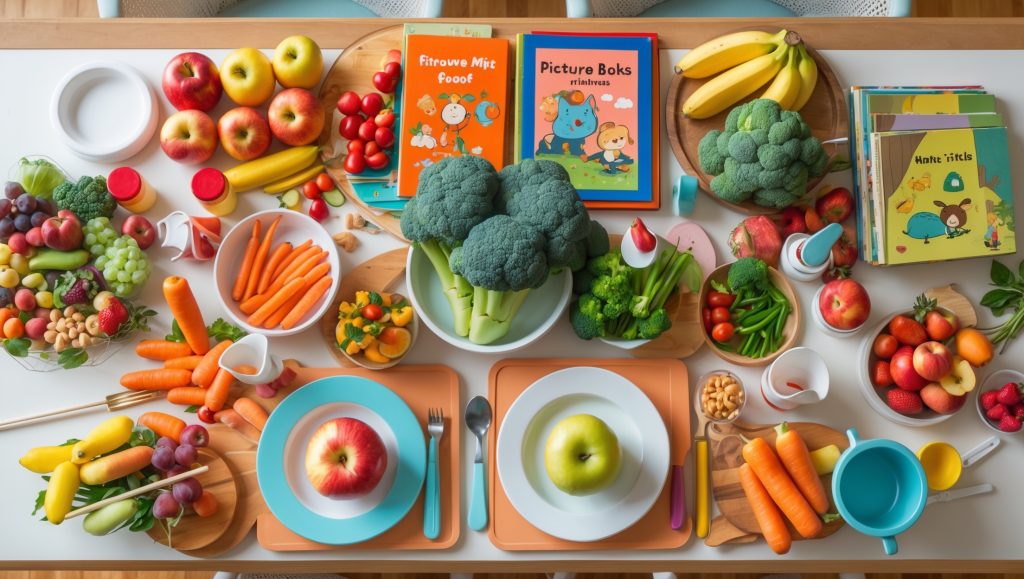
How We Chose
To build this list, we looked for foods, snacks, and mealtime tools that go beyond nutrition—they jumpstart language development through sensory exploration, conversation, and shared routines. Our picks are supported by child development research and real-world family feedback. We prioritized items that:
- Encourage talking, naming, and interaction at mealtime
- Support motor skills and independence
- Feature fun textures, shapes, and colors for engagement
- Are widely available and suitable for U.S. families
- Align with evidence on early language and social learning
Here are our top 11 picks for babies and toddlers in 2025.
#1: Picture-Based Placemats — Conversation Starters at the Table
Why it stands out
Picture placemats featuring foods, animals, or everyday objects turn every meal into a naming and vocabulary game. Kids point, label, and ask questions, making mealtime interactive and fun.
Best for
- Families who want to spark natural conversation at breakfast, lunch, or dinner
- Toddlers and preschoolers learning new words
Key notes
- Age/Stage: 12 months and up
- Materials/Ingredients: BPA-free plastic, silicone, or laminated paper
- Strengths: Promotes pointing, labeling, and social turn-taking
- Trade-offs: Needs regular cleaning; pictures can fade over time
#2: Mini Muffins with Colorful Fruits & Veggies — Fun Finger Foods
Why it stands out
Homemade or store-bought mini muffins packed with berries, carrots, or spinach offer variety in color and texture. They invite labeling, describing, and playful food exploration.
Best for
- Babies transitioning to finger foods
- Picky eaters open to new colors and tastes
Key notes
- Age/Stage: 9 months and up (as finger food)
- Materials/Ingredients: Whole grain flour, eggs, fruits/veggies
- Strengths: Easy to hold, supports food word learning
- Trade-offs: May contain allergens (check labels or make at home)
#3: Silicone Divided Plates — Supporting Choice & Naming
Why it stands out
Sectioned plates let kids see, touch, and name different foods. The clear divisions encourage children to request specific items, practice “more please,” and learn food names.
Best for
- Toddlers seeking independence at meals
- Families introducing new foods
Key notes
- Age/Stage: 6 months and up (with supervision)
- Materials/Ingredients: Food-grade silicone
- Strengths: Promotes autonomy and language choice
- Trade-offs: Can stain with some foods; may not fit all highchair trays
#4: Animal-Shaped Sandwich Cutters — Playful Food Shapes
Why it stands out
Sandwich cutters that create animal or object shapes make ordinary foods conversation-worthy. Kids love identifying shapes and telling stories about their snacks.
Best for
- Parents looking to make lunch more exciting
- Picky eaters who respond to playful presentation
Key notes
- Age/Stage: 18 months and up
- Materials/Ingredients: Food-safe plastic or metal
- Strengths: Supports creativity and descriptive language
- Trade-offs: Extra cleanup; not suitable for all bread types
#5: Picture Recipe Cards — Cooking Together, Talking Together
Why it stands out
Simple, laminated recipe cards with pictures guide kids through making snacks. Following steps, naming ingredients, and talking about actions support early sequencing and vocabulary.
Best for
- Families who cook with toddlers and preschoolers
- Children who learn visually
Key notes
- Age/Stage: 2 years and up (with adult supervision)
- Materials/Ingredients: Laminated cardstock or wipe-clean boards
- Strengths: Builds sequencing, following directions, and new word learning
- Trade-offs: Requires prep and adult involvement
#6: Real Fruit & Veggie Snack Trays — Nature’s Talking Points
Why it stands out
Serving a rainbow of bite-sized, real fruits and veggies invites kids to name colors, shapes, and textures. These snack trays encourage describing and comparing foods.
Best for
- Families wanting to build food vocabulary naturally
- Children learning about healthy eating
Key notes
- Age/Stage: 12 months and up (as appropriate for chewing skills)
- Materials/Ingredients: Fresh fruits and vegetables
- Strengths: Natural colors, textures, and flavors spark conversation
- Trade-offs: Requires washing and prepping; perishable
#7: Illustrated Food Word Books — Mealtime Storytime
Why it stands out
Board books featuring food illustrations and simple food words are perfect for reading at the table. They encourage naming, pointing, and talking about what’s on the plate.
Best for
- Babies and toddlers building first words
- Families who enjoy reading together at meals
Key notes
- Age/Stage: 6 months and up
- Materials/Ingredients: Board book, wipe-clean pages
- Strengths: Supports early literacy and food familiarity
- Trade-offs: Needs to be cleaned if used at the table
#8: Reusable Sticker Sets — Food-Themed Play & Talk
Why it stands out
Reusable food-themed sticker sets keep little hands busy before or after meals, encouraging labeling, categorizing, and imaginative storytelling about foods.
Best for
- Older toddlers and preschoolers
- Families seeking quiet table activities
Key notes
- Age/Stage: 2 years and up
- Materials/Ingredients: Vinyl or paper stickers, reusable boards
- Strengths: Supports fine motor and language skills
- Trade-offs: Stickers can get lost or damaged over time
#9: Snack Cups with Twist Lids — Independent Snacking, More Talking
Why it stands out
Snack cups with spill-resistant lids help toddlers serve themselves and make requests. Asking for help, naming snacks, and talking about quantities all boost language use.
Best for
- Toddlers learning to feed themselves
- Families on the go
Key notes
- Age/Stage: 9 months and up
- Materials/Ingredients: BPA-free plastic or silicone
- Strengths: Encourages independence and communication
- Trade-offs: Can be tricky to clean thoroughly
#10: Soft Dips & Spreads — Interactive, Sensory Foods
Why it stands out
Hummus, yogurt, or avocado spreads offer a hands-on way for kids to dip, scoop, and describe. These foods make snack time interactive and full of new words.
Best for
- Children exploring new textures
- Families encouraging self-feeding
Key notes
- Age/Stage: 9 months and up
- Materials/Ingredients: Choose low-salt, simple-ingredient options
- Strengths: Supports sensory and descriptive language
- Trade-offs: Can get messy; monitor for food sensitivities
#11: Mealtime Routine Visual Schedules — Predictable, Talkable Steps
Why it stands out
Visual schedules showing meal steps (wash hands, sit, eat, clean up) help kids anticipate routines and talk about transitions, building both independence and language.
Best for
- Families establishing regular mealtime habits
- Children who benefit from visual cues
Key notes
- Age/Stage: 2 years and up
- Materials/Ingredients: Laminated cards or magnetic charts
- Strengths: Encourages sequencing, routine language, and confidence
- Trade-offs: Needs to be updated as routines change
Buying Tips
- Choose items with clear images and simple designs to maximize interaction.
- Look for food products with minimal added sugar and salt for the youngest eaters.
- Prioritize durability and easy cleaning for anything that will be used at the table.
- When using foods for exploration, always supervise and check for potential allergens or choking hazards.
- Rotate tools and foods to keep mealtime fresh and interesting.
- Engage with your child—narrate, ask questions, and model descriptive language to maximize the benefits.
Verdict
Fostering language development at the table isn’t about fancy gadgets or specialty foods—it’s about creating opportunities for conversation, exploration, and shared joy. These 11 foods and mealtime tools are practical, evidence-informed, and easy to add to your family routine. Whether you’re introducing new words, encouraging independence, or just making meals more fun, these picks will help your child’s vocabulary bloom in 2025.
FAQ
+How do foods and mealtime tools support language development?
+What food textures are best for encouraging talking?
+Can using picture books or placemats during meals distract from eating?
+What if my child isn’t interested in talking at mealtime?
+Are there foods I should avoid when focusing on language development?
+How can I use these tips if my child has food allergies?
+Do these strategies work with siblings of different ages?

Supporting early language development through mealtime is a wonderful, practical way to encourage your child’s communication skills. In 2025, experts continue to emphasize the importance of interactive, sensory-rich foods and mealtime tools that spark curiosity, conversation, and connection. Offering a variety of textures, colors, and flavors not only broadens your child’s palate but also creates natural opportunities for naming objects, describing sensations, and following simple directions. For example, serving soft avocado, crunchy whole grain crackers, or colorful berries invites little ones to use words like “smooth,” “crunchy,” or “sweet.” Mealtime tools such as divided plates, colorful spoons, and interactive cups can prompt labeling, requesting, and turn-taking. Remember, the goal isn’t just eating—it’s about creating a language-rich environment where children feel motivated to express themselves. By thoughtfully selecting foods and tools, parents and caregivers can transform every meal into a playful learning opportunity, supporting both nutrition and communication milestones. Consistent, positive mealtime routines foster not only language growth but also family bonding and emotional security—key ingredients for lifelong learning.
- Offer foods with varied textures and vibrant colors to inspire descriptive language.
- Use divided plates and fun utensils to prompt naming and choice-making.
- Encourage conversation by modeling new words and asking open-ended questions.
- Make mealtimes interactive and relaxed to support confident communication.
We often have family meals with my parents, and they love sharing traditional foods from our heritage. How can we incorporate foods from our culture into these language-building routines, especially if they are not as common in the US or look quite different from the usual suggestions?
It’s wonderful that you want to include your cultural foods in family meals and support your child’s language growth. During meals, name and describe each food, talk about its colors, textures, and flavors, and share stories or memories tied to these dishes. Encourage your child to help with simple, safe tasks like stirring or serving, and use mealtime tools recommended for their age to support safe eating, especially with unfamiliar textures. Always check that foods are cut appropriately to avoid choking risks, and introduce new dishes gradually to watch for any allergies. This isn’t medical advice; if you’re concerned, check in with your pediatrician.
How do you suggest rotating these mealtime tools throughout the week without making cleanup overwhelming? I sometimes feel like the more fun gadgets we use, the more dishes pile up.
It’s completely understandable to feel overwhelmed by extra cleanup when introducing new mealtime tools. Try assigning specific days for certain tools—for example, suction plates on Mondays and Wednesdays, and open cups on weekends. Keep a small basket or caddy nearby for quick access and easy collection after meals. Involve your child in simple cleanup steps, like putting their spoon in the sink, which supports both responsibility and language skills. Stick to just one or two tools per meal to minimize clutter. Make sure every tool used is easy to wash and designed for your child’s age and safety. This isn’t medical advice; if you’re concerned, check in with your pediatrician.
My daughter sometimes gets overwhelmed by too many food options or strong colors on her plate. Do you have tips for using these divided plates or picture placemats in a way that won’t overstimulate her during mealtime?
It’s completely understandable to want mealtimes to feel calm and manageable for your daughter. Try offering just two or three familiar foods at a time, using the divided plate to keep items separate and less visually busy. Choose plates and placemats in muted, solid colors rather than bold patterns or bright shades, which can feel overwhelming. You might also serve new foods on a plain plate first, then gradually introduce divided sections or pictures as she gets more comfortable. Always supervise closely, especially with young children, to ensure safety. This isn’t medical advice; if you’re concerned, check in with your pediatrician.
If my toddler tends to throw divided plates or sandwich cutters, are there safe options that are harder to toss or designed for kids who like to test gravity during meals? I am nervous about trying new tools when I am distracted with the newborn.
It’s completely understandable to want safer, less stressful mealtimes when your toddler is in a throwing phase, especially with a newborn in tow. Try silicone suction plates or bowls, which stick firmly to the highchair tray and are harder for little hands to lift. Look for mealtime tools with a wide, weighted base or built-in suction on sandwich cutters. Always check that products are BPA-free and made for toddler use to avoid small detachable parts. Stay nearby during meals for supervision, but know that some testing is normal at this age. This isn’t medical advice; if you’re concerned, check in with your pediatrician.
How would you suggest introducing picture-based placemats to a toddler who tends to throw or chew on things at the table? Are there specific materials you recommend for kids with sensory sensitivities or who like to mouth objects?
It’s understandable to want your toddler to use picture-based placemats without tossing or chewing on them. Start by sitting close and modeling how to touch and look at the placemat together. Use gentle redirection if they try to mouth or throw it—offer a safe teething toy or sensory object instead. Choose non-toxic, BPA-free silicone or fabric placemats, as these are more durable and safer if mouthed. Smooth or textured options can suit different sensory needs, but always supervise closely. Wash placemats regularly to keep them clean. This isn’t medical advice; if you’re concerned, check in with your pediatrician.
Do you have advice on how to gradually introduce more conversation at mealtime for a toddler who is shy or reluctant to point and label, especially when using picture-based placemats?
It’s wonderful that you want to nurture your toddler’s communication skills, even if they’re a bit shy. Start by narrating what you see and do with the picture placemat, using simple language and inviting your child to listen without any pressure to respond. Offer choices, such as ‘Do you see the cat or the dog?’ and wait patiently for any sign of engagement, even eye gaze or gestures. Gradually invite your toddler to participate by making fun sounds or animal noises together, which can feel less intimidating than labeling. Always keep mealtime relaxed and positive, and remember that at this age, nonverbal responses are a normal part of communication. This isn’t medical advice; if you’re concerned, check in with your pediatrician.
We are trying more finger foods but I worry about foods like mini muffins being too crumbly and getting everywhere. Are there specific tools or strategies you suggest for minimizing the mess while still letting my baby explore different tastes and languages?
It’s completely understandable to want to encourage food exploration while keeping mealtimes manageable. You might try serving mini muffins in bite-sized pieces to reduce crumbling and use a silicone placemat or tray to catch stray bits. Offering food in reusable silicone snack cups or muffin liners can also help contain crumbs. Letting your baby use an easy-grip, infant-safe fork or spoon fosters independence and language practice around food, while keeping fingers a little cleaner. Always supervise closely and avoid foods with hard chunks or potential allergens. This isn’t medical advice; if you have concerns, check in with your pediatrician.
Do you have advice for integrating these mealtime tools and foods into an evening routine, especially on nights when naps ran late or my child is overtired? I want dinnertime to stay positive and language-rich, even if bedtime is creeping up.
It’s great that you want to keep dinnertime positive and language-rich, even on challenging evenings. Try simplifying the routine: offer 1–2 familiar foods from the article alongside a new item, using the recommended mealtime tools to keep interest up. Involve your child in small, safe tasks like stirring or choosing a utensil. Use short, gentle language (“more peas?” or “you’re using your spoon!”) to encourage communication without overwhelming them. If your child is overtired, keep the meal brief and relaxed, accepting that some nights will be quieter. Always supervise closely for safety, especially with small foods or tools. This isn’t medical advice; if you’re concerned, check in with your pediatrician.
My baby just turned 7 months and we’re starting solids, but I noticed the mini muffins are recommended for 9 months and up. Are there any modifications I could make so they’re safe and appropriate for younger babies who are just learning to self-feed?
It’s great that you’re thinking carefully about what’s safe and suitable as your baby starts solids. For a 7-month-old, you could try offering the muffin mixture as a soft mash or bake them in mini silicone molds and crumble them into very small, moist pieces that dissolve easily. Avoid nuts, honey, and added sugar, and make sure all ingredients are soft and allergen-safe for your baby. Supervise closely during self-feeding, and offer water alongside solids. This isn’t medical advice; if you have concerns or your baby has trouble swallowing, check in with your pediatrician.
I noticed the suggestion for animal-shaped sandwich cutters is listed for 18 months and up. Is there any reason they wouldn’t be safe for a 16-month-old toddler if we supervise closely, or should we really wait a couple more months before trying them?
It’s great that you’re thinking carefully about your child’s safety and readiness. The 18-month guideline is there mainly because, by this age, most toddlers have more developed chewing skills and are less likely to mouth or choke on unfamiliar shapes, but every child develops at their own pace. If you want to try animal-shaped sandwich cutters with your 16-month-old, make sure to supervise closely, use soft bread and fillings, and avoid very small or hard pieces that might pose a choking risk. Watch closely for any signs of difficulty, and make sure your toddler is seated and calm while eating. This isn’t medical advice; if you’re concerned, check in with your pediatrician.
Could you clarify if the animal-shaped sandwich cutters are safe to use with softer breads or gluten-free options? I have struggled with cutters getting stuck or not working well unless the bread is pretty firm.
It’s understandable to want sandwich cutters that work smoothly with all types of bread. For softer or gluten-free breads, try chilling the bread in the fridge for 10–15 minutes before cutting to help it firm up. Press the cutter down with gentle, even pressure, and use a cutting board for support. Sometimes, lightly dusting the cutter with a little cornstarch can help prevent sticking. Always supervise young children with these tools, as some edges can be sharp. This isn’t medical advice; if you’re concerned, check in with your pediatrician.
My toddler is a bit hesitant about foods with mixed textures, like muffins that have berries inside. Do you have suggestions on how to introduce colorful mini muffins without overwhelming her, or alternative snacks that offer language opportunities but with simpler textures?
It’s understandable to want your toddler to feel comfortable trying new, colorful foods. Start by offering plain mini muffins next to a few berries so she can explore them separately before combining them. You might also involve her in baking, naming each ingredient as you go, to build familiarity and language skills. Alternative snacks like soft banana slices, whole-grain crackers, or veggie sticks with simple dips can support language through naming and description, while offering straightforward textures. Always supervise closely, cut foods to appropriate sizes, and check for allergens. This isn’t medical advice; if you’re concerned, check in with your pediatrician.
My toddler is on the sensitive side when it comes to food textures and tends to avoid anything with lumps or unexpected bits. Would you recommend starting with the picture-based placemats or are there other tools or foods on this list that might work better for a child with sensory sensitivities?
It’s understandable to want to make mealtimes smoother when your toddler is sensitive to textures. Starting with picture-based placemats is a gentle, non-food way to encourage language and engagement without adding pressure. You might also try smooth, single-texture foods like yogurt or pureed fruits from the list, letting your child explore them at their own pace. Offer new foods alongside familiar favorites and use simple, consistent language to describe what you see and feel together. Always supervise meals, watch for choking hazards, and introduce changes gradually. This isn’t medical advice; if you’re concerned, check in with your pediatrician.
I noticed you recommend animal-shaped sandwich cutters and mini muffins as fun ways to boost language at mealtimes. Are there any concerns about small parts from sandwich cutters or toppings on muffins that might pose a choking risk for toddlers, especially younger ones just starting finger foods?
You’re right to be thoughtful about choking risks with toddlers who are just learning to eat finger foods. When using animal-shaped sandwich cutters, make sure the cutter itself is kept out of reach during meals, and that the sandwich pieces are cut small and soft enough for your child’s age. For mini muffins, avoid chunky toppings or mix-ins like whole nuts, large pieces of fruit, or seeds—opt for finely grated or mashed additions instead. Always supervise your child closely at mealtimes, and introduce new foods gradually. This isn’t medical advice; if you’re concerned, check in with your pediatrician.
You mentioned that some divided plates can stain or might not fit all highchairs. Are there materials or brands you recommend that hold up best over time, especially for daily use by active toddlers?
It’s great that you’re thinking about durability for your toddler’s daily mealtimes. For lasting use, consider silicone plates; they’re stain-resistant, dishwasher safe, and usually fit most highchair trays. Look for plates labeled BPA-free and food-grade. Stainless steel is another sturdy option, though it’s less common for divided plates and can be heavier. Check for plates with suction bases if your toddler tends to toss dishes. Always supervise mealtimes and inspect plates regularly for wear. This isn’t medical advice; if you’re concerned, check in with your pediatrician.
Is there any guidance about cleaning or replacing picture-based placemats so the images stay clear and engaging for little ones, especially if we use them daily?
It’s great that you want to keep picture placemats clean and interesting for your child. Wipe placemats with a mild soap and warm water after each use, making sure to dry them thoroughly. Avoid harsh cleaners that could fade the images. Inspect regularly for peeling or worn areas—replace placemats if the pictures become unclear or the surface is damaged, as worn spots can trap germs or distract from learning. Choose mats made from non-toxic, easy-to-clean materials. Always supervise young children during meals to avoid chewing or tearing. This isn’t medical advice; if you’re concerned, check in with your pediatrician.
Do you recommend introducing divided silicone plates even before 12 months, as soon as a baby starts solids, or should I wait for more reliable pointing and requesting? I’m unsure what’s most language-friendly for earlier stages.
It’s understandable to want to support your baby’s early language growth right from the start. You can safely introduce divided silicone plates as soon as your baby starts solids, usually around 6 months, as long as the plate is stable and free from small detachable parts. Divided plates can help babies notice differences between foods and make choices, which encourages gestures like pointing and early attempts at requesting. Offer just two or three foods at a time and use clear, simple language about each section. Always supervise meals to prevent choking and encourage safe exploration. This isn’t medical advice; if you have specific concerns, checking with your pediatrician is best.
We have a picky eater who gets overwhelmed by seeing too many colors or textures at once. Would you suggest starting with one or two of these tools at a time, or is it better to introduce a variety together and see which they like best?
It’s understandable to want to support your child’s eating and language development while also respecting their sensitivities. For picky eaters who get overwhelmed, it’s usually best to start with just one or two new tools at a time. Begin with simple, familiar textures and colors, and introduce changes gradually so your child can adjust without stress. Observe their reactions, and only add more options once they seem comfortable. Make sure all tools are age-appropriate, easy to clean, and safe for little hands. This isn’t medical advice; if you’re concerned, check in with your pediatrician.
For a preschooler who is sensitive to certain textures or colors, how can parents gradually introduce the mini muffins with fruits and veggies to encourage food exploration without causing mealtime battles?
It’s understandable to want to make mealtimes positive when your preschooler is sensitive to textures or colors. Start by letting your child help prepare the mini muffins, like pouring ingredients or choosing fruits and veggies, which builds curiosity. Offer tiny pieces of muffin alongside their preferred foods rather than making them the main focus, so there’s no pressure. Talk about the colors, shapes, and smells together, inviting gentle exploration. If your child resists, you can model eating the muffins yourself and describe how they feel and taste. Always supervise for safety, especially with new foods, and remember that repeated, low-pressure exposure helps. This isn’t medical advice; if you’re concerned, check in with your pediatrician.
We’re on a tight budget and want to avoid food waste. For mini muffins with fruits and veggies, can we make a big batch and freeze them in small portions, or does that impact the texture and how well they work for language-focused mealtimes?
It’s great that you want to support your child’s language development while being mindful of your budget and food waste. Freezing mini muffins made with fruits and veggies is generally safe and can help you portion them for multiple meals. To maintain a soft texture for little ones, let the muffins cool fully before freezing, then thaw portions overnight in the fridge or gently reheat until just warm. Offer small, bite-sized pieces so your child can easily self-feed and practice mealtime communication. Always supervise, and check the texture to ensure they’re soft enough for your child’s age. This isn’t medical advice; if you’re concerned, check in with your pediatrician.
In a household with a tight budget and limited storage space, which of your recommended mealtime tools do you think would make the biggest impact on language skills with the least clutter?
It’s great that you’re looking for ways to support your child’s language development while being mindful of space and budget. A simple, sturdy divided plate or tray can make a big difference: it encourages you to offer a variety of textures and colors, which prompts conversations and new words at mealtime. Choose one that’s easy to clean and store. Pair this with a child-sized spoon or fork to foster independence and opportunities for naming utensils and actions. Always supervise young children during meals to keep things safe. This isn’t medical advice; if you’re concerned, check in with your pediatrician.
We have a very curious one-year-old who still puts things in her mouth. Are picture placemats and divided silicone plates completely safe in terms of size and construction, or should parents check for certain features to avoid choking risks?
It’s great that you’re thinking carefully about your one-year-old’s safety at mealtimes. For picture placemats and divided silicone plates, look for items labeled BPA-free and food-grade, with no small detachable parts or decorations that could become choking hazards. Make sure silicone plates are sturdy and can’t easily tear into small pieces. Avoid placemats with raised or peel-off stickers. Always supervise meals closely at this age, since mouthing is natural for one-year-olds. This isn’t medical advice; if you’re concerned, check in with your pediatrician.
As someone who usually has to prep breakfast before the rest of the house wakes up, I’m curious if you have tips for keeping these picture-based placemats and divided plates engaging but quiet. Are there ways to incorporate them into a calm morning routine without things getting too lively or noisy?
Your focus on a peaceful, engaging breakfast is thoughtful. To keep picture-based placemats and divided plates engaging yet quiet, try setting them out before your child arrives, perhaps adding a new item or image each week to spark gentle interest. You can encourage your child to quietly point to or name pictures as you softly narrate, modeling calm language. Let your child help set the table with you, choosing quiet, soft-handling utensils or napkins. For younger children, supervise closely to prevent banging or loud play with plates. This isn’t medical advice; if you’re concerned, check in with your pediatrician.
For divided silicone plates, do you have tips for storing them efficiently when kitchen drawer space is limited? We live in a small apartment and every inch counts.
It’s great that you’re thinking about how to keep your space organized with little ones in a small apartment. Try stacking divided silicone plates together since most are flexible and nest well—flatten them by pressing them down in a deeper cabinet or even upright in a dish rack. Consider using a vertical file organizer inside a cupboard to keep plates separated and easy to grab. Hanging them by their rims on adhesive hooks inside cabinet doors is another space-saving option. Always make sure plates are clean and dry before storing to prevent mold. This isn’t medical advice; if you have concerns, check in with your pediatrician.
My toddler has some sensory sensitivities and can get overwhelmed by too many colors or textures at once. Do you have any suggestions on how to introduce the foods and tools you recommend in a way that is gentle and not overstimulating?
It’s understandable to want mealtimes to feel safe and enjoyable for your toddler with sensory sensitivities. Start by offering only one new food or tool at a time, keeping portions small and separate to avoid overwhelming colors or textures. Stick to familiar, gentle textures first—like smooth purees or soft cooked foods—before gradually introducing new ones. Use simple, neutral-colored plates and utensils to reduce visual stimulation. Always supervise closely, and let your child explore at their own pace without pressure. This isn’t medical advice; if you’re concerned, check in with your pediatrician.
We often eat meals on the go, like at parks or visiting family. Can you recommend which of these tools work best for travel or are easiest to pack safely without taking up too much space?
It’s great that you want to support your child’s language development, even when meals are away from home. For travel, I recommend collapsible silicone snack cups, a compact set of soft-tipped spoons, and a small, easy-to-clean bib with a pouch. Silicone or stainless steel divided plates with lids are also handy for packing a variety of foods safely. Choose items that are BPA-free and have no small detachable parts to avoid choking hazards. Always supervise your child during meals, especially in new environments. This isn’t medical advice; if you’re concerned, check in with your pediatrician.
My toddler has some mild sensory sensitivities, especially in the mornings. Are any of the foods or tools you recommend particularly gentle on textures or sounds, so we can keep breakfast quiet and calm but still support language development?
It’s great that you’re tuning in to your toddler’s sensory needs while supporting their language growth. For gentle textures, foods like mashed banana, soft scrambled eggs, or smooth yogurt are typically well-tolerated and quiet to eat. Silicone-tipped spoons and soft placemats recommended in the article help minimize noise and make the environment more soothing. Offer choices and narrate what you’re doing to encourage language without overstimulation. Always supervise for safety and adjust based on your child’s age and allergies. This isn’t medical advice; if you’re concerned, check in with your pediatrician.
Do you recommend always checking for recalls on items like silicone plates and food cutters? I want to make sure everything at the table is safe, but sometimes it’s hard to keep up with all the product alerts.
You’re absolutely right to prioritize safety at your child’s table—it can feel overwhelming to keep up with recalls. Try setting a monthly reminder to quickly scan for updates on commonly used items like silicone plates and food cutters, either on official government recall sites or through manufacturers’ emails. Register new products online when possible so you’ll get direct alerts. Always inspect items for wear or damage before each use, especially since toddlers can be rough on utensils. For children under 3, choose items designed for their age to reduce choking risks. This isn’t medical advice; if you’re ever unsure about a product, your pediatrician can help guide you.
Do you have advice for incorporating these foods and tools into mealtime routines when my toddler sometimes skips meals or only wants snacks during potty training? I want to support her language without adding stress.
It’s great that you want to support your toddler’s language while being mindful of her needs during potty training. Try offering the recommended foods in small, snack-like portions to make them less overwhelming. Use mealtime tools, like child-friendly plates or cups, to invite playful interaction and conversation, even if she eats just a little. Narrate what you and your child are doing together—talk about colors, textures, and flavors with simple words. Keep mealtimes low-pressure, and let her have some control by choosing between two healthy options. Always supervise to prevent choking and watch for food allergies. This isn’t medical advice; if you’re concerned, check in with your pediatrician.
Do you have suggestions for keeping the picture-based placemats clean and preventing the images from fading? It seems like wiping them after every meal might help, but I wonder how well they hold up after months of daily use.
It’s great that you’re thinking about how to make those picture-based placemats last, since they’re so useful for language learning. Try gently wiping the mats with a soft, damp cloth after each meal rather than soaking or scrubbing them, and avoid harsh cleaning chemicals that can fade images. If the mats are dishwasher-safe, use the top rack on a gentle cycle. For extra protection, consider placing a clear, food-safe plastic sheet over the placemat during meals. Remember to check regularly for any peeling or damage, especially with younger children for safety. This isn’t medical advice; if you’re concerned, check in with your pediatrician.
How would you adjust your picks for families with twins who are on different sleep and feeding schedules? Sometimes one wakes up much earlier than the other for breakfast, so I wonder which foods or tools work best for flexible routines.
It’s understandable to want foods and tools that work smoothly when twins are on different schedules. For flexibility, prepare easy-to-serve options like pre-cut soft fruits, whole-grain toast strips, or yogurt cups that keep well if one twin eats later. Choose mealtime tools such as divided plates and easy-grip spoons, so each child has their own set ready whenever they’re hungry. Store foods in small single portions for quick access and minimal waste. Always supervise for choking risks, especially with early eaters. This isn’t medical advice; if you’re concerned, check in with your pediatrician.
I love the idea of picture-based placemats for building vocabulary, but how do you keep young kids from getting distracted by playing with them instead of eating? Have you found any tips for balancing conversation and actual mealtime?
It’s great that you’re thinking about how to balance learning and mealtime focus. Try introducing the placemat at the start of the meal, then gently shift attention to eating after a few minutes. You can point to 1-2 pictures and name them together, but keep the activity brief. For toddlers, use clear routines: “First we eat, then we talk about the pictures after we’re done.” If your child is easily distracted, remove the placemat after the initial chat. Always supervise to ensure safety and avoid mouthing or tearing small pieces. This isn’t medical advice; if you’re concerned, check in with your pediatrician.
Do you have suggestions for safely cleaning picture placemats and silicone plates so they last longer, especially with daily use? I worry about the images fading or material breaking down over time.
It’s thoughtful to want your child’s placemats and plates to last, especially with daily use. Try washing silicone plates and picture placemats by hand with mild soap and lukewarm water instead of harsh dishwasher cycles. Soft sponges are gentler than scrubbing pads and help prevent image fading or surface scratches. Dry items thoroughly to prevent mold or residue. Avoid soaking items with glued-on images, and check the manufacturer’s care instructions for each product. Always inspect for wear, cracks, or peeling before giving them to your child, especially for babies and toddlers. This isn’t medical advice; if you’re concerned, check in with your pediatrician.
We try to keep breakfast calm and screen-free, but sometimes my preschooler wants to talk about everything all at once. Which of these foods or tools could help guide conversation so it stays gentle and focused in the mornings?
It’s wonderful that you want to keep breakfast calm while supporting your preschooler’s language skills. Try using a divided plate or placemat from the article, as you can talk about the shapes, colors, or items in each section—this helps guide conversation with gentle prompts. Offering foods with varied textures, like soft fruit or mini pancakes, gives you natural opportunities to describe and compare together. You might introduce a simple turn-taking game: each person shares one thing about their food before the next speaks. Always supervise closely if new foods or tools are involved. This isn’t medical advice; if you’re concerned, check in with your pediatrician.
My toddler sometimes gets easily distracted during meals. Do you have any specific tips for using the picture-based placemats to actually keep her engaged and talking, rather than just playing with them and ignoring her food?
It’s understandable to want mealtimes to be more focused and interactive for your toddler. Try introducing the picture-based placemat right before a meal, naming just one or two images together before serving food. During eating, ask open-ended questions about what’s on the mat—like ‘Which animal is eating?’—to spark conversation. Limit other distractions and gently redirect her attention if she starts playing by guiding her finger to point and talk about the pictures. Keep the placemat clean and avoid pieces that could be a choking hazard. This isn’t medical advice; if you’re concerned, check in with your pediatrician.
I noticed some of the suggestions mention cleanup or durability as trade-offs. For someone on a budget who watches kids several times a week, which mealtime tools would you recommend as being most durable and easy to maintain?
It’s great that you’re looking for practical, long-lasting mealtime tools, especially when caring for kids frequently. For durability and easy cleaning, choose silicone suction plates and bowls—they resist stains, don’t chip, and most are dishwasher safe. Opt for stainless steel utensils with rounded edges for safety and long-term use. A wipe-clean, waterproof bib helps protect clothes and saves laundry time. Stackable, dishwasher-safe cups can also simplify cleanup. Always avoid parts that could break off or pose a choking hazard, especially for infants and toddlers. This isn’t medical advice; if you have concerns about safety for a specific child, please check with your pediatrician.
I noticed the mini muffins with fruits and veggies are suggested for babies nine months and up. My child is a picky eater, and we’re just starting daycare next week. Do you have tips on introducing these foods to help with both language and the transition to group mealtimes?
It’s understandable to want your child to feel comfortable with new foods and group meals, especially during a big transition like starting daycare. Try offering mini muffins at home in a low-pressure way—let your child touch, smell, and explore them before tasting. Cut them into small, manageable pieces for safety and easier self-feeding. Name the fruits and veggies as you eat together to model simple language. Practice taking turns or sharing muffins to mirror daycare routines. If your child resists, keep mealtimes relaxed and avoid pressuring them to eat. This isn’t medical advice; if you have concerns, check in with your pediatrician.
If I want to introduce the mini muffins to my 10-month-old, is it safe to use silicone divided plates together at the same meal, or could the novelty of both be overwhelming for a new eater?
It’s thoughtful to consider how much novelty is best for your 10-month-old at mealtimes. To make this a positive experience, introduce only one new element at a time—perhaps start with the mini muffins on a familiar plate, then try the silicone divided plate at a later meal. Watch your baby’s cues; if they seem curious and content, you can try both together next time. Always supervise your baby, ensure the muffins are soft and in small pieces, and check the plate for safety and easy gripping. This isn’t medical advice; if you’re concerned, check in with your pediatrician.
My newborn will be joining us at the table before long, so I’m curious how picture-based placemats work with babies under one year old. Do you have tips for using them with younger siblings who aren’t quite ready to talk yet?
It’s wonderful that you’re thinking ahead to support your baby’s communication at the table. For infants under one, picture-based placemats can be a gentle introduction to visual language cues. Try placing the mat where your baby can see it during meals, and point to images as you name them out loud. Use simple, consistent words—like ‘banana’ or ‘cup’—and match gestures or objects to the pictures. Encourage your baby to touch or look at the images, but supervise closely, as mats should be free from small detachable parts and made from safe, easy-to-clean materials. Remember, this stage is about exposure and playful interaction, not formal teaching. This isn’t medical advice; if you’re concerned, check in with your pediatrician.
We usually have a pretty short window for meals because my child starts feeling overwhelmed in noisy or new situations. How can I best use something like animal-shaped sandwich cutters or divided plates when we need mealtime routines to stay quick and predictable?
It’s great that you’re thinking about making mealtimes both comfortable and supportive for your child. To keep routines quick and predictable, prepare foods using animal-shaped cutters ahead of time and keep portions simple. Use divided plates to separate foods, which can help your child feel less overwhelmed by offering clear choices. Present the plate in the same order each mealtime to build a sense of routine. If your child enjoys the shapes, point out the animal names briefly to support language without dragging out the meal. Choose tools with smooth edges and large enough pieces to avoid choking hazards, especially for toddlers. This isn’t medical advice; if you’re concerned, check in with your pediatrician.
My toddler is very sensitive to certain textures and sometimes refuses foods with mixed textures like mini muffins with fruit pieces inside. Do you have any recommendations for making these more acceptable, or is it still beneficial for language learning if my child only explores the outside or small bits at a time?
It’s very normal for toddlers to be sensitive to textures, and your attention to this is so helpful for their comfort and development. You might try pureeing or finely chopping fruit so the muffin texture is more consistent, or start with plain muffins and gradually add small amounts of fruit. Allowing your child to explore the outside or just small bites is still beneficial; any interaction with new foods encourages language by giving chances to talk about colors, shapes, and tastes. Always supervise, and be mindful of choking risks with small or sticky pieces. This isn’t medical advice; if you’re concerned, check in with your pediatrician.
With younger siblings around, I worry about the safety of animal-shaped sandwich cutters and small food pieces from muffins. Do you have tips to make these mealtime tools safe for both a four-year-old and a crawling baby sharing the table?
It’s great that you’re thinking ahead about safety with children at different developmental stages. To keep mealtimes safe, use sandwich cutters only when the baby is safely secured in a high chair and out of reach of small pieces. For muffins, cut them into larger, easy-to-hold chunks for the four-year-old and keep small pieces away from the baby’s area. Always supervise closely, and clean up dropped bits right away. Choose cutters without detachable or sharp parts, and store them out of baby’s reach. Remember, these steps help keep meals both fun and safe, but if you have concerns about choking risks, your pediatrician is the best resource for guidance.
With the silicone divided plates, do you notice if certain textures or types of foods work better than others for encouraging kids to name and request items? My kiddo sometimes mixes foods together, so I am wondering about real-world experiences.
—many parents notice that food texture and presentation can make a difference in early language learning. Try offering a mix of textures, like soft fruits, crunchy veggies, and smooth dips, each in a separate plate section. Name each food as you serve it, and pause so your child has a chance to request or repeat. If your child enjoys mixing foods, you can let them explore that after naming each food separately. Just be sure pieces are age-appropriate in size, and watch for allergies. This isn’t medical advice; if you’re concerned, check in with your pediatrician.
We have some animal-shaped sandwich cutters, but my child sometimes gets upset if the bread breaks or does not come out perfectly. Do you have tips for making this less frustrating or for handling those moments during mealtime?
It’s so understandable to want mealtimes to be fun—and for your child not to feel upset when things don’t go as planned. You might try involving your child in pressing and lifting the cutter so they can see how it works and feel some control. Give lots of praise for effort, not just results, like saying “You worked so hard to press that!” Have a backup plan, such as naming the imperfect shapes something silly or making a story about ‘broken bread animals.’ Keep expectations gentle and remember it’s okay if things aren’t perfect. These moments are great for modeling flexible thinking. If mealtime stress continues, check in with your pediatrician for more support.
My toddler loves naming foods but struggles with certain textures. Are there specific types of mini muffins or fruit and veggie additions that you recommend for more sensitive eaters?
It’s wonderful that your toddler enjoys naming foods, and it’s completely normal for little ones to be sensitive to certain textures. Try baking mini muffins with very finely grated or pureed vegetables like zucchini, carrots, or sweet potato, which blend smoothly into the batter. For fruits, choose soft, mashed options such as ripe bananas or applesauce. Start with small amounts to avoid overwhelming your child, and always supervise, especially if introducing new foods. Muffins with a moist, tender crumb are often easier for sensitive eaters. This isn’t medical advice; if you’re concerned, check in with your pediatrician.
How would you recommend balancing the use of these interactive mealtime tools with limited screen time, especially on days when a child is extra tired and requests to watch while eating? Any tips for keeping meals interactive in those moments?
It’s understandable to want to balance screen time with meaningful interactions, especially when your child is tired. Try offering simple, hands-on mealtime tools like textured spoons or easy-grip cups to keep little hands busy and engaged. You can narrate what you’re doing or describe the food, even in short phrases, to maintain language-rich interactions. Consider playing gentle background music or singing a favorite song if conversation feels too much for your child when they’re tired. Keep choices age-appropriate, watch for choking hazards, and supervise closely. This isn’t medical advice; if you’re concerned, check in with your pediatrician.
Can you suggest any tips on rotating some of these language-focused mealtime tools, like animal-shaped sandwich cutters or divided plates, so mealtime doesn’t feel repetitive for my toddler?
You’re thoughtful to keep mealtime engaging for your toddler. Try rotating mealtime tools weekly, introducing animal-shaped cutters or fun plates every few days to keep things fresh. Let your child help choose which plate or cutter to use—that can make meals feel special and interactive. You might also pair certain tools with specific foods, like using the train-shaped cutter on sandwich days, then switching to divided plates for finger foods. Always supervise mealtime and ensure all tools are toddler-safe and easy to clean. This isn’t medical advice; if you have concerns about your child’s eating, consult your pediatrician.
Are there any safety concerns with using silicone divided plates for younger toddlers who still like to chew on everything? I want to support independence, but I worry about chewing or biting off small pieces from plates or tools.
It’s completely understandable to be concerned about your toddler chewing on silicone plates as they explore their world. Silicone divided plates are generally designed to be safe, but here are a few precautions: 1) Choose plates labeled food-grade and BPA-free for safety. 2) Inspect plates regularly for any signs of wear, thinning, or tearing, as damaged silicone could break off. 3) Always supervise mealtimes to quickly intervene if chewing gets vigorous. 4) Opt for one-piece plates without detachable parts. At this stage, fostering independence is great, but safety comes first. This isn’t medical advice; if you’re concerned, check in with your pediatrician.
Are the foods and tools on your list budget-friendly, and do you have suggestions for prioritizing just a couple of the most effective items for language learning if we want to keep both spending and clutter down?
It’s great that you’re thinking about both your budget and your child’s development. Many foods on the list, like soft fruits, toast strips, and plain yogurt, are affordable and double as everyday staples. For tools, you might start with a simple divided plate and a sturdy open cup—both support language learning through labeling and choice-making, while keeping things minimal. Always ensure the foods are age-appropriate (soft, cut to size) and supervise your child during meals. This isn’t medical advice; if you have specific concerns, please check in with your pediatrician.
If my little one is still mouthing everything at 13 months, are laminated paper placemats really safe, or should I stick only with silicone? I want to make sure she can still benefit from the naming games without worrying about her chewing the corners.
It’s completely understandable to want both safety and learning during mealtimes at this age. For a 13-month-old who still mouths objects, silicone placemats are safer because they’re non-toxic and don’t flake or tear easily. If you use laminated paper, supervise closely to prevent chewing or swallowing bits of plastic or paper. For naming games, you could try washable markers on silicone mats or use safe, chunky flashcards nearby. Always check placemats regularly for damage or wear. This isn’t medical advice; if you’re concerned, check in with your pediatrician.
My toddler loves naming foods, but he also tends to chew on picture placemats and silicone plates. How can I be sure these materials are safe if he mouths them, or are there alternatives that are more suitable for kids who explore with their mouths?
It’s wonderful that your toddler is engaging with both the names and textures of foods. To ensure safety, choose silicone plates and placemats labeled as food-grade and free from BPA, phthalates, and lead—always check for third-party safety certifications. Inspect items regularly for wear or bite marks, and replace them if damaged. For kids who mouth objects often, consider using non-coated, unpainted wooden or bamboo utensils designed for toddlers, which are less likely to shed microplastics. Always supervise mealtimes to prevent choking hazards. This isn’t medical advice; if you’re concerned, check in with your pediatrician.
My toddler gets overwhelmed by busy visuals and certain textures. Could some of these sensory-rich food options or picture-based mealtime tools become too distracting or lead to refusal to eat? How do you find the right balance for kids with sensory sensitivity?
You’re thoughtful to consider how sensory sensitivities might affect your toddler’s eating experience. Start by offering one new food or tool at a time so your child isn’t overwhelmed. Choose foods with familiar textures and mild flavors first, gradually introducing more variety as tolerated. Use simple, uncluttered mealtime tools—avoid busy prints or too many colors. Watch your child’s reactions and adjust as needed, removing anything that seems to cause distress. Always supervise mealtimes and be mindful of choking hazards for toddlers. This isn’t medical advice; if you’re concerned, check in with your pediatrician.
We live in a multigenerational home and my child’s grandparents often prepare meals with traditional foods from our culture. How can we use picture-based placemats or similar mealtime tools to help bridge language between our family’s heritage dishes and English vocabulary for our toddler?
It’s wonderful that you want to help your toddler connect with both your cultural heritage and English language at mealtimes. Try creating or choosing picture-based placemats that show both your traditional foods and their English names alongside your home language. Point to and name each food as you serve it, encouraging your child to repeat the words. Invite grandparents to share stories or simple phrases about each dish, using both languages. Keep placemats simple and easy to clean for safety, and supervise your toddler while using them. This isn’t medical advice; if you’re concerned, check in with your pediatrician.
For older toddlers who are starting to talk but still struggle with picky eating, which of these tools or foods have you found to be the most effective at encouraging conversation without pressuring them to eat?
It’s great that you want to support your toddler’s language skills while respecting their eating preferences. For older toddlers, open-ended cups and divided plates from the article can spark conversation about colors, shapes, and choices without any pressure to eat. Offering finger foods like soft fruits, mini sandwiches, or small cheese cubes gives them a chance to name foods, describe textures, and make choices—all while you engage with them. Always supervise to prevent choking and check for any allergies. This isn’t medical advice; if you’re worried about picky eating or language, consult your pediatrician.
My child sometimes gets overwhelmed by brightly colored or highly textured foods and tools. Do you have any suggestions for how to introduce these fun mealtime items from your list in a way that will not feel too intense for a sensory-sensitive toddler?
It’s thoughtful that you want to support your toddler while being sensitive to their needs. Start by introducing just one new tool or food at a time and pair it with familiar favorites. Offer small portions and let your child explore at their own pace—touching or looking is a good first step. Opt for muted or pastel-colored tools if bright ones seem too stimulating, and choose smoother textures before introducing more complex ones. Always supervise during meals and avoid items with small parts or potential allergens. This isn’t medical advice; if you’re concerned, check in with your pediatrician.
What is your take on food allergies with these options? If my toddler has a dairy allergy, are there ways to adapt the mini muffin idea so it is still effective for language development?
It’s great that you’re thinking about food allergies and adapting activities for your toddler’s needs. For mini muffins, you can use dairy-free alternatives like oat milk or coconut yogurt, and choose allergy-friendly spreads or mix-ins. Focus on offering safe finger foods with varied textures and colors to encourage vocalizations and word learning, just as you would with classic muffins. Always supervise closely and introduce new ingredients one at a time to monitor for reactions. This isn’t medical advice; if you’re concerned, check in with your pediatrician.
You mention mini muffins with a variety of fruits and veggies, but my son is super sensitive to textures and often refuses anything too squishy or lumpy. Are there any modifications or specific fruits/veggies you’d recommend for kids who prefer more uniform textures?
It’s completely normal to worry when your child is sensitive to textures. For mini muffins, you can puree fruits and veggies like carrots, apples, or zucchini and mix them smoothly into the batter so the muffins have a more consistent texture. Avoid chunks and stick with options that blend well, like ripe bananas or pumpkin puree. Try using silicone muffin molds for even baking so there are no hard edges. Always check that baked goods are soft but not sticky to minimize sensory challenges and choking risks. This isn’t medical advice; if you’re concerned, check in with your pediatrician.
For animal-shaped sandwich cutters, do you have advice for storing all the different shapes? I worry about kitchen clutter, but my child does seem more interested in food that’s presented in fun ways.
It makes sense to want to encourage your child’s interest in meals while also keeping your kitchen organized. Try stacking the cutters inside a clear, labeled container or a shallow drawer tray, so shapes are easy to find and put away. Consider rotating just a few shapes at a time and storing the rest elsewhere to minimize clutter. Make sure all cutters are clean and dry before storing, especially if they have small crevices. Check that any container or drawer is out of your child’s reach if the cutters have sharp edges. This isn’t medical advice; if you’re concerned, check in with your pediatrician.
Do you feel animal-shaped sandwich cutters actually hold up in daily use, especially when prepping lunches for more than one child? I worry they might slow down meal prep with two hungry toddlers, and am curious how other twin parents manage.
It’s completely understandable to want tools that make lunch prep easier, especially with two eager toddlers. Animal-shaped sandwich cutters can be helpful, but they’re often best for occasional use or when you have a few extra minutes. If you’re prepping daily for twins, try prepping sandwiches in batches, cutting several at once, or involving your toddlers in choosing shapes to save time and reduce stress. Consider cutters with simple shapes for quicker cleanup and fewer crumbs. Always supervise for safe handling and check for any loose or sharp parts. This isn’t medical advice; if you’re concerned, check in with your pediatrician.
For families with limited storage space, are there any recommendations on which of these mealtime tools offer the most value or versatility without taking up a lot of room? I’d love any advice for keeping things simple while encouraging language development.
That’s a thoughtful question—finding space-saving tools while supporting your child’s development can be challenging. Focus on dual-purpose items, like a sturdy suction plate with divisions (helps with language as you name and talk about foods) and a small, easy-to-clean open cup for early drinking practice. A silicone placemat can double as a surface for food and simple play, supporting interaction and vocabulary. Stick to just one or two high-quality spoons for self-feeding, rather than a full set. Choose tools that are BPA-free and suitable for your child’s age to ensure safety. This isn’t medical advice; if you’re concerned, check in with your pediatrician.
With bedtime routines in mind, is there an ideal time to introduce more interactive foods or tools, or should those be limited to lunch or earlier meals to avoid overstimulation?
It’s great that you’re considering how mealtimes fit into your child’s bedtime routine. To avoid overstimulation before sleep, interactive foods and tools are best introduced at breakfast or lunch, when your child is most alert. For dinner or pre-bedtime meals, stick to familiar, calming foods and simple utensils. If you want to try new tools at dinner, keep the environment soothing and limit novelty. Always supervise for safety, especially with small parts or new textures, and choose age-appropriate items. This isn’t medical advice; if you’re concerned, check in with your pediatrician.
Do you have any suggestions for cleaning picture-based placemats, especially since toddlers tend to get food everywhere? I worry about the images fading quickly if I wash them too often or use the wrong cleaning method.
It’s completely understandable to want to keep your child’s placemats clean without damaging the images. First, wipe the placemat with a damp, soft cloth after each meal instead of scrubbing or soaking. For tougher spots, use a mild, fragrance-free soap and rinse well. Avoid abrasive sponges and harsh cleaners, as these can cause the pictures to fade. Let the placemat air dry instead of using high heat. Always check the manufacturer’s care instructions if available. This isn’t medical advice; if you’re concerned, check in with your pediatrician.
As the parent of a near-preschooler who just started potty training, should I wait until she is more settled with the bathroom routine before introducing new mealtime tools like animal sandwich cutters, or can trying something new at the table actually help break up some resistance during this transition phase?
It’s understandable to want to avoid overwhelming your child during big transitions like potty training. Introducing new mealtime tools can actually be a positive way to bring some fun and novelty to the table, which may help ease resistance and create enjoyable routines. Start with just one new tool at a time, and let her explore or play with it before the meal to build comfort. Keep meals low-pressure, and supervise closely to ensure safety, especially with any small or sharp parts. For preschool-aged children, these tools are generally appropriate with adult guidance. This isn’t medical advice; if you’re concerned, check in with your pediatrician.
Are there recommended ways to adjust these mealtime tools or foods for younger babies who are just starting solids but may not be ready for all the textures and shapes you mention?
It’s great that you’re thinking about how to safely introduce new tools and foods to your baby just starting solids. For younger babies, begin with soft, smooth purees or well-mashed foods, and avoid chunks or hard textures. Choose suction plates and soft-tipped spoons designed for infants to support safe self-feeding and easy grip. Only offer one new food at a time to watch for any reactions, and always supervise mealtime closely. Make sure pieces are small enough to prevent choking. Each baby is different, so go slowly and follow their cues. This isn’t medical advice; if you’re concerned, check in with your pediatrician.
My toddler is super wiggly and tends to toss plates off the highchair, especially ones that are silicone. Any suggestions for keeping the divided plates in place during sensory play meals, or are there types that adhere better for active kids?
It’s very understandable to want mealtimes to be less messy and more focused for your busy toddler. Try divided plates with a strong suction base made for highchairs, as they tend to stay put better—make sure both the surface and the plate are clean and dry before sticking them down. Some parents find that heavier, non-slip plates or those with built-in suction tabs work better than lightweight silicone. Offering safe finger foods right on the tray for especially active days is also fine. Always supervise closely to prevent any choking risks or accidents. This isn’t medical advice; if you’re concerned, check in with your pediatrician.
My toddler sometimes gets overwhelmed by too many colors and choices on her plate. Should I introduce these tools one at a time, or is it better to offer variety all at once to build language skills?
It’s thoughtful that you’re noticing your toddler’s feelings around mealtimes. For a child who gets overwhelmed, it often helps to introduce new foods or tools one at a time, letting her get comfortable before adding more variety. Start with just one or two options per meal, describing each in simple words to support language development. As she gains confidence, gradually add more choices or colorful items. Always keep mealtime relaxed and age-appropriate, avoiding small parts and supervising closely. This isn’t medical advice; if you’re concerned, check in with your pediatrician.
You mention that mini muffins are great for introducing colorful fruits and veggies. Any tips on making them less messy for little ones who still eat with their hands? My toddler tends to crumble everything, so clean-up is a concern.
It’s completely normal to want less mess at mealtimes, especially with a toddler who loves to explore food with their hands. Try baking mini muffins in silicone molds, which create firmer edges and help them hold together better. Reduce crumbs by using mashed fruits or finely grated veggies, and avoid large chunks that can fall out. Let the muffins cool thoroughly before serving, as they tend to be sturdier. You can also cut muffins into bite-sized pieces for easier handling. Always supervise your toddler during meals to ensure safety. This isn’t medical advice; if you’re concerned, check in with your pediatrician.
You mentioned that divided silicone plates may not fit all highchair trays. Are there any specific plate sizes or brands that work best for families on the go, especially when eating at restaurants or relatives’ homes with different table setups?
It’s great that you want mealtime tools to work smoothly wherever you go. For eating out or visiting relatives, consider compact, flexible silicone plates that are around 7–8 inches in diameter, as these fit most highchair trays and table surfaces. Brands like EZPZ and Bumkins offer travel-friendly options with soft edges and low profiles, making them easy to pack and adaptable to many settings. Choose plates that can stick to both smooth and slightly textured surfaces and are free from small detachable parts for safety. Always supervise young children during meals. This isn’t medical advice; if you have specific concerns, check in with your pediatrician.
If my toddler enjoys pretend shopping with empty pantry boxes, can that kind of play boost their language skills in a similar way to the food-based activities listed?
You’re noticing how your child’s play might support their language growth, which is wonderful. Pretend shopping with empty pantry boxes can absolutely nurture language skills—encourage your toddler to name items, describe colors or shapes, and make up little stories about what they’re ‘buying.’ You might model simple sentences like, ‘I’m buying pasta,’ and invite your child to repeat or expand. This type of role-play is age-appropriate and safe for toddlers as long as the boxes have no sharp edges or small parts. Remember, any engaging activity that involves conversation, new words, and interaction can support language—just as much as food-based activities. This isn’t medical advice; if you’re concerned, check in with your pediatrician.
Do you have any tips for families on a tight budget who still want to use these kinds of conversation-starter tools at meals? Are there effective DIY options that work just as well for supporting early language?
It’s truly thoughtful to want to support your child’s language at mealtime, even on a budget. Try making simple conversation cards with paper and crayons—draw pictures or write prompts like “What sound does a cat make?” or “Tell me about your favorite food.” Use common objects (spoons, cups, fruits) as playful prompts for talking, describing, and sorting. Even singing songs or making up stories about the meal can spark rich language. Always supervise young children, especially around small objects. This isn’t medical advice; if you’re concerned, check in with your pediatrician.
Could you elaborate on any differences in language development support between picture-based placemats and animal-shaped sandwich cutters? If I only want to add one to our routine due to budget and space, which would be the most versatile?
It’s thoughtful to want the most versatile support for your child’s language growth. Picture-based placemats encourage daily vocabulary building by prompting you and your child to name and talk about foods, colors, or scenes at each meal, supporting receptive and expressive language skills. Animal-shaped sandwich cutters add fun and can spark conversation, but their language benefits depend more on how much you talk about the shapes together. For ongoing, wide-ranging language exposure, a picture-based placemat is likely more versatile, especially for toddlers and preschoolers. Make sure any placemat is made of safe, easy-to-clean materials and supervise mealtime for safety. This isn’t medical advice; if you’re concerned, check in with your pediatrician.
Is there a particular way to incorporate iron-rich foods like cereals or meat purees using divided plates or placemats for babies who aren’t quite ready for finger foods? I’m trying to balance nutrition and language learning.
It’s great that you’re thinking about both nutrition and language development. For babies not yet ready for finger foods, use divided plates or placemats to offer small portions of iron-rich purees like beef or iron-fortified cereal in separate sections. Let your baby explore each texture with a pre-loaded spoon, describing the colors and foods out loud to build vocabulary. Encourage your baby to touch or mouth the puree safely, always supervising closely to prevent choking. Keep mealtimes calm and conversational, naming foods and actions. This isn’t medical advice; if you’re concerned, check in with your pediatrician.
If a toddler is still mouthing or chewing on things regularly, is it safe to introduce sandwich cutters and silicone plates, or should we wait until that phase passes? Any precautions to consider for younger children at the table?
It’s completely normal to worry about safety when your toddler is still mouthing or chewing on objects. If you use sandwich cutters, choose ones with smooth, rounded edges and always supervise during use. Silicone plates are generally safe for toddlers, but make sure they’re BPA-free and specifically labeled as food-grade. Remove any small, detachable parts that could be choking hazards. Supervise your child closely at mealtimes, and avoid utensils or tools with sharp edges. This isn’t medical advice; if you’re concerned, check in with your pediatrician.
My neighbor’s child has some sensory sensitivities. Do you find that silicone divided plates work well for kids who might not like certain textures, or is there a better alternative that still encourages independence and language?
It’s thoughtful to consider sensory sensitivities at mealtimes. Silicone divided plates can help some children by keeping foods separate, which may reduce anxiety about mixed textures. You might also offer familiar, preferred foods alongside new ones, and allow the child to explore at their own pace. Encourage the child to talk about what they see, smell, or feel, which supports language skills. For some kids, stainless steel or plain dishes might be less distracting if colors or textures of silicone are bothersome. Always supervise meals, and tailor tools to the child’s age and developmental stage. This isn’t medical advice; if you’re concerned, check in with your pediatrician.
When packing lunches to take to the playground or on an outing, which of these tools or snacks travel best and are easiest for an on-the-go routine?
It’s great that you’re thinking ahead about making outings easier while supporting your child’s language development. For travel-friendly options, choose sturdy snacks like soft-cooked vegetables, cheese cubes, or cut fruit in spill-proof containers, and try pouches or cups with secure lids for dips or yogurt. Silicone divided lunchboxes and toddler-friendly utensils with travel cases are especially helpful for minimizing mess and keeping foods separated. For toddlers, avoid foods that are choking hazards and be mindful of potential allergens. Always supervise meals to keep things safe. This isn’t medical advice; if you’re concerned, check in with your pediatrician.
If my child really prefers plain foods and is hesitant about colorful or shaped items like animal-shaped sandwiches, would using simple silicone plates be just as effective for language development, or is the playful aspect important even for sensory-sensitive kids?
It’s understandable to want to support your child’s language development while respecting their preferences. For sensory-sensitive kids, sticking to plain foods on simple silicone plates is perfectly fine—what matters most is your interaction during mealtime. Try describing what you’re doing, naming foods, and encouraging your child to communicate their needs or choices. Invite them to help with simple tasks like pouring water or passing a spoon, which still offers language opportunities. The playful aspect isn’t necessary if it causes discomfort; feeling safe and engaged is more important than novelty. This isn’t medical advice; if you’re concerned, check in with your pediatrician.
If my toddler is sensitive to textures, especially with fruits and veggies in mini muffins, do you have any recommendations for substitutions that might offer similar language opportunities without turning them off from eating?
It’s wonderful that you’re supporting your toddler’s language development while being mindful of their texture sensitivities. Try pureeing or finely grating fruits and veggies before adding them to muffins—this creates a smoother texture that many sensitive eaters prefer. You can also use unsweetened applesauce or mashed banana as fruit substitutes, or try mild, cooked veggies like sweet potato or carrot blended in. Serve mini muffins alongside a favorite dip to encourage playful, descriptive language about dipping and tasting. Always supervise your toddler during meals to prevent choking, and choose age-appropriate, allergen-safe ingredients. This isn’t medical advice; if you’re concerned, check in with your pediatrician.
My child is sensitive to certain food textures. For mini muffins with fruits and veggies, what’s the best way to introduce new textures without overwhelming them, and are there alternative options if they dislike chunky pieces?
It’s understandable to want mealtimes to be positive when your child is sensitive to textures. Try starting with mini muffins where fruits and veggies are finely grated or pureed so the texture is smoother. Introduce new textures very gradually—offer small pieces on the side and let your child explore with their hands first. You can also involve your child in making the muffins, which may help reduce anxiety. If they dislike chunky pieces, using fruit and veggie purees or blending them into the batter works well. Always supervise closely to prevent choking, and adjust based on your child’s age and ability. This isn’t medical advice; if you’re concerned, check in with your pediatrician.
Are store-bought mini muffins just as effective for language development as homemade ones, or does the process of baking and talking about ingredients offer more benefits for toddlers?
—wanting to make the most of mealtimes for your toddler’s language growth is wonderful. Store-bought mini muffins can help with language if you talk about their color, shape, and taste with your child, but homemade baking offers extra opportunities. Involve your toddler in safe, simple steps like pouring or stirring; narrate what you’re doing to build vocabulary. Discuss ingredient names and textures together. Always supervise closely, avoid small choking hazards, and keep tasks age-appropriate. Remember, both options can be valuable; it’s the interaction and conversation that matter most. This isn’t medical advice; if you’re concerned, check in with your pediatrician.
We try to limit our four-year-old’s screen time during meals, but sometimes it’s tempting to rely on a tablet to keep him seated. How can we use these foods or tools to make mealtime engaging enough that he won’t ask for screens as often?
It’s completely understandable to want peaceful mealtimes without needing screens. Try involving your four-year-old in choosing and preparing some of the foods from the article, as kids this age enjoy being helpers. Use mealtime tools like divided plates or colorful utensils to spark conversation—ask your child to describe food shapes, colors, or textures. You can also introduce simple mealtime games, like taking turns naming foods that start with a certain letter. Encourage your child to talk about their day, using new words or sounds. Always supervise closely, especially with foods that could be choking hazards for this age. This isn’t medical advice; if you’re concerned, check in with your pediatrician.
My toddler is very picky and often refuses to eat foods that have mixed colors or textures, like the mini muffins with veggies mentioned here. Do you have tips for making these more appealing, or should I try introducing them in smaller pieces?
It’s completely normal to feel concerned when your toddler turns away from foods with mixed colors or textures. Start by offering mini muffins cut into bite-sized pieces, so the inside is less overwhelming. Serve new foods alongside a familiar favorite to increase comfort. Try involving your child in baking or mixing the batter so they feel more connected to the food. Present muffins with a simple dip, like plain yogurt, for playful exploration. Always supervise your toddler while eating to prevent choking. This isn’t medical advice; if you’re concerned, check in with your pediatrician.
I noticed you mentioned picture-based placemats as a way to spark conversation during meals. My toddler tends to get distracted and ignores what is on the placemat. Do you have any tips on how to gently encourage him to engage with the pictures without making it feel too forced?
It’s completely normal for toddlers to be distracted at mealtimes, and you’re thoughtful for wanting to keep things positive. Try casually pointing to one picture and wondering out loud about it, like, ‘I see a cat here—what sound does a cat make?’ You can also play quick, simple games such as ‘Can you find the red apple?’ without expecting long conversations. Rotate or swap placemats now and then to keep things fresh. Finally, let your child lead—if he’s uninterested, that’s okay; use the placemat as a gentle invitation, not a requirement. This isn’t medical advice; if you’re concerned, check in with your pediatrician.
My twins are nearly 10 months but have different approaches to finger foods—one dives in, the other spits things out. Is it okay to introduce mini muffins with veggies now, or should I wait until both seem more comfortable?
It’s completely normal for twins to have different paces with finger foods at this age. For 10-month-olds, you can usually offer soft, moist mini muffins with finely grated veggies, as long as they’re cut into very small pieces to reduce choking risk. Start by offering small amounts and supervise closely. If one twin spits them out, that’s okay—allow gentle exploration without pressure. Keep texture soft and avoid common allergens if not yet introduced. Every child develops comfort with new foods at their own speed. This isn’t medical advice; if you’re concerned, check in with your pediatrician.
My toddler tends to have sensory issues and can be picky about textures. Would you recommend introducing mini muffins with different fruits and veggies gradually, or is it better to let them choose what to try first?
It’s great that you’re tuned in to your toddler’s sensory needs around food. Gradual introduction often works well for picky eaters—try offering mini muffins with just one new fruit or veggie at a time alongside familiar favorites, so the texture change isn’t overwhelming. Let your child explore the muffin at their own pace and never force a bite. You can also encourage choice by presenting two muffin options and letting your child pick, making the experience feel safe and collaborative. Always supervise at meals, especially with new foods. This isn’t medical advice; if you’re concerned, check in with your pediatrician.
Are there affordable options for picture-based placemats or divided plates, especially for families trying to build a language-rich environment on a budget? Any storage or cleaning tips would also be helpful for smaller kitchens.
It’s great that you’re looking to create a language-rich mealtime without straining your budget. You can make your own picture-based placemats by printing colorful food images and laminating them, or use clear contact paper for durability. For divided plates, many discount stores or online marketplaces offer affordable, BPA-free options—just check for age-appropriate, dishwasher-safe materials. Stack plates vertically or use dish racks to save cabinet space in small kitchens. For placemats, roll them up and store in a drawer or bin. This isn’t medical advice; if you have concerns, please check with your pediatrician.
If my toddler is not that interested in naming foods during meals, do you have any tips for encouraging more conversation? I like the idea of conversation starters, but sometimes my child seems focused only on eating.
It’s completely normal for toddlers to be more interested in eating than talking at mealtimes. Try modeling simple food words yourself, describing what you’re eating (“This is crunchy carrot”) without pressuring your child to repeat. You can use playful language games, like guessing what’s inside a covered bowl or making up silly food stories together. Offer choices (“Do you want banana or apple?”) to invite short responses. Keep the atmosphere relaxed, and remember that quiet focus on eating is okay too. For young toddlers, brief, fun interactions are best, and always supervise for safety with new foods. This isn’t medical advice; if you have concerns, check in with your pediatrician.
If my toddler is prone to throwing plates and utensils, do the silicone divided plates mentioned hold up well to daily rough use, or would you suggest a sturdier alternative for busy mealtimes?
It’s understandable to want durable mealtime tools for an active toddler. Silicone divided plates are generally sturdy and flexible, so they usually withstand being dropped or thrown without breaking or chipping. For extra security, look for plates with strong suction bases to help them stay put. If your child still manages to toss them, stainless steel plates with silicone bases can be a tougher alternative, though they may be heavier. Always supervise mealtimes and check that all materials are BPA-free and suitable for your child’s age. This isn’t medical advice; if you’re concerned, check in with your pediatrician.
Do you have any tips for introducing picture-based placemats to a toddler who prefers to throw things off the table? I love the idea of turning meals into a language game, but we struggle with keeping items in front of her during breakfast and lunch.
It’s understandable to want meals to be both playful and purposeful, especially when your toddler loves tossing things. Start by securing the placemat with non-slip grips or suction cups to make it harder to throw. Introduce the placemat when your child is calm—perhaps at snack time—so there’s less temptation to toss it. Sit together and model how to point to or talk about the pictures, keeping the interaction light and engaging. Offer brief praise for moments when the placemat stays put. Always supervise closely, as toddlers may try to mouth or crumple the material. This isn’t medical advice; if you’re concerned, check in with your pediatrician.
Our dinner routine is usually a race against bedtime since my twins have their own sleep patterns. Do you think the language benefits of animal-shaped sandwich cutters or picture placemats can still be achieved during quick meals, or does it only work well if we have extra time for conversation?
You’re doing your best to manage busy mealtimes, which is not easy with twins on different schedules. Even quick meals can offer language-building benefits with tools like animal-shaped sandwich cutters or picture placemats. Try briefly naming the shapes or pictures as you serve food, point to and label items together, or encourage your twins to request their favorite shapes. Just a few words or shared smiles over these visual cues support early language skills, even if conversations are short. Always supervise closely, especially with younger toddlers, to avoid choking hazards. This isn’t medical advice; if you’re concerned, check in with your pediatrician.
With busy weekday mornings, I am looking for ways to make some of these language-rich meals in advance. Are there specific foods or tools from your list that work especially well for prepping ahead?
It’s great that you’re planning ahead to support your child’s language development during busy mornings. From the article, overnight oats, mini frittatas, and soft diced fruits can all be prepped in advance and stored safely in the fridge. You can portion these foods into colorful silicone muffin cups or divided plates to encourage conversation about colors, shapes, and flavors. Using a suction bowl can help keep things tidy and give your child more chances to point, label, or request during breakfast. Always cut foods into safe, age-appropriate sizes and supervise your child while eating. This isn’t medical advice; if you’re concerned, check in with your pediatrician.
If our daily meal routine is often rushed, do you think setting aside one meal per day for these language-rich tools is enough, or does the benefit come from using them at every meal consistently?
It’s understandable to worry about fitting language-building moments into a busy schedule. Even setting aside one meal a day for focused, interactive mealtimes with language-rich foods and tools can be very beneficial, especially if you keep it consistent. During that meal, try to slow down, narrate what you and your child are doing, and encourage them to explore textures and name foods. Choose age-appropriate foods to avoid choking and supervise closely. The quality of interaction matters more than how often, so even one intentional meal can make a difference. This isn’t medical advice; if you’re concerned, check in with your pediatrician.
If my toddler has sensory sensitivities and sometimes refuses foods with certain textures, do you recommend starting with mini muffins made with smoother fruit and veggie blends, or should I stick to whole pieces to boost language development?
It’s understandable to want to support your toddler’s language and sensory needs at mealtime. For toddlers with sensory sensitivities, starting with mini muffins made from smoother fruit and veggie blends can be a gentle way to encourage trying new foods and participating in mealtime routines that support language. You might gradually introduce small, soft pieces alongside familiar textures as your child gets comfortable. Always supervise to ensure safe chewing and swallowing. Remember, there’s no one right pace—follow your child’s cues, and let them explore at their comfort level. This isn’t medical advice; if you have ongoing concerns, check in with your pediatrician.
Do you have recommendations for parents who are on a tight budget or have limited kitchen storage? Some of these tools and foods sound fantastic for language learning, but I want to make sure they’re practical for a small apartment and a busy lifestyle.
It’s completely understandable to want practical solutions that fit your space and budget. Start with just one or two versatile tools, like a divided suction plate and a soft-tip spoon—these work well for most ages and are easy to clean and store. Choose affordable foods like bananas, cooked carrots, or soft scrambled eggs, which support language development through texture exploration and are simple to prepare. Make mealtime interactive by narrating actions and describing foods, turning even basic meals into learning opportunities. Always supervise young children, watch for choking hazards, and adjust foods for age and safety. This isn’t medical advice; if you’re concerned, check in with your pediatrician.
For families trying to minimize plastic use, do you have recommendations for picture-based placemats or divided plates made from wood or other sustainable materials? I’m wondering if there are eco-friendly options that still support language development as effectively as the plastic and silicone ones you mentioned.
It’s great that you’re seeking eco-friendly options that also support your child’s language development. You might look for divided plates and placemats made from bamboo, sustainably harvested wood, or stainless steel—these materials are often durable and safe for toddlers when properly finished. Some small brands make wooden plates with engraved images or sections labeled with simple words, which can prompt naming and conversation at mealtime. For placemats, consider ones made of organic cotton with printed pictures or scenes that invite pointing and labeling together. Always check for smooth finishes and avoid small detachable pieces for choking safety. This isn’t medical advice; if you’re concerned, check in with your pediatrician.
My toddler sometimes gets overstimulated by too many colors or busy designs at mealtime. Would the picture-based placemats or silicone divided plates be better suited for children who are more sensitive to visual input?
It’s great that you’re noticing your toddler’s sensitivities at mealtime. For children who get overstimulated by colors or busy designs, a plain silicone divided plate is usually better than picture-based placemats. Start with solid, soft colors and simple shapes to reduce visual clutter. Try serving just a few foods at a time in separate sections. Keep the eating area calm by using neutral placemats or none at all. Always supervise toddlers while eating, especially with new tools. This isn’t medical advice; if you’re concerned, check in with your pediatrician.
You mention divided plates for independence and vocabulary, but I’m wondering about the best way to introduce these to a 7-month-old. Is it too early to use them, or should I wait until my baby is more confident with finger foods?
It’s great that you’re thinking ahead about fostering independence and language through mealtime tools. At 7 months, you can gently introduce divided plates by placing small, soft, age-appropriate foods in each section, letting your baby explore textures and colors. Start with just one or two foods in separate sections to avoid overwhelming your baby. Sit together and name each item as you offer it, modeling simple language. Always supervise closely, watching for signs of readiness and safety with finger foods. If your baby seems frustrated or uninterested, it’s fine to pause and try again later. This isn’t medical advice; if you’re concerned, check in with your pediatrician.
The article mentions that picture-based placemats are best for ages 12 months and up, but I am wondering if it’s still worthwhile to use them with my 9-month-old during family meals just to start building vocabulary or would that be too soon?
It’s wonderful that you want to support your baby’s vocabulary from an early age. At 9 months, your little one can enjoy looking at pictures with you during meals, but keep safety in mind—make sure the placemat is free from small parts and always supervise to prevent mouthing or chewing. You could point to and name a few simple images together, keeping sessions brief and positive. If your baby loses interest or tries to eat the placemat, simply put it away and try again another time. This isn’t medical advice; if you’re concerned, check in with your pediatrician.
If we wanted to introduce some of these picture-based placemats but my kid likes to chew on everything, is there a particularly durable material you’d recommend? I worry about wear and tear (and safety) with a sensory-seeking toddler.
It’s great that you’re thinking ahead about safety and durability for your sensory-seeking toddler. For little ones who like to chew, look for placemats made of food-grade silicone—these are flexible, durable, and easy to clean, plus they’re generally safe if mouthed. Avoid placemats with small parts, loose decorations, or printed materials that could peel off. Supervise mealtimes and regularly inspect the mat for signs of wear or damage. If your child has known allergies, confirm that the material is hypoallergenic and BPA-free. This isn’t medical advice; if you’re concerned, check in with your pediatrician.
My toddler has a lot of sensory sensitivities and tends to avoid foods with mixed textures. Are there any specific items on your list that work especially well for kids like mine, or ways to adapt the mealtime tools to make them less overwhelming?
It’s very understandable to want mealtime to feel comfortable for your sensory-sensitive toddler. To help, you can start with single-texture foods from the list, like smooth yogurts or soft-cooked vegetables, offering them one at a time. Try using divided plates, which keep foods separate and can reduce overwhelm. Gradually introduce new textures in small, familiar amounts, and let your child touch or explore without pressure to eat. Silicone utensils with easy grips can also help reduce the sensory load. Always supervise closely and avoid foods that pose choking risks. This isn’t medical advice; if you’re concerned, check in with your pediatrician.
Do you have any recommendations for making the picture-based placemats last longer, especially with toddlers who tend to be pretty rough on things? I worry about the pictures fading quickly after repeated cleanings.
It’s understandable to want your picture-based placemats to stay bright and useful, even with energetic toddlers. Try laminating the placemats or using clear contact paper to create a wipeable barrier—this protects against water and food spills during mealtimes. Always use gentle, non-abrasive cloths and mild soap when cleaning to avoid scratching or fading the images. Air dry the placemats rather than using heat, which can cause warping. For safety, make sure there are no sharp edges and that the materials used are non-toxic and BPA-free. This isn’t medical advice; if you’re concerned, check in with your pediatrician.