
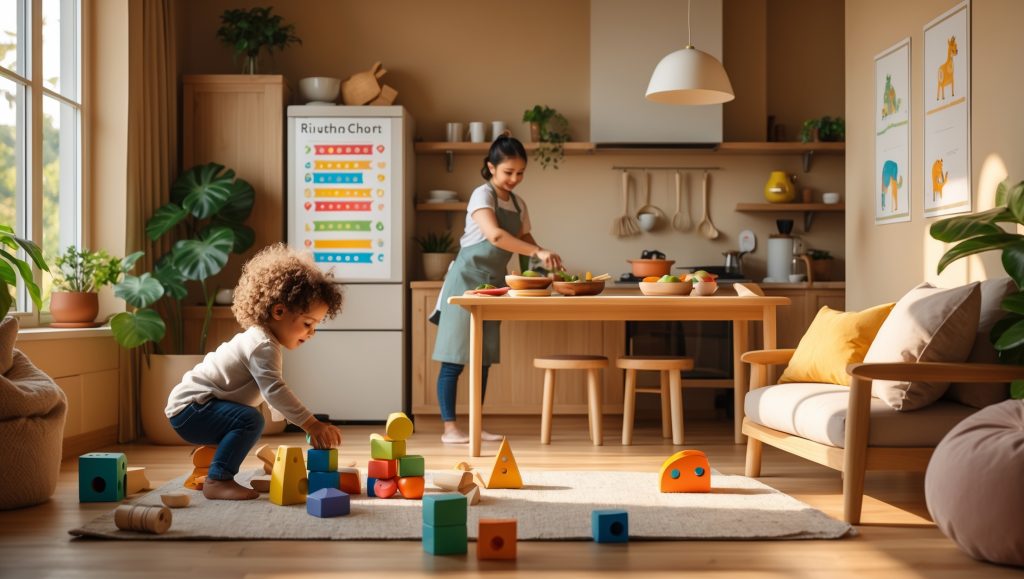
How We Chose
To create this list of toddler routine essentials, we sought input from parents across the U.S., observed best-selling products, and evaluated evidence-informed practices recommended by early childhood educators. Each item was selected based on safety, age-appropriateness, durability, and real-world usability for streamlining daily routines. We also considered materials, ease of cleaning, and adaptability to different home environments.
1. Hatch Rest+ Sound Machine & Night Light — Restful Sleep, Simplified
Why it stands out
This versatile device combines a sound machine, night light, and time-to-rise indicator in one sleek package. Its customizable features help toddlers wind down at bedtime and gently wake up in the morning, supporting healthy sleep routines.
Best for
- Families struggling with bedtime transitions
- Early risers or sleep-resistant toddlers
Key notes
- Age/Stage: 1–5 years
- Materials/Ingredients: Plastic, LED lights
- Strengths: Multi-functional, app-controlled, grows with child
- Trade-offs: Needs outlet or recharging, app setup required
2. IKEA FLISAT Table — The Ultimate Activity Station
Why it stands out
This adaptable table pairs with bins for sensory play, art, and snack time. Its low height is perfect for toddlers, and the simple design fits seamlessly into most home decor.
Best for
- Playroom organization
- Encouraging independent activities
Key notes
- Age/Stage: 18 months–5 years
- Materials/Ingredients: Solid wood, non-toxic finish
- Strengths: Sturdy, easy to clean, versatile uses
- Trade-offs: Assembly required, bins sold separately
3. EZPZ Mini Mat — Mess-Free Mealtimes
Why it stands out
This all-in-one placemat and plate suctions to the table, minimizing spills and making self-feeding easier for toddlers. It’s dishwasher safe and made from food-grade silicone.
Best for
- Families transitioning to self-feeding
- Reducing cleanup stress
Key notes
- Age/Stage: 6 months–3 years
- Materials/Ingredients: 100% food-grade silicone
- Strengths: Durable, non-slip, portable
- Trade-offs: May not fit all highchair trays
4. Lalo The Cup — Spill-Resistant Training
Why it stands out
This weighted silicone cup is designed for little hands and helps toddlers learn to drink independently. The soft material is gentle on gums and stands up to drops.
Best for
- Transitioning from bottles
- Minimizing spills during meals
Key notes
- Age/Stage: 9 months–3 years
- Materials/Ingredients: Non-toxic silicone
- Strengths: Easy to grip, dishwasher safe
- Trade-offs: Not completely spill-proof if turned upside down
5. Munchkin Step Diaper Pail — Odor Control for Daily Changes
Why it stands out
This diaper pail uses a self-sealing system and odor-absorbing rings to keep nurseries fresh. The foot pedal design simplifies disposal during busy routines.
Best for
- Families with toddlers in diapers or training pants
- Shared nurseries or small spaces
Key notes
- Age/Stage: Birth–potty trained
- Materials/Ingredients: Plastic, Arm & Hammer baking soda pucks
- Strengths: Excellent odor control, hands-free operation
- Trade-offs: Ongoing cost for refill bags and pucks
6. Melissa & Doug Routine Chart — Visual Structure for Independence
Why it stands out
This magnetic chart allows families to customize daily routines with colorful pieces for activities like brushing teeth and getting dressed. It encourages toddlers to participate and understand what comes next.
Best for
- Visual learners
- Building consistent routines
Key notes
- Age/Stage: 2–6 years
- Materials/Ingredients: Wood, magnets, non-toxic paint
- Strengths: Reusable, engaging, easy to personalize
- Trade-offs: Small pieces require supervision for younger toddlers
7. Potty Training Seat with Step Stool Ladder — Confidence in the Bathroom
Why it stands out
This stable seat fits most standard toilets and features a non-slip ladder, making it easy for toddlers to climb up and feel secure during potty training.
Best for
- Potty training at home
- Toddlers hesitant about the toilet
Key notes
- Age/Stage: 18 months–4 years
- Materials/Ingredients: BPA-free plastic, non-slip pads
- Strengths: Adjustable height, foldable for storage
- Trade-offs: May not fit all toilets, assembly required
8. Skip Hop Zoo Little Kid Backpack — Organization On-the-Go
Why it stands out
Designed for small shoulders, these playful backpacks make packing for daycare, outings, or overnights simple and fun. The front pouch is insulated for snacks.
Best for
- Daycare and preschool routines
- Families on the move
Key notes
- Age/Stage: 2–5 years
- Materials/Ingredients: Polyester, BPA- and phthalate-free
- Strengths: Lightweight, easy to clean, variety of designs
- Trade-offs: Limited capacity for larger items
9. OXO Tot Stick & Stay Suction Bowl — Less Mess, More Focus
Why it stands out
This bowl sticks securely to flat surfaces, keeping meals in place as toddlers practice scooping and self-feeding. The weighted base and high walls reduce spills.
Best for
- Promoting independent eating
- Families tired of flipped bowls
Key notes
- Age/Stage: 6 months–3 years
- Materials/Ingredients: BPA-free plastic, silicone base
- Strengths: Easy to use, top-rack dishwasher safe
- Trade-offs: Suction may not work on textured or porous surfaces
10. Slumberkins Snuggler — Comfort Object for Transitions
Why it stands out
These soft, machine-washable plushes are designed to support emotional resilience. The included storybooks help children process routines like bedtime or saying goodbye.
Best for
- Soothing separation anxiety
- Bedtime or daycare transitions
Key notes
- Age/Stage: Birth–6 years
- Materials/Ingredients: Polyester, hypoallergenic fill
- Strengths: Machine washable, includes storybook
- Trade-offs: Higher price point for a plush
11. BapronBaby Toddler Bib — All-Day Coverage
Why it stands out
This unique bib/apron hybrid covers more than standard bibs and is easy for toddlers to wear. It’s lightweight, machine washable, and dries quickly between meals and crafts.
Best for
- Messy eaters and arts-and-crafts fans
- Parents seeking less laundry
Key notes
- Age/Stage: 6 months–3 years
- Materials/Ingredients: Quick-dry polyester
- Strengths: Stain-resistant, flexible fit
- Trade-offs: Not waterproof, but highly water-resistant
12. Indestructibles Books — Stories That Survive Everything
Why it stands out
These chew-proof, rip-proof, washable picture books are perfect for toddlers who are still learning to handle books gently. Lightweight and portable, they make storytime part of any routine.
Best for
- Early literacy routines
- On-the-go reading
Key notes
- Age/Stage: Birth–3 years
- Materials/Ingredients: Non-toxic synthetic paper
- Strengths: Durable, washable, lightweight
- Trade-offs: Limited to simple stories and illustrations
Buying Tips
- Match to your routine: Choose items that address your family’s specific needs—whether that’s smoother mornings, less mealtime mess, or easier bedtimes.
- Prioritize durability: Toddlers are tough on gear. Look for washable, sturdy materials that can handle daily use.
- Check for safety: Opt for products made from non-toxic materials and free from small parts for younger toddlers.
- Consider storage: Compact or multi-functional items help keep play areas and kitchens clutter-free.
- Encourage independence: Select tools and visuals (like charts, step stools, or easy-to-use dishes) that let your toddler participate in routines.
Verdict
Successful toddler routines are built on consistency, age-appropriate tools, and a little flexibility. The twelve essentials listed above were chosen to help families navigate everyday transitions with less stress and more confidence. By organizing your environment and introducing the right supports—whether it’s a clever suction bowl, a comforting bedtime plush, or a visual daily chart—you’ll be setting your toddler (and yourself) up for smoother days in 2025 and beyond.
FAQ
+How do I know which routine tools are right for my toddler?
+Are these products safe for younger toddlers?
+How can I encourage my toddler to follow a routine?
+What’s the best way to introduce new routine items?
+Do I need to buy all twelve essentials?
+How often should I update our routine tools?
+Are there budget-friendly alternatives to these picks?

Establishing smooth routines with toddlers can feel daunting, but the right essentials truly make a difference. In 2025, parent-approved picks are more intuitive and versatile than ever, helping to transform chaotic moments into calm, connected ones. Thoughtfully chosen items—like visual routine charts, spill-proof snack cups, and easy-clean high chairs—support your child’s growing independence while saving parents time and energy. Smart sound machines and blackout curtains encourage restful sleep, while step stools and non-slip bath mats foster safe participation in daily self-care. The best essentials adapt to your family’s unique needs, blending practical features with kid-friendly design. As you build your toolkit, focus on products that simplify transitions, encourage positive habits, and bring a dose of fun to everyday routines. Remember, smoother days aren’t about perfection—they’re about creating a supportive environment where your toddler can thrive. With these top 12 essentials, you’ll be well-equipped for everything from morning wake-ups to bedtime wind-downs, making every day a little easier and a lot more joyful.
- Visual routine charts for clear, consistent expectations
- Spill-proof snack and drinkware to minimize messes
- Child-safe step stools for bathroom and kitchen independence
- Soothing sound machine to promote restful sleep
Do you have any recommendations for families with sensory-sensitive toddlers? For example, could the Hatch Rest+ be too bright or too noisy for some kids, and are there ways to adjust it accordingly?
It’s great that you’re thinking about your sensory-sensitive toddler’s comfort. Many families find the Hatch Rest+ helpful, but yes, some children can be sensitive to its lights or sounds. Start by keeping the brightness and volume very low, and introduce one feature at a time. Stick to gentle sounds like white noise or soft lullabies, and choose dim, warm-toned lights instead of bright colors. Always watch your child’s reactions and adjust settings or turn features off if they seem overstimulated. Make sure any device is placed out of reach, and use with supervision. This isn’t medical advice; if you’re concerned, check in with your pediatrician.
My toddler is almost four but still needs help with mealtimes. Would the Lalo Cup or the EZPZ Mini Mat still be a good fit at this age, or are there better options for older toddlers learning to be more independent?
It’s completely normal for nearly-four-year-olds to still need help at mealtimes. Both the Lalo Cup and the EZPZ Mini Mat are safe and easy for preschoolers—though your child may be ready for slightly larger cups or a more grown-up plate. Try offering an open cup with handles for practice, and consider a non-slip plate or mat that allows room for bigger portions. Keep encouraging self-feeding, and supervise for spills or choking hazards. This isn’t medical advice; if you’re concerned, check in with your pediatrician.
As a parent managing twins on separate meal schedules, is it practical to have just one Lalo Cup to share and wash between meals, or would you suggest two separate cups for convenience and better routine flow?
Juggling twins with different meal times can be quite a challenge, and your focus on routine is so important. For smoother transitions, I recommend having a separate Lalo Cup for each child. This reduces the rush to wash between meals, minimizes mix-ups, and supports each twin’s sense of ownership over their items. It’s also more hygienic, especially if one child is under the weather. Make sure both cups are age-appropriate and easy for your toddlers to grip. This isn’t medical advice; if you’re concerned, check in with your pediatrician.
My toddler is really sensitive to sounds and lights when going to sleep, and we haven’t had luck with other night lights. Does the Hatch Rest+ have adjustable brightness and volume settings for more sensitive kids?
It’s completely understandable to want a sleep environment that works for your sensitive toddler. The Hatch Rest+ does offer adjustable brightness and volume controls, so you can dim the night light and set sound levels very low—ideal for little ones who are sensitive to light or noise. Try starting with the lowest settings and gradually adjusting to your child’s comfort. Always supervise the use of electronic devices in your child’s room, and check for any signs of overstimulation. This isn’t medical advice; if you’re concerned, check in with your pediatrician.
The EZPZ Mini Mat sounds great for reducing mess, but I’m wondering how it compares to similar silicone mats on the market in terms of durability and suction power. Is there a particular reason you recommend this one for toddler mealtimes?
You’re wise to compare options to find what works best for your toddler’s mealtimes. The EZPZ Mini Mat stands out for its strong, reliable suction that helps keep it in place—many parents find this reduces frustration and mess, especially with active toddlers. Its one-piece, food-grade silicone design is durable and easy to clean, which can handle daily use and repeated washing without warping. The mat’s size and shape are tailored for high chair trays, making it less likely to be pulled off by little hands. Always supervise your child during meals and check for wear regularly. This isn’t medical advice; if you have concerns, check in with your pediatrician.
For the IKEA FLISAT table, do you have recommendations for bins that actually fit well without sliding around? We have a pretty small apartment, so I’d love ideas on keeping the activity area tidy and not overwhelming.
It’s understandable to want a tidy and calm activity space, especially in a smaller apartment. For the IKEA FLISAT table, the IKEA TROFAST bins are designed to fit snugly and securely—choose the shallow or medium sizes for art supplies, blocks, or sensory play. Label each bin with easy-to-understand pictures or words, and rotate toys to limit clutter. Keep only a few activities accessible at a time and store extras out of sight if possible. Always supervise toddlers during play, especially if using small parts. This isn’t medical advice; if you’re concerned, check in with your pediatrician.
My toddler is obsessed with sensory play and we spend a lot of time with water beads and kinetic sand. Does the IKEA FLISAT table hold up well with wet or messy activities, or should I be concerned about water damage to the wood?
It’s great that you’re encouraging your toddler’s sensory play. The IKEA FLISAT table is popular for sensory bins, but since it’s made of untreated pine, it can be vulnerable to water damage and swelling when exposed to lots of moisture. For wet or messy activities, try lining the compartments with waterproof trays or silicone inserts, and wipe up spills right away. Supervise closely to prevent splashing, and avoid prolonged contact with water. You could also consider applying a child-safe sealant if you plan to use water often. This isn’t medical advice; if you’re concerned, check in with your pediatrician.
Does the Munchkin Step Diaper Pail hold enough diapers for two kids, or would it quickly fill up if you have a toddler and a newborn in diapers at the same time?
That’s a smart question—managing diaper changes for two little ones can fill up a pail fast. The Munchkin Step Diaper Pail holds about 30 newborn diapers or 20 larger toddler diapers, so with both a newborn and a toddler, you’ll likely need to empty it every day or two. For convenience, consider placing it in the most-used changing area and emptying regularly to prevent odors. Always secure the lid tightly for safety, and keep pail bags out of reach of young children. This isn’t medical advice; if you’re concerned about odor or hygiene, check in with your pediatrician.
With all these essentials focused on routines, how do you recommend balancing open-ended playtime with using educational toys during a busy day? I sometimes feel guilty if it looks like all we do is follow a schedule with learning toys rather than giving my toddler more free play.
It’s completely understandable to want a good balance between structure and free play for your toddler. Try setting aside specific windows each day, even if just 15–30 minutes, where your child can choose any safe toys or activities, not just educational ones. Rotate toys frequently to keep things interesting and encourage creativity. Join your toddler in their open-ended play when possible, following their lead. Remember that unstructured play is important for social, emotional, and cognitive growth, especially for toddlers aged 1–3. This isn’t medical advice; if you’re concerned, check in with your pediatrician.
My toddler tends to get very attached to certain toys. Any advice on how to introduce toy rotation without causing resistance or meltdowns during our daily routines?
It’s completely normal for toddlers to form strong attachments to specific toys, and wanting to ease transitions is a thoughtful goal. Start by introducing toy rotation gradually: let your child help select which toys will stay out and which will take a break. Keep favorite comfort toys available, especially during the first few changes. Use positive language, such as saying the toys are going on a ‘rest’ or ‘adventure,’ and celebrate their return together. For toddlers, visual cues like labeled bins or a fun goodbye ritual can help make the process concrete and reassuring. Always supervise to ensure small parts stay out of reach. This isn’t medical advice; if you’re concerned, check in with your pediatrician.
If my toddler tends to get attached to certain toys, how do you suggest introducing toy rotation without causing distress or resistance? Are there ways to involve them in the process so it feels positive?
It’s understandable to want toy rotation to feel positive, especially if your toddler forms strong attachments. Start by involving your child: let them help choose which toys stay out and which go for a ‘rest.’ Introduce a special box or basket for the toys that are taking a break, and explain they’ll come back soon. Keep one or two favorite comfort toys always available for security. Make the rotation process predictable by doing it together on the same day each week. Always supervise, and ensure toys are age-appropriate and safe. This isn’t medical advice; if you’re concerned, check in with your pediatrician.
In your experience, do open-ended toys like the activity table support attention span and routine-building better than educational toys with specific instructions? I would love to hear your thoughts on which is more effective for smoother mornings and evenings.
—it’s clear you want to make mornings and evenings less stressful for your toddler. Open-ended toys like activity tables can help toddlers focus for longer stretches, as they let kids explore at their own pace and encourage creativity. These toys also fit easily into routines, since children can come back to them without needing to follow steps or wait for adult help. For ages 1–3, choose activity tables without small parts to avoid choking hazards, and supervise play to keep it safe. Educational toys with instructions can be valuable too, but may cause frustration if rushed. This isn’t medical advice; if you’re concerned, check in with your pediatrician.
It sometimes feels overwhelming to keep all these basics organized. Would opting for a toy or gear subscription help with household clutter, or do parents end up needing to buy the core routine products anyway to keep things running smoothly throughout the day?
Feeling overwhelmed by toddler gear and clutter is completely understandable. Toy or gear subscriptions can help reduce the number of items in your home at one time, especially for playthings that rotate out as your child grows. However, for daily essentials like sleep, feeding, and hygiene products, you’ll likely still need your own core items for reliability and safety reasons. Consider starting with a subscription for non-essential toys and see how it works for your family. Always check that subscription items are age-appropriate, clean, and safe. This isn’t medical advice; if you’re concerned, check in with your pediatrician.
Do you have any insights on whether subscribing to a monthly toy rental service might be more effective for encouraging independent play than purchasing individual items like the IKEA FLISAT table? I wonder which choice better supports a toddler’s ongoing interest and development.
It’s thoughtful that you’re considering how best to nurture your toddler’s independent play. A monthly toy rental service can introduce variety and novelty, which may keep your child curious and engaged, but it’s important to ensure rented toys are age-appropriate and safely sanitized. Owning purposeful items like the IKEA FLISAT table offers consistent, accessible space for self-directed activities. You might combine both: keep a familiar, stable play space while rotating toys for fresh interest. Always supervise for safety and watch for small parts with younger toddlers. This isn’t medical advice; if you have developmental concerns, check in with your pediatrician.
For families concerned about sustainability, could you share insights into how wooden toys or essentials, like the FLISAT Table, hold up over time compared to plastic items? I am curious whether wood is generally more durable or if plastic has advantages in the context of toddler routines.
It’s thoughtful to consider sustainability and durability for your toddler’s essentials. Wooden items like the FLISAT Table tend to be sturdy and can last through years of play, though they may show scratches or dents with rough use. Plastic items are often lighter and resistant to moisture, which is helpful for messy routines, but they may crack under heavy stress or degrade over time. For toddlers, smooth-finished wood is generally safe and less likely to splinter, but always check for small parts or loose fittings. Whichever you choose, supervise play and check items regularly for wear. This isn’t medical advice; if you’re concerned, check in with your pediatrician.
For toddlers sensitive to lights and sounds at bedtime, does the Hatch Rest+ allow you to dim the light enough and set really soft sound options? I’d like something that won’t overstimulate my son as he falls asleep.
You’re wise to look for gentle bedtime options for your sensitive toddler. The Hatch Rest+ lets you dim the nightlight to a very low setting, which is helpful for children who are sensitive to bright lights. You can also select from a range of soft, soothing sounds and adjust the volume to be very quiet. When setting it up, try starting with the lowest light and sound settings, and watch how your child responds. Always keep cords out of reach and supervise the first few nights to make sure it’s calming for him. This isn’t medical advice; if you’re concerned, check in with your pediatrician.
I always double-check for choking hazards, especially when items are labeled for ages as young as six months. Do you know if any of the essentials you recommend have been flagged for small parts recalls or if parents have reported concerns about detachable pieces breaking off?
It’s great that you’re so careful about choking hazards, especially for little ones. According to the latest information at the time of writing the article, none of the recommended essentials have been flagged for small parts recalls or widespread concerns about detachable pieces breaking off. Still, always check for updated recall alerts and inspect items regularly, especially if your toddler is teething or likes to test items with their mouth. Use all products under close supervision and choose age-appropriate items based on your child’s development. This isn’t medical advice; if you’re concerned, check in with your pediatrician.
My child is two and still throws their cup often, even though we are practicing table manners. Is Lalo The Cup noticeably more durable or spill-resistant compared to other brands you’ve looked at for this list?
It’s understandable to want a cup that stands up to toddler tosses and spills. Lalo The Cup is made from sturdy silicone and tends to survive drops without cracking, which is great at this age. Its weighted base helps minimize tipping, but no cup is completely spill-proof when thrown. You might try modeling gentle handling, offer cups only at the table, and praise calm use. Always supervise closely, and remember some throwing is part of typical two-year-old development. This isn’t medical advice; if you’re concerned, check in with your pediatrician.
My toddler absolutely loves sensory play, so I’m considering the IKEA FLISAT Table. Do you have any tips for organizing the sensory bins or rotating activities to keep things engaging without making a huge mess every day?
It’s wonderful that you want to nurture your toddler’s love of sensory play while keeping things manageable. Try using shallow, lidded bins that fit inside the FLISAT Table for easy swapping and storage. Prep 2–3 different bins (water, dry rice, soft pom-poms, etc.) and rotate them every few days to maintain interest. Keep a small handheld broom or damp cloth nearby for quick cleanups, and always supervise to avoid choking hazards or spills, especially with younger toddlers. Encourage cleanup as part of play to build helpful habits. This isn’t medical advice; if you’re concerned, check in with your pediatrician.
For toddlers who are sensitive to lights or sounds, would the Hatch Rest+ still be a good fit, or are there ways to adjust it to be less stimulating?
You’re right to consider your toddler’s sensitivities when choosing sleep aids. The Hatch Rest+ is adjustable: you can dim the night light to a soft glow or turn it off entirely, and you can set the sound machine volume very low or choose gentler sounds like white noise or lullabies. Start with the lowest settings and watch how your child reacts over a few nights. Always keep cords out of reach and supervise the first few uses. If your child remains bothered, you might try a non-electronic nightlight or skip added sounds altogether. This isn’t medical advice; if you’re concerned, check in with your pediatrician.
My toddler is starting to show interest in using the potty. Should I continue using the diaper pail for training pants, or do you recommend immediately switching to a different waste system to encourage independence?
It’s great that you’re supporting your toddler’s potty training journey. For now, you can continue using the diaper pail for training pants, as it keeps things simple and hygienic during the early stages. As your toddler gains confidence, involve them in clean-up by letting them help dispose of soiled training pants—always supervise for safety and hygiene, especially with messy clean-ups. When accidents decrease, consider switching to a regular trash can for dry training pants to foster independence. Just be sure any waste bin you use is child-safe and out of reach when not supervised. This isn’t medical advice; if you’re concerned, check in with your pediatrician.
The EZPZ Mini Mat looks like it could really help with mealtime messes, but our highchair has a narrow tray. Do you have recommendations on whether this placemat works best on tables, or is there a similar product that fits smaller trays?
It’s great that you’re looking for practical ways to manage mealtime messes. The EZPZ Mini Mat tends to fit best on flat, smooth surfaces like tables; some highchair trays, especially narrow or contoured ones, may not provide enough space for full suction. Try measuring your tray and comparing it to the mat’s dimensions, or test it on the tray if possible. For small trays, consider the EZPZ Tiny Mat or similar compact silicone mats designed for tighter spaces. Always check for secure suction to prevent tipping, and supervise your toddler during meals. This isn’t medical advice; if you’re concerned, check in with your pediatrician.
If my toddler isn’t a big fan of purees, is starting with iron-fortified cereals a reliable option for meeting their iron needs? I’m wondering how these fit into morning routines mentioned in your essentials list.
It’s understandable to want to make sure your toddler gets enough iron, especially if purees aren’t their favorite. Iron-fortified cereals can be a reliable option for many toddlers and often fit well into morning routines, as highlighted in the essentials list. Try offering a small amount mixed with breast milk or formula, and let your toddler self-feed with a spoon for more engagement. Watch for any signs of allergy or constipation, and offer a variety of iron-rich foods as they grow. This isn’t medical advice; if you have concerns about iron intake or feeding, your pediatrician can help tailor guidance to your child’s needs.
My toddler is very sensitive to texture and sometimes refuses to touch silicone cups and mats. Have other parents mentioned sensory issues with items like the EZPZ Mini Mat or Lalo Cup, or are there alternative materials you’d recommend for kids like mine?
It’s completely understandable to worry when your toddler reacts strongly to certain textures. Some parents do find that children with sensory sensitivities may dislike the feel of silicone products like the EZPZ Mini Mat or Lalo Cup. You might try alternatives such as stainless steel, bamboo, or smooth plastic cups and plates, which some kids tolerate better. Let your child explore new materials at their own pace, and always supervise closely, especially with items that could break or have small parts. This isn’t medical advice; if you’re concerned about sensory issues, a pediatrician or occupational therapist can offer more guidance.
With two toddlers on opposite nap routines, do you have tips for using the IKEA FLISAT table to keep one entertained quietly while the other naps nearby? Any specific activities that work best for this?
Managing different nap schedules is tough, and it’s great you’re looking for quiet ways to keep one toddler busy. Try setting up the IKEA FLISAT table with soft, quiet activities—like felt shapes for sorting, chunky wooden puzzles, or coloring with washable crayons. Sensory bins with dry rice or fabric scraps can work if supervised closely (watch for choking hazards). Rotating activities every few days keeps things fresh. Always ensure materials are age-appropriate and easy to clean up in case naptime ends early. This isn’t medical advice; if you’re concerned, check in with your pediatrician.
My toddler is really sensitive to noises and changes in lighting. For the Hatch Rest+, have you noticed if the light or sound features can be too stimulating for kids with sensory issues, or is there a way to adjust those settings to make wind-down time less overwhelming?
It’s understandable to want a soothing bedtime environment for a sensory-sensitive toddler. The Hatch Rest+ offers adjustable volume and brightness, so you can start with the dimmest light and the lowest sound setting. Choose gentle light colors like warm white or red, and simple sounds such as light rain or soft white noise. Always introduce new features gradually and observe your child’s response, turning off anything that seems overstimulating. For safety, supervise when your child uses devices and keep cords out of reach. This isn’t medical advice; if you’re concerned, check in with your pediatrician.
I noticed the Hatch Rest+ sound machine is listed for ages 1-5. For a newly 1-year-old who’s sensitive to noises, is it safe to use overnight, and are there specific settings or features you recommend for that younger age group?
It’s great that you’re looking for ways to help your noise-sensitive toddler sleep more soundly. For a newly 1-year-old, the Hatch Rest+ can be safe to use overnight if placed well out of reach, with cords secured to prevent any hazards. Start with gentle white noise or soft lullabies at a low volume—loud or sudden sounds can be startling at this age. Avoid lights or colors that might be too stimulating, and use the app to set an automatic shut-off or gradual volume decrease if desired. As always, this isn’t medical advice; if you’re concerned, check in with your pediatrician.
We’re just starting to set up a more consistent bedtime routine for our speech-delayed toddler. Can you explain how the Hatch Rest+ can be used to help a child who struggles to understand the concept of ‘time to rise’ cues?
It’s wonderful that you’re creating a more predictable bedtime for your toddler, especially with their unique language needs. The Hatch Rest+ can offer visual and audio signals rather than relying on verbal explanations. Try setting the device to glow a soft color (like blue) at bedtime and a different color (like yellow) in the morning to cue wake time. Use simple, consistent sounds (like gentle music or birdsong) paired with the color change. Practice together by showing your child when the light changes, linking it to actions (“When the light is yellow, it’s time to get up”). Always supervise initial use, and keep it out of reach for safety. This isn’t medical advice; if you’re concerned, check in with your pediatrician.
For a family on a tight budget, which two of these products would make the biggest difference for starting smoother routines with a 7-month-old who is just beginning to explore solids?
It’s great that you’re looking for ways to support your baby’s new routines while being mindful of your budget. For a 7-month-old starting solids, a sturdy, easy-to-clean high chair and a set of soft-tip, baby-safe spoons can be especially helpful. First, a high chair provides a safe, secure spot for your baby to try new foods and join family meals. Second, baby spoons with gentle tips protect gums and make feeding more comfortable. Always supervise feeding, and check for choking hazards. This isn’t medical advice; if you’re concerned, check in with your pediatrician.
Since our toddler spends time with grandparents who make meals from scratch and use different types of toddler cups, is the Lalo Cup compatible with thicker drinks like homemade smoothies or traditional grain drinks? Or is it better suited for water and milk?
It’s great that your toddler is enjoying homemade meals and drinks with grandparents. The Lalo Cup is generally best for water and milk; its straw and spout are designed for thinner liquids. For thicker drinks like smoothies or grain beverages, try offering the smoothie in an open cup with close supervision, or use a wide, soft straw to reduce frustration and ensure easy sipping. Always check that small parts are secure and supervise to prevent choking. This isn’t medical advice; if you’re concerned, check in with your pediatrician.
Given that some toddlers can be picky eaters or sensitive to texture, do you find iron-rich cereals or purees are better tolerated? Have parents reported one option being easier to introduce as part of their toddler’s routine?
You’re not alone in wondering how to help a picky eater or a toddler sensitive to textures. Many parents find that iron-rich purees are easier to introduce at first, since their smooth consistency can be less overwhelming than cereals, which may feel gritty or clump. Start by offering very small spoonfuls of puree, gradually increasing variety and thickness as your child gets used to it. If trying cereal, mix it with breast milk or formula for a familiar taste and softer texture. Always supervise meals and watch for signs of allergy or choking. This isn’t medical advice; if you’re concerned, check in with your pediatrician.
Space is at a premium in our home, so I’m wondering how bulky the Munchkin Step Diaper Pail is and if it can be stored out of the way between changes, especially for parents trying to keep things tidy during busy routines.
It’s completely understandable to want a tidy space, especially with a busy toddler routine. The Munchkin Step Diaper Pail is slimmer than some models but still stands about two feet tall and needs clearance for the foot pedal and lid. Consider placing it in a bathroom or closet corner if you have safe ventilation and can close the door, keeping it out of the main play area. Always ensure it’s secured so toddlers can’t access it unsupervised. If space is extremely tight, you might use smaller bags and empty more frequently, or opt for a compact, lidded bin just for diapers. This isn’t medical advice; if you’re concerned, check in with your pediatrician.
How do you keep the Lalo Cup from getting moldy if it’s used for milk or juice? We sometimes miss a cup at cleanup and I’m worried about hidden spots, especially since my toddler likes to hoard things.
It’s understandable to worry about hidden mold in cups, especially with a toddler who likes to stash things. Try to check your common play and nap spots daily for missing cups. When cleaning, fully disassemble the Lalo Cup, paying close attention to valves, lids, and straws—these areas can trap residue. Rinse immediately after use if possible, then wash thoroughly with hot, soapy water or on the top rack of the dishwasher if the cup is dishwasher-safe. Let all parts air dry completely before reassembling. Always inspect for buildup or odors before refilling. This isn’t medical advice; if you’re concerned, check in with your pediatrician.
My toddler is very hands-on and tends to explore every product thoroughly. For the toddler essentials you listed, did you find any brands or models to be especially cautious with in terms of small pieces that could come loose during normal use?
It’s so important to be mindful when your toddler loves to explore everything up close. From the essentials in the article, always double-check for loose or detachable parts on organizers, snack containers, and certain bath toys—some brands use snaps, small screws, or pop-out features that could become choking hazards. Choose items labeled for your child’s age and inspect new gear regularly for signs of wear or breakage. Supervise play with anything that includes zipper pulls, lids, or removable pieces. This isn’t medical advice; if you’re concerned, check in with your pediatrician.
Our toddler often wants to help assemble things like the FLISAT table—are there any parts of assembly that could pose a safety risk for curious little hands, or do most parents find it manageable to involve their child in the process?
It’s wonderful that your toddler wants to help and be involved! When assembling items like the FLISAT table, some parts can pose risks—small screws could be a choking hazard and tools like screwdrivers or Allen keys should only be used by adults. You can let your child help with safe steps, like passing larger pieces or helping hold legs in place, but always supervise closely. Double-check for any sharp edges, tighten all screws securely, and keep small parts out of reach. This isn’t medical advice; if you have concerns, checking with your pediatrician is a good idea.
For parents on a tight budget, do you have suggestions on which items from this list are the best investments? I want to make sure we’re prioritizing essentials that actually make routines easier with both a toddler and a baby.
It’s so thoughtful of you to prioritize what will truly help your family during busy routines. Focus first on items that serve both children and simplify daily transitions: a sturdy, easy-to-clean high chair or booster (for safe, efficient mealtimes), a reliable diapering setup (changing pad and wipes for both ages), and a versatile stroller or baby carrier if you’re often on the go. Choose products that are durable and easy to sanitize, avoiding any with small detachable parts or allergenic materials, especially for younger siblings. This isn’t medical advice; if you’re concerned, check in with your pediatrician.
For the families you spoke with, did any mention strategies for storing sensory play supplies neatly alongside the FLISAT Table? Our playroom gets cluttered fast, so any organization tips would be welcome.
You’re not alone—keeping sensory play supplies organized can be a real challenge with toddlers. Many parents mentioned using clear, shallow bins that slide under or beside the FLISAT Table for easy access and quick cleanup. Labeling each bin with pictures or words helps toddlers learn where things go, making clean-up part of the routine. Some families use a nearby low shelf or cart to keep items visible but tidy. For safety, be sure to keep small parts and messy materials out of reach unless supervised. This isn’t medical advice; if you’re concerned, check in with your pediatrician.
I noticed most products are for toddlers, but my child is only 7 months. Are there any tips for adapting the toddler sleep routines or meal setups for babies who are just under a year old?
It’s great that you want to support your 7-month-old’s routines early on. For younger babies, try a consistent, calming bedtime routine—like gentle rocking, a lullaby, and dim lighting—skipping items with small parts or loose bedding for safety. For meals, use a high chair with secure straps, offer age-appropriate soft foods, and always supervise closely. Keep meal times short and predictable to help your baby feel secure. Products designed for toddlers may not be safe or suitable until your child is older and more mobile. This isn’t medical advice; if you’re concerned, check in with your pediatrician.
My toddler is just turning one and sometimes puts everything in their mouth. With the IKEA FLISAT table and the bins, are there any safety concerns I should be aware of with smaller parts or the finish for this age?
It’s completely normal to worry about safety when your toddler is exploring everything with their mouth. For a one-year-old, ensure the FLISAT table is assembled securely, with no loose screws or detachable small parts. Avoid placing bins within easy reach unless they’re empty or filled only with large, safe items—toddlers love to tip and explore. Regularly check for splinters or chips in the wood finish, as chewing can damage surfaces. Make sure any accessories or toys used with the table are too large to fit in your child’s mouth. This isn’t medical advice; if you have specific concerns, please consult your pediatrician.
I noticed the IKEA FLISAT table is made of solid wood while some other items on the list are plastic or silicone. From a sustainability perspective, is it generally better to choose wooden toys and furniture, or is high-quality plastic just as safe and eco-friendly for toddlers?
It’s great that you’re considering both safety and sustainability for your toddler. Solid wood items, like the IKEA FLISAT table, are often more durable, can be refinished, and tend to have a lower environmental impact if sourced responsibly. High-quality plastics, especially BPA- and phthalate-free, can also be safe, lightweight, and easy to clean, but they may not last as long or be as biodegradable. For toddlers, always check that materials are smooth, non-toxic, and age-appropriate to prevent splinters or choking hazards. This isn’t medical advice; if you’re concerned, check in with your pediatrician.
I like the idea of the Hatch Rest+ for sleep routines, but since my baby is younger than the recommended age, is it safe and helpful to introduce a sound machine and night light now, or should I wait until he’s a toddler?
It’s great that you’re thinking ahead about healthy sleep routines for your baby. For infants, using a simple sound machine with steady, low-volume white noise can be soothing and safe—just keep it at least 7 feet from the crib and under 50 decibels. A dim night light is optional but can be helpful for nighttime feedings or diaper changes; choose one with a soft, warm glow. Avoid lights with distracting colors or brightness, as they might disrupt sleep. Always ensure cords and devices are out of baby’s reach. This isn’t medical advice; if you’re concerned, check in with your pediatrician.
Do you have any advice for parents working with a tighter budget? Are there any alternatives to the EZPZ Mini Mat that are still easy to clean and help keep mealtimes quiet and contained for a busy toddler?
It’s completely understandable to want effective mealtime solutions without overspending. Consider using a silicone baking mat or placemat—they’re often less expensive, easy to clean, and can help keep bowls and plates in place. Suction bowls or plates from budget-friendly brands can also work well (just check their age recommendations and for any small parts). Reusable plastic sectioned plates are another option; they don’t stick but can help contain messes. Always supervise toddlers during meals to ensure safety. This isn’t medical advice; if you’re concerned, check in with your pediatrician.
Some activity-focused products have removable or interchangeable features. How should parents determine which accessories are truly safe for children under 3 in terms of potential choking hazards?
You’re right to be cautious about choking hazards with toddlers—safety is a top priority at this age. First, check that any removable parts are larger than a toddler’s mouth (about 1.25 inches in diameter) and can’t fit through a toilet paper roll. Look for products labeled specifically as safe for ages 0–3 and avoid those with small, loose, or easily detached pieces. Supervise playtime closely, even with age-rated toys. If you’re ever unsure whether an accessory is safe, it’s best to remove it until you can confirm. This isn’t medical advice; if you’re concerned, check in with your pediatrician.
For a bilingual household, do you have suggestions for including both languages while using the IKEA FLISAT Table for daily routines like story time or play? How can we ensure our toddler is exposed to both languages during these structured activities?
It’s wonderful that you’re supporting your toddler’s language development in both languages. During story time at the IKEA FLISAT Table, try reading books in both languages, alternating pages or sessions so your child hears each language regularly. For play, label storage bins or toys in both languages and narrate your actions using each language at different times. Incorporate songs or rhymes in both languages during structured activities, and gently invite your toddler to use words from each as you play together. Always supervise to ensure safe use of materials, especially small parts. This isn’t medical advice; if you’re concerned, check in with your pediatrician.
My child sometimes gets overwhelmed by new textures and sounds. Have you encountered sensory-friendly potty training items that would complement products like the EZPZ Mini Mat or Hatch Rest+ in a daily routine?
It’s understandable to want potty training tools that support your child’s sensory needs. For a sensory-friendly routine, consider a potty seat with a smooth, soft-touch surface, and avoid any with cold or hard plastic. Place a non-slip, plush rug underfoot to minimize texture discomfort. Use a familiar, gentle-scented wipe, and keep routines calm—try dimming lights or using the Hatch Rest+ for white noise. Let your child explore the potty area at their own pace to reduce overwhelm. Always supervise and choose products free from small parts and harsh scents. This isn’t medical advice; if you’re concerned, check in with your pediatrician.
My child is very sensitive to certain sounds and lights. Have you come across any issues with the Hatch Rest+ night light being too bright or noisy for kids who struggle with sensory overload at bedtime?
You’re thoughtful to look out for your child’s sensory comfort at bedtime. The Hatch Rest+ night light offers adjustable brightness and volume, which is helpful for kids sensitive to lights and sounds. Start with the dimmest light and a gentle sound or use only the light, not the sound, if your child prefers quiet. Supervise how your child reacts and adjust settings gradually. If any feature still feels overwhelming, a simple night light or white noise machine might be a gentler option. Always choose products with no small parts and keep cords out of reach for safety. This isn’t medical advice; if you’re concerned, check in with your pediatrician.
I see the EZPZ Mini Mat is recommended for mess-free mealtimes, but my 10-month-old is really into exploring textures and often tries to lift or chew on plates. Does the suction hold up against determined little hands, or should I look for a different style of plate?
It’s completely normal for your 10-month-old to be curious and want to explore everything, including their plates. The EZPZ Mini Mat does offer good suction on smooth, clean surfaces, but some determined babies may still manage to peel it up, especially as they get stronger. Try pressing the mat firmly onto the table, and always supervise during meals. For this age, silicone mats and suction plates are generally safe, but avoid anything with detachable small parts. If your child is especially persistent, you might consider a heavier, non-slip bowl or plate as an alternative. This isn’t medical advice; if you’re concerned, check in with your pediatrician.
I’m trying to budget carefully since daycare costs add up fast. Are there any lower-cost alternatives to the sound machine or activity table that still help with supporting smooth transitions for toddlers?
It’s completely understandable to look for budget-friendly ways to support your toddler’s routines. For sound machines, you can try using a simple fan or a white noise playlist on your phone (kept safely out of reach). Instead of an activity table, set up a rotating basket of safe household items—like wooden spoons, stacking cups, and board books—to foster independent play during transitions. Visual timers (like a kitchen timer) can also help signal changes in routine. Choose items that are safe, age-appropriate, and free from small parts. This isn’t medical advice; if you’re concerned, check in with your pediatrician.
For toddlers who are particularly sensitive to new sounds or lights at bedtime, do you have any tips for introducing a device like the Hatch Rest+ without disrupting their current sleep routine? I am curious how to ease the transition for a child who likes consistency.
You’re thoughtful to consider your toddler’s sensitivities and love of routine. To ease the transition, introduce the Hatch Rest+ during the day, letting your child explore it with you in a calm, playful way. Start by using just one new feature at a low setting, like soft light or gentle sound, and gradually build up as your child becomes comfortable. Stick to familiar bedtime rituals, only adding the device once your toddler feels safe. Monitor their reactions closely and pause if you notice distress. Always supervise new electronics and ensure cords are out of reach. This isn’t medical advice; if you’re concerned, check in with your pediatrician.
The EZPZ Mini Mat looks really practical, but will it fit on most standard daycare highchairs, or is it more for home use? I want to reduce mess but am unsure if it’s compatible with daycare furniture.
It’s great that you’re thinking ahead about reducing mess at daycare. The EZPZ Mini Mat is designed to fit most standard highchair trays, but daycare furniture can vary—some trays are too small or have a raised edge that prevents a proper seal. Consider asking your daycare for tray measurements and, if possible, do a test fit. You can also use the mat directly on a flat table if the tray isn’t compatible. Always supervise toddlers during meals and check that the mat is secure so it doesn’t become a distraction or safety risk. This isn’t medical advice; if you’re concerned, check in with your pediatrician.
My toddler starts resisting bedtime right around the time we try to use the Hatch Rest+ and ends up getting more excited by the lights. Do you have suggestions for gradually introducing the time-to-rise feature without it turning into another distraction during our routine?
It’s understandable to feel frustrated when a helpful tool becomes a bedtime obstacle. Try introducing the Hatch Rest+ gradually: first, use it only with calming sounds and lights set to the dimmest, warmest options during wind-down time. Keep the lights off or very low during actual bedtime, then introduce the time-to-rise feature on its own after a week or two. Make a big deal out of the first “wake-up” moment in the morning, not at night. Remember to supervise any device use to ensure safety for curious toddlers. This isn’t medical advice; if you’re concerned, check in with your pediatrician.
For families with two toddlers under three, do you recommend buying doubles of essentials like the activity table or sound machine, or can they easily share these items as part of their daily routine? I want to avoid unnecessary purchases if sharing is practical.
Your hope to avoid extra purchases while meeting both toddlers’ needs is very understandable. For large or interactive items like activity tables, sharing is usually practical—just supervise to support turn-taking and safety. A single sound machine can work if your children sleep in the same room, but if they nap separately, consider a second to keep routines consistent. Always check age recommendations and avoid toys with small parts for under-threes. This isn’t medical advice; if you’re concerned, check in with your pediatrician.
Is there any advantage or drawback to using a toy subscription service instead of purchasing each item on your routine essentials list one by one? I am curious if subscriptions tend to duplicate similar products, or if they actually help streamline toy clutter at home.
It’s thoughtful to consider how a toy subscription might fit into your family’s routine and space. Subscriptions can introduce variety and reduce clutter, as you return toys and avoid accumulating too many items. They may also expose your toddler to age-appropriate, rotating options that support new skills. However, sometimes they send toys similar to what you already have, or items not perfectly suited to your child’s interests. Always check for safety (no small parts, non-toxic materials) and clean returns. This isn’t medical advice; if you’re concerned, check in with your pediatrician.
Do you have any advice on how to organize a toy rotation when using something like the IKEA FLISAT table for different activities? I want to keep things fresh but not overwhelming for my toddler.
It’s great that you want to keep playtime interesting without overwhelming your toddler. Try grouping toys and materials by activity (like art, sensory, or building) and store each group in separate, clearly labeled bins. Rotate 2-3 bins onto the FLISAT table per week and keep the rest tucked away. Watch how your child interacts—if they lose interest quickly, try swapping bins more often. Choose age-appropriate, safe items (no small parts or choking hazards), and supervise closely during play. This isn’t medical advice; if you’re concerned, check in with your pediatrician.
My 15-month-old is super sensitive to noise at night. Does the Hatch Rest+ sound machine work well for toddlers who are easily startled by sounds, or does it make bedtime more distracting for them?
You’re thoughtful to consider your toddler’s sensitivity to nighttime noise. For a 15-month-old, the Hatch Rest+ can be helpful—start with a low, consistent white noise like rain or ocean sounds, avoiding tracks with sudden changes or songs. Place the sound machine across the room and use the lowest comfortable volume. Keep other lights and distractions off during sleep. Always supervise new devices and check cords are out of reach for safety. This isn’t medical advice; if you’re concerned, check in with your pediatrician.
My toddler loves sensory play and makes a huge mess every time. With the IKEA FLISAT table, do you have suggestions for keeping sensory bin materials contained, or is there a particular type of bin that works best for messy or wet activities like water beads or kinetic sand?
It’s great that you want to support your toddler’s sensory play while keeping cleanup manageable. Start by using deep, clear plastic bins that fit snugly into the IKEA FLISAT table wells—these help contain messes, especially with water beads or kinetic sand. Place a splash mat or towel underneath the table to catch spills. For wet activities, opt for bins with lids for easy storage and to prevent spills when not in use. Always supervise closely, as small items like water beads can be choking hazards for toddlers. This isn’t medical advice; if you’re concerned, check in with your pediatrician.
Is the EZPZ Mini Mat easy to store if you have a small kitchen and limited drawer space? I want to keep mealtimes organized but have to be careful about countertop clutter and bulky products.
You’re wise to think about storage when space is tight. The EZPZ Mini Mat is designed to be flexible and compact, so here are some ideas: 1) After cleaning, roll or fold the mat, then tuck it upright inside a shallow cabinet or even beside cutting boards. 2) Use a slim file organizer or plastic tray vertically in a cupboard to store it with other placemats. 3) If you air-dry, hang it on a hook or over a dish rack. It’s made for toddler use, so it’s lightweight and safe, but always keep it out of reach when not in use. This isn’t medical advice; if you’re concerned, check in with your pediatrician.
With twins on different nap and wake times, I’m curious if the Hatch Rest+ can be set to operate independently for each child’s specific schedule, or would I need two devices to avoid waking one while soothing the other?
You’re being so thoughtful about both your twins’ unique needs. The Hatch Rest+ is designed to control one set of sounds and lights at a time, so using a single device for two separate nap schedules may not work well—one twin could be disturbed if the settings change for the other. For truly independent routines, having a separate device for each child is the safest bet, especially if they nap in different rooms. This also reduces the risk of overstimulation or missed cues. As always, follow safety guidelines for any sound machine and monitor the room volume. This isn’t medical advice; if you’re concerned, check in with your pediatrician.
If my 3-year-old is starting to outgrow typical sippy cups but still has trouble with spills at night, would you recommend sticking with the Lalo Cup or moving to something different for nighttime drinks?
It’s understandable to want a spill-free solution as your 3-year-old becomes more independent. You might try transitioning from the Lalo Cup to a straw cup or a leak-proof water bottle designed for toddlers, which encourages more mature drinking skills but still helps prevent spills. Look for options labeled spill-proof and BPA-free, and check that your child can open and close it easily. Always avoid cups with small detachable parts that could be a choking hazard. Supervise nighttime drinking when possible to prevent accidents. This isn’t medical advice; if you’re concerned, check in with your pediatrician.
We’re tight on space and budget. Which of the listed essentials would you suggest prioritizing for families wanting to balance English and another language at home, especially for naptime and sleep routines?
It’s wonderful that you’re focusing on bilingual development, even with tight space and budget. For naptime and sleep routines, consider prioritizing a white noise machine (or a free app) for consistent sleep cues in any language, and a few bilingual storybooks or audio stories to use for bedtime reading or winding down. Choose books with simple, age-appropriate language and sturdy pages for toddlers. Avoid items with small parts to ensure safety. This approach supports language balance without clutter or overspending. This isn’t medical advice; if you’re concerned, check in with your pediatrician.
For toddlers who are extra sensitive to sound or light, is the Hatch Rest+ night light gentle enough, or are there any settings you recommend to avoid overstimulation during bedtime routines?
It’s great that you’re mindful about managing sensory input for your toddler at bedtime. The Hatch Rest+ night light is generally gentle and customizable, but for sensory-sensitive children, start with the dimmest light setting—warm colors like red or orange are often most soothing. Avoid bright white or blue hues, which can be stimulating. For sound, choose the softest lullabies or white noise at the lowest volume, and skip sudden or complex sounds. Always supervise at first and watch your child’s reactions. This isn’t medical advice; if you’re concerned, check in with your pediatrician.
When setting up a toddler routine space, how do you recommend balancing open-ended toys like blocks or art supplies with focused educational toys? I am curious if one type tends to support smoother routines or transitions better for toddlers.
It’s great that you’re thinking about how different toys impact your toddler’s routines. Start by offering a mix: have open-ended toys like blocks or crayons available for free play, which encourages creativity and self-directed transitions. Incorporate focused educational toys during more structured times, such as after meals or before naps. Rotate toy types to keep the space fresh and prevent overwhelm. Make sure everything is age-appropriate—avoid small parts for little ones—and store toys within easy reach to support independence. Every child is different, so notice which toys help your toddler move between activities more smoothly. This isn’t medical advice; if you’re concerned, check in with your pediatrician.
For toddlers who have sensory sensitivities, especially to lights or sounds, would the Hatch Rest+ still be a good fit or are there more adjustable options you would recommend to help ease bedtime routines?
It’s thoughtful to consider sensory sensitivities when choosing bedtime products for your toddler. The Hatch Rest+ can work well because you can customize the brightness and sounds, but for some children, even dim lights or soft noises may feel overwhelming. First, try using the Hatch Rest+ on the lowest settings in a dark, quiet room to gauge your toddler’s comfort. Second, consider using blackout curtains and a fan or silent sleep cues if your child prefers less stimulation. Third, always supervise new routines to notice any signs of discomfort. Safety-wise, make sure any device is placed out of reach. This isn’t medical advice; if you’re concerned, check in with your pediatrician.
My child is sensitive to new sounds and lights. How customizable is the Hatch Rest+ device when it comes to brightness and volume? Are there features to prevent overstimulation, especially when sleeping away from home?
It’s great that you’re mindful of your child’s sensory needs. The Hatch Rest+ allows you to finely adjust both brightness and volume, so you can set them to very low, gentle levels—helpful for sensitive toddlers. You can turn off lights completely, use soft colors, or select soothing sounds at minimal volume. For sleeping away from home, you can save preferred settings in advance and use the device’s battery mode for consistency. Always supervise use and ensure cords are out of reach. This isn’t medical advice; if you’re concerned, check in with your pediatrician.
I’m looking for quiet activities my toddler can do early in the morning without waking up the rest of the family. You mention the IKEA FLISAT table for sensory play—do you have suggestions on which bins or activities are best for keeping things calm and mess-free at that hour?
It’s great that you’re planning ahead for peaceful mornings. With the IKEA FLISAT table, you can use shallow plastic bins filled with dry materials like pom-poms, felt shapes, or large wooden beads—these are quiet, easy to clean up, and safe for toddlers over 18 months under supervision. Offer simple tools like silicone muffin cups for sorting, and avoid water, rice, or sand to keep things mess-free and silent. Rotate a few quiet books or chunky puzzles nearby to add variety. This isn’t medical advice; if you’re concerned, check in with your pediatrician.
Would you recommend prioritizing the Hatch Rest+ sound machine over blackout curtains for improving a toddler’s sleep routine? I’m on a tight budget and can only really pick one sleep-related product right now.
It’s completely understandable to want the most sleep-helpful option within your budget. If you need to choose one, blackout curtains often have a bigger impact for toddlers—darkness helps signal bedtime, supports longer sleep, and is safe for all ages. Try making the room as dark as possible to start. If your little one still struggles, you can add gentle white noise later, even with a simple fan or free app. This isn’t medical advice; if you’re concerned, check in with your pediatrician.
If the EZPZ Mini Mat does not fit all highchair trays, what are some good alternatives for smaller or irregular-shaped trays that still help keep mealtime less messy? I often switch between two different setups depending on the home.
You’re wise to look for flexible solutions that fit your changing setups and keep mealtime manageable. Try silicone suction bowls or plates with individual suction bases—they often work on a variety of tray shapes and tabletops. For very small or curved trays, a non-slip silicone placemat paired with lightweight dishware can help prevent sliding. Consider using a washable splat mat under the highchair to catch drips, especially when swapping locations. Always check that any item is free of choking hazards, made from food-safe materials, and can be easily cleaned. This isn’t medical advice; if you’re concerned, check in with your pediatrician.
For a toddler who’s a bit picky and struggles with food textures, is there a difference in how easily they might get their iron from cereals compared to purees? I’d like to know which is typically more effective for daily iron needs without added stress at mealtime.
It’s great that you’re mindful of making mealtimes less stressful while meeting your toddler’s iron needs. For picky eaters, iron-fortified cereals can be an effective source because you can adjust their texture—offering them dry, with milk, or moistened to suit your child’s preference. Purees, like meat or legume purees, are also good, but some toddlers dislike smooth or thick textures. Try small portions, letting your child touch and play with the food, and offer a variety with no pressure to finish. Always supervise to avoid choking, and choose age-appropriate, low-sugar options. This isn’t medical advice; if you’re concerned, check in with your pediatrician.
The Hatch Rest+ sounds useful, but how do you suggest introducing the time-to-rise feature to a four-year-old who still wakes up too early? Did the parents you interviewed mention if the visual cues or sounds worked better for their toddlers?
It’s understandable to want more restful mornings for your family. For a four-year-old, try setting the time-to-rise light to turn on a few minutes after their usual waking time, gradually increasing it as they adjust. Use simple language to explain that they can get up when the light turns on, and practice together during the day. Many parents I spoke with found visual cues—like a colored light—more effective than sounds, since they’re clear and less startling. Always check the device for small parts and ensure it’s out of your child’s reach for safety. This isn’t medical advice; if you’re concerned, check in with your pediatrician.
Do any of these products accommodate grandparents who have limited storage at home, especially during longer visits? I am looking for essentials that won’t take up too much space but still support toddler routines.
You’re thoughtful to consider both your toddler’s needs and your parents’ limited space. For grandparents’ homes, choose compact essentials like foldable travel cribs, stackable booster seats, and roll-up silicone placemats for mealtimes. Portable organizers can keep toys or hygiene products tidy and out of the way. Prioritize lightweight, collapsible items that stow easily when not in use. Always check for safety certifications and age-appropriate features to ensure your toddler’s well-being. This isn’t medical advice; if you’re concerned, check in with your pediatrician.
For parents juggling busy mornings, would iron-fortified cereals offer a more efficient way to ensure iron intake compared to preparing homemade purees? I’m curious how this might influence routines, considering product tips from your essentials list.
It’s great that you’re looking for efficient ways to support your toddler’s nutrition during hectic mornings. Iron-fortified cereals can definitely save time compared to preparing homemade purees, especially when you’re rushing. Here are some steps: 1) Choose cereals labeled for toddlers to ensure age-appropriate texture and iron content. 2) Serve with breastmilk, formula, or whole milk for easier eating. 3) Pair with vitamin C-rich fruits to boost iron absorption. 4) Watch for added sugars and allergens in packaged cereals. Always supervise your child during meals to prevent choking. This isn’t medical advice; if you’re concerned, check in with your pediatrician.
For families on a strict budget, which one or two essentials from your list would you prioritize for a 7-month-old just now starting to eat solids and moving toward independent routines?
It’s great that you’re thinking carefully about essentials while sticking to your budget. For a 7-month-old beginning solids and learning routines, I’d suggest prioritizing a safe, easy-to-clean high chair and a set of soft, infant-sized feeding utensils. These support both self-feeding and early independence, and they’re age-appropriate for this big milestone. Always check that items are free from small parts and are easy for you to supervise. This isn’t medical advice; if you have concerns about feeding or development, please consult your pediatrician.
For the Hatch Rest+, do you think the time-to-rise feature really helps toddlers adjust to bedtime routines, or could it be confusing for younger kids who don’t understand concepts like ‘wake time’ yet?
—it’s common to wonder if toddlers will grasp time cues like the Hatch Rest+’s time-to-rise feature. For children under about 2.5–3 years, the concept of waiting for a color or light to signal morning might not click right away. You can help by introducing it as part of your bedtime routine: explain in simple terms, use consistent phrases, and celebrate when they wait for the light to change. Make sure your child is old enough to understand cause and effect, and always supervise device use to avoid nighttime distractions. This isn’t medical advice; if you’re concerned, check in with your pediatrician.
I saw that some of these items need assembly or app setup. How long does it usually take to get the Hatch Rest+ and the IKEA FLISAT table ready to use? I get overwhelmed with complicated instructions while juggling a toddler.
It’s completely understandable to feel overwhelmed with setup tasks when caring for a toddler. The Hatch Rest+ usually takes about 10–15 minutes to unbox, plug in, and connect to its app (the app walks you through pairing step by step). The IKEA FLISAT table typically takes 15–30 minutes to assemble with the included tool; it’s a straightforward process with illustrated instructions. For both, keep small parts out of your toddler’s reach during setup. If you get stuck, taking breaks or asking another adult for help can ease the process. This isn’t medical advice; if you’re concerned, check in with your pediatrician.
For families on a budget, which two or three of these essentials would you say have the biggest impact on simplifying daily routines with a toddler?
It’s wise to focus on the essentials that will truly make your days easier. For families on a budget, a reliable step stool can empower your toddler to wash hands or help at the counter, and a sturdy divided plate can reduce mealtime battles by keeping foods separate. If possible, a routine chart or visual schedule can also help toddlers anticipate daily events, easing transitions. Choose options that are easy to clean and free from small parts. This isn’t medical advice; if you’re concerned, check in with your pediatrician.
Do you know if the EZPZ Mini Mat truly suctions firmly when two toddlers are eating side by side? I’m worried my twins might pull it up during meals since they sometimes compete for food.
It’s understandable to worry about mealtime messes, especially with twins who like to test limits. The EZPZ Mini Mat is designed to suction well to smooth, flat surfaces, but strong tugs from two toddlers might still loosen it. Try pressing the mat down firmly before serving food, and use it on a clean, non-textured table. Offer separate mats for each child to reduce competition, and supervise closely to redirect pulling. Always check for wear and keep small parts away from little mouths. This isn’t medical advice; if you’re concerned, check in with your pediatrician.
For families juggling a toddler who loves messy meals and a baby about to start solids, does the EZPZ Mini Mat work well for both different age stages? Or is it better to choose separate feeding mats for each child?
It’s understandable to want one solution that works for both your toddler and baby. The EZPZ Mini Mat is designed for babies starting solids (usually 6+ months) and toddlers, making it a practical option for both stages. For your toddler, it helps contain messes and stays put, while for your baby, it’s safe, food-grade silicone with divided sections. Always supervise both children while eating, and check that the mat is firmly suctioned to the table or high chair. If your toddler eats larger portions, you might eventually need a bigger mat. This isn’t medical advice; if you’re concerned, check in with your pediatrician.
For a toddler starting solids, are there any practical differences in mess or cleanup between offering iron-fortified cereals versus purees, especially when using items like the EZPZ Mini Mat? I’m planning meals and want to pick what’s most manageable for everyday use.
It’s great that you’re thinking about making mealtimes easier as your toddler starts solids. Generally, iron-fortified cereals tend to be stickier and may cling to surfaces and hands more than many purees, which can sometimes be wiped up more easily. Using the EZPZ Mini Mat helps contain both, but with cereals, you might want to have a damp cloth handy for extra wiping. Offer smaller portions at a time and encourage self-feeding with a pre-loaded spoon to minimize spills. Always supervise closely and choose foods that are age-appropriate in texture and consistency. This isn’t medical advice; if you’re concerned, check in with your pediatrician.
My toddler tends to get overwhelmed with too many colors or textures during play. Do you think the IKEA FLISAT Table’s design and materials are suitable for kids who prefer a more minimal sensory environment, or is there an option to tone things down visually?
It’s great that you’re tuned into your toddler’s sensory needs. The IKEA FLISAT Table has a simple, neutral wood design that many children find calming, and you can keep it visually minimal by choosing plain storage bins and limiting the number of toys on display. Consider using solid-colored or clear bins, and offer just a few familiar, soft-textured toys at a time. You can also cover the table with a neutral mat if needed. Always supervise play, especially if your child is sensitive to new materials. This isn’t medical advice; if you’re concerned, check in with your pediatrician.
A lot depends on how easy these products are to clean, especially after art or mealtime. Between the EZPZ Mini Mat and traditional plates, have you found a notable difference in how quickly parents can tidy up with a messy toddler?
You’re right—quick cleanup is a big priority with toddlers. Many parents find the EZPZ Mini Mat slightly easier to clean than traditional plates because it’s made of silicone, resists stains, and rinses off quickly, even after sticky meals or art sessions. It’s also dishwasher-safe, which saves time. For best results, let the mess dry a little before peeling off food bits, then wash with warm soapy water or place on the top rack. Always check the mat for damage and supervise during use, as recommended for toddler safety. This isn’t medical advice; if you’re concerned, check in with your pediatrician.
My toddler still puts a lot of things in their mouth, especially during playtime. For items like the IKEA FLISAT Table with separate bins, do you have any guidance on choosing bins that are safe and cannot be swallowed or cause choking, especially if older kids sometimes leave small toys around?
It’s very normal to worry when your toddler explores with their mouth, especially around toys and play tables. For the IKEA FLISAT Table, choose large, sturdy bins that fit snugly so little hands and mouths can’t remove or tip them easily. Use only bins bigger than your child’s mouth (at least 2 inches wide) and avoid lids or inserts with small detachable parts. Supervise playtime and regularly check the area for small toys left by older siblings. For now, keep bins filled with toddler-safe items (like large blocks or soft toys) and store choking hazards out of reach. This isn’t medical advice; if you’re concerned, check in with your pediatrician.
Our toddler is a bit sensitive to lights and sounds at bedtime. Is there a way to adjust the Hatch Rest+ Night Light and Sound Machine to be as gentle as possible, or would you recommend any alternatives for children with sensory concerns?
It’s very thoughtful to consider your toddler’s sensory sensitivities at bedtime. With the Hatch Rest+ Night Light and Sound Machine, you can lower the light brightness to its dimmest setting and choose softer colors like warm yellow or red, which are less stimulating. For sound, select gentle options—white noise or lullabies played at the lowest volume. Always supervise initial use to see how your toddler responds, and avoid any features that seem bothersome. If the device still feels too much, consider a simple plug-in night light and a soft, non-electronic white noise machine. Every child’s needs are unique, so trial and observation help. This isn’t medical advice; if you’re concerned, check in with your pediatrician.
I noticed the IKEA FLISAT Table is designed for kids starting at 18 months. Are there similar activity stations or tables you recommend for babies who are about 7 months old and just starting to sit up with support?
You’re thoughtful to look for age-appropriate activity stations for your 7-month-old. For this age, consider a floor activity mat with soft, textured toys attached, or an activity center with a secure seat and supportive backrest designed for non-walkers. Make sure any station you use is stable, with no small parts or loose pieces that could pose a choking hazard. Always supervise your baby during play, as they’re still developing balance and coordination. This isn’t medical advice; if you’re concerned, check in with your pediatrician.
We just introduced more independent screen time for our four-year-old and I want to make sure there is enough balance between tech use and hands-on play. Does the IKEA FLISAT table work well for kids who need extra encouragement to move away from screens and do sensory activities?
It’s great that you’re looking for balance between screen time and hands-on play for your four-year-old. The IKEA FLISAT table can help encourage sensory activities, especially if you set it up with engaging, age-appropriate materials like play dough, kinetic sand, or water beads. Try placing the table in a well-lit, inviting area and rotate activities often to keep your child interested. Set clear screen time boundaries and offer sensory play as a fun alternative, not a punishment. Always supervise sensory play for safety, particularly with small parts or materials that could be a choking risk. This isn’t medical advice; if you’re concerned, check in with your pediatrician.
Our toddler is sensitive to certain sounds and lights. Are there specific settings or features on the Hatch Rest+ that you recommend for kids who get overstimulated easily before bed?
It’s thoughtful that you’re considering your toddler’s sensitivities at bedtime. For children who get overstimulated, try dimming the Hatch Rest+ night light to its lowest setting and choosing a warm, soft color like red or orange. Select white noise or gentle rain sounds at a low volume, avoiding anything too high-pitched or dynamic. Set a consistent schedule with the same settings each night to help your child anticipate bedtime cues. Always supervise initial use and watch for signs of discomfort. This isn’t medical advice; if you’re concerned, check in with your pediatrician.
With my little one making a mess during every meal, cleaning is a huge concern. How do silicone mats like the EZPZ compare to traditional plastic plates in terms of food stains and whether leftover food gets stuck in crevices?
It’s completely understandable to want mealtimes to be less messy and cleanup-friendly. Silicone mats like the EZPZ featured in the article are generally easier to clean than many traditional plastic plates: their smooth, non-porous surface resists food stains and usually doesn’t trap food in crevices. After meals, simply rinse or wipe them, and they’re dishwasher-safe. Always check the mat for any worn areas where food might get caught. For toddlers, silicone mats are safe, as long as you supervise and choose ones free from BPA and phthalates. This isn’t medical advice; if you’re concerned, check in with your pediatrician.
With the Hatch Rest+ sound machine, do you have any recommendations on how to introduce the time-to-rise feature to a toddler who doesn’t quite grasp the idea of staying in bed yet? Curious if there’s a gentle way to help them understand this tool in our morning routine.
It’s great that you’re looking for gentle ways to help your toddler adjust to the time-to-rise feature. Start by showing your child how the color changes on the Hatch Rest+ and explaining in simple words that when the light turns a certain color, it’s okay to get up. Practice together during the day so it becomes familiar. Set the wake-up time a little before they usually wake up to build success at first, then gradually adjust as needed. Offer lots of praise when they wait for the light, even if they manage just a few minutes. Keep the explanation simple and age-appropriate, and supervise to ensure safety. This isn’t medical advice; if you’re concerned, check in with your pediatrician.
If your child is just outside the stated age range for a product, like an older toddler with the Lalo Cup, do you think these items still offer benefits, or should we look for more age-appropriate alternatives?
It’s great that you’re thinking carefully about finding the right fit for your child’s stage. If your older toddler is just outside the recommended age for a product like the Lalo Cup, consider a few steps: first, check whether your child has outgrown the cup’s size or features; second, review the manufacturer’s safety guidance, especially regarding choking hazards or capacity; third, watch your child use the item to be sure it’s still meeting their needs and encouraging skill development. If the product seems too small or limiting, transitioning to a more age-appropriate option might support their growth. This isn’t medical advice; if you’re concerned, check in with your pediatrician.
You mentioned the Hatch Rest+ needs to be plugged in or recharged. For families with limited outlets or who want something portable, are there more affordable sound machine options that still help establish bedtime routines for toddlers?
It’s smart to think about practical bedtime tools that fit your family’s space and needs. For a portable, budget-friendly sound machine, look for battery-operated or USB-rechargeable models designed for children—many are under $30. Choose one with soft volume, simple controls, and lullaby or white noise options. Always make sure batteries are secured and keep cords or devices out of your toddler’s crib for safety. If using a regular Bluetooth speaker, pre-load gentle tracks and supervise use. This isn’t medical advice; if you’re concerned, check in with your pediatrician.
For families who move between homes or travel often, do any of these essentials pack up easily or work well in smaller temporary spaces?
—having flexible essentials is key when your family is on the move. Look for compact or foldable versions of items like booster seats, travel cribs, and silicone placemats; these pack flat and set up quickly in new spaces. Choose toy sets or art supplies that fit in small cases or bags, and bring a familiar blanket or lovey for comfort. Opt for portable night lights or sound machines if sleep routines are important. Always check that items are safe and age-appropriate, especially for toddlers under three. This isn’t medical advice; if you’re concerned, check in with your pediatrician.
Does the IKEA FLISAT Table work well for sensory activities that might get messy, like water play or finger painting? I am trying to figure out if it’s easy to clean after these kinds of toddler experiments.
Your focus on easy cleanup after messy sensory play is so important for stress-free routines. The IKEA FLISAT Table is often used for water play and finger painting, especially with its removable bins: simply lift them out to rinse or wipe. For water or paint, line the bins with a reusable tray or plastic to catch spills, and wipe down the wood frame quickly after use to avoid stains. Always supervise closely, as water can make surfaces slippery, and be sure paints are non-toxic and age-appropriate. This isn’t medical advice; if you’re concerned, check in with your pediatrician.
Our toddler sometimes has sensory sensitivities, especially to different textures and smells. Do wooden toys and furniture tend to be better tolerated for sensitive kids than plastic or silicone, or does it really come down to the specific product and finish?
You’re thoughtful to consider how materials might affect your toddler’s sensory comfort. Every child is unique, but many parents find that unfinished or smoothly finished wooden toys and furniture can be less overwhelming for kids sensitive to strong smells or sticky textures often found in plastics or silicone. Try to choose products with minimal chemical finishes and avoid rough or splintery surfaces. Introduce new items gradually and observe your child’s reaction. Remember, supervision is important to ensure safety, especially with natural materials. This isn’t medical advice; if you’re concerned, check in with your pediatrician.
My child is very sensitive to loud or unexpected sounds, especially after watching TV. Is the Hatch Rest+ gentle enough for kids with sensory sensitivities, or are there certain settings you’d recommend for winding down after screen time?
It’s completely understandable to want a calming environment for a sound-sensitive child, especially after stimulating activities like TV time. The Hatch Rest+ can be gentle for sensory-sensitive toddlers if you use the softest volume settings and select soothing, consistent sounds like white noise or gentle lullabies. Start with the lowest volume and see how your child responds—avoid sudden or variable noises. You can also let your child help pick the light color and sound, so they feel more in control. Always supervise device use and keep it out of your child’s reach. This isn’t medical advice; if you’re concerned, check in with your pediatrician.
My toddler’s routine gets thrown off whenever the power goes out, since some products like the Hatch Rest+ seem to rely on outlets or recharging. Do you know of any backup routines or low-tech alternatives for maintaining sleep schedules when these devices aren’t available?
It’s completely understandable to want backup options when power outages disrupt your toddler’s routine. Try maintaining a consistent bedtime routine using familiar cues, like a favorite lullaby or bedtime story, instead of relying on sound machines. You can use a battery-powered nightlight or a glow stick for gentle light. Consider a wind-up or battery-operated clock for visual time cues if your child uses a time-to-rise light. Keeping a comfort object, like a soft stuffed animal or blanket, can also help with sleep associations. Always check that any alternative items are age-appropriate and safe—no small parts or choking hazards. This isn’t medical advice; if you’re concerned, check in with your pediatrician.