
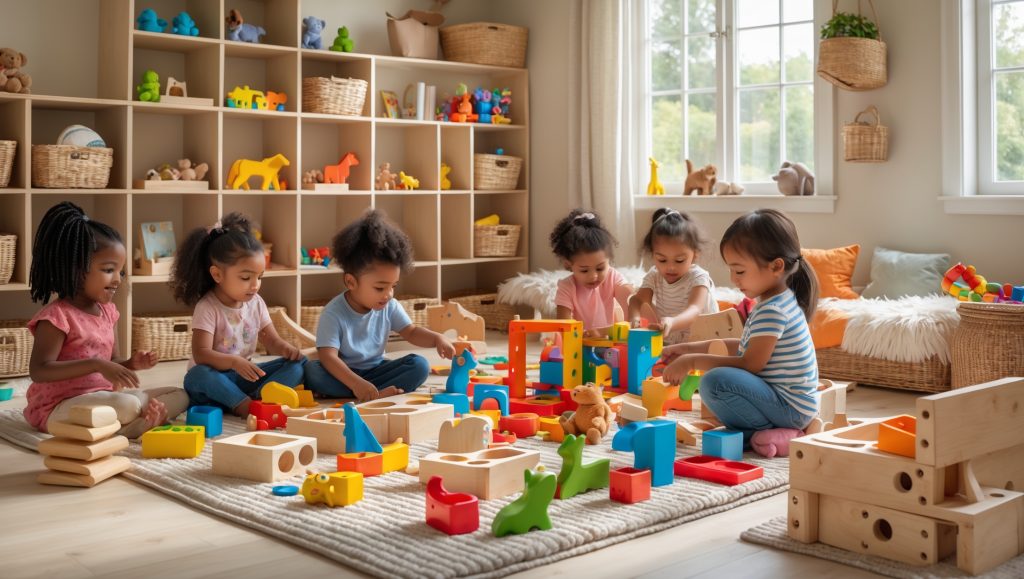
How We Chose
We evaluated dozens of toys using evidence-informed research, expert guidance, and real-world family feedback. Our focus: toys that encourage open-ended, imaginative play, adapt to different ages and interests, and offer durable, safe materials. We prioritized products that inspire creativity, problem-solving, and social skills, while minimizing single-use features or restrictive play patterns. All recommendations are based on independent research, not paid sponsorships.
#1 Magna-Tiles — Vibrant Magnetic Building Magic
Why it stands out
Magna-Tiles are a staple in classrooms and homes for a reason: their simple magnetic shapes unlock endless possibilities for construction, architecture, and storytelling. Kids can build 2D mosaics or intricate 3D structures, alone or with friends, making them a perennial favorite for group and solo play.
Best for
- Preschoolers and early elementary kids
- Families with multiple age groups
- STEM-inspired building and creativity
Key notes
- Age/Stage: 3+ years
- Materials/Ingredients: BPA-free ABS plastic, strong encapsulated magnets
- Strengths: Durable, easy to clean, highly open-ended, supports math and spatial reasoning
- Trade-offs: Magnets can be a hazard if swallowed; not recommended for children under 3 or for those who mouth toys
#2 Play Silks — Colorful Canvases for Imagination
Why it stands out
Lightweight, flowing, and endlessly versatile, play silks transform into capes, landscapes, costumes, forts, and more. They’re a favorite among educators and play therapists for supporting sensory exploration and imaginative scenarios.
Best for
- Infants to early elementary
- Creative, dramatic, or sensory play
- Families seeking minimalist, multipurpose toys
Key notes
- Age/Stage: 6 months+
- Materials/Ingredients: 100% silk or polyester alternatives
- Strengths: Lightweight, portable, safe for all ages under supervision
- Trade-offs: Silk requires gentle washing; some kids may prefer more structure
#3 Wooden Blocks — The Ultimate Classic
Why it stands out
Simple, solid wooden blocks are a foundation for creative construction and problem-solving. They never go out of style and adapt to any child’s imagination, from towers to roads to pretend food.
Best for
- Toddlers through school-age
- Building, sorting, stacking, and storytelling
- Families wanting long-lasting, heirloom-quality toys
Key notes
- Age/Stage: 1+ years (with large blocks for safety)
- Materials/Ingredients: Sustainably sourced hardwood, water-based finishes
- Strengths: Durable, tactile, supports math and motor skills
- Trade-offs: Heavier sets can be pricey and require storage space
#4 Animal Figurines — Storytelling Companions
Why it stands out
High-quality animal figurines spark hours of role-play, storytelling, and small-world adventures. They’re useful across many play scenarios, from solo exploration to group games, and inspire empathy and curiosity about the natural world.
Best for
- Pretend play from toddlerhood onward
- Animal lovers and aspiring storytellers
- Supporting language and social skills
Key notes
- Age/Stage: 2+ years
- Materials/Ingredients: Non-toxic plastic or sustainably sourced wood
- Strengths: Durable, easy to clean, fosters open-ended play
- Trade-offs: Small parts may be a hazard for under 3s; quality sets can be costly
#5 Play Dough — Sculpting and Sensory Fun
Why it stands out
Play dough is beloved by generations for its tactile, moldable nature. It’s ideal for fine motor development, early creativity, and sensory exploration. Open-ended kits allow for endless experimentation, from pretend baking to 3D art.
Best for
- Preschoolers and up (or supervised toddlers)
- Creative hands-on learners
- Indoor sensory play
Key notes
- Age/Stage: 2+ years
- Materials/Ingredients: Flour, salt, water (homemade); commercial options may contain wheat—check for allergens
- Strengths: Inexpensive, easy to refresh or make at home, supports creativity
- Trade-offs: Can dry out or get messy; some children may mouth materials
#6 Loose Parts — Nature’s Building Blocks
Why it stands out
Loose parts are open-ended objects (think: shells, corks, acorns, pebbles) that encourage sorting, counting, building, and imaginative play. They’re a favorite in Reggio Emilia-inspired classrooms and invite children to find new uses for everyday items.
Best for
- Children who love to tinker or collect
- Families wanting eco-friendly, budget-friendly options
- Open-ended, multi-age play
Key notes
- Age/Stage: 3+ years (due to small parts)
- Materials/Ingredients: Various natural or upcycled items
- Strengths: Sustainable, encourages creativity, supports STEM concepts
- Trade-offs: Supervision required for choking hazards; organization needed
#7 Building Planks (e.g., KEVA, Kapla) — Precision and Possibility
Why it stands out
Uniform wooden planks allow for intricate, balanced structures. They encourage patience, problem-solving, and creative engineering, appealing to builders of all ages. The simplicity of the shape unlocks surprising complexity.
Best for
- Older preschoolers, school-age kids, and adults
- STEM-minded builders and tinkerers
- Collaborative family play
Key notes
- Age/Stage: 5+ years
- Materials/Ingredients: Untreated hardwood
- Strengths: Durable, aesthetic, fosters engineering and creativity
- Trade-offs: Not ideal for very young children; large sets can be expensive
#8 Dollhouses and Modular Play Sets — Worlds Within Reach
Why it stands out
Open-ended dollhouses or modular play sets (without scripted electronics) allow children to create and act out their own stories, supporting social-emotional learning and imagination. Gender-neutral options can broaden appeal and keep play fresh.
Best for
- Preschoolers through early elementary
- Children who love role-play and storytelling
- Sibling and group play
Key notes
- Age/Stage: 3+ years
- Materials/Ingredients: Wood or sturdy plastic, non-toxic finishes
- Strengths: Supports language, social skills, and independent play
- Trade-offs: Larger sets need space; small accessories pose a choking risk
#9 Large Play Scarves or Blankets — Transformative Props
Why it stands out
Big scarves or lightweight blankets become forts, tents, superhero capes, rivers, or costumes. They support gross motor play and creativity, indoors or outdoors, and invite group collaboration.
Best for
- All ages under supervision
- Active, movement-based play
- Families who travel or want portable play
Key notes
- Age/Stage: 12 months+
- Materials/Ingredients: Cotton, silk, or polyester
- Strengths: Versatile, washable, encourages physical activity
- Trade-offs: Supervision needed to avoid entanglement or suffocation risk for babies
#10 Open-Ended Vehicles — Wheels for Every Story
Why it stands out
Simple cars, trucks, and trains (without lights or sounds) inspire open-ended races, construction, or city-building. They integrate with blocks, tracks, and other toys, growing with your child’s interests.
Best for
- Toddlers and preschoolers
- Fans of movement, building, or storytelling
- Families with mixed-age kids
Key notes
- Age/Stage: 18 months+
- Materials/Ingredients: Wood or BPA-free plastic
- Strengths: Durable, mix-and-match, supports fine and gross motor play
- Trade-offs: Small parts on some vehicles; check age recommendations
#11 Large Cardboard Boxes — Instant Imagination Stations
Why it stands out
Sometimes the package is the prize. Large cardboard boxes become forts, spaceships, puppet theaters, or whatever a child envisions. They’re free, recyclable, and inspire collaborative creativity.
Best for
- Children of all ages (with supervision)
- Active, large-motor play
- Budget-conscious families
Key notes
- Age/Stage: 12 months+ (with supervision)
- Materials/Ingredients: Cardboard (recycled when possible)
- Strengths: Free or low-cost, encourages large-scale creativity
- Trade-offs: Not durable long-term; supervision needed to avoid tipping or suffocation risk
#12 Modular Play Sofa (e.g., Nugget, Figgy) — Furniture that Becomes Play
Why it stands out
These foam-based, rearrangeable sofas double as climbers, forts, obstacle courses, and cozy reading nooks. Their modular design supports gross motor development and imaginative play, making them a modern family favorite.
Best for
- Active toddlers to tweens
- Indoor movement and creative construction
- Families seeking multi-use, long-lasting play furniture
Key notes
- Age/Stage: 1+ years
- Materials/Ingredients: CertiPUR-US® foam, machine-washable covers
- Strengths: Versatile, durable, supports gross motor skills
- Trade-offs: Pricey; requires space for use and storage
Buying Tips
- Focus on simplicity: The best open-ended toys don’t dictate the play—they invite it. Look for toys without fixed outcomes, electronic features, or heavy branding.
- Choose quality materials: Wood, cotton, and food-grade silicone are durable and safe. Avoid toys with questionable finishes or easily breakable parts.
- Consider longevity: Open-ended toys should grow with your child. Opt for items that appeal to multiple ages or can be used in new ways as skills develop.
- Check for safety: Always review age recommendations and inspect toys for small parts, cords, or breakable components.
- Rotate and refresh: To maintain interest, rotate toys seasonally or add new loose parts to existing sets.
- Mix and match: Open-ended toys work best together. Combine blocks, figurines, and fabrics for richer play scenarios.
Verdict
Open-ended toys are a foundation for creative, independent, and active play. Choosing versatile, high-quality toys helps kids build skills they’ll use for a lifetime, from problem-solving to collaboration. Whether you invest in classic wooden blocks or repurpose a cardboard box, the best toys are those that inspire your child’s imagination and adapt to their changing interests. Prioritize safety, sustainability, and genuine engagement over flashy features or fleeting trends. With this evidence-informed guide, your family can build a toy collection that truly grows with you.
FAQ
+What is an open-ended toy?
+Are open-ended toys suitable for all ages?
+Do open-ended toys help with development?
+How do I clean and maintain open-ended toys?
+Can I make open-ended toys at home?
+Should I avoid electronic toys?
+How many open-ended toys does my child need?

Open-ended toys are a cornerstone of meaningful, lasting play. Unlike single-purpose gadgets, these toys invite children to use their imagination, problem-solving skills, and creativity. They don’t prescribe a “right way” to play—instead, they adapt to a child’s evolving interests and abilities. Blocks become castles, cars, or creatures; a simple play scarf transforms into a superhero cape, a picnic blanket, or a magical river. This kind of play not only keeps kids engaged longer, but also nurtures cognitive and social-emotional development.
When selecting open-ended toys, look for quality, durability, and versatility. The best choices are those that grow with your child and can be used in countless ways—wooden blocks, magnetic tiles, play silks, and animal figurines are all classic examples. These toys offer excellent value, as they remain relevant for years, fostering independent and cooperative play alike. In our 2025 guide, we spotlight 12 timeless toys that encourage imagination and stand up to daily use. Investing in these options means more creative play, less clutter, and toys that truly last.
- Encourage creativity and problem-solving with toys that have no single use
- Choose durable materials like wood and silicone for long-lasting value
- Look for toys that adapt to different ages and play styles
- Prioritize options that inspire both solo and group play
I noticed Magna-Tiles are recommended for ages 3 and up because of the magnets. Are there safer magnetic building toys, or similar open-ended options, that are suitable for younger babies who like to mouth everything?
You’re right to be cautious about magnets with babies who mouth toys. For younger babies, consider large, single-piece blocks made of soft silicone or wood, which are easy to grasp and too big to swallow. Stacking cups, soft nesting blocks, and chunky wooden shapes are also great for open-ended play without small parts or hidden magnets. Always check that toys are labeled safe for under 3 years, and supervise play to prevent choking. This isn’t medical advice; if you’re concerned about safety or development, check in with your pediatrician.
Are there suggestions for open-ended toys from your list that work well if my little one has sensory sensitivities? She sometimes avoids certain textures or noises and gets overwhelmed by too many pieces.
You’re thoughtful to consider your child’s sensory needs when choosing toys. From the list, consider sturdy wooden blocks or soft fabric play scarves—both offer gentle textures and avoid sharp sounds. Try simple stacking cups or silicone building toys, as these have smooth surfaces and few pieces to keep play manageable. Always supervise to ensure safety and observe her reactions, introducing one toy at a time. This isn’t medical advice; if you’re concerned, check in with your pediatrician.
My one-year-old is starting daycare soon and I want to send a familiar toy to help with the transition. Are play silks or large wooden blocks better for comfort and independent play at this age?
It’s wonderful that you want to ease your little one’s transition to daycare with a comforting, familiar toy. For a one-year-old, large wooden blocks are a great choice for independent play—they’re sturdy, easy to grasp, and safe as long as they’re too big to swallow. Play silks can also be soothing, offering sensory comfort, but always check for loose threads and supervise to avoid any risk of entanglement. Consider which item your child prefers at home, and make sure whatever you send is labeled and washable. This isn’t medical advice; if you’re concerned, check in with your pediatrician.
My 7-month-old is just starting to sit independently and enjoys exploring new textures. For this age, would you suggest introducing both play silks and larger wooden blocks, or is it better to focus on one to avoid overwhelming them?
It’s wonderful that you’re supporting your baby’s curiosity and development. At 7 months, it’s best to introduce one new toy at a time, so your baby can focus and gradually explore each texture and sensation. Soft play silks can be a gentle, safe choice for sensory exploration, but always supervise closely to avoid any risk of covering the face. Larger wooden blocks made for infants can follow, but ensure they’re too big to swallow and free of sharp edges or splinters. Introduce new items slowly, watching for your baby’s comfort level. This isn’t medical advice; if you’re concerned, check in with your pediatrician.
We have limited living space and try to avoid clutter. Which of the open-ended toys from your list are the easiest to store compactly, and do you have suggestions for keeping them organized and accessible for a 1-year-old?
It’s great that you’re prioritizing both play and a tidy home. For small spaces, consider stacking cups, soft blocks, or nesting toys from the list—they store inside each other and take up minimal room. Use a shallow, open bin or a low basket to keep toys accessible for your 1-year-old while encouraging safe, independent play. Rotate a few toys at a time to reduce clutter and keep interest high, always checking for any loose parts or wear. This isn’t medical advice; if you’re concerned, check in with your pediatrician.
My son has some sensory sensitivities—certain textures really bother him. Do you have advice for selecting open-ended toys from this list that might be especially good or less overwhelming for kids who are sensitive to touch?
It’s thoughtful of you to consider your son’s sensory sensitivities when choosing toys. Start by selecting items with smooth, consistent textures—such as wooden blocks or silicone stacking toys—which tend to be less overwhelming. Avoid toys with fuzzy, scratchy, or sticky surfaces. Before introducing a new toy, let your child explore it with supervision and watch for any signs of discomfort. You can also wash or wipe down toys to minimize strong odors or residues. Always check the recommended age to ensure safety and avoid small parts. This isn’t medical advice; if you’re concerned, check in with your pediatrician.
My child really enjoys sensory play but sometimes gets overwhelmed by strong textures or bright colors. Are there specific open-ended toys from your list that tend to be more calming or suitable for sensory-sensitive children?
It’s great that you’re tuned in to your child’s sensory preferences and looking for calming play options. From our list, consider soft, neutral-colored play silks, wooden building blocks with smooth finishes, or simple stacking cups. These toys offer gentle textures and subtle colors, which can be more comfortable for sensory-sensitive children. Always supervise play and check that toys are free of rough edges or small parts, especially for younger kids. If your child reacts strongly to textures or colors, it’s wise to introduce new toys gradually. This isn’t medical advice; if you’re concerned, check in with your pediatrician.
Budget is definitely a consideration for us, and I’ve noticed some open-ended toys can get pricey. Are there any toys on your list that offer the most long-term value or versatility without breaking the bank?
It’s understandable to prioritize budget when choosing toys that last and spark creativity. From the list, classic wooden blocks, play silks, and simple animal figurines usually offer the most versatility for the price—they can be used in endless ways for years, across many ages. Try rotating these toys to keep them fresh and encourage new kinds of play. Always check for age recommendations and small parts to keep play safe. This isn’t medical advice; if you have concerns about what’s best for your child, check in with your pediatrician.
With the concern about magnets being a potential hazard, how do you suggest families safely introduce Magna-Tiles to children who still occasionally put things in their mouths, especially in households with multiple age groups?
You’re right to be cautious about magnets, especially with little ones who mouth objects. To introduce Magna-Tiles safely, always supervise play closely and use them only when you can give your full attention. Set up a specific play area where younger children can’t wander off with the pieces. Store Magna-Tiles out of reach when not in use, and involve older siblings in helping keep track of every piece after playtime. Magna-Tiles are generally recommended for ages 3 and up due to their small parts and potential magnet hazard. This isn’t medical advice; if you’re concerned, check in with your pediatrician.
My child seems really sensitive to textures and sounds. Out of the toys you list, which ones tend to be most soothing or gentle for babies who get overwhelmed by noisy or rough toys?
It’s completely understandable to want gentle toys for a sensory-sensitive baby. From the article, soft fabric blocks, silicone stacking cups, and plush dolls are usually soothing—they’re quiet, gentle on skin, and easy to grip. Avoid wooden toys with rough edges, toys with bells, or anything with crinkly or squeaky parts. Always supervise play and check for loose fibers or small parts to keep things safe. This isn’t medical advice; if you’re concerned about how your child reacts, check in with your pediatrician.
If you’re watching a couple of kids with a wide age gap, do you have any advice on how to encourage older children to keep playing with toys like Magna-Tiles or wooden blocks so younger ones aren’t left out? Sometimes the bigger kids opt out of activities they see as too young.
It’s understandable to want both older and younger children to feel included during playtime. Try inviting the older kids to help design a more complex structure or challenge, like building a city or a tall tower, so they feel engaged at their own level. You can suggest roles, such as the older child being the ‘architect’ and the younger the ‘builder’ or ‘decorator.’ Give them open-ended goals—like making something that uses every block or tile. Always supervise closely, especially if the younger child is still mouthing objects. This isn’t medical advice; if you’re concerned, check in with your pediatrician.
Our living space is pretty small, so toys that require a lot of storage don’t always work for us. Of the toys mentioned in your list, which ones would you say are the easiest to store and keep tidy with a busy two-year-old around?
You’re absolutely right to consider storage when choosing toys for a small space with a busy toddler. From the list, soft stacking blocks, play silks, and wooden animal figures are some of the easiest open-ended toys to store—just use a small basket or bin on a low shelf. Nesting cups also take up minimal space and can be stacked together after play. For a two-year-old, choose items with no small parts and avoid sharp edges. This isn’t medical advice; if you’re concerned, check in with your pediatrician.
We’re on a tighter toy budget and want to invest in options that will last but also be safe and engaging right now for our 9-month-old. Which of your top picks would give us the best longevity and adaptability as our baby grows?
It makes sense to want toys that are safe, engaging now, and will grow with your baby. For a 9-month-old, consider classic wooden blocks, nesting cups, or fabric stacking rings from the list—these are sturdy, easy to clean, and can be used in new ways as your child develops. Look for toys free from small parts and made from non-toxic materials, and always supervise play at this age. These options encourage creativity and motor skills over several years. This isn’t medical advice; if you’re concerned, check in with your pediatrician.
My toddler is extremely active and sometimes gets frustrated when toys don’t hold his attention for long. Out of the options you listed, which one have you seen keeping high-energy kids most engaged during solo play sessions, especially on days we’re stuck indoors?
It’s very normal to want toys that match your toddler’s energy and keep frustration low. Many parents of active toddlers find that large building blocks or magnetic tiles from the list work especially well—kids can build, knock down, and rebuild, channeling movement and creativity. Try placing a few tiles or blocks on a soft mat, and let your child explore stacking, sorting, or making tunnels. Rotate a small number of pieces at a time to keep things fresh without overwhelming. Always supervise closely due to small parts, and choose larger, age-appropriate sets to avoid choking hazards. This isn’t medical advice; if you’re concerned, check in with your pediatrician.
When considering budget, are there certain open-ended toys on your list that offer more long-term value or adaptability as children grow, especially for families looking to invest in just a few key items?
It’s thoughtful to focus on toys that will truly last and grow with your child. Many open-ended items, like wooden blocks, play silks, and magnetic tiles, offer years of play across ages and abilities. Start with a basic set, add pieces over time, and let your child lead in how they use them. Choose sturdy, non-toxic materials and check for small parts if your child is under three. Avoid toys with a single purpose, and store them within easy reach for independent play. This isn’t medical advice; if you’re concerned, check in with your pediatrician.
Budget-wise, are there affordable starter sets or household items that can fill a similar role as some of the toys you listed, especially for families just starting to build up their open-ended play options?
It’s great that you’re looking for budget-friendly ways to support your child’s imaginative play. You can start with simple household items: cardboard boxes and tubes make wonderful forts and tunnels, wooden spoons and pots can become pretend drums, and scarves or fabric scraps are perfect for dress-up. For building, try clean plastic containers, stacking cups, or safe wooden blocks. Always check for small parts and sharp edges, especially for children under three, and supervise play as needed. This isn’t medical advice; if you’re concerned, check in with your pediatrician.
When caring for two children of different ages in the same afternoon, which of these toys have you found to be the most engaging for both at once? It can be tricky to set up activities that suit everyone without causing disagreements.
You’re absolutely right—finding toys that engage siblings of different ages can be challenging. From the toys in the article, large building blocks, play silks, and animal figurines tend to capture the attention of toddlers and older children alike. Try setting up a shared play area with clear rules for taking turns or different ‘zones’ for building and storytelling. Encourage collaborative projects, like building a fort together or creating a miniature world, to foster teamwork rather than competition. Always supervise closely to ensure small parts are only used by kids over three, and check for any choking hazards. This isn’t medical advice; if you’re concerned, check in with your pediatrician.
We have a 2-year-old who still likes to put things in their mouth. Since Magna-Tiles are recommended for 3 and up, is there a similar open-ended building toy that’s safer for toddlers who might mouth pieces?
It’s very understandable to want a safe building toy for a curious two-year-old. For this age, try large, chunky building blocks like Mega Bloks or Duplo, which are designed for toddlers and too big to be a choking risk. Always supervise building play at this stage, and double-check that pieces are free from small parts or loose magnets. Avoid any toy sets with detachable magnets or very small accessories until your child is older. This isn’t medical advice; if you’re concerned about toy safety or mouthing behaviors, check in with your pediatrician.
How do you suggest rotating or organizing open-ended toys like those listed here, so toddlers do not get overwhelmed or bored? Should we keep everything accessible or introduce them on a schedule?
You’re thoughtful to consider how toy organization impacts your toddler’s play and focus. For toddlers, it’s helpful to keep only a few open-ended toys accessible at a time, storing the rest out of sight. Every 1–2 weeks, swap the toys to keep things fresh and interesting. Use clear bins or baskets for easy access and quick cleanup, and display toys on low shelves so your child can choose independently. Always supervise play, especially with small parts or loose pieces. This isn’t medical advice; if you have concerns about your child’s play habits or development, please consult your pediatrician.
In your experience, how do open-ended toys like animal figurines compare to themed playsets when it comes to holding kids’ attention over months or years? I am trying to make choices that truly last and adapt as my kids grow.
It’s wonderful that you want toys to grow with your child and keep their interest. Open-ended toys like animal figurines tend to stay engaging longer because children can use them in a variety of ways as their imagination and skills develop. Try rotating the figurines into new scenarios or pairing them with blocks to keep play fresh. Themed playsets can be fun too, but they often have a fixed narrative, which may get repetitive over time. Make sure animal figurines are age-appropriate and free of small parts, especially for children under three. This isn’t medical advice; if you’re concerned, check in with your pediatrician.
How do toy subscription services accommodate safety needs for multiple ages, especially with items that have small pieces or magnets like Magna-Tiles? I worry about having mixed-age siblings if the toys change each month.
Your concern about safety with mixed-age siblings is very important. Most toy subscription services categorize their boxes by age, so you can specify ages for each child and receive age-appropriate items. For families with younger children, you can request to avoid toys with small parts or magnets. Always inspect new arrivals before playtime and separate out any toys with choking hazards for toddlers. Supervise play when older siblings use items with small pieces. This isn’t medical advice; if you’re concerned, check in with your pediatrician.
I noticed you mention that Magna-Tiles aren’t recommended for kids under 3 because of the magnets. What safer alternatives would you suggest for younger toddlers who still want to join in building activities?
It’s great that you want to include your younger toddler in building activities while keeping safety in mind. For children under 3, consider large, lightweight blocks made of foam or soft wood that are too big to swallow. Stacking cups, chunky wooden blocks, and interlocking blocks designed for toddlers (like Mega Bloks) are good choices. Always supervise play and check toys for any loose parts. These options allow creative building, are safe for little hands, and support motor skill development. This isn’t medical advice; if you’re concerned, check in with your pediatrician.
I’m interested in sustainability but also need toys that can withstand lots of rough play. Do wooden blocks tend to chip or wear down faster than high-quality plastic tiles, or are they more likely to become family heirlooms despite heavy use?
It’s great that you’re thinking about both sustainability and durability for your child’s toys. High-quality wooden blocks are generally quite sturdy and often last through years of active play, sometimes even becoming treasured family heirlooms. That said, they can develop dents or chips if thrown or banged together, so occasional inspection for splinters is wise—especially for younger children. In comparison, premium plastic tiles usually resist chipping and can handle rougher play, but they may eventually crack if stepped on or bent too far. Whichever you choose, always supervise younger kids and check for sharp edges or small parts. This isn’t medical advice; if you’re concerned, check in with your pediatrician.
Budget and space are real factors for us since we have two of everything. Are there any of these toys you’d say are especially worth doubling up on for twins, or would you suggest starting with shared options like play silks or blocks?
You’re absolutely right to think carefully about budget, space, and what makes sense for twins. For open-ended toys like play silks, blocks, or large building sets, starting with one shared set often works well and encourages cooperative play. If your twins are at the stage where parallel play or wanting identical toys is important, consider doubling up on smaller, personal items such as dolls or vehicles. Always check the recommended age and safety guidelines, especially for small parts. This isn’t medical advice; if you’re concerned, check in with your pediatrician.
Could you give some advice on which of these open-ended toys are best suited for supporting fine motor development in babies around 9–12 months, especially if we’re being careful about choking hazards and mouthing?
It’s great that you’re focusing on both fine motor skills and safety for your baby. At 9–12 months, larger stacking cups, soft blocks, and chunky wooden rings are excellent choices from the list—these encourage grasping, banging, and early stacking without small parts. Always supervise play, regularly check for loose pieces, and choose toys made from non-toxic materials. Avoid items with detachable or small components, as mouthing is still common at this age. This isn’t medical advice; if you’re concerned, check in with your pediatrician.
If I have to choose between investing in Magna-Tiles and a quality set of wooden blocks for my toddler, which do you think offers more long-term play value across different developmental stages?
It’s great that you’re thinking about lasting value and developmental benefits. Both Magna-Tiles and wooden blocks encourage creativity and problem-solving, but wooden blocks tend to offer broader play possibilities from toddlerhood through early elementary years. For a toddler, start with larger blocks to avoid choking hazards, and supervise closely. As your child grows, they’ll use blocks for building, sorting, and pretend play, adapting the toy to their developmental stage. Magna-Tiles are wonderful too, but some sets have small magnets, so extra caution is needed for toddlers. Whichever you choose, focus on safe, age-appropriate pieces and varied textures. This isn’t medical advice; if you’re concerned, check in with your pediatrician.
If you have a preschooler and an infant sharing a play space, how do you handle routines or toy rotations with open-ended toys like these to keep things interesting but not overwhelming for either child?
You’re thoughtful to want both your preschooler and infant to enjoy playtime without feeling overwhelmed. Try rotating toys weekly, setting aside a few open-ended options suitable for both ages, like soft blocks or large stacking rings. Store smaller or more complex items for preschooler-only times to ensure infant safety. Use shallow bins or baskets to keep toys visible but not scattered, and have a cleanup routine everyone can help with. Always supervise play, especially when age ranges differ. This isn’t medical advice; if you’re concerned, check in with your pediatrician.
How frequently do you recommend rotating these types of open-ended toys to keep kids engaged but not overwhelmed? Is there a general rotation schedule that works well for mixed-age siblings, or should it depend on their individual interests?
It’s great that you’re thinking about keeping playtime both exciting and manageable. For most families, rotating open-ended toys every 2–4 weeks works well—this gives kids time to fully explore what’s out and helps prevent clutter. With mixed-age siblings, you might rotate some toys together and keep a few options specifically for each child’s developmental stage and interests. Always check toys for age-appropriateness, and supervise play when necessary, especially if there are small parts. This isn’t medical advice; if you’re concerned, check in with your pediatrician.
Storage is a big concern for us since clutter can really affect my child’s mood. Which of these toys do you find easiest to store or clean up quickly, especially when you need to minimize visual distractions in a shared living space?
You’re absolutely right—keeping play areas tidy can make a big difference for children sensitive to clutter. From the toys in our guide, I recommend starting with items like wooden blocks, stacking cups, and magnetic tiles, as these can be gathered into bins or baskets quickly and have simple shapes that are easy to sort. Soft play silks or scarves also fold up small and store neatly in a box or drawer. Always check storage containers for safe latching and avoid small parts with children under 3. This isn’t medical advice; if you’re concerned, check in with your pediatrician.
My child often gets overwhelmed by loud noises and bright colors. Are there any suggestions for selecting open-ended toys from your list that are especially comforting for kids who are easily overstimulated? I want to encourage creativity but not trigger sensory overload.
It’s wonderful that you want to support your child’s creativity while also respecting their sensory needs. When choosing open-ended toys, look for items with muted colors and soft, natural materials like wooden blocks or fabric play scarves—these are less likely to overwhelm. Avoid toys with flashing lights or loud sounds, and choose options with gentle textures. Keep play sessions in a calm, quiet space, and observe how your child responds, adjusting as needed. Most importantly, always supervise younger children and watch for small parts. This isn’t medical advice; if you’re concerned, check in with your pediatrician.
My two-year-old is still putting just about everything in her mouth, so I get a little nervous about things like Magna-Tiles and animal figurines. Are there truly safe options for her age, or should we stick with something like big blocks for now?
It’s completely understandable to worry about safety when your toddler is still mouthing toys. For a two-year-old, larger toys like big soft blocks or chunky wooden blocks with non-toxic finishes are a great choice—look for pieces that are too big to swallow and have no small detachable parts. Avoid anything with magnets, like Magna-Tiles, and small animal figurines until she’s a bit older. Always supervise play at this age, and regularly inspect toys for wear. This isn’t medical advice; if you’re concerned, check in with your pediatrician.
You mention that wooden block sets can require a good amount of storage space. For families who live in smaller apartments or have limited storage, do you have tips on selecting sets that are manageable for toddlers but still offer enough pieces for open-ended play?
It’s great that you want to encourage open-ended play, even with limited space. Look for compact block sets—around 20–40 medium-sized blocks are usually enough for toddlers while still allowing creativity. Choose sets that come in their own sturdy storage box or bag to keep things tidy. Opt for blocks with simple shapes (rectangles, squares, triangles) for maximum versatility. Avoid sets with very small pieces for safety, especially for children under three. This isn’t medical advice; if you’re concerned, check in with your pediatrician.
I noticed that play silks can be made from silk or polyester. Is either material preferable for families with a history of allergies, or are both considered equally safe for babies who might put toys in their mouths?
It’s wise to think about allergies and mouthing when choosing toys for your baby. Silk is a natural fiber and less likely to cause irritation, but some children with severe allergies can react to animal proteins, including silk. Polyester is synthetic and doesn’t contain animal proteins, but it may have dyes or finishes that could irritate sensitive skin. For babies under three, choose play silks that are dye-free and labeled non-toxic, and always supervise mouthing. Wash new play silks before use to remove residues. If your child has a history of allergies, consult your doctor for personalized advice. This isn’t medical advice; if you’re concerned, check in with your pediatrician.
We’re considering Magna-Tiles, but we have a toddler just under three who tends to put things in her mouth. Is there a safer way to introduce magnetic building play, or should we wait until she’s a bit older?
It’s so wise to think about safety, especially with a toddler who mouths toys. For children under three, it’s usually best to wait on Magna-Tiles and similar magnetic toys, as small magnets can pose a choking or ingestion risk. Instead, you might try large, one-piece blocks or soft building sets designed specifically for toddlers, always staying within the recommended age range on packaging. Supervise closely during play and remove any toys that show wear. This isn’t medical advice; if you’re unsure, your pediatrician can help you decide what’s safest for your child.
Our living space is pretty limited, so I worry about the size and storage needs of wooden blocks. Do you have tips for smaller sets that still allow for creative play, or should we focus on something like Magna-Tiles instead?
It’s completely understandable to want toys that won’t take over your space. For small homes, consider a compact set of wooden blocks—just 20–30 pieces can spark plenty of creativity, especially if you rotate them or combine with other toys. Storage bins or drawstring bags keep them tidy and accessible. Magna-Tiles or similar magnetic tiles are also excellent; they stack flat and suit a wide age range, usually from age 3 up due to small parts. Whichever you choose, supervise younger children to prevent choking risks. This isn’t medical advice; if you’re concerned, check in with your pediatrician.
My child sometimes mouths toys, and safety is a big priority for us. Are there specific play silks or animal figurine brands you trust for toddlers, especially when we’re away from home and can’t supervise as closely?
It’s completely understandable to be vigilant about toy safety, especially with toddlers who mouth objects. For play silks, look for brands that use 100% natural silk and certified non-toxic dyes, and ensure the edges are securely hemmed to prevent fraying—Sarah’s Silks is often recommended for quality and safety. For animal figurines, select brands like Holztiger or HABA, which use solid wood and water-based, child-safe paints with no small detachable parts. Always check for age recommendations and inspect toys regularly for wear. When supervision isn’t possible, consider leaving toys with minimal choking or ingestion risk. This isn’t medical advice; if you’re concerned, check in with your pediatrician.
If a child I care for sometimes puts things in their mouth even past age three, are Magna-Tiles safe to introduce? I noticed the magnet hazard warning and wanted to double-check before bringing them out.
It’s very thoughtful to consider safety with a child who still mouths objects beyond age three. Magna-Tiles and other magnetic toys usually have small parts and strong internal magnets, which can be dangerous if swallowed. I recommend waiting until the child fully outgrows mouthing behaviors before introducing these toys. Meanwhile, opt for larger, one-piece building toys without magnets or small parts, and always supervise play closely. This isn’t medical advice; if you’re concerned, check in with your pediatrician.
When you talk about play silks being great for sensory play, do you have any tips for integrating them with children who are sensitive to certain fabrics or textures? I want to encourage imaginative play but also respect my child’s sensory preferences.
You’re thoughtful to consider your child’s sensory sensitivities while supporting imaginative play. Start by gently introducing play silks, letting your child touch and explore them at their own pace. You might offer silks with different weaves or pre-wash them with unscented detergent to soften the feel. Allow your child to use the silks in ways that feel comfortable—over clothing, as a cape, or even just observing without touching. Always supervise to ensure safety, especially for younger children. This isn’t medical advice; if you’re concerned, check in with your pediatrician.
Can you give advice on how to transition from more active imaginative play, like building with blocks or forts, to quieter bedtime activities using some of the toys on your list for a smoother wind-down?
It’s wonderful that you want to help your child wind down smoothly at bedtime. Try setting a gentle timer to signal the shift from active play. Invite your child to use magnetic tiles or animal figurines from the list to create a simple scene, then tell a calming story together about it. Use soft fabric or play silks to build a cozy ‘bed’ for the toys, modeling quiet care. Dim the lights and keep voices low to cue relaxation. Make sure all toys are age-appropriate and safe for unsupervised play if your child will use them alone. This isn’t medical advice; if you’re concerned, check in with your pediatrician.
Sometimes our play sessions are only an hour or so. Do you recommend any of these toys in particular for quick setup and cleanup, or ones that work well when playtime is limited? I want to make the most of our shorter afternoons together.
It’s wonderful that you want to make the most of your shorter play sessions together. For quick setup and cleanup, consider toys like magnetic tiles, wooden blocks, or play silks from the list; these let your child jump into creative play right away and are easy to tidy up. You might set up a dedicated basket or tray for these items so everything is accessible and putting things away becomes part of the routine. These options work well for most toddlers and preschoolers, but always check for age-appropriate pieces and supervise younger children, especially with small parts. This isn’t medical advice; if you have specific concerns, check in with your pediatrician.
I noticed you recommend wooden blocks as long-lasting and sturdy, but storing large sets in a small apartment is tough. Do you have any storage solutions or suggestions for families with limited space who still want to offer open-ended block play?
It’s great that you want to encourage block play even with limited space. Try storing blocks in stackable bins or clear under-bed containers to make use of overlooked areas. Consider vertical storage like wall-mounted shelves or hanging fabric organizers with deep pockets. Rotating smaller sets of blocks at a time can also keep play fresh without overcrowding. For toddler safety, choose storage options without sharp edges and keep heavier bins on lower shelves. This isn’t medical advice; if you’re concerned, check in with your pediatrician.
My 13-month-old is showing some interest in stacking objects but gets frustrated easily. Would you recommend starting with wooden blocks or should we wait a bit longer? And are there ways to adapt block play for this age group?
It’s wonderful that you’re noticing your child’s early interest in stacking—frustration at this age is very normal. For 13-month-olds, simple wooden blocks with smooth edges and larger sizes are often safe and age-appropriate, as they minimize choking risks. Start with just a few blocks at a time and stack them together, showing how they work, then encourage your child to try. You can make it easier by using bigger, lighter blocks or even stacking soft items like cushions first. Always supervise closely, and stop if your child becomes upset. This isn’t medical advice; if you’re concerned, check in with your pediatrician.
My child is easily overwhelmed by bright colors and noises. Are there open-ended toy options from your list that tend to be more calming or suitable for kids with sensory sensitivities?
It’s great that you’re considering your child’s sensory needs when choosing toys. From the list, look for toys made from natural materials like wooden blocks or soft fabric dolls in muted colors, as these are less visually stimulating. Opt for toys without electronic sounds or flashing lights to reduce overwhelming sensory input. Sensory bins with safe, simple textures (like dry rice or soft scarves) can offer calming tactile play if supervised. Always check for age-appropriateness and avoid small parts for younger children. This isn’t medical advice; if you’re concerned, check in with your pediatrician.
My child just turned three, and I’m wondering if animal figurines pose any choking hazards at this age. Are there particular brands or features I should look for to ensure they’re really safe for younger kids?
It’s wonderful that you’re thinking about safety as your child explores new toys. For three-year-olds, choose animal figurines that are large enough not to fit fully in your child’s mouth—generally, avoid anything smaller than 1.25 inches in diameter. Look for sturdy, one-piece designs without removable parts or tiny accessories, and select non-toxic, BPA-free materials. Brands that clearly mark their toys as suitable for ages 3 and up tend to meet these safety standards, but always supervise play, especially if your child still mouths objects. This isn’t medical advice; if you’re concerned, check in with your pediatrician.
For families with sensory-sensitive kids, are play silks typically well tolerated? My toddler is sometimes bothered by certain fabric textures, so I’m curious if silk or polyester feels better for sensitive hands.
It’s great that you’re considering your toddler’s sensory preferences. Play silks are often favored by sensory-sensitive children because natural silk feels soft, cool, and smooth—much less scratchy than some polyester fabrics. For your toddler, I’d suggest first letting them touch both silk and polyester samples briefly, watching for any signs of discomfort. Choose undyed or hypoallergenic silks to reduce the risk of irritation. Always supervise play with silks, as they can be a suffocation hazard for little ones. This isn’t medical advice; if you have concerns about your child’s sensitivities, check in with your pediatrician.
Wooden blocks sound timeless, but some sets are pretty pricey. Does the research suggest that a smaller, more affordable set still offers the same developmental benefits, or is it worth saving up for a larger collection from the start?
It’s thoughtful of you to consider both your child’s development and your budget. Research shows that even a smaller set of wooden blocks can offer rich opportunities for creativity, problem-solving, and fine motor skills. Start with a basic set—kids can do a lot with a few blocks. If your child really enjoys building, you can add more pieces over time. For toddlers and preschoolers, focus on larger blocks for safety. Always supervise play, especially with younger children. This isn’t medical advice; if you’re concerned, check in with your pediatrician.
How often do you recommend rotating or introducing new open-ended toys like these for a 3-year-old? Is it better to stick with a few options at a time or offer a broader variety for imaginative play?
It’s great that you’re thinking about how to keep playtime fresh and engaging for your 3-year-old. For this age, offering a small selection (4–6) of open-ended toys at a time encourages deeper, more creative play and prevents overwhelm. Every couple of weeks, you can rotate in new items from your stash, watching to see which toys spark the most interest. This approach keeps things novel without overstimulating your child. Always ensure toys are safe for age 3—no small parts and easy-to-clean materials. This isn’t medical advice; if you’re concerned, check in with your pediatrician.
I love the idea of using Magna-Tiles or wooden blocks for quiet play in the early mornings. Do you have any tips for keeping these activities calm and mess-free when other family members are still asleep? My preschooler gets excited easily, so noise level is a big concern for us.
You’re thoughtful to plan calm play for your preschooler while others are sleeping. Try setting up a cozy corner with a soft rug or mat—this helps dampen noise from dropping blocks or tiles. Offer a limited selection of pieces in a shallow bin to prevent dumping and reduce mess. Demonstrate gentle stacking or simple building challenges, praising quiet hands. You could also join your child for the first few minutes to model low voices and careful movements. Magna-Tiles and wooden blocks are safe for preschoolers, but always supervise to prevent any mouthing of small pieces. This isn’t medical advice; if you’re concerned, check in with your pediatrician.
Do you have any tips for families on a tight budget who still want to invest in quality open-ended toys like the ones listed? Are there certain items from your guide that tend to have a longer play lifespan specifically for language-delayed toddlers?
It’s wonderful that you’re looking to support your toddler’s play and language growth, even on a tight budget. Focus on multipurpose toys like wooden blocks or play silks; these last through many ages and can be used for building, pretend play, and storytelling. Simple toy sets with interchangeable parts, like animal figurines or stacking cups, promote imaginative dialogue and are easy to find secondhand. Rotate toys to keep things fresh and engaging. Always check for loose pieces or choking hazards, especially for toddlers. This isn’t medical advice; if you’re concerned, check in with your pediatrician.
Storage in our bathroom is tight, and I’m wondering which of these recommended toys could fit into a small basket and still be useful as a potty training distraction for a 2.5-year-old.
It’s thoughtful of you to plan for both space and your child’s comfort during potty training. For a small basket in the bathroom, I suggest choosing compact toys like silicone stacking cups, soft rubber blocks, or a small set of sensory balls from the list. These options are safe for a 2.5-year-old (no small parts or sharp edges), easy to wipe clean, and can provide distraction without making a mess. Always supervise bathroom play, and avoid anything with fabric or electronics to prevent moisture damage. This isn’t medical advice; if you’re concerned, check in with your pediatrician.
Budget is always a factor for us. If we could only choose one of your top recommendations for a 2-year-old who loves imaginative play, which would you say offers the most value and longevity across different stages?
It’s completely understandable to want the most lasting value for your investment. For a 2-year-old who loves imaginative play, a set of quality wooden building blocks is often the best choice—they’re versatile, durable, and grow with your child from simple stacking to elaborate creations. Start with basic towers together, then encourage pretend play (like building houses or roads) as your child’s imagination and motor skills develop. Make sure the blocks are large enough to avoid choking hazards and made from non-toxic materials. Always supervise play at this age. This isn’t medical advice; if you’re concerned, check in with your pediatrician.
For families with limited space, which of these open-ended toys would you say offers the most value without taking up too much room? I love the idea of wooden blocks, but I worry about storage and clutter as our family grows.
It’s understandable to want toys that spark creativity without creating clutter, especially as your family grows. Consider magnetic tiles or a versatile set of nesting cups—both encourage imaginative play, stack compactly, and are easy to store in small bins or drawers. Wooden blocks can work in limited spaces if you choose a smaller starter set and keep them in a dedicated storage box. Always check the recommended age for each toy and supervise younger children to prevent choking. This isn’t medical advice; if you’re concerned, check in with your pediatrician.
If I’m on a budget and want something that will last as the child grows, is it better to start with a basic set of wooden blocks or invest in Magna-Tiles? I’m wondering which one usually holds a child’s attention longer over the years.
—wanting lasting, engaging toys on a budget is a thoughtful goal. Both wooden blocks and Magna-Tiles are excellent open-ended toys, but wooden blocks often offer longer-term value for a wider age range and can spark creative play from toddlerhood through early school years. You might start with a simple wooden block set for stacking, building, and imaginative scenes. Look for high-quality, splinter-free blocks with non-toxic finishes and supervise young children to avoid choking hazards. As your child grows, you can add other elements or sets gradually. This isn’t medical advice; if you’re concerned, check in with your pediatrician.
I noticed you recommend Magna-Tiles but mention magnets could be a hazard. If a younger sibling or cousin occasionally visits while my child is playing, how do you suggest minimizing risk, especially when adults might be busy in the kitchen?
You’re wise to think ahead about safety with visiting younger children. Try setting up Magna-Tiles play in a room with a closed door or baby gate, out of reach for little ones. Store the tiles in a lidded container after play, and count pieces before and after to be sure none are missing. Encourage older kids to help watch for stray pieces, and remind them why the toys aren’t safe for babies or toddlers. Always supervise directly when possible, as magnets can be very dangerous if swallowed. This isn’t medical advice; if you’re concerned, check in with your pediatrician.
For children with sensory sensitivities, do you think open-ended toys like play silks and wooden blocks allow for better customization of the play environment than what comes in a curated subscription box, or do subscriptions offer enough flexibility for sensory preferences?
Your thoughtfulness about supporting your child’s sensory needs is so important. Open-ended toys like play silks and wooden blocks do allow you to choose textures, colors, and materials that match your child’s preferences, making it easier to avoid triggers like rough wood or synthetic fabrics. Curated subscription boxes can introduce new sensory experiences, but they may include items that aren’t ideal for your child’s sensitivities. For sensory-sensitive kids, starting with a few carefully selected open-ended toys and gradually adding new items as tolerated can help create a comfortable, child-led environment. Always supervise play with small parts or new textures, and be mindful of any allergy risks. This isn’t medical advice; if you’re concerned, check in with your pediatrician.
We have a limited storage space at home and your recommendations like Magna-Tiles and big wooden blocks sound amazing, but also bulky. What strategies do you suggest for families who want open-ended play without cluttering up small spaces?
It’s completely understandable to want to encourage open-ended play without overcrowding your living space. Consider choosing a few versatile toys that offer multiple play options, like a set of nesting cups or stacking rings, which take up little space but spark creativity. Opt for collapsible or foldable toys, and store larger items like Magna-Tiles in under-bed bins or clear containers to keep things tidy. Rotate toys every few weeks so only a small selection is out at one time, which can also renew your child’s interest. Always check age guidelines and ensure safe storage to prevent tripping hazards. This isn’t medical advice; if you’re concerned, check in with your pediatrician.
With bilingual families, sometimes one language dominates during play. Would you suggest any specific open-ended toys from your guide that naturally encourage language switching or taking turns telling bedtime stories in both English and Spanish?
It’s thoughtful of you to foster both languages during play and bedtime. Toys like puppet sets or simple dollhouses from the guide encourage children to create characters and stories, making it easier to take turns narrating in English and Spanish. Story dice or picture cards are also great for prompting bilingual storytelling—just roll or pick a card, and each person continues the story in the other language. Be sure that all toys are appropriate for your child’s age and avoid small parts for little ones. This isn’t medical advice; if you’re concerned, check in with your pediatrician.
My two-year-old is drawn to hands-on sensory experiences but gets frustrated if toys are too complicated or restrictive. Based on your research, which option from your list would you suggest is the most toddler-friendly for high-energy, explorative play?
You’re thoughtful to look for toys that match your toddler’s need for sensory and active play without causing frustration. For a two-year-old, I’d recommend large, soft building blocks or a sturdy, versatile sensory bin with safe materials. Start with simple items like chunky blocks, textured balls, or scoops and cups in the bin. Offer just a few pieces at a time to prevent overwhelm, and supervise closely to avoid choking hazards. These options encourage movement, exploration, and creativity while being age-appropriate. This isn’t medical advice; if you’re concerned, check in with your pediatrician.
I’m interested in supporting my child’s language development with animal figurines. Do you have any tips on how to guide storytelling or conversation during pretend play to maximize the benefits without making it feel forced?
It’s wonderful that you want to nurture your child’s language through play. To keep storytelling natural, try joining their animal play by asking open-ended questions like, ‘Where is the tiger going today?’ or ‘What does the elephant see?’ You can model simple story lines by narrating your own animal’s actions, but let your child lead the plot. Use expressive voices and sounds to make it fun, and repeat or expand on your child’s phrases to build vocabulary. For toddlers and preschoolers, keep sessions short and always supervise for safety, especially if the figurines are small. This isn’t medical advice; if you’re concerned, check in with your pediatrician.
Are there budget-friendly options for families looking to start with open-ended toys, especially when quality wooden blocks or name-brand sets can get expensive? Would you recommend buying used, or are there quality concerns?
It’s understandable to seek affordable ways to introduce open-ended toys without compromising on quality or safety. Start with simple household items like cardboard boxes, scarves, or plastic containers—these encourage creativity and cost nothing. When considering used toys, look for sturdy materials, avoid items with peeling paint or small, loose parts (especially for children under 3), and clean them thoroughly before use. Community swaps and local marketplaces can be good sources, but always inspect for damage or recalls. This isn’t medical advice; if you’re concerned, check in with your pediatrician.
Do you have any advice on how to safely introduce Magna-Tiles to a curious three-year-old who still occasionally puts things in their mouth, or should we wait another year before trying them?
It’s completely understandable to be cautious when introducing new toys to a three-year-old who still mouths objects. If you decide to try Magna-Tiles now, supervise play closely to prevent mouthing and offer just a few tiles at a time. Check tiles regularly for cracks, as damaged pieces could pose a risk. Encourage building together to keep your child engaged and hands busy. Magna-Tiles are labeled for ages 3 and up, but waiting a little longer is also fine if you’d feel more comfortable. This isn’t medical advice; if you’re concerned, check in with your pediatrician.
Living in a small apartment with twins means limited storage space. Out of the top open-ended toys you listed, which ones would you say take up the least room but still offer enough variety for growing interests? Any storage or organization hacks that work well for families like ours?
You’re being thoughtful about both your twins’ play options and your home space. From the list, consider items like wooden blocks, play silks, and a set of animal figurines—they’re compact, highly versatile, and support many creative scenarios for different ages. Store these in labeled bins or baskets that fit under beds or on shelves, and try rotating a few toys out each week to keep things fresh without clutter. Remember to check toys for age-appropriate sizing and supervise play to avoid choking hazards. This isn’t medical advice; if you have concerns, please consult your pediatrician.
With wooden blocks, is there a noticeable difference in play value or durability between more budget-friendly sets and those made from high-end hardwoods? I want something long-lasting without breaking the bank.
It’s wise to want blocks that last and support creative play. Generally, high-end hardwood blocks (like maple or beech) are more durable and resistant to dents, but many budget-friendly wooden sets still offer excellent play value. To balance cost and longevity, look for blocks with smooth, splinter-free finishes and non-toxic paints or stains. Check that edges are gently rounded for safety, especially for toddlers. Supervise play to avoid block-throwing, which can chip softer woods. Blocks made from solid wood will usually last longer than composite or plywood. This isn’t medical advice; if you’re concerned, check in with your pediatrician.
My baby is nine months old and tends to put everything in his mouth. For toys like wooden blocks and animal figurines, how do I ensure I am picking safe sizes and materials? Are there certain brands or features to look for when shopping for younger babies?
You’re right to focus on safety with a nine-month-old who explores by mouthing. Choose toys that are larger than your baby’s mouth (at least 1.25 inches in diameter) to prevent choking hazards. Look for solid wood toys with smooth, rounded edges and non-toxic, lead-free finishes—avoid small parts or detachable pieces. For animal figurines, select those labeled for ages 0–12 months and made of BPA-free, food-grade materials. Always supervise play, and check toys regularly for wear or splinters. This isn’t medical advice; if you’re concerned, check in with your pediatrician.
Whenever my parents care for our child, they like to involve traditional foods in play, which can get messy with wooden blocks. Do you have any tips on how to clean or maintain the wood if it comes into contact with things like oily foods?
It’s understandable to want to protect your wooden toys during creative, food-based play. First, wipe off any food immediately with a dry or slightly damp cloth—avoid soaking the wood. For oily spots, sprinkle a little baking soda on the area, let it sit briefly, then gently brush it off. Allow the blocks to air-dry fully before storing. Every so often, rub a small amount of food-safe mineral oil or beeswax onto the toys to help maintain their finish. Always supervise young children to prevent choking hazards and ensure all play materials are age-appropriate. This isn’t medical advice; if you’re concerned, check in with your pediatrician.
How do you weigh the long-term value of subscribing to a rotating toy service versus investing in individual open-ended toys like Magna-Tiles or wooden blocks? I worry about accumulating too many toys but also want variety for my child.
It’s completely understandable to want variety for your child without being overwhelmed by excess toys. To weigh long-term value, first consider your child’s age and interests—some open-ended toys like Magna-Tiles or wooden blocks grow with your child and remain engaging for years. Second, a rotating toy service can reduce clutter and regularly introduce new challenges, but it may not provide the same lasting favorites. Try starting with a few high-quality open-ended toys and supplementing occasionally with a toy library or swap. Always check age recommendations and safety (like choking hazards or material quality). This isn’t medical advice; if you’re concerned, check in with your pediatrician.
My 4-year-old is really into building things but sometimes gets frustrated when structures collapse. Would you recommend starting with Magna-Tiles or wooden blocks for a younger preschooler, and do you have tips for encouraging persistence during play?
It’s completely normal to want your child to enjoy building without getting too frustrated. For a 4-year-old, Magna-Tiles can be a great starting point—magnetic connections make building easier and less likely to fall apart, which can boost confidence. Wooden blocks are also excellent but can be more challenging for stability. To encourage persistence, try building together at first and model calm reactions to collapse. Break larger projects into small, doable steps. Celebrate effort, not just finished structures, and remind your child that rebuilding is part of learning. Always supervise play with smaller pieces for safety. This isn’t medical advice; if you’re concerned, check in with your pediatrician.
Do children with sensory sensitivities tend to have a harder time adjusting to new textures and materials if we’re frequently introducing open-ended toys through a subscription service instead of slowly adding them to our permanent collection?
Your concern about sensory sensitivities is very valid and thoughtful. Children who are sensitive to textures may feel overwhelmed if new materials are introduced too quickly, especially through frequent subscription boxes. Try introducing one new toy at a time, allowing your child to explore at their own pace. Watch for signs of discomfort or distress, and keep familiar, preferred toys available for comfort. Always check for safe, age-appropriate materials—avoid small parts and harsh textures for younger children. This isn’t medical advice; if you’re concerned, check in with your pediatrician.
How do you recommend rotating or introducing these toys for different age groups, especially if siblings have a wide age gap? I want to encourage shared play but worry about safety and keeping everyone interested.
You’re thoughtful to consider both safety and engagement with siblings of different ages. For younger children, introduce toys with no small parts and supervise closely. Store more complex or delicate pieces separately for older kids to use during their own playtime. Rotate sets every week or so, grouping toys by play theme to spark shared interest. Invite siblings to build or imagine together, giving the older child a gentle role as a helper or storyteller. Always check pieces for age-appropriate materials and avoid items that could be choking hazards. This isn’t medical advice; if you’re concerned, check in with your pediatrician.
My toddler loves putting toys in her mouth, and with a newborn in the house, we try to keep small pieces away. How practical is it to use Magna-Tiles or figurines with both kids around, and do you have tips for safe shared play or storage?
It makes sense to be cautious with toys when you have both a toddler who mouths objects and a newborn at home. For now, Magna-Tiles and small figurines may not be practical for unsupervised play, since their small parts pose choking hazards for both your toddler and the baby. Consider reserving these toys for times when your toddler can play at a table with direct adult supervision, and store them out of reach in a secure bin or on a high shelf immediately after use. You could also prioritize larger, one-piece toys for now. This isn’t medical advice; if you’re concerned, check in with your pediatrician.
Our child tends to get overwhelmed by too many choices or colors during playtime. Would play silks or wooden blocks be a better fit for a more calming, sensory-friendly play space in a limited area?
You’re thoughtful to consider your child’s sensory needs and comfort during play. For a calming, sensory-friendly environment in a small space, plain wooden blocks are often the better choice—they offer soothing textures, muted colors, and clear structure without visual overload. If you choose play silks, opt for solid, gentle colors and limit the quantity to just a few at a time. Whichever you pick, supervise to ensure safe handling, especially for younger children, and store unused toys out of sight to reduce distractions. This isn’t medical advice; if you’re concerned, check in with your pediatrician.
I see that some of these toys can be quite an investment. Are there particular types from your list that tend to hold their value better over time or work well for passing down between siblings?
It’s great that you’re thinking about both value and longevity for your family. Wooden blocks, play silks, and sturdy dolls from the list usually hold up well for years and can be passed between siblings of different ages. Look for toys without small parts or loose pieces for safety, especially if you have younger children. Natural materials like wood also tend to withstand rougher play and are easier to clean. Remember, while thoughtful choices help, every child’s play style is different. This isn’t medical advice; if you have concerns, check with your pediatrician.
Play silks sound very versatile, but I worry about storage since our space is limited. Do you have creative storage or organization ideas for keeping open-ended toys like these accessible yet tidy?
It makes sense to want play silks accessible but not cluttering your space. Try folding silks into a shallow basket or fabric bin on a low shelf so kids can reach them and put them away independently. You could also hang a cloth shoe organizer on the closet door, using each pocket for a different silk or small toy. For super small spaces, use a zippered pillowcase or wet bag that can be tucked away or hung from a hook. Make sure any storage method keeps silks dry and out of reach of babies under 1 year to prevent suffocation risks. This isn’t medical advice; if you’re concerned, check in with your pediatrician.
Our family often uses toys as part of our wind-down before nap and bedtime, sometimes weaving in stories in both Spanish and English. Do you have suggestions for which of these open-ended toys best support a calming multilingual routine, rather than stimulating play right before sleep?
You’re thoughtful to create a calming, bilingual wind-down routine. From the article, consider soft fabric dolls or plush animals for gentle storytelling in both languages, as these invite quiet cuddling and imagination. Simple wooden blocks can be stacked together slowly while narrating actions, keeping things calm. Felt boards or magnetic story sets are also great for constructing peaceful scenes and building vocabulary without overstimulating. Always check age recommendations for small parts, and supervise younger children. This isn’t medical advice; if you’re concerned, check in with your pediatrician.
Storage is always an issue in our small space, especially with two kids. Based on your experience, which of these open-ended toys takes up the least room but still offers a lot of versatility for twins with different play needs?
It’s understandable to want toys that support creativity without cluttering your space. From the list, a set of wooden blocks or magnetic tiles could be ideal—they stack or store compactly and can be used in countless ways by both children at once, even if their interests differ. Try designating a small storage bin or drawer for easy cleanup, and encourage your twins to help put pieces away after play. Always check that the toy parts are large enough to avoid choking hazards, especially if your children are under three. This isn’t medical advice; if you have concerns, please check in with your pediatrician.
Our family is bilingual, and sometimes sensory sensitivities make bedtime tricky. Are any of these toys particularly good (or not so good) for calm, bilingual wind-down activities before naps or at night, especially for a child who gets overwhelmed by lots of noise or texture?
You’re thoughtful to look for calming, sensory-friendly toys that support your bilingual family’s bedtime routine. From the list, soft fabric dolls or simple wooden blocks work well for quiet, gentle play and can be used for storytelling in any language. Avoid toys with many textures or sounds, which might be overstimulating at bedtime. Choose larger pieces for safety, especially if your child is under three. Keep the environment low-key and join in play to help your child feel secure. This isn’t medical advice; if you’re concerned, check in with your pediatrician.
I see Magna-Tiles are recommended for ages 3 and up, but I’m a little nervous about the magnet safety since my daughter still sometimes mouths her toys. Do you recommend any alternatives for this age group that are just as engaging but with fewer safety concerns?
It’s completely understandable to feel cautious about magnet safety, especially with a little one who still mouths toys. For children under 3 or those who mouth objects, consider large wooden building blocks, silicone stacking toys, or chunky foam blocks—these offer lots of open-ended play without small parts or magnets. Look for toys labeled safe for ages 1 and up to minimize choking hazards. Always supervise play, and regularly check toys for wear. This isn’t medical advice; if you have concerns about your child’s development or safety, check in with your pediatrician.
Animal figurines are popular in our house, but they tend to get scattered everywhere. Are there any storage solutions that keep them organized and easy to find for spontaneous story play?
It’s great that your child loves animal figurines—that creative play is so valuable. To keep them tidy yet accessible, try using a clear plastic bin or shallow basket so your child can see and reach their favorites easily. Divided drawer organizers or small craft boxes work well for sorting animals by type or size. For younger children, choose containers without tight lids to avoid finger pinches and allow for independent play. You might also label the bins with pictures for easier cleanup. This isn’t medical advice; if you have safety concerns, check with your pediatrician.
My 7-month-old is easily overstimulated by bright colors and loud sounds. Are there particular kinds of open-ended toys you recommend from your list that support gentle sensory play without being overwhelming at this age?
It’s so thoughtful of you to seek gentle play options for your sensitive little one. At 7 months, babies often benefit from soft, textured toys in muted colors—consider natural-fiber cloth blocks, silicone stacking cups, or smooth wooden rings from the open-ended list. These offer quiet, hands-on exploration without flashing lights or noises. Always supervise play at this age and check toys for choking hazards or loose parts. This isn’t medical advice; if you’re concerned, check in with your pediatrician.
Our two-year-old gets easily distracted and sometimes overwhelmed by bright colors or lots of noise, especially during potty breaks. Which of the toys on your list would be best for a sensory-sensitive toddler in that situation?
You’re really tuned in to your toddler’s sensory needs, which is so important at this age. For a sensory-sensitive two-year-old, I recommend choosing toys from the list that offer calming textures and simple designs, like wooden blocks or soft stackers in muted colors. These are quiet, open-ended, and don’t overstimulate visually or with noise. Keep a small selection nearby during potty breaks—one or two gentle toys at a time can help soothe without overwhelming. Always supervise to ensure safety with small parts. This isn’t medical advice; if you’re concerned, check in with your pediatrician.
I really like the idea of play silks for open-ended play, but in a small apartment, I worry they might end up all over the place. Do you have any storage or organization suggestions to keep them accessible but not messy, especially when we already have limited space for toys?
It makes sense to want open-ended toys like play silks without extra clutter, especially in a small apartment. Try rolling or folding play silks and storing them in a fabric bin or a hanging shoe organizer on the back of a door. You could also use a low basket or a soft drawstring bag, so your child can help tidy up after play. Keep storage within your child’s reach for independence, but away from food or pets for cleanliness. Always check for loose threads before play. This isn’t medical advice; if you’re concerned, check in with your pediatrician.
My preschooler is drawn to animal figurines, but our budget is pretty tight. Are there lower-cost brands or specific features to prioritize when choosing high-quality figurines that still provide lasting value and open-ended play?
It’s great that you want to nurture your preschooler’s imagination while staying within budget. Look for animal figurines made of sturdy, non-toxic plastic or wood, and avoid very small pieces to ensure safety. Sets with a mix of animals (farm, wild, sea) offer more play options for less money. Check resale groups or thrift stores for gently used brands like Safari Ltd. or Schleich, which are durable. Simple, realistically shaped animals are better for open-ended play than brightly colored or themed sets with accessories. This isn’t medical advice; if you have concerns about materials or your child’s needs, consult your pediatrician.
Is it common for daycares to rotate out open-ended toys regularly? If so, how often should I expect new items to be introduced, or is it better for a 1-year-old to have consistent access to the same favorites to help with routine and security?
Your focus on your child’s comfort and development is wonderful. Many daycares do rotate open-ended toys, usually every 1–4 weeks, to keep things fresh and encourage curiosity, but routines matter a lot for 1-year-olds. At this age, it’s helpful for favorite toys to stay accessible for familiarity and security, while a few new items are introduced gradually. If you’re concerned, ask your daycare about their rotation policy and share any preferences you have for your child’s needs. This isn’t medical advice; if you have questions about your child’s adjustment or play, your pediatrician can help.
I’m curious how you determine when it’s time to rotate out open-ended toys. Are there signs that a toy needs a break, or should I stick to a regular schedule regardless of my child’s current interests?
It’s great that you’re paying attention to your child’s play needs and interests. Signs that it’s time to rotate out open-ended toys include your child ignoring a toy for several days, showing frustration or boredom, or gravitating only to a few favorites while others gather dust. Instead of sticking to a rigid schedule, observe your child’s engagement and let that guide when to swap toys. Keep rotations age-appropriate and ensure all items are safe and in good repair before reintroducing them. This isn’t medical advice; if you’re concerned, check in with your pediatrician.
My toddler just turned 2.5 and we’re starting potty training, so I’m trying to limit messes and keep things easy to clean. Out of the toys you recommend, which ones are the easiest to wipe down quickly if accidents happen nearby?
You’re wise to think ahead about easy-to-clean toys during potty training. For a 2.5-year-old, focus on open-ended toys made from plastic, silicone, or finished wood—these materials can be wiped down quickly with a gentle cleaner or disinfecting wipe. Avoid plush toys, fabric items, and anything with lots of crevices for now, as they hold on to moisture and odors. Stackers, blocks, and simple animal figures made of nonporous materials are great options. Always supervise your toddler and check toy labels for age-appropriateness and cleaning instructions. This isn’t medical advice; if you’re concerned, check in with your pediatrician.
Our budget can be tight with multiple kids, and I’m trying to prioritize lasting value. Of your top picks, which toys seem to hold up best over years of varied play, especially for families hoping to pass toys down between siblings?
It’s thoughtful to prioritize toys that truly last, especially with several children. From the list, classic wooden blocks, magnetic tiles, and sturdy play silks tend to withstand years of imaginative play and are less likely to break or go out of style. These options suit a broad age range, so younger and older siblings can use them in different ways, and they’re generally safe if you check for small pieces with toddlers. Always inspect for wear over time. This isn’t medical advice; if you’re concerned, check in with your pediatrician.
My child still tends to put toys in their mouth sometimes, even though they’re almost three. How much of a risk do the magnets in Magna-Tiles pose if supervised? Would you recommend holding off or are there safer alternatives that allow for similar creative play?
You’re right to be thoughtful about safety as your child is still mouthing toys. Even with supervision, Magna-Tiles and other magnetic toys can pose a serious risk if magnets are swallowed, which can happen quickly and may require emergency care. For a nearly three-year-old, I’d suggest waiting until the mouthing phase is fully over before introducing magnetic tiles. In the meantime, consider large wooden blocks or chunky plastic building sets without small parts—these offer creative play with less risk. Always supervise closely and store toys out of reach after play. This isn’t medical advice; if you’re concerned, check in with your pediatrician.
I am concerned about the magnets in building toys like Magna-Tiles since I’ve heard about magnets being dangerous if swallowed. Are there differences in safety among the brands you considered, or strategies you recommend for extra peace of mind?
You’re right to be cautious about magnets, as swallowing them can be dangerous, especially for young children. Most top brands like Magna-Tiles use large, securely enclosed magnets to minimize risk, but always check age recommendations and inspect toys for cracks or loose pieces before play. Supervise children under 3 closely, and store magnetic toys out of reach when not in use. Teach older kids not to put pieces in their mouths and watch for wear over time. This isn’t medical advice; if you’re concerned, check in with your pediatrician.
Does the evidence you reviewed suggest any developmental advantage for sticking with open-ended toys from your guide long-term versus swapping them regularly through a subscription model? I’m not sure which option supports deeper creativity and skill-building in the long run.
Your question about balancing consistency with variety in open-ended toys shows real thoughtfulness about your child’s development. Evidence suggests that long-term access to the same open-ended toys can support deeper creativity, problem-solving, and mastery, as children revisit materials and invent new uses over time. However, periodically rotating toys (including through subscriptions) can spark renewed interest and introduce new challenges. For most preschool and early elementary ages, combining both—keeping some favorites accessible while occasionally rotating or introducing new open-ended options—often nurtures both creativity and skill-building. Always consider safety, age-appropriateness, and supervise play as needed. This isn’t medical advice; if you’re concerned, check in with your pediatrician.
How do you balance creating a minimalist play space with the potential storage needs of larger items like wooden block sets? Are there any specific storage hacks or strategies you recommend to keep things organized?
It’s understandable to want a tidy, minimalist space while also making room for open-ended toys like big wooden blocks. Try designating a low, open bin or basket for bulky items—this keeps blocks easy to grab and put away. Rotating toys is helpful: store some sets out of sight and swap them every few weeks, which reduces clutter and keeps play fresh. Use under-bed storage or a dedicated shelf to keep large toys contained but accessible. Make sure storage solutions are sturdy and safe for your child’s age, with no lids that could pinch tiny fingers. This isn’t medical advice; if you’re concerned, check in with your pediatrician.
We live in a small apartment and storage is tight, especially with larger toys like wooden blocks. Do you have any tips for choosing open-ended toys that are easier to store but still offer rich imaginative play opportunities for toddlers?
It’s completely understandable to want toys that spark creativity but also fit your space. Try choosing sets like nesting cups, stacking rings, or felt play food—these are compact, versatile, and encourage pretend play. Look for toys that can stack or collapse, like soft building blocks or magnetic tiles, which store flat in a small bin. Consider multi-use items, such as play scarves or a small basket of wooden animals, that foster storytelling without taking up much room. For toddlers, ensure all pieces are larger than choking hazard size and made from safe, non-toxic materials. This isn’t medical advice; if you’re concerned, check in with your pediatrician.
We have a preschooler and a younger sibling in the crawling stage. Are there specific open-ended toys from your list that you find work especially well across such a broad age gap, or should we tailor choices to each child’s developmental stage?
It’s great that you’re thinking about toys that both your preschooler and crawling baby can enjoy together. Look for open-ended options like soft blocks, chunky stacking cups, or large wooden play scarves—these are generally safe for little ones (always check for small parts) and still allow your older child to build, sort, or create pretend play scenarios. Play silks and simple wooden vehicles can also engage both ages under close supervision. Always supervise joint play and adapt as your youngest grows. This isn’t medical advice; if you’re concerned, check in with your pediatrician.
My little one gets easily overwhelmed by bright lights and lots of noise. Do animal figurines or play silks generally work well for babies who are sensitive to sensory input, or are there better choices from your list for a calming playtime?
It’s great that you’re mindful of your child’s sensory sensitivities. Both animal figurines and play silks are gentle, open-ended toys—play silks especially can be soothing since they’re soft, quiet, and visually calming. For figurines, opt for ones with muted colors and smooth textures, avoiding any with small parts if your baby is under three. Also consider soft stacking blocks or simple wooden rings from the list, as these tend to be gentle on the senses. Always supervise play, and trust your instincts about what feels right for your baby. This isn’t medical advice; if you’re concerned, check in with your pediatrician.
For families with limited space, do you have suggestions for storing bulkier open-ended toys like large wooden blocks? I’d love ideas for keeping things organized when I’m rotating toys in and out for different afternoons.
It’s great that you’re thinking about both play and organization in a small space. Try using clear storage bins or stackable drawers to keep bulky toys like large wooden blocks together, making rotation easy. If space allows, a low shelf or cubby can double as display and storage—just ensure it’s sturdy and anchored for safety around young children. Consider cloth bins that slide under the bed or couch for quick cleanup after playtime. Always check that storage solutions are free of sharp edges and accessible for your child’s age. This isn’t medical advice; if you’re concerned, check in with your pediatrician.
Wooden blocks seem like a classic, but our living space is pretty limited and storage is a real concern. Do you have tips for choosing a block set for toddlers that doesn’t take up too much room or create a mess?
You’re smart to think about space and mess when picking toys for your toddler. Consider a smaller set of wooden blocks—around 20–30 pieces is plenty for creative play at this age. Opt for blocks that come with their own storage container or bag, which makes cleanup easier and keeps pieces together. Choose blocks that are large enough to avoid choking hazards but not so bulky that they take up lots of room. Involve your child in tidying up, making it part of playtime. This isn’t medical advice; if you’re concerned, check in with your pediatrician.
My child is very sensitive to loud sounds and certain textures. Among the toys listed, are there any you would recommend or suggest avoiding for kids who get overwhelmed by sensory input, especially things like magnets clicking or rough wooden blocks?
It’s understandable to want toys that support your child’s play without overwhelming their senses. From the guide, consider soft fabric dolls or plush blocks since they’re gentle on both touch and sound. Avoid toys that click loudly, such as magnetic tiles, or those made with rough, unfinished wood. If you choose wooden toys, look for ones with smooth finishes and rounded edges. Always supervise play, especially with small pieces that come with open-ended toys. This isn’t medical advice; if you’re concerned, check in with your pediatrician.