
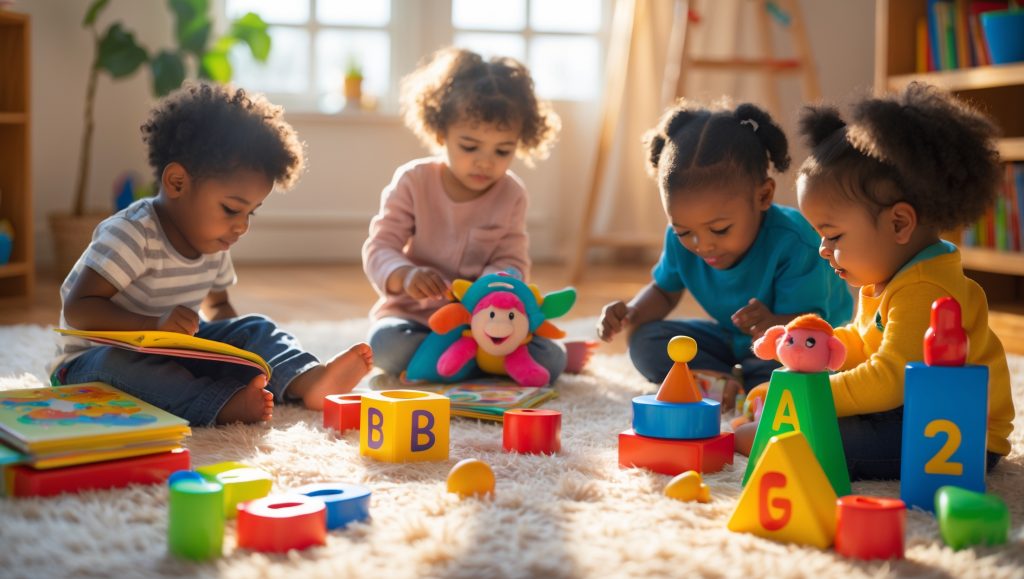
How We Chose
Supporting your child’s language development starts with thoughtful play. Our team evaluated dozens of toys using criteria informed by child development research, speech-language pathologist guidance, and the lived experiences of U.S. families. We prioritized toys that foster rich parent-child interaction, imaginative play, vocabulary-building, and turn-taking. The toys selected here meet U.S. safety standards, are widely available in 2025, and serve a range of ages and developmental stages.
#1 LeapFrog Learning Friends 100 Words Book — Interactive Vocabulary Builder
Why it stands out
This talking book introduces children to everyday words in English and Spanish. Touching each page triggers clear pronunciations, sound effects, and songs, making vocabulary building playful and multisensory.
Best for
- Toddlers starting to name objects
- Families seeking bilingual exposure
Key notes
- Age/Stage: 18 months–4 years
- Materials/Ingredients: Durable plastic with paper pages
- Strengths: Interactive audio, dual-language support, themed categories
- Trade-offs: Electronic, requires batteries; less open-ended than some options
#2 Melissa & Doug Wooden See & Say Sound Puzzle — Matching and Naming Fun
Why it stands out
This classic sound puzzle encourages children to match animals to their shapes and learn animal names and sounds. It’s a hands-on way to practice word-object association and simple question-answer routines (“What does the cow say?”).
Best for
- Animal-loving toddlers
- Developing first words
Key notes
- Age/Stage: 12 months–3 years
- Materials/Ingredients: Wood, nontoxic paint
- Strengths: Durable, encourages fine motor skills, reinforces animal vocabulary
- Trade-offs: Limited vocabulary scope; batteries needed for sound
#3 Hape Alphabet Abacus — Visual and Tactile Letter Play
Why it stands out
This wooden abacus features colorful letter blocks and corresponding pictures. Children slide and spin the blocks, practicing letter recognition and naming objects, which lays foundations for early literacy and phonemic awareness.
Best for
- Preschoolers exploring letters
- Hands-on learners
Key notes
- Age/Stage: 2–5 years
- Materials/Ingredients: Sustainably sourced wood, child-safe finishes
- Strengths: Sturdy, eco-friendly, visually engaging
- Trade-offs: No electronic sounds or prompts; requires adult guidance for best results
#4 Green Toys Ferry Boat with Mini Cars — Pretend Play and Storytelling
Why it stands out
This eco-friendly ferry boat set inspires storytelling as children act out adventures, name vehicles, and create scenarios (“Where’s the ferry going?”). Pretend play is a powerful context for language growth.
Best for
- Bath time storytellers
- Kids who love vehicles
Key notes
- Age/Stage: 18 months–4 years
- Materials/Ingredients: 100% recycled plastic, BPA-free
- Strengths: Encourages narrative skills, safe for water play, easy to clean
- Trade-offs: No explicit letter/word teaching; relies on adult facilitation for language learning
#5 Manhattan Toy Zoo Winkel Rattle & Sensory Teether — Early Interaction Starter
Why it stands out
This colorful rattle doubles as a teether and visual stimulus for babies. Caregivers can model naming colors, shapes, or animal characters, narrating play and encouraging babbling and turn-taking.
Best for
- Infants starting to reach and grasp
- Early sensory play
Key notes
- Age/Stage: 0–12 months
- Materials/Ingredients: BPA- and phthalate-free plastic
- Strengths: Lightweight, easy to clean, safe to mouth, encourages early social interaction
- Trade-offs: Limited vocabulary scope; best as a parent-child tool rather than solo toy
#6 Lakeshore Learning Toddler Talk and Play Telephone — Role-Play Conversation
Why it stands out
This chunky toy phone invites children to “call” friends and family, practice greetings, and engage in pretend conversations. It’s an approachable way to build social language and turn-taking skills.
Best for
- Toddlers fascinated by phones
- Practicing social scripts
Key notes
- Age/Stage: 12 months–3 years
- Materials/Ingredients: Sturdy, BPA-free plastic
- Strengths: Durable, encourages imitation and imaginative dialogue
- Trade-offs: Simple design; relies on adult or peer interaction for full benefit
#7 Folkmanis Mini Animal Puppets — Interactive Storytelling Tools
Why it stands out
These soft, detailed puppets bring stories to life. Caregivers and children can act out scenarios, practice expressive language, and build new vocabulary through imaginative, face-to-face play.
Best for
- Preschoolers ready for storytelling
- Interactive play with siblings, friends, or adults
Key notes
- Age/Stage: 3+ years
- Materials/Ingredients: Soft, high-quality plush
- Strengths: Open-ended, supports emotional expression, fosters connection
- Trade-offs: Requires adult involvement to maximize language opportunities
#8 B. Toys Parum Pum Pum Drum — Sound, Rhythm, and Language
Why it stands out
This musical set features a drum filled with child-sized percussion instruments. Making music together sparks call-and-response, labeling instruments, and singing—natural bridges to early language and listening skills.
Best for
- Toddlers and preschoolers who love music
- Group play and family music sessions
Key notes
- Age/Stage: 18 months–4 years
- Materials/Ingredients: BPA-free plastic, metal, fabric
- Strengths: Variety, encourages group participation, fun entry point to songs and rhymes
- Trade-offs: Can be noisy; not portable outside the home
Buying Tips
- Focus on open-ended play: Toys that encourage conversation, pretend play, and storytelling foster richer language opportunities than passive, pre-programmed devices.
- Consider durability and safety: Look for toys made from nontoxic materials and with sturdy construction, especially for infants and toddlers who mouth items.
- Choose age-appropriate complexity: Simple, high-contrast toys work best for babies, while preschoolers benefit from props for pretend play and early letter exposure.
- Engage with your child: The most powerful language learning happens with interactive play and adult participation, regardless of the toy.
- Rotate toys: Keeping a smaller selection accessible and swapping regularly maintains interest and maximizes learning.
Verdict
Nurturing your child’s language development doesn’t require the fanciest gadgets—just thoughtful choices, responsive play, and plenty of conversation. The toys featured here offer diverse ways to inspire vocabulary, storytelling, and meaningful interaction for different ages and personalities. Remember, your presence and engagement are the most important “tools” in your child’s language journey. Trust your instincts, follow your child’s lead, and enjoy the adventure of growing together through play.
FAQ
+Do electronic toys help or hinder language development?
+How can I use toys to support bilingual language learning?
+What are signs a toy is age-appropriate for language development?
+Do I need to buy special toys, or can everyday objects help?
+How often should I rotate language-focused toys?
+What can I do if my child isn’t talking much?
+Are group playdates helpful for language development?

Top 8 Toys to Boost Language Development in Kids (2025 Guide)
Supporting your child’s language development can be both fun and effective with the right toys. In 2025, manufacturers have stepped up with innovative options that encourage conversation, storytelling, and vocabulary building. Interactive books remain a classic, using sound and touch to engage little ones. Storytelling robots and plushies are a hit, prompting kids to answer questions and narrate their own tales. Building sets with descriptive cards help children learn new words as they play. Board games designed for preschoolers now focus more on turn-taking, listening, and expressive communication. Don’t overlook puppets and role-play kits, which naturally inspire dialogue and creativity. For toddlers, shape sorters and picture puzzles labeled with words support early language concepts. Finally, smart devices with curated language apps can supplement—but not replace—traditional play.
When selecting toys, look for those that spark interaction and encourage your child to talk, listen, and imagine. The best language-building toys are ones that grow with your child and inspire shared moments between kids and caregivers.
- Choose toys that foster conversation and storytelling.
- Prioritize interactive features, like sound or prompts.
- Mix classic toys with safe, well-reviewed tech options.
- Engage together—your participation amplifies learning!
Could you recommend how we might rotate these toys to fit into a weekly routine without overwhelming our small apartment, but still keeping my two-year-old engaged and progressing in language skills?
It’s thoughtful of you to balance stimulation and space for your two-year-old’s language growth. Try selecting 2–3 toys from the list for each week and store the rest out of sight; this keeps things fresh without clutter. Rotate the toys every Sunday, inviting your child to help choose or put away, which can also build vocabulary around routines. Use accessible storage bins to make cleanup easy and safe, avoiding any choking hazards. For a toddler, always supervise play, especially with smaller pieces. This isn’t medical advice; if you’re concerned, check in with your pediatrician.
I noticed that several of the toys on this list require adult guidance to be most effective for language development. Do you have any suggestions for how busy parents can fit these play sessions into their daily routines without feeling overwhelmed?
It’s completely understandable to feel stretched for time as a busy parent. Try setting aside just 5–10 minutes during daily routines, like after breakfast or before bath time, for focused play. You might also involve your child while you do chores—narrating what you’re doing or asking questions as you play together with a toy nearby. Rotate toys to keep sessions fresh and limit decision fatigue. Remember, short, consistent interactions can be very effective for language growth, especially for toddlers and preschoolers. This isn’t medical advice; if you’re concerned, check in with your pediatrician.
My child sometimes gets overwhelmed by bright lights and a lot of noise. For sensitive babies, do you suggest any of these toys over others for gentle language learning without overstimulation?
It’s completely understandable to want gentle, supportive toys for a sensory-sensitive child. From the article, opt for plush storybooks or soft, textured hand puppets—these encourage language through quiet, cozy interactions. Choose toys without flashing lights or loud sounds, and instead focus on those that rely on parent-child conversation, like simple picture cards or stacking blocks with images. Always check that toys are age-appropriate and free of small parts to ensure safety. This isn’t medical advice; if you’re concerned, check in with your pediatrician.
We spend a lot of time outside and at the park. Are any of these toys practical for on-the-go play, or are they mostly intended for indoor use? I’d love suggestions for language-building toys that work outdoors.
It’s wonderful that you want to encourage language development while spending time outdoors. Picture books with sturdy pages, simple puppets, and portable magnetic storytelling boards from the article can easily be brought to the park. Try playing naming or describing games with objects you see around you, or use small figurines for pretend play in the grass. Always supervise to avoid choking hazards with little ones, and choose toys that are easy to clean and carry. This isn’t medical advice; if you’re concerned, check in with your pediatrician.
How would you suggest adjusting play with these toys for younger siblings who might be below the recommended age range? Is it safe or beneficial to include them, particularly under close supervision, or better to wait until they’re older?
It’s thoughtful to consider your younger child’s safety and development during playtime. For children below the recommended age range, always supervise closely and remove any small parts that could be a choking hazard. Choose toys with simple textures and large, durable pieces. Instead of expecting the younger child to use toys as intended for older kids, focus on simple activities like naming colors or making sounds together. Short supervised sessions can introduce new words and social interaction. This isn’t medical advice; if you’re concerned, check in with your pediatrician.
If we want to support both fine motor development and language skills at the same time, would it make sense to start with the Melissa & Doug sound puzzle or the Hape Alphabet Abacus for a newly two-year-old?
It’s wonderful that you’re looking to support both fine motor and language development at this age. For a newly two-year-old, the Melissa & Doug sound puzzle is a great starting point: the chunky pieces are easy for little hands, and the sounds encourage word recognition and naming. Play together by naming each item, repeating words, and letting your child try the puzzle pieces independently. Always supervise play to prevent mouthing. The Hape Alphabet Abacus is best introduced a bit later, as two-year-olds may not yet be ready for letter recognition but will enjoy sliding the beads. This isn’t medical advice; if you’re concerned, check in with your pediatrician.
For toddlers who are especially sensitive to textures or sounds, how adaptable are the toys you listed? Are there any that seem particularly suitable for children with sensory sensitivities?
It’s so thoughtful to consider your toddler’s sensory sensitivities when choosing toys. From the list, soft fabric books and simple stacking cups are often well-tolerated by children who are sensitive to textures or sounds, especially since you can choose options with smooth surfaces and quiet play. Avoid toys with loud electronic noises or rough, bumpy materials. Always supervise play and introduce new toys gradually, watching for any discomfort. Opt for BPA-free, washable items to minimize allergen exposure. This isn’t medical advice; if you’re concerned, check in with your pediatrician.
Do you have tips on how to build these language-building toys into our daily schedule or routine? I sometimes find it hard to keep playtime intentional while also juggling other household tasks, and I want to make sure we’re getting the full benefit.
It’s understandable to want intentional playtime while balancing a busy household. Try setting aside short, regular play sessions (even 10–15 minutes) after meals or before bedtime. Rotate toys from the article to keep things fresh and invite your child to play alongside you during chores—narrate your actions or ask questions using the toys. For young children, keep sessions brief and supervise closely, especially with toys that have small parts. Remember, even simple daily interactions help language grow. This isn’t medical advice; if you’re concerned, check in with your pediatrician.
My child sometimes mouths toys, so I get concerned about the materials used. You mention non-toxic and BPA-free materials for some toys—are all the toys on your list safe for kids who still put things in their mouths, or should I avoid any specific ones?
It’s completely understandable to worry about toy safety when your child is still mouthing objects. From the article, most toys listed are made from non-toxic, BPA-free materials, but double-checking is wise—especially for younger children or toddlers. Always avoid toys with small detachable pieces, rough edges, or unfinished wood, as these can pose choking or splinter risks. Stick with solid, sealed plastic or silicone toys labeled explicitly as safe for mouthing. Supervise play and inspect toys regularly for wear or damage. This isn’t medical advice; if you have specific concerns about materials or your child’s habits, check in with your pediatrician.
We have limited storage space at both our home and the grandparents’ house. Between the Hape Alphabet Abacus and the LeapFrog Words Book, which would be more practical to keep at a grandparent’s place for regular language play sessions?
You’re thinking ahead about making language play both practical and fun for your child. If storage is tight at the grandparents’ house, the LeapFrog Words Book is likely the more practical choice—it’s compact, easy to store, and provides interactive audio that encourages repeated language practice. It’s suitable for toddlers and preschoolers, but always supervise younger children to ensure safe use with buttons and batteries. As always, this isn’t medical advice; if you have questions about your child’s specific needs, check in with your pediatrician.
Our apartment is small and we don’t have much storage space. Which of these toys is compact enough for everyday use, and do any have storage features or pieces that are easy to lose with a busy toddler around?
It’s understandable to want toys that fit your space and are practical for busy days. From the list, soft fabric books and stacking cups are compact, easy to tuck into a drawer or tote, and typically have few or no loose parts. Picture card sets often come in a small box and can be kept together with a rubber band or pouch. For safety, look for toys with larger pieces that your toddler can’t swallow, and avoid sets with tiny, easily lost items. This isn’t medical advice; if you’re concerned, check in with your pediatrician.
Are there certain developmental milestones or cues that suggest it is time to pause, rotate, or request different types of toys, whether from a subscription service or on our own? I want to make sure we are timing these toys right for growth.
It’s wonderful that you want to support your child’s growth by timing toys to their needs. Watch for cues like boredom, frustration, or mastery—if your child loses interest or completes every task easily, it may be time to rotate or introduce new toys. Notice if they are reaching new milestones, such as babbling, naming objects, or combining words; these are great moments to offer toys that encourage the next level of language skills. For infants and toddlers, make sure toys are safe for their age, avoiding small parts and checking for safe textures. This isn’t medical advice; if you’re concerned, check in with your pediatrician.
My toddler seems interested in animals but quickly loses interest in puzzles after a while. Do you have suggestions on how to keep engagement high with the Melissa & Doug Wooden See & Say Sound Puzzle, or should I alternate it with more open-ended options from the list?
It’s great that you’re noticing your toddler’s interests and want to keep them engaged. Try playing alongside your child and make animal sounds together to add excitement, or create simple stories using the animals from the puzzle. You could also hide a puzzle piece and play a finding game, or use the animal pieces in pretend play beyond the puzzle board. Mixing in more open-ended toys from the list, like animal figurines or storybooks, can also support language while keeping things fresh. Always supervise to ensure small parts are safe for your toddler’s age. This isn’t medical advice; if you’re concerned, check in with your pediatrician.
I’m curious about the Green Toys Ferry Boat set—does the texture or weight make it easier for sensory-sensitive kids to handle compared to other bath toys, or should we expect it to feel similar to typical plastic boats?
It’s great that you’re considering sensory needs when choosing bath toys. The Green Toys Ferry Boat set is made from recycled plastic—its surface is smooth, with rounded edges and a slightly heavier, sturdier feel than many lightweight plastic boats. For sensory-sensitive kids, this can provide a calming, predictable tactile experience, but the texture and weight are still within the typical range for safe bath toys. Always supervise bath play, and if your child is very sensitive, let them handle the toy dry first to check their reaction. This isn’t medical advice; if you’re concerned, check in with your pediatrician.
How would you recommend adjusting the language play ideas in this article for twins who are at slightly different language stages? One of mine is saying words, but the other is mostly babbling. Is there a toy on your list that supports both without one losing interest?
It’s thoughtful of you to tailor language play for both of your twins, especially when they’re developing at different rates. Choose toys like picture books with interactive flaps or sound puzzles from the article, as these can engage both babblers and early talkers. Try playing together, narrating the actions and naming pictures for both children, and encourage the talker to help the babbler find items or make sounds. Keep sessions brief, rotating toys to maintain interest, and supervise closely to ensure safety with small pieces. Remember, this isn’t medical advice; if you’re concerned about development, check in with your pediatrician.
My child just turned 12 months and shows a lot of interest in toys meant for slightly older kids, especially the Hape Alphabet Abacus. Is it okay to introduce this toy a little earlier than the suggested age, or should I wait until she is closer to 2 years?
It’s great that your little one is so curious and eager to explore new toys. For a 12-month-old, you can introduce the Hape Alphabet Abacus with supervision, but focus on simple play activities like sliding beads, naming colors, or counting together rather than expecting her to recognize letters yet. Always check for small parts and make sure the toy is sturdy and safe for mouthing. If she loses interest or seems frustrated, it’s fine to put it away and try again later. This isn’t medical advice; if you’re concerned, check in with your pediatrician.
My little one just turned 1, and I’m wondering if it’s okay to start using the wooden abacus a bit early, or should we wait until she’s closer to the suggested 2-year age?
It’s wonderful that you’re thinking ahead about your child’s learning and safety. At age 1, exploring a wooden abacus together can be fine, as long as you supervise closely to prevent mouthing any small beads. Let her touch and move the beads with your help, focusing on simple counting words and colors rather than expecting her to use it independently. Always check for any loose or splintered parts before play, and keep sessions short to match her attention span. This isn’t medical advice; if you’re concerned, check in with your pediatrician.
My toddler is very sensitive to loud or unexpected sounds. Are the audio features on the Melissa & Doug Wooden See & Say Sound Puzzle and the LeapFrog book adjustable in volume, or could either of these be overwhelming for a child who can get startled easily?
It’s completely understandable to want to protect your toddler from overwhelming sounds. The Melissa & Doug Wooden See & Say Sound Puzzle typically does not have a volume control, and its sounds may be abrupt, so it could startle a sound-sensitive child. The LeapFrog book usually has adjustable volume settings, which can help make playtime more comfortable. For either toy, try introducing it in a quiet, familiar environment and show your toddler how it works before letting them play independently. Always supervise play and watch for signs of distress. This isn’t medical advice; if you’re concerned, check in with your pediatrician.
With a tight budget this year, I’m trying to pick just one language-boosting toy for my son who just turned one. If you had to choose between the Melissa & Doug sound puzzle and the Green Toys Ferry Boat for encouraging first words, which would you recommend?
It’s great that you’re thoughtfully choosing a toy to support your son’s language growth. For a one-year-old just starting to say first words, the Melissa & Doug sound puzzle is likely the better pick: it pairs simple images with clear sounds, which can encourage imitation and new vocabulary. Use it together by naming each picture, pausing for your child to try, and responding warmly to any attempts. Make sure the puzzle pieces are large enough not to pose a choking risk. The ferry boat is fun for pretend play, but at this age, toys with clear labeling and sounds tend to support early word learning more directly. This isn’t medical advice; if you’re concerned, check in with your pediatrician.
We have a pretty small living space. Do any of the toys on your list take up less storage room or are easiest to put away at the end of the day?
It’s completely understandable to want toys that fit easily into a smaller space. On the list, picture cards and chunky board books are especially compact and can be stored in a small bin or basket. Soft finger puppets also take up very little room and tuck away easily. Choose toys without many loose parts for quick cleanup, and keep storage bins handy at your child’s level to encourage tidy routines. Always make sure toys are age-appropriate and check that small items are safe for your child’s age. This isn’t medical advice; if you’re concerned, check in with your pediatrician.
Are all of the materials used in these toys, like the LeapFrog book’s plastics and the wooden puzzles, easy to keep clean and safe for repeated use by different kids? I sometimes watch kids after snack time and worry about germs.
It’s great that you’re thinking about cleanliness and safety, especially when caring for multiple children. Most plastics used in toys like the LeapFrog book can be wiped down with mild soap and water or baby-safe disinfectant wipes, making them suitable for frequent cleaning. Wooden puzzles should be cleaned with a damp cloth and mild soap—avoid soaking them to prevent warping. Always check for loose pieces or damage before use, and supervise younger kids to prevent mouthing or chewing on shared toys. This isn’t medical advice; if you’re concerned, check in with your pediatrician.
My toddler has a hard time calming down for naps and bedtime, and sometimes playing with interactive toys seems to get him more riled up instead of helping him relax. Which toys on your list are better suited for quieter, calming play before sleep?
It’s understandable to want playtime to help your toddler wind down before naps and bedtime. For quieter, calming play, try the soft fabric books or simple wooden puzzles from the list, as these encourage gentle interaction and can be soothing. You might also use a plush storytelling toy on a low volume, focusing on slow, predictable routines. Avoid electronic toys or those with lots of lights and sounds close to sleep. Always supervise to ensure safety and select age-appropriate pieces to prevent choking hazards. This isn’t medical advice; if you’re concerned, check in with your pediatrician.
My daughter is very sensitive to sounds and sometimes finds noisy toys overwhelming. Is the sound level on the LeapFrog Learning Friends book or the Melissa & Doug sound puzzle adjustable, or are there quieter alternatives you’d recommend from your list?
It’s understandable to want to protect your daughter from overwhelming noise while supporting her language growth. The LeapFrog Learning Friends book does have adjustable volume settings, but it may still be too loud for some sensitive children. The Melissa & Doug sound puzzles typically do not have volume controls and can be startling. For quieter alternatives, opt for sturdy board books with interactive flaps or picture cards, and consider simple puppets or soft dolls for pretend play. These options from the article encourage language skills without any noise. Always supervise and check toys for small parts if your child is under three. This isn’t medical advice; if you’re concerned, check in with your pediatrician.
Budget-wise, buying two of each toy for twins can get expensive. In your experience or research, do any of these toys work well when shared, or is individual play needed for language benefits?
—supporting twins’ language while managing costs is a real concern for many families. Many toys in the article, like storybooks, puppets, and playsets, can be shared to encourage turn-taking and conversation, which actually supports language development for both children. You can set up shared play but also offer individual time by rotating access to certain toys. For small parts or younger twins (under 3), supervise closely to ensure safety. Ultimately, shared play can be just as beneficial as solo play for language skills. This isn’t medical advice; if you’re concerned, check in with your pediatrician.
For toddlers with a very short attention span, is it helpful to rotate between these different types of toys each week, or is it better to stick with one favorite to support consistent language growth?
It’s completely normal to wonder how to keep toddlers engaged while supporting their language development. For children with short attention spans, rotating toys weekly can actually help maintain their interest and expose them to new vocabulary and ways to communicate. Try offering two or three different types of language-rich toys at a time and observe which ones spark the most interaction. Allow your child to revisit favorites, but gently introduce new toys to keep things fresh. Always supervise play, especially with new items, to ensure safety. This isn’t medical advice; if you’re concerned, check in with your pediatrician.
My toddler is obsessed with animals, but sometimes the electronic puzzles are too loud for him. Is the Melissa & Doug Wooden See & Say Sound Puzzle adjustable in terms of volume, or is there a way to enjoy the naming practice without triggering the sounds every time?
It’s great that you’re tuned in to your toddler’s sensitivities and interests. Unfortunately, the Melissa & Doug Wooden See & Say Sound Puzzle does not have a volume control, and the sounds play automatically when the pieces are placed. To support language practice without overwhelming noise, you might try removing the batteries, then name the animals together as you play, or make animal sounds with your child for fun, interactive learning. Always supervise to ensure small parts don’t pose a choking risk. This isn’t medical advice; if you’re concerned, check in with your pediatrician.
My toddler tends to avoid toys that have busy patterns or lots of moving parts. Are there any language development toys you would recommend for a child who does better with simple, calming designs?
It’s completely understandable to look for toys that suit your child’s need for simplicity and calm. Try classic wooden blocks with letters or pictures, simple picture books with clear images, or soft plush toys that talk or sing a few words when squeezed. Puzzles with large, easy-to-hold pieces and minimal colors can also encourage language through naming and conversation. Always check that toys are age-appropriate, free from small parts, and made of safe materials. This isn’t medical advice; if you’re concerned, check in with your pediatrician.
For families with limited storage space, which of these toys is the most compact or easy to store without sacrificing opportunities for language learning and interactive play?
It’s great that you’re thinking practically while supporting your child’s language growth. Of the toys featured, picture card sets and small finger puppets are the most compact and easy to store. Try keeping them in a resealable pouch or small box. These options still offer rich conversation starters and storytelling opportunities. Rotate them to keep things fresh and engaging. Always supervise young children with small toys to prevent choking. This isn’t medical advice; if you’re concerned, check in with your pediatrician.
How do the toys you recommend compare to the quality and educational value of toys I might get in a typical subscription box? Is there a risk that subscription toys may not be as effective for language development, especially for very young children?
Your thoughtful question shows how much you care about choosing the best for your child. The toys recommended in the article are carefully selected for open-ended play, real-world interaction, and proven support of language skills, which some subscription box toys may lack. With subscription boxes, quality and educational value can vary, especially for infants and toddlers who need safe, simple toys without tiny parts or choking hazards. Look for toys that encourage adult-child conversation, naming, and pretend play. Always supervise young children and check materials for safety. This isn’t medical advice; if you’re concerned, check in with your pediatrician.
We have a small play space and I want to be mindful of toy size and storage. Of the toys you listed, which ones would you recommend for families with limited space who are still looking to support early language development?
It’s great that you’re considering both your child’s development and your family’s space needs. For smaller spaces, I recommend choosing stacking cups, picture books, and a set of chunky animal figurines from the list. These toys are compact, easily stored in small bins or baskets, and offer plenty of opportunities for rich language play together. For toddlers, always supervise with small items to ensure safety. Remember, you don’t need many toys—just a few versatile ones can make a big difference. This isn’t medical advice; if you’re concerned, check in with your pediatrician.
Are all the materials in these toys safe for mouthing, especially for younger siblings who might put everything in their mouths? I want to make sure any toys we pick will be safe if left within reach of toddlers.
It’s so important to make sure toys are safe for younger siblings who explore with their mouths. For toddlers, choose toys labeled for ages 0–3 and double-check they’re free of small parts, loose pieces, or choking hazards. Look for toys made from non-toxic, BPA-free plastic or untreated wood, and avoid those with paint or finishes unless clearly labeled as child-safe. Always supervise play, and regularly inspect toys for damage or wear. This isn’t medical advice; if you have any doubts, your pediatrician can help review safe options for your family.
My child is 26 months and still isn’t saying a lot of words. If I introduce the Hape Alphabet Abacus now, is that too early, or could it help boost his vocabulary even if he’s not talking much yet?
It’s understandable to want to support your toddler’s language growth. At 26 months, introducing the Hape Alphabet Abacus can be both fun and helpful, even if your child isn’t saying many words yet. Try sitting together and naming the letters, colors, and pictures as you play, encouraging your child to point or repeat after you without pressure. Keep sessions short and positive, following your child’s lead. Always supervise play to ensure safety around small parts. Remember, every child develops at their own pace—this isn’t medical advice; if you’re concerned, check in with your pediatrician.
My three-year-old gets really wound up before bedtime, and I’m wondering if any of these toys work well as part of a calm evening routine. Are some options more soothing or quiet than others for winding down before sleep?
It’s understandable to want a peaceful bedtime routine, especially with an energetic three-year-old. For winding down, I recommend focusing on toys from the article like simple picture books, soft puppets, or quiet storytelling sets. These encourage gentle conversation and imaginative play, which can help your child relax. Try dimming the lights and using a soft voice as you play together. Avoid toys with lights or loud sounds in the evening, as they may be too stimulating. Always supervise and check for small parts that could be a choking hazard at this age. This isn’t medical advice; if you’re concerned, check in with your pediatrician.