
How We Chose
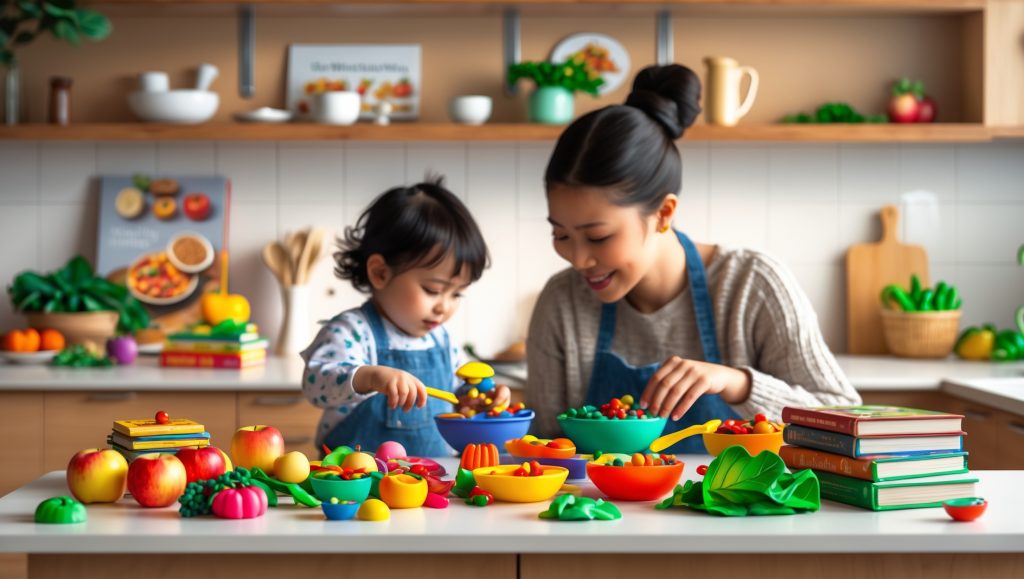
Language development flourishes when daily routines—like mealtimes and play—become rich with conversation, labeling, and shared experiences. For this list, we focused on food-themed toys, books, and baby foods that inspire interactive talk, naming, and pretend play. We prioritized products and ideas that are widely available in the US, encourage back-and-forth communication, and support a range of ages and developmental stages. Our selections are based on current research, expert recommendations, and real-life parent feedback.
1. Melissa & Doug Food Groups Wooden Play Food — Classic Pretend Play
Why it stands out
This sturdy wooden set divides foods into categories, making it easy to talk about colors, shapes, and food names. Kids love sorting, making up meals, and sharing imaginary snacks—perfect chances for practicing new words.
Best for
- Building food vocabulary
- Encouraging pretend conversation
- Sorting and categorizing skills
Key notes
- Age/Stage: 3+ years
- Materials/Ingredients: Painted wood, non-toxic finish
- Strengths: Durable, open-ended, covers basic food groups
- Trade-offs: Heavier than plastic; smaller pieces may not suit under-3s
2. Indestructibles: Baby, Let’s Eat! — Chew-Proof Food Book
Why it stands out
This simple, wordless board book is made for mouthing and messy hands. It’s filled with bright pictures of everyday foods, inviting babies and toddlers to point, label, and imitate food words.
Best for
- Lap reading during mealtimes
- Early word exposure (bilingual-friendly)
- Encouraging pointing and requesting
Key notes
- Age/Stage: 0–2 years
- Materials/Ingredients: Rip-proof, washable paper
- Strengths: Nearly indestructible, lightweight, easy to clean
- Trade-offs: No text; depends on adult interaction
3. LeapFrog Yum-2-3 Toaster — Interactive Food Toy
Why it stands out
With songs, lights, and phrases about foods and counting, this talking toaster set introduces food words in a playful, interactive way. Kids can “toast” slices, press buttons, and sing along, building vocabulary with every play session.
Best for
- Interactive language exposure
- Solo or parent-child play
- Practicing turn-taking in conversation
Key notes
- Age/Stage: 1.5–4 years
- Materials/Ingredients: BPA-free plastic, electronic parts
- Strengths: Engaging, reinforces cause and effect, teaches food & numbers
- Trade-offs: Requires batteries, electronic sounds may not appeal to all
4. Real Fruit and Veggie Snack Plates — Sensory and Conversational
Why it stands out
Nothing beats the real thing! Slicing bananas, peeling clementines, or arranging berries opens the door for natural labeling, describing, and sharing food experiences. Plus, hands-on prep invites questions and storytelling.
Best for
- Snack time talk and new word exposure
- Encouraging kids to describe flavors, textures, and colors
- Building mealtime routines that foster conversation
Key notes
- Age/Stage: 9 months+ (supervised)
- Materials/Ingredients: Fresh produce, child-safe utensils
- Strengths: Real-world vocabulary, multisensory learning
- Trade-offs: Messy, requires adult prep and supervision
5. Mudpuppy Food Faces Magnetic Set — Creative Communication
Why it stands out
This portable set lets kids build silly faces with food-shaped magnets on a tin backdrop. It sparks giggles, imaginative stories, and lots of talk about emotions, expressions, and favorite foods.
Best for
- Travel or quiet time play
- Making up stories using food words
- Practicing descriptive language
Key notes
- Age/Stage: 3+ years
- Materials/Ingredients: Magnetic pieces, tin case
- Strengths: Compact, reusable, encourages storytelling
- Trade-offs: Small pieces; store out of reach of under-3s
6. Learning Resources New Sprouts Serve It! My Very Own Dish Set — Role-Play Mealtime
Why it stands out
This colorful set of plates, cups, and pretend foods encourages kids to serve, share, and describe food just like grown-ups. It’s great for practicing mealtime talk, manners, and turn-taking with siblings or friends.
Best for
- Group play and social language
- Pretend mealtime routines
- Practicing polite requests and responses
Key notes
- Age/Stage: 2–6 years
- Materials/Ingredients: Soft, BPA-free plastic
- Strengths: Easy to grip, dishwasher safe, encourages sharing
- Trade-offs: Not suitable for real food, some pieces may get lost
7. Picture Recipe Cards (DIY or Store-Bought) — Step-by-Step Conversation
Why it stands out
Visual recipes—either homemade or purchased—break down simple food prep into steps with images and words. Following these together encourages sequencing language, following directions, and talking about ingredients.
Best for
- Cooking with toddlers and preschoolers
- Building sequencing and procedural language
- Supporting English learners
Key notes
- Age/Stage: 2.5+ years (with support)
- Materials/Ingredients: Laminated cards, photos or drawings
- Strengths: Customizable, builds independence, supports visual learners
- Trade-offs: Requires prep; not universally available pre-made
8. Banana Panda Super Size Memory Game: Lunch Time — Turn-Taking and Naming
Why it stands out
This oversized memory game uses vibrant food illustrations to encourage kids to name, describe, and match foods while practicing turn-taking and attention skills.
Best for
- Family game nights with young kids
- Reinforcing food vocabulary
- Taking turns and listening
Key notes
- Age/Stage: 2+ years
- Materials/Ingredients: Thick, wipe-clean cardboard
- Strengths: Large pieces, easy for little hands, visual appeal
- Trade-offs: Limited play modes; may require adult help initially
9. Happy Family Organics Clearly Crafted Stage 1 Baby Food Pouch: Sweet Potato — Early Food Exploration
Why it stands out
While any simple baby food can work, this pouch is a favorite for its transparency and single-ingredient focus. Exploring new flavors together gives adults a chance to narrate, describe, and name each food—laying the groundwork for later language skills.
Best for
- First tastes and food naming
- Modeling language during feeding
- Introducing common food words
Key notes
- Age/Stage: 4+ months (with pediatrician guidance)
- Materials/Ingredients: Organic sweet potato, BPA-free pouch
- Strengths: Simple ingredients, clear packaging, portable
- Trade-offs: Limited to purees; not suitable for older toddlers
Buying Tips
When choosing food-themed toys or books for language development, look for products that encourage interaction—think open-ended sets, picture books with clear images, and tools that invite kids to name, describe, and act out food experiences. Prioritize safe, durable materials, especially for younger children. For real food activities, opt for simple, colorful fruits and veggies that are easy to handle and talk about. Remember, it’s the back-and-forth conversation and shared play—not the price tag or brand name—that matters most for language growth.
Verdict
Food and language are natural partners in early childhood. Whether you’re reading a board book, sharing a snack, or staging a pretend picnic, every mealtime and play session is a chance to build vocabulary, model conversation, and connect. By mixing real food experiences with playful tools and books, families can turn everyday moments into rich opportunities for communication—all while having fun together.
FAQ
+How does food-themed play support language development?
+What are some easy mealtime conversation starters?
+Are electronic food toys helpful for language learning?
+How can I use real food to encourage talking?
+What should I do if my child isn’t interested in food-themed toys or books?
+Is it okay to talk about foods my child doesn’t eat yet?
+Can food-themed play help bilingual language development?

Food-themed toys, books, and activities are a delightful way to spark language growth in young children. By weaving in familiar foods and playful pretend play, caregivers and educators can turn everyday moments into rich learning opportunities. In 2025, the best picks blend hands-on fun with vocabulary building, story sharing, and social interaction.
Children naturally gravitate to food play—think of stacking wooden fruits, “cooking” in a play kitchen, or sharing a picnic with plush veggies. These settings encourage children to name foods, describe tastes and textures, and practice turn-taking language (“Can I have a cookie?”). Storybooks featuring diverse foods introduce new words and cultural traditions, while interactive games like “grocery shopping” foster sorting, counting, and conversational skills.
Look for items that invite open-ended play: realistic food sets, magnetic meal boards, or bilingual food puzzles. These tools help children label, categorize, and compare, all while having fun. Remember, the real magic happens when adults join in—modeling language, asking open-ended questions, and celebrating every new word. With the right food-themed picks, mealtime and playtime become powerful language-building adventures.
- Choose toys and books featuring diverse and realistic foods
- Encourage pretend play with kitchens, markets, and picnics
- Use food-themed stories to introduce new vocabulary
- Engage in conversation and role play to support language growth
If I wanted to rotate these food-themed toys to keep my toddler engaged, how often should I swap them out to support ongoing language development, and do you recommend including real food experiences in the rotation as well?
It’s great that you want to keep your toddler engaged and support their language growth. Try rotating food-themed toys every 1–2 weeks—this keeps things fresh without overwhelming your child. Observe which toys spark the most interest, and consider bringing favorites back into the mix after a little break. Including real food experiences, like safe hands-on play with soft fruits or pretend picnics, can boost vocabulary and sensory learning. Always supervise closely and avoid choking hazards or allergens. This isn’t medical advice; if you’re concerned, check in with your pediatrician.
With some play food sets, I worry about tiny pieces getting lost or being a choking hazard around younger siblings. Are there specific age transitions or modifications you suggest for mixed-age households?
It’s completely understandable to worry about choking hazards and lost pieces with little ones around. For mixed-age households, try separating play food sets: keep larger, sturdy pieces for toddlers under 3 and supervise closely during play. Store smaller items out of reach, and introduce them only when older siblings play independently. Choose sets with chunky, soft pieces for younger children, and regularly inspect toys for wear and loose parts. Always check manufacturer age recommendations. This isn’t medical advice; if you’re concerned, check in with your pediatrician.
If you have close-in-age siblings, would you recommend doing food-themed pretend play together or keeping it separate to match their developmental levels? I’m wondering how to adapt these activities when one child is not quite ready for small pieces while the other is.
It’s great that you’re thinking about both your children’s safety and developmental needs. For close-in-age siblings, you can absolutely do food-themed pretend play together with a few adjustments. Use only large, non-chokable pretend food pieces or soft plush foods for both children, even if the older sibling is ready for smaller items. Supervise play closely and set out clear ground rules, like keeping pretend food out of mouths. Offer the older child more complex language tasks (like describing flavors) while the younger one practices naming or sorting foods. This keeps play engaging for both. This isn’t medical advice; if you’re concerned, check in with your pediatrician.
With the Indestructibles book not having any words, I’m a bit unsure how to make the most of it for language learning. Do you have ideas for using wordless books during mealtimes to encourage my child to use more words or ask for things?
It’s wonderful that you want to turn mealtimes into language-learning moments with your child. With wordless books like Indestructibles, try narrating what you see together, naming foods and objects, and encouraging your child to point or gesture to things in the pictures. Pause and ask open-ended questions like, ‘What do you think happens next?’ or ‘Which food looks yummy to you?’ This invites your child to use words to share their thoughts or preferences. For toddlers and preschoolers, you can also play simple games: ‘Can you find something round?’ or ‘Show me something green.’ Always supervise to ensure the book stays clean and safe at the table. This isn’t medical advice; if you’re concerned, check in with your pediatrician.
If my child tends to mouth everything, is it safer to stick to indestructible books and supervised real food, or would the painted wooden food sets be appropriate too? I’m a little worried about chewing on the wooden pieces.
It’s completely understandable to be cautious when your child mouths objects. For children who are still in the mouthing stage, indestructible books and supervised real food play are usually safest, as these avoid choking hazards and harmful chemicals. Painted wooden food sets can sometimes chip or splinter, and paints may not always be food-safe, even if labeled non-toxic. If you do use wooden sets, check that they’re certified safe for mouthing, inspect regularly for damage, and supervise closely. As your child grows and mouths less, these sets can be a fun, language-rich option. This isn’t medical advice; if you’re concerned, check in with your pediatrician.
We’re tight on storage space and trying to keep toy clutter down. Would you suggest prioritizing a durable set like the Melissa & Doug food groups, or are the interactive options from LeapFrog more versatile for language development with twins at different stages?
It’s thoughtful to consider both space and your twins’ different needs. If you want one set, a durable choice like Melissa & Doug’s food groups encourages open-ended play, role-play, and vocabulary for multiple ages, and is easy to wipe down and store. For twins at different stages, interactive options from LeapFrog can add engaging prompts and sound cues, but often take up more room and may only suit one child at a time. Whichever you choose, supervise play for choking hazards under 3 years. This isn’t medical advice; check with your pediatrician if you have concerns.
We struggle with late naps that push bedtime too late. Can any of these food-themed toys or books be used right before nap or in the wind-down for bed, or do they tend to be too stimulating for calming down?
It’s very common to wonder if certain toys or books might make winding down harder. Many food-themed books, especially those with soothing illustrations or gentle rhymes, can actually become part of a calming pre-nap or bedtime routine. Try reading a book together in a dimly-lit room, using a quiet voice, and avoid toys with lights, music, or lots of pieces just before sleep. For toddlers, simple plush food toys can also be comforting if they’re soft and safe (no small parts). This isn’t medical advice; if naps or bedtimes remain tough, your pediatrician can help you troubleshoot further.
Do you have suggestions for incorporating food-themed play or books into our daily schedule when both parents work and time feels limited? I’m worried we’ll miss out on those language-building moments.
It’s understandable to feel worried about fitting in language-building activities with a busy schedule. Try rotating food-themed board books into bedtime or breakfast routines, even if it’s just a few minutes. Use bath time for pretend play with safe, food-shaped toys, narrating actions as you go. Keep a small basket of pretend food in the car for chatty play during commutes. Pick one meal a week for everyone to name or describe foods together, even if it’s takeout. Remember, short and simple moments can be just as valuable. This isn’t medical advice; if you have concerns, check in with your pediatrician.
Do you have any recommendations for incorporating food-themed language activities during bilingual bedtime routines, rather than just at mealtimes? I am trying to reinforce both English and Spanish vocabulary during our evening wind-down and would love to hear your suggestions.
It’s wonderful that you’re looking for ways to nurture both languages during bedtime routines. Try using plush or felt food toys to act out simple bedtime stories in English and Spanish, describing each item as you tuck them in together. Sing gentle food-themed lullabies or rhymes in both languages, swapping out key words for practice. You can also describe imaginary snacks or favorite foods as part of your goodnight ritual—naming colors, shapes, and tastes in both languages. Choose soft, safe props without small parts, and keep activities soothing to support winding down. This isn’t medical advice; if you’re concerned, check in with your pediatrician.
Do you have any recommendations on how to safely introduce real fruit and veggie snack plates for language play with little ones who don’t yet have a reliable pincer grasp and still mouth their food a lot?
You’re thoughtful to want to make snack time both fun and safe for your little one’s development. Try offering soft, steamed veggies or very ripe fruits cut into larger, easy-to-hold pieces—think longer sticks or wedges, rather than small bits—to reduce choking risk. Sit with your child and name each food together as you explore textures, colors, and tastes. Encourage touching and gentle mouthing, but always supervise closely. Avoid hard, round, or slippery foods, and wait on small berries, grapes, or raw carrots until their chewing and pincer grasp improve. This isn’t medical advice; if you have concerns, check in with your pediatrician.
With real fruit and veggie snacks, how much should I let my 1-year-old handle the food during daycare drop-off when mornings are rushed? Any tips for making these moments language-rich but quick?
It’s wonderful that you want to make rushed mornings both nourishing and language-rich for your toddler. At age one, it’s safe for children to explore soft, age-appropriate fruit and veggie snacks under supervision—just avoid choking hazards like whole grapes or raw carrots. Let your child hold or touch a piece briefly while you name it, describe its color or texture, and use simple phrases like ‘Red apple,’ or ‘Crunchy cucumber.’ Ask simple questions like, ‘Do you want more banana?’ even on the go. If time is short, narrate what you’re packing or eating together. This isn’t medical advice; if you’re concerned, check in with your pediatrician.
We have a busy household and an unpredictable schedule, so sensory play often happens on the go. Are any of these food-themed picks especially travel-friendly or easy to bring along for outings without too much prep or cleanup?
It’s great that you want to keep sensory and language play going, even with a busy schedule. For travel-friendly options from the article, consider lightweight food-themed flashcards or small silicone food toys that wipe clean easily. Pack a zippered pouch for quick storage and access. Avoid messy items like real food or anything with small, loose parts if your child is under three. Always supervise to ensure safety in new environments. This isn’t medical advice; if you’re concerned, check in with your pediatrician.
With a small apartment and very little storage space, which of these options would offer the most language-building opportunities while also being easy to tidy up and store?
It’s great that you’re thinking about both language growth and practical storage. For a small apartment, consider food-themed board books or a compact magnetic food set. Board books are easy to tuck away and can spark rich conversations about colors, foods, and mealtime routines. Magnetic sets store flat and are easy to clean up, letting you narrate pretend play with minimal mess. Avoid bulky pretend kitchens or many small pieces for safety and tidiness. This isn’t medical advice; if you’re concerned, check in with your pediatrician.
Do you have any suggestions for food-themed toys that encourage language development but are safe for babies under one year old, especially for families on a tighter budget?
It’s wonderful that you want to encourage early language skills while keeping safety and budget in mind. For babies under one, look for simple, soft food-themed plush toys or cloth books with food pictures—these are safe for mouthing and easy to clean. Sit together and name each food, describing shapes and colors as you play. Homemade options like felt fruits (with no small parts) can also work well and save money. Always supervise closely, and check toys regularly for loose stitching or damage. This isn’t medical advice; if you’re concerned, check in with your pediatrician.
Do you have any tips on encouraging my child to use new words during snack time, especially when they seem mainly interested in eating? Sometimes it feels hard to keep the conversation going when their focus is just on the food.
It’s completely normal for young children to be focused on eating, and it’s great that you want to support their language during snack time. Try describing the food’s color, shape, or texture out loud, then pause to let your child respond or repeat. Offer simple choices by asking, ‘Do you want the crunchy apple or the soft banana?’ Encourage them to request more by modeling phrases like, ‘More cheese, please.’ Play short, silly word games using food names, keeping it light and low-pressure. For toddlers, always supervise closely and avoid foods that could be choking hazards. This isn’t medical advice; if you’re concerned, check in with your pediatrician.
If my child’s grandparents are mostly speaking another language at home but we want to use the same food-themed toys and books, is it better for supporting language growth to name the foods in both languages, or just focus on one?
It’s great that you want to support your child’s language growth across both languages. You can name the foods in both languages during play—this helps children make connections and boosts their vocabulary in each language. Try labeling the toy or book foods first in one language, then in the other, pausing to let your child process each word. Keep sessions short and fun, and invite grandparents to join in, using their language. For toddlers, stick to clear, simple words and avoid overwhelming them with too much at once. This isn’t medical advice; if you have concerns about language milestones, check in with your pediatrician.
My baby is very sensitive to new food textures and often refuses to touch or taste things that feel sticky or mushy. Are there low-mess, food-based activities from your list that work well for sensory-sensitive babies this age?
You’re absolutely right to look for ways to support your baby’s sensory comfort while encouraging language. For sensory-sensitive little ones, try activities like pretend play with smooth plastic or wooden food toys—these can support food-themed conversation without messy textures. You might also use dry, non-sticky items like large pasta shapes or cereal for sorting and naming games; supervise closely to prevent choking. Picture books about food and simple rhymes can also build food vocabulary without any tactile stress. Always go at your baby’s pace and avoid pressure to touch or taste. This isn’t medical advice; if you’re concerned, check in with your pediatrician.
I noticed the Melissa & Doug Food Groups set is listed as 3+ years, but my daughter just turned 2 and loves pretend play. Are there safer food-themed toy options for her age that still encourage labeling and conversation, or would closer supervision make this set appropriate for younger toddlers?
It’s wonderful that your daughter enjoys pretend play and you’re thinking about her safety. For a two-year-old, it’s best to choose food-themed toys specifically labeled for ages 2 and up, as these are designed with larger pieces to reduce choking risks. Soft fabric or chunky wooden food toys are usually safer for this age. If you decide to use a set meant for older children, close supervision is essential; always check for small or loose pieces, and keep play sessions brief and monitored. This isn’t medical advice; if you’re concerned, check in with your pediatrician.
We have a toddler who puts everything in his mouth. How does the Indestructibles food-themed book hold up compared to board books when it comes to biting and gnawing?
It’s completely normal for toddlers to explore books with their mouths at this stage. Indestructibles books are designed to be chew-proof, rip-proof, and washable, making them safer than traditional board books for little ones who like to bite and gnaw. Always supervise your child during book time, even with Indestructibles, to ensure safety. Check the book regularly for signs of wear, and wash it as needed to keep it clean. This isn’t medical advice; if you’re concerned, check in with your pediatrician.
I noticed the LeapFrog Yum-2-3 Toaster covers ages starting at 1.5 years. If my child is just about to turn one, should I wait, or can younger toddlers still benefit from it with supervision?
It’s great that you’re eager to support your little one’s language skills early on. The LeapFrog Yum-2-3 Toaster is designed for children 18 months and up due to small parts and developmental readiness. If your child is just turning one, you might wait a few months or use the toy together very closely supervised. At this age, focus on safe, larger food-themed toys and lots of real-life kitchen talk. Always watch for choking hazards and follow manufacturer age guidelines. This isn’t medical advice; if you’re concerned, check in with your pediatrician.
Would you recommend introducing the real fruit and veggie snack plates to a toddler who isn’t speaking yet, or should I wait until they’re using a few words regularly? I’m curious if it’s helpful for pre-verbal children or if it works best once a child can label foods verbally.
It’s great that you’re thinking about how food experiences can support your toddler’s language growth. You don’t need to wait for your child to start speaking to introduce real fruit and veggie snack plates. For pre-verbal toddlers, exploring colorful foods with all their senses—touching, smelling, and tasting—can spark curiosity and lay the groundwork for later language. Try naming each food as you serve it, describing colors and textures, and modeling simple words like ‘banana’ or ‘crunchy.’ Always supervise closely and offer soft, age-appropriate pieces to prevent choking. This isn’t medical advice; if you’re concerned, check in with your pediatrician.
Do you have any recommendations for storing these kinds of food-themed toys, especially the wooden sets, so they stay organized and are easy to pull out for short, calming play sessions before bed?
It’s great that you want to keep bedtime play soothing and stress-free. Try using shallow bins or trays to keep food-themed toys visible and sorted by type—this makes clean-up and set-up quick. For wooden sets, store them in a breathable cotton bag or a basket to prevent moisture build-up and avoid heavy stacking to reduce dents or scratches. Keep the bin in a low, accessible spot so your child can help with tidying up, supporting independence. Always check for loose or damaged parts before play, especially at bedtime. This isn’t medical advice; if you’re concerned, check in with your pediatrician.
My baby is 7 months old and just starting to try solid foods. For the real fruit and veggie snack plates, do you have advice for safe ways to let him join in at his age, especially since he isn’t able to self-feed with utensils yet?
It’s wonderful that you want your 7-month-old to enjoy mealtimes with you. At this age, offer very soft, small pieces of fruits or veggies (like ripe banana or steamed carrot) that are easy to gum and won’t pose a choking risk. Let your baby explore these foods with his hands, or offer safe, soft pieces directly to his mouth. Always supervise closely and avoid hard, round, or sticky foods. Messy play is normal and helps with sensory learning. This isn’t medical advice; if you’re concerned, check in with your pediatrician.
Could you give some suggestions on how to keep food-themed pretend play fresh if we use these toys every day? I worry my child might lose interest or we might run out of new things to talk about during our playtime.
It’s great that you’re so engaged in your child’s pretend play and want to keep it exciting. To keep things fresh, try rotating which food toys you use each day, or set up a ‘restaurant’ where your child can take turns being the chef or customer. Add props like menus or play money to spark new conversations. You can also create simple storylines, like a picnic on the moon or a birthday party for a favorite stuffed animal. For toddlers and preschoolers, supervision is important to avoid choking hazards, and always check toy materials for safety. This isn’t medical advice; if you ever have concerns, reach out to your pediatrician.
If iron is a top priority, would you suggest focusing more on cereal-based foods or purees when planning meals that also encourage labeling, describing, and pretend play? I’d love tips for combining both goals without overwhelming my child.
It’s wonderful that you’re prioritizing both iron intake and language development. For toddlers, you can offer iron-fortified cereals served in small bowls alongside soft purees—invite your child to scoop, mix, and describe textures or colors. Turn mealtime into pretend play by using toy spoons or play dishes to ‘serve’ the food, encouraging your child to label each. Keep portions small and offer one new texture at a time to avoid overwhelm. Always supervise to prevent choking, and check food labels for age-appropriate iron content. This isn’t medical advice; if you’re concerned, check in with your pediatrician.
During potty training, we spend a lot of time in the bathroom and I’m looking for easy-to-clean toys. You mentioned the Indestructibles book—is it a good choice for little ones to have in the bathroom too, and does the material really hold up to repeated washing?
It’s great that you’re thinking about both language development and hygiene during potty training. The Indestructibles book is actually a smart pick for bathroom time—it’s made from a non-toxic, rip-proof material and is safe for infants and toddlers. You can rinse it with soap and water or even pop it in the dishwasher, and it holds up well to frequent cleaning. Just dry it thoroughly before the next use to prevent any mildew. Always supervise young children with books and toys in the bathroom. This isn’t medical advice; if you’re concerned, check in with your pediatrician.
Do you have any suggestions for affordable alternatives to the Melissa & Doug Food Groups Wooden Play Food? I like the learning potential but need something more budget-friendly, especially since my toddler tends to lose small pieces quickly.
It’s great that you want to encourage language development while staying mindful of budget and practicality. You might try repurposing safe, clean kitchen items—like plastic cups, wooden spoons, or felt scraps cut into food shapes—for pretend play. DIY play food from cardboard or fabric (with supervision) can work well and be easily replaced if lost. Larger pieces are safer for toddlers and less likely to disappear. Thrift stores sometimes have larger, secondhand plastic play food at low cost. Always avoid choking hazards and check that materials are non-toxic and age-appropriate. This isn’t medical advice; if you’re concerned, check in with your pediatrician.
Do you have any tips for introducing real fruit and veggie snack plates safely with a 9-month-old who is just starting finger foods, especially regarding choking hazards and supervision?
It’s great that you’re focusing on safe and positive eating experiences for your 9-month-old. Start by offering soft, well-cooked fruits and vegetables cut into small, pea-sized pieces to minimize choking risk. Avoid hard, round, or sticky foods like raw carrots, whole grapes, or apple chunks. Always supervise your baby closely during meals, making sure they’re seated upright in a highchair. Introduce one new food at a time to watch for any reactions, and let your child explore with their hands at their own pace. This isn’t medical advice; if you’re concerned, check in with your pediatrician.
Do you have any guidance on adapting these food-themed routines for picky eaters? My child resists most fruits and veggies, so I wonder if introducing more food play could help encourage trying new foods or at least more conversation about them.
It’s understandable to feel concerned when your child resists fruits and veggies. Try starting with pretend food play—let your child ‘cook’ or ‘shop’ with toy foods, focusing on fun and exploration rather than eating. Use storytime with food-themed books or puppets to naturally introduce new vocabulary around foods. Encourage sensory play (touching, smelling, describing textures) with real produce, but only if your child is comfortable—no pressure to taste. Always supervise and watch for any small parts or allergens. Remember, food play can reduce pressure and make food less intimidating, but it’s not a quick fix for picky eating. This isn’t medical advice; if you’re concerned, check in with your pediatrician.
With my baby still putting everything in his mouth, how do I balance encouraging hands-on, real food exploration without worrying about choking hazards or extra mess while supporting new word learning during snacks?
You’re right to want a safe, enjoyable way for your baby to explore food and language. Try offering soft, easy-to-gum foods in small pieces and always supervise closely. Use simple words to describe colors, tastes, and textures as your baby explores. You can also name each food as you hand it over, and model words like squish, smooth, or juicy. To manage mess, use a washable mat and dress your baby in a smock. For now, avoid hard, round, or sticky foods that increase choking risk. This isn’t medical advice; if you’re concerned, check in with your pediatrician.
With budget in mind, are there sustainable wooden food toy brands that offer comparable pricing to plastic sets? I’d like to make eco-conscious choices, but realistically need a few options that won’t break the bank for a busy household.
You’re making a thoughtful choice balancing sustainability, safety, and budget. Look for wooden food sets from brands like Hape, Melissa & Doug, and IKEA, which often price their basic kits comparably to plastic alternatives. Check for certifications like FSC for responsibly sourced wood and avoid painted sets for children under three due to possible chipping. You can also save by buying secondhand or sharing sets with friends. Always supervise play with small pieces and check for wear over time. This isn’t medical advice; if you’re concerned, check in with your pediatrician.
With the LeapFrog Yum-2-3 Toaster having electronic sounds, do you have suggestions for children who might be sensitive to noise? Is the toy still valuable if parents choose to keep the sound low or off?
It’s great that you’re thinking about your child’s comfort with noise sensitivity. If your child is sensitive, start by playing with the Yum-2-3 Toaster with the sound set to low or off, and focus on pretend play and vocabulary building together. Narrate your actions, label the foods, and take turns ‘cooking’ to encourage expressive and receptive language. Skipping sound features does not make the toy less valuable—your interaction is what counts most. Always supervise play and ensure small parts are not accessible to children under 3. This isn’t medical advice; if you’re concerned, check in with your pediatrician.
Budget is a concern for us, so I tend to lean toward open-ended items. Between the wooden food set and real snack prep, which do you think gives more ongoing language opportunities for an energetic toddler who needs to keep his hands busy?
It’s wonderful that you’re thinking about both budget and your toddler’s need to stay busy. For ongoing language opportunities, real snack prep usually offers more variety—you can talk about colors, textures, actions, and even practice simple instructions together. Start with safe, soft foods and supervise closely, especially with knives and small pieces. The wooden food set is also useful for pretend play, but snack prep can spark new conversations each time. This isn’t medical advice; if you’re concerned, check in with your pediatrician.
I noticed that some of the toys are for older kids. Are there any food-themed toys or pretend play ideas suited for a 7-month-old who is just beginning to sit up and explore objects?
It’s wonderful that you want to support your baby’s early exploration and learning. For a 7-month-old, focus on large, soft food-themed toys made from safe, chewable materials—think plush fruits and veggies or silicone teething foods. Offer one or two toys at a time during tummy time or while baby is seated with support, encouraging grasping and mouthing. Describe the toy out loud with simple words to build language. Always supervise play, as babies this age put everything in their mouths and small parts are a choking hazard. This isn’t medical advice; if you have concerns about safety or your child’s development, check in with your pediatrician.
Are there specific ways to adapt the LeapFrog Yum-2-3 Toaster or similar interactive toys for an older preschooler who is starting to lose interest but still enjoys pretend play? I’d like to keep the language benefits going.
It’s great that you want to keep language learning fun and engaging as your preschooler grows. To adapt the LeapFrog Yum-2-3 Toaster for an older child, try creating more complex pretend scenarios—like running a café, taking customer orders, or inventing silly food combinations. Encourage your child to use descriptive language and role-play both customer and chef roles. You might also add homemade menus or set up a play money system to practice new vocabulary. Always supervise for safe play, especially with small parts. This isn’t medical advice; if you’re concerned, check in with your pediatrician.
My 15-month-old loves real fruit but is hesitant to touch anything mushy or wet, like bananas or peeled oranges. Do you have any suggestions from your list for introducing these textures in a way that feels less overwhelming to a picky toddler?
It’s completely normal for toddlers to be wary of new or squishy textures. To make these foods less intimidating, you might try starting with the play food sets from the article that include realistic but dry-textured fruit pieces, so your child can get used to the idea without the mess. Next, introduce real fruit in slices or small pieces your child can pick up with a fork or toothpick, reducing direct hand contact. You could also model touching and playing with the foods yourself, turning it into a gentle, pressure-free game. Always supervise closely at this age. This isn’t medical advice; if you’re concerned, check in with your pediatrician.
If my child is 2 and a half and still puts everything in his mouth, would the wooden food sets pose a choking hazard? Do you have recommendations for food-themed toys that are safer for younger or more oral children?
It’s completely understandable to be cautious when your toddler still explores with their mouth. Wooden food sets often have small parts and could be a choking hazard for children under 3, especially if your child mouths toys frequently. For now, consider plush or soft fabric food toys, large silicone pretend foods, or food-themed board books—these are generally safer and easier to clean. Always supervise play, and regularly check toys for wear or loose parts. This isn’t medical advice; if you’re concerned, check in with your pediatrician.
For younger siblings joining in, how easily can food-themed toys like those featured in the article be adapted across different ages, or is it better to seek subscription boxes that tailor selections for each child’s stage?
It’s great that you want to include younger siblings in play and support their development together. Food-themed toys can work well across ages if you choose sets with safe, chunky pieces for little ones and supervise closely to prevent choking risks. For toddlers, focus on larger, soft items and simple pretend play, while older children can enjoy more detailed sets or cooperative games. Rotating toys or adding new accessories can keep things fresh for each age. Subscription boxes do offer stage-specific options, but many families successfully adapt open-ended food toys for siblings by modifying use and expectations. This isn’t medical advice; if you’re concerned, check in with your pediatrician.
We tend to avoid toys with lots of removable pieces at home because my child puts small things in his mouth. For encouraging food vocabulary, are there larger, single-piece options that might be a safer choice for younger preschoolers?
It’s wise to be cautious about small pieces, especially at the preschool stage. For building food vocabulary safely, look for large, plush food toys or solid, one-piece wooden items that are too big to fit in your child’s mouth. You can also use real, non-chokable foods during supervised play and meal prep to talk about colors, shapes, and names. Picture books with clear food illustrations are another age-appropriate option. Always supervise play, and double-check toy labels for age recommendations. This isn’t medical advice; if you’re concerned, check in with your pediatrician.
My child is almost three but still puts everything in his mouth. Would you recommend holding off on the Melissa & Doug wooden food set in favor of something like the Indestructibles book, or is there a safe way to introduce both?
It’s completely understandable to be cautious when your nearly three-year-old still mouths objects. For now, it’s safest to hold off on small wooden food pieces like those in the Melissa & Doug set, since these can pose a choking hazard. Instead, start with something like the Indestructibles book, which is designed for mouthing and chewing. As your child matures and mouthing decreases, you can gradually introduce larger toy foods under close supervision. Always check product age recommendations and inspect toys for loose parts. This isn’t medical advice; if you’re concerned, check in with your pediatrician.
You mention that the LeapFrog Yum-2-3 Toaster includes songs and noises. My little one can sometimes get overstimulated by electronic toys—are there ways to adjust the play to be a bit quieter or to focus more on pretend play and language?
It’s great that you’re mindful of your child’s sensitivity to noise and stimulation. You can lower the volume on the LeapFrog Yum-2-3 Toaster or switch it off entirely, using the pieces for quiet pretend play instead. Try narrating your child’s actions or making up simple stories together as you play to encourage language. You can also model new food words or practice turn-taking by pretending to serve breakfast. Always supervise play to ensure safety and check for small parts. This isn’t medical advice; if you have concerns about your child’s responses to toys, check in with your pediatrician.
Do you have any advice on including iron-rich foods like cereals or purees during sensory snack time? My toddler sometimes resists new textures and I want to balance nutrition (especially iron) with language-building activities as suggested.
It’s great that you’re thinking about both your toddler’s nutrition and their learning during snack time. Try offering iron-rich foods in playful, low-pressure ways, such as letting your child explore iron-fortified cereals with their hands or using small cookie cutters to shape purees. Narrate what you’re doing and name the foods and textures to boost language. Start with tiny amounts and gradually increase exposure, celebrating any interaction (not just eating). Make sure foods are age-appropriate in size and texture to prevent choking, and supervise closely. This isn’t medical advice; if you’re concerned about your child’s iron intake or feeding difficulties, check in with your pediatrician.
I noticed the Melissa & Doug Food Groups set is listed for ages 3 and up, but my toddler just turned 2. Are there similar food-themed play options that are safe and engaging for younger toddlers, or would careful supervised play with this one be okay?
It’s great that you’re looking for safe, engaging ways to support your toddler’s play and language development. Since the Melissa & Doug Food Groups set contains small pieces, it’s safest to follow the age recommendation and wait until your child is 3, as younger toddlers may still mouth toys and small parts can pose a choking hazard. For now, try larger, soft food-themed toys made from fabric or chunky wood—look for pieces designed for ages 18 months and up. Always supervise closely, and remove any items that seem unsafe. This isn’t medical advice; if you’re concerned about toy safety, check in with your pediatrician.
Introducing new foods can get messy and sometimes overwhelming for my sensory-sensitive baby. Would you recommend starting with real snack plates as you suggest, or could that be too much for babies who are still getting used to different textures?
You’re absolutely right to consider your baby’s sensory needs when introducing new foods. For sensory-sensitive babies, start slowly with very small portions and just one new texture at a time. Let your baby explore food with their hands before expecting them to taste it, and keep other snack plate items familiar. Use soft, non-sticky foods at first to reduce overwhelm, and always supervise closely to prevent choking. Remember, every baby’s sensory journey is unique—go at your baby’s pace, and it’s fine if progress is gradual. This isn’t medical advice; if you’re concerned, check in with your pediatrician.
If my toddler tends to mouth everything and has some mild sensory sensitivities, would the Indestructibles: Baby, Let’s Eat! book be a better pick than the plastic LeapFrog Toaster? Curious which has worked better for other families like ours.
It’s completely normal to want safe, sensory-friendly options for your toddler. For little ones who mouth toys and have sensory sensitivities, the Indestructibles: Baby, Let’s Eat! book is typically a safer, more age-appropriate choice than the LeapFrog Toaster. The book is chew-proof, tear-resistant, and made for babies to explore with their mouths, while the toaster has plastic parts that could be uncomfortable or unsafe if mouthed. Always supervise play, especially with new items. Every child is different, so see how your toddler responds and check with your pediatrician if you have specific concerns. This isn’t medical advice.
With the Melissa & Doug wooden set being described as heavier, have parents reported any challenges with toddlers handling or storing these compared to lighter plastic alternatives? We have limited play space, so storage and toy weight actually matter a lot to us.
It’s completely understandable to be concerned about toy weight and storage in a small space. Some parents have noted that the Melissa & Doug wooden set can be bulky and a bit heavy for very young toddlers, making it harder to carry or move compared to lighter plastic options. For safe use, supervise toddlers under three, since heavier pieces could pinch fingers if dropped. Consider storing wooden pieces in a low, sturdy bin for easy clean-up and access. If space is tight, rotating a few food pieces at a time can also help. This isn’t medical advice; if you’re concerned, check in with your pediatrician.
Do you have any suggestions for safe ways to involve a curious 10-month-old in real fruit snack prep, especially if we’re aiming for quiet bonding time while older siblings are still asleep?
It’s wonderful that you want to involve your 10-month-old in snack prep and foster quiet bonding. For safety, try giving them a clean, soft fruit (like a peeled banana or ripe avocado half) to explore with their hands while you prep nearby—just watch closely for choking hazards. You might seat them securely in a high chair, narrating your actions softly as you peel or mash fruit. Let them touch or squish safe pieces, or offer a silicone spoon to practice scooping. Keep everything cut into very small, manageable pieces, and always supervise. This isn’t medical advice; if you’re concerned, check in with your pediatrician.
My toddler sometimes only wants to sort foods by color or shape and skips the actual pretend conversation part. Any tips for gently encouraging more back-and-forth language without making it feel forced during play?
It’s very normal for toddlers to focus on sorting and organizing during play, and it’s great that you want to support their language growth. Try narrating your own pretend play alongside your child, like saying, ‘Oh, my carrot wants to talk to your tomato.’ Use open-ended questions—’What should we cook together?’—to invite responses without pressure. You can model simple conversations between food toys, then pause to give your child time to join in. Keep play relaxed and follow your child’s lead, especially at this age, and always supervise with small pieces. This isn’t medical advice; if you’re concerned, check in with your pediatrician.
My daughter just turned one and is starting daycare next week. The Indestructibles food book sounds promising, but do you have tips for making lap reading during group snack times work in a busy daycare setting with several young toddlers?
It’s wonderful that you want to support your daughter’s language growth, even in a busy daycare environment. For group lap reading with toddlers, try gathering a small group at a low table or soft mat, using the Indestructibles book as a shared visual during snack. Keep sessions brief—just a few minutes—to match their attention spans, and encourage children to point to foods or make simple sounds. Ensure the book stays clean and supervise closely since toddlers often mouth items. Always check if any children have food allergies. This isn’t medical advice; if you’re concerned, check in with your pediatrician.
Our toddler has sensory sensitivities and sometimes gets overwhelmed by pretend food sets, especially before naps. Would any of these options be more calming than others for winding down while still supporting language in both languages?
It’s thoughtful that you want to support your toddler’s language in a gentle way, especially considering their sensory needs. For winding down, consider soft, fabric-based pretend food or plush food books—these typically have calmer textures and quieter play, reducing overwhelm. Choose sets with minimal pieces and muted colors, and look for options that allow for simple labeling and pretend conversations in both languages instead of active, noisy play. Always supervise, and avoid sets with small parts or strong scents. This isn’t medical advice; if you’re concerned, check in with your pediatrician.