
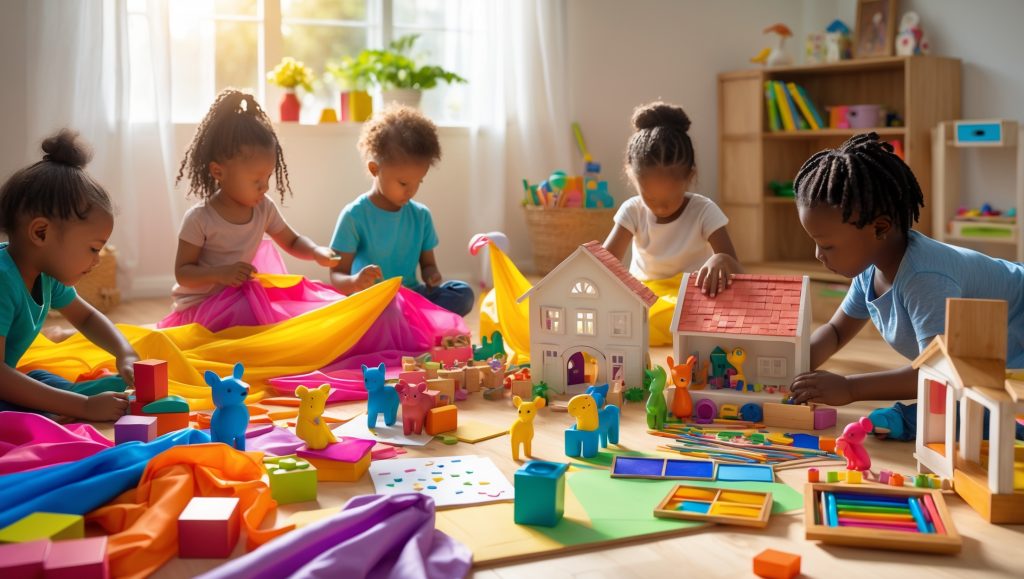
How We Chose
Open-ended toys are playthings that don’t prescribe a single way to play. These toys can be used in multiple ways, sparking imagination and supporting developmental skills. Our selection process focused on:
- Developmental value (creativity, problem-solving, social skills)
- Quality and durability
- Safety and non-toxic materials
- Inclusivity for a variety of ages and interests
- Parent and expert reviews, alongside evidence-informed recommendations
#1: Wooden Building Blocks — The Timeless Foundation
Why it stands out
Simple wooden blocks invite endless building, knocking down, sorting, and imaginative play. They grow with your child, from toddler towers to elaborate creations for older kids.
Best for
- Families seeking a classic, durable investment
- Kids who love building or pretend play
Key notes
- Age/Stage: 12 months+, supervision for under 3s
- Materials/Ingredients: Solid wood, non-toxic finishes
- Strengths: Versatile, supports STEM skills, open-ended for all ages
- Trade-offs: Heavier than plastic; watch for sharp corners with young toddlers
#2: Play Silks — Imaginative Possibilities
Why it stands out
Colorful, light, and tactile, play silks become capes, rivers, costumes, scenery, and more. They inspire movement, sensory exploration, and storytelling.
Best for
- Children who love dress-up or pretend play
- Families interested in sensory-rich toys
Key notes
- Age/Stage: 18 months+, supervision recommended
- Materials/Ingredients: 100% silk or polyester alternatives
- Strengths: Lightweight, portable, fosters creativity
- Trade-offs: Can snag or stain; younger children may need supervision
#3: Magnetic Tiles — Building in Every Dimension
Why it stands out
Magnetic tiles click together to form 2D and 3D structures. They captivate kids with their colorful transparency and endless design possibilities, from towers to imaginative vehicles.
Best for
- Preschoolers and older toddlers
- Children interested in building, engineering, or color patterns
Key notes
- Age/Stage: 3+, due to small parts
- Materials/Ingredients: BPA-free plastic, enclosed magnets
- Strengths: Promotes spatial reasoning, teamwork, fine motor skills
- Trade-offs: Expensive compared to other toys; pieces can get lost
#4: Animal Figurines — Stories Come Alive
Why it stands out
Quality animal figurines spark storytelling, small world play, and learning about nature. They’re easy to incorporate into other toys and encourage language development.
Best for
- Kids fascinated by animals
- Families seeking compact toys for on-the-go play
Key notes
- Age/Stage: 2+, check for choking hazards
- Materials/Ingredients: Durable plastic or wood
- Strengths: Versatile, educational, supports solo and group play
- Trade-offs: Small pieces may not suit young toddlers
#5: Dollhouse or Playhouse — A World to Arrange
Why it stands out
A dollhouse or playhouse is a miniature world where children create stories, role-play, and practice social skills. The furniture and figures can be rearranged for new scenarios every day.
Best for
- Preschoolers and up
- Kids who love narrative or social play
Key notes
- Age/Stage: 3+, with age-appropriate accessories
- Materials/Ingredients: Wood, sturdy plastic, or eco-friendly composites
- Strengths: Encourages empathy, fine motor skills, creativity
- Trade-offs: Bulky; some sets have small accessories
#6: Large Foam Blocks — Big Builds, Safe Play
Why it stands out
Oversized foam blocks allow for safe climbing, tumbling, and building. They’re ideal for gross motor play indoors and can be used for obstacle courses or forts.
Best for
- Toddlers and preschoolers with space to move
- Families seeking safe, active play options
Key notes
- Age/Stage: 12 months+
- Materials/Ingredients: Dense foam with wipe-clean cover
- Strengths: Supports physical development, collaborative play
- Trade-offs: Take up space; usually pricier than small blocks
#7: Art Supplies — Creative Freedom
Why it stands out
Crayons, washable markers, child-safe scissors, and glue sticks invite children to explore, invent, and express themselves. Open-ended art supplies foster independence and confidence.
Best for
- All ages, with supervision and age-appropriate materials
- Kids who love to draw, paint, or craft
Key notes
- Age/Stage: 18 months+, adapt supplies as needed
- Materials/Ingredients: Non-toxic, washable, size-appropriate
- Strengths: Builds fine motor skills, self-expression
- Trade-offs: Can be messy; requires adult oversight for younger children
#8: Vehicles (Cars, Trains, Planes) — On-the-Go Adventures
Why it stands out
Simple vehicles without electronics or set tracks encourage kids to invent stories, build cities, and experiment with movement and cause-and-effect.
Best for
- Children drawn to motion and transportation themes
- Families traveling or with limited play space
Key notes
- Age/Stage: 18 months+, choose chunkier vehicles for under 3
- Materials/Ingredients: Wood or sturdy plastic, no small parts
- Strengths: Portable, encourages solo or group play
- Trade-offs: Too many can lead to clutter; some models include small detachable pieces
#9: Stacking and Nesting Toys — Early Problem-Solving
Why it stands out
Simple cups, rings, or boxes to stack, nest, or sort build hand-eye coordination and early math skills. They’re satisfying for babies and still engaging for older toddlers.
Best for
- Infants and toddlers exploring cause-and-effect
- Families wanting compact, versatile toys
Key notes
- Age/Stage: 6 months+
- Materials/Ingredients: BPA-free plastic or wood
- Strengths: Affordable, easy to clean, grows with your child
- Trade-offs: Simpler than other picks; babies require supervision
Buying Tips
- Prioritize safety. Look for non-toxic materials, smooth edges, and age-appropriate sizing. Check for recalls and certifications when possible.
- Less is more. Open-ended toys shine in uncluttered play spaces. Rotate a few favorites to keep things fresh.
- Choose quality over quantity. Well-made toys last longer and can be passed down or shared.
- Follow your child’s interests. Let their curiosity guide you—whether it’s animals, building, or art.
- Think about storage. Multi-piece sets are great, but plan for bins, baskets, or shelves to keep play areas tidy.
Verdict
Open-ended toys are a powerful investment in your child’s development, offering years of flexible, creative play. Whether you start with classic wooden blocks or branch out to magnetic tiles, play silks, or art supplies, these toys adapt to your child’s changing interests and abilities. Thoughtfully chosen, they support social, emotional, and cognitive growth—while keeping playtime fun and family memories rich.
FAQ
+What makes a toy truly “open-ended”?
+Are open-ended toys suitable for babies?
+How do I encourage my child to use open-ended toys?
+Do open-ended toys work for children with different learning styles?
+How many open-ended toys does my child need?
+Can open-ended toys help with sibling play?
+What’s the best way to clean and store open-ended toys?

Open-ended toys are essential tools for nurturing creativity, problem-solving, and emotional intelligence in children. Unlike toys with predetermined outcomes, open-ended toys inspire endless possibilities, allowing kids to invent, build, and role-play without limits. In 2025, the top open-ended toys continue to champion simplicity and versatility, encouraging children to take the lead in their play experiences.
Among the most popular choices are classic wooden blocks, magnetic tiles, and loose parts sets, each offering limitless ways to stack, connect, and experiment. Eco-friendly modeling clay and sensory play kits provide tactile experiences that promote fine motor skills and imaginative storytelling. Play silks and fabric forts remain favorites, doubling as capes, landscapes, or secret hideouts depending on a child’s whim. For budding engineers, modular construction sets and open-ended robotics kits foster design thinking and collaborative play.
When choosing open-ended toys, look for items that span multiple ages and stages, promoting sibling play and long-term engagement. These toys empower children to create their own narratives, building confidence and resilience along the way. By investing in quality open-ended toys, parents can cultivate a home environment rich in curiosity and joyful discovery.
- Encourage independent, creative play every day
- Choose toys that grow with your child’s interests
- Mix and match open-ended toys for fresh inspiration
- Prioritize quality and sustainability for lasting value
Do you have any suggestions for how to safely store toys like animal figurines during potty training? I’m concerned about keeping things clean and making sure they don’t end up in the bathroom by accident.
You’re right to want to keep toys clean and out of the bathroom during potty training. Try setting up a dedicated toy bin in another room, placed at your child’s eye level but away from high-traffic bathroom zones. Before potty time, gently remind your child that animal figurines stay in their special spot until after. Opt for bins with lids to keep dust and germs away. Wash plastic toys regularly with mild soap and water, especially if you suspect they’ve been near the bathroom. This isn’t medical advice; if you’re concerned, check in with your pediatrician.
I noticed that wooden blocks are recommended with supervision for kids under 3. Do you have any advice on what to look for in block sets to make sure they’re really safe for younger toddlers, especially when they start mouthing everything?
It’s great that you’re thinking carefully about toy safety for your toddler, especially at the mouthing stage. When choosing wooden blocks for children under 3, look for blocks that are large enough not to pose a choking risk—nothing smaller than about 1.25 inches in any direction. Make sure the wood is well-sanded with no sharp edges or splinters. Check that finishes are non-toxic and labeled as child-safe, avoiding any peeling paint or varnish. Supervise play to prevent accidental chewing or swallowing. This isn’t medical advice; if you’re concerned, check in with your pediatrician.
You mentioned that wooden building blocks and magnetic tiles both support STEM skills. For a 2-year-old just starting out, is one better than the other in terms of encouraging creativity or independent play?
It’s great that you’re thinking about fostering creativity and independence early on. For a 2-year-old, wooden building blocks are usually easier to grasp and stack, supporting fine motor skills and open-ended play safely. Start with larger blocks to avoid choking hazards. Magnetic tiles can be fascinating but may require more supervision, as younger toddlers sometimes put pieces in their mouths and the magnets are small. Whichever you choose, sit nearby for safety and join in play at first, gradually encouraging solo exploration. This isn’t medical advice; if you’re concerned, check in with your pediatrician.
You mention play silks as a great sensory toy, but are there budget-friendly options that still meet safety and durability standards? I’d love to introduce sensory fabrics but am unsure which alternatives to choose for a messy, enthusiastic toddler.
You’re thoughtful to seek safe, budget-friendly sensory options for your toddler’s play. Consider sourcing lightweight cotton scarves, bandanas, or fabric remnants from craft stores—as long as they’re large enough to avoid choking hazards, have securely stitched hems, and are machine washable. Always wash new fabrics before play to remove irritants, and supervise to prevent wrapping around necks or faces. For extra durability, avoid materials that fray easily or shed fibers. This isn’t medical advice; if you’re concerned, check in with your pediatrician.
With play silks being quite lightweight, do you have any advice for cleaning stains out, or is it better to go for the polyester versions for messy play?
You’re right to consider how to keep play silks clean, especially with messy play. For silk, gently hand wash with cold water and a little mild detergent, then blot stains—avoid scrubbing, which can damage the fibers. Let them air dry flat, away from direct sun. For very stubborn stains or frequent messes, polyester versions are easier: they can usually go in the machine on a gentle cycle and handle rougher treatment. For toddlers or messy sensory play, polyester can be more practical and safer since it dries quickly. This isn’t medical advice; if you’re concerned, check in with your pediatrician.
Do you have any advice for introducing magnetic tiles to a child who gets overstimulated by bright colors or the sound they make when clicking together?
It’s thoughtful that you’re considering your child’s sensitivities while introducing magnetic tiles. Start by offering just a few tiles at a time in muted or pastel colors if available, to reduce visual stimulation. Let your child explore them on a soft surface like a rug, which can help muffle the clicking sounds. Sit nearby to reassure them and show gentle ways to connect or separate the tiles. Watch for signs of discomfort and take breaks if needed. Always supervise closely, especially if your child is under three, to ensure safety with small parts. This isn’t medical advice; if you’re concerned, check in with your pediatrician.
My child finds certain textures overwhelming, especially rough wooden or shiny plastic materials. Do you have any recommendations among these toys for options that tend to feel softer or smoother to the touch?
It’s completely understandable to want toys that feel comfortable and inviting for your child’s sense of touch. From the article, consider soft fabric blocks or plush stacking toys, which are gentle and smooth. Some silicone-based toys can also provide a velvety, non-slip texture that many sensory-sensitive children prefer. Avoid toys with unfinished wood or rigid, glossy plastic; instead, look for well-sanded wood or cloth-covered items. Always supervise play, especially with younger children, to ensure safety. This isn’t medical advice; if you’re concerned, check in with your pediatrician.
My toddler has a language delay and gets easily frustrated with complicated toys. Do you have any recommendations for which of these open-ended toys are easiest for encouraging simple speech or word practice without being overwhelming?
It’s understandable to want toys that support your toddler’s language development without causing frustration. For encouraging simple speech, try large wooden blocks or simple stacking cups—these invite easy labeling like ‘up,’ ‘down,’ ‘red,’ or ‘big.’ Soft animal figures or basic doll sets can help prompt single words or simple phrases through pretend play. Keep play sessions short, use lots of repetition, and model words clearly. Always supervise to ensure safety with small pieces and check toy recommendations for age-appropriateness. This isn’t medical advice; if you have concerns about your child’s language, consult your pediatrician or a speech-language pathologist.
With my twins’ different energy levels—one settles for quiet time while the other needs more sensory input—would you recommend play silks or animal figurines for helping regulate their sensory needs, or should I look for something even more tactile?
It’s wonderful that you’re tuned in to your twins’ unique sensory needs. Play silks can be calming for quiet time, offering gentle tactile and imaginative play, while animal figurines give opportunities for storytelling and fine motor work. For your more sensory-seeking twin, you might also consider textured sensory balls or kinetic sand (with supervision and age-appropriate materials) for extra tactile input. Always supervise play with small parts, especially for children under three. This isn’t medical advice; if you’re concerned, check in with your pediatrician.
We have a younger toddler and older preschooler. Do you think open-ended toy subscriptions offer enough flexibility to suit both their developmental stages, or is it safer to buy age-appropriate toys outright to ensure safety and interest?
It’s thoughtful to consider both safety and engagement for siblings at different ages. Many open-ended toy subscriptions are curated by age, but some boxes may include small parts or activities best for older children, so always check the recommended age range before letting your toddler join in. For shared play, supervise closely and remove any items with choking hazards. Alternatively, you could purchase a mix of age-appropriate toys so each child has safe options, while still sharing some open-ended choices like blocks. In the end, flexibility is possible, but prioritizing safety and each child’s needs is important. This isn’t medical advice; if you’re concerned, check in with your pediatrician.
I am always looking for quiet activities my toddler can do early in the morning while the rest of the family is still sleeping. Do you find that magnetic tiles or wooden blocks are better for keeping noise levels down during playtime, or is there another toy on your list that works especially well for quieter mornings?
It’s thoughtful to look for quiet play options so your toddler can enjoy themselves without waking others. Between magnetic tiles and wooden blocks, magnetic tiles are generally quieter since they don’t clatter as much when stacked or moved. For even less noise, consider soft fabric blocks or chunky silicone stacking toys, both of which are listed for their gentle, muffled sounds and toddler-friendly design. Always supervise to ensure small pieces are not a choking hazard. This isn’t medical advice; if you’re concerned, check in with your pediatrician.
My child’s grandparents enjoy teaching traditional games and stories from our heritage. How might we combine these open-ended toys with cultural storytelling to make playtime even more engaging for our toddler?
It’s wonderful that you want to weave your family’s heritage into playtime. You might invite grandparents to use open-ended toys as props during stories, like building scenes with blocks or acting out tales with simple dolls. Encourage your toddler to create their own versions of traditional games using objects like scarves or stacking cups. Keep activities hands-on and interactive, adapting the stories and games to your child’s age so they’re safe and easy to join in. Always supervise to ensure small pieces or tricky toys aren’t a hazard. This isn’t medical advice; if you’re concerned, check in with your pediatrician.
My baby is quite sensitive to new textures and colors. Are there open-ended toys from your list that tend to be less overwhelming for babies who get easily overstimulated, especially when first introducing them?
It’s great that you’re noticing and supporting your baby’s sensory needs. For babies sensitive to textures and colors, start with toys made from smooth, natural materials, like plain wooden blocks or soft cloth stackers from the list. Choose toys with muted colors and minimal patterns to keep things calm. Offer just one or two items at a time in a quiet space, and watch your baby’s reactions—follow their lead on what feels comfortable. Always supervise play, check for small parts, and be mindful of age recommendations. This isn’t medical advice; if you’re concerned, check in with your pediatrician.
When it comes to wooden blocks, I see supervision is suggested for kids under 3 due to size and weight. Are there certain sets that are specifically made larger to reduce choking risks, or should parents always stick with blocks meant for older toddlers?
You’re right to be cautious about block safety for little ones. For children under 3, look for wooden block sets labeled as toddler-safe or for ages 12 months and up—these blocks are larger, lightweight, and designed to be too big to fit entirely in a child’s mouth, reducing choking hazards. Always check the manufacturer’s age recommendations and inspect for smooth, splinter-free surfaces. Supervise playtime closely, especially if there are older siblings with smaller toys nearby. This isn’t medical advice; if you’re concerned, check in with your pediatrician.
Do you have suggestions for incorporating these open-ended toys into a daily routine or schedule? Sometimes my 3-year-old gets overwhelmed with lots of options, so I’d love ideas for structured but flexible playtimes.
It’s great that you want to bring more structure while using open-ended toys—many 3-year-olds feel comforted by a clear routine. Try offering just one or two toys at a time and rotating them each day to keep things fresh but not overwhelming. Set up a predictable play block, such as after snack time, so your child knows what to expect. You might introduce a gentle timer (10–20 minutes) for free play, letting your child know when it’s almost time to clean up. Always supervise closely to ensure safe play, especially with small pieces or materials. This isn’t medical advice; reach out to your pediatrician if you have specific concerns.
I’ve got a three-year-old obsessed with building and a baby who likes to put everything in her mouth, so I’m wondering about safe storage tips for magnetic tiles and animal figurines. Any ideas for keeping tiny pieces out of reach but still accessible for my older child during playtime?
It’s great that you want both kids to enjoy their toys safely. Try using clear, lidded storage bins placed on a high shelf, so your older child can ask for help to get them down. Consider designating a special play mat or area where small-piece toys are only used when the baby is napping or occupied elsewhere. After playtime, encourage your three-year-old to help clean up and put everything back in the bin—this builds responsibility too. Always check for missing pieces before letting the baby back in the shared space. This isn’t medical advice; if you’re concerned, check in with your pediatrician.
I’m new to daycare drop-off routines. If I were to send a set of wooden blocks or animal figurines with my 1-year-old for comfort and engagement, do you have any suggestions for keeping track of pieces or making sure they are safe for sharing with other toddlers?
You’re being thoughtful about both your child’s comfort and the practicalities of daycare. For a 1-year-old, choose toys labeled as safe for under 3, with large, single-piece blocks or chunky animal figures to avoid choking hazards and make shared play easier. Send only a small set in a labeled, washable bag, and let caregivers know which toys are yours. Ask staff to supervise closely during play and collect pieces afterward. Routine cleaning is important, so opt for toys that can be easily wiped down. This isn’t medical advice; if you have safety concerns, check in with your pediatrician.
My child doesn’t always like toys with strong smells or rough finishes. Among the toys you’ve listed, are there brands or materials known to be especially neutral or soft for kids with these sensitivities?
It’s thoughtful of you to consider your child’s sensory sensitivities. Among the toys covered in the article, brands that use unfinished or smoothly sanded wood, silicone, or soft fabrics are generally more neutral in smell and gentler to the touch. Look for open-ended toys like plain wooden blocks (check for non-toxic, untreated wood) and plush fabric items, avoiding those with strong paint, varnish, or rubbery odors. Always supervise play and check manufacturer details for age-appropriate safety and allergen info. This isn’t medical advice; if you’re concerned, check in with your pediatrician.
I noticed the play silks are listed as best for 18 months and up, but my son just turned 13 months and loves soft fabrics. Is it okay to let him play with silks under close supervision, or should we wait?
It’s wonderful that you’re tuned in to your son’s interests and safety. At 13 months, many babies love exploring soft textures, but play silks can pose risks like mouthing or entanglement. If you decide to introduce silks, always supervise closely, choose a smaller piece that can’t wrap around his neck, and inspect for loose threads. Keep play sessions short and never leave him unattended with the silk. This isn’t medical advice; if you’re concerned, check in with your pediatrician.
My toddler loves knocking over block towers, but we have hardwood floors and I worry about damage. Would you suggest putting a play mat underneath, or should we look for softer alternatives to wooden blocks?
It’s completely understandable to want to protect your floors and keep playtime safe. Placing a thick play mat or area rug under your child’s building area is a great first step and helps cushion both falls and noise. You might also try rotating in softer blocks, like foam or large cloth blocks, especially for high-energy play sessions. Offer supervision to remind your toddler about gentle play, but remember that knocking towers is a normal, fun part of learning. This isn’t medical advice; if you’re concerned, check in with your pediatrician.
Do you have any advice on how to rotate or organize open-ended toys so they stay fresh and engaging for a toddler on a long road trip? I’m curious if there’s an ideal way to prevent boredom without packing too much.
It’s great that you want to keep your toddler engaged and avoid overwhelm during a long trip. Try packing 3–5 small, open-ended toys, choosing ones with different textures and uses (like blocks, a soft doll, or stacking cups). Rotate toys every hour or so, putting away others in a separate bag to maintain novelty. Consider using a small pouch or organizer for easy access and to keep pieces together. Always supervise closely, and avoid toys with small parts if your child is under 3. This isn’t medical advice; if you’re concerned, check in with your pediatrician.
If you had to pick just one option from your list for a family on a tight budget, which open-ended toy gives you the best mix of durability, play value, and long-term use for a range of ages? I want to recommend something for my neighbor without breaking the bank.
It’s thoughtful of you to help your neighbor find a toy that’s worth the investment. From the list, I recommend classic wooden building blocks—they’re sturdy, offer endless creative play, and grow with children from toddlerhood through early school years. For safety, make sure the blocks are smooth, large enough to avoid choking hazards, and non-toxic if chewed. Suggest starting with a basic set and adding more as needed. Encourage supervised play for younger kids and watch for lost or damaged pieces. This isn’t medical advice; if you have concerns, check in with your pediatrician.
Do you find that kids this age spend more time with one type of open-ended toy versus another, or is it best to rotate between a couple each week to keep their interest and support different skills?
—it’s normal to wonder how to keep your child engaged and learning with open-ended toys. Many kids will naturally gravitate toward certain toys for a period, but rotating a few types each week can help support a range of skills and keep things fresh. For example, one week you might offer building blocks and play silks, then switch to animal figures and art supplies the next. Make sure all toys are age-appropriate, free from small parts, and safe for your child to use independently or with supervision as needed. This isn’t medical advice; if you’re concerned, check in with your pediatrician.
It’s hard to fit a lot into a diaper bag for a trip. If you had to pick just one open-ended toy from your list that offers the most play possibilities and packs easily, which would you recommend for travel with a two-year-old?
You’re thoughtful to want a toy that’s versatile and travel-friendly for your toddler. For a two-year-old, I’d suggest a small set of silicone stacking cups—they’re lightweight, nest into each other to save space, and can be used for stacking, pouring, pretend play, and even as snack holders. Make sure the cups are free of small parts and made from food-grade silicone to ensure safety. Always supervise play, especially in new environments. This isn’t medical advice; if you have specific concerns, check in with your pediatrician.
We often share care with grandparents, and they enjoy incorporating traditional cultural toys and foods. Have you noticed any challenges or benefits when introducing these open-ended toys alongside more familiar, culturally specific play materials? I’m curious how to blend them during play sessions.
It’s wonderful that you’re blending both open-ended and culturally specific toys during your child’s playtime. To support a smooth integration, try introducing new toys gradually alongside familiar items, inviting your child and grandparents to create stories or games using both. Encourage everyone to share the meaning or history behind traditional toys, making it a learning experience. Offer time-limited mixed play sessions to observe which combinations spark the most interest. Always supervise, especially with small parts or unfamiliar foods, and check for age-appropriateness. This isn’t medical advice; if you have concerns about safety or adjustment, consult your pediatrician.
My toddler is a little rough with toys and tends to put things in their mouth. How can I be sure wooden blocks and animal figurines are truly safe at this age? Are there specific features or brands you look for to avoid choking hazards or splintering?
It’s completely normal to worry about toy safety when your toddler explores with their mouth and hands. Choose wooden blocks and animal figurines that are specifically labeled for ages 1–3; these should be large enough to prevent choking and made without small, detachable parts. Look for toys with smooth, rounded edges—no splinters or rough paint. Check that the finish is non-toxic and water-based, since mouthing is common. Brands that meet ASTM or EN71 safety standards are a good bet. Always supervise play at this age. This isn’t medical advice; if you’re concerned, check in with your pediatrician.
My toddler is super active and always on the move. For sensory play, do you think play silks are durable enough to handle rougher, high-energy play, or would wooden building blocks be a better fit for that kind of activity?
It’s great that you’re thinking about your toddler’s energy levels and safe sensory play. Play silks can inspire lots of creative movement, but they may not hold up to tugging or rough handling as well as wooden blocks. For high-energy play, large wooden blocks are usually more durable and can be safely stacked, knocked down, or carried around under supervision. If you do use play silks, watch for any fraying and always supervise, especially to avoid tangling. This isn’t medical advice; if you’re concerned, check in with your pediatrician.
You mention that magnetic tiles are recommended for ages 3 and up. Are there any safer building toy alternatives for younger siblings who often want to join in but still put things in their mouths?
It’s understandable to want safer play options for little ones eager to join their siblings. For toddlers under 3, choose large building blocks made from BPA-free plastic or wood that are too big to swallow, like jumbo blocks or stacking cups. Soft fabric blocks are another great option—they’re lightweight and washable. Always supervise young children closely, since even larger pieces can pose risks if chewed or thrown. Rotate toys to keep things fresh and watch for any loose parts over time. This isn’t medical advice; if you’re concerned, check in with your pediatrician.