
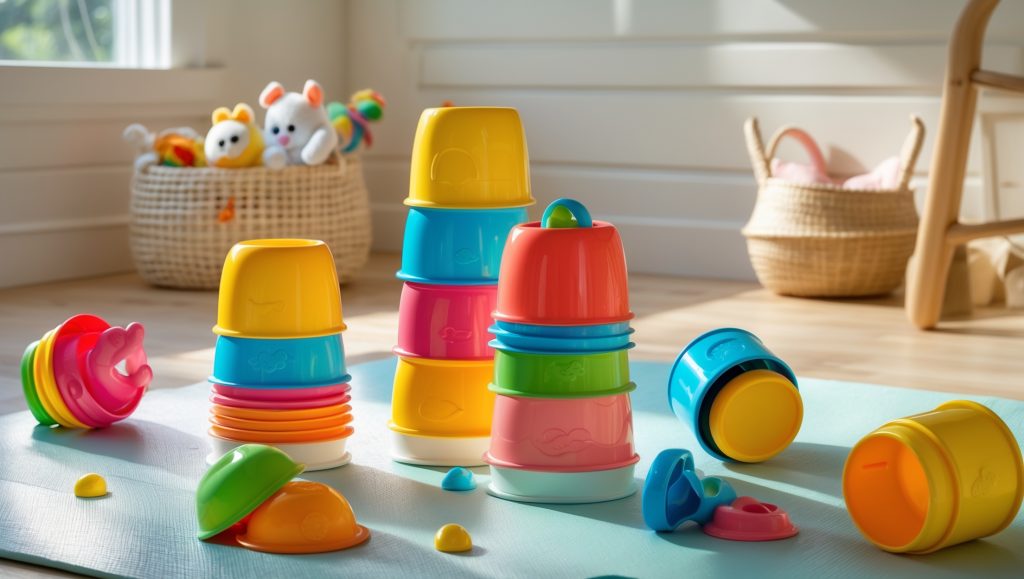
Overview
As babies start solids, they enter an exciting phase of sensory exploration—touching, tasting, and manipulating objects with newfound curiosity. The Fisher-Price Stack & Explore Cups have become a beloved staple for families embarking on this journey. Designed for babies as young as 6 months, these versatile cups invite stacking, nesting, scooping, and water play, making them ideal companions for mealtime, bath time, and independent play.
In this comprehensive 2025 review, we evaluate how the Fisher-Price Stack & Explore Cups stack up (pun intended!) for families introducing solids. We examine their build quality, developmental benefits, ease of use, and alternatives—so you can confidently choose the right playtime tools for your little one’s milestones.
What’s Inside / Build Quality
The Fisher-Price Stack & Explore Cups set includes eight brightly colored cups, each a different size and color. The cups are made from BPA-free, food-safe plastic—a must for babies who explore with both hands and mouths. Each cup features a unique number (1-8) embossed on the bottom, along with playful patterns that add tactile variety.
- Materials: BPA-free plastic, free from phthalates and PVC.
- Finish: Smooth, rounded edges for safe handling.
- Colors: Vivid rainbow palette to attract attention and stimulate visual development.
- Design: Lightweight, easy to grip for small hands, and stack securely without tipping easily.
Durability is a hallmark of this toy. The cups withstand repeated drops, chewing, and even the rigors of dishwasher cleaning. Their simple one-piece construction means no small parts to lose or pose a risk for little explorers.
Learning & Development Benefits
The Stack & Explore Cups are more than just a fun diversion—they’re a powerful tool for early development, especially at the stage when babies are starting solids and learning about the world through multisensory experiences.
- Fine Motor Skills: Stacking, nesting, and grasping cups support hand-eye coordination and finger dexterity.
- Problem-Solving: Figuring out how the cups fit inside each other or balance in a tall tower fosters spatial reasoning.
- Cause & Effect: Knocking down a tower or pouring water from one cup to another supports understanding of actions and consequences.
- Language Development: Caregivers can model counting, color names, size comparisons, and positional words (on, in, under) during play.
- Sensory Exploration: The different textures and safe materials encourage tactile and oral exploration, which are key for babies learning to eat and manipulate new foods.
These cups also adapt to a variety of play settings—on the highchair tray, in the bath, or outdoors—offering ongoing value as your child grows.
Setup & Use
Getting started with the Stack & Explore Cups couldn’t be easier. Simply open the package, give the cups a quick wash (they’re dishwasher safe), and hand them over. Here are some ways to use them effectively:
- Stacking & Nesting: Encourage your child to stack the cups into a tower or nest them by size. This is great for solo or cooperative play.
- Mealtime Play: Offer a clean cup for safe mouthing or to practice scooping soft foods (with close supervision).
- Bath Time: Let your baby scoop, pour, and splash with the cups in the tub for added water play fun.
- On-the-Go: Lightweight and compact, the set travels easily for outings or visits to grandparents.
Care is minimal—simply rinse after play, or toss them in the top rack of the dishwasher for a thorough clean. Their simple design means no trapped water or hidden crevices, reducing the risk of mold or buildup.
Pros & Cons
Pros
- Durable, food-safe, and BPA-free construction
- Supports a variety of developmental skills: motor, cognitive, and language
- Easy to clean and dishwasher safe
- Bright, engaging colors and simple design appeal to babies
- Versatile—suitable for mealtime, bath, and travel
- Affordable and widely available
Cons
- Cups may become mismatched or lost over time
- Simplistic design may not engage older toddlers for long periods
- No lid or container included for storage
- Some babies may chew through plastic with heavy teething
Alternatives & Similar Toys
While the Fisher-Price Stack & Explore Cups are a classic, several alternatives offer similar benefits for babies starting solids and exploring new textures:
- Munchkin Stacking Cups: Similar in function, these feature holes for water play and a slightly different shape.
- Green Sprouts Stacking Cups: Made from plant-based materials, a good choice for eco-conscious families.
- OXO Tot Stick & Stay Suction Stacking Cups: Designed to stick to highchair trays, reducing spills and frustration during play at mealtime.
- Boon Stacking Boats: Bathtub-friendly, with a unique boat shape for scooping and pouring.
All these options share a focus on safe materials and support for early learning, but differ in design, material, and extra features.
Verdict
The Fisher-Price Stack & Explore Cups earn high marks for their simplicity, durability, and developmental value. For families introducing solids, these cups are especially helpful—they encourage sensory exploration while remaining safe for mouthing and easy to clean after mealtime or bath play. While they may not hold the attention of older toddlers for extended periods, their affordability and versatility make them a smart addition to any toy rotation in 2025.
If you’re looking for a toy that offers open-ended play, supports milestones related to starting solids, and stands up to everyday use, the Stack & Explore Cups are a standout choice.
FAQ
+Are the Stack & Explore Cups safe for babies who are teething?
+Can these cups be used for food or snacks?
+Are they dishwasher safe?
+What age range is best for these cups?
+Do the cups contain any small parts?
+Is there a storage container or bag included?
+Can the cups be used in the bath?

Fisher-Price Stack & Explore Cups – Versatile Play for Babies Starting Solids
The Fisher-Price Stack & Explore Cups are a delightful staple for families navigating the exciting stage of starting solids. While these cups are primarily marketed as developmental toys, their versatility shines when used in highchairs or on play mats during mealtime. Babies love grasping, stacking, and knocking over the colorful cups—activities that foster fine motor skills and hand-eye coordination. The lightweight design makes them easy for small hands to manipulate, and their sturdy construction means they withstand enthusiastic play and frequent washing.
What sets these cups apart for parents of babies starting solids is their potential for creative food exploration. You can portion out small tastes of purees or finger foods in each cup, turning snack time into a sensory adventure. The cups are free of harmful chemicals and easy to clean, making them a practical choice for daily use. Whether you’re encouraging independent eating or exploring new textures together, these stackable cups bring joy and learning to every meal.
- Encourages fine motor development and sensory play
- Safe, durable, and easy to clean for everyday use
- Perfect for creative food presentation during early solids
- Compact design for at-home or on-the-go play
My daughter has some mild sensory sensitivities, especially around new textures during mealtimes. Based on your review, do the Fisher-Price Stack & Explore Cups have any features that might be overwhelming for sensitive little ones just starting solids?
It’s understandable to be mindful of sensory sensitivities when introducing new toys at mealtimes. The Fisher-Price Stack & Explore Cups are made of smooth, lightweight plastic with gentle ridges but no sharp or rough textures. For a texture-sensitive baby, start by letting her touch and explore the cups away from food, so she can get used to their feel at her own pace. Supervise closely, especially since babies might mouth the cups, and check for any strong odors or surface residue that could bother sensitive noses or hands. Always wash the cups before use. This isn’t medical advice; if you’re concerned, check in with your pediatrician.
I saw there are numbers on the bottom of each cup. At what stage do babies start to benefit from learning about the numbers, or are they mostly just for older toddlers?
—it’s wonderful that you’re thinking about early learning opportunities. For most babies, the numbers on stackable cups are more of a visual feature at first. Infants and young toddlers (up to around 18 months) will mainly enjoy stacking, banging, and exploring the cups’ colors and textures. Around age 2, toddlers may start to notice and name numbers, especially if adults point them out during play. For now, focus on safe, supervised play and use the numbers for casual exposure. This isn’t medical advice; if you’re concerned, check in with your pediatrician.
My toddler is super active and loves messy, hands-on play, but sometimes he gets frustrated if toys are too tricky or take a lot of setup. Are there specific ways to introduce the Stack & Explore Cups to keep him engaged without overwhelming him, especially during meal prep or cleanup?
It’s great that you want to keep your active toddler happily engaged, especially when you’re busy. Try starting with just a few cups instead of the whole set, so it’s simple and manageable. Show him fun ways to use them, like stacking, nesting, or knocking them down, and let him experiment with pouring dry snacks or water—just supervise closely to avoid spills and choking hazards. You can also make a sorting game with safe objects or pretend they’re bath toys during cleanup. These activities are well-suited for toddlers, but always keep an eye out for mouthing parts or slipping. This isn’t medical advice; if you’re concerned, check in with your pediatrician.
My toddler is really into water play during bath time but tends to throw toys pretty forcefully. Are the Stack & Explore Cups sturdy enough to handle this kind of rough play without cracking or getting misshapen over time?
It’s understandable to want toys that can handle enthusiastic toddler play, especially during bath time. The Fisher-Price Stack & Explore Cups are made of durable, BPA-free plastic designed to withstand typical toddler tossing and banging. For safe water play, supervise closely and check the cups regularly for any cracks or rough edges that could develop over time. While they are sturdy, no toy is indestructible, so rotate toys if you notice wear. Always avoid letting your child throw toys toward others or at hard surfaces to prevent accidents. This isn’t medical advice; if you’re concerned, check in with your pediatrician.
Is it possible for water to get trapped inside any part of these cups after dishwashing or bath play? I’m conscious of mold and hygiene, especially since my baby likes to chew on everything during mealtime and play.
It’s great that you’re thinking about hygiene and your baby’s safety, especially with toys they mouth often. The Fisher-Price Stack & Explore Cups are one-piece, open-ended cups without hidden compartments, so water shouldn’t get trapped if they’re used as intended. After washing or bath play, separate and dry the cups thoroughly to prevent moisture buildup. Inspect them regularly for any signs of mold, especially around the edges or if they’ve been stored wet. For babies starting solids who mouth toys, always supervise play and ensure all items are fully dry before use. This isn’t medical advice; if you’re concerned, check in with your pediatrician.
My toddler still puts everything in her mouth, even at two years old. Are these cups sturdy enough to handle chewing, or should I be worried about little pieces breaking off over time?
It’s completely normal to worry when your toddler mouths toys, especially at this age. The Fisher-Price Stack & Explore Cups are made from durable, BPA-free plastic and designed for mouthing and teething, but no toy is completely chew-proof. Inspect the cups regularly for cracks, bite marks, or loose edges. Always supervise play, especially if your child is an enthusiastic chewer. If you notice any damage, remove the cup right away. This isn’t medical advice; if you’re concerned, check in with your pediatrician.
We have limited space at home. Do you have advice for storing these cups when they’re not in use, especially if I want to rotate them with other toys and keep clutter down?
It’s great that you want to keep play areas tidy while rotating toys for your baby. Since the Fisher-Price Stack & Explore Cups nest neatly together, you can stack all the cups and store them in a small basket, bin, or zippered pouch. Place this container on a shelf or inside a drawer out of reach when not in use. For easy rotation, consider labeling containers for different toy sets so you can quickly swap them. Always check that storage spots are dry and clean, especially as babies may put cups in their mouths. This isn’t medical advice; if you have concerns, consult your pediatrician.
For parents on a tight budget, would you consider these a better value than soft stacking blocks or wooden ring stackers since they can be used for water play too?
It’s great that you’re looking for versatile toys that offer good value. The Fisher-Price Stack & Explore Cups can be a smart choice for budget-conscious families because they work for stacking, nesting, scooping, and water play. Unlike soft blocks or wooden stackers, these cups are usually easy to clean and dry, making them safe for use in the bath or with solids, as long as you always supervise and check for cracks. For babies over 6 months, these plastic cups are generally safe, but always check product age guidelines and avoid sharp edges. This isn’t medical advice; if you have safety concerns, consult your pediatrician.
We have limited storage in our nursery and try to avoid clutter in our bedtime routine area. Do the Stack & Explore Cups nest tightly enough to be stored easily in a small basket or on a bookshelf, or are they too bulky for tight spaces?
It’s great that you’re thinking about keeping your nursery organized and calm for bedtime. The Fisher-Price Stack & Explore Cups are designed to nest snugly inside one another, forming a compact single stack. Here’s how you can store them efficiently: 1) Nest all 10 cups together after playtime; 2) Place the stack in a small basket, drawer, or corner of a bookshelf; 3) Keep them separate from bedtime items to avoid overstimulation before sleep. Their lightweight, smooth design makes them safe for babies to handle with supervision. This isn’t medical advice; if you’re concerned, check in with your pediatrician.
I noticed the cups are labeled for ages 6 months and up—do you think they still offer new challenges or interest for a 9-month-old who is now starting to pick up early self-feeding skills, or would it be better to look into more advanced stacking toys at this stage?
It’s great that you’re thinking about how to keep your 9-month-old engaged as their skills grow. At this age, the Fisher-Price Stack & Explore Cups can still be helpful by encouraging more precise grasping, banging, and even scooping practice during mealtime, all of which support early self-feeding skills. Try letting your baby explore filling and emptying the cups with small snacks (supervised), nesting them, or stacking higher. If your child is ready, you might gradually introduce more complex stacking toys, but simple cups remain age-appropriate and safe, especially if you supervise to avoid mouthing or choking. This isn’t medical advice; if you’re concerned, check in with your pediatrician.
If a baby puts the cups in their mouth while teething, are there any concerns about the material wearing down over time or becoming rough? I watch a little one who loves to gnaw on everything.
It’s completely understandable to be cautious when little ones like to chew on their toys during teething. The Fisher-Price Stack & Explore Cups are made from BPA-free plastic designed to withstand normal mouthing and teething, but regular inspection is important. Check the cups often for any sharp edges, cracks, or worn spots that could develop over time from persistent gnawing. Clean the cups routinely to prevent buildup. Always supervise babies under 12 months, especially when they’re prone to exploring with their mouths. This isn’t medical advice; if you’re concerned about wear or your baby’s safety, please consult your pediatrician.
Is there an ideal routine or amount of daily playtime you’d recommend with these cups to best support fine motor skill development while balancing other play activities?
It’s great that you want to balance playtime and support your child’s fine motor skills. For babies starting solids, 10–15 minutes with the Stack & Explore Cups once or twice a day is usually enough, mixed in with other textures and toys. Let your child lead—they may play longer or shorter based on interest. Rotate activities so they also have time for tummy time, reading, and floor play. Always supervise to ensure safety, especially since the cups can become slippery if used during mealtime. This isn’t medical advice; if you’re concerned, check in with your pediatrician.
Is there a recommended way to use just a few of the cups at a time for a child who might get anxious when presented with all eight at once? Or is using the whole set better even for sensory-sensitive little ones?
It’s thoughtful to consider your child’s comfort, especially if they feel overwhelmed by too many toys at once. Start by offering just two or three cups, letting your child explore at their own pace. You can gradually introduce more cups as they get comfortable, watching for any signs of overstimulation. For sensory-sensitive babies, keeping play sessions brief and calm can help, and always supervise closely to ensure safety. Each child is unique, so adjust based on your little one’s reactions. This isn’t medical advice; if you’re concerned, check in with your pediatrician.
My little one has some sensory aversions to certain textures, especially with plastics. Are the surfaces of these cups all smooth, or do any of the patterns or embossing feel rough to sensitive fingers and mouths?
It’s understandable to want to protect your child from uncomfortable textures, especially if they have sensory sensitivities. The Fisher-Price Stack & Explore Cups are mostly smooth plastic, but a few cups feature shallow embossed shapes or numbers that can feel slightly raised to sensitive fingers or mouths. I suggest letting your child explore one cup at a time under supervision, rinsing them thoroughly to remove any residue, and watching for any signs of discomfort. You could also try introducing the cups during play first, before mealtime. This isn’t medical advice; if your child’s aversions are significant, checking in with your pediatrician or an occupational therapist may help.
Is there an upper age where these cups stop being engaging, or have you found that older toddlers keep coming back to them for different ways of playing?
—it’s natural to wonder how long a toy will stay interesting as your child grows. Most babies enjoy stacking and nesting the Fisher-Price Stack & Explore Cups from around 6 months, and many toddlers up to about age 2 or 3 continue to find creative uses, like pretend play or sorting. For older toddlers, interest may fade as they seek more complex challenges, but some do return to the cups for imaginative play. Always supervise play, especially with younger children and small parts. This isn’t medical advice; if you’re concerned, check in with your pediatrician.
My toddler loves chewing on everything, and we sometimes use toys at the table. Are the Stack & Explore Cups really durable enough to withstand daily gnawing and dishwasher cycles over the long run?
It’s understandable to want toys that can withstand both chewing and frequent cleaning. The Stack & Explore Cups are made from durable, BPA-free plastic designed for mouthing and stacking, so they generally hold up well to toddler teeth and regular dishwasher cycles. To help them last, rinse off any food debris before placing them on the top rack of the dishwasher and inspect for cracks or rough edges often. Supervise chewing, especially if your toddler is a vigorous biter, and swap out any cups that show wear. This isn’t medical advice; if you’re concerned, check in with your pediatrician.
My little one tends to get overexcited before sleep. Would you recommend using these cups as a quiet wind-down activity, or are they too stimulating to include in a bedtime or nap routine?
It’s great that you’re thinking about how play affects your child’s bedtime routine. While the Fisher-Price Stack & Explore Cups are safe and suitable for babies starting solids, their bright colors and stacking play can be stimulating, especially for little ones who get excited before sleep. For wind-down time, try using just one or two cups for gentle activities like quietly nesting them together, tapping them softly, or exploring them by touch in dim lighting. Keep the environment calm and avoid high-energy stacking or knocking over towers right before bedtime. Every child is different, so see what works best for yours. This isn’t medical advice; if you’re concerned, check in with your pediatrician.
You mention that these cups are good for starting solids. Is it appropriate to let my picky eater practice eating mushy foods from the cups, or should they just be used for play at this age?
It’s great that you’re looking for creative ways to encourage your picky eater with solids. The Fisher-Price Stack & Explore Cups can be safely used for supervised feeding practice as long as your baby is sitting upright and you thoroughly wash the cups before and after each use. Start by offering small amounts of smooth, soft foods in the cups and let your child explore at their own pace. Always supervise, ensure there are no cracks or damage, and avoid using the cups for hot foods. For babies under 12 months, keep portions small and watch for any signs of allergies. This isn’t medical advice; if you’re concerned, check in with your pediatrician.
If my baby is on the younger end, around 6 months, should I limit how many cups I offer at once to avoid overwhelming them, or is it safe to introduce the full set right away?
It’s great that you’re thinking about your baby’s comfort and development as you introduce new toys. For a 6-month-old, starting with just two or three cups at a time can help them focus and explore without feeling overwhelmed. As your baby gets more comfortable, you can gradually add more cups. Always supervise play to ensure safety, especially since younger babies may mouth the cups. The Fisher-Price Stack & Explore Cups are designed without small parts, making them safe under supervision. This isn’t medical advice; if you’re concerned, check in with your pediatrician.
We’re always trying to integrate play into daily routines for both twins, especially around introducing solids. Do you have any tips on using the Stack & Explore Cups to encourage self-feeding or make mealtimes less chaotic with two little ones?
It’s wonderful that you’re looking for ways to make mealtimes more playful and manageable with your twins. Try placing soft finger foods inside the Stack & Explore Cups to encourage reaching and self-feeding—just ensure the foods are age-appropriate and cut to prevent choking. You can let each twin explore with their own set of cups to minimize competition. Use the cups to talk about colors or stacking while offering bites, which keeps engagement high. Always supervise closely, especially with small children handling both food and toys. This isn’t medical advice; if you’re concerned, check in with your pediatrician.
My baby sometimes mouths toys for a long time—have you noticed any wear or changes in the plastic look or feel over a few months? I want to be sure the material stays safe and doesn’t degrade easily despite heavy everyday use.
It’s reassuring that you’re thinking about your baby’s safety, especially with toys that get mouthed often. In testing the Fisher-Price Stack & Explore Cups over several months, I did not notice significant changes in the plastic’s look or feel, even with daily mouthing. The material remained smooth and intact, with no peeling or rough spots. I recommend regularly inspecting the cups for any cracks or sharp edges, washing them often to remove residue, and supervising play to prevent chewing that could cause damage. These cups are designed for babies, but if you ever notice wear or have concerns, it’s a good idea to pause use and consult your pediatrician. This isn’t medical advice; if you’re concerned, check in with your pediatrician.
My baby sometimes puts the whole cup in their mouth while teething, especially after a messy meal. Should I be concerned about residue from certain foods (like eggs or nut butters) sticking to the cups even after a dishwasher cycle?
It’s completely understandable to worry about lingering food residue, especially with common allergens like eggs or nut butters. After dishwasher cleaning, inspect the cups for any stuck-on bits, especially around seams and textured areas. For extra reassurance, hand-wash cups with hot, soapy water or use a small brush to get into crevices. Consider running them through a sanitize cycle if your dishwasher has one. Always check that the cups are fully dry before giving them back—moisture can trap food particles. For babies under 12 months or with allergies in the family, extra caution is wise. This isn’t medical advice; if you’re concerned about allergies or exposure, check in with your pediatrician.
While the cups are labeled as BPA-free and without small parts, is there any guidance on how often parents should inspect them for wear or damage, especially for babies who tend to be rough with their toys?
You’re right to be proactive about toy safety, especially with babies who love to mouth and bang their toys. Check the cups daily for cracks, chips, or sharp edges, especially after high drops or dishwasher cycles. Run your fingers around the rims and edges to feel for any rough spots. If you notice any damage or warping, remove that cup right away. Supervise play, especially for babies under 12 months, to catch any issues early. This isn’t medical advice; if you’re concerned, check in with your pediatrician.
Do you have any advice on helping a child who gets frustrated when the cups don’t stack perfectly or when their tower keeps falling over? Sometimes this leads to tears during playtime.
It’s understandable to want to help your child manage frustration when play doesn’t go as planned. First, sit beside your child and model stacking slowly, showing that mistakes are okay and part of learning. Use encouraging words like ‘Oops, let’s try again together.’ Offer hand-over-hand support if your child wants help, but also let them experiment solo. Normalize toppled towers by laughing or saying, ‘That happens to everyone!’ For little ones, keep play sessions short and take breaks if tears start. Always supervise play to ensure safety, especially with younger babies. This isn’t medical advice; if you’re concerned, check in with your pediatrician.
My youngest has mild sensory sensitivities, especially to certain textures. Are the varied patterns on the cups gentle enough for sensitive hands and mouths, or could they be overwhelming for some babies?
It’s great that you’re considering your child’s sensory needs so thoughtfully. The Fisher-Price Stack & Explore Cups have textured patterns that are generally subtle and rounded, designed to be gentle for babies’ hands and mouths. To introduce them, let your child explore one cup at a time at their own pace. Watch how they respond to each texture—if one seems uncomfortable, set it aside for now. Supervise play to ensure your child doesn’t mouth the cups if you notice any distress. The materials are BPA-free and suitable for most babies, but sensitivities vary. This isn’t medical advice; if you’re concerned, check in with your pediatrician.
Have you seen these cups work well for babies who are sensitive to certain textures or get overwhelmed easily by new objects? I’m wondering if their smooth finish and colors might be more approachable for sensory-sensitive little ones.
It’s great that you’re thinking ahead about your baby’s sensory needs. The Stack & Explore Cups have a smooth, lightweight design and soft, non-jarring colors, which many sensory-sensitive babies find less overwhelming. Start by offering just one cup at a time, letting your baby touch and explore at their own pace. You might also stack or nest the cups yourself first so your baby can simply observe. Always supervise play, especially if your little one tends to mouth objects, since cups could pose a choking risk if broken. This isn’t medical advice; if you’re concerned, check in with your pediatrician.
My toddler gets overwhelmed with too many toys at once. Would you recommend offering all eight cups together, or starting with just a few and building up? What works best for a child who is easily distracted during meals?
It’s completely understandable to want to make mealtimes calmer for your easily distracted toddler. To support focus, I suggest starting with just two or three cups at a time, letting your child explore at their own pace before gradually adding more. Choose bright, contrasting colors to maintain interest, and keep the rest of the set out of sight. As your toddler becomes more comfortable, you can introduce additional cups. Supervise play during meals to prevent mouthing or choking risks. This isn’t medical advice; if you’re concerned, check in with your pediatrician.
At what age do you typically see babies transition from using the cups mostly for mouthing and banging to actually stacking or nesting them? I’m trying to set realistic expectations for play and skill development.
It’s great that you want to set realistic expectations for your baby’s development. Most babies start by mouthing and banging toys like stacking cups around 6–9 months, which is completely age-appropriate. Between 10 and 14 months, you may notice your baby beginning to stack or nest the cups, though every child develops at their own pace. To encourage stacking, demonstrate the action, offer lots of praise, and supervise closely to ensure safety with small parts or sharp edges. This isn’t medical advice; if you’re concerned, check in with your pediatrician.
My little one likes to chew on everything, so I appreciate that the cups are BPA-free. However, are there any concerns about paint flaking or the cups developing cracks over time with heavy use and chewing?
It’s great that you’re thinking about your baby’s safety as they explore with their mouth. The Fisher-Price Stack & Explore Cups are designed without paint, so flaking isn’t a concern. The cups are made from sturdy, BPA-free plastic, but with very heavy chewing over time, any plastic item can potentially develop cracks. Inspect the cups regularly for damage, and remove any cup that shows wear or cracking. Always supervise play, especially during teething. This isn’t medical advice; if your baby shows signs of oral injury or if you’re unsure about the cups’ condition, check with your pediatrician.
My toddler is very active and likes to use stackable toys in the bath, but sometimes tries to stand on them or throw them pretty hard. Do the Fisher-Price Stack & Explore Cups hold up to that kind of rough play over time, or do they eventually crack?
It’s great that your toddler is so enthusiastic about playtime and exploring new ways to use toys. The Fisher-Price Stack & Explore Cups are made from durable plastic and generally hold up well to regular stacking, scooping, and gentle water play. However, standing on them or throwing them forcefully can cause them to crack or deform over time, as they aren’t designed to bear weight or withstand hard impacts. For safety, supervise bath play and redirect your toddler if they try to stand on the cups. If any cups become damaged, remove them to avoid sharp edges. This isn’t medical advice; if you’re concerned, check in with your pediatrician.
We’re starting allergens like peanut butter with our 9-month-old and sometimes use toys at the highchair. Is there any concern about food residue sticking to the cups, even though they’re dishwasher safe?
It’s great that you’re thinking ahead about your baby’s safety with new foods and toys. To keep the Fisher-Price Stack & Explore Cups safe for your 9-month-old, thoroughly rinse any food off the cups before putting them in the dishwasher. Run them on the top rack, using a hot water cycle for thorough cleaning. Inspect cups after washing to check for lingering residue, especially in seams or edges. For extra peace of mind, occasionally hand wash with a bottle brush. These cups are made for easy cleaning, but always supervise play during meals to reduce choking risks. This isn’t medical advice; if you’re concerned, check in with your pediatrician.
Do the Stack & Explore Cups sometimes get moldy, especially if water gets trapped inside or after bath time? I’m always paranoid about hidden moisture in bath toys. Any tips to make sure they dry out completely?
It’s very thoughtful to be concerned about mold in bath toys—hidden moisture can be a real issue. The Stack & Explore Cups are open on both ends, which helps them dry out more easily, but moisture can still linger. After bath time, shake out all water, then lay the cups separately (not stacked) to air dry thoroughly. You can also towel-dry each cup and leave them in a well-ventilated spot. For extra assurance, inspect them regularly for any signs of mold. Always supervise babies with bath toys and avoid using them if you notice any mold growth. This isn’t medical advice; if you’re concerned, check in with your pediatrician.
You talk about the cups supporting sensory and oral exploration as babies start solids. How do these types of toys compare with things like puree feeders or iron-fortified cereals in encouraging babies to manipulate and discover different tastes and textures?
You’re really thoughtful to consider how different products help your baby explore new tastes and textures. Stack & Explore Cups support sensory and oral exploration through play—babies can mouth the cups, feel their shapes, and practice grasping, which helps develop feeding skills. However, puree feeders and cereals directly introduce new flavors and food textures, which are essential for learning to eat. Try offering safe foods during meals and letting your baby play with clean cups before or after eating to support both skill sets. Always supervise closely, check for choking hazards, and ensure the cups are clean before mouthing. This isn’t medical advice; if you’re concerned, check in with your pediatrician.
My 7-month-old still puts everything in his mouth when playing. Is there a risk of water or food getting trapped in the Fisher-Price Stack & Explore Cups, and how often would you recommend cleaning them if we use them daily at meals and in the bath?
It’s completely normal for your 7-month-old to mouth toys as part of exploring the world. The Fisher-Price Stack & Explore Cups are designed without small holes or crevices, which helps prevent water or food from getting trapped inside, but it’s still possible for residue to build up if used at meals or in the bath. Rinse and wash the cups with warm soapy water after each use, especially if they’ve come in contact with food or bathwater, and allow them to air dry fully. Inspect for any residue or mold weekly. Always supervise play and check for cracks. This isn’t medical advice; if you’re concerned, check in with your pediatrician.
Space is really limited in our home and my child’s cubby at daycare is small. Do the cups pack together tightly, and have you found any creative storage solutions to keep everything organized, especially when rotating toys in and out for mealtime or bath time?
You’re right to look for ways to keep things tidy in small spaces. The Fisher-Price Stack & Explore Cups nest neatly into each other, forming a single compact stack, so they don’t take up much room in a cubby or drawer. For easy rotation, try storing the stacked cups in a resealable food storage bag or small mesh pouch—this keeps them together and lets you hang or tuck them near the bath or mealtime area. Always check for leftover water to prevent mold, and supervise play if your child is under 12 months. This isn’t medical advice; if you’re concerned, check in with your pediatrician.
Do you have any tips on introducing these cups to a toddler who tends to get overwhelmed by bright colors and many textures? I want to encourage sensory exploration but worry about overstimulation during playtime.
It’s very thoughtful of you to support your toddler’s sensory needs while encouraging exploration. Try introducing just one or two cups at a time, choosing the softest or most neutral colors first. Play together in a calm, quiet space, allowing your child to explore at their own pace without rushing. You can also model gentle stacking or tapping, keeping the session short and positive. Always supervise closely, as toddlers may mouth the cups. This approach helps build comfort and confidence gradually. This isn’t medical advice; if you’re concerned, check in with your pediatrician.
If my toddler has a strong aversion to certain textures, do you think the patterns and materials on these cups might be overwhelming, or have you found most babies adjust easily? I’d love to encourage more tactile play but want to avoid any frustration.
It’s understandable to want to support your toddler’s sensory play while being mindful of their sensitivities. The Stack & Explore Cups are made from smooth, BPA-free plastic, with gentle raised patterns that most toddlers handle well, but every child is different. Try introducing the cups gradually—let your toddler touch or hold them at their own pace, using just one cup at first. You can model play by stacking or tapping them together, showing it’s safe. If your child resists, set the cups aside and revisit later, respecting their limits. Always supervise closely, and if texture aversion interferes with play or daily life, consider consulting your pediatrician. This isn’t medical advice; if you’re concerned, check in with your pediatrician.
My toddler is very active and tends to throw or bang toys during play. How well do the Stack & Explore Cups hold up to rougher use, and do they make a lot of noise on hard surfaces?
It’s completely normal for toddlers to explore toys energetically during play. The Fisher-Price Stack & Explore Cups are made from sturdy plastic and are designed to withstand typical toddler banging and throwing, so they should hold up well to rougher use. On hard floors, the cups can make noticeable clattering sounds when dropped or banged, which is common for lightweight plastic toys. You might try using them on a rug or play mat to reduce noise. Always supervise play, especially if your child is under three, to ensure safety. This isn’t medical advice; if you’re concerned, check in with your pediatrician.
How do these cups compare for developmental value and durability with silicone stacking toys I see in stores? I’m on a budget and want to pick whichever truly lasts through the toddler years.
It’s wise to weigh both developmental value and durability when choosing toys on a budget. The Fisher-Price Stack & Explore Cups offer classic stacking, nesting, and scooping play that supports fine motor skills and problem-solving from about 6 months up through toddlerhood. These cups are made of hard plastic, which tends to hold up well but may crack if stepped on. Silicone stacking toys are softer and safer for teething, and they rarely break, but sometimes have fewer stacking options. For either choice, always supervise if there are small parts. This isn’t medical advice; if you’re concerned, check in with your pediatrician.
As a parent of a two-year-old, I’m wondering if these Fisher-Price cups are still engaging for toddlers or if they’re better suited just for younger babies. Do you think my child might quickly outgrow them, or can they provide ongoing value past the baby stage?
Your question about keeping your two-year-old engaged is a thoughtful one. At this age, many toddlers still enjoy stacking, nesting, and imaginative play with simple toys like these cups. You can encourage your child to build taller towers, sort by color, or even use the cups for pretend play, like tea parties or scooping water during bath time. The cups are safe for toddlers, but always supervise water play and check for any wear or cracks. While some skills may feel easy now, creative uses can keep the cups interesting. This isn’t medical advice; if you have concerns about your child’s development or play interests, check in with your pediatrician.
Some babies are sensitive to bright colors or have sensory processing considerations. Are the colors and textures of these cups overstimulating for any children, or are they typically well tolerated during play?
It’s great that you’re considering your child’s sensory needs. The Fisher-Price Stack & Explore Cups do have bright colors and some textured surfaces, which most babies enjoy, but a few children with sensory sensitivities may find them overstimulating. Try introducing just one or two cups at a time in a calm environment, observing your baby’s reactions. If your child seems overwhelmed, you can limit play to the smoother, less vibrant cups. Always supervise play, especially for babies under 12 months, due to mouthing and small parts. This isn’t medical advice; if you’re concerned, check in with your pediatrician.
Sometimes I’m concerned about babies putting everything in their mouths, especially when different foods are involved. Are there any textures or features on these cups that might be challenging for teething babies who like to chew on things?
It’s completely normal to worry about what your baby puts in their mouth, especially as they explore new foods and toys. The Fisher-Price Stack & Explore Cups are made from smooth, BPA-free plastic with no sharp edges, which is generally safe for teething babies to chew on under supervision. Watch for signs of wear or cracks, since older or damaged cups can pose a safety risk. Always wash the cups thoroughly after food play to prevent residue buildup. For young babies who mouth everything, supervise closely to avoid choking on small pieces—fortunately, these cups are sized to minimize that risk. This isn’t medical advice; if you’re concerned, check in with your pediatrician.
Our son is sensitive to certain textures and easily gets overwhelmed by new sensations. Are the different patterns and tactile elements on these cups subtle, or could they be too stimulating for a sensory-sensitive toddler?
It’s understandable to want toys that feel comfortable for a sensory-sensitive child. The Stack & Explore Cups do have a variety of subtle patterns and textures—mostly gentle ridges or shallow bumps—rather than intense or scratchy surfaces. To help your toddler, start by introducing one cup at a time and let him explore at his own pace. Watch for signs of overstimulation, and if needed, stick with the smoothest cups first. Always supervise play, especially with younger toddlers or if mouthing is a concern. This isn’t medical advice; if you’re concerned, check in with your pediatrician.
My three-year-old still enjoys stackable toys, but I wonder if these cups are too basic for that age or if there are advanced play ideas to keep her engaged as she develops new skills.
It’s great that you want to keep your three-year-old challenged and engaged. You can make stacking cups more interesting by encouraging her to build towers by color or size order, use them for pretend play (like serving ‘tea’), or hide small toys inside for a guessing game. For simple math, try counting or sorting objects into the cups. At this age, supervision is still important to ensure safety, especially if other small objects are involved. This isn’t medical advice; if you’re concerned, check in with your pediatrician.
Are these cups actually safe for teething babies who tend to gnaw on toys while you prep breakfast? I know they’re BPA-free, but does the plastic hold up without getting rough edges over time?
It’s totally natural to worry about what your baby puts in their mouth, especially during teething. The Fisher-Price Stack & Explore Cups are BPA-free and made for babies as young as 6 months, so their plastic is designed to withstand chewing. Still, check the cups regularly for any cracks or sharp edges—replace them if you see wear. Always supervise teething babies during play, even with safe toys. Wash cups frequently to remove any saliva or food residue. This isn’t medical advice; if you’re concerned, check in with your pediatrician.
Can you compare these cups to silicone stacking toys in terms of durability and how well they hold up to outdoor play, like at the beach? We’re trying to decide which would offer more versatility for our toddler.
It’s great that you’re thinking about which toys will stand up to active toddler play. The Fisher-Price Stack & Explore Cups are made of sturdy plastic, so they’re quite durable and easy to rinse off after sand or water play at the beach. Silicone stacking toys are also tough and have the bonus of being bendable and less likely to crack, but they can pick up more sand and may be harder to clean if gritty. For outdoor versatility, both are safe for toddlers under supervision, but check for any small parts or pieces that could detach. This isn’t medical advice; if you have specific concerns, check in with your pediatrician.
My toddler has some language delays and sometimes gets overwhelmed by too many toys at once. Are there ways to introduce these cups so they are not too visually or sensory stimulating, or should I offer just a couple of them at a time?
It’s understandable to want playtime to feel calm and encouraging for your toddler, especially with language delays and sensitivity to stimulation. To start, offer just one or two cups at a time to keep things simple and manageable. Let your child explore the cups at their own pace—there’s no need to rush stacking or sorting. Use simple language and describe what you’re doing together, like saying colors or naming actions. Watch for signs that your toddler wants a break or new challenge, and gradually introduce more cups as they feel comfortable. Always supervise play to ensure safety with the small pieces. This isn’t medical advice; if you’re concerned, check in with your pediatrician.
Since my twins are both starting solids but at their own paces, do you have suggestions for how to use the Stack & Explore Cups to encourage one baby who is less interested in new textures or mouthing objects?
It’s understandable to want both your twins to feel comfortable exploring new textures. Try placing familiar puree or soft foods inside a cup and letting your less interested baby scoop or touch it with their fingers. Show how you gently tap or mouth an empty cup, modeling curiosity. Offer the cups for water play or gentle banging, so your baby can explore them without pressure to mouth right away. Always supervise, especially since mouthing is involved and parts could become slippery. This isn’t medical advice; if you’re concerned, check in with your pediatrician.
My toddler still enjoys stacking toys at almost two years old. Do you think the Fisher-Price Stack & Explore Cups still offer developmental benefits as children get older, or would you recommend transitioning to more advanced fine-motor activities at that stage?
It’s great that you want to keep nurturing your toddler’s development as they grow. At almost two years old, the Fisher-Price Stack & Explore Cups can still support important skills like hand-eye coordination, problem-solving, and early math as your child experiments with stacking, nesting, and sorting. To build on these benefits, you could: encourage your toddler to stack the cups in creative ways, use the cups for pretend play (like scooping or pouring water), or introduce counting and color-naming while playing. As your child’s skills grow, gradually add more challenging toys, such as interlocking blocks or shape sorters, always making sure toys are age-appropriate and supervised for safety. This isn’t medical advice; if you’re concerned, check in with your pediatrician.
How would you compare the Stack & Explore Cups to simple stacking blocks for winding down at night? Do you find the cups are overall quieter and less likely to rile up a pre-bedtime toddler?
You’re thoughtful to consider quieter toys for winding down before bed. The Stack & Explore Cups tend to be less noisy than stacking blocks, especially plastic or wooden blocks that can clatter when knocked over. At bedtime, try offering just a few cups for gentle stacking, nesting, or pretend play. This encourages calm, fine-motor activity and minimizes loud crashes. Always supervise closely, especially with children under 12 months, and check the cups for any sharp edges. Every child is different—if your toddler gets overly excited, opt for a quiet book or cuddling instead. This isn’t medical advice; if you’re concerned, check in with your pediatrician.
My toddler sometimes gets overstimulated by bright colors and noisy toys before bedtime. Are the Fisher-Price Stack & Explore Cups a good fit for a calming pre-bed activity? Or would you recommend a different type of toy for more soothing play at night?
It’s great that you’re noticing what helps your toddler wind down before bed. The Fisher-Price Stack & Explore Cups are quiet and simple, with no flashing lights or sounds, which makes them more calming than many toys. Try dimming the lights and stacking the cups slowly together or nesting them, focusing on gentle movements and soft conversation. For even more soothing play, you could use soft fabric toys or picture books with your toddler, as these tend to be less visually stimulating. Always supervise to ensure safety, especially with smaller parts. This isn’t medical advice; if you’re concerned, check in with your pediatrician.
Our child sometimes struggles with sensitivity to different textures. Are the embossed numbers and patterns on these cups subtle enough not to bother kids with sensory issues, or could they become a distraction during play?
It’s completely understandable to want toys that won’t overwhelm your child’s senses. The Fisher-Price Stack & Explore Cups do have raised numbers and patterns, but they’re quite shallow and smooth—typically gentle enough for most babies, including many with mild texture sensitivities. To help, let your child explore the cups at their own pace, start play with just one cup, and watch for any discomfort. You can also introduce the cups during water play, which may make the textures less noticeable. If your child shows signs of distress, pause and try again later. This isn’t medical advice; if you’re concerned, check in with your pediatrician.
We have limited space in our apartment, so I’m wondering how you recommend storing the Fisher-Price Stack & Explore Cups between uses. Do you have any tips for keeping them organized and clean, especially with all the pieces?
It’s understandable to want to keep play areas tidy, especially in a small space. Since the Stack & Explore Cups nest inside each other, stack them together after each use to save space. Store the nested set in a small basket or clear container on a shelf or inside a drawer, away from direct sunlight. To keep them clean, wash the cups regularly with warm, soapy water and let them air dry completely before stacking. These cups are safe for babies starting solids, but always check for any cracks or buildup, especially if used with food. This isn’t medical advice; if you notice any concerns, reach out to your pediatrician.
As a parent trying to create a Montessori-inspired play space at home, I’m curious if you have any suggestions for incorporating these stack and explore cups into practical life activities, especially around mealtimes or snack prep for a toddler starting solids.
It’s wonderful that you’re thinking about Montessori-inspired activities for your toddler. Here are a few ways to use the Stack & Explore Cups in practical life: Let your child use a cup to scoop and transfer soft foods like cooked peas or diced fruit, which helps build coordination. Invite them to pour water from one cup to another to practice careful movements. You can also use a cup for washing produce together or as a snack holder to encourage serving themselves. Always supervise closely, especially since toddlers may mouth items and the cups can be slippery during meals. This isn’t medical advice; if you have concerns about safety or readiness, check in with your pediatrician.
For families with limited storage or a tight budget, do these cups offer long-term play value, or might a multipurpose feeding set be a better investment for encouraging independent eating?
It’s thoughtful to consider both play value and practicality when choosing baby items on a budget. The Fisher-Price Stack & Explore Cups can be used for stacking, nesting, scooping, and even basic color sorting, supporting both motor and early cognitive skills for infants and young toddlers. While they aren’t designed specifically for feeding, they’re easy to clean and can occasionally hold dry snacks under supervision. However, a multipurpose feeding set is more suitable for encouraging independent eating, as it’s made for food safety and self-feeding skills. Always check for age recommendations and supervise young children. This isn’t medical advice; if you’re concerned, check in with your pediatrician.
With so much focus on eco-friendly products these days, I’m curious if you would recommend wooden stacking toys over the Fisher-Price Stack & Explore Cups for families specifically wanting to reduce plastic use. Are there substantial developmental or safety trade-offs to consider?
It’s great that you’re thinking about both your child’s development and the environment. Wooden stacking toys can be a more eco-friendly option, and for most babies, they offer similar developmental benefits—like fine motor, problem-solving, and early math skills—as the Fisher-Price cups. For infants starting solids, ensure any wooden toys have a smooth finish, non-toxic paint, and no small parts that could come loose. Plastic cups like the Fisher-Price set are dishwasher-safe and lightweight, making them easier to clean and handle for younger babies. Ultimately, both types can be safe and supportive; supervise play and choose age-appropriate, well-made products. This isn’t medical advice; if you’re concerned, check in with your pediatrician.
Do the Stack & Explore Cups work well for children who might be sensitive to certain textures or colors? Sometimes my little one gets overwhelmed by busy designs or bright colors, so I wonder if these cups would be a good fit for sensory-sensitive babies.
It’s understandable to want toys that feel comfortable for a sensory-sensitive baby. The Fisher-Price Stack & Explore Cups use solid, bright colors but avoid busy patterns, which can help reduce visual overload. To check for tactile comfort, try letting your child handle one cup at a time during a calm moment, watching for any signs of discomfort. If your little one prefers softer textures, you might want to supervise play closely or introduce the cups alongside a favorite soft item. Always watch for mouthing, especially with sensitive kids, and inspect for any sharp edges. This isn’t medical advice; if you’re concerned, check in with your pediatrician.
If my toddler has some sensory sensitivities, especially with vibrant colors and different textures, do you think these cups could be overwhelming, or are they subtle enough for gradual introduction?
It’s understandable to want to make playtime comfortable for a sensory-sensitive toddler. The Fisher-Price Stack & Explore Cups do have bright colors and a variety of textures, which some children might find stimulating. You could start by introducing just one or two cups at a time in calm settings, allowing your child to approach them at their own pace. Offer the cups during familiar routines, and watch closely for signs of discomfort or interest. All parts are large enough for toddler safety, but always supervise play. This isn’t medical advice; if you’re concerned, check in with your pediatrician.
Could you share ideas for how I might use the Fisher-Price Stack & Explore Cups to encourage pretend play using common household items like wooden spoons or washcloths? I’m looking for ways to turn everyday objects into part of my baby’s play routine along with the cups.
It’s wonderful that you want to spark your baby’s imagination with everyday objects. Try pretending the cups are cooking pots, letting your baby “stir” with a wooden spoon or “serve” imaginary food. Use washcloths as napkins or “blankets” for small stuffed animals placed inside the cups. You could stack the cups and tap them gently with a spoon to make music together. For babies under 12 months, always supervise play, and ensure objects are clean, unbreakable, and free from choking hazards. This isn’t medical advice; if you’re concerned, check in with your pediatrician.
Would you recommend these cups over traditional wooden stacking blocks for a similar age, especially when it comes to encouraging independent play? I am trying to decide which to add to our play routine without having too many toys.
It’s thoughtful of you to want versatile toys that encourage independent play without overflowing the toy box. For babies starting solids, the Stack & Explore Cups have some advantages: they’re lightweight, easy for little hands to grasp, and can be used in water or with snacks, encouraging sensory and fine motor exploration. Unlike wooden blocks, they’re plastic and washable, which is helpful at this messy stage. Both options promote independent play, but the cups are less likely to splinter or have small parts. Always supervise, especially if baby is mouthing toys. This isn’t medical advice; if you’re concerned, check in with your pediatrician.
For babies who love to gnaw on toys, is there any risk that the raised numbers or patterns on the bottom of the cups could come loose or pose a choking hazard after repeated use?
It’s great that you’re thinking ahead about safety while your baby explores with their mouth. The raised numbers and patterns on these cups are molded as part of the plastic, not attached pieces, so they are unlikely to come loose with typical use. To keep play safe, regularly inspect each cup for cracks, peeling, or rough edges, especially if your baby is teething. Wash the cups frequently to remove saliva or food residue. Always supervise babies under 12 months during play, since mouthing is common at this stage. This isn’t medical advice; if you’re concerned, check in with your pediatrician.
Would it be safe to use the Stack & Explore Cups for snacks like cut fruit or puffs during independent playtime, or should they only be used for play and water activities? I’m interested in making them part of our mealtime routine, but want to be cautious about possible food safety or cleaning concerns.
It’s great that you’re thinking about ways to enrich your baby’s mealtime routine. The Stack & Explore Cups are made of child-safe plastic and can be used for dry snacks like puffs with supervision, but be sure to check that they’re free of cracks and thoroughly cleaned between uses. For cut fruit or other moist foods, consider whether the cups are dishwasher safe and if soap can reach all crevices, as lingering moisture could harbor bacteria. Always supervise your baby during snack time to prevent choking, and only give age-appropriate foods. This isn’t medical advice; if you’re concerned, check in with your pediatrician.
We have limited storage space in our kitchen and play area. Do the cups nest compactly enough for easy storage, and have you found them to be easy to keep organized with other feeding and play items?
It’s understandable to want toys and feeding items that don’t add to household clutter. The Fisher-Price Stack & Explore Cups nest very compactly—when stacked together, they take up about as much space as a single large cup, making them easy to tuck into a small drawer or bin. You can keep them in a sealed container or zip bag to keep them organized with other feeding or play items. For safety, always dry them thoroughly after washing to prevent mold, especially if used with food. This isn’t medical advice; if you’re concerned, check in with your pediatrician.
Have you noticed if these cups appeal to older toddlers who may still have language delays, or do they seem to be mostly engaging for babies closer to 6-12 months? I’m wondering if they hold interest as kids grow.
It’s thoughtful to consider whether these cups will keep older toddlers engaged, especially if they have language delays. While the Fisher-Price Stack & Explore Cups are designed mainly for babies around 6–12 months, many older toddlers still enjoy stacking, nesting, and knocking them over. For a child with language delays, you can use the cups for simple games together—naming colors, hiding small safe objects underneath, or practicing turn-taking. Always supervise play, especially if your child puts toys in their mouth or explores with their hands a lot. This isn’t medical advice; if you’re concerned, check in with your pediatrician.
If a baby has some sensitivity to certain textures or is hesitant with new toys, do you notice the cups’ varied patterns or plastics ever being an issue? Any tips to ease them into exploring the set?
It’s completely understandable to be mindful when your baby is sensitive to textures or new toys. The Stack & Explore Cups are generally smooth with only gentle ridges, but every baby is different. Start by letting your baby watch you touch and play with the cups, then offer just one cup at a time to reduce overwhelm. You might place a favorite snack or familiar object inside a cup for extra encouragement. Always supervise, especially if your baby mouths toys, to ensure safety. If you notice persistent discomfort or aversion, it’s okay to pause and try again later. This isn’t medical advice; if you’re concerned, check in with your pediatrician.
One of my twins can get overstimulated by bright colors and noisy toys. Do the rainbow colors on these cups seem visually overwhelming in person, or are they gentle enough for more sensitive babies?
It’s completely understandable to want toys that won’t overwhelm your sensitive twin. The Fisher-Price Stack & Explore Cups do use rainbow colors, but in person, the shades tend to be more muted and not overly bright or shiny. There are no lights or sounds, so they’re much quieter than many baby toys. To help your baby adjust, try introducing just one or two cups at a time, letting them explore at their own pace with close supervision. Always watch for signs of overstimulation, like turning away or fussiness, and offer breaks as needed. This isn’t medical advice; if you’re concerned, check in with your pediatrician.
Given that my child can be sensitive to textures, do the embossed numbers or patterns on the cups ever seem to bother babies with tactile sensitivities, or is the finish generally smooth enough for most little ones?
It’s very thoughtful of you to consider your child’s sensory sensitivities. The Fisher-Price Stack & Explore Cups do have raised numbers and patterns, but the plastic is generally smooth with gentle embossing, which most babies tolerate well. To introduce them, try letting your child touch one cup for brief periods while you watch for signs of discomfort. If your child pulls away or seems bothered, offer cups with the smoothest surface first. Always supervise closely, especially if your child mouths toys. Every child’s sensory profile is unique, so go at your child’s pace. This isn’t medical advice; if you’re concerned, check in with your pediatrician.
I watch a toddler who likes to chew on everything, especially during teething. Are the Fisher-Price Stack & Explore Cups sturdy enough to handle constant chewing, and are the embossed numbers safe if they’re mouthed a lot by younger babies?
It’s understandable to want toys that are safe and durable for a teething toddler who mouths everything. The Fisher-Price Stack & Explore Cups are made from sturdy, BPA-free plastic designed to withstand frequent chewing, and the embossed numbers are molded into the cups, not painted or glued on, reducing choking and ingestion risks. Always supervise play, especially if your toddler is an aggressive chewer, and inspect cups regularly for cracks or wear. These cups are intended for babies from 6 months up, but if you notice any damage, remove them right away. This isn’t medical advice; if you’re concerned, check in with your pediatrician.
The article mentions that the cups are BPA-free and safe for mouthing, but I’m curious if there are any additional safety certifications or considerations I should look for when choosing similar toys, especially for a baby who chews everything?
It’s great that you’re being so mindful about toy safety for your little one who loves to chew. When choosing similar toys, look for products labeled with safety certifications like ASTM or CPSIA compliance in the US, or CE marking in Europe. Check that the toy has no sharp edges, small detachable parts, or paint that could chip off. Opt for toys that are dishwasher-safe or easy to clean, since babies put them in their mouths. Always supervise play, especially with new toys, to watch for wear and tear. This isn’t medical advice; if you’re concerned, check in with your pediatrician.
Sometimes we have limited space with all the various feeding and play items. Are these cups easy to store in a small kitchen or diaper bag, especially when transporting meals and toys between our home and grandparents’ house?
It’s understandable to want feeding and play items that don’t take up too much space, especially when traveling between homes. The Fisher-Price Stack & Explore Cups are designed to nest inside each other, making them compact for storage in a small kitchen drawer or a diaper bag. When packing meals, you can pop a snack or puree into one cup (with supervision, as they are not leakproof) and stack the others for playtime on the go. Always check for age-appropriate use—these cups are generally safe for babies 6 months and up, but supervise to avoid mouthing larger stacks. This isn’t medical advice; if you’re concerned, check in with your pediatrician.
My little one is quite sensitive to textures and sometimes refuses to touch certain toys. Have you seen babies in the starting solids stage react negatively to the feel of these cups, and do you have tips for encouraging sensory play if they’re hesitant?
It’s understandable to worry when your baby is sensitive to new textures. Some babies in the starting solids stage may hesitate with the Fisher-Price Stack & Explore Cups, especially if they’re wary of hard plastic or new sensations. Try introducing the cups gradually: let your child watch you play, tap, or stack them first. Place a favorite soft cloth or teething toy nearby to help bridge familiar textures. You can also fill a cup with a safe, familiar snack to encourage exploration. Always supervise closely and keep play brief and positive. This isn’t medical advice; if you’re concerned, check in with your pediatrician.
My child sometimes dislikes toys with certain textures. Do these cups have any rough edges or bumpy patterns that might bother sensitive little hands or mouths, or do most babies seem to enjoy exploring them?
It’s understandable to want toys that feel comfortable for your child, especially if they’re sensitive to textures. The Fisher-Price Stack & Explore Cups are made of smooth plastic with rounded edges, and most babies seem to enjoy handling them. There are gentle ridges on the bottom for stacking, but nothing sharp or overly bumpy. Here’s what you can do: inspect the cups before introducing them to check for any rough spots, supervise early play to see how your child reacts, and let your baby explore at their own pace. If your child mouths toys, always ensure they’re clean and intact. This isn’t medical advice; if you’re concerned, check in with your pediatrician.
My little one tends to put everything in her mouth. Are there any small ridges or indentations on these cups that could trap food or water, making them tricky to clean thoroughly after meals and bath time?
It’s understandable to want toys that are easy to keep clean, especially with a mouthing baby. The Fisher-Price Stack & Explore Cups are made with smooth, solid plastic and have only shallow indentations for stacking. After mealtimes or baths, rinse each cup under warm water, using a bottle brush or sponge to reach the shallow grooves. Allow them to air-dry fully to prevent moisture buildup. For extra safety, they’re top-rack dishwasher safe. Always inspect for stuck food or soap before giving them back. This isn’t medical advice; if you’re concerned, check in with your pediatrician.
My baby sometimes gets overwhelmed with toys that are too bright or have lots of textures. Are the colors and patterns on these cups stimulating, or could they be too much for a baby who is a bit sensitive to sensory input?
It’s great that you’re tuned in to your baby’s sensory needs. The Fisher-Price Stack & Explore Cups use solid, relatively gentle colors without flashing lights or noisy patterns, which makes them less overstimulating than many modern baby toys. To help your sensitive baby, start with just one or two cups at a time during play, letting them explore at their own pace. Watch for cues—if your baby seems unsettled, pause and try again later. Always supervise closely, especially if your baby is mouthing items. This isn’t medical advice; if you’re concerned, check in with your pediatrician.
We’re tight on kitchen storage and already juggling various feeding supplies for cereals and purees. Do you think the developmental benefits of the Stack & Explore Cups justify having a separate set of play cups at mealtime, or would you recommend a more multipurpose solution?
It’s understandable to want to minimize clutter, especially with limited storage. The Stack & Explore Cups offer wonderful developmental play, but for tight spaces, you could use stackable silicone cups designed for both feeding and play—just ensure they’re food-safe, easy to clean, and free from small parts. Reserve a set of play-only cups so there’s no confusion at mealtime, which supports hygiene. Always supervise if your baby is under 12 months to prevent choking. This isn’t medical advice; if you’re concerned, check in with your pediatrician.
I’m curious if these stacking cups work well as part of a calming bedtime routine, especially for bilingual families. Have you noticed any strategies for using the cups to encourage gentle play and language development before sleep?
It’s thoughtful to want a peaceful bedtime routine that supports language in both your family’s languages. For gentle, calming play, try dimming the lights and stacking cups slowly together, narrating your actions in both languages. Use simple phrases like ‘cup on top’ or ‘rojo arriba’ as you play. Invite your child to hand you a cup by color or size, and repeat the words softly. Keep the play brief—5 to 10 minutes is enough before sleep. Always supervise, especially with young babies, to prevent mouthing or throwing. This isn’t medical advice; if you’re concerned, check in with your pediatrician.
Our little one is easily overstimulated by bright colors and textures. Do you think the vivid rainbow palette and patterns on these cups might be too much for sensitive babies in the early mornings?
It’s thoughtful to consider your baby’s sensory needs, especially during sensitive times like early mornings. If your child is easily overstimulated, try offering just one or two cups at a time instead of the full stack, and keep play in a softly lit room. You might also use the cups for simple, gentle activities like stacking or transferring, rather than more stimulating games. Always supervise, especially if your baby mouths toys. Every child is different, so adjust based on your little one’s reactions. This isn’t medical advice; if you’re concerned, check in with your pediatrician.
Would you recommend incorporating the Stack & Explore Cups into daily routines, like during mealtime or bath time, or is it better to offer them as a separate playtime activity to avoid distraction while eating?
It’s great that you’re thinking about how toys fit into your baby’s daily routines. For most babies, it’s best to keep the Stack & Explore Cups as a separate playtime activity, especially during meals, to help them focus on eating and exploring new foods. However, using the cups during bath time is usually safe and fun—just be sure to supervise closely and rinse the cups afterward. For babies under 6 months, check for any signs of mouthing or chewing, and regularly inspect for wear. This isn’t medical advice; if you have concerns about routines or safety, check in with your pediatrician.
Could you elaborate on how these compare to similar stacking or nesting toys in terms of developmental benefits and versatility? We want to keep our toy collection minimal, so I’m considering whether these could replace other options in our play area.
It’s great that you’re aiming for a minimal, purposeful toy collection. The Fisher-Price Stack & Explore Cups offer open-ended play—babies can stack, nest, and use them for scooping or pouring, which supports fine motor skills, problem-solving, and early math concepts. Compared to bulkier or more complex stacking toys, these cups are lightweight, easy to clean, and safe for mouthing, making them suitable from around 6 months onward, always with supervision. Their simple design means they double as bath or snack cups, adding versatility. This isn’t medical advice; if you have concerns about toy safety or development, please check with your pediatrician.
My toddler sometimes loses interest in toys after a few minutes unless I get involved. Are there any pretend play scenarios using things around the house that work well with these cups to keep kids engaged longer, especially during solo playtime?
It’s completely normal for toddlers to need a little extra help staying engaged with toys. To encourage solo play with the Stack & Explore Cups, you might set up simple pretend play scenarios: 1) Turn the cups into a tea party set with safe, dry snacks or water, modeling this a few times before letting your child try alone. 2) Use the cups as ‘treasure holders’ and hide small, safe household items for your toddler to discover. 3) Pretend they’re cooking pots, encouraging your child to stir with a spoon or mix pretend ingredients. Always supervise with small parts, and pick non-breakable, easy-to-clean items. This isn’t medical advice; if you’re concerned, check in with your pediatrician.
My child sometimes gets overwhelmed by too many new textures and colors at once. Do you have advice for gradually introducing the Stack & Explore Cups, especially when trying out new foods with sensory-sensitive babies?
It’s understandable to want to ease your sensory-sensitive baby into new textures and colors. Start by offering just one or two cups at a time during play or mealtimes, rather than the whole set. Choose cups in softer colors first if possible, and introduce new colors slowly. Let your baby touch and explore the cups on their own terms before adding foods. When trying new foods, place a familiar food in a familiar cup and gradually introduce different textures in small amounts. Always supervise closely, and check that foods are age-appropriate and safe for your baby. This isn’t medical advice; if you’re concerned, check in with your pediatrician.
My child loves to mouth everything, so I worry about tiny cracks developing over time. Did you notice any wear or rough edges after a few months of regular use? Durability is really important to me for safety reasons.
Your focus on durability and safety is so important, especially with babies who explore by mouthing. After several months of regular use, I found the Fisher-Price Stack & Explore Cups held up well, with no noticeable cracks or sharp edges. To be extra safe: 1) Regularly inspect each cup for any signs of wear, especially around the edges. 2) Wash with mild soap and avoid abrasive sponges to prevent micro-scratches. 3) Supervise play to ensure the cups are used as intended. 4) Replace any cup that shows changes in texture or color. This isn’t medical advice; if you’re concerned, check in with your pediatrician.
We try to limit the amount of plastic in our playroom, but these cups seem really versatile. Could you elaborate on how they might stack up (pun intended) against natural wood stacking toys for sensory development?
It’s great that you’re thinking carefully about your baby’s environment and sensory experiences. Both plastic and wood stacking toys can support sensory development, but each offers unique benefits. Plastic cups like the Fisher-Price Stack & Explore are lightweight, easy to clean (ideal if your baby is mouthing toys during solids), and often nest for compact storage. Wooden toys provide a different tactile experience, are usually heavier, and may have natural textures or aromas that enhance sensory exploration. For babies starting solids, ensure all toys are free from small parts, sharp edges, and toxic finishes. You might offer both types, observing which your child prefers. This isn’t medical advice; if you’re concerned, check in with your pediatrician.
My little one sometimes has trouble focusing on one activity for long, especially first thing in the morning. Do you have any tips for encouraging independent, calm play with these cups while I get breakfast ready?
It’s understandable to want a few peaceful minutes in the morning while your baby plays. Try setting up the Stack & Explore Cups in a consistent spot each day so your little one knows what to expect. Offer just a few cups at a time to reduce overwhelm, and start with simple stacking or nesting demonstrations before stepping away. For babies under 12 months, supervise closely and check for mouthing since the cups are sized for safe play, but always watch for wear or damage. Rotate in other favorite toys to keep interest fresh. This isn’t medical advice; if you’re concerned, check in with your pediatrician.
If my child is sensitive to strong colors or certain textures, do you think the bold colors and patterns of these cups might be overwhelming, or are they generally well-tolerated by sensory-sensitive kids?
It’s great that you’re considering your child’s sensory sensitivities when choosing toys. The Fisher-Price Stack & Explore Cups are made with bright colors and various textures, which some sensory-sensitive children may find overwhelming, while others enjoy the visual and tactile input. To help your child adjust, try introducing one cup at a time during calm play, watching for signs of discomfort. Let your child touch and explore at their own pace, and remove any cups that seem upsetting. Always supervise play, especially with younger babies, to ensure safety. This isn’t medical advice; if you have concerns about your child’s sensory sensitivities, it’s best to check in with your pediatrician.
My toddler likes to carry toys everywhere, and I worry about losing parts. Since these cups nest together, are they easy to store in a small backpack or diaper bag without taking up too much space or separating?
It’s completely understandable to want toys that won’t get lost or take up too much room when you’re out and about. The Fisher-Price Stack & Explore Cups are designed to nest tightly, so you can stack all seven together into a single compact bundle—perfect for slipping into a small backpack or diaper bag. To keep them from separating, you might wrap a reusable band around the stacked cups or tuck them inside a zippered pouch. Always supervise your toddler to ensure none of the pieces are misplaced, especially in busy places. This isn’t medical advice; if you’re concerned, check in with your pediatrician.
Does the set stack compactly enough for easy storage? With two babies, our play area is already packed and I worry about adding another toy that might take up too much space when not in use.
You’re wise to consider storage with twins and limited space. The Fisher-Price Stack & Explore Cups are designed to nest completely inside each other, forming a single, compact stack that’s easy to tuck away on a shelf or in a drawer. After playtime, help your babies practice stacking and then nesting the cups together—this tidies up and supports their motor skills. If your little ones are under a year, always supervise to avoid mouthing the smallest cup. This isn’t medical advice; if you have concerns, check with your pediatrician.
Our babies are a bit younger than 6 months but already showing interest in grasping and banging cups. Would it be okay to introduce the Stack & Explore Cups a little early if we supervise closely, or is there a reason to wait until the suggested age?
It’s wonderful that your babies are curious and eager to explore new toys. If you choose to introduce the Stack & Explore Cups before 6 months, close supervision is key—watch for mouthing, as babies this age can gag or choke on bigger objects, even if the cups are too large to swallow. Always inspect the cups for any cracks or sharp edges and keep play sessions brief to avoid overstimulation. Let your babies lead at their own pace and stop if they seem frustrated or tired. This isn’t medical advice; if you’re unsure or have concerns about readiness, checking with your pediatrician is best.
I’m always looking for quiet activities my baby can do independently in the early mornings while the rest of the house sleeps. Do the Stack & Explore Cups work well for solo play without creating too much noise, or do you have quieter alternatives to suggest?
It’s wonderful that you’re seeking peaceful, independent activities for your baby. The Fisher-Price Stack & Explore Cups are generally quiet if used for stacking, nesting, or gentle exploration—plastic does clack if dropped or knocked, but most babies can play fairly quietly with them on carpet or a soft mat. For even quieter play, consider soft fabric stacking blocks, silicone stacking cups, or board books, all suitable for babies around 6 months and up. Always supervise to ensure safety, especially with young babies. This isn’t medical advice; if you’re concerned, check in with your pediatrician.
When introducing the Stack & Explore Cups to a baby who is just starting solids, do you recommend using them primarily during mealtime or is it better to keep them as a separate play activity? I am curious how you suggest building these into our daily routine.
It’s great that you’re thinking about how to integrate play and learning while your baby starts solids. For young babies, it’s generally best to keep the Stack & Explore Cups as a separate play activity outside of mealtime, since mealtime is for focusing on eating and may pose a distraction or a choking risk if the cups are mouthed. You can set aside short, supervised play sessions with the cups to encourage stacking, nesting, or exploring textures. Always supervise your baby to ensure safety, as even large toys can be mouthed. This isn’t medical advice; if you’re concerned, check in with your pediatrician.
We have a small apartment and I worry about toy clutter. Do these stack neatly for storage after play? Are they compact enough to keep on the high chair tray or do they tend to scatter all over the place?
Your concern about keeping play areas tidy in a small space is very understandable. The Fisher-Price Stack & Explore Cups are designed to nest inside each other, making them easy to stack and store in a single tower. After playtime, you can quickly gather and stack them up to save space. They’re lightweight and compact enough to fit on most high chair trays, but since babies like to explore, some cups might occasionally fall or get tossed. For safety, supervise play to prevent cups from dropping on the floor, especially for younger babies. This isn’t medical advice; if you’re concerned, check in with your pediatrician.
Are there specific ways to encourage my 4-year-old, who is used to digital games, to stay engaged with simple toys like these cups? Sometimes he seems to lose interest quickly unless there is flashing or interactive feedback.
It’s understandable to want your 4-year-old to enjoy simple toys even if he’s used to more stimulating digital games. Try making play social by stacking or nesting the cups together and taking turns to ‘beat’ each other’s towers. Introduce pretend play—use the cups as hats, drums, or for ‘serving’ pretend snacks. Add a sensory element by filling them with water, rice, or small safe items for pouring and shaking. You can also set up simple challenges, like matching colors or counting games. At this age, supervision ensures safety, especially if using small objects. This isn’t medical advice; please check with your pediatrician if you have concerns.
Can you clarify if all the cups are safe to use directly with food or purees, or is it best to stick with dry snacks and water play? I want to be sure I’m keeping things clean and safe when the baby mouths the cups.
It’s great that you’re being mindful about keeping playtime safe and clean as your baby explores with their mouth. The Fisher-Price Stack & Explore Cups are made of BPA-free plastic, so they’re generally safe if mouthed, but they aren’t designed for use as feeding or food storage containers. For puree or wet foods, it’s best to use dishes specifically labeled as food-grade and dishwasher safe. You can use the cups for dry snacks with close supervision, and they work well for water play. Always wash the cups thoroughly after each use. This isn’t medical advice; if you’re concerned, check in with your pediatrician.
Our baby has some sensitivity to new textures and often gags with different sensory experiences. Are these cups gentle enough for kids with sensory processing challenges, and do you have advice for gradual introduction?
It’s understandable to want gentle, positive experiences for your baby with sensory sensitivities. The Stack & Explore Cups are made of smooth plastic with no rough edges and can be introduced gradually. Start by letting your baby explore a single cup during calm moments, without pressure to touch or mouth it. Gently demonstrate stacking or rolling the cups, allowing your child to watch first. Once comfortable, offer the cups during play or mealtimes, supporting your baby as needed. Always supervise, since the cups are safe for babies but could be a choking risk if mouthed aggressively. This isn’t medical advice; if you’re concerned, check in with your pediatrician.
My child sometimes gets overwhelmed by bright colors and multiple textures. Would it make sense to introduce just a few cups at a time instead of the whole set, or is it better for development to provide the complete set during play sessions?
It’s completely understandable to want to support your child if they feel overwhelmed by too much visual or sensory input. Starting with just a few cups at a time can help your child explore at their own pace and build confidence without overstimulation. Once your child is comfortable, you can gradually add more cups to increase the challenge. Always supervise play, especially if your child is still mouthing objects, and ensure safe, age-appropriate play. This approach is perfectly fine for early development. This isn’t medical advice; if you’re concerned, check in with your pediatrician.
For babies who might be sensitive to bright colors or certain textures, do these cups have any sensory features that are particularly stimulating, or could they be overwhelming for some children?
It’s thoughtful to consider how sensory sensitivities might affect your baby’s experience. The Fisher-Price Stack & Explore Cups are made of smooth, lightweight plastic and use bright, contrasting colors, which can be visually stimulating for some babies. If your child is sensitive, try introducing one cup at a time in a calm setting and watch for discomfort or overstimulation. You can also let your baby explore the cups with you nearby, offering comfort and breaks as needed. Always supervise to ensure safety, especially if your baby mouths the cups. This isn’t medical advice; if you’re concerned, check in with your pediatrician.
Do you have any advice for introducing these cups to a child who is sensitive to textures or sometimes gets overwhelmed by new toys? I want to encourage sensory exploration but keep early mornings peaceful.
You’re thoughtful to want a gentle approach for your child’s sensitivities. Start by letting your child observe the cups from a distance, allowing them to approach at their own pace. Offer just one cup at a time, perhaps placing a familiar snack or soft cloth inside to make it comforting. Allow your child to touch the cups with your hand guiding theirs if needed, and keep early play sessions brief and calm. Always supervise in case your child mouths the cups, and check for any sharp edges or allergens. This isn’t medical advice; if you’re concerned, check in with your pediatrician.
I have a toddler and a baby who are both interested in these cups, but sometimes my toddler wants to take over playtime. Do you have tips for keeping both kids engaged and sharing, especially during mealtime or when I need to feed the newborn?
It’s great that both your children are interested in playing together, and sharing toys can be a big challenge at these ages. Try setting up a routine where your toddler has a special turn with the stack cups first, then helps ‘teach’ the baby a simple stacking game. Offer your toddler another activity (like coloring or a snack) during baby’s play or feeding time, so both feel included. For safety, keep an eye on the baby to prevent mouthing or chewing on the cups unsupervised, especially with small parts. This isn’t medical advice; if you’re concerned, check in with your pediatrician.
My child is almost two and still struggles with stacking toys. Would the Fisher-Price Stack & Explore Cups still be helpful at this age, or is there a point where they become too easy or less engaging for older toddlers?
It’s understandable to wonder if certain toys will keep your almost two-year-old interested and challenged. The Fisher-Price Stack & Explore Cups can still be helpful at this age, especially for practicing hand-eye coordination and problem-solving. Try stacking the cups together and letting your child knock them down, nesting them, or using them for pretend play like scooping and pouring water. You can also count the cups or explore color sorting to add variety. Just be sure to supervise play and check for any cracks or wear. This isn’t medical advice; if you’re concerned, check in with your pediatrician.
I see the cups can be used during mealtime, bath time, and outdoors. Do you have any tips for building a consistent daily routine using these cups, or is it better to keep them for specific times like after eating?
It’s great that you’re thinking about how to fit play into your child’s daily rhythm. To build a routine, try using the cups during set times—like after meals for stacking or nesting, and during bath time for pouring and scooping water. For very young babies (under 12 months), always supervise and check for safe, clean surfaces. Keeping the cups in specific areas (kitchen, bathroom) helps your child associate them with each routine. Rotating their use can also keep things interesting, but consistency helps toddlers anticipate playtime. This isn’t medical advice; if you’re concerned, check in with your pediatrician.
The article mentions that the cups support sensory exploration. My child can sometimes get overwhelmed by new textures or colors. Would these cups be a good fit for babies who are a bit more sensitive, or is there a more neutral alternative you’d recommend?
It’s understandable to want toys that won’t overwhelm your baby’s senses. The Fisher-Price Stack & Explore Cups are simple in design, with basic textures and cheerful but not flashy colors, so many sensory-sensitive babies do well with them. Start by offering just one or two cups at a time, letting your child explore at their own pace. Watch for signs of discomfort, and allow breaks if needed. You can also introduce the cups during calm moments, rather than when your baby is already overstimulated. These cups are suitable for babies 6 months and up, and safe under supervision. This isn’t medical advice; if you’re concerned, check in with your pediatrician.
Can you elaborate on how I might adjust the use of these cups as my baby moves from 6 months to over a year? Are there specific ways to update how we play with them as their skills develop?
It’s wonderful that you’re thinking about how to support your baby’s development as they grow. At around 6 months, focus on letting your baby explore the cups with their hands and mouth, stacking and knocking them over together. As your baby gets closer to 9–12 months, encourage nesting the cups inside each other, or using them to scoop and pour water or dry cereal (supervised). For toddlers over a year, you can introduce color sorting, counting games, or simple pretend play like ‘drinking’ or ‘feeding’ dolls. Always supervise play, especially with water or small snacks, and check the cups for cracks or damage. This isn’t medical advice; if you’re concerned, check in with your pediatrician.
My child sometimes puts toys in her mouth for sensory input, especially when trying new foods. Are there any tips to make sure the cups stay clean and safe for oral exploration, especially after playing outside or in the sand?
It’s great that you’re thinking about keeping play items safe for your child, especially since mouthing is a normal part of sensory exploration at this age. After outdoor or sandy play, rinse the cups thoroughly under running water to remove visible debris, then wash them with warm soapy water. Let them air dry completely before the next use. For extra reassurance, you can occasionally sanitize them by placing on the top rack of the dishwasher, if the manufacturer confirms they’re dishwasher-safe. Always inspect cups for cracks or stuck particles that could pose a choking risk. This isn’t medical advice; if you’re concerned, check in with your pediatrician.
Are there any sensory concerns for babies who might be sensitive to textures or colors? If we were to subscribe to a service, would it offer more options for sensory-specific toys than just purchasing these stacking cups?
You’re thoughtful to consider your baby’s sensory needs. The Fisher-Price Stack & Explore Cups are made of smooth plastic and come in bright colors, which is generally safe for most babies, but some may react to certain textures or strong colors. If your child is sensitive, introduce the cups slowly and watch for any signs of discomfort. You can also offer the cups alongside other toys with varied textures and muted colors. Subscription services sometimes provide a wider selection of sensory-specific toys, allowing you to try different materials and designs, which could be helpful. This isn’t medical advice; if you’re concerned, check in with your pediatrician.
We have a bilingual household and both grandparents count in their native language with our baby. Are there specific ways to use these cups during mealtime that can support language development across more than one language while keeping things engaging?
It’s wonderful that you’re nurturing your baby’s language skills in a bilingual environment. Try having each grandparent count the cups out loud in their language as your baby stacks or explores them, using clear, repetitive phrases. Encourage naming the cup colors or shapes in both languages during mealtime play. Take turns asking simple questions like ‘Where is the red cup?’ in each language and gently guide your baby to respond or point. Keep the cups on a clean, high chair tray and supervise closely, especially if your baby is still mouthing objects. This isn’t medical advice; if you’re concerned, check in with your pediatrician.
My daughter puts everything in her mouth and sometimes gnaws pretty hard on her toys. Are these cups safe for frequent mouthing, and is there any risk of wear over time that might make them unsafe if I keep them in our rotation?
You’re right to be careful about what your daughter mouths, especially as she explores with her mouth and teeth. The Fisher-Price Stack & Explore Cups are made from BPA-free plastic and designed for mouthing by babies starting solids, so occasional gnawing is expected. Check the cups regularly for cracks or sharp edges, especially if she’s a vigorous chewer, and discontinue use if you see any wear or damage. Always supervise play to prevent choking risks, and wash the cups frequently to keep them clean. This isn’t medical advice; if you’re concerned, check in with your pediatrician.
I noticed you mentioned alternatives in your review—if I wanted to get a second set for my twins, are there any stackable cup options you’d recommend that are just as durable but a little more budget-friendly?
It’s great that you’re planning ahead for your twins’ play needs and budget. For a more affordable option, consider brands like The First Years or Green Sprouts, which offer stackable cups made from safe, BPA-free plastic. Check that the cups have smooth edges and are large enough to avoid choking risks for babies under 12 months. Look for sets with different colors and textures to support sensory exploration, and always supervise stacking play, especially if your twins are still mouthing toys. This isn’t medical advice; if you’re concerned, check in with your pediatrician.
My twins are both just turning 6 months, but their fine motor skills seem to be developing at different rates. Are these cups still suitable if one baby is more interested in chewing while the other is already starting to stack and nest?
It’s completely normal for twins to develop at their own pace, and your attention to their interests is wonderful. The Fisher-Price Stack & Explore Cups are designed for babies starting solids and are safe for mouthing, as long as you supervise play and check for any damage. Encourage your teething twin to safely explore the cups by chewing or banging them, while offering the other baby opportunities to practice stacking or nesting. Rotate which cups each baby has, and sit with them to model new ways to play. Just be sure to keep the play area clear of small objects, and clean the cups regularly. This isn’t medical advice; if you’re concerned, check in with your pediatrician.
My baby tends to put everything in her mouth, and sometimes chews toys aggressively. Are there any small parts or seams on the Fisher-Price Stack & Explore Cups that could become a concern if she gnaws on them regularly?
It’s completely normal to worry about what your baby puts in her mouth, especially during teething. The Fisher-Price Stack & Explore Cups are designed with young babies in mind: they’re made from a single piece of plastic per cup, with no removable small parts or seams that could easily break off. Still, check the cups regularly for any signs of wear or cracks, especially if your baby chews aggressively. Always supervise play, and wash the cups often to keep them hygienic. This isn’t medical advice; if you’re ever unsure or notice damage, check in with your pediatrician.
I noticed the set has eight cups—do they stack compactly for storage, or do they tend to take up a lot of space? We have a pretty small kitchen, so I’m looking for toys that won’t clutter things up.
It makes sense to want toys that don’t add clutter, especially in a small kitchen. The Fisher-Price Stack & Explore Cups are designed to nest inside one another, so the whole set stores compactly as a single cup. After playtime, you can quickly stack them up and tuck them into a drawer or bin. This nesting feature keeps things tidy and is safe for babies, as there are no small parts. Just supervise during play to avoid any tipping accidents. This isn’t medical advice; if you’re concerned, check in with your pediatrician.
My toddler is getting more independent during meals and bathroom time, but sometimes puts toys in the mouth out of habit. Are these cups truly safe for kids who are a bit older than the 6-month starting age, or should I watch out for any new risks at this stage?
You’re right to want reassurance as your toddler explores more independently. Fisher-Price Stack & Explore Cups are designed without small detachable parts, making them generally safe for toddlers past the mouthing stage. Still, check each cup regularly for cracks or damage, especially if your child chews on them. Encourage using the cups for stacking and pouring games, keeping them separate from food and mouth play as your child grows. Supervision is still important, especially if your child is teething or tends to gnaw on toys. This isn’t medical advice; if you’re concerned, check in with your pediatrician.
My baby tends to get overstimulated with bright colors or busy patterns. Do these cups ever seem overwhelming to sensitive babies, or is the color palette and design generally calming for most children?
It’s thoughtful to notice how your baby responds to colors and patterns. The Fisher-Price Stack & Explore Cups use bright but solid colors without busy patterns, which many sensitive babies find more manageable. If your baby seems overstimulated, you can offer just one or two cups at a time instead of the whole set, and use them in a softly lit, calm space. Watch for signs of stress, and swap in a favorite neutral toy if needed. Every baby is unique, so follow your child’s cues. This isn’t medical advice; if you’re concerned, check in with your pediatrician.
My baby is a bit sensitive to textures and sometimes avoids certain toys. Do you think the different embossed patterns on the bottoms of these cups could be a sensory issue for some children, or are they generally subtle enough?
It’s completely understandable to be mindful of texture sensitivities when choosing toys for your baby. The embossed patterns on the Fisher-Price Stack & Explore Cups are generally quite subtle, with gentle ridges and shapes, but every child experiences textures differently. I suggest letting your baby touch the cups with your guidance at first, watching their reaction, and offering plenty of time to get used to the feeling. If your baby shows discomfort, try introducing the cups gradually or use them for water play where the sensation might be less noticeable. Always supervise closely, especially with younger babies. This isn’t medical advice; if you’re concerned, check in with your pediatrician.
My baby just turned six months and is starting solids, but she still mouths everything constantly. Are these cups safe if she chews on them a lot, and do you notice any wear or rough spots developing over time from frequent gnawing?
It’s completely normal for babies around six months to mouth and chew on toys as they explore new textures. The Fisher-Price Stack & Explore Cups are designed for infants and made from BPA-free plastic, so occasional mouthing is expected. Check each cup regularly for any signs of cracking, sharp edges, or thinning plastic from frequent gnawing, as wear can happen over time. Always supervise play to prevent any choking risk, and hand-wash the cups to keep them clean. If you ever notice rough spots developing, retire that cup to be safe. This isn’t medical advice; if you’re concerned, check in with your pediatrician.
We have a long car trip coming up and pack a small diaper bag. Do the Stack & Explore Cups nest tightly enough to save space, or do they easily come apart in a bag during travel?
—it’s smart to consider space-saving for a long trip with a baby. The Fisher-Price Stack & Explore Cups are designed to nest inside each other, which does help save space in a diaper bag. However, they do not lock tightly together, so with movement in a bag, they may come apart. To keep them together, you could nest the cups and secure them with a soft band or place them inside a zippered pouch. Always check that there are no small loose parts before handing them to your baby in transit. This isn’t medical advice; if you’re concerned, check in with your pediatrician.
We’re trying to minimize mess at mealtime while still encouraging exploration. Is it realistic to let my baby play with these cups on her highchair tray during meals, or do you recommend keeping them separate from food to avoid overwhelming cleanup?
It’s great that you want to balance sensory play with a manageable cleanup. If your baby is around 6–18 months, letting her use one or two Fisher-Price Stack & Explore Cups on the highchair tray during meals can be a fun way to explore food textures and practice fine motor skills. To minimize mess, start with dry or easy-to-clean foods, and supervise closely to avoid choking risks. You might also reserve some cups for playtime only, so she doesn’t associate all toys with mealtime. This isn’t medical advice; if you’re concerned, check in with your pediatrician.
For toddlers who are extra sensitive to textures or colors, have you noticed any issues with the cup materials or finishes, especially if a child is picky about what they touch or put in their mouth?
You’re thoughtful to consider how sensory sensitivities might affect your toddler’s experience. The Fisher-Price Stack & Explore Cups are made of smooth plastic without rough seams or strong odors, and their colors are bright but not visually overwhelming. If your child is sensitive, start by introducing one cup at a time, allowing them to hold, mouth, or explore it at their own pace. Supervise closely to ensure safety, especially if your toddler still mouths objects. If your child reacts negatively, try rinsing the cups to remove any factory finish or let them choose which cup feels comfortable. This isn’t medical advice; if sensitivities seem extreme or disruptive, it’s a good idea to consult your pediatrician.
At 2.5 years old, my child wants to copy everything we do, including pouring water. Are these cups sturdy enough for him to use by himself, or do they tip over easily and spill everywhere?
It’s wonderful that your child is interested in copying daily routines like pouring water. The Fisher-Price Stack & Explore Cups are lightweight and easy for toddlers to grip, but because they are so light, they can tip over if filled with much liquid or if your child pours too quickly. For practice, start with just a small amount of water and supervise closely. You might want to use the cups over a tray or in the bathtub to contain spills. At 2.5 years, this kind of play is great for developing coordination, but always watch for slipping and be mindful of water mess. This isn’t medical advice; if you’re concerned, check in with your pediatrician.
We have a small kitchen and limited space for baby gear. Do these cups nest compactly for storage when not in use, or do they tend to take up a lot of room compared to other feeding or playtime items?
You’re right to consider space when choosing baby toys, especially in a small kitchen. The Fisher-Price Stack & Explore Cups are designed to nest inside each other, making them quite compact for storage—much smaller than most baby gear or feeding sets when stacked. After play or mealtime, you can quickly stack the cups and tuck them into a drawer or small bin. Just be sure to dry them thoroughly if used with food or water to prevent mold. This isn’t medical advice; if you’re concerned, check in with your pediatrician.
We do most of our playtime early in the morning when the house is quiet. Are the Fisher-Price Stack & Explore Cups a quiet enough activity for early hours, or do they make noise when stacked and knocked over on a hard floor?
It’s great that you’re thinking ahead about keeping morning play peaceful for everyone. The Fisher-Price Stack & Explore Cups are generally quiet—there aren’t electronic sounds, and the plastic is lightweight, so gentle stacking makes minimal noise. To keep things quieter, try playing on a rug or blanket instead of a hard floor, encourage gentle stacking (which is age-appropriate for babies 6 months and up), and supervise so cups aren’t thrown or banged together. If your little one is teething, check for safe mouthing as well. This isn’t medical advice; if you’re concerned, check in with your pediatrician.
My toddler gets distracted easily during potty time, so we’re trying to keep things calm but engaging. Are there any suggestions on how to safely use these cups in the bathroom without creating a huge mess?
It’s great that you want to make potty time smoother for your toddler. You can let your child stack or nest the Fisher-Price cups while sitting, which keeps hands busy without water involved. Try hiding a small toy under a cup for a quick game of peekaboo. If you use the cups for dry activities, like sorting or matching colors, there’s less risk of mess. Always supervise closely to avoid cups ending up in the toilet. These cups are safe for toddlers, but check for cracks or sharp edges regularly. This isn’t medical advice; if you’re concerned, check in with your pediatrician.
My toddler sometimes gets overwhelmed by lots of bright colors or new textures. Have you seen these cups work well for kids who can be sensitive to sensory input, or would you recommend introducing just a couple cups at a time for those situations?
It’s completely understandable to want to support your toddler if they’re sensitive to sensory input. For children who find bright colors or new textures overwhelming, it’s a good idea to introduce just one or two cups at a time, allowing your child to explore at their own pace. You might also offer the cups in a calm, familiar setting and observe which colors or textures they seem most comfortable with. Gradually add more cups as your toddler shows interest. Always supervise play to ensure safety, especially with young toddlers. This isn’t medical advice; if you’re concerned, check in with your pediatrician.