
Overview
Introducing solids is a milestone filled with excitement, curiosity, and a little bit of mess. Finding the right toys to support your baby’s sensory exploration and fine motor skills during this stage can make mealtime more enjoyable—for both little ones and caregivers. The Green Toys My First Stacking Cups set stands out as a multi-purpose, eco-friendly toy that encourages hands-on learning while being safe enough to use alongside first foods. In this comprehensive 2025 review, we’ll delve into how these cups can complement the journey of introducing solids, from build quality to developmental benefits, and help you decide if they’re the right addition to your family’s play (and mealtime) routine.
What’s Inside / Build Quality
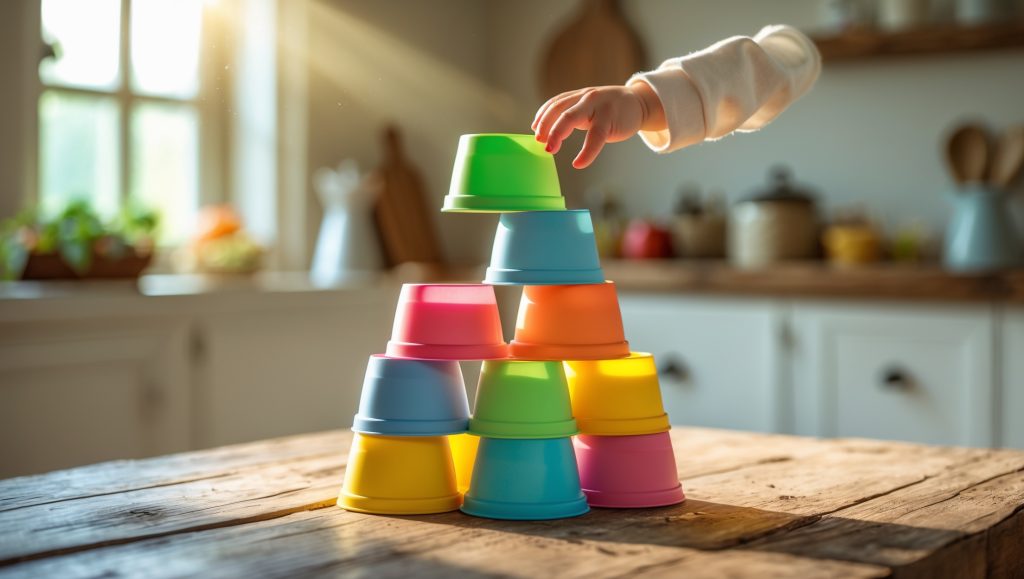
The Green Toys My First Stacking Cups set comprises six brightly colored cups in graduated sizes, each made from 100% recycled plastic—primarily recycled milk jugs. The cups are lightweight yet sturdy, featuring smooth edges and a matte finish that’s gentle on little hands (and mouths). Notably, the materials are free of BPA, phthalates, and PVC, and the product meets or exceeds US and international safety standards.
Each cup is designed with a different color and a number embossed on the bottom, making them visually engaging and useful for early numeracy as your child grows. The construction is seamless; there are no small parts, sharp corners, or detachable pieces, making them safe for mouthing and easy to clean (top-rack dishwasher safe). The nesting design also means they store compactly—ideal for small kitchens or diaper bags.
Learning & Development Benefits
While these stacking cups may look simple, they pack an impressive punch in terms of developmental support, especially during the stage when babies are discovering new textures, tastes, and hand-to-mouth coordination. Here’s how:
- Fine Motor Skills: Scooping, grasping, stacking, and unstacking the cups help strengthen hand muscles and refine finger control.
- Sensory Exploration: The different sizes and textures encourage tactile exploration. Some parents use empty cups to offer small tastes of pureed foods, mashed fruits, or safe finger foods—adding a playful twist to solids introduction (always supervised).
- Object Permanence & Spatial Awareness: Nesting and stacking foster early math concepts and spatial reasoning.
- Early Numeracy: The numbered bottoms introduce counting and one-to-one correspondence as your child grows.
- Open-Ended Play: The cups double as bath toys, sand scoops, or even snack holders, adapting to your child’s changing interests.
Setup & Use
The Green Toys My First Stacking Cups require no assembly—simply open the package, wash before first use, and they’re ready for action. They’re lightweight enough for babies as young as 6 months to handle, but robust enough to withstand the inevitable drops and throws. Here are a few ideas for integrating them into your solids introduction routine:
- Pre-Meal Play: Let your baby explore the cups while you prepare food, turning waiting time into sensory play.
- Interactive Feeding: Offer small tastes of purees or mashed food in different cups; this can make solids introduction more engaging and less intimidating for cautious eaters.
- Water Play: Use the cups in the bath or at the sink to rinse hands and faces after messy mealtimes.
- On-the-Go: The compact design fits easily in a diaper bag, making the cups a great travel or restaurant distraction.
Cleaning is easy—just pop them in the top rack of your dishwasher or hand wash with warm, soapy water.
Pros & Cons
Pros
- Made from 100% recycled, food-safe plastic in the USA
- BPA, phthalate, and PVC free—safe for mouthing and food contact
- Promotes fine motor, sensory, and early math skills
- Easy to clean (dishwasher safe) and durable
- Open-ended—useful for bath, sand, or snack time
- Compact nesting design for easy storage and travel
Cons
- No lids—cannot be used for storing food or liquids on the go
- Limited to scooping, stacking, and pouring—may lose novelty for older toddlers
- Colors may fade with frequent outdoor/sun use
- Not suitable for microwave or freezer use
Alternatives & Similar Toys
If you’re looking for other options that support similar developmental goals during solids introduction, consider these alternatives:
- Skip Hop Garden Stacking Cups: Feature holes for water play, slightly softer plastic, and garden-themed designs.
- Mushie Stacking Cups: Made from BPA-free polypropylene, with minimalist Scandinavian colors and a slightly smaller profile—great for younger babies.
- Fat Brain Toys Suction Kupz: Silicone cups that suction to highchairs and tables, ideal for sensory exploration and less likely to be dropped.
- OXO Tot Stick & Stay Suction Bowl Set: While not stacking cups, these bowls are designed for self-feeding and encourage hand-eye coordination with suction bases for stability.
Each of these options offers unique features—consider what best fits your child’s age, preferences, and your family’s feeding routines.
Verdict
The Green Toys My First Stacking Cups are a standout choice for parents seeking a safe, sustainable, and developmentally appropriate toy to enhance the early stages of solids introduction. Their versatility, durability, and eco-friendly design make them a long-lasting addition to any playroom or kitchen. While they may not replace specialized feeding tools or bowls, their ability to bridge play and early eating experiences is both practical and delightful. For families focused on open-ended play, gentle sensory exploration, and supporting motor skills as babies learn to navigate new foods, these stacking cups are a smart, affordable investment for 2025.
FAQ
+Are the Green Toys Stacking Cups safe for babies to chew on?
+Can the cups be used for serving food or snacks?
+Are these cups dishwasher safe?
+What age range are these stacking cups best for?
+Can the cups be used in the bath?
+Where are Green Toys products manufactured?
+Do the cups contain any small parts?

Green Toys My First Stacking Cups shine as a delightful and practical choice for families introducing solids to their little ones. Made entirely from recycled plastic, these cups are safe for babies to mouth, chew, and explore—an essential feature when every new object goes straight to their lips. The thoughtful design supports fine motor development as babies learn to grasp, stack, and nest the cups, while also encouraging early problem-solving skills with each attempt to build or topple their creations.
During solids introduction, these cups become even more valuable. Their lightweight, easy-to-clean construction means they double as playful serving dishes for soft fruits, cereal puffs, or homemade purees. Parents will appreciate how seamlessly play and mealtime can blend, offering babies both sensory and practical experiences. The open-ended nature of stacking cups ensures they remain a favorite long after the first foods phase, evolving with your child’s abilities and imagination.
With their eco-friendly materials, dishwasher-safe durability, and versatile use, Green Toys My First Stacking Cups are a warm recommendation for any parent seeking a toy that truly supports exploration during those exciting first bites.
- Made from 100% recycled, food-safe plastic
- Supports fine motor skills and sensory play
- Dishwasher safe for easy cleaning
- Perfect for both play and serving first foods
How do these Green Toys stacking cups compare with silicone stacking cups for babies just starting solids? I know silicone is flexible but sometimes harder to stack, so I’m wondering which might be less frustrating for little ones.
It’s great that you’re thinking about what will make solids introduction easier for your baby. For little ones just starting solids, the Green Toys stacking cups are made from sturdy, food-safe plastic, which helps them keep their shape and stack easily—often making them less frustrating for young babies than floppy silicone cups. Try offering just two or three cups at a time, and supervise, especially if your baby is mouthing them; both materials are generally safe if certified BPA- and phthalate-free. Check for any sharp edges or tears before each use. As always, this isn’t medical advice; if you have concerns about feeding or toy safety, check in with your pediatrician.
I noticed the cups are labeled safe for little ones starting at 6 months. Would you recommend these for children a bit older, like 18 months, or are there ways to make play with stacking cups more challenging for toddlers?
It’s great that you’re thinking about ways to support your child’s development as they grow. Stacking cups are still engaging and beneficial for children at 18 months. To make play more challenging, try introducing simple sorting games by color or size, hiding small (age-appropriate) objects under the cups for a guessing game, practicing counting as you stack or unstack, and encouraging imaginative play like pretending the cups are dishes. Always supervise play and ensure all pieces are free of cracks or damage. This isn’t medical advice; if you’re concerned, check in with your pediatrician.
My child is especially sensitive to certain textures and gets overwhelmed easily during meals. Do the stacking cups have any rough surfaces or unexpected seams that might bother a texture-sensitive baby, or are they completely smooth all around?
It’s completely understandable to want meal tools that won’t upset a texture-sensitive baby. The Green Toys My First Stacking Cups are designed with smooth, rounded edges and do not have rough surfaces or sharp seams. Most parents report the cups feel soft and uniform, but to be extra sure, you could check each cup yourself before offering them to your child. Always supervise your baby during play and mealtimes, and if you notice any new sensitivities or reactions, it’s wise to consult your pediatrician. This isn’t medical advice; if you’re concerned, check in with your pediatrician.
My toddler sometimes puts everything in their mouth, including toys. Are the embossed numbers on the bottom of the Green Toys cups smooth enough that there’s no risk of small pieces coming off over time?
It’s completely normal to be concerned when your toddler mouths toys, as safety is a top priority at this age. The Green Toys stacking cups are designed for toddlers, and the embossed numbers are molded directly into the plastic rather than attached, so there are no small, detachable pieces. Check the cups regularly for any damage or rough edges, especially after washing or heavy use. Always supervise play, and ensure any toy used for mouthing is free from cracks or wear. This isn’t medical advice; if you’re concerned, check in with your pediatrician.
At what age would you say the developmental benefits of these cups start to taper off? I am trying to budget carefully and wonder how long these would stay relevant as my child grows and their interests shift.
You’re wise to think about how long a toy will stay engaging for your child. Green Toys stacking cups offer the most developmental benefits—like improving fine motor skills, coordination, and cause-and-effect understanding—between about 6 months and 2 years. After age 2, children may use them more for pretend play, but interest might decline as their play becomes more complex. Always supervise young children to avoid misuse, especially if they’re still mouthing objects. This isn’t medical advice; if you’re concerned, check in with your pediatrician.
We have limited kitchen space and try to keep toy clutter down. Does the nesting design of the Green Toys cups truly save room, or have you found them taking up shelf space over time with daily use during meals?
It’s understandable to want to minimize clutter, especially with limited kitchen space. The Green Toys stacking cups are designed to nest snugly inside one another, which does help save space compared to separate items. After regular daily use during meals, you may notice the cups sometimes stay separated, but taking a moment to stack them after washing keeps storage compact. For safety, always ensure the cups are fully dry before nesting to avoid moisture buildup. This isn’t medical advice; if you’re concerned, check in with your pediatrician.
You mentioned using the cups for pre-meal play. Do you have tips on making the transition from playtime with the cups to actually starting the meal, or ways to keep things from getting messy?
It’s great that you’re thinking about easing transitions and minimizing mess during mealtime. To help your child shift from play to eating, try giving a gentle verbal cue, like ‘Now it’s time to eat,’ as you move the cups aside. You can keep a damp washcloth nearby for quick hand wipes and consider designating one cup as a ‘food cup’ once mealtime starts, removing the others. For younger babies, supervise closely to avoid putting non-food items in their mouths. Using a large bib or placing a mat under the highchair also helps with cleanup. This isn’t medical advice; if you’re concerned, check in with your pediatrician.
Would these cups be suitable for introducing early counting games with a 1-year-old at daycare, or are they better saved for when children are older and more interested in numbers?
It’s great that you want to encourage early counting skills with your 1-year-old. At this age, most children are not yet ready to understand numbers, but you can absolutely use the Green Toys stacking cups for simple counting games—like counting as you stack or nest them together. Keep it playful and focus on repetition and language, not accuracy. Always supervise closely, as 1-year-olds may put objects in their mouths, but the cups are designed without small parts and are safe for this age. This isn’t medical advice; if you’re concerned, check in with your pediatrician.
For parents with little ones who have mild sensory sensitivities, do the matte texture and bright colors of these cups tend to be well tolerated, or have you found that subscription boxes might introduce a gentler variety of textures?
It’s understandable to want gentle sensory experiences for your little one. The matte texture and bright colors of the Green Toys stacking cups are generally well tolerated by infants and toddlers, as the finish is smooth rather than rough, and the colors are vibrant but not overwhelming. If your child is sensitive, try offering the cups during calm playtimes, letting them explore at their own pace. You can introduce new textures gradually—perhaps by pairing the cups with softer fabrics or more muted toys. Always supervise closely, especially if your child puts toys in their mouth. This isn’t medical advice; if you’re concerned, check in with your pediatrician.
Is there a way to adjust routines with these stacking cups to encourage more iron-rich eating, like with cereals, without making meals too messy or overwhelming for a sensitive eater? I’m trying to plan our daily schedule.
It’s wonderful that you’re considering both nutrition and your child’s comfort as you introduce iron-rich foods. Try setting up a routine where the stacking cups are used to gently present small amounts of iron-fortified cereal alongside familiar foods, letting your child explore at their own pace. Offer just one or two spoons per cup to keep portions manageable and avoid overwhelming them. Encourage dipping or scooping with supervision, and have a damp cloth nearby for easy clean-up. Always supervise closely to prevent choking and ensure all cup surfaces are clean. This isn’t medical advice; if you’re concerned, check in with your pediatrician.
For families trying to minimize toy clutter in small spaces, do you find the nesting feature of these cups actually makes a big difference in daily use, or do they usually stay scattered around after play and meals?
It’s completely understandable to want to keep toy clutter under control, especially in smaller spaces. The nesting feature of these stacking cups really can help: after play or meals, show your child how to stack them together and make it a clean-up game. For little ones, model and encourage this step-by-step, and as your child grows (around 18 months and up), they often enjoy helping. Keep the nested cups in a single accessible basket or shelf for easy routines. Remember to supervise babies for choking hazards and wash the cups regularly since they’re used at mealtimes. This isn’t medical advice; if you’re concerned, check in with your pediatrician.
Is there a recommended age to switch from mostly iron-fortified cereal to more pureed meats or vegetables for iron intake, particularly when using fun tools like stacking cups to make meals engaging?
That’s a thoughtful question about supporting your baby’s iron needs during solids introduction. Around 6 months old, pediatricians generally recommend starting to offer a wider variety of iron-rich foods, such as pureed meats and beans, alongside or gradually replacing iron-fortified cereals. You can use stacking cups to make mealtime playful—serve small portions in each cup, allowing your baby to explore new textures. Always supervise closely, ensure foods are pureed smoothly for younger babies, and avoid choking hazards. Remember, every child develops at their own pace, so it’s okay to introduce new foods gradually. This isn’t medical advice; if you’re concerned, check in with your pediatrician.
Have you tried using these stacking cups outside the kitchen, like for potty-training rewards or water play in the bath? Curious if they hold up just as well in those busy toddler situations.
It’s great that you’re thinking about using toys like stacking cups for multiple purposes with your toddler. These cups are quite durable and safe for water play in the bath, as they’re easy to clean and have no sharp edges or small parts—just be sure to supervise closely, especially with younger toddlers. For potty-training rewards, using the cups as part of a fun stacking or sorting game can work well, as long as they’re cleaned regularly if moved between rooms. Always check for any wear and tear over time. This isn’t medical advice; if you have concerns, check in with your pediatrician.
I’m trying to keep our toy budget in check. Are there other similar multipurpose cup sets you’d suggest comparing price-wise, or do these stand out enough to justify the cost?
It’s great that you’re being thoughtful about your family’s budget and quality toys. Besides Green Toys’ stacking cups, you might also look at cup sets from Munchkin or IKEA, which are usually budget-friendly and food-safe. Compare for dishwasher safety, smooth edges, and non-toxic materials. Look for sets without holes to avoid mold if using in the bath. For babies starting solids, always supervise play and ensure no small parts. This isn’t medical advice; if you’re concerned, check in with your pediatrician.
My baby tends to put toys in her mouth all the time. Is it safe to use these cups for both play and offering small food tastes throughout the day, or should I limit their use to just one activity before washing?
It’s completely normal for babies to explore toys with their mouths, especially at this stage. With the Green Toys stacking cups, it’s safest to choose one use (play or food) between washes to prevent germs transferring from floors or surfaces to your baby’s mouth. If you want to use them for both play and feeding, wash them thoroughly with hot, soapy water between activities. Always supervise your baby during play and feeding, and check that the cups are intact without cracks. This isn’t medical advice; if you’re concerned or your baby has specific health needs, check in with your pediatrician.
For parents concerned about space and clutter, would you say the stacking cups offer a noticeable advantage in terms of storage over typical wooden stacking toys? I have a small kitchen and need things that store compactly.
It’s completely understandable to want toys that don’t add clutter, especially with limited kitchen space. The Green Toys stacking cups nest snugly inside each other, so they take up about as much room as a single cup, which is often less bulky than many wooden stacking toys that don’t nest or have larger bases. You can keep them in a small drawer or even in a zip-top bag. Their lightweight, plastic design also means fewer heavy or sharp edges. Always supervise babies during play, and make sure the cups stay clean if used with food. This isn’t medical advice; if you have specific concerns, check in with your pediatrician.
When offering tastes of food in these cups, is there any guidance on portion sizes or how to avoid overwhelming a baby who is just starting with allergens like peanut butter or eggs?
It’s thoughtful to be cautious about portion sizes and potential allergens when introducing solids. Start by offering a very small smear—about a quarter teaspoon—of peanut butter or well-cooked egg in the cup. Watch your baby’s reaction, and if all goes well, you can gradually increase the amount over subsequent days. Always supervise, ensure foods are thinly spread to reduce choking risk, and introduce only one new allergen at a time, waiting 3–5 days before trying another. The Green Toys cups are safe for food use, but always check for signs of wear. This isn’t medical advice; if you’re concerned, check in with your pediatrician.
When introducing solids, how do the developmental benefits of using stacking cups with cereals compare to pureed foods in terms of supporting iron intake for infants? I’m curious if one option tends to encourage better nutritional habits or iron absorption than the other, especially during the early months.
Your question about supporting iron intake and healthy habits during solids introduction is very thoughtful. Stacking cups can make self-feeding fun and help with motor skills, but when it comes to iron absorption, the type of food matters more than the feeding tool. Offer iron-rich cereals (ideally fortified infant cereals) whether spoon-fed or provided for self-feeding—both methods allow for good iron intake as long as the food is offered consistently and safely (watch for choking risks; keep textures soft for beginners). Purees can be easier for younger infants (around 6 months), while cereal in cups encourages exploration as skills develop. This isn’t medical advice; if you’re concerned, check in with your pediatrician.
Our baby is just starting solids at 6 months. Would these cups still be engaging and safe for older toddlers, or are they mostly suited for the early months of food introduction?
It’s great that you’re thinking ahead about your child’s play needs as they grow. While Green Toys My First Stacking Cups are perfect for babies starting solids at 6 months due to their safe, easy-to-clean design, they also remain engaging for older toddlers. Toddlers can use the cups for pretend play, stacking challenges, and water or sand play, which support fine motor skills and problem-solving. Always supervise play, especially if using cups with water or food. The cups are free from small parts and made from safe materials, but check regularly for wear. This isn’t medical advice; if you notice chewing damage or concerns, check with your pediatrician.
Have you found that picky eaters enjoy exploring new foods more when presented in these cups? Mine gets overwhelmed easily by new textures—does the playful approach really make a difference at mealtime?
You’re definitely not alone—many parents worry about how to make new foods less overwhelming for little ones, especially those sensitive to texture. Using playful tools like Green Toys Stacking Cups can help: try placing just a small taste of a new food in one cup and familiar favorites in others, letting your child explore at their own pace. The cups’ smooth, food-safe plastic is great for babies and toddlers, but always supervise to prevent spills or mouthing of large pieces. Letting your child serve themselves or stack between tries can make mealtime feel like play, reducing pressure. This isn’t medical advice; if you’re concerned, check in with your pediatrician.