
Overview
Few toys have achieved the iconic status of the Grimm’s Large Rainbow Stacker. With its vibrant, hand-dyed arches and timeless wooden construction, this open-ended toy continues to capture the hearts of children and adults alike. As families increasingly seek playthings that inspire creativity and grow with their children, the Grimm’s Rainbow stands out for its versatility, beauty, and developmental benefits. In this in-depth 2025 review, we look at what makes the Grimm’s Large Rainbow Stacker a perennial favorite, how it supports learning, and whether it belongs in your home.
What’s Inside / Build Quality
Upon unboxing, the Grimm’s Large Rainbow Stacker immediately impresses with its tactile, solid feel. Made from sustainably sourced limewood, each of the 12 arches is carefully sanded and hand-dyed using non-toxic, water-based stains. The set features a spectrum of colors—red, orange, yellow, green, blue, indigo, and violet—plus subtle gradient shades that encourage sorting and patterning.
The arches range in size, allowing them to nest perfectly or be used individually for building. Unlike plastic stackers, the Grimm’s Rainbow boasts a warm, natural wood grain, making each set unique. The finish is matte, not glossy, which helps prevent slipping and allows for easier stacking and balancing.
Build quality is outstanding. The arches feel sturdy but not heavy—easy for little hands to manipulate. Edges are rounded for safety. There are occasional natural wood knots or slight variations in color, which are a hallmark of the artisanal process and not defects.
Learning & Development Benefits
The true magic of the Grimm’s Large Rainbow Stacker lies in its open-endedness. There are no rules, batteries, or sounds—just limitless possibilities. Here’s how it supports children’s development across multiple domains:
- Cognitive Skills: Sorting, sequencing, pattern-making, and early math concepts (big/small, more/less, symmetry, and spatial reasoning).
- Fine Motor Development: Stacking, balancing, and manipulating the arches improve hand-eye coordination and dexterity.
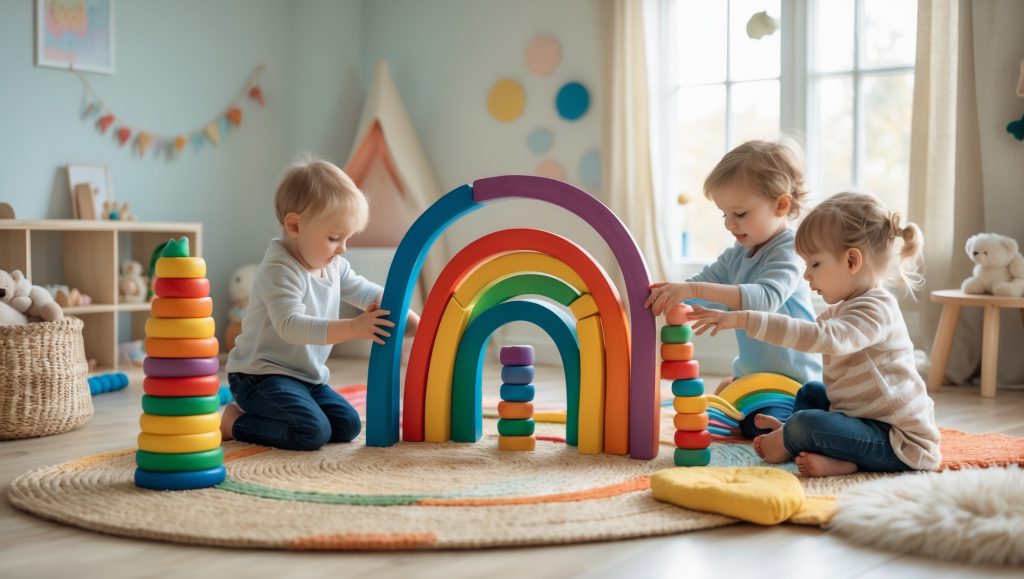
- Creativity & Imagination: Children use the arches as tunnels, bridges, fences, cradles, or even abstract sculptures. The Rainbow becomes whatever their play demands.
- Language Development: Open-ended play encourages storytelling and role-play, helping children develop expressive language as they narrate scenes or invent games.
- Social-Emotional Growth: When shared, the Rainbow supports collaborative play, negotiation, and turn-taking.
- Sensory Experience: The natural wood and smooth surface offer tactile satisfaction, while the vivid colors visually engage young learners.
Because it grows with the child, the Rainbow is suitable for toddlers discovering stacking, preschoolers exploring patterns, and even older kids building elaborate marble runs or fantasy worlds.
Setup & Use
Setup is refreshingly simple—just open the box and play. The Rainbow requires no assembly or batteries. Its open-ended nature means it can stand alone or be integrated with other toys (blocks, dolls, cars, animal figurines, play silks, etc.).
For younger children (18 months+), start by exploring nesting and stacking. Model how to create tunnels for cars or use the arches as bridges. As children grow, encourage them to invent new uses—balancing towers, color sorting, or imaginative storytelling. The Rainbow also works well in small world play setups or as a decorative element on a shelf.
Care is minimal: wipe with a damp cloth if needed, and avoid submerging in water. The natural dyes are non-toxic but may fade if left in bright sunlight for prolonged periods.
Pros & Cons
Pros
- Exceptionally versatile—endless play possibilities for a wide age range
- Beautiful, heirloom-quality craftsmanship using sustainable materials
- Supports multiple developmental domains (cognitive, motor, language, creativity)
- No batteries, screens, or complicated setup required
- Non-toxic, eco-friendly dyes and finishes
- Visually appealing—doubles as nursery or playroom decor
Cons
- Higher price point than mass-produced stackers
- Wood can be dented or scratched with rough play
- Large size requires dedicated storage space
- Colors may fade if exposed to direct sunlight over time
- Not designed for water play
Alternatives & Similar Toys
If the Grimm’s Large Rainbow Stacker isn’t quite the right fit, or if you’re seeking variety, consider these similar open-ended toys:
- Wooden Arches by Raduga Grez: Another beautifully crafted set, with earthier tones and similar stacking possibilities.
- Melissa & Doug Wooden Building Blocks: Less expensive and great for open-ended construction, though without the signature arch shapes.
- Connetix Magnetic Tiles: A different take on open-ended building, these translucent magnetic tiles allow for vertical structures and encourage STEM skills.
- Wobbel Balance Board: Also open-ended, used for balancing, rocking, building, and imaginative play.
The Grimm’s Rainbow also pairs beautifully with other Grimm’s elements, such as the Semi-Circles (for creating layered scenes) or Friends Peg Dolls for storytelling.
Verdict
The Grimm’s Large Rainbow Stacker earns its place as a top-tier open-ended toy in 2025. Its blend of artistry, durability, and educational value make it a worthwhile investment for families seeking toys that adapt to every stage. While the price may be higher than plastic alternatives, the play value, longevity, and eco-friendly credentials easily justify the cost for many families. If you’re looking for a toy that will inspire years of creative, skill-building play—without batteries or screens—this Rainbow is a radiant choice.
FAQ
+What age is the Grimm’s Large Rainbow Stacker best for?
+Is the Rainbow safe for mouthing or teething children?
+How do I clean and care for the Rainbow Stacker?
+Can the Rainbow be combined with other toys?
+Is the large size difficult to store?
+Are there smaller versions available?
+Why is the Grimm’s Rainbow more expensive than other stackers?

Grimm’s Large Rainbow Stacker stands out as an iconic open-ended toy that continues to inspire creative play for children of all ages. Handcrafted from sustainably sourced wood and finished with vibrant, non-toxic stains, each arch feels smooth and inviting. The tactile quality encourages little hands to explore, stack, balance, and build, supporting the development of fine motor skills and spatial awareness.
What truly sets the Grimm’s Rainbow apart is its versatility. Children naturally transform the arches into tunnels, bridges, cradles, or even abstract sculptures, limited only by their imagination. This kind of unstructured play is essential for cognitive growth and problem-solving. Parents will appreciate how the stacker grows with the child, engaging toddlers and older kids alike, and how its beautiful design doubles as cheerful decor when not in use. While the price point is higher than some plastic alternatives, its durability and timeless appeal make it a worthwhile investment for families seeking quality toys that foster creativity and learning.
- Endlessly versatile for imaginative, open-ended play
- Crafted from sustainable wood with safe, vibrant finishes
- Supports motor skills, creativity, and problem-solving
- Beautiful enough to display in any playroom or living space
Would you recommend introducing the Grimm’s Large Rainbow Stacker to a 9-month-old, or is it better suited for older babies? If I do offer it now, should I remove any of the smaller arches to reduce choking risks?
It’s great that you’re thinking about both play and safety for your baby. The Grimm’s Large Rainbow Stacker is visually appealing and can be introduced to a 9-month-old with supervision, but some of the smaller arches could pose a choking risk at this age. I recommend removing the smallest arches and only offering the larger pieces for now. Always supervise your baby during play, and check for any signs of wear or splinters. As your child grows and stops mouthing objects, you can introduce more pieces. This isn’t medical advice; if you’re concerned, check in with your pediatrician.
If a child is sensitive to certain textures, how would you describe the feeling of the wood? Is it smooth enough for picky kids or does it have rough spots or a strong wood smell?
It’s thoughtful to consider texture for a sensory-sensitive child. Grimm’s Large Rainbow Stacker is made from alder or lime wood and finished with natural oils, resulting in a smooth but slightly matte surface—not glossy, but not rough. Most pieces are sanded well, but some may have gentle grain or occasional small variations. The wood scent is mild and usually fades over time. You can run your hands along the pieces first, or even gently sand any spot that feels too rough. As always, supervise closely with young children, especially if sensitivities are strong. This isn’t medical advice; if you’re concerned, check in with your pediatrician.
As a parent considering toy subscription services versus investing in a single high-quality toy like the Grimm’s Large Rainbow Stacker, I wonder if you think this stacker provides enough variety over time to keep a child engaged compared to receiving new toys monthly?
It’s great that you’re thinking about how to keep your child engaged and stimulated through play. The Grimm’s Large Rainbow Stacker can offer a lot of variety: try introducing just a few arches at first for younger children, then gradually add more to spark new challenges; encourage building tunnels, towers, or patterns together; switch up play settings (floor, table, outdoors) to create fresh experiences; and involve your child in clean-up or sorting to promote problem-solving. For most toddlers and preschoolers, this single toy can inspire months of creative, open-ended play. Always supervise younger children, especially if any smaller pieces are involved. This isn’t medical advice; if you’re concerned, check in with your pediatrician.
I usually set up quiet activities early in the morning while the rest of the house is asleep. Do you find the Grimm’s Large Rainbow Stacker keeps kids engaged independently for a decent stretch, or do they need a lot of adult involvement to get started?
It’s great that you’re fostering independent, quiet play in the mornings. Many children aged 2 and up can enjoy the Grimm’s Large Rainbow Stacker independently—its simple, open-ended design invites building, sorting, and imaginative setups without much adult direction. To help your child get started, you might pre-arrange the arches in a simple pattern, set out a few familiar toys alongside, and stay nearby for supervision, especially if your child is still mouthing objects or under three. Each child’s attention span varies, but most are drawn in by the colors and shapes for a meaningful chunk of time. This isn’t medical advice; if you’re concerned, check in with your pediatrician.
My mother sometimes watches my toddler and preschooler together, and their play styles are very different. Do you have any suggestions for age-appropriate activities using the Rainbow Stacker that keep both kids engaged, maybe even involving grandparents?
It’s wonderful that you want to support both your toddler and preschooler’s play while including their grandmother. Try starting with simple color sorting and stacking for your toddler, while encouraging your preschooler to build bridges or tunnels. Work together to create patterns or tall towers, letting your preschooler help guide their younger sibling with gentle supervision. Grandparents can join in by telling stories about the shapes or helping set up collaborative building challenges. Always watch for small parts if any, and make sure play happens on a flat, safe surface. This isn’t medical advice; if you’re concerned, check in with your pediatrician.
My older toddler has some sensory sensitivities and sometimes avoids certain materials. Can you describe what the matte finish feels like in practice, and does the wood scent or texture ever bother picky kids?
It’s great that you’re thinking ahead about your toddler’s sensory needs. The Grimm’s Large Rainbow Stacker has a matte, slightly velvety feel due to its non-toxic water-based stain, which is less slick than glossy finishes—some children find this grounding, while others may notice the dry texture more. The natural wood scent is quite subtle but can be present at first; most kids aren’t bothered, but a few with keen senses might notice it. Supervise initial play and introduce one piece at a time to gauge your child’s response. Remember, every child is unique—if sensitivities persist or worsen, check in with your pediatrician.
My 15-month-old is really into putting things in his mouth. Are the arches of the Grimm’s Large Rainbow Stacker safe for mouthing, or should I wait until he’s older to introduce this toy?
It’s completely understandable to want to keep your toddler safe during play at this age. The Grimm’s Large Rainbow Stacker is made from natural wood and is finished with non-toxic, water-based stains, so occasional mouthing is generally considered safe. However, since the arches are quite large and hard, always supervise your 15-month-old closely to prevent accidental bumps or chewing off small splinters. Check the toy regularly for any wear or damage, and wipe it clean with a damp cloth if needed. If your child is an active chewer, consider waiting a bit longer before unsupervised use. This isn’t medical advice; if you’re concerned, check in with your pediatrician.
Is there any risk of splinters or chipping with the natural wood finish over time, especially with enthusiastic use? I want to make sure it stays safe since I watch kids who sometimes like to chew or bang their toys.
You’re right to be cautious about toy safety, especially with little ones who chew or bang their toys. Grimm’s Large Rainbow Stacker is known for its smooth, hand-sanded finish, which greatly reduces splinter risk, but natural wood can develop small chips or rough spots over time. To keep it safe: 1) Inspect the stacker regularly for any rough edges or chips. 2) Wipe down with a damp cloth to remove debris that could irritate mouths. 3) Supervise children under three, since mouthing is common at that age. 4) If splinters or damage appear, sand the area smooth or remove the piece from play. This isn’t medical advice; if you’re concerned, check in with your pediatrician.
Is there a recommended way to clean or sanitize the wood if my baby gets food or saliva on the arches, since the toy is hand-dyed? I want to make sure I don’t damage the beautiful finish.
You’re right to want to protect both your baby and the beautiful finish on your Grimm’s Rainbow. To clean food or saliva off the hand-dyed wood, gently wipe each arch with a slightly damp cloth—avoid soaking or using soap, as too much moisture or harsh cleaners can damage the finish. Let the pieces air dry fully before play. For deeper cleaning, try a cloth dampened with a mixture of water and a touch of vinegar, but always test a small area first. Make sure the toy is completely dry to prevent warping or mold. This isn’t medical advice; if you’re concerned, check in with your pediatrician.
You mention the beautiful, hand-dyed finish on the arches. Over time, do the colors fade or get stained from things like food or art supplies? I want to be sure it will stay looking nice even if my toddler uses it daily.
It’s understandable to want your child’s toys to stay beautiful, especially when they’re used every day. The hand-dyed finish on Grimm’s Large Rainbow Stacker is generally durable, but daily play—especially with food, sticky hands, or art materials—can lead to some fading or light staining over time. To help the colors last, wipe the arches with a damp cloth after play, and try to keep food and art supplies away from the stacker. Avoid using harsh cleaners, as these can cause more fading. Always supervise toddlers, since the natural wood absorbs stains more easily than plastic. This isn’t medical advice; if you’re concerned, check in with your pediatrician.
You mention that the stacker grows with the child and suits a wide age range. At what age do you find most kids begin using it for more imaginative play rather than just stacking, and is there a point when children lose interest?
It’s great that you’re curious about how play with the rainbow stacker evolves over time. Most children start using it mainly for stacking around 1–2 years old, but by age 3 or 4, many begin to incorporate the arches into imaginative play—like building tunnels, bridges, or houses. Creative uses often peak between ages 3 and 6, though some children enjoy it well into the early elementary years. Interest can wane as kids outgrow open-ended play, but each child is unique. Always supervise under-threes and check for wear. This isn’t medical advice; if you’re concerned, check in with your pediatrician.
My toddler is sometimes overwhelmed by bright colors or too many pieces at once. Would starting with just a few arches be a good idea, and does the Rainbow work well if you introduce pieces gradually?
It’s completely understandable to want to ease your toddler into play that feels comfortable for them. Starting with just a few arches from the Grimm’s Large Rainbow is an excellent approach. Begin by offering two or three pieces, letting your child explore the colors and shapes at their own pace. As they gain confidence, you can gradually add more arches. This method helps avoid sensory overload and supports focused, age-appropriate play. Always supervise toddlers with large stackers to ensure safety, especially if they’re prone to mouthing toys. This isn’t medical advice; if you’re concerned, check in with your pediatrician.
My toddler has some sensory sensitivities, especially to strong smells and textures. You mentioned the wood is hand-dyed and finished matte—have you noticed any strong scent from the non-toxic stains? Also, is the surface ever splintery, or always smooth?
It’s great that you’re considering your toddler’s sensory needs when choosing toys. In my experience with the Grimm’s Large Rainbow Stacker, the wood has a faint, natural scent at first, but there’s no strong chemical smell from the non-toxic dyes. The surface is generally smooth and matte, not glossy or slippery, and I haven’t noticed splinters on a new stacker. Still, always check the arches for rough spots before play, especially for toddlers who explore with their mouths or have sensory sensitivities. This isn’t medical advice; if you’re concerned, check in with your pediatrician.
If my 10-month-old ends up dropping arches onto the tile floor during feeding sessions, how well does this toy hold up to accidental knocks and possible moisture exposure compared to other wooden stackers?
It’s understandable to want a toy that can withstand a curious baby’s exploring hands during mealtimes. Grimm’s Large Rainbow Stacker is known for its sturdy, solid wood construction and natural, non-toxic finish, which holds up better than some softwood or painted alternatives. For a 10-month-old, I suggest supervising closely to prevent chewing and excessive moisture, and wiping arches dry if they get wet. Dropping from high chairs onto tile may cause dents or chips over time, though Grimm’s tends to fare better than lighter stackers. Always inspect for splinters or damage before play. This isn’t medical advice; if you’re concerned, check in with your pediatrician.
Do the natural knots or color variations in the wood ever become a distraction for toddlers who are sensitive to texture or appearance? My child sometimes fixates on small details and finds certain surfaces off-putting.
You’re thoughtful to consider how your child’s sensitivities might affect their play experience. For some toddlers, especially those sensitive to textures or visual details, the natural knots and color variations in Grimm’s Rainbow Stacker could be distracting or bothersome. Try introducing the stacker gradually, letting your child explore one piece at a time to see how they respond. Supervise closely to notice any signs of discomfort, and be ready to swap out pieces if they fixate or become upset. You could also rub the wood with a soft cloth to minimize any rough spots, while making sure there are no splinters. Always trust your instincts—if your child seems distressed, it’s okay to pause or try another toy. This isn’t medical advice; if you’re concerned, check in with your pediatrician.
Do you have advice for incorporating the Grimm’s Rainbow into a daily play routine? For example, are there specific activities or prompts that work well for this age to help with sequencing or early math skills?
It’s great that you want to use the Grimm’s Rainbow to support your child’s development in fun, everyday ways. For sequencing, try stacking the arches in order from largest to smallest and encourage your child to narrate each step. For early math, count the arches together, sort them by color, or use them to build simple patterns. You can also use the arches for pretend play—like making tunnels or bridges—which helps with spatial awareness. Always supervise young children to avoid any risk with smaller pieces. This isn’t medical advice; if you’re concerned, check in with your pediatrician.
Is there any maintenance or regular cleaning needed for the Grimm’s Rainbow, especially given the hand-dyed, natural wood material? I am concerned about how it holds up to frequent use, especially compared to plastic toys or items exchanged through a subscription rental service.
It’s thoughtful of you to consider how to care for your child’s toys, especially with natural materials. For the Grimm’s Rainbow, wipe each piece with a dry or slightly damp cloth—avoid soaking or using harsh cleaners, as water and chemicals can damage the hand-dyed wood. Let each piece air dry completely before stacking. Store the rainbow in a dry spot, away from direct sunlight, to maintain its colors and avoid warping. Unlike plastic toys, these require gentle handling and supervision with children under three due to potential splinters or small parts. This isn’t medical advice; if you’re concerned, check in with your pediatrician.
For parents with children who get overwhelmed by bright colors or strong sensory input, do you find the vibrant colors and wooden texture of the Grimm’s Rainbow can be too stimulating, or is it generally calming because of the natural materials?
You’re thoughtful to consider how sensory input might affect your child’s play experience. The vibrant colors on the Grimm’s Rainbow can be stimulating for some children, especially those sensitive to bright hues or visual complexity. You might try presenting just a few arches at a time to limit visual input and see how your child responds to the smooth, unfinished wood texture with supervision. Arrange play in a calm, softly lit environment, and pause if your child shows signs of discomfort. The natural materials are generally calming, but every child’s sensory preferences are unique. This isn’t medical advice; if you’re concerned, check in with your pediatrician.