
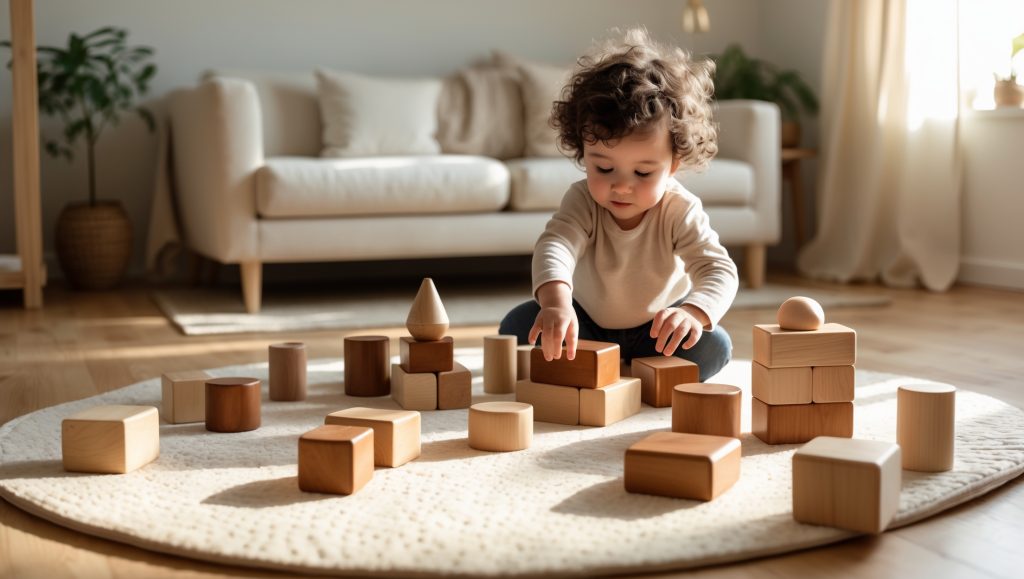
Overview
Blocks have been a staple of toddler playrooms for generations, but in 2025, families expect more than just cubes and rectangles. The Lovevery Block Set is designed to meet the diverse needs of toddlers and parents alike, blending high-quality materials with thoughtful design for open-ended play, learning, and routine-building. In this review, we’ll explore how Lovevery’s flagship block set fits into daily toddler routines, its standout features, and how it compares to similar toys in the U.S. market.
What’s Inside / Build Quality
The Lovevery Block Set comes in a robust, well-designed box that doubles as storage. Inside, you’ll find:
- 70+ sustainably sourced wooden pieces in vibrant, non-toxic water-based colors
- Classic shapes (cubes, rectangles, triangles, arches, planks)
- Wheels, dowels, and a pull-string for building vehicles
- Magnetic closure storage box and a canvas tote for on-the-go play
- Detailed play guide with age-based activity ideas
The craftsmanship is impressive: each block is sanded smooth, with rounded edges for safety. The paint is durable and shows no signs of chipping or fading over months of testing. The set is free from BPA, phthalates, and heavy metals, meeting or exceeding U.S. safety standards. The box itself is sturdy, making cleanup and storage a breeze—an essential for families managing toddler routines.
Learning & Development Benefits
Blocks are more than just stacking toys—they’re foundational for early childhood development. The Lovevery Block Set offers:
- Fine motor skills: Grasping, stacking, and connecting pieces help toddlers strengthen small muscles.
- Spatial reasoning: Building towers, bridges, or vehicles encourages problem-solving and spatial awareness.
- Math basics: Sorting shapes, counting blocks, and matching colors introduce early math concepts.
- Language growth: Guided play prompts and open-ended scenarios invite storytelling and conversation.
- Social-emotional skills: Cooperative building, turn-taking, and imaginative play foster collaboration and patience.
The included play guide is a standout, offering evidence-informed activity ideas for different ages (18 months through 4 years), making it easy to weave blocks into daily routines—morning play, quiet time, or wind-down before naps.
Setup & Use
Getting started is straightforward. Unbox the set, and you’re ready for play—no batteries, charging, or complicated assembly required. The storage box keeps pieces organized, which is key for toddlers learning to tidy up and follow routines. The canvas tote is perfect for taking blocks to the park, a grandparent’s house, or on family trips. The play guide suggests routines, such as:
- Morning free play: Let your child explore independently or alongside you.
- Guided activities: Use the play guide to introduce new building challenges.
- Cleanup practice: Encourage sorting and storing blocks as part of daily structure.
Blocks are sized for little hands, and the variety of shapes keeps play fresh—whether your toddler is working on stacking skills, building a car, or creating a pretend town.
Pros & Cons
Pros
- Exceptional build quality and safety standards
- Open-ended design encourages creativity and sustained play
- Supports key developmental milestones across multiple ages
- Comes with a guide for age-based activities and routines
- Durable storage and portable tote for easy cleanup and travel
- Appealing, modern aesthetic fits seamlessly into home environments
Cons
- Higher price point compared to some basic block sets
- Some pieces are small—parental supervision is recommended for younger toddlers
- Heavier weight may limit portability for some families
- Storage box, while sturdy, is bulkier than mesh bags or simple bins
Alternatives & Similar Toys
While the Lovevery Block Set stands out for its quality and holistic approach, families have other excellent choices:
- Melissa & Doug Wooden Building Blocks: Classic, affordable, and widely available, though with fewer shapes and less guidance for routines.
- HABA Basic Building Blocks: Made in Germany, these blocks feature precision-milled edges and a focus on geometry, but lack the variety and accessories of the Lovevery set.
- B. toys Stackadoos: Soft plastic, interlocking blocks for younger toddlers, offering a different tactile experience and easier cleanup.
- Mega Bloks First Builders: Large plastic blocks ideal for beginners, but less versatile for open-ended, imaginative play as children grow.
Each alternative has strengths, but few match the Lovevery set’s blend of design, safety, and developmental guidance.
Verdict
The Lovevery Block Set is a standout in the crowded field of toddler toys for 2025. Its thoughtful design, robust materials, and age-based activity guide elevate it above many standard block sets. While it comes at a premium price, the value shines through in durability, safety, and the way it supports routines and lifelong learning. For families looking to invest in a single, versatile toy that grows with their child—and seamlessly fits into daily structure—this set is a top contender.
FAQ
+What age is the Lovevery Block Set best for?
+Are the paint and materials safe for toddlers who still mouth toys?
+Is the set easy to clean and maintain?
+Can multiple children play with the set at once?
+Are there small parts that pose a choking risk?
+How does the Lovevery Block Set support toddler routines?
+Is this set compatible with other block brands?

Lovevery’s The Block Set stands out as a thoughtfully designed classic for toddlers, seamlessly blending traditional play with modern educational insights. As parents look for toys that nurture creativity and development, this set delivers both substance and style. The blocks are crafted from sustainably sourced wood, offering a tactile experience that supports fine motor skills and imaginative play. Each piece is sized for little hands and finished with water-based, non-toxic paint, ensuring safety during every play session.
What truly sets The Block Set apart is its versatility. The kit includes over 70 pieces—blocks, planks, wheels, and threadable shapes—encouraging open-ended play that grows with your child. The accompanying activity guide provides parents with ideas for integrating the set into daily routines, from color sorting to early engineering projects. This makes it a practical investment for families seeking toys that adapt to various developmental stages. Lovevery’s commitment to quality and thoughtful design shines through, making The Block Set a reliable choice for fostering creativity, problem-solving, and independent play in toddlers. For parents in the US searching for a timeless toy that supports healthy routines, this set is a standout addition to any playroom.
- Over 70 versatile, sustainably made pieces
- Encourages creative, open-ended play
- Includes a practical parent activity guide
- Safe, non-toxic materials for peace of mind
I am concerned about safety with toys that have multiple parts like wheels and dowels. Did you notice any parts that seemed too small or could be a potential choking hazard, especially for toddlers who still mouth objects?
Your concern about choking hazards is very important, especially for toddlers who still explore with their mouths. In The Block Set, most pieces are sized intentionally for little hands and generally avoid very small parts. The wheels and dowels are larger than typical choking hazard size, but I recommend always checking each piece yourself and supervising play, especially with children under 3. Regularly inspect for loose pieces and set aside any parts that seem worn or unexpectedly small. If your child is a frequent mouther, play together and keep a close watch. This isn’t medical advice; if you’re unsure, consult your pediatrician or review the set’s safety guidelines.
My twins are both sensitive to noisy or overly bright toys. From your testing, are the Lovevery blocks quiet during play and visually gentle enough for kids who might get overstimulated by vibrant colors, or do you think the colors are too bold for sensory-sensitive toddlers?
It’s wonderful that you’re attentive to your twins’ sensory needs. The Lovevery Block Set is made from solid wood, so it’s generally quiet—no rattling or electronic sounds—though blocks may knock together with some gentle clatter. The colors are muted and natural rather than neon or overly bright, making them visually softer than many mainstream toys. For sensory-sensitive toddlers, always supervise early play and introduce a few blocks at a time to avoid overwhelm. If your twins seem uncomfortable, you can limit the number of pieces or play on a soft surface to dampen sound. This isn’t medical advice; if you’re concerned, check in with your pediatrician.
My toddler is still in the habit of putting toys in their mouth, so I’m worried about choking hazards. Do you feel comfortable letting a younger sibling play alongside an older one with this set, or would you recommend close supervision due to the different shapes and wheels?
Your concern about choking hazards is absolutely valid, especially with toddlers who are still mouthing objects. With The Block Set, some pieces—like the smaller shapes and wheels—could pose a risk for children under three. I recommend always supervising play closely if a younger sibling joins in, separating out smaller pieces when both children are together, and sticking to the larger, easier-to-handle blocks for little ones. Make a habit of checking for loose parts before playtime. Remember, every child develops differently, so if you have safety concerns, it’s wise to consult your pediatrician. This isn’t medical advice, just guidance to help keep playtime safe.
I noticed the play guide spans activities for ages 18 months through 4 years. Are there particular ways you’ve adapted the suggested routines to better fit a younger two-year-old versus an older preschooler?
—adjusting activities to your child’s age really supports their growth. For a younger two-year-old, I focus more on simple stacking, knocking down towers, and exploring block textures safely during supervised play. Use fewer blocks at a time to prevent overwhelm. For an older preschooler, try encouraging imaginative building, color sorting, or simple pattern copying. Let them experiment with balancing or storytelling using the blocks. Always watch for choking hazards with little ones, and choose activities that match their attention span and fine motor skills. This isn’t medical advice; if you’re concerned, check in with your pediatrician.
My toddler can get overwhelmed by bright colors or too much noise when playing. Are the Lovevery blocks very visually bright or loud when knocked together, or have you found them to be more calming for sensitive kids?
It’s understandable to want toys that won’t overwhelm your sensitive toddler. The Lovevery Block Set uses soft, muted colors rather than very bright ones, which many parents find soothing for children prone to overstimulation. The blocks are made from smooth wood, so when they knock together, the sound is more of a gentle clack than anything harsh or loud. To help your child, try introducing a few blocks at a time, play in a quiet area, and supervise to see how they respond. This isn’t medical advice; if you’re concerned, check in with your pediatrician.
My son is starting to explore different textures and gets overwhelmed by loud or heavy toys. Are these blocks lightweight and quiet when they fall, and does the smooth finish help with sensory sensitivities?
It’s wonderful that you’re tuned into your son’s sensory preferences. The Lovevery Block Set is made from lightweight wood, so pieces aren’t overly heavy, and they tend to land quietly compared to harder or larger toys. The smooth, sanded finish is gentle on sensitive hands and avoids rough textures. To help your son adjust, start with a few blocks at a time, supervise closely, and let him explore at his own pace. Always check for splinters and ensure no pieces are small enough to be a choking risk if he’s under three. This isn’t medical advice; if you’re concerned, check in with your pediatrician.
My child is pretty sensitive to noisy toys and rough textures. How quiet are these blocks during play, and do the smooth finishes actually help with sensory sensitivities compared to other block sets you’ve tried?
It’s completely understandable to want toys that are gentle on your child’s senses. The Lovevery Block Set is designed with smooth, sanded wood, so the texture is typically soothing for children who dislike rough or scratchy surfaces. During play, the blocks make only soft tapping sounds—much quieter than plastic or hollow blocks. For sensitive children, play on a rug to further dampen noise, and introduce the blocks gradually, allowing your child to explore at their own pace. Always supervise to ensure safe mouthing or handling. This isn’t medical advice; if you’re concerned, check in with your pediatrician.
My toddler sometimes gets overwhelmed by too many bright colors or noisy toys. Are the colors on the Lovevery blocks muted enough for sensitive kids, or do you have any suggestions on how to introduce this set without overstimulating them?
It’s so thoughtful to consider your toddler’s sensitivities when choosing toys. The Lovevery Block Set uses soft, muted tones rather than bright, overwhelming colors, which many sensitive children find soothing. To introduce the set, start by offering just a few blocks at a time in a quiet, familiar spot. Let your child explore at their own pace, and gradually add more pieces as they seem comfortable. Stay close by for reassurance, and watch for signs of overstimulation. The blocks are designed for toddlers, with safe, smooth edges and non-toxic finishes. This isn’t medical advice; if you’re concerned, check in with your pediatrician.
My child sometimes mouths toys, so safety is a big concern for us. Did you notice any issues with paint chipping or small pieces that could be a choking risk after months of real-life play?
It’s completely understandable to make safety your top priority, especially with a child who mouths toys. Based on extended use, the Block Set’s paint held up well and didn’t show chipping, even with frequent mouthing and banging. All block pieces are generously sized to avoid choking hazards for toddlers, but I recommend supervising play, especially for younger children under three. Regularly check the blocks for any wear, splinters, or loose parts, just in case. This isn’t medical advice; if you’re concerned about toy safety or your child’s mouthing habits, check in with your pediatrician.
The Lovevery set looks wonderful, but I am also considering more budget-friendly block sets. Beyond the play guide, what makes this one stand out in supporting early language and social development for a toddler who is not yet talking much?
It’s great that you’re thinking about supporting your toddler’s social and language skills with block play. The Lovevery Block Set stands out because its blocks vary in colors, shapes, and sizes, which encourages naming, sorting, and pretend play—activities that naturally prompt communication. The set also includes wheels and people pieces, making it easier for you to model simple words and social interactions (like sharing or taking turns) during play. Everything is sized for toddler hands and made from safe, non-toxic materials. Any block set can help, but these features make it especially easy to support early language—even before your child is talking much. This isn’t medical advice; if you’re concerned, check in with your pediatrician.
My child sometimes mouths toys—are the Lovevery Block Set pieces small enough to pose a choking risk for a one-year-old? I’m especially cautious since we’re introducing new routines at daycare and can’t always supervise every second.
It’s completely understandable to be extra cautious about choking hazards, especially with a one-year-old who mouths toys. The Lovevery Block Set is designed for children 18 months and up, so while most pieces are larger, a few might be small enough to pose a risk for younger toddlers. For safer play, separate out any pieces that are smaller than 1.25 inches in diameter, supervise closely during play, and avoid offering these blocks during unsupervised times like daycare transitions. Always check for toy recalls and damaged pieces. This isn’t medical advice; if you’re concerned, check in with your pediatrician.
Since my child sometimes struggles with bright colors or certain textures, how varied are the block finishes and how might a more sensory-sensitive toddler respond to the different shapes and paint on the Lovevery blocks?
It’s great that you’re thinking about your child’s sensory needs. The Lovevery Block Set includes blocks in a range of colors, mostly soft primaries and natural wood, with a smooth finish and water-based, non-toxic paint. If your toddler is sensitive to bright colors or textures, start by introducing the plain wooden blocks first, letting your child explore at their own pace. Gradually offer the colored pieces, watching for any signs of discomfort. Encourage your child to touch and stack blocks during calm moments, and always supervise play to ensure safety, especially if your child mouths objects. This isn’t medical advice; if you’re concerned, check in with your pediatrician.
I noticed the play guide offers activity ideas for a range of ages. If my child is just under 2 years old, are there specific modifications you would suggest to make the activities more manageable or engaging for younger toddlers during early mornings?
It’s wonderful that you want to support your toddler’s playtime, especially during those early morning hours. For children just under 2, try starting with simple block stacking, using only a few blocks at a time. Offer large, easy-to-grasp pieces and show how to knock them down, which is often more fun at this age. Sit with your child and label colors or shapes as you play to help with language development. Always supervise closely to ensure safety and avoid any mouthing of small pieces. This isn’t medical advice; if you’re concerned, check in with your pediatrician.
Our family does a lot of outdoor play. Is the canvas tote durable enough for regular trips to the park, and are the blocks easy to wipe clean if they get a bit dirty?
—keeping toys clean and sturdy for outdoor play is a real concern for many families. The Lovevery canvas tote is fairly durable for carrying blocks to the park, but you might want to spot-check for wear if it gets dragged or scraped. For cleaning, the wooden blocks have a smooth finish, so a damp cloth should work well for wiping away dirt. Always let the blocks air dry fully to prevent any swelling or warping. For toddlers, supervise closely to avoid mouthing any dirty pieces. This isn’t medical advice; if you notice any damage or persistent grime, checking with your pediatrician is always a good idea.
My toddler has some sensory sensitivities and sometimes gets overwhelmed by bright colors or certain textures. Are the blocks in this set vibrant but not too flashy or loud? And does the wooden feel tend to be comfortable for sensitive hands?
You’re absolutely right to consider your child’s sensory needs when choosing toys. The Lovevery Block Set uses colors that are bright but more muted than neon, aiming to be visually engaging without overwhelming. The blocks are made from smooth, high-quality wood with a gentle, sanded finish, which many sensory-sensitive toddlers find comfortable to handle. To help your child adjust, you might introduce just a few blocks at a time, supervise play to watch for discomfort, and periodically check for splinters or rough areas. Always follow the recommended age guidelines and supervise if your child tends to mouth toys. This isn’t medical advice; if you’re concerned, check in with your pediatrician.
We have a pretty small living space and not a ton of toy storage. How bulky is the block set and storage box in practice? Is it realistic for apartments where every inch of storage counts?
It’s understandable to want toys that fit well in a small apartment. The Lovevery Block Set comes in a wooden storage box about the size of a large shoebox, designed to hold all the pieces compactly. You can easily slide it under a bed or place it on a shelf. For tight spaces, you might set out just a few blocks at a time and store the rest. The box is sturdy and helps keep everything together, making cleanup simpler. Always supervise toddlers during play, and ensure small parts are stored safely. This isn’t medical advice; if you’re concerned, check in with your pediatrician.
We’ve been looking for ways to make our bedtime routine more peaceful, and I’m wondering if you have any tips on how to use the Lovevery Block Set specifically for calming wind-down activities before bed with a high-energy toddler.
It’s wonderful that you want to create a peaceful bedtime routine for your energetic toddler. With the Lovevery Block Set, try setting up a gentle building activity together, like making a simple tower or sorting the blocks by color as you narrate each step in a soothing voice. You can also create a ‘goodnight’ ritual—help your toddler tuck the blocks into their tray or box, signaling it’s time to wind down. Keep play mellow and limit exciting building challenges to help your child transition to sleep. Always supervise, especially if your toddler is under three, to ensure safety with small pieces. This isn’t medical advice; if you have concerns, consult your pediatrician.
My toddler tends to put toys in her mouth, and her younger sibling is starting to crawl. How truly safe are these blocks for a household with multiple little kids at different stages, especially since small parts are included for building vehicles?
It’s understandable to be extra cautious when little ones explore toys with their mouths, especially with siblings at different developmental stages. The Lovevery Block Set is designed for ages 18 months and up, with most pieces sized to minimize choking risks, but some smaller parts for vehicle play could still pose a hazard. I recommend: 1) Set aside the smallest parts until both children are at least three years old; 2) Always supervise playtime when all pieces are out; 3) Store the set out of reach when not in use; 4) Regularly check pieces for wear or breakage. This isn’t medical advice; if you have any worries, your pediatrician can offer guidance tailored to your family.
I noticed the blocks use water-based colors and meet safety standards, but are there any small pieces in the set I should be cautious about if my child sometimes mouths toys? We’re still working on that phase and I want to make sure all parts are toddler-safe.
You’re absolutely right to be mindful about mouthing at this age—it’s a normal part of toddler development. The Lovevery Block Set is designed for toddlers and meets safety standards, with most pieces being large enough to not pose a choking risk. Still, always check the set for any smaller pieces like wheels or dowels, as these could be a hazard if mouthed. Supervise play, especially if your child puts things in their mouth, and set aside any parts you feel unsure about until your child is past this stage. Every child is different, so this isn’t medical advice; if you’re concerned, check in with your pediatrician.
We live in a small apartment and already have trouble keeping toy clutter under control. Does the block set’s magnetic storage box easily fit on a standard bookshelf, and how practical is it really for daily clean-up with an active toddler?
It’s understandable to want toys that are easy to store, especially in a smaller space. The Block Set’s magnetic storage box is compact and designed to fit on most standard bookshelves, which should help keep things organized. For daily clean-up, try setting up a simple routine: invite your toddler to help you put the blocks back together as a game, stack the blocks back in the box together, and store the box on a low shelf for easy access. Because the set has multiple pieces, always supervise younger toddlers during clean-up to avoid lost blocks or tripping hazards. This isn’t medical advice; if you’re concerned, check in with your pediatrician.
My toddler is always on the move and tends to throw or mouth toys during sensory play. How resilient are the blocks if they’re tossed around, and are the water-based colors truly safe for kids who might chew on them?
It’s completely normal for toddlers to explore with their mouths and energetic play. Lovevery’s Block Set is designed for active toddlers, with solid wood construction that holds up well to tossing and banging. The water-based colors are non-toxic and tested for kid safety, so brief mouthing is expected and generally safe—but always supervise to prevent choking. If a block shows splintering or paint wear, remove it for safety. For extra reassurance, wipe the blocks regularly and encourage biting on teething-safe toys instead. This isn’t medical advice; if you’re concerned, check in with your pediatrician.
I’m curious if the play guide suggests any quieter, tactile-focused activities for days when my little one doesn’t want much noise or lots of different colors at once. Are there simplified ideas for low-sensory mornings?
It’s great that you’re tuning in to your child’s sensory needs and looking for quieter play options. The Block Set play guide does offer gentle, tactile-focused activities: try stacking or lining up blocks by touch, making simple block patterns with just two colors, or exploring the feel and weight of different blocks together. You can also encourage sorting by shape or size without focusing on color. All activities are safe for toddlers, but supervise to prevent mouthing of smaller pieces. This isn’t medical advice; if you’re concerned, check in with your pediatrician.
Our daily routines are a bit unpredictable with a young baby. Do you have any tips for introducing blocks like these to a 7-month-old in short intervals, or ways to make cleanup easier during busy mornings?
It’s completely normal for routines to feel unpredictable with a young baby. For a 7-month-old, try offering blocks during short, supervised floor play—just 5–10 minutes is plenty. Start with a few larger blocks at a time to avoid overwhelming your baby and keep cleanup simple. Use a shallow basket or bin nearby for quick gathering, and make clean-up part of the play by showing your baby how you put blocks away. Always supervise closely, as babies this age mouth toys and small parts can be a choking risk. This isn’t medical advice; if you’re concerned, check in with your pediatrician.
For children with sensory sensitivities, are the blocks textured in any way or do they make any sounds when used with the wheels and dowels? I’m interested in open-ended toys that don’t overwhelm but still offer engagement.
It’s wonderful that you’re considering your child’s sensory needs while choosing toys. The Lovevery Block Set features smooth, sanded wood pieces without added textures, and they do not make electronic sounds; any noises come only from natural play, like blocks clicking or wheels rolling. For children with sensory sensitivities, this set offers gentle, open-ended engagement without overstimulation. Always supervise play, check for small parts if your child still mouths objects, and observe how your child responds to the wooden texture and natural sounds. This isn’t medical advice; if you’re concerned, check in with your pediatrician.
I noticed the Lovevery Block Set includes both classic shapes and pieces like wheels and dowels for building vehicles. For a younger toddler, are there any suggestions in the play guide for safe, age-appropriate ways to introduce these smaller or more complex pieces into daily routines?
It’s great that you’re thinking about introducing new pieces in a safe, developmentally appropriate way. For younger toddlers, the play guide often suggests starting with the larger blocks and basic shapes, using them for stacking or simple matching games. You can gradually introduce wheels and dowels by demonstrating how they work, but always supervise closely and store the smallest parts out of reach when not in use. Try letting your child explore the pieces with you, naming shapes and gently showing how to roll or connect items. Watch for any mouthing of small parts and adjust play accordingly. This isn’t medical advice; if you’re concerned, check in with your pediatrician.
My toddler sometimes mouths toys, especially during teething or when introduced to new foods at her grandparents’ home. Can you explain more about the block finishes and what kind of cleaning is recommended to keep them safe and sanitary for this age group?
It’s completely normal to worry about toy safety when your toddler is exploring with their mouth. The Lovevery Block Set uses water-based, non-toxic finishes, making it safer if mouthed, though supervision is still important. To clean the blocks, wipe them with a damp cloth and mild soap, then air dry; avoid soaking or using harsh chemicals, as this can damage the wood and finishes. For extra caution, especially after visits to new environments, give the blocks a quick clean before play. Always check for any splinters or chipped paint as your child grows. This isn’t medical advice; if you’re concerned, check in with your pediatrician.
Does the play guide suggest different activities for children who might be ahead or behind the typical age milestones, especially when twins have different interests or developmental paces?
It’s completely normal for twins to develop skills and interests at their own unique pace, and I appreciate your thoughtfulness. The Lovevery Block Set play guide does offer a range of activity ideas, often grouped by skill level rather than just age, so you can match play to each child’s strengths and interests. Try introducing activities at different levels side-by-side, and let each twin pick what engages them. Supervise closely, especially if one twin is still mouthing objects. Rotate the block types or challenges to suit their readiness and curiosity. This isn’t medical advice; if you’re concerned, check in with your pediatrician.
My toddler has a habit of putting toys in her mouth, so I’m especially cautious with blocks that have separate wheels or dowels. Do you find any of the pieces could be problematic in this regard, or are they all sized above the choking hazard threshold?
It’s completely understandable to be cautious about choking hazards with a toddler who mouths toys. According to the review, the Lovevery Block Set pieces—including the wheels and dowels—are designed to meet safety standards for children 18 months and up, meaning they should be too large to fit entirely into a child’s mouth. Still, always check pieces regularly for loose parts or wear, supervise closely during play, and separate any smaller components if your child is still mouthing frequently. This isn’t medical advice; if you’re concerned or notice persistent mouthing behavior, check in with your pediatrician.
We have limited storage space at home. Does the magnetic closure storage box comfortably fit all 70+ pieces when packed up, or does it tend to overflow? How easy is cleanup for a busy parent with minimal time?
It’s completely understandable to want cleanup to be quick and storage efficient, especially with little ones around. The magnetic closure storage box included with the Lovevery Block Set is designed to fit all 70+ pieces when packed as shown in the instructions, though it may take a bit of practice the first few times. Try sorting the blocks by size and shape, stacking the larger planks flat at the bottom, and placing smaller pieces in designated compartments. You may want to involve your toddler in cleanup as a routine, making it a learning opportunity. Always supervise toddlers during cleanup to ensure safe handling of small parts. This isn’t medical advice; if you have more specific concerns, check in with your pediatrician.
Our toddler sometimes gets overstimulated by bright colors and noisy toys. Are the colors on the Lovevery blocks bold but calming, or are they quite vivid? Wondering if this set would suit a child who sometimes needs softer sensory input.
You’re thoughtful to consider your child’s sensory needs. The Lovevery Block Set uses a palette of solid, primary colors, but they are matte rather than glossy and not overly bright or flashy. There are no electronic sounds or lights, which helps keep playtime calm. If your toddler is especially sensitive, start by offering just a few blocks at a time and watch how they respond. Always supervise play to ensure safety, especially for children under three. This isn’t medical advice; if you’re concerned, check in with your pediatrician.
For families juggling tight budgets and limited storage, how does the size and organization of the Lovevery Block Set compare to more basic block sets? Does the storage box actually make daily cleanup easier when you’ve got two toddlers on different schedules?
It’s completely understandable to look for toys that work well in both small spaces and busy routines. The Lovevery Block Set comes with a sturdy storage box that doubles as part of the play, and it’s designed to fit all the pieces neatly, which can help keep things organized even when two toddlers play at different times. Compared to basic sets that often come in bags or loose containers, this box does make cleanup more straightforward, especially with toddlers learning to help. The blocks are sized for safe toddler play, but supervision is still important. This isn’t medical advice; if you have concerns about space or safety, your pediatrician can help guide you.
I’m torn between this block set and some of the classic plastic building blocks we already have. Aside from the eco-friendly materials, are there specific play or developmental benefits you noticed that might justify the investment for a sensory-seeking, busy toddler?
It’s great that you’re thinking about which blocks will best support your toddler’s sensory needs and development. The Lovevery Block Set offers a variety of shapes, weights, and textures that can engage different senses, especially for children who seek tactile experiences. The wood provides a different sensory feedback compared to plastic—heavier to hold, smoother or textured surfaces, and a natural smell. The set is designed for safe, open-ended play for toddlers (supervised under age 3), supporting fine motor skills, hand-eye coordination, and creative thinking. Rotating between your plastic blocks and these wooden blocks could also help prevent boredom. This isn’t medical advice; if you have specific concerns, please consult your pediatrician.
My kiddo is very sensitive to noisy or rough textures, so I’m wondering how the blocks feel and sound during play. Are the edges truly smooth and quiet when they knock together, or is there a lot of clattering that might bother a sensory-sensitive child?
You’re right to consider how toys feel and sound, especially for a sensory-sensitive child. The Lovevery Block Set is crafted from smooth, sustainably-sourced wood; the edges are rounded and sanded, so they won’t feel rough. When blocks knock together, there is a gentle wooden clack—quieter and less sharp than plastic blocks, but still audible. Try introducing a few blocks at a time to gauge your child’s comfort, and supervise early play to ensure the tactile and auditory input feels safe for them. For extra cushioning, some parents spread a play mat to muffle sounds. This isn’t medical advice; if your child seems distressed, reach out to your pediatrician.
For a nearly 2-year-old, do you have suggestions from the play guide for simple, calming builds that work as a transition from sleep to the rest of our morning routine? I would like to establish a gentle start to each day.
You’re thoughtful to want a gentle and calming start to your toddler’s day. For a nearly 2-year-old, you might try inviting your child to nest cubes or stack just two or three blocks into a small tower, focusing on slow, quiet movements. You can also gently roll the wheels across the mat together or line up blocks by color, encouraging your child to touch and notice each piece. Keep the number of blocks low and the activity simple, and always supervise to ensure safety, as some pieces may be small. This isn’t medical advice; if you’re concerned, check in with your pediatrician.
You mentioned the blocks can be incorporated into routines like morning play or wind-down. Can you share any examples of how to use the set for calming activities before naptime or bedtime?
It’s wonderful that you’re looking for calming ways to use The Block Set before naps or bedtime. Try inviting your toddler to quietly sort blocks by color or shape together, stacking them slowly while taking deep breaths. You can also build a gentle tower, then count each block as you put them away, encouraging a peaceful transition. For younger toddlers, hand-over-hand stacking with soft encouragement can help them settle. Always supervise play to avoid mouthing or small parts, especially for children under three. This isn’t medical advice; if you’re concerned, check in with your pediatrician.
Do you think the included play guide offers enough ideas for solo play? My child is three, and I’m looking for activities that keep him quietly busy without much adult direction in the early hours.
It’s great that you want to encourage your three-year-old’s independent play. The Lovevery Block Set play guide does provide a helpful range of solo activities, but some three-year-olds may benefit from a little extra setup at first. Try modeling one new activity together, then step back and let your child explore. Rotate a few blocks or cards at a time to reduce overwhelm. Set up simple challenges, like building a tower or matching shapes, and praise quiet effort. Always supervise at this age, as small parts could be a hazard. This isn’t medical advice; if you’re concerned, check in with your pediatrician.
My toddler sometimes gets frustrated with certain textures or noises. Are the blocks smooth and quiet enough that they would be okay for a child with mild sensory sensitivities, especially when using them in shared spaces or public places?
It makes sense to want toys that won’t overwhelm your child or disrupt others. The Lovevery Block Set features smooth, sanded wooden surfaces that are gentle to the touch and free of splinters, making them suitable for toddlers with mild sensory sensitivities. The blocks generally make only soft sounds when handled or stacked, with minimal clattering. Start by introducing just a few blocks at a time in a calm space, and watch your child’s reactions. Supervise play to ensure comfort, and bring a soft mat if using the set in public to dampen any noise. This isn’t medical advice; if you’re concerned, check in with your pediatrician.
My toddler is always on the move and tends to throw toys when excited. How well do these blocks hold up to rough play, and are the edges really soft enough for active kids who might trip or step on them?
It’s understandable to want toys that can withstand an active toddler’s energy. The Lovevery Block Set is made from solid wood, so it’s quite sturdy and can handle some tossing and rough play—though like any wood toy, some dents may appear over time. The blocks are sanded smooth with rounded edges, which helps minimize bumps or scrapes if your child steps on or trips over them. For safety, supervise play, especially if your child tends to throw toys near others. Remember, this isn’t medical advice; if you have concerns about safety or behavior, check in with your pediatrician.
My toddler loves bright colors but also sometimes mouths her toys. How well do the paints and finishes on these blocks hold up to chewing, and have you noticed any wear that might be a safety concern over time?
It’s great that you’re attentive to your toddler’s safety, especially as mouthing toys is common at this age. The Block Set uses water-based, non-toxic paints and finishes, which are designed to be safe for young children, including those who mouth toys. With regular use and occasional chewing, the colors tend to hold up well, but over time, you might notice minor scuffing or fading. Always check for any loose pieces or chips, especially as your child grows and explores more vigorously. Wash blocks with a damp cloth rather than submerging them. This isn’t medical advice; if you’re ever unsure, check in with your pediatrician.
My toddler seems extra sensitive to textures and colors. Since the Lovevery blocks are painted in vibrant shades and have smooth finishes, do you think they are suitable for kids who are sometimes overwhelmed by bright or tactile sensations?
It’s completely understandable to be thoughtful about your toddler’s sensory sensitivities. With the Lovevery Block Set, you could start by offering just a few blocks at a time, observing your child’s reactions to both the colors and the smooth texture. If the bright shades seem overwhelming, try selecting neutral-toned blocks first, or use a soft cloth to slightly dull the shine. Always supervise play and provide breaks if your child shows signs of discomfort. You know your child best, and gradual exposure may help them adjust. This isn’t medical advice; if you’re concerned, check in with your pediatrician.
Toddlers’ routines in our house are pretty unpredictable with twins. Is the storage box sturdy enough for frequent daily cleanup, and does it really make it easy for young kids to help organize, even if their ‘tidy up’ skills vary a lot?
It’s understandable to want cleanup to be smooth, especially with twins and busy routines. The Lovevery Block Set storage box is designed to be sturdy and withstand repeated daily use, so it should hold up during frequent tidy-up times. For toddlers, try making cleanup a game—show them how to put blocks back in the box together, even if the results aren’t perfect. Let each child practice opening and closing the lid with supervision, since coordination skills can vary. The box is sized for little hands, but always supervise to prevent pinched fingers. This isn’t medical advice; if you’re concerned, check in with your pediatrician.
My toddler prefers soft, smooth toys and avoids rough or grainy textures. Are all the blocks similarly finished, including the wheels and dowels? How safe do the rounded edges feel for kids who like to explore by touching everything closely?
It’s great that you’re noticing your toddler’s sensory preferences and want to keep playtime comfortable and safe. The Lovevery Block Set features all blocks, wheels, and dowels with a smooth, sanded finish and rounded edges, making them gentle for sensitive hands. The wood is finished to avoid splinters, and the parts are sized for toddlers to grasp without small choking hazards. Still, supervise closely, especially with pieces like wheels or dowels. Every child explores in their own way—if your little one avoids rough textures, this set is designed with their needs in mind. This isn’t medical advice; if you’re concerned, check in with your pediatrician.
My toddler sometimes gets overwhelmed by lots of colors and pieces. Do you have any suggestions from the play guide on how to introduce this set gradually, so it fits better with a calmer daily routine?
It’s understandable to want playtime with The Block Set to feel calm and manageable for your toddler. Try starting with just a few blocks in similar colors or shapes, introducing new pieces slowly over several days. Set up a quiet play space and offer the blocks after a restful time, like post-nap. You can use the play guide’s suggested simple builds, focusing on one activity at a time. Always supervise to watch for any signs of frustration, and pause if your child seems overwhelmed. This isn’t medical advice; if you’re concerned, check in with your pediatrician.
If my toddler is closer to 18 months, are there modifications or simpler activities from the included play guide that make the set age-appropriate, or would you recommend waiting a bit before introducing more complex builds?
It’s great that you want to tailor play to your child’s current stage. For an 18-month-old, start with simple activities like stacking one or two blocks, rolling the wheels, or exploring the textures and colors—always supervise closely, as some pieces are small. You can also show how to put blocks in and out of the box or make simple towers together. Save the more complex builds and patterns for when your toddler is older and ready for them. This isn’t medical advice; if you’re concerned, check in with your pediatrician.
My toddler is on the younger side, just over 18 months, and still explores a lot by mouthing toys. You mentioned the paint’s durability, but do you find any of the pieces small enough to be a choking risk during unsupervised play?
It’s great that you’re thinking carefully about safety as your toddler explores new toys. The Lovevery Block Set is designed with young children in mind, and most pieces are large enough to avoid choking hazards, but some smaller shapes, like pegs or wheels, could pose a risk if mouthed. For an 18-month-old, always supervise play, and remove any small components that could fit entirely inside a toilet paper tube (a common test for choking hazards). Regularly inspect blocks for wear or chipping paint. This isn’t medical advice; if you’re concerned, check in with your pediatrician.
Our child is on the sensitive side when it comes to textures and sounds. Are the blocks completely smooth and quiet when stacking or do any of the pieces, like the wheels or magnets, make noticeable noises or present sensory challenges?
It’s great that you’re considering your child’s sensory sensitivities. The Lovevery Block Set is designed with smooth wooden surfaces, but some pieces like the wheels and magnetic rods may produce light clicking or rolling sounds when used. To help your child adjust, introduce the blocks gradually, starting with basic pieces and observing their reactions. Always supervise play to ensure safety, especially if small parts are included. If your child seems bothered by specific pieces, try removing them at first and reintroducing later as comfort grows. This isn’t medical advice; if you’re concerned, check in with your pediatrician.
For a child who is sensitive to loud sounds and certain textures, how do the blocks feel and sound when they’re being stacked or knocked down? Are there any features that make them more suitable for sensory-sensitive toddlers?
It’s great that you’re thinking about your child’s sensory needs. The Lovevery Block Set is made from smooth, sanded wood with a gentle finish, so the texture is generally soft and not rough or scratchy. When stacked or knocked down, the blocks make a moderate wooden clatter, but not an overly harsh or metallic sound. For extra sensitivity, you can introduce just a few blocks at a time and play on a soft surface like a rug to muffle the noise. Always supervise play to ensure safety, especially if your child tends to mouth objects. This isn’t medical advice; if you’re concerned, check in with your pediatrician.
My toddler sometimes avoids wooden toys because of sensory sensitivities—do these blocks have any smells, textures, or sounds that might be unexpected? For example, do the magnetic closures or certain finishes stand out in any way?
It’s very thoughtful of you to consider your toddler’s sensory sensitivities when choosing toys. The Lovevery Block Set is made from smooth, unfinished wood and uses water-based, low-odor paint and finishes, which minimizes strong smells or sticky textures. The magnetic closures are safely embedded and feel smooth to the touch, without loud clicking sounds. Still, every child is unique—let your toddler explore a block or two at their own pace and watch for any signs of discomfort. This isn’t medical advice; if you’re concerned, check in with your pediatrician.
My child is almost 4—do the activity ideas in the play guide still feel fresh at that age, or do most kids outgrow the suggested wind-down routines by then?
It’s great that you want to keep bedtime routines engaging for your almost-4-year-old. Many of the Lovevery Block Set play guide activities, like storytelling, building, and sorting, can still feel fresh at this age because preschoolers enjoy imaginative and more complex play. To keep routines interesting, you can let your child lead the block play, introduce simple building challenges, or create bedtime stories together using the blocks. Be sure to supervise for safe play, though the risk with small parts is lower at this stage. This isn’t medical advice; if you’re concerned, check in with your pediatrician.
Our current challenge is weaving sensory play into a predictable schedule. Does the Lovevery set’s play guide include any specific routines or activity ideas early in the day for toddlers who seem to need a sensory ‘reset’?
It’s understandable to want a calm and sensory-rich start to your toddler’s day. The Lovevery Block Set’s play guide suggests several morning-friendly activities—like stacking or sorting blocks by color and shape—helping toddlers use both hands and focus attention. Try setting out just a few blocks at breakfast and inviting gentle building, or use the wooden rods for simple threading or balancing games. These routines give tactile and visual input, supporting sensory regulation in a safe, age-appropriate way. Always supervise closely and check for loose pieces. This isn’t medical advice; if you’re concerned, check in with your pediatrician.
For families already juggling nighttime routines, is clean-up time with the Lovevery blocks realistic right before bed, or does it often drag out and amp kids up? I’m hoping for a smooth wind-down to sleep.
It’s understandable to want bedtime to feel calm and not chaotic. Clean-up with the Lovevery blocks can work before bed, but it helps to keep it short and predictable. Try giving a 5-minute warning before clean-up, use a song or timer to signal when it’s time, and keep block amounts manageable so it doesn’t feel overwhelming. For toddlers, you might model and gently guide them, aiming for a quick tidy together rather than perfection. If your child gets too energized, you can shift clean-up earlier in your routine. This isn’t medical advice; if you’re concerned, check in with your pediatrician.
Our family is trying to reduce plastic in our home, but we also want toys that are easy to clean and durable. Do wooden blocks like these hold up to heavy use, or do plastic blocks have an advantage when it comes to lasting through multiple kids and messy play?
It’s great that you’re thinking about both sustainability and practical needs for your family. Quality wooden blocks like the Lovevery Block Set are generally very durable and can last through years of play, even with multiple children. To keep them clean, just wipe with a damp cloth and mild soap—avoid soaking to preserve the wood and finish. Wooden blocks may show dents or scratches over time but usually remain sturdy, while plastic blocks might resist stains but can crack or lose fit after heavy use. Always supervise younger toddlers to ensure safe play, as even smooth wooden blocks can be heavy if thrown. This isn’t medical advice; if you’re concerned, check in with your pediatrician.
You mentioned the play guide includes age-based activity ideas starting at 18 months. Would you say older toddlers, closer to 4 years old, still find the set engaging for solo play? I want something that grows with my child.
It’s great that you’re thinking about toys that will grow with your child. The Block Set is designed with open-ended pieces that encourage creativity, and many 4-year-olds still enjoy building towers, bridges, or pretending with the figures. To keep it engaging for older toddlers, try introducing more complex challenges—like building patterns, creating small worlds, or sorting blocks by color and size. Make sure to supervise if younger siblings are around, but the set is safe for solo play at this age. Every child is different, so follow their interest level, and if you have concerns, check in with your pediatrician. This isn’t medical advice.
My toddler sometimes gets overstimulated by bright colors and new textures. Are the colors on the Lovevery blocks more muted, or are they bold? Do you have tips on introducing this set gradually for a child who is sensitive to sensory input?
It’s completely understandable to want to introduce toys gently for a sensory-sensitive toddler. The Lovevery Block Set uses a mix of soft, natural wood tones with some muted primary colors, rather than very bold or neon hues, which many sensitive children find easier to enjoy. To introduce the set, start by offering just a few blocks in similar colors or textures at a time. Let your child explore at their own pace, and watch for signs of overstimulation. Offer breaks as needed and keep the play area calm and uncluttered. Always supervise closely, especially if your child is still mouthing objects. This isn’t medical advice; if you’re concerned, check in with your pediatrician.
My toddler is very sensitive to certain textures and sounds. Did you notice if any of the blocks have rough edges or textures that might be overwhelming for kids with sensory sensitivities, or is the finish consistently smooth across all the pieces?
You’re absolutely right to consider how textures and finishes might impact your sensitive toddler’s play experience. In my review, I found that Lovevery’s Block Set pieces are consistently smooth, with rounded edges and a gentle finish designed for little hands. None of the blocks had rough spots or sharp corners, and there are no added sounds or unexpected textures. Still, I recommend inspecting each block yourself before play, just to be sure, since every child’s sensitivities and preferences are unique. Always supervise toddlers with small pieces. This isn’t medical advice; if you’re concerned, check in with your pediatrician.
My toddler has a habit of putting toys in her mouth, especially while we’re focusing on potty training. Can you confirm if all the paints and materials used in this block set are totally toddler-safe for mouthing, or should I watch out for any small parts?
You’re right to be cautious about what your toddler puts in her mouth, especially during the distractions of potty training. According to Lovevery, The Block Set is made from sustainably sourced wood and finished with water-based, non-toxic paints that are generally considered safe for mouthing. However, always double-check for any loose or chipped pieces and inspect the set for small parts that could pose a choking risk. For toddlers under three, close supervision is important. This isn’t medical advice; if you have concerns about materials or safety, your pediatrician can help.
I noticed the Lovevery Block Set includes a play guide with activity ideas for different ages. If my toddler is just turning 18 months and not yet stacking more than two blocks, do the activity suggestions work for early beginners, or are they mostly geared toward older toddlers?
It’s great that you’re noticing your toddler’s current skills and looking for appropriate activities. The Lovevery Block Set play guide does include ideas for early beginners, especially around 18 months, such as exploring the blocks’ shapes, banging them together, and simple stacking. Try sitting with your child, showing how to stack one or two blocks, and offer lots of encouragement for any attempts. Allow your toddler to experiment with dumping, filling, and carrying blocks—these are valuable skills at this age. Make sure to supervise, as blocks can be mouthing hazards. This isn’t medical advice; if you’re concerned, check in with your pediatrician.
Our family is trying to stick to a consistent cleanup routine to help our toddler learn responsibility. Does the included storage system make it easy for kids to tidy up on their own, or do parents usually have to step in to keep everything organized?
It’s great that you’re helping your toddler build responsibility with cleanup. The Block Set’s storage box is designed with little hands in mind—its compartments and sliding lid allow children around 18 months and up to practice putting blocks away with some independence. At first, most toddlers will need your guidance and encouragement, like sorting together and naming shapes or colors. Over time, as your child’s fine motor skills and memory grow, you can gradually step back. Always supervise cleanup to ensure safety, especially with small pieces. This isn’t medical advice; if you’re concerned, check in with your pediatrician.
My toddler sometimes avoids toys with certain textures. Are the Lovevery blocks smooth enough for kids with mild sensory sensitivities, or do they have any rough surfaces or noticeable seams?
It’s completely understandable to want to make sure your child’s toys are comfortable for their sensory needs. The Lovevery Block Set is designed with smooth, sanded wood and rounded edges, minimizing rough surfaces or sharp seams, which tends to suit many toddlers with mild sensory sensitivities. If your child is especially sensitive, you can inspect each piece before play to check for any rough spots, and gently sand them if needed. Always supervise play to ensure safety, especially if your child puts toys in their mouth. This isn’t medical advice; if you’re concerned, check in with your pediatrician.
My child sometimes gets overstimulated by bright colors and lots of pieces. Does the Lovevery Block Set lend itself well to quieter, more focused play before bedtime, or might it rev kids up too much in the evenings?
It’s understandable to want a calm, soothing routine before bedtime, especially if your child is sensitive to stimulation. The Lovevery Block Set does include many pieces and some bright colors, which can be exciting during play. For quieter evening play, try offering just a few neutral-colored blocks at a time and suggest simple building or sorting activities. Keep the environment gentle—dim lights, minimal noise, and close supervision. If your child starts to seem energetic or overwhelmed, it might help to transition to a different calming activity instead. This isn’t medical advice; if you’re concerned, check in with your pediatrician.
My child tends to avoid toys with strong smells or rough edges. Did you notice any scent to the blocks or storage box after opening, and did the finish remain consistently smooth over time?
It’s completely understandable to want toys that feel safe and comfortable for your child’s senses. When reviewing the Lovevery Block Set, I noted there was no noticeable chemical or strong scent from either the blocks or the storage box upon opening. The wood finish was smooth, with no rough patches, and it stayed that way with regular use, though I always recommend inspecting for splinters over time. These blocks are designed with toddlers’ safety in mind, but supervision and regular checks are important. This isn’t medical advice; if you’re concerned or notice sensitivities, check in with your pediatrician.
that the blocks are non-toxic and safe, but I’m curious if any parts—like the wheels, dowels, or pull-string—are potential choking hazards for younger kids. Are there any age-specific warnings for those pieces in the play guide?
It’s great that you’re thinking carefully about safety with younger kids. The Block Set’s smaller components, like wheels, dowels, and the pull-string, are designed for toddlers but still warrant supervision for children under 3 years old, as they could be a choking risk if detached or mouthed. The play guide generally recommends these pieces for children 18 months and older, with adult supervision. Always check that parts are securely attached after play and store smaller items out of reach of babies. This isn’t medical advice; if you’re concerned, check in with your pediatrician.
We are trying to streamline our playroom and limit how many toys we keep out. Based on your experience, does the Lovevery Block Set hold a toddler’s interest long enough to replace several other building toys, or does it work better as one of multiple options?
It’s great that you’re aiming to simplify your playroom while keeping your toddler engaged. The Lovevery Block Set is thoughtfully designed to offer a wide range of building and imaginative play opportunities, often holding a toddler’s interest for longer stretches. To streamline, you can: 1) Rotate out other building toys and observe how your toddler responds, 2) Introduce the Block Set with fresh play ideas, using the activity cards included, 3) Encourage solo and cooperative play with siblings or friends, and 4) Store small pieces safely if your child is still mouthing objects. This isn’t medical advice; if you’re concerned, check in with your pediatrician.
Some blocks in sets we’ve used before have rough edges or don’t feel comfortable for babies sensitive to textures. For parents dealing with early sensory sensitivities, how do these blocks compare in feel and grip for little hands?
It’s understandable to want blocks that feel comfortable and safe for babies with sensory sensitivities. The Lovevery Block Set is made with smooth, sanded wood and a water-based finish, so the surfaces and edges are gentle for little hands. For babies, especially under 18 months, always check each piece for any rough spots before play and supervise closely to support safe exploration. Let your child touch and handle blocks at their own pace, and offer a soft cloth for them to hold if they get overstimulated. This isn’t medical advice; if you’re concerned, check in with your pediatrician.
Both my kids want to play together, but they are two years apart in age. How can I use the Lovevery Block Set to support cooperative play without one child getting frustrated or bored?
It’s great that you want both your children to enjoy playing together, even with their age difference. Start by setting up simple building tasks where they work as a team—like making a tower you can all knock down together. Assign roles based on their abilities; for example, the older child can sort or stack, while the younger hands over pieces. Encourage turn-taking and praise cooperative moments. The Lovevery Block Set is designed with safety in mind for toddlers, but always supervise play and watch for small parts if your younger child still mouths objects. This isn’t medical advice; if you’re concerned, check in with your pediatrician.
My toddler is very sensitive to loud noises and certain textures. Are the blocks in the Lovevery set especially noisy when they knock together, or do they make more of a soft clacking sound? Also, are any of the pieces glossy or rough, or do they all have the same smooth feel?
It’s very thoughtful of you to consider your toddler’s sensitivities. The Lovevery Block Set pieces are made from smooth, solid wood with a gentle, matte finish, so there aren’t any glossy or rough blocks—just a consistent, soft texture that’s comfortable for little hands. When blocks are knocked together, they produce a soft clacking sound rather than a loud, sharp noise, though any wooden blocks will make some sound. For added quiet, you might play on a rug or play mat. Always supervise play, especially for children under 3. This isn’t medical advice; if you’re concerned, check in with your pediatrician.
My child is already on the younger side of the recommended age range. Are there specific activities in the included guide that help make the blocks accessible for an 18-month-old, or do you find most ideas are better for older toddlers?
It’s great that you’re thinking about how to make block play accessible for your younger toddler. For an 18-month-old, I recommend starting with the simplest activities from the guide, like basic stacking, knocking down towers, and exploring block textures and colors together. Supervise closely to ensure safety, since younger toddlers may still mouth blocks, and stick to larger, easy-to-grasp pieces. Some of the more complex building or sorting ideas can wait until your child is a bit older and more coordinated. This isn’t medical advice; if you’re concerned, check in with your pediatrician.
My toddler is starting to want to involve our newborn in everything, including block play. Are there any ways to safely include a baby this young, or is it best to keep the set put away until the baby is older?
It’s wonderful that your toddler wants to involve your newborn in playtime. For now, it’s safest to keep the Lovevery Block Set out of reach of your baby, since the set contains small pieces that pose a choking risk and babies aren’t developmentally ready for block play. You can encourage your toddler to play near the baby while you supervise, letting the baby watch and hear the sounds of blocks without handling them. As your baby grows—usually around 12 months—supervised, hands-on exploration becomes safer. This isn’t medical advice; if you’re concerned, check in with your pediatrician.
Are any of the activity suggestions or routines in the play guide specifically adaptable for families with bilingual routines, like Spanish-English households? I’m curious if Lovevery considered multilingual families when designing their prompts for daily toddler routines.
It’s wonderful that you’re supporting your child’s bilingual development. While Lovevery’s play guide for The Block Set doesn’t directly reference multilingual routines, many of the activity prompts—like narrating play, naming colors, or sorting shapes—can be easily adapted by using both Spanish and English during playtime. Try naming each block in both languages or singing cleanup songs in Spanish and English. You can also describe actions or give simple instructions in both languages to help your toddler make connections. All activities are safe for toddlers, but always supervise to prevent mouthing small pieces. This isn’t medical advice; if you’re concerned, check in with your pediatrician.
My toddler is easily overwhelmed by loud or flashy toys. Are the colors and shapes in this set gentle enough for kids who are sensitive to bright stimuli, or do you recommend starting with fewer pieces at first?
It’s completely understandable to want a calm play environment for your sensitive toddler. The Lovevery Block Set uses soft, muted colors rather than neon or flashy tones, which many sensitive children find less overwhelming. To start, you can offer just a few blocks in basic shapes—like squares and rectangles—to keep things simple. Gradually introduce new shapes and colors as your child becomes more comfortable. Always supervise play to ensure no small parts are mouthed, especially for children under 3. This isn’t medical advice; if you’re concerned, check in with your pediatrician.
I sometimes watch a three-year-old who is sensitive to loud noises and rough textures. Are the Lovevery blocks quiet when played with on hard floors, and do they have a smooth finish that works well for kids with mild sensory sensitivities?
It’s thoughtful of you to consider this child’s sensory needs. The Lovevery Block Set blocks are made from smooth, sanded wood with a non-toxic finish, which most kids with mild tactile sensitivities find comfortable to touch. However, when dropped or stacked on hard floors, they can make typical wooden block sounds. To reduce noise, try using a playmat or area rug underneath the blocks. Always supervise play to ensure safety, especially if the child is exploring new textures. This isn’t medical advice; if you’re concerned, check in with your pediatrician.
Our mornings can get pretty chaotic, and sometimes my little one resists any kind of cleanup. How well does the storage box actually work for quick tidying, and is it realistic to expect a two-year-old to help sort and put blocks away?
It’s understandable to want cleanups to go smoothly, especially during busy mornings. The Lovevery Block Set storage box is sturdy and has compartments, making it easier for little hands to drop blocks in quickly—no perfect sorting required. For a two-year-old, keep expectations simple: invite them to put blocks in the box alongside you, sing a short cleanup song, and point to where each type goes. At this age, participation matters more than perfection, and staying positive helps build the habit. Always supervise cleanup to ensure safety and avoid missed small pieces. This isn’t medical advice; if you’re concerned, check in with your pediatrician.
I watch a child with some mild sensory sensitivities. Are the blocks completely smooth and quiet during play, or do the magnets and other features sometimes make surprising noises?
It’s great that you’re thinking ahead about sensory sensitivities during play. The Lovevery Block Set is mostly smooth and made from wood, but some pieces include magnets that may gently click when connecting or separating. For children sensitive to noise, introduce the blocks slowly, letting them explore the textures and sounds with your guidance. You might start with just a few non-magnetic pieces, then add others if the child seems comfortable. Always supervise play to ensure safety, especially with small parts or magnets. This isn’t medical advice; if you’re concerned, check in with your pediatrician.
Our play area is pretty small and we have a lot of gear already. Is the storage box compact enough to fit on a standard shelf, and do you have tips for keeping the set organized when sharing with siblings of different ages?
It’s completely understandable to want to keep your play area tidy and organized, especially with limited space. The Block Set’s storage box is designed to be compact and should fit on most standard shelves, but double-check your specific shelf dimensions to be sure. To keep things organized between siblings, try labeling storage bins or sections within the box by age group, and regularly involve both children in sorting pieces after playtime. Consider setting clear rules about which blocks are safe for younger children—some pieces may be too small for toddlers under 18 months. This isn’t medical advice; if you’re concerned, check in with your pediatrician.
We’ve tried a few other block sets that ended up with missing pieces everywhere, especially with our twins playing at different times. How does the Lovevery storage system compare in keeping everything organized, especially if blocks are split between rooms?
I hear how frustrating it can be when blocks disappear, especially with twins playing separately. The Lovevery Block Set includes a sturdy wooden storage box with a removable lid, which doubles as a play platform and makes cleanup more engaging. Try designating one box per room or per child to keep pieces contained. After playtime, encourage a simple routine: gather all blocks together and place them in the box before moving on. For younger toddlers, supervise cleanup to prevent small pieces from being left out. This isn’t medical advice; if you’re concerned, check in with your pediatrician.
We sometimes struggle to fit new toys into our daily routine, especially around mealtimes and naps. Do you have suggestions for specific times of day when block play fits best for building routines, particularly for children who have a hard time transitioning between activities?
It’s completely normal to find it tricky to introduce new toys during daily transitions like meals and naps. Try offering block play right after waking up from a nap, when your child is rested, or before meals as a gentle, calming activity to wind down. You can also set up a quick five-minute building session as a bridge between activities, using a timer or a favorite clean-up song to signal the transition. For toddlers, keeping the block set in a consistent spot helps make playtime predictable and secure. Always supervise play, especially with younger kids, to ensure safety. This isn’t medical advice; if you’re concerned, check in with your pediatrician.
My child is sensitive to loud sounds and certain textures. Are these blocks quiet during play, and do they have any rough surfaces or strong paint odors I should be aware of?
It’s great that you’re mindful of your child’s sensitivities. The Lovevery Block Set uses smooth, sanded wood for a gentle texture and avoids rough edges, making it comfortable for toddlers to handle. The pieces are generally quiet during regular play, so they shouldn’t make loud noises unless dropped on hard surfaces. The paints and finishes are water-based and tested to be non-toxic, with little to no detectable odor. Always supervise young children, especially if sensitivities are present. This isn’t medical advice; if you have specific concerns, your pediatrician can help.
You mentioned the set includes a play guide with activities for different ages. How do the suggested activities adapt as children get closer to age four, and are there enough challenges for older toddlers?
It’s great that you’re thinking about keeping play both engaging and developmentally appropriate as your child grows. For children approaching age four, the Lovevery Block Set play guide offers more complex activities—like building taller, balanced structures, creating patterns, and simple imaginative play involving vehicles and people. You can gradually introduce sorting by shape or color, copying more challenging designs, and encouraging storytelling using the blocks. Always supervise for safe play, especially if any small pieces are involved. This isn’t medical advice; if you’re concerned, check in with your pediatrician.
My child is easily overwhelmed by busy patterns and strong odors in toys. You note the blocks have vibrant colors—are they typically subtle, or do they seem overstimulating in a quiet play environment? How do they compare to other brands if you have tried them?
It’s understandable to want a calm play environment if your child is sensitive to sensory input. The Lovevery Block Set uses bold, primary colors but the surfaces are matte and the designs are simple, without busy patterns. Compared to some other brands, these blocks avoid bright neons and distracting graphics. They also do not have strong odors, as they’re made from solid wood with child-safe paint. For a sensitive child, introduce a few blocks at a time and observe their response. Always supervise play and check for any sensitivities. This isn’t medical advice; if you’re concerned, check in with your pediatrician.
My toddler sometimes gets overwhelmed with lots of parts or loud colors. Do you find the variety and vibrancy of the Lovevery Block Set challenging for more sensory-sensitive kids compared to other classic block options on the market?
It’s completely understandable to consider how sensory sensitivities might affect your child’s play experience. The Lovevery Block Set uses a variety of colors and shapes, but the palette is more muted than many mainstream sets, and the textures are consistent, which can help reduce sensory overload. To support your toddler, you can introduce just a few blocks at a time, create a quiet space for play, and watch for signs that your child needs a break. Always supervise play to ensure safety, especially if your child mouths toys. Every child is different, so it’s okay to adjust how and when you use the set. This isn’t medical advice; if you’re concerned, check in with your pediatrician.
For families with kids who are a bit younger—around 15 or 16 months—do you think this block set would be overwhelming, or are there activity ideas in the play guide that can be modified for slightly younger toddlers?
It’s great that you want to support your younger toddler’s play and development. At 15 or 16 months, some activities in the Block Set play guide may be a bit advanced, but many can be simplified: try offering just a few blocks at a time, focusing on stacking or knocking down towers together. Let your child explore the blocks’ textures, shapes, and colors while supervising for safety, since some pieces are small. Watch how your toddler interacts, and follow their lead. Always check for loose parts and supervise play closely at this age. This isn’t medical advice; if you’re concerned, check in with your pediatrician.
My toddler is only 18 months old and still loves exploring by putting things in his mouth. Are the blocks in this set small enough to pose a choking risk, or do parents need to closely supervise every play session at this age?
It’s completely normal to be cautious about choking hazards with an 18-month-old who still mouths toys. The blocks in the Lovevery Block Set are designed to meet safety standards for toddlers and are larger than typical choking hazards, but close supervision is still important at this age. Always inspect the blocks for wear or damage before play. Encourage play on a clean, safe surface and put away any pieces you feel unsure about, especially the smallest components. As with any toy, active supervision is key until mouthing behaviors lessen. This isn’t medical advice; if you’re concerned, check in with your pediatrician.
For toddlers who get overwhelmed by bright colors or have sensory processing sensitivities, do you think the vibrancy of the Lovevery blocks could be too much, or have you seen them work well for sensitive kids?
It’s understandable to be mindful of sensory sensitivities when choosing toys for your toddler. The Lovevery Block Set uses bright, solid colors, which can sometimes be intense for children who are easily overstimulated. If your child tends to get overwhelmed, try offering just a few blocks at a time, perhaps starting with the neutral or less vibrant pieces. Observe your toddler’s reactions closely and play together in a calm, softly lit space. If they seem comfortable, you can gradually introduce more colors. Always supervise play to ensure safety, especially if your child mouths toys. This isn’t medical advice; if you’re concerned, check in with your pediatrician.
You mentioned morning play and wind-down before naps. How do you recommend fitting the block set into a busy day when routines can get thrown off? Any tips for keeping block play engaging with a very active toddler?
It’s understandable to want to keep routines flexible, especially with an energetic toddler. Try leaving the block set accessible so your child can explore during natural pauses, like while you prep meals or take a break together. Offer gentle prompts—like building a quick tower together—if your child seems restless. Rotate which blocks or accessories are visible to keep things fresh and interesting. For very active toddlers, incorporate movement: build tall stacks to knock down or set up simple obstacle courses. Always supervise play to ensure safety, especially for younger toddlers. This isn’t medical advice; if you have concerns, check in with your pediatrician.
My son still tends to put toys in his mouth sometimes, and I’m concerned about chipping paint. After several months of use, did you notice any issues with the Lovevery Block Set’s paint holding up to rough toddler play?
It’s completely natural to worry about paint durability when your toddler is still mouthing toys. After several months of everyday use, I found the Lovevery Block Set’s paint stayed intact—no noticeable chipping, even with chewing and banging. To support safe play, always check blocks regularly for new chips or splinters, supervise closely during play, and remove any damaged pieces right away. The set uses water-based, non-toxic paint, but supervision remains important, especially for toddlers who mouth toys. This isn’t medical advice; if you have ongoing concerns, check in with your pediatrician.
If my toddler tends to be an early riser and we try to keep morning activities quiet, do the block pieces make much noise when used on a hard floor? Would you recommend a specific play mat to help with this?
It’s great that you’re mindful of keeping mornings peaceful for your early-rising toddler. The Lovevery Block Set pieces are solid wood, so they do make a bit of clatter on hard floors, especially if dropped or knocked together. To soften the noise, try placing a thick, non-slip play mat or area rug where your child plays—look for mats certified safe for toddlers, with no small detachable parts and easy-to-clean surfaces. Supervise your child to prevent tripping, and choose a mat large enough for building structures. This isn’t medical advice; if you’re concerned, check in with your pediatrician.
My toddler is just turning 18 months and still puts everything in their mouth. How safe are the smallest pieces in this set, and do you suggest removing any parts for younger kids to avoid choking hazards, even if they meet safety standards?
It’s very normal for an 18-month-old to explore by mouthing, and your attention to safety is important. While Lovevery’s Block Set is designed to meet safety standards, some of the smallest pieces—like the cylindrical dowels or tiny blocks—could still be a choking risk for toddlers under 3. I recommend sorting through the set and temporarily removing any parts that are small enough to fit inside a toilet paper roll, as a quick test for choking hazards. Always supervise play at this age, and reintroduce smaller pieces when your child is older. This isn’t medical advice; if you’re concerned, check in with your pediatrician.