
Overview
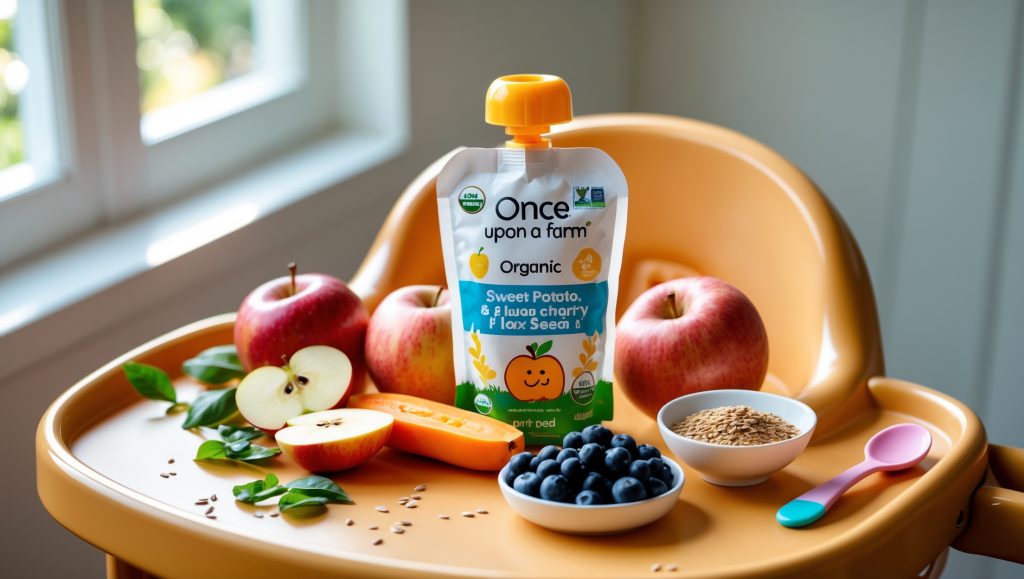
Once Upon a Farm has earned a loyal following among parents who seek fresh, organic, and minimally processed foods for their little ones. Their cold-pressed baby food pouches are a familiar sight in the refrigerated section, promising vibrant flavors and nutrient-rich blends. Today, we’re reviewing the Organic Apple, Sweet Potato, Blueberry & Flax Seed Baby Food Pouch—a Stage 2 blend designed for babies starting to explore diverse tastes and textures. With a focus on whole-food ingredients and cold-pressed preservation, this pouch aims to deliver a convenient, nourishing option that supports healthy growth and early development, including the language and feeding skills that blossom during the first year.
Ingredients & Nutrition
Ingredients: Organic apple, organic sweet potato, organic blueberry, organic banana, organic flax seed, organic lemon juice concentrate.
This blend is USDA Organic and Non-GMO Project Verified. It contains no added sugar, no artificial flavors or preservatives, and no concentrates—just whole fruits, vegetables, seeds, and a hint of lemon juice for freshness.
- Calories: 60 per pouch (3.2oz)
- Fat: 1.5g (mostly from the flax seed, providing healthy omega-3s)
- Sodium: 0mg
- Sugars: 8g (all naturally occurring from fruit and vegetables)
- Fiber: 2g
- Protein: 1g
- Vitamins: Notably contains vitamin C, vitamin A, and some iron and potassium
The use of whole flax seed is a stand-out, offering a plant-based source of omega-3 fatty acids—an important nutrient for early brain and language development. The fruit and vegetable blend is rich in antioxidants, fiber, and vitamins, supporting healthy digestion and immune function.
Taste & Texture
One of the most important aspects of introducing solids is providing a variety of tastes and textures. This pouch offers a naturally sweet, mellow flavor profile: the apple and banana lend a gentle sweetness, balanced by the earthiness of sweet potato. Blueberry adds a subtle tartness, keeping the blend from becoming too sugary, while the flax seed is nearly undetectable in taste but adds a hint of natural thickness. The overall texture is smooth with a slight graininess from the flax, making it a good step up from ultra-smooth first purees but still easy for babies to manage.
Many parents report that babies enjoy the familiar fruit flavors, and the mild flavor encourages acceptance of new vegetables, like sweet potato. The pouch’s consistency is ideal for spoon-feeding or self-feeding with a silicone feeder, supporting the development of oral-motor and early language skills.
Convenience & Storage
Once Upon a Farm pouches are refrigerated, not shelf-stable, due to their cold-pressed process (which preserves nutrients and taste without high heat). This means you’ll find them in the fridge section at major retailers or delivered cold to your home. Each pouch is ready to serve—no heating, mixing, or prep required. The twist-off cap is easy for adults to open but secure enough to deter curious little hands.
- Refrigeration: Required. Use within 24 hours of opening.
- On-the-go: Pouches can be packed in a cooler bag for outings, but shouldn’t be left unrefrigerated for more than 4 hours.
- Portion Size: Each pouch contains 3.2oz, an appropriate serving for babies 6 months and up.
- Packaging: BPA-free plastic pouch with a recyclable cap.
For busy families, the convenience is hard to beat—just grab, shake, and serve. Keep in mind, though, that fridge space and timely use after opening are important for food safety and freshness.
Pros & Cons
Pros
- Certified organic and Non-GMO ingredients
- Cold-pressed to preserve nutrients, flavors, and colors
- No added sugar, salt, or preservatives
- Includes flax seed for omega-3s, supporting brain and language development
- Convenient pouch format—great for home or travel (with ice pack)
- Appealing taste and texture for most babies
Cons
- Requires refrigeration; not shelf-stable
- Higher price point compared to many jarred or shelf-stable purees
- Slightly grainy texture may not suit all babies early on
- Single-use pouch creates waste, though cap is recyclable
Alternatives & Similar Products
If your family prefers shelf-stable options or has limited refrigerator space, there are several organic baby food pouches made with similar fruit and vegetable combinations. Brands like Happy Baby, Beech-Nut Organics, and Gerber Organic offer apple-sweet potato or apple-blueberry blends in shelf-stable pouches. However, these may use heat pasteurization, which can affect flavor and nutrient content compared to cold-pressed options.
For families interested in homemade baby food, blending steamed sweet potato, apple, banana, and blueberries with a sprinkle of ground flax seed can approximate the flavor and nutrition of this pouch—though it requires more prep and storage planning.
Other Once Upon a Farm blends, such as their Apple, Carrot, and Cinnamon pouch, offer similar freshness and convenience with different flavor profiles.
Verdict
Once Upon a Farm’s Organic Apple, Sweet Potato, Blueberry & Flax Seed Pouch stands out for its clean ingredient list, thoughtful nutrition, and fresh taste. The cold-pressed process preserves the vibrant flavors and nutrients that support your baby’s early development—including the sensory and oral-motor experiences that lay a foundation for language skills. While the need for refrigeration and the premium price may be a hurdle for some families, the quality, convenience, and baby-friendly taste make it a solid choice for those seeking the freshest possible store-bought baby food. This pouch is especially well-suited for families wanting to introduce a range of flavors and nutrients while supporting their child’s learning at the table—and beyond.
FAQ
+Is this pouch suitable as a first food for my baby?
+Does the pouch contain any common allergens?
+How long can I keep the pouch after opening?
+Can I freeze the pouch to extend shelf life?
+Is the pouch recyclable?
+How does this pouch support language development?
+Is this a good option for baby-led weaning?

Once Upon a Farm Organic Apple, Sweet Potato, Blueberry & Flax Seed Pouch stands out as a thoughtful snack option for parents who want both nutrition and convenience. The blend of organic fruits and vegetables with added flax seed delivers a tasty, naturally sweet flavor that most little ones seem to love. Parents will appreciate the clean ingredient list—no added sugars, preservatives, or artificial flavors—which aligns well with families prioritizing whole foods.
The texture is smooth and easy for babies and toddlers to self-feed, making it suitable for busy mornings or on-the-go snacks. The resealable pouch is a practical touch, helping to reduce waste and mess. As a bonus, the inclusion of flax seed adds valuable omega-3s and fiber, supporting healthy digestion and brain development. While the price point is a bit higher than standard pouches, the quality ingredients and organic certification can justify the investment for many families. Overall, this pouch is a reliable, wholesome choice for parents seeking nutritious, convenient snacks in 2025.
- Organic ingredients with no added sugar or preservatives
- Delicious blend that appeals to picky eaters
- Resealable pouch for easy, mess-free snacking
- Contains flax seed for added nutrition
Our family juggles a tight schedule and sometimes needs to grab snacks on the go. Are these refrigerated pouches safe to take out of the house for short trips, or do they need to be eaten right away once opened?
You’re right to consider food safety with busy schedules and on-the-go snacks. These pouches need refrigeration, so if you take them out of the house unopened, keep them in an insulated bag with an ice pack and use them within a few hours. Once opened, they should be eaten right away or refrigerated and consumed within 24 hours. For babies and toddlers, always supervise to prevent choking, and check the texture and temperature before serving. This isn’t medical advice; if you have more specific concerns, check in with your pediatrician.
We’re trying to stick to a budget with baby food—how does the cost of these Once Upon a Farm pouches compare to other organic options, or even to making homemade purees with similar ingredients?
It’s great that you’re thinking carefully about your baby’s nutrition and your budget. Once Upon a Farm pouches tend to be a bit pricier than many other organic pouches, mostly due to their cold-pressed process and fresh ingredients. Compared to homemade purees—especially if you buy apples, sweet potatoes, blueberries, and flax seed in bulk—DIY is usually more economical, though it does require prep time and attention to storage safety. If you make purees at home, ensure everything is blended very smoothly and avoid honey or added sugars until age one. This isn’t medical advice; if you’re concerned, check in with your pediatrician.
For families who want convenience but are also budget-conscious, do you find that buying these refrigerated pouches regularly adds up quickly compared to making similar blends at home? I’m wondering if there’s a good balance for minimizing clutter yet keeping costs reasonable.
You’re wisely thinking about both convenience and costs, which many parents juggle. One approach is to reserve store-bought pouches like Once Upon a Farm for busy days out, while making bigger batches of homemade blends to portion and store for use at home. Using reusable pouches can limit clutter and recurring waste. For younger babies, ensure homemade blends are smooth and safe, and always supervise eating. Mixing both methods can help balance your budget and your need for quick, healthy options. This isn’t medical advice; if you have concerns about nutrition, your pediatrician can help.
I’m often watching my neighbor’s little one after preschool, and she has some trouble with new textures. You mentioned the flax seed adds a slight graininess—do you find most babies adjust well to this, or is it better suited for those who already handle chunkier textures?
It’s thoughtful of you to consider her comfort with food textures. For toddlers who are still sensitive to new textures, the slight graininess from flax seed may feel unfamiliar at first. You could offer a very small taste to start, watch her reaction, and let her choose whether to continue. If she’s hesitant, it might help to pair the pouch with a familiar smooth puree or wait until she’s shown comfort with chunkier foods. Always supervise closely and ensure she’s seated safely during snacks. This isn’t medical advice; if you’re concerned, check in with your pediatrician.
If my child has a sensitivity to textures or sensory issues with food, do you think the slight graininess from the flax seed could be a problem? Is there a recommended way to introduce new textures like this gradually?
It’s very thoughtful to consider texture sensitivities when introducing new foods. The slight graininess from flax seed in this pouch could be noticeable to some children with sensory issues. Try offering a small amount on a spoon alongside a familiar, smooth puree, and let your child touch or taste it at their own pace. You could also mix the pouch with a smoother puree at first, gradually increasing the amount. Watch your child’s reactions and stop if they seem distressed. For toddlers, always supervise and ensure the texture isn’t a choking risk. This isn’t medical advice; if you’re concerned, check in with your pediatrician.
Is there any difference in how your child might react to this cold-pressed fruit and veggie pouch versus a warm snack before bed? I’ve heard temperature and texture can matter, so I’m curious what’s best for winding down.
It’s great that you’re considering how snack temperature and texture might affect your child’s bedtime routine. Some children find cold foods like this pouch refreshing but possibly a bit stimulating before bed, while warm snacks can be more soothing and signal winding down. You could try offering the pouch at room temperature to soften the coldness, and see how your child responds. Watch for any preference or changes in settling down. For younger children, always supervise to prevent choking, and ensure the pouch is safe and age-appropriate. This isn’t medical advice; if you’re concerned, check in with your pediatrician.
My little one sometimes refuses anything that’s not perfectly smooth. Since you mentioned a bit of graininess from the flax seed, do you have any tips for working up to this texture? I’d love to help her accept more variety as she gets older.
It’s great that you want to help your little one accept new textures—texture sensitivity is common in young children. To gently build up to the graininess of flax seed, try mixing small amounts of the pouch into their usual smooth purees, gradually increasing the proportion. You can also offer tiny tastes on a spoon or finger so she can explore the texture with minimal pressure. Let her play with small amounts on her highchair tray to touch and taste at her own pace. Always supervise closely, especially if your child is under 12 months or new to more textured foods. This isn’t medical advice; if you’re concerned, check in with your pediatrician.
My child has some sensory sensitivities and tends to reject foods with grainy textures. You mentioned a slight graininess from the flax seed—how noticeable is it for babies, and have you heard from parents whose children are sensitive to texture?
You’re absolutely right to consider texture if your child has sensory sensitivities. The flax seed does add a mild graininess to this pouch, and sensitive babies might notice it more than others. Some parents of texture-sensitive children have reported their little ones refusing foods with even a slight grit, including this pouch. If you’d like to try it, you might sample a small amount first, watching closely for your child’s reaction. For younger babies or those with strong aversions, smoother purees are often more comfortable. Always supervise closely during new foods. This isn’t medical advice; if you’re concerned, check in with your pediatrician.
Does this pouch need to be eaten straight from the fridge, or should I let it warm up a bit before serving for a child who reacts strongly to cold foods? Sometimes my son will refuse things if they are colder than room temperature.
It’s completely understandable to want your child to enjoy their food without discomfort. You can safely let the pouch sit at room temperature for a short while before serving, as long as you keep it sealed and don’t leave it out for more than 2 hours. Alternatively, you can place the sealed pouch in a bowl of warm (not hot) water for a few minutes to gently warm it. Always check the temperature by squeezing a bit onto your wrist before offering it, especially for younger children. Avoid microwaving, which can create hot spots. This isn’t medical advice; if you’re worried about your child’s reactions, check in with your pediatrician.
For parents on a budget, does the nutritional value of this refrigerated pouch make it worth the higher price compared to some of the shelf-stable organic options? Do the benefits of the cold-pressed process really stand out for babies developing fine-motor and feeding skills?
It’s understandable to weigh cost against nutrition when choosing foods for your baby. The cold-pressed process in this pouch helps preserve some vitamins and flavors, but for most babies, shelf-stable organic pouches can still offer good nutrition. For fine-motor and feeding skills, the bigger factor is giving your baby chances to self-feed and try different textures, not necessarily the exact pouch. If your budget is tight, you can support development equally well by letting your baby practice squeezing or spooning from any safe, age-appropriate pouch or soft food. This isn’t medical advice; if you have concerns about nutrition or feeding, check in with your pediatrician.
We sometimes end up with extra pouches by the end of the week. How long can these Once Upon a Farm pouches be kept in the refrigerator after opening one, and can they be frozen for later use?
It’s great that you’re thinking ahead about food safety and reducing waste. Once opened, these pouches should be refrigerated and used within 24-48 hours for best freshness and to reduce the risk of bacteria, especially for babies and toddlers. You can freeze the puree for up to 2 months—just make sure to use a clean container and leave a little space for expansion. Always check for changes in smell or texture before serving. This isn’t medical advice; if you’re concerned, check in with your pediatrician.
My child sometimes has mild texture aversions and is hesitant with foods that aren’t completely smooth. How does the slight graininess from the flax seed in this pouch usually go over with sensitive eaters? Would you recommend it for babies with sensory sensitivities?
It’s understandable to be cautious when your child has texture sensitivities. This pouch does have a mild graininess from the ground flax seed, which some sensitive eaters may notice. If your baby prefers ultra-smooth purees, you might want to introduce the pouch gradually: start by offering a small taste on a spoon, or mix it with a smoother puree your child likes to dilute the texture. Always supervise feeding, especially for babies under 1 year. Watch for any signs of discomfort and go at your child’s pace. This isn’t medical advice; if you’re concerned, check in with your pediatrician.
When rotating toys for babies around 12 months who are starting to show preferences, should I stick with familiar favorites or focus more on introducing new textures and functions? I want to foster curiosity but not overwhelm my child.
It’s wonderful that you want to encourage your baby’s curiosity while respecting their comfort. At 12 months, it’s helpful to keep a mix of both familiar favorites and a few new toys with different textures or simple functions. Try rotating in just one or two new items at a time alongside well-loved toys, so your baby still feels secure. Observe which toys spark interest and remove any that seem overstimulating or frustrating. Always check that new toys are age-appropriate—no small parts, safe materials, and supervised play. This isn’t medical advice; if you’re concerned, check in with your pediatrician.
For families on a budget, does the refrigerated storage requirement of Once Upon a Farm pouches make them harder to keep on hand for nightly routines, compared to shelf-stable options? How do you store them for easy access if you offer them before bed regularly?
It’s understandable to want a bedtime snack option that’s easy and affordable to keep on hand. Since Once Upon a Farm pouches need refrigeration, they can be less convenient and possibly more costly if you don’t have extra fridge space or need to buy frequently. To make them work for nightly routines, you could: 1) store a week’s supply in a designated fridge section for easy access, 2) place a pouch in the fridge door for grab-and-go, 3) offer the pouch straight from the fridge, as the cool temperature is safe and pleasant for toddlers and preschoolers, and 4) always check best-by dates and supervise eating. This isn’t medical advice; if you have concerns about nutrition or storage, check in with your pediatrician.
If I want to introduce this as a pre-bed snack, how does it compare to more traditional snacks like plain fruit or yogurt in terms of supporting early language and feeding skills during our bilingual nighttime routine?
It’s great that you’re thinking about how snacks can support your child’s development and your bilingual routine. The Once Upon a Farm pouch is convenient, but compared to plain fruit or yogurt, it usually involves less chewing and self-feeding practice, which are important for early feeding and language skills. For a pre-bed snack, consider offering the pouch occasionally, but also give opportunities to practice with finger foods or spoon-feeding—encourage your child to name foods in both languages, describe textures, and involve them in feeding as much as possible. Always supervise to prevent choking and ensure age-appropriate textures. This isn’t medical advice; if you’re concerned, check in with your pediatrician.
Since these pouches need refrigeration, how long can I keep an opened pouch in the fridge if my baby doesn’t eat the whole thing in one sitting? I’m trying to avoid wasting food while keeping things safe.
It’s great that you’re thinking about food safety and minimizing waste. After opening a Once Upon a Farm pouch, you can safely store it in the refrigerator for up to 72 hours according to the manufacturer’s guidelines. Make sure to reseal the pouch tightly and place it in the coldest part of the fridge, away from the door. Always check for changes in smell, texture, or color before offering the leftovers again. For babies under one, avoid letting the pouch sit out at room temperature for more than two hours. This isn’t medical advice; if you’re concerned, check in with your pediatrician.
Our pediatrician recommended introducing new foods one at a time, especially with common allergens. Is flax seed likely to cause a reaction in babies, or is it generally considered low risk?
It’s great that you’re being cautious about introducing new foods and monitoring for allergens. Flax seed is not considered a common allergen like peanuts, eggs, or dairy, but rare reactions can still happen. To be safe, introduce flax seed on its own—offer a small amount and watch for reactions over 2–3 days before mixing it with other new foods. Make sure the flax seed is finely ground to avoid choking in babies under 12 months. Always supervise meals and avoid whole seeds for little ones. This isn’t medical advice; if you’re concerned, check in with your pediatrician.
If my daycare only offers meals at set times, is this pouch filling enough to work as a stand-alone lunch or would you recommend pairing it with something else to keep my one-year-old satisfied through the afternoon?
I understand your concern about making sure your one-year-old stays full and content until the next meal. While the Once Upon a Farm pouch is nutritious, it may not be filling enough alone for lunch at this age. Consider pairing it with soft finger foods like small pieces of cooked pasta, diced cheese, or mashed beans for extra protein and energy. Always choose age-appropriate foods to prevent choking, and watch for any food allergies. Offer water to drink as well. This isn’t medical advice; if you’re concerned, check in with your pediatrician.
How does this Once Upon a Farm pouch compare to similar organic purees in terms of supporting language development through mealtime routines? Does the mix of ingredients here do more for brain growth compared to single-fruit options?
It’s great that you’re thinking about how mealtime can support your child’s growth and learning. While the Once Upon a Farm pouch has a nutritious blend of ingredients like apple, sweet potato, blueberry, and flax seed, there isn’t strong evidence that mixed purees boost brain development or language more than single-fruit options, as long as both provide key nutrients. To support language development, focus on talking with your child about the food—describe its color, texture, and taste, and encourage your child to express preferences, regardless of the puree type. Always supervise young children with pouches to prevent choking. This isn’t medical advice; if you’re concerned, check in with your pediatrician.
With a busy toddler and a tight budget, I try to buy in bulk when possible. Can these pouches be frozen and thawed safely, or does freezing affect their texture, especially with the flax seed in the mix?
It’s great that you’re planning ahead for your toddler and budget. Freezing Once Upon a Farm pouches is generally safe; however, the texture can change once thawed, especially because flax seeds may thicken or gel in the mix. Try freezing one pouch first as a test—thaw it in the fridge and knead it well before serving to check if your child minds the texture change. Always supervise your toddler when eating, and avoid refreezing once thawed. This isn’t medical advice; if you’re concerned, check in with your pediatrician.
How does this Once Upon a Farm pouch compare in terms of nutrition and convenience to making a homemade blend at home with similar ingredients? I’m weighing the time involved and freshness versus the benefits of store-bought options like this one.
It’s thoughtful to weigh both nutrition and convenience when choosing foods for your child. The Once Upon a Farm pouch offers balanced nutrition, is cold-pressed to preserve nutrients, and is convenient for busy days or outings. Homemade blends give you full control over freshness, texture, and ingredients, which some parents prefer, but they do take more time and cleanup. Both options are age-appropriate for babies learning to eat purees; just watch for allergens and always supervise eating. This isn’t medical advice; if you have nutrition concerns, check in with your pediatrician.
My 2.5-year-old is getting interested in self-feeding as we start potty training, but she is sensitive to textures. Since the pouch has a slight graininess from the flax seed, have you noticed if toddlers respond well to that, or do some find it off-putting?
It’s wonderful that you’re supporting your toddler’s self-feeding and potty training journey, especially with her texture sensitivities in mind. Some toddlers are unbothered by the slight graininess from flax seed in this pouch, while others might hesitate at first. Try offering a small taste and observe her reaction—if she resists, you could first let her explore with a spoon or mix a bit into smooth yogurt to gradually introduce the texture. Always supervise closely during meals. Every child is unique, so go at her pace. This isn’t medical advice; if you’re concerned, check in with your pediatrician.
Would this pouch be a good option for breakfast at daycare, or is it better suited as a snack? I am trying to set up a healthy morning routine for my one-year-old.
It’s great that you’re setting up a healthy morning routine for your one-year-old. This pouch can work as a quick and nutritious breakfast at daycare, especially if mornings are rushed, but it may not be filling enough on its own. Try pairing it with something more substantial, like whole grain toast or unsweetened yogurt, for lasting energy. Make sure your child is supervised while eating to prevent choking. Double-check for any ingredient sensitivities, especially if introducing flax seed for the first time. This isn’t medical advice; if you’re concerned, check in with your pediatrician.
Do you have any advice for transitioning a child from ultra-smooth pouches to ones with a little more texture like this? My 13-month-old has rejected anything with noticeable thickness so far.
It’s understandable to feel concerned when your toddler resists new textures. Start by offering tiny amounts of the textured pouch on a spoon alongside their familiar smooth foods, allowing your child to try just a little at their own pace. Try mixing a small amount of the textured pouch into their usual purée, gradually increasing the ratio as they get used to it. Let your child touch and play with the food to explore the texture without pressure to eat. For 13-month-olds, close supervision is key, and avoid foods with large chunks or hard pieces to reduce choking risk. This isn’t medical advice; if you’re concerned, check in with your pediatrician.
Do you have any advice on how to store these pouches to ensure the caps and packaging pieces are kept safely out of reach of little ones? My toddler is very curious and I worry she might find a cap if I’m not careful.
It’s great that you’re thinking ahead about your toddler’s safety. To keep caps and packaging pieces out of reach, place pouches and loose parts in a high, closed cabinet or a secure pantry shelf your child cannot access. Always discard used caps immediately into a lidded trash can. Consider prepping snacks out of your child’s sight to avoid piquing her curiosity. Double-check the floor and surrounding area after opening each pouch to ensure nothing has dropped. These steps help reduce choking hazards for toddlers, who naturally love to explore. This isn’t medical advice; if you’re concerned, check in with your pediatrician.
Do you have any tips for encouraging a picky eater who is sensitive to new textures to try this pouch, especially since it mentions a slight graininess from the flax seed? Texture has been a barrier for us lately.
It’s completely understandable to want to support your child when new textures are a challenge. You might start by letting your child explore the pouch with their hands before tasting, to get used to its feel. Try offering just a tiny taste on a spoon or your finger, rather than the whole pouch at once. Pair the pouch with a familiar food your child already likes, so the experience feels less overwhelming. If your child is old enough, involve them in talking about or squeezing the pouch to build comfort. For young children, always supervise eating, and avoid forcing or pressuring. This isn’t medical advice; if texture worries persist, consider reaching out to your pediatrician or a feeding specialist.
You mention that the blend supports early language skills. Can you elaborate on how a food’s texture or nutritional profile might influence language development at this stage?
—it’s wonderful that you’re thinking about how nutrition and texture impact your child’s language growth. Around 6–12 months, introducing foods with varied but safe textures (like smooth purees or soft mash) encourages your baby to practice moving their tongue and lips, which are the same muscles used in speech. Nutrients such as healthy fats (like those in flax seed) also support brain development, laying the groundwork for learning new words. Always supervise meals, avoid choking hazards, and watch for allergies. This isn’t medical advice; if you have concerns about feeding or language milestones, please consult your pediatrician.
Since this blend is labeled as Stage 2 for babies, is it still appropriate as a snack for a preschooler, or should I look for something more substantial? Would you suggest pairing it with other foods to better support a 4-year-old’s energy needs during active afternoons?
You’re thoughtful to consider whether a Stage 2 pouch meets your preschooler’s needs. While this blend is safe for a 4-year-old, it’s designed for babies and may not fill up an active child. For a more satisfying snack, try pairing the pouch with whole grain crackers, plain yogurt, or a slice of cheese to add protein and healthy fats. Always supervise to prevent messes or choking, and choose snacks free from choking hazards. This isn’t medical advice; if you’re concerned, check in with your pediatrician.
Since these pouches must be refrigerated, what’s the best way to incorporate them into a daily routine when we’re often on the go? I’m worried about managing their freshness when traveling or visiting family.
You’re right to be thoughtful about keeping these pouches fresh while traveling. Try freezing a pouch before you leave; it will thaw gradually and stay cool for several hours. Use an insulated lunch bag with an ice pack, and only take out the pouch right before your child eats. Always check the temperature—if it’s no longer cool, skip it. For babies under 1, extra care is needed to avoid spoilage. This isn’t medical advice; if you’re concerned, check in with your pediatrician.
How does this pouch compare to making a homemade blend with similar ingredients, both in terms of cost and nutritional value? I’m curious if it’s worth the convenience price tag for busy parents.
Your curiosity about cost and nutrition is very understandable. Nutritionally, homemade blends can be just as wholesome if you use fresh produce and control sugar, but the Once Upon a Farm pouch is cold-pressed to keep nutrients, and it’s free of added sugars or preservatives. Homemade versions may cost less, especially if you buy in bulk, but the pouch offers convenience and safety-tested packaging. For babies under 12 months, ensure all homemade ingredients are age-appropriate and free of choking hazards. This isn’t medical advice; if you have concerns about nutrition or allergies, check in with your pediatrician.
Does this pouch have to be consumed all at once, or can I refrigerate any leftovers safely for the next day’s nap or bedtime snack? We try to minimize waste and I’m always unsure about how long these stay fresh.
It’s great that you’re mindful about minimizing waste and keeping snacks safe for your little one. Once opened, you can refrigerate any leftovers from the pouch—just make sure to reseal tightly and use a clean spoon if feeding directly from the pouch. Most brands, including Once Upon a Farm, recommend finishing refrigerated leftovers within 24 hours. Always check for changes in smell, texture, or color before serving again, and avoid storing if your child has eaten directly from the spout. This isn’t medical advice; if you’re concerned, check in with your pediatrician.
My child is almost two and still struggles with lumpier foods. Would this pouch blend well if mixed into yogurt or oatmeal as a next step, or would you recommend a different tactic for getting used to more complex textures?
It’s understandable to want to help your almost-two-year-old adjust to more textured foods. Mixing the Once Upon a Farm pouch into yogurt or oatmeal is a gentle way to introduce new textures while keeping flavors familiar. Start with a smooth blend, then gradually add less-mixed, lumpier bits over time. Offer small, supervised spoonfuls, and let your child explore at their own pace. Watch for any signs of gagging—this is common as they learn, but keep pieces soft and manageable. This process is age-appropriate, but if you have ongoing concerns or see feeding difficulties, check in with your pediatrician. This isn’t medical advice.
I noticed the pouch contains whole flax seed for omega-3s. Does this mean the flax seeds are fully blended in, or might there be little bits babies could feel? Just wondering if it’s suitable for a child who is a bit sensitive to textures.
It’s great that you’re looking closely at textures for your sensitive child. With this pouch, the flax seeds are blended in, but there may still be tiny flecks or a slightly grainy texture, since whole flax seeds don’t dissolve completely. For babies and toddlers who are very sensitive, you might want to check the pouch yourself first—squeeze a little onto a spoon and see if you notice any texture. If you’re still unsure, you can try offering a small amount and watch your child’s reaction. Always supervise to ensure safe swallowing. This isn’t medical advice; if you’re concerned, check in with your pediatrician.
I noticed the pouch is refrigerated and not shelf-stable. How long does it stay fresh once opened? Sometimes I only use half a pouch at a time for my baby and worry about waste.
It’s great that you’re thinking about both freshness and reducing waste for your baby. Once opened, the Once Upon a Farm pouch should be refrigerated and used within 24 hours for safety, as the article notes it’s not shelf-stable. Try squeezing the remaining puree into a clean, airtight container if your baby eats directly from the pouch to avoid introducing bacteria. Always check for changes in smell or texture before offering leftovers. For little ones under a year, extra care with storage is important. This isn’t medical advice; if you have concerns about food safety or your baby’s health, please check in with your pediatrician.
For parents with busy mornings, do you think the refrigerated storage requirement for these pouches makes them tricky to bring on outings or to daycare? How long can the pouch safely be left out of the fridge before serving it to a baby?
It’s understandable to want convenience during busy mornings while also keeping your baby’s food safe. These pouches need to stay refrigerated until use because they don’t have preservatives. According to the manufacturer, Once Upon a Farm pouches can be kept out of the fridge for up to 4 hours. If you’ll be out longer or sending them to daycare, pack them in an insulated lunch bag with an ice pack. Always check that the pouch is still cold to the touch before serving, and avoid leaving it in a warm car or direct sun. This isn’t medical advice; if you’re concerned, check in with your pediatrician.
My parents sometimes worry about refrigerated baby foods staying fresh when we visit them for the day. How long can these pouches safely stay out of the fridge before serving, and is there a safe way to transport them if we plan on being out for several hours?
It’s understandable to want reassurance about keeping baby food safe during visits. Once Upon a Farm pouches need refrigeration and should not be left out for more than 4 hours at room temperature. For outings, use an insulated cooler bag with ice packs to keep the pouch chilled until mealtime. Before serving, check the pouch for any changes in smell, texture, or puffiness, which can signal spoilage. Always supervise babies while eating and make sure the pouch is not too cold before offering it. This isn’t medical advice; if you’re concerned, check in with your pediatrician.
Can you recommend how to incorporate the Once Upon a Farm pouch into a morning routine without much noise or fuss? We are trying to avoid waking up older siblings.
It’s great you’re thinking about a peaceful start to the day for everyone. To keep mornings quiet, you can offer the Once Upon a Farm pouch straight from the fridge while your little one sits with you in a cozy spot—no heating or utensils needed. For toddlers, you can hand them the pouch as soon as they wake while you cuddle together. If your child is new to pouches, supervise closely to ensure safe eating. For older babies, squeeze a bit onto a spoon silently if needed. This isn’t medical advice; if you have any concerns, check in with your pediatrician.
Does the pouch need to be consumed immediately after opening, or is it safe to refrigerate any leftovers for later in the day? I like to make sure we avoid unnecessary waste and maximize the value of each pouch.
It’s wonderful that you’re mindful about both nutrition and avoiding waste. Once opened, the Once Upon a Farm pouch should be refrigerated if your child doesn’t finish it right away—seal it tightly and store it in the fridge. Use the remainder within 24 hours to ensure it stays safe and fresh, especially since it contains organic ingredients. Always check for changes in smell or texture before offering leftovers. As with all baby foods, supervise your child during feeding and avoid sharing unfinished pouches between siblings. This isn’t medical advice; if you’re concerned, check in with your pediatrician.
How does this Once Upon a Farm pouch compare nutrition-wise to making my own apple, sweet potato, and blueberry puree at home with steamed ingredients? Is there a big difference in vitamins or texture?
It’s great that you’re thinking carefully about nutrition and texture for your child. Making your own puree using steamed apples, sweet potatoes, and blueberries will likely retain more texture and some heat-sensitive vitamins, like vitamin C, which can decrease slightly during commercial processing. The Once Upon a Farm pouch is cold-pressed to help preserve nutrients and is convenient, but homemade puree may taste fresher and lets you control thickness. Both are safe options for babies if ingredients are age-appropriate (smooth, no added sugars, and allergens considered). This isn’t medical advice; if you’re concerned, check in with your pediatrician.
If my baby’s still adjusting to thicker solids and occasionally gags on new textures, is it okay to thin this pouch with breast milk or water, or does that affect the nutritional benefit?
It’s completely understandable to want your baby’s transition to new textures to be gentle and positive. You can safely thin the Once Upon a Farm pouch with breast milk or water to help your baby adjust, as this doesn’t meaningfully reduce its nutritional benefit—especially if you’re just adding a little to reach a texture your baby can manage. Always serve freshly mixed portions and supervise closely, especially under 12 months. If gagging is frequent or severe, check with your pediatrician before introducing more textured foods. This isn’t medical advice; if you’re concerned, check in with your pediatrician.
Budget is important for our family, especially since we sometimes buy organic foods for both our baby and grandparents. Are these Once Upon a Farm pouches cost-effective if used daily, or would it be better to make similar blends from scratch at home when time allows?
It’s understandable to want what’s best for your family while keeping an eye on costs. Using Once Upon a Farm pouches daily can add up, especially for multiple family members. Making similar blends at home with organic produce—when you have time—can be more budget-friendly and lets you control ingredients. Just ensure that purees are smooth for babies to avoid choking hazards and avoid honey for children under one. You might also batch-cook and freeze portions to save time. This isn’t medical advice; if you’re concerned, check in with your pediatrician.
Since the texture is a bit grainy from the flax seed, do you have any experience or advice for introducing this to babies who are used to really smooth purees? My little one sometimes struggles with new textures.
It’s completely normal for babies to be hesitant with new textures, especially if they’re accustomed to very smooth purees. Start by mixing a small amount of the pouch with your baby’s usual puree to gradually introduce the change. Offer tiny spoonfuls and watch your baby’s cues, letting them go at their own pace. Stay positive and patient, even if they spit it out at first—repeated, low-pressure exposure often helps. If your baby is around 6 months or older and developmentally ready, exploring a bit of texture is safe, but always supervise for signs of gagging or difficulty swallowing. This isn’t medical advice; if you’re concerned, check in with your pediatrician.
Do you have any suggestions on introducing this pouch to a toddler who’s starting to insist on feeding themselves? Would it work well with a spoon, or is it better for kids to squeeze it directly into their mouths at this stage?
It’s great that your toddler wants to feed themselves—it’s a big step toward independence. For this pouch, you can try both approaches: Let your child squeeze the puree onto a spoon first, which helps them practice fine motor skills and control. You can also let them try squeezing directly into their mouth if they seem ready, but be nearby to supervise and avoid messy spills or choking. Some toddlers enjoy alternating between spoon and pouch. Always check that the cap is out of reach to prevent choking. This isn’t medical advice; if you’re concerned, check in with your pediatrician.
I have heard that flax seed can help with digestion. For a toddler who is just starting to eat more solid foods, is the amount of fiber in this pouch likely to be gentle on their tummy, or should I introduce it gradually alongside other familiar foods?
—it’s wonderful that you’re thinking about your toddler’s digestive comfort as they try new foods. The fiber from flax seed in this pouch is generally present in small amounts, making it unlikely to upset most toddlers’ tummies, especially since the product is designed for young children. To be gentle, start by offering a small portion alongside familiar foods and watch for any signs of tummy upset. Introduce new fiber sources one at a time, and make sure your child has enough fluids to help digestion. Always supervise eating, and if you notice any digestive issues, check with your pediatrician. This isn’t medical advice; if you’re concerned, check in with your pediatrician.
For families who rotate toys weekly, do you think it’s helpful to also rotate food textures and flavors, like those in this pouch? Or should we stick to familiar foods and only change the toys to avoid overwhelming our baby?
You’re thoughtful to consider both stimulation and comfort for your baby. Gradually introducing a variety of food textures and flavors—like those in the pouch—can actually support sensory development and reduce picky eating later. Start with small amounts of new foods alongside familiar favorites, and observe your baby’s reactions. For infants just starting solids, keep textures smooth and avoid any choking hazards; always supervise meals. If your baby seems hesitant, try again another day without pressure. This isn’t medical advice; if you have concerns about your baby’s eating or reactions, check in with your pediatrician.
Is this pouch suitable for toddlers older than one year, like my 2.5-year-old, or is it mainly intended for babies just starting solids? I want to make sure it will still meet her nutritional needs as she grows, especially during potty training.
It’s great that you’re thinking about your toddler’s changing nutritional needs. This pouch is safe for children over one year, including 2.5-year-olds, as long as she eats it under supervision to prevent choking. However, at her age, pouches can be more of a snack or part of a meal rather than a primary source of nutrition. During potty training, focus on a varied diet with plenty of fiber from whole fruits, veggies, and grains alongside pouches. Always check for allergies and watch texture for readiness. This isn’t medical advice; if you’re concerned, check in with your pediatrician.
I’m curious if you have any advice about incorporating this pouch into a toddler’s busy travel routine. Is it filling enough to serve as a quick meal on the go, or should I plan to offer something alongside it for longer stretches away from home?
You’re thoughtful to plan ahead for your toddler’s nutrition while traveling. While the Once Upon a Farm pouch is a nourishing snack with fruit, veggie, and flax seed, most toddlers will need more to feel full, especially during longer outings. Try pairing the pouch with easy-to-carry foods like whole grain crackers, cheese slices, or a hard-boiled egg for more protein and sustained energy. Always supervise your toddler while eating, and check the pouch temperature if it’s been out of refrigeration. This isn’t medical advice; if you’re concerned, check in with your pediatrician.
Does the slight graininess from the flax seed pose any challenges for babies who are used to very smooth purees, or have sensory sensitivities? Have you seen any tips for helping them transition to these thicker textures?
It’s understandable to be concerned if your baby is used to very smooth purees or shows sensory sensitivities. Some babies may notice the grainier feel from flax seed and hesitate at first. To help them adjust, try mixing a small amount of the pouch with their usual smooth puree, gradually increasing the amount over time. Offer the new texture during calm, low-pressure times, and let your baby explore it on their own terms. Always supervise closely and watch for signs of discomfort or difficulty swallowing. If your child has strong sensory sensitivities or feeding challenges, consult your pediatrician or a feeding specialist, as this isn’t medical advice.
Would this Stage 2 pouch be suitable for a 7-month-old just starting to transition from thinner purees, or should we wait until she has more experience with slightly thicker textures?
It’s great that you’re thinking carefully about your baby’s transition to new textures. Stage 2 pouches like this one are often a bit thicker and more textured than Stage 1, which can be helpful for developing oral motor skills. For a 7-month-old just moving on from thin purees, you might want to introduce a small amount at first, watching closely for any gagging or difficulty swallowing. You could also mix a bit of the pouch with a thinner puree to ease the transition. Always supervise feedings and check for any signs of allergy. This isn’t medical advice; if you’re concerned, check in with your pediatrician.
I like that this pouch includes flax seed for omega-3s, but I wonder if my baby is actually able to digest whole flax seeds at this stage. Does the cold-pressed process help break them down, or would ground flax seed be more digestible for younger babies?
It’s great that you’re paying attention to your baby’s nutrition and digestion. Whole flax seeds typically pass through a young child’s digestive system without being fully broken down, meaning they may not absorb all the nutrients. The cold-pressed process in pouches doesn’t grind the flax seeds—it mainly preserves nutrients, but does not improve digestibility of whole seeds. For younger babies, ground flax seed is generally easier to digest and allows for better nutrient absorption. Always watch for any signs of allergies, and if you have concerns about seeds or texture, check in with your pediatrician for guidance. This isn’t medical advice.
The cold-pressed process sounds great for nutrition, but my little one sometimes notices if food is colder than room temperature. Is it safe to gently warm this pouch, or would that affect the taste or nutrients?
It’s understandable to want your child’s food at a comfortable temperature. You can gently warm the pouch by placing it in a bowl of warm water for a few minutes—avoid microwaving, as that can create hot spots or overheat the pouch. Warming may cause some minor nutrient loss, but this is minimal if you only warm to room or body temperature. Always shake the pouch and test the temperature before offering it to your child. For babies under 12 months, extra caution is important to avoid burns. This isn’t medical advice; if you’re concerned, check in with your pediatrician.
My one-year-old is starting daycare next week, and I’m looking for easy, nutritious options to send with him. Since these pouches need refrigeration, how long can they safely stay out at room temperature in a daycare lunchbox before they’re no longer safe to eat?
It’s great that you’re thinking about safe, nutritious meals for your little one as they start daycare. For refrigerated pouches like Once Upon a Farm, they should not stay out at room temperature for more than 4 hours, and less if the room is very warm. To keep the pouch safe longer, pack it with an ice pack in an insulated lunch bag. Remind daycare staff to refrigerate the pouch as soon as possible. Always check for changes in texture, color, or smell before serving. This isn’t medical advice; if you’re concerned, check in with your pediatrician.
Is this Stage 2 pouch suitable for a seven-month-old who is just starting to move beyond completely smooth purees, or would it be better for older babies with more established eating skills?
It’s great that you want to support your baby’s transition to more textured foods. This Stage 2 pouch is designed for babies around 6 months and up who are ready for slightly thicker purees and small bits, making it generally suitable for a seven-month-old beginning this stage. Offer small tastes and watch closely for any trouble swallowing. Start with a spoon and go slowly, gauging your baby’s comfort with the new texture. Always supervise closely, as every baby is different. This isn’t medical advice; if you’re concerned, check in with your pediatrician.
Do you have any suggestions on how to introduce this pouch to a baby who is still hesitant about sweet potato flavors? My little one accepts apple and banana, but always seems to resist the more savory ingredients.
It’s understandable to feel concerned when your baby resists new flavors like sweet potato. Try offering a very small amount of the pouch on a spoon alongside a familiar flavor, such as apple puree, to help bridge the gap. You can also mix a tiny bit of the pouch into their usual apple or banana puree, gradually increasing the sweet potato portion over several days. Make sure to keep mealtimes calm and pressure-free, allowing your baby to explore at their own pace. For babies under 12 months, always supervise closely and ensure appropriate texture to prevent choking. This isn’t medical advice; if you have ongoing worries, please consult your pediatrician.
My child can be put off by strong smells and certain flavors. Is the lemon juice strong in this blend, or does it mostly serve to keep things fresh? I’m curious if it stands out when feeding sensitive kids.
It’s so thoughtful of you to consider how strong flavors might affect your child’s willingness to try new foods. In the Once Upon a Farm pouch, the lemon juice is used mostly to keep the blend fresh; it’s present in a small amount and doesn’t really stand out against the apple, sweet potato, and blueberry flavors. For sensitive kids, you can try offering a tiny taste first, watch closely for their reaction, and go slowly. Always check for any signs of an allergic reaction or discomfort. This isn’t medical advice; if you’re concerned, check in with your pediatrician.
Can this pouch be used for babies slightly younger than the Stage 2 guideline if they’re already showing interest in more variety, or is it best to stick closely to the recommended age?
It’s wonderful that your baby is curious about new foods. While some babies show readiness for more diverse flavors before the typical Stage 2 age, it’s important to introduce new textures and ingredients slowly. If you’d like to try this pouch, offer just a small taste first and watch closely for any allergic reactions or digestive discomfort, since it contains flax seed and multiple fruits. Always supervise feeding and avoid giving pouches to babies who aren’t yet able to sit up well with support. This isn’t medical advice; if you’re unsure, it’s safest to check with your pediatrician before advancing stages.
How does this Once Upon a Farm blend compare nutritionally and in terms of satiety to something like a homemade fruit and veggie smoothie? I’m weighing budget and convenience but want to be sure my child gets enough fiber and healthy fats.
It makes sense to want both nutrition and convenience for your little one. The Once Upon a Farm blend offers fiber from fruit, veggies, and flax seeds, plus some healthy fats from flax, but a homemade smoothie can be tailored to include more veggies, seeds, or nut butters for extra fiber and fats. For satiety, both options are similar if you include fats and protein sources at home, but homemade lets you control textures and ingredients. Always watch for choking hazards if your child is under 12 months and stick to age-appropriate textures. This isn’t medical advice; if nutrition or fullness is a real concern, check in with your pediatrician.
When babies are feeding themselves from these pouches, is there a safe way to store the cap during mealtime to ensure it stays out of reach? I sometimes worry that a curious baby might get ahold of it while I am distracted for a moment.
It’s very understandable to worry about small parts like pouch caps around your baby, as they can be a choking hazard. Here are a few steps you can take: Before handing your baby the pouch, immediately remove the cap and place it well out of reach—consider a closed container, a high shelf, or your pocket. Make it a habit to do this before every meal or snack. If you’re in a public place, keep the cap in your bag until you’re able to safely dispose of it or wash and reuse it. Always supervise feeding times closely whenever possible. This isn’t medical advice; if you’re concerned, check in with your pediatrician.
Is this pouch okay to serve slightly chilled, or do you recommend letting it come to room temperature first? My son sometimes refuses cold foods, especially in the mornings.
It’s understandable to want mealtime to go smoothly, especially when little ones have temperature preferences. Serving the pouch at room temperature is perfectly fine, and it can make the flavors and texture more appealing for babies who resist cold foods. To do this safely, take the pouch out of the fridge 10–20 minutes before serving or run it under warm (not hot) water for a short time. Always check the temperature by tasting a small amount first. For infants and toddlers, avoid microwaving the pouch to prevent hot spots and burns. This isn’t medical advice; if you’re concerned, check in with your pediatrician.
Since this blend contains some iron but not as much as iron-fortified cereals, do you recommend offering it alongside cereals, or can purees like this be enough for babies who are just starting solids? I want to make sure my baby is getting the right amount of iron at this stage.
Your focus on getting enough iron for your baby is right on track. For babies just starting solids, iron is especially important, so pairing purees like this one with iron-rich foods (such as iron-fortified cereals, pureed meats, or beans) can help cover their needs. Offer the puree as part of a meal rather than the only source of iron. Always supervise your baby with new foods and check for readiness cues. This isn’t medical advice; if you’re concerned or unsure about iron intake, please check in with your pediatrician.
If my child prefers milder flavors, can this pouch be mixed with plain cereal or yogurt to tone down the taste without losing nutritional benefits?
It’s great that you’re mindful of your child’s flavor preferences. You can definitely mix the Once Upon a Farm pouch with plain baby cereal or unsweetened yogurt to soften the flavor while still providing nutrition. Start by adding a small amount of the pouch to the cereal or yogurt and gradually increase as your child gets used to the taste. Make sure the mixture is smooth and age-appropriate for your child, and always supervise eating to prevent choking. Check for any allergies to the ingredients in the pouch, cereal, or yogurt. This isn’t medical advice; if you’re concerned, check in with your pediatrician.
I like to rotate new foods and textures to promote language and feeding skills. Would this pouch be suitable for introducing to an older baby who’s closer to a year old, or would it be considered too basic by then?
It’s wonderful that you’re focusing on variety to support your child’s feeding and language development. For an older baby around 12 months, the Once Upon a Farm pouch is safe and age-appropriate, but its smooth texture might not challenge oral motor skills as much as thicker purees or soft finger foods. You could use the pouch as part of a rotation, but consider offering it alongside other foods with more texture, like diced fruits or cooked veggies. Always supervise closely and watch for signs of readiness. This isn’t medical advice; if you’re concerned, check in with your pediatrician.
My child has become fascinated by opening and closing lids, so we’ve started using empty, clean spice jars and storage containers for pretend play. Is this kind of activity helpful for reinforcing the feeding routines and skills mentioned in the article, especially when introducing blends with new textures?
It’s wonderful that you’re supporting your child’s curiosity and fine motor skills through lid play. Pretend play with clean, empty containers can absolutely reinforce skills related to eating, such as grasping, twisting, and understanding how food is stored and served. For safe, age-appropriate play, always supervise closely, choose containers with no sharp edges or small removable parts, and avoid any with lingering food residue or strong odors. You can link this play to feeding routines by letting your child help ‘serve’ pretend or real foods, especially when trying new textures. This isn’t medical advice; if you have concerns about feeding or safety, please check in with your pediatrician.
I’m choosing between this and shelf-stable pouches for daycare. Is there a big nutritional benefit to the cold-pressed process, or would the difference be minor for a two-year-old?
It’s great that you’re thinking carefully about nutrition for daycare snacks. Cold-pressed pouches like Once Upon a Farm may retain more of certain heat-sensitive nutrients and flavors compared to shelf-stable pouches, since they aren’t exposed to high temperatures. That said, for most healthy two-year-olds, the nutritional differences are usually minor if both options are made with quality ingredients and no added sugars. Make sure to consider storage needs—cold-pressed pouches require refrigeration for safety. This isn’t medical advice; if you have specific concerns about your child’s nutrition, check in with your pediatrician.
For families with multiple young kids or twins, does buying these refrigerated pouches in bulk make sense, or do they go bad quickly once opened? Trying to figure out the best approach for our weekly meal planning.
It’s great that you’re planning ahead for your family’s meals. These pouches are best when used soon after opening—ideally within 24 hours if kept refrigerated and not left at room temperature for long. For households with multiple little ones, buying in bulk can work well if you go through them quickly—just remember not to share one pouch between children to avoid germ spread. Always check for spoilage or changes in texture or smell before serving. For safety, supervise children while eating and avoid pouches for babies under 6 months. This isn’t medical advice; if you’re concerned, check in with your pediatrician.