
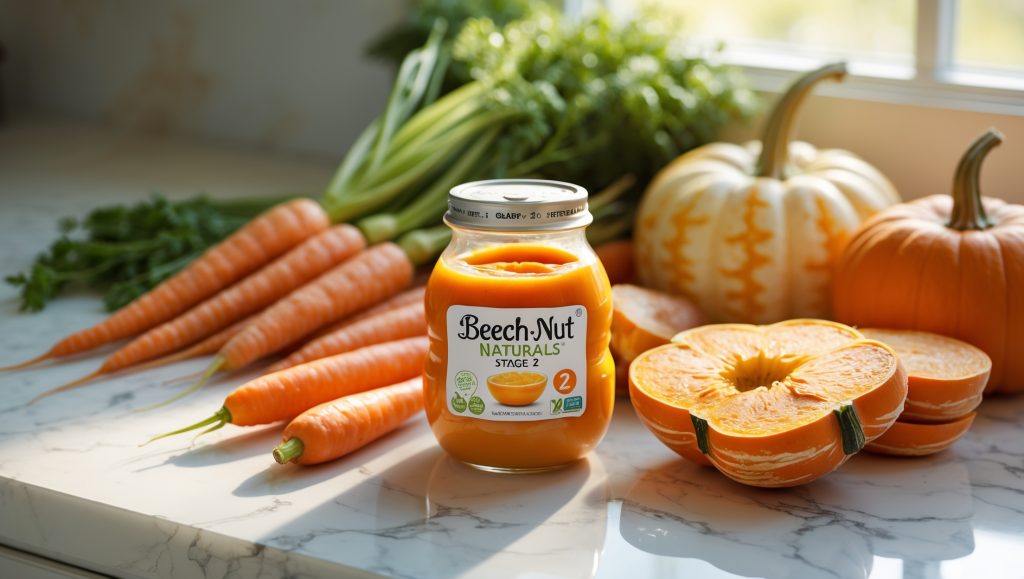
Overview
Beech-Nut Naturals Stage 2 Just Carrot, Corn & Pumpkin Baby Food Jar is a popular choice among parents seeking simple, wholesome foods for their babies. Known for its minimal ingredient list and commitment to using real, recognizable produce, Beech-Nut’s Stage 2 blends are designed for babies continuing to explore new flavors and textures after first foods. The Just Carrot, Corn & Pumpkin variety is a vibrant, vegetable-forward puree that boasts a subtly sweet taste profile thanks to its naturally sweet vegetables. This review explores the product’s ingredients, nutrition, sensory qualities, ease of use, and how it stacks up against similar offerings in 2025.
Ingredients & Nutrition
Beech-Nut’s Stage 2 Just Carrot, Corn & Pumpkin Baby Food is notable for its transparency and simplicity. The ingredient list reads: carrots, corn, pumpkin, and water. No added sugar, salt, artificial flavors, colors, or preservatives are present. All vegetables are non-GMO, and the product is made in the USA.
In terms of nutrition, this blend provides a gentle introduction to vegetables while supporting a baby’s growing needs. A typical 4-ounce (113g) jar offers:
- Calories: 50 per jar
- Carbohydrates: 11g
- Sugars: 6g (naturally occurring)
- Dietary Fiber: 2g
- Protein: 1g
- Fat: 0g
- Sodium: 20mg
- Vitamin A: High (from carrots and pumpkin)
- Vitamin C: Moderate
This blend is a source of key nutrients like vitamin A (important for vision and immune support) and fiber (for digestive health). The absence of added sugars and salt aligns with current pediatric nutrition guidelines. Since this is a Stage 2 food, it’s best suited to babies around 6 months and up who have already tried single-ingredient purees.
Taste & Texture
The flavor profile of Beech-Nut Naturals Just Carrot, Corn & Pumpkin is naturally sweet and mild, with earthy undertones from the carrots and a creamy, slightly starchy finish courtesy of the pumpkin and corn. Many parents report that babies enjoy the gentle sweetness, which can be a helpful bridge for introducing more complex vegetable flavors.
The texture is smooth and uniform but slightly thicker than Stage 1 purees, providing a bit more substance for babies developing their oral motor skills. The puree holds its shape on a spoon but is easy to swallow, making it suitable for spoon-feeding or for letting little ones practice self-feeding under supervision.
Convenience & Storage
Beech-Nut’s glass jars are both practical and eco-friendly. Each jar is sealed for freshness and shelf-stable until opened, making them an excellent pantry staple for busy families. The twist-off lid is easy to open, and the jar itself is reusable for storing leftover purees, small snacks, or even craft supplies.
Preparation is straightforward: simply open, stir, and serve. There’s no need for heating unless your baby prefers it warm, in which case the jar can be gently warmed in a bowl of hot water (avoid microwaving with the lid on). Once opened, any unused portion should be refrigerated and used within 2 days. The compact size is ideal for travel, daycare, or meals on the go.
Pros & Cons
Pros
- Simple, transparent ingredient list with no additives
- Non-GMO vegetables and no added sugars or salt
- Rich in vitamin A and fiber
- Appealing, naturally sweet flavor profile
- Eco-friendly, reusable glass jar packaging
- Easy to store, serve, and transport
Cons
- Not organic (though ingredients are non-GMO)
- Limited protein and fat (may need supplementation as part of a balanced diet)
- Glass jars are heavier than pouches and less convenient for some families on-the-go
- Flavor variety may not appeal to all babies
- Must be refrigerated after opening and used within 2 days
Alternatives & Similar Products
Parents looking for similar products in 2025 have several choices:
- Beech-Nut Naturals Stage 2 Just Sweet Potato & Spinach: Another simple veggie blend with a different flavor profile.
- Happy Baby Clearly Crafted Stage 2 Carrots, Mango & Sweet Potato: Organic option with a similar nutrient and flavor balance.
- Earth’s Best Organic Carrot & Pumpkin Puree: For those seeking certified organic and a jar alternative.
- Homemade purees: Steaming and blending your own carrots, corn, and pumpkin allows for full ingredient control, though it requires more effort.
When choosing between these, consider your priorities: organic certification, packaging preference (jar vs. pouch), and whether your baby prefers sweeter or earthier flavors.
Verdict
Beech-Nut Naturals Stage 2 Just Carrot, Corn & Pumpkin Baby Food Jar is a strong contender for parents prioritizing simplicity, transparency, and taste in their baby’s diet. Its straightforward ingredient list, appealing flavor, and nutrient profile make it a reliable option for introducing vegetables beyond single-ingredient purees. The glass jar, while slightly heavier than pouches, offers environmental benefits and reusability. While not organic, the use of non-GMO produce and the absence of added sugars or salt make this a wholesome choice for many families. Overall, this baby food stands out for its balance of nutrition, convenience, and baby-friendly taste.
FAQ
+Is Beech-Nut Naturals Stage 2 Just Carrot, Corn & Pumpkin suitable for babies with allergies?
+How long does the jar last after opening?
+Is this baby food organic?
+Can I freeze leftover baby food from the jar?
+Is the glass jar recyclable?
+What age is Stage 2 baby food appropriate for?
+Can I mix this puree with other foods?

Beech-Nut Naturals Stage 2 Just Carrot, Corn & Pumpkin Baby Food Jar stands out as a wholesome and approachable choice for parents seeking nutritious options for their little ones. The blend of carrot, corn, and pumpkin offers a naturally sweet flavor profile that most babies find appealing, while also introducing them to a variety of vegetables early on. The texture is smooth yet substantial, making it suitable for babies transitioning to more complex foods.
Beech-Nut’s commitment to using real, non-GMO ingredients without added sugars or artificial flavors is evident in this product. Parents can feel confident knowing exactly what’s inside each jar. The vibrant color and mild taste make it easy to serve alone or mix with other foods for added variety. Additionally, the glass jar packaging is both eco-friendly and convenient for on-the-go feeding.
In summary, Beech-Nut Naturals Just Carrot, Corn & Pumpkin is a thoughtfully crafted option that supports healthy eating habits from the start. It’s a reliable staple for busy families who value transparency and quality in baby food.
- Simple, real ingredients: Just carrot, corn, and pumpkin—nothing else.
- No added sugar or artificial flavors: Naturally sweet and gentle for baby’s palate.
- Eco-friendly packaging: Comes in a recyclable glass jar.
- Versatile serving: Enjoy on its own or mixed with other purees.
Do you know if the glass jars are sturdy enough for travel in a diaper bag? I sometimes have to pack meals separately because my twins rarely want to eat at the same time, and I worry about breakage.
You’re right to consider safety and convenience when packing food for your twins. Beech-Nut’s glass jars are reasonably sturdy for everyday use, but they can break if dropped or knocked against hard surfaces. To minimize risk, wrap each jar in a soft cloth or use a padded pouch in your diaper bag. Keep jars upright and separated from heavier items. For babies under 12 months, double-check the lid is secure and that glass shards can’t reach the food if breakage occurs. This isn’t medical advice; if you’re concerned, check in with your pediatrician.
My baby prefers purees like this over traditional baby cereals, but I’m concerned about meeting iron needs after six months. What strategies do you recommend to make sure they get enough iron if cereals aren’t their favorite?
It’s great that you’re tuned in to your baby’s nutrition needs during this important stage. If your baby prefers veggie purees over cereals, try mixing iron-rich purees (like beef, chicken, or lentils) with their favorite veggies to boost iron intake. You can also offer mashed or pureed beans and serve vitamin C-rich fruits (like strawberries or oranges) alongside meals to help their body absorb iron. For babies 6 months and up, ensure all textures are smooth and safe to prevent choking. This isn’t medical advice; if you’re concerned, check in with your pediatrician.
My child sometimes has mild reactions to new foods with unique textures. In your experience, is this carrot, corn, and pumpkin blend typically well-accepted by sensory-sensitive toddlers, or should I introduce it in very small portions to watch for texture preferences?
It’s very normal to be mindful of textures when your child has mild reactions to new foods. For sensory-sensitive toddlers, introducing this carrot, corn, and pumpkin blend in very small amounts is a thoughtful approach. Start by offering a tiny taste on a spoon, watching how your child reacts to both the texture and flavor. If tolerated, gradually increase the amount over several days. Serve it at room temperature, as temperature can also impact acceptance. Always supervise closely, and check for signs of discomfort or allergies. This isn’t medical advice; if you’re concerned, check in with your pediatrician.
The article mentions the naturally sweet flavor, but in our culture we often limit sweet tastes in early foods. Could this encourage a baby to prefer sweet flavors later, or is the sweetness from vegetables not a concern?
You’re thoughtful to consider how early flavors might shape your baby’s future preferences. Research suggests that naturally sweet vegetables like carrots and corn are developmentally appropriate for babies starting solids, and their gentle sweetness is not shown to encourage unhealthy sweet cravings later. To support balanced taste development, try rotating a variety of flavors, including less sweet veggies, and avoid adding sugar or honey. Always supervise your baby, check labels for added sugars, and introduce new foods one at a time to watch for reactions. This isn’t medical advice; if you’re concerned, check in with your pediatrician.
My child gets bored with the same flavors pretty quickly. Do you have suggestions for mixing this carrot, corn, and pumpkin blend with other foods for more variety, without losing the benefits of its simple ingredient list?
It’s great that you want to keep mealtimes interesting while sticking with simple, wholesome foods. For variety, you can try mixing the carrot, corn, and pumpkin blend with mashed avocado, cooked and pureed apple, or a little plain whole-milk yogurt (if your baby is 6 months or older and has tolerated dairy). You could also stir in a spoonful of cooked quinoa or rice for a new texture, as long as your child is ready for more complex foods. Always watch for any new allergies and introduce one new food at a time. This isn’t medical advice; if you’re concerned, check in with your pediatrician.
For families who prefer homemade or jarred vegetable purees over cereals, are there budget-friendly options to ensure babies are still getting enough iron? I’d appreciate any suggestions for affordable foods or strategies that work well with this type of diet.
It’s great that you want to make sure your baby gets enough iron, especially if you’re focusing on vegetable purees instead of cereals. You can try adding well-cooked, pureed lentils or beans, which are affordable and iron-rich, but introduce them one at a time and watch for any reactions. Mixing a small amount of pureed meats like chicken or beef into veggies boosts iron content and is safe for babies around 6 months and older. Pairing iron-rich foods with vitamin C sources, such as pureed sweet potato or a little bit of apple, helps with absorption. Always supervise during meals and avoid added salt or sugar. This isn’t medical advice; if you’re concerned, check in with your pediatrician.
How long can an opened jar stay fresh in the fridge if my child only eats a little at a time? I want to keep waste down while balancing different meal and playtime routines.
It’s great that you’re thinking about both minimizing waste and your child’s routines. Once opened, Beech-Nut Naturals Stage 2 baby food jars should be refrigerated right away and used within 2–3 days to stay safe and fresh. Always use a clean spoon to serve each portion, and avoid feeding directly from the jar to prevent introducing bacteria. Double-check the texture and smell before each use, as spoilage can sometimes happen sooner. This isn’t medical advice; if you’re concerned, check in with your pediatrician.
My toddler is super picky and usually refuses most veggies unless they’re really sweet. Is the carrot, corn, and pumpkin blend sweet enough that a two-year-old might actually eat it, or is it more geared toward younger babies just starting solids?
It’s completely understandable to worry when your toddler turns down veggies. The Beech-Nut Naturals Stage 2 blend you mentioned is naturally sweet because of the carrots, corn, and pumpkin, so many toddlers do find it more appealing than other veggie mixes. You can try offering it cold or at room temperature to see which your child prefers, and consider serving it alongside favorite foods for gentle exposure. For a two-year-old, it’s safe but may have a smoother texture than they’re used to—so you can mix it with mashed foods for variety if needed. This isn’t medical advice; if you have ongoing concerns, check in with your pediatrician.
If I want to introduce a similar vegetable blend but make it at home to save on costs, would steaming and pureeing carrots, corn, and pumpkin with water give a texture close to the Beech-Nut jar? Any tips for matching the consistency?
It’s great that you’re thinking about making your own baby food and being mindful of texture. Steaming carrots, corn, and pumpkin is a safe and nutritious way to prep veggies for babies around 6 months and up. After steaming until very soft, blend with small amounts of cooled, boiled water to reach a smooth, spoonable consistency similar to the Beech-Nut jar. Add water gradually—too much at once can make it runny. Always check for any bits of skin, especially from corn, and strain if needed for younger babies. Introduce single vegetables first if this is baby’s first taste. This isn’t medical advice; if you’re concerned, check in with your pediatrician.
I notice this blend is a bit higher in natural sugar because of the veggies. Should I be careful about serving it for breakfast every morning, or is the natural sugar level okay for a regular part of a baby’s early morning routine?
It’s great that you’re thinking about how much natural sugar your baby gets from their food. While the natural sugars in vegetables like carrots and corn are generally fine for most infants, it’s a good idea to offer a variety of foods over the week so your baby experiences different flavors and nutrients. For breakfast, you might rotate this blend with other lower-sugar options, like plain mashed veggies or whole-grain baby cereals. Always check the ingredient list for any added sugars, though Beech-Nut Naturals Stage 2 is typically free from them. For babies around 6 months and older, this blend can be part of a balanced diet, but moderation helps set healthy habits. This isn’t medical advice; if you’re concerned, check in with your pediatrician.
Since our family likes offering a variety of vegetables from different cuisines, how does this carrot, corn, and pumpkin puree compare nutrition-wise to similar blends from other brands? Are there any notable differences in vitamin or fiber content that I should keep in mind?
It’s great that you want to offer your baby a variety of vegetables from different cuisines. The Beech-Nut Naturals Stage 2 blend of carrot, corn, and pumpkin is similar to other brands’ purees in that it provides vitamin A, some vitamin C, and fiber, though the exact amounts can vary. Generally, pumpkin and carrot are rich in vitamin A, while corn adds some fiber and sweetness, but may have less vitamin C than blends with leafy greens or broccoli. For babies 6 months and up, always check ingredient lists for added sugars or salts, and supervise closely to prevent choking. This isn’t medical advice; if you’re concerned, check in with your pediatrician.
For families trying to prioritize both taste acceptance and nutrition, is it more effective to focus on introducing fortified cereals or to offer a variety of vegetable purees like this one when aiming to cover iron needs in an older infant’s diet?
You’re thoughtful to focus on both taste acceptance and iron nutrition for your older infant. While fortified cereals are a reliable source of iron—especially for babies transitioning from breastmilk or formula—offering a variety of vegetable purees like carrot, corn, and pumpkin helps widen your baby’s palate and acceptance of new flavors. For iron needs, you can: 1) Include iron-fortified cereal a few times per week, 2) Serve pureed veggies regularly for taste exposure, 3) Pair vegetables with a vitamin C source (like a bit of pureed fruit) to boost iron absorption, and 4) As your baby’s skills grow, gradually add pureed meats or beans. Always supervise meals and check texture for safety. This isn’t medical advice; if you’re concerned, check in with your pediatrician.
My toddler is often awake really early and I try to keep mornings as calm as possible. Would you recommend letting them self-feed this puree with a spoon to keep them quietly engaged, or does it get too messy for early hours?
Early mornings can be tough, and wanting calm is completely understandable. Letting your toddler self-feed this puree with a spoon can encourage independence and keep them engaged, but it may get messy, especially if they’re under 2 or just learning to use utensils. If you try it, set them up in a high chair with a bib and wipeable surface, and offer a toddler-sized spoon with a sturdy grip. Supervise closely to prevent spills or choking hazards. If the mess feels overwhelming, you could pre-spoon portions for them to pick up. This isn’t medical advice; if you’re concerned, check in with your pediatrician.
My toddler has some speech and language delays, and textures can sometimes be tricky for him. Do you think the slightly thicker consistency of this Stage 2 puree would be too challenging, or could it actually help encourage his oral motor skills during mealtime?
It’s great that you’re thinking about how food textures might support your toddler’s development. Thicker purees like this Stage 2 option can gently encourage oral motor skills if your child is ready for them, but it’s important to go slowly. Start by offering a very small amount and watch for any difficulty swallowing or discomfort. You can mix in a little water or breast milk to thin the texture if needed, gradually increasing thickness over time. Always supervise meals and avoid foods with chunks that could pose a choking risk. This isn’t medical advice; if you’re concerned, check in with your pediatrician or a speech-language pathologist.
My little one has had some sensory challenges and is sensitive to certain textures, especially right before naptime. Based on the texture you described, would this puree be gentle enough for babies who struggle with texture, or should I try mixing it with something thinner?
It’s understandable to want feeding to feel easy and soothing for your child, especially when sensory sensitivities are involved. The Beech-Nut Naturals Stage 2 Just Carrot, Corn & Pumpkin puree has a smooth, slightly thick texture, which some texture-sensitive babies may find challenging. You could try mixing a small amount with breast milk, formula, or water to make it thinner and more familiar. Always introduce new foods slowly and observe your baby’s response, especially right before naptime when they may be more sensitive. Make sure to supervise closely and check for any signs of discomfort. This isn’t medical advice; if you’re concerned, check in with your pediatrician.
If my child doesn’t finish a whole jar at one sitting, is it safe to refrigerate the leftovers in the original glass jar and use them the next day at daycare, or do I need to repackage it somehow?
It’s great that you’re thinking about safe food storage for your child. If your baby has eaten directly from the jar, saliva may introduce bacteria, so it’s safer to transfer any leftovers into a clean, airtight container before refrigerating. Label it with the date and use within 24 hours. Always check for changes in smell or texture before serving. For daycare, keep the food chilled and transport it in an insulated bag with an ice pack. This isn’t medical advice; if you’re concerned, check in with your pediatrician.
We usually buy pouches for travel because they’re less messy and my toddler feeds herself. For parents on the go, how does this Beech-Nut glass jar compare in convenience and cost to pouches, especially with a two-year-old who wants to be independent?
It’s great that you’re encouraging your toddler’s independence during mealtimes. Compared to pouches, the Beech-Nut glass jar is less convenient for travel since it needs a spoon and can spill more easily, especially with a little one who feeds herself. For outings, you might pre-portion the jar’s contents into a leak-proof, toddler-friendly container, and bring a spoon. Glass jars are breakable, so always supervise, and avoid giving the jar itself to your toddler. In terms of cost, jars sometimes offer more ounces for the price, but you’ll want to factor in potential waste if your child doesn’t finish. This isn’t medical advice; if you’re concerned, check in with your pediatrician.
Our baby sometimes has trouble winding down for naps, especially when we switch between English and Spanish routines. Do you think using the Beech-Nut Stage 2 veggie blend at snack time could be a consistent, calming signal regardless of language, or have other parents mentioned any issues?
It’s understandable to want a calm, predictable signal to help your baby transition to naps, especially with language changes. Offering the Beech-Nut Stage 2 veggie blend as a pre-nap snack could work as a gentle routine marker, provided your baby is ready for solids and tolerates the ingredients well. Keep snack time quiet and unrushed, and pair it with other consistent cues, like dimming the lights. Always supervise eating and ensure your baby is sitting upright to prevent choking. While some parents find routines around snack helpful, every baby responds differently. This isn’t medical advice; if you’re concerned, check in with your pediatrician.
Since I sometimes split jars of baby food over a couple of days, how long can the Beech-Nut Carrot, Corn & Pumpkin jar stay fresh in the fridge after opening? Is there a max safe window for leftovers?
You’re right to want to keep your baby’s food safe and fresh. Once opened, Beech-Nut Naturals Stage 2 baby food jars should be covered and stored in the refrigerator, and used within 2 days for best quality and safety. Always use a clean spoon when serving to avoid introducing bacteria. Before each use, check for any changes in smell or appearance, and discard if anything seems off. For babies under one, avoid letting them eat directly from the jar if you plan to save leftovers. This isn’t medical advice; if you’re concerned, check in with your pediatrician.
If my toddler prefers chunkier textures, can I mix this Stage 2 puree with soft-cooked veggies or grains to make it more filling and interesting, or does that affect the safety or taste balance?
It’s wonderful that you’re tuning in to your toddler’s preferences for texture. You can safely mix Beech-Nut Naturals Stage 2 puree with soft-cooked veggies or grains, as long as the added foods are age-appropriate, cut into small pieces, and well-cooked to avoid any choking risk. Start with mild flavors that complement the puree—like soft peas, rice, or tiny carrot cubes—so the taste balance isn’t overwhelming. Always supervise your toddler during meals and be mindful of any potential allergens. This isn’t medical advice; if you’re concerned, check in with your pediatrician.
If my baby is still getting used to thicker textures and sometimes struggles with chunkier foods, would you suggest mixing this Stage 2 puree with a thinner puree to make the transition smoother?
It’s very understandable to want to make the transition to thicker textures easier for your baby. You can absolutely mix the Beech-Nut Naturals Stage 2 puree with a thinner Stage 1 puree or a bit of breast milk or formula to adjust the consistency. Start by adding small amounts of the thinner puree, stirring well, and gradually increasing the thicker portion as your baby gets used to it. Always supervise your baby during meals to ensure safety and watch for any signs of gagging or discomfort. This isn’t medical advice; if you’re concerned, check in with your pediatrician.
My 2-year-old loves feeding herself, but she struggles with super smooth purees. Do you think this Stage 2 texture would be too thin for toddlers needing more of a challenge, or would it work as a base if I mix in some mashed veggies?
It’s wonderful that your toddler is eager to feed herself and explore new textures. Stage 2 purees like the Beech-Nut Naturals are typically quite smooth and might feel too thin for a 2-year-old looking for more of a challenge. You could use this puree as a base and stir in some mashed, soft-cooked veggies or small bits of cooked pasta to add texture—just be sure everything is soft enough to avoid choking hazards. Always supervise closely, and adjust the mix as needed for her chewing skills. This isn’t medical advice; if you’re concerned, check in with your pediatrician.
I noticed the article talks about the jar being reusable for things like craft supplies—do you have any creative suggestions for using the empty jars in pretend play activities with toddlers? I’m always on the lookout for safe and engaging ways to reuse baby food containers around the house.
It’s great that you’re looking for safe and fun ways to reuse jars for your toddler’s play. Here are a few ideas: First, wash the jar thoroughly and remove sharp labels. Use them as pretend cooking pots or storage in a play kitchen, fill with dry pasta or rice for sensory shakers (secure the lid tightly and supervise), or set up a ‘discovery jar’ by adding safe, colorful objects inside for exploration. You can also use them for sorting games with large beads or pom-poms (avoid small pieces to reduce choking risk). This isn’t medical advice; if you’re concerned, check in with your pediatrician.
We are trying to limit noisy kitchen prep before everyone is awake. Is it safe to prepare a jar the night before, and if so, how should we store any leftovers to keep them fresh and safe for morning use?
It’s great that you’re planning ahead to keep mornings peaceful and still provide safe, healthy food. You can prepare a Beech-Nut Naturals Stage 2 jar the night before—just be sure to use a clean spoon, transfer the amount you’ll serve into a separate dish, and refrigerate it right away in a sealed container. Unopened jars should stay at room temperature, but once opened, leftovers should always be refrigerated and used within 1–2 days for safety. Always check for any changes in smell or texture before serving. This isn’t medical advice; if you’re concerned, check in with your pediatrician.
Given that the jars are shelf-stable, how long can an opened jar be safely stored in the fridge before it should be discarded? I want to avoid wasting food but also keep everything safe for my baby.
It’s great that you want to keep your baby safe while also minimizing food waste. Once opened, Beech-Nut Naturals Stage 2 baby food jars should be covered and stored in the refrigerator. For safety, use the remainder within 2–3 days and always use a clean spoon each time you serve from the jar to prevent contamination. Discard any leftovers if you notice a change in smell, color, or texture. Babies under 12 months are especially sensitive to bacteria, so when in doubt, it’s best to err on the side of caution. This isn’t medical advice; if you’re concerned, check in with your pediatrician.
My toddler has started showing more interest in feeding herself, but things can get messy quickly. Do you have any practical suggestions for letting a 3-year-old practice self-feeding with this thicker Stage 2 puree, or would you recommend moving on to more textured foods at this age?
It’s wonderful that your toddler is eager to feed herself—mess is a healthy part of learning. At age 3, most children are ready for more textured foods, as this supports oral development and independence. If you use the Beech-Nut Stage 2 puree, offer it with a spoon your child can grip easily, and encourage scooping. Consider adding small, soft chunks of cooked vegetables or pasta to the puree for texture. Always supervise to prevent choking and offer a variety of finger foods, like soft fruits or steamed veggies, cut into bite-size pieces. This isn’t medical advice; if you’re concerned, check in with your pediatrician.
With busy routines and sometimes limited fridge space, how do you recommend storing leftover baby food from these jars, and how long are they safe to use once opened? Does using glass help keep the puree fresher than plastic packaging?
You’re right to think about safe storage with a busy routine. After opening a Beech-Nut Naturals glass jar, transfer any leftovers to a clean, airtight container and refrigerate—ideally use within 24–48 hours for freshness and safety. Always use a clean spoon to avoid introducing bacteria. Glass doesn’t necessarily keep puree fresher than BPA-free plastic, but it won’t absorb odors or stains. Discard anything left at room temperature over two hours. This isn’t medical advice; if you’re concerned, check in with your pediatrician.
Is it okay to give this Stage 2 puree to a 2-year-old as an afternoon snack, or is it mainly meant for younger babies? Would it be filling enough for a toddler, or should I pair it with something else for a complete snack?
It’s great that you’re thinking about your toddler’s nutrition and fullness at snack time. While Stage 2 purees like this Beech-Nut jar are designed for babies around 6–8 months, it’s safe for a 2-year-old as long as there are no allergies to the ingredients. However, on its own, it might not be filling enough for an active toddler. You could pair it with something more substantial, like whole-grain crackers, yogurt, or soft fruit pieces to help meet their energy needs. Always supervise snack time and offer age-appropriate textures to encourage chewing skills. This isn’t medical advice; if you’re concerned, check in with your pediatrician.
We’re on a budget and trying to limit waste. Would you recommend buying these jars for a toddler’s bedtime snack, or are there more cost-effective ways to get a similar calming evening veggie option?
It’s great that you’re thinking about healthy, soothing snacks for your toddler while also being mindful of your budget and waste. For an older baby or toddler, you might try mashing or steaming your own carrots, corn, and pumpkin—batch cooking and freezing small portions can save money and reduce packaging waste. Offer soft, age-appropriate veggie pieces or a gentle purée, ensuring textures are safe to prevent choking. If you use store-bought jars occasionally for convenience, that’s okay too, but homemade options are often more cost-effective. This isn’t medical advice; if you’re concerned, check in with your pediatrician.
My baby tends to gag a little on anything thicker than stage 1. Would you suggest offering this Beech-Nut blend chilled, room temperature, or slightly warmed to help with texture acceptance?
It’s understandable to worry when your baby seems sensitive to thicker textures. You might try offering the Beech-Nut blend at room temperature or slightly warmed, as warmer foods can feel smoother and more familiar, which may help your baby accept thicker purees. Start by mixing a small amount of breast milk or formula into the puree to thin it further, then very gradually increase thickness as your baby gets comfortable. Always supervise closely, and make sure the puree is evenly warmed (not hot) to avoid burns. This isn’t medical advice; if you’re concerned, check in with your pediatrician.
How does this jar compare to pouches or homemade purees in terms of convenience during those busy evenings when bedtime feels rushed? I’m wondering if the extra step of using a jar ever gets in the way of a calmer nighttime routine.
You’re absolutely right to consider how feeding options affect your evening routine. Jars like Beech-Nut Naturals can take a few extra seconds to open and require a spoon, unlike pouches, which are often more grab-and-go for older babies (about 8 months and up). Homemade purees may take more prep and cleanup, especially if you’re short on time. For rushed nights, try pre-grabbing a clean spoon and bib, and set the jar out ahead of time. Always supervise your baby, and stick to textures suited for their age. This isn’t medical advice; if you’re concerned, check in with your pediatrician.
My baby is 9 months old and we’ve been slowly introducing new foods. Since this puree is just carrot, corn, and pumpkin, how would you suggest I work in common allergens like egg or peanut alongside this blend for early allergen exposure?
It’s wonderful that you’re thinking ahead about allergen introduction. For a 9-month-old, you can mix a small amount of smooth peanut butter (thinned with water or breastmilk to avoid choking) or well-cooked mashed egg into a spoonful of the Beech-Nut puree. Start with a tiny amount—just a quarter teaspoon—and watch for any signs of reaction before increasing. Offer only one new allergen at a time, waiting a few days before trying another. Always supervise closely, and ensure the food texture is smooth to prevent choking. This isn’t medical advice; if you’re concerned, check in with your pediatrician.
My little one sometimes refuses foods that taste too sweet, even if it’s natural. Is this variety noticeably sweeter because of the carrots and corn, or is the sweetness pretty mild compared to fruit-based purees?
It’s completely normal to notice your baby showing preferences for less sweet flavors. Beech-Nut Naturals Stage 2 Just Carrot, Corn & Pumpkin is mildly sweet, but not as sugary as most fruit-based purees—carrots and corn add a gentle sweetness that’s softer than apples or pears. If your child is sensitive to sweet tastes, try offering a small spoonful first, and watch their reaction. You can also mix this puree with a plainer veggie like peas to further mellow the taste. Always supervise during eating and make sure the texture is right for your baby’s age. This isn’t medical advice; if you’re concerned, check in with your pediatrician.
One of my twins seems sensitive to new flavors and textures. Is this carrot, corn, and pumpkin combination typically well accepted by babies with picky palates, or should I expect some resistance when mixing it into our meal rotation?
It’s completely understandable to wonder how your picky eater will respond to new foods. Many babies accept mild, naturally sweet blends like carrot, corn, and pumpkin, but sensitivity to new flavors or textures is still common, especially with twins who may react differently. Try offering a small spoonful alongside familiar favorites, and let your baby touch and explore the food first. Introduce it at a calm, hunger-friendly time and be patient; it can take several tries before acceptance. This Stage 2 jar is generally smooth and age-appropriate for babies around 6 months and older, but always supervise for safety. This isn’t medical advice; if you’re concerned, check in with your pediatrician.
Since the ingredients are simple and just vegetables, is this blend suitable for toddlers with sensitive taste or mild sensory aversions, or is the slight thickness a common issue for children who are picky about food textures?
You’re thoughtful to consider your toddler’s sensory needs when choosing foods. This Beech-Nut blend is thick and earthy, which might be harder for some toddlers with strong texture or taste sensitivities. Try offering a small taste first; you can thin the puree with a bit of water or breastmilk to make it smoother. Serve it with a familiar food to help your child feel more comfortable. Keep in mind that some toddlers need repeated, no-pressure exposures to new textures. Always supervise to ensure safety, especially if your child has trouble with thicker foods. This isn’t medical advice; if you’re concerned, check in with your pediatrician.
For families with two babies and limited fridge space, do you have advice on how long an opened jar of this Beech-Nut carrot, corn, and pumpkin puree lasts safely, and whether transferring leftovers into smaller containers affects shelf life or safety?
It’s understandable to want to make the most of baby food without risking safety. Once opened, Beech-Nut purees should be refrigerated and used within 2–3 days, regardless of container size. Transferring leftovers into clean, airtight containers is fine, but always use a clean spoon to avoid introducing bacteria. Label containers with the date opened to keep track. For babies under one year, avoid feeding directly from the jar if you plan to store leftovers, as saliva can shorten shelf life. This isn’t medical advice; if you have specific safety concerns, please check in with your pediatrician.
For families doing bilingual routines, do you have suggestions on how to talk about the flavors and colors of this particular puree with babies in both languages? I’d love any tips to make dinner and bedtime more language-rich using this product.
It’s wonderful that you want to make mealtimes and bedtime engaging language opportunities for your bilingual baby. Try naming the puree’s colors and flavors in both languages as you feed, like saying ‘orange carrot’ and ‘zanahoria naranja.’ During dinner, point to the food and repeat the words, encouraging your baby to look or mimic sounds. At bedtime, read a simple story or sing about veggies in both languages, using words like ‘calabaza’ for pumpkin. For babies around 6–12 months, keep descriptions short and positive, and always supervise to ensure safe eating. This isn’t medical advice; if you’re concerned, check in with your pediatrician.
Could you share thoughts on how this Stage 2 blend compares, in terms of convenience and routine, to pouches when you are juggling a bilingual nap or bedtime routine solo? I am always looking for ways to simplify these transitions.
Balancing solo routines with your little one—especially around naps or bedtime—can be a real challenge. Compared to pouches, the Beech-Nut Stage 2 jar may require a spoon and can be a bit messier, so prepping a clean spoon and bib in advance can help. If your child is tired, you might pre-scoop some onto a dish for quicker access during routines. Pouches are more portable and can be self-fed by older babies, but always supervise to prevent choking. Keep in mind the jar is glass, so set it safely out of reach if you’re multitasking. This isn’t medical advice; if you’re concerned, check in with your pediatrician.
My toddler is a little picky with vegetables and we are just beginning potty training. If I serve this carrot, corn, and pumpkin blend alongside more solid foods, will it help or hurt her willingness to try chunkier veggies?
It’s great that you’re thinking about how to encourage veggie variety during potty training. Offering the carrot, corn, and pumpkin puree alongside chunkier vegetables can help your toddler feel comfortable with new textures, as long as you present both options without pressure. Start by serving a small spoonful of the puree next to bite-sized pieces of soft-cooked veggies, encouraging her to explore both. Talk positively about the colors and shapes, and let her self-feed as much as possible. At this age, safety comes first—ensure all foods are soft and cut into small pieces to prevent choking. This isn’t medical advice; if you’re concerned, check in with your pediatrician.
For families on a budget who buy baby food in bulk, do these Beech-Nut glass jars stay fresh for a while after opening if refrigerated? How many servings do you typically get from one jar when offering it as a quiet morning snack?
You’re wise to think about freshness and stretching your budget. After opening, Beech-Nut glass jars should be tightly resealed and refrigerated, and used within 2–3 days for safety. For a quiet morning snack, most Stage 2 jars (about 4 ounces) can offer 2–3 small servings for babies around 6–8 months, depending on your child’s appetite. Always use a clean spoon, and discard anything baby doesn’t finish from their bowl to prevent bacterial growth. This isn’t medical advice; if you have worries about food safety or portions, your pediatrician can help.
Now that we’re getting into potty training, routines are changing at home. Can you suggest if purees like this one work as a post-potty reward, or is it better to switch to chunkier foods as motivation for toddlers?
You’re thinking carefully about how to support your toddler through potty training—this is great. For children around potty training age (typically 18 months and up), chunkier foods can help develop chewing skills and encourage self-feeding, which fits their growing independence. If you use purees like this one as a reward, try offering them in small amounts or paired with soft finger foods, and always supervise. Make sure any reward food is age-appropriate, free from choking hazards, and not the only motivator—verbal praise and cuddles matter too. This isn’t medical advice; if you’re concerned, check in with your pediatrician.
We are on a budget and looking for baby food options that last. Are there significant nutritional or sensory differences between the Beech-Nut glass jars and similar Stage 2 pouches, and are jars generally more cost effective for families?
It’s thoughtful to consider both nutrition and your budget when choosing baby foods. Generally, Beech-Nut glass jars and similar Stage 2 pouches offer comparable nutrition, though check labels for added ingredients. Glass jars may let you portion out servings more easily and can sometimes be more cost effective per ounce, especially if bought in bulk. Some babies may find pouches easier to self-feed, but jars encourage spoon-feeding, which supports oral development. Always refrigerate leftovers from jars and use within 1–2 days for safety. This isn’t medical advice; if you’re ever unsure, a chat with your pediatrician can help.
You mentioned the puree is a bit thicker than Stage 1 foods. If my child is still getting used to textures and tends to gag with thicker foods, is it okay to thin it with a little water or breast milk, or does that affect the nutrition?
It’s very normal to worry when your little one struggles with new textures. You can safely thin the Beech-Nut Naturals Stage 2 puree with a bit of breast milk, formula, or water to help your child adjust—just add small amounts and mix well until you reach a smoother consistency. This won’t significantly affect the nutrition as long as your baby is still eating enough overall. Always supervise closely during feeding, and use clean utensils and water. If you’re ever unsure or notice ongoing gagging, check in with your pediatrician for guidance. This isn’t medical advice.
For a busy parent on a budget, how does the cost of these Beech-Nut jars compare to making a similar homemade puree or buying competitor brands?
It’s smart to think about both cost and convenience when choosing baby food. Generally, making homemade puree from carrots, corn, and pumpkin can be a bit cheaper per serving, especially if you buy produce in bulk, but it does take more time and effort. Beech-Nut jars are often priced similarly to other major brands, though sales and store brands can sometimes be less expensive. Always factor in your time, ingredient quality, and the need for age-appropriate texture and safety. This isn’t medical advice; if you have concerns about your baby’s nutrition, please check in with your pediatrician.
Sometimes my baby eats at daycare and at home, so convenience is key. How well do these glass jars travel in a diaper bag, and are there any storage precautions I should consider if feeding on the go?
It’s great that you’re thinking ahead about feeding your baby on the go. Beech-Nut’s glass jars are sturdy but can break if dropped, so wrap them in a soft cloth or use a padded pouch in your diaper bag. Always check the seal before use. Unopened jars should be kept cool, out of direct sun, and once opened, refrigerate any leftovers promptly and use within 2 days. For outings, bring a small cooler pack if possible. This isn’t medical advice; if you’re concerned, check in with your pediatrician.
You mentioned that the ingredients are non-GMO and there are no preservatives. How does this compare to store brands or pouches in terms of overall nutrition and ingredient transparency for parents concerned about additives?
It’s great that you’re thinking carefully about what’s in your baby’s food. Compared to many store brands and pouches, Beech-Nut Naturals Stage 2 stands out for having a short ingredient list and clear labeling, which helps parents see exactly what their baby is eating. To compare options, check the label for added sugars, salts, and unfamiliar ingredients. Look for products with simple, recognizable foods and no artificial additives. Pouches may sometimes have more processing or added stabilizers, so always read ingredient lists closely. For babies around 6 months and up, texture and single-ingredient foods are also important. This isn’t medical advice; if you’re concerned, check in with your pediatrician.
I’m curious how this Beech-Nut blend fits into a daily routine. Would you recommend serving it at a particular meal or time of day, especially for babies who are still nursing or on formula most of the time?
It’s great that you’re thinking about how to fit solids like this Beech-Nut blend into your baby’s daily routine. For babies who are primarily nursing or on formula, solids like this are usually offered once a day to start—often at lunch or early dinner when your baby is alert and happy. Begin by offering a small amount after a milk feeding, not before, to ensure breast milk or formula remains the main source of nutrition. Watch for signs of fullness and interest, and always supervise to prevent choking. This blend is smooth and age-appropriate for Stage 2 eaters, but as always, if you have concerns, check in with your pediatrician. This isn’t medical advice.
Is it okay to serve this straight from the jar at room temperature, or is it better to heat it up a bit for lunchtime at daycare? I want to make mealtime as easy as possible for the teachers.
It’s understandable to want to keep things simple for daycare staff while making sure your baby is comfortable. For most healthy babies, Beech-Nut Naturals Stage 2 can be served at room temperature straight from the jar, as long as it’s been stored safely and not previously opened. If your baby prefers warm food, heating the jar slightly might help, but always test the temperature before serving to avoid burns. Make sure teachers use a clean spoon each time to avoid contamination. This isn’t medical advice; if you have concerns about food safety or your baby’s preferences, check in with your pediatrician.
For parents juggling busy schedules, how long do these opened Beech-Nut jars safely last in the fridge? I want to make sure I’m storing leftovers correctly without any waste or safety concerns.
It’s great that you’re thinking about safe storage for your baby’s food, especially with a busy schedule. Once opened, Beech-Nut Naturals Stage 2 jars should be tightly covered and stored in the refrigerator. For best safety, use the leftovers within 2 days. Always use a clean spoon to avoid introducing bacteria, and never feed directly from the jar if you plan to store the rest. If you notice any changes in smell, color, or texture, discard the food. This isn’t medical advice; if you’re concerned, check in with your pediatrician.
Since the texture is a bit thicker for Stage 2, should I adjust toy rotation to offer more oral motor development toys in the same period, or is it better to introduce those separately from new foods? I want to support gradual progress without overwhelming my baby.
It’s great that you’re thinking about supporting your baby’s oral motor development alongside introducing new textures. You can absolutely offer oral motor toys during the same period as new Stage 2 foods—just keep it gradual. Try offering one new toy at a time and observe how your baby responds, using toys with safe, soft textures and no small parts. Limit sessions to short, supervised play so it stays fun, not overwhelming. Watch for signs your baby needs a break, and always prioritize safety. This isn’t medical advice; if you’re concerned, check in with your pediatrician.
With the ingredient list being so simple, would it be safe to freeze any leftover puree from the jar for later use, or does the texture or nutritional quality change much after thawing? I try to batch prep and avoid waste, so curious about your experience.
It’s great that you’re mindful about reducing waste and prepping ahead. You can safely freeze leftover Beech-Nut Naturals Stage 2 Just Carrot, Corn & Pumpkin puree in a clean, airtight container or ice cube tray—just label it with the date. When thawed, the texture may become a bit more watery or separated; simply stir well before serving, and always check for any off smells or changes. For safety, only freeze puree that hasn’t touched your baby’s spoon, and use within 1–2 months. Always supervise feeding and ensure the puree is fully thawed and not too hot. This isn’t medical advice; if you’re concerned, check in with your pediatrician.
Would you recommend using the empty Beech-Nut jars for pretend play, like storing small craft items or using them as imaginary cooking ingredients? Are there any creative pretend kitchen ideas using these jars that you’ve seen work well with toddlers?
It’s wonderful that you want to encourage pretend play and creativity in your toddler’s kitchen. Clean, empty Beech-Nut jars can be useful for storing larger craft items or as pretend ingredient jars, but always supervise closely since glass jars may break and pose a safety risk for little ones. For toddlers under age 3, consider plastic alternatives or only use glass in supervised activities. You might try filling jars with colored rice or fabric scraps to mimic different foods, or let your child shake them as ‘spice’ shakers during play. This isn’t medical advice; if you’re concerned, check in with your pediatrician.
Since iron is so important for babies around 6 months and up, would you suggest pairing this vegetable puree with another food for better iron absorption? Or is it better to stick to iron-fortified cereals at this stage?
You’re absolutely right to focus on iron for your baby at this age. Vegetable purees like this one are healthy but low in iron, so pairing them with an iron-rich food is wise. You can mix in iron-fortified baby cereal or offer pureed meats alongside the veggie puree. Serving the Beech-Nut puree with a source of vitamin C, such as mashed strawberries or a bit of orange, can also help with iron absorption. For safety, ensure all foods are soft and smooth to avoid choking. This isn’t medical advice; if you’re concerned, check in with your pediatrician.
For a toddler who has trouble with textures, do you have any ideas for turning leftover Just Carrot, Corn & Pumpkin puree into a fun, hands-on activity that could also encourage language practice? Maybe something that uses the puree outside of mealtime.
It’s wonderful that you’re looking for creative ways to help your toddler get comfortable with textures and language. Here are a few ideas: 1) Set up a supervised sensory play tray with the puree, letting your child explore it with their hands, spoons, or toy animals—describe what you both feel and see together. 2) Use the puree as ‘paint’ with thick paper and brushes or sponges, talking about colors and shapes as you go. 3) Try simple pretend cooking, like ‘making soup’ in a bowl, narrating each step. Always supervise closely, especially since purees can be slippery, and make sure your child doesn’t eat too much during play. This isn’t medical advice; if you’re concerned, check in with your pediatrician.
My family does bedtime stories and songs in both English and Spanish as part of our baby’s sleep routine. Do you think introducing this jarred puree as a calm pre-bed snack could affect the wind-down process, or would you recommend a lighter option?
It’s wonderful that you have a calming, bilingual bedtime routine for your baby. If your baby is around 6–8 months and already eating purees, a small serving of Beech-Nut Naturals Stage 2 Just Carrot, Corn & Pumpkin could be fine before bed. Offer the puree at least 30 minutes before sleep to allow time for digestion—full bellies right before lying down may cause discomfort. Watch for any signs of tummy upset or allergies, especially with new foods. For some babies, a lighter snack or just milk might be more settling, so observe how your baby responds. This isn’t medical advice; if you’re concerned, check in with your pediatrician.
Is this Stage 2 puree suitable for mixing with other foods like infant cereals, or should it be served on its own at 7 months? I’m trying to figure out the best way to incorporate it into our daily feeding routine.
It’s great that you’re thinking carefully about how to introduce new foods at 7 months. At this age, it’s both safe and developmentally appropriate to mix Stage 2 purees like Beech-Nut Naturals Just Carrot, Corn & Pumpkin with other foods such as iron-fortified infant cereals or plain yogurt, as long as your baby has tolerated the individual ingredients. Start by adding a small amount of puree to the cereal to adjust texture and flavor, and always supervise meals closely to watch for any reactions or difficulties swallowing. Remember, every baby is different—this isn’t medical advice, so check in with your pediatrician if you have specific concerns.
Are there any noticeable differences between the Beech-Nut glass jars and pouches in terms of convenience or freshness for busy parents who need to serve meals quickly, especially when out and about?
—finding the most convenient and fresh-feeling option matters a lot when you’re on the go. Beech-Nut glass jars are sturdy and can be resealed, but they’re heavier and less handy for travel since you’ll likely need a spoon and a safe place to store leftovers. Pouches are lighter, resealable, and let babies self-feed if they’re ready (usually 6 months and up, always with supervision to prevent choking). Both options are sealed for freshness, but once opened, pouches are easier to use quickly and create less mess outside the home. This isn’t medical advice; if you’re concerned, check in with your pediatrician.
You mentioned that the texture is thicker than Stage 1 but still smooth. My kid sometimes gags on anything that’s not totally smooth—does this puree work for kids who are sensory sensitive, or is it likely too thick?
It’s understandable to be cautious if your child is sensitive to texture changes. The Beech-Nut Naturals Stage 2 puree is thicker than Stage 1, but still quite smooth—though some sensory-sensitive babies may notice even a subtle difference. You could try offering a small spoonful alongside their usual puree and watch for their reaction. If it’s too thick, mixing in a bit of breast milk, formula, or water can thin it out to their preferred consistency. Always supervise closely and go at your child’s pace. This isn’t medical advice; if you’re concerned, check in with your pediatrician.
I noticed the article highlights vitamin A and fiber in this Beech-Nut puree, but I’m wondering how its iron content compares to iron-fortified baby cereals. Would this vegetable blend alone be enough for a baby’s iron needs, or would you recommend supplementing with cereals?
It’s great that you’re thinking about your baby’s iron needs. Vegetable purees like this Beech-Nut blend are nutritious but naturally low in iron compared to iron-fortified baby cereals. Since babies around 6–12 months need extra iron for healthy growth, I recommend continuing to offer iron-fortified cereals or other iron-rich foods alongside veggie purees. You could also pair purees with sources of vitamin C, which helps with iron absorption. Always supervise mealtimes and check for age-appropriate textures. This isn’t medical advice; if you have concerns about your baby’s iron status, consult your pediatrician.
My baby tends to react to stronger flavors and sometimes refuses even mildly sweet vegetables. Do you have any tips for gradually introducing the carrot, corn, and pumpkin blend to a sensitive eater?
It’s understandable to worry when your baby is sensitive to new flavors. Start by offering very small tastes of the carrot, corn, and pumpkin blend on a spoon alongside a familiar food. Try mixing a tiny amount of the blend into a well-liked puree to help with the transition. Let your baby explore the food by touching and smelling it before tasting. Offer new foods when your baby is calm and not overly hungry or tired, and avoid pressuring them to eat. Always supervise feeding, and remember this blend is suitable for babies around 6 months and up. This isn’t medical advice; if you’re concerned, check in with your pediatrician.
With the naturally sweet taste, how do you suggest I introduce vegetables like this blend into our after-school routine without it feeling like a treat or reward for good behavior during screen time?
It’s thoughtful that you want vegetables to be a regular part of your child’s routine, not just a reward. Try serving the Beech-Nut blend alongside a small snack when your child gets home, framing it as a normal part of snack time rather than a special treat. Offer it before screen time begins, making it clear it isn’t tied to behavior. Encourage your child to help pick or serve the veggies, which can make them more routine. For children under 2, always supervise eating and check for any allergies. This isn’t medical advice; if you have concerns, check in with your pediatrician.
My little one is sensitive to certain flavors and sometimes refuses purees if they are too sweet or bland. Have you noticed if this particular blend is more likely to be accepted by sensory-sensitive toddlers?
It’s understandable to want foods your sensory-sensitive toddler will actually enjoy. The Beech-Nut Naturals Stage 2 Carrot, Corn & Pumpkin blend has a naturally mild, earthy taste—less sweet than many fruit-based purees but not bland, thanks to the subtle pumpkin flavor. To encourage acceptance, offer small tastes at first, serve it slightly warmed or at room temperature, and let your child explore the texture with a spoon or fingers if they wish. Always supervise meals and watch for any reaction, especially if your child has food allergies or intolerances. This isn’t medical advice; if you’re concerned, check in with your pediatrician.
How does this specific flavor combination compare in terms of introducing new vegetables compared to single-ingredient purees or other mixed veggie blends? Is it a good next step for a baby getting more adventurous with foods?
It’s great that you want to help your baby explore more veggies and flavors. The Beech-Nut Naturals Stage 2 Just Carrot, Corn & Pumpkin blend introduces a mix of tastes and textures beyond single-ingredient purees, which can encourage curiosity and acceptance of new foods. If your baby has already tolerated carrots, corn, and pumpkin separately, this is a safe and age-appropriate next step for 6+ months. Always introduce new combinations one at a time to watch for any reactions, and supervise meals to prevent gagging. This isn’t medical advice; if you’re concerned, check in with your pediatrician.
The thicker texture sounds promising for oral motor practice, but my little one often struggles when anything is even slightly chunky or too dense. Is there a way to thin out this puree while keeping the flavor balanced, or would adding water change the taste too much?
It’s completely understandable to want to support your baby’s oral motor skills while making sure mealtime is comfortable. You can thin out the Beech-Nut Naturals puree by stirring in a little breast milk, formula, or plain water—add a teaspoon at a time and mix well until it reaches a smoother consistency. Using breast milk or formula helps keep the taste familiar, but plain water will work too and usually doesn’t change the flavor much when added in small amounts. Always check the temperature and texture before serving, and supervise closely to ensure safe swallowing. This isn’t medical advice; if you’re concerned, check in with your pediatrician.
My toddler sometimes wants a taste of the baby’s food, but I’m not sure if this blend is filling enough. Would it be okay as a veggie side for a picky older sibling or is it too light nutritionally?
It’s natural to wonder if baby food blends can work for older siblings, especially when you have a picky eater. For toddlers and older children, Beech-Nut Naturals Stage 2 Just Carrot, Corn & Pumpkin is safe to taste and can be a gentle veggie side, but it isn’t very filling on its own due to its smooth texture and lack of protein or grains. Try serving it alongside more substantial foods, like toast sticks, shredded chicken, or beans. Always supervise to ensure your child is satisfied and meeting their nutritional needs. This isn’t medical advice; if you’re concerned, check in with your pediatrician.
If my toddler is having trouble transitioning from Stage 1 to Stage 2 purees because of the slightly thicker texture, do you have suggestions on making this Beech-Nut blend easier for them, or should I wait a little longer before offering it?
It’s completely normal for toddlers to need time adjusting to thicker Stage 2 purees. You might try mixing the Beech-Nut blend with a little breastmilk, formula, or water to thin the texture—do this gradually so your child can get used to the new consistency. Offer small spoonfuls and let your toddler explore at their own pace. Always supervise to reduce choking risks, and make sure the puree is smooth and free of lumps. If your child seems frustrated or uninterested, waiting a week or so before trying again is perfectly okay. This isn’t medical advice; if you’re concerned, check in with your pediatrician.
Do you think the natural sweetness of this blend could make it harder to introduce more bitter or savory veggies later on? My child already prefers sweeter flavors, so I’d like advice on balancing their palate.
You’re thoughtful to want to balance your child’s flavor preferences early on. To help your baby get used to a variety of tastes, try offering less sweet veggies like peas, green beans, or broccoli alongside sweeter blends. Alternate between sweet and savory purees at meals, rather than only serving favorites. Serve new veggies when your child is alert and a bit hungry, but not upset. It’s normal for babies to need several tries before accepting new flavors, so keep offering without pressure. Always supervise for safety, and check texture for age-appropriateness. This isn’t medical advice; if you’re concerned, check in with your pediatrician.
My child has some mild sensory issues and prefers foods that are either really smooth or have clear chunks, but not in-between. Is the texture of this Stage 2 puree smooth enough, or would it be considered slightly gritty?
It’s great that you’re paying close attention to your child’s sensory preferences. The Beech-Nut Naturals Stage 2 Just Carrot, Corn & Pumpkin puree is generally smooth, but some parents notice a slight texture—more like a faintly thick or tiny-grainy feel from the corn and pumpkin. If your child is sensitive to anything less than ultra-smooth, you might want to try a small spoonful first or even blend it again at home. Always supervise eating, especially for children with sensory differences. This isn’t medical advice; if you’re concerned, check in with your pediatrician.
If my baby prefers the texture and flavor of purees over cereals, are there practical ways to boost iron intake while still feeding mostly blends like Beech-Nut’s Carrot, Corn & Pumpkin? Or should I worry about nutrition gaps during this stage?
It’s completely normal to worry about nutrition, especially iron, when your baby prefers purees over cereals. To boost iron, try blending a little iron-fortified infant cereal into the puree for a smooth texture or mix in well-cooked, pureed meats like beef or turkey, which are rich in iron. You can also offer a vitamin C-rich fruit puree on the side to help with iron absorption. Always make sure the texture is age-appropriate and supervise your baby during meals. This isn’t medical advice; if you’re concerned, check in with your pediatrician.
The ingredient list looks very simple. Are there any common allergens in carrot, corn, or pumpkin that I should be aware of if a child hasn’t tried these vegetables separately yet?
It’s great that you’re being cautious about introducing new foods to your child. Carrot, corn, and pumpkin are not among the most common allergens, but children can rarely have sensitivities to any food. If your baby hasn’t tried these vegetables before, consider introducing each one separately, waiting 3–5 days between new foods to watch for any signs of a reaction like rash, vomiting, or diarrhea. Always supervise your child during feeding and ensure the texture is age-appropriate to reduce choking risk. This isn’t medical advice; if you’re concerned about allergies or reactions, please check in with your pediatrician.
My baby is seven months and enjoys new textures, but he tends to gag at thicker purees. Is the Stage 2 texture of this Beech-Nut blend likely to be challenging, or is it usually well-tolerated during this transition stage?
It’s great that you’re noticing your baby’s responses to new textures. Beech-Nut Naturals Stage 2 blends, like the Just Carrot, Corn & Pumpkin jar, are generally a bit thicker than Stage 1 but still smooth and designed for babies around 6-8 months. Start by offering small spoonfuls and watch your baby’s cues. You can thin the puree with a little breast milk or formula if needed. Always supervise closely in case of gagging, as this is normal while babies learn new textures. If your baby consistently struggles or refuses, stick with thinner purees for a bit longer. This isn’t medical advice; if you’re concerned, check in with your pediatrician.
Do you have suggestions for using the leftover puree from the jar if my child does not finish it at daycare? I want to avoid waste and also make sure any reused portions are still safe.
It’s great that you’re thinking about both safety and minimizing waste with leftover puree. First, refrigerate any unused portion right away and use it within 24–48 hours. Always use a clean spoon to serve, so saliva doesn’t contaminate the jar. You can stir leftover puree into mashed potatoes, oatmeal, or yogurt if your child is old enough for mixed textures. For older babies, try spreading it thinly on toast strips. Never reuse puree that was directly fed from the jar, as bacteria can grow. This isn’t medical advice; if you have concerns, check with your pediatrician.
Since this blend doesn’t contain any added salt or sugar, do you think it would make a good first vegetable mix compared to some of the fruit-heavy Stage 2 options on the market when starting to introduce more combinations?
It’s great that you’re thinking carefully about your baby’s first flavors. Offering a vegetable-based blend like Beech-Nut Naturals Just Carrot, Corn & Pumpkin can help your baby get used to savory tastes, which is helpful since many babies naturally prefer sweeter foods. Start by serving a small spoonful at a time and watch for any signs of allergy or sensitivity, especially if this is your baby’s first exposure to corn or pumpkin. Make sure your baby is ready for Stage 2 textures, typically around 6–8 months, and supervise closely while eating. This isn’t medical advice; if you have any concerns or your baby has a history of food allergies, check in with your pediatrician.
My one-year-old is pretty sensitive to new textures, and sometimes refuses to eat thicker purees. Do you have any suggestions for gradually introducing this Stage 2 Beech-Nut Carrot, Corn & Pumpkin blend if she’s used to thinner Stage 1 foods?
It’s understandable to feel concerned when your little one hesitates with new textures. Start by mixing a small spoonful of the Stage 2 puree into her usual Stage 1 thinner foods to slightly thicken them. Gradually increase the amount of the new puree over several days as she gets used to the change. Offer the blend when she’s most relaxed and not too hungry or tired. For a smoother texture, you can add a bit of breast milk, formula, or water and stir well. Always supervise closely, and remember that some texture hesitation is normal at this age. This isn’t medical advice; if you’re concerned, check in with your pediatrician.
Is there any concern with sending glass jars of Beech-Nut to daycare, or do most providers prefer food in non-breakable containers? I want to make sure it’s safe and convenient for the teachers, too.
You’re thoughtful to consider safety and convenience for daycare staff. Many providers do prefer food to arrive in non-breakable containers, since glass jars can shatter if dropped, creating a hazard. I suggest: (1) Ask your daycare about their container policy; (2) If glass isn’t allowed, transfer the baby food into a BPA-free plastic or silicone container with a tight lid; (3) Clearly label the container with your child’s name and date; (4) Ensure the container is easy for teachers to open and clean. For infants and toddlers, minimizing breakable items is safest. This isn’t medical advice; if you’re concerned, check in with your pediatrician.
I noticed the article mentions the glass jar and twist-off lid. Are there any concerns I should be aware of regarding small parts like the lid or any potential choking hazards when using this product around curious babies or toddlers?
It’s thoughtful of you to consider safety with jars and lids around little ones. Always keep the twist-off lid out of reach, as it could be a choking hazard for babies and toddlers. When serving, remove the lid and place it somewhere your child can’t access. After opening, transfer any leftover food into a safe container if your child is feeding independently. Supervise your child closely during mealtimes and don’t let them play with the jar or lid. As always, this isn’t medical advice; if you’re concerned, check in with your pediatrician.
How does this Beech-Nut blend stack up price-wise and nutrition-wise against those big squeeze pouch brands? I’m trying to make a call on what’s best for our food budget but also healthy for our toddler.
It’s great that you’re weighing both nutrition and budget for your toddler’s food. Beech-Nut Naturals jars are often less expensive per ounce than many squeeze pouches, especially when bought in multipacks. Nutrition-wise, this blend is simple with carrot, corn, and pumpkin, and contains no added sugar or artificial ingredients, much like reputable pouch brands. The jar makes it easy to see the texture, which may support oral motor development, but always supervise your toddler and check for safe swallowing. If your child is over 12 months, this can be a healthy part of a varied diet. This isn’t medical advice; if you’re concerned, check in with your pediatrician.
I noticed the glass jars are reusable, but what’s the best way to clean them after use for things like storing homemade snacks or diced fruit? Are there any storage tips to keep the jars safe around little kids?
It’s great that you’re thinking about safety and reusing glass jars for your child’s snacks. To clean them, wash jars and lids in hot soapy water or run them through the dishwasher, making sure to remove any labels and check for cracks. Let jars dry completely before using them for storage. When using with little ones, keep jars out of reach unless closely supervised, as glass can break and pose a risk. Choose only undamaged jars for food storage, and avoid putting hot foods in cold jars to prevent cracking. This isn’t medical advice; if you’re concerned, check in with your pediatrician.
Does the mild sweetness in the carrot, corn, and pumpkin blend make it harder to introduce more bitter or green veggies later, or is it a good way to expand a baby’s vegetable palate over time?
Your question about sweetness and introducing veggies is so thoughtful. Mildly sweet blends like carrot, corn, and pumpkin can help babies accept purees, but it’s important to also offer less sweet, green, or bitter veggies early and often, since babies are learning new tastes. Try offering small tastes of greens like peas or spinach on their own, alternating with sweeter options. Keep each introduction gentle and pressure-free. For babies around 6 months and up, variety is key and safe to explore, as long as the textures are right and choking hazards are avoided. This isn’t medical advice; if you’re concerned, check in with your pediatrician.
Do you have tips for parents whose babies are sensitive to new flavors or struggle with the thicker texture of Stage 2 foods? I want to avoid any frustration during meal times.
It’s wonderful that you want to make mealtimes positive and comfortable for your baby. For babies sensitive to new flavors or thicker textures, try mixing small amounts of the Stage 2 food with a Stage 1 puree or breast milk to thin the texture and make the taste more familiar. Introduce only one new ingredient at a time and offer it for several days before switching. Let your baby explore the food by touching and self-feeding if they’re interested, which helps them get used to new sensations. Always supervise closely, and remember that each child develops at their own pace. This isn’t medical advice; if you’re concerned, check in with your pediatrician.
I love giving my baby new experiences, so I wondered—could I rinse out the empty Beech-Nut jar and let my toddler use it in their play kitchen for pretend smoothies or storing pretend food? Are the glass jars sturdy and safe enough for supervised play like this?
It’s wonderful that you want to encourage imaginative play and new experiences for your toddler. The Beech-Nut glass jars are generally sturdy, but glass can still break if dropped, so only use them for play when you can closely supervise. Check the jar for any chips or cracks before each use. Avoid letting your child bang the jar against hard surfaces or use it with other breakable toys. For extra safety, consider using the jar for storing pretend food rather than active play stirring or mixing. This isn’t medical advice; if you’re concerned, check in with your pediatrician.
Is this Beech-Nut Stage 2 Carrot, Corn & Pumpkin option suitable for babies older than 12 months who may still be struggling with chunkier textures at bedtime, or would it be better to encourage more substantial foods at that age?
It’s understandable to want to meet your child where they are with feeding, especially if they’re struggling with textures. For babies older than 12 months, Beech-Nut Stage 2 purees like Carrot, Corn & Pumpkin can be offered occasionally, especially when your child is tired or unwell. At this age, though, most children benefit from practicing with more substantial textures to build chewing skills. Try gradually mixing in tiny, soft pieces of cooked veggies or well-mashed foods to the puree. Always supervise meals to prevent choking. This isn’t medical advice; if you have ongoing concerns about texture progression, check in with your pediatrician.
Do you have any tips for safely storing leftover Beech-Nut jars once opened, especially if I want to rotate different flavors each week without risking spoilage?
It’s great that you’re thinking about keeping your baby’s food fresh and safe. After opening a Beech-Nut jar, refrigerate leftovers right away in a clean, airtight container—don’t store food in the jar if your baby has eaten directly from it, as saliva can introduce bacteria. Label each container with the date and flavor for easy rotation. Use leftovers within 1–2 days and discard any food that smells or looks off. For babies under 12 months, always serve from a clean spoon and avoid double-dipping. This isn’t medical advice; if you’re concerned, check in with your pediatrician.
How does Beech-Nut’s pricing compare to similar organic or non-GMO baby food jars? I’d like to give a few as gifts but need to be mindful of my budget.
It’s thoughtful that you want to give healthy baby food as a gift while staying within your budget. Beech-Nut Naturals Stage 2 jars are usually competitively priced—often a little less than some organic brands, and similar to or slightly above other non-GMO options. For gifting, consider buying multipacks for better value, checking local store deals, and comparing prices online. Always check expiration dates and packaging to ensure freshness and safety. This isn’t medical advice; if you have specific concerns about the product, feel free to check with your pediatrician.
My little one has some texture sensitivities and tends to gag with thicker foods. Since you mention this puree is thicker than Stage 1, do you have any tips for gradually introducing it, or can it be mixed with a bit of water or breastmilk to make it smoother?
It’s completely understandable to want to support your baby with texture sensitivities. To help your little one adjust to the thicker Stage 2 Beech-Nut puree, you can start by mixing a small amount of water, breastmilk, or formula into the puree to thin it out—add just enough to reach a consistency your baby is comfortable with. Offer tiny spoonfuls and watch for signs of readiness before gradually thickening over time. Always supervise your baby during feeding and avoid adding anything that isn’t age-appropriate or allergenic. This isn’t medical advice; if you’re concerned, check in with your pediatrician.
Budget is always a concern for us. In your experience, do the glass jars from Beech-Nut offer decent value compared to pouches or store-brand vegetable purees, especially when using them for both babies and toddlers?
It’s understandable to look for good value when feeding both babies and toddlers. Beech-Nut glass jars often cost a bit more per ounce than store-brand purees, but they’re similar in price to pouches, and sometimes go on sale. Jars let you reseal and refrigerate leftovers, reducing waste if your child eats small portions. For toddlers, you can serve directly from the jar with a spoon, but supervise to prevent glass breakage. Always compare the ingredient lists and prices at your usual store to see which option stretches your budget. This isn’t medical advice; if you’re concerned, check in with your pediatrician.
We like to let our daughter try new foods at the same time each day so she feels comfortable. Would you recommend serving this puree at a particular mealtime to help ease any sensory reactions, or does it work equally well as a snack?
It’s wonderful that you’re being thoughtful about your daughter’s comfort with new foods. For babies around 6–8 months, serving a new puree like Beech-Nut Naturals at a relaxed, consistent time—often midday or early afternoon—can help spot any reactions and avoid bedtime fussiness. You might offer it after a little milk feed, when she’s not too hungry or tired. Purees like this can work as a snack too, but always supervise her and watch for allergies or sensitivities. This isn’t medical advice; if you’re concerned, check in with your pediatrician.
Do you have any recommendations for gently warming this puree if my baby prefers food a bit warmer? I know the article says to avoid microwaving with the lid, but can I transfer it to another container to microwave safely?
It’s great that you’re mindful about serving your baby’s food at a comfortable temperature. Yes, you can transfer the puree to a microwave-safe glass or ceramic bowl before gently warming it. Stir the puree well and test the temperature on your wrist to ensure it’s not too hot, as microwaves can create hot spots. Alternatively, place the jar (with the lid removed) in a bowl of warm water to gently heat it, which allows more control. Always supervise and make sure the container and puree are cool enough before feeding. This isn’t medical advice; if you’re concerned, check in with your pediatrician.
With so much focus on iron for babies at 6 months and older, I’m curious if these veggie purees—without added iron—should be given as snacks instead of meals, while keeping cereal as their main source for iron?
Your attention to iron is spot on, since it’s vital for babies from 6 months onward. Vegetable purees like Beech-Nut Naturals are great for variety and taste, but since they aren’t iron-fortified, it’s wise to keep iron-rich foods (like fortified cereals, pureed meats, or beans) as regular meal staples. You can use veggie purees as snacks or meal add-ons for extra flavor and nutrients. Make sure all foods are an appropriate texture to prevent choking, and introduce new foods one at a time to watch for allergies. This isn’t medical advice; if you’re concerned, check in with your pediatrician.
If my baby is almost ready for Stage 2 foods but still sometimes gags on thicker textures, would blending this puree with a little extra water help, or would it affect the nutrition too much?
It’s understandable to want your baby to feel comfortable as they transition to thicker textures. You can safely thin the Beech-Nut Naturals Stage 2 puree with a bit of breast milk, formula, or water to help your baby adjust—just add small amounts and mix thoroughly. This makes the texture smoother and easier to swallow, which is especially helpful if your baby sometimes gags. Adding small amounts of liquid won’t significantly affect the nutrition if your baby eats the full serving. Always supervise your baby during meals and watch for any allergic reactions. This isn’t medical advice; if you’re concerned, check in with your pediatrician.
How does the Beech-Nut carrot, corn, and pumpkin jar compare to pouch alternatives in terms of encouraging sensory exploration during mealtime? I’m interested in keeping mealtimes engaging for my active toddler.
It’s wonderful that you’re considering sensory exploration to keep mealtimes engaging for your toddler. Jars like Beech-Nut’s allow you to spoon-feed or let your toddler self-feed, encouraging them to feel, smell, and even play a bit with the food’s texture, which is great for sensory learning. Here are a few tips: 1) Offer the food in a shallow bowl so your toddler can touch and explore; 2) Let them try holding the spoon or using their hands (with close supervision); 3) Talk about colors, smells, and textures as you eat together. Pouches are convenient but often skip these messy, hands-on experiences. For toddlers, always supervise closely and ensure safe, age-appropriate foods. This isn’t medical advice; if you’re concerned, check in with your pediatrician.
Do you have any advice for incorporating this baby food into a busy routine with speech therapy sessions? Sometimes meal times feel rushed, so I’m looking for tips on making feeding and practice more manageable.
You’re doing your best to balance mealtimes and speech therapy, which can be a lot. Try offering Beech-Nut Naturals Stage 2 Just Carrot, Corn & Pumpkin while your child is in a highchair right before or after therapy, using a consistent spot and routine to help them feel calm. Consider prepping small portions in advance so you can serve them quickly, and use a soft-tipped spoon for safe self-feeding practice if age-appropriate. If your therapist agrees, you might incorporate the food into playful speech exercises, like naming colors or textures. This isn’t medical advice; if you’re concerned, check in with your pediatrician.
How does the iron content in this Beech-Nut Stage 2 puree compare to traditional baby cereals in the US? Is there a noticeable difference if babies are eating mostly purees versus cereals at this stage?
It’s great that you’re thinking carefully about iron in your baby’s diet. Most traditional baby cereals in the US are fortified with iron and typically have much higher iron levels than vegetable purees like Beech-Nut Stage 2 Just Carrot, Corn & Pumpkin, which contains only naturally occurring, lower amounts. If your baby is eating mostly purees and not fortified cereals or iron-rich foods, they may not be getting enough iron—an important nutrient at this stage (around 6 months and up). It’s safe to offer a mix of iron-rich foods and purees, and always supervise meals. This isn’t medical advice; if you’re concerned about iron intake, check in with your pediatrician.
My toddler has some language delays and is easily overwhelmed by new textures. Would you suggest offering this carrot, corn, and pumpkin jar cold, room temperature, or slightly warmed to support sensory comfort during mealtime?
It’s thoughtful of you to consider how temperature might affect your toddler’s comfort with new foods, especially when language delays and sensory sensitivities are involved. Start by offering the carrot, corn, and pumpkin baby food at room temperature, as this tends to be gentle on sensitive mouths and less startling than cold or hot. If your toddler seems hesitant, try serving it slightly warmed (test it yourself first to avoid hot spots). Introduce any new texture or temperature gradually, offering small tastes and plenty of reassurance. Always supervise closely, and make sure the consistency is safe for your child’s age and swallowing ability. This isn’t medical advice; if you’re concerned, check in with your pediatrician.
My child sometimes refuses veggies in solid form. Would using this puree as a dip for soft finger foods or crackers be safe and nutritionally appropriate for a three-year-old?
It’s understandable to look for creative ways to encourage veggie intake at this age. For a three-year-old, using Beech-Nut Naturals Stage 2 puree as a dip for soft finger foods or crackers can be a safe and suitable option, as long as the foods offered are age-appropriate—choose items that are soft, easy to chew, and cut into small pieces to prevent choking. This approach can make veggies more appealing, and the puree itself is made from simple ingredients. Be mindful of added salt or sugar in any crackers you use. This isn’t medical advice; if you’re concerned, check in with your pediatrician.
I noticed that this baby food contains just carrots, corn, pumpkin, and water. If I’m planning to introduce common allergens like eggs or peanuts soon, is there a recommended schedule for offering this veggie blend around the same time, or should I stick to one new food at a time?
It’s great that you’re thinking carefully about how to introduce new foods and allergens. For most babies around 6 months, it’s usually safe to offer a simple veggie blend like this on a day separate from introducing a potential allergen. Try offering the Beech-Nut jar by itself for two to three days first, watching for any reactions. Once you know your baby tolerates it, you can introduce one common allergen at a time, ideally in the morning to monitor for any symptoms. Always supervise feeding and avoid mixed introductions if there’s a family allergy history. This isn’t medical advice; if you have concerns, check with your pediatrician.
Do you have ideas on incorporating this blend into my baby’s meal routine if she is already eating fruits and grain cereals? Should I offer it at lunch, or is it better as a dinner option?
It’s great that you’re exploring ways to add variety as your baby tries new foods. You can offer Beech-Nut Naturals Just Carrot, Corn & Pumpkin at either lunch or dinner—it works well for both. Try mixing a spoonful into her grain cereal for extra flavor, or serve it on its own with soft-cooked finger foods like mashed avocado or small pieces of banana. Watch for any tummy upset when introducing new combos, and ensure she’s seated upright and supervised while eating. This blend is suitable for babies around 6 months and older, but every child is different. This isn’t medical advice; if you’re concerned, check in with your pediatrician.
Do you have any tips for serving this straight from the fridge if my baby prefers it cold, or should I always warm it up a little before offering it?
It’s great that you’re paying close attention to your baby’s feeding preferences. If your baby enjoys their food cold and there are no issues with digestion or discomfort, it’s generally safe to serve this jar straight from the fridge. Start by offering a small amount to see how your baby reacts. Always check the texture, as cold purees can be thicker. Use a clean spoon to avoid introducing bacteria, and never feed directly from the jar if you plan to store leftovers. Most importantly, trust your baby’s cues. This isn’t medical advice; if you’re concerned or notice any issues, check in with your pediatrician.
My toddler loves experimenting with textures and often wants to dip his hands into whatever he’s eating. How well does the thicker texture of this Stage 2 Beech-Nut puree hold up to sensory play when compared to other baby food blends? Does it get overly messy or separate easily?
It’s great that you’re supporting your toddler’s curiosity and sensory exploration at mealtimes. The Beech-Nut Naturals Stage 2 Just Carrot, Corn & Pumpkin puree is a bit thicker than many Stage 1 blends, so it tends to hold its shape better on a spoon or when handled—but it can still get quite messy if your child digs in with their hands. To encourage safe sensory play, offer a small portion on a highchair tray, supervise closely, and be ready with a damp cloth. Because it’s free from lumps and small parts, it’s age-appropriate for toddlers, but always watch for slips or spills. This isn’t medical advice; if you’re concerned, check in with your pediatrician.
For families who only have room for a handful of jars at home, would you say this Beech-Nut blend is more versatile or filling than other Stage 2 veggie purees for lunches on the go?
It’s practical to want foods that are both convenient and satisfying for your little one. The Beech-Nut Naturals Stage 2 Just Carrot, Corn & Pumpkin blend is slightly more filling than some single-vegetable purees due to the mix of sweet and starchy veggies, making it a solid choice for on-the-go lunches. You can rotate it with other Stage 2 blends for variety, and if your baby is over 6 months, this texture is generally age-appropriate. Always supervise meals to prevent choking, and ensure jars are sealed and stored properly. This isn’t medical advice; if you’re concerned, check in with your pediatrician.
How do you recommend fitting Stage 2 purees like this one into a daily eating schedule when starting solids? Should it be served separately from finger foods, or can it be combined in a single meal for practice with fine motor skills?
You’re thoughtful to plan how best to introduce Stage 2 purees and support your baby’s development. Around 6–8 months, you can offer purees like Beech-Nut Naturals alongside soft finger foods in the same meal, giving your baby a chance to try both eating methods. Start with the puree, then offer a few safe, soft pieces (like steamed carrot or small bits of banana) for self-feeding practice. Always supervise closely and avoid choking hazards or allergens. Introduce solids after breastmilk or formula until eating becomes more established. This isn’t medical advice; if you’re concerned, check in with your pediatrician.
If my child is especially sensitive to textures and still prefers smooth purees at two years old, is this Beech-Nut Stage 2 blend considered thick enough to help her practice chewing, or is it too smooth?
It’s understandable to want to support your child’s texture sensitivities while encouraging new skills. Beech-Nut Stage 2 purees, including the Carrot, Corn & Pumpkin blend, are typically very smooth and may not be thick enough for practicing chewing. You could try gradually mixing in small, very soft lumps or mashed foods to the puree, introduce melt-in-the-mouth puffs under close supervision, or gently offer well-cooked, soft finger foods alongside her preferred purees. Always watch for choking hazards and go at her pace. This isn’t medical advice; if you’re concerned, check in with your pediatrician.
Since the article mentions this Stage 2 blend is for babies who have tried single-ingredient purees, when do you typically recommend making the switch if a child has sensory sensitivities and is slow to warm up to new foods?
It’s great that you’re mindful of your child’s sensory sensitivities and feeding pace. For babies who are slow to warm up, consider waiting until they are consistently comfortable with several single-ingredient purees before introducing combinations like Stage 2. Take it slowly—offer new blends in very small amounts alongside familiar favorites, and watch for signs of acceptance or stress. Keep the environment calm and pressure-free, letting your child explore at their own pace. Always supervise for safety and avoid any ingredients that have caused reactions. This isn’t medical advice; if you’re concerned, check in with your pediatrician.
For twins who eat at different times, is it more economical to use these smaller jars or should I look into larger containers and portion them out myself? Any advice on avoiding food waste with staggered feeding schedules?
It’s understandable to want to reduce waste while feeding twins with different schedules. Smaller jars like the Beech-Nut Stage 2 are convenient and reduce the risk of leftovers spoiling, but larger containers can be more economical if you portion and store them safely. If you choose larger containers, use clean utensils for each portion and refrigerate any unused puree promptly—use within 24–48 hours. Consider labeling portions with the date and time for safety. Always check for spoilage before serving, and supervise to avoid choking hazards. This isn’t medical advice; if you’re concerned, check in with your pediatrician.