
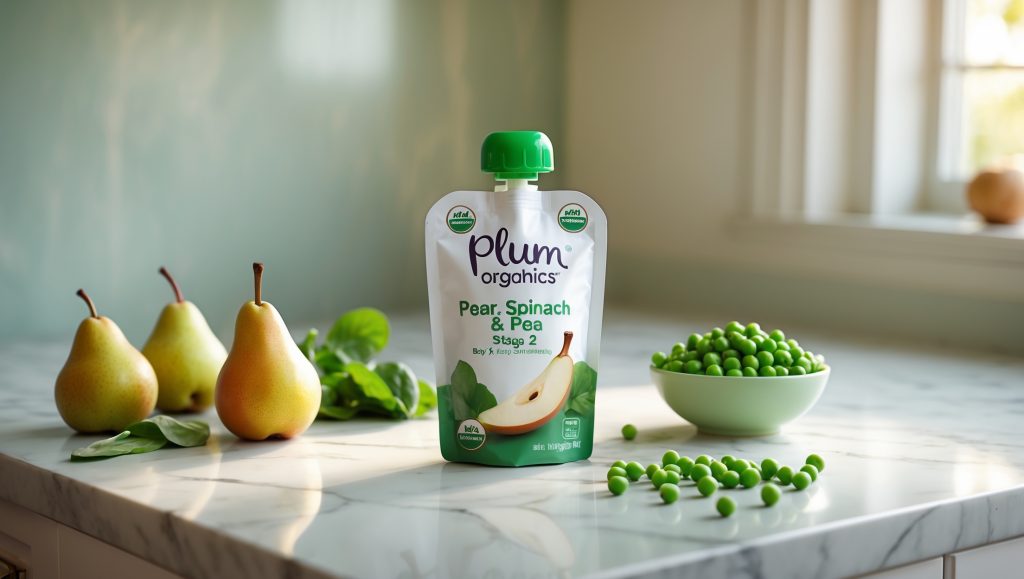
Overview
As parents in 2025 continue to prioritize both nutrition and convenience, the market for organic baby food pouches remains robust. One product that consistently stands out is the Plum Organics Stage 2 Pear, Spinach & Pea Baby Food Pouch. Designed for babies aged six months and up, this blend offers a simple ingredient list, organic certification, and a no-spill pouch design that appeals to families on the go. In this review, we explore how this pouch fits into a balanced, age-appropriate diet, what makes it unique, and how it compares to similar products available in the U.S.
Ingredients & Nutrition
The Plum Organics Stage 2 Pear, Spinach & Pea pouch features a short, transparent list of USDA Certified Organic ingredients:
- Organic pear puree
- Organic spinach puree
- Organic pea puree
- Organic lemon juice concentrate (for freshness)
There are no added sugars, artificial flavors, or colors. Each pouch contains approximately 70 calories, 1g of protein, 2g of dietary fiber, and natural vitamins and minerals like vitamin C, vitamin K, and iron from the vegetable blend. While fruit-based pouches can be high in natural sugars, this mix balances sweetness from pear with the earthiness of spinach and peas, providing a gentle introduction to green vegetables.
The puree is gluten-free, dairy-free, and suitable for vegetarian and vegan diets. It is also Non-GMO Project Verified and comes in a BPA-free pouch.
Taste & Texture
Parents and caregivers often note the smooth, consistent texture of this pouch, which is crucial for infants transitioning to solids. The puree is thin enough for easy swallowing but thick enough to avoid drips or messes. The taste profile combines the natural sweetness of pear with subtle vegetable notes from spinach and pea. For many babies, the pear’s flavor dominates, making the greens more palatable for picky eaters. Some parents report a mild, pleasant aroma and an appealing light green color, which can encourage acceptance of vegetables early on.
While most infants seem to enjoy the taste, a minority may detect the spinach or pea flavors and express hesitation. This is typical when introducing new vegetables, and repeated exposure often helps acceptance.
Convenience & Storage
The Plum Organics pouch is designed for modern family life. The screw-top cap is easy to open and reseal, making it suitable for both at-home mealtimes and on-the-go feeding. The pouch can be squeezed directly onto a spoon, into a bowl, or (for older babies) self-fed under supervision. Its compact size fits easily into diaper bags, lunchboxes, or strollers.
Unopened pouches are shelf-stable and do not require refrigeration. Once opened, any uneaten portion should be refrigerated and used within 24 hours. The package is recyclable where facilities exist, but some parents express a desire for broader recycling options or reusable alternatives.
Pros & Cons
Pros
- USDA Certified Organic ingredients with no added sugar, flavors, or colors
- Short, transparent ingredient list
- Balanced flavor profile introduces both fruit and vegetables
- Smooth, easy-to-eat texture suitable for Stage 2 eaters
- Shelf-stable and convenient for travel or outings
- Non-GMO and BPA-free packaging
Cons
- Some babies may prefer sweeter fruit-only blends
- Pouches are not widely accepted for curbside recycling
- Vegetable flavor may be strong for very sensitive palates
- No added iron; not a replacement for iron-fortified cereals or formulas
Alternatives & Similar Products
Families seeking similar blends may consider:
- Earth’s Best Organic Pear Carrot Apricot – a slightly sweeter option with added carrot for vitamin A.
- Beech-Nut Naturals Just Pear & Green Beans – another simple, two-ingredient blend for green veggie exposure.
- Gerber Organic 2nd Foods Pear Spinach – comparable texture and taste with organic certification.
- Homemade purees – for families who prefer to control ingredients and texture, steaming and blending fresh produce at home is an alternative, though it requires more preparation time.
Each product varies slightly in taste, texture, and price point. Reading labels and observing your baby’s response can help you choose the best fit.
Verdict
The Plum Organics Stage 2 Pear, Spinach & Pea baby food pouch is a thoughtful choice for families looking to introduce vegetables alongside fruit in an approachable, convenient format. Its organic ingredients, smooth texture, and travel-friendly pouch make it a staple in many pantries. While not all babies will embrace the green veggie flavor at first, repeated exposure and the natural sweetness of pear can help broaden young palates. For those seeking a shelf-stable, minimally processed option without added sugars or fillers, this pouch is a reliable contender in 2025.
FAQ
+Is this pouch suitable for babies with food allergies?
+Can I serve this pouch warm?
+How long can I store an opened pouch in the refrigerator?
+Is the packaging recyclable?
+Does this pouch contain added sugars or salt?
+Can older toddlers eat this puree?
+How do I know if my baby is ready for Stage 2 foods?

Plum Organics Stage 2 Pear, Spinach & Pea Baby Food Pouch stands out as a thoughtfully crafted option for parents seeking nutritious, convenient meals for their little ones. This blend brings together the gentle sweetness of pear, the earthiness of spinach, and the subtle flavor of peas, offering a balanced introduction to vegetables and fruits for babies around 6 months and older.
What makes this pouch particularly appealing is its emphasis on organic, non-GMO ingredients, ensuring parents can feel confident about what they’re feeding their child. The smooth texture is ideal for babies transitioning from pure liquids to more complex foods, and the resealable pouch design is both mess-free and perfect for on-the-go meals. Many parents appreciate the absence of added sugars or artificial flavors, allowing the natural taste of each ingredient to shine through.
While some babies may prefer sweeter blends, the mild, slightly vegetal flavor profile of this pouch can help broaden young palates and encourage a love of veggies from an early age. Overall, Plum Organics delivers a wholesome, accessible option that aligns with the needs of modern families seeking both nutrition and convenience.
- Certified organic and non-GMO ingredients
- No added sugars or artificial flavors
- Convenient, mess-free resealable pouch
- Balanced blend of fruits and vegetables
If my baby only eats half a pouch at breakfast, is it safe to use the rest for lunch or dinner within the same day, even if it has already been out at room temperature for a couple of hours?
It’s great that you’re paying attention to food safety for your baby. If your baby eats directly from the pouch, bacteria from their mouth can get inside, so you should refrigerate the unused portion right away and use it within 24 hours. If the pouch was left at room temperature for more than two hours, especially after opening, it’s safer to discard the leftovers to avoid potential bacterial growth. For next time, you can squeeze a portion into a bowl to help keep the rest fresh. This isn’t medical advice; if you’re concerned, check in with your pediatrician.
Since the pouch is both shelf-stable and needs refrigeration after opening, how do you suggest making sure the puree stays fresh when we are out for the entire day? Are there safe time limits you recommend for opened pouches?
You’re right to want to keep your baby’s food safe and fresh while out all day. Once opened, the puree should be kept cold—store it in a small cooler bag with ice packs and only open when ready to serve. If your baby doesn’t finish the pouch, refrigerate the rest within 1–2 hours, or discard it if refrigeration isn’t possible. For safety, most experts recommend using opened, refrigerated pouches within 24 hours. Always check texture and smell before feeding, and supervise to prevent choking. This isn’t medical advice; if you’re concerned, check in with your pediatrician.
How long can the Plum Organics pouch stay out at room temperature once it’s opened, if we’re on a walk or outing and can’t refrigerate it right away?
It’s understandable to want to keep your baby’s food safe while you’re out and about. Once opened, Plum Organics pouches should ideally be refrigerated within 1 hour if kept at room temperature, as bacteria can grow quickly in pureed foods. If you’re on a walk or outing and can’t refrigerate it, try to use an insulated bag with a cold pack to keep it cool. Only feed your baby directly from the pouch if you plan to finish it in one sitting, since saliva can introduce more bacteria. Always discard any leftovers not consumed within an hour. This isn’t medical advice; if you’re concerned, check in with your pediatrician.
Our toddler sometimes refuses anything green, especially during transitions like potty training. Did you find any helpful techniques to encourage acceptance of the spinach and pea flavors in this pouch?
It’s very common for toddlers to refuse green foods, especially during big changes like potty training. Try offering the pouch alongside familiar favorites, letting your child touch and explore the pouch before tasting. You can also model enjoying the flavor yourself, making a game of ‘trying green together.’ Serving the pouch when your toddler is hungriest, like after active play, may help. Always supervise closely and check for any sensitivities. This isn’t medical advice; if you’re concerned, check in with your pediatrician.
How appropriate is this pouch for older children who are delayed in their eating development? Would it still be a good option for a three-year-old who is not yet ready for chunkier foods, or should I be looking for something else?
It’s completely understandable to want safe and nourishing options for a three-year-old with feeding delays. This Stage 2 pouch has a smooth texture, making it age-appropriate for children who aren’t ready for chunkier foods yet. Ensure your child is supervised while eating from pouches to avoid choking risks. You might also offer the puree on a spoon or in a bowl to support oral motor development. Watch for any signs of food sensitivities. This isn’t medical advice; if you’re concerned, check in with your pediatrician or a feeding specialist.
I noticed there are no added sugars, but are there similar pouches with more protein or fiber that you recommend for active toddlers who need longer-lasting energy during outdoor playdates?
It’s great that you’re looking for nourishing options to support your toddler’s energy during active play. For more protein, look for pouches that include beans, lentils, or Greek yogurt—these ingredients often boost protein content in toddler snacks. To increase fiber, choose pouches that feature a variety of whole vegetables or oats. Always check labels for age-appropriate textures and possible allergens, and supervise toddlers while eating, especially outdoors. This isn’t medical advice; if you’re concerned, check in with your pediatrician for personalized recommendations.
With apartment space being tight, do you have any suggestions for storing unopened baby food pouches like this one so they stay organized and easy to grab, especially since they are shelf-stable? I want to avoid clutter but still keep a good variety on hand for my baby.
You’re absolutely right to want both order and easy access, especially in a small space with a baby. Try grouping pouches by flavor or stage into clear, labeled bins or stackable baskets on a pantry shelf or a kitchen cabinet, keeping newer pouches in the back. Use a small over-the-door organizer or hanging shoe rack to make use of vertical space. For safety, store pouches away from direct sunlight and heat sources, as well as out of your baby’s reach. Remember, this isn’t medical advice; if you have specific concerns, talk with your pediatrician.
My baby sometimes refuses green vegetables in other forms, but really seems to like fruit-based pouches. Would offering this pouch regularly help encourage a better acceptance of greens over time, or could it reinforce a preference for sweeter flavors?
It’s common for babies to prefer sweeter flavors and show hesitance with greens. Offering the Plum Organics pear, spinach, and pea pouch can be a gentle way to introduce greens, since the pear helps mask bitterness. Try serving small tastes alongside other veggie options, and let your baby explore pure greens separately, too. Gradually increase the amount of green vegetables offered on their own as your baby gets used to the flavors. Always supervise pouch feeding to prevent choking, and check for any new allergies. This isn’t medical advice; if you’re concerned, check in with your pediatrician.
My baby has some mild sensory issues and can be sensitive to texture changes. Is this puree noticeably different in thickness or feel compared to other brands or homemade blends?
It’s understandable to want a consistent texture for your baby, especially with sensory sensitivities. Plum Organics Stage 2 Pear, Spinach & Pea has a smooth, slightly runny consistency—many parents find it a bit thinner than homemade blends and similar to most other major organic pouches. To help your baby adjust, try sampling a small spoonful yourself first to check for lumps, and consider mixing it with a familiar puree for extra comfort. Always supervise during feeding and watch for any signs of discomfort. This isn’t medical advice; if you’re concerned, check in with your pediatrician.
How do you safely transport opened pouches for outings if my child does not finish one in a sitting? I worry about spoilage and food safety when we’re on the go and don’t have access to a refrigerator right away.
You’re right to be cautious about food safety with opened pouches, especially when you’re away from home. After opening, tightly reseal the pouch and place it in a clean, insulated cooler bag with an ice pack. Try to keep it cold and use it within 24 hours, but if it’s been out at room temperature for more than 2 hours, it’s safest to discard it. For babies under 12 months, extra care with freshness is important to avoid any risk of foodborne illness. This isn’t medical advice; if you’re concerned, check in with your pediatrician.
How would you recommend incorporating this pouch into a meal or snack routine for an active toddler? Is it filling enough on its own or should it be paired with another food for better balance?
—it’s wonderful that you’re thinking about balanced meals for your active toddler. The Plum Organics Stage 2 pouch is a nutritious option, but it’s designed for babies and may not be filling enough on its own for a toddler. Try serving it alongside protein-rich foods like scrambled egg, yogurt, or soft cheese for a more complete snack or meal. Pairing it with whole grain crackers or toast can also add needed carbohydrates and fiber. Always supervise your toddler while eating and check for age-appropriate foods to avoid choking risks. This isn’t medical advice; if you’re concerned, check in with your pediatrician.
Is this pouch suitable as a snack, or could it be used as a meal on its own for a 10-month-old during busy days out? I am trying to figure out an easy feeding routine that keeps things simple without missing key nutrients.
It’s great that you’re thinking about making feeding both simple and nutritious for your 10-month-old. The Plum Organics Stage 2 Pear, Spinach & Pea pouch can work as a convenient snack or part of a meal, but on its own, it may not provide enough calories, protein, and fats for a full meal at this age. Try pairing the pouch with iron-fortified cereal, small pieces of soft-cooked egg, or mashed avocado for a more balanced meal. Always supervise to prevent choking and check for any potential allergens. This isn’t medical advice; if you’re concerned, check in with your pediatrician.
The article mentions that opened pouches need to be used within 24 hours once refrigerated. If I only use a small amount at each feeding, is it safe to portion it out over several servings within that window?
It’s great that you’re being careful about food safety for your baby. Yes, it’s generally safe to use the pouch for multiple servings within 24 hours, as long as you refrigerate it right after opening. To minimize contamination, squeeze the desired amount onto a clean spoon or bowl instead of feeding directly from the pouch. Always use a clean utensil each time, and discard any leftovers your baby doesn’t finish. For babies under one year, these extra precautions are especially important. This isn’t medical advice; if you’re concerned, check in with your pediatrician.
My toddler is a bit behind with speech and sometimes struggles with new textures. Would you recommend this pouch for a child who is still getting used to solids, or is it better suited for younger infants?
It’s understandable to want foods that support your toddler’s development and comfort with textures. The Plum Organics Stage 2 pouch is smooth and pureed, which makes it easy to swallow and less challenging for children who are sensitive to textures. However, for toddlers, gradually introducing lumpier or mashed foods as they get used to solids can encourage oral skills important for speech and feeding. You might offer the pouch alongside small, soft pieces of cooked fruits or veggies for practice, always supervising to prevent choking. Make sure your child is sitting upright during meals. This isn’t medical advice; if you’re concerned, check in with your pediatrician.
I was curious about how this blend compares in taste and nutrition to other popular pouches that are mostly fruit-based. Is there any advantage to choosing this mix with vegetables over the all-fruit options for an older toddler?
You’re thoughtful to compare fruit-heavy pouches with blends containing vegetables for your toddler. Vegetable-forward blends like Pear, Spinach & Pea offer less sugar than all-fruit options and introduce a wider range of flavors, which can help toddlers develop a taste for veggies. For older toddlers, this variety encourages balanced eating and may help prevent picky habits. Try serving the pouch alongside other finger foods to promote self-feeding. Always supervise during eating and check for texture suitability. This isn’t medical advice; if you’re concerned, check in with your pediatrician.
My baby is just starting Stage 2 foods. Is it recommended to introduce this Pear, Spinach, and Pea blend as a meal on its own, or should I mix it with other foods or cereals for a more filling meal?
It’s great that you want to make sure your baby’s meals are satisfying and nutritious. For many babies starting Stage 2 foods around 6–8 months, offering a pouch like Pear, Spinach, and Pea on its own is a fine way to introduce new flavors and textures. If your baby seems hungry after finishing, you can add some iron-fortified baby cereal or mix the puree with mashed avocado or cooked grains for extra calories and nutrients. Always check the texture for age-appropriateness and supervise for safety. This isn’t medical advice; if you’re concerned, check in with your pediatrician.
Is this pouch suitable for a baby who is just starting solids at six months, or is it better for babies with a little more experience? The texture and flavor seem mild, but we want to be sure it’s gentle enough for early stage eaters.
It’s wonderful that you’re considering what’s best for your baby as they begin solids. Plum Organics Stage 2 Pear, Spinach & Pea pouches are often designed for babies who have tried single-ingredient purees and are ready for simple blends, usually after a few weeks of first foods. At six months, if your baby is just starting solids, you might want to begin with single-ingredient purees to watch for any reactions. If your baby has already tolerated pear, spinach, and pea separately, this pouch’s smooth texture and mild flavor can be appropriate—just introduce new foods one at a time. Always supervise feedings, and if you notice any signs of intolerance, stop and consult your pediatrician. This isn’t medical advice; if you’re concerned, check in with your pediatrician.
Is this pouch suitable if we want to offer it as a snack rather than a meal, or would that throw off a balanced diet for a toddler who already has some texture aversions?
It’s thoughtful to consider how snacks like this pouch fit into your toddler’s overall diet, especially with texture aversions in mind. Offering the Plum Organics Pear, Spinach & Pea pouch as a snack is generally fine for toddlers, as long as it isn’t the only type of snack offered. Try to balance purees with other age-appropriate textures, introducing soft solids in small, safe amounts alongside favorites. Rotate snacks so your child experiences a variety of flavors and consistencies. Always supervise during eating and avoid choking hazards. This isn’t medical advice; if you’re concerned, check in with your pediatrician.
My older child is picky with vegetables and sensitive to textures. Does this puree’s smoothness seem to mask the spinach and pea enough for texture-sensitive eaters, or do those flavors stand out even for reluctant kids?
It’s understandable to want your picky eater to enjoy more veggies, especially when texture is an issue. Plum Organics Stage 2 Pear, Spinach & Pea has a very smooth consistency, which often helps texture-sensitive children accept it more easily. In most kids, the pear flavor tends to be dominant, gently masking the spinach and pea taste. Start with a small amount, offer it alongside preferred foods, and watch your child’s response. For older kids, you can also use it as a mix-in with yogurt or oatmeal. This isn’t medical advice; if you’re concerned, check in with your pediatrician.
I noticed you mentioned the pouch is shelf-stable until opened. If I take one out for an outing during the summer, is it still safe to use if it’s been in a warm diaper bag for a couple of hours?
It’s great that you’re thinking about food safety during outings. Plum Organics Stage 2 pouches are shelf-stable until opened, so a couple of hours in a warm diaper bag is generally okay—but try to keep it out of direct sunlight and avoid excessive heat. If the pouch feels unusually hot, swollen, or leaks, don’t use it. Before serving, check for any odd smells or textures. For babies under 12 months, err on the side of caution and consider using a small insulated bag with an ice pack during very hot weather. This isn’t medical advice; if you’re unsure or have concerns, check in with your pediatrician.
I am interested in bringing some Montessori principles into our feeding routine. Do you have suggestions for introducing this pouch in a way that encourages independence and sensory exploration, rather than just squeezing it directly into my baby’s mouth?
It’s wonderful that you want to encourage your baby’s independence at mealtimes. To introduce the Plum Organics pouch Montessori-style, try offering the pouch upright and let your baby grasp it, using gentle hand-over-hand guidance at first. Show them how to bring it to their mouth and squeeze gently, allowing them to try on their own. For extra sensory exploration, squeeze a little onto a spoon or a small, shallow dish and let your baby dip their fingers, spoon, or even taste directly. Always supervise closely to prevent choking and choose a calm, unhurried time. This isn’t medical advice; if you’re concerned, check in with your pediatrician.
We often cook traditional meals at home with lots of herbs and spices. Would this Plum Organics pouch be a good way to introduce different textures to my baby, or is it better to blend some of our family foods instead?
It’s great that you want your baby to experience a variety of flavors and textures early on. The Plum Organics pouch is smooth and pureed, so it can introduce new flavors, but not much texture. To help your baby explore different textures, you could try blending small amounts of your family’s meals to an age-appropriate consistency, making sure to avoid added salt, sugar, and strong spices at first. Start with simple, single-ingredient blends, and watch carefully for any signs of allergy. Always supervise during feeding, and adjust texture gradually as your baby gets used to solids. This isn’t medical advice; if you’re concerned, check in with your pediatrician.
My baby sometimes reacts strongly to new flavors and textures, especially when anything green is involved. Do you have any tips for gradually introducing this pouch if my child seems hesitant at first with the spinach and pea flavors?
It’s completely normal for babies to be cautious about new flavors and textures, especially with green veggies. Start by offering a very small taste of the pouch on a spoon mixed with a familiar food your baby already enjoys. Gradually increase the amount of the new pouch over several days. Allow your baby to touch and explore the food, even if it gets messy, as this helps with acceptance. Keep mealtime positive and resist pressuring your baby to eat more than they’re comfortable with. Always supervise, and check for any signs of allergy or discomfort. This isn’t medical advice; if you’re concerned, check in with your pediatrician.
For families on a tight budget, are there comparable organic baby food pouches that offer similar ingredients and convenience at a lower price, or does Plum Organics remain the best value for what it provides?
It’s understandable to want quality organic baby food that fits your budget. You might look at store brands like Earth’s Best or Happy Baby, which sometimes offer similar pear and veggie blends at a lower cost—checking ingredient lists for comparable nutrition is important. Buying pouches in bulk or during sales can also help stretch your budget. For younger babies, always ensure the pouch is age appropriate and monitor for choking risks. If preparing homemade blends is an option, steaming and pureeing pear, spinach, and peas gives both control and savings. This isn’t medical advice; if you’re concerned, check in with your pediatrician.
My baby is just starting Stage 2 foods at seven months and sometimes only eats a little at a time. If I refrigerate what’s left in the Plum Organics pouch, is it okay to use the rest for the next meal, or should I throw it out sooner?
You’re being thoughtful about your baby’s safety and nutrition. After your baby eats from the pouch, bacteria from their mouth can get inside, so it’s safest to refrigerate any leftovers right away and use them within 24 hours. Always squeeze what you’ll serve into a clean bowl first, rather than letting your baby eat directly from the pouch, to keep the rest uncontaminated. For a seven-month-old, this helps prevent spoilage and reduces the risk of illness. If the leftover food smells, tastes, or looks different, discard it. This isn’t medical advice; if you’re concerned, check in with your pediatrician.
You mention that the Plum Organics pouch is shelf-stable until opened. If we travel with these and the pouch warms up in a diaper bag, does that affect its safety or quality?
It’s understandable to want to keep your baby’s food safe while traveling. Shelf-stable pouches like Plum Organics Stage 2 are designed to stay safe at room temperature, so a pouch warming up slightly in a diaper bag is generally fine as long as it stays unopened and isn’t exposed to extreme heat (like in a hot car). When you’re ready to use it, check that the pouch is still sealed, the packaging isn’t swollen or damaged, and the contents don’t have an off smell or appearance. Always supervise feeding, and discard any leftovers after opening. This isn’t medical advice; if you’re concerned, check in with your pediatrician.
The recyclable packaging is a plus, but in my area, it’s not always accepted. Are there any suggestions for families looking for more sustainable or reusable options for baby food, especially when you have kids at different feeding stages?
It’s great that you’re thinking about sustainability alongside your baby’s nutrition. For families with children at different feeding stages, try preparing homemade purees in bulk and storing them in reusable silicone pouches or small glass jars—these are easy to clean and safe for most ages. You can batch-cook, freeze portions, then defrost as needed, which also saves time. For toddlers, consider stainless steel snack containers. Always check lids and seals for safety and inspect for wear. This isn’t medical advice; if you’re concerned, check in with your pediatrician.
As someone who enjoys nature play and picnics, I’m curious if the pouch can be kept out of the fridge for several hours on warm days before opening. What’s the best way to store it safely if we take it hiking or to the park?
It’s great that you want to enjoy nature play and outdoor meals with your baby. Unopened baby food pouches like this one are usually shelf-stable and can stay at room temperature for several hours, but on warm days (above 77°F/25°C), it’s safest to keep them cool. Use an insulated bag with an ice pack to maintain a safe temperature, and avoid leaving the pouch in direct sun or a hot car. Check the pouch for any damage, swelling, or unusual smell before serving. Once opened, always refrigerate and use within 24 hours. This isn’t medical advice; if you’re concerned, check in with your pediatrician.
My toddler can be pretty sensitive to food textures and strong veggie flavors. Have you heard from parents whose kids reacted to the spinach and pea taste or smell in this pouch? Any suggestions for making it more acceptable if my child is hesitant?
It’s completely normal for toddlers to be wary of new textures or stronger veggie flavors like spinach and peas. Some parents have mentioned their little ones noticed the green veggie taste or smell in this pouch and were hesitant at first. You might try gently mixing the pouch with a familiar fruit puree or unsweetened applesauce to mellow the flavor. Offer just a small taste at first, with no pressure to finish. Let your child explore the pouch with a spoon, or even dip a favorite cracker (if age-appropriate and safe). Always supervise closely, and be mindful of allergens and choking risks. This isn’t medical advice; if you’re concerned, check in with your pediatrician.
How does this Plum Organics blend compare to the Happy Baby Stage 2 veggie pouches nutrition-wise? I’m trying to figure out if there’s much difference in terms of iron and vitamin content for toddlers.
It’s great that you’re paying attention to the nutrients your toddler is getting. Both Plum Organics and Happy Baby Stage 2 veggie pouches generally offer similar vitamin and mineral profiles, but there can be slight differences depending on the vegetable blends. The Plum Organics Pear, Spinach & Pea variety includes spinach and peas, which adds some iron, but veggie pouches overall are not very high in iron compared to other sources. Vitamin content, especially vitamin A and C, may vary based on ingredients. Always check the nutrition label for exact values and remember these pouches are safe for toddlers, but not a primary source of iron. This isn’t medical advice; if you’re concerned, check in with your pediatrician.
I noticed the pouch is recyclable only in some facilities. Are there any eco-friendly alternatives, or pouches with reusable options, that you would recommend for parents who spend a lot of time outside and want to reduce waste while still having convenient snacks?
It’s wonderful that you’re thinking about eco-friendly options while caring for your little one on the go. For reducing waste, try making your own purees and using reusable silicone pouches, which are easy to clean and safe for babies over 6 months. Look for brands that offer BPA-free, dishwasher-safe options without small parts. If you prefer store-bought, some companies have pouch recycling programs or use compostable materials—just check for age-appropriate safety and seals. As always, supervise your baby while eating, and remember, this isn’t medical advice; if you’re concerned, check in with your pediatrician.
I’m wondering how practical it is for busy parents to rely on these purees for iron compared to traditional baby cereals, especially for babies who are just starting solids. Is there an ideal way to combine them in our feeding routine?
It’s great that you’re thinking about your baby’s iron needs as you start solids. Plum Organics purees are convenient, but traditional iron-fortified baby cereals usually contain more iron per serving, which is important for young babies. You can offer cereal in the morning and a veggie or fruit puree, like Plum Organics, later in the day. Mixing a bit of puree into cereal can also add variety. For babies just starting solids (around 6 months), make sure the textures are smooth and offer one new food at a time to watch for allergies. This isn’t medical advice; if you’re concerned, check in with your pediatrician.
I noticed the article mentioned the recycling options for these pouches are limited. Are there Montessori-friendly storage or reuse ideas for the empty pouches before recycling, especially to involve toddlers in environmental care?
It’s wonderful that you want to teach your toddler about environmental care using empty baby food pouches. Here are a few Montessori-inspired, age-appropriate ways to reuse them: First, thoroughly wash and dry the pouches to ensure safety. Toddlers can use the clean pouches in sensory bins for scooping and pouring activities, which helps fine motor skills. You might also fill them with dry rice or beans, seal the top, and let your child use them as shakers. Older toddlers can help sort and collect pouches for recycling, learning about the process with your guidance. Always supervise closely to prevent choking or misuse. This isn’t medical advice; if you’re concerned, check in with your pediatrician.
My child is starting to self-feed with pouches, so I’m curious—does the no-spill design truly prevent messes in the stroller or car? I’d love any tips for avoiding leaks while eating on the move.
It’s great that you’re supporting your child’s independence with self-feeding. The no-spill design on the Plum Organics Stage 2 pouch helps reduce mess, but it may not prevent all leaks—especially if the pouch is squeezed too hard or bitten. For stroller or car feeding, supervise closely, offer the pouch upright, and encourage gentle squeezing. Consider using a silicone pouch topper to slow the flow and cushion bites. Wipe hands and faces soon after eating to limit sticky messes. Always check pouches for damage before use and never leave your child unattended. This isn’t medical advice; if you’re concerned, check in with your pediatrician.
My baby seems to notice the spinach flavor more than the pear, and occasionally makes a face. How many times should I keep trying with this pouch before deciding it is not a match? Does repeated exposure to this specific veggie mix usually work over time?
It’s completely normal to notice your baby react to new or strong flavors like spinach. Research suggests it can take 8 to 15 exposures for babies to get used to a new taste, so offering the pouch every few days is a good approach. Try a small spoonful at the start of a meal when your baby is hungry, and keep the mood positive and relaxed. Never force your baby to eat, and always supervise to prevent choking. If after several tries your baby still strongly dislikes it, it’s okay to pause and try again in a few weeks. This isn’t medical advice; if you’re concerned, check in with your pediatrician.
Since the pouch is designed to be no-spill and portable, is it realistic to let a 10-month-old try self-feeding from the pouch directly, or is it better to stick to spoon feeding at this age to avoid messes and overeating?
It’s great that you’re thinking about encouraging independence while keeping feeding manageable. At 10 months, some babies can start practicing self-feeding from pouches, but close supervision is important to prevent choking and manage messes. You can let your baby try holding the pouch while you gently guide their hands and monitor their pace. Offer only small amounts at a time to avoid overeating, and pause frequently to check if they’re full. If your baby tends to squeeze the pouch or make a mess, alternating with spoon feeding may help. This isn’t medical advice; if you’re concerned, check in with your pediatrician.
Are there affordable toy rotation storage solutions that work well in small spaces, similar to how these pouches are designed to be compact and easy to store at home or on the go?
It’s great that you’re looking for ways to keep playtime organized, especially in a small space. Try using clear bins or shoe boxes with lids to group toys by type; label each box for easy access. A soft-sided storage ottoman or collapsible fabric cube can double as seating and hidden storage. Consider storing out-of-rotation toys in under-bed containers or a high closet shelf. Rotate just a few toys out at a time to avoid clutter and keep your child engaged. Always check that storage containers don’t have sharp edges or small detachable parts, especially for babies and toddlers. This isn’t medical advice; if you’re concerned, check in with your pediatrician.
My toddler sometimes refuses green veggies in other forms. Could the flavor balance in this pouch really help with acceptance, or should I expect the same resistance as with plain peas and spinach?
It’s understandable to worry when your toddler won’t touch green veggies. The pear in this pouch adds natural sweetness and mellows the flavors of spinach and peas, which can make greens more appealing for some children. Try offering a small spoonful alongside familiar favorites, and let your child explore at their own pace. Eating together and showing you enjoy it can also help. Remember, repeated gentle exposure—without pressure—often leads to acceptance over time. Always supervise and check for any ingredient sensitivities. This isn’t medical advice; if you’re concerned, check in with your pediatrician.
If my child eats a couple of these pouches a day while traveling, is there a risk of getting too much of certain nutrients, like vitamin C or iron? I’m curious how this fits into a balanced routine when we’re on the go and meals aren’t always homemade.
It’s great that you’re thinking about balanced nutrition during travel. While Plum Organics Stage 2 pouches are designed for babies, eating several a day could lead to higher intakes of certain nutrients like vitamin C, though usually not at harmful levels. To keep things balanced, try offering a variety of foods when possible, like plain cereals, soft fruits, or yogurt, depending on your child’s age. Supervise your child while eating to avoid choking, and check ingredients for allergens. Remember, pouches can be helpful on busy days, but aren’t a complete replacement for diverse meals. This isn’t medical advice; if you’re concerned, check in with your pediatrician.
Since my baby is almost 11 months, should I be thinking about moving on from purees like this one, or is it still appropriate to keep these pouches in the rotation as we explore more food textures?
It’s great that you’re thinking ahead about your baby’s feeding journey. At almost 11 months, it’s perfectly fine to keep using purees like this pouch, especially for convenience or on-the-go snacks, while gradually introducing more textured foods. Try offering soft, small pieces of cooked veggies, fruits, or well-mashed foods alongside the purees. Encourage self-feeding with safe finger foods under supervision to support motor skills. If your baby is showing interest and managing new textures well, you can slowly reduce reliance on pouches. Make sure any finger foods are soft and cut into tiny pieces to avoid choking. This isn’t medical advice; if you’re concerned, check in with your pediatrician.
You mention the packaging is recyclable where facilities exist, but options seem limited in my area. Have you found any tips for reducing waste with pouches like these or alternative options that are more environmentally friendly for busy families?
It’s great that you’re thinking about reducing waste while feeding your baby. For pouches like these, you might try collecting empty ones and shipping them to specialized recycling programs such as TerraCycle, if available. Some families rinse and reuse pouches with refillable baby food recipes at home—just be sure the pouches are designed for safe reuse and check for wear. As an alternative, consider buying baby food in glass jars or making homemade purees in bulk and storing them in reusable containers. Always make sure any container or pouch is thoroughly cleaned and age-appropriate to avoid safety risks. This isn’t medical advice; if you’re concerned, check in with your pediatrician.
For parents on a tight budget and limited kitchen space, do you find that buying these organic pouches in bulk makes sense, or do they take up too much room compared to homemade purees?
You’re thoughtful to weigh cost and storage when choosing baby food. Bulk-buying pouches like Plum Organics can save money per serving and offer convenience, especially if you lack space for storing homemade purees or equipment. Try designating a small shelf or basket for pouches—they stack neatly and don’t require refrigeration until opened. If your baby is 6 months or older and eating solids, pouches are a safe, age-appropriate option. Homemade purees can take more time and freezer space. This isn’t medical advice; if you’re concerned, check in with your pediatrician.
How do you recommend storing opened Plum Organics pouches during a toy or activity rotation, especially if we are out of the house for several hours at a stretch? Is a small cooler bag enough to keep leftover puree safe?
It’s great that you’re thinking about safe storage during busy days out. Once opened, Plum Organics pouches should be refrigerated and used within 24 hours, as the puree can spoil quickly. If you’re out for several hours, place the leftover pouch in a small, insulated cooler bag with an ice pack to keep it at refrigerator temperature (below 40°F/4°C). Make sure the pouch is tightly resealed to prevent leaks or contamination. Always check the puree for changes in smell or texture before offering it again. This isn’t medical advice; if you’re concerned or unsure, check in with your pediatrician.
Would you recommend offering the whole pouch in one sitting for a younger toddler, or is it better to serve it in smaller portions alongside finger foods during meals?
—it’s thoughtful to consider how much and how to serve new foods to your toddler. For younger toddlers, it’s often best to offer small portions of the pouch alongside finger foods at meals. This encourages self-feeding skills and variety in textures, which supports development. Watch your child’s cues for fullness and interest, and refrigerate any leftover puree promptly if not finished. Whole pouches can sometimes be too much for little tummies at once, so pacing is key. Always supervise for safety, especially to prevent choking. This isn’t medical advice; if you’re concerned, check in with your pediatrician.
For families on a budget who use pouches as a travel or emergency snack, do you think the nutritional profile of the Plum Organics Pear, Spinach & Pea pouch justifies the cost compared to making homemade purees or buying non-organic brands?
It’s completely reasonable to weigh cost against nutrition when choosing pouches for travel or emergencies. The Plum Organics Pear, Spinach & Pea pouch offers a solid dose of fruit and veggie puree, but the protein and fat content is low and it is pricier than homemade or some non-organic options. For families on a budget: 1. Use pouches only occasionally, not as a main source of nutrition. 2. Compare the nutrition label to non-organic brands—many have similar vitamin and fiber content. 3. If making homemade purees, freeze small portions for travel, but ensure good hygiene and safe storage. 4. Always supervise, especially under age 1, due to choking risk. This isn’t medical advice; if you’re concerned, check in with your pediatrician.
How long can an opened Plum Organics Pear, Spinach & Pea pouch safely stay in the fridge before it should be thrown out? Sometimes my four-year-old only eats part of it and I want to make sure I am storing leftovers safely.
It’s great that you’re being mindful about food safety for your child. According to most guidelines and what Plum Organics recommends, once a pouch is opened, any unused portion should be refrigerated right away and used within 24 hours—especially for younger children, but this standard is safe for a four-year-old as well. Always reseal the pouch tightly and store it in the coldest part of your fridge, not the door. Before serving leftovers, check for any changes in smell, color, or texture. If in doubt, it’s safest to discard. This isn’t medical advice; if you’re concerned, check in with your pediatrician.
We’re trying to cut down on messes during potty training since we’re often in different rooms. Does this pouch usually leave stains on clothes or furniture if there’s a spill, or is it easy to clean up compared to other baby snacks?
It’s understandable to want to reduce extra cleaning during potty training. Pear, spinach, and pea purees like this one can leave green stains on light fabrics, especially if the spill isn’t wiped up quickly. Compared to dry snacks, pureed foods are more likely to soak in and be harder to clean. Try offering the pouch only when your child is seated and supervised, and keep wipes or a damp cloth nearby for quick clean-up. If a spill happens, blot and rinse the area with cold water as soon as you can. Always check clothing labels before using stain removers. This isn’t medical advice; if you’re concerned, check in with your pediatrician.
My toddler is getting picky with anything green, but loves fruit flavors. If they refuse this pouch at first, do you have any tips for gradually introducing the spinach and pea flavors over time to increase acceptance?
It’s completely normal for toddlers to become hesitant with green veggies, even when they like fruity tastes. To help, try mixing a small amount of the spinach and pea pouch into their favorite fruit puree, gradually increasing the veggie portion as they get used to it. Offer the pouch alongside familiar snacks, so there’s no pressure to eat it all at once. Describe the flavors positively and let your child see you enjoying greens, too. Always supervise during eating, and be mindful of possible allergies or choking hazards. This isn’t medical advice; if you’re concerned, check in with your pediatrician.
Do you think this combination of pear, spinach, and pea is filling enough as a standalone meal for a baby who wakes up very early, or should I be offering something additional to help them stay satisfied until the next nap?
It’s understandable to want your early riser to feel satisfied and content after breakfast. While the Pear, Spinach & Pea pouch is nutrient-rich, Stage 2 purees are typically a complement to breast milk or formula rather than a full meal at this age. To help your baby feel fuller, you could offer the pouch alongside breast milk or formula, or pair it with an iron-fortified baby cereal if your baby is ready for mixed textures. Always supervise feedings, ensure new ingredients are introduced gradually, and watch for any reactions. This isn’t medical advice; if you’re concerned, check in with your pediatrician.
Recycling is important to us, but our local facilities do not accept these pouches. Have you found any practical ways to reduce waste or reuse the Plum Organics packaging, or is there a better brand for eco-friendly options?
It’s great that you’re thinking about the environmental impact of baby food packaging. While most local facilities don’t accept mixed-material pouches, you can check if programs like TerraCycle offer a mail-in recycling option for these brands. For reuse, some parents clean and use empty pouches for travel art kits or homemade food, but always supervise and ensure no small parts pose a choking risk. If eco-friendliness is a top priority, consider brands that use glass jars or recyclable containers, as these are generally easier to recycle curbside. This isn’t medical advice; if you have specific concerns, check with your pediatrician.
Do you think the subtly sweet flavor and smooth texture of this Plum Organics blend are helpful for babies who are sensitive to new textures or vegetables, or would it be better to offer them individual purees first?
It’s great that you’re thinking about how best to support your baby’s comfort with new foods. For babies sensitive to new textures or flavors, starting with single-ingredient purees can make it easier to spot any reactions and help them gradually accept each new taste or texture. Once they’re comfortable, introducing gentle combinations like Plum Organics Pear, Spinach & Pea, with its smooth texture and mild sweetness, can be a nice next step. Always supervise eating, and watch for any signs of allergy or intolerance. This isn’t medical advice; if you’re concerned, check in with your pediatrician.
If my toddler usually gets really active after snacks, could giving the Plum Organics Pear, Spinach & Pea pouch closer to bedtime make winding down harder? Or is it generally mild enough not to impact their pre-bed routine?
It’s understandable to wonder how snacks may affect your toddler’s bedtime routine, especially if you notice increased activity after eating. The Plum Organics Pear, Spinach & Pea pouch is mostly made of fruits and vegetables, without added sugar or caffeine, so it’s generally mild and unlikely to cause a noticeable energy spike. To help your toddler wind down, try offering the pouch at least 30–60 minutes before bedtime, and follow with a calm, consistent bedtime routine. Watch how your child responds, as some may react differently to even natural sugars. This isn’t medical advice; if you’re concerned, check in with your pediatrician.
My family speaks both English and Spanish at home, and I’d love to make snack time more interactive during our bedtime routine. Does the taste profile of the Pear, Spinach & Pea pouch work well for gently winding down before sleep, or could it be too stimulating for some babies?
It’s wonderful that you want to make snack time interactive and soothing during your bedtime routine. The Plum Organics Pear, Spinach & Pea pouch has a mild, naturally sweet taste from pears that most babies find calming, with a gentle earthy note from spinach and peas. To keep things relaxing, offer the pouch in a quiet, dimly lit space and talk about the flavors in both languages. Watch for your baby’s cues, as some little ones may be sensitive to new flavors or textures before sleep. Always supervise closely, and remember that every baby is different—if you notice overstimulation, consider offering a lighter snack. This isn’t medical advice; if you’re concerned, check in with your pediatrician.
If my baby prefers purees over cereals due to texture issues, what are some tips to ensure they’re still getting enough iron? Does the Pear, Spinach & Pea blend offer sufficient support as the main iron source?
It’s understandable to be concerned about iron if your baby prefers purees over cereals. To support iron intake, try offering iron-rich pureed meats like beef or turkey, or pureed beans and lentils, which can be mixed into veggie or fruit purees. You can also look for fortified purees specifically designed for iron. While the Pear, Spinach & Pea pouch contains some iron from the spinach and peas, it likely isn’t enough as the main source, since plant-based iron is harder to absorb. Serve vitamin C-rich foods alongside to boost absorption, and always supervise and check for allergies. This isn’t medical advice; if you’re concerned, check in with your pediatrician.
If I buy these pouches in bulk, how do they compare to cereals when it comes to shelf life and storage, especially for families with limited fridge space? Any advice on keeping options fresh and safe for my baby?
—it’s smart to think about shelf life and storage when planning for your baby’s meals. Plum Organics Stage 2 pouches are shelf-stable before opening and generally have a long expiration date, often longer than many baby cereals once those are opened. Store unopened pouches in a cool, dry place. After opening, refrigerate and use within 24–48 hours, so only open what you’ll use soon. For cereals, follow package instructions—many need to be used fairly quickly after opening to avoid spoilage. Always check for damaged packaging and expiration dates. This isn’t medical advice; if you’re concerned, check in with your pediatrician.
I noticed the pouch is easy to take on outings, which is super helpful. Do you suggest rotating single-ingredient foods at home but using these mixed pouches when out, or is consistency more important for developing taste preferences?
You’re thoughtful to consider both convenience and your baby’s developing taste preferences. At home, offering single-ingredient foods one at a time helps your baby learn individual flavors and spot any allergies. When you’re out, it’s fine to use a mixed pouch like the Plum Organics one for ease—just supervise to prevent choking and watch for mess. As your baby grows, combining both approaches can build acceptance of new tastes and keep things practical for you. Consistency matters, but flexibility is important too. This isn’t medical advice; if you’re concerned, check in with your pediatrician.
My toddler can be really picky, especially with anything green. Do you have any tips for helping a two-year-old get used to the spinach and pea flavors, or is repeated exposure the only way?
It’s so common for toddlers to resist green foods, and your concern is completely valid. Try offering very small tastes of spinach and peas alongside foods your child already enjoys, mixing a little into favorites like pasta or eggs. You can invite your toddler to help prepare meals—handling the veggies may make them more appealing. Serve these flavors in different forms, like roasted peas or smoothies with spinach, to find what your child prefers. At age two, supervision is key to prevent choking and ensure safe eating. This isn’t medical advice; if you’re concerned, check in with your pediatrician.
Since this is a Stage 2 pouch, would it be suitable for a nine-month-old who’s just starting to self-feed, or should I be looking for a different texture at this stage?
It’s great that you’re thinking carefully about textures as your baby starts self-feeding. Plum Organics Stage 2 pouches offer a smooth puree, which is usually appropriate for babies around 6–9 months, including early self-feeders. You can offer the pouch by spoon or let your baby try squeezing small amounts onto a spoon or tray to practice. If your nine-month-old is showing interest in finger foods, you might also start introducing soft, mashed pieces of fruit or vegetables alongside the pouch to help with chewing skills. Always supervise closely and watch for choking hazards. This isn’t medical advice; if you’re concerned, check in with your pediatrician.
You mentioned some parents want more reusable packaging options. Do you have any creative suggestions for how we might reuse the empty Plum Organics pouches at home, either in pretend play or for craft activities with older siblings?
It’s great that you’re looking to reduce waste and encourage creativity with your family. For older children (over 3, due to small parts), washed and dried pouches can become pretend cooking tools in play kitchens, or be refilled with water for gentle outdoor water play. You might also use empty pouches as paint stampers—press the sealed end in paint and dab on paper for textured patterns. Always supervise crafting to avoid accidental swallowing of caps or pouches. This isn’t medical advice; if you’re concerned, check in with your pediatrician.
With my baby starting daycare, I wonder how the taste and green color of this pouch go over with little ones who have sensory sensitivities. Have you heard if picky eaters generally do okay with the spinach and pea flavors, or do they tend to refuse it?
It’s understandable to be concerned about how your baby will react to new flavors and colors, especially in a busy daycare setting. Some little ones with sensory sensitivities may be hesitant about green foods or the earthy taste of spinach and peas. To help, you can offer a tiny taste at home first, serve the pouch chilled or at room temperature (since temperature can affect acceptance), and use a familiar spoon. Watch your baby’s cues and allow them to explore at their own pace. For Stage 2 pouches, always supervise closely, and keep an eye out for any allergic reactions. This isn’t medical advice; if you’re concerned, check in with your pediatrician.
If my baby is not usually a fan of green veggies, do you recommend serving the Plum Organics Pear, Spinach & Pea pouch cold from the fridge or closer to room temperature for the best chances of acceptance in the early morning?
It’s understandable to want your baby to enjoy green veggies, even if they’re not a favorite yet. For early mornings, serving the Plum Organics Pear, Spinach & Pea pouch at room temperature may be more appealing, since cold foods can sometimes be a turnoff for babies—especially when they’re just waking up. Let the pouch sit out for about 15 minutes if it’s been in the fridge, and always check the temperature before offering it. Watch for any signs of discomfort or disinterest, and keep mealtimes positive and low-pressure. This isn’t medical advice; if you’re concerned, check in with your pediatrician.
Does this Plum Organics Stage 2 pouch work well as part of a bedtime snack routine for toddlers, or would the natural sugar from the pears make it harder for little ones to wind down before bed?
It’s great that you’re thinking about how bedtime snacks can affect your toddler’s sleep. The natural sugars in pears are lower than those in many other fruits, but any food—especially something sweet—can give a gentle energy boost if eaten right before bed. If you want to use this pouch as part of a bedtime routine, try offering it at least 30–60 minutes before sleep, pair it with a small protein like plain yogurt, and keep portion size small. Always supervise for safe eating, especially with younger toddlers. This isn’t medical advice; if you’re concerned, check in with your pediatrician.
If my toddler only eats part of a pouch after lunch or before bed, is it safe to refrigerate and offer the rest for the next nap, or should it always be finished in one sitting?
It’s understandable to want to reduce waste while keeping your toddler safe. After your child eats directly from the pouch, bacteria from their mouth can enter the food, so it’s safest to refrigerate any leftovers right away and use them within 24 hours. Always discard if your toddler shows signs of illness, or if the pouch smells or looks different. For extra safety, squeeze some puree into a clean bowl and use a spoon for feeding, so the pouch itself stays uncontaminated. This way is especially important for younger toddlers. This isn’t medical advice; if you’re concerned, check in with your pediatrician.
My toddler is pretty sensitive to green veggies, especially peas, and tends to refuse anything too strongly flavored. Do you have tips for easing the transition to this pouch, or should I mix it with something else to help him accept the taste over time?
It’s understandable to want to help your toddler accept new flavors, especially if they’re sensitive to green veggies. Try mixing a small amount of the pouch with a familiar favorite, like unsweetened applesauce or plain yogurt, to mellow the taste. Gradually increase the amount of the Plum Organics pouch over several days as your child gets used to it. Offer tiny tastes on a spoon, and avoid pressure—sometimes just having the pouch nearby can help with familiarity. For toddlers, always supervise meals and ensure they’re seated safely. This isn’t medical advice; if you’re concerned, check in with your pediatrician.
My baby is quite sensitive to new textures and sometimes gags if something feels too thick or thin. Based on your review, does the texture of this Plum Organics pouch seem suitable for babies transitioning from purees to more textured foods, or might it be too smooth for this stage?
It’s completely understandable to want a texture that supports your baby’s transition to more complex foods. Based on my review, Plum Organics Stage 2 Pear, Spinach & Pea pouches have a smooth, slightly thicker puree consistency—softer than very runny purées, but not chunky. For babies sensitive to texture, you could mix a spoonful of the pouch with a small amount of soft mashed vegetables to gently introduce more texture. Always supervise your baby during meals and watch for signs of difficulty. If your baby continues to gag often or refuses thicker foods, consider consulting your pediatrician. This isn’t medical advice; if you’re concerned, check in with your pediatrician.
If my baby pushes away foods with a strong aroma, would this pouch be overwhelming or is its scent really that mild? I find some veggie blends can be off-putting even if the taste is fine, so I’m wondering how this one measures up.
You’re thoughtful to consider your baby’s reactions to strong food scents. The Plum Organics Pear, Spinach & Pea pouch has a relatively mild aroma compared to some other veggie blends, mainly due to the pear base which tends to soften the scent of spinach and peas. To help your baby adjust, try offering a small amount on a spoon first, and watch their response. If they seem hesitant, you can mix a bit with a familiar food or serve it at room temperature when the aroma is less pronounced. Always supervise for signs of dislike or allergy, and remember, food preferences can change with time. This isn’t medical advice; if you’re concerned, check in with your pediatrician.
I noticed that the pouch should be used within 24 hours after opening. If my child only eats a small amount before bed, is it safe to offer the rest the next afternoon, or is there a risk it will spoil sooner?
It’s great that you’re being careful about food safety. After opening a Plum Organics Stage 2 pouch, it should be refrigerated and used within 24 hours. If your child eats some before bed, tightly reseal and refrigerate the pouch right away. Before offering the rest the next afternoon, check for any changes in smell, color, or texture, which can indicate spoilage. Never leave the pouch at room temperature, and avoid feeding directly from the pouch if you plan to save leftovers, as saliva can introduce bacteria. This isn’t medical advice; if you’re worried your child ate spoiled food, contact your pediatrician.
My toddler struggles with new textures and sometimes gags on thicker purees. Would you say the texture of this Plum Organics pouch is smoother than average, or should I thin it out more before offering it to a child with sensory issues?
It’s understandable to want feeding time to go smoothly, especially when your toddler is sensitive to textures. The Plum Organics Stage 2 Pear, Spinach & Pea pouch is on the smoother side for a vegetable blend, but it can still be a bit thicker than some fruit-only purees. For children with sensory issues or who gag easily, you might try thinning the puree with a little breast milk, formula, or water, stirring well to reach a consistency your child accepts. Always supervise closely and introduce new textures gradually. This isn’t medical advice; if you’re concerned, check in with your pediatrician.
For older babies who are starting to self-feed, is it better to let them squeeze this directly from the pouch or always use a spoon? My little one gets frustrated with spoons but I want to avoid any choking hazards.
It’s understandable to want safe and enjoyable self-feeding for your little one. For older babies ready to self-feed, it’s fine to let them squeeze from the pouch under close supervision—just make sure the cap is kept well out of reach to avoid choking hazards. You can also squeeze some puree onto a spoon or a highchair tray for them to self-feed by hand or with a preloaded spoon. Encourage sitting upright and taking small sips, watching for any signs of gagging. Every baby develops at their own pace; if you have ongoing concerns about choking or feeding skills, please consult your pediatrician. This isn’t medical advice.
My baby sometimes rejects anything green, even purees. Do you have any pretend play ideas with household items that could make trying this Plum Organics pouch more fun and less intimidating during mealtime?
It’s very common for babies to be wary of green foods, so you’re not alone in wanting to make mealtime more playful. Try using a clean spoon as a ‘train’ or ‘airplane’ delivering food, and let your baby pretend to feed a favorite stuffed animal first. You can also set out a few safe kitchen items, like a small plastic bowl and spoon, and let your baby ‘cook’ their own pretend puree alongside you. For safety, avoid small or sharp items, and always supervise. This isn’t medical advice; if you’re concerned, check in with your pediatrician.
My toddler often refuses foods with even a hint of green color or strong vegetable smells. Does this pouch have a noticeable spinach or pea aroma, or does the pear flavor really dominate enough to mask the greens?
It’s understandable to want to avoid food battles when your toddler is sensitive to green colors or veggie smells. In our experience, the pear flavor in this pouch is quite prominent and does help mask the spinach and pea to some degree, but a subtle green tint and light vegetable aroma are still present. You could try mixing a small amount into a favorite fruit puree to ease your child into new flavors. Offer very small tastes at first and avoid pressuring your toddler to eat. Always supervise when introducing new foods, and check for any reactions. This isn’t medical advice; if you’re concerned, check in with your pediatrician.
We are slowly introducing green veggies, but my baby seems extra aware of spinach flavors and rejects many purees. Is the taste of spinach or peas in this Plum Organics pouch strong enough that it could be a problem for really sensitive babies?
You’re doing a great job noticing your baby’s reactions as you introduce new veggies. In this Plum Organics pouch, the spinach and pea flavors are present but balanced by the natural sweetness of pear, so the green taste isn’t overpowering. For babies sensitive to spinach, you might try offering just a small spoonful at first, mixing the puree with a familiar favorite, or letting your baby explore the pouch’s scent before tasting. Always watch for any discomfort or allergic reaction, and remember that it can take several tries for babies to accept new flavors. This isn’t medical advice; if you have ongoing concerns, check in with your pediatrician.
I noticed the pouch contains only pear, spinach, and pea but no common allergens. If we’re following the guidelines for introducing allergens at this age, do you have recommendations for how to integrate options like peanut or egg safely alongside using this pouch?
It’s great that you’re mindful about introducing allergens safely at this stage. One approach is to mix a small amount of smooth peanut butter or peanut powder (thin it with water or breast milk to reduce choking risk) into a separate portion of the baby food, starting with a tiny amount. For egg, try offering well-cooked, mashed egg separately, or stir a little into a portion of the pouch for variety. Always introduce one new allergen at a time, and watch your baby closely for any reactions for at least two hours. Make sure your baby is developmentally ready for solids, and supervise all meals. This isn’t medical advice; if you’re concerned, check in with your pediatrician.
With both kids at different stages, I am curious if there are budget-friendly multi-packs or alternatives to Plum Organics that offer organic ingredients but help save money when buying in bulk?
It’s great that you’re looking for ways to provide healthy, organic options for both your children while staying mindful of the budget. You might consider store-brand organic baby foods, which often come in multi-packs at larger retailers and can be more affordable. Check for sales or subscribe-and-save programs online for bulk discounts. Making simple purees at home from organic produce is another cost-effective option, and you can freeze portions for convenience—just be sure to use age-appropriate textures and supervise for choking risks. This isn’t medical advice; if you have concerns about your children’s nutrition, please consult your pediatrician.
You mention the pouch is shelf-stable, but I like to prep things the night before to save time in the morning. Is it okay to open the pouch in advance and keep it refrigerated overnight, or does that affect taste and texture?
It’s great that you’re planning ahead to make mornings easier. Once you open the pouch, you can safely refrigerate it for up to 24 hours, as long as the cap is tightly sealed. This helps maintain freshness and safety, especially for babies under 12 months. The taste and texture may thicken slightly after refrigeration, so you can stir or gently warm it to room temperature before serving if needed. Always check for any changes in smell or appearance before feeding. This isn’t medical advice; if you’re concerned, check in with your pediatrician.
My toddler likes feeding herself but can get messy with pouches. Does the Plum Organics pouch design really help reduce spills for a 2-year-old who is past purees but still learning to eat independently?
It’s great that your toddler is practicing self-feeding, even if it sometimes gets a little messy. The Plum Organics pouch has a sturdy cap and a soft spout, which can help reduce spills compared to open containers, but toddlers at this stage may still squeeze too hard or spill if distracted. To minimize mess, supervise closely, encourage gentle squeezing, and show her how to hold the pouch upright. You might also try transferring the contents to a toddler-friendly bowl or reusable pouch with a flow-control top. Make sure to check the pouch and cap for any damage, and offer these foods in a high chair for safety. This isn’t medical advice; if you’re concerned, check in with your pediatrician.
If we are introducing homemade cultural foods alongside pouches like this one, do you have suggestions for balancing new flavors so grandparents feel comfortable feeding both?
It’s wonderful that you want to honor family traditions while introducing new foods. To help grandparents feel confident, start by offering small tastes of homemade cultural dishes alongside familiar pouched foods, letting your baby explore both. Explain the ingredients and textures in each dish to grandparents, highlighting any similarities. Gradually increase the portion of homemade foods as your baby shows interest, and encourage grandparents to help with preparation so they can see safety and texture are age-appropriate. Always avoid choking hazards and ensure foods are soft enough for your baby’s developmental stage. This isn’t medical advice; if you have concerns, please consult your pediatrician.
If my baby is already used to plain pear puree, would you suggest mixing in the Stage 2 Pear, Spinach & Pea pouch slowly, or is it okay to introduce the full blend right away?
It’s great that you’re thinking carefully about introducing new flavors to your baby. If your baby has already tolerated pear puree, you can generally offer the Stage 2 Pear, Spinach & Pea pouch all at once, since Stage 2 blends are designed for babies who have tried single ingredients separately. However, you might want to start with a small spoonful to watch for any reaction to the new veggies, and gradually increase the amount over a few days. Always supervise your baby during feeding and ensure the texture is appropriate for their age, usually around 6 months and up. This isn’t medical advice; if you’re concerned, check in with your pediatrician.
Do you recommend offering a pouch like this right before sleep, or is it better as part of a winding-down routine with a bilingual story or song? I would love advice on timing to avoid sleep disruptions.
It’s thoughtful of you to consider your baby’s nutrition and sleep together. For most babies around 6 months and older, offering a pouch like this as part of an evening routine can be fine, but try to give it about 30–60 minutes before sleep rather than immediately before bedtime. This allows time for digestion and helps prevent tummy discomfort that could disrupt sleep. Pairing the pouch with a quiet, calming activity like a bilingual story or song can support a soothing routine. Always supervise pouch feeding to avoid choking. This isn’t medical advice; if you’re concerned, check in with your pediatrician.
For families following Montessori principles, gradual texture changes are pretty important. Do you have suggestions for transitioning from the smooth puree in the Plum Organics pouch to offering chunkier foods or small pieces of vegetable, especially for babies around 7 or 8 months old?
You’re right—Montessori-inspired feeding encourages babies to explore different textures as they grow. To move from smooth purees like Plum Organics to chunkier foods, try mashing steamed vegetables (like peas or carrots) with a fork for a thicker texture. Gradually introduce soft-cooked, small pieces of fruit or veggie for self-feeding practice—make sure the pieces are pea-sized to reduce choking risk. Let your baby touch and explore the food with their hands, keeping meals relaxed and supervised. Always watch closely during meals, and adjust texture slowly based on your baby’s readiness. This isn’t medical advice; if you’re concerned, check in with your pediatrician.
My toddler is very hands-on and loves to explore food through touch and self-feeding. How well does this Plum Organics pouch support independent eating without making a big mess, especially for kids who squeeze or play with their food?
You’re supporting your toddler’s natural curiosity and independence with food, which is wonderful. Plum Organics pouches are designed to be easy for little hands to hold and squeeze, but they can get messy if a child squeezes them too hard or plays with them. For a hands-on eater, try supervising closely and showing your child how to gently squeeze the pouch directly into their mouth or onto a spoon. You can also offer the pouch at the table with a bowl, letting your toddler squirt out some puree to explore with their fingers or utensils. Always watch for choking hazards and keep small caps out of reach. This isn’t medical advice; if you’re concerned, check in with your pediatrician.
For babies who are just getting used to green vegetables, have you noticed if pairing this pouch with other foods at the same meal helps with acceptance, or is it best offered by itself during early exposures to new flavors?
It’s great that you’re thinking carefully about how to introduce green vegetables to your baby. When babies are first trying new flavors like those in this pouch, offering the food on its own can help them learn the unique taste and texture. After a few solo tries, you can start pairing it with familiar foods—such as plain cereal or mashed sweet potato—to encourage acceptance without overwhelming your baby. Always supervise your baby during meals and start with single-ingredient exposures to watch for possible reactions. This isn’t medical advice; if you’re concerned, check in with your pediatrician.
Would you recommend introducing the Stage 2 Pear, Spinach & Pea pouch before trying individual purees, or is it better for babies who are already comfortable with single-ingredient foods?
It’s great that you’re thinking carefully about how to introduce new foods to your baby. For most infants, it’s safest and easiest to start with single-ingredient purees so you can spot any allergies or sensitivities before moving on to blends like the Stage 2 Pear, Spinach & Pea pouch. Once your baby has tolerated each ingredient separately—typically after six months and with your pediatrician’s guidance—you can try combinations. Always supervise during feeding and check for signs of readiness for more complex textures. This isn’t medical advice; if you’re concerned, check in with your pediatrician.
My twins have opposite taste preferences—one loves anything fruity, the other is picky about texture and barely tolerates greens. Do you have suggestions for making the spinach and pea flavor more approachable for babies who are sensitive to new vegetable tastes?
It’s understandable to want both your twins to enjoy mealtime, even with their different preferences. Try mixing the spinach and pea pouch with a familiar favorite like applesauce or mashed banana to mellow the flavor and texture. For your texture-sensitive twin, offer the pouch chilled or slightly warmed to see which feels better. You can also let them explore the pouch with a spoon or their fingers for fun, low-pressure exposure, always supervising closely. Remember, repeated gentle introductions often help babies accept new tastes. This isn’t medical advice; if you’re concerned, check in with your pediatrician.
Since my baby is hesitant about green veggies, do you have any suggestions for introducing this pouch as part of our routine, maybe right after play with sensory toys? Have you seen success linking new foods with playtimes?
It’s understandable to want to make green veggies more appealing for your baby. After sensory play, your baby may be more open to trying new tastes, so you could offer the pouch at this relaxed time. Try offering a small taste first, letting your baby touch and explore the pouch, and keep your own attitude positive and curious. Pairing new foods with a familiar activity like play can help build positive associations. For babies around 6 months and up, this pouch is safe, but supervise closely and watch for any signs of discomfort or allergy. This isn’t medical advice; if you’re concerned, check in with your pediatrician.
My baby is six months old and still tends to put everything in her mouth, including packaging. Is the pouch itself durable enough to withstand chewing, or should I be concerned about small pieces breaking off?
It’s completely normal for a six-month-old to explore by mouthing objects, and it’s great that you’re thinking about safety. While Plum Organics pouches are designed to be sturdy, persistent chewing can sometimes damage the spout or cap, which may pose a choking risk. Always supervise your baby closely during feeding, remove the cap completely before offering the pouch, and don’t let your baby play with the empty pouch. For this age, it’s safest to feed directly and not let your baby chew on the packaging. This isn’t medical advice; if you’re concerned, check in with your pediatrician.
Do you have any tips for storing these pouches once they’ve been opened? Sometimes we only use part of a pouch, and I want to make sure I’m keeping it safe and fresh for the next snack time.
You’re being thoughtful about your baby’s safety and nutrition. Once a pouch is opened, transfer any unused puree into a clean, airtight container and refrigerate it right away. Make sure to use the rest within 24 hours, as recommended for most baby foods. Always use a clean spoon to avoid introducing bacteria, and never feed directly from the pouch if you plan to store leftovers. For young babies, keep the puree out of reach and double-check for spoilage before the next use. This isn’t medical advice; if you’re concerned, check in with your pediatrician.
If my toddler usually refuses anything green, do you have any tips for parents on how to introduce this Pear, Spinach and Pea pouch without a struggle? Is it better to offer it straight or mix a little with other purees they already like?
It’s understandable to feel concerned when your toddler refuses green foods. Start by mixing a small amount of the Pear, Spinach & Pea pouch into their favorite puree so the flavors are more familiar. Gradually increase the ratio of the green pouch over several days. Offer it when your toddler is alert and a little hungry, not overtired or fussy. You could also let them explore the pouch with a spoon or their fingers for some sensory play. For toddlers, always supervise meals and check for any allergies. This isn’t medical advice; if you’re concerned, check in with your pediatrician.
I noticed the pouch is shelf-stable before opening, which is great for travel. For outdoor days like nature hikes or picnics, how long is it safe to carry an unopened pouch in a diaper bag before offering it to my toddler?
It’s great that you’re thinking about food safety while on the go. Unopened Plum Organics pouches are shelf-stable and don’t require refrigeration before opening, but for optimal safety, keep them in a cool, shaded part of your bag and try to use them within the same day. On hot days, especially if temps are above 85°F (29°C), aim to offer the pouch within a few hours or use an insulated bag with an ice pack. Always check the pouch for swelling, leaks, or unusual smells before serving. This isn’t medical advice; if you’re concerned, check in with your pediatrician.
My toddler is pretty sensitive to new textures and flavors, especially with anything green. Do you have any tips for gradually introducing this pouch to a child who has previously refused spinach or peas?
It’s completely understandable to want to help your toddler become more comfortable with new tastes and textures. Start by offering just a tiny amount of the pouch on a spoon, paired with a familiar food your child already likes. Let your toddler explore the pouch with their fingers or smell it before tasting, which can reduce anxiety about new foods. Try talking positively about the color and flavor, without pressuring your child to eat. Remember, it can take several tries for little ones to accept new vegetables—patience is key. Always supervise to ensure safe eating, and if your toddler shows any signs of allergy or ongoing distress, reach out to your pediatrician. This isn’t medical advice; if you’re concerned, check in with your pediatrician.
My toddler is sensitive to certain textures, especially before naps. How would you describe the feel of this puree, and do you have suggestions for making it more comforting for babies who are picky about textures in a bilingual household?
It’s completely understandable to want mealtime to be soothing, especially before naps when toddlers can be more sensitive. Plum Organics Stage 2 Pear, Spinach & Pea puree has a smooth, slightly thick consistency, typical of most baby food pouches—there are no chunks or coarse bits. To make the texture even more comforting, try warming the pouch a little in warm water (not hot), or mixing it with a small amount of familiar, smooth foods like plain yogurt or mashed banana. You might also offer the puree with a spoon instead of the pouch to give your child more control. Narrate the experience in both your household languages to build familiarity and comfort. This isn’t medical advice; if you’re concerned, check in with your pediatrician.
If my baby is just starting solids at 6 months, would you recommend offering the entire pouch at one meal or splitting it across the day? I’m trying to understand how to fit this into a balanced feeding routine.
It’s great that you’re thinking about how to introduce solids in a balanced way. For a 6-month-old just starting solids, it’s usually best to offer only a small amount—about a teaspoon or two—at each meal, and you can split the pouch into several servings across the day. Watch for your baby’s cues to stop, and always continue offering breast milk or formula as the main source of nutrition. Make sure to refrigerate any unused portion and use within 24 hours. This isn’t medical advice; if you’re concerned, check in with your pediatrician.
Can this pouch be safely sent to daycare in my child’s lunchbox, or does it need to be kept cold before it’s opened? Just wondering about food safety when transporting it for a few hours.
It’s great that you’re thinking ahead about your child’s food safety. Unopened Plum Organics Stage 2 pouches are shelf-stable and can be kept at room temperature until they’re opened, so it’s generally fine to pack them in a lunchbox for daycare if they’ll be used within the same day. Once opened, the pouch needs refrigeration and should be used within 24 hours. Always check the pouch for any damage, swelling, or unusual smell before serving. This isn’t medical advice; if you’re concerned or your child has special dietary needs, check in with your pediatrician.
For families trying to stick to a budget, how does the cost of these organic pouches compare to making your own purees at home, especially when you factor in convenience and possible food waste?
It’s understandable to want healthy options while keeping an eye on your budget. Homemade purees are generally cheaper per serving than organic pouches, especially if you buy produce in bulk and use seasonal items. However, pouches save time and cut down on prep and cleanup, which can be important for busy families. With homemade purees, there is a chance of some food waste if your baby doesn’t finish each batch or if you can’t use ingredients before they spoil. Pouches offer single-serve convenience and longer shelf life, reducing waste but at a higher price per ounce. Always consider your child’s age and any potential allergens with both options. This isn’t medical advice; if you’re concerned, check in with your pediatrician.
Can you recommend a budget-friendly alternative to this pouch that is still organic and has similar nutrition? We go through a lot of these in a week, and I am hoping to find similar options that might be easier on the grocery budget.
It’s understandable to want nutritious organic options that fit your family’s budget, especially if your baby enjoys these pouches often. You might try making your own blends at home using steamed pears, spinach, and peas—simply puree, portion into reusable pouches, and refrigerate or freeze. Always ensure ingredients are fresh, organic, and age-appropriate for your baby, and steam veggies well for smooth texture. Alternatively, store-brand organic pouches often have similar blends and nutrition at a lower price. Remember, each baby has unique needs, so if you have any nutrition concerns, it’s best to check with your pediatrician. This isn’t medical advice.
Would this pouch still be appropriate as a light bedtime snack for a three-year-old, or is it really meant for younger babies? I want to make sure it fits a toddler’s needs and doesn’t disrupt calm sleep.
It’s great that you’re thinking carefully about your child’s bedtime snack and sleep. While the Plum Organics Stage 2 pouch is designed for babies just starting solids, it’s generally safe for a three-year-old as an occasional light snack, since the ingredients are simple and mild. For a toddler, you might want to offer it alongside a more filling option if they’re hungry, since pouches like this are smaller and less textured than typical toddler foods. Avoid giving it right before bed to prevent a burst of energy from natural fruit sugars. Always supervise pouch eating to prevent choking. This isn’t medical advice; if you’re concerned, check in with your pediatrician.
My toddler has a language delay and struggles with new textures. Do you have any tips for introducing this pouch, given its smooth consistency, without overwhelming her? Should I mix it with something else or offer it on its own at first?
It’s understandable to want to make food experiences positive for your toddler, especially with a language delay and texture sensitivities. Since the Plum Organics Stage 2 pouch has a smooth consistency, try offering a small taste on a familiar spoon or your finger first. Let her explore the pouch visually and by touch before tasting. If she seems hesitant, you could mix a little with a well-liked, familiar puree. Keep portions tiny at first and stay relaxed—pressure can increase anxiety. Always supervise, and remember, it’s fine to go slowly. This isn’t medical advice; if you’re concerned, check in with your pediatrician.
My toddler has some texture sensitivities and usually gags on thicker purees. Does the Pear, Spinach & Pea pouch have a noticeably thinner texture compared to other veggie blends, or would you recommend adding a bit of water to make it easier for them?
It’s understandable to want to make mealtimes more comfortable for your toddler with texture sensitivities. Plum Organics Stage 2 Pear, Spinach & Pea usually offers a fairly smooth, thinner puree compared to some denser veggie blends, thanks to the high pear content. If your child still struggles, you can safely add a small amount of water or breastmilk to thin it further—just mix well and start with a teaspoon at a time. Always supervise at mealtimes and check temperature if you warm it. This isn’t medical advice; if you’re concerned, check in with your pediatrician.
The article mentions a BPA-free pouch and recyclable packaging. Is there any information about whether the caps are also recyclable, or alternative eco-friendly storage options for leftover puree?
You’re thinking carefully about both your baby’s health and the environment, which is wonderful. Many baby food pouch brands, including Plum Organics, use caps made from recyclable plastic, but local recycling programs may vary, so it’s best to check with your local facility. For eco-friendly storage of leftover puree, you can transfer unused portions into a clean, food-grade glass jar or a BPA-free silicone container with a tight lid. Always refrigerate leftovers promptly and use within 24 hours to ensure safety. Remember, this isn’t medical advice; if you’re concerned, check in with your pediatrician.
If my baby tries the Plum Organics pear, spinach, and pea pouch but seems unsure about the spinach flavor, would you suggest mixing it with something else to help with acceptance, or should I keep offering it on its own over several days?
It’s very normal for babies to be unsure about new flavors like spinach at first. Try offering the pouch by itself for a few days, as repeated exposure can help your baby get used to the taste. If your baby still resists, you can mix the pouch with a familiar favorite, like plain pear or apple puree, to make the flavor milder. Always check for any signs of allergy with new foods and supervise closely, especially at this stage. This isn’t medical advice; if you’re concerned, check in with your pediatrician.
You mentioned that some babies might pick up on the spinach or pea flavors and hesitate at first. If my child consistently refuses this pouch, is it better to keep offering it or try blending it into something else to encourage acceptance of greens?
It’s understandable to want your child to get comfortable with new flavors like spinach and pea. If your baby is repeatedly refusing this pouch, you can try offering it again every few days without pressure, as repeated gentle exposure sometimes helps. Blending a small amount into a familiar food (like mashed banana or oatmeal) can also make greens more acceptable. For babies under one year, make sure any mix-ins are age-appropriate and allergen-safe, and always supervise eating. This isn’t medical advice; if you’re concerned, check in with your pediatrician.
We have a busy schedule, and I sometimes need to serve meals on the go. How long can this Plum Organics pouch safely sit out at room temperature after being opened if we are out and about for a few hours?
It’s completely understandable to want safe options when you’re feeding your baby on a busy day. Once opened, Plum Organics pouches should be used within 1–2 hours if kept at room temperature; after that, bacteria can grow and it may not be safe. If you’re out longer, bring an insulated cooler with an ice pack to keep the pouch cold and use it within 24 hours. Always check the pouch for unusual smells or changes in texture before serving. Remember to supervise your baby during feeding to prevent choking. This isn’t medical advice; if you’re concerned, check in with your pediatrician.
If my three-year-old already eats solids but seems to get stimulated by new textures at night, is a smooth pouch like this better for a calmer bedtime routine than chunkier options?
It makes sense to want a calmer bedtime routine if new textures seem to energize your three-year-old. You could offer the smooth pouch as a familiar, easy-to-eat option before bed, as it’s less likely to be stimulating than chunkier foods. Stick to gentle flavors and smooth textures in the evening, and save more adventurous foods for earlier in the day. Make sure your child is seated and supervised during eating, even with pouches, to prevent choking. This isn’t medical advice; if you’re concerned, check in with your pediatrician.