
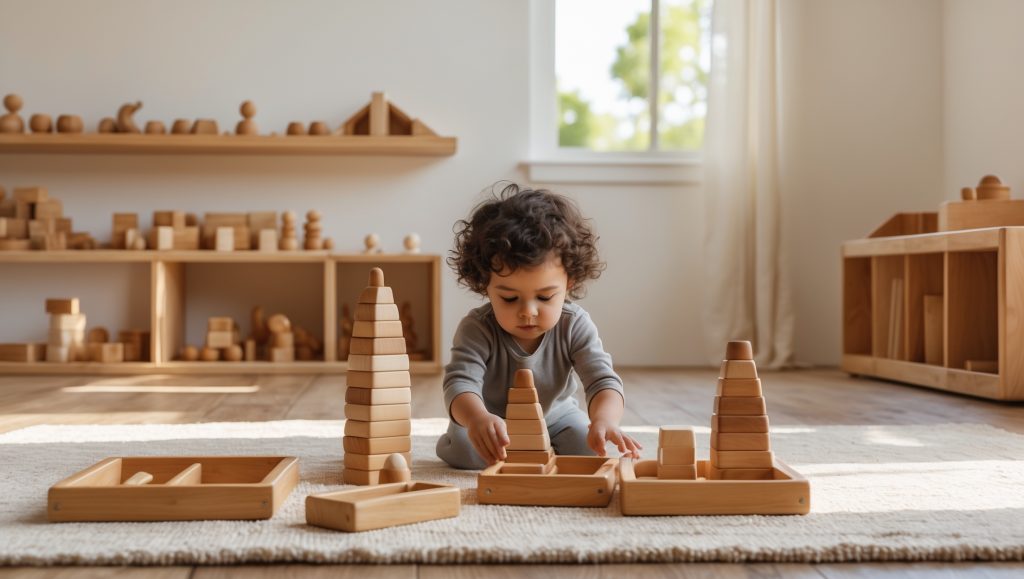
Introduction
Montessori philosophy has inspired families around the world to rethink how children learn and play. With a focus on independence, hands-on exploration, and respect for each child’s natural development, Montessori toys have become increasingly popular in the United States. But what actually makes a toy ‘Montessori’? How can parents select toys that align with these principles? And what practical steps can you take to create a Montessori-inspired play environment at home in 2025? This guide dives into the foundations of Montessori toys, provides actionable recommendations, and offers evidence-informed strategies to help families make mindful choices that nurture curiosity and growth.
What Are Montessori Toys?
Montessori toys are inspired by the educational approach developed by Dr. Maria Montessori in the early 1900s. These toys are thoughtfully designed to support a child’s natural development by encouraging independence, concentration, and purposeful activity. Unlike many conventional toys, Montessori-inspired toys are typically simple, made from natural materials, and designed to be open-ended—allowing children to explore concepts like cause and effect, fine motor skills, and problem-solving at their own pace.
Key characteristics of Montessori toys include:
- Purposeful design: Each toy generally serves one clear function or skill, such as stacking, sorting, or lacing, helping children focus and master specific tasks.
- Natural materials: Wood, metal, cotton, and other natural materials are preferred for their sensory qualities and durability.
- Open-ended play: While some toys have a specific purpose, many allow for a variety of uses, supporting creativity and problem-solving.
- Self-correction: Montessori toys often incorporate ways for children to check their work, building confidence and independence.
- Reality-based: Toys reflect real-life objects and experiences, avoiding fantasy or overly stimulating designs, especially for younger children.
Benefits of Montessori Toys for Children
Research and decades of classroom experience suggest that Montessori toys can offer a range of benefits for children’s development. These include:
- Enhanced concentration: The simplicity and focus of Montessori toys encourage children to engage deeply, sustaining attention for longer periods.
- Development of fine and gross motor skills: Activities such as stacking, threading, pouring, or transferring objects help children refine their physical coordination.
- Fostering independence: Toys are designed to be accessible and manageable for children, empowering them to make choices and solve problems on their own.
- Promoting cognitive growth: Montessori toys encourage hands-on learning, which is linked to stronger memory retention and conceptual understanding.
- Cultivating a love of learning: By giving children control over their play, Montessori toys nurture intrinsic motivation, curiosity, and confidence.
Choosing Montessori Toys by Age
Children’s needs and interests evolve rapidly in the early years. Selecting Montessori toys that are developmentally appropriate is key to supporting meaningful play:
Infants (0–12 months)
- Grasping toys: Simple wooden rattles, cloth balls, or natural rubber rings help develop grasp and coordination.
- Mobiles: High-contrast or moving mobiles encourage visual tracking and focus.
- Object permanence boxes: Simple boxes with slots or holes teach cause and effect.
Toddlers (12–36 months)
- Stacking and nesting toys: Wooden blocks, cups, or rings foster problem-solving and coordination.
- Shape sorters: Encourage matching, spatial awareness, and fine motor skills.
- Practical life toys: Child-sized brooms, pitchers, or dressing frames introduce real-life skills.
Preschoolers (3–6 years)
- Puzzles and sequencing toys: Simple jigsaws, knobbed cylinders, and pattern blocks offer cognitive challenges.
- Tools for early math and language: Number rods, sandpaper letters, and counting beads introduce academics through play.
- Art and music materials: Open-ended drawing supplies, rhythm instruments, and clay encourage creativity.
Remember: The best Montessori toys are those that match your child’s current interests and abilities—observe their play to guide your selections.
Setting Up a Montessori-Inspired Play Space at Home
You don’t need a dedicated classroom or expensive materials to embrace Montessori principles at home. Here are some practical tips:
- Low, accessible shelves: Store toys at your child’s level so they can make independent choices.
- Limit choices: Offer a few well-chosen toys at a time to avoid overwhelm and foster deeper engagement. Rotate toys periodically based on your child’s interests.
- Order and simplicity: Arrange toys in baskets or trays, each with a clear place. This helps children learn to care for their environment and practice returning items after use.
- Safe, inviting space: Ensure the play area is free from hazards, well-lit, and cozy, with a soft rug or mat for floor play.
- Include real-life tools and materials: Everyday household items—such as small pitchers, brushes, or cloths—can be wonderful Montessori activities when sized appropriately.
Most importantly, observe your child and adapt the environment as their needs change. Involving your child in setting up and maintaining their play space can boost their sense of ownership and pride.
Integrating Montessori Principles into Daily Play
Montessori-inspired play is about more than just toys—it’s a mindset. Here’s how to integrate Montessori values into your family’s routines:
- Follow the child: Watch for your child’s cues and interests. Offer choices, but let them lead their play and exploration.
- Provide uninterrupted time: Allow for extended periods of focused play without unnecessary interruptions.
- Model respect and patience: Demonstrate how to use toys and materials with care, and wait for your child to try things independently before stepping in.
- Encourage practical life skills: Invite children to participate in everyday tasks, such as preparing snacks, watering plants, or folding laundry.
- Emphasize process over product: Focus on the joy of learning and discovery, rather than on achieving a particular outcome.
Common Mistakes
- Confusing ‘Montessori’ with any wooden or minimalist toy—true Montessori toys serve a clear purpose and support self-directed learning.
- Offering too many toys at once, leading to overstimulation and reduced focus.
- Choosing toys that are not age-appropriate, which can cause frustration or boredom.
- Focusing on academic skills too early—Montessori principles emphasize hands-on, experiential learning before formal academic instruction.
- Assuming Montessori toys alone will foster independence—environment and adult modeling are equally important.
- Over-structuring play or interrupting children’s concentration with frequent prompts or corrections.
- Investing in expensive branded products when simple, everyday objects can serve the same purpose.
Quick Checklist
- Are toys made from natural, durable materials?
- Does each toy have a clear, purposeful design supporting a specific skill?
- Are toys open-ended or allow for self-correction?
- Is the play space organized, uncluttered, and accessible for your child?
- Are you rotating toys regularly to maintain engagement?
- Do you observe and follow your child’s interests when choosing toys?
- Are you modeling respectful, independent use of materials?
- Is your child able to access and put away toys independently?
FAQ
+Do Montessori toys have to be wooden or expensive?
+How many toys should I have out at once?
+Are Montessori toys suitable for all ages?
+Can digital or electronic toys be Montessori?
+How do I know if a toy is truly Montessori?
+Do I need to follow all Montessori guidelines perfectly?
+Can siblings of different ages use the same Montessori toys?
Conclusion
Montessori toys are more than a trend—they’re tools for nurturing independence, curiosity, and a lifelong love of learning. By choosing toys thoughtfully, observing your child’s interests, and creating a calm, accessible play environment, you can bring Montessori principles to life at home. Remember, you don’t need to invest in expensive materials or follow every rule perfectly. The heart of Montessori is about respecting your child’s unique path, supporting their natural development, and embracing learning through hands-on, joyful play. Whether you’re new to Montessori or looking to deepen your practice, small changes can make a meaningful difference for your family in 2025 and beyond.

Montessori Toys: A Parent’s Guide to Mindful Play in 2025
As parents increasingly seek meaningful ways to support their children’s development, Montessori toys continue to stand out in 2025. Rooted in the Montessori philosophy, these toys invite children to explore, imagine, and learn at their own pace. Unlike flashy, battery-operated gadgets, Montessori toys are intentionally simple—crafted from natural materials and designed to engage the senses. This simplicity encourages focus, creativity, and problem-solving, all while fostering independence.
In today’s fast-paced, tech-heavy world, mindful play is more important than ever. Montessori-inspired toys—like stacking rings, wooden puzzles, and open-ended building sets—nurture curiosity and concentration. They don’t overstimulate; instead, they allow children to master new skills with confidence, building a strong foundation for lifelong learning. As you select toys for your child, consider their interests and developmental stage. Look for items that are open-ended, safe, and inviting to touch and manipulate.
Choosing Montessori toys is about more than play—it’s a commitment to your child’s growth and well-being. By making mindful selections, you help your child discover joy in learning and empower them to explore their world with wonder and independence.
- Opt for toys made from wood, cotton, or other natural materials.
- Choose open-ended toys that grow with your child’s abilities.
- Rotate toys regularly to keep play fresh and engaging.
- Observe your child’s interests to select developmentally appropriate options.
I noticed you recommend reality-based toys over fantasy ones. With so many electronic and themed toys on the market, how do Montessori toys compare in terms of keeping kids engaged, particularly as they get older and peer influence increases?
You’re thoughtful to consider how engagement changes as kids grow and peer influences shift. Montessori toys, designed to match real-life experiences, engage children’s curiosity and hands-on learning—skills that deepen with age. To keep older kids interested: 1) Offer progressively challenging materials like real tools or science kits. 2) Involve them in practical, age-safe tasks such as cooking or gardening. 3) Allow limited, thoughtful use of themed or electronic toys to support social connections, while emphasizing balance. 4) Encourage your child’s input when choosing new activities to respect their growing preferences. This isn’t medical advice; if you’re concerned, check in with your pediatrician.
My baby is 9 months old, and we’re in the middle of trying out different foods, including introducing eggs and peanuts. Should I be extra careful with the types of toys I leave out during feeding times to avoid any cross-contact with potential allergens?
You’re right to be thoughtful about managing allergens as you introduce new foods. During feeding times, keep toys that your baby uses separate from areas where food is prepared or eaten to reduce the risk of cross-contact. Choose washable toys, like silicone or smooth wooden pieces, that can be easily cleaned after play and meals. Avoid plush or textile toys at the table since they’re harder to sanitize and can trap food allergens. Always supervise your baby closely during meals and play. This isn’t medical advice; if you’re concerned, check in with your pediatrician.
Could you clarify how to choose Montessori toys that match a child’s developmental age, especially if they are ahead or behind in certain skills? For example, if a child is advanced with fine motor tasks, should I introduce more challenging options early?
It’s great that you want to match toys to your child’s unique development. First, observe your child’s current abilities rather than just their age. If your child excels at fine motor tasks, try offering slightly more complex Montessori activities, like threading beads or using tongs, while still supervising closely. Rotate in new toys gradually to avoid overwhelming them and keep familiar options available for confidence-building. For any toy, always check for age-appropriate safety—no small parts for children under three and avoid choking hazards. Remember, every child develops at their own pace; if you’re unsure, your pediatrician or an early childhood expert can help guide you. This isn’t medical advice; if you’re concerned, check in with your pediatrician.
Some Montessori toys are made of wood or metal, and my baby still mouths everything. How can I be sure these materials are safe, and are there specific guidelines for cleaning them after messy meals?
You’re right to be cautious about materials when your baby is still mouthing toys. First, check that wooden or metal toys are labeled non-toxic and free from small, detachable parts. Choose toys with smooth, sealed surfaces to avoid splinters or rust. Clean wooden toys by wiping them with a damp cloth and mild soap—avoid soaking, as wood can warp. For metal toys, use a gentle soap and dry them well to prevent rust. Always supervise play at this mouthing stage. This isn’t medical advice; if you’re concerned, check in with your pediatrician.
My 10-month-old seems really sensitive to different textures during mealtime and play. When choosing Montessori toys, should I focus on certain materials to ease her into exploring new textures, or is it better to introduce a variety right away?
You’re tuned in to your baby’s unique sensory needs, which is so important at this age. At 10 months, it’s helpful to gently introduce a range of safe and age-appropriate textures, but start with just two or three different materials—like smooth wood, soft cloth, and silicone. Offer new textures one at a time during play, letting her explore at her own pace. Watch for signs of discomfort, and never force interaction; keep sessions short and positive. Always check toys for choking hazards and use under supervision. This isn’t medical advice; if you’re concerned, check in with your pediatrician.
How can I create a simple Montessori-inspired play area at home without investing in a lot of new toys? Is it possible to use common household items to encourage the hands-on, purposeful play described in the article?
It’s wonderful that you want to foster Montessori-style play without needing lots of new items. Start by choosing a low shelf and placing a few everyday objects—like measuring cups, wooden spoons, or safe containers—within your child’s reach, rotating them weekly. Keep the space uncluttered so your child can focus on one activity at a time. Offer practical life tasks, such as sorting socks or wiping a table, as these encourage independence and purposeful movement. Always ensure the items are age-appropriate, non-breakable, and free from choking hazards. This isn’t medical advice; if you’re concerned, check in with your pediatrician.
Is it okay to blend Montessori toys with a few regular toys my child already loves, or should I aim for a fully Montessori-inspired play setup to get the developmental benefits you describe?
It’s completely understandable to want to balance your child’s favorites with new Montessori-inspired toys. You can absolutely blend Montessori toys with other well-loved, safe toys—children benefit most when playtime brings joy and engagement. Try rotating toys so your child has a few options at a time, including both Montessori and regular toys, and observe which encourage focused, independent play. Avoid overstimulation by limiting the number of toys out, and always check that all toys are age-appropriate and free of small parts or hazards. This isn’t medical advice; if you have concerns, reach out to your pediatrician.
With my child spending part of the day in preschool and the rest at home, how do you suggest balancing screen time with hands-on Montessori playtime, especially when routines are unpredictable?
It’s understandable to want a healthy balance between screen use and play, especially with changing routines. Try creating a flexible daily rhythm—set aside blocks of time for hands-on Montessori activities before or after preschool, even if it’s just 15–30 minutes. Offer simple, accessible materials so your child can choose play when screens aren’t needed. Reserve screen time for specific parts of the day, and use visual timers or routines charts to help your child anticipate transitions. Always supervise, especially for younger kids, and ensure toys match their age and abilities. This isn’t medical advice; if you’re concerned, check in with your pediatrician.
Is it better to focus on getting a few multi-purpose Montessori toys or to select specific toys for each developmental stage, particularly when storage space is tight in a smaller home?
It’s understandable to want to make the most of limited space while still supporting your child’s development. In smaller homes, choosing a few high-quality, multi-purpose Montessori toys is usually more practical and can still meet a range of developmental needs. Look for open-ended toys made from safe, non-toxic materials, suitable for your child’s age—like stacking blocks or nesting cups. Rotate toys to keep play fresh and engaging, and supervise younger children to avoid small parts. This isn’t medical advice; if you’re concerned, check in with your pediatrician.
My child sometimes gets overstimulated by toys with a lot of lights or sounds. Would Montessori-style toys be better suited for children with sensory sensitivities, and how can I tell which toys might be calming versus overwhelming?
It’s understandable to want toys that help your child feel calm and comfortable. Montessori-style toys are often a good fit for children with sensory sensitivities because they usually feature simple designs, natural materials, and minimal noise or flashing lights. Look for toys made of wood or fabric, in neutral colors, and with a single purpose—like stacking blocks or shape sorters. Observe how your child responds to different textures; some prefer smooth surfaces, while others like soft or fuzzy materials. Always supervise play, especially with younger children, and avoid small parts if your child is under three. This isn’t medical advice; if you’re concerned, check in with your pediatrician.
I love the idea of open-ended play, but I’m finding that some Montessori toys are pricier. Are there any budget-friendly options using natural materials that are also easy to clean in case of exposure to new foods or potential allergens?
It’s completely understandable to want affordable, safe toys that encourage open-ended play. You can use simple, natural materials like unfinished wooden blocks, cotton scarves, or stainless steel kitchen items (like measuring cups) as versatile toys—just be sure they’re large enough to avoid choking hazards for infants and toddlers. These materials are generally easy to wipe clean or wash if exposed to allergens or messy foods. Always supervise young children during play, especially with household items, to ensure safety. This isn’t medical advice; if you have specific allergy or safety concerns, please consult your pediatrician.
I have a 7-month-old who seems to get bored with toys quickly. Are there specific Montessori toys you would recommend for this age to keep her engaged but not overstimulated? Also, should I rotate her toys, or is it better to leave them all available?
It’s understandable to want your 7-month-old to stay engaged without feeling overwhelmed. For this age, Montessori-style toys like simple wooden grasping rings, soft fabric balls, or a treasure basket with safe everyday objects (like a wooden spoon or smooth cloth) support exploration without overstimulation. Limit the number of toys available at once—offering 3–5 items at a time is usually enough. Rotate toys every week or so to renew her interest, always checking that each item is large enough not to be a choking hazard and free from loose parts. This isn’t medical advice; if you’re concerned, check in with your pediatrician.
For families dealing with possible sensitivities, how do you recommend cleaning Montessori toys made from natural materials? Is there a way to ensure these toys remain safe and hygienic for babies who might still put everything in their mouths, especially as we introduce new foods?
It’s understandable to want extra reassurance about toy cleanliness when your baby is exploring with their mouth, especially if sensitivities are a concern. For natural material toys like wood, wipe them down regularly with a damp cloth and mild, unscented soap, then let them air dry completely. Avoid soaking or using harsh cleaners, as these can damage the material or leave residues. For fabric toys, choose options that can be machine washed with gentle, hypoallergenic detergent. Always inspect toys for cracks or wear where germs could hide, and supervise babies to avoid choking hazards from small or damaged pieces. This isn’t medical advice; if you’re concerned, check in with your pediatrician.
My child tends to wake up before sunrise and wants to play right away. How can I adapt a Montessori play environment so it encourages independent, calm play without needing much supervision that early?
It’s understandable to want peaceful mornings, especially when your child wakes up eager to play. Try preparing a low shelf or basket with a few quiet, age-appropriate Montessori toys or activities each evening—things like stacking cups, simple puzzles, or soft books—avoiding small pieces for younger children and anything that needs adult help. Choose items your child already knows how to use safely and confidently. You might add a small rug or mat to help define their play space. Make sure the area is free from choking hazards and secure any furniture, and supervise from nearby as needed. This isn’t medical advice; if you’re concerned, check in with your pediatrician.
Are there affordable alternatives to brand-name Montessori toys that still meet the philosophy’s standards? I’m interested in supporting my child’s development but need to stick to a budget.
It’s great that you want to nurture your child’s development while being mindful of your budget. Many simple household items can be used Montessori-style: try wooden spoons and bowls for sorting, or a set of cloths for folding and texture exploration. DIY projects like threading large beads onto shoelaces or pouring dried beans between containers also support skills aligned with Montessori principles. Always use age-appropriate materials, avoid choking hazards, and supervise closely. This isn’t medical advice; if you’re concerned, check in with your pediatrician.
With a busy family routine, what is a practical way to organize a daily play schedule that allows for independent Montessori play while still fitting in other family activities?
It’s understandable to want a balanced routine that supports your child’s independent play and family needs. Start by dedicating one or two short, predictable time windows daily (even 15–30 minutes) for Montessori play, ideally when your child is most alert. Rotate and limit toys on a low shelf so your child can choose and tidy up independently. Set clear expectations with siblings or other family members about quiet time during these play sessions. Always supervise young children, especially with small parts or new activities. This isn’t medical advice; if you’re concerned, check in with your pediatrician.
My 15-month-old tends to put everything in her mouth, so I worry about the safety of wooden Montessori toys with small parts. Are there certain types or brands you recommend that are safest for this age group?
It’s completely understandable to worry about mouthing at this age—many toddlers explore this way. For a 15-month-old, choose Montessori toys that are labeled for ages 12 months and up, ensuring all parts are too large to fit through a toilet paper roll (about 1.75 inches wide). Avoid toys with detachable pieces, beads, or cords that could break off. Look for brands that use non-toxic finishes and untreated wood, and always inspect toys for loose parts or splinters before play. Direct supervision is important at this stage. This isn’t medical advice; if you’re concerned, check in with your pediatrician.
With the growing popularity of eco-friendly products, I’m trying to weigh the pros and cons of wooden versus plastic Montessori toys. Are there specific environmental benefits or drawbacks to each that parents should consider before making a purchase?
It’s thoughtful to consider the environmental impact of your child’s toys. Wooden Montessori toys are usually biodegradable, often made from renewable resources, and tend to last longer, but it’s important to check that the finishes are non-toxic. Plastic toys can be lightweight and easy to clean, but many are not recyclable and may break down faster, contributing to waste. For infants and toddlers, ensure all toys are smooth, free from small parts, and meet safety standards. This isn’t medical advice; if you have specific concerns, check in with your pediatrician.
When you talk about reality-based play, does that mean I should avoid pretend play kitchens or dollhouses for a two-year-old? My daughter loves imitating me cooking. Are those not considered Montessori?
Your question about balancing Montessori principles with your daughter’s love of pretend play is a thoughtful one. Montessori emphasizes materials grounded in real-life activities, so a play kitchen or dollhouse can be Montessori-aligned if they allow your child to imitate real tasks, like cooking or caring for others. For a two-year-old, choose sturdy items free of small, detachable parts and supervise closely. Encourage her to use real utensils or help with safe cooking tasks alongside you. Pretend play can be very valuable at this age, as long as it connects to her daily experiences. This isn’t medical advice; if you’re concerned, check in with your pediatrician.
For bilingual households, are there specific Montessori toys or approaches you recommend for integrating new vocabulary into nap or bedtime routines? I want to make sure playtime gently supports language learning before my child settles down to sleep.
You’re thoughtful to weave language learning into calming routines. For nap or bedtime, consider soft Montessori-inspired objects like fabric books or plush story cards, choosing ones with simple pictures and labels in both languages. Use these together for gentle naming games or to tell short stories, encouraging your child to point, name, or repeat words. You might also keep a small basket of familiar objects (like a wooden animal or soft fruit) to name and describe in each language as part of a soothing ritual. Keep routines quiet and predictable, limiting stimulating toys. Always choose items that are safe for your child’s age, avoiding small parts or loose fabrics for babies or toddlers. This isn’t medical advice; if you’re concerned, check in with your pediatrician.
I noticed the article mentions that Montessori toys are often open-ended and allow for creative exploration. How do you balance open-ended play with more explicitly educational toys if you want to make sure your child is hitting certain developmental milestones?
It’s wonderful that you’re thinking about both creative play and developmental goals for your child. You might try alternating between open-ended Montessori toys and more structured educational toys each day, or even during the same play session. Use open-ended toys to encourage problem-solving and imagination, then gently guide your child toward skill-based toys for practicing numbers, letters, or fine motor skills. For toddlers and preschoolers, brief, supervised sessions work best, ensuring all toys are safe and age-appropriate. Remember, both types of play support development in different ways. This isn’t medical advice; if you’re concerned, check in with your pediatrician.
I noticed the article mentions using reality-based toys over fantasy, especially for younger children. At what age is it appropriate to introduce more imaginative or pretend play toys while still staying true to Montessori principles?
Your question shows a real interest in respecting your child’s developmental needs. In Montessori, reality-based toys are recommended for children under age 6, especially toddlers, to help them understand the real world. Around ages 3 to 6, you can gradually introduce simple pretend play items, like play kitchens or dollhouses, as children begin to process and imitate real-life scenarios. Choose open-ended toys that reflect real life, and always supervise play to ensure safety with small parts. This isn’t medical advice; if you’re concerned, check in with your pediatrician.
Are there any particular Montessori toys you’d recommend avoiding for toddlers who still put things in their mouths frequently, just to be extra safe?
It’s very wise to think about safety when your toddler is still exploring with their mouth. For now, avoid Montessori toys with small pieces (like bead threading or button sorting sets), as these can be a choking hazard. Steer clear of toys with detachable or breakable parts, and make sure items are made from non-toxic, easy-to-clean materials. Large, solid wood blocks or chunky stacking toys are usually safer options. Always supervise play at this stage. This isn’t medical advice; if you’re concerned, check in with your pediatrician.
We have a small space, so I’m concerned about clutter as we build our Montessori play area. Are there ways to organize or rotate toys so that our living room doesn’t get overwhelmed, particularly as our child’s interests change?
It’s understandable to want a calm, clutter-free space even as you support your child’s development. Try selecting just a few Montessori toys that match your child’s current interests and place them on low, open shelves for easy access. Store the rest in a closet or bin, and rotate new items in every couple of weeks based on what your child seems drawn to. Involve your child in putting toys away after play to build independence. Choose toys without small parts if your child is under three, and always supervise play. This isn’t medical advice; if you’re concerned, check in with your pediatrician.
How often should I rotate Montessori toys to keep my toddler engaged without overwhelming them? Is there an ideal number of toys to have out at one time according to Montessori principles?
It’s great that you want to keep your toddler engaged without overwhelming them. For most toddlers, rotating Montessori toys every 1–2 weeks works well, but observe your child’s interest—if they lose focus sooner or stay engaged longer, adjust accordingly. According to Montessori principles, having about 6–8 toys out at once is ideal; this prevents clutter and supports focused play. Choose toys that match your child’s current developmental stage, and always ensure they are age-appropriate and safe (no small parts, non-toxic materials). This isn’t medical advice; if you’re concerned, check in with your pediatrician.
Are there any specific tips for safely storing Montessori toys in small apartments where space is limited? I sometimes have multiple kids over and want to keep things organized without overwhelming them with choices.
You’re wise to want a safe and organized play space, especially with several children in a small apartment. Try rotating toys: keep only a few options on accessible shelves and store the rest in labeled bins out of reach. Use sturdy, closed containers for items with small parts, and always check for choking hazards before group play. Low, open shelves or baskets help children tidy up independently and choose without feeling overwhelmed. Remember, less is more for both safety and focus. This isn’t medical advice; if you’re concerned, check in with your pediatrician.
As a parent on a tight budget, I’m curious if there are everyday household items that align with Montessori principles and would be suitable for mindful play with a language-delayed toddler?
It’s wonderful that you’re seeking mindful play ideas tailored to your toddler’s needs. Many Montessori-inspired activities can be done with everyday items: 1) Use measuring cups, wooden spoons, or bowls for simple scooping or pouring games to build coordination and vocabulary. 2) Create a basket of safe household objects (like a hairbrush, soft cloth, or blocks) for sensory exploration and naming practice. 3) Encourage matching socks or sorting utensils together, which introduces basic categories and words. Always supervise to avoid choking hazards and choose sturdy, non-toxic items. This isn’t medical advice; if your child’s language delays worry you, consult your pediatrician or a speech-language pathologist.
Do you have any advice for storing Montessori toys in a small apartment so kids can still easily access them but things don’t get too cluttered during playtime?
It’s great that you want to keep Montessori toys accessible while minimizing clutter. Try rotating a few toys on low shelves or in shallow baskets so your child can see and reach them easily. Store extra toys in closed bins or boxes out of sight, swapping them in every week or two to keep things fresh. Use clear labels or photos on containers for younger children. Make sure storage is sturdy and avoids small compartments that could be a safety hazard for toddlers. This isn’t medical advice; if you’re concerned, check in with your pediatrician.
How can we adjust Montessori toy choices for a bilingual preschooler who seems to need more sensory input before naps, but also needs help winding down? Would certain materials or designs be better for that pre-nap transition?
It’s great that you’re tuned in to your child’s sensory needs before naps. For a bilingual preschooler who craves sensory input but also needs to wind down, try offering toys made of natural materials—like soft wooden blocks, smooth fabric ribbons, or gentle sensory balls—right before nap time. Create a pre-nap routine with calming, repetitive toys such as threading beads (large, non-choking hazard), matching cards with soft images, or simple sound makers (like rain sticks). Keep the activity area quiet and supervise closely to ensure safety. Choose toys with soothing textures and muted colors to help ease the transition. This isn’t medical advice; if you’re concerned, check in with your pediatrician.
I noticed the article mentions the importance of natural materials like wood and cotton for Montessori toys. Are there any specific safety concerns I should be aware of when selecting these materials for a toddler who still puts things in their mouth?
You’re right to be cautious about safety for toddlers who mouth toys. First, check that wooden toys are smooth, splinter-free, and finished with non-toxic, food-grade paints or oils. For cotton toys, look for labels indicating they are free from harmful dyes and are washable. Make sure all toys are large enough to prevent choking—avoid small parts or loose threads. Always supervise play, especially with new toys. This isn’t medical advice; if you’re concerned, check in with your pediatrician.
Are there Montessori toy options that can double for both play and practical life activities while traveling, like snack or water containers that also help with coordination? I want to maximize both learning and packing space for my toddler.
It’s great that you’re looking for ways to encourage learning and independence while on the go. For travel, consider a child-sized, easy-open snack container or water bottle—letting your toddler practice opening, closing, and pouring helps build fine motor skills and practical life abilities. A small zippered pouch with simple fasteners can also double as a toy and storage, supporting dexterity. Choose items with no small parts or choking hazards and supervise closely, especially with liquids. This isn’t medical advice; if you’re concerned, check in with your pediatrician.
How can I tell if a toy that claims to be Montessori on the label actually follows the principles you describe, especially in big-box stores where there are so many options?
It’s natural to feel overwhelmed by all the choices in big-box stores. To check if a toy truly follows Montessori principles, look for simple designs made of natural materials like wood, without flashy lights or sounds. Make sure the toy supports hands-on, purposeful play—think stacking, sorting, or real-life skills. Avoid items with lots of small parts if your child is under 3, and always supervise play. Trust your intuition: if it seems too flashy or complicated, it may not align with Montessori values. This isn’t medical advice; if you’re concerned, check in with your pediatrician.
You mention that Montessori toys are usually made from natural materials. For families with tight budgets, are there affordable alternatives that still align with the Montessori philosophy, or do plastic options negate some of the benefits?
Your concern about affordability is completely understandable. Montessori principles focus on simplicity, real-world function, and hands-on learning, so you can adapt with budget-friendly options. Consider making your own toys from safe household items like wooden spoons, cloth napkins, or empty cardboard boxes—just ensure there are no sharp edges or small parts for young children. Some plastic toys can work if they are sturdy, realistic, and have a clear purpose, but try to avoid flashy lights or sounds. Always check for safety, especially for babies and toddlers. This isn’t medical advice; if you have concerns, check in with your pediatrician.
We have limited space in our home. Do you have recommendations for organizing and rotating Montessori-style toys to avoid clutter and make sure my child stays engaged without getting overwhelmed by too many options?
It’s great that you want to create an engaging play space without overwhelming your child. Start by selecting just a few Montessori-style toys—3 to 5 is usually enough for one rotation—and store the rest out of sight. Use low, open shelves at your child’s height for easy access and to encourage independence. Every week or two, swap out a couple of toys to refresh their interest. Make sure all materials are age-appropriate and safe, especially for younger children—avoid small parts and supervise as needed. This isn’t medical advice; if you’re concerned, check in with your pediatrician.
I’m new to Montessori ideas and wondering if you have suggestions for good starter toys for a 13-month-old, especially for families on a tight budget. Are there any simple household items that fit Montessori principles?
It’s wonderful that you want to support your 13-month-old’s learning through Montessori methods, even on a budget. For this age, try simple, safe household items like wooden spoons for banging, plastic measuring cups for stacking and nesting, or cloth napkins for pulling out of a box. You can also offer a basket of safe kitchen items (no sharp edges or small parts). Encourage exploration by letting your child handle these objects with supervision. Always check for choking hazards and ensure items are clean and non-toxic. This isn’t medical advice; if you’re concerned, check in with your pediatrician.
Are there budget-friendly alternatives to traditional Montessori toys that still follow the philosophy you describe, or do you find the benefits come mostly from investing in higher-quality, classic Montessori materials?
Your question about balancing cost and Montessori principles is completely valid. Many household items—like wooden spoons, bowls, or safe containers—can be used for sorting, stacking, and practical life activities, following Montessori philosophy. Try rotating simple objects to keep play fresh and focused. For toddlers and up, supervised use of real, child-sized tools (like a small whisk or brush) builds independence and motor skills. Always check for safety hazards such as sharp edges or choking risks, especially with younger children. Remember, the Montessori approach is about how children engage with their environment, not just the materials themselves. This isn’t medical advice; if you’re concerned, check in with your pediatrician.
For parents of children with sensory sensitivities, how can we choose or adapt household items so that pretend play still feels enjoyable and appropriate within a Montessori framework?
It’s wonderful that you want to make pretend play comforting and accessible for your child. Start by choosing household items with gentle textures, soft edges, and neutral scents—skip anything noisy or rough. Offer just a few options at once to avoid overwhelm, and let your child explore at their own pace. You might adapt objects by wrapping handles in fabric or using silicone utensils for softer sensory input. Always supervise, especially with younger children, and check for small or breakable parts. This isn’t medical advice; if you’re concerned, check in with your pediatrician.
My child is drawn to very colorful, noisy toys, but I see that Montessori recommends simpler, reality-based options. How can I help transition her to these kinds of toys without making playtime feel less exciting for her?
It’s understandable to want your child to enjoy playtime while also nurturing their development. To ease the transition, try introducing one or two Montessori-style toys alongside her favorites, letting her explore at her own pace. Create small play invitations using simple toys that connect to real-life activities, like wooden food or tools. Narrate and participate in play to add excitement and keep her engaged. Gradually rotate out some noisy, flashy toys so the environment feels less overwhelming. Always ensure toys are age-appropriate and free from small parts or hazards. This isn’t medical advice; if you’re concerned, check in with your pediatrician.
I noticed you talked about self-correction in toys. At 7 months, is my baby too young to benefit from this, or are there beginner-level Montessori toys that introduce this idea for infants?
It’s great you’re thinking about early learning and self-correction for your baby. At 7 months, infants are just starting to explore cause and effect, so simple self-correcting Montessori toys can be helpful. Try large wooden rings on a dowel or basic puzzle shapes with big handles—these let your baby try, adjust, and see what fits. Make sure toys are free of small parts, safe to mouth, and easy to grasp. Stay close to supervise, as little ones still explore with their mouths. This isn’t medical advice; if you’re concerned, check in with your pediatrician.
As I build a Montessori-inspired play area in the bathroom for potty training, do you have tips for organizing or storing toys so they are accessible but not distracting during this process?
You’re thoughtful to want a bathroom play area that supports potty training without adding distractions. Try limiting available toys to just a couple of simple, washable items—think stacking cups or a small book—placed in a shallow basket at your child’s eye level. Rotate toys regularly to keep interest fresh but avoid overwhelm. Store extras out of sight in a closed bin nearby. Choose toys without small parts or complicated mechanisms, and always supervise closely around water. This isn’t medical advice; if you’re concerned, check in with your pediatrician.
My toddler is 14 months and tends to put everything in his mouth. Are there specific Montessori toys that are safe for this stage, and how can I tell if a toy really meets both the Montessori principles and safety standards for this age group?
It’s very normal for 14-month-olds to explore through mouthing, and it’s great that you want safe, developmentally appropriate toys. Look for Montessori toys made from natural materials like unfinished wood or food-grade silicone, and check that they’re labeled for ages 12 months and up. Avoid toys with small parts, loose pieces, or paint that could chip. Choose simple objects like large stacking rings or shape sorters with pieces too big to swallow. Always supervise play and regularly inspect toys for wear. This isn’t medical advice; if you’re concerned, check in with your pediatrician.
Can Montessori toys be incorporated into a consistent nap routine for preschoolers, and would you recommend different toys if we want to engage our child in both English and Spanish as part of that wind-down time?
It’s wonderful that you’re thinking about blending language learning and mindful play into your child’s nap routine. To support calm wind-down time, choose Montessori toys with soft textures and minimal noise—like fabric books or wooden puzzles with simple images—avoiding small parts and overstimulating colors. For bilingual engagement, select toys or books labeled in both English and Spanish, or alternate the language you use when describing objects and actions. Keep the routine predictable and gently structured so your preschooler knows it’s time to settle down. Always supervise play before naps, and remember this isn’t medical advice—if you have concerns, your pediatrician can help.
My child gets overwhelmed by noisy or flashy toys but sometimes even shows frustration with simpler ones. Are there Montessori toys particularly suited for toddlers who seem sensitive to textures or get bored quickly?
It’s understandable to want toys that comfort and engage a sensitive toddler. Try offering open-ended Montessori toys like smooth wooden blocks, simple stacking cups, or fabric baskets with soft, varied textures—these invite exploration without sensory overload. Rotate toys, presenting just a few at a time to reduce overwhelm and keep interest fresh. Look for items large enough to avoid choking hazards, made from natural, non-toxic materials. Supervise play to ensure safety and to notice which textures or activities your child prefers. This isn’t medical advice; if you’re concerned, check in with your pediatrician.
Budget is definitely a factor for our family. Do you have any strategies for prioritizing which Montessori toys to invest in, or recommendations for inexpensive alternatives that still follow the Montessori approach?
It’s completely understandable to want to make thoughtful choices while budgeting for your child’s toys. Start by focusing on a few open-ended, well-made items like wooden blocks or stacking cups—they can be used in many ways as your child grows. Everyday household objects, such as measuring cups or clothespins, can also encourage Montessori-style exploration. Rotate toys so fewer are out at once, keeping play fresh and meaningful. Always check for age-appropriate size to avoid choking hazards, and supervise young children during play. This isn’t medical advice; if you’re concerned, check in with your pediatrician.
As my child gets older, should the way I approach toy rotation change? For example, are there age-appropriate guidelines for how many toys to offer or how frequently to introduce new Montessori materials?
You’re thoughtful to consider how your child’s needs change as they grow. For infants and young toddlers, fewer toys (3-5 at a time) help prevent overwhelm, and rotating every couple of weeks works well. As your child enters preschool age, you can offer a slightly larger selection (5-8), refreshing materials every two to four weeks based on interests and developmental progress. Always choose toys that match your child’s age and abilities—watch for small parts and choking hazards for younger children. Observe your child’s engagement; if a toy is ignored, it might be time for rotation. This isn’t medical advice; if you’re concerned, check in with your pediatrician.
Does it really make a difference if I purchase a single high-quality Montessori toy versus signing up for a subscription service that sends a variety of items every month? I’m concerned about budget and toy clutter in our home.
It’s completely understandable to want both developmental value and manageable costs at home. Choosing one high-quality Montessori toy can be just as enriching as a subscription box—children often gain more from repeated, focused play than from a lot of new options. Try rotating a few thoughtfully chosen toys to keep things fresh, and involve your child in tidying up to minimize clutter. Always ensure toys are safe for your child’s age and free from small parts or materials that could be hazardous. This isn’t medical advice; if you’re concerned, check in with your pediatrician.
My toddler tends to put everything in her mouth, even wooden toys. Are there particular safety concerns or certifications I should look for when choosing natural Montessori materials?
It’s completely normal to worry about what goes in your toddler’s mouth at this age. For Montessori toys, look for materials made from solid, untreated or non-toxic wood with water-based paints or finishes, and check for certifications like ASTM F963 or EN71, which ensure toys meet safety standards. Avoid small parts that could pose a choking hazard, and always supervise play. Ensure surfaces are smooth and free of splinters. This isn’t medical advice; if you’re concerned about your child’s mouthing habits or toy safety, consult your pediatrician.
Do you have tips on managing cleanup and storage for Montessori materials when one twin is asleep and the other is still playing? Sometimes I feel like our routine gets disrupted because we can’t tidy up all at once.
It’s understandable to feel challenged by cleanup routines with twins on different schedules. Try designating a quiet, soft storage bin nearby for the awake twin to use—this allows for gentle tidying without disturbing a sibling’s sleep. Use visual cues or a simple timer to signal when it’s time to start putting things away. Encourage your child to tidy up only what they’ve used, saving the rest until both are awake for a full reset together. Keep small parts out of reach during solo play for safety. This isn’t medical advice; if you’re concerned, check in with your pediatrician.
My son tends to put everything in his mouth at this age. Are there specific materials or toy designs within Montessori principles that are safest for toddlers who still mouth objects frequently?
It’s completely normal to worry when your toddler is mouthing toys—this is a common stage of exploration. For children who mouth objects, choose Montessori toys made from untreated, solid wood or food-grade silicone, as these are generally non-toxic and easy to clean. Look for simple designs with no small parts that could break off or pose a choking risk. Avoid toys with paint, varnishes, or glued parts unless they are certified safe for children under three. Always supervise play, especially with new toys. This isn’t medical advice; if you’re concerned, check in with your pediatrician.
Does the Montessori approach recommend certain routines for introducing self-care toys, like those that support potty training? I’d love tips on including these activities in our daily schedule without overwhelming my toddler.
It’s wonderful that you want to introduce self-care routines gently and mindfully. For Montessori-style potty training, start by placing child-sized toileting tools in a consistent, accessible bathroom spot. Involve your toddler in simple steps: undressing, using the potty, wiping, flushing, and handwashing, letting them try each part with patient guidance. Choose calm, unhurried times such as after meals or before bath. Keep routines brief and positive, celebrating effort, not just success. Only introduce new self-care toys or steps when your child seems ready, and always supervise for safety. This isn’t medical advice; if you’re concerned, check in with your pediatrician.
My child is very sensitive to different textures and sometimes gets overwhelmed by certain materials. Are there specific natural materials in Montessori toys you would recommend avoiding or seeking out for a more comfortable sensory experience?
It’s completely understandable to want your child to feel comfortable with the toys they use. For sensitive children, you might prioritize smooth, unfinished wood, soft cotton, or silicone over rough wool, burlap, or toys with many small fibers. Start by introducing one texture at a time and observe your child’s response, allowing them to engage at their own pace. Avoid toys with strong odors or rough surfaces, and always supervise to ensure safety, especially with younger children who may mouth items. This isn’t medical advice; if you’re concerned, check in with your pediatrician.
Does the article have recommendations for selecting Montessori toys that fit a tighter budget? I’d like to offer my child hands-on, real materials, but many of these toys seem expensive.
It’s completely understandable to want meaningful Montessori toys without stretching your budget. The article suggests focusing on simple, everyday items that encourage hands-on learning, like wooden spoons, stainless steel bowls, or fabric scraps, many of which you may already have at home. Look for secondhand options or swap toys with other families to keep costs down. Choose open-ended materials that can grow with your child’s skills and always check for age-appropriateness and safety—avoid small parts for infants and ensure materials are free from sharp edges or harmful chemicals. This isn’t medical advice; if you’re concerned, check in with your pediatrician.
My child is quite sensitive to certain textures and sounds, so we’ve had to be careful with noisy or flashy toys. Are there any Montessori-inspired toys you would specifically recommend for kids who might get overwhelmed easily by new sensory inputs?
It’s great that you’re mindful of your child’s sensory sensitivities. For children who can be overwhelmed by new textures or loud sounds, Montessori-inspired toys made from smooth wood, fabric, or silicone can offer gentle tactile experiences without strong or surprising sensations. Try simple stacking blocks, nesting cups, or classic knobbed puzzles—these are quiet, visually calm, and easy to handle. Sensory bins with dry beans or rice (supervised to avoid choking hazards) can also provide soothing, consistent textures. Always introduce new toys slowly, watching your child’s response, and avoid items with small parts or sharp edges depending on their age. This isn’t medical advice; if you’re concerned, check in with your pediatrician.
I know Montessori toys often use natural materials and have smaller pieces for fine motor skills. How can parents verify whether specific Montessori-inspired toys are safe for toddlers who still put things in their mouths, given choking hazards?
You’re right to be cautious about choking hazards with toddlers who mouth objects. First, always check the toy’s age recommendation—avoid items not specifically labeled for under-threes. Next, use the small parts tester or a toilet paper roll: anything that fits inside isn’t safe. Examine the toy for loose parts, sharp edges, or small detachable pieces. Choose natural materials but ensure they’re finished with non-toxic, food-safe coatings. Always supervise play, especially with new toys. This isn’t medical advice; if you’re concerned, check in with your pediatrician.
With so many toy options marketed as Montessori these days, how can I tell if something is really following Dr. Montessori’s principles or just using the label for marketing? Are there red flags I should look out for when shopping?
It’s understandable to want clarity with so many toys labeled ‘Montessori’ these days. First, look for toys made from natural materials like wood, metal, or cotton, as these are preferred for sensory development and safety. Second, true Montessori toys are simple, with one clear purpose, not flashy or overly colorful, and encourage open-ended, hands-on play. Avoid toys with batteries, screens, or loud lights and sounds—they don’t align with Montessori principles. Always check for age-appropriate sizes to prevent choking hazards and avoid strong chemical smells or paint chipping. This isn’t medical advice; if you’re concerned, check in with your pediatrician.
I read about reality-based toys being important in Montessori. Would it be confusing to mix a few traditional plastic toys with Montessori ones at this age, or is it best to stick to one approach?
It’s thoughtful of you to consider how different toys might impact your child’s experience. Mixing a few traditional plastic toys with Montessori ones is usually fine, especially if you choose toys that are safe and age-appropriate. Focus on toys that encourage open-ended play and real-world exploration, even if they’re not strictly Montessori. Observe which toys your child is drawn to, and rotate them to avoid overwhelming choices. Always supervise play, especially for younger children and with small parts. This isn’t medical advice; if you’re concerned, check in with your pediatrician.
My toddler is language-delayed and often gets frustrated with toys that make noise or light up. Are there specific Montessori toys you would recommend that support language development in a gentle, non-overstimulating way?
It’s understandable to want toys that both comfort and encourage your child’s language growth. Try simple wooden picture cards or object-to-picture matching games—these invite labeling and new words without sensory overload. Soft cloth books with real-life images let you narrate and name items together. Practical life toys like pretend food or kitchen sets encourage naming and conversation in play. Always supervise closely to ensure small parts are safe for your toddler’s age. This isn’t medical advice; if you’re concerned, check in with your pediatrician.
Can you share examples of how a parent can use the principles of Montessori play to help a three-year-old shift from active play to a more relaxed, bedtime state? I’m looking for practical tips that fit into a nightly routine.
It’s wonderful that you want to use Montessori principles to ease your child into bedtime. Try setting up a calm, predictable routine by dimming lights and offering quiet, hands-on activities: 1) Invite your child to help tidy up toys, giving them a clear sense of order. 2) Offer simple, soothing tasks like folding pajamas or matching socks, which encourage focus and slow movement. 3) Provide a soft-textured, open-ended toy (like a fabric doll or wooden animal) for gentle imaginative play. 4) End with a sensory activity, such as rubbing lotion on hands together. Always supervise and ensure small parts are avoided. This isn’t medical advice; if you’re concerned, check in with your pediatrician.
My child is struggling to handle certain textures at mealtime, and I wonder if Montessori-inspired toys might help with sensory sensitivity. Should I look for toys with specific textures or activities to make new foods feel less overwhelming?
It’s understandable to want mealtimes to feel comfortable and positive for your child. Montessori-inspired toys can gently support sensory exploration; try offering a variety of safe, easy-to-clean toys with different textures—such as smooth wooden blocks, soft fabric squares, or silicone stacking cups. Encourage your child to touch, squeeze, and explore these textures at their own pace, always supervising closely, especially if they’re under three or tend to mouth toys. Gradually you can relate these play experiences to food textures, making new sensations less overwhelming. This isn’t medical advice; if you’re concerned, check in with your pediatrician.
If my toddler is having bedtime struggles, would introducing Montessori toys into our evening wind-down routine help, or could they become too stimulating at that time?
It’s understandable to want a peaceful bedtime routine for your toddler. Montessori toys can support calming routines if you choose simple, open-ended options like soft blocks, stacking cups, or sensory baskets with natural textures. Use just one or two items, and offer them in a quiet, dimly lit space for a short, predictable period. Avoid toys with bright lights, loud sounds, or small parts. Watch your child’s reactions: if play seems to energize rather than soothe, remove toys and switch to quiet cuddles or stories instead. This isn’t medical advice; if sleep difficulties continue, your pediatrician can help.
Do you think it’s helpful to set a specific schedule for introducing both new toys and new foods to a 9-month-old, or is it better to keep things more flexible? I’m wondering how routines or predictability might support safe allergen introduction alongside mindful play.
You’re thoughtful to consider how routines can support your baby’s growth and safety. For a 9-month-old, gentle routines can help with predictability, especially for new foods—introducing one new food every 3–5 days makes it easier to monitor for allergies. For toys, flexibility is fine; rotate Montessori toys based on your baby’s interest, but avoid overwhelming them with too many options. Always supervise play and mealtimes, watching closely for signs of allergies or choking hazards. Most importantly, follow your baby’s cues and adapt as needed. This isn’t medical advice; if you’re concerned, check in with your pediatrician.
How do you suggest fitting hands-on Montessori activities into a busy daily routine? Is it best to set aside a specific playtime, or should I let my child choose throughout the day?
It’s understandable to wonder how to weave Montessori activities into a packed schedule. You might try offering a few accessible activities on a low shelf so your child can choose when interested, which encourages independence. Alternatively, a short, consistent window—like after breakfast or before bath—can provide routine and comfort. For toddlers and preschoolers, 15–30 minutes at a time is usually age-appropriate. Always supervise to ensure safety, especially with small pieces or new materials. This isn’t medical advice; if you’re concerned, check in with your pediatrician.
My daughter spends several afternoons a week with her grandparents, who love to cook and introduce her to dishes from our culture. Would you suggest including real or pretend food prep activities as Montessori play at home, and how can I support this routine?
It’s wonderful that your daughter is connecting with her grandparents and your cultural traditions through food. Including real food prep as Montessori play at home can be very enriching for toddlers and preschoolers—just start with age-appropriate tasks like washing veggies, tearing lettuce, or stirring batter, always under close supervision. Use child-sized, safe utensils and model hand washing first. Pretend food prep can also be great for practicing sequencing and language, especially if real cooking isn’t possible that day. Whichever you choose, keeping routines similar between home and grandparents helps your child feel secure. This isn’t medical advice; if you’re concerned, check in with your pediatrician.
Do you have advice for parents who are working with small living spaces? How can I store and rotate Montessori toys to keep play engaging for my child without adding clutter?
It’s great that you want to create an engaging play space despite limited room. Start by selecting a few Montessori toys that match your child’s age and interests, and store the rest in labeled bins or boxes out of reach. Rotate toys every week or two to keep play fresh—just swap out a couple at a time rather than everything all at once. Use open shelves or low baskets so your child can access toys independently, but avoid overcrowding to reduce overwhelm. Make sure all materials are safe for your child’s age and check for small parts if you have little ones. This isn’t medical advice; if you have concerns, check in with your pediatrician.
Could you offer guidance on setting up a simple Montessori play area that works within a tight space for early morning use? We do not have much storage, so I am hoping for easy-to-rotate options.
It makes sense to want a mindful, uncluttered play space that fits your morning routine and storage needs. Choose a small low shelf or basket to display 3–4 Montessori toys at a time, such as a stacking toy, simple puzzle, or sensory basket—opt for items with safe, non-toxic materials and no small parts for young children. Use a soft rug or mat to define the play area; this invites focus and easy cleanup. Rotate toys weekly, storing extras in a closet or box out of sight. Keep the setup calm and orderly so your child learns to return items when finished. This isn’t medical advice; if you’re concerned, check in with your pediatrician.
How can parents adapt Montessori toy recommendations for kids who have strong sensory preferences or sensitivities? For example, what if a child avoids certain textures or is easily overwhelmed by new sensory experiences?
It’s thoughtful to consider your child’s sensory needs when choosing Montessori toys. Start by observing which textures or sounds your child enjoys or avoids. Choose toys with familiar, comfortable materials, and introduce new sensory experiences gradually, one at a time. Offer choices and let your child lead—there’s no rush to try everything. For children who are easily overwhelmed, create a calm play space and limit the number of toys available at once. Always supervise play, especially with materials that could cause discomfort or pose a choking risk. This isn’t medical advice; if you’re concerned, check in with your pediatrician.
How do you suggest introducing Montessori toys throughout the day—should I have them set out all the time, or would a specific play schedule help my child make the most of them?
It’s thoughtful of you to consider how to best introduce Montessori toys for meaningful play. Try displaying a few carefully chosen toys on low shelves where your child can reach them, rotating them every week or so to keep curiosity alive. Instead of a strict schedule, let your child choose when to engage, supporting independent exploration but gently inviting them to try new materials if needed. For toddlers and preschoolers, supervised open-ended play works best; for younger children, limit the number of toys to avoid overwhelm and supervise closely for safety. This isn’t medical advice; if you’re concerned, check in with your pediatrician.
When setting up a Montessori-inspired play area at home, are there everyday household objects that can be safely used as alternatives to some of the more expensive Montessori toys mentioned here? If so, what are some examples, and how can I tell they’re appropriate for my child’s age?
It’s wonderful that you’re looking for accessible ways to create a Montessori-inspired play area at home. Many everyday items can be used: for example, wooden spoons, measuring cups, and baskets are great for toddlers (with supervision), while older children might enjoy sorting buttons or threading large beads. To ensure safety, choose objects with no small parts for children under three, avoid anything sharp or breakable, and always supervise play. Watch your child for interest and ability—if it seems too challenging or easy, adjust the materials. This isn’t medical advice; if you’re concerned, check in with your pediatrician.
My child is very sensitive to noise and certain textures. Are there specific types of natural materials or design features in Montessori toys that work best for children with sensory sensitivities?
It’s wonderful that you’re attentive to your child’s sensory needs. For sensitive children, Montessori toys made from smooth, unfinished wood or soft, organic cotton often feel more comfortable and less overwhelming. Look for toys without noisy elements like bells or crinkly fabrics, and choose items with simple, gentle colors rather than bright or contrasting patterns. Avoid strong scents, rough surfaces, or toys with many small parts that might be irritating. Always supervise play and observe your child’s reactions to new materials. This isn’t medical advice; if you’re concerned, check in with your pediatrician.
I noticed the article talks about natural materials like wood and cotton. How do you balance using these with easy cleaning, especially for sensory activities that get messy fast with a young toddler?
You’re right to want toys that are both natural and practical for messy play. For toddlers, opt for unfinished wooden toys you can wipe with a damp cloth and let air dry—avoid soaking them, as water can damage wood. Cotton items like cloths or small bags are usually machine washable; just check for loose threads or wear before and after washing. For sensory activities, you can lay down a washable mat or towel to catch spills. Always supervise closely to prevent mouthing of wet or soiled items, and replace any toys that become splintered or worn. This isn’t medical advice; if you have concerns, check in with your pediatrician.
Since Montessori toys often emphasize fine motor skills with objects like beads or blocks, how do you suggest parents balance the developmental benefits with concerns about choking hazards for younger children?
It’s wise to be cautious about choking hazards while supporting your child’s fine motor development. For infants and toddlers under three, choose Montessori toys that are too large to fit in a toilet paper tube—this helps avoid choking risks. Always supervise play, especially with items like beads or small blocks. Look for toys labeled safe for your child’s age group, and inspect them regularly for wear or broken parts. Opt for textured, chunky objects that are easy to grip and too big to swallow. This isn’t medical advice; if you’re concerned, check in with your pediatrician.
If my child is a bit older than the typical age range for a certain Montessori toy, is it still beneficial to let them use it for quiet morning play, or should I look for something more challenging?
It’s great that you’re thinking about keeping your child engaged and challenged as they grow. If your older child still enjoys the Montessori toy and uses it purposefully, it’s fine to include it in quiet morning play for comfort and independent activity. However, you might notice they’re ready for more complex toys—consider gradually offering open-ended materials or puzzles suited for their age and skill level. Always check for safety, especially with smaller pieces if younger siblings are around. This isn’t medical advice; if you’re concerned, check in with your pediatrician.
Our family is on a tight budget and I’ve noticed Montessori toys can sometimes be expensive. Are there specific features I should prioritize when choosing affordable options, or DIY ideas that still fit Montessori principles for toddlers in 2025?
It’s so understandable to want quality Montessori toys without stretching your budget. Focus on simple, open-ended items made from natural materials like wood, metal, or cotton—think stacking blocks, sorting bowls, or bead threading. Look for toys that encourage hands-on exploration and build practical skills, such as scooping, pouring, or matching. Many Montessori activities can be created at home: use measuring cups with beans for scooping, or make color-matching games from painted clothespins and cards. Always supervise toddlers with small parts and check for smooth edges to keep play safe. This isn’t medical advice; if you’re concerned, check in with your pediatrician.
With so many options on the market, how can I tell the difference between a truly Montessori-aligned toy and one that just claims to be? Are there certain labels or features I should look for when shopping for my 7-month-old?
It’s great that you want to choose toys that genuinely support your baby’s development. For a 7-month-old, look for simple, natural materials like wood or cotton, without flashy lights or sounds. True Montessori toys usually focus on one skill at a time, are easy to grasp, and encourage your baby’s independence and exploration. Avoid toys with small parts that could be choking hazards. Labels are less important than how the toy is used—Montessori-aligned toys invite hands-on, open-ended play. This isn’t medical advice; if you’re concerned, check in with your pediatrician.
As my child has some mild sensory sensitivities, are there specific types of Montessori toys or materials you would suggest avoiding or focusing on to make playtime comfortable for her?
It’s thoughtful of you to consider your child’s sensory sensitivities during play. For comfort, focus on Montessori toys with smooth, natural textures and minimal strong scents or bright colors—wooden blocks or fabric toys are good options. Avoid toys with rough surfaces, loud noises, or strong-smelling materials. Introduce new items slowly, giving her time to explore at her own pace. Always supervise play with small parts, especially for children under three. This isn’t medical advice; if you’re concerned, check in with your pediatrician.
For families on a tighter budget, do you have tips for assembling a Montessori-inspired travel kit using common household items or inexpensive finds, rather than specialty products? What are some essentials that still align with Montessori principles?
It’s great that you want to bring Montessori-inspired play on the go, even on a budget. Start by gathering safe, everyday items like small wooden spoons, cloth napkins for folding, or a zippered pouch for practicing fine motor skills. Include a few smooth stones or large buttons (supervised for toddlers) for sorting and counting. You can also add homemade lacing cards made from cardboard and shoelaces. Keep everything in a small pouch or tin for easy travel. Always make sure items are age-appropriate, non-toxic, and free of choking hazards. This isn’t medical advice; if you have safety concerns, check in with your pediatrician.
For parents trying to reduce plastic use at home, are there any trade-offs when opting for wooden toys in terms of cleaning, maintenance, or risk of breakage compared to plastic? What should we watch out for to keep playtime safe and sustainable?
You’re thoughtful to consider the pros and cons of wooden toys for a more sustainable home. Wooden toys can be more prone to splintering if they break, so inspect them regularly and sand rough spots as needed. For cleaning, use a damp cloth and mild soap—not soaking—to avoid warping or mold, and always dry thoroughly. Check for non-toxic finishes and avoid toys with small parts for children under three to prevent choking. Wooden toys are durable but do need gentle care. This isn’t medical advice; if you’re concerned, check in with your pediatrician.
Do you have any advice on which types of Montessori toys are best suited for a three-year-old with mild sensory sensitivities, particularly for playtime in the evening before bedtime?
It’s thoughtful of you to consider your child’s sensory needs during evening play. For a three-year-old with mild sensitivities, look for Montessori toys made of natural materials with smooth textures, such as wooden puzzles or soft fabric matching games. Choose toys with calming, muted colors and avoid items with bright lights or loud sounds. Activities like simple stacking blocks, threading beads with supervision, or gentle sand trays can help with winding down. Avoid toys with small parts to ensure safety at this age. This isn’t medical advice; if you’re concerned, check in with your pediatrician.
For a busy toddler who tends to jump quickly from one activity to another, are there specific Montessori toys or strategies you suggest to help him focus longer on a single toy or task?
It’s understandable to want to support your toddler’s ability to focus, especially when their energy seems to bounce from one thing to the next. Try offering open-ended Montessori toys like stacking blocks, knobbed puzzles, or simple shape sorters—these encourage repeated, hands-on engagement. Present only one or two toys at a time on a low shelf to reduce distractions. Demonstrate a task slowly, then let your child try on their own, and celebrate small successes to build confidence. At this age, brief bursts of concentration are normal, and gentle supervision ensures safety with small pieces. This isn’t medical advice; if you’re concerned, check in with your pediatrician.
My little one will be in daycare part-time and home part-time. Do you recommend keeping the same Montessori toys at home as those at daycare, or is it better to offer something different to keep her interested and comforted?
It’s wonderful that you want to support your child’s transition between daycare and home. Offering some of the same Montessori toys at home can provide comfort through familiarity, especially during big changes. At the same time, including a few different toys at home encourages new learning and keeps playtime fresh. Rotate toys regularly so your child doesn’t get bored, and always check age-appropriateness and safety, especially for small parts. This isn’t medical advice; if you’re concerned, check in with your pediatrician.
When choosing between infant cereals and pureed meats or vegetables for iron, are there ways to involve my toddler in the process to encourage independence, similar to the way Montessori toys work?
It’s wonderful that you want to encourage your toddler’s independence with early food choices. You can involve your child by offering safe, child-sized utensils so they can help scoop cereal or mash soft, cooked vegetables or meats. Present small, manageable portions and let them choose between options, just as with Montessori activities. Allow your toddler to help with safe steps like pouring cereal or sprinkling tiny bits of meat or veggies onto their food. Always supervise closely, watch for choking hazards, and ensure foods are soft and age-appropriate. This isn’t medical advice; if you’re concerned, check in with your pediatrician.
Does the article recommend how to adjust Montessori toy choices as children get older or show changes in their interests? I want to make sure we’re keeping things challenging but not frustrating as our child grows.
It’s great that you want to keep your child’s play both engaging and developmentally appropriate. The article suggests observing your child closely and rotating toys to match their current skills and interests. As children grow, offer materials that are just a bit more challenging than what they’ve mastered, like puzzles with more pieces or tools for more refined motor skills. Always check that toys remain age-appropriate and safe—avoid small parts for younger children, and supervise as needed. This isn’t medical advice; if you’re concerned, check in with your pediatrician.
I notice some Montessori toys use natural materials like wood or cotton. How should I care for or store these toys after my 10-month-old handles them with messy hands or after mealtime play?
It’s great that you want to keep your baby’s toys clean and safe. After messy play, gently wipe wooden toys with a damp cloth and mild soap—avoid soaking them, as too much water can damage wood. For cotton toys, check if they’re machine washable; if not, hand wash them and let them air dry completely. Store all toys in a dry, well-ventilated area to prevent mold or mildew. Always inspect for splinters or loose threads before giving toys back to your 10-month-old. This isn’t medical advice; if you’re concerned, check in with your pediatrician.
What safety considerations should I keep in mind when choosing Montessori toys for a toddler who still mouths things? I want to be sure the natural materials and designs are safe for this age and stage.
It’s completely understandable to want to keep your toddler safe while exploring Montessori toys, especially during the mouthing stage. Look for toys that are large enough not to be a choking hazard (generally bigger than a golf ball), with no small detachable parts. Choose toys made from unfinished or baby-safe finishes on wood—avoid those with paint or coatings unless they’re certified non-toxic. Inspect for smooth surfaces and rounded edges to prevent splinters or injuries. Always supervise play, as even safe materials can become risky if broken. This isn’t medical advice; if you’re concerned, check in with your pediatrician.
Does the Montessori approach recommend rotating toys for nap and bedtime routines, or is it better to keep the same familiar options available each night? I’m wondering how this relates to supporting both routines and language exposure with my toddler.
It’s great that you’re thinking about routines and language exposure for your toddler. The Montessori approach values consistency for sleep routines, as familiar toys or comfort objects help signal that it’s time to wind down. For naps and bedtime, keep the same few soothing items available, rather than rotating them frequently. This stability can be calming and supports healthy sleep associations. You can support language development by talking with your child about these familiar objects, describing them together. Always choose safe, age-appropriate items with no loose parts. This isn’t medical advice; if you’re concerned, check in with your pediatrician.
How can I adapt the Montessori play environment at home for a child who will be splitting time between daycare and home? I want to make the transition smoother and wonder if there are certain toys or routines to prioritize for consistency.
Your desire to create a smooth transition for your child between daycare and home is very thoughtful. Try keeping a few familiar Montessori-style toys or activities at both places, such as stacking blocks or simple puzzles, so your child can recognize and engage with them in either setting. Establish a consistent routine for playtime at home, like starting with a calming activity or tidy-up song that matches what they do at daycare. Offer choices within a small range to support independence, and rotate toys every week to maintain interest while preventing overwhelm. Make sure all activities are safe and age-appropriate, especially regarding small pieces. This isn’t medical advice; if you’re concerned, check in with your pediatrician.
My 7-month-old seems to get overwhelmed with toys that have too many colors or noises. Would choosing classic Montessori toys help with this, and are there any particular recommendations for babies who might be sensitive to sensory overload?
It’s understandable to want to support your baby when toys seem to overwhelm them. Choosing classic Montessori toys can be very helpful, since they are usually simple, made from natural materials, and feature muted colors and gentle textures. For a 7-month-old, try offering just one or two toys at a time, like a wooden rattle or a soft cloth ball. Watch for your baby’s cues and remove any toy that seems to cause distress. Always supervise play to ensure safety, especially with mouthing and small parts. This isn’t medical advice; if you’re concerned, check in with your pediatrician.
I often see both Montessori and traditional toys in stores. How do I know which toys truly align with Montessori principles, and does mixing in some non-Montessori toys disrupt the mindful play environment you recommend?
It’s great that you’re being intentional about your child’s play environment. To recognize Montessori-aligned toys, look for items made from natural materials, with simple designs, and meant for open-ended, self-directed play—think wooden blocks, stacking rings, or sorting trays. Avoid toys with lots of lights, noises, or single-purpose activities. Mixing in some non-Montessori toys won’t ruin mindful play, but try to keep the play space uncluttered and rotate toys so it’s not overwhelming. Always check for age-appropriateness and safety, especially with small parts or materials for younger children. This isn’t medical advice; if you have concerns about your child’s development, check in with your pediatrician.
Do Montessori toys need to change a lot as my child grows, or are there some types that remain useful from toddler years into preschool? I’m hoping to buy versatile items that last for more than just a few months.
It’s great that you’re looking for toys with lasting value as your child grows. Many Montessori toys, like wooden blocks, stacking rings, and simple puzzles, remain engaging from toddlerhood into preschool. Choose open-ended items that can be used in new ways as skills develop. For example, blocks may start as stacking toys and later become part of imaginative building. Always check that toys are safe for your child’s current age—watch for small parts or choking hazards as your child matures. This isn’t medical advice; if you’re concerned, check in with your pediatrician.
Could you clarify which types of Montessori toys are best suited for children who tend to seek a lot of sensory input? For example, are there particular toys or textures that work well for kids who need more tactile stimulation, within the Montessori framework?
It’s great that you’re tuning into your child’s sensory needs. For children who seek extra tactile input, Montessori-friendly options include wooden sensory bins, textured stacking blocks, fabric squares with varied weaves, and knobbed puzzles with different surfaces. Look for toys made from natural materials like wood, cotton, or wool, as these are safe, durable, and provide rich sensory feedback. Always supervise play, especially with small parts, and check for any potential allergens. This isn’t medical advice; if you’re concerned, check in with your pediatrician.
With so many Montessori toys on the market, how can I tell which ones are truly aligned with Montessori values versus those that are just marketed that way? Are there key signs parents should look for?
You’re asking a thoughtful question about choosing authentic Montessori toys—it can be confusing with so many options out there. Look for toys made from natural materials like wood or cotton, with simple designs and realistic colors. Choose items that have a clear purpose and allow your child to explore one concept at a time, like stacking or sorting. Avoid flashy lights, batteries, or cartoon themes, as these don’t align with Montessori principles. Always check that toys are age-appropriate and safe (no small parts for little ones). This isn’t medical advice; if you’re concerned, check in with your pediatrician.
Is it necessary to buy Montessori toy sets marketed for each developmental stage, or can I pick a few multi-age options that will still be useful as my baby grows?
It’s a thoughtful question to consider how many toys you truly need as your baby grows. You don’t have to buy separate Montessori toy sets for every stage; choosing a few well-made, open-ended toys can support your child’s development across multiple ages. Look for items like stacking cups, wooden blocks, or shape sorters that can be used in different ways as skills progress. Rotate toys to keep play interesting and always supervise to ensure safety, especially with small parts. This isn’t medical advice; if you have specific concerns about your child’s development, check in with your pediatrician.
Are there safety concerns with Montessori toys made from natural materials like wood or metal, especially for younger toddlers who might still be mouthing objects? What should parents look for in terms of age-appropriate features?
It’s wise to be cautious about toy safety, especially with toddlers who explore by mouthing. When choosing Montessori toys made from wood or metal, look for smooth, splinter-free surfaces and non-toxic, lead-free paints or finishes. Avoid small parts that could pose a choking risk—stick to larger, single-piece items for children under three. Check that any metal parts are securely fastened and free from sharp edges. Always supervise play, and inspect toys regularly for wear or damage. This isn’t medical advice; if you have concerns about a specific toy or material, ask your pediatrician.
If you’re on a budget, which Montessori-inspired toys would you prioritize for a child under three that support focused, hands-on play without a lot of repetition or boredom setting in?
It’s great that you want to offer meaningful play while being mindful of your budget. For children under three, try prioritizing open-ended Montessori-inspired toys like wooden blocks, stacking cups, and simple puzzles—these encourage creativity, problem-solving, and fine-motor skills without feeling repetitive. Everyday household items (like measuring spoons or safe containers) can also be used for sorting and pouring activities. Rotate toys every week or two to keep things fresh and engaging. Always check that toys have no small parts, sharp edges, or choking hazards, and supervise play for safety. This isn’t medical advice; if you’re concerned, check in with your pediatrician.
Could you give examples of how I might use Montessori principles to create a calm, organized bedtime play routine? I struggle with my three-year-old getting overstimulated right before sleep.
It’s understandable to want a calmer bedtime routine, especially with a lively three-year-old. Try dimming the lights and using soft, natural materials like wooden puzzles or fabric matching games. Set up a small tray with just one or two activities to reduce clutter and choices. Encourage slow, quiet play—perhaps stacking blocks or sorting objects by color. Involve your child in putting toys back on the shelf afterward, reinforcing order. Always supervise and avoid small parts that could be a choking risk at this age. This isn’t medical advice; if you’re concerned, check in with your pediatrician.
I’m a bit overwhelmed with all the toy options out there. If I want to start with just a few Montessori-inspired toys on a tight budget, which types would be most beneficial for a language-delayed two-year-old?
It’s completely understandable to feel overwhelmed by choices, especially when supporting your child’s language development. For a two-year-old with language delays, consider starting with simple wooden puzzles featuring familiar objects, realistic animal or object figurines to name and discuss, and basic picture books with clear images and few words. You might also use household items for pretend play, like cups and spoons, to encourage labeling and conversation. Always supervise to ensure pieces aren’t too small, as safety is key at this age. This isn’t medical advice; if you’re concerned, check in with your pediatrician.
I noticed the article mentions the importance of open-ended play. Are there any budget-friendly Montessori toys or DIY options that still fit this approach?
It’s wonderful that you’re looking for affordable ways to support open-ended play. You can try simple DIY options like wooden blocks, fabric scraps for sensory play, or safe kitchen utensils for pretend play—just be sure objects have no sharp edges or choking hazards for young children. Cardboard boxes can become imaginative forts or houses, and stacking cups encourage problem-solving. Always supervise play, especially with homemade materials. This isn’t medical advice; if you have concerns about safety or development, consult your pediatrician.
Some Montessori toys are made from wood and other materials that can clatter on hard floors. Are there quieter alternatives or tips for keeping morning play sessions gentle on noise, especially in apartments or shared living spaces?
You’re thoughtful to consider noise and your neighbors’ comfort during playtime. To reduce clatter, you could lay down a soft rug or play mat under your child’s play area to muffle sound. Choose Montessori-inspired toys made from softer materials like fabric or silicone when possible. You might also set up play trays with edges to contain rolling or falling pieces. Encourage gentle handling by modeling quiet play, and supervise closely if your child is still learning to manage their movements. Make sure all toys are age-appropriate and free from choking hazards. This isn’t medical advice; if you’re concerned, check in with your pediatrician.
I noticed that many high-quality Montessori toys can be pricey. Are there any budget-friendly options or DIY ideas that still follow Montessori principles, particularly for a basic travel kit?
It’s perfectly understandable to want budget-friendly ways to support Montessori play, especially when traveling. You can create a simple travel kit by gathering household items like small wooden spoons, nesting cups, or fabric pouches for sorting and transferring. DIY sensory bags (sealed with tape and supervised for safety) or a few smooth stones make great tactile experiences. For older toddlers, print simple matching cards or thread large beads onto shoelaces. Always choose items without small parts for children under three and supervise closely. This isn’t medical advice; if you’re concerned, check in with your pediatrician.
I noticed the article mentions open-ended play is important in Montessori philosophy. How do you suggest choosing toys that strike a balance between promoting independence and ensuring they’re engaging enough for a 4-year-old who often gets bored quickly?
It’s understandable to want toys that nurture both independence and sustained interest, especially for a lively 4-year-old. Look for toys with multiple uses, like wooden blocks or magnetic tiles, which let your child build, sort, and create stories. Rotate toys every few weeks to keep the play experience fresh and exciting. Choose items that are easy to grasp, non-toxic, and free of small parts for safety. Involve your child in picking or setting up toys to foster their sense of ownership and engagement. This isn’t medical advice; if you’re concerned, check in with your pediatrician.
In your experience, how do you adapt Montessori toy choices as your child gets older? I have a preschooler and I’m wondering how to keep the toys engaging but still aligned with Montessori principles as their skills develop.
It’s great that you want to keep your preschooler’s toys both engaging and developmentally appropriate. As children grow, try offering toys with more complex steps, like puzzles with smaller pieces or building sets that encourage creativity. Introduce open-ended materials such as wooden blocks or practical life tools (like child-sized kitchen sets) for real-world skills. Rotate toys regularly to match your child’s current interests and abilities, keeping just a few options available at a time for focus. Always ensure toys are free of choking hazards and safe for their age. This isn’t medical advice; if you’re concerned, check in with your pediatrician.
What are your recommendations for storing a larger number of Montessori toys so that each twin can easily access materials appropriate for their current abilities, especially if play space is limited?
It’s great that you want to organize Montessori toys thoughtfully for your twins. Try rotating toys: store most in closed bins, leaving out 4–6 per child at a time. Use low, open shelves so each twin can reach their materials easily and independently. Label or color-code trays to match each child’s current skill level, making it simple for them to find what’s right for them. Check for small parts—choose age-safe toys and supervise if needed. This isn’t medical advice; if you’re concerned, check in with your pediatrician.
If a child has strong reactions to certain materials, like the texture of metal or the smell of wood, how can parents adapt the Montessori approach at home? Are there alternatives or ways to make household items more appealing for sensory-sensitive children?
It’s completely normal to want your child to feel comfortable and engaged during play, especially if they have strong sensory reactions. Try offering toys and materials made from fabrics or plastics with neutral textures and scents, and let your child explore at their own pace. You can also introduce new materials gradually, starting with very brief exposure, and always respect their boundaries. Wash or air out wooden items to reduce scents, or wrap handles in soft cloth to change the texture. Always supervise play to ensure safety, especially with any small items. This isn’t medical advice; if you’re concerned, check in with your pediatrician.
How does a parent decide whether to invest in Montessori toys versus traditional educational toys, considering cost and long-term use? Are there any specific criteria you suggest for making budget-friendly choices that still support mindful play?
It’s understandable to want toys that fit your budget while supporting your child’s development. First, notice what interests your child and choose toys that match their age and abilities—Montessori toys often focus on open-ended, hands-on play that grows with your child. Second, look for toys made from safe, durable materials that can withstand repeated use. Third, select a few versatile items rather than many single-purpose toys, which supports mindful play and saves money. Finally, consider rotating toys to keep things fresh and engaging. This isn’t medical advice; if you have concerns about your child’s play or development, check in with your pediatrician.
With a toddler and a newborn at home, I struggle to balance playtime that feels meaningful for both ages. Are there Montessori toys that can be used safely by both kids together, or would you recommend keeping their toys completely separate?
Balancing play for a toddler and newborn is a real challenge, and your care for both their needs shines through. Some Montessori-inspired toys, like soft fabric balls or simple stacking cups, can be enjoyed together with close supervision—just ensure there are no small parts or choking hazards for your newborn. For shared play, consider safe sensory baskets with large, easy-to-clean items. Supervised tummy time for your baby while your toddler explores gently nearby can also foster meaningful interaction. Always check age recommendations and inspect toys for wear. This isn’t medical advice; if you’re concerned, check in with your pediatrician.
I see a lot of Montessori toys made from various natural materials, including wood and metal. Is there a difference in terms of benefits or durability between these materials, or should I prioritize one over the other for a busy toddler?
It’s great that you’re thinking carefully about materials as you choose toys for your toddler. Wooden toys are generally more durable, have a warm texture, and are less likely to contain small detachable parts, making them a classic Montessori choice. Metal toys can be sturdy, but sometimes have sharper edges or become cold, which may frustrate little hands. For busy toddlers, I suggest prioritizing high-quality, smooth-finished wooden toys and checking for safety certifications—always supervise play, regardless of material. This isn’t medical advice; if you’re concerned, check in with your pediatrician.
We are working with a tight budget this year. Do you have recommendations for creating a meaningful Montessori toy rotation with a small collection, or ideas for DIY options that still fit the Montessori approach?
It’s wonderful that you want to provide a mindful play experience while working within your budget. Start by selecting a few open-ended toys—like simple wooden blocks or stacking cups—that can be used in many ways. Rotate 3–4 toys on a low shelf to keep your child’s interest fresh. You can also create Montessori-inspired activities using safe household items: for example, fill a tray with dry beans and small scoops for practical life skills, or use fabric squares for sensory exploration. Always supervise young children with small parts to prevent choking. This isn’t medical advice; if you’re concerned, check in with your pediatrician.
Montessori toys seem to encourage concentration and independence, but my son is very sensitive to certain textures. Are there recommended Montessori toys that support sensory needs while still promoting a relaxing bedtime routine?
It’s wonderful that you’re attuned to your son’s sensory sensitivities and want a calming bedtime routine. For children sensitive to textures, look for Montessori-inspired toys made from smooth, natural materials like unfinished wood or soft cotton. Consider sensory baskets with large, fabric-covered objects or wooden puzzles with rounded edges. Weighted blankets or soft, neutral-colored fabric toys can be soothing and support relaxation. Always supervise play, especially with any new materials, and avoid small parts or allergens. This isn’t medical advice; if you’re concerned about your son’s sensory needs, please consult your pediatrician or an occupational therapist.