
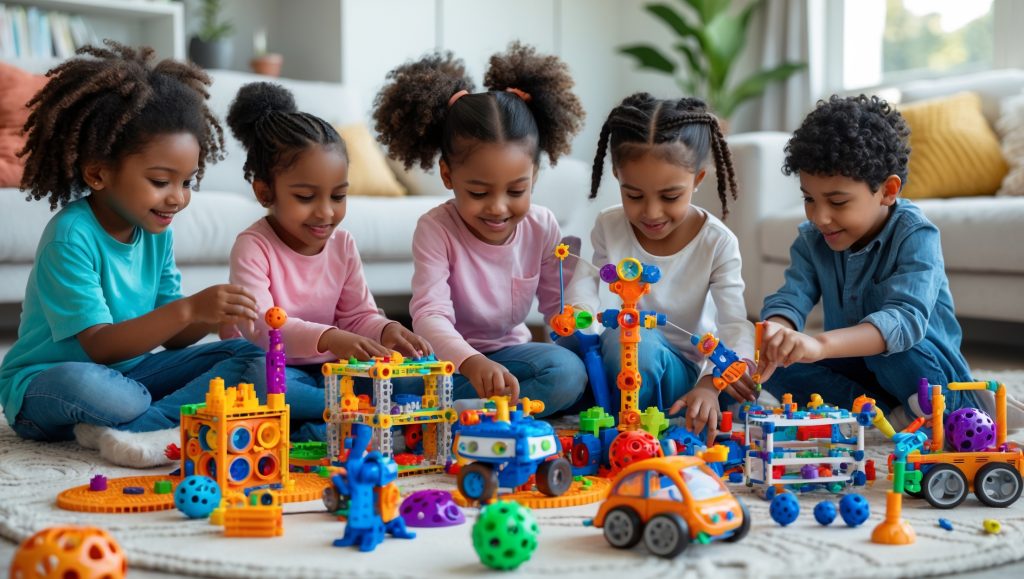
Introduction
In 2025, STEM (Science, Technology, Engineering, and Math) toys are more than just a trend—they’re essential tools for nurturing curiosity and critical thinking in children. As technology evolves and the need for problem-solving skills grows, families are turning to evidence-informed play experiences to set a strong foundation for lifelong learning. Whether your child is building their first tower of blocks, coding a simple robot, or experimenting with magnets, the right STEM toys can engage, inspire, and empower them at every age.
Why STEM Toys Matter for Child Development
STEM toys are intentionally designed to spark curiosity and creativity. By encouraging hands-on exploration, these toys help children develop skills that go far beyond the playroom. Here’s how STEM toys support children’s growth:
- Problem-Solving: Children learn to identify challenges and test solutions, improving their logical thinking and resilience.
- Fine Motor Skills: Building, connecting, and manipulating pieces helps refine coordination and dexterity.
- Collaboration: Many STEM toys encourage teamwork, communication, and social skills when children build or experiment together.
- Confidence: Completing a project or solving a puzzle boosts self-esteem and a sense of accomplishment.
- Lifelong Learning: Early positive experiences with STEM concepts can foster lasting interest in science and technology fields.
Choosing the Right STEM Toy: What to Look For
With thousands of options on the market, picking the best STEM toy for your child can feel overwhelming. Here’s a guide to help you make an informed decision:
1. Age Appropriateness
Check the manufacturer’s recommended age range, but also consider your child’s interests and abilities. Toys that are too advanced may frustrate, while overly simple toys may not hold attention.
2. Open-Ended Play
Look for toys that allow for creativity and multiple solutions, rather than only one “right” way to play. Open-ended toys adapt as your child grows.
3. Safety and Durability
Choose toys made from non-toxic materials and free of small parts for younger children. Durable construction ensures the toy can withstand enthusiastic play.
4. Evidence-Informed Design
Research toys designed in consultation with child development experts or backed by educational research. These toys are more likely to provide meaningful learning experiences.
5. Interest Alignment
Does your child love building, exploring nature, or solving puzzles? Choose STEM toys that connect with their passions, whether it’s engineering kits, beginner microscopes, or coding games.
Age-Based STEM Toy Recommendations in 2025
Every child’s interests and abilities are unique, but these general age guidelines can help you select engaging STEM toys for each stage of development:
Infants and Toddlers (0-3 Years)
- Stacking and Sorting Toys: Simple blocks, shape sorters, and large-scale puzzles encourage spatial awareness and coordination.
- Cause-and-Effect Toys: Toys that light up, make sounds, or move when touched help children understand basic scientific concepts.
Preschoolers (3-5 Years)
- Building Sets: Magnetic tiles and interlocking blocks promote engineering and creativity.
- Simple Science Kits: Early experiment sets (using water, color mixing, or magnets) introduce scientific inquiry in a safe way.
Early Elementary (6-8 Years)
- Robotics Kits: Basic programmable robots introduce coding and logical sequencing.
- Math Games: Board games or puzzles that incorporate counting, patterns, or number recognition.
- Nature Exploration Tools: Beginner-friendly microscopes or bug viewers encourage curiosity about the natural world.
Older Children (9+ Years)
- Advanced Engineering Sets: Kits with gears, motors, or more complex building challenges foster problem-solving.
- App-Connected Devices: Toys that integrate with tablets or smartphones to teach coding or digital design skills.
- Science Experiment Kits: Chemistry sets, physics kits, or electronics projects allow for deeper exploration.
Making the Most of STEM Toys: Tips for Families
STEM toys are most effective when they’re part of a supportive, play-rich environment. Here are some strategies to maximize their impact:
- Engage in Play Together: Participate in your child’s play, ask open-ended questions, and celebrate their discoveries.
- Encourage Trial and Error: Allow mistakes and experimentation. Learning through failure is a key part of STEM thinking.
- Balance Structure and Freedom: Provide guidance when needed, but give children space to explore on their own.
- Incorporate Real-World Connections: Relate STEM concepts to everyday experiences, such as measuring ingredients while cooking or observing plants in the backyard.
- Rotate Toys: Keeping only a few options available at a time can boost interest and reduce overwhelm.
Common Mistakes
- Choosing toys that are too advanced or too simple for your child’s developmental stage.
- Focusing solely on high-tech or expensive gadgets instead of quality, hands-on learning experiences.
- Over-scheduling structured play, leaving little room for open-ended exploration.
- Assuming STEM toys are only for children interested in science or math—these toys benefit all learners.
- Neglecting to supervise play for safety, particularly with kits containing small parts or electronic components.
- Expecting immediate results; some skills take time and repeated play to develop.
- Forgetting to celebrate effort and creativity, not just completed projects.
Quick Checklist
- Is the toy age-appropriate and aligned with my child’s interests?
- Does it encourage open-ended, hands-on play?
- Are the materials safe and durable?
- Is the toy designed with educational value in mind?
- Will it grow with my child or adapt to new skills?
- Am I prepared to engage in play, offer guidance, and supervise as needed?
- Have I set realistic expectations for learning and fun?
FAQ
+What are the most important features to look for in a STEM toy?
+How can I tell if a STEM toy is truly educational?
+Are STEM toys only for children interested in science and math?
+How much should I spend on a good STEM toy?
+Can toddlers benefit from STEM toys?
+How can I encourage my child to use STEM toys more often?
+Do STEM toys replace the need for outdoor or imaginative play?
Conclusion
STEM toys in 2025 are powerful tools for nurturing young minds, setting the stage for a lifetime of curiosity, problem-solving, and confidence. By choosing evidence-informed, age-appropriate toys and engaging in play alongside your child, you can help them build skills that go far beyond the playroom. Remember, the best STEM toy is one that sparks joy and discovery—no matter your child’s age or interests. The journey of learning begins with play, and every block stacked or robot coded is a step toward a brighter future.

STEM Toys in 2025: Empowering Young Minds Through Play
STEM toys have become a cornerstone of modern parenting, offering children the opportunity to learn science, technology, engineering, and math concepts in a playful, hands-on way. In 2025, the landscape of STEM toys is more exciting than ever. Today’s toys are not only smarter and more interactive, but they are also designed to nurture creativity, problem-solving, and collaboration. From coding robots that respond to a child’s voice to eco-friendly engineering kits, these toys invite kids to experiment, fail, and try again—key skills for the future. As parents, choosing STEM toys means fostering curiosity and resilience while making learning an adventure. The best part? Many of these toys are designed for family play, encouraging meaningful connections and shared discoveries. By integrating learning with fun, STEM toys in 2025 are shaping a generation of confident, innovative thinkers. Investing in these tools is investing in your child’s future, one playful moment at a time.
- Encourage critical thinking and creativity through hands-on play
- Look for toys that grow with your child, offering new challenges
- Choose options that support both solo and family playtime
- Prioritize toys that introduce real-world problem solving
I noticed you mention age appropriateness for STEM toys, but what if my child seems really advanced for their age group? For example, my toddler is already stacking blocks meant for older kids. Should I move up to more complex toys, or is it better to stick with recommendations?
It’s wonderful that you’re noticing your child’s advanced skills and want to support their growth. If your toddler is safely mastering toys for older kids, you can gradually introduce more complex options while closely supervising play to watch for small parts or sharp edges that could pose a risk. Offer toys just one level up and observe how your child manages new challenges. Keep an eye on their frustration level and help as needed, making sure play stays fun. Always check safety guidelines, as age recommendations are often based on safety as well as skills. This isn’t medical advice; if you’re concerned, check in with your pediatrician.
My child is very sensitive to certain textures and sounds. Are there specific types of STEM toys or materials that work better for children with sensory sensitivities but still support fine motor skill development?
It’s thoughtful of you to support your child’s sensory needs while encouraging fine motor skills. Try STEM toys made from smooth, soft, or silicone materials rather than those with rough or unpredictable textures. Opt for quiet, non-electronic options like large interlocking blocks, magnetic tiles, or shape-sorters that require manipulation but don’t make loud noises. Sensory bins with dry rice or beans can be swapped for soft fabric or water beads if tolerated, always under close supervision. Choose larger pieces to reduce choking risk, and avoid toys with strong scents or flashing lights. This isn’t medical advice; if you’re concerned, check in with your pediatrician.
My child has a habit of carrying toys around and sometimes drops pieces in unexpected places. Is there a practical way to regularly check for lost small parts or keep track of them to help prevent choking accidents?
It’s understandable to want to keep your child safe while they explore with toys. Try designating a basket or bin for toys with small parts and set a routine—such as a quick daily check—to gather loose pieces. Involve your child by making a game of cleaning up together, which helps teach responsibility. Stick to age-appropriate STEM toys; for children under three, avoid toys with parts small enough to fit through a toilet paper roll. Always supervise play with small pieces. This isn’t medical advice; if you’re concerned, check in with your pediatrician.
You mention the importance of age-appropriate STEM toys, but how flexible should parents be if their child is ahead or behind the recommended age range? Are there risks or benefits to introducing certain toys earlier or later than suggested?
It’s great that you’re thinking about matching toys to your child’s abilities. If your child is ahead, you can cautiously try toys meant for older kids, but watch for small parts, choking hazards, or skills that need more maturity—always supervise closely. If your child is behind, stick with simpler toys to avoid frustration and build confidence. The right fit helps learning feel fun rather than stressful. Age ranges are guidelines, not rules, but safety and enjoyment should come first. This isn’t medical advice; if you have concerns, talk with your pediatrician.
Both sets of grandparents like to get involved in playtime, but sometimes they are unsure about STEM toys that use technology or screens. Are there screen-free STEM toys you recommend that still encourage problem-solving and bonding during family visits?
It’s wonderful that both sets of grandparents want to be involved, and it’s common to feel unsure about screen-based toys. For screen-free STEM play, consider classic building sets like wooden blocks or magnetic tiles, which encourage teamwork and creative problem-solving. Simple science kits (age-appropriate and non-toxic) offer hands-on exploration with adult guidance. Board games focused on logic or math can spark discussion and bonding. Always check for small parts if little ones are present, and supervise activities for safety. This isn’t medical advice; if you’re concerned, check in with your pediatrician.
When introducing stacking and sorting STEM toys during mealtime in the high chair, how do you suggest minimizing the mess while still letting my 10-month-old explore independently? I am trying to encourage self-feeding but worry about toys getting sticky or unsanitary.
It’s wonderful that you’re supporting both self-feeding and independent play at this age. To minimize mess, try offering only a few washable, non-porous stacking or sorting toys at a time, and keep them on a clean tray separate from food. Wipe the toys before and after meals, and choose those large enough to avoid choking hazards. Limit food and toy contact by alternating short play and eating periods. Always supervise closely to keep things safe and hygienic. This isn’t medical advice; if you’re concerned, check in with your pediatrician.
I have concerns about the safety of electronic STEM toys, especially those with batteries or magnets, for younger kids. Are there specific certifications or materials I should be looking for when choosing safe options for a two-year-old?
You’re right to be cautious: younger children are especially vulnerable to risks from batteries, magnets, and small parts. For a two-year-old, always look for toys labeled as compliant with ASTM F963 (US) or EN71 (EU) safety standards, which cover electronics and materials. Choose toys with securely enclosed batteries and avoid any product with loose magnets or detachable small pieces. Check for sturdy construction and non-toxic, BPA-free plastics or hardwoods. Always supervise play with electronic toys at this age. This isn’t medical advice; if you’re concerned, check in with your pediatrician.
Do you recommend building sets over basic coding games for a 4-year-old’s development, or is it better to rotate between different STEM toy types to keep things balanced?
It’s wonderful that you’re thinking about how different STEM toys support your child’s growth. For a 4-year-old, rotating between building sets and simple coding games is usually best—this way, they get hands-on problem-solving with blocks and early logic skills from coding. Try a few days with building toys, then switch to unplugged coding games that focus on movement or sequencing, always supervising play with small parts. At this age, balance keeps play fresh and covers more learning areas. This isn’t medical advice; if you’re concerned, check in with your pediatrician.
I have a child with some sensory sensitivities, especially to loud sounds or certain textures. Are there particular types of STEM toys you would recommend that are engaging without being overwhelming for kids who might need a more gentle sensory experience?
It’s wonderful that you’re considering your child’s sensory needs while supporting their learning. Look for STEM toys made from soft, smooth materials and without loud sounds or flashing lights—wooden building sets, large interlocking blocks, or simple cause-and-effect toys can be great choices. Sensory bins with dry beans or rice (supervised and age-appropriate to avoid choking) can encourage exploration without harsh textures. Opt for toys that don’t require batteries or have adjustable volume. Always supervise play, avoid small parts for younger children, and wash materials if allergies are a concern. This isn’t medical advice; if you’re concerned, check in with your pediatrician.
My 2-year-old seems to get frustrated easily when a toy is a bit challenging. How can I tell if a STEM toy is too advanced or just right for encouraging problem-solving without causing her to lose interest?
It’s completely normal to worry about your little one’s frustration with new toys. For a 2-year-old, pick STEM toys that are labeled for her age and have simple, chunky pieces she can grasp safely. Watch if she shows interest, tries different things, and can succeed with a bit of help—these are signs the toy is a good fit. If she mostly throws, ignores, or cries about it, it might be too advanced. Play alongside her to gently guide and celebrate small successes. This isn’t medical advice; if you’re concerned, check in with your pediatrician.
If my child is outgrowing their current STEM toys but we do not have space for bigger sets, how can I adapt or rotate a small collection to keep things engaging and age-appropriate?
It’s great that you want to keep STEM play engaging as your child grows. Try rotating toys every week or two to make old favorites feel fresh. Combine pieces from different sets to create new challenges or invent your own building prompts together. Encourage open-ended play by inviting your child to solve real-world problems using their toys. For older children, add simple household items, like paper or rubber bands, for added complexity—just supervise for safety if there are small parts. This isn’t medical advice; if you’re concerned, check in with your pediatrician.
You mention safety and durability, which I appreciate. Are there particular materials or finishes I should avoid or look for in STEM toys for a child who prefers soft or non-scratchy textures?
It’s great that you’re thinking about comfort and safety for your child’s sensory preferences. For soft or non-scratchy textures, look for STEM toys made from BPA-free silicone, smooth wood with non-toxic finishes, or soft fabrics. Avoid toys with rough seams, hard plastic edges, or painted surfaces that might chip. Always check for certifications like ASTM or EN71 for safety assurance. For toddlers and preschoolers, ensure there are no small parts that could be a choking hazard. This isn’t medical advice; if you’re concerned, check in with your pediatrician.
Sometimes, my child prefers sensory experiences and avoids toys with lots of lights or sounds. Are there STEM toy recommendations for kids who can be sensitive to noise or who like tactile play instead of electronic gadgets?
It’s thoughtful to notice your child’s sensory preferences. For kids who are sensitive to noise or drawn to tactile play, try STEM toys made of natural materials, like wooden building blocks or magnetic tiles, which offer hands-on learning without loud sounds. Sensory bins with safe objects to scoop, pour, or stack can encourage exploration. Simple science kits focused on mixing, molding, or growing (like clay, kinetic sand, or seed planting) are also engaging. Always check that small parts are age-appropriate and supervise play with messy or tiny items. This isn’t medical advice; if you’re concerned, check in with your pediatrician.
Do you have any advice for parents on choosing between open-ended STEM toys and more traditional educational toys when working within a budget or limited playroom space? Which tend to offer more lasting value as children grow?
It’s thoughtful to weigh lasting value when space and budget are limited. Open-ended STEM toys usually adapt with your child’s growing skills, offering more ways to play and learn over the years compared to single-purpose traditional toys. Look for safe, age-appropriate sets like building blocks or magnetic tiles that encourage creative problem-solving. Involve your child in choosing a toy that matches their current interests but can also be used in new ways as they mature. Rotate toys to keep play fresh without overcrowding. This isn’t medical advice; if you’re concerned, check in with your pediatrician.
I find that some STEM kits come with a lot of small pieces or need regular adult supervision. Do you have tips on how to manage storage and keep things organized, especially when sharing space with siblings of different ages?
You’re thoughtful to consider both safety and organization, especially with siblings of different ages. Try storing STEM kits in clear, labeled containers and keep small pieces out of reach of younger children. Designate specific times and a supervised area, like the kitchen table, for using kits with tiny parts. After playtime, do a quick group clean-up to make sure nothing is left behind. For shared spaces, use higher shelves or locked bins for kits that aren’t age-appropriate for everyone. This isn’t medical advice; if you’re concerned, check in with your pediatrician.
You mention non-toxic materials and durability in your safety tips. Aside from age recommendations, what are some other red flags parents should look out for when shopping for STEM toys for children under three to reduce choking risks?
It’s great that you’re prioritizing safety for your little one. When choosing STEM toys for children under three, watch for loose or detachable parts smaller than 1.25 inches in diameter, as these can be choking hazards. Avoid toys with batteries that are easily accessible, since they can be dangerous if swallowed. Check for seams or pieces that could break off with chewing or rough play. Make sure all surfaces are smooth, without sharp edges or points. Finally, even non-toxic materials can be a concern if a toy smells strongly or leaves residue on hands. This isn’t medical advice; if you’re concerned, check in with your pediatrician.
You mention choosing toys based on age appropriateness, but my son seems a bit ahead for his age group and gets bored quickly. Is it okay to introduce more challenging STEM toys earlier than the suggested age, as long as they are safe?
It’s great that you want to keep your son engaged and challenged. If he shows readiness and interest, you can introduce slightly more advanced STEM toys, but be sure to check for any small parts or features that could pose a choking or safety risk, especially if he’s under 3. Always supervise play with new toys and start with adult-guided exploration before allowing independent use. Watch for signs of frustration or overwhelm, and adjust as needed. This isn’t medical advice; if you’re concerned, check in with your pediatrician.
My child tends to get overwhelmed by toys with lots of lights or sounds. Are there STEM toys in 2025 designed to support learning that focus on quieter, sensory-friendly experiences?
It’s completely understandable to want quieter, sensory-friendly STEM toys for your child. Look for toys that focus on hands-on building, simple machines, or open-ended exploration—like stacking blocks, magnetic tiles, or science kits with tactile materials. Opt for toys made of soft, natural materials with muted colors and minimal extra features. Always check age recommendations to avoid small parts and supervise play if your child is under three. This isn’t medical advice; if you’re concerned, check in with your pediatrician.
How do you suggest fitting hands-on STEM activities into a routine for very active toddlers? Are there recommended ways to balance STEM play with their need for physical movement or outdoor time?
You’re wise to think about balancing hands-on STEM play with your toddler’s energy and need to move. Try setting up short, active STEM activities—like building a block tower and then knocking it down, or exploring water play with measuring cups outside. Rotate between focused play and movement, such as five minutes of a simple STEM puzzle, then some dancing or running. Take STEM toys outdoors for nature-based experiments, like collecting leaves or rocks. Always supervise closely to ensure safety with small parts and materials suitable for toddlers. This isn’t medical advice; if you have concerns about your child’s development or play, please check in with your pediatrician.
Can you offer advice for children who get overwhelmed by too many choices or bright lights and sounds? Are open-ended STEM toys better than electronic ones for kids with sensory sensitivities?
It’s thoughtful to consider how sensory input and choice can affect your child’s playtime. For children sensitive to lights, sounds, or lots of options, start by offering just one or two toys at a time in a calm space. Choose open-ended STEM toys made of safe, non-toxic materials with smooth textures—these usually allow creative play without overstimulation. Avoid toys with flashing lights or loud noises unless your child enjoys them. Always supervise play and watch for any small parts if your child is under three. This isn’t medical advice; if you’re concerned, check in with your pediatrician.
My child can get easily overwhelmed by toys with lots of sounds or flashing lights. Are there quieter STEM toy recommendations you’d suggest for kids who are a bit sensitive to sensory input?
It’s very thoughtful of you to look for toys that fit your child’s sensory needs. For kids sensitive to noise or lights, try open-ended STEM toys like simple wooden building blocks, magnetic tiles, or gears sets without electronic parts. Puzzles, stacking cups, and hands-on science kits with tactile elements but no flashing lights can also encourage STEM skills gently. Always check age recommendations, avoid small parts for younger children, and supervise as needed. This isn’t medical advice; if you’re concerned, check in with your pediatrician.
For families on a budget raising bilingual children, is it better to invest in a few high-quality STEM toys for winding down at nap or bedtime, or to stick with more traditional calming bedtime activities in both languages?
It’s wonderful that you’re thinking about both your child’s STEM learning and their bilingual development, especially on a budget. For winding down at nap or bedtime, traditional calming activities like reading stories, singing lullabies, or gentle conversation in both languages tend to be more soothing and support language skills. Save STEM toys for active playtimes, since their interactive features can be too stimulating before sleep. If you choose STEM toys, select quiet, screen-free options without small parts for younger children, and use them earlier in the day. This isn’t medical advice; if you’re unsure what’s best for your child’s sleep or development, consider checking in with your pediatrician.
My baby is 9 months old and already enjoys stacking cups, but I’m concerned about small parts as we start exploring more STEM toys. Are there specific safety certifications or labels I should look for to make sure everything is appropriate at this age?
It’s great that you’re being cautious about toy safety as your baby explores new STEM toys. For 9-month-olds, always check that toys are labeled as suitable for ages 0–12 months or 6–18 months. Look for safety certifications like ASTM F963 (in the US) or CE marking (in Europe), which mean the toy meets specific safety standards. Avoid toys with small parts or pieces that could detach, and ensure everything is too large to fit in your baby’s mouth. Supervise play to prevent choking or misuse. This isn’t medical advice; if you’re concerned, check in with your pediatrician.
My child can be sensitive to certain materials and textures. Are there particular types of STEM toys or brands that are better for children who have mild sensory sensitivities?
It’s thoughtful that you’re considering your child’s sensory needs when choosing STEM toys. First, look for toys made from smooth, non-toxic plastics or silicone, avoiding rough wood or scratchy fabrics. Second, select brands that list materials clearly, such as Fat Brain Toys or Learning Resources, which often design for sensory comfort. Third, opt for larger pieces to reduce choking risks and avoid toys with strong scents or sticky textures. Always supervise play and introduce new toys gradually, watching for any discomfort. This isn’t medical advice; if you’re concerned, check in with your pediatrician.
Could you clarify how manufacturers determine which toys are safe from a choking hazard, especially with STEM sets that often contain lots of loose parts? Is there a particular label or standard that parents should look for in 2025?
Your concern about choking hazards with STEM toys is completely understandable. Manufacturers follow established safety standards, such as ASTM F963 in the US and EN71 in Europe, which include tests for small parts that could pose a risk to children under 3. Look for labels like ‘Not for children under 3 years’ and certifications such as the CE mark or ASTM compliance. Always check age recommendations and supervise play, especially with kits containing loose components. This isn’t medical advice; if you’re concerned, check in with your pediatrician.
Do you have any advice for families with limited playroom space when it comes to selecting STEM toys? Are there specific types or brands that combine multiple functions or age ranges so we can minimize clutter but still offer variety?
It’s great that you want to encourage STEM learning, even with limited space. Look for compact STEM kits that combine several activities in one box, such as magnetic building sets or modular robotics kits suitable for your child’s age. Choose toys with adjustable difficulty, so they grow with your child and reduce the need for frequent replacements. Stackable or collapsible storage bins help keep everything tidy and accessible. Always check for age-appropriate pieces to avoid choking hazards and supervise play for younger children. This isn’t medical advice; if you’re concerned, check in with your pediatrician.
When packing for a long car ride with my 2-year-old, should I focus on stacking blocks or shape sorters for both entertainment and skill development? Do you think switching between a couple of different STEM toys is more beneficial or could it be overwhelming at this age?
It’s great that you want your car ride to be both fun and stimulating for your toddler. For a 2-year-old, both stacking blocks and shape sorters can support fine motor skills and problem-solving, but too many options at once may feel overwhelming in a confined space. I suggest bringing just one or two simple toys and switching them out halfway through the trip to keep things fresh. Opt for larger, soft pieces that are safe and easy to manage during travel, and supervise closely to prevent any choking hazards. This isn’t medical advice; if you’re concerned, check in with your pediatrician.
Budget can be tight for many families. Can you recommend a few types of STEM toys that offer great value and can be used in multiple ways, so I am not constantly having to buy new playthings for my three-year-old?
It’s wonderful that you want to give your three-year-old enriching play experiences while being mindful of your budget. Look for classic building blocks or magnetic tiles—these can be stacked, sorted by color or shape, and used for imaginative play for years. Simple gears or interlocking discs are also versatile and support problem-solving skills. Household items, like measuring cups or cardboard tubes, can be turned into homemade STEM activities too. Always check for age recommendations and avoid small parts to ensure safety for young children. This isn’t medical advice; if you’re concerned, check in with your pediatrician.
I noticed you mentioned the importance of choosing evidence-informed STEM toys designed with input from child development experts. How can parents easily identify which toys are actually based on research when so many brands make educational claims?
It’s great that you want to make sure the STEM toys you pick are truly beneficial for your child. Try these steps: First, look for toys with information about collaboration with child psychologists, educators, or STEM organizations—this is usually noted on packaging or brand websites. Second, check if the toy’s description lists clear learning objectives or specific skills targeted, not just buzzwords. Third, seek out independent awards or certifications from reputable educational groups. For younger children, make sure the toys are age-appropriate and safe, with no small parts or choking hazards. This isn’t medical advice; if you’re concerned, check in with your pediatrician.
Our family is on a tighter budget, so I wonder if you have any suggestions for affordable STEM toys that still hit all the marks for development, or even tips for DIY options that support the same skills you mentioned?
It’s wonderful that you want to nurture STEM skills even with budget constraints. Simple household items can make great DIY STEM toys—try building towers with recycled boxes, sorting objects by size or color, or making ramps with cardboard to explore physics. Look for affordable building sets or puzzle games at thrift stores, and choose kits without small parts if your child is under three. Everyday kitchen science, like mixing safe ingredients to make playdough, can also encourage curiosity. This isn’t medical advice; if you’re concerned about any activity or material, check in with your pediatrician.
You mentioned the importance of safety and durability in STEM toys. Do you have suggestions for specific materials or brands that are reliably safe for infants who are still in the mouthing stage and like to chew on everything?
It’s completely understandable to prioritize safety when your infant puts everything in their mouth. For this stage, look for STEM toys made from BPA-free, food-grade silicone or natural, untreated wood with smooth finishes—these materials are safe and durable for mouthing. Brands like Green Toys and Hape are often praised for using non-toxic paints and sturdy materials, but always double-check for age ratings (0–12 months) and certifications like ASTM or EN71. Inspect toys regularly for loose parts or wear. As always, this isn’t medical advice; if you’re concerned, check in with your pediatrician.
Do you have advice on how to work STEM play into a daily routine for a toddler who easily loses interest or gets overwhelmed with too many toy options? I want to create a positive environment without overstimulating my child.
It’s great that you’re tuned in to your toddler’s needs and want to nurture a positive play environment. Try offering just one or two simple STEM toys at a time, rotating options every few days to keep things fresh but not overwhelming. Set up a calm, clutter-free play space and join them for a few minutes, modeling curiosity and exploring together. Let your child lead—if they lose interest, it’s okay to pause and return later. For toddlers, choose toys with large pieces and safe materials, always supervising play. This isn’t medical advice; if you’re concerned, check in with your pediatrician.
If our daycare allows some toys from home, but space is limited, are there particular STEM toys for one-year-olds that you recommend as compact and still engaging enough to support development?
It’s great that you want to support your one-year-old’s development with STEM toys, even in a small daycare space. For this age, consider sturdy nesting cups, simple stacking rings, or soft blocks—these are compact, safe for mouthing, and encourage early problem-solving and motor skills. Avoid toys with small parts or batteries, and choose washable materials. Supervision is important at this age to prevent choking hazards. This isn’t medical advice; if you have concerns about safety or development, check in with your pediatrician.
Our daily routine is already pretty full. Is there an ideal amount of time I should aim to let my 2-year-old play with STEM toys each day to get the developmental benefits the article describes?
It’s understandable to feel stretched when routines are busy and you want the best for your child. For a 2-year-old, even 10–20 minutes of focused play with age-appropriate STEM toys each day can support early problem-solving and curiosity. Try making it part of something you already do, like after snack time or before bath. Let your child lead the play, and supervise closely to ensure safety, especially with small parts or new materials. Remember, everyday moments—like stacking blocks or exploring water—count, too. This isn’t medical advice; if you’re concerned, check in with your pediatrician.
Could you elaborate on what makes a toy genuinely open-ended for very young children? Sometimes it is hard to tell if a toy offers enough ways to play or is mostly just stacking or sorting in one way.
You’re right—it can be tricky to figure out if a toy truly encourages creativity for little ones. For very young children, a genuinely open-ended toy is safe, simple, and can be used in many ways: for example, soft blocks can be stacked, lined up, or used in pretend play. Look for toys without set rules or only one solution, and notice if your child can use the toy differently each time. Materials like plain wooden shapes, scarves, or nesting cups allow for imaginative exploration. Always make sure toys are age-appropriate, with no small parts or choking hazards for children under three. This isn’t medical advice; if you’re concerned, check in with your pediatrician.
With twins on completely opposite nap schedules, I am wondering if you have any tips for introducing STEM toys that work well for solo play as well as when they are awake together. Are there certain types that are more flexible for independent versus collaborative use?
It’s understandable to want STEM toys that fit both solo and shared play, especially with twins on different schedules. Look for open-ended toys like building blocks, magnetic tiles, or simple coding robots—these can be explored alone or together. When only one child is awake, offer puzzles or self-guided activity kits appropriate for their age and ensure small parts are kept away from younger children. When both are up, encourage teamwork with challenges or projects. Always supervise to ensure safe play, especially with small pieces. This isn’t medical advice; if you’re concerned, check in with your pediatrician.
You mention choosing toys that match a child’s interests and abilities rather than just going by age. If my child is almost three but isn’t into typical stacking or sorting toys, are there STEM toys that might be better suited for his developmental level even if they’re labeled for a younger or older age?
You’re thoughtful to consider your child’s unique interests when choosing toys. If he isn’t drawn to classic stacking or sorting toys, try options like simple cause-and-effect STEM toys (like pop-up toys or light-up buttons), interactive storybooks with sounds, or basic building sets with large, easy-to-grasp pieces. Watch for toys with engaging features—music, movement, or sensory textures—that match his current skills, regardless of the suggested age. Always check for small parts and supervise play to ensure safety. This isn’t medical advice; if you’re concerned, check in with your pediatrician.
With so many STEM toys available, how can I tell if an open-ended toy truly supports evidence-based learning, or if it’s just being marketed that way? Are there signs or certifications I should look for?
It’s great that you’re looking for toys that genuinely support your child’s development. First, check if the toy encourages creativity, exploration, and problem-solving—not just following instructions. Look for toys that grow with your child, offering new challenges as they age. Certifications like STEM.org Authenticated or endorsements from educational organizations can be helpful, but always read the fine print. Read reviews from educators or child development experts, not just marketing claims. Make sure materials are age-appropriate, free of small parts for younger kids, and safe for hands-on play. This isn’t medical advice; if you’re concerned, check in with your pediatrician.
Some STEM toys come with removable accessories or expansion sets. For families with both older and younger children, what’s the best way to manage these mixed-age toys to keep small parts away from little ones without limiting the older kids’ play?
You’re right to be mindful about small parts around younger children. First, create a clear storage system by using separate, labeled bins—older kids’ STEM items with small parts go in containers out of younger children’s reach. Second, set up a designated play area or table just for older children, and supervise play when small pieces are used. Third, teach older siblings about the importance of putting pieces away right after play. Finally, double-check toy age recommendations and regularly inspect expansion sets to ensure nothing unsafe is left loose. This isn’t medical advice; if you’re concerned, check in with your pediatrician.
Budget is a concern with two little ones. Are lower-cost STEM toys, like basic blocks or homemade activities, just as effective for supporting development? Or should I look for specific features that make the investment in pricier STEM sets worthwhile for toddlers?
It’s understandable to want effective options that fit your budget, especially with two young children. Simple toys like basic wooden blocks, stacking cups, or even homemade games can absolutely support STEM skills such as problem-solving, creativity, and spatial awareness. For toddlers, look for age-appropriate pieces—large, safe, and easy to handle—to avoid choking hazards. You can also use household items for sorting, counting, and building together. Higher-priced STEM sets may offer more complexity, but at this age, hands-on exploration is most important. This isn’t medical advice; if you have developmental concerns, please reach out to your pediatrician.
Sometimes my child likes toys meant for older or younger ages than their own. Is it okay to adjust the recommended age range if a toy seems to match their interests and abilities, or should I always stick to the guidelines you described?
It’s great that you’re tuned in to your child’s interests and abilities. Age guidelines on STEM toys are mainly for safety—like small parts or batteries for younger kids, or complexity that could frustrate little ones. If your child seems ready for a more advanced toy, supervise closely and check for any parts that could be a choking hazard or pose another risk. For toys made for younger ages, make sure they’re still engaging and not boring. Always trust your judgment, but prioritize safety. This isn’t medical advice; if you’re concerned, check in with your pediatrician.
How can I tell if a STEM toy is genuinely evidence-informed or just marketed that way? Are there certifications or organizations that parents should look out for in 2025?
It’s very thoughtful of you to want truly evidence-based STEM toys for your child. First, look for toys endorsed by reputable organizations like the National Science Teachers Association or meeting standards from the ASTM International. Second, check if the toy’s packaging or website cites research or expert involvement in its development. Third, pay attention to certifications such as STEM.org Authenticated, which reviews educational value. Finally, consider age-appropriateness and test for safety labels, especially for younger children. This isn’t medical advice; if you’re concerned, check in with your pediatrician.
My child seems to get overstimulated by toys with bright lights and loud sounds, especially in the evening. Do you have suggestions for quieter, sensory-friendly STEM options that still support development?
It’s understandable to want to support your child’s development while also keeping their environment calming. You might try open-ended STEM toys made of wood or soft silicone, like simple building blocks, gears, or magnetic tiles without lights or sounds. Consider sensory-friendly puzzles or activity boards for quiet exploration. Look for options with smooth textures and muted colors, and supervise play to ensure pieces are safe for your child’s age. Quiet STEM kits—such as beginner coding cards or nature-themed sorting games—can also be engaging without overstimulating. This isn’t medical advice; if you’re concerned, check in with your pediatrician.
For a two-year-old who easily gets frustrated with puzzles, would you recommend starting with stacking or sorting toys as an introduction to STEM play, or is it better to wait until they show more interest in problem-solving activities?
It’s completely normal to want to support your two-year-old’s early problem-solving skills, especially if puzzles feel overwhelming right now. Stacking and sorting toys are wonderful introductions to STEM play at this age—they’re simpler, offer quick successes, and help build confidence. Try offering chunky blocks or large, easy-to-grasp shapes and play alongside your child, celebrating small achievements. Keep sessions short and stop before frustration builds. Supervise closely to ensure safe play with age-appropriate toys free of small parts. This isn’t medical advice; if you’re concerned, check in with your pediatrician.
You mention safety and durability as key factors when selecting STEM toys, especially with infants and toddlers. What are some non-obvious hazards parents should watch out for beyond small parts or choking risks?
You’re right to think beyond obvious hazards when choosing STEM toys for little ones. Consider these less-obvious risks: 1) Batteries, magnets, or electronics can be hidden inside toys—ensure battery compartments are securely fastened and magnets are inaccessible. 2) Check for sharp edges or seams that could scratch sensitive skin. 3) Avoid toys with easily detachable stickers or labels, as babies may try to chew or swallow them. 4) Be cautious with toys containing liquids or gels, which could leak. 5) Some materials may contain allergens or toxic paints; look for toys labeled as free from BPA, phthalates, and lead. This isn’t medical advice; if you’re concerned, check in with your pediatrician.
I really like the point about finding STEM toys aligned with my child’s interests, but what if their preferences change quickly? How often should I introduce new toys or rotate them to keep up with those shifts without overwhelming them?
It’s great that you want to support your child’s changing interests—flexibility is so important at this age. Try rotating a few toys at a time every couple of weeks, watching how your child engages. Keep a small, accessible selection out, and store the rest to reduce clutter and overwhelm. Before adding new toys, see if current ones can be used in fresh ways linked to their new interests. For young children, avoid toys with small parts or potential allergens, and always supervise play. This isn’t medical advice; if you’re concerned, check in with your pediatrician.
As a parent on a budget, are there any specific STEM toys for toddlers that offer long-lasting play value, or do you have tips for finding affordable options that still promote the skills you mention?
It’s great that you’re looking to support your toddler’s development while staying mindful of your budget. Look for open-ended STEM toys like basic building blocks or simple shape sorters—they encourage creativity and problem-solving and can be used in many ways as your child grows. Check local libraries or toy-lending programs for access to quality toys without purchasing new ones. Garage sales and online community groups often offer gently used toys at a fraction of the cost. For toddlers, always choose toys with large, non-chokable pieces and avoid small parts. This isn’t medical advice; if you’re concerned, check in with your pediatrician.
I noticed the article talks about evidence-informed design. How can parents identify if a STEM toy is actually developed with child psychologists or educators, and not just marketed that way?
That’s a thoughtful question—many parents want to make sure toys truly support healthy development. First, look for details on the packaging or website about who contributed to the toy’s design, such as child psychologists or educators. Second, check if the toy references specific learning goals or developmental milestones. Third, see if reputable educational organizations or experts endorse the toy. Fourth, read reviews from other parents or professionals. Always prioritize toys that are age-appropriate, free from small parts for young children, and meet safety standards. This isn’t medical advice; if you’re concerned, check in with your pediatrician.
If my child seems to get frustrated quickly with cause-and-effect toys, should I try to set a specific playtime routine with STEM toys, or would it be better to let them explore only when they seem interested?
It’s understandable to want to help your child feel more comfortable with STEM toys, especially if frustration comes up. For younger kids, following their interest and letting them choose when to play supports positive associations. You might keep STEM toys accessible and offer to play together, gently modeling how to use them without pressure. If you do try a routine, keep sessions short and relaxed; end on a positive note, and praise effort rather than results. Always supervise play to ensure age-appropriateness and safety, particularly with small parts. This isn’t medical advice; if you’re concerned, check in with your pediatrician.
Do you have tips for storing bulky STEM toys, like big blocks or nature exploration sets, in a small apartment? We want to encourage exploration but are limited on space.
You’re doing a wonderful job nurturing curiosity, even with space constraints. For bulky STEM toys, try stackable bins or clear under-bed containers to maximize vertical and hidden storage. Use open shelving at your child’s eye level to keep favorites accessible while rotating less-used toys into storage. Hanging mesh organizers or wall-mounted baskets can also save floor space and keep items tidy. Always check that storage is sturdy and secured to prevent tipping or accidental access to small parts by younger kids. This isn’t medical advice; if you’re concerned, check in with your pediatrician.
A lot of STEM toys seem to come with electronics, lights, or sounds. For families focused on sensory-friendly environments, are there specific STEM toys you recommend that support learning but avoid overstimulating features?
It’s wonderful that you’re seeking sensory-friendly STEM toys for your child. Consider options like wooden building blocks, simple magnetic tiles, or basic science kits that use household items—these foster hands-on exploration without bright lights or loud noises. Look for toys with muted colors and varied textures for tactile learning. For younger children, ensure all pieces are large enough to avoid choking and are free from sharp edges or toxic materials. Always supervise play, especially with small parts or new materials. This isn’t medical advice; if you’re concerned, check in with your pediatrician.
You mention following the manufacturer’s recommended age range for STEM toys, but my daughter shows interest in puzzles meant for slightly older kids. Is it okay to try more advanced toys if I supervise her closely, or could that be too frustrating at two years old?
It’s wonderful that you want to nurture your daughter’s curiosity with more advanced puzzles. If you choose toys meant for older kids, close supervision is important, especially to watch for small pieces that could be a choking hazard. Try introducing the puzzle together, offering gentle guidance and celebrating small successes to keep things positive. If she seems frustrated or loses interest quickly, it’s okay to put it aside and try again later. Two-year-olds are still developing fine motor skills and patience, so go at her pace. This isn’t medical advice; if you’re concerned, check in with your pediatrician.
I noticed the article mentions fine motor skill development with STEM toys, especially with activities like building and connecting pieces. Could you give examples of simple household objects or tools that parents can safely use with toddlers to help practice these skills along with store-bought toys?
You’re thoughtful to look for ways to support your toddler’s fine motor skills at home. Alongside STEM toys, try giving your child large plastic cups to stack, chunky wooden blocks to build, or safe kitchen utensils like big spoons for scooping beans or pasta. Jumbo crayons or sidewalk chalk are great for grip practice. Always supervise closely to avoid choking hazards or sharp edges, and choose objects that are too large to swallow. This isn’t medical advice; if you have concerns about your child’s development, please check in with your pediatrician.
When I watch my neighbor’s child, sometimes the toys that seem to fit her age end up being either too simple or too tricky. If a child’s abilities are ahead or behind what’s typical for their age group, how much should we adjust when choosing a STEM toy?
You’re thoughtful to notice that a child’s interests and abilities don’t always match their age. Start by observing how she interacts with toys—if she’s bored or frustrated, try options just a little above or below her age group. Offer toys with open-ended play, like building sets or simple robotics, which can be adapted to different skill levels. Always check for small parts and materials to ensure they’re safe for her age. Supervise closely, especially with new or challenging toys. This isn’t medical advice; if you’re concerned about her development, check in with your pediatrician.
You mention choosing STEM toys based on evidence-informed design. For parents, are there specific certifications or features we should look for on packaging to verify that a toy is truly based on child development research?
It’s great that you’re looking for truly evidence-informed STEM toys for your child. Look for certifications such as ASTM, CE, or STEM.org Authenticated on packaging; these indicate toys have met certain safety and educational standards. Check for age-appropriate labels to ensure the toy matches your child’s developmental stage and avoids small parts for younger kids. Features like open-ended play, opportunities for problem-solving, and clear learning objectives often reflect research-based design. Always supervise play, especially with new kits or materials. This isn’t medical advice; if you’re concerned, check in with your pediatrician.
If my child is between suggested age ranges and seems ready for more advanced challenges, how do I safely introduce more complex STEM toys without causing frustration or safety issues?
It’s wonderful that you want to nurture your child’s curiosity and growth. Start by supervising play with the new, more complex STEM toy, staying nearby to offer help and encouragement. Break down the toy’s tasks into smaller, manageable steps, letting your child master each before moving on. Watch for small parts, batteries, or magnets that could pose safety risks, especially if your child is younger than the suggested age range. Encourage your child to express feelings if something feels too hard, and be ready to pause and revisit later if needed. This isn’t medical advice; if you’re concerned, check in with your pediatrician.
Some STEM toys with lights and noises seem overwhelming for my toddler, who gets overstimulated easily. Are there quieter or more sensory-friendly STEM options you’d suggest for this age group?
It’s completely understandable to want STEM toys that support your toddler without overwhelming them. For more sensory-friendly play, try simple wooden building sets, chunky shape sorters, or large-piece puzzles focused on science themes. Water play tables with measuring cups or soft stacking blocks are also great options that engage curiosity with gentle sensory input. Always check for age recommendations and supervise closely, especially if there are small parts. This isn’t medical advice; if you’re concerned, check in with your pediatrician.
If my child is passionate about building but is younger than the recommended age for certain STEM sets, is it okay to introduce those toys earlier under supervision, or should I always stick to the age guidelines for safety reasons?
It’s great that you want to nurture your child’s love of building. Age guidelines are there for safety—especially due to small parts, sharp edges, or complex pieces that younger children could choke on or find frustrating. If you’re thinking of introducing a toy early, carefully inspect it for choking hazards or anything unsafe for your child’s age. Supervision is crucial, and you can set aside too-small parts or adapt activities to your child’s skill level. Still, if you have any doubts about a set’s safety, it’s best to wait. This isn’t medical advice; if you’re concerned, check in with your pediatrician.
Some STEM toys can get pricey, and my budget is limited with two young kids. Are there affordable options that still promote open-ended STEM play, or maybe everyday household items you suggest using for similar learning benefits?
It’s understandable to want engaging STEM experiences without stretching your budget. Many affordable or homemade options can foster open-ended STEM play: 1) Use cardboard boxes, plastic cups, and spoons for building and problem-solving activities. 2) Collect safe recyclables for sorting, stacking, and creative construction. 3) Encourage water play with measuring cups and funnels for early science exploration—always supervise closely, especially with toddlers. 4) Basic blocks or inexpensive magnetic tiles support math and engineering thinking. Make sure all items are age-appropriate, avoid small parts for children under three, and supervise play. This isn’t medical advice; if you’re concerned, check in with your pediatrician.
My child is easily overwhelmed by bright lights and noisy toys. Do you have suggestions for STEM toys for young toddlers that are more sensory-friendly but still support learning and curiosity?
It’s understandable to want toys that encourage learning without overwhelming your child’s senses. For young toddlers, look for STEM toys made from natural materials like wood with soft, muted colors and no electronic sounds. Simple stacking blocks, shape sorters, and basic building sets encourage curiosity and fine motor skills without bright lights or loud noises. Sensory bins with safe items (like large, smooth pebbles or chunky gears) also provide hands-on STEM exploration. Always supervise play and check that pieces are too large to swallow. This isn’t medical advice; if you’re concerned, check in with your pediatrician.
Should I rotate STEM toys throughout our travel days to keep my two-year-old engaged, or is it better to let her explore the same toy on her own terms until she loses interest?
It’s great that you want to keep your two-year-old engaged during travel. At this age, attention spans are short, and rotating STEM toys every so often can help maintain her interest and prevent boredom. Try offering one toy at a time and observe her cues—if she seems restless or bored, introduce a new toy. Allow her to spend time exploring each toy independently, but be ready to switch things up as needed. Make sure all toys are age-appropriate, free of choking hazards, and easy to clean while traveling. This isn’t medical advice; if you’re concerned, check in with your pediatrician.
Is it better to invest in one high-quality STEM kit that grows with your child, or to buy separate sets tailored to each child’s age and interests? We are tight on storage space and need toys that last more than a few months.
It makes sense to want toys that last while also fitting your storage needs. A well-made, adaptable STEM kit can be a smart choice, especially if it offers extensions or challenges for different ages. Look for kits labeled for a broad age range, with safe, durable pieces and minimal small parts for younger children. Encourage your kids to use the kit in open-ended ways, so it stays engaging as they grow. Just check that every component is age-appropriate and supervise younger children during play. This isn’t medical advice; if you have concerns about safety or development, your pediatrician can help.
My son is sensitive to loud sounds and bright lights, so I am wondering if you have tips for finding STEM toys that are sensory-friendly and calming for early mornings. Are there certain features I should look for or avoid?
It’s great that you’re looking for ways to support your son’s sensory needs during play. Look for STEM toys with soft colors and minimal or adjustable lighting, and avoid those with flashing lights or abrupt sounds. Choose toys that are made from gentle, textured materials—wood or silicone can be calming. Opt for hands-on, quiet activities like puzzles, building sets, or science kits without electronic components. Always check age recommendations and supervise to avoid small parts. This isn’t medical advice; if you’re concerned, check in with your pediatrician.
My toddler has always loved sensory play but sometimes gets overwhelmed by too many sounds or lights. When you mention STEM toys for infants and toddlers, are there quieter or more tactile options that still support STEM learning, without being too stimulating?
It makes sense to want STEM toys that nurture your toddler’s curiosity without overwhelming their senses. Look for toys with soft textures, simple colors, and no flashing lights or loud sounds—like stacking cups, wooden puzzles, shape sorters, or building blocks. Water play tables and large interlocking bricks are also wonderful for hands-on exploration. Always supervise play and check for age-appropriate, non-choking hazards. Quiet, tactile STEM toys can foster problem-solving and early science skills at your child’s pace. This isn’t medical advice; if you’re concerned, check in with your pediatrician.
You mention picking STEM toys that match a child’s interests, but what if my 2-year-old loses interest quickly? How do I know if it’s the wrong toy or just normal for their age to move on fast?
It’s completely normal to wonder if quick loss of interest means a toy isn’t right or if it’s just part of being two. At this age, short attention spans are typical—most toddlers will move on from a toy within minutes, even if they love it. Try rotating toys so only a few are out at once, offering hands-on items like blocks or stacking cups, and joining in their play to model curiosity. If a toy seems too complex or has small parts, set it aside for later. This isn’t medical advice; if you’re still worried, check in with your pediatrician.
With the living room already filled with toddler stuff, do you have suggestions for STEM toys that do not take up much space but are still engaging for a two-year-old?
It’s understandable to want enriching toys that won’t clutter your home. For a two-year-old, try stacking cups with patterns or numbers, simple magnetic tiles for building, or a compact shape sorter—these are all STEM-friendly and easy to pack away. Look for toys with large, safe pieces to avoid choking hazards, and always supervise play at this age. Rotating toys in and out can also keep things engaging without overwhelming your space. This isn’t medical advice; if you’re concerned, check in with your pediatrician.
When choosing STEM toys for a toddler who gets easily overwhelmed by new sensory input, especially before nap or bedtime, are there particular materials or types you suggest that are calming but still educational?
You’re thoughtful to consider your toddler’s sensory needs while supporting their learning. Try simple STEM toys with muted colors and soft textures, like wooden stacking blocks or silicone shape sorters, which tend to be soothing and less visually overstimulating. Choose toys with few moving parts and quiet operation to help avoid extra noise before rest times. Introducing just one new toy at a time can help your child adjust without feeling overwhelmed. Always supervise play to ensure safety, especially with small pieces. This isn’t medical advice; if you’re concerned, check in with your pediatrician.
My baby is 7 months old and starting to enjoy stacking cups and big blocks. How can I tell if a toy is really open-ended enough for this age, or just a basic stacking toy? Should I be looking for anything specific in terms of features or materials?
It’s wonderful that you want to encourage your baby’s curiosity with open-ended toys. At 7 months, look for toys that can be used in more than one way—like cups that nest, stack, pour, or even float during bath time. Choose toys with smooth edges, large pieces to avoid choking hazards, and safe, non-toxic materials. Notice if your baby can bang, fill, or explore them independently, rather than only fitting them in one order. Keep supervision close, and remember: how your baby plays is more important than a toy’s label. This isn’t medical advice; if you’re concerned, check in with your pediatrician.
You mention matching toys to a child’s interests and abilities—how adaptable are most STEM toys if a child is a bit ahead or behind the typical age range? Is it okay to buy a toy labeled for an older age group if you supervise closely?
It’s thoughtful to consider your child’s unique pace when choosing STEM toys. Many STEM toys are designed with some flexibility, allowing for different ways to play depending on skill level, but safety and age-appropriateness are still important. If your child is ready for more challenge, you can try toys labeled for older kids, but always supervise closely—watch for small pieces, complex instructions, or activities that need adult help. For children who need a gentler introduction, adapt activities or break them into smaller steps. This isn’t medical advice; if you’re concerned, check in with your pediatrician.
Do you have any suggestions for incorporating STEM toys into a daily routine without creating screen time overload, especially now that many educational toys include digital components or apps?
It’s so thoughtful of you to balance STEM learning with mindful screen use. Try setting up a dedicated STEM play area stocked with hands-on toys—blocks, gears, or science kits—where your child can explore freely. Schedule short, predictable play sessions, such as 15–30 minutes after school, focusing on activities that don’t require screens. If digital elements are included, co-play and discuss what’s happening, then encourage real-world experiments that build on the concepts learned. Always check that toys are age-appropriate and free of small parts if your child is under three. This isn’t medical advice; if you’re concerned, check in with your pediatrician.
With twins on completely different sleep schedules, I end up playing with one while the other naps. Do you have recommendations for STEM toys that can be engaging for solo play, but also work well when both are awake and want to join in together?
It’s completely understandable to want toys that work for both solo and shared play, especially with twins on different schedules. Look for open-ended STEM toys like building blocks, simple coding robots, or magnetic tiles—these let one child explore independently and easily expand for collaborative play later. Choose items with large, easy-to-handle pieces for safety, especially under age 3, and supervise for small parts if your twins are younger. Rotating play themes (like building a bridge or sorting colors) can keep things fresh whether one or both are playing. This isn’t medical advice; if you’re concerned, check in with your pediatrician.
I noticed you mentioned safety and large pieces for younger kids—are certain types of STEM toys better than others for one-year-olds who still put everything in their mouths? I worry about finding toys that support learning but are totally safe at this age.
Your concern about safety for one-year-olds who mouth objects is completely valid. For this age, choose STEM toys made of large, sturdy pieces that are too big to swallow and have no detachable small parts. Focus on toys with smooth edges and non-toxic materials, avoiding anything with batteries, magnets, or electronics. Simple stacking blocks, textured sensory balls, and cause-and-effect toys (like push-and-pop toys) are wonderful options that encourage curiosity and early STEM skills. Always supervise play at this stage. This isn’t medical advice; if you’re concerned, check in with your pediatrician.
I noticed open-ended play is a big factor in choosing STEM toys. When one twin gets frustrated and the other wants to move ahead, should I look for toys with multiple challenge levels or stick to simpler, collaborative options?
You’re thoughtful to consider both your twins’ needs and their play dynamics. For twins with different frustration levels, STEM toys that offer multiple challenge levels can help each child engage at their own pace. Look for sets with adjustable tasks or clear ways to simplify or extend activities. Encourage collaborative play by picking toys designed for teamwork, but also allow for independent problem-solving when needed. Always supervise for safety, especially with small pieces or parts for younger children. This isn’t medical advice; if you’re concerned, check in with your pediatrician.
You mention open-ended play for infants and toddlers. Could you give some examples of simple STEM toys that can be introduced slowly for kids who might take longer to engage with new play activities?
It’s great that you want to support your child’s pace with new activities. For infants and toddlers, try simple wooden stacking rings or nesting cups, which encourage problem-solving without overwhelming them. Large interlocking blocks are another option—start with just a few pieces and add more as your child shows interest. Soft, textured balls that roll or fit inside each other support sensory exploration and early cause-and-effect understanding. Always supervise play, especially with young children, and choose toys that are free from small parts and safe materials. This isn’t medical advice; if you’re concerned, check in with your pediatrician.
You mention age ranges on STEM toys but my child seems ready for challenges meant for older children, especially with puzzles and building kits. Is it okay to offer toys designed for ages 5 and up, or should I always stick to the recommended ages?
It’s great that you’re noticing your child’s readiness for more advanced puzzles and building kits. If your child shows keen interest and ability, it’s usually fine to introduce toys meant for older ages, but keep safety in mind—watch out for small parts that could be a choking risk and always supervise play. Start with a small set or easier challenge within the older toy’s range, and see how your child responds. Remember, age labels often reflect safety as much as developmental expectations. This isn’t medical advice; if you’re concerned, check in with your pediatrician.
I’m debating between a beginner engineering kit and a set of large stacking blocks for my sensory-seeking toddler. Which option is better suited for kids who need a lot of tactile input and movement?
It’s great that you’re considering your child’s sensory needs when choosing toys. For a sensory-seeking toddler, large stacking blocks are typically a safer and more suitable choice—they offer big pieces for grasping, banging, and building, which satisfy tactile and movement needs. Start by showing your toddler how to stack and knock over the blocks. Let them explore textures and shapes with their hands. Encourage crawling, reaching, and even gentle throwing under supervision. Beginner engineering kits often have smaller parts or complex pieces, which may not be age-appropriate or safe for toddlers. This isn’t medical advice; if you’re concerned, check in with your pediatrician.
My child is sensitive to bright lights and loud sounds. Are there certain types of STEM toys that tend to be better for children with sensory sensitivities, or features I should avoid when shopping?
It’s thoughtful of you to consider your child’s sensory sensitivities when choosing STEM toys. Look for toys made from soft, natural materials and ones that don’t flash, light up, or make loud electronic sounds—many open-ended building sets, puzzles, or coding games fit this description. Check packaging for details about light and sound features, and try toys out yourself if possible. For young children, avoid small parts and strong scents, and supervise play to ensure safety. This isn’t medical advice; if you’re concerned, check in with your pediatrician.
My child is almost three and very curious, but still puts things in her mouth sometimes. Are there specific certifications or labels I should look for on STEM toys to ensure they meet the highest safety standards for small parts?
You’re right to want the safest options for your curious little one. For a nearly three-year-old, look for STEM toys labeled as suitable for ages 3 and up, and specifically check for certifications like ASTM F963 (USA) or EN71 (Europe), which address small parts and choking hazards. Always inspect toys for a ‘no small parts’ warning and ensure they have passed the ‘small parts test’ required by law. Avoid toys with detachable or loose pieces, and supervise play closely at this age. This isn’t medical advice; if you’re concerned, check in with your pediatrician.
You mention considering a child’s interests along with their age when choosing STEM toys. What should parents do if their child seems advanced for their age or loses interest quickly in age-recommended toys?
It’s understandable to want toys that truly engage your child, especially if they seem advanced or lose interest quickly. Try introducing toys from the next age range up, focusing on open-ended kits that can be used in multiple ways. Offer projects that match your child’s current skills but add a new challenge, and let them choose activities that spark curiosity. Supervise to ensure safety, especially with smaller parts or complex kits, and check for age-appropriate materials. This isn’t medical advice; if you’re concerned, check in with your pediatrician.
Are there considerations regarding the recyclability or long-term impact on the environment when choosing between wooden and plastic STEM toys? I want to make a responsible choice but still need something practical for daily play.
It’s great that you’re mindful of both your child’s play needs and the environment. Wooden STEM toys are often more recyclable and biodegradable, but check for non-toxic finishes and sustainably sourced wood. Plastic toys may be more durable for rough daily use, yet many are harder to recycle and can persist in landfills. If choosing plastic, look for brands using post-consumer recycled materials. Whichever you select, supervise play for safety—especially with small parts for younger kids. This isn’t medical advice; if you’re concerned, check in with your pediatrician.
If a STEM toy is listed for ages 4 and up, but my almost 3-year-old shows interest and seems ready, how do I know if it’s okay to introduce it earlier, especially with safety and frustration in mind?
It’s wonderful that your little one is eager to explore and learn through play. Before introducing a STEM toy designed for ages 4 and up, check for small pieces that could be a choking hazard and make sure all moving parts are sturdy. Try playing together first to see how your child interacts with the toy and notice if they become easily frustrated or need frequent help. Supervise play closely to ensure safety and provide gentle guidance if the toy seems complex. If the toy is too challenging or causes frustration, it may be better to wait a bit longer. This isn’t medical advice; if you’re concerned, check in with your pediatrician.
You mention cause-and-effect toys for infants and toddlers. Are there specific features or materials I should look for to make sure these toys are safe if my toddler still puts things in her mouth?
It’s great that you’re thinking about safety when choosing toys for your toddler. For little ones who still mouth toys, look for sturdy, one-piece designs without small detachable parts, as these are choking hazards. Choose toys made from non-toxic, BPA-free plastic or unfinished, sealed hardwood—avoid painted surfaces unless they’re labeled lead-free. Smooth edges are important to prevent cuts, and all parts should be too large to fit entirely in a child’s mouth. Supervise playtime and inspect toys regularly for wear or damage. This isn’t medical advice; if you’re ever unsure, checking with your pediatrician is a good idea.
My child is sensitive to bright lights and loud sounds. Are there suggestions for STEM toys that offer hands-on learning without too much sensory stimulation?
It’s great that you’re looking for STEM toys that suit your child’s sensory needs. Look for toys made from wood or soft plastics, as these often avoid flashing lights or noisy features. Building blocks, simple circuit kits without sound or light elements, and hands-on science sets with textures to explore can be engaging and calming. Try activities like sorting games, puzzles, or nature-based kits that use real objects like leaves or rocks. Always supervise play, check for small parts if your child is under three, and introduce new toys gradually. This isn’t medical advice; if you have ongoing concerns, please consult your pediatrician.
Both my kids have different sensory preferences, so some toys that my son loves really bother his twin sister. Are there STEM toys designed with varying textures or sound options that work well for kids with different sensory sensitivities?
It’s great that you’re attentive to your twins’ unique sensory needs. Look for STEM toys that allow customization, like building sets with a mix of hard and soft pieces, or electronics kits where sound volume can be adjusted or muted. Sensory-friendly kits often include varied textures—smooth, bumpy, squishy—to appeal to different preferences. For sound-sensitive kids, choose toys with tactile features instead of noisy components, and always supervise play to watch for small parts or potential allergens. This isn’t medical advice; if you’re concerned, check in with your pediatrician.
You mention evidence-informed design in STEM toys. Are there particular subscription services that are known for collaborating with child development experts, or is it easier to find this with individual toys?
It’s great that you’re looking for toys developed with input from child development experts. Some STEM subscription boxes do collaborate with educational specialists—look for services that publicly list their advisors or consult with educators in their design process. You may also find expert collaboration more clearly advertised in individual toys, where packaging or product info often highlights expert involvement. For younger children, always check that toys meet safety standards for age, especially regarding small parts or materials. This isn’t medical advice; if you’re concerned, check in with your pediatrician.
You mentioned aligning with my child’s interests, but my three-year-old is very sensitive to loud noises and bright lights. Are there quieter or more sensory-friendly STEM toys you’d recommend for this age group?
It’s wonderful that you’re considering your child’s sensory needs alongside their learning. For a three-year-old who’s sensitive to noise and lights, look for STEM toys made of wood or soft plastic, with no electronic sounds or flashing parts. Simple building blocks, magnetic tiles, or chunky puzzles offer hands-on exploration without overwhelming stimulation. Sensory bins with safe items like beans, rice, or silicone shapes can encourage counting and sorting. Always supervise play to ensure safety with small parts. This isn’t medical advice; if you have concerns about your child’s sensitivity, check in with your pediatrician.
My one-year-old just started daycare, and I want to make sure the STEM toys we send with her are safe and sturdy enough for group play. Are there specific materials or construction features I should look for when choosing toys that can handle rougher treatment in a daycare setting?
It’s so thoughtful that you want safe, durable STEM toys for your one-year-old at daycare. For this age group, look for toys made from high-quality, BPA-free plastic or solid wood with smooth, rounded edges to avoid splinters or injuries. Ensure any pieces are large enough to prevent choking—generally, bigger than two inches across. Check that toys are designed for ages 12 months and up, and avoid items with detachable small parts, batteries, or magnets. Double-check labels for non-toxic finishes, and pick toys that can be easily cleaned and disinfected. This isn’t medical advice; if you’re concerned, check in with your pediatrician.
My child is almost four but sometimes gets bored quickly with toys that are supposed to be for their age group. How do I balance choosing age-appropriate STEM toys without restricting their curiosity or overwhelming them with something too advanced?
It’s understandable to want toys that keep your almost four-year-old engaged without overwhelming them. Try choosing STEM toys that offer open-ended play, so your child can explore at their own pace. Look for toys with adjustable difficulty—like basic building sets or simple coding games—so you can add complexity as your child’s interest grows. Always check for small parts and ensure the toy is labeled safe for under-fives. Play together at first to gauge your child’s reaction, then let them lead. This isn’t medical advice; if you’re concerned, check in with your pediatrician.
Since my baby is only 9 months old and we’re taking a careful approach with new foods because of allergy concerns, I’m curious how safe stacking blocks or shape sorters are at this age, especially as everything still goes straight into his mouth.
It’s great that you’re thinking carefully about your baby’s safety as he explores new toys. For a 9-month-old, choose stacking blocks or shape sorters specifically designed for infants—look for large, lightweight pieces with smooth edges and no small parts that could be a choking hazard. Make sure the materials are BPA-free and labeled non-toxic, since mouthing is normal at this age. Always supervise play and check toys regularly for wear or damage. Avoid wooden toys with paint that could chip or any pieces that could break off. This isn’t medical advice; if you’re concerned, check in with your pediatrician.
Some STEM toys aimed at toddlers seem to have detachable parts that look small to me. Do you have suggestions for how parents can assess toy pieces at home if we’re not totally sure they’re safe size-wise?
You’re absolutely right to be attentive about small parts and toddler safety. One helpful method is the toilet paper roll test: if a piece fits entirely through the roll, it’s a choking hazard for children under 3. Always check the manufacturer’s recommended age on packaging. Inspect toys for loose or easily detachable parts before play. Supervise playtime, especially with new toys, and teach older siblings to keep small pieces out of reach. This isn’t medical advice; if you’re concerned, check in with your pediatrician.
Some STEM toys are pretty expensive, and we have limited storage space. Do you have tips for rotating a small collection so my kids still get varied learning experiences?
It’s very understandable to want to give your kids variety without overcrowding your space or straining your budget. Try grouping STEM toys by theme or skill (like building, coding, or problem-solving) and store each group in its own bin. Rotate one or two bins out every week or two to keep things fresh. Involve your children in choosing what comes out next, which encourages excitement and autonomy. Make sure toys are suitable for your child’s age and check regularly for missing parts or wear. This isn’t medical advice; if you’re concerned, check in with your pediatrician.
You mention that toys should match a child’s abilities and interests, but what if my toddler seems to get bored quickly with stacking toys? How can I tell if something more complex is appropriate or if I should stick with the basics?
It’s completely normal to wonder if your toddler is ready for more challenging toys. Start by offering stacking toys with new features, like different textures or colors, to see if they regain interest. If your child seems curious and tries new ways to play or asks for help, you can gradually introduce slightly more complex toys—such as basic puzzles or large interlocking blocks—while supervising closely. Watch for frustration or safety concerns (like small parts or rough edges). If your child enjoys exploring without getting overwhelmed, it’s a good sign they’re ready. This isn’t medical advice; if you’re concerned, check in with your pediatrician.
My daughter is fascinated by lights and sounds but gets overwhelmed by loud noises. Are there STEM toys you recommend that encourage learning without being too overstimulating for sensitive toddlers?
It’s great that you want to nurture your daughter’s curiosity while respecting her sensitivity to noise. Look for STEM toys designed for toddlers that use gentle lights and soft sounds or have adjustable volume settings. Toys with simple cause-and-effect features, like light-up building blocks or quiet musical mats, can encourage learning without overwhelming her senses. Choose toys made of safe, non-toxic materials and supervise play to avoid small parts. Always check age recommendations to ensure safety. This isn’t medical advice; if you’re concerned, check in with your pediatrician.
If a child is really interested in science kits but is a little younger than the recommended age, is it better to introduce simpler versions or wait until they are older? Sometimes I find it hard to judge if a toy will be too challenging or just the right amount of stretch.
It’s wonderful that you want to nurture your child’s curiosity about science. If your child is younger than the recommended age for a kit, try introducing simplified versions or select kits designed for their age group, as these will match their developmental stage and safety needs. You can use real-life science experiences—like mixing safe kitchen ingredients or exploring with a magnifier—to build foundational skills first. Always supervise closely and avoid kits with small parts or complex steps that may frustrate or overwhelm. This isn’t medical advice; if you’re concerned, check in with your pediatrician.
For toddlers on the younger end, like my 13-month-old, are there specific types of STEM toys you’d recommend that strike a good balance between safety and keeping them engaged? I worry about small parts but want something stimulating.
It’s great that you want to nurture your toddler’s curiosity while keeping safety in mind. For a 13-month-old, look for STEM toys that are large enough to avoid choking hazards, made from non-toxic materials, and easy to clean. Consider sturdy stacking blocks, cause-and-effect toys like simple ball ramps, or sensory boards with switches and dials that are firmly attached. Choose toys with bright colors, varied textures, and no small detachable parts. Always supervise play at this age to ensure safety. This isn’t medical advice; if you’re concerned, check in with your pediatrician.
You mentioned considering safety and durability, especially for younger children. How can I be sure a STEM toy subscription service only sends age-appropriate and safe items for a toddler, as opposed to accidentally including small pieces meant for older kids?
It’s completely understandable to want reassurance that your toddler only gets safe, suitable toys. Here’s what you can do: 1) When signing up, clearly indicate your child’s exact age so the service can match items accordingly. 2) Ask about their safety standards—reputable companies should follow ASTM or EN71 guidelines and avoid small parts for under-threes. 3) Check if each box includes age labels and safety warnings. 4) Always inspect items upon arrival for loose parts or choking hazards before giving them to your child. 5) Supervise your toddler during play, especially with new toys. This isn’t medical advice; if you have concerns, check in with your pediatrician.
When comparing different block sets for encouraging fine motor skills, do you think it’s better to go for classic wooden blocks or those new magnetic options? Are there benefits to one over the other for toddler development?
It’s wonderful that you’re thinking about how block sets support your toddler’s fine motor development. Classic wooden blocks encourage grasping, stacking, and balancing, which build hand strength and coordination. Magnetic blocks can be easier to connect and pull apart, offering a satisfying experience, but sometimes require less precise control. For toddlers, both types are beneficial—just be sure magnetic sets are rated safe for young ages, have no small parts, and supervise closely to prevent swallowing risks. Mixing both types can keep play interesting and build a range of fine motor skills. This isn’t medical advice; if you’re concerned, check in with your pediatrician.
When recommending STEM toys that encourage teamwork and communication, do you have suggestions for games or kits that work especially well for mixed-age groups? Sometimes I have kids of different ages together, so it would be helpful to know how to keep everyone engaged.
It’s great that you’re thinking about ways to help mixed-age kids build teamwork and communication skills. Look for open-ended STEM kits, like building sets with large, safe pieces or collaborative science experiment kits, so older kids can help younger ones while everyone contributes ideas. Board games that involve problem-solving, such as cooperative coding or logic games, can also include players of different ages if adults help guide the instructions. Choose activities without small parts for younger children, and always supervise play. This isn’t medical advice; if you’re concerned, check in with your pediatrician.
I have a very active 3-year-old and our evenings can get a bit hectic. Are there specific STEM toys you would recommend that help encourage calm, focused play before bedtime rather than getting him more wound up?
You’re wise to look for toys that support calm and focus, especially during busy evenings. For a 3-year-old, consider simple building sets with large, easy-to-handle pieces, magnetic tiles, or wooden puzzles that encourage quiet concentration. Water play sets (used under close supervision) can also be soothing and allow for STEM exploration. Avoid toys with flashing lights or loud sounds at bedtime, as these can be overstimulating. Always check for age-appropriate parts to prevent choking hazards. This isn’t medical advice; if you’re concerned, check in with your pediatrician.