
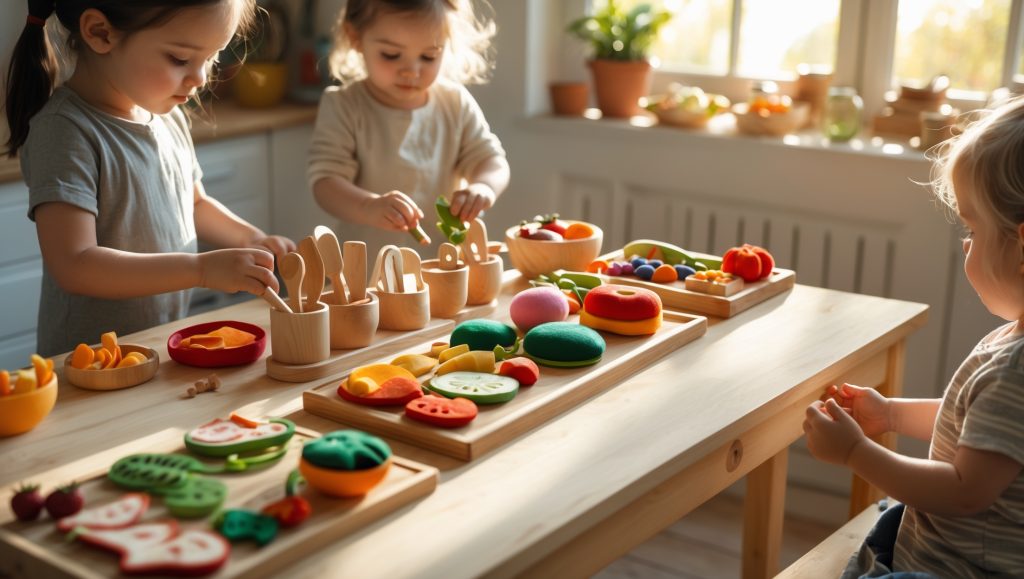
How We Chose
We selected these Montessori-inspired food toys and tools based on their ability to promote independent, healthy eating and real-life skills for children. Our team prioritized items made from safe, natural materials, providing hands-on learning and encouraging family involvement. We reviewed expert recommendations, user feedback, and evidence-informed practices to ensure each pick suits a range of ages and needs in U.S. families. Items were chosen for their alignment with Montessori principles—fostering autonomy, inviting sensory exploration, and offering real-world relevance.
#1: Learning Tower — Empowering Safe Kitchen Participation
Why it stands out
A learning tower (also called a kitchen helper) gives kids a safe boost to reach counters, letting them participate in meal prep, washing, and snack making. It supports independence and hands-on learning from a young age.
Best for
- Families who enjoy cooking together
- Children eager to help in the kitchen
- Small kitchens (compact designs available)
Key notes
- Age/Stage: 18 months–6 years (check specific model guidelines)
- Materials/Ingredients: Solid wood or sturdy plywood; non-toxic finishes
- Strengths: Fosters independence; encourages practical life skills; safe design
- Trade-offs: Takes up floor space; supervision always required
#2: Montessori Chopping Set — Real Tools for Little Hands
Why it stands out
This set includes child-sized, safe knives and utensils for slicing soft foods, like bananas or cucumbers. Hands-on food prep builds fine motor skills and confidence.
Best for
- Preschoolers interested in helping prepare snacks
- Children working on hand-eye coordination
- Families introducing real cooking tools
Key notes
- Age/Stage: 2–6 years
- Materials/Ingredients: Stainless steel, beechwood, BPA-free plastic (varies by set)
- Strengths: Encourages practical skills; supports independence; safe design for beginners
- Trade-offs: May require guidance at first; not for hard foods
#3: Wooden Fruit & Veggie Cutting Sets — Realistic Play, Real Skills
Why it stands out
These wooden playsets feature fruits and veggies with Velcro or magnets, plus a wooden knife—mimicking real food prep in a safe, approachable way.
Best for
- Toddlers and preschoolers curious about food
- Pretend play kitchens
- Early practice before using real utensils
Key notes
- Age/Stage: 18 months–5 years
- Materials/Ingredients: Solid wood, child-safe paints, Velcro/magnets
- Strengths: Safe introduction to food prep; durable; supports vocabulary and sorting
- Trade-offs: Not suitable for mouthing; some sets may have small parts
#4: Miniature Ceramic or Glass Pitchers — Pouring Practice with Purpose
Why it stands out
Small pitchers enable children to pour their own water or milk at meals, strengthening hand control and independence. Montessori classrooms have used this tool for decades to teach self-care skills.
Best for
- Snack and mealtime routines
- Children learning to serve themselves
- Families seeking practical, real-life materials
Key notes
- Age/Stage: 2–6 years
- Materials/Ingredients: Ceramic, glass, or stainless steel
- Strengths: Encourages careful movement; builds confidence
- Trade-offs: Breakable (use with supervision); may need frequent refills
#5: Child-Sized Tableware — Real Plates, Cups, and Utensils
Why it stands out
Using real, appropriately sized dishes and cutlery helps children develop table manners and mealtime independence, a core Montessori value.
Best for
- Daily family meals
- Children transitioning from plasticware
- Teaching responsibility and care for belongings
Key notes
- Age/Stage: 18 months–7 years
- Materials/Ingredients: Ceramic, glass, stainless steel, silicone
- Strengths: Fosters responsibility; feels grown-up; sustainable
- Trade-offs: Fragility; requires supervision; may need to replace breakables
#6: Felt or Fabric Food Play Sets — Soft for Sensory Play
Why it stands out
Handmade felt or fabric foods offer a gentle, tactile introduction to food exploration, supporting dramatic play and vocabulary building in young children.
Best for
- Infants, toddlers, and preschoolers
- Classroom or home play kitchens
- Children exploring new foods through pretend play
Key notes
- Age/Stage: 1–5 years
- Materials/Ingredients: Wool or cotton felt, polyester filling; check for small parts
- Strengths: Safe for mouthing (with supervision); quiet; washable
- Trade-offs: Not for real food prep; may flatten over time
#7: Montessori Snack Station — Independence at Mealtime
Why it stands out
A low shelf or cart stocked with healthy snacks, small plates, and napkins lets children select, serve, and clean up their own snacks. This supports autonomy and healthy choices.
Best for
- Families with multiple young children
- Preschoolers eager for independence
- Encouraging healthy snacking habits
Key notes
- Age/Stage: 2–6 years
- Materials/Ingredients: Wood or metal shelving; BPA-free containers
- Strengths: Encourages choice and responsibility; supports routine
- Trade-offs: Requires prep and maintenance; snacks need to be age-appropriate
#8: Montessori-Style Placemat — Visual Mealtime Guide
Why it stands out
Placemats with outlines for plates, cups, and utensils help children set the table independently and learn the sequence of mealtime routines.
Best for
- Children learning table setup
- Families encouraging routine
- Early preschoolers
Key notes
- Age/Stage: 2–6 years
- Materials/Ingredients: Cotton, silicone, or laminated paper
- Strengths: Visual cues for independence; easy to clean
- Trade-offs: May need to be replaced with wear; not suited for older kids
#9: Egg Slicer or Apple Cutter — Simple Tools for Real Food Prep
Why it stands out
Simple, child-safe tools like egg slicers or apple cutters let kids safely help with real food prep, boosting confidence and fine motor skills.
Best for
- Children ready for more independence in food prep
- Families serving soft foods
- Snack and lunchbox prep
Key notes
- Age/Stage: 3–7 years (with adult supervision)
- Materials/Ingredients: Stainless steel, BPA-free plastic
- Strengths: Easy to use; encourages real-world skills
- Trade-offs: Not for hard foods; requires supervision
#10: Herb Garden Kit — Grow, Harvest, and Taste Together
Why it stands out
Growing easy herbs at home connects kids to where food comes from and encourages tasting new flavors. Kits adapted for young children can be used indoors or outdoors.
Best for
- Families with sunny windowsills or outdoor space
- Children curious about gardening
- Introducing new tastes and food origins
Key notes
- Age/Stage: 3 years and up (some supervision required)
- Materials/Ingredients: Seeds, soil, planters (check for organic options)
- Strengths: Encourages responsibility; integrates science and food
- Trade-offs: Requires patience; plants may not always thrive
Buying Tips
- Prioritize items made from natural, non-toxic materials for safety and durability.
- Choose age-appropriate tools—look for manufacturer guidelines and safety certifications.
- Consider your available space: foldable or compact designs work well for smaller homes.
- For real kitchen tools, always supervise and introduce new skills gradually.
- Look for products that encourage independent use, but remember some activities require adult support.
- Read reviews and check for recall history when possible.
Verdict
Montessori-inspired food toys and tools offer U.S. families practical, hands-on ways to foster independence and healthy eating habits in children. From learning towers and real prep tools to snack stations and garden kits, these picks encourage skills that last a lifetime. While adult supervision is essential—especially with real tools—these items empower children to explore, participate, and take pride in mealtime routines. Thoughtful selection and gradual introduction make these tools a rewarding investment in your child’s growth and confidence.
FAQ
+Are Montessori food toys suitable for toddlers?
+How can I encourage independence at mealtime?
+Are real kitchen tools safe for young children?
+Why use real materials instead of plastic toys?
+How do Montessori methods support healthy eating?
+What’s the best way to clean Montessori food toys?
+Can these tools be used in group settings, like classrooms?
+What’s a simple first step for introducing Montessori food tools at home?

Montessori-inspired food toys and tools are wonderful resources for nurturing healthy eating habits in children. By encouraging hands-on exploration and self-directed learning, these tools transform mealtime into an opportunity for growth and discovery. The top 10 Montessori food toys and tools for 2025 blend real-world functionality with playful design, fostering independence and curiosity in the kitchen.
From child-sized kitchen utensils to realistic wooden fruit sets, these products invite children to participate in food prep, sorting, and imaginative play. For example, a sturdy cutting board and safe chopper allow little hands to practice slicing fruits and veggies, building both fine motor skills and confidence. Play food sets with velcro or magnets offer tactile experiences that reinforce food recognition and sequencing, while child-friendly measuring cups and scales introduce basic math concepts during baking or snack time.
By integrating these Montessori-inspired tools into daily routines, families can inspire children to make healthy food choices, appreciate a variety of flavors, and develop lifelong kitchen skills. The focus is on empowering children to take an active role in their nutrition—making healthy eating not just a lesson, but a joyful, shared experience.
- Encourages independence and confidence around food
- Develops fine motor and practical life skills
- Promotes healthy eating habits through play
- Turns mealtime into a fun, educational experience
Our family shares traditional foods that sometimes have strong smells or unusual textures. Do you have suggestions for helping a child who might be sensitive or hesitant to touch or prepare certain foods, especially while using these Montessori-inspired tools?
It’s understandable to want your child to feel comfortable around all types of traditional foods. Start by inviting your child to explore new foods with their senses—let them look, smell, or touch with clean hands, without any pressure to eat. Use Montessori-inspired tools, like child-sized tongs or spoons, to let them help with small, manageable tasks such as stirring or transferring food. Show acceptance if they decline to touch certain foods, and offer gentle encouragement over time. Always supervise closely, especially with small or slippery items. This isn’t medical advice; if you’re concerned, check in with your pediatrician.
If my toddler tends to put everything in her mouth, are the wooden fruit and veggie cutting sets safe options, or should I wait until she is a bit older? I noticed some sets mention small parts, so I’m concerned about choking hazards.
Your concern about choking hazards is completely understandable, especially with toddlers who explore with their mouths. Many wooden fruit and veggie cutting sets do include small pieces that can pose a risk for children under three. If your toddler is still mouthing toys, it’s usually safest to wait until she’s older and less likely to put small parts in her mouth. Meanwhile, look for larger, one-piece food toys made from non-toxic materials, and always supervise play closely. This isn’t medical advice; if you’re concerned, check in with your pediatrician.
Can you recommend ways to work these Montessori-inspired kitchen activities into our busy evening routine without them delaying bedtime? Sometimes helping in the kitchen seems to spark more energy right before sleep.
You’re wise to think about balancing hands-on kitchen fun with a calm bedtime. Try inviting your child to help with simple prep tasks, like washing veggies or stirring, earlier in the evening when possible. Offer clear boundaries, such as one or two small tasks, and keep activities at the counter rather than the stove for safety. Choose quieter, calming jobs—like setting napkins or arranging food on plates—closer to bedtime. Afterwards, transition to bedtime by dimming lights and using a predictable routine. This isn’t medical advice; if you’re concerned, check in with your pediatrician.
My toddler loves pretend food but sometimes still mouths toys, especially with a new sibling getting so much attention. Are there specific brands of wooden fruit and veggie cutting sets you recommend that are extra safe for this phase?
It’s understandable to want extra-safe toys while your toddler adjusts to big changes and still explores with their mouth. Look for wooden fruit and veggie sets labeled for ages 18 months and up, with large, chunky pieces and no small detachable parts. Brands like PlanToys and Hape have reputations for using non-toxic paints and smooth finishes, which can help minimize risks if mouthed. Always supervise play, check toys regularly for wear, and avoid sets with magnets or tiny pieces. This isn’t medical advice; if you’re concerned, check in with your pediatrician.
Do you recommend any of these food prep tools for babies with sensitive skin or who dislike certain textures, or should I look for different options to support sensory learning?
It’s great that you’re thinking about your baby’s comfort and sensory needs. For babies with sensitive skin or sensory aversions, start with food prep tools made from soft, food-grade silicone or smooth wood, as these tend to be gentle and non-irritating. Introduce tools one at a time, allowing your baby to explore at their own pace. Offer simple foods with familiar, mild textures—think soft bananas or steamed carrots—using the tools, and always supervise closely. Clean tools thoroughly and watch out for any allergic reactions or skin irritation. This isn’t medical advice; if you’re concerned, check in with your pediatrician.
For families with younger toddlers who tend to put everything in their mouths, how do you make sure the wooden fruit and veggie cutting sets remain safe to play with? Are there specific brands or materials to look for?
It’s understandable to want safe play options for toddlers who explore by mouthing. First, choose sets labeled for ages 18 months and up, as these have fewer small parts. Look for brands that use non-toxic, food-grade paints and finishes—safety certifications (like ASTM or EN71) are helpful. Avoid sets with detachable small pieces or magnets. Always supervise play and regularly check toys for splinters or loose parts. If your child is under 18 months, consider soft, food-safe silicone or fabric food toys instead. This isn’t medical advice; if you’re concerned, check in with your pediatrician.
Do you have any advice for incorporating these food tools into a weekday morning routine before daycare drop-off? I want to encourage independence but mornings can feel rushed for us.
You’re thoughtful to encourage independence, even during busy mornings. Try setting out just one or two Montessori-inspired food tools the night before, so everything is ready. Choose simple, age-appropriate tasks—like spreading or pouring—that your child can manage safely with minimal help. Give a clear, calm prompt (“It’s your turn to pour your milk!”) and allow a few extra minutes at first. If time gets tight, it’s okay to step in gently; consistency is more important than perfection. This isn’t medical advice; if you have concerns, please check in with your pediatrician.
Budget is a big factor for us with two kids to shop for. If we had to pick just one item from your list for encouraging independence at snack time, which would you recommend for toddler twins?
It’s completely understandable to prioritize budget, especially with twins. If you’re choosing one Montessori-inspired item from the list for snack-time independence, I’d recommend a child-sized set of tongs or scoops. These tools are affordable, encourage fine motor skills, and let toddlers serve themselves small snacks like fruit or crackers. Make sure the tongs have no sharp edges and are easy for little hands to grip. Always supervise closely, especially with two young children exploring together. This isn’t medical advice; if you have specific concerns or your twins have unique needs, please consult your pediatrician.
My child is a bit sensitive to certain textures and can be hesitant to touch some foods. Do you have recommendations from this list that work well for sensory seekers or children who are still building up comfort with new textures?
It’s wonderful that you’re supporting your child as they explore new food textures. From the article, consider starting with smooth, easy-to-clean silicone food toys or wooden fruit puzzles, as these have gentle surfaces that are less likely to overwhelm sensitive kids. Gradually introduce textured play food—like soft fabric vegetables—at your child’s pace, inviting them to touch with just a finger at first. Sensory-seeking children may also enjoy sorting or scooping dry play foods like felt beans or pasta, which can be calming but still tactile. Always supervise play, especially with small parts. This isn’t medical advice; if you’re concerned, check in with your pediatrician.
My toddler sometimes mouths their toys, and I noticed some wooden fruit and veggie sets have small parts. Do you have any safety tips or specific brands that minimize choking hazards for younger children?
You’re right to be concerned about your toddler’s safety with food toys, especially when mouthing is common at this age. Choose wooden fruit and veggie sets specifically labeled for ages 1–3, as these typically avoid tiny pieces and use non-toxic finishes. Look for toys where all parts are larger than your child’s mouth (bigger than 1.25 inches in diameter). Avoid sets with detachable stems or seeds. Always supervise play and inspect toys regularly for loose or damaged parts. While I can’t recommend specific brands, check for safety certifications like ASTM or EN71. This isn’t medical advice; if you’re concerned, check in with your pediatrician.
Do you have tips for gradually involving a younger toddler who isn’t quite 18 months yet in meal prep, especially if older siblings are already using some of these Montessori-inspired tools? Is it better to wait, or are there safe ways to include them earlier?
You’re thoughtful to want your younger toddler to feel included, even if they aren’t quite 18 months yet. You can safely involve them by giving simple tasks like washing soft produce with supervision, transferring pre-cut fruit from one bowl to another, or exploring food textures with clean hands. Always use age-appropriate, non-breakable tools—avoid sharp edges and small parts, and supervise closely. Parallel play alongside older siblings can be fun, even if your toddler doesn’t use every tool yet. It’s safe to include them in small, guided ways; just go at their pace and keep safety first. This isn’t medical advice; if you’re concerned, check in with your pediatrician.
I noticed some of the sets have small parts or require supervision. How do you suggest handling safety when there are younger siblings around who might want to join in or imitate their older brother or sister?
You’re right to think about safety with younger siblings around—curiosity at different ages can pose challenges. Try setting up a special play area for older children with small parts, keeping it out of reach from little ones. Choose food toy sets labeled for your youngest child’s age, opting for larger, non-chokable pieces. Encourage supervised play when everyone is together and store toys with small parts securely when not in use. Remind older siblings about the importance of keeping small pieces away from their younger brother or sister. This isn’t medical advice; if you’re concerned, check in with your pediatrician.
We’re on a tight budget and can’t buy everything at once. Which item from your top picks would you say gives the most benefit for encouraging independent eating habits in a young toddler?
It’s completely understandable to prioritize what’s most helpful when you’re on a budget. For a young toddler, I’d recommend starting with a child-sized set of utensils or sturdy training cutlery from the list. Using their own spoon and fork promotes independence, fine motor skills, and mealtime confidence. Choose items that are safe, easy to grip, and free from small parts or sharp edges. Supervise closely during meals to prevent choking. This isn’t medical advice; if you’re concerned, check in with your pediatrician.
The learning tower sounds helpful, but I worry about my three-year-old dropping utensils or food from that height. Are there any safety modifications or supervised routines you’d suggest to prevent small items from falling and becoming hazards for younger siblings or pets?
It’s understandable to worry about dropped items from a learning tower, especially with little ones or pets nearby. Try placing a nonslip mat or tray under the tower to catch falling objects, and keep only a few utensils and food items accessible at a time. Encourage your child to hand you items when finished instead of dropping them. Always supervise closely, and remove any small or sharp utensils when younger siblings or pets are around. This isn’t medical advice; if you’re concerned, check in with your pediatrician.
Do you have advice on how to introduce iron-rich foods in a Montessori-friendly way, especially for picky eaters who prefer purees or cereals over whole foods? Any tips for making the transition manageable?
It’s understandable to want to help your child get enough iron, especially if they’re reluctant to try new textures. Start by offering small amounts of mashed or finely chopped iron-rich foods like soft cooked beans or ground meat alongside familiar purees or cereals. Use Montessori-style child-sized utensils so your child can self-serve or scoop at their own pace. Present a choice of two textures (like a puree and a soft finger food) to encourage exploration without pressure. Always supervise mealtimes and ensure foods are soft and safe to prevent choking. This isn’t medical advice; if you’re concerned, check in with your pediatrician.
Are there any particular safety certifications or material labels I should look for when choosing a learning tower or chopping set? I want to make sure everything we get is really safe and non-toxic for my toddler.
You’re absolutely right to prioritize safety and non-toxic materials for your toddler. Look for learning towers and chopping sets labeled BPA-free, phthalate-free, and made with food-grade materials. For wooden items, check for FSC certification and non-toxic, water-based finishes. Look for US or EU safety certification marks, such as ASTM, CPSIA, or CE. Always inspect for smooth edges and sturdy construction to prevent pinched fingers or falls. This isn’t medical advice; if you’re concerned, check in with your pediatrician.
Do you have advice on incorporating these food tools into an after-work routine? Our evening schedule is tight, so I wonder how to balance encouraging independence with not making kitchen tasks take much longer.
It’s wonderful that you want to nurture independence even on busy evenings. Try pre-selecting just one or two Montessori-inspired tools for your child to use, letting them help with simple tasks like washing veggies or stirring. Set up a safe, child-height workspace ahead of time to make the process smoother. Choose age-appropriate tools to avoid frustration and ensure safety—supervise closely, especially with anything sharp or breakable. Offering choices, like picking between two snacks to prepare, can give a sense of independence without adding too much time. This isn’t medical advice; if you have concerns about safety or development, check with your pediatrician.
Could you provide any suggestions on how to use the Montessori chopping set or pouring pitchers during a bilingual bedtime wind-down routine? I’m looking to reinforce Spanish vocabulary while keeping things calm and screen-free before sleep.
It’s wonderful that you want to combine language learning with a calming bedtime routine. Try a slow, simple chopping or pouring activity, naming each tool and action in Spanish as you go. For example, narrate: ‘Ahora cortamos la manzana’ or ‘Vamos a verter el agua despacio.’ Choose soft foods (like banana slices) and small, easy-to-handle pitchers for safety, and keep the session brief—5–10 minutes. Dim lighting and a gentle voice set a soothing mood. Always supervise closely to ensure safety, and remember, this isn’t medical advice; if you have concerns, ask your pediatrician.
I am concerned about small parts in the wooden fruit and veggie cutting sets, especially since my child still mouths toys sometimes. Are there specific sets designed for infants under 12 months, or do you suggest waiting until this stage passes?
It’s completely understandable to worry about small parts when your child still mouths toys. For infants under 12 months, it’s best to avoid most wooden fruit and veggie cutting sets, as many have detachable pieces that could be a choking hazard. Instead, consider soft, one-piece food toys specifically labeled for infants and check for safety certifications and non-toxic finishes. Always supervise play at this age, and wait on sets with small or loose pieces until your child is reliably past the mouthing stage, usually after 18 months. This isn’t medical advice; if you’re concerned, check in with your pediatrician.
Do you have any tips for introducing real chopping tools to a cautious toddler? My 2-year-old tends to be hesitant, and I wonder how to build his confidence using the Montessori chopping sets without overwhelming him.
You’re so thoughtful to support your toddler’s confidence with new tools. Start by letting him explore the chopping set with his hands before using it, and model how to hold each tool safely. Begin with soft foods like banana or avocado, cut into easy-to-manage pieces. Offer a child-safe, blunt chopper designed for toddlers, and practice together, moving slowly and celebrating small successes. Always supervise closely to ensure safety and stop if he seems overwhelmed. This isn’t medical advice; if you’re concerned, check in with your pediatrician.
My toddler just turned one, and she’s very picky about textures. Would the wooden fruit and veggie cutting sets be engaging enough for kids who aren’t interested in physically touching new foods yet, or is there a better option for building interest first?
It’s completely normal for young toddlers to be cautious about new textures. At age one, wooden fruit and veggie cutting sets can be fun for practicing motor skills, but if your child is hesitant to touch real foods, these toys may not fully bridge that gap yet. Start by letting her explore the wooden pieces with her hands, no pressure to “cut” or imitate eating. You might also offer soft fabric or silicone food toys, which feel less hard and more comforting. Keep sessions short and playful, always supervising to avoid mouthing small parts. This isn’t medical advice; if you’re concerned, check in with your pediatrician.
Some food toys have strong smells or paints that can bother my child’s senses. How can I be sure the wooden food sets you suggest won’t have overpowering odors or rough paint textures?
It’s understandable to be concerned about sensory sensitivities, especially with toys your child will handle closely. When choosing wooden food sets, look for those labeled as non-toxic and painted with water-based, odorless paints. Before use, open the packaging and air out the toys for a day or two. Run your hand over each piece to check for roughness and strong smells—if any piece bothers you, set it aside. Supervise play so you can watch for discomfort. Most Montessori-inspired brands design for safety, but every child is different. This isn’t medical advice; if you’re concerned, check in with your pediatrician.
Do you think these Montessori-inspired food toys and tools are a good fit for families on a tight budget, or would you suggest any affordable alternatives that still promote independence in the kitchen?
It’s understandable to want tools that encourage independence without straining your budget. Many Montessori-inspired food toys and tools can be pricey, but you can foster the same skills using everyday kitchen items. Try offering unbreakable bowls and safe utensils for your child to practice mixing or scooping. Use small pitchers for pouring water or snacks. Let them help with washing produce using a soft sponge. Always supervise and choose age-appropriate, non-breakable materials to ensure safety. This isn’t medical advice; if you’re concerned, check in with your pediatrician.
Do you have any advice for families whose babies have sensory sensitivities, especially regarding the feel or sound of wooden toys and tools? I wonder if certain Montessori food prep sets might be overwhelming for a child sensitive to textures.
It’s completely understandable to want your child to feel comfortable and safe while exploring new toys and tools. For babies with sensory sensitivities, start by offering one toy at a time and observe their reactions to different textures and sounds. Choose Montessori sets with smooth finishes and avoid rough or unfinished wood. Let your child explore the toy with their hands before using it in activities, and stay close for reassurance. If sound is a concern, opt for quieter tools or place a soft mat underneath to dampen noise. Always supervise closely and make sure toys are age-appropriate and free of choking hazards. This isn’t medical advice; if you’re concerned, check in with your pediatrician.
My daughter enjoys helping in the kitchen, but she sometimes gets overwhelmed by loud noises and textures. Are any of these tools or playsets particularly well-suited for sensitive kids or are there adjustments you suggest to make the experience more comfortable?
It’s wonderful that you want to support your daughter’s interest in cooking while honoring her sensitivities. To help, choose Montessori-inspired tools made with smooth wood or soft silicone, as these have gentler textures and less risk of startling metal clatters. Start with one or two quiet activities, like soft fruit slicing or using manual peelers, and let her explore new textures at her own pace. Provide noise-dampening headphones if needed, and avoid sets with small parts or strong scents for younger children. Gradual exposure with lots of encouragement can help her feel comfortable. This isn’t medical advice; if you’re concerned, check in with your pediatrician.
My toddler tends to still mouth toys sometimes, especially when playing with pretend food. How can I safely introduce the wooden cutting sets without worrying about small parts or choking hazards?
It’s very normal to worry when toddlers are still mouthing toys, especially with pretend food. Choose wooden cutting sets clearly labeled as safe for ages 18 months and up—these usually have larger pieces that can’t fit fully in the mouth. Before play, inspect the toys for loose pieces or splinters. Always supervise your toddler closely, and remove any small or detachable items. Introduce the set together, demonstrating gentle play and reminding your child that these aren’t for eating. This isn’t medical advice; if you’re concerned, check in with your pediatrician.
I’m on a budget and also short on storage. If I could only invest in one Montessori-inspired food toy or tool from your list, which would give the most skill-building opportunities for a toddler?
It’s smart to focus on getting the most value for your child’s development and your space. From the article, a Montessori-inspired toddler-safe cutting set—usually wooden or plastic—offers the most skill-building: it encourages hand-eye coordination, fine motor skills, and independence. Start with soft, easy-to-cut foods like bananas (always supervise closely). Store the pieces in a small container or bag to save space. Make sure the set is age-appropriate, free of choking hazards, and easy to clean. This isn’t medical advice; if you’re concerned, check in with your pediatrician.
Are there specific wooden fruit and veggie cutting sets you recommend for families on a tighter budget? I noticed some sets get pricey, but I still want something durable and safe.
It’s thoughtful of you to look for quality, budget-friendly options that encourage healthy play. Look for wooden fruit and veggie cutting sets that are labeled non-toxic and free from small parts if your child is under 3. Brands like Melissa & Doug and Hape occasionally offer more affordable sets with smooth finishes and sturdy wooden pieces. Check for sets with Velcro or magnet attachments—these are both durable and safe for little hands. Always supervise play, especially with pretend knives, and inspect toys regularly for splinters or wear. This isn’t medical advice; if you have concerns, ask your pediatrician.
Our kitchen is quite small and we already have a lot of cooking gadgets. Which Montessori tools from your list are the easiest to store, or do you have tips for making space when grandparents come over for cooking sessions with our toddler?
It’s understandable to want practical solutions for a small kitchen, especially with family visiting. Compact Montessori tools like child-sized tongs, a small wooden chopper, and a rolling pin are easy to store in a drawer or basket. Consider using stackable bins or a dedicated caddy for your toddler’s kitchen items, so they can be tucked away when not in use. For group cooking sessions, lay out just a few essentials and rotate tools to avoid clutter. Always supervise your toddler, choose age-appropriate items without small parts, and check for safe, non-toxic materials. This isn’t medical advice; if you’re concerned, check in with your pediatrician.
Are there specific features in wooden food playsets that help with children who are sensitive to noisy Velcro or magnets, or would another option on your list suit sensory-sensitive kids better?
It’s great that you’re looking for play options that respect your child’s sensory sensitivities. For children who are sensitive to the noise of Velcro or magnets, choose wooden food playsets with simple, interlocking pieces or puzzle-style cuts—they offer quiet, satisfying tactile feedback. Look for sets with smooth, unfinished or non-toxic finished wood, avoiding any small detachable parts for safety. Alternatively, soft fabric food toys or silicone options (as mentioned in the article) may provide a gentler, quieter sensory experience. Always supervise young children and check for age-appropriateness and possible allergens. This isn’t medical advice; if you’re concerned, check in with your pediatrician.
Do you have tips for introducing the Montessori chopping set to a three-year-old who sometimes gets overstimulated before bed? I want to build independence but keep things peaceful in the evenings.
It’s wonderful that you want to nurture both independence and calm evenings for your child. Try introducing the Montessori chopping set earlier in the day when your child is more alert, saving evenings for quieter routines. Start with soft, easy-to-chop foods like bananas or steamed carrots, and supervise closely to ensure safety. Keep the activity brief—five to ten minutes is plenty at this age—and set up the chopping area in a quiet spot with minimal distractions. If your child seems overstimulated, gently redirect to a soothing activity. This isn’t medical advice; if you’re concerned, check in with your pediatrician.
My toddler sometimes mouths toys, so I’m a little concerned about the wooden fruit and veggie sets. Are there any particular brands or features I should look for to make sure these play sets are safe for children who still put things in their mouth?
It’s completely understandable to be cautious when your toddler is still mouthing toys. Look for wooden fruit and veggie sets labeled as non-toxic and finished with water-based paints. Choose brands that specify their toys are BPA-free and meet safety standards like ASTM or EN71. Opt for sets with larger pieces that don’t pose a choking hazard, and always supervise play to reduce risks. Avoid sets with detachable small parts or splinter-prone wood. This isn’t medical advice; if you’re concerned, check in with your pediatrician.
Can the Montessori chopping set be used for any foods besides bananas and cucumbers? I am looking for more variety during snack prep, but want to make sure everything stays safe for a two-year-old.
You’re thoughtful to offer your two-year-old more variety while keeping things safe. Besides bananas and cucumbers, you can try soft foods like steamed carrots, peeled avocados, ripe strawberries, or cooked sweet potato—always cut into manageable, non-chokable pieces. Supervise closely and use child-safe knives designed for toddlers. Avoid hard or slippery foods (like raw apples or grapes) to prevent choking. Always check for allergies and introduce new foods one at a time. This isn’t medical advice; if you’re concerned, check in with your pediatrician.
We have a very small kitchen and I am wondering if there are learning tower styles that fold up or take up less space, but still remain sturdy and safe? Storage is a big concern for us.
It’s completely understandable to want both safety and convenience in a small kitchen. Look for folding or collapsible learning towers designed specifically for compact spaces—some models have hinges or removable platforms for easy storage. Choose one with a wide, stable base and secure locking mechanisms to prevent tipping or collapsing when in use. Always supervise your child closely, and check the weight and age recommendations before purchase. If you are ever unsure about a product’s safety or fit for your child, your pediatrician can offer guidance. This isn’t medical advice; if you’re concerned, check in with your pediatrician.
How do you suggest keeping these Montessori food tools organized? We have a small apartment and I worry about clutter, so ideas for storing sets like chopping tools and wooden play food would be helpful.
It’s understandable to want to keep things tidy, especially in a small space. Try using clear, lidded bins or shallow trays to group similar items—one for chopping tools, one for play food, etc.—and store them on a low shelf for easy child access. Consider rotating out only a few sets at a time and keeping extras in a closet or under-bed storage box. Hanging baskets or wall-mounted organizers can also free up floor space. Always supervise young children with real or wooden tools, and check that small pieces are age-appropriate to avoid choking hazards. This isn’t medical advice; if you’re concerned, check in with your pediatrician.
My toddler is a bit sensitive to certain textures. Do the wooden play food sets or the real chopping sets provide a better sensory experience for kids who are particular about how things feel in their hands?
It’s completely normal to wonder which option will feel best for your texture-sensitive toddler. Wooden play food sets offer a smooth, consistent surface that some children find comforting, while real chopping tools and foods introduce a wider variety of textures, which can be more challenging but also helpful for gentle exposure. Start with wooden play sets if your child prefers predictable sensations, then slowly introduce real foods with supervision to build tolerance. Always supervise closely with real tools, use age-appropriate items, and avoid small or rough pieces that could be overwhelming. This isn’t medical advice; if you’re concerned, check in with your pediatrician.
If my toddler tends to put toys in their mouth, are the wooden fruit and veggie cutting sets safe, or should I wait until they are older? How do I check if a set is really non-toxic and safe for mouthing?
It’s completely understandable to be cautious when your toddler mouths toys. For children under three, always check that wooden fruit and veggie sets are labeled non-toxic, BPA-free, and finished with food-grade paints. Make sure all pieces are large enough to avoid choking hazards and have no sharp edges. Look for certifications like ASTM or EN71, and read the manufacturer’s age recommendation. If you’re ever unsure, it’s safest to wait or supervise closely during play. This isn’t medical advice; if you’re concerned, check in with your pediatrician.
When using the wooden fruit and veggie cutting sets for pretend play, how do you suggest involving grandparents who speak another language or come from a different cultural food background to make the activity more meaningful?
What a thoughtful way to connect generations during play. Invite grandparents to share the names of fruits and vegetables in their language as your child plays, and encourage them to describe how these foods are used in their culture. They can also demonstrate traditional cutting techniques with the toy set or tell stories about favorite family meals. This approach builds language skills and appreciation for family heritage. Be sure that play is supervised and all pieces are safe for your child’s age. This isn’t medical advice; if you’re concerned, check in with your pediatrician.
Do you have any advice for safely storing the larger items like the learning tower in smaller kitchens when they are not in use? I want my child to participate but worry about having enough space for everything.
It’s completely understandable to want your child involved while also managing limited kitchen space. Try these steps: 1) Choose a foldable or collapsible learning tower for easy storage. 2) Designate a corner or behind-the-door spot where the tower can safely stand upright when not in use. 3) Use wall hooks or low-profile brackets if the tower is lightweight enough to hang. 4) Involve your child in setting up and putting away the tower to reinforce safety and responsibility. Always check that the stored item can’t tip or fall, and avoid areas near heat or water. This isn’t medical advice; if you have further safety concerns, check in with your pediatrician.
My child has some sensory sensitivities. Are certain materials among these Montessori-inspired tools (like wood, metal, or glass) better tolerated than others for kids who react strongly to certain textures or temperatures?
It’s thoughtful of you to consider your child’s sensory sensitivities when choosing food toys and tools. Many children with tactile sensitivities may prefer wooden items, as they tend to feel warm and smooth, while metal and glass can be cold or have sharp edges. Start by introducing one material at a time and watch your child’s reactions, always supervising play. If your child dislikes the sensation of cool or hard surfaces, stick with well-sanded, unfinished wood or soft silicone. Safety is key—avoid small parts and check for splinters or breakage. This isn’t medical advice; if you’re concerned, check in with your pediatrician.
Budget is a concern for us since we’re also buying a potty and related supplies. Are there any affordable alternatives to the Montessori learning towers you recommend, or are there DIY options that are still safe for young toddlers?
It’s understandable to want safe, budget-friendly options for helping your toddler join you in the kitchen. Consider using a sturdy step stool with non-slip feet and adding DIY safety rails (like tension rods or attaching a PVC frame) for extra security—always supervise closely. Some families repurpose a two-step stool from large retailers and securely fasten it next to the counter to prevent tipping. Double-check that all edges are smooth and there are no pinch points. These solutions can be safe for toddlers 18 months and up with adult supervision. This isn’t medical advice; if you’re concerned, check in with your pediatrician.
My toddler sometimes gets overwhelmed by new textures and won’t touch certain foods. Do you have suggestions for which of these toys or tools work best for kids with mild sensory sensitivities and encourage positive food interactions?
It’s completely understandable to want mealtimes to feel positive and comfortable when your toddler is sensitive to new textures. Consider starting with smooth, easy-to-clean Montessori-inspired food tools like child-sized wooden trays and silicone dipping cups, as these offer predictable textures and let your child explore at their own pace. Try pretend food sets made from soft, fabric materials rather than rough or highly detailed plastic, which can be less overwhelming. Encourage gentle play and exploration, and let your child use utensils or tongs if touching food directly feels too much. Always supervise closely and choose age-appropriate, non-toxic items. This isn’t medical advice; if you’re concerned, check in with your pediatrician.
At what age did you personally find it easiest to introduce real chopping sets for kids? My toddler wants to do everything independently, but I want to be sure I am not introducing tools too soon or taking unnecessary safety risks.
It is wonderful that your toddler is eager for independence—this is a great sign of healthy development. In my experience and in line with Montessori principles, many children show readiness for real (but child-safe) chopping sets around 2 to 3 years old, always with close adult supervision. Start with soft foods like bananas or cucumbers and use tools designed for young children—these are often less sharp and have handles made for small hands. Model safe hand placement, give clear instructions, and stay nearby. Every child is different, so go at your child’s pace and pause if they seem unsure. This isn’t medical advice; if you’re concerned, check in with your pediatrician.
My toddler is always on the move and gets easily distracted during meals. Would using a learning tower or a Montessori chopping set help him stay engaged in the kitchen, or do you have tips for keeping active kids interested in these activities?
It’s perfectly normal for active toddlers to have trouble focusing during meals and kitchen activities. Using a learning tower can help your child feel included and safe at counter height, while a Montessori chopping set (with toddler-safe tools and supervision) offers hands-on engagement. Try inviting your toddler to do simple, short tasks like washing veggies or stirring, and keep sessions brief to match their attention span. Rotate activities and praise their efforts, even if they wander off. Remember, every child is different—if you’re worried about eating habits or safety, check in with your pediatrician. This isn’t medical advice.
Do you have any budget-friendly recommendations from your top picks for families who want to try out sensory-friendly food activities without a big upfront investment? Some of the tools sound fantastic but might be a stretch for us financially.
It’s completely understandable to want sensory-friendly food activities that are also budget-conscious. Consider starting with simple, affordable items like child-sized silicone spatulas and small measuring cups, which are often available at discount stores. You can also use everyday household items, such as ice cube trays for sorting foods or small bowls for mixing and scooping. Repurposing safe kitchen tools—like a plastic colander for rinsing soft fruits—can encourage sensory exploration without extra cost. Always supervise young children and choose items without sharp edges or small parts. This isn’t medical advice; if you’re concerned, check in with your pediatrician.
We’re just starting to let our daughter pour her own water with a small pitcher, but spills happen almost every time. Do you have practical tips for helping her master this skill without making every mealtime a big cleanup operation?
It’s wonderful that you’re encouraging your daughter’s independence, and spills are a normal part of learning new skills. Try placing a small absorbent cloth or tray under the pitcher to catch spills and reduce cleanup. Offer a child-sized, lightweight pitcher with an easy-to-grip handle designed for her hands. Demonstrate pouring slowly, using both hands if needed, and encourage her to practice with small amounts of water at first. Stay nearby for gentle supervision while she masters this skill. This isn’t medical advice; if you have concerns, check in with your pediatrician.
If I want to introduce a learning tower to my 9-month-old, are there any safer alternatives or modified options since most models seem to be for 18 months and up?
It’s wonderful that you want to involve your 9-month-old in kitchen activities early on. For this age, safety is key since most learning towers are designed for older toddlers. Instead, try letting your baby sit securely in a high chair with a tray near your workspace, or use a sturdy booster seat with straps and supervision. You can also set up a safe play area on the floor with kitchen utensils or soft, sensory food toys. Always supervise closely and avoid any items with small parts or sharp edges. This isn’t medical advice; if you have concerns about your child’s readiness, please check with your pediatrician.
Can the wooden fruit and veggie cutting sets be adapted for slightly older children, like age 7, who still enjoy pretend play but might find them a little basic? Or should we move on to real food prep tools at that stage?
It’s wonderful that your 7-year-old still enjoys pretend play and food toys. You can adapt wooden fruit and veggie cutting sets by adding more complex pretend scenarios, like setting up a play restaurant or market. To challenge their skills, try incorporating play knives that require a bit more coordination, or introduce simple real food prep, such as slicing soft fruits with a child-safe knife under supervision. At this age, transitioning to actual food prep tools designed for children can be engaging and developmentally appropriate, but always supervise closely and choose tools without sharp edges or small parts. This isn’t medical advice; if you’re concerned, check in with your pediatrician.
If I want to start my 20-month-old with some of these activities but worry about constant supervision at 6:00 am, which items do you think are safest to use semi-independently if I’m nearby but not always hands-on?
It’s understandable to want activities that your toddler can enjoy safely with limited supervision, especially early in the morning. For a 20-month-old, consider sturdy wooden food puzzles, large silicone fruits, or soft play food with no small detachable pieces—these minimize choking risks and are easy to handle. Avoid anything with small parts or real cutting tools at this age. Set up the activity in a safe, childproofed area so you can be nearby while your child explores. Always check toys for wear and tear. This isn’t medical advice; if you’re concerned, check in with your pediatrician.
If my child is just turning two and is still putting toys in their mouth, are the wooden fruit and veggie cutting sets a safe option, or should I wait until they’re older?
You’re right to be cautious about choking or mouthing hazards at this age. For a newly two-year-old who still mouths toys, it’s best to wait on small wooden food sets, as these often have small pieces that could be a risk. If you’d like to introduce pretend cutting, look for larger, one-piece wooden or fabric fruits with attached Velcro that are too big to fit in your child’s mouth. Always supervise closely and check toys for safe finishes and no loose parts. This isn’t medical advice; if you’re concerned, check in with your pediatrician.
My child sometimes mouths toys—are there specific wooden fruit and veggie sets you’d recommend that minimize choking hazards, or is this toy best avoided altogether for kids with this habit?
It’s completely understandable to worry about safety when your child mouths toys. For toddlers who still put things in their mouths, look for wooden fruit and veggie sets made from one solid piece with no removable parts or small accessories. Choose large, chunky pieces to minimize choking risk, and always supervise play. Check that the paint or finish is labeled non-toxic and food-grade. If your child mouths toys frequently, you may want to wait until this phase passes before introducing play food sets. This isn’t medical advice; if you’re concerned, check in with your pediatrician.
If my toddler is still putting toys in her mouth sometimes, would the wooden fruit and veggie cutting set be safe for her, or should we wait until she outgrows that stage?
It’s completely normal to worry when your toddler is still mouthing toys. For a child who regularly mouths objects, small wooden food toys could be a choking hazard or cause splinters if chewed. You might wait until she reliably stops mouthing, or choose a set made from larger, smooth, food-grade materials that are too big to swallow. Always supervise play at this stage, and inspect toys for loose parts. Remember, this isn’t medical advice; if you’re concerned, check in with your pediatrician.
Do you have any advice on how to gradually introduce the Montessori chopping set to kids who are a little hesitant about using real utensils, especially if they are on the younger end of your recommended age range?
It’s understandable to feel cautious about introducing real utensils to younger or hesitant children. Start by modeling how to use the Montessori chopping set yourself, showing slow, safe motions and describing what you’re doing. Invite your child to explore the tools with their hands first, without any food, so they can get comfortable. Next, offer soft foods like banana or steamed carrot, which are easier and safer to cut. Always supervise closely and remind your child to keep fingers tucked away from the blade. Make it a low-pressure, positive experience, celebrating small steps. This isn’t medical advice; if you’re concerned, check in with your pediatrician.
My child sometimes struggles with transitions after dinner. Would it make sense to use these food tools before bedtime, or do you see benefits to shifting them to earlier in the day to help create a more soothing routine in the evenings?
It’s understandable to want smoother transitions after dinner, especially as bedtime approaches. Using Montessori-inspired food toys and tools earlier in the day—such as during snack time or lunch—can help keep the evening routine calm and less stimulating. For bedtime, focus on quieter, predictable activities like reading or soft music. If your child enjoys a soothing, simple food-related task (like wiping the table or arranging napkins), keep it brief and closely supervised. Always avoid small parts or messy activities close to bedtime to prevent overstimulation. This isn’t medical advice; if you’re concerned, check in with your pediatrician.
How do you suggest involving a child who tends to get overwhelmed by too many textures or new sensations when using the wooden fruit and veggie sets? Are there modifications that might help?
It’s great that you’re tuned in to your child’s sensory needs. Start by offering just one or two wooden fruits or veggies at a time, letting your child explore at their own pace. You could introduce smoother, familiar shapes first, avoiding pieces with rough textures or strong scents. Model gentle handling and describe the sensations to set expectations. If your child feels anxious, try letting them watch you play before joining in themselves. Always supervise play, especially if your child is younger or chews on objects. This isn’t medical advice; if you’re concerned, check in with your pediatrician.
Are there any sensory-friendly modifications or alternatives to the wooden fruit cutting sets for kids who struggle with the texture or sound of Velcro and magnets during play?
It’s great that you’re considering your child’s sensory needs when choosing play food sets. For kids sensitive to Velcro or magnets, try felt or soft fabric fruit sets that use sewn slices instead of attachments, which are quieter and gentler to touch. Silicone food toys can also be a good alternative, offering a soft texture and silent play. Some families create fruit shapes from modeling clay or playdough for a custom, squishier experience—just supervise closely, especially for children under 3, to avoid choking hazards. Choose materials labeled non-toxic and easy to clean. This isn’t medical advice; if you’re concerned, check in with your pediatrician.
My toddler loves helping in the kitchen, but our space is pretty limited. Do you have any suggestions for compact learning towers that still feel stable and safe, or alternatives for small apartments?
It’s wonderful that your toddler is eager to help in the kitchen, even with limited space. Look for foldable or slim-profile learning towers designed for small kitchens—they can often be tucked away when not in use. Some sturdy step stools with wide, non-slip platforms and side handles can also offer safe access, provided you supervise closely. You could also involve your child at a low table or counter, bringing food prep down to their level with a child-sized chair. Always ensure that whatever option you choose is stable, age-appropriate, and free of pinch points. This isn’t medical advice; if you’re concerned, check in with your pediatrician.
We have a pretty small kitchen and I worry about a learning tower taking up too much space. Are there any compact or foldable options that still feel sturdy and safe for a busy two-year-old?
It makes sense to want your kitchen space to stay safe and manageable. For a two-year-old, look for learning towers labeled compact, foldable, or slim—many of these are specifically designed for small spaces and still offer good stability. Before purchase, check the weight limit and look for non-slip feet and secure rails. Some stools convert or fold flat for easy storage behind a door or under a counter. Always supervise your child and make sure the tower is set up on an even surface. This isn’t medical advice; if you’re concerned, check in with your pediatrician.
My toddler sometimes mouths wooden toys—are there particular fruit and veggie cutting sets that are safer in this case, or should I wait until she is a bit older before introducing these?
You’re right to be thoughtful about your toddler mouthing toys, as safety is so important at this stage. For little ones who still mouth objects, choose fruit and veggie cutting sets made from unfinished or food-grade wood, and make sure the paint and finishes are non-toxic and certified safe for children under three. Avoid sets with small or detachable parts that could be a choking risk. Always supervise play closely, and consider waiting until your child mouths less frequently before introducing these toys. This isn’t medical advice; if you’re concerned, check in with your pediatrician.
When it comes to involving kids in real meal prep versus pretend play, do you have advice on how to balance both approaches in daily routines? For example, is there a best time of day or meal to start using the learning tower and real utensils?
It’s great that you want to find the right balance between pretend play and real meal prep—both are valuable for learning. Try starting with breakfast or weekend snacks when mornings are less rushed, so your child can help at their own pace using the learning tower and safe, child-sized utensils. Alternate play kitchen sessions with real cooking; for example, after pretend play, invite your child to wash veggies or stir batter. Supervise closely, especially with sharp tools, and choose tasks that match your child’s age and coordination. This isn’t medical advice; if you’re concerned, check in with your pediatrician.
My child can be sensitive to new textures and sounds, especially with certain materials. For items like the chopping set and wooden fruit toys, are there any tips for choosing versions that are quieter or have smoother surfaces, so they won’t overwhelm a sensory-sensitive child during play or food prep?
It’s understandable to want playtime to feel comfortable and not overwhelming for your sensory-sensitive child. Look for chopping sets and wooden fruit toys with rounded edges and finely sanded, sealed surfaces to minimize roughness. Choose sets made from soft, natural woods like rubberwood, which tend to make less noise than harder woods or plastic. Consider testing pieces together before buying—gently tap, shake, or ‘chop’ to check for sound levels. Soft felt or silicone food toys can also be great quiet alternatives. Always supervise play to ensure safety, especially for ages under three. This isn’t medical advice; if you’re concerned, check in with your pediatrician.
Could you clarify which Montessori knife sets are safest for 3-year-olds who are still mastering fine motor skills? I see some are stainless steel while others are plastic, and I am not sure which to start with.
—choosing the right knife set for a 3-year-old shows your care for both safety and skill-building. For children still developing fine motor skills, I recommend starting with plastic, serrated knives designed specifically for kids, as these are less sharp and reduce the risk of cuts. Look for sets with chunky, easy-grip handles, and always supervise closely. Once your child shows more control, you can gradually try child-safe stainless steel knives that have rounded tips and protective finger guards. Always prioritize age ratings and supervise every use. This isn’t medical advice; if you’re concerned, check in with your pediatrician.
When introducing a pouring activity using the miniature pitchers, how do you suggest fitting this into our daily potty training and meal routines without overwhelming my toddler?
It’s great that you’re thinking about your toddler’s routines and comfort. To ease in the pouring activity, try introducing it during a calm part of your day, like before a snack or after potty time, so your child can focus without rushing. Keep the sessions short, just a few minutes, and limit it to once a day until they seem comfortable. Use water and a small, easy-to-grip pitcher to minimize mess and frustration. Always supervise closely, since toddlers can get distracted or spill. This isn’t medical advice; if you’re concerned, check in with your pediatrician.
My toddler is 15 months old and very interested in what I’m doing in the kitchen. Would it be too early to introduce a learning tower at this age, or should I wait until she’s a bit older?
It’s wonderful that your toddler wants to be involved in the kitchen—it’s a great sign of curiosity and learning. At 15 months, some children can safely use a learning tower with close adult supervision, but make sure the tower is sturdy, stable, and has safety rails. Always supervise closely, keep sharp or hot items out of reach, and start with simple activities like washing veggies or stirring. Check that your child is steady on her feet, and use non-slip shoes or socks. This isn’t medical advice; if you have safety concerns, your pediatrician can help you decide when your child is ready.
We have a pretty active child who sometimes mouths toys. Are the wooden fruit and veggie cutting sets truly safe for toddlers who still put things in their mouths, or would you suggest holding off until that phase passes?
It’s completely understandable to worry about mouthing, especially with active toddlers. While many wooden fruit and veggie cutting sets are designed for young children, some pieces may be small enough to pose a choking hazard or the paint/finish might not be suitable for mouthing. For children under three or those still mouthing toys, it’s safest to wait or choose items labeled as safe for mouthing, with non-toxic finishes and large, one-piece designs. Always supervise play and regularly inspect the toys for wear or loose parts. This isn’t medical advice; if you’re concerned, check in with your pediatrician.
If my toddler is on the younger side, just turning two, would you suggest starting with the chopping set or the wooden fruit and veggie sets first? I want to be sure I’m introducing safe options without rushing into real tools.
It’s wonderful that you’re thinking carefully about safe, age-appropriate ways to encourage healthy eating habits. For a just-turned two-year-old, starting with the wooden fruit and veggie sets is usually best—they’re larger, easy to grasp, and there’s no risk from sharp edges or small pieces. Once your toddler is comfortable with pretend play and simple hand movements, you can gradually introduce a toddler-safe chopping set (look for sets with chunky wooden or plastic knives) under your close supervision. Always watch for small parts and check toys for splinters or loose paint. This isn’t medical advice; if you’re concerned, check in with your pediatrician.
My toddler loves the idea of chopping, but I worry about her accidentally hurting herself. How safe are these Montessori chopping sets for a very new beginner, and are there specific ones that you would recommend for extra nervous parents?
It’s completely normal to feel nervous about letting your toddler handle chopping tools. For beginners, look for Montessori chopping sets with wooden or plastic knives that are blunt, lightweight, and sized for small hands. Start by demonstrating with soft foods like bananas or cooked veggies, and always closely supervise—never leave your child unattended. Choose sets labeled as safe for ages 18 months and up, and avoid anything with removable small parts or sharp edges. This isn’t medical advice; if you’re concerned, check in with your pediatrician.
My toddler is very active and sometimes gets overwhelmed by too many choices during play. For the wooden fruit and veggie cutting sets, do you think it is better to present just a couple of pieces at a time to avoid sensory overload, or is it fine to offer the whole set at once?
It’s great that you’re tuning into your toddler’s needs and noticing when play options feel overwhelming. For many active toddlers, especially around ages 2 to 3, offering just a couple of wooden fruit or veggie pieces at a time can help reduce sensory overload and support focused, calm play. Rotate pieces every few days to keep things interesting. Always supervise closely, as some sets have small parts or magnets. You can gradually offer more choices as your child gets older and more comfortable. This isn’t medical advice; if you’re concerned, check in with your pediatrician.
If my twins are at opposite ends of the recommended age ranges for these tools (one is 18 months, the other is just over 3), how do I adapt activities so both get involved but stay challenged and safe?
It’s great that you want both your twins to be engaged and safe with Montessori-inspired food toys and tools. Try setting up parallel activities using the same theme but with age-appropriate versions—for example, let your 18-month-old use larger, softer play foods and bigger-handled utensils, while your 3-year-old can try smaller tools or simple chopping with supervision. Supervise closely, and remind your older child about safety, especially with small pieces. Encourage them to help each other, which builds social skills. Rotate tasks so both feel included and challenged. This isn’t medical advice; if you’re concerned, check in with your pediatrician.
My toddler is language delayed and sometimes gets frustrated when trying to help in the kitchen. Do you have any advice on introducing the learning tower or chopping set to kids who might need extra patience or prompts while communicating?
It’s wonderful that you want to include your toddler in kitchen activities, even with language delays. Start by introducing the learning tower and chopping set during calm, unhurried times, demonstrating each step slowly. Use simple, consistent phrases and lots of gestures or hand-over-hand guidance. Praise effort, not just results, and allow your child to observe before trying. Always supervise closely and choose soft foods like bananas for safe chopping practice. This isn’t medical advice; if you’re concerned, check in with your pediatrician.
With toddlers who still tend to mouth objects, is it safer to stick with larger wooden fruit and veggie sets, or do you recommend waiting until this phase has passed before introducing pretend cutting activities?
You’re right to be cautious about mouthing at this age—it’s a normal part of toddler development. For children who still mouth objects, choose larger wooden fruit and veggie sets that are too big to swallow and have smooth, non-toxic finishes. Avoid small parts or loose pieces that could pose choking risks. Supervise play closely and skip pretend cutting activities with removable pieces until your child is less likely to mouth toys. Always check age recommendations on the packaging. This isn’t medical advice; if you’re concerned, check in with your pediatrician.
We want to start involving our son in family mealtimes using these tools, but he has some mild sensory sensitivities. Do you have suggestions for adapting Montessori food activities so they aren’t overwhelming for babies who dislike certain textures or wet messes?
It’s wonderful that you want to include your son in mealtimes while being mindful of his sensory needs. Start by offering dry, less-messy foods like crackers or banana slices with Montessori-inspired tongs or scoops. Try introducing new textures gradually—let him explore with his hands before using utensils. Use a spill-proof mat or tray to help him feel safe about messes, and keep wipes nearby for quick clean-ups. Let him observe before participating, and offer choices so he feels in control. Always supervise closely and avoid small parts. This isn’t medical advice; if you’re concerned, check in with your pediatrician.
For toddlers who are under 2 and still working on their coordination, would you recommend starting with the real chopping set, or is the wooden play food a better first step? How can I judge when to switch between the two?
It’s great that you want to support your toddler’s coordination and independence. For children under 2, starting with wooden play food is usually safer and developmentally appropriate, as it allows them to practice grasping, matching, and pretend chopping without any risk from sharp edges. Once your child can manipulate the play food confidently and shows interest in helping with real food, you can introduce a toddler-safe chopping set with close supervision. Look for signs like improved hand strength, ability to follow simple instructions, and safe use of utensils. Always supervise closely and start with soft foods. This isn’t medical advice; if you’re concerned, check in with your pediatrician.
My toddler still tends to put things in her mouth. Are the wooden fruit and veggie cutting sets safe for kids who mouth toys, or would you recommend waiting until that habit passes?
It’s completely normal to worry when your toddler still mouths toys. Wooden fruit and veggie cutting sets are often designed for young children, but you’ll want to check for age recommendations—many are for ages 3 and up due to small parts that could pose a choking risk. If your child still mouths toys often, consider waiting or choosing larger, one-piece wooden foods without detachable parts. Always supervise play and inspect toys for splinters or chipped paint. This isn’t medical advice; if you’re concerned, check in with your pediatrician.
Do any of these Montessori-inspired food toys and tools work well for kids who are sensitive to certain textures or sounds? My son sometimes has trouble with velcro sounds or specific food textures, so I want to make sure he stays comfortable while learning.
It’s great that you’re thinking about your son’s comfort with textures and sounds as he explores new experiences. For children sensitive to velcro or certain textures, look for Montessori-inspired toys made from smooth wood or silicone without velcro fastenings or crinkly parts. Choose food toys and utensils that have a gentle, consistent texture and avoid those with detachable, noisy pieces. Introduce new items slowly and let your son handle them at his own pace, observing his reactions. Always supervise play, especially with younger children, to ensure safety and comfort. This isn’t medical advice; if you’re concerned, check in with your pediatrician.
My toddler loves to mouth toys, so I’m hesitant about the wooden fruit and veggie sets. Are there specific brands with larger, safer pieces or alternative materials for younger kids who are still mouthing?
You’re right to be cautious about toy size and material when your toddler is still mouthing. For younger toddlers, look for food toys labeled for ages 12 months and up, as these usually have larger, chunkier pieces to reduce choking risks. Silicone and BPA-free plastic food toys can also be safer alternatives to wood, as they’re easier to clean and less likely to splinter. Always supervise play and routinely check toys for wear or small parts. This isn’t medical advice; if you’re concerned, check in with your pediatrician.
Are there ways to introduce the miniature ceramic or glass pitchers without too much worry about breakage, especially if my preschooler tends to be a bit rough with kitchen items?
It’s natural to feel cautious about breakable pitchers with a rough-and-tumble preschooler. Start by modeling gentle handling and pouring together, using a tray to catch spills and buffer drops. Choose thicker, sturdier ceramic or glass options designed for kids, and always supervise closely at first. Begin with small, manageable amounts of water to lessen mess and risk. Keep sessions brief and positive so your child builds confidence and care over time. This isn’t medical advice; if you’re concerned, check in with your pediatrician.
If our kitchen space is really tight, is there a version of the learning tower you suggest that folds up or stores easily? I want my three-year-old to help with meal prep, but we can’t leave big equipment out all the time.
It’s great that you want your three-year-old to help in the kitchen, even with limited space. Look for foldable learning towers—some models are designed to collapse flat and can be stored in a closet or behind a door. Make sure the tower is sturdy, has safety rails, and locks securely when in use. Always supervise your child on the tower, especially during meal prep. For tight spots, a sturdy step stool with non-slip feet may also work, but it offers less security. This isn’t medical advice; if you have safety concerns, check with your pediatrician.
How do you recommend fitting these Montessori food prep activities into a typical weekday routine, especially for working parents who may have limited time to engage their children in the kitchen?
It’s so understandable to want to balance meaningful food prep with a busy workday. Try setting aside 10–15 minutes before dinner to let your child wash veggies or mix simple ingredients—just one small task can be impactful. Prepare ingredients ahead or use pre-cut produce to save time. Weekend meal prep can include your child in more involved steps, turning it into a special routine. For toddlers and preschoolers, ensure tools are age-appropriate and supervise closely for safety. This isn’t medical advice; if you’re concerned, check in with your pediatrician.
Do you have suggestions for getting younger toddlers involved with the chopping set before they are ready for real knives? I have a 20-month-old who wants to help, but I want to make sure it is safe and age-appropriate.
It’s wonderful to see your 20-month-old showing interest in helping out. At this age, you can introduce safe, chunky wooden or plastic chopping sets with velcro or magnet connections, which mimic slicing without any sharp edges. Show your child how to use both hands—one to hold the food and one to hold the toy knife. Always supervise closely, and keep real knives and small pieces out of reach. Choose larger play foods to prevent choking, avoiding anything that could splinter or break easily. This isn’t medical advice; if you’re concerned, check in with your pediatrician.
My child has some sensory sensitivities, especially with certain textures in foods. Are there Montessori food toys or tools from your list that are better suited for introducing new textures gradually without overwhelming them?
It’s completely understandable to want gentle ways to help your child explore new textures. From the list, soft silicone food toys (like pretend fruit or vegetable sets) are a great starting point—they offer varied but non-threatening tactile experiences. Wooden cutting tools paired with smooth play foods allow your child to touch and manipulate textures at their own pace. Start with familiar, smooth shapes and introduce rougher or bumpy textures once your child is comfortable. Always supervise play, especially for younger children, and avoid any small parts that could be choking hazards. This isn’t medical advice; if you’re concerned, check in with your pediatrician.
Do you have any tips on how to gradually introduce real chopping tools to a 2-year-old who might be a bit nervous with new activities? Should we start with the wooden playsets first, or try both at the same time?
It’s wonderful that you want to gently build your child’s confidence with new kitchen tools. Start by letting your 2-year-old practice with wooden food playsets to help them get familiar with the motions in a safe way. Once they seem comfortable, try a child-safe chopper with soft foods like bananas, always with close supervision. Gradually use real, kid-safe utensils for simple tasks, praising their effort and taking breaks if they feel unsure. At this age, small, manageable steps and lots of reassurance are key. This isn’t medical advice; if you’re concerned, check in with your pediatrician.
My toddler puts toys in her mouth a lot. Are the wooden fruit and veggie cutting sets really safe for kids who are still mouthing everything? Should I be concerned about paint or small parts with these playsets?
It’s completely normal to be concerned when your toddler is still mouthing toys. For children under age three, choose wooden fruit and veggie sets labeled as non-toxic and tested for lead and heavy metals, as these are safest for mouthing. Avoid playsets with small or detachable pieces that could pose a choking risk. Double-check that paints or finishes are food-grade and free from allergens. Always supervise play, especially with cutting tools or velcro parts. This isn’t medical advice; if you’re concerned, check in with your pediatrician.
I noticed the article mentioned supervision is always required with the learning tower, even for older kids. Are there specific safety tips or modifications to make it safer for a very active 9-month-old who’s just starting to stand?
It’s great that you’re thinking about safety as your baby starts exploring new ways to stand and play. For a very active 9-month-old, always use the learning tower on a flat, non-slip surface and keep it away from counters’ edges or hot appliances. Adjust the platform to the lowest setting and ensure all guardrails are securely in place. Supervise closely—never leave your child unattended even for a moment. Consider adding soft mats around the base for extra cushioning in case of falls. This isn’t medical advice; if you’re concerned, check in with your pediatrician.
Do you have suggestions for making these food-prep activities accessible for children with sensory sensitivities who might not enjoy certain textures or strong food smells?
It’s wonderful that you want to include your child in food-prep activities despite their sensory sensitivities. Start by offering utensils and tools with easy-grip handles, so your child can participate without directly touching uncomfortable textures. Choose foods with milder smells and firmer textures, like apples or carrots, and gradually introduce new items at your child’s own pace. Allow your child to wear gloves or use tongs for handling foods if that helps. Always supervise closely, especially with small parts or sharp tools, and respect your child’s cues—short, positive sessions work best. This isn’t medical advice; if you’re concerned, check in with your pediatrician.
Is it safe for a two-year-old to pour liquids from ceramic or glass pitchers, or should I start with plastic first? I am nervous about breakage as my toddler can be pretty rambunctious at mealtimes.
It’s completely understandable to feel cautious about safety as your toddler explores new skills. For two-year-olds, especially those with lots of energy at mealtimes, starting with small, sturdy plastic or stainless steel pitchers is safest—these are less likely to break if dropped and are easier for little hands to grip. Once your child shows more control and gentleness, you can gradually introduce heavier, breakable materials with close supervision. Always supervise pouring activities and use only child-safe, non-toxic materials. This isn’t medical advice; if you’re concerned, check in with your pediatrician.
Do you have any suggestions for families whose children have strong sensory sensitivities? For example, would certain materials or designs in these food toys be better tolerated for kids who are sensitive to textures, or are subscriptions a better way to trial and swap items?
You’re absolutely right to consider your child’s sensory sensitivities when choosing food toys. Start by selecting toys made from smooth, non-porous materials like silicone or polished wood, which tend to be less overwhelming than rough fabrics or textured plastics. Look for food toys with simple designs and muted colors to avoid sensory overload. Consider buying just one or two items at a time instead of a subscription, so you can see how your child responds without feeling pressured. Always supervise play and check for safe sizes and finishes. This isn’t medical advice; if you’re concerned, check in with your pediatrician.
We have a pretty small kitchen and I’m worried about the learning tower taking up too much space. Are there compact versions you’d recommend, or any tips on making it work in tight spaces without it getting in the way?
It’s very understandable to want your child involved in the kitchen while also managing a small space. Look for foldable or slim-profile learning towers—some models are designed to tuck away when not in use, and a sturdy step stool with side handles can be a safe alternative for toddlers (usually ages 18 months+ with supervision). Always place these aids away from hot surfaces and sharp objects, and check that they have non-slip feet. You could also designate a specific kitchen spot for the tower to keep walkways clear. This isn’t medical advice; if you’re concerned, check in with your pediatrician.
Do you recommend introducing the real chopping set before the wooden fruit sets, or should we start with pretend play and move up to the real tools? I’m not sure which one is more appropriate for a strong-willed two-year-old.
It’s wonderful that you want to nurture your child’s independence and skills in the kitchen. For a strong-willed two-year-old, I recommend starting with pretend play tools like wooden fruit sets first. This lets your child get familiar with safe ‘cutting’ motions and learn about food, all without any risk. Once your child shows good hand coordination and can follow simple directions, you can gradually introduce real, child-safe chopping tools under close supervision. Always check that the tools are age-appropriate—look for rounded edges and easy-to-grip handles, and supervise every step closely. This isn’t medical advice; if you’re concerned, check in with your pediatrician.
Are there budget-friendly Montessori-inspired food tools for families who want to keep it simple in the mornings? For example, would a small plastic pitcher work as well as glass or ceramic for independence, or does it take away from the approach?
It’s wonderful that you want to support your child’s independence, even on a budget. A small, sturdy plastic pitcher can absolutely work for Montessori-inspired self-serve tasks, especially for toddlers or young preschoolers—just make sure it’s BPA-free, easy to grip, and not too heavy. Let your child practice pouring water or milk with supervision, and stick to unbreakable materials if your child is under 4 to avoid breakage or injury. You could also use simple plastic cups, child-sized spoons, and small trays from discount stores. This isn’t medical advice; if you’re ever unsure, your pediatrician can offer guidance.
For children who are just starting to show interest in making snacks but aren’t quite ready for sharp utensils, how can I gradually introduce them to the real tools while still keeping safety a top priority? Would it make sense to use the wooden playsets first and then transition?
It’s great that you want to nurture your child’s interest in snack preparation while prioritizing safety. Start by letting your child explore with wooden play food sets to build familiarity with food shapes and pretend cutting. Next, offer Montessori-inspired child-safe tools like crinkle cutters or nylon knives, which are gentle on little hands. Always supervise closely and use soft foods (like bananas or cooked veggies) at first. You can model safe tool handling and discuss kitchen rules together. This isn’t medical advice; if you’re concerned, check in with your pediatrician.
Do you have any advice on how to incorporate these Montessori food tools into a daily routine, especially for busy families where meals are usually quick? What’s a realistic way to make this part of our weekday schedule?
It’s wonderful that you want to include Montessori food tools even with a busy schedule. Try choosing just one tool to use each week—like a child-safe chopper for prepping fruit—so your child can join in for a few minutes before meals. Set up a small station with tools within easy reach, and invite your child to help with one simple task, such as washing veggies or spreading nut butter. Keep activities short (5–10 minutes) and age-appropriate, always supervising closely. Remember, consistency matters more than duration—regular small moments add up. This isn’t medical advice; if you’re concerned, check in with your pediatrician.
Have you found that starting with pretend food tools like wooden cutting sets helps babies adjust to handling different real food textures, or is it better to introduce real foods right away for sensory exposure at ten months?
—it’s wonderful that you’re thinking about sensory experiences around food for your ten-month-old. Pretend food tools like wooden cutting sets can build hand skills and introduce the idea of food play, but real food exposure is key at this age for learning about different textures, tastes, and safe self-feeding. Try giving soft, safe finger foods during meals, while using pretend sets for supervised play outside of eating times. Always watch for choking hazards, and choose toys free of small parts or toxic finishes. This isn’t medical advice; if you’re concerned, check in with your pediatrician.
My little one is seven months old and starting to sit with us at the table. At what age would it be okay to introduce a learning tower or a wooden play cutting set, since it looks like most are for older toddlers?
It’s wonderful that you’re eager to include your baby in family mealtimes. At seven months, a learning tower is generally not recommended yet—most are safest for sturdy walkers, usually 18 months and older, due to fall risk. Play cutting sets also tend to have small parts or blunt edges and are best saved for ages 2 and up. For now, offer safe, supervised opportunities for sensory play at the table using soft, easy-to-grasp food shapes. Always watch closely for choking hazards and avoid small detachable pieces. This isn’t medical advice; if you’re concerned, check in with your pediatrician.
My toddler sometimes throws things when frustrated. Are there more durable or safer pitcher options you would suggest for practicing pouring, especially in a household with tile floors?
It’s understandable to want durable, safe options when your toddler is learning through play. For practicing pouring, try using a small stainless steel or silicone pitcher—these are less likely to break and are easier for little hands to grip. Look for pitchers with wide handles and spouts to minimize spills. You can also start with water or dry items like rice over a tray to make cleanup easier. Always supervise closely, especially if your child gets frustrated. This isn’t medical advice; if you’re concerned, check in with your pediatrician.
If my schedule only lets me have the neighbor’s child a couple afternoons a week, how often should we rotate through these Montessori food toys to keep her engaged but not overwhelmed?
It’s wonderful that you want to keep your neighbor’s child engaged without overwhelming her. Since she’ll visit just a couple afternoons a week, try rotating 2–3 different food toys each visit, offering variety but not too many choices at once. Observe which toys she enjoys or spends more time with, and adjust the rotation based on her interest and comfort. For younger children, limit to simpler toys and always supervise play, especially with small parts. This isn’t medical advice; if you’re concerned, check in with your pediatrician.
How do you recommend introducing the Montessori chopping set to a child who is a bit nervous about using knives, even child-safe ones? Are there gradual ways to build their confidence with these tools?
It’s completely understandable to want your child to feel confident and safe when using a Montessori chopping set. Start by letting your child observe you cutting soft foods, talking them through each step. Next, offer them a chance to practice with playdough or soft fruits using a rounded, child-safe knife, always with close supervision. Gradually move to slightly firmer foods as their comfort grows, celebrating small successes. Make sure the tools and foods are age-appropriate to avoid choking hazards or injury. This isn’t medical advice; if you’re concerned, check in with your pediatrician.
My toddler sometimes likes to put toys in his mouth still. For the wooden fruit and veggie cutting sets, are there brands or features I should look for to make sure they’re safe, or should I hold off until he’s older?
It’s completely normal to worry about toy safety when your toddler is still mouthing things. Look for cutting sets made from solid hardwood (like beech or maple), finished with non-toxic, food-grade paints and sealants, and labeled as safe for ages 18 months or younger. Avoid sets with small detachable parts or magnets, which can be choking hazards. Supervise play closely and check toys regularly for chips or splinters. If your toddler is mouthing a lot, it may be best to wait a few more months before introducing these sets. This isn’t medical advice; if you’re concerned, check in with your pediatrician.
Can you share ideas on how to incorporate these Montessori food tools into a daily feeding routine for a 10-month-old? I want to encourage independence, but I am unsure how often to introduce these activities without overwhelming my child.
It’s wonderful that you want to foster independence at mealtimes for your 10-month-old. Start by offering one or two simple, safe tools—like a soft-tipped spoon or a silicone cup—during one meal a day, letting your child explore at their own pace. Gradually increase opportunities as your child shows interest, but keep sessions short to avoid frustration. Supervise closely to ensure safety, especially with small parts or new textures. Rotate tools every few days to maintain engagement without overstimulation. This isn’t medical advice; if you’re concerned, check in with your pediatrician.
Our kitchen is really small, so I worry about having space for one of the learning towers. Are there any lightweight or foldable models you’d suggest, or even alternatives that work well in tight spaces?
It’s completely understandable to want your child involved in the kitchen, even with limited space. Consider a lightweight, foldable learning tower—some models fold flat for storage or can be tucked behind a door. Look for towers made of sturdy plastic or slim wood for easy moving. Alternatively, a sturdy step stool with anti-slip feet and side handles can offer safe access for older toddlers (always supervise). For younger children, a non-slip mat at a low table or countertop extension can create a mini prep station. Just be sure any option is stable, has no sharp edges or pinch points, and always supervise your child. This isn’t medical advice; if you’re concerned, check in with your pediatrician.
Can the Montessori chopping set or wooden fruit and veggie cutting sets be safely used during a quiet bedtime routine, or would you recommend saving them just for daytime activities?
It’s thoughtful that you’re considering calm, quiet activities before bedtime. Montessori chopping sets and wooden food toys can be safe for supervised play with toddlers and preschoolers, but they’re often best for daytime use. The chopping action and tactile play may stimulate energy rather than promote winding down. For bedtime, choose gentler routines like reading or soft sensory toys. Always check that the set has no small parts or sharp edges and supervise young children during play. This isn’t medical advice; if you’re unsure, consult your pediatrician.
With small kitchens, how do you recommend storing a learning tower when it’s not in use? Is there a collapsible version that still feels stable enough for active toddlers?
It’s great that you’re thinking about safety and practicality in a small kitchen. For storage, look for a learning tower with a foldable or collapsible design—some newer models are designed to tuck behind doors or slide under counters. When considering collapsible versions, always check sturdiness: choose one with a locking mechanism and a wide base to stay stable for busy toddlers. If space is especially tight, lightweight towers can be moved to a closet or corner. Always supervise your child during use, and check for weight guidelines and stability ratings. This isn’t medical advice; if you’re concerned, check in with your pediatrician.
My toddler is super sensitive to textures and sometimes avoids handling certain foods. Would the Montessori chopping set help with this, or is there a better place to start for kids with sensory issues?
It’s understandable to want your toddler to feel more comfortable exploring food textures. For kids sensitive to textures, start with non-food sensory play, like using play dough or soft fabric food toys, before moving to real food tools. Gradually introduce the Montessori chopping set with very soft, easy-to-handle foods such as peeled bananas or cooked carrots. Always supervise closely and let your toddler set the pace. If your child’s sensitivity seems intense or impacts daily eating, it’s wise to check in with your pediatrician or an occupational therapist. This isn’t medical advice; if you’re concerned, check in with your pediatrician.
We have limited storage at home, so I’m curious whether wooden or plastic food toys are generally more compact or easier to pack away when not in use. Any suggestions for managing floor space?
It’s understandable to want toys that fit your space and are easy to put away. Wooden food toys are often chunkier and come in sets with fewer, larger pieces, while plastic sets sometimes have more pieces but can be lighter and stackable. For small spaces, consider a single basket or shallow bin to keep all pieces together and off the floor. Encourage your child to help pack away after play; this supports independence too. Look for toys with smooth edges and no small parts for safety, especially under age three. This isn’t medical advice; if you’re concerned, check in with your pediatrician.
Would a miniature glass pitcher be safe to use during evening snack time with a three-year-old, or should I stick to ceramic or stainless steel for less risk of breakage before bed?
It’s great that you’re thinking about safety and independence at snack time. For a three-year-old, small glass pitchers are often used in Montessori settings to teach care and control, but they’re safest with close adult supervision and on soft surfaces. Ceramic and stainless steel are sturdier and less likely to break, especially if your child is tired or less coordinated before bed. Consider the mood and energy level at evening snack time—if spills or drops are likely, a non-breakable option may be best. This isn’t medical advice; if you’re concerned, check in with your pediatrician.
My toddler is very interested in helping with real food prep, but sometimes struggles with the wooden fruit and veggie cutting sets. At what age do most children seem ready to safely try the Montessori chopping set with real knives?
It’s wonderful that your toddler is showing interest in real food prep—that curiosity is a great sign. Most children start using a Montessori chopping set with a child-safe knife around ages 2–3, but readiness depends on their coordination and ability to follow directions. Start by modeling safe knife handling, then let your child practice with soft foods like bananas or cooked veggies, always closely supervising. Use knives designed for toddlers, which are duller and sized for small hands, and check for any choking hazards. Remember, every child is different; if you’re unsure about your child’s readiness or have safety concerns, it’s best to consult your pediatrician. This isn’t medical advice.