
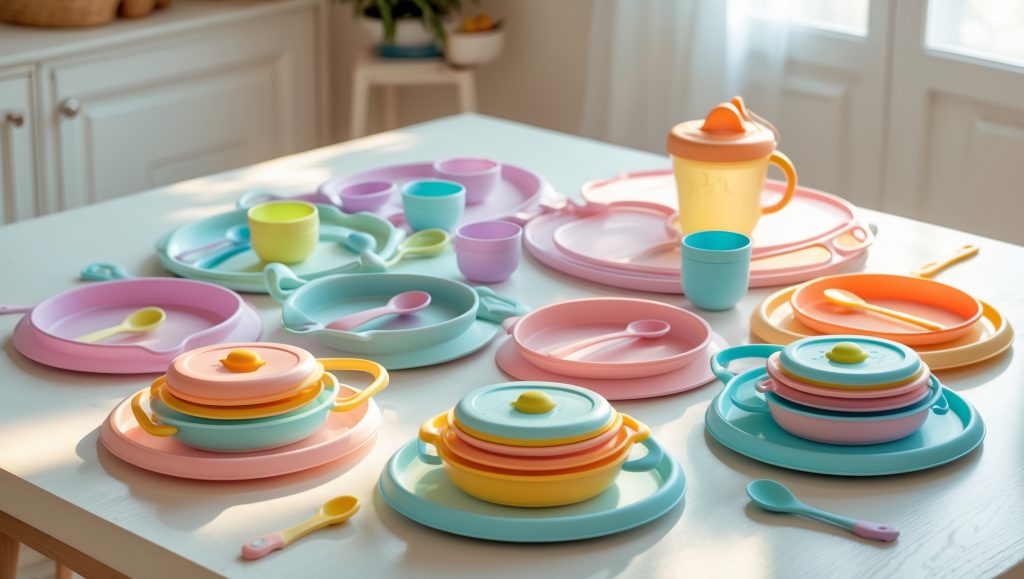
How We Chose
Our top feeding tool picks are based on age-appropriateness, safety, materials, developmental value, convenience, and overall value for families. We considered tools designed to minimize choking hazards, promote independent eating, and withstand the demands of daily use.
1. ezpz Mini Mat — Suction Power for Mess-Free Meals
Why it stands out
The ezpz Mini Mat is a silicone placemat and plate combo that suctions securely to most tables, reducing tip-overs and spills. Its three sections help encourage balanced meals and self-feeding.
Best for
- Babies starting solids
- Toddlers learning to self-feed
Key notes
- Age/Stage: 6+ months
- Materials/Ingredients: 100% food-grade silicone; BPA, BPS, PVC, and phthalate free
- Strengths: Strong suction, dishwasher/microwave safe, promotes independent eating
- Trade-offs: May not fit all highchair trays; higher price point
2. Munchkin Soft-Tip Infant Spoons — Gentle Introduction to Solids
Why it stands out
These spoons have ergonomic handles and flexible, soft tips that are gentle on gums. The shallow bowl helps prevent overfeeding and makes it easier for babies to manage bites.
Best for
- First spoon-feeding experiences
- Babies with sensitive gums
Key notes
- Age/Stage: 4+ months
- Materials/Ingredients: BPA-free plastic, soft silicone tips
- Strengths: Affordable, colorful, dishwasher safe
- Trade-offs: Not designed for self-feeding; tips can stain over time
3. OXO Tot Transitions Straw Cup — Spill-Resistant Independence
Why it stands out
With a weighted straw and easy-grip handles, this cup helps babies develop sipping skills while minimizing spills. The straw’s valve prevents leaks, making it ideal for travel and everyday use.
Best for
- Babies transitioning from bottle to cup
- On-the-go families
Key notes
- Age/Stage: 6+ months
- Materials/Ingredients: BPA- and phthalate-free plastic, silicone straw
- Strengths: Easy for small hands, spill-resistant, clear measurement markings
- Trade-offs: Extra parts to clean; some toddlers may chew the straw
4. Bumkins Silicone Grip Dish — Built for Independent Eaters
Why it stands out
This divided plate features a sturdy suction base and durable silicone construction. The deep walls support scooping and help toddlers learn to feed themselves with less mess.
Best for
- Toddlers practicing self-feeding
- Families seeking easy clean-up
Key notes
- Age/Stage: 6+ months
- Materials/Ingredients: 100% food-grade silicone
- Strengths: Dishwasher/oven safe, vibrant colors, broad compatibility
- Trade-offs: Suction may weaken if plate or surface is wet
5. Avanchy Bamboo Suction Bowl & Spoon Set — Eco-Friendly and Safe
Why it stands out
Combining natural bamboo with a detachable silicone suction base, this set offers a sustainable, safe option for families. The spoon’s silicone tip is gentle for early eaters.
Best for
- Eco-conscious parents
- Babies sensitive to plastic
Key notes
- Age/Stage: 6+ months
- Materials/Ingredients: Organic bamboo, food-grade silicone
- Strengths: Environmentally friendly, strong suction, attractive design
- Trade-offs: Hand wash only; bamboo not microwave safe
6. Re-Play Divided Plates — Durable and Budget-Friendly
Why it stands out
Made from recycled milk jugs, Re-Play’s divided plates are nearly indestructible. They’re wallet-friendly, dishwasher safe, and come in a rainbow of colors to make mealtime fun.
Best for
- Families wanting value and durability
- Older babies and toddlers
Key notes
- Age/Stage: 9+ months
- Materials/Ingredients: Recycled HDPE plastic, BPA/BPS/phthalate free
- Strengths: Stackable, affordable, sturdy
- Trade-offs: No suction base; may slide on smooth surfaces
7. NumNum Pre-Spoon GOOtensils — The ‘Dipper’ Solution
Why it stands out
Designed for babies not yet ready for regular spoons, these pre-spoons let little ones dip, scoop, and self-feed safely. Textured handles boost grip and oral sensory exploration.
Best for
- Babies 6+ months starting solids
- Baby-led weaning families
Key notes
- Age/Stage: 6+ months
- Materials/Ingredients: Food-grade silicone and nylon; BPA/BPS/latex free
- Strengths: No sharp edges, encourages self-feeding, dishwasher safe
- Trade-offs: May not work for very thin purees
8. Stokke Munch Everyday Bib — Waterproof, Comfortable Coverage
Why it stands out
This lightweight, waterproof bib features a deep pocket to catch crumbs and spills. The adjustable closure and soft material make it comfortable for babies and easy on parents.
Best for
- Babies and toddlers who are messy eaters
- Eating at home or on the go
Key notes
- Age/Stage: 6+ months
- Materials/Ingredients: Food-grade silicone; BPA free
- Strengths: Easy to clean, compact for travel, adjustable
- Trade-offs: Silicone bibs may feel bulky to some infants
9. First Essentials by NUK Rest Easy Spoons — Simple and Safe
Why it stands out
These budget-friendly spoons have a built-in rest to keep tips off the table, helping maintain hygiene. Soft tips are gentle on gums, with a long handle to reach into jars and pouches.
Best for
- Families seeking affordable, basic feeding tools
- Travel and daycare use
Key notes
- Age/Stage: 4+ months
- Materials/Ingredients: BPA-free plastic, soft tips
- Strengths: Inexpensive, lightweight, easy to pack
- Trade-offs: Simple design, not as ergonomic as some options
10. Lalo Little Cup — Versatile Open & Straw Drinking
Why it stands out
This cup grows with your child, supporting open cup and straw drinking. Its soft silicone construction and weighted base help prevent tipping, while the removable straw gives flexibility.
Best for
- Babies practicing open cup skills
- Families who want long-term value
Key notes
- Age/Stage: 6+ months for straw, 12+ months for open cup
- Materials/Ingredients: 100% food-grade silicone; BPA/PVC/phthalate free
- Strengths: Easy to hold, versatile, dishwasher safe
- Trade-offs: Some may find the straw difficult to clean
Buying Tips
When choosing feeding tools, pay close attention to age grading and developmental stages—products should always match the recommended age on the packaging. Check for small parts or removable pieces that could pose a choking hazard, especially for babies under 3 years. For silicone or plastic tools, look for BPA/BPS- and phthalate-free materials. Consider divided plates and shallow spoons for self-feeding, and opt for suction bases or weighted designs to minimize spills. Easy-to-clean options and those that withstand dishwasher and microwave use can save time. Always inspect new products for wear, and replace items that show signs of damage.
Verdict
Safe, thoughtfully designed feeding tools can make mealtimes more enjoyable and less stressful for everyone. Choose soft-tipped spoons for early stages, suction mats and divided plates as babies grow, and open or straw cups for developing drinking skills. Mix and match based on your child’s age, eating style, and your family’s preferences. This is not medical advice. For any feeding concerns or questions about allergies, consult your pediatrician.
Does your experience suggest that using divided plates or colorful utensils (like the ones featured) can help toddlers better understand or follow nap and bedtime routines when parents are communicating in two languages?
It’s wonderful that you’re thinking creatively about supporting your toddler’s routines while navigating two languages. Divided plates and colorful utensils can help signal transitions, such as dinnertime leading to nap or bedtime, by creating consistent visual cues. Here are some steps: 1) Use the same plate or utensil colors for meals before sleep times to create routine; 2) Name the colors or sections in both languages to reinforce understanding; 3) Narrate the routine steps clearly, pairing objects with words; 4) Keep utensils and plates age-appropriate—free of small parts and easy to clean for safety. This isn’t medical advice; if you’re concerned, check in with your pediatrician.
My three-year-old sometimes gets really wound up before bed, and mealtime can add to the chaos. Do any of these feeding tools help encourage a calmer, more settled atmosphere at dinnertime or are there any recommendations for making the evening meal part of a calming bedtime routine?
It’s understandable to want dinnertime to feel calm, especially before bed. At three, children benefit from routines that signal the day is winding down. Try using a silicone placemat or divided plate from the article to create a predictable, organized mealtime space. Choose utensils with soft grips that are easy for little hands, minimizing frustration. Keep lighting gentle and limit distractions like screens at the table. Invite your child to help set the table as a simple, soothing task. Always supervise closely, especially with any new tableware. This isn’t medical advice; for ongoing concerns, please check in with your pediatrician.
How would you recommend rotating between these different feeding tools throughout the week, or is it best to stick to one item to keep my toddler’s routine more predictable?
It’s great that you’re thinking about how routine and variety can support your toddler’s feeding experience. You might try introducing one new feeding tool at a time every few days, so your child has a chance to get used to each one without feeling overwhelmed. Keep consistent mealtime routines, but let your toddler help choose between two safe, age-appropriate options when possible to support independence. Observe how your child responds and stick to favorites if certain tools make eating easier or more enjoyable. Always supervise and check for safety issues like small parts or slippery grips. This isn’t medical advice; if you’re concerned, check in with your pediatrician.
How often would you recommend rotating feeding tools like plates and spoons to keep mealtime interesting for a toddler? Should I swap them out weekly or is there a better approach to avoid overwhelm but still offer variety?
It’s thoughtful to want mealtime to stay engaging without overwhelming your toddler. Try rotating feeding tools every few days—about two to three times a week is often enough to provide variety, but not so often that it feels chaotic. Let your toddler be involved in picking their plate or spoon sometimes, which can add an element of control and fun. For safety, always check that each tool is age-appropriate, undamaged, and clean before use. This isn’t medical advice; if you’re concerned, check in with your pediatrician.
Could you suggest which of these products would be the easiest to use for traveling or eating out? We try to keep our diaper bag light, so size and portability are big factors for us.
It’s great that you’re thinking about portability for on-the-go meals. For travel, I recommend choosing the collapsible silicone bowls, which fold flat and take up very little space, and the roll-up silicone bibs with a food catcher—they’re lightweight and easy to clean. Compact utensils with carrying cases are also handy to keep things hygienic. Consider a spill-proof snack container, which is small and helps avoid messes in your bag. Always make sure the materials are BPA-free and easy to sanitize after use. This isn’t medical advice; if you’re concerned, check in with your pediatrician.
I noticed some tools are recommended for babies starting at 6 months. Would these still be effective for a strong-willed three-year-old, or do you suggest different items for older toddlers who feed themselves independently before bedtime?
It’s great that you’re thinking about your independent three-year-old’s needs at mealtime. Many feeding tools designed for 6 months and up—like silicone plates, easy-grip utensils, or non-slip bowls—can still be helpful for older toddlers, especially if your child prefers more control. For a strong-willed three-year-old, look for larger utensils with ergonomic handles and sturdy dishes that resist tipping. Encourage them to help set up and clear away their own dishes, supporting independence. Always ensure items are free of small parts and BPA, and supervise as needed. This isn’t medical advice; if you’re concerned, check in with your pediatrician.
For the ezpz Mini Mat, do you have any tips on how to get the best suction, especially if our highchair tray is slightly textured? I find some mats lose their grip unless everything is perfectly smooth.
You’re not alone—many parents notice suction mats can struggle on textured trays. Start by wiping the tray with a damp cloth to remove dust and crumbs, as even small particles can affect grip. Try pressing down firmly on the center of the ezpz Mini Mat to push out air and create a seal. If the texture is deep, place a smooth, food-safe silicone placemat under the Mini Mat for a flatter surface. Always supervise your baby during meals, as mats may loosen unexpectedly. This isn’t medical advice; if you’re concerned, check in with your pediatrician.
My baby is very sensitive to different textures and sometimes gets fussy about certain materials. Are there any feeding tools from your list that tend to work better for kids with sensory sensitivities, especially during calm morning meals?
It’s understandable to want feeding tools that make mealtimes easier for your sensory-sensitive baby. For calm mornings, try smooth, silicone spoons and bowls, since silicone is gentle on gums and less likely to trigger tactile discomfort than hard plastic or metal. Soft, textured handles can also offer just enough grip without overwhelming sensitive hands. Choose tools free from seams or rough edges to reduce irritation. For babies under one, always supervise to ensure safety, and check that all materials are BPA-free and hypoallergenic. This isn’t medical advice; if you’re concerned, check in with your pediatrician.
With so many silicone options, I wonder if food smells or colors linger after washing, especially when using tomato-based sauces. Do any of these products resist stains and odors better than others in your experience?
It’s understandable to want feeding tools that don’t hold onto strong food smells or colors, especially with messy meals like tomato sauces. While most high-quality silicone is generally resistant to stains and odors, some brands use denser or more polished silicone that helps reduce lingering smells and discoloration. To help, rinse the silicone right after meals, wash thoroughly with warm soapy water, and occasionally soak in a baking soda solution. Avoid abrasive scrubbers to protect the material. Most of the products listed in the article are designed for easy cleaning, but lighter colors may show stains less than clear or very pale silicone. This isn’t medical advice; if you’re concerned, check in with your pediatrician.
Our highchair tray seems pretty narrow. Are there specific products among your recommendations that typically fit smaller highchairs better, or do you have any tips for making sure suction plates actually stay in place?
It’s understandable to want feeding tools that fit well and stay put on a narrow highchair tray. For smaller trays, look for compact suction plates or bowls—many brands now offer mini sizes designed for tight spaces. Before each use, wipe both the tray and suction base with a damp cloth to remove crumbs and oils, which helps the suction grip better. Press down firmly on the center of the plate to create a strong seal. Always supervise in case your child is strong enough to remove the plate. Choose baby-safe, BPA-free materials. This isn’t medical advice; if you’re concerned, check in with your pediatrician.
Our toddler loves to self-feed but is easily distracted, especially during potty training breaks. Are there any plates or bowls here that are especially helpful for encouraging kids to come back and finish their meal?
It’s understandable to want your toddler to stay engaged with meals, especially during busy times like potty training. Sectioned plates or bowls with fun colors and clear dividers can help make food more inviting and easier to spot, which may encourage your child to return to the table and finish eating. Look for options with non-slip bases or suction features so the plate stays put if your toddler is in and out of their seat. Plates with lids can also be helpful for keeping food fresh if a meal is paused. Always supervise eating and choose BPA-free, toddler-safe materials. This isn’t medical advice; if you’re concerned, check in with your pediatrician.
We are packing light for travel and want to keep things simple. Out of your top picks, which feeding tools would you recommend as most multipurpose or compact for a small travel kit?
It makes sense to want lightweight, versatile feeding tools when traveling with little ones. From the list, I’d suggest packing a silicone suction plate (it can double as a plate and bowl and is easy to clean), a collapsible silicone cup, and a set of soft-tipped travel spoons. These items are compact, durable, and suitable for most babies and toddlers, usually from 6 months onward. Always check for secure lids and avoid small loose parts to reduce choking risks. This isn’t medical advice; if you have specific concerns, check in with your pediatrician.
With all the different materials mentioned, like silicone and bamboo, are there any concerns about lingering food odors or tastes especially after repeated dishwasher use? My older child is a bit sensitive to strong smells, so I want to be prepared.
It’s thoughtful that you’re considering how lingering odors or tastes might affect your sensitive child. Silicone can sometimes absorb strong food smells over time, especially after repeated dishwasher cycles; washing with baking soda or lemon can help reduce this. Bamboo is more resistant to odors but should be hand-washed to prevent cracking and bacterial buildup. For both materials, avoid soaking for long periods and dry thoroughly. Always check for wear and replace items as needed. This isn’t medical advice; if you’re concerned, check in with your pediatrician.
For travel, storage space is always tight in our diaper bag. Which of these feeding tools do you find most compact and easy to pack for on-the-go meals with a toddler?
You’re absolutely right that space is precious when traveling with a toddler. From the list, silicone collapsible bowls and spoons are especially compact—they flatten down and are lightweight. A leak-proof snack cup with a flexible lid is also great for packing dry snacks without spills. Consider a foldable silicone placemat to keep surfaces clean, and a small, lidded water bottle for hydration. All these choices are safe for toddlers, easy to clean, and designed for little hands. This isn’t medical advice; if you have specific concerns, check in with your pediatrician.
I have a 7-month-old who likes to throw plates, so I am interested in the suction mats and dishes you mention. Has anyone found that the suction on the ezpz Mini Mat or Bumkins Plate really holds up to persistent tugging and tossing during mealtime?
It’s totally normal for babies at this age to explore by throwing or tugging at dishes. Many parents find that suction mats like the ezpz Mini Mat and Bumkins Plate work well on smooth, clean surfaces, but persistent little hands may still manage to loosen them. Try pressing down firmly to remove air bubbles, and ensure the table or tray is dry before sticking the mat. Always supervise closely, as even the best suction can fail with determined tugging. If your baby pulls it up, gently redirect by showing how to use the dish. This isn’t medical advice; if you’re concerned, check in with your pediatrician.