
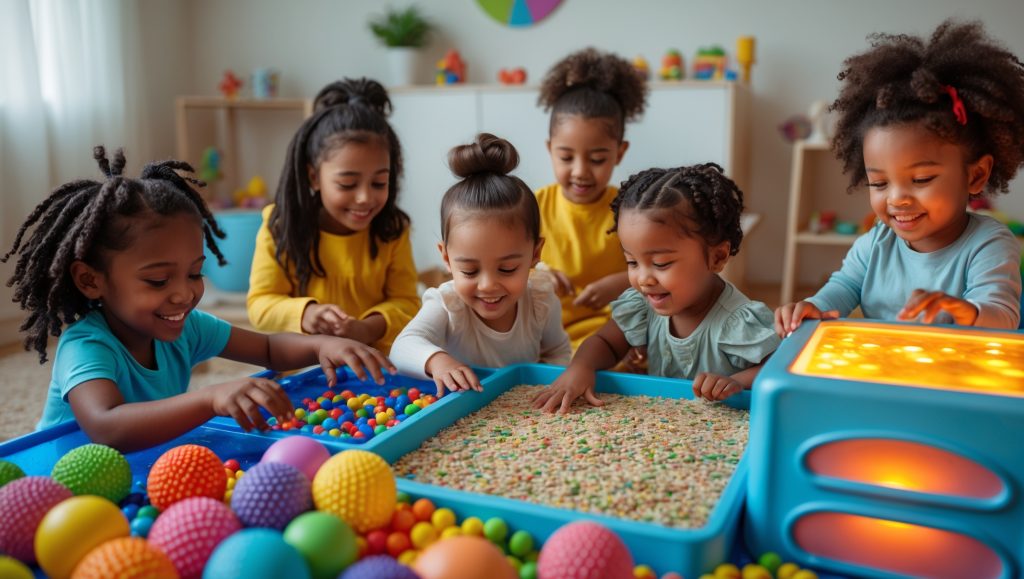
How We Chose
We consulted child development research, gathered feedback from parents and educators, and reviewed the latest sensory toys released or trending in 2025. Our shortlist emphasizes safety, developmental value, hands-on engagement, and versatility for different age groups. We prioritized toys made from high-quality, non-toxic materials and highlighted those that are easy to clean and durable for everyday play.
1. Kinetic Sand – Mesmerizing Tactile Fun
Why it stands out
Kinetic Sand offers a satisfying, moldable texture that never dries out, inviting endless sensory exploration without the mess of traditional sand. It’s captivating for little ones and older kids alike.
Best for
- Children who love tactile play
- Indoor playtime
- Creative sculpting and building
Key notes
- Age/Stage: 3 years and up
- Materials/Ingredients: Non-toxic, hypoallergenic sand and polymers
- Strengths: Encourages creativity, fine motor skills, sensory satisfaction
- Trade-offs: Small grains can escape containers—supervise younger children
2. Sensory Water Beads – Colorful, Squishy Exploration
Why it stands out
Water beads expand when soaked, creating a cool, slippery texture that delights touch and sight. Excellent for sensory bins or sorting activities.
Best for
- Supervised tactile exploration
- Sorting and color activities
- Calming sensory experiences
Key notes
- Age/Stage: 3 years and up (always with supervision)
- Materials/Ingredients: Non-toxic, water-absorbing polymers
- Strengths: Colorful, reusable, soothing
- Trade-offs: Choking hazard if swallowed; not for mouthing children
3. Musical Rainmaker – Engaging Auditory & Visual Play
Why it stands out
This classic tube toy mimics the sound of rain as beads tumble through, captivating both sight and hearing. It encourages cause-and-effect learning and gentle shaking.
Best for
- Infants and toddlers
- Auditory stimulation
- Soothing and focus
Key notes
- Age/Stage: 6 months and up
- Materials/Ingredients: BPA-free plastic, enclosed beads
- Strengths: Multi-sensory, durable, easy to clean
- Trade-offs: Limited play options beyond auditory/visual
4. Sensory Texture Tiles – Explore with Feet & Hands
Why it stands out
These interlocking tiles offer a range of bumpy, squishy, and rough surfaces. Kids can crawl, walk, or press their hands on them, building body awareness and coordination.
Best for
- Toddlers and preschoolers
- Gross motor play
- Those needing tactile input
Key notes
- Age/Stage: 12 months and up
- Materials/Ingredients: Non-slip, BPA-free EVA foam or silicone
- Strengths: Promotes movement, versatile, easy to clean
- Trade-offs: May require space; tiles can separate during energetic play
5. Light Table Panel – Illuminated Sensory Exploration
Why it stands out
A light table transforms everyday objects—translucent blocks, leaves, or sensory jars—into visually stunning play. It’s a magical way to explore colors, shadows, and patterns.
Best for
- All ages (with supervision for young children)
- Visual learners
- Art and STEM activities
Key notes
- Age/Stage: 18 months and up
- Materials/Ingredients: LED panel, plastic, wood
- Strengths: Open-ended, encourages experimentation, calming
- Trade-offs: Higher price point; requires electricity
6. Textured Sensory Balls – Squeeze, Roll, and Explore
Why it stands out
These soft balls come in different sizes and textures—spiky, bumpy, smooth—for rolling, tossing, and sensory squeezing. They support grip strength and hand-eye coordination.
Best for
- Infants and toddlers
- Developing motor skills
- Group play and solo exploration
Key notes
- Age/Stage: 6 months and up
- Materials/Ingredients: BPA-free rubber or silicone
- Strengths: Easy to clean, versatile, engaging for multiple senses
- Trade-offs: May deflate over time; supervise mouthing
7. Sensory Play Scarves – Movement & Imagination
Why it stands out
Lightweight, sheer scarves invite twirling, tossing, and peek-a-boo. They’re a staple for open-ended play and sensory movement, sparking both calm and active moments.
Best for
- Babies, toddlers, preschoolers
- Dance and movement activities
- Imaginative play
Key notes
- Age/Stage: 6 months and up (supervised for babies)
- Materials/Ingredients: Polyester or silk
- Strengths: Affordable, portable, machine washable
- Trade-offs: Can snag or tear with rough use; supervise to avoid tangling
8. Sensory Bottles – Calm Down and Focus
Why it stands out
DIY or pre-made, sensory bottles filled with glitter, oil, beads, or water offer a mesmerizing visual experience. They are great for calming, focus, or quiet time transitions.
Best for
- Preschoolers and up
- Quiet time routines
- Emotional regulation
Key notes
- Age/Stage: 3 years and up
- Materials/Ingredients: Plastic bottle, fillers (water, glitter, beads, oil)
- Strengths: Customizable, reusable, travel-friendly
- Trade-offs: May leak if not tightly sealed; supervise younger children
9. Sensory Dough (Homemade or Store-Bought) – Creative Squeezing
Why it stands out
Sensory dough is soft, pliable, and easy for little hands to manipulate. Whether purchased or homemade, it’s a classic for strengthening fingers and fueling pretend play.
Best for
- Children who enjoy molding
- Fine motor development
- Creative, open-ended play
Key notes
- Age/Stage: 2 years and up
- Materials/Ingredients: Flour, salt, water, food coloring (or non-toxic commercial dough)
- Strengths: Affordable, customizable, easy to make at home
- Trade-offs: Homemade versions may dry out faster; some kids may try to taste
10. Water Table – Splashy Sensory Science
Why it stands out
A water table provides hours of splashy, hands-on fun. Kids can scoop, pour, and experiment with floating and sinking, making it a favorite for warm weather or indoor water play.
Best for
- Toddlers and preschoolers
- Outdoor play
- STEM exploration
Key notes
- Age/Stage: 18 months and up (always with supervision)
- Materials/Ingredients: Durable plastic
- Strengths: Social play, encourages scientific thinking, easy to refill and clean
- Trade-offs: Requires space and water access; supervise to prevent slips
Buying Tips
When selecting a sensory play toy, consider your child’s interests, age, and developmental stage. Look for toys that are easy to clean and store, and always check for safety certifications. For younger children, avoid toys with small parts or choking hazards. Consider the versatility of the toy—can it be used in multiple ways or grow with your child? Finally, don’t overlook DIY options: homemade sensory bins or dough can be just as engaging as store-bought versions.
Verdict
Sensory play toys are more than just fun—they support cognitive, physical, and emotional growth. The best options in 2025 are hands-on, open-ended, and encourage exploration. Whether you’re setting up a simple sensory bin or investing in a light table, the key is to follow your child’s curiosity. With the right tools and a little supervision, sensory play can transform ordinary moments into opportunities for discovery and joy.
FAQ
+Are sensory toys suitable for all ages?
+How do I clean sensory play toys?
+What if my child puts sensory materials in their mouth?
+Can I make sensory toys at home?
+How often should I rotate sensory play options?
+Are there sensory toys for children with sensory processing differences?
+Do sensory play toys need to be expensive?

Sensory play is more than just fun—it’s a crucial part of early childhood development. The right toys can spark curiosity, help kids explore their senses, and build vital skills like fine motor coordination, focus, and creativity. In 2025, the market is bursting with innovative sensory toys designed to engage every sense. From textured balls and squishy fidgets to interactive light boards, these toys invite children to touch, squeeze, shake, and discover. Parents and educators alike appreciate options that are durable, easy to clean, and safe for little hands. When choosing sensory toys, look for items that offer a range of tactile experiences, encourage movement, and inspire imaginative play. These top 10 picks blend classic favorites with new arrivals, ensuring there’s something for every curious child. By introducing a variety of sensory playthings, you’ll nurture not only sensory awareness but also social and emotional growth. Whether at home or in the classroom, these engaging toys are sure to bring joy and learning together for kids across the US.
- Choose toys with diverse textures and features for multisensory exploration.
- Opt for easy-to-clean, durable materials for long-lasting play.
- Involve your child in selecting toys to match their interests and needs.
- Rotate toys regularly to keep sensory experiences fresh and stimulating.
I noticed that several toys like kinetic sand and water beads are recommended for older kids, but my baby is only 9 months and just starting to explore different textures. Are there similar sensory toys for younger infants that are safe if they put things in their mouth?
You’re right to be cautious about sensory toys for a 9-month-old, especially since mouthing is part of their exploration. For infants this age, focus on large, easy-to-clean toys made of food-grade silicone or natural rubber, such as textured teething rings, sensory balls, or soft fabric books with varied textures. You can also offer safe homemade options like a clean wet washcloth (supervised) or a bowl of cooked pasta for messy play. Always supervise closely and avoid any toys with small parts or loose fillings. This isn’t medical advice; if you’re concerned, check in with your pediatrician.
Could you elaborate on how to adapt some of these toys, like the light table panel or kinetic sand, so they stay engaging as a child moves from toddlerhood into early elementary? I’d like to invest in items that can grow with my child’s interests.
It’s wonderful that you’re looking for ways to keep sensory toys engaging as your child grows. For a light table, try gradually introducing more complex activities—start with simple color mixing, then later add transparent letters or number games as your child’s skills develop. With kinetic sand, toddlers can use basic shaping tools, while older children might enjoy themed molds, sensory storytelling, or even simple science experiments. Always supervise play, especially if there are small parts or choking hazards, and ensure the toys are age-appropriate as your child matures. This isn’t medical advice; if you’re concerned, check in with your pediatrician.
We use both English and Spanish at home, and my toddler’s bedtime wind-down includes sensory play. Do you recommend any of these toys, like Kinetic Sand or texture tiles, for calming before sleep in a bilingual routine? Are any better for smooth transitions between languages?
It’s great that you’re nurturing both languages and using sensory play to ease bedtime. For a calming wind-down, consider texture tiles with varied surfaces—they’re quiet, easy to describe in both English and Spanish, and encourage gentle touch. You might softly name textures or colors in each language as your child explores. Kinetic Sand is soothing too, but it can be messy and stimulating for some toddlers, so try it earlier in the evening if bedtime energy rises. Always supervise to ensure safety with small pieces, and keep routines predictable to help signal language transitions. This isn’t medical advice; if you’re concerned, check in with your pediatrician.
You mentioned that certain toys are better suited for specific age groups. If a child is particularly advanced or delayed with their motor skills, would you suggest adjusting the recommended age range for any of these sensory play options?
It’s thoughtful to consider your child’s unique motor skills when choosing sensory play toys. If your child is advanced, you can introduce toys from slightly older age groups, but supervise closely to ensure safety—watch for choking hazards or complex pieces. For children with delayed motor skills, stick with toys for younger ages that have larger parts and simpler actions, helping build confidence and coordination step by step. Always check for age-appropriateness, safe materials, and avoid items with small detachable parts for kids under three. This isn’t medical advice; if you’re concerned, check in with your pediatrician.
My child has just started crawling and puts everything in his mouth. Are there specific signs that a toy is truly safe for unsupervised play at 9 months, especially for something like sensory tiles, or should I always be supervising closely even with age-appropriate picks?
You’re absolutely right to be cautious as your baby explores the world by mouthing objects. For a 9-month-old, always supervise sensory play—even with toys labeled age-appropriate. Signs of safer toys include: no small parts, securely sealed edges, non-toxic materials, and pieces too large to fit in your child’s mouth. Check for certifications such as ASTM or EN71. Even with these features, children under one should not use sensory tiles or similar toys unsupervised, as choking and other risks remain. This isn’t medical advice; if you’re concerned, check in with your pediatrician.
Are the sensory water beads genuinely safe if my child sometimes puts toys in their mouth, and do you have tips for transitioning kids away from mouthing as they get more interested in sensory play?
It’s understandable to be cautious when your child is still mouthing toys, especially with sensory activities. For children under 3, or any child who frequently mouths objects, water beads are not recommended due to choking and ingestion risks. Instead, try large, taste-safe sensory materials like cooked pasta, gelatin, or water play with supervised pouring. Offer chew-safe toys nearby to help redirect the mouthing urge. Gradually encourage hands-only exploration by praising your child when they use their hands or tools. Always supervise closely, and pause water bead play until mouthing fades. This isn’t medical advice; if you’re concerned, check in with your pediatrician.
You mention the musical rainmaker is suitable for 6 months and up. Would you recommend introducing it during independent playtime, or should it only be used when I’m directly engaging with my baby to encourage safe use?
It’s great that you’re thinking about safety and developmentally appropriate play. For a 6-month-old, I recommend using the musical rainmaker together at first—show your baby how it works, and observe how they explore it. This is especially important at this age, as babies may mouth objects or try to shake them vigorously. Once you’re confident your baby can handle it safely and under close supervision, you can allow short periods of independent play in a safe, soft area. Always check for loose parts and ensure the toy is intact. This isn’t medical advice; if you have concerns about safety or development, check in with your pediatrician.
I’m interested in the sensory texture tiles for my 13-month-old, but we have limited space at home. Do you have any storage tips for these tiles when not in use, or are there more compact sensory toy alternatives for small apartments?
It’s great that you’re thinking about both sensory play and making the most of your space. For texture tiles, try storing them in a soft-sided tote or a shallow bin that can slide under furniture or a crib. Stack tiles vertically to save space. For even more compact options, consider textured sensory balls or fabric sensory books, which are easy to tuck away and safe for a 13-month-old. Always supervise play to avoid choking hazards, and pick items designed for infants. This isn’t medical advice; if you’re concerned, check in with your pediatrician.
Given your focus on non-toxic materials, I’m curious if choosing wooden sensory toys over plastic really makes a difference for kids’ health or the environment, especially in the US. Are there reputable brands that make wooden versions of these sensory play essentials?
Your attention to both health and environmental impact is so thoughtful. Wooden sensory toys can be a safer choice, as they’re less likely to contain chemicals like BPA or phthalates often found in some plastics, and they’re usually biodegradable. For toddlers and preschoolers, choose toys with smooth finishes and non-toxic paints. Always supervise play, especially with small parts. Brands like Hape, PlanToys, and Grimm’s are known for rigorous safety standards and sustainable materials. This isn’t medical advice; if you have specific concerns about materials or allergies, check in with your pediatrician.
Does anyone have tips for storing sensory toys like kinetic sand or water beads? We have a small apartment and I’m worried about things spilling or getting everywhere, especially with a little one always on the move.
It’s completely understandable to want to keep things tidy and safe with a little one around, especially in a small space. Try using clear, lidded plastic containers for items like kinetic sand and water beads—these make it easy to see what’s inside and help prevent spills. Store them on a high shelf or in a locked cabinet to keep them out of reach when not supervised. Always check that containers are sealed tightly and avoid storing any small parts or beads where babies or toddlers might access them. This isn’t medical advice; if you’re concerned, check in with your pediatrician.
I’d love to support my two-year-old’s sensory development while also keeping things budget-friendly. Out of your suggestions, which toys tend to offer the best long-term value and engagement without frequent replacements or extra accessories?
You’re thoughtful to balance your child’s development with affordability. At age two, durable options like silicone stacking cups, simple wooden blocks, and textured balls offer lasting value—they’re easy to clean, rarely break, and grow with your child’s skills. These toys encourage open-ended play for years, unlike kits with many small or specialized parts. Always supervise play to prevent choking hazards and check for any wear. This isn’t medical advice; if you’re concerned, check in with your pediatrician.
My child sometimes gets overwhelmed by loud or unexpected sounds. Would the musical rainmaker be too stimulating for sensitive kids, or are there ways to introduce it gently at first?
It’s completely understandable to want to make sensory play comfortable for your sensitive child. The musical rainmaker is usually gentle, but for sound-sensitive kids, try introducing it slowly: first, let them explore it visually without shaking, then softly roll it so the sound is quiet. Let your child control when and how they use it, and watch their reactions closely. Use it in a calm, familiar space, and keep other background noise low. For toddlers, always supervise and ensure the toy has no removable small parts. This isn’t medical advice; if you’re concerned, check in with your pediatrician.
Storage space is a challenge for us with double the toys. Of the options listed, which sensory toys are easiest to store or pack away quickly when it is time to switch between different play activities for each child?
I hear how important it is to keep your space manageable with lots of toys. From the article, sensory toys like stacking cups, soft sensory balls, and textured scarves are typically compact, lightweight, and can be stored in bins or fabric bags for quick clean-up. Consider using clear storage containers to easily sort and rotate items between play sessions. Avoid bulky items like large sensory tables if space is limited. Always check that storage solutions are accessible but secure for your children’s ages to prevent any safety issues. This isn’t medical advice; if you’re concerned, check in with your pediatrician.
How can I fit sensory play sessions with toys like kinetic sand or the light table panel into our daily routine, especially on busy weekdays? Is there an ideal duration or time of day that tends to work best for most kids?
It’s wonderful that you want to include sensory play even with a busy schedule. Try setting up a 10–20 minute window before dinner or after school, when kids often need to decompress. Prepare a bin or tray with kinetic sand, or keep the light table panel ready, so you can quickly transition into play. For younger children (under 3), supervise closely and check for any small pieces. Even short, regular sessions can be beneficial—consistency matters more than duration. This isn’t medical advice; if you’re concerned, check in with your pediatrician.
I see you mention the musical rainmaker as good for babies six months and up. How does it compare to other early sensory toys in terms of engaging a baby’s attention and helping with their early development milestones?
You’re thoughtful to consider how different sensory toys support your baby’s development. A musical rainmaker stands out because it combines visual, auditory, and tactile stimulation—babies watch the colorful beads move, hear the soothing sound, and practice grasping the tube. This multisensory experience can be more engaging than simpler toys like soft blocks or teething rings, and it encourages early skills like tracking with their eyes and holding objects. Always supervise play and check the toy for secure parts, since babies explore with their mouths. This isn’t medical advice; if you’re concerned, check in with your pediatrician.
We’re starting to introduce peanut butter and other allergens in our baby’s diet, and I wonder if any of these sensory toys could accidentally transfer food particles or allergens if used during snack time. Is it better to keep playtime and meals completely separate at this age?
You’re right to think carefully about allergen exposure with your baby. To reduce the risk of accidental transfer, it’s best to keep sensory toys and mealtimes separate, especially for infants and toddlers who often put toys in their mouths. After meals, wash your baby’s hands and wipe down surfaces before starting play. Clean toys regularly and avoid bringing them to the eating area. For now, consider using high-chair-safe toys that are easy to sanitize if you want to entertain your baby during meals. This isn’t medical advice; if you’re concerned, check in with your pediatrician.
I’m concerned about water beads since my child sometimes puts things in his mouth even though he’s 3. Would you recommend skipping this option entirely for bedtime, or are there safer alternatives that offer a similar soothing sensory experience?
It’s completely understandable to be cautious about water beads with a curious three-year-old. Since water beads are a choking risk and not safe if swallowed, it’s best to skip them for now, especially at bedtime when supervision is minimal. Instead, consider safer alternatives like textured plush toys, soft fabric fidget blankets, or silicone sensory balls designed for toddlers. These options can provide soothing tactile input without the risk of swallowing or choking. Always supervise sensory play and choose items labeled safe for your child’s age. This isn’t medical advice; if you’re concerned, check in with your pediatrician.
My child sometimes gets overwhelmed by loud or unexpected noises. Is the Musical Rainmaker gentle enough for sensitive hearing, and do you have suggestions for quiet sensory toys from your list?
It’s understandable to want gentle options for a child sensitive to noise. The Musical Rainmaker typically produces a soft, soothing sound rather than a harsh noise, but I recommend testing it first to ensure it’s comfortable for your child. For quieter sensory play, consider toys like textured balls, silicone fidget poppers, or kinetic sand from the list. These provide engaging sensory input without much sound. Always supervise play and check that toys are age-appropriate and free from small parts if your child is young. This isn’t medical advice; if you’re concerned, check in with your pediatrician.
Some of these sensory toys seem a bit pricey, particularly the light table panel. Are there budget-friendly versions or DIY sensory activities you suggest that offer similar developmental benefits for kids?
It’s completely understandable to look for more affordable ways to support your child’s sensory development. You can create a DIY light table by placing a clear plastic storage bin over string lights or a flashlight, making sure all wires are secure and supervised at all times. For tactile play, fill bins with rice, beans, or water beads (supervised and only for kids past the mouthing stage). Homemade scented playdough is another wonderful, cost-effective option. Always keep age and safety in mind—avoid small parts for children under three and watch for any allergies. This isn’t medical advice; if you’re concerned, check in with your pediatrician.
My child tends to gravitate toward visual sensory play but is less interested in tactile options like sand or texture tiles. Is it important to encourage them to try all types of sensory experiences, or should I let them stick to their favorites?
It’s completely understandable to notice your child’s preferences in sensory play. While it’s natural for kids to favor certain types, gently offering a mix of sensory experiences can help support their development. You might introduce tactile play gradually—try soft textures like fabric or playdough before moving to sand or tiles. Make it playful, join in, and use favorite visual elements (like colorful objects) to scaffold new textures. Always supervise closely, especially with small items, and choose age-appropriate toys to ensure safety. This isn’t medical advice; if you’re concerned, check in with your pediatrician.
Do you have any suggestions for making sensory water beads safer for curious toddlers who still mouth everything? I’m interested in trying them but worry about the choking risk you mentioned.
It’s completely understandable to worry about choking risks with sensory water beads and toddlers who put things in their mouths. For this age, consider alternatives like homemade gelatin cubes or cooked pasta for a similar tactile experience, as these are edible and less hazardous. If you do use water beads, always supervise closely, use a shallow tray, and limit the amount available. After play, clean up beads right away to avoid accidental ingestion. As tempting as water beads are, they aren’t recommended for children under three due to safety concerns. This isn’t medical advice; if you’re concerned, check in with your pediatrician.
Is it practical to include items like kinetic sand or water beads in a bedtime routine, or would the mess be too much to handle right before sleep, especially if we are trying to stick to a calm, predictable schedule?
You’re wise to consider how sensory play fits into your bedtime routine. Messy items like kinetic sand or water beads can be stimulating and tricky to clean up, which might disrupt a calm, predictable wind-down. Instead, try quieter sensory toys—like soft textured fabrics or simple fidget tools—that are easy to tidy and less likely to excite your child before bed. If you do use kinetic sand or water beads, save them for earlier in the day, and always supervise, especially with younger children. This isn’t medical advice; if you’re concerned, check in with your pediatrician.
Does anyone have experience with a two-year-old who gets overwhelmed by loud sounds? I’m wondering if the musical rainmaker is gentle enough for kids sensitive to noise, or are there quieter options on this list for auditory play?
It’s very thoughtful to consider your child’s sensitivity to sound. The musical rainmaker is usually gentle, with a soft trickling noise, but some toddlers may still find it stimulating. Try introducing it slowly, letting your child explore it at their own pace, and be ready to put it away if they seem uneasy. For quieter auditory play, consider using soft fabric crinkle toys or textured shakers filled with rice or beans, as these produce milder sounds and can be easily controlled. Always supervise play to ensure safety with small parts and materials. This isn’t medical advice; if you’re concerned, check in with your pediatrician.
I saw that the light table panel can be used with all ages under supervision. Would this be a good option for a nearly two-year-old, or would it be better to wait until she is a bit older? Are there age-appropriate activities for younger toddlers with this toy?
It’s wonderful that you’re considering sensory play options for your nearly two-year-old. A light table panel can be used safely with toddlers when closely supervised. For this age, keep activities simple: offer large, non-breakable objects like colored scarves or sturdy transparent blocks to explore light and color. Avoid small pieces that could be choking hazards. Limit play to short sessions and always stay within arm’s reach to ensure safety. As your child grows, you can introduce more complex activities. This isn’t medical advice; if you’re concerned, check in with your pediatrician.
My child has a tendency to put things in their mouth, especially during playtime. Are there any safer alternatives to water beads for younger toddlers, or ways to adapt the activity to minimize choking risks?
You’re right to be cautious about choking risks with toddlers who mouth toys. For this age group, consider safer sensory alternatives like edible sensory bins using cooked pasta or gelatin, or large, easy-to-clean silicone sensory balls that cannot be swallowed. If you want to try water bead play, always supervise closely and place the beads in a sealed sensory bag for squishing without loose parts. Regularly inspect all toys for wear, and avoid items smaller than a toddler’s mouth. This isn’t medical advice; if you’re concerned, check in with your pediatrician.
I see that many toys mention non-toxic materials, but I worry about mouthing since my 9-month-old puts everything in his mouth. Which of these toys would you say are safest for babies who explore that way, and how can I be sure the materials are truly safe for daily mouthing?
It’s completely natural to be concerned when your baby explores toys by mouthing them. For a 9-month-old, focus on toys specifically labeled for infants under 12 months and made from BPA-free, phthalate-free plastics or untreated wood, as highlighted in the article. Always check for third-party safety certifications and inspect toys regularly for wear or small parts that could come loose. Wash toys often to keep them hygienic. Supervise play, even with safe materials. This isn’t medical advice; if you’re ever unsure, your pediatrician can help guide you.
My child sometimes rejects new finger foods if the texture is unfamiliar. Would introducing sensory bins or toys like water beads outside of mealtime help her become more comfortable, or is there a better approach for texture sensitivity when eating?
It’s understandable to feel concerned when your child is hesitant about new food textures. Sensory bins and toys like water beads can be helpful for gently exposing her to different textures in a playful, low-pressure way outside of mealtime. Start by offering sensory play with safe, age-appropriate materials, ensuring she is supervised to prevent mouthing or choking. Gradually invite her to explore textures with her hands and then relate those sensations to similar foods. You might also invite her to help with safe food preparation, letting her touch and play with ingredients. This isn’t medical advice; if you’re concerned, check in with your pediatrician.
If my child quickly gets bored with single-use toys, which of your recommended options offer the most versatility for changing up activities without having to buy new items all the time?
It’s great that you want toys that keep your child’s interest and encourage creativity. From the article, options like sensory bins, building blocks, and play dough sets are especially versatile—they can be used in endless combinations with everyday items. Try rotating materials in the sensory bin (rice, pasta, water beads) or set new building challenges. Play dough invites new creations with basic tools or kitchen utensils. All are suitable for ages 3 and up, but supervise closely with small parts or taste-safe materials for younger children. This isn’t medical advice; if you’re concerned, check in with your pediatrician.
When my parents visit from abroad, they sometimes bring small traditional snacks while playing with my toddler. Are toys like sensory water beads or kinetic sand safe to use around grandparents who might set out food, or should we keep toy time and snack time completely separate for safety?
It’s thoughtful to consider safety when grandparents bring snacks during play. To prevent choking or accidental ingestion, it’s best to keep sensory toys like water beads and kinetic sand completely separate from snack time, especially since they can look or feel like food to toddlers. Clean up play areas and hands before serving snacks, and supervise closely if switching between play and eating. Always choose age-appropriate sensory materials and watch for allergies. This isn’t medical advice; if you have concerns about your child’s safety, consult your pediatrician.
My two-year-old is easily overwhelmed by loud or sudden noises. Would the musical rainmaker be too stimulating, or is it gentle enough for kids who are sensitive to sound? Are there volume or material differences to look for when choosing one for a quieter play environment?
It’s completely understandable to want a gentle sensory toy when your toddler is sensitive to noise. Musical rainmakers can vary: some create soft, soothing sounds while others are louder depending on the materials (like wood versus plastic) and the size of the beads inside. For a quieter option, look for rainmakers labeled as ‘soft sound’ or ‘gentle,’ and try them yourself if possible. Smaller toys with fewer or lighter beads generally make less noise. Always supervise play to make sure the toy feels comfortable for your child. This isn’t medical advice; if you’re concerned, check in with your pediatrician.
I see sensory play toys can get pricey, especially some of the bigger items like light panels. For parents on a tighter budget, are there particular toys from your list that offer lots of different play options without breaking the bank?
It’s understandable to want the benefits of sensory play while staying on budget. Many simple toys offer rich experiences: start with textured balls or silicone stacking cups, which can be used for sorting, water play, and building. Sensory scarves or bean bags are also affordable and versatile for tossing, color games, and tactile exploration. Always choose age-appropriate items without small parts for younger kids, and supervise play with small objects. This isn’t medical advice; if you have any concerns about your child’s development or safety, check in with your pediatrician.
I’m curious whether these sensory toys can be used to reinforce language during our pre-nap routines. Have you seen any strategies for pairing sensory play with simple bilingual bedtime phrases, especially with toys like the sensory texture tiles or rainmaker?
It’s wonderful that you want to use sensory play to support bilingual language routines before naps. Try naming textures or sounds together as your child explores the tiles or rainmaker, saying phrases in both languages like ‘soft/duro’ or ‘listen/escucha.’ Describe actions simply as you play: ‘We tap the tile,’ then repeat in the other language. Use the toys to act out or label bedtime words—’goodnight,’ ‘sleep,’ ‘tranquilo.’ Keep phrases short and consistent, matching the sensory experience. Always supervise, making sure the toys are age-appropriate and safe for quiet play. This isn’t medical advice; if you’re concerned, check in with your pediatrician.
Some sensory toys can get expensive, especially when buying for more than one child. Are there budget-friendly alternatives or DIY versions of the top toys you listed that still provide good developmental value?
It’s understandable to look for affordable ways to support your children’s sensory play. You can make simple sensory bins at home using dried beans, rice, or pasta—just supervise closely for children under 3 to prevent choking. Homemade playdough is another budget-friendly option and lets you control ingredients for allergies. Try filling reusable containers with water and objects of different textures or temperatures for safe tactile exploration. For auditory input, pots, pans, and sealed jars with beads work well. This isn’t medical advice; if you’re concerned, check in with your pediatrician.
My child is sensitive to loud and unpredictable sounds, so I’m a bit concerned about the Musical Rainmaker toy. Is there any way to adjust the volume or tone of the rainmaker, or are there quieter alternatives you’d recommend from your list for children who are easily startled by noise?
It’s completely understandable to be mindful of toys that may overwhelm a sound-sensitive child. Most Musical Rainmaker toys don’t have adjustable volume, and the sound can vary depending on how gently it’s tilted. For a quieter sensory experience, you might try options like soft sensory balls, textured fabric books, or water play mats from the article, all of which offer gentle tactile input without noise. Always supervise sensory play and check for age-appropriate, safe materials. This isn’t medical advice; if you’re concerned, check in with your pediatrician.
I am interested in incorporating Montessori principles at home, so I’m wondering which of these sensory toys align best with self-directed learning. Have you found certain items work particularly well for fostering independence?
It’s wonderful that you’re interested in supporting self-directed learning with Montessori principles at home. From the sensory toys discussed, items like wooden stacking blocks, sensory bins with natural materials, and lock-and-latch boards align beautifully with Montessori values by encouraging hands-on, open-ended exploration. Offer these toys in an accessible space so your child can choose when and how to play. Rotate toys occasionally to maintain interest without overwhelming choices. Always supervise young children, especially with small parts or choking hazards, and choose toys appropriate for their age and developmental stage. This isn’t medical advice; if you’re concerned, check in with your pediatrician.
Could you share some ideas on how to include sensory play toys like the kinetic sand or light table panel in a daily routine without making things too messy or overwhelming for a busy family?
It’s great that you want to bring sensory play into your routine without adding stress. Try setting up a dedicated tray or shallow bin for kinetic sand to contain the mess and clean up easily. For light table panels, keep a small basket of translucent toys nearby so setup is quick and tidy. Limit sensory play to short, predictable times, like after school or before bath, to keep it manageable. For younger kids, always supervise closely to prevent mouthing small parts. This isn’t medical advice; if you’re concerned, check in with your pediatrician.
My son is sensitive to certain textures and sometimes refuses to touch new materials. Would you recommend starting with something like Kinetic Sand or textured tiles for a child who is hesitant about sensory play, or is there a gentler option among your top picks?
It’s understandable to want a gentle approach when your child is sensitive to textures. For kids who are hesitant, it can help to start with soft, familiar materials like smooth silicone sensory balls or fabric-based toys, which are less intense than Kinetic Sand or textured tiles. Offer these items alongside your child, letting him watch or explore at his own pace, and avoid any pressure to touch. Always supervise closely, especially with new toys, to ensure safety. This isn’t medical advice; if you’re concerned, check in with your pediatrician.
My child is very sensitive to loud noises but loves exploring new materials. The Musical Rainmaker sounds interesting, but does it make a gentle sound or could it be triggering if shaken enthusiastically? Are there quieter options for auditory play?
It’s great that you’re tuned into your child’s sensitivities while supporting their sensory exploration. The Musical Rainmaker typically produces a gentle rain-like sound, but if shaken vigorously, it can be louder and might be startling for noise-sensitive children. For quieter auditory play, consider soft shakers filled with fabric or rice, or use sensory bottles with water and small beads (sealed tightly for safety). You can also let your child help choose the volume by experimenting together, always supervising closely and checking for small parts. This isn’t medical advice; if you’re concerned, check in with your pediatrician.
My child gets overwhelmed by noise sometimes, so I’m cautious with anything that involves sound. For the Musical Rainmaker, do you find that the volume is gentle enough for sensitive kids, or are there quieter sensory toy options on your list you would recommend?
It’s thoughtful to consider your child’s sensitivity to noise. The Musical Rainmaker usually has a soft, soothing sound, but some children still find it overstimulating. For a quieter sensory experience, you might try the silicone poppers or textured balls from the list, as they offer tactile input without any sound. Water mats or fabric sensory books are also calm options. Always supervise play, especially with smaller items and younger children. This isn’t medical advice; if you’re concerned, check in with your pediatrician.
I often bring over traditional snacks like sticky rice balls when my granddaughter visits, so I’m curious about potential messes with toys like kinetic sand or water beads. Are there sensory toys from your list that are particularly easy to clean up after family meals or playdates involving cultural foods?
It’s thoughtful of you to consider clean-up after meals and playdates. From the list, sensory toys like textured silicone fidget pads or interlocking building blocks are much easier to wipe down and keep tidy compared to kinetic sand or water beads, which can get sticky or scatter easily. Opt for large, washable items without small crevices—these resist food residue and are safe for young children (watch for choking hazards if under age 3). Always supervise play when food is involved, and wash toys with gentle soap afterwards. This isn’t medical advice; if you have specific concerns, check with your pediatrician.
Could you clarify how to safely introduce kinetic sand to a highly active toddler who still tends to put things in their mouth? I noticed you recommend it for ages 3 and up, but what if my child is only 2.5 and very curious?
It’s great that you want to encourage sensory play while keeping your curious toddler safe. For a 2.5-year-old who is still mouthing, wait until this stage passes before using kinetic sand. If you decide to try it, always supervise closely, offer only a small amount on a tray, and remind your child that it’s for touching, not tasting. You might also choose taste-safe alternatives, like homemade edible doughs, in the meantime. This isn’t medical advice; if you’re concerned, check in with your pediatrician.
My child has some sensitivities to certain textures, especially rough or bumpy surfaces. Are the sensory texture tiles gentle enough for children with mild tactile aversions, or should we stick to the softer materials until he gets used to varied textures?
It’s very thoughtful to consider your child’s texture sensitivities when choosing sensory toys. For children with mild tactile aversions, it’s best to start with the softest, smoothest texture tiles first, allowing your child to explore them at their own pace. Gradually introduce slightly varied textures, always observing your child’s reactions and stopping if they seem uncomfortable. You might also try placing a thin fabric over rougher tiles at first, so your child can interact without direct contact. Always supervise play and avoid any tiles with detachable small parts for safety. This isn’t medical advice; if you’re concerned, check in with your pediatrician.
How would you recommend storing toys like kinetic sand or multiple sensory texture tiles so they are easy for kids to access but don’t create too much clutter in a small play area? We have limited space and I want to keep things manageable.
You’re wise to think about keeping sensory toys accessible yet tidy, especially in a small space. Try using stackable, clear plastic bins with lids to store items like kinetic sand—choose ones that are easy for your child to open and close. For sensory texture tiles, a shallow, lidded container or a low tray that slides under furniture can work well. Label bins with pictures or words so your child can help with cleanup. Always supervise younger children to prevent choking hazards and make sure lids are secure to avoid spills. This isn’t medical advice; if you’re concerned, check in with your pediatrician.
My child sometimes gets overwhelmed by too much noise or bright lights. Would you recommend any of these sensory toys, or common household items, as better options for kids who are sensitive to certain sensory input?
It’s thoughtful of you to consider your child’s sensory sensitivities. For kids who are easily overwhelmed by noise or bright lights, choose toys with soft textures, calming colors, and minimal sounds—like textured balls, soft fabric blocks, or simple water play. Household items such as cotton scarves, playdough, or a bin of dry rice can also provide gentle sensory experiences without overstimulation. Always supervise play, especially with small parts or edible items. This isn’t medical advice; if you’re concerned, check in with your pediatrician.
Is it safe to let siblings of different ages share these sensory toys, particularly the water beads? How can families set simple ground rules to make sure younger kids don’t access items that could be hazardous to them?
It’s great that you’re thinking about safety with siblings of different ages. Water beads in particular can pose a choking risk or cause harm if swallowed, especially for children under three. To keep everyone safe, try these steps: 1) Reserve small or hazardous items like water beads for older children only, storing them out of reach when not in use. 2) Set a family rule that certain toys are for ‘big kids’ and can only be used when an adult is present. 3) Supervise all sensory play sessions, especially when both younger and older siblings are involved. 4) Choose age-appropriate toys for each child, avoiding small parts for little ones. This isn’t medical advice; if you’re concerned, check in with your pediatrician.
I noticed that kinetic sand can escape containers, and the sensory water beads can be a choking hazard. Do you have suggestions for ways to safely introduce these to younger siblings who might be nearby during playtime?
It’s great that you’re thinking ahead about keeping little ones safe during sensory play. To safely introduce kinetic sand and water beads around younger siblings, try these steps: 1) Set up sensory play in a gated area or on a wipeable surface, out of reach of babies and toddlers. 2) Use a large, deep tray with high sides to help contain kinetic sand. 3) Choose larger water beads (over 1 inch) or opt for taste-safe alternatives like cooked pasta for under-threes. 4) Always supervise closely and put away all materials right after play. This isn’t medical advice; if you’re concerned, check in with your pediatrician.
We have limited space at home and I’m worried about the sensory tiles taking up room or separating during play. Is there a way to store them compactly or an alternative that offers similar tactile benefits but is easier to put away?
Your concern about space and storage is completely understandable. For sensory tiles, try stacking them and storing in a soft bin or under a bed to keep them together and compact. You can also tape the tiles together during play to prevent separation. If you want an alternative, consider sensory mats that roll up, or textured fabric swatches in a zippered pouch, both of which provide tactile experiences but are easy to store. Make sure all pieces are safe for your child’s age and check regularly for wear. This isn’t medical advice; if you’re concerned, check in with your pediatrician.
Does your team have any recommendations for affordable sensory toys similar to the light table panel? That one sounds amazing, but I am trying to stay within a tight budget for gifts this year.
It’s great that you want to provide sensory play opportunities while being mindful of your budget. Consider making a DIY light panel with a clear plastic storage bin and LED string lights, always supervising use and checking for overheating. You could also try translucent building blocks or colored plastic cups for light play—many dollar stores carry these. Even simple items like gel window clings or plastic mirrors can create engaging visual sensory experiences, as long as you check for age-appropriate safety (no sharp edges or small parts for little ones). This isn’t medical advice; if you’re unsure, consult your pediatrician.
We like to do sensory play with grandparents after family meals that involve lots of spices and strong scents. Are there any toys in your top 10 that you would suggest pairing with these experiences, or should certain materials be avoided if hands aren’t completely clean?
It’s wonderful that you’re including sensory play with grandparents, especially after flavorful family meals. Since some sensory toys—like playdoughs or textured balls—can absorb food oils or spices from hands, I suggest using washable, non-porous toys such as silicone stacking blocks or smooth plastic sensory bottles from the top 10 list. Have everyone wash hands before play to avoid lingering food allergens or stains, especially if babies or toddlers are involved. Avoid materials like fabric fidgets or kinetic sand right after meals to prevent residue buildup and potential irritants. This isn’t medical advice; if you’re concerned, check in with your pediatrician.
Do you have advice for parents looking to create similar sensory play experiences using everyday household items instead of purchasing new toys, especially for families on a tight budget?
It’s wonderful that you’re looking for creative, budget-friendly ways to support your child’s sensory play at home. Start by gathering safe, everyday items like dry pasta, rice, or beans for filling bins—just supervise closely to avoid choking hazards, especially with children under three. Offer different textures, such as fabric scraps, sponges, or silicone kitchen tools, for tactile exploration. Fill a tub with water and measuring cups for splashy fun, always within arm’s reach for safety. You can also try homemade playdough (with edible ingredients for young toddlers) or a simple scent-matching game using spices in containers. This isn’t medical advice; if you have any concerns, check in with your pediatrician.
My child gets overwhelmed by loud noises. Of the toys you listed, which would be most suitable for children who are sensitive to sound but still need engaging sensory play opportunities?
It’s great that you’re looking for sensory play options that respect your child’s sound sensitivity. For children who are easily overwhelmed by loud noises, focus on toys from the list that have quiet, tactile features—like textured balls, soft fabric books, or water beads. Avoid toys with integrated sound or vibration. Always supervise play, especially with items that could be a choking hazard, and check materials for any potential allergens. This isn’t medical advice; if you’re concerned, check in with your pediatrician.
Do you have any tips for storing sensory toys like kinetic sand and water beads to minimize clutter and mess in a small living space? I want to offer a variety of textures but worry about it spreading all over the house.
It’s completely understandable to want to keep sensory play inviting but contained, especially in a small space. Try using clear, lidded plastic bins for each material—this helps with both organization and quick clean-up. Store items like kinetic sand and water beads in airtight containers to prevent drying or spills, and keep them on a high shelf if you have younger children for safety. Designate a washable mat or tray as a ‘sensory zone’ to encourage mess to stay in one place. Remember, supervise closely to prevent choking hazards, especially for kids under three. This isn’t medical advice; if you’re concerned, check in with your pediatrician.
For families who want to rotate sensory toys to keep things interesting without buying too many, how could we create a play schedule or routine using just two or three of the options from your list?
It’s great that you want to keep sensory play fresh while staying mindful about toy quantity. Try picking two or three sensory toys from the list that offer different types of stimulation (for example, a textured ball, water beads, and stacking cups). Rotate them by using one toy per day and switching every few days, or dedicate certain days of the week to each—like ‘Texture Tuesdays’ and ‘Water Play Fridays’. Observe which toys your child enjoys most and adjust the routine as needed. Always supervise closely and choose age-appropriate items free from choking hazards or allergens. This isn’t medical advice; if you’re concerned, check in with your pediatrician.
I’m curious how the durability and quality of toys in monthly subscription boxes typically compare to the specific sensory toys you highlight here. Are the subscription toys usually as safe and long-lasting?
Your question about toy safety and durability is so important for peace of mind. Subscription box toys can vary in quality—some match the sturdy, well-tested toys reviewed in the article, but others might use lighter materials or have more delicate parts. First, always check that the toys are labeled for your child’s age and meet safety standards. Second, inspect subscription toys for small parts, sharp edges, or loose pieces before use. Third, with any new toy, supervise initial play to ensure safety and see how it holds up. This isn’t medical advice; if you’re concerned, check in with your pediatrician.
When introducing sensory play for the first time, is it better to start with larger, non-detachable items like the light table panel or musical rainmaker to minimize the risk of small parts, rather than toys with loose components such as water beads?
It makes sense to want to minimize any safety risks when starting sensory play with your child. Beginning with larger, non-detachable items like a light table panel or musical rainmaker is a smart choice, especially for toddlers or children who still mouth objects. Start by supervising your child closely and observe how they interact. Introduce new textures and sounds gradually, and always check for age recommendations on toys. Avoid loose components, like water beads, until your child is older or no longer prone to mouthing. This isn’t medical advice; if you’re concerned, check in with your pediatrician.
My toddler sometimes gets overwhelmed by loud or bright toys. Which of the sensory play picks on your list would be most suitable for a child who is sensitive to too much sensory input?
It’s completely understandable to want gentle sensory play options for a sensitive toddler. From the top 10 list, look for toys with soft textures and calming colors, like silicone stacking cups or fabric sensory balls, which offer tactile exploration without loud sounds or flashing lights. Water play mats and kinetic sand are also soothing and allow quiet, hands-on engagement. Always supervise play, especially with younger toddlers, and check for safe, non-toxic materials free from small parts. This isn’t medical advice; if you’re concerned, check in with your pediatrician.
I’m interested in choosing more sustainable options for sensory toys. Based on your list, how do wooden sensory toys compare to the plastic or polymer-based ones in terms of environmental impact and durability, especially for families in the US looking to reduce plastic use?
It’s great that you’re thinking about sustainability in your toy choices. Wooden sensory toys generally have a lower environmental impact compared to plastic or polymer-based ones—they’re biodegradable, often made from renewable materials, and typically last longer with proper care. For US families aiming to reduce plastic use, look for unfinished or non-toxic finished wood toys, and check for ASTM or CPSIA compliance for safety. Always supervise young children, especially those under 3, to avoid choking hazards from small parts. This isn’t medical advice; if you’re concerned, check in with your pediatrician.
Do you have any guidance on how to fit sensory play into a daily routine, especially for a picky eater? I find it hard to know when or how long is best for this age group.
It’s understandable to feel unsure about adding sensory play to a busy day, especially with a picky eater. Try starting with short sessions—just 10–15 minutes—right after a meal or snack when your child is relaxed but not hungry. Set up a safe, easy-to-clean space and offer age-appropriate toys with different textures, avoiding small parts and allergens. Involve your child in choosing materials to boost their interest. Consistency helps, so aim for the same time each day, but stay flexible if your child seems tired or overstimulated. This isn’t medical advice; if you’re concerned, check in with your pediatrician.
Are any of the toys you highlighted possible to combine with foods or snacks for a sensory mealtime activity, or should sensory and eating experiences be kept separate at this age? Managing mess is always a challenge, but I want to encourage exploration safely.
It’s wonderful that you want to encourage safe exploration, even if messes can be challenging. For toddlers and preschoolers, combining food with sensory play can support positive associations with mealtime, as long as you use age-appropriate, soft, non-chokable foods and supervise closely. Try silicone sensory mats with yogurt or purees, or let little ones scoop dry cereal with measuring cups. Always avoid small parts around children under three, and keep non-food toys separate from food play for hygiene. This isn’t medical advice; if you’re concerned, check in with your pediatrician.
When setting up a toy rotation for sensory toys, should I group similar types together, like all tactile toys in one week, or is it better to mix a variety each time? I’d love some guidance on making sure my child benefits from the diversity of sensory experiences.
It’s wonderful that you want to give your child a rich sensory experience. Mixing a variety of sensory toys each rotation usually helps children engage different senses and skills, supporting fuller development. Try including one or two toys from each category—like tactile, visual, and auditory—in every set. Rotate toys every week or two to keep things fresh and watch for your child’s interests. For younger children, make sure all toys are age-appropriate, free from small parts, and easy to clean. This isn’t medical advice; if you have concerns about your child’s sensory development, please consult your pediatrician.
Could you share more tips on introducing sensory play to a daily routine for a 7-month-old? I’m trying to figure out the best time of day and length of play sessions for my baby’s age and attention span.
It’s wonderful that you want to thoughtfully add sensory play to your 7-month-old’s day. At this age, try scheduling short 5–10 minute sessions after naps or feeds when your baby is alert and content. Use safe, simple toys like soft fabric squares, textured balls, or water mats, always supervising closely to prevent choking or mouthing hazards. Consider making it part of tummy time or playtime on the floor. Watch your baby’s cues—if they seem tired or overstimulated, it’s fine to pause and try again later. This isn’t medical advice; if you’re concerned, check in with your pediatrician.
If I am on a strict budget, which single sensory toy from your top picks would you suggest as offering the most versatile play experiences across different ages? I want something durable that will stay relevant as my child grows.
It’s great that you’re looking for a long-lasting, versatile sensory toy that fits your budget and grows with your child. Of the top picks, a classic set of textured sensory balls is often the most adaptable: babies can explore them with touch and mouth (choose BPA-free, large balls to avoid choking hazards), toddlers can roll or toss them, and older kids can include them in imaginative games. They’re easy to clean and durable, making them suitable for various ages. Just supervise play with younger children and check for any wear over time. This isn’t medical advice; if you’re concerned, check in with your pediatrician.
My child still mouths objects sometimes, especially when excited. The article notes supervision, but do you have any specific guidance for balancing safety with letting kids explore interesting textures, especially for things like water beads and sensory tiles?
It’s understandable to want your child to safely enjoy sensory play while still putting objects in their mouth. For younger children or those who mouth objects, always supervise closely and choose larger items that can’t be swallowed. Avoid water beads entirely, as they’re a choking hazard and can be harmful if ingested. For sensory tiles, select designs with securely sealed edges and no small detachable pieces. You can also offer safe alternatives like textured silicone toys made for teething. Encourage exploration with clean hands and explain which items are for touching only. This isn’t medical advice; if you’re concerned, check in with your pediatrician.
Some of the toys you mention say ‘3 years and up.’ Are there any safe adaptations or supervised ways to introduce things like kinetic sand or water beads to an interested two-year-old?
It’s great that you want to support your two-year-old’s curiosity about sensory play. For younger toddlers, you can offer alternatives like homemade edible sand (using flour and oil) instead of kinetic sand, and try water beads made from tapioca pearls, which are safer if accidentally tasted. Always supervise closely to prevent choking, as toddlers may still mouth objects at this age. Keep play sessions brief and use a shallow tray to help contain materials. This isn’t medical advice; if you’re concerned, check in with your pediatrician.
Are there any budget-friendly alternatives to a full-size light table panel for families who want to offer illuminated sensory play but have limited space or resources at home?
It’s wonderful that you want to bring illuminated sensory play into your home on a budget. You can use a large, shallow, clear plastic storage bin with a string of LED lights taped underneath for a simple DIY light table. A baking sheet lined with a white plastic cutting board and lit from below with battery-operated puck lights also works nicely. For safety, always supervise play, use cool-touch lights, and avoid loose batteries or cords with young children. This isn’t medical advice; if you’re concerned, check in with your pediatrician.
You mentioned that the sensory texture tiles are great for gross motor play but can separate during energetic activity. If we use them in a small apartment, do you have recommendations for keeping the tiles together or for similar products that are more compact?
It’s great that you want to make sensory play work in a small apartment. To keep texture tiles together, try placing them on a non-slip rug pad or using double-sided carpet tape underneath—just check that the adhesive is safe for your floors and easy to remove. Some parents also use larger interlocking foam mats as a base, arranging the texture tiles on top for extra stability. If you’re looking for something more compact, consider textured sensory stepping stones or smaller, interlocking tactile mats designed for limited spaces. Always supervise play to ensure safety. This isn’t medical advice; if you’re concerned, check in with your pediatrician.
We want to give sensory play a try but are working within a fairly tight budget. Are there any items from your recommended picks that are both affordable and easy to maintain for a family with a busy 9-month-old?
It’s great that you want to explore sensory play, even with budget constraints. From the article, textured balls and stacking cups are two affordable, easy-to-clean options suitable for a 9-month-old. Both encourage tactile exploration and fine motor skills, and they’re usually made of safe, washable materials. Always supervise your baby during play to prevent choking, and check that items are free from small parts and sharp edges. This isn’t medical advice; if you’re concerned, check in with your pediatrician.
You mentioned that some of the toys, like sensory tiles, might need extra space. Could you suggest alternatives from your list that work well in smaller living areas or for families with limited playroom storage?
It’s great that you’re thinking about fitting sensory play into a smaller space. For compact living areas, you might try sensory balls, textured bean bags, or stacking cups from the list—these toys store easily in bins or drawers and can be used on a tabletop or lap. Felt busy boards or sensory bottles are also space-saving and portable, offering a variety of textures and activities without taking up much room. Always supervise young children with small pieces and check for age-appropriate materials. This isn’t medical advice; if you’re concerned, check in with your pediatrician.
I noticed that some sensory texture tiles can come apart during energetic play. Do you have any recommendations for keeping them connected, or tips for making sure they stay safe for a very active toddler?
It’s understandable to want sensory tiles to stay secure, especially with an active toddler. First, choose interlocking tiles designed for durability and double-check that all pieces are snapped together before playtime. Place the tiles on a non-slip mat or rug to prevent sliding. Supervise closely to spot any loose pieces quickly, as small parts can be a choking hazard at this age. If a tile repeatedly comes apart, set it aside until your child is older or reinforce it temporarily with wide, non-toxic tape around the edges. This isn’t medical advice; if you’re concerned, check in with your pediatrician.
My child sometimes gets overwhelmed with too much noise and texture. For children who are sensitive to sensory input, are there certain toys on your list you’d recommend starting with, or should I introduce only one new item at a time?
It’s completely understandable to want to support your child’s sensory comfort and avoid overwhelm. For sensitive children, consider starting with just one new sensory toy at a time, ideally one with gentle textures and minimal noise—like soft tactile balls or simple water play items mentioned in the article. Introduce the toy in a calm environment, let your child explore at their own pace, and watch for signs of enjoyment or discomfort. Always supervise play, especially with younger children or small parts. This isn’t medical advice; if you’re concerned about your child’s reactions, please check in with your pediatrician.
Do you have advice for introducing sensory water beads to kids who are still exploring the world with their mouths, or should I completely avoid them until my toddler is older?
It’s very wise to be cautious about sensory play when your toddler is still mouthing objects. For children under three, water beads pose a significant choking hazard and can be dangerous if swallowed or inserted into ears or nose. Instead, consider safer sensory options like water play, edible dough, or textured fabrics. Always supervise closely during sensory activities, regardless of age. When your child is older and no longer mouths objects, you can safely introduce water beads with ongoing supervision. This isn’t medical advice; if you’re concerned, check in with your pediatrician.
My child sometimes gets overwhelmed with loud or very bright toys. Are any of the sensory toys on your list especially gentle or better for little ones with mild sensory sensitivities, particularly in a busy daycare environment?
It’s completely understandable to want gentle options for a child who can get overwhelmed by strong sensory input, especially in a busy daycare. From the list, look for toys with soft textures, muted colors, and no flashing lights or loud sounds—like textured balls, soft fabric fidget toys, or simple stacking cups. Avoid toys with electronic sounds or intense visual effects. Supervised play with calming items such as kinetic sand (age 3+, watch for mouthing) or water beads (age 4+, always with close supervision) may also help. Every child is different, so observe what feels comfortable for yours. This isn’t medical advice; if you’re concerned, check in with your pediatrician.
You mentioned that supervision is key with water beads, but I’m still a bit concerned about safety for kids who put things in their mouths. Are there any sensory toys on your list that are especially safe for younger toddlers prone to mouthing items?
Your concern about mouthing is very understandable, especially with curious toddlers. For little ones under three, it’s best to avoid water beads and toys with small or loose parts. Instead, consider large, one-piece sensory toys from the list, like textured silicone balls or sturdy, food-grade silicone stacking cups. Soft fabric sensory books are also a safe choice, as they’re usually free of choking hazards and easy to clean. Always check the manufacturer’s age recommendation and inspect toys regularly for wear. This isn’t medical advice; if you have any worries, your pediatrician is a great resource.
My toddler wakes up really early and I’m always looking for activities that will keep things quiet so the rest of the house can still sleep. Of the toys you reviewed, which ones are best for self-play early in the morning without making much noise?
Early risers can make mornings a challenge, and it’s great that you’re looking for calm, independent play options. From the toys reviewed, soft-textured sensory balls, silicone stacking cups, and fabric busy boards are excellent quiet choices for toddlers. Set these out within easy reach, so your child can explore safely while you supervise nearby. Avoid toys with hard plastic parts, electronic features, or anything that might rattle. Always check for age-appropriateness—no small pieces and nothing that poses a choking hazard. This isn’t medical advice; if you’re concerned, check in with your pediatrician.
You mentioned kinetic sand can be a bit messy with small grains. If both my twins are playing together but one is still mouthing objects, would you suggest skipping kinetic sand or are there strategies for using it safely?
It’s thoughtful to consider the safety of both your twins during sensory play. If one child is still mouthing objects, kinetic sand does pose a risk of ingestion or choking due to its small grains. You could wait until both are past the mouthing stage, or try these strategies: set up play when the mouthing child can be closely supervised; use larger, edible sensory materials like homemade play dough for both; or offer kinetic sand only during one-on-one sessions with your older twin. Always supervise closely and keep materials out of reach when not in use. This isn’t medical advice; if you’re concerned, check in with your pediatrician.
I noticed the light table panel is recommended for a wide age range. How can I adapt its use for a toddler versus a preschooler to match their different attention spans and interests?
Great observation—tailoring sensory play to your child’s age really helps their engagement and learning. For toddlers, keep activities simple: offer large, colorful shapes or safe textured materials and let them explore freely, always supervising to prevent mouthing small pieces. For preschoolers, you can add sorting, color-matching, or simple pattern games to encourage longer focus and new skills. Allow preschoolers to experiment with tracing letters or making pictures using transparent objects. Always check for age-appropriate, non-toxic materials and supervise both groups to ensure safety. This isn’t medical advice; if you’re concerned, check in with your pediatrician.
When recommending these toys, how do you suggest fitting sensory play into our daily routine for a busy toddler? Is there an ideal time of day or duration you’ve found works best for this age group?
It’s great that you want to make sensory play a regular part of your toddler’s day. For busy toddlers, short sessions—about 10–20 minutes—work well, ideally at times when your child is alert but not overly tired, such as after a snack or nap. Try setting up a sensory play station where your child can safely explore while you prepare meals or handle quick tasks. Rotating one or two toys at a time can keep things fresh and manageable. Always supervise to ensure safety, especially with small parts or messy materials. This isn’t medical advice; if you’re concerned, check in with your pediatrician.
I’m curious about cleaning and storing sensory toys—do you have tips for parents with limited space or budget who want to try more sensory activities at home?
It’s great that you want to create sensory play opportunities while working with limited space and budget. Start by using easy-to-clean household items like plastic containers, silicone utensils, or ziplock bags for sensory play—many of these can be wiped down or run through the dishwasher. Store small items in labeled bins, baskets, or even resealable bags that fit neatly in a closet or under a bed. Rotate a few toys at a time to avoid clutter and keep activities fresh. Always check toys for loose parts or potential allergens, especially for younger children. This isn’t medical advice; if you’re concerned, check in with your pediatrician.