
Overview
Open-ended toys continue to be a cornerstone of child-centered play, and the Grimm’s Large Rainbow Stacker is a perennial favorite among parents, educators, and child development specialists alike. Crafted in Germany from sustainably sourced wood, this iconic toy has become synonymous with creativity, versatility, and enduring quality. In 2025, as families increasingly prioritize toys that encourage imagination and skill-building, the Grimm’s Rainbow stands out as both a visually appealing and developmentally beneficial addition to any playroom.
But what makes the Grimm’s Large Rainbow Stacker so special? This review explores its design, developmental benefits, how to use it at home, what sets it apart from similar toys, and why it remains a recommended choice for families seeking open-ended play opportunities in 2025.
What’s Inside / Build Quality
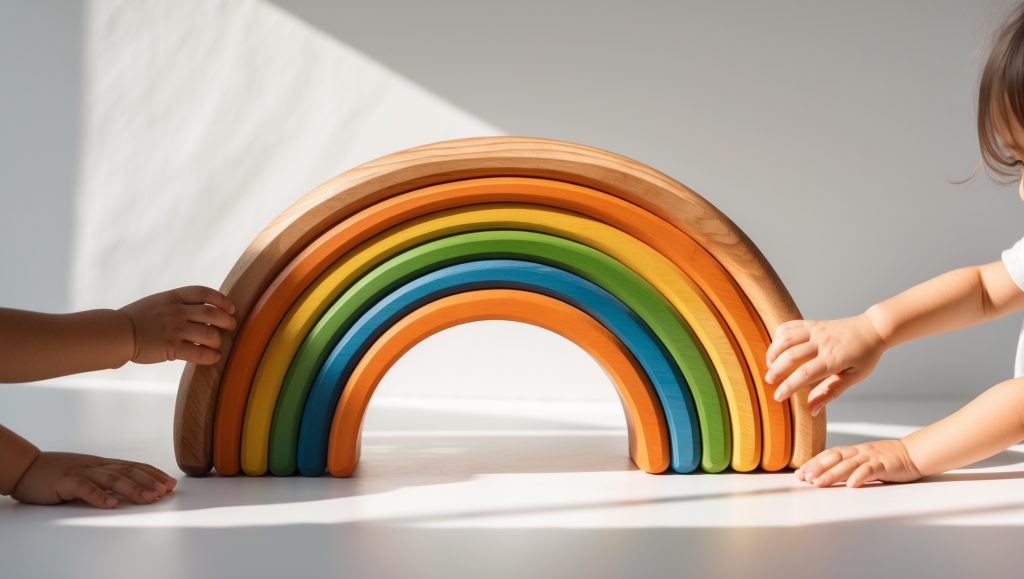
The Grimm’s Large Rainbow Stacker includes twelve colorful, arched pieces of varying sizes, each designed to nest perfectly within the next. The toy is made from a single piece of sustainably harvested lime wood, hand-finished with non-toxic, water-based dyes that produce vibrant hues while allowing the natural wood grain to show through.
- Size: The assembled rainbow measures approximately 15 inches wide and 7 inches high, making it substantial enough for group play but manageable for little hands.
- Finish: The surface is smooth but not slick, providing just enough grip for stacking and building. The hand-applied dyes have a matte finish, reducing slippage and enhancing tactile feedback.
- Safety: Grimm’s rainbow meets rigorous US and European safety standards. There are no small parts, sharp edges, or removable pieces that could pose a choking hazard. The paints and finishes are certified non-toxic and safe for mouthing.
- Durability: The robust construction resists cracking and splintering, ensuring the toy can withstand years of active play. Occasional nicks or dents only add to its character and do not compromise functionality.
Each rainbow is unique due to the natural variations in the wood grain—an intentional feature that adds to the toy’s beauty and heirloom quality. The artistry and attention to detail are evident in every aspect of the rainbow’s build.
Learning & Development Benefits
Open-ended toys like the Grimm’s Rainbow Stacker are celebrated for their ability to foster a wide range of developmental skills, adapting to a child’s interests and abilities over time. Here’s how this toy supports learning and growth:
- Imagination & Creativity: Children use the pieces to build tunnels, bridges, sculptures, animal shapes, and fantastical structures. There are no right or wrong ways to play, encouraging free-form exploration and storytelling.
- Motor Skills: Manipulating the arches helps develop fine motor control, hand-eye coordination, and dexterity, especially for toddlers and preschoolers.
- Spatial Awareness: Stacking, nesting, and balancing the arches strengthens spatial reasoning and problem-solving—foundational skills for later math and STEM learning.
- Color Recognition: The vibrant, rainbow-hued pieces provide opportunities for color sorting, pattern creation, and visual discrimination.
- Social Skills: When used in group settings, the rainbow encourages cooperation, turn-taking, and collaborative building projects.
- Open-Ended Play: Without batteries, sounds, or predetermined outcomes, the Grimm’s Rainbow can be anything a child imagines, supporting independent play and extending interest over months and years.
Research consistently demonstrates that open-ended play supports cognitive flexibility, executive function, and emotional regulation. The Grimm’s Rainbow’s adaptability means it “grows” with your child, remaining relevant from toddlerhood through early elementary years and beyond.
Setup & Use
The Grimm’s Large Rainbow Stacker arrives fully assembled and requires no batteries or extra setup. Simply unbox and let your child explore. Here are some ideas for getting started:
- Free Play: Place the rainbow on the floor or table and invite your child to stack, nest, or arrange the arches however they like.
- Building Challenges: Suggest constructing a bridge, a tunnel for cars, or a tall tower. Challenge older children to create symmetrical or balanced structures.
- Color Games: Encourage sorting and matching by color, or use the arches to talk about the order of colors in a rainbow.
- Imaginative Scenarios: Incorporate the rainbow into pretend play as a mountain range, a cradle for dolls, or a fence for animals.
Cleaning is straightforward—simply wipe with a damp cloth and allow to air dry. Avoid submerging in water or using harsh chemicals, as this can affect the wood and dye.
The rainbow is best enjoyed on a flat surface, but its pieces can also be combined with other toys (blocks, figurines, cars) for even more creative play. Supervision is recommended for children under 3, as with all wooden toys.
Pros & Cons
Pros
- Timeless, open-ended design encourages creativity and imaginative play
- High-quality, sustainable materials and non-toxic finishes
- Supports a broad range of developmental skills across age groups
- Heirloom durability—built to last for years or even generations
- Visually appealing and suitable as nursery decor when not in use
- Adapts to solo or group play and integrates well with other toys
Cons
- Higher price point compared to mass-market stacking toys
- Large size may require more storage space
- Wood can be dented or scratched with rough play
- Colors may fade with prolonged sun exposure
- Not dishwasher safe or suitable for heavy water play
Alternatives & Similar Toys
While the Grimm’s Large Rainbow Stacker is iconic, several alternatives offer open-ended play in a similar spirit:
- Wooden Nesting Arches by Raduga Grez: Handmade in Russia, these arches come in a variety of color palettes and sizes. The build quality is excellent, though the finish is slightly smoother than Grimm’s.
- Melissa & Doug Rainbow Stacker: A more budget-friendly, smaller-scale option with bright colors. The stacking possibilities are less extensive, but it’s a good entry point for younger children.
- Guidecraft Rainbow Blocks: These feature translucent colored windows within wooden frames, adding a sensory dimension and light play to building activities.
- Lego Duplo or Classic Wooden Blocks: While not arched, these provide similar open-ended building experiences and can be combined with rainbow arches for expanded creativity.
- Grimm’s Building Boards and Semi-Circles: Designed to complement the rainbow, these accessories unlock even more building and balancing possibilities for older children.
Each alternative has its own unique appeal, but for families prioritizing heirloom quality, sustainability, and versatility, Grimm’s remains a premier choice in 2025.
Verdict
The Grimm’s Large Rainbow Stacker is much more than a beautiful toy—it’s a creative tool that evolves with your child’s interests and developmental stage. Its open-ended nature means the play possibilities are truly limitless, supporting everything from fine motor skill development to imaginative storytelling and cooperative play. While the initial investment is higher, the quality, safety, and longevity more than justify the price for many families.
For parents seeking a single, versatile toy that can inspire years of play—and looks lovely on a shelf when not in use—the Grimm’s Large Rainbow Stacker is a standout pick for 2025. Its enduring popularity is a testament to the value of simple, well-crafted toys that let children’s imaginations take the lead.
FAQ
+Is the Grimm’s Large Rainbow Stacker safe for babies and toddlers?
+What is the recommended age range for this toy?
+How do I clean and care for the toy?
+Can the rainbow be combined with other toys?
+Does the toy require adult assembly?
+Is it suitable for classroom or group settings?
+Will the colors fade over time?
+Is the toy environmentally friendly?

Grimm’s Large Rainbow Stacker continues to captivate both children and parents in 2025, thanks to its timeless design and endless play possibilities. Made from sustainably sourced wood and finished with non-toxic, vibrant colors, this stacker is as beautiful as it is functional. Its open-ended nature means there’s no “right” way to play—kids can stack, sort, build tunnels, bridges, or even use the arches as cradles for dolls or ramps for cars. This versatility supports cognitive development, fine motor skills, and creativity, making it an educational staple in playrooms across the US.
What sets Grimm’s Rainbow apart is its ability to grow with your child. Toddlers delight in exploring colors and shapes, while older kids incorporate the arches into imaginative worlds and elaborate structures. The sturdy craftsmanship ensures it stands up to years of play, while its striking aesthetic means it doubles as a display piece when not in use. For families seeking a toy that inspires creativity, collaboration, and lasting value, the Grimm’s Large Rainbow Stacker is a truly worthwhile investment.
- Open-ended design encourages imaginative, self-directed play
- Crafted from sustainable wood with safe, vibrant dyes
- Grows with children—suitable for a wide age range
- Durable and beautiful enough for display
How would you compare the developmental value of the Grimm’s Stacker to simpler stacking rings or blocks? Are there unique learning opportunities with the arches, or would a more basic toy be just as effective for a toddler with language delays?
Your thoughtfulness about choosing toys for your toddler’s language development is wonderful. While classic stacking rings or blocks encourage fine motor skills and basic problem-solving, Grimm’s arches add unique value: they invite pretend play (like tunnels or bridges) and can promote storytelling, which supports language growth. For toddlers, especially with language delays, use the arches together to narrate what you’re building and encourage your child to describe shapes and colors. Always supervise play, as some pieces could be mouthed. Both toy types can be beneficial, but open-ended arches offer more creative language opportunities if paired with supportive interaction. This isn’t medical advice; if you’re concerned, check in with your pediatrician.
I have a toddler just starting potty training, and I’m always on the lookout for toys that can help keep her engaged nearby while she’s learning. Do you have any suggestions on how to incorporate the Grimm’s Rainbow Stacker during potty breaks to make the process less stressful for both of us?
It’s wonderful that you want to make potty training a positive experience for your toddler. Try placing a few of the Grimm’s Rainbow arches on the bathroom floor and invite her to build simple towers or patterns while she sits. You could also play a sorting game, handing her one piece at a time as she waits. Create a routine, like stacking an arch before and after using the potty, to give her a sense of progress. Always supervise closely, especially with younger toddlers, to ensure safe play. This isn’t medical advice; if any challenges arise, a chat with your pediatrician can be helpful.
You mention the stacker is suitable for little hands and safe for mouthing. Are there any specific cleaning or maintenance tips you recommend to prevent wear and tear that could create small splinters or fragments over time?
You’re right to want to keep the stacker safe and in good condition for your child. Wipe the pieces regularly with a damp cloth—avoid soaking or using harsh cleaners, as these can damage the wood or natural dyes. Let them air dry thoroughly before play. Check for any rough spots, especially after cleaning, and gently sand with fine-grit sandpaper if needed. Store the stacker out of direct sunlight and away from heat or moisture to prevent warping. These steps will help keep it safe for mouthing and handling. This isn’t medical advice; if you’re concerned, check in with your pediatrician.
We’re very focused on ensuring our toddler gets enough iron, so meals often include both fortified cereals and veggie purees. If my child tends to play with the rainbow stacker during or right after eating, is the finish safe against constant hand-to-mouth play, especially with messy foods?
It’s great that you’re mindful of both nutrition and safety during playtime. Grimm’s Rainbow Stackers are finished with non-toxic, water-based stains, which are considered safe for toddlers who may mouth toys. To keep play hygienic, gently wipe the stacker after messy meals to remove food residue, and supervise closely to prevent choking risks with hand-to-mouth behaviors. Always watch for signs of wear or splintering, especially with frequent contact. This isn’t medical advice; if you’re concerned, check in with your pediatrician.
My child enjoys mouthing toys during meals, so I’m careful about materials. You mention the paints are non-toxic and safe for mouthing—does daily use around food impact safety or is there anything I should watch for with heavy drool or food residue?
It’s great that you’re attentive to the materials your child interacts with, especially around food. Grimm’s stacker uses non-toxic, water-based stains, which are generally safe for mouthing, but regular exposure to food or heavy drool can cause paint to wear faster or trap residue. Rinse the pieces with a damp cloth (not soaked) after meals, and let them dry fully before the next use. Avoid dishwashers or soaking, since moisture can damage the wood. Inspect for any chipping or rough spots over time. This isn’t medical advice; if you’re concerned, check in with your pediatrician.
I love the idea of the rainbow growing with kids, but do you have advice on introducing it safely and meaningfully for a younger twin who’s less coordinated than their sibling? Should I remove some arches at first or let them try the whole set?
It’s so thoughtful of you to consider your twins’ different developmental needs. For your less coordinated child, start by offering just a few larger, easier-to-grasp arches. Let them explore stacking, nesting, or rolling the arches with close supervision. As their confidence and motor skills grow, gradually introduce more pieces. Always check for any splinters or rough edges before play, and supervise to prevent mouthing or climbing. Remember, each child develops at their own pace—gentle encouragement goes a long way. This isn’t medical advice; if you’re concerned, check in with your pediatrician.
My two-year-old is always on the move and sometimes gets rough during play. How well does the Grimm’s Rainbow hold up to enthusiastic tossing or banging? I’m curious if its matte finish helps prevent dents or scratches compared to similar wooden toys.
It’s completely understandable to want toys that can handle an active toddler’s energy. Grimm’s Rainbow is crafted from solid wood, making it quite durable for everyday play, but repeated tossing or banging may still cause dents or chipping, especially on edges. The matte, water-based finish does help mask minor scratches better than glossy paints, but it won’t prevent deeper marks from rough handling. For a two-year-old, always supervise play to ensure safety—both to prevent damage and avoid accidental bumps. This isn’t medical advice; if you’re concerned, check in with your pediatrician.
With a 7-month-old’s schedule, playtime can be unpredictable. How do you recommend fitting this toy into a daily routine? Are there certain times of day when babies engage best with open-ended toys like the Rainbow Stacker?
It’s understandable to want to make playtime work within your baby’s unique rhythm. For a 7-month-old, try offering the Grimm’s Rainbow Stacker during naturally alert periods, like after a nap or post-feeding, when babies are often most engaged. Place just one or two large arches on a clean blanket for supervised tummy time or seated play, allowing your baby to explore textures and colors safely. Keep sessions short—5 to 10 minutes is plenty at this age, always watching for signs of tiredness or overstimulation. Always supervise closely to prevent mouthing of small pieces. This isn’t medical advice; if you’re concerned, check in with your pediatrician.
I am really interested in adding the Grimm’s Large Rainbow Stacker to our playroom, but our apartment is pretty small and toy shelf space is limited. Do you have suggestions for storing this toy without constantly needing to disassemble and put it away after each use?
It’s understandable to want toys easily accessible, even in a small space. Try designating a low corner or tabletop as a ‘rainbow nook,’ where the stacker can be left assembled and double as cheerful decor. You can store smaller toys inside the arches when not in use, maximizing space. A shallow basket or tray nearby helps keep loose pieces corralled while still inviting play. Just ensure the area is safe for your child’s age—no climbing or tipping hazards. This isn’t medical advice; if you’re concerned, check in with your pediatrician.
We’re tight on space at home and already have a set of wooden arches from another brand. Is there a noticeable difference in the sensory or developmental benefits of the Grimm’s version compared to other wooden stacking toys?
It’s understandable to wonder if investing in a specific brand makes a real difference, especially with limited space. Most quality wooden stacking arches, including Grimm’s and other reputable brands, offer similar sensory and developmental benefits—such as encouraging fine motor skills, spatial reasoning, and open-ended creativity. If your current set is smooth, well-finished, and safe for your child’s age (no splinters, non-toxic paint), you’re already supporting their development. You can boost variety by introducing new play ideas or combining with other safe toys. This isn’t medical advice; if you’re concerned, check in with your pediatrician.
My child is two but still puts everything in their mouth and we have a younger baby in the house too. Are there any specific safety concerns with the Grimm’s Rainbow around siblings at different ages, or is it safe for mixed-age play?
It’s very thoughtful to consider safety for both your toddler and baby. For a two-year-old who mouths toys—and with a younger sibling—ensure all Rainbow pieces are too large to be choking hazards; Grimm’s stacker pieces are generally big, but always supervise play. Check for any splintering or paint wear, as mouthing can cause wear over time. Store the pieces out of reach when not in use, especially from your baby. Always supervise siblings during play to prevent accidental mouthing or sharing of pieces. This isn’t medical advice; if you’re concerned, check in with your pediatrician.
As a parent new to open-ended play, I am trying to decide between the Grimm’s Large Rainbow and a simpler stacking toy for my one-year-old. At this age, is the Grimm’s Rainbow practical or should I wait until she’s older and more coordinated?
It’s great that you’re thinking carefully about what suits your child’s stage of development. At one year old, your child might not use all the creative possibilities of the Grimm’s Large Rainbow yet, as the pieces are big and require coordination. For now, start by offering a couple of the larger arches for exploring and simple stacking, always supervising to prevent mouthing or falls. As she grows, she’ll use more arches and invent new ways to play. If you want a toy she can fully engage with right away, a simpler stacker may be more satisfying, but the Rainbow will grow with her. This isn’t medical advice; if you’re concerned, check in with your pediatrician.
As a parent of a toddler who still puts things in their mouth, can you give more detail about how the non-toxic finishes on the Grimm’s Rainbow hold up to frequent mouthing and cleaning without chipping or fading?
It’s completely understandable to be concerned about safety when your toddler is still exploring with their mouth. Grimm’s Rainbow uses non-toxic, water-based stains and natural oils, which are designed to be safe if mouthed. These finishes penetrate the wood, so they are less likely to chip or peel off with typical use. To clean, gently wipe with a damp cloth—avoid soaking or harsh cleaners, as excess moisture may affect the finish. Always supervise play to ensure safety, and check regularly for any wear or damage. This isn’t medical advice; if you’re concerned, check in with your pediatrician.
I saw that the review mentioned durability and dents adding to character—how do you handle cleaning off sticky messes or occasional crayon marks without damaging the finish or wood?
It’s completely understandable to want to keep the rainbow stacker clean while preserving its natural look. For sticky messes, gently wipe with a slightly damp cloth—avoid soaking the wood, as too much water can cause swelling. For crayon marks, use a soft, dry cloth or try carefully rubbing with a clean white eraser. Avoid harsh cleaners or scrubbing pads, since these can remove the finish or damage the wood. Always let the stacker air dry thoroughly before putting it away. This approach is safe for most ages, but supervise younger children during cleanup. This isn’t medical advice; if you’re concerned, check in with your pediatrician.
You mention the toy meets safety standards, but I am curious about maintenance. If a child occasionally mouths the pieces or gets them wet during play, is there a specific way to clean or care for the wood and dye finishes to make sure they stay safe?
It’s very thoughtful to consider how to keep the toy both clean and safe for your child. For wooden toys like Grimm’s Rainbow, gently wipe pieces with a damp cloth—avoid soaking or submerging, as too much water can damage the wood and its finish. If needed, use a mild soap, but rinse and dry thoroughly. Let pieces air dry completely before storing to prevent warping or mold. Avoid harsh cleaners or disinfectants, as these can affect the non-toxic dyes. Always check for any splintering or wear, especially with mouthing. This isn’t medical advice; if you’re concerned, check in with your pediatrician.
I’d love suggestions for how to encourage my picky eater to play with the Rainbow Stacker while I’m preparing meals. Is it easy for a 15-month-old to play independently with this toy, or does it need a lot of adult involvement to get started?
It’s very normal to want your child engaged and happy while you prep meals. At 15 months, most children can enjoy the Grimm’s Large Rainbow Stacker independently, but they may need a brief introduction. Start by sitting with your child and showing how to take apart and stack the arches. Demonstrate simple activities like rolling the arches or making tunnels. Offer just a few pieces at a time to avoid overwhelming them. Always supervise to ensure safety, as 15-month-olds still explore by mouthing objects, even though the pieces are large. This isn’t medical advice; if you’re concerned, check in with your pediatrician.
Would you recommend the Grimm’s Large Rainbow Stacker for a toddler who still mouths toys occasionally, or is it better suited for preschoolers who have mostly outgrown that phase?
It’s understandable to want safe and engaging toys for a toddler who still mouths things. The Grimm’s Large Rainbow Stacker is made from non-toxic materials, but the pieces are fairly large and smooth, making them less of a choking risk for most toddlers—still, close supervision is key. For children under three, always check for loose parts or splinters before play. If mouthing is frequent or vigorous, you might want to wait until your child is a bit older, or use the stacker only during closely watched playtime. This isn’t medical advice; if you’re concerned, check in with your pediatrician.
As someone new to choosing toys for group play, can you share how to keep all the pieces of the Grimm’s Rainbow organized in a busy daycare classroom? I’m also thinking about limited storage space—do you have storage suggestions?
It’s great that you’re thinking ahead about keeping toys organized in a group setting. To keep the Grimm’s Rainbow pieces together, consider assigning a labeled storage bin or basket that’s easy for children and staff to access. Teach kids to return each piece after play, perhaps with a simple picture guide showing how the rainbow stacks. For limited space, you can store the rainbow stacked vertically or nest all the arches together in a shallow shelf. Always check that storage solutions are sturdy and free from sharp edges. This isn’t medical advice; if you have specific concerns, check in with your pediatrician.
Can you suggest some ways to introduce the Grimm’s Rainbow to a child who hesitates with new textures and colors? We want to encourage open-ended play but need a gentle start due to some sensitivities.
Your thoughtfulness about your child’s sensitivities is wonderful. To gently introduce the Grimm’s Rainbow, start by letting your child watch you handle the pieces without any pressure to touch; describe how they look and what you’re doing. Place just one or two arches within easy reach, so the newness isn’t overwhelming. Invite your child to help with simple activities like stacking or rolling the arches, but let them set the pace. Celebrate small interactions, even if it’s only observing at first. The stacker is safe for most ages but always supervise, especially if your child is under three or tends to mouth objects. This isn’t medical advice; if you’re concerned, check in with your pediatrician.
My toddler loves to mouth everything, and sometimes even bites toys. You mention that the Grimm’s Rainbow uses non-toxic, water-based dyes—do these ever rub off with heavy use or saliva? I’d rather not find colored drool all over the house.
It’s completely understandable to be cautious about toy safety when your toddler still mouths and bites objects. The Grimm’s Large Rainbow Stacker is finished with non-toxic, water-based stains designed to withstand regular handling, including some mouthing. However, with heavy or persistent saliva exposure, especially from vigorous biting or chewing, there’s a small chance of minor color transfer or wear over time. To minimize this, supervise play and wipe the toy with a damp cloth regularly—avoid soaking or scrubbing, as this can soften the wood and affect the finish. Always check for any splinters or changes in surface texture before offering it again. This isn’t medical advice; if you’re concerned, check in with your pediatrician.
I’m interested in setting up a simple bilingual pre-nap ritual with the rainbow stacker. Are there ways to combine storytelling or color-naming in two languages using this toy that won’t disrupt our sleep schedule?
What a thoughtful way to enrich your child’s day with language and connection before naptime. Try a short, calm routine: 1) Choose two or three rainbow pieces and name their colors in both languages. 2) Stack the arches together slowly, describing a gentle story about the colors coming together. 3) Invite your child to repeat simple words or phrases, keeping voices soft and soothing. 4) End with the arches forming a ‘rainbow bridge’ as a cue that naptime is near. This keeps things brief, age-appropriate, and avoids overstimulation—perfect for toddlers and preschoolers. Always supervise play to prevent mouthing of pieces or rough handling. This isn’t medical advice; if you’re concerned, check in with your pediatrician.
I’m curious how the Grimm’s Rainbow works for kids who are very sensitive to tactile sensations. My daughter sometimes gets overwhelmed by the feel or texture of toys. With its matte finish and unique wood grain, have you found it to be comfortable for sensory-sensitive children?
Your concern about your daughter’s tactile sensitivity is very valid. The Grimm’s Rainbow has a smooth yet matte finish, which many sensory-sensitive children find gentle and non-irritating, but every child is different. I recommend letting your daughter touch a single piece first to observe her initial reaction, and having a soft cloth nearby if she prefers less direct contact. Supervise early play sessions to notice any discomfort or enjoyment. The wood’s natural grain means some variation in texture, but it’s generally free of sharp edges or rough spots. If she seems hesitant, try introducing the rainbow alongside a familiar, comforting object. This isn’t medical advice; if you’re concerned, check in with your pediatrician.
Do you find that the matte finish really makes a difference for kids with sensory sensitivities? I’m wondering if the feel and texture are comfortable enough for a child who sometimes avoids slick or squeaky wooden toys.
It’s thoughtful that you’re considering your child’s sensory preferences. The matte finish of Grimm’s Large Rainbow Stacker typically gives it a smoother, almost velvety feel compared to glossy or lacquered wood, which many kids with sensory sensitivities find more comfortable to touch. You might try gently running your own hand over the surface first, or letting your child briefly explore one piece under supervision to see their reaction. Always check for splinters or rough edges, and supervise play with younger children due to the size of the pieces. This isn’t medical advice; if you’re concerned, check in with your pediatrician.
For parents trying to be budget conscious, do you feel the extra cost of a sustainably sourced wooden toy like this really outweighs the affordability or easy cleaning of plastic stacking toys?
It’s thoughtful to weigh quality and price, especially with young children’s toys. Wooden stackers like Grimm’s are more durable and can inspire open-ended play for years, but plastic toys are often lighter on the wallet and easy to clean. If budget is tight, consider: 1) prioritizing a few high-quality pieces over many cheaper toys; 2) looking for secondhand wooden options; 3) rotating toys so each gets more use; and 4) checking that any toy, wood or plastic, is free from small parts and safe for your child’s age. This isn’t medical advice; if you’re concerned, check in with your pediatrician.
We’re considering the Grimm’s Rainbow for our 2-year-old, but she’s still mouthing a lot of her toys. Although the dyes are listed as non-toxic and the wood as safe, how do the finishes hold up to heavy mouthing and drooling over time?
It’s completely normal to be cautious about what goes into your toddler’s mouth, especially at this age. Grimm’s Rainbow stacker uses non-toxic, water-based stains and natural oils, making it generally safe for mouthing under supervision. However, with frequent mouthing and drooling, the color or finish may fade or wear off over time, though the toy remains functional. Check the blocks regularly for splinters or rough spots, and wipe them with a damp cloth rather than soaking. Always supervise play and remove any piece that shows damage. This isn’t medical advice; if you’re concerned, check in with your pediatrician.
For families prioritizing calming activities before bed in both languages, do you find this toy adaptable for kids of different ages or language backgrounds sharing a room? I would love insights on its versatility for siblings’ bedtime routines.
It’s wonderful that you’re seeking calming, inclusive bedtime activities for your multilingual children. The Grimm’s Large Rainbow Stacker is quite adaptable: 1) For toddlers, supervise gentle stacking and sorting to avoid frustration or mouthing pieces; 2) Older siblings can build, narrate stories, or quietly role-play in either language, fostering shared routines; 3) Encourage turn-taking and soft conversation, keeping the mood peaceful; 4) Guide everyone to tidy the stacker together, signaling the transition to sleep. Its non-electronic, simple design supports winding down across ages, but always check for age-appropriate play and supervise young children with the wooden pieces. This isn’t medical advice; if you’re concerned, check in with your pediatrician.
For parents on a tighter budget who are potty training and looking for engaging open-ended toys as a reward or distraction, do you think the Grimm’s Rainbow is worth the investment compared to simpler stacking toys?
It’s understandable to look for toys that serve multiple purposes, especially during potty training. The Grimm’s Rainbow offers long-term, open-ended play and grows with your child, but simpler stacking toys can also be effective for distraction and rewarding positive behavior. If your main goal is to encourage short, focused play during potty time, a basic stacker or even household items may be just as helpful and more budget-friendly. For children under three, always choose large pieces to avoid choking hazards and supervise closely. This isn’t medical advice; if you have concerns about potty training or toy safety, check in with your pediatrician.
Do you have suggestions for incorporating the rainbow stacker into a daily play routine without it becoming repetitive? I’m hoping to find new ideas for active sensory play that keep my toddler engaged over time.
It’s wonderful that you want to keep your toddler’s playtime engaging and fresh. To mix things up, try rotating how you present the stacker—some days set it up as a tunnel for cars, other days as bridges or balance challenges. Invite your child to match the arches to colored objects around the house, or fill and empty them with soft sensory materials like fabric or rice (with close supervision). For active play, use the arches in obstacle courses, encouraging crawling, stepping, or rolling balls through them. Always supervise toddlers to prevent mouthing small pieces and check for splinters. This isn’t medical advice; if you’re concerned, check in with your pediatrician.
For families with kids of different ages, does this stacker work well for both preschoolers and older children, or does it quickly become too simple to keep older kids interested?
It’s great that you’re thinking about keeping all your kids engaged during playtime. The Grimm’s Large Rainbow Stacker is versatile, making it suitable for both preschoolers and older children. Try inviting older kids to build more complex structures, such as bridges or marble runs, while little ones enjoy basic stacking and color sorting. Encourage collaborative play—older siblings can help younger ones explore balance and patterns. Always supervise younger children due to the size of the pieces, especially if under three years old. This isn’t medical advice; if you’re concerned, check in with your pediatrician.
Since the rainbow stacker is made from wood and not plastic, are there any special considerations for cleaning or maintaining the finish to keep it safe for babies who still mouth toys?
—it’s so important to keep mouthing-safe toys clean and well maintained. For Grimm’s wooden stacker, gently wipe each piece with a damp cloth and mild soap, then let them air dry fully before use. Avoid soaking or submerging the wood, as excess water can cause warping or splitting. Don’t use harsh chemicals, as these can damage the natural finish. If the finish becomes worn, you can lightly sand rough spots and rub in a bit of food-grade mineral oil or beeswax, but always check the manufacturer’s care instructions first. This isn’t medical advice; if you’re concerned, check in with your pediatrician.
My child sometimes gets overwhelmed with brightly colored toys. Are there any sensory feedback differences with the matte, hand-applied dyes on this rainbow compared to other toys with glossy or plastic finishes?
It’s understandable to want toys that feel comfortable for your child’s senses. The Grimm’s Large Rainbow uses matte, water-based dyes rather than glossy or plastic finishes, resulting in a softer visual look and a smoother, less slippery texture. This can reduce glare and overstimulation, making it gentler for children sensitive to bright colors or shiny surfaces. If your child is still cautious, introduce the pieces slowly and observe their reaction, offering breaks if needed. Always supervise young children, especially around painted wood. This isn’t medical advice; if you’re concerned, check in with your pediatrician.
We share playtime between siblings of different ages, including a preschooler and a kindergartener. Do you have recommendations on how to adapt the rainbow stacker for collaborative play so it remains engaging for both, or should I supplement with other items to encourage teamwork?
It’s great that you want both your preschooler and kindergartener to enjoy playtime together. Try starting with simple collaborative challenges, like building a joint structure or matching colors in a pattern. Encourage them to take turns adding pieces or telling a story about their creation. You can also introduce small figures or cars to extend play themes, making sure all items are age-appropriate and safe from choking hazards. Supervision helps ensure safe sharing. You likely don’t need to add more toys right away—sometimes a familiar toy used in new ways can spark fresh teamwork. This isn’t medical advice; if you’re concerned, check in with your pediatrician.
We have a multi-generational household with a toddler and grandma who enjoys organized play. Is the Grimm’s Rainbow suitable for play with older relatives, or does it require close adult supervision given the size and materials, especially when grandparents are leading the activity?
It’s wonderful that your family is playing together across generations. The Grimm’s Large Rainbow is designed for open-ended, creative play, and its large, smooth wooden arches are generally safe for toddlers when supervised. For play with grandparents, encourage activities like color sorting, simple stacking, or building patterns—these are engaging for both toddlers and adults. Remind adults to watch for enthusiastic stacking that could tip over and to check for any splinters before use. Always supervise closely with toddlers, and ensure pieces aren’t mouthed. This isn’t medical advice; if you have specific concerns, consult your pediatrician.
My twins have different play interests and one is a bit rougher than the other. Does the robust construction truly withstand frequent drops and the accidental “tug-of-war” moments, or have you heard of any cracks or wear when used daily by siblings?
It’s understandable to want reassurance about durability, especially with energetic twins and different play styles. Grimm’s Large Rainbow Stacker is known for its solid wood construction and can generally withstand daily use, including drops and some tugging. Encourage your twins to play on a soft rug to cushion falls, and supervise tug-of-war moments to prevent splintering or pinched fingers. While minor dents or paint wear can happen over time, most families report the stacker holds up well. Check for any loose parts regularly, especially for ages three and under, to ensure ongoing safety. This isn’t medical advice; if you’re concerned, check in with your pediatrician.
How should I supervise my 7-month-old with the Grimm’s Rainbow Stacker? Can it be used as a tummy time activity, or is it better suited for when he’s sitting and crawling?
It’s great that you’re considering safe play for your 7-month-old. At this age, direct supervision is key—Grimm’s Rainbow Stacker is safe for mouthing since it’s non-toxic, but always watch for any rough edges or splintering. You can place a few large arches within your baby’s reach during tummy time for sensory exploration, but avoid stacking high structures that could tip over. When your baby can sit with support or crawl, you can gradually introduce more interactive play, like rolling or knocking down arches together. Always check that pieces are too large to be a choking risk and keep playtime gentle. This isn’t medical advice; if you’re concerned, check in with your pediatrician.
I’m looking for ways to help my 3-year-old wind down before bed. Do you have any tips for using the Grimm’s Large Rainbow Stacker as part of a calming bedtime routine rather than just as an active play toy?
It’s wonderful that you want to create a peaceful bedtime routine for your child. Try dimming the lights and inviting your child to slowly stack the rainbow pieces together, focusing on the gentle sound and feel of the wood. Encourage quiet, imaginative play, like building a ‘sleepy bridge’ for favorite stuffed animals. You could also take turns naming calming colors from the stacker and arranging them in a soothing order. Always supervise closely, and keep play gentle to signal winding down. This isn’t medical advice; if you have concerns about your child’s sleep or routines, check in with your pediatrician.
Since my little one is still mouthing toys, I want to double-check if the water-based dyes ever rub off with extended use or if you’ve heard about fading or peeling, especially after cleaning the pieces. Is it safe for kids who like to bite on the arches?
It’s great that you’re thinking about safety as your little one explores toys with their mouth. Grimm’s Large Rainbow Stacker uses non-toxic, water-based dyes that are generally safe for mouthing, and the finish is designed not to peel or flake with normal use. Some gentle fading can happen over time or with frequent wiping, but I haven’t seen any reports of the colors rubbing off dangerously. Always check the arches for rough spots or chips before play, and supervise closely to prevent biting off small splinters. This isn’t medical advice; if you have ongoing concerns, please check in with your pediatrician.
How would you recommend incorporating a toy like the Grimm’s Rainbow into a daily play routine? Is it best used for independent play, or do you find it works well as part of guided parent-child activities, especially for younger children?
It’s great that you’re thinking about how to make playtime both fun and meaningful with the Grimm’s Rainbow. For toddlers and preschoolers, start by exploring the stacker together—build towers or bridges, talk about colors, and let your child handle each piece. Then, encourage some independent play, watching nearby for safety since the pieces are chunky but may still tip. You can also weave it into daily routines, like sorting by size or making patterns before clean-up. For young kids, guided activities are especially valuable for language and motor skills. This isn’t medical advice; if you’re concerned, check in with your pediatrician.
We are working on a calmer bedtime routine for our three-year-old, and I’m curious if you have suggestions for using the Grimm’s Rainbow Stacker in a low-key, wind-down activity before bed. Are there specific ways to play with it that encourage relaxation rather than excitement?
It’s wonderful that you’re looking for calming ways to use your child’s Grimm’s Rainbow Stacker before bed. Try slow, gentle stacking, inviting your three-year-old to match the arches by size or color, focusing on careful movements. Build simple, repetitive patterns together, like a ‘rainbow bridge,’ and quietly count each arch as you stack. You can also create a bedtime story with the arches as props, keeping voices soft and play low-energy. Always supervise to ensure safety with larger pieces, and keep the activity brief to maintain the bedtime mood. This isn’t medical advice; if you’re concerned, check in with your pediatrician.
How does the sensory feedback of the Grimm’s Rainbow compare to other wooden stacking toys? My child can be sensitive to certain textures and colors, so I am interested in learning if the finish or dyes might be overwhelming or if it tends to be calming.
It’s great that you’re considering your child’s sensory needs. Grimm’s Rainbow uses a velvety matte finish with non-toxic, water-based stains, so the wood feels slightly textured instead of glossy or slippery. Many children find this calming, but some who are sensitive to rougher surfaces might prefer a smoother finish. The colors are vibrant yet soft, not overly bright, which can be less overwhelming than high-gloss painted toys. If possible, let your child handle a single piece first to see how they respond. Always supervise play to watch for any discomfort or mouthing. This isn’t medical advice; if you’re concerned, check in with your pediatrician.
Do you have any tips for cleaning or maintaining the finish on this stacker, especially since it gets mouthed quite a bit by younger kids? I want to make sure I’m keeping it safe without damaging the non-toxic dye or the wood.
It’s great that you’re thinking about both safety and preserving the finish for your little one. For Grimm’s Rainbow Stacker, gently wipe with a damp cloth—avoid soaking or strong cleaners, as these can strip the non-toxic dye and harm the wood. Let each piece air-dry completely before stacking again. For stuck-on messes, use a bit of diluted mild soap, then wipe with plain water and dry right away. Do not use oils or polishes, which might affect the wood’s safe, matte texture. Always supervise younger children to prevent chewing on splintered edges. This isn’t medical advice; check with your pediatrician if you have any concerns about materials or mouthing.
Would the rainbow stacker work well for a group of kids of different ages during a playdate, or is it best for solo or one-on-one parent-child play?
It’s great that you’re thinking about group play for kids of different ages. The Grimm’s Large Rainbow Stacker is wonderfully open-ended, making it suitable for mixed-age playdates as well as solo or one-on-one time. For group play, set clear guidelines about sharing and taking turns, supervise closely to prevent little ones from mouthing or mishandling the pieces (especially if under age 3), and encourage collaborative building or imaginative games. Offer a soft play surface to minimize loud drops and make clean-up part of the fun. This isn’t medical advice; if you’re concerned, check in with your pediatrician.
I noticed the article highlights that there are no removable small parts, but I am still cautious about choking hazards in open-ended toys. Has there ever been a report of any piece breaking off or becoming small enough to pose a risk for younger children during active play?
It’s completely understandable to be cautious about choking hazards, especially with younger children. According to available information and user reviews, Grimm’s Large Rainbow Stacker is crafted from solid wood and designed without detachable small parts, making it generally safe for toddlers. However, always inspect wooden toys periodically for any cracks or splinters that could loosen during rougher play. Supervise children under three to ensure safe use, especially if a piece shows signs of wear. While there have been no widespread reports of pieces breaking off, every child and play environment is different. This isn’t medical advice; if you’re concerned, check in with your pediatrician.
My child sometimes puts toys in their mouth, so I was relieved to read about the non-toxic finish. Would repeated mouthing or chewing cause the colors to fade or affect the wood over time?
It’s completely understandable to want reassurance about toy safety when your child mouths their toys. Grimm’s uses non-toxic, water-based stains, which are generally safe for mouthing; however, repeated chewing or sucking may gradually wear down the colors or finish, especially with regular exposure to saliva. To help, inspect the stacker regularly for any splintering or fading, wipe it with a damp cloth (not soaked), and allow it to dry completely between uses. Always supervise mouthing, especially for younger children, and remove the toy if you notice any wood damage. This isn’t medical advice; if you’re concerned, check in with your pediatrician.
We have a smaller playroom and not much storage space. How easy is it to keep the Grimm’s Large Rainbow organized when playtime is over, especially with twelve pieces?
It’s understandable to want toys that are easy to tidy up, especially in a small playroom. The Grimm’s Large Rainbow nests back together neatly, so after play, show your child how to stack each arc in size order—this can become a fun part of your clean-up routine. Consider designating a low, open shelf or a basket just for the rainbow to keep it accessible and organized. For younger children, supervise and assist with stacking to avoid frustration or dropped pieces. Since the stacker is crafted from solid wood, be mindful of heavier pieces around little toes. This isn’t medical advice; if you have concerns or need more storage ideas, your pediatrician or a local organizer could help.
Is the Grimm’s Large Rainbow Stacker suitable for a child who puts everything in their mouth? I saw it’s non-toxic but want to be sure it’s safe for a very oral three-year-old.
It’s completely understandable to want reassurance when your three-year-old is still exploring with their mouth. The Grimm’s Large Rainbow Stacker is made from non-toxic, child-safe materials and has large, smooth pieces, which reduces choking risks for older toddlers and preschoolers. Still, at age three, supervision during play is important, especially if your child is very oral. Check the pieces regularly for any splinters or damage from mouthing. After play, clean pieces with a damp cloth to keep them hygienic. This isn’t medical advice; if you’re concerned about oral behaviors or safety, check in with your pediatrician.
My toddler sometimes puts everything in her mouth, and I noticed the review mentions non-toxic dyes and finishes. How well does the coloring hold up to frequent mouthing or even a few teeth marks? Are there any maintenance tips for keeping the toy safe and clean?
It’s completely normal to worry when your toddler mouths toys, especially wooden ones like the Grimm’s Rainbow. The non-toxic, water-based dyes are designed to be safe for mouthing, and the color usually stays vibrant, though light fading or marks can appear with very frequent chewing or teething. Gently wipe the pieces with a damp cloth (no soaking or harsh cleaners) to keep them clean, and inspect regularly for splinters or loose bits, especially if your child is a vigorous chewer. Grimm’s recommends adult supervision for younger children. This isn’t medical advice; if you’re concerned, check in with your pediatrician.
I noticed the Grimm’s Rainbow is a bit of an investment compared to other stackers. For parents on a tight budget, is there a meaningful difference in developmental value or play potential between this and less expensive wooden stacking toys?
It’s completely understandable to weigh cost when choosing toys for your child. Grimm’s Rainbow stands out for its open-ended design and beautiful craftsmanship, but less expensive wooden stackers can also offer strong developmental benefits like color recognition, fine motor skill practice, and early problem-solving. Focus on stackers that are safe, non-toxic, and free from small parts or splinters for younger children. Encourage your child to use pieces for building, sorting, and imaginative play no matter the brand. This isn’t medical advice; if you’re concerned, check in with your pediatrician.
This stacker looks beautiful, but I’m curious if it tends to chip or show wear if a toddler tosses the pieces around or occasionally bumps them against harder surfaces. Would you say it holds up better than less expensive alternatives for rough play?
It’s understandable to want toys that can stand up to active toddler play. Grimm’s Large Rainbow Stacker is made from solid wood with a non-toxic finish, so it’s generally more durable than many cheaper stackers, but it is still possible for paint to wear, chip, or dent if pieces are thrown or banged against hard surfaces. To help minimize wear, supervise play when possible, encourage gentle handling, and store pieces in a soft basket. For toddlers under three, watch for splinters if any chips appear, and remove damaged pieces for safety. This isn’t medical advice; if you’re concerned, check in with your pediatrician.
For families trying to stick to a tight toy budget, do you think the Grimm’s Rainbow really offers enough play value compared to more affordable stacking toys? Are the developmental benefits noticeably different?
Your question about value and developmental benefits on a budget is completely understandable. The Grimm’s Rainbow does offer open-ended play and creativity, but many affordable stacking toys can also support fine motor skills, problem-solving, and imagination. Consider: 1) Focus on toys with safe, non-toxic finishes and smooth edges for young children. 2) Choose stackers with varied shapes and sizes to encourage different ways of building. 3) Supervise play, especially with smaller pieces. 4) Add household objects to enrich stacking and building. The core developmental benefits—like hand-eye coordination and spatial awareness—are present with most stackers. This isn’t medical advice; if you have concerns, check in with your pediatrician.
My child is very sensitive to bright colors and certain finishes. Are the colors on the Grimm’s Rainbow super vibrant in person, or are they more muted? I want to make sure it is not overstimulating.
It’s thoughtful to consider your child’s sensitivities when choosing toys. The Grimm’s Large Rainbow Stacker uses water-based stains in a range of colors, which are typically vibrant but have a soft, matte finish rather than a shiny or glossy one. Some parents find the colors more gentle than plastic toys, but they are still noticeably colorful. If overstimulation is a concern, you might introduce just a few arches at a time, watch how your child responds, and gradually add more. Always supervise initial play and check for any reactions to the wood or paint. This isn’t medical advice; if you’re concerned, check in with your pediatrician.
At what age did you find that a toddler could actually stack or build with all 12 rainbow arches? My little one is only 16 months old—should I introduce just a few pieces at first or is it okay to give the whole set from the start?
It’s great that you want to support your child’s play and development. At 16 months, most toddlers are still working on basic stacking and may find all 12 arches overwhelming. Start with just 2–4 larger arches so your little one can explore safely and gain confidence. Gradually add more pieces as their coordination improves. Always supervise play at this age, and watch for mouthing or attempts to climb. The full set is wonderful later on, usually around age 2 or older, when children can handle more complexity. This isn’t medical advice; if you’re concerned, check in with your pediatrician.
We have a small apartment and limited storage space for toys. How easy is it to store the Grimm’s Large Rainbow Stacker when it is not in use, and do families typically leave it out as a display piece in the play area?
It’s understandable to want toys that fit comfortably in a small space. The Grimm’s Large Rainbow Stacker can be nested together into a compact arch, making it easier to store on shelves or in a toy box. Many families do leave it out as a display piece, as its bright colors and natural wood finish can double as cheerful decor. If you need to tuck it away, keep the stacker assembled to avoid losing pieces, and store it out of reach from very young children due to potential heavy or slippery parts. This isn’t medical advice; if you’re concerned, check in with your pediatrician.
My 1-year-old is transitioning to daycare and I’m wondering if the Grimm’s Large Rainbow Stacker is suitable for group play with other toddlers or if it’s better kept for individual use at home. Do you have any tips for introducing it in a daycare setting to support sharing and cooperative play?
It’s completely understandable to want your child’s toys to foster positive group play at daycare. The Grimm’s Large Rainbow Stacker can be suitable for toddlers in a group if used under close supervision, as the pieces are large and safe for little hands. Start by modeling simple stacking or color sorting together, then encourage toddlers to take turns adding pieces. Use simple language like ‘my turn, your turn’ to support sharing at this young age. Limit the number of pieces in play to avoid overwhelm, and always supervise closely to prevent throwing or mouthing. This isn’t medical advice; if you’re concerned, check in with your pediatrician.
I noticed the review mentioned fine motor development, but I wonder if you have specific tips for introducing this stacker to a child who struggles with grasping certain shapes or has low frustration tolerance.
It’s understandable to want to support your child’s fine motor skills, especially if they find certain shapes tricky or get frustrated easily. Start by offering just two or three of the larger, easier-to-grasp arches first, so your child can build confidence without feeling overwhelmed. Encourage stacking or nesting with no pressure for perfection, celebrating effort over results. Try introducing turns: you place a piece, your child places the next, making it playful and cooperative. Ensure the play space is stable and clear of distractions. Always supervise closely, especially with younger children, to keep play safe. This isn’t medical advice; if you’re concerned, check in with your pediatrician.
At what age does the Grimm’s Large Rainbow Stacker start to lose its developmental appeal? Is it still beneficial for older elementary-aged kids, or does it mostly cater to toddlers and preschoolers?
—it’s natural to wonder if toys like the Grimm’s Large Rainbow Stacker remain engaging as your child grows. While the stacker is most often used by toddlers and preschoolers for basic stacking and color recognition, older elementary-aged children can still benefit. At this stage, kids tend to use the pieces for imaginative play, building elaborate structures or integrating them into small world setups. To keep things interesting, invite your child to create marble runs or collaborative designs with siblings. If your child loses interest, try rotating the toy in and out of play. Always supervise young children to prevent mouthing of small parts. This isn’t medical advice; if you’re concerned, check in with your pediatrician.
How do you handle playtime with this toy if your child gets overwhelmed by bright colors or different textures? My little one sometimes reacts strongly to new sensory experiences. Does the smooth surface help with sensory sensitivities?
You’re right to be thoughtful about your child’s sensory sensitivities, especially with colorful, textured toys. Start by introducing just one or two arches at a time, letting your child explore at their own pace. The Grimm’s stacker does have a smooth, polished surface, which many sensory-sensitive kids find easier to handle than rough wood. If the colors feel too intense, try playing in a softly lit room or covering some arches to reduce visual input. Always supervise closely, especially with younger children, and watch for signs of overstimulation. This isn’t medical advice; if you’re concerned, check in with your pediatrician.
How do you keep all twelve arches organized when not in use? With limited space in our apartment, I’m curious if anyone has storage tips to prevent pieces from getting lost or scattered around the house.
It makes sense to want to keep all the Grimm’s Rainbow arches together, especially in a smaller space. Try nesting the arches into their original stacked shape after play, then store the whole stack in a shallow, child-safe tray or on a low shelf so your child can access it easily. Alternatively, use a clear storage bin or a decorative basket that fits the full rainbow to keep pieces visible and contained. Avoid stacking other toys on top to prevent damage. This approach keeps everything tidy and safe for most ages, but make sure it’s out of reach if you have younger siblings who might mouth the pieces. This isn’t medical advice; if you’re concerned, check in with your pediatrician.
If I already subscribe to a rotating toy rental service, would adding a permanent item like the Grimm’s Rainbow Stacker complement what comes in the subscription, or would it be redundant? I’m trying to avoid toy overload and clutter while giving my child the best developmentally.
It’s great that you’re mindful of both reducing clutter and supporting your child’s development. Adding a permanent, open-ended toy like the Grimm’s Rainbow Stacker can actually complement rotating rental toys by providing a consistent, familiar play object. Try keeping the stacker accessible while rotating other toys in and out, and observe how your child uses it alongside new items. This approach works well for toddlers and preschoolers, encouraging creativity and flexible thinking. Choose a spot to store it neatly when not in use, and regularly reassess if your child still engages with it. This isn’t medical advice; if you’re concerned, check in with your pediatrician.
As a parent on a budget, I’m weighing whether to invest in the Grimm’s Rainbow or look for more affordable alternatives, possibly in plastic. In your experience, is the higher price justified by durability and play value, or do quality plastic versions serve similar developmental purposes?
It makes sense to weigh cost against value, especially with toys meant for years of play. Grimm’s Rainbow is praised for its solid wood durability, open-ended design, and safe, non-toxic paints—qualities that often hold up through multiple children and open-ended play stages. Good quality plastic versions can also encourage creative building and color recognition, but may be lighter, less sturdy, or offer a different sensory experience. If you choose a plastic alternative, check for safety certifications and smooth, non-sharp edges, especially for toddlers. This isn’t medical advice; if you have concerns about materials or safety, consult your pediatrician.
My child sometimes mouths toys for sensory input. Since the rainbow is finished with water-based dyes, would regular cleaning with just a damp cloth be enough, or is there a certain way to safely clean and sanitize it without damaging the wood or dyes?
It’s great you’re thinking carefully about cleaning for your child’s sensory needs. For Grimm’s Rainbow, gentle care is best: 1) Wipe each piece with a slightly damp cloth after play—avoid soaking or using harsh cleaners, as these can damage the wood and dyes. 2) If you need extra cleaning, use a mild, natural soap on the cloth, then wipe with plain water and dry thoroughly. 3) Make sure all pieces are completely dry before storing to prevent warping or mold. These steps keep the toy safe and vibrant for mouthing, but always supervise to ensure safety. This isn’t medical advice; if you’re concerned about germs or your child’s health, check in with your pediatrician.
I usually watch a toddler with some mild sensory sensitivities, and sometimes new textures or finishes bother them. Can you elaborate a bit more on how children typically respond to the matte surface and the feel of the wood arches?
It’s great that you’re mindful of your toddler’s sensory needs. The Grimm’s Large Rainbow Stacker is made from smooth, sanded wood with a matte, water-based finish—many children enjoy the gentle texture, though some with sensory sensitivities might find the wood’s natural grain or the finish’s slight chalkiness unfamiliar at first. To introduce it safely, try letting your toddler explore a single arch during supervised play, respecting their pace. Offer a soft cloth so they can touch with or without direct skin contact. For toddlers under three, always supervise to avoid mouthing. Each child is unique—observe their reactions and adjust as needed. This isn’t medical advice; if you’re concerned, check in with your pediatrician.
I see the article mentions the vibrant colors and wood grain—do some babies get too focused on gnawing the dye if they have oral sensory tendencies? Has anyone had issues with chipped paint or chewing marks at this age?
You’re right to consider how babies with oral sensory needs might interact with the rainbow stacker. Grimm’s uses non-toxic, water-based stains that are safe if mouthed, but close supervision is always important, especially with babies who like to chew. Check the arches regularly for chew marks or chips, as even durable wood can show wear from strong teeth. Remove any damaged pieces to prevent splinters. For infants under 12 months, always supervise play and consider whether a softer, food-grade teether might be a safer choice. This isn’t medical advice; if you’re concerned about your child’s oral habits, please consult your pediatrician.
If our play space is pretty limited, how much room does the assembled rainbow require? Is it easy to store away when not in use, or does it need to be left out on display?
It’s understandable to want toys that fit well in a small space. The Grimm’s Large Rainbow Stacker, when assembled in its classic arch shape, is about 14 inches wide and 7 inches tall, so it doesn’t need much room to play. For storage, the arches nest neatly together and can be stacked upright on a shelf or tucked into a storage bin—no need to leave it out unless you like the look. Just make sure it’s stored where little hands can safely reach (for ages 1+), and always check for loose parts if younger siblings are around. This isn’t medical advice; if you’re concerned, check in with your pediatrician.
Since our family has busy weekends and the grandparents watch the kids for a few hours, how easy is it for adults unfamiliar with open-ended toys to engage preschoolers with the Grimm’s Rainbow Stacker?
It’s wonderful that you’re thinking ahead about how grandparents can connect with your preschoolers during playtime. The Grimm’s Large Rainbow Stacker is designed to be intuitive, so even adults new to open-ended toys can join in easily. Start by encouraging grandparents to stack the arches together with your child, exploring how they fit and balance. Next, suggest making simple tunnels or bridges for cars, or pretending the arches are hills for toy animals. Grandparents can ask open-ended questions like, “What else can we build?” to spark your child’s creativity. The stacker is safe for preschoolers, but remind adults to supervise play, especially if younger siblings are present. This isn’t medical advice; if you’re concerned, check in with your pediatrician.
I noticed the review mentions the stacker is safe for mouthing, but I have twins who like to chew on everything. How well does the matte finish hold up with frequent mouthing and cleaning, and does it get sticky or rough over time?
It’s very understandable to want reassurance about durability and safety when your twins like to chew on toys. Grimm’s Large Rainbow Stacker uses a matte, non-toxic water-based finish that’s generally safe for mouthing and stands up well to gentle chewing. For frequent mouthing, regularly inspect the wood for splinters or rough patches, and wipe clean with a damp cloth—avoid soaking, as wood can warp or roughen if overly wet. Over time, the finish may show wear, but it rarely gets sticky; if it feels rough, you can gently sand with fine paper. Always supervise, especially with teething toddlers. This isn’t medical advice; if you’re concerned, check in with your pediatrician.
Do you have any tips for adapting rainbow stacker play to suit both toddlers and older kids in the same household? I want to make sure it’s neither too advanced nor too simple for my two children.
You’re thoughtful to want both your toddler and older child to enjoy the rainbow stacker together. Set out a safe play area and supervise closely, especially with toddlers, to prevent mouthing or rough handling. For your toddler, start with simple stacking, color matching, and exploring the arches’ textures. For your older child, encourage building tunnels, bridges, or imaginative scenes. Try collaborative building—let your older child help guide, but ensure the toddler can join in on their level. Always remove any small pieces if your younger child is under three. This isn’t medical advice; if you’re concerned, check in with your pediatrician.
I’m wondering how the Grimm’s Rainbow Stacker compares to similar nesting or stacking toys made from plastic, especially in terms of long-term durability and developmental value for toddlers. Is the higher price justified for travel play?
It’s great that you’re considering both durability and developmental value for your toddler. Wooden stackers like Grimm’s generally outlast plastic ones, resisting cracks and dents even with rough toddler play. The natural finish and texture support sensory exploration and safe mouthing, but always supervise under-threes due to smaller arches. Open-ended designs encourage creativity and problem-solving beyond simple stacking, which can be more limited with rigid plastic sets. For travel, the wooden set is heavier and bulkier—plastic options are lighter and often easier to clean on-the-go. The higher price reflects craftsmanship and play versatility, but consider your travel needs and budget. This isn’t medical advice; if you’re concerned, check in with your pediatrician.
My two-year-old is easily frustrated if a toy is too challenging. Are there ways to adjust the complexity of play with the Grimm’s Large Rainbow Stacker to make it suitable for younger toddlers, or should I wait until she is a little older?
It’s understandable to want playtime to feel positive and not overwhelming for your toddler. For a two-year-old, you can start with just a few of the largest rainbow arches and let her experiment with simple stacking or nesting, which keeps things manageable. Offer the pieces one at a time or use them for easy color matching games. Always supervise closely, especially if your child still mouths toys, but Grimm’s stacker is generally safe for this age due to its large parts and non-toxic finish. As your child grows, you can gradually introduce more pieces and varied challenges. This isn’t medical advice; if you’re concerned, check in with your pediatrician.
Is it okay for very young babies like mine to play with the whole set at once, or should I limit the number of arches to avoid overwhelming her? I’d love advice on age-appropriate ways to start.
It’s great that you want to support your baby’s play while keeping things safe and manageable. For babies under 12 months, I recommend starting with just one or two of the larger arches—these are easier to grasp and less likely to pose a hazard. You can introduce more pieces gradually as your baby shows interest and coordination. Always supervise closely, since smaller arches could be mouthed or tossed. Let her explore the textures and colors at her own pace. This isn’t medical advice; if you’re concerned, check in with your pediatrician.
My toddler is sensitive to certain textures and gets overwhelmed by strong colors. Are the dyes or the finish on the Grimm’s Rainbow likely to be comfortable and calming for kids with mild sensory sensitivities?
It’s very thoughtful to consider your toddler’s sensory needs when choosing toys. Grimm’s Rainbow is made from natural wood with non-toxic, water-based dyes and a matte finish, which tends to feel smooth but not slippery—often more comfortable for kids who are sensitive to textures. The colors are vibrant, but not glossy or neon, which some children find easier on the eyes. To help your child adjust, introduce the stacker one piece at a time in a familiar setting, and watch for their reactions. If any piece seems too intense, you can temporarily set it aside. This isn’t medical advice; if you’re concerned, check in with your pediatrician.
I noticed you mentioned the finish is smooth but not slick. For kids who are sensitive to certain textures or have sensory processing challenges, does the matte finish and wood surface tend to be well tolerated, or could it be an issue?
You’re absolutely right to consider how different finishes might feel for a child with sensory sensitivities. The Grimm’s Large Rainbow Stacker has a matte, unfinished wood texture that many children find pleasant—less slippery, not sticky, and free from glossy coatings. For some kids, this natural surface is calming, but others may prefer smoother or sealed finishes. Introduce the stacker gently, and watch how your child responds before extended play. You can also keep a soft cloth nearby in case your child wants a smoother feel. This isn’t medical advice; if you’re concerned, check in with your pediatrician.
I noticed the review mentioned the matte finish and tactile feedback. My daughter can be sensitive to certain textures. Is the surface completely smooth, or do the wood grain and finish have a noticeable feel when touched?
It’s great that you’re tuned into your daughter’s sensory preferences. Grimm’s Large Rainbow Stacker has a matte, non-glossy finish that leaves the natural wood grain slightly noticeable to the touch—it’s not totally smooth, but also not rough or splintery. If she’s sensitive, you can let her handle a single piece first under supervision to see how she responds. For children who are very texture sensitive, it may help to gently rub a piece with a soft cloth to mellow the feel a bit. Always supervise younger children in case of mouthing or rough play. This isn’t medical advice; if you’re concerned, check in with your pediatrician.
For parents trying to simplify routines, do you notice if the Grimm’s Rainbow becomes part of a bedtime wind-down or morning activity? I’m looking for toys that help with transitions between naps for twins.
It’s thoughtful that you’re looking for ways to make transitions smoother for your twins. Many parents find the Grimm’s Rainbow helpful for calm, open-ended play, which can gently signal a shift between activities. Try setting the rainbow out in a quiet corner before nap or bedtime for some quiet stacking or color sorting. In the morning, let your twins explore building bridges or tunnels together—the familiar activity can anchor their routine. Always supervise, especially with younger toddlers, and check each piece for wear. Each child is different, so see how your twins respond. This isn’t medical advice; if you have concerns, please ask your pediatrician.
For families with babies close to crawling age, is there any chance the smaller arches could fit entirely into a child’s mouth or pose a risk if left unattended? I’m cautious about toys that might look safe but could be a concern with persistent toddlers.
You’re absolutely right to be vigilant about toy safety at this age. Grimm’s Large Rainbow Stacker is generally designed for ages 1 and up, with most arches too large to fit entirely into a crawling baby’s mouth. However, every baby is different, and persistent mouthing is common. Always supervise play, especially before your child turns three. Regularly check that all arches remain intact and free of splinters or loose paint. If you notice any cracks or damage, remove that piece until repaired. For babies under 12 months, it’s best to limit access to larger single pieces and store smaller arches out of reach. This isn’t medical advice; if you’re concerned, check in with your pediatrician.
How does the sensory experience of playing with the wooden rainbow (like the texture and weight) compare to similar stackers made from plastic or silicone, especially for kids who tend to seek out specific tactile sensations?
It’s great that you’re thinking about your child’s sensory preferences when choosing toys. Wooden stackers like Grimm’s have a smooth but slightly textured surface and a noticeable weight, which can feel grounding and calming for kids who seek deep pressure or firm sensations. Plastic stackers are usually lighter, cooler, and very smooth, while silicone ones feel soft, flexible, and sometimes squishy. For sensory-seeking children, the wooden rainbow’s heft and natural texture can offer a satisfying tactile experience. Always supervise play, especially with younger children, and check for splinters or wear. This isn’t medical advice; if you’re concerned, check in with your pediatrician.
For families with sensory-sensitive children, do the textures and finishes of the Grimm’s Rainbow work well, or have you encountered any issues with splinters or strong odors from the wood or dyes?
It’s great that you’re thinking ahead about sensory sensitivities. Grimm’s Large Rainbow Stacker is made from alder or lime wood and finished with non-toxic, water-based stains, which typically gives it a smooth, matte texture—many children find it pleasant to touch. However, because the finish is natural, the wood can feel slightly grainy, and very rarely, minor rough patches may be present. Before giving it to your child, inspect each piece for splinters and gently sand any rough spots if needed. Let the rainbow air out for a day after unboxing to minimize any faint wood scent. Always supervise play to ensure safety. This isn’t medical advice; if you’re concerned, check in with your pediatrician.
For families on a tighter budget, do you feel the developmental benefits of the Grimm’s Rainbow justify its higher price compared to more basic stacking toys, or are there situations where a simpler option might be just as effective?
You’re asking a thoughtful question about balancing cost and developmental value. While Grimm’s Rainbow offers unique open-ended play and beautiful craftsmanship, many basic stacking toys can also support key skills like fine motor development, spatial reasoning, and color recognition—especially for toddlers and preschoolers. For younger children, safety and durability matter most; ensure any toy you choose is free from small parts or sharp edges. If budget is a concern, a simpler stacker used in creative ways can still be very effective. This isn’t medical advice; if you have specific concerns about your child’s development, reach out to your pediatrician.
We live in a small apartment with limited storage—how bulky is the stacker when it’s not assembled and do you have any creative ideas for storing it neatly?
It’s understandable to want toys that fit easily into a small space. Grimm’s Large Rainbow Stacker, when unstacked, can be nested so all arches fit inside the largest piece, making it much less bulky—about the size of a medium mixing bowl. For storage, consider placing the nested stacker in an open basket or on a shelf as both a toy and a colorful display. You could also use a low bin under a bed or couch, but make sure the pieces are dry and free of dust. Always keep the stacker out of reach of children under 3, as smaller arches can be a choking risk. This isn’t medical advice; if you’re concerned, check in with your pediatrician.
I’m considering open-ended toys and am curious how the Grimm’s Rainbow compares to less expensive stackers I see online. Is the quality and versatility really noticeable enough to justify the price for a busy family with two little ones?
It’s thoughtful to weigh cost and value, especially with young children at home. Grimm’s Rainbow is known for its smooth, solid wood, vibrant non-toxic paints, and durability, making it safer for mouthing and rough play. Versatility stands out: the pieces nest, stack, and become tunnels, bridges, and more, inviting open-ended play for toddlers and preschoolers. Some less expensive stackers may use rougher wood or paint with unknown safety standards, and might not last as long. For busy families, the sturdiness and play potential can mean fewer replacements and more creative options. This isn’t medical advice; if you’re concerned, check in with your pediatrician.
I love the idea of a durable wooden toy, but the price is pretty significant. Are there alternative stacking toys that offer similar developmental benefits for toddlers but at a more affordable price point?
It’s completely understandable to look for quality toys that fit your budget. Consider simple wooden block sets or stackable cups, which also promote fine motor skills and creativity. Silicone stackers are another option—they’re durable, easy to clean, and often less expensive. Look for toys with smooth edges and non-toxic materials, especially for toddlers who may mouth objects. Always supervise play and check for small parts. This isn’t medical advice; if you’re concerned, check in with your pediatrician.
Could you share more on how the matte finish affects stacking for kids who tend to be a bit rough with toys? I have one child who loves building tall sculptures, but sometimes gets frustrated if things slip too easily.
It’s understandable to want toys that set your child up for building success, especially if frustration happens with slipping. The matte finish on Grimm’s Large Rainbow Stacker adds a bit of grip, making the pieces less likely to slide off each other compared to glossy or lacquered wood. Show your child how to align the arches carefully, and encourage two-handed stacking to improve stability. For rougher play, supervise closely and suggest building lower, wider structures to help them see what stays balanced. This toy is best for children over 1 year, as younger babies might mouth the wood. This isn’t medical advice; if you’re concerned, check in with your pediatrician.
I noticed the article highlights that the Grimm’s Large Rainbow Stacker is safe for mouthing, but I wonder if there are any special cleaning recommendations for wooden toys like this? My toddler still puts everything in her mouth, so I want to be careful about maintenance.
You’re absolutely right to prioritize cleanliness, especially with a mouthing toddler. For wooden toys like the Grimm’s Large Rainbow Stacker, wipe them gently with a damp cloth—avoid soaking or using strong cleaners, since wood can absorb moisture and chemicals. If deeper cleaning is needed, a mild soap diluted in water works; always dry the pieces thoroughly after. Skip the dishwasher or submersion, as this can damage the wood and finish. Make sure the toy is fully dry before your child plays with it again. This isn’t medical advice; if you’re concerned, check in with your pediatrician.
Our playroom is pretty limited on space. How easy is it to store the Grimm’s Large Rainbow Stacker? Can it be packed away easily when not in use, or does it need to stay out?
It’s understandable to want toys that don’t take up too much space in a small playroom. The Grimm’s Large Rainbow Stacker actually nests together, so all the arches fit inside each other and can be stored as one compact stack—this makes it fairly easy to put away on a shelf or in a storage bin. Encourage your child to help re-stack the arches as a tidy-up routine. If you have little ones under three, just supervise during cleanup to avoid pinched fingers. This isn’t medical advice; if you have storage safety concerns, check with your pediatrician or a childproofing expert.
We’ve tried other wooden stackers that chipped pretty quickly under frequent use. Since my twins alternate playtimes, this toy would get double the action. Does the Grimm’s Rainbow really hold up to being played with multiple times a day?
It’s understandable to want a toy that stands up to daily play, especially with twins sharing it. Grimm’s Large Rainbow Stacker is crafted from solid limewood and finished with non-toxic stains, making it more durable than many painted or varnished stackers. To help it last, encourage your twins to avoid banging pieces on hard surfaces, and store the stacker in a dry place to prevent warping. Inspect the pieces regularly for any rough edges or chips, especially since toddlers may put toys in their mouths. While Grimm’s toys are known for their quality, no wooden toy is fully immune to wear, so a bit of care goes a long way. This isn’t medical advice; if you’re concerned, check in with your pediatrician.
I noticed the review mentions the durability and heirloom quality, but I wonder if there are any storage tips you recommend for keeping all the arches together and accessible in a typical family home, especially with more than one child using it.
It’s thoughtful to plan for both durability and easy access, especially with siblings sharing toys. Try keeping the rainbow on a low shelf or in a shallow basket so kids can reach and return the arches themselves. Encourage a habit of stacking the arches together after play, turning clean-up into a fun part of the routine. Avoid stacking heavy toys on top and choose a spot away from moisture or direct sunlight to protect the wood. If you have very young children, supervise to prevent chewing or rough play. This isn’t medical advice; if you’re concerned, check in with your pediatrician.
I noticed the article mentions that the Grimm’s Large Rainbow Stacker is suitable for toddlers and preschoolers. Would you recommend introducing it to a 9-month-old, or should I wait until my baby is a bit older for the best developmental benefits?
It’s great that you’re thinking carefully about when to introduce new toys to your baby. For a 9-month-old, the Grimm’s Large Rainbow Stacker can be enjoyed with close supervision—your baby may enjoy touching, mouthing, and banging the pieces, which helps with sensory exploration. However, the real developmental benefits, like stacking and imaginative play, typically emerge around 18 months and up, when toddlers have better coordination and problem-solving skills. Always supervise to prevent mouthing large pieces and check for any splinters. This isn’t medical advice; if you’re concerned, check in with your pediatrician.
My toddler sometimes gets frustrated bedtime after playing with open-ended toys like the Grimm’s Rainbow. Do you have any suggestions for winding down or transitioning from open-ended play to nap or bedtime, especially on days when my child seems overstimulated?
It’s understandable to want smoother transitions from stimulating play to restful bedtime, especially after active open-ended play. Try giving a five-minute warning before cleanup, so your toddler knows what’s coming. Gently shift to a quiet activity like reading or cuddling with a favorite stuffed animal. Dim the lights to signal it’s time to wind down, and use a calming routine—such as singing a lullaby or gentle back rub. Always supervise cleanup to ensure safety with small pieces. This isn’t medical advice; if you’re concerned, check in with your pediatrician.
I noticed the stacker meets safety standards, but my toddler still puts everything in his mouth. Are there any long-term durability concerns about the water-based dyes or edges wearing down after frequent mouthing, or has it held up well for families in similar situations?
You’re right to be cautious about toys your toddler might chew on. Grimm’s stackers are finished with water-based, non-toxic dyes, which is reassuring for mouthing. Many families report that the colors and wood hold up well, though frequent mouthing can cause surface wear or fading over time. Check the stacker regularly for splinters, rough spots, or loosening pieces, and gently sand any rough edges if needed. Always supervise play, especially for children under three. This isn’t medical advice; if you’re concerned, check in with your pediatrician.
I’m curious how the Grimm’s Rainbow Stacker works for kids who are easily overstimulated by bright colors or lots of pieces. Are there ways to introduce it gradually if a child tends to get overwhelmed by new or visually busy toys?
It’s great that you’re mindful of your child’s sensory needs. To introduce the Grimm’s Rainbow Stacker to a child prone to overstimulation, try starting with just one or two arches in calming colors, setting aside the rest. Allow unhurried play with these simpler pieces before gradually adding more. Offer playtime in a quiet space with minimal distractions, and observe your child’s reactions to adjust the pace. Supervise closely, especially with younger children, to ensure safety. This isn’t medical advice; if you’re concerned, check in with your pediatrician.
My child is very sensitive to textures and sometimes avoids toys that are too smooth or too rough. You mentioned the rainbow has a matte finish and is smooth but not slick—have you found that this texture is generally comfortable for sensory-sensitive kids during play?
It’s great that you’re aware of your child’s sensory preferences. Many sensory-sensitive kids find Grimm’s rainbow comfortable because its matte, sanded wood is smooth but not slippery or glossy, reducing overwhelming sensations. To help your child adjust, let them explore one piece at a time, and watch for their reactions. You might also try introducing the stacker alongside familiar favorite toys for reassurance. Always supervise, especially with younger children, to ensure safety. This isn’t medical advice; if you’re concerned, check in with your pediatrician.
Do you have any recommendations for how to introduce the Grimm’s Rainbow to a 2-year-old who sometimes struggles with frustration when pieces fall down? I want to encourage calm, quiet play without meltdowns early in the day.
It’s wonderful that you want to help your toddler enjoy the Grimm’s Rainbow while managing frustration. Try starting with just a few arches at a time, building simple towers together so there’s less chance of collapse. Sit with your child and model deep breaths or gentle words like ‘let’s try again’ when pieces fall. Praise effort rather than outcome, and keep sessions short—toddlers often need breaks. Always supervise play to avoid mouthing or throwing pieces. This isn’t medical advice; if you’re concerned, check in with your pediatrician.
The sensory feedback is mentioned in terms of grip and finish. If a child is extra sensitive to textures, do you think the matte wood surface would be comfortable for them, or could it be overwhelming for some kids?
It’s thoughtful to consider your child’s sensory sensitivities when choosing toys. The matte wood finish on Grimm’s Large Rainbow Stacker is generally smooth but can feel different from glossy or plastic surfaces—some children find this grounding, while others might find it unpleasant. Let your child touch a similar wooden toy first, if possible, to gauge their response. If the texture is an issue, you could gently sand rough spots or layer a soft cloth over the pieces during play. Always supervise young children to ensure safety with small parts. This isn’t medical advice; if you’re concerned, check in with your pediatrician.
I’m on a tight budget now that we’re buying potty training supplies as well as toys. In your opinion, does the Grimm’s Large Rainbow hold its value long enough to justify the investment, especially when interest in toys can shift so quickly at this toddler stage?
It’s understandable to want toys that truly last when you’re budgeting for essentials like potty training. The Grimm’s Large Rainbow tends to hold its value because it supports open-ended play from toddlerhood through early school age—kids often use it differently as they grow. To stretch your investment, rotate this toy in and out regularly to renew interest, and encourage new uses like tunnels, bridges, or color sorting. Its sturdy, non-toxic wood makes it a safe choice for supervised toddlers, but do check for wear over time. This isn’t medical advice; if you have concerns about play or safety, consult your pediatrician.
Since the rainbow is described as suitable for different ages, do you notice any play differences between toddlers and older preschoolers? Should I change how it’s presented or used as my child grows?
You’re thoughtful to consider how play evolves as your child grows. Toddlers often enjoy stacking, knocking down, or exploring pieces by touch and taste, so supervise closely and watch for mouthing, even though the stacker is non-toxic. Older preschoolers usually get more creative, using the arcs for building tunnels, bridges, or imaginative scenes. You can adapt by starting with just a few pieces for younger kids, then gradually offering the full set as they gain skills. Let your child lead play, and rotate other toys in to inspire new ideas. This isn’t medical advice; if you’re concerned, check in with your pediatrician.