
How We Chose
Our selection process focused on toys that foster hands-on exploration and support sensory development for children from infancy through preschool. We prioritized safety, versatility, and developmental value, considering expert recommendations, user reviews, and the latest evidence on sensory play. Each toy has been evaluated for durability, age-appropriateness, and the ability to engage multiple senses while being accessible to U.S. families in 2025.
1. Tactile Sensory Balls — Grasp, Squeeze, Explore
Why it stands out
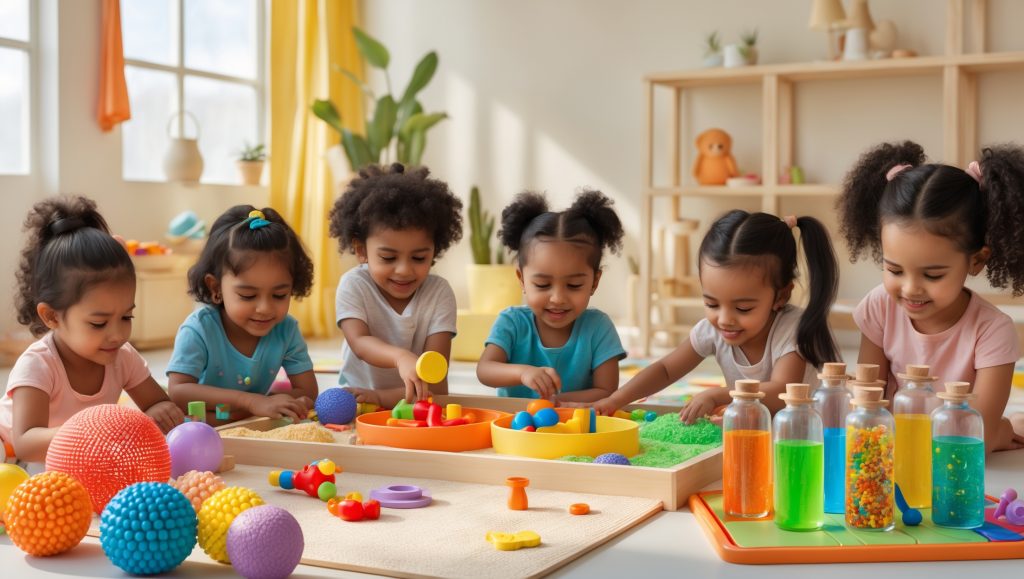
These soft, textured balls encourage little hands to grasp, roll, and squeeze, providing tactile stimulation that supports fine motor skills and sensory integration. The variety of surfaces and bright colors add visual interest and help children discover differences in texture and pressure.
Best for
- Babies practicing tummy time
- Toddlers developing coordination
- Children who enjoy fidgeting
Key notes
- Age/Stage: 6 months+
- Materials/Ingredients: BPA-free plastic or silicone
- Strengths: Easy to clean, versatile, promotes tactile exploration
- Trade-offs: May be less engaging for older preschoolers
2. Water and Sand Tables — Wet and Dry Discovery
Why it stands out
Water and sand tables offer dual sensory experiences, letting kids scoop, pour, dig, and splash in a contained and safe environment. These tables are perfect for both outdoor and indoor play, and they introduce early STEM concepts through hands-on learning.
Best for
- Toddlers and preschoolers
- Outdoor playdates
- Exploring concepts of cause and effect
Key notes
- Age/Stage: 18 months–5 years
- Materials/Ingredients: Durable, non-toxic plastic
- Strengths: Supports collaborative play, adaptable for many fillers (rice, beans, etc.)
- Trade-offs: Requires supervision and setup; potential for messy play
3. Sensory Play Mats — Soft Surfaces for Little Feet
Why it stands out
Interlocking foam play mats with raised patterns and vibrant colors invite crawling, rolling, and tactile exploration. These mats support gross motor development while offering a safe, cushioned surface for active play.
Best for
- Infants learning to crawl
- Tummy time
- Active toddlers
Key notes
- Age/Stage: Newborn–3 years
- Materials/Ingredients: EVA foam (check for safety certifications)
- Strengths: Easy to clean, customizable sizes, visually stimulating
- Trade-offs: May wear with heavy use; foam quality varies by brand
4. Sensory Bottles — Mesmerizing Visuals On the Go
Why it stands out
Sensory bottles filled with water, glitter, beads, and small objects provide calming visual and auditory stimulation. They’re portable, durable, and great for self-regulation and quiet moments.
Best for
- Children who benefit from calming sensory input
- Travel or quiet time
- DIY enthusiasts (homemade options!)
Key notes
- Age/Stage: 1 year+
- Materials/Ingredients: BPA-free plastic bottles with securely sealed lids
- Strengths: Highly customizable, engaging, portable
- Trade-offs: Small parts require supervision; store-bought versions may be pricey
5. Wooden Puzzles with Knobs — Hands-On Problem Solving
Why it stands out
Chunky wooden puzzles with easy-grip knobs help toddlers practice matching, grasping, and visual-motor coordination. The tactile wood and painted surfaces offer sensory feedback, while puzzle play encourages focus and persistence.
Best for
- Toddlers and young preschoolers
- Children working on hand strength
- Intro to problem-solving tasks
Key notes
- Age/Stage: 12 months–3 years
- Materials/Ingredients: Solid wood, non-toxic paint
- Strengths: Durable, eco-friendly, supports multiple skills
- Trade-offs: Limited to early years; some designs are repetitive
6. Kinetic Sand — Moldable, Mesmerizing Sensations
Why it stands out
Kinetic sand sticks to itself but not to hands, making it easy to scoop, shape, and squish. It provides a unique tactile experience, supporting creativity and soothing sensory needs without the mess of traditional sand.
Best for
- Preschoolers and older toddlers
- Children who enjoy building or fidgeting
- Indoor play on rainy days
Key notes
- Age/Stage: 3 years+
- Materials/Ingredients: Fine sand with binding polymers (non-toxic)
- Strengths: Easy cleanup, reusable, stimulates creativity
- Trade-offs: Not suitable for children who mouth objects; storage required to keep fresh
7. Textured Bean Bags — Toss, Feel, and Learn
Why it stands out
Bean bags in a variety of fabrics and fillings (smooth, bumpy, soft) encourage tossing, squeezing, and sorting. This classic toy supports gross motor development, tactile discrimination, and early math skills (counting, sorting by texture or color).
Best for
- Toddlers and preschoolers
- Group games or solo play
- Learning colors and textures
Key notes
- Age/Stage: 18 months–5 years
- Materials/Ingredients: Fabric shells, non-toxic fillings
- Strengths: Open-ended, encourages movement, easy to store
- Trade-offs: Supervision needed with loose threads or torn bags
8. Sensory Scarves — Colorful Movement and Peekaboo
Why it stands out
Lightweight, see-through scarves invite waving, tossing, and peekaboo play, supporting visual tracking, motor planning, and dramatic play. Their flowy movement captivates babies and toddlers alike.
Best for
- Babies during tummy time
- Music and movement activities
- Imaginative play
Key notes
- Age/Stage: 6 months+
- Materials/Ingredients: Lightweight polyester or silk (non-toxic dyes)
- Strengths: Multi-sensory, affordable, easy to clean
- Trade-offs: Supervision required with young babies; can snag or tear
9. Sensory Dough — Squish, Roll, and Shape
Why it stands out
Soft, pliable sensory dough (store-bought or homemade) invites endless squishing, rolling, and sculpting. It strengthens little hands, encourages creativity, and can be scented or colored for added sensory input.
Best for
- Older toddlers and preschoolers
- Children working on grip strength
- Quiet, focused play
Key notes
- Age/Stage: 2 years+
- Materials/Ingredients: Wheat-based dough or allergy-friendly alternatives
- Strengths: Highly customizable, reusable, supports fine motor skills
- Trade-offs: Not for mouthing children; store in airtight container to prevent drying out
10. Light-Up Sensory Toys — Visual Stimulation for Curious Minds
Why it stands out
Light-up toys (like glowing balls or fiber optic wands) provide captivating visual effects that support visual tracking, cause-and-effect understanding, and self-regulation. Many options are portable and suitable for sensory rooms or bedtime routines.
Best for
- Children who love lights and colors
- Calming routines
- Children with visual sensory needs
Key notes
- Age/Stage: 1 year+
- Materials/Ingredients: BPA-free plastic, LED lights (check for safety seals)
- Strengths: Engaging, portable, supports calm-down routines
- Trade-offs: Batteries required; avoid unsupervised use with very young children
11. Sensory Boards — All-in-One Exploration Panels
Why it stands out
Busy boards or sensory panels bring together zippers, switches, spinners, and textures in a single, sturdy toy. They encourage fine motor practice, problem-solving, and independent exploration — ideal for both home and travel.
Best for
- Toddlers and preschoolers
- Children who like to tinker
- Waiting rooms or car rides
Key notes
- Age/Stage: 18 months–4 years
- Materials/Ingredients: Wood, metal, fabric (avoid small detachable parts)
- Strengths: Durable, multi-sensory, promotes independence
- Trade-offs: Bulky for some spaces; quality varies by brand
Buying Tips
Focus on safety: Always check age recommendations and look for non-toxic, BPA-free, and phthalate-free materials. Avoid toys with small parts for children under 3 years old, and inspect for loose seams or sharp edges.
Choose versatility: Toys that can be used in multiple ways or grow with your child offer greater value and support ongoing engagement.
Embrace open-ended play: Sensory toys without a single ‘correct’ use encourage imagination and creativity.
Consider cleanup and storage: Sensory play can be messy — opt for toys that are easy to wash and store.
Match to your child’s interests: Observe which textures, sounds, or types of movement your child gravitates toward and select toys that align with those preferences.
Verdict
The right sensory play toys spark curiosity, nurture development, and create joyful family moments. Our top 11 picks cover a range of ages and sensory needs, from tactile balls for infants to busy boards for busy preschoolers. Prioritize safety, openness to creativity, and your child’s unique interests to build a collection that will support learning and fun throughout 2025.
FAQ
+What is sensory play and why is it important?
+How do I know which sensory toys are safe for my child?
+Can sensory toys help with my child’s development?
+Are sensory play toys only for children with sensory processing differences?
+How can I create a sensory play environment at home?
+What if my child puts sensory toys in their mouth?
+How do I clean sensory play toys?
+Is DIY sensory play safe?

Top 11 Sensory Play Toys to Inspire Exploration in 2025
Sensory play is more than just fun—it’s a vital part of early childhood development. In 2025, the latest sensory play toys are designed to spark curiosity, encourage hands-on learning, and support a range of sensory needs. From textured building sets to interactive light panels, these toys engage touch, sight, sound, and movement, helping children build essential cognitive and motor skills. Parents and educators will appreciate how the top picks are not only safe and durable, but also adaptable for different ages and abilities.
As technology becomes more integrated with play, many of these toys offer customizable experiences, blending traditional tactile elements with smart features. This thoughtful design encourages independent exploration while also supporting social interaction and collaborative play. Whether it’s calming sensory bins or innovative fidget tools, the 2025 lineup makes it easy to create a rich, multi-sensory environment at home or in the classroom. Embracing these toys means giving children the tools they need to grow, learn, and discover the world around them—one sense at a time.
- Promotes cognitive and motor development
- Encourages independent and social play
- Blends tactile play with interactive technology
- Supports a range of sensory needs and abilities
You mentioned safety for each age group, especially with items like sensory bottles and sand tables. Are there any specific safety checks or routines I should follow when rotating these toys regularly, particularly for younger kids?
It’s great that you’re thinking ahead about safety during toy rotation. For younger kids, always inspect toys for loose parts, cracks, or leaks before reintroducing them. With sensory bottles, make sure lids are tightly sealed and not cracked; use food-grade fillers when possible. For sand tables, check for mold and remove any debris or objects that could be choking hazards. Wipe down surfaces and wash hands before and after play. Always supervise closely, especially with items that could spill or be mouthed. This isn’t medical advice; if you’re concerned, check in with your pediatrician.
We have limited space in our apartment and I want to encourage sensory play without overcrowding the living room. Do you have any suggestions on how to store or rotate toys like sensory play mats and tactile balls to keep things manageable?
It’s great that you want to encourage sensory play while keeping your living space organized. Try rotating just a few toys at a time—keep most items in a sturdy bin or basket out of sight, and switch them weekly to maintain your child’s interest. Opt for foldable sensory mats or stackable items that tuck easily into a closet or under a bed. Use clear containers to quickly spot what you need, and store smaller items like tactile balls in mesh bags to avoid losing pieces. Always supervise play, and check age recommendations to ensure safety. This isn’t medical advice; if you’re concerned, check in with your pediatrician.
Do you have any advice on how often to rotate or introduce new sensory toys from your list to keep things engaging for kids, particularly when routines change due to frequent visits from grandparents or travel?
It’s great that you want to keep sensory play fresh and engaging, especially with changing routines. Try rotating a few sensory toys every 1–2 weeks, introducing one or two new items at a time instead of all at once. Before visits or travel, pack a couple of favorites and a new toy for novelty. Watch how your child responds—if they seem bored, switch things up sooner. Always consider age guidelines and supervise with new textures or small parts. This isn’t medical advice; if you’re concerned, check in with your pediatrician.
We’re on a bit of a budget and tight on storage space. Which of these sensory toys would offer the most versatility without taking up too much room?
It’s understandable to want to get the most value from your toy choices, especially with limited space and budget. Look for compact, multi-purpose sensory toys—like textured balls or nesting cups—which can be used in water, sand, or for stacking and sorting games. Soft sensory scarves also fold up small and are great for peekaboo, tactile play, and even dancing. Always check the recommended age and supervise play, especially with smaller items. This isn’t medical advice; if you have any concerns, your pediatrician can help.
If my toddler is particularly sensitive to certain textures, like the rubber on some sensory balls, are there household alternatives you’d suggest to help gently introduce them to new sensations in a playful way?
It’s really thoughtful to help your toddler explore new textures at their own pace. You might try offering soft cotton washcloths, silky scarves, or a bowl of dry rice for gentle sensory play. Let your child touch these materials with their hands or feet while staying close for reassurance. Introduce new textures one at a time—perhaps rolling a soft ball inside a sock before trying it bare. Always supervise closely, especially with small items, and keep play sessions short and positive. This isn’t medical advice; if you’re concerned, check in with your pediatrician.
How often do you recommend rotating or introducing new sensory toys from your list to keep things interesting, without overwhelming my 2-year-old? I’m trying to build a play routine that keeps her engaged.
It’s wonderful that you want to keep your 2-year-old engaged without overwhelming her. For toddlers this age, try offering 2–3 sensory toys at a time and rotate them every week or two. Watch your child’s interest—if she seems bored or overstimulated, change things up sooner or offer quieter options. Introduce only one new toy at a time so she can explore at her own pace, and always supervise play to ensure safety with small parts and textures. This isn’t medical advice; if you’re concerned, check in with your pediatrician.
Are the sensory balls and sensory bottles suitable for an almost 18-month-old who is still working on grasping and manipulating objects, or should we stick to play mats at this stage?
It’s great that you’re thinking about your child’s current skills and how toys can support their development. For an almost 18-month-old, larger sensory balls with different textures are often appropriate—they encourage grasping, rolling, and squeezing, but supervise closely to avoid any choking risks. Sensory bottles can also be engaging, as long as they’re securely sealed and too big to fit in your child’s mouth. You can alternate between play mats and these toys, offering both floor-based and hands-on experiences. Always check that toys have no small, detachable parts. This isn’t medical advice; if you’re concerned, check in with your pediatrician.
When rotating water and sand table play, do you advise introducing different fillers or themes each time? I’d love ideas for keeping the sensory experience fresh but manageable in terms of cleanup and supervision.
You’re thoughtful to want to keep sensory play engaging while making cleanup doable. Try rotating simple fillers like water, dry rice, or kinetic sand, and consider easy themes—such as construction (with trucks and pebbles), beach day (shells and blue water beads), or garden (plastic bugs, soil, and scoops). For younger kids, stick to larger items that can’t be swallowed and avoid allergens. Always supervise closely, especially with water or small objects. This isn’t medical advice; if you have specific concerns, check in with your pediatrician.
Do you have any safety concerns or tips for including sensory bottles or tactile balls as part of a bilingual bedtime routine, especially for younger siblings who may want to join in?
It’s wonderful that you’re thinking about including sensory play in your bilingual bedtime routine, especially with little ones of different ages. For safety, always supervise play—sensory bottles should be securely sealed to prevent leaks or choking hazards, and tactile balls should be large enough so they can’t be swallowed. For infants and toddlers, choose bottles and balls made from non-toxic, BPA-free materials. Keep an eye out for loose parts or wear and check toys regularly. Play together on a soft surface and put the toys away when you’re finished. This isn’t medical advice; if you’re concerned, check in with your pediatrician.
My toddler is sensitive to loud sounds. Are any of the water and sand tables or sensory bottles quieter or better suited for children who get overwhelmed easily by noise?
It’s understandable to want sensory play options that won’t overwhelm your toddler with noise. For children sensitive to loud sounds, water and sand tables are usually quieter, especially if you supervise and keep other materials soft—like using kinetic sand or water beads instead of hard plastic tools. Sensory bottles are very calm and quiet, making them great for gentle exploration; just be sure the bottles are securely sealed and free of small parts. Always supervise closely, and introduce new toys gradually to see how your child responds. This isn’t medical advice; if you’re concerned, check in with your pediatrician.
You mention that water and sand tables are best for 18 months and up. Is there a safe way to modify a sensory play setup like this for a younger baby under supervision, or should we focus on other options until our child is older?
It’s great that you want to encourage safe sensory play for your younger baby. For little ones under 18 months, you can create a simple sensory experience by using a shallow tray with just a thin layer of water, always keeping a hand on your baby and never leaving them unattended. Instead of actual sand, try edible alternatives like rice cereal or finely ground oats on a washable mat. Offer large, easy-to-clean toys for scooping and pouring, avoiding any small parts to prevent choking. Remember, close supervision is crucial at this age. This isn’t medical advice; if you’re concerned, check in with your pediatrician.
You mention the importance of safety certifications for sensory mats. Could you clarify which certifications parents should look for when buying these products in the US to make sure they are actually safe for infants?
It’s great that you’re prioritizing your baby’s safety when choosing sensory mats. In the US, look for mats labeled with ASTM (American Society for Testing and Materials) and CPSC (Consumer Product Safety Commission) compliance, as these indicate the product meets recognized safety standards. For infants, mats should also be labeled as BPA-free, phthalate-free, and non-toxic, and ideally be certified by CPSIA (Consumer Product Safety Improvement Act). Always supervise your baby during play, especially if the mat has detachable parts. This isn’t medical advice; if you’re concerned, check in with your pediatrician.
Can you recommend specific sensory toys from your list that work well for children who get overstimulated easily? I’m hoping to find something calming for our son to use during early, quiet hours.
It’s wonderful that you’re looking for calming sensory options for your son, especially given his sensitivity to overstimulation. From the article, consider soft, squishy fidget balls and weighted lap pads—both are designed for gentle tactile input and can be very soothing. Simple water mats or textured fabric books are also good choices, as they provide quiet, controlled sensory experiences. Always supervise young children and check for small parts or potential allergens. This isn’t medical advice; if you have any concerns, check in with your pediatrician.
Are the sensory bottles mentioned in this list easily portable for car rides, and do you have tips for making sure they don’t leak everywhere? I’m worried about messes in the back seat.
Your concern about messes during car rides is completely valid. Sensory bottles are generally portable, but leaks can happen if they’re not sealed well. Try using bottles with tightly locking lids (like screw-tops), and reinforce the seal with strong tape or hot glue before handing them to your child. Test the bottle at home by shaking it over a sink to check for leaks. For extra peace of mind, keep the bottle in a zip-top bag when in the car. Always supervise younger children and choose bottles without small, detachable parts. This isn’t medical advice; if you’re concerned, check in with your pediatrician.
Could you clarify if any of these sensory toys work particularly well for calming overstimulated children at bedtime, or would you recommend saving sensory play for earlier in the day?
You’re thoughtful to consider how sensory toys affect bedtime routines. Most sensory toys in the article are best for active play earlier in the day, as some textures, lights, and sounds can be stimulating rather than calming at night. If your child enjoys gentle tactile input, soft plush toys or simple fidget items (without lights or loud sounds) might help some children wind down, but always supervise, especially with younger kids. Try sensory play at least an hour before bed, then transition to quiet bedtime routines. This isn’t medical advice; if your child often struggles to settle, a pediatrician can offer more guidance.
I have a toddler who loves messy play and a newborn who puts everything in her mouth. Are there specific water and sand table brands or features you’d recommend for families with both age groups, especially when it comes to easy cleanup and safety for the littlest one?
It’s wonderful that you’re supporting both your toddler’s love for messy play and your newborn’s safety. Look for water and sand tables with snug-fitting lids to keep materials contained and clean when not in use. Choose tables with smooth, rounded edges and without small detachable parts, as these can pose a choking risk for your baby. Opt for easy-to-wash surfaces and removable basins to simplify cleanup. Always supervise play closely, and consider setting up play sessions for your toddler when your newborn is in a safe, separate area. This isn’t medical advice; if you’re concerned, check in with your pediatrician.
I noticed the play mats are recommended for newborns and up. If my 9-month-old is starting to pull up and cruise, are there specific safety features or brands you suggest to prevent slipping during this more active stage?
It’s great that you’re thinking about safety as your baby becomes more mobile. For a cruising 9-month-old, choose play mats that have non-slip backing or textured surfaces to reduce slipping. Make sure the mat lies flat with no curled edges or loose corners that could trip your baby. Avoid mats with small detachable parts or choking hazards. Place the mat on a flat, firm floor and supervise your child closely, especially as they start to pull up and walk. This isn’t medical advice; if you’re concerned, check in with your pediatrician.
If my 2.5-year-old is already showing some interest in self-care routines like washing hands, would any of these sensory toys tie in well with building independence during potty training? For example, could a water table be adapted for bathroom skills practice?
It’s great that you’re encouraging your toddler’s independence during self-care routines. A water table can absolutely be adapted for bathroom skills—try setting it up with soap dispensers, hand towels, and small cups to practice pouring and rinsing, which mimics handwashing. You can also use sensory bins with wipes or cloths for pretend cleaning, and role-play with dolls to model bathroom steps. For a 2.5-year-old, supervise closely to prevent slipping and use non-toxic, easy-to-clean materials. This isn’t medical advice; if you’re concerned, check in with your pediatrician.
Do you have tips for selecting sensory mats or toys that are least likely to trap food allergens, for families introducing eggs or peanuts at this age? I’m worried about missed crumbs if my baby mouths everything during play.
It’s completely understandable to be cautious about allergen exposure during playtime. Choose sensory mats and toys with smooth, solid surfaces rather than fabric or textured crevices, as these are easier to wipe clean and less likely to trap crumbs. Opt for dishwasher-safe or easy-to-wash materials like silicone or hard plastic, and clean thoroughly after each use, especially when introducing new foods like eggs or peanuts. Supervise play closely if your baby still mouths toys, and rotate toys to minimize buildup. Always check manufacturer guidelines for age appropriateness and avoid items with small parts. This isn’t medical advice; if you’re concerned, check in with your pediatrician.
The water and sand tables look fun, but our living space is pretty limited. Are any of your recommended options particularly compact or easy to store away when not in use?
It’s great that you want to provide sensory play even with limited space. Several options from the list are compact or easy to store: soft sensory balls and textured bean bags can be kept in a small basket or drawer, and stacking cups nest neatly together. Sensory scarves fold down very small, and simple fidget toys fit in a box or bag. For water or sand play, consider a shallow plastic bin with a lid that slides under a bed when not in use. Always supervise play, especially with small pieces or water. This isn’t medical advice; if you have concerns, talk to your pediatrician.
My toddler loves water play but gets really overstimulated with loud or messy toys. Are water and sand tables too much, or do you have tips to make those activities more calming for a two-year-old who needs quieter sensory input?
It’s wonderful that you’re tuned in to your toddler’s sensory needs. Water and sand tables can still be calming if you keep things simple. Try offering just a small amount of water or sand and only a few gentle, quiet tools like cups or soft sponges. Let your child play with one material at a time and avoid adding noisy features or too many accessories. Stay close to supervise, as two-year-olds may still mouth objects or splash. Adjusting the environment—like playing in a quiet area—can help keep things soothing. This isn’t medical advice; if you’re concerned, check in with your pediatrician.
If my child is close to aging out of the suggested range for some of these toys, is it still worth investing, or should I look for items that span more age groups to minimize clutter?
It’s thoughtful to consider both your child’s developmental stage and minimizing clutter. If your child is nearly beyond the recommended age range, look for sensory toys that offer open-ended play or can grow with your child, such as building sets or art materials. You might also rotate a few versatile toys instead of owning many. Involve your child in choosing what interests them now, which can lead to more meaningful playtime. Always ensure toys are age-appropriate for safety, especially regarding small parts or textures. This isn’t medical advice; if you’re concerned, check in with your pediatrician.
My toddler is on the younger end of the 18-month age range for water tables and loves putting things in her mouth. Are there specific features I should look for in a water and sand table to make sure it’s extra safe for kids her age?
You’re right to be careful—toddlers at this age are curious and still tend to mouth objects. For a water and sand table, choose one with large, securely attached accessories that can’t be swallowed or easily removed. Avoid sets with small parts or detachable pieces smaller than 1.25 inches, which can be choking hazards. Look for sturdy edges without sharp corners, and make sure the table is stable enough not to tip over. Always supervise play, and regularly check for wear or loose parts. This isn’t medical advice; if you’re concerned, check in with your pediatrician.
Are there ways to keep play with sensory mats engaging as children approach preschool age, or would you recommend transitioning to different sensory activities for older toddlers?
Your interest in keeping sensory play engaging as your child grows is wonderful. For preschoolers, sensory mats can still be exciting with a few tweaks: try creating obstacle courses, encourage walking barefoot or with socks to explore texture differences, or add themed scavenger hunts (like finding hidden soft shapes on the mat). You can also combine mats with other sensory tools, like bean bags or textured balls, for more complex play. Always supervise to ensure safety, especially with small parts. This isn’t medical advice; if you’re concerned, check in with your pediatrician.
With sensory play mats, how can I tell if the EVA foam is truly non-toxic and safe for newborns? Are there certain safety certifications or brands you recommend checking for when shopping in the US?
It’s great that you’re prioritizing your baby’s safety with sensory play mats. When choosing EVA foam mats for newborns, look for mats labeled as BPA-free, phthalate-free, lead-free, and formamide-free. In the US, check if the product meets ASTM F963 or CPSIA standards—these certifications signal that the mat complies with recognized child safety regulations. Always inspect for strong odors, which may indicate lingering chemicals, and avoid mats with small detachable pieces that could pose a choking risk. This isn’t medical advice; if you’re concerned, check in with your pediatrician.
Could you recommend which of these sensory toys work best as part of a calming bedtime routine instead of getting kids too energized right before sleep? We’re hoping to use toys to help our preschooler wind down in both English and Spanish.
You’re wise to look for sensory toys that support a calming bedtime routine for your preschooler. Soft, textured plush toys or weighted stuffed animals can provide gentle tactile input and comfort, making them suitable for winding down. Simple sensory bottles with slow-moving glitter or beads can help your child relax visually—describe what you see together in both English and Spanish. Avoid noisy or high-energy toys before bed. Always supervise your preschooler, and ensure toys don’t pose choking hazards. This isn’t medical advice; if you’re concerned, check in with your pediatrician.
For parents practicing bilingual routines at bedtime and naptime, are there specific sensory toys on your list that support a sense of comfort or familiarity as we switch languages? I’d love suggestions for toys that work well during calming moments.
Switching languages during bedtime routines is a wonderful way to nurture both comfort and learning. Soft sensory toys like plush textured animals or calming weighted blankets from the list can become soothing companions that signal it’s time to wind down, no matter which language you’re using. Try using gentle musical toys that play lullabies in multiple languages, or simple tactile toys like fabric books with familiar bedtime scenes. Always check for age-appropriate materials and avoid small detachable parts for younger children. This isn’t medical advice; if you’re concerned, check in with your pediatrician.
I noticed you mentioned that some foam play mats might wear out with heavy use. For families on a tight budget, are there brands or types that balance durability and safety, especially for active toddlers?
It’s great that you’re looking for safe, durable options for your active toddler while sticking to a budget. Look for foam mats made from high-density EVA foam, as these usually hold up better to energetic play. Choose mats certified as non-toxic and free from BPA, phthalates, and formamide. Interlocking puzzle mats often last longer, since you can replace only the worn pieces. Check for mats with textures for extra grip and durability, but avoid very small puzzle pieces to prevent choking hazards. Always supervise toddlers during play. This isn’t medical advice; if you’re concerned, check in with your pediatrician.
Some sensory mats have a strong chemical smell when new. How can I make sure the play mats from your recommendations are safe and don’t expose my toddler to anything risky?
You’re right to be cautious about your toddler’s environment, especially with sensory mats. First, always check for safety certifications like ASTM or EN71 and look for mats labeled as BPA-, phthalate-, and lead-free. After purchase, unbox the mat and let it air out for a few days in a well-ventilated space to reduce any odors. Wipe it down with a damp cloth and mild, fragrance-free soap before your child uses it. Avoid mats with small detachable parts if your toddler is under three years old to prevent choking hazards. This isn’t medical advice; if you have ongoing concerns or your child shows any sensitivity, check in with your pediatrician.
I noticed mealtime gets really messy and overwhelming for my baby, especially with new foods. From your list, which toy would you suggest introducing during highchair time to help distract from the mess but still foster positive sensory exploration?
It’s completely normal to feel concerned when mealtimes get overwhelming for your baby. From the list, a suction-cup sensory toy or textured highchair mat would be a good choice—they stay firmly attached to the tray, keeping play safe and contained while offering different textures to explore. These toys can encourage tactile discovery without interfering with eating or presenting a choking risk. Always supervise your baby closely and avoid toys with small parts or allergenic materials. This isn’t medical advice; if you’re concerned, check in with your pediatrician.
If my child is turning one and moving up to a new daycare room soon, which of these toys would be suitable for solo play during drop-off when separation anxiety is at its peak?
It’s completely natural to want a comforting transition for your one-year-old during daycare drop-offs. Soft textured toys, simple sensory balls, and sturdy stacking cups from the list are good choices—they’re safe for mouthing, easy to grasp, and encourage independent play. Choose toys without small parts or choking hazards, and check that all materials are non-toxic. Place the chosen toy in your child’s cubby so it’s familiar and available each morning. Always check with daycare staff about their toy policies. This isn’t medical advice; if you’re concerned, check in with your pediatrician.
For the tactile sensory balls, do you have any advice on how many to introduce at once to a baby who sometimes gets overwhelmed by too much stimulation? Would it make sense to start with just one or two different textures?
It’s great that you’re tuned in to your baby’s sensitivity to stimulation. For babies who can get overwhelmed, start with just one tactile sensory ball at a time, letting your little one explore at their own pace. Once they seem comfortable, you can gently introduce a second ball with a different texture. Always supervise play, choose balls that are too large to be a choking hazard, and avoid materials with strong smells or allergens. Watching your baby’s cues will help you know when they’re ready for more variety. This isn’t medical advice; if you’re concerned, check in with your pediatrician.
I noticed the age ranges are a bit broad. Are there signs I should look for to know when my toddler is ready to transition from something like a sensory play mat to more complex toys like a water table?
You’re thoughtful to consider when your toddler is ready for more complex sensory toys. Look for signs like steady sitting or standing without support, showing curiosity about pouring or scooping, and following simple instructions. Watch if your child tries to move objects between hands or explores cause-and-effect play. Always supervise, as water tables have small pieces and water hazards. Choose toys without choking risks and avoid potential allergens. This isn’t medical advice; if you’re concerned, check in with your pediatrician.
When rotating sensory play mats and textured balls, is it important to introduce new textures each time, or can repeating familiar toys still offer developmental benefits? I want to ensure my child continues to be challenged and interested.
You’re thoughtful to want your child both challenged and engaged with sensory play. Repeating familiar toys like mats and balls definitely still offers developmental benefits—repetition helps reinforce sensory processing and builds confidence. To maintain interest and promote growth, try rotating in one new texture at a time alongside favorites, narrating the differences as your child explores. Allow your child to lead; if they are drawn to a texture repeatedly, that’s okay and meaningful for their development. Always supervise, especially with infants or toddlers, to ensure safety with small parts or potential allergens. This isn’t medical advice; if you have concerns, check in with your pediatrician.
For a 10-month-old who’s just starting to get picky about food textures, would tactile sensory balls help with sensory challenges during meals, or are there toys better suited to encourage positive tactile experiences at the table?
It’s understandable to want to support your baby’s sensory development, especially when meal textures become tricky. Tactile sensory balls are fun for touch exploration, but for mealtime challenges, it can help to introduce sensory-rich play that mimics food experiences. Try offering safe, easy-to-clean silicone utensils or textured placemats at the table for your baby to play with before or after meals. Let them explore soft, squishy foods with their hands, always supervising closely. You might also try water play or edible finger paints in high chair trays to build positive associations. This isn’t medical advice; if you’re concerned, check in with your pediatrician.
For a two-year-old who sometimes gets overwhelmed by bright colors or loud noises, which of these sensory toys would you recommend starting with, and are there ways to adjust the experience for sensitive kids?
It makes sense to want gentle sensory play options for your sensitive toddler. For a two-year-old who is sometimes overwhelmed, start with toys that offer soft textures, muted colors, and quiet sounds, such as simple fabric toys, soft blocks, or water play mats. Introduce one toy at a time in a calm, familiar space and watch your child’s reactions. If a toy has lights or sounds, check if you can lower the volume or turn off the lights. Always supervise play and avoid small parts or strong scents. This isn’t medical advice; if you’re concerned, check in with your pediatrician.
Are there particular signs I should look for to know when my child is ready to move from simpler tactile balls to more complex sensory activities, or is it fine to introduce a variety at this age?
It’s great that you’re tuning into your child’s readiness for new sensory experiences. Look for signs like your child grasping, mouthing, or manipulating simpler tactile balls confidently, showing curiosity for new textures, and managing short periods of focused play. If your child is past the mouthing stage and doesn’t get easily overwhelmed, you can gradually introduce more complex sensory toys under supervision. Always consider age recommendations, avoid small parts for children under three, and watch for any allergies or sensitivities. This isn’t medical advice; if you’re concerned, check in with your pediatrician.
Do you have recommendations for which sensory toys are easiest to clean up quickly during an evening routine? We have limited time and want to keep the transition to bedtime smooth and stress-free.
It’s great that you’re thinking about making bedtime transitions smoother. For quick clean-up, consider large, one-piece sensory toys like textured balls, silicone stacking cups, or pop tubes, as they can be gathered up easily and wiped down if needed. Avoid toys with lots of small pieces or messy materials like sand or water beads in the evening. Keep a designated storage bin nearby so everything has a place, making it faster to tidy up. Always check age recommendations and supervise play, especially if your child is under three. This isn’t medical advice; if you’re concerned, check in with your pediatrician.
My three-year-old gets pretty wound up in the evenings, so I’m looking for sensory play ideas that will actually help calm her down before bed. Out of the toys you listed, are there any you’ve seen work well specifically for winding down in a bedtime routine, rather than getting kids more excited?
You’re thoughtful to look for calming sensory play before bedtime—it can really help some children settle down. From the toys listed, soft textured items like plush sensory balls, weighted stuffed animals, or simple water mats often help three-year-olds relax, especially when used in a quiet, dimly lit space. Try slow, gentle play: squeezing a plush ball, cuddling a weighted toy, or running fingers across a water mat together. Avoid noisy, light-up, or fast-moving toys right before bed, as these can be too stimulating. Always supervise, and make sure any small parts are out of reach. This isn’t medical advice; if you’re concerned, check in with your pediatrician.
How do you recommend storing water and sand table accessories to keep everything organized and easily accessible for quick setup, especially in smaller living spaces?
—keeping sensory play accessories organized can definitely make playtime smoother for both kids and parents. First, use shallow, clear plastic bins with lids to separate water and sand items; label them for easy identification. Stackable bins or a small rolling cart can save space and let you tuck supplies away when not in use. For tiny items, consider mesh bags that you can hang to dry after messy play. Always make sure storage materials are child-safe and avoid containers with heavy lids for little ones. This isn’t medical advice; if you’re concerned, check in with your pediatrician.
I noticed that some of the play mats can wear out quickly with heavy use. Are there specific brands or features you look for to ensure durability, especially if the mats will be used by multiple kids several times a week?
It’s understandable to want play mats that will last through lots of use, especially with several children playing often. Look for mats made from high-density, non-toxic foam or thick silicone, as these materials resist tearing and indentations. Reinforced edges and double stitching help prevent fraying. Mats with textured, reversible surfaces often hold up better, and choosing interlocking tiles can allow you to replace worn sections instead of the whole mat. Always check for age-appropriate safety (like large pieces to avoid choking and hypoallergenic materials). This isn’t medical advice; if you’re concerned, check in with your pediatrician.
My child is almost three but seems to lose interest quickly in foam sensory mats. Are there ways to make these more engaging for older toddlers, or should we consider transitioning to different types of sensory toys?
It’s understandable to want sensory play to hold your child’s interest as they grow. For older toddlers, try turning foam mats into active games—like hopscotch, obstacle courses, or hiding small (safe) objects under textured pieces for a seek-and-find activity. You can also combine the mats with other toys, such as cars or animal figures, to encourage imaginative play. If your child still loses interest, it may be time to introduce more complex sensory toys like kinetic sand, water beads, or simple building sets, always supervising for safety with small parts. This isn’t medical advice; if you’re concerned, check in with your pediatrician.
My 16-month-old loves chewing on everything. Are the tactile sensory balls safe for kids who still put toys in their mouths, or should I wait until that phase passes?
It’s completely normal for toddlers to explore with their mouths at this age. For a 16-month-old, choose tactile sensory balls labeled as safe for ages 12 months and up, ensuring they are made from non-toxic, BPA-free materials. Check that the balls are large enough not to pose a choking hazard and have no small detachable parts. Always supervise play, especially with mouthing habits. Wash toys frequently to keep them hygienic. This isn’t medical advice; if you’re concerned, check in with your pediatrician.
Would you adjust the recommended play schedules or switch up sensory toys if you’re caring for children of different ages in the same group? For example, how would you keep older preschoolers engaged with toys that seem more tailored to babies or toddlers?
That’s such a thoughtful question about meeting the needs of mixed-age groups. To keep older preschoolers interested, try adding challenges: ask them to sort, build, or tell stories using the sensory toys. Rotate materials so there’s always something new, and offer open-ended activities like creating obstacle courses. Supervise closely to ensure younger children don’t access small parts meant for older kids. Adapt toy use by modeling creativity and encouraging cooperation across ages. This isn’t medical advice; if you have concerns about specific toys or children’s responses, please reach out to your pediatrician.
Are there safety guidelines for homemade sensory bottles, especially if we want to incorporate small traditional items or spices from our home culture inside? My mother sometimes gets creative with what she adds, and I want to be extra cautious.
It’s wonderful that you want to honor your culture while keeping things safe. For homemade sensory bottles, use only sturdy, leak-proof bottles with tightly glued or taped caps. Avoid small objects that could be choking hazards, especially for children under 3, and never use items that could splinter or break. Choose spices that are non-toxic and avoid any that might trigger allergies. Always supervise young children during play, and if you’re ever unsure about an ingredient, it’s best to leave it out. This isn’t medical advice; if you’re concerned, check in with your pediatrician.
I’m wondering how easy it is to keep sand and water tables clean and stored away between uses, especially in a smaller apartment. Are there any compact or foldable models you’d recommend?
You’re right to consider space and cleanliness, especially in a small apartment. After each use, thoroughly drain water tables and wipe dry to prevent mold. For sand tables, sift out debris and cover tightly to keep pests out. Some brands offer foldable or stackable models—look for those with detachable legs and secure lids for easy storage, and always check they lock safely to avoid spills. If space is very limited, consider compact tabletop versions. This isn’t medical advice; if you’re concerned, check in with your pediatrician.
We’re just starting potty training with my 2.5-year-old, so most of our sensory play happens in the bathroom or nearby. Are there certain sensory toys from your list that work well in that setting, or could help make potty time less stressful for toddlers?
It’s great that you want to make potty training a positive, low-stress experience for your toddler. For sensory play in or near the bathroom, consider water-safe toys like textured bath cups or stackable silicone blocks—these can keep little hands busy while you wait together. Suction-cup spinners or soft, squishy bath books are also easy to clean and safe for wet settings. Always supervise closely to prevent slips and avoid any toys with small parts. Most importantly, keep the atmosphere relaxed to reduce pressure. This isn’t medical advice; if you have worries about potty training, your pediatrician can help.
For twins on different wake-up schedules, is there a toy from your list that’s especially easy to set up and clean quickly in between play sessions? Sometimes we only get a short window for one-on-one play before the other twin wakes up.
It sounds like you’re trying to make the most of those precious one-on-one moments with your twins. From the list, soft sensory balls or textured stacking cups are especially easy to set up and clean—just wipe them or pop them in soapy water after play. Keep a small bin nearby for quick access and tidy-up. Make sure the toys are suited to your twins’ ages to avoid small parts, and supervise play, especially if one is younger. This isn’t medical advice; if you’re concerned, check in with your pediatrician.
If my 2-year-old loses interest in the tactile sensory balls after a few weeks, are there suggestions to make them more engaging again, or should we try introducing them alongside another toy from the list?
It’s completely normal for toddlers to lose interest in toys and then circle back to them later. To rekindle engagement, you can try hiding the tactile sensory balls for a week or two, then reintroduce them as something ‘new.’ You might also set up a sensory bin and combine the balls with another toy from the list, like stacking cups or textured blocks, to encourage creative play. For a 2-year-old, always supervise closely and ensure all play items are large enough to prevent choking. This isn’t medical advice; if you have concerns about your child’s development, check in with your pediatrician.
My child sometimes gets distracted during potty training, and I’ve heard that certain sensory toys can help with focus and calming. Are there any toys from your recommendations that you think would support a more successful potty routine for this age group?
It’s understandable to want tools that make potty training smoother and less stressful for your child. From the recommended list, simple fidget toys or textured sensory balls can be held or squeezed quietly while your child sits on the potty, helping with focus and reducing anxiety. Soft, easy-to-clean options are best for this setting, and always supervise to prevent choking hazards, especially if your child is under three. Avoid toys with small parts or messy materials near the bathroom. This isn’t medical advice; if you’re concerned, check in with your pediatrician.
One of my twins has a strong tactile preference, while the other prefers visual stimulation. How would you suggest balancing both their sensory needs using the toys featured here, especially if they are awake at very different times of day?
It’s thoughtful of you to want to meet both your twins’ unique sensory needs. Try setting up separate play baskets—one with textured toys for tactile input and another with visually engaging items like light-up or high-contrast toys, so each twin has access to what suits them best. Rotate toys between rooms or play areas to keep things novel, especially if their wake times don’t overlap. When they are together, choose toys that offer both features, like textured light panels or sensory balls with bold patterns—just make sure all items are age-appropriate and free from choking hazards. This isn’t medical advice; if you’re concerned, check in with your pediatrician.
Do you have any tips for parents who want to choose more eco-friendly sensory play options, perhaps favoring wooden toys over plastic? I’m trying to minimize our household plastic use but still want engaging textures and colors for my toddler.
It’s wonderful that you’re looking for eco-friendly sensory play options while supporting your toddler’s development. Start by choosing unfinished or non-toxic, sealed wooden toys with smooth surfaces and rounded edges for safety. Look for toys colored with water-based, natural dyes rather than synthetic paints. Consider adding fabric sensory items made from organic cotton or wool, which introduce different textures safely. Rotate a variety of simple objects—like wooden blocks, rings, or stacking cups—to keep play fresh and engaging. Always supervise play to prevent mouthing of small parts. This isn’t medical advice; if you’re concerned, check in with your pediatrician.
If my baby seems very sensitive to loud or crinkly noises, are any of these toys particularly gentle on auditory input, or would you recommend steering away from certain options for now?
It’s understandable to want to protect your baby from sounds that seem overwhelming. For a sensitive child, consider soft sensory toys like plush balls, textured cloths, or silicone stackers—they offer rich tactile play without noisy components. Avoid toys with crinkle paper, bells, or electronic sounds, as these can be overstimulating. Always supervise sensory play to ensure your baby is comfortable and safe. Every child’s sensitivities are unique, so observe your baby’s reactions and adjust as needed. This isn’t medical advice; if you’re concerned, check in with your pediatrician.
Are there certain water and sand table brands that make setup and cleanup easier for busy parents? I like the idea but worry about daily mess indoors when the weather does not allow for outdoor play.
It’s completely understandable to want sensory play that doesn’t add to your daily stress. To minimize mess indoors, look for water and sand tables with deep, sturdy basins and tight-fitting lids—brands like Step2 and Little Tikes often design for easy assembly and built-in drainage plugs. Place a waterproof mat or old sheet underneath to catch spills, and use only a small amount of sand or water at a time. Encourage your child to help with cleanup, making it a learning opportunity. For toddlers, always supervise to prevent slipping or choking hazards. This isn’t medical advice; if you’re concerned, check in with your pediatrician.
My toddler is very active and loves to play with water and sand, but I worry about the mess inside the house. Do you have any tips or recommendations for minimizing cleanup when using a water and sand table indoors?
It’s great that you want to support your toddler’s sensory exploration while managing the mess indoors. Try placing a waterproof mat or shower curtain under the table to catch spills. Use a low, shallow bin to limit the amount of water or sand available at one time. Encourage your child to keep materials inside the table by modeling and gentle reminders. Offer towels and a small broom so your child can help clean up, making it part of the play. Always supervise closely to ensure safety and prevent slips or mouthing of sand. This isn’t medical advice; if you’re concerned, check in with your pediatrician.
When incorporating sensory play mats into our daily routine, what is a realistic amount of time for a busy family to allow a crawling baby to play each day? Does longer exposure really translate to better sensory outcomes?
It’s wonderful that you want to make sensory play part of your baby’s day, even with a busy schedule. For most crawling babies, 10-20 minutes of play on a sensory mat once or twice daily is both realistic and beneficial. Focus on quality time: let your baby explore textures and objects at their own pace, always under supervision to ensure safety. Longer play isn’t always better—short, engaged sessions support healthy sensory development just as well. This isn’t medical advice; if you’re concerned, check in with your pediatrician.
If my preschooler quickly loses interest in simpler toys as described under the tactile sensory balls, do you have ideas for making them more engaging for older kids or should we just plan to transition to more complex sensory toys?
It’s understandable to want your preschooler to stay engaged during sensory play. To make tactile sensory balls more interesting for older kids, try incorporating them into obstacle courses, using them with water or sand for added texture, or creating sorting and matching games based on color or size. You can also invite your child to invent new games with the balls. If these strategies don’t spark more interest, it’s fine to transition to more complex sensory toys designed for their age—just ensure they’re safe and supervised. This isn’t medical advice; if you’re concerned, check in with your pediatrician.
My child is easily overwhelmed by too many new textures at once. With a toy subscription, are parents able to control how many sensory toys arrive at the same time, or would it be easier to buy specific items from your list as my child is ready for them?
It’s completely understandable to want to introduce new textures at your child’s own pace. Many toy subscriptions send a set selection each month, so you might not be able to control exactly how many sensory toys arrive or customize the mix for your child’s needs. If your child is easily overwhelmed, purchasing specific items from the list as your child shows readiness may give you more flexibility and control. Always supervise play and check that toys are age-appropriate, especially for little ones who might mouth objects. This isn’t medical advice; if you’re concerned, check in with your pediatrician.
We have a small apartment, so storage is always a concern. Which of these sensory play toys are easiest to store or pack away when not in use?
It’s completely understandable to want sensory toys that don’t take up too much space. Look for toys from the list like stacking cups, silicone poppers, or textured balls, which are compact and can fit into bins or drawers. Sensory scarves fold up small, and play dough or kinetic sand sets often come in sealable containers. Avoid large foam mats or bulky water tables if storage is tight. Always make sure toys with small parts are kept out of reach of babies and toddlers. This isn’t medical advice; if you’re concerned, check in with your pediatrician.
We have a tight budget and limited storage in our home. Which two toys from your list do you think would give us the biggest developmental benefit and the most variety for a 3-year-old without taking up too much space?
It’s completely understandable to want toys that are both space-saving and versatile for your 3-year-old. From the article, I’d recommend the silicone sensory building blocks and the sensory play scarves. The blocks encourage fine motor skills, creativity, and problem-solving while stacking or sorting. The scarves are lightweight and can be used for imaginative play, movement activities, color recognition, and even calming routines. Both are easy to store and adapt to different play styles. Make sure all pieces are large enough to avoid choking hazards and supervise play, especially with scarves. This isn’t medical advice; if you’re concerned, check in with your pediatrician.
If a child gets overwhelmed by too much visual or tactile input, are there certain types of sensory toys on your list that are better suited for a gentler introduction? For example, would sensory bottles be less stimulating than play mats?
It’s thoughtful of you to consider your child’s comfort when choosing sensory toys. For kids who are easily overwhelmed, start with toys offering gentle, predictable input, like sensory bottles—these allow quiet visual exploration and can be calming to watch, unlike play mats that may offer multiple textures and colors at once. Introduce just one new toy at a time in a calm setting, and watch your child’s reactions closely. If your child prefers tactile play, soft-textured items with muted colors can be less stimulating. Always supervise, and check for age-appropriate, non-chokable parts. This isn’t medical advice; if you’re concerned, check in with your pediatrician.
My toddler sometimes tries to chew on his sensory toys, especially the textured balls and play mats. Are there particular material certifications or safety marks I should check for when choosing these items, or ways to make sure they hold up to a lot of mouthing and biting?
It’s understandable to want your toddler’s sensory toys to be safe for mouthing and chewing. Choose toys labeled BPA-free, phthalate-free, and made from food-grade silicone or natural rubber for children under three. Look for clear safety certifications like ASTM F963 (US), EN71 (Europe), or CPSIA compliance. Always check for choking hazards—avoid small detachable parts and inspect toys regularly for signs of wear or damage. Supervise play, especially with textured mats that may fray over time. This isn’t medical advice; if you’re concerned about your child’s chewing or toy safety, check in with your pediatrician.
I’m wondering about safety and durability for sensory bottles since my child loves to throw and chew on things. Are there certain brands or materials that have held up especially well in your experience for active toddlers?
It’s completely understandable to want safe, sturdy options for an active toddler who chews and throws toys. For sensory bottles, look for thick, BPA-free plastic bottles with secure, screw-on lids—some parents reinforce the lid with hot glue for extra safety, but always supervise closely to prevent choking hazards. Avoid glass and any bottle with small, breakable parts. Water bottles made for toddlers (like some from Nalgene or Contigo) are often more durable than DIY craft bottles. Always inspect for cracks or leaks after play. This isn’t medical advice; if you have specific safety concerns, a pediatrician can offer further guidance.
Does the article have any insights on whether wooden sensory toys can offer similar developmental benefits to the BPA-free plastic options listed, especially for toddlers who tend to chew or mouth their toys? I’m trying to weigh the environmental impact as well as safety for my child.
It’s thoughtful that you’re considering both your toddler’s development and environmental impact. The article highlights that high-quality wooden sensory toys can offer many of the same benefits as BPA-free plastic toys, like supporting fine motor skills and sensory exploration. For toddlers who mouth toys, choose unfinished or baby-safe, non-toxic finished wood to minimize exposure to chemicals and small parts. Always check for smooth surfaces and avoid toys with detachable pieces to prevent choking. Supervise play and regularly inspect toys for damage. This isn’t medical advice; if you have specific safety concerns, check in with your pediatrician.
My toddler sometimes puts toys in their mouth. Which of these sensory toys would you recommend as safest for that age group, and are there any materials I should avoid?
It’s completely normal for toddlers to explore toys with their mouths at this age. For safety, look for sensory toys made specifically for 1–3 year olds, such as large silicone or BPA-free plastic toys without small parts. Avoid toys with loose beads, fabric that sheds fibers, or painted finishes that could chip off. Always supervise play, and check that the toys are labeled as non-toxic and designed for mouthing. If in doubt about a specific material or toy, your pediatrician can help guide you. This isn’t medical advice; if you’re concerned, check in with your pediatrician.
Do you have any tips for keeping water and sand table play from turning into a huge mess indoors, especially if space is limited? I love the idea but worry about constantly cleaning up after my toddler gets carried away.
It’s completely understandable to want the fun of sensory play without endless cleanup. Try placing a large waterproof mat or shower curtain under the table to catch spills. Offer only a small amount of water or sand at a time, refilling as needed. Encourage your toddler to stay seated during play, and set clear boundaries about where materials should stay. Keep towels and a small broom nearby for quick cleanups, and supervise closely to prevent throwing or splashing. Always check that the toys and materials are age-appropriate and safe for little hands. This isn’t medical advice; if you’re concerned, check in with your pediatrician.
I like the idea of water and sand tables for afternoon play, but is it a good idea to use those close to naptime, or could messier, high-energy play make it harder for kids to settle down? We usually read in both languages before sleep.
You’re thoughtful to consider how sensory play before naptime might affect your child’s ability to settle. Water and sand tables can be stimulating and sometimes leave little ones excited or messy. To help with transitions, try finishing water or sand play at least 30-45 minutes before nap, allowing enough time for calming activities. Wash hands and change into dry, comfortable clothes after play. Continue your bilingual story routine, as familiar quiet time helps signal that it’s time to wind down. Always supervise closely to ensure safety, especially with water. This isn’t medical advice; if sleep challenges continue, consider checking in with your pediatrician.
If a child becomes overstimulated by bright colors or loud sounds, are there specific recommendations within your toy list for more calming sensory play, or ways to adapt these toys to be less overwhelming?
It’s great that you’re attuned to your child’s sensory needs. To create a more calming experience, choose toys from the list that focus on touch, like soft textured balls or simple fidget toys, rather than those with lights or sounds. You can also dim the lights in the room, use only one toy at a time, and introduce toys with muted colors or natural materials. For toys with removable parts, leave out anything extra-bright or noisy. Always supervise play, especially with younger children or toys with small parts. This isn’t medical advice; if you’re concerned, check in with your pediatrician.
My child tends to get overwhelmed by too much noise or bright colors. Are there quieter, more muted versions of any of these toys, or ways to adapt the suggestions for kids who are sensitive to sensory input?
It’s completely understandable to want sensory play to feel comfortable and not overwhelming for your child. Try choosing toys from the list made of natural materials or those in neutral colors, such as wooden blocks or fabric toys in soft shades. You can also use just a few items at a time in a quiet, familiar room to limit stimulation. For sound-sensitive kids, avoid battery-powered toys or ones with bells, and focus on tactile experiences like play dough or sand. Always supervise play, making sure items are safe and age-appropriate. This isn’t medical advice; if you’re concerned, check in with your pediatrician.
I noticed some sensory toys like bottles and balls use plastics. How can I be sure they’re safe, especially with twins who still mouth everything? Are there particular safety standards or labels I should look for when choosing these toys?
You’re right to think carefully about toy safety, especially with twins at the mouthing stage. Look for toys labeled BPA-free, phthalate-free, and lead-free, as these chemicals can be harmful if ingested. Check packaging for safety certifications like ASTM F963 (USA) or EN71 (Europe), which indicate the toy meets strict safety standards. Choose toys designed for under-3s, as they’re tested for choking hazards and durability. Always inspect toys for wear or loose parts, and supervise play closely. This isn’t medical advice; if you’re concerned, check in with your pediatrician.
My toddler gets overwhelmed by loud noises or bright colors. Among these sensory toys, which options tend to be the most calming for sensitive children, especially during transitions or when traveling?
It’s completely understandable to want calming sensory toys for a sensitive toddler, especially in new or busy environments. For children who are easily overwhelmed, consider soft-textured toys like plush sensory balls, fidget spinners with muted colors, or silicone stacking blocks in pastel tones. Look for toys that offer gentle tactile input without flashing lights or sound effects. During transitions or travel, a small, squeezable stress ball or a quiet fabric busy book can be soothing and portable. Always supervise play and check for safe, age-appropriate materials. This isn’t medical advice; if you’re concerned, check in with your pediatrician.
I noticed that the water and sand tables are best for 18 months and up. If I want to introduce these activities a bit earlier, are there any modifications or safety tips you would recommend for a younger toddler?
It’s wonderful that you want to encourage sensory exploration early on. For younger toddlers, always supervise closely and use only a small amount of water or sand to reduce risks. Consider using textured cloths, damp sponges, or edible sensory materials like cooked pasta instead of loose sand. Choose a shallow container placed on the floor to prevent tipping and choking hazards. Check for any small parts or sharp edges, and always ensure materials are non-toxic. This isn’t medical advice; if you’re concerned, check in with your pediatrician.
My child loves sensory play but can be sensitive to loud noises and bright lights, especially at night. Are any of these toys better suited for gentle, calming bedtime routines for a three-year-old with those sensitivities?
It’s wonderful that you’re attuned to your child’s sensory needs and bedtime routine. For a three-year-old who is sensitive to loud sounds and bright lights, look for toys from the list that focus on soft textures, gentle squishing, and quiet, repetitive hand movements—such as plush sensory mats, fabric fidget toys, or silicone poppers. Avoid anything with flashing lights or electronic noises. Always supervise play before sleep, and stick with larger, safe objects to prevent choking. This isn’t medical advice; if you’re concerned, check in with your pediatrician.
My child sometimes gets overwhelmed by bright colors or busy patterns. Are there brands or styles of the sensory play mats or balls that use more muted colors for a gentler sensory experience?
It’s thoughtful that you want sensory play to feel soothing for your child. Look for sensory mats and balls in soft, neutral tones—several brands now offer versions in muted colors like pastels, grays, or earth tones. Choose simple patterns or solid colors instead of busy designs. Before buying, check product photos for color intensity and ask customer service if needed. Always make sure the toys are age-appropriate, free of small parts or choking hazards, and easy to clean. Remember, this isn’t medical advice; if you have ongoing concerns about sensory sensitivities, it’s a good idea to consult your pediatrician.
Space is tight in our apartment. Which of these sensory toys would you say offers the most versatility without taking up too much room?
It’s great that you want to encourage sensory play even with limited space. For versatility and compactness, I recommend sensory balls or textured bean bags from the list—they’re small, easy to store, and can be used in many ways, such as tossing, rolling, or squeezing. A busy board that hangs on a wall or door can also provide lots of sensory input without taking up floor space. Always check for age-appropriate features, like secure parts and non-toxic materials, and supervise play to prevent choking hazards. This isn’t medical advice; if you’re concerned, check in with your pediatrician.
Some sensory toys can get expensive, especially those with special features. Are there budget-friendly alternatives among your recommended options that still provide strong sensory benefits?
It’s understandable to want affordable options that still support your child’s sensory development. Many of the toys in the article offer budget-friendly choices, like textured balls, stacking cups, and homemade sensory bottles. You can also create sensory bins at home using rice, pasta, or water with supervision—just make sure to avoid small parts for children under three to prevent choking. Choose materials that are easy to clean and check for allergies. This isn’t medical advice; if you’re concerned, check in with your pediatrician.
Is it safe to let my 9-month-old explore all the textures on a sensory play mat after trying peanut butter for the first time, or should I wash his hands right after eating before we play?
It’s great that you’re thinking about your baby’s safety during sensory play. After your 9-month-old tries peanut butter, it’s wise to wash his hands before he explores the sensory play mat—this helps prevent sticky residue from getting on toys, which could expose him or others to allergens. Washing hands also avoids attracting germs or insects. At this age, babies often put their hands in their mouths, so clean hands are safest for exploration. As always, supervise closely to make sure your baby doesn’t mouth any unsafe objects. This isn’t medical advice; if you’re concerned, check in with your pediatrician.
My toddler can get overwhelmed with too many bright colors and textures but I still want to encourage sensory play. Which of the toys on your list are best suited for children who sometimes get sensory overload?
It’s great that you want to support your toddler’s sensory play while being mindful of their sensitivities. For children prone to sensory overload, choose toys from our list that feature muted colors and simple textures, such as the natural wooden stacking blocks or the soft, single-color silicone teething rings. Introduce one new toy at a time and observe your child’s reaction, offering plenty of breaks. Play in a calm, uncluttered space and keep sessions brief. Always supervise closely to ensure safety. This isn’t medical advice; if you’re concerned, check in with your pediatrician.
We have a 3-year-old who really benefits from calming activities before bedtime. Are any of these sensory toys particularly suited for winding down in the evening, or do some tend to get kids too excited right before sleep?
It’s great that you’re looking for calming ways to help your 3-year-old wind down at night. For bedtime, softer sensory toys like plush textured fidgets, weighted stuffed animals, and gentle sensory bottles are usually best—they offer soothing tactile input without over-stimulating your child. Avoid toys with bright lights, loud sounds, or ones that encourage active movement (like mini trampolines) right before sleep, as these can be too energizing. Always supervise play to ensure safety, especially with items containing small parts or water. This isn’t medical advice; if you’re concerned, check in with your pediatrician.
For families who want to try sensory play mats, how can we make sure the foam used is safe and free of harmful chemicals? Are there certifications or labels parents should look for in 2025?
It’s great you’re thinking about safety with sensory play mats. To reduce risks, look for mats labeled as BPA-free, phthalate-free, and lead-free. Check for certifications like ASTM F963, EN71, or CPSIA compliance, which indicate rigorous safety testing for children’s products. Prefer mats with third-party safety seals such as GREENGUARD Gold or OEKO-TEX Standard 100. Always supervise young children to prevent mouthing or chewing, and ensure the mat is age-appropriate and free from choking hazards. This isn’t medical advice; if you’re concerned, check in with your pediatrician.
Budget is a factor for us, so I am curious about DIY or homemade alternatives mentioned for sensory bottles. Are there other toys from your list that can be made safely at home for a similar sensory effect for babies under one year old?
It’s completely understandable to want affordable options that still support your baby’s sensory development. Besides sensory bottles, you can try making simple textured fabric squares using safe scraps (like cotton or fleece), or fill a resealable plastic bag with water and a few soft items to create a supervised squishy sensory bag. Homemade rattles with tightly sealed containers and a few large beads or pasta are another idea, as long as the container is secure and always used under adult supervision. For babies under one, always avoid small parts and check each homemade toy for durability. This isn’t medical advice; if you have safety concerns, check in with your pediatrician.
My little one just started daycare and they’re pretty sensitive to new textures. Do you have advice for introducing sensory balls or mats to a child who’s hesitant about touching different surfaces? I’d love tips on making these toys feel safe and fun during transitions.
It’s understandable to want sensory play to feel safe and enjoyable, especially during big transitions like starting daycare. Try introducing sensory balls or mats slowly—start with one familiar-feeling texture and let your child watch you touch it first. Invite them to explore with their feet or over clothes if direct touch feels overwhelming. Keep sessions short, positive, and pressure-free, praising any curiosity or small steps. Always supervise to ensure safety, especially if there are small parts or allergens. This isn’t medical advice; if you’re concerned, check in with your pediatrician.
My toddler gets overwhelmed with loud or very bright toys. Based on your list, which of these sensory toys would be most suitable for children who are sensitive to certain textures or sounds?
It’s completely understandable to want gentle options for a sensory-sensitive toddler. From the article’s list, consider toys like soft fabric books, silicone stacking cups, or water play mats—they offer calming textures and quiet play. Introduce one toy at a time in a familiar space, and watch your child’s reactions closely. Avoid toys with flashing lights or sudden noises, and check labels for hypoallergenic, non-toxic materials. Always supervise play to ensure safety and comfort. This isn’t medical advice; if you’re concerned, check in with your pediatrician.
If my toddler seems to lose interest in the tactile sensory balls after a few minutes, are there ways to reintroduce them into our play routine to keep things fresh and engaging?
It’s completely normal for toddlers to lose interest quickly as their attention spans are still developing. Try rotating the tactile sensory balls out for a week or two, then reintroduce them alongside new textures or scents—maybe pair them with a bin of rice or water for extra sensory variety. You could also invent simple games like rolling the balls down ramps or hiding them under scarves for a peekaboo surprise. Always supervise closely to prevent choking, and ensure the balls are age-appropriate and clean. This isn’t medical advice; if you’re concerned, check in with your pediatrician.
Do you have advice on how to introduce sensory bottles to a daily routine in a small home environment, especially to help with winding down after a busy day?
It’s great that you want to help your child unwind with sensory bottles, especially in a small space. Try setting up a calm corner with a soft mat or cushion, where your child can sit and explore the bottle with you. Use the sensory bottle just before bedtime or after active play as part of your evening routine—dim the lights and sit together quietly, rolling or gently shaking the bottle. Choose bottles with securely-sealed lids and safe, age-appropriate materials to avoid choking risks. Remember, you can rotate themes to keep it interesting. This isn’t medical advice; if you’re concerned, check in with your pediatrician.
My toddler sometimes struggles with bedtime after a lot of stimulating play in the afternoon. Would you recommend any of these sensory toys as a calming activity before bed, or are some better saved for earlier in the day to avoid overstimulation?
It’s completely understandable to want bedtime to feel calm after an active afternoon of play. For winding down, try offering sensory toys with soothing textures and slower-paced activities, like soft fabric books, squishy stress balls, or simple tactile mats. Avoid noisy or light-up toys and anything that encourages vigorous movement right before bed. Keep playtime short and gentle, and always supervise to ensure safety with small parts. Every child is different—if your toddler still seems wired, it might help to save the more stimulating sensory toys for earlier in the day. This isn’t medical advice; if you’re concerned, check in with your pediatrician.
Looking at your list, it seems like plastic is common due to its durability and ease of cleaning. For families focused on eco-friendly living, would you suggest investing in a few high-quality wooden toys, or do plastic options better support everyday sensory play and development?
It’s great that you’re thinking about both your child’s development and the environment. High-quality wooden toys can be wonderful for sensory play—they offer interesting textures, are often safe for mouthing (check for non-toxic finishes), and support open-ended exploration. If you choose wood, select age-appropriate options without small parts or splinters. Plastic toys can be easier to clean and withstand messy activities like water or sand play, so a mix of both might work best. Always supervise young children and check toy quality regularly. This isn’t medical advice; if you’re concerned, check in with your pediatrician.
If my toddler tends to put everything in her mouth, especially when playing with sensory balls or play mats, are there any particular materials or certifications I should look for in these toys to make sure they’re genuinely safe for mouthing?
It’s very normal to worry about what goes into your toddler’s mouth during sensory play. Look for toys labeled BPA-free and phthalate-free, and check for ASTM F963 or EN71 safety certifications, which indicate testing for toxic substances and choking hazards. Choose sensory balls and mats made of food-grade silicone or high-quality, non-toxic plastics. Avoid toys with small parts or loose fillings, and always supervise play, especially at this mouthing stage. This isn’t medical advice; if you’re ever uncertain, consult your pediatrician about specific materials or brands.
We usually try sensory play right before our bedtime routine, but sometimes it seems to get my 3-year-old more wound up instead of calmer. Are there certain types of sensory toys on your list that are better for winding down in the evening?
You’re thoughtful to notice how sensory play affects your child’s bedtime routine. For winding down, consider toys with calming textures and slow, gentle actions—such as soft play dough, kinetic sand, or simple water beads in a shallow tray you supervise closely. Avoid light-up, noisy, or fast-moving options, as these can be more stimulating. At age 3, always supervise play and watch for small parts or potential allergens. Every child responds differently, so it can help to notice which toys relax your child most. This isn’t medical advice; if you’re concerned, check in with your pediatrician.
Do you have any recommendations for cleaning and storing water and sand tables indoors, especially in smaller homes where space is limited?
—keeping water and sand tables clean and organized in a small space can be tricky. After each use, thoroughly drain and wipe down the table to prevent mold and mildew. For sand, sift out debris and let it dry before covering or storing. Use a large plastic bin with a tight lid to store clean, dry sand separately. Consider collapsible or lightweight tables that are easy to move, and store them vertically in a closet or against a wall to save floor space. Always check for sharp edges or loose parts before next use. This isn’t medical advice; if you’re concerned, check in with your pediatrician.
If my child is on the younger end of the recommended age range for these toys, like 7 or 8 months, do you have advice for adapting the activities to their stage or signs that they’re ready for more complex sensory play?
It’s great that you want to support your baby’s sensory development at this stage. For 7-8 month olds, start with one or two toys at a time and allow plenty of time for exploration through mouthing, banging, or grasping. Choose toys with larger pieces and soft textures to avoid choking hazards, and always supervise play. Watch for signs your child is ready for more complex sensory play, such as reaching for toys, transferring objects between hands, or showing curiosity about new textures or sounds. If in doubt, keep activities simple and safe. This isn’t medical advice; if you’re concerned, check in with your pediatrician.
Can you share any strategies for modifying these sensory toys for children with sensory sensitivities? For example, are there ways to make the play mats less visually stimulating if bright colors seem to overwhelm my child?
It’s understandable to want to adapt sensory toys so your child feels comfortable and engaged. For play mats, you could cover sections with a soft, neutral-colored blanket to minimize bright visuals, or use plain fabric sheets to create a calmer surface. Choosing toys with gentle textures and more muted colors may also help. Offer one toy at a time to reduce sensory input, and always supervise play to ensure safety, especially with younger children. Adjusting the environment to suit your child’s needs is a caring step. This isn’t medical advice; if you’re concerned, check in with your pediatrician.
We live in a small apartment, so I’m concerned about storage space for some of these sensory toys. Are there any particularly compact options from your list that won’t add too much clutter but are still effective for winding kids down before bed?
You’re absolutely right to think about storage when choosing sensory toys in a small space. Some compact options from the list include the sensory fidget sets—these are small, easy to store, and can help kids wind down with gentle squeezing or stretching. Soft sensory balls or textured beanbags also work well, fitting into a small basket and providing calming tactile feedback. A foldable weighted lap pad can be helpful at bedtime and tucks away easily. Always supervise with small items for younger children to prevent choking. This isn’t medical advice; if you’re concerned, check in with your pediatrician.
My child is sensitive to loud sounds but loves exploring different textures. With the sensory bottles, are there any recommended fillings that provide more visual stimulation but stay quiet when shaken?
It’s great that you’re considering your child’s sensory preferences while encouraging exploration. For quiet, visually stimulating sensory bottles, try using slow-moving liquids like water mixed with clear hair gel, or add glitter, sequins, or water beads (sealed tightly and supervised for safety). Small foam shapes or pieces of ribbon also create interesting movement without noise. Avoid hard items like beads or buttons, which can rattle. Always supervise play, especially for toddlers, to prevent leaks or choking risks. This isn’t medical advice; if you’re concerned, check in with your pediatrician.
For the water and sand tables, what do you recommend using as alternative fillers indoors that are easy to clean up, especially when watching multiple kids after school?
That’s a very thoughtful question, especially with several children to supervise. For indoor water and sand tables, try using dry pasta, large pom-poms, kinetic sand (with close supervision), or colored rice as alternative fillers. These materials are less messy than traditional sand or water, and most can be swept or vacuumed easily. Choose larger items for younger kids to avoid choking risks, and double-check for any allergies before play. Always supervise closely to ensure safe and respectful play. This isn’t medical advice; if you’re concerned, check in with your pediatrician.
Does your team have particular brands or certifications you look for to guarantee that even washable and customizable toys, such as sensory bottles, meet U.S. safety standards regarding small parts and choking risks for toddlers?
Your focus on safety and standards is so important when choosing sensory toys for toddlers. Look for toys labeled with ASTM F963 or CPSC certification, which means they meet U.S. safety requirements for small parts and materials. For homemade sensory bottles, always use bottles with secure, glued lids and avoid small objects that could come loose. Choose toys specifically labeled for ages under 3, and supervise play closely. This isn’t medical advice; if you have specific concerns about a toy’s safety, your pediatrician can help guide you.
I’m carefully introducing peanut butter and other allergens to my 9-month-old. Are the tactile sensory balls or foam play mats better for distracting her during those first tastes, and are both easy to sanitize right afterward?
It’s great that you’re thoughtfully introducing allergens to your baby. For a 9-month-old, foam play mats may offer a safer distraction since they’re larger, less likely to go in the mouth, and can be wiped down thoroughly after feeding. Tactile sensory balls can be engaging but might end up in her mouth, which makes thorough cleaning important to avoid allergen residue. If you use balls, choose those without holes and wash with soap and water after each use. Always supervise closely during feeding and play. This isn’t medical advice; if you’re concerned, check in with your pediatrician.
With sensory bottles that use beads, glitter, and other tiny objects, how secure are the lids over time? I worry about the potential for leaks or the lid popping off and exposing small pieces to curious little hands. Are there brands you recommend for extra safety, or any tips for making homemade ones safer?
Your concern about sensory bottle safety, especially with small parts, is completely valid. To help prevent leaks and lid accidents, always use sturdy, high-quality bottles with screw-on caps, and reinforce the lid with strong, non-toxic glue or tape. Superglue or hot glue around the rim can help, but allow it to dry fully before use. Supervise babies and toddlers closely, as even the safest bottles can wear out over time. Avoid homemade bottles for children under three unless you’re sure of their security. This isn’t medical advice; if you’re concerned, check in with your pediatrician.
If my toddler gets overstimulated easily but my newborn craves more activity, which toys from your list would work best to balance both their sensory needs, maybe even during the same play session?
What a thoughtful approach to meeting both your children’s sensory needs. For your toddler, look for toys from the list that offer gentle, calming input—such as soft textured balls or simple stacking cups—used one at a time in a quiet space. For your newborn, consider high-contrast rattles or a tummy time mat from the article, which can be placed nearby so both children can play in parallel. Always supervise closely, especially with small parts and shared spaces, and make sure each toy matches the recommended age and safety guidelines. This isn’t medical advice; if you’re concerned, check in with your pediatrician.
Could you offer guidance on how often I should rotate or introduce these sensory toys to keep my child engaged without overwhelming them or cluttering our play area?
You’re thoughtful to want both engagement and a peaceful play space. Try offering a few sensory toys at a time—about 3 to 5—while storing the rest out of sight. Rotate toys every 1–2 weeks, or when you notice your child losing interest. Pay attention to your child’s cues; if they seem overwhelmed, reduce the number available. For toddlers and young children, ensure toys are age-appropriate with no small parts or choking hazards. Always supervise play, especially with new textures or materials. This isn’t medical advice; if you’re concerned, check in with your pediatrician.
With toys like sand tables that can get messy, do you have tips for making cleanup part of the play routine? I want to rotate them in without worrying about a huge mess every time.
You’re right to want to keep sensory play enjoyable without stressing about frequent messes. Try setting up a washable mat or plastic tablecloth under the sand table to catch spills. Have a small hand broom and dustpan nearby, and turn cleanup into a fun game by timing how quickly you and your child can gather the sand. Encourage your child to brush off hands and toys before leaving the area, and end each session with a quick group tidy-up. For toddlers and preschoolers, these steps work well with supervision, keeping play safe and manageable. This isn’t medical advice; if you’re concerned, check in with your pediatrician.
If my toddler sometimes tries to put the sensory balls in her mouth, should I only go for certain sizes or brands to avoid choking hazards? The article mentions BPA-free plastic, but is there anything else I should look for?
It’s understandable to worry about choking hazards when your toddler puts things in her mouth. Choose sensory balls that are at least 2 inches in diameter, as smaller ones can be dangerous for kids under 3. Always inspect toys for loose parts or damage, even if they’re labeled BPA-free. Soft, flexible textures are safest for little ones, and avoid toys with seams that could break open. Supervise all play and store small items out of reach. This isn’t medical advice; if you’re concerned, check in with your pediatrician.
My child tends to get overwhelmed by too many bright colors and patterns. Are there any options from your list that would be more suitable for children who prefer subtle sensory experiences?
You’re thoughtful to consider your child’s unique sensory preferences. From our list, focus on toys with neutral colors and gentle textures, such as natural wooden blocks or soft, single-color sensory balls. Present one or two toys at a time in a calm space to avoid overstimulation. Choose items with smooth surfaces, minimal noise, and avoid flashing lights or strong scents. Always supervise young children to ensure safe play, especially with small parts. This isn’t medical advice; if you’re concerned, check in with your pediatrician.
Would sensory bottles be a good option to include in a pre-nap bilingual storytime, or could they be too stimulating for some children right before rest? Any experience with using them as a calming tool in a quiet routine?
You’re thoughtful to consider how sensory bottles might affect children’s rest routines. Sensory bottles can be calming if used with slow movements and soothing colors, but some children might find them too stimulating right before nap. Try introducing the bottles with gentle guidance, swirling them slowly while speaking softly in both languages. Watch how each child responds—if some seem more alert or restless, consider using the bottles earlier in storytime. Always supervise closely and ensure bottles are securely sealed to prevent leaks or spills. This isn’t medical advice; if you’re concerned, check in with your pediatrician.
Do you have tips for gradually adding sensory toys into a daily routine for a nine-month-old, especially with introducing new foods and textures? I am curious if you suggest any particular order or timing to avoid overstimulation.
It’s wonderful that you’re mindful about introducing sensory toys and new foods to your nine-month-old. Start by adding just one new sensory toy at a time, observing your baby’s reactions, and keeping play sessions brief—5 to 10 minutes is plenty for this age. Try introducing toys before mealtimes rather than right after, so your baby isn’t tired or overwhelmed. Alternate between tactile toys and edible textures on different days, rather than both at once, to help prevent overstimulation. Always supervise closely, and avoid small parts or materials your baby might mouth. This isn’t medical advice; if you’re concerned, check in with your pediatrician.
For a toddler around 2.5 years who’s sensitive to loud or unexpected sounds, are any of the toys you listed particularly helpful or ones we should maybe avoid? I want to support sensory play without overwhelming her while adjusting to potty routines.
You’re thoughtful to support your toddler’s sensory play while being mindful of her sensitivities. For a 2.5-year-old who’s sensitive to loud or unexpected sounds, focus on toys with soft textures, gentle lights, or calming water elements mentioned in the article—like sensory bins, play scarves, or stacking cups. Avoid toys with pop-up features, bells, or electronic noises that could startle her. Always supervise, especially with small parts or water, and introduce new toys gradually during quiet, predictable times. This isn’t medical advice; if you’re concerned, check in with your pediatrician.
My toddler tends to get overstimulated pretty easily, especially close to bedtime. For a nighttime routine, would something like the sensory bottles be better than the tactile balls, or do you recommend something else for helping children relax?
It’s completely understandable to want a calming sensory routine before bedtime. Sensory bottles are often more soothing than tactile balls because watching slow-moving glitter or water can help quiet a busy mind, while squishy balls may be more activating for some toddlers. Try dimming the lights, sitting quietly together, and letting your child gently turn the bottle side to side. Make sure the bottle is securely sealed and supervise use. If your child is still restless, gentle back rubs or a soft lullaby might also help. This isn’t medical advice; if you’re concerned, check in with your pediatrician.
When sharing care with grandparents, who sometimes supervise sensory play in my home, are there specific guidelines to help them choose safe and age-appropriate fillers if they want to introduce traditional grains or spices to the play mats or tables?
It’s great that you’re thinking ahead about safety and age-appropriateness for sensory play with grandparents. Ask them to choose large, non-chokable grains (like whole oats) for younger children, and avoid tiny items such as dry rice or small beans for kids under three. Check that spices and grains are unscented and food-safe, and avoid any containing strong fragrances or potential allergens. Remind grandparents to supervise closely to prevent tasting or mouthing, and always wash hands before and after play. This isn’t medical advice; if you have concerns about allergies or safety, please check in with your pediatrician.
Could you clarify if the EVA foam mats mentioned are safe for infants who might mouth or chew the edges? I want to be sure they’re suitable for unsupervised tummy time in the mornings.
It’s completely natural to want reassurance about safety when your infant is likely to mouth or chew play items. EVA foam mats are generally considered safe for supervised infant play, but they’re not designed to be chewed. For unsupervised tummy time, it’s best to choose mats specifically labeled as non-toxic, BPA- and phthalate-free, and intended for infants. Always inspect for loose pieces or wear, as small bits could be a choking risk. Supervision is recommended during play to prevent accidental ingestion. This isn’t medical advice; if you’re concerned, check in with your pediatrician.
How often should sensory bottles or other sensory toys be rotated to keep my preschooler engaged, without causing too much clutter in the playroom?
It’s great that you want to keep your preschooler engaged while staying organized. Try rotating sensory toys every 1 to 2 weeks—this helps maintain interest without overwhelming your child or cluttering the playroom. Store unused toys out of sight, and let your preschooler help pick what comes out next for added excitement. Keep an eye on toy condition and safety, especially if bottles have small parts or liquids inside. Remember, each child’s attention span is different, so adjust as needed. This isn’t medical advice; if you’re concerned, check in with your pediatrician.
Is it possible to adapt these sensory toys to keep them interesting as my toddler gets closer to three, or will I need to replace them with more complex options as they grow?
It’s great that you want to keep sensory play engaging as your toddler grows. Many sensory toys can be adapted: try introducing new ways to use them, such as adding sorting challenges, encouraging pretend play, or combining toys for more complex activities. You can also let your child take the lead and invent their own games. Always check for age-appropriate parts and supervise, especially as your child becomes more adventurous. This isn’t medical advice; if you’re concerned, check in with your pediatrician.
When supervising several children at once during playdates, how can I make sure the water and sand tables are safe and not too chaotic, especially for the younger toddlers?
It’s understandable to want playdates to be fun and safe for all ages. Try separating younger toddlers from older kids during water and sand play by setting up age-specific zones or times. Limit the number of children at each table and rotate turns to reduce crowding. Always supervise closely, especially around water, even shallow amounts. Use larger, easy-to-grasp tools and avoid small objects that could be choking hazards. Regularly check for spills and sand on the floor to prevent slips. This isn’t medical advice; if you’re concerned, check in with your pediatrician.
My child finds loud or busy toys a bit overstimulating. Among the toys you’ve reviewed, which ones might be best for children who enjoy quieter or more calming sensory input?
It’s completely understandable to want sensory play options that are calming rather than overstimulating. From the reviewed toys, consider soft sensory balls or textured fabric squares—these offer gentle tactile input without noise. Water play mats can also be soothing, as the movement is quiet and visually calming. Look for toys made of silicone or plush materials to avoid harsh sounds. Always supervise play, especially with small pieces, and choose toys suited to your child’s age and developmental stage. This isn’t medical advice; if you’re concerned, check in with your pediatrician.
If my one-year-old is just starting to show interest in crawling and isn’t walking yet, are there particular sensory toys from your list that are better suited for her stage, or should I wait until she is more mobile before sending these to daycare?
It’s wonderful that you’re tuning into your one-year-old’s stage of development. At this age, sensory toys that can be explored while sitting or crawling—like textured balls, soft stacking cups, and fabric sensory books—are great choices. Look for toys that are large enough to avoid choking hazards and made from safe, washable materials. You don’t need to wait until she’s walking; these toys can actually encourage movement and curiosity at her current stage. Just ensure close supervision, especially at daycare. This isn’t medical advice; if you’re concerned, check in with your pediatrician.