
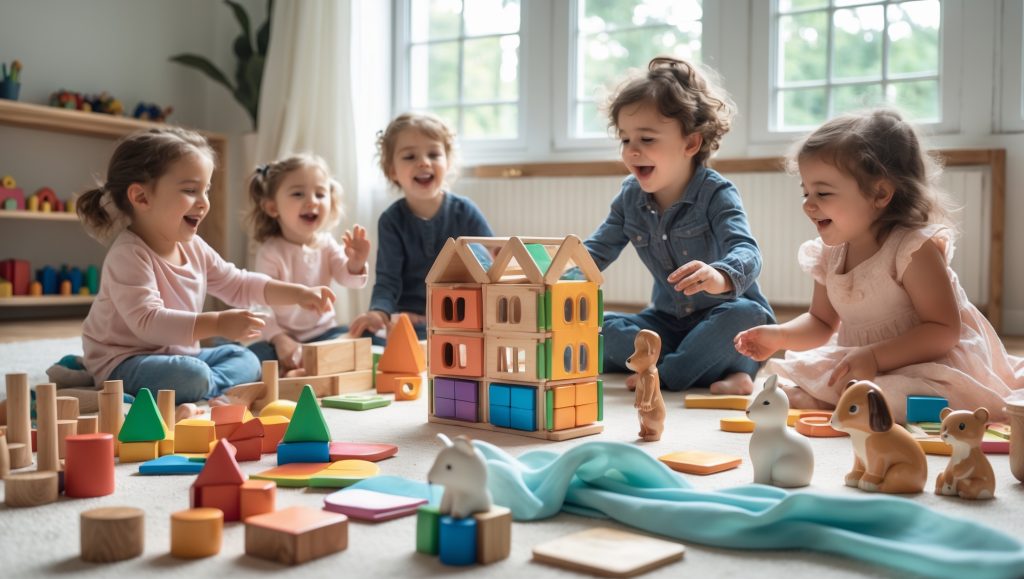
How We Chose
Our selection process prioritized toys that genuinely invite open-ended play—meaning they can be used in limitless ways and support children’s development at multiple ages and stages. We looked for evidence-informed benefits, durability, broad age appeal, and positive feedback from U.S. families. Each pick encourages creativity, problem-solving, social-emotional learning, and motor skills, without locking kids into a single way to play.
#1 Wooden Blocks — The Timeless Building Essential
Why it stands out
Wooden blocks have been a cornerstone of childhood for generations. Their simple shapes empower kids to build, stack, sort, and imagine anything from castles to cities. The tactile experience of wood and open possibilities make them a must-have for imaginative play and foundational skills.
Best for
- Families seeking a toy that grows with their child
- Encouraging cooperative play and solo creativity
- Supporting STEM concepts early on
Key notes
- Age/Stage: 12 months and up (with supervision for smaller pieces)
- Materials/Ingredients: Solid wood, non-toxic finishes
- Strengths: Durable, classic, endless play options
- Trade-offs: Storage space needed; some sets can be pricey
#2 Magnetic Tiles — Engineering Meets Art
Why it stands out
Magnetic tiles inspire kids to build towers, shapes, and complex structures with satisfying click-together action. They offer satisfying STEM learning, color recognition, and can be used for both guided and freeform play.
Best for
- Preschoolers and elementary-aged kids
- Collaborative playdates or solo challenges
- Children interested in building and design
Key notes
- Age/Stage: 3 years and up
- Materials/Ingredients: BPA-free plastic, embedded magnets
- Strengths: Quick setup, vibrant colors, fosters spatial reasoning
- Trade-offs: Magnets can pose a hazard if tiles break (supervision recommended)
#3 Play Silks — Limitless Imaginative Possibilities
Why it stands out
Play silks are simple, lightweight fabric squares or rectangles in bright colors. Children use them as costumes, capes, landscapes, forts, or props in imaginative play. Their versatility and sensory appeal make them a favorite for many families.
Best for
- Toddlers to school-aged children
- Dress-up and dramatic play
- Calming sensory experiences
Key notes
- Age/Stage: 18 months and up
- Materials/Ingredients: 100% silk or synthetic alternatives
- Strengths: Lightweight, easy to store, open-ended
- Trade-offs: Can snag or tear if not handled gently
#4 Animal Figurines — Wild Worlds at Their Fingertips
Why it stands out
High-quality animal figurines encourage storytelling, science learning, and emotional expression. Kids create habitats, act out adventures, and explore empathy through pretend play with animals from around the globe.
Best for
- Nature lovers and budding storytellers
- Play that connects to books or real-life experiences
- All ages (with appropriate size selection)
Key notes
- Age/Stage: 2 years and up
- Materials/Ingredients: Durable plastic or rubber
- Strengths: Realistic details, sparks curiosity, easy to transport
- Trade-offs: Small parts can be a choking hazard for under-threes
#5 Interlocking Construction Sets — Creativity in 3D
Why it stands out
From classic bricks to modern snap-together systems, interlocking construction sets let kids create vehicles, robots, buildings, or abstract art. The hands-on nature builds fine motor skills and perseverance.
Best for
- School-aged children and older preschoolers
- Families who enjoy building together
- Kids interested in engineering or architecture
Key notes
- Age/Stage: 4 years and up (some larger-block sets for younger kids)
- Materials/Ingredients: Plastic (BPA-free preferred), sometimes wood
- Strengths: Develops dexterity, patience, and creativity
- Trade-offs: Many small pieces; cleanup can be a challenge
#6 Nesting and Stacking Cups — Simple but Powerful
Why it stands out
Nesting and stacking cups are a staple for babies and toddlers, supporting early math concepts, coordination, and cause-and-effect learning. Older children often find new ways to incorporate them in imaginative play.
Best for
- Infants and toddlers
- Families seeking compact, versatile toys
- Water, sand, or indoor play
Key notes
- Age/Stage: 6 months and up
- Materials/Ingredients: BPA-free plastic or food-grade silicone
- Strengths: Portable, easy to clean, supports early motor skills
- Trade-offs: May seem too simple for older kids unless used creatively
#7 Dollhouse (Simple, Unfurnished) — Home for the Imagination
Why it stands out
An unfurnished dollhouse offers a blank canvas for children to invent stories, design spaces, and develop social skills. With no fixed narrative or characters, kids can populate the spaces with any figures or items they choose.
Best for
- Kids who enjoy storytelling and dramatic play
- Families who want a toy that grows with their child
- Sibling or multi-age group play
Key notes
- Age/Stage: 3 years and up
- Materials/Ingredients: Wood or sturdy plastic
- Strengths: Adaptable, supports emotional development
- Trade-offs: Requires space; extra furnishings may add cost
#8 Loose Parts Sets — Pure Imagination in a Box
Why it stands out
Loose parts are collections of open-ended objects—wooden rings, stones, fabric scraps, beads, or pinecones—designed for creative exploration. Children use them for sorting, building, sensory play, and inventing new games or art projects.
Best for
- Families embracing a Montessori or Reggio-inspired approach
- Kids who love tinkering and inventing
- Open-ended art and construction play
Key notes
- Age/Stage: 3 years and up (supervision for small parts)
- Materials/Ingredients: Mixed—wood, fabric, natural items
- Strengths: Inspires creativity, budget-friendly if DIY
- Trade-offs: Can create clutter; requires adult oversight for safety
Buying Tips
When selecting open-ended toys, consider your child’s developmental stage, interests, and the space available in your home. Look for non-toxic materials and reputable brands with strong safety records. Fewer, high-quality toys are often better than many single-use items. Involve your child in choosing new toys—they’ll be more invested in play. Rotate toys periodically to renew interest and encourage deeper exploration. Finally, remember that open-ended play is about possibilities, not perfection.
Verdict
Open-ended toys are an investment in your child’s creativity, problem-solving, and lifelong love of learning. Whether you start with a classic set of wooden blocks, a handful of animal figurines, or a rainbow of play silks, these toys adapt to your child’s growth and evolving interests. The key is to provide materials that invite exploration, flexibility, and collaboration—then step back and watch the magic unfold.
FAQ
+What is an open-ended toy?
+Why are open-ended toys important for child development?
+How do I know if a toy is truly open-ended?
+Are open-ended toys only for young children?
+How can I encourage open-ended play at home?
+What’s the best way to store open-ended toys?
+Are expensive brands always better for open-ended toys?

Open-ended toys continue to be a cornerstone of meaningful play, offering children the freedom to invent, explore, and imagine. In 2025, the best open-ended toys are those that encourage creative thinking and adapt to a child’s evolving interests. These toys don’t dictate how to play—instead, they invite kids to build, pretend, and experiment, which is essential for cognitive and social growth. Whether it’s a set of colorful building blocks, versatile magnetic tiles, or a collection of wooden figures, these toys provide endless possibilities and grow with your child. Parents and educators alike value open-ended toys for their durability and their power to foster independence, problem-solving, and collaboration. When selecting toys this year, look for those that are safe, eco-friendly, and designed for multiple ages. By prioritizing open-ended play, you’re investing in a child’s ability to innovate and express themselves in unique ways—a gift that lasts long after the toys are put away.
- Encourage imagination and creative problem-solving
- Support collaborative and independent play
- Adapt to different ages and developmental stages
- Promote long-lasting engagement and learning
Has anyone adjusted the recommended age for these toys based on their child’s unique sensory preferences, like introducing wooden blocks at an older age or opting for animal figurines with softer textures? I’d be interested in hearing how people adapt these suggestions.
It’s thoughtful to consider your child’s unique sensory preferences when introducing new toys. Many parents do adjust recommended ages—some wait until their child is comfortable with certain textures, or choose softer animal figurines if wooden ones feel too hard or rough. Start by observing which materials your child enjoys, and offer alternatives at their pace. Gradually introduce new textures alongside familiar ones, always supervising closely with small parts. Remember, adapting toy choices is not only okay but often necessary, as every child develops differently. This isn’t medical advice; if you’re concerned, check in with your pediatrician.
When it comes to younger siblings in the house, I’m curious about how to safely introduce animal figurines or magnetic tiles without worrying about choking hazards. Do you have advice on age-appropriate ways to include toddlers in open-ended play with these toys?
It’s great that you want your toddler to join in open-ended play while staying safe. For animal figurines, choose large, one-piece models labeled for ages 18 months or older, and avoid any small detachable parts. When using magnetic tiles, only use reputable brands that are rated safe for toddlers—check for strong casing and ensure magnets can’t come loose. Always supervise play with both toys, especially if older siblings are around. Store smaller or age-inappropriate pieces out of reach when not in use. This isn’t medical advice; if you’re concerned, check in with your pediatrician.
Some of these toys seem a bit pricey upfront. Do you have advice on where to find budget-friendly versions or whether it’s worth investing more in one type over another for long-term use?
It’s understandable to want the best for your child while staying within budget. Consider looking for gently used open-ended toys at local swaps, online marketplaces, or community groups—these are often much more affordable and still safe if you check for wear and missing parts. Focus on versatile toys like wooden blocks or play silks, which grow with your child and encourage creativity across ages. Sometimes investing in one high-quality, durable item can be worthwhile if it will last through years of play. Always check for age-appropriateness and supervise young children, especially with smaller pieces. This isn’t medical advice; if you’re concerned, check in with your pediatrician.
If I need to stick to a budget but want a couple of open-ended options to cover a broad age range, which of your top picks would you suggest investing in first for twins who are two years old?
It’s great that you want to encourage creativity while being mindful of your budget. For two-year-old twins, I recommend starting with sturdy building blocks and a set of play scarves from the article’s top picks. Both are open-ended, durable, and can be enjoyed together or separately as your twins grow. Choose blocks large enough to avoid choking hazards, and opt for scarves made from non-toxic, washable fabric. Always supervise play at this age. This isn’t medical advice; if you’re concerned, check in with your pediatrician.
I have concerns about the magnets in magnetic tiles after hearing about safety warnings. Are there certain brands or features you recommend that help minimize any potential risks with younger siblings around?
You’re right to be cautious about magnetic tiles, especially with younger siblings who might still put things in their mouths. Look for brands that use larger tiles that cannot fit in a child’s mouth, with securely encased magnets that can’t come loose even with rough play. Choose products clearly labeled for ages three and up, and always supervise play when little ones are nearby. Regularly inspect the tiles for cracks or damage, and immediately remove any broken pieces. This isn’t medical advice; if you have specific concerns, check in with your pediatrician.
My toddler sometimes resists sitting on the potty unless there’s something fun to do. For families who are potty training, have you found any of these recommended toys especially good at easing the transition or making the experience less stressful?
It’s completely normal for toddlers to seek comfort and distraction during potty training. Open-ended toys like stackable cups or soft blocks from our recommended list can be a great addition to your potty routine—your child can build or sort while sitting, which may help them relax. Choose toys without small pieces to prevent choking, and keep them strictly for the bathroom to make potty time special. Always supervise play, and rotate the toys to keep interest fresh. This isn’t medical advice; if you’re concerned, check in with your pediatrician.
I noticed you mentioned that some wooden block sets can be pricey and require storage space. Are there specific brands or types you recommend for families on a budget, and do you have any tips for storing them in smaller homes or apartments?
It’s great that you’re looking for budget-friendly and space-saving solutions for open-ended play with wooden blocks. Consider smaller sets from brands like Melissa & Doug or IKEA, which often balance quality with affordability. Opt for sets with fewer, versatile pieces that can still inspire creativity. For storage, try keeping blocks in a low bin or basket that slides under the bed or sofa, or use stackable containers on a closet shelf. Always check for smooth edges and non-toxic finishes, especially for younger children. This isn’t medical advice; if you’re concerned, check in with your pediatrician.
I noticed some open-ended toys involve a lot of pieces. For a sensory-sensitive child who struggles with clutter, are there particular toys on your list that are easier to keep organized or that work well with fewer pieces at a time?
You’re thoughtful to notice how clutter can impact a sensory-sensitive child. Toys like large building blocks or a simple set of wooden stacking rings from the list are easier to keep organized and can be enjoyed with just a few pieces at a time. Try offering a small selection in a shallow tray to limit visual overwhelm. Keep extra pieces stored in clear, labeled bins so you can rotate them in as needed. Always supervise play for safety, especially with younger children or those who may mouth pieces. This isn’t medical advice; if you’re concerned, check in with your pediatrician.
Since some budget-friendly wooden blocks use composite woods or different finishes, can you share tips to ensure we’re choosing allergen-safe materials for a crawling baby who touches and mouths everything?
You’re wise to think about safety for your little one who’s exploring with hands and mouth. Look for blocks labeled as solid, untreated hardwood rather than composite wood or MDF, which may contain glues or resins with allergens. Seek out products finished only with food-grade, non-toxic oils or paints, and check for third-party safety certifications. Avoid blocks with strong odors or rough edges, as these may indicate chemical finishes or splinter risks. Always supervise play and inspect toys regularly for wear. This isn’t medical advice; if you’re concerned about allergies, check in with your pediatrician.
As a bilingual family, we want to introduce creative toys before naps, but I worry about too much excitement. Which of these open-ended toys would you recommend for soothing, low-key play that supports language in both languages before sleep?
It’s wonderful that you want to encourage creativity and language in both languages before nap time while keeping things calm. For soothing, low-key play, I suggest soft fabric blocks or simple wooden stacking toys—these offer gentle, tactile exploration and provide a chance to name colors, shapes, and actions in both languages. You might also try felt story pieces to create simple bedtime stories together. Keep the play slow-paced, limit the number of pieces to avoid overstimulation, and always supervise, especially with younger children. This isn’t medical advice; if you’re concerned, check in with your pediatrician.
My child loves to experiment with food textures and often combines play with eating. Between wooden blocks and animal figurines, which would be safer and more manageable for unsupervised exploration near mealtime, particularly for a 10-month-old still exploring with their mouth?
It’s understandable to want safe play options for a curious 10-month-old who mouths toys, especially around mealtimes. For this age, wooden blocks are generally safer than small animal figurines, as blocks are larger and less likely to pose a choking risk. Choose blocks designed for infants: they should be big enough not to fit in your child’s mouth, smooth, and finished with non-toxic paint. Always check for splinters and loose parts. While brief, supervised play is safest at this age, if you need to step away, keep toys within your line of sight. This isn’t medical advice; if you’re concerned, check in with your pediatrician.
We live in a small apartment and are limited on both storage and budget. If I had to choose between getting play silks or magnetic tiles for my three-year-old, which might offer more play value over time, and why?
It’s understandable to want toys that offer the most value when space and budget are tight. For a three-year-old, magnetic tiles often provide more sustained and varied play: they stack compactly, spark creativity through endless building possibilities, and can grow with your child’s abilities. Play silks are also versatile, but magnetic tiles tend to engage children in solo and group play for longer stretches. Always supervise play and check that tiles are intact to prevent choking hazards. This isn’t medical advice; if you’re concerned, check in with your pediatrician.
My child loves building but gets frustrated when structures fall over easily. Would you suggest trying wooden blocks or magnetic tiles first for a child who is just starting to experiment with stacking and construction?
It’s great that your child is interested in building, and frustration is a normal part of learning new skills. For a beginner, magnetic tiles might be a gentler start, as they easily snap together and provide more immediate success, reducing the chance of structures toppling and causing frustration. Wooden blocks are also wonderful but can be trickier at first since they require more coordination to balance. Always supervise play, especially with young children, and choose age-appropriate sets without small pieces or sharp edges. This isn’t medical advice; if you’re concerned, check in with your pediatrician.
My mom likes to teach my child about our cultural holidays through stories and food. Would play silks or animal figurines be more adaptable for making up stories that connect with our traditions, or do you recommend something else from your list for that purpose?
It’s wonderful that you want to help your child connect with family traditions through imaginative play. Both play silks and animal figurines can be great for storytelling: play silks are especially adaptable since they can become costumes, scenery, or props for any holiday or cultural story, while animal figurines work well if your traditions involve animals. For even more flexibility, consider wooden blocks or peg dolls from the list, which can be transformed into almost anything your child imagines. Always supervise young children with small objects, especially under age 3. This isn’t medical advice; if you have concerns, check in with your pediatrician.
If I’m on a tight budget, which one of these open-ended toys would give the most play value for infants through toddlerhood? I want something versatile and durable enough to last several years as my child’s skills develop.
It’s wonderful that you’re looking for a toy that will grow with your child and make the most of your budget. From the list, a high-quality set of wooden blocks is often the most versatile and durable choice for infants through toddlerhood. Start by offering a few large blocks for safe grasping and banging around (always supervise and check for choking hazards). As your child grows, encourage stacking, sorting, and, later, imaginative building. Clean wooden blocks regularly and store them safely to maximize longevity. This isn’t medical advice; if you have specific concerns about safety or developmental fit, check in with your pediatrician.
You mention magnetic tiles are best for ages 3 and up because of potential hazards if the tiles break. Is there a way to tell if a set is made well enough to withstand rough play, or should I always avoid them until my child is a bit older?
You’re right to be cautious about safety with magnetic tiles for younger children. When considering a set, look for ones labeled as non-toxic and specifically tested for durability—reputable brands often state compliance with safety standards like ASTM or EN71. Inspect tiles for strong, sealed edges and avoid sets with loose or rattling magnets. However, no set is completely risk-free for kids under 3, due to choking hazards if pieces break. Supervised play is always best at younger ages. This isn’t medical advice; if you’re concerned, check in with your pediatrician.
You mentioned play silks are great for imaginative play, but how do you suggest storing them so they do not get tangled or torn? We have limited storage space and I am looking for practical solutions.
It’s great that you’re thinking about keeping play silks tidy and in good shape with limited space. Try folding or loosely rolling the silks, then store them in a soft fabric bin, a small basket, or a hanging shoe organizer with pockets. You can also tie them gently onto a low bar or a hanger in a closet for easy access and to reduce tangling. Make sure the storage spot is dry and away from sharp objects to prevent damage. Always supervise younger children to ensure silks are used safely. This isn’t medical advice; if you’re concerned, check in with your pediatrician.
Storage space is very limited in our home, so I am hesitant about bringing in large sets of wooden blocks. Do you have suggestions for more compact open-ended toys that still offer similar benefits for creativity and development?
It’s completely understandable to want to encourage creativity while managing limited space. Try smaller open-ended toys like magnetic tiles, a mini set of interlocking plastic blocks, or a set of silicone stacking cups. These options are compact, easy to store, and still excellent for imaginative play and fine motor development. For toddlers and preschoolers, make sure you choose options that are large enough to avoid choking hazards and are made from non-toxic materials. Always supervise young children during play. This isn’t medical advice; if you’re concerned, check in with your pediatrician.
Our family hosts regular shared dinners with grandparents, and the kids sometimes mix their toys with real kitchen utensils or food props for pretend play. Would you suggest any of these eight toys that are best for cleaning and reuse in this kind of setting?
It’s wonderful that your family encourages pretend play during shared meals. For play that involves kitchen utensils or food props, I’d recommend choosing open-ended toys made of washable plastic or silicone, such as building blocks or stackable cups, as these can be easily cleaned with soap and water. Avoid toys with felt, fabric, or unfinished wood, which can absorb spills and harbor bacteria. After playtime, set aside a few minutes to gather and wash the toys before the next meal. Always supervise younger children to prevent putting small parts or real utensils in their mouths. This isn’t medical advice; if you’re concerned, check in with your pediatrician.
Do you have suggestions for children who are easily overstimulated by bright colors or multiple toys at once? Should we limit how many of these open-ended toys are available during playtime?
You’re thoughtful to consider your child’s sensory needs. For children sensitive to overstimulation, try offering just one or two open-ended toys at a time, and choose options with muted colors or natural materials. Create a calm play area by reducing background noise and keeping the space tidy. Observe your child’s reactions—if they seem overwhelmed, gently guide them to take breaks or switch activities. Most open-ended toys can be introduced gradually, especially for toddlers and preschoolers. Always supervise play to ensure safety. This isn’t medical advice; if you’re concerned, check in with your pediatrician.
Do you have recommendations on how often to rotate these types of open-ended toys, especially if space is tight and I cannot keep them all out at once? I want to keep things fresh but not overwhelm my child.
You’re thoughtful to want to keep playtime engaging without overwhelming your child. Try rotating open-ended toys every 2–4 weeks, putting away some while leaving out a small selection. Watch for when your child seems bored or stops using certain toys—this can be a good cue to swap them. Store unused toys out of sight in labeled bins to make changes easy and reduce clutter. For younger children, make sure storage is safe and toys are age-appropriate to avoid choking hazards or frustration. This isn’t medical advice; if you’re concerned, check in with your pediatrician.
Are there specific types or brands of animal figurines that hold up well to water play or outdoor sensory activities? My child loves mixing toys with mud and water, but I worry about durability and safety.
It’s great that you want to encourage sensory play while keeping your child safe. For water and mud play, look for animal figurines made from solid, non-porous plastic without removable parts—brands like Schleich and Safari Ltd. are known for durability and safety. Avoid resin, painted wood, or hollow figures that might trap water or break. Check for age ratings and supervise play to avoid choking hazards, especially for children under 3. After outdoor play, rinse and dry the toys to prevent mold. This isn’t medical advice; if you’re concerned, check in with your pediatrician.
With a preschooler who struggles with loud or unexpected noises, would magnetic tiles be overstimulating, or do children typically adjust to the clicking sounds? Are there quieter alternatives that offer similar creative benefits?
It’s understandable to want toys that suit your child’s sensory needs. Magnetic tiles do make a clicking sound, which can be startling for some noise-sensitive preschoolers. You might try introducing them slowly, letting your child listen to the sound in short bursts, and seeing how they respond. If the noise is too much, consider quieter options like wooden building blocks or silicone stackers, which offer similar open-ended creative play without the sharp clicks. Always supervise play and choose age-appropriate, non-choking hazard toys. This isn’t medical advice; if you’re concerned, check in with your pediatrician.
Do you think the non-toxic finishes on wooden blocks are generally safer than the BPA-free plastics used in magnetic tiles for toddlers who still mouth toys, or are both options equally safe with close supervision?
It’s great that you’re thinking carefully about toy safety for your toddler who still mouths toys. Both non-toxic wooden blocks and BPA-free plastic magnetic tiles are designed to be safe, but here are a few steps to help you decide: 1) Check for reputable safety certifications on both types of toys. 2) Wooden blocks with non-toxic, water-based finishes are less likely to chip or leach chemicals if mouthed. 3) With magnetic tiles, make sure they are securely sealed to prevent magnets from coming loose, which can be a choking hazard. 4) Always supervise play, especially with mouthing. 5) Regularly inspect all toys for signs of wear. This isn’t medical advice; if you’re concerned, check in with your pediatrician.
Our child has some mild sensory sensitivities and sometimes prefers structured play over open-ended options. Are there certain toys from your list that work better for introducing open-ended play to sensory-sensitive kids, or should we start with specific activities?
It’s great that you’re looking for ways to gently introduce open-ended play while respecting your child’s sensory needs. Start with toys that offer a predictable texture and minimal visual or auditory overstimulation—wooden blocks or soft modeling clay from the list can be good choices. Begin by modeling simple, guided activities (like stacking or creating shapes together), then gradually invite your child to try their own variations. Let your child explore at their own pace, and always supervise play to ensure safety, especially with small parts or materials. This isn’t medical advice; if you’re concerned, check in with your pediatrician.
My toddler is very active and sometimes gets frustrated with toys that seem too basic. Are there specific ways to introduce wooden blocks or magnetic tiles so they stay engaging and don’t end up forgotten in the toy bin?
It’s understandable to want toys to hold your toddler’s attention, especially when they’re energetic. Try introducing wooden blocks or magnetic tiles by starting simple—build a tower together, then knock it down to make it fun. Offer clear challenges, like making a bridge or matching colors. Join in the play, narrating your actions to model creativity. Rotate the toys in and out of sight so they feel fresh when reintroduced. Always supervise to prevent mouth hazards, and choose pieces large enough for toddlers. This isn’t medical advice; if you’re concerned, check in with your pediatrician.
When deciding between investing in a wooden block set versus a plastic magnetic tile set for a multi-age household, which do you think offers more flexibility as kids grow, while considering sustainability?
It’s wise to consider both long-term use and sustainability for a multi-age home. Wooden blocks are timeless, durable, and eco-friendly, supporting imaginative play from toddlerhood through the early school years. They’re safe for younger children, as long as the pieces are large enough to avoid choking hazards. Magnetic tiles, while usually plastic, inspire creative construction and magnet exploration, and older kids often enjoy their complex possibilities. For flexibility, a quality wooden block set may edge out due to its open-endedness and eco-friendly nature, but combining both can offer diverse play. Always supervise younger children with any small parts. This isn’t medical advice; if you’re concerned, check in with your pediatrician.
You mention that animal figurines can foster empathy and connect to books. Could you share some practical examples or activities that pair figurines with favorite children’s stories for preschoolers?
It’s wonderful that you want to nurture empathy and imagination through play and stories. Try these activities: 1) After reading a book like The Very Hungry Caterpillar, invite your child to act out the story using animal figurines, discussing how each animal feels. 2) Use figurines to retell scenes from classics like Brown Bear, Brown Bear, What Do You See?, encouraging your child to match animals and talk about their colors or actions. 3) Set up a gentle ‘rescue’ game where animals in the story help each other, prompting your preschooler to think about kindness and feelings. Always supervise play, choose age-appropriate, safe toys, and avoid small figurines that could be choking hazards. This isn’t medical advice; if you’re concerned, check in with your pediatrician.
Do you have suggestions for adapting any of these toys for younger infants, like a 9-month-old, who is starting to explore play but may still mouth everything? I want to nurture creativity safely at this age.
It’s wonderful that you want to nurture your 9-month-old’s creativity while keeping play safe. At this age, choose toys from the list that are large, too big to swallow, and made of non-toxic materials. For example, soft fabric blocks or chunky wooden rings (with smooth edges and baby-safe paint) work well. Always supervise play to prevent choking, and avoid toys with small parts or pieces that could come loose. Encourage exploration by stacking, banging, or rolling toys together. Remember, this isn’t medical advice; if you have concerns, check in with your pediatrician.
My child sometimes gets overwhelmed by too many colors or sensory input. Would play silks be a good choice, or are there open-ended toys from your list that work better for kids with these sensitivities?
It’s great that you’re tuning in to your child’s sensory needs. Play silks can be a gentle choice since you can select calming, solid colors and control how many are available at once. Other good options from the list could include simple wooden blocks or natural-finish stacking toys, as these usually have smooth textures and muted tones. Always supervise play to watch for signs of sensory overload, and limit the number of toys out to reduce visual clutter. This isn’t medical advice; if you’re concerned, check in with your pediatrician.
If my preschooler tends to chew on toys sometimes, should I be concerned about the safety of any of the options listed here, especially the play silks or magnetic tiles? Are there extra safety tips for early morning play when adults might not be as alert?
It’s completely understandable to worry about toy safety if your preschooler likes to chew. For play silks, make sure they’re labeled non-toxic and free of loose threads or fraying edges that could pose a choking risk. Magnetic tiles require extra caution—these are not recommended for frequent chewers, as swallowing magnets is very dangerous. For early morning play, only set out toys you’ve checked for safety, and avoid small parts or magnets unless you’re able to supervise closely. This isn’t medical advice; if you’re concerned, check in with your pediatrician.
Our toddler is sometimes rough with toys and loves to throw things around. Are there more durable magnetic tiles you would recommend, or is this toy likely to break if used with high energy?
It’s completely normal for toddlers to explore toys energetically, and your concern for durability makes sense. Most magnetic tiles are designed for ages 3 and up, but not all brands are created equal—some have sturdier plastic and stronger seals, which help them withstand rougher play. If your toddler is still very young or throws toys often, supervise play closely to prevent breakage or accidental opening of tiles. Offer soft, safe alternatives for throwing, and use magnetic tiles together for building. Check regularly for any cracks or broken pieces to ensure safety. This isn’t medical advice; if you’re concerned, check in with your pediatrician.
My toddler has some sensory sensitivities and tends to avoid materials that feel rough or cold. Are there options in your top picks that would be more suitable for kids who prefer soft, lightweight, or warm textures?
It’s great that you’re considering your toddler’s sensory needs when choosing toys. From the top picks in the article, focus on options like soft fabric blocks, plush stacking toys, or silicone-based building sets, as these tend to be gentle, warm, and lightweight. Let your child explore new textures at their own pace and avoid toys with rough wood, metal, or cold plastic. Always supervise play with smaller parts, especially for toddlers. This isn’t medical advice; if you’re concerned, check in with your pediatrician.
How might you adapt your recommendations for younger toddlers who still put things in their mouths? I love the idea of animal figurines and magnetic tiles, but I worry about choking hazards or small parts. Any suggestions?
It’s completely understandable to prioritize safety when your toddler is still exploring the world by mouthing objects. For animal figurines, choose larger, one-piece models with no detachable parts and a smooth finish—look for those specifically labeled for ages 1 and up. For magnetic tiles, only use brands clearly marked safe for toddlers, ensuring the tiles are oversized and cannot be pried open or swallowed. Always supervise play and regularly inspect toys for damage. Keep small pieces out of reach until your child is older. This isn’t medical advice; if you’re concerned, check in with your pediatrician.
My child gets easily bothered by certain textures and loud sounds. Are there specific types of wooden blocks or play silks you recommend that tend to be more comfortable for kids who are sensitive to touch or noise?
It’s completely understandable to want toys that feel comfortable and safe for your sensitive child. For wooden blocks, look for ones that are smoothly sanded and sealed with non-toxic finishes, as rough edges or grains can be uncomfortable to touch. Play silks should be made of high-quality, natural silk—these are usually very soft and gentle on the skin. Offer just a few pieces at a time in a quiet space to limit overwhelming sensations. Always supervise with new materials and avoid blocks with small parts if your child is under three. This isn’t medical advice; if you’re concerned, check in with your pediatrician.
Do you have any suggestions for rotating these open-ended toys so kids stay interested without feeling overwhelmed by having too many options available at once? What kind of schedule or routine works well at home?
It’s great that you’re mindful about keeping play engaging without overwhelming your child. Try setting out 2–3 open-ended toys at a time in accessible spots, storing the rest out of sight. Every week or two, swap out one or two toys for something new from storage. Watch your child’s interests—if they seem bored or very attached to something, adjust your rotation accordingly. For toddlers and preschoolers, simple bins or shelves work well and keep toys easy to tidy. Always check for age-appropriate pieces and supervise play to ensure safety. This isn’t medical advice; if you’re concerned, check in with your pediatrician.
Some of these open-ended toys can get expensive over time. Do you have any suggestions for budget-friendly or DIY options that offer similar developmental benefits for young toddlers?
It’s understandable to want affordable options that still support your toddler’s development. You can repurpose everyday items like cardboard boxes for imaginative play, or fill a basket with safe kitchen utensils for sensory exploration. Homemade playdough is inexpensive and encourages creativity and fine motor skills. Large fabric scraps make excellent capes or forts with adult supervision. Just be sure all materials are free of choking hazards and always supervise, especially with young toddlers. This isn’t medical advice; if you’re concerned, check in with your pediatrician.
My parents sometimes prepare traditional dishes and like to include pretend play around food with our toddler. Would play silks or animal figurines be suitable for this kind of culturally themed play, and do you have suggestions on making this engaging for both the grandparents and child?
It’s wonderful that your family is blending cultural traditions with play—this can be very meaningful for your toddler. Play silks are a great fit: they’re safe, open-ended, and can represent anything from food to tablecloths, especially for children over 1 year old with supervision. Animal figurines can add fun if they relate to meals or stories from your culture, but choose large, sturdy ones to avoid choking hazards. Involve your parents by letting them share stories or demonstrate food traditions, using props as ‘ingredients.’ Encourage everyone to assign roles, like chef, shopper, or storyteller, to keep play collaborative and lively. This isn’t medical advice; if you’re concerned, check in with your pediatrician.
We have a small living space and toy storage is limited. Which of these open-ended toys would you suggest are easiest to clean up and store for a family with a young toddler?
It’s completely understandable to want toys that are easy to manage in a small space. For a young toddler, I recommend starting with stacking cups, soft blocks, or a set of chunky wooden animals from the list. These can be quickly gathered and stored in a single basket or bin, and their simple shapes make cleanup fast. Avoid toys with lots of tiny pieces or loose parts at this age, as they can be harder to manage and may pose a choking risk. Always supervise play and check for age-appropriate safety guidelines. This isn’t medical advice; if you’re concerned, check in with your pediatrician.
Storage space is tight in our apartment, so I wonder which of these open-ended toys are easiest to clean up and store out of reach when not in use, especially with an active crawler in the house.
It’s understandable to want easy clean-up and safe storage with a curious crawler at home. From the list, wooden building blocks and stacking cups are usually compact and can be kept in a lidded box or basket on a high shelf. Play silks fold up very small and are simple to tuck away. Avoid leaving loose parts or toys with small pieces within reach, as these can be choking hazards. Always supervise play and double-check storage for safety. This isn’t medical advice; if you’re concerned, check in with your pediatrician.
Would you recommend starting with play silks or wooden blocks for a young two-year-old with limited attention span? I’m trying to figure out which might hold their interest better at this early stage.
It’s great that you’re thinking about what will best engage your two-year-old. For this age and a shorter attention span, wooden blocks can be a good place to start—they’re easy to grasp, stack, and knock down, which offers quick, satisfying action and encourages hand-eye coordination. Play silks are wonderful too, especially for sensory play, but some toddlers may need more guidance to get started. Try offering a small set of chunky blocks, supervise closely to prevent mouthing, and watch how your child responds. If they lose interest quickly, you can introduce the silks during a different playtime and see which captures their curiosity. This isn’t medical advice; if you’re concerned, check in with your pediatrician.
My toddler tends to be pretty rough with toys and sometimes pulls or bites on fabrics. Are play silks sturdy enough to withstand typical toddler use, or are there certain brands you recommend for durability?
It’s understandable to want toys that can handle your toddler’s active play style. Play silks are wonderful for open-ended fun, but many are made of thin silk and can tear or fray if pulled, bitten, or chewed. For toddlers who are rough, try to supervise play and consider thicker or reinforced silks, or even cloth scarves made for kids. Look for options labeled as toddler-safe and check for tightly hemmed edges. Always inspect silks for loose threads and wash regularly to keep them safe. This isn’t medical advice; if you’re concerned, check in with your pediatrician.
I’m curious about how to incorporate open-ended toys into daily routines. Do you have advice on balancing time spent on these toys versus more structured educational activities, especially for preschoolers?
It’s great that you’re thinking about balancing play and learning for your preschooler. Try setting aside consistent daily windows—like after snack time or before dinner—for open-ended play, while keeping structured activities earlier in the day when your child is alert. Let your child lead during open-ended play, and gently rotate toys to keep things fresh. For preschoolers, aim for a mix: about half the playtime can be open-ended, fostering creativity, with the rest for guided learning. Always supervise, especially with toys that have small parts. This isn’t medical advice; if you’re concerned, check in with your pediatrician.
My child is sensitive to different textures—sometimes fabric or rough wood bothers them. Are there specific brands of wooden blocks or play silks you’ve found to be smoother or more comfortable for kids who are particular about touch?
It’s so thoughtful that you’re considering your child’s texture sensitivities. When choosing wooden blocks, look for brands that sand their products extra smooth—many parents find brands like HABA or Uncle Goose have a polished finish with no rough edges. For play silks, opt for 100% mulberry silk as it’s softer and less likely to irritate sensitive skin; Sarah’s Silks is often recommended for their gentle texture. Always inspect new toys before play to check for splinters or seams, and supervise young children under three to avoid small parts or choking hazards. This isn’t medical advice; if sensitivity is affecting daily life, check in with your pediatrician.
If my child is on the younger end of the recommended age for animal figurines, are there specific brands or sizes you find safest to start with?
It’s great that you’re thinking about safety when choosing animal figurines for your young child. For children under three, look for larger figurines (at least 2 inches in size) with no detachable small parts that could pose a choking hazard. Brands known for sturdy, toddler-safe figurines include Schleich and Learning Resources—they offer animals with smooth edges and non-toxic paints. Always supervise play at this age, and inspect toys regularly for wear or damage. Remember, every child is different; this isn’t medical advice—if you have concerns about toy safety or your child’s developmental stage, check in with your pediatrician.
As my child gets older, I’m wondering whether investing in wooden blocks now is more sustainable than buying several sets of plastic toys over the years. Does one material last longer or adapt better to different developmental stages?
It’s thoughtful to consider both sustainability and long-term value as your child grows. Wooden blocks are generally very durable, can last through years of play, and adapt well to a range of developmental stages—from simple stacking as a toddler to imaginative building in early school years. Plastic toys may not always survive rough play or repeated use, and often target narrow age ranges. If you choose wooden blocks, check they are finished with non-toxic materials and are large enough to avoid choking hazards for younger children. This isn’t medical advice; if you’re concerned, check in with your pediatrician.
My preschooler has sensory sensitivities and sometimes avoids certain fabrics. Do you know if play silks can work for kids who are sensitive to texture, or are there recommended alternatives for this type of open-ended play?
It’s great that you’re thinking about your child’s sensory needs when choosing toys. Play silks are usually soft and lightweight, but some children with sensory sensitivities might still find the texture uncomfortable. You could let your child touch a silk scarf or fabric in a store before buying, or try alternatives like cotton muslin cloths or soft scarves with different textures. Felt squares and smooth scarves can also work for open-ended play. Always supervise and check for loose threads or small parts. This isn’t medical advice; if you’re concerned, check in with your pediatrician.
My child is drawn to animal figurines but sometimes gets frustrated when playtime leads to arguments about sharing with friends. Are there ways to encourage more cooperative play with these toys at this age?
It’s understandable to want smoother, more cooperative playtime with animal figurines. Try setting up simple group activities, like creating a shared zoo or animal habitat, so each child has a role. Model turn-taking by gently narrating, ‘Now it’s your friend’s turn to choose an animal.’ Encourage sharing by offering extra figurines or rotating who leads the game. For preschool-age children, keep sessions short and supervised to prevent overwhelm. If the frustration continues, pause for a calming break. This isn’t medical advice; if you’re concerned, check in with your pediatrician.
For families with limited budgets looking to support creativity and language learning at bedtime or naptime, are there any open-ended toys on your list that are affordable, easy to store, and work well in a bilingual sleep routine?
It’s wonderful that you’re looking for creative, budget-friendly bedtime supports. Simple items like soft fabric hand puppets or a set of wooden story dice from the article are both affordable and compact. Use puppets to act out bilingual stories or conversations before sleep, encouraging your child to respond in both languages. Story dice can be rolled to inspire bedtime tales together, building vocabulary and imagination. Make sure pieces are large enough for your child’s age and avoid choking hazards with little ones. This isn’t medical advice; if you’re concerned, check in with your pediatrician.
For families with younger siblings, are there versions of these toys that are safe for 18 months and up, or should we stick to certain types until everyone is older?
It’s great that you’re considering safety for your younger children while encouraging play. For 18 months and up, look for open-ended toys with large, sturdy pieces—like chunky wooden blocks or oversized stacking cups—to avoid choking hazards. Avoid toys with small parts, magnets, or loose hardware. Soft play silks and plush dolls are also safe and creative options at this age. Always supervise play, especially if older siblings are using more complex sets. This isn’t medical advice; if you’re concerned, check in with your pediatrician.
Some of the suggested toys, like wooden blocks, can be expensive. If I had to pick just one for maximizing both sensory and creative play for an active toddler, which would you recommend?
It’s understandable to want the most value from your investment in toys. For an active toddler, a classic set of wooden blocks is an excellent all-in-one choice—they support sensory exploration, creativity, and problem-solving. Start with a basic set of large, smooth-edged blocks; these minimize choking risks and are sturdy for rougher play. Encourage stacking, sorting by color or size, and imaginative building. Play together and let your child lead the ideas. Always supervise during play, especially with younger toddlers. This isn’t medical advice; if you’re concerned, check in with your pediatrician.
Are there tips for rotating these open-ended toys so my 14-month-old doesn’t get bored, especially since she tends to fixate on one toy for days? How often should I switch them out to keep her interested?
It’s great that you want to keep your 14-month-old engaged and curious with her toys. Try offering just a few open-ended toys at a time, storing the rest out of sight. Every week or so, swap out one or two toys for something different, but watch your child’s interest—if she’s still enjoying a toy, there’s no rush to remove it. At this age, repetition is valuable, so it’s normal for little ones to focus on one item. Make sure all toys are safe for her age, with no small pieces or choking hazards. This isn’t medical advice; if you’re concerned, check in with your pediatrician.
For families with younger siblings or babies often playing nearby, do you have strategies to safely introduce magnetic tile sets, given the concern about magnets if a piece breaks? Should we wait until everyone is over a certain age, or are there extra-durable options?
It’s wise to be cautious about magnets around little ones, as they can pose a serious safety risk if swallowed. For families with babies or toddlers, choose magnetic tile sets that are labeled for ages 3 and up and that specifically advertise extra-durable, ultrasonic-sealed tiles. Always supervise play closely and regularly inspect tiles for cracks or loose magnets. Store the tiles out of reach when not in use. If your youngest is still mouthing objects, it may be best to wait until everyone is past that stage. This isn’t medical advice; if you’re concerned, check in with your pediatrician.
My child’s grandparents sometimes express concern about smaller pieces from toys like wooden blocks mixing with food during family meals, especially with cultural dishes that use mats or floor seating. What are your recommendations for toy storage or play boundaries in a multi-generational household?
It’s understandable to want to balance creative play with your family’s mealtime traditions and safety. Try designating a specific play area, like a low shelf or basket, where open-ended toys are kept away from dining spaces. Encourage cleanup before meals by turning it into a routine or a fun game. If floor seating is common, consider using a play mat that is rolled up and stored before meals begin. Always supervise young children with small pieces and consult age guidelines for each toy. This isn’t medical advice; if you’re concerned, check in with your pediatrician.
If a child gets overwhelmed by too many play options or bright colors, especially with toys like play silks and magnetic tiles, how would you recommend adjusting the selection to better support their sensory needs?
It’s thoughtful to notice how your child responds to sensory input during play. Try offering just one or two toys at a time, keeping extra options tucked out of sight to reduce visual clutter. Choose toys in softer, muted colors rather than very bright ones, and opt for materials with gentle textures. Let your child lead—if they seem unsure, watch for signs of overwhelm and offer breaks as needed. Always supervise, especially with small pieces or fabric. This isn’t medical advice; if you’re concerned, check in with your pediatrician.
Would you suggest incorporating open-ended toys into a daily routine, or is it better to let kids choose when and how long to play with them? I am wondering how best to balance guided and free play, especially for preschoolers.
It’s wonderful that you’re thinking about balancing structure and freedom in your child’s playtime. For preschoolers, it’s helpful to offer daily opportunities for open-ended play, but allow them plenty of choice in how and when to engage with the toys. You might set aside a regular window for creative play each day, invite your child to explore the toys, and sometimes join in to model imaginative play—then step back to let them take the lead. Ensure toys are safe, age-appropriate, and supervised if needed. This isn’t medical advice; if you’re concerned, check in with your pediatrician.
My preschooler tends to get really attached to one way of playing with toys. How can I encourage more creative or flexible use of magnetic tiles, especially when he’s already a bit tired before bedtime and resists changing up his play routine?
It’s understandable to want your preschooler to explore new ways of playing, especially with toys like magnetic tiles. Try introducing a playful challenge, such as building something silly together or suggesting a new story for your creations. Demonstrate gentle curiosity—ask, ‘What else could we make with these?’ Offer simple combos, like adding animal figures or cars, to expand play gradually. Since it’s near bedtime, keep sessions short and positive, and never force change when your child is overtired. At this age, repetition is soothing and developmentally normal. This isn’t medical advice; if you’re concerned, check in with your pediatrician.
My child gets easily overwhelmed by loud noises or bright lights. Are any of the toys you mention especially good for gentle sensory play or calming activities, rather than those that might overstimulate a sensitive toddler?
It’s very thoughtful to look for toys that support your child’s sensory needs. For gentle sensory play, consider toys like soft fabric blocks, wooden stacking toys, or simple play silks from the article—these offer quiet, calming engagement without lights or sounds. Sensory bins with large, safe materials (under supervision) can also help your toddler explore textures in a soothing way. Always avoid small parts, and choose toys made from non-toxic materials. This isn’t medical advice; if you’re concerned, check in with your pediatrician.
Storage is a big issue for us in our small apartment. Out of all the toys you suggested, which ones do you find are easiest to store or keep organized, especially when you are low on space and time?
It’s understandable to want toys that don’t overwhelm your limited space. From the list, wooden building blocks and play silks are especially easy to store—blocks stack neatly in bins, and silks fold flat in a drawer or basket. Magnetic tiles can be contained in a small plastic box, and stacking cups nest together to save space. Try designating a single shelf or storage cube for each toy type and involving your child in cleanup. Always ensure storage containers are accessible and safe for your child’s age. This isn’t medical advice; if you’re concerned, check in with your pediatrician.
If my child loses interest pretty quickly in animal figurines, which of your top picks might be better for keeping their attention during a long car or plane trip? We’re looking for options that are engaging but easy to pack.
It’s understandable to want toys that keep your child engaged, especially during travel. For long trips, consider options like magnetic tiles or a compact set of building blocks from our list—they encourage creativity, can be used in many ways, and are easy to pack. Drawing boards or reusable sticker scenes are also great for mess-free, open-ended play on the go. Always choose items without small parts for younger children and supervise as needed. This isn’t medical advice; if you’re concerned, check in with your pediatrician.
For families trying to establish a bilingual bedtime routine, do you suggest certain open-ended toys over others to help promote language development while calming kids down before bed? I want to avoid overstimulation right before sleep.
It’s wonderful that you’re supporting bilingual development while creating a soothing bedtime routine. For this, I recommend choosing open-ended toys that invite gentle, imaginative play and conversation, like soft fabric dolls, simple puppets, or story-building picture cards. You might take turns telling stories in both languages or act out calming bedtime scenarios. Avoid toys with lights or loud sounds that could overstimulate your child. These activities are best for preschoolers and up; supervise younger children with small parts. This isn’t medical advice; if you have concerns about your child’s sleep or language, check in with your pediatrician.
Can you recommend storage tips for households with multiple ages, especially to keep smaller loose parts or broken pieces out of reach of toddlers? With open-ended toys often coming in sets, I’m concerned about keeping things safe as pieces get mixed together over time.
You’re right to be thoughtful about safety and organization when little ones of different ages share a play space. Try sorting toys by age group and using clearly labeled bins or containers with lids for small or loose parts. Store these up high or in a locked cabinet to keep them out of toddlers’ reach. Do regular checks for broken pieces and promptly remove them. Consider setting up a separate play area for older kids if possible, so they can enjoy sets with smaller parts safely. This isn’t medical advice; if you’re concerned, check in with your pediatrician.
Sometimes our twins get overly stimulated by bright colors or certain materials. Are play silks and animal figurines generally good for more sensitive children, or are there alternatives you might recommend that are more calming?
It’s understandable to want toys that feel calming and comfortable for your sensitive twins. Play silks and animal figurines can be gentle choices, especially if you opt for muted or pastel silks and smooth, non-detailed wooden animals. To support sensitive children, consider neutral-colored fabric squares, soft cloth dolls, or simple wooden blocks with natural finishes. Always check for non-toxic materials and smooth edges, and supervise play with small pieces. This isn’t medical advice; if you’re concerned, check in with your pediatrician.
Our little one has started mouthing almost everything at this stage. Are there any recommendations for open-ended toys from your list that are safe and appropriate for curious 9-month-olds who still put toys in their mouth?
It’s completely normal for 9-month-olds to explore toys by mouthing, and your caution is important. From the article, look for larger wooden blocks or silicone stacking cups specifically labeled for infants—these have no small parts and are easy to clean. Avoid toys with detachable pieces, paint that could chip, or rough edges. Always supervise play and check toys regularly for any wear and tear. This isn’t medical advice; if you’re concerned, check in with your pediatrician.
You mention that play silks are lightweight and easy to store, but are they washable? We get a lot of snack stains during after-school play and I want something practical.
You’re right to want toys that can handle everyday messes like snack stains. Most play silks are washable, but it’s best to check the care label—many recommend gentle hand washing in cool water with mild soap to protect the fabric and colors. After washing, air dry them flat or hang them up, avoiding direct sunlight to prevent fading. For younger children, make sure they’re using non-toxic markers or paints if decorating their silks. Always supervise toddlers to prevent chewing or mouthing the fabric. This isn’t medical advice; if you’re concerned, check in with your pediatrician.
Do you have any tips for introducing sensory toys like play silks to children who are sometimes overwhelmed by new textures or bright colors?
It’s wonderful that you’re being mindful about introducing sensory toys to your child. Start by letting your child observe the play silks from a distance before offering gentle touch, so they can get used to the look. Choose softer colors or pastel silks if bright colors are overwhelming, and offer the toy alongside familiar objects. Demonstrate how to play with the silks yourself, modeling calmness and curiosity. Always supervise play, especially with younger children, to ensure safety and comfort. This isn’t medical advice; if you’re concerned, check in with your pediatrician.
My child tends to chew or mouth toys sometimes. Are play silks safe in this case, and what cleaning methods would you suggest for materials like silk versus synthetic?
It’s understandable to be mindful about toy safety when your child mouths objects. Play silks can be safe for older toddlers under close supervision, but they are not recommended for babies or children who actively chew, due to the risk of choking or fabric fibers coming loose. For cleaning, hand-wash silk in cool water with a gentle, baby-safe detergent and air dry. Synthetic fabrics can usually be machine-washed, but check labels first. Always inspect toys for wear and supervise play. This isn’t medical advice; if you’re concerned, check in with your pediatrician.
My toddler sometimes gets frustrated with toys that have lots of small pieces. Are wooden blocks or magnetic tiles easier for little hands to manage during calm morning play?
It’s understandable to want toys that help your toddler play calmly without frustration. For young children, wooden blocks are often easier to handle because they’re larger, have simple shapes, and offer a satisfying tactile feel. Start with a small set of chunky blocks and supervise play, especially if your child is still mouthing objects. Magnetic tiles can be fun, but some sets have smaller pieces or weaker magnets that may separate easily, which can be tricky for toddlers to manage. Whatever you choose, always check for age recommendations on packaging. This isn’t medical advice; if you’re concerned, check in with your pediatrician.
Does your team have any recommendations for rotating these toys into a weekly routine so they continue to feel fresh and spark creativity, rather than all the toys being out at once? I’d love advice on keeping playtime inviting without overwhelming my preschooler.
It’s wonderful that you want to keep playtime inviting and manageable for your preschooler. Try organizing toys into 3-4 themed bins (like building, pretend play, art, and sensory), and rotate just 1 or 2 bins each week. Store the rest out of sight to keep options limited but exciting. Let your child help choose which bins come out, giving them some control. Watch for any favorites that encourage longer, more creative play, and leave these in rotation a bit longer. Always check that toys are age-appropriate with no small parts or choking hazards. This isn’t medical advice; if you’re concerned, check in with your pediatrician.
We have a very small apartment and I am trying to keep our bedtime routine simple. Of the toys you listed, are there a couple that work particularly well for quick, calming bilingual play just before bed and that don’t require much storage space?
It’s great that you’re focusing on a simple and calming bedtime routine in a small space. From the list, soft fabric dolls or puppets and a small set of wooden story stones are both compact and easy to store. Try using the dolls for gentle bilingual storytelling or quiet puppet dialogues, and the story stones to prompt calm, language-rich bedtime narratives. Both options let you tailor the play to your child’s age and language abilities, and avoid loud sounds or overstimulating features. Always supervise if your child is under 3, and check for any small parts or loose stitching. This isn’t medical advice; if you’re concerned, check in with your pediatrician.
Some of these toys can get pretty expensive. Are there more affordable alternatives to certain items on your list that you would recommend, or advice on choosing just one or two for families on a budget with multiple kids?
It’s completely understandable to want creative toys that fit your family’s budget. Instead of buying the full list, you can choose versatile items like wooden blocks or simple play silks, which work for a wide age range and endless play ideas. You can also look for gently used versions of these toys, or even make your own with safe household items—like cardboard boxes for building or scarves for pretend play—just supervise younger children to avoid choking hazards. Prioritize toys without small, loose parts for toddlers, and always check for non-toxic materials. This isn’t medical advice; if you’re concerned, check in with your pediatrician.
My child can sometimes be sensitive to different textures. How do play silks and wooden blocks compare in terms of sensory feel, and have you found that most toddlers enjoy both equally?
It’s completely normal to notice your child’s sensitivity to textures, and you’re wise to consider this when choosing toys. Play silks feel soft and smooth, which many sensitive children find comforting, but some may dislike the slipperiness. Wooden blocks are firm and can feel cool or rough, so introduce them gradually to see your child’s reaction. Try letting your toddler touch each toy separately during calm playtimes to observe preferences. Always supervise to ensure safety and check for splinters or loose threads. Each child’s sensory likes are unique—while many toddlers enjoy both, some may strongly prefer one texture over the other. This isn’t medical advice; if you’re concerned, check in with your pediatrician.
My child enjoys open-ended play as much as traditional play sets gifted by family members. Do you have strategies for balancing these types of toys in a shared caregiving environment, especially when some relatives worry that open-ended options are ‘too simple’ or not educational enough?
It’s great that you’re thoughtful about balancing different types of toys for your child’s development. You might start by setting up play areas where both open-ended and traditional toys are available, allowing your child to choose based on interest. Show relatives how open-ended toys can build creativity and problem-solving by sharing examples of your child’s play. Rotate toys regularly to keep things fresh and highlight different skills each type supports. Always consider your child’s age and safety—small parts or complex sets may require supervision. This isn’t medical advice; if you have concerns about play or development, please consult your pediatrician.
For families with limited space, which of these open-ended toys would you say is the easiest to store or tuck away when not in use?
It’s understandable to want toys that won’t take over your living space. From the article’s list, options like building blocks, magnetic tiles, or small play silks are some of the easiest to store—simply gather them into a bin, basket, or soft bag and tuck them on a shelf or under a bed. Look for sets with a storage container or use clear bins to keep pieces organized and visible. Always check for age-appropriate sizes to avoid choking hazards with little ones. This isn’t medical advice; if you have specific concerns, please consult your pediatrician.
If I’m picking between animal figurines and wooden blocks for a toddler who loves animals but also likes to stack things, which one tends to be more engaging in the long run according to your experience or feedback from other families?
It’s wonderful that you’re tuning in to your toddler’s interests and play style. Both animal figurines and wooden blocks offer great opportunities for creativity, but based on feedback from many families, wooden blocks often remain engaging for longer. Blocks allow for endless stacking, building, and imaginative setups, and as your child grows, they can incorporate animal figurines into their block play too. For a toddler, be sure the blocks and figurines are large enough to avoid choking hazards and free from toxic materials. Remember, every child is different, so mixing both types might support your child’s interests best. This isn’t medical advice; if you’re concerned, check in with your pediatrician.
My preschooler sometimes gets very excited during play, especially with bright and colorful toys like magnetic tiles. Do you have suggestions for using open-ended toys in a nap routine that supports both sensory regulation and bilingual language exposure?
It’s great that you’re attentive to your child’s sensory needs during play. To help with nap routines, try using open-ended toys (like magnetic tiles) right before rest in a calm, predictable way: 1. Dim the lights and use fewer tiles, focusing on gentle stacking or sorting rather than building tall, exciting structures. 2. Narrate play in both languages, labeling colors and shapes as you tidy up together. 3. Guide your child to take deep breaths as they connect each tile, modeling slow, soothing movements. 4. Always supervise closely to ensure safe handling and avoid overstimulation. This isn’t medical advice; if you’re concerned, check in with your pediatrician.
For a child with mild sensory sensitivities, do you find that renting or subscribing to toys like play silks or animal figurines helps expose them gradually to different textures, or is it better to hand-pick each item after seeing how my child responds?
You’re thoughtful to consider how best to introduce new textures to your child with sensory sensitivities. Renting or subscribing can offer gentle exposure to a variety of textures, but some children may feel overwhelmed by unfamiliar items. Hand-picking toys after observing your child’s response allows you to tailor play experiences to their comfort level and preferences. For young children, always check that toys are age-appropriate and safe (watch out for small parts and materials). This isn’t medical advice; if you’re concerned, check in with your pediatrician.
I noticed you mention animal figurines for all ages with appropriate size selection. Could you provide more guidance on how to choose the right-sized pieces for younger children?
It’s great that you’re thinking carefully about safety when choosing animal figurines for your child. For babies and toddlers under 3, select figurines that are larger than 1.25 inches in diameter to avoid choking hazards—nothing that could fit inside a toilet paper roll. Choose sturdy, one-piece designs without detachable small parts, and opt for non-toxic, BPA-free materials. Always supervise play, especially with children who still mouth objects. Every child develops at their own pace, so if you’re unsure whether a toy is safe, it’s best to consult your pediatrician. This isn’t medical advice; if you’re concerned, check in with your pediatrician.
My toddler absolutely loves dumping and lining up blocks but rarely builds anything yet because of her language delays. Do you have tips on gently encouraging more pretend or cooperative play with wooden blocks without making it feel forced?
It’s wonderful that you want to nurture your toddler’s play in a gentle way. Try joining her by narrating what she’s doing in simple words, like ‘You’re making a long line of blocks,’ to support her language and play skills. Offer to add a favorite stuffed animal or car to the scene and show how it might ‘drive’ along the line or ‘hide’ under a tunnel you build together. Use pretend sound effects or simple stories—following her lead, not pushing. For toddlers, the focus is on exploration, so keep it fun and avoid pressure. Always supervise play with blocks to ensure safety. This isn’t medical advice; if you’re concerned, check in with your pediatrician.
Could you clarify what parents should look for in magnetic tiles to make sure they won’t pose a risk if a piece does break? I’d love more details on reducing the danger of small magnets being swallowed.
You’re right to be cautious about magnetic tiles and the risks of swallowed magnets. First, always choose magnetic tiles labeled as suitable for your child’s age, and check that they meet safety standards like ASTM or EN71. Inspect tiles regularly for cracks, loose seams, or missing magnets—discard any damaged pieces immediately. Opt for brands with securely encased magnets and sturdy construction. Supervise younger children during play, especially if they’re under 6, as swallowing even one magnet can be dangerous. This isn’t medical advice; if you’re concerned about safety or a possible ingestion, contact your pediatrician.
How can I introduce animal figurines in a way that connects them to real-life experiences, especially since we live in a city and do not have much outdoor access to see animals firsthand? Any play ideas that help bridge that gap for young children?
It’s wonderful that you want to help your child make real-world connections with animal figurines, even in a city setting. Try reading simple animal storybooks together, then act out the stories using the figurines. You can listen to animal sounds online and invite your child to match each sound with the correct figurine. Set up small-world play scenes—like a zoo or farm—using blocks and household items. Pretend-play as veterinarians caring for the animals can weave in empathy and real-life roles. These activities suit toddlers and preschoolers, but supervise closely to avoid choking hazards with small pieces. This isn’t medical advice; if you’re concerned, check in with your pediatrician.
I love the idea of play silks but my daughter is pretty rough on her toys and can be a bit of a tornado. Are there any sturdy alternatives to silk that still offer the same open-ended play benefits for toddlers?
It’s great that you want to encourage open-ended play while keeping your toddler’s energetic style in mind. For a sturdier option than play silks, try lightweight cotton scarves or fabric squares, which can handle tugging and rougher play. Muslin blankets are also versatile, soft, and more durable. Felt sheets (larger sizes) offer interesting texture and resist tearing. Whichever alternative you choose, supervise young toddlers to prevent wrapping or tripping. This isn’t medical advice; if you’re concerned, check in with your pediatrician.
Could you elaborate on how to store these open-ended toys in smaller apartments? We have limited space and I want to avoid clutter while still offering creative options.
It’s completely understandable to want to nurture creativity without overwhelming your space. Try using stackable bins or clear boxes to group toys by type—this makes them easy to find and tidy up. Consider rotating toys: keep a few out and store the rest, switching them every couple of weeks to maintain interest. Use vertical storage like shelves or hanging organizers to save floor space. For small pieces, choose containers with secure lids to prevent spills and ensure safety, especially for younger children. This isn’t medical advice; if you’re concerned, check in with your pediatrician.
How might we adjust these toy choices for our toddler, who sometimes gets overwhelmed by bright colors and noise during family gatherings? Are any of these options particularly calming or easy to introduce in multi-generational settings?
It’s great that you want to support your toddler’s comfort during busy family times. For a child sensitive to color and noise, choose toys from the list that feature softer colors, simple shapes, and no electronic sounds—such as wooden blocks or fabric-based toys. Bring one or two familiar, calming toys from home to gatherings, and introduce them in a quiet corner where your child can retreat if needed. Sensory-friendly items like play silks or stacking cups can be soothing and inviting for different ages. Always supervise for safety, and make sure toys are large enough to avoid choking hazards. This isn’t medical advice; if you’re concerned, check in with your pediatrician.
Our toddler is very sensitive to textures and sometimes avoids certain fabrics. Do you have any recommendations for introducing play silks to kids who might have sensory sensitivities or who tend to reject new materials at first?
It’s completely understandable to want to help your child feel comfortable exploring new textures. Start by allowing your toddler to observe you playing with the silks—sometimes, watching first eases anxiety. Offer the play silk alongside a favorite toy or use it in familiar games, so it feels less intimidating. Let your child touch the silk with just their fingers before expecting them to hold or wear it. Always respect any refusal and try again another day, as repeated gentle exposure can help. Choose silks that are soft, un-dyed, and free from strong scents or tags. This isn’t medical advice; if you’re concerned, check in with your pediatrician.
Since sustainability is increasingly important, can you clarify if most wooden blocks on the market use responsibly sourced wood and safe finishes? Are there specific certifications or labels parents should look for to ensure they are making an environmentally friendly choice?
Your focus on sustainability and your child’s safety is wonderful. Many reputable wooden block brands do use responsibly sourced wood and non-toxic finishes, but not all blocks meet these standards. Look for certifications like FSC (Forest Stewardship Council) for wood sourcing and EN71 or ASTM for non-toxic paints and finishes. Check packaging or product descriptions for these labels and avoid unspecified finishes, especially for children who still mouth toys. Always supervise young children and inspect toys for splinters. This isn’t medical advice; if you’re concerned, check in with your pediatrician.
The child I care for gets easily overstimulated by loud or bright toys. Would play silks be a better sensory-friendly option than magnetic tiles, or is there another toy on your list you’d suggest for a calmer play experience?
It’s wonderful that you’re tuning in to the child’s sensory needs. Play silks can be a gentle, calming option—they’re quiet, soft, and flexible, making them ideal for children who get overstimulated by noise or bright lights. You can encourage imaginative play by draping, waving, or pretending with them together. Wooden blocks or simple stacking cups from the list are also good choices for calm, focused play; just ensure the pieces are large enough to avoid choking hazards if the child is under three. This isn’t medical advice; if you’re concerned, check in with your pediatrician.
For children who are sensitive to textures, do you find that play silks or wooden blocks are better options? My child sometimes avoids certain materials, and I want to make sure I choose toys from your list that will be enjoyable for him.
It’s thoughtful that you want to support your child’s comfort while encouraging creative play. For children sensitive to textures, wooden blocks are often a safer starting point since they have a smooth, consistent feel and can be less overwhelming than the varied sensations of play silks. Try offering a single block at first and observe your child’s reaction. If you try play silks, look for high-quality, soft options and introduce them slowly, allowing your child to approach or touch at their own pace. Always supervise play with small parts and fabrics. This isn’t medical advice; if you’re concerned, check in with your pediatrician.
My toddler loves animal figurines, but with a newborn crawling soon, I’m worried about tiny pieces. Are there particular brands or types that work better for households with kids at different stages?
You’re right to think ahead about safety with a crawling baby and a toddler’s favorite toys. Look for sturdy animal figurines labeled for ages 1 and up, as these tend to be larger and free from small, detachable parts. Choose solid, one-piece figures made from soft plastic or wood, about the size of your child’s palm, to reduce choking risks. Always supervise play, especially when both children are together, and store figurines out of reach when not in use. This isn’t medical advice; if you’re concerned about specific toys, check in with your pediatrician.
Can you clarify how you adjust for developmental stages when choosing these toys? For example, would you approach introducing play silks differently for a curious 9-month-old compared to an 18-month-old toddler?
—it’s important to match toys to your child’s stage. For play silks, a 9-month-old will mostly explore with their senses, so choose larger silks and supervise closely to avoid choking hazards. Let them feel, wave, or peek-a-boo with the silk, always watching for mouthing. For an 18-month-old, you can encourage more imaginative play, like pretending it’s a cape or blanket, while still supervising. Always check for loose threads and wash before first use. Remember, every child develops at their own pace—if you’re unsure, your pediatrician can offer guidance. This isn’t medical advice.
For families with limited space, would you suggest prioritizing magnetic tiles over wooden blocks, or vice versa? Is there a key difference in how each supports creativity and problem-solving, especially if we can only pick one?
It’s thoughtful of you to consider both space and your child’s development needs. Magnetic tiles tend to be more compact when stored and offer a wide range of building options, which can help with spatial reasoning and creativity. Wooden blocks, however, provide a tactile, weighty feel and can encourage imaginative play and fine motor skills. For tight spaces, magnetic tiles may be easier to manage and just as versatile for creative, open-ended play. Make sure any toy you choose is age-appropriate and supervise for choking hazards with young children. This isn’t medical advice; if you’re concerned, check in with your pediatrician.
My child tends to get frustrated when toys have a lot of small pieces or break easily. Are there specific open-ended toys from your list that you find hold up best for kids who are a bit rougher in their play?
It’s completely understandable to want toys that can handle enthusiastic play without causing frustration. For children who are rougher or easily frustrated, consider large wooden blocks or sturdy silicone stacking cups, both of which are open-ended and built to last. Look for toys without small, loose pieces that could break or get lost. Encourage play on a soft rug to help cushion any tumbles or falls. Always supervise younger children to ensure safety, especially around any pieces that could pose a choking hazard. This isn’t medical advice; if you’re concerned, check in with your pediatrician.
My preschooler is sometimes sensitive to new textures or sounds when she first wakes up. Have you found that play silks or animal figurines are more calming and suitable for gentle, quiet play before breakfast?
It’s understandable to want gentle, soothing play options for a sensory-sensitive preschooler, especially in the early morning. Play silks are usually soft, silent, and versatile—making them ideal for gentle, quiet play, such as draping, cuddling, or gentle pretend games. Animal figurines can also be calming if they’re smooth, not too small (to prevent choking), and introduced gradually. You might start by offering just one or two familiar animals alongside a silk, observing which your child gravitates toward. Keep the environment calm, and let her set the pace. This isn’t medical advice; if sensitivities persist or worsen, check in with your pediatrician.
I noticed your suggestions for wooden blocks mention 12 months and up, but I have a very curious 9-month-old who likes to explore with his hands and mouth. Are there specific brands or types of wooden blocks you would recommend for younger babies when introducing this toy under supervision?
It’s wonderful that you want to nurture your baby’s curiosity safely. For a 9-month-old, choose wooden blocks that are large enough not to be a choking hazard (at least 1.25 inches across), have smooth, rounded edges, and are finished with non-toxic, baby-safe paint or sealant. Always supervise closely, as mouthing is how babies explore. Avoid any blocks with small pieces or removable parts. Many reputable brands offer blocks labeled for ages 6 months and up—just check safety certifications and inspect regularly for wear. This isn’t medical advice; if you’re concerned, check in with your pediatrician.
My child is really interested in building toys, but I worry about maintaining them over time. Do wooden blocks generally hold up better than plastic magnetic tiles when it comes to withstanding frequent use by multiple children?
It’s understandable to want toys that last, especially with enthusiastic builders at home. Wooden blocks are usually more durable for rough, frequent play and handle drops or chewing better than plastic magnetic tiles, which can crack or lose magnets over time. To keep either option safe, check regularly for splinters on wood or weakened magnets in tiles, especially for children under 3. Clean both types with mild soap and water, and supervise group play to prevent accidental misuse. This isn’t medical advice; if you’re concerned, check in with your pediatrician.
Does your approach to toy rotation change as children get older or more independent? For example, do school-aged kids benefit from a different rotation schedule than preschoolers?
—it’s natural to wonder how toy rotation should adapt as children grow and gain independence. For preschoolers, rotating toys every 1–2 weeks works well, since younger kids thrive on novelty and clear choices. As children reach school age, you can involve them in choosing which toys to keep out, and extend the rotation period to every 3–4 weeks or as interest wanes. Encourage older kids to curate their play space, supporting responsibility and autonomy. Always consider choking hazards for younger siblings if toys are shared. This isn’t medical advice; if you’re concerned, check in with your pediatrician.