
Overview
For many families, picky eating is a daily challenge—one that can be stressful for both parents and children. Turning food discovery into play, especially through hands-on, imaginative toys, can make a world of difference in encouraging curiosity and reducing mealtime battles. The Learning Resources Farmer’s Market Color Sorting Set is a food-themed educational toy designed for preschoolers and toddlers, aiming to foster positive associations with fruits and vegetables through sorting, pretend play, and open-ended exploration. In this review, we take a deep dive into how this set works, why it’s a favorite among child development specialists, and how it might support your family’s journey toward more adventurous eating habits.
What’s Inside / Build Quality
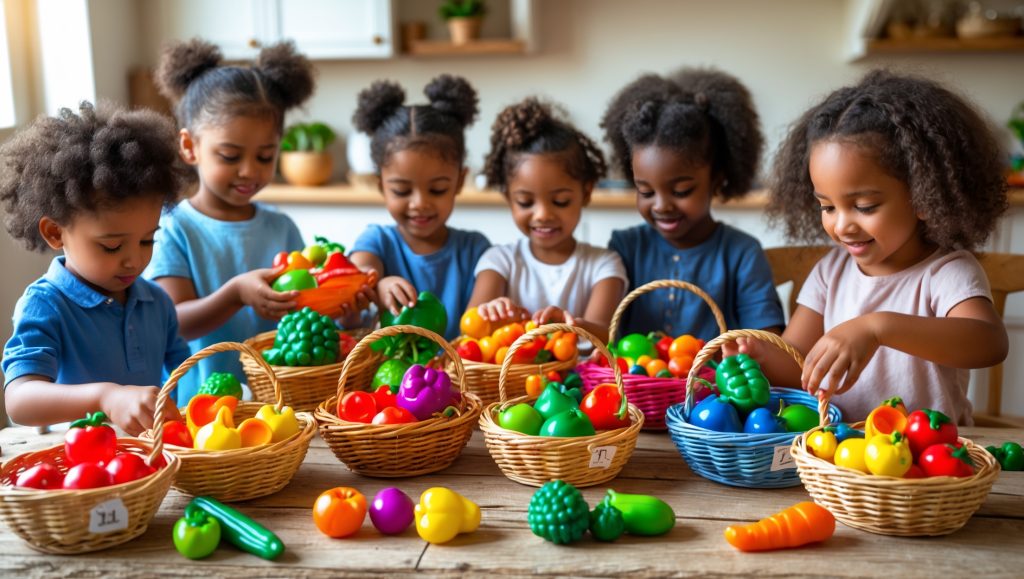
The Farmer’s Market Color Sorting Set arrives in a sturdy, brightly colored box that instantly captures children’s attention. Inside you’ll find:
- 25 realistic, soft-plastic fruits and vegetables—five each in red, yellow, orange, green, and purple hues.
- 5 baskets, each color-coded to match the food items.
- An activity guide with suggested play ideas to encourage learning and engagement.
The produce pieces stand out for their lifelike details and vibrant colors. Each piece is made from BPA-free, phthalate-free plastic that feels solid, yet lightweight and easy for small hands to grasp. The baskets are just the right size for sorting and stacking, and they’re durable enough to withstand enthusiastic play. All components are easy to wipe clean—an important feature for families with young children who might mix real snacks and play food. There are no small, loose parts that pose a choking risk, making this set suitable for ages 3 and up.
Learning & Development Benefits
This toy is more than just a sorting game—it’s a springboard for a range of early learning skills, especially valuable for children hesitant to try new foods. Here’s how:
- Color Recognition & Matching: Sorting foods by color reinforces visual discrimination and categorization, foundational skills for early math and science.
- Fine Motor Development: Picking up and placing the produce helps strengthen hand muscles and hand-eye coordination.
- Language Growth: Naming the foods, colors, and engaging in pretend play encourages vocabulary building and communication.
- Food Familiarity: Handling toy versions of real fruits and vegetables can make these foods less intimidating, laying the groundwork for more positive interactions at the table.
- Social Skills: Playing pretend market or kitchen games nurtures sharing, turn-taking, and cooperation.
- Cognitive Flexibility: Sorting by different criteria (color, shape, type) supports logical thinking and creative problem-solving.
For picky eaters, exposure to the look, feel, and names of various foods in a low-pressure environment can increase openness and curiosity—essential steps in building a more varied palate over time.
Setup & Use
Getting started is as simple as opening the box. The set requires no assembly and comes ready for immediate play. Here are some suggested ways to maximize its benefits:
- Sorting Games: Have your child match produce to the correct baskets by color. For added challenge, sort by shape or type (fruits vs. vegetables).
- Pretend Play: Set up a “farmer’s market” or play kitchen. Take turns being the shopper and the vendor, encouraging conversations about the foods.
- Food Discovery: Introduce the toy produce alongside real versions during snack time. Encourage your child to compare color, size, and texture.
- Counting & Math: Practice counting the pieces, simple addition or subtraction, and grouping by quantity.
- Cleanup & Storage: The baskets and box make it easy to keep pieces together and tidy up after play.
The Farmer’s Market Color Sorting Set is portable and can be used at the kitchen table, on the floor, or even outdoors. Its straightforward design makes it accessible for both independent and guided play.
Pros & Cons
Pros
- Realistic, vibrant produce pieces spark curiosity and engagement.
- Durable, easy-to-clean materials stand up to everyday use.
- Supports multiple areas of early development—fine motor, language, social, and cognitive skills.
- Encourages positive food associations in a low-pressure, playful environment.
- Ready to use out of the box; no assembly required.
- Activity guide included for ideas and inspiration.
Cons
- Limited to five basic colors—some children may crave more variety or complexity as they grow.
- The produce selection, while realistic, is not exhaustive (e.g., missing some common veggies or fruits).
- Basket size may be small for group play or for storing additional items.
- No sound, light, or electronic features for kids who enjoy interactive tech toys.
Alternatives & Similar Toys
If you’re looking for comparable toys or want to expand your collection, consider these options:
- Melissa & Doug Food Groups Wooden Play Food: A set of wooden foods divided by food groups, suitable for sorting and pretend meals.
- Learning Resources New Sprouts Fresh Picked Fruit & Veggie Tote: Features soft, durable produce pieces in a tote, perfect for on-the-go play.
- Hape Healthy Basics Set: Includes wooden milk, cheese, fruits, and veggies for open-ended kitchen play.
- B. Toys Lettuce Eat! Market Set: Colorful, chunky play foods designed for toddlers, with a focus on farmer’s market role-play.
Each of these sets offers a slightly different take on food-themed play, with variations in materials, complexity, and included accessories.
Verdict
The Learning Resources Farmer’s Market Color Sorting Set shines as a developmental toy and a gentle, fun way to help picky eaters become more comfortable with new foods. Its blend of realistic design, open-ended play possibilities, and educational value makes it a worthwhile investment for families seeking to nurture curiosity and positive food relationships in early childhood. While it won’t solve picky eating overnight, it provides meaningful opportunities for exposure and learning through play—a key ingredient in building lifelong healthy habits. If you’re looking for a durable, versatile, and engaging toy that supports both learning and food exploration, this set is an excellent choice for 2025.
FAQ
+Is this toy safe for toddlers who still mouth objects?
+Can this toy help reduce picky eating?
+What skills does the Farmer’s Market Color Sorting Set support?
+Are the produce pieces washable?
+How can I use this toy to start conversations about real food?
+Is this toy suitable for classroom or group play?
+Does the set include an activity guide?

Review: Learning Resources Farmer’s Market Color Sorting Set – Encouraging Food Exploration for Picky Eaters (2025)
The Learning Resources Farmer’s Market Color Sorting Set is a delightful and practical tool for parents and educators aiming to encourage picky eaters to explore a wider range of foods. This toy set goes beyond basic color sorting; it introduces children to the vibrant world of fruits and vegetables in a hands-on, approachable way. The well-crafted, durable pieces are sized perfectly for little hands, making them ideal for preschoolers and early learners. During play, kids naturally develop fine motor skills, color recognition, and early math concepts, all while becoming more comfortable with the look and names of healthy foods.
What truly sets this set apart is its potential for positive food associations. By playing with realistic produce in a low-pressure, creative setting, picky eaters can overcome some of the anxiety or resistance they may feel at the dinner table. Parents can use the set to spark conversations about nutrition, shopping, and even cooking, laying a strong foundation for lifelong healthy habits. In short, this set is a valuable addition to any home or classroom looking to make food exploration fun and stress-free.
- Encourages hands-on food exploration for picky eaters
- Supports color recognition, sorting, and fine motor skills
- Sturdy, realistic produce pieces foster imaginative play
- Great for home or classroom use
We have a pretty tight gift budget this year. Do you think the Farmer’s Market Color Sorting Set offers enough play value and learning potential compared with less expensive color sorting toys on the market?
It’s completely understandable to want the most value from your gift budget. The Farmer’s Market Color Sorting Set stands out because its realistic produce shapes encourage pretend play and food exploration, making it more engaging for picky eaters than basic color sorting toys. Try using the set for color sorting, counting, pretend grocery shopping, and even talking about healthy foods. For toddlers and preschoolers, the chunky pieces are safe to handle under supervision. If affordability is a key concern, simpler sets may offer color recognition, but might not inspire as much imaginative or food-related play. This isn’t medical advice; if you have specific concerns or questions about your child’s needs, consult your pediatrician.
Do you have any advice on making the Farmer’s Market Color Sorting Set appealing to an older child, maybe around six years old, who is already comfortable with colors but is still a bit picky with new foods?
It’s great that you want to keep food exploration engaging as your child grows. For a six-year-old, try turning the Farmer’s Market Color Sorting Set into a pretend grocery store or cooking game—let your child “shop” for ingredients or create silly recipes. Encourage storytelling about the foods, where they come from, or how they’re prepared. You could also pair the play foods with real snacks for a safe, supervised taste test, comparing textures and flavors. Just be sure to avoid small pieces if there are younger siblings nearby. This isn’t medical advice; if you have concerns about picky eating, touch base with your pediatrician.
My son is a bit sensitive to certain textures and can get overwhelmed by bright colors. Are the pieces or baskets very stimulating in terms of feel or appearance, or do they work well for kids who need a calm sensory experience before bed?
It’s thoughtful of you to consider your son’s sensory needs around playtime. The Farmer’s Market Color Sorting Set does have colorful play food and baskets, but the colors are more muted than neon and the textures are generally smooth and soft, not rough or bumpy. To support a calm experience, try introducing just a few pieces at a time, limiting the number of colors, and letting your child touch the pieces before play. You can also use the baskets separately for gentle sorting without the food items. Always supervise play, especially if your child is under 3, as some items are small. This isn’t medical advice; if you’re concerned, check in with your pediatrician.
We try to keep wind-down time low-energy before naps and bedtime. Do you think using this playset close to those times could wind kids up too much, or does it actually help some children relax if we stick to gentle pretend play?
It’s great that you’re thoughtful about keeping wind-down time calm before rest. For many toddlers and preschoolers, gentle pretend play with the Farmer’s Market Color Sorting Set can actually be soothing if you keep the pace slow and voices quiet. Try dimming the lights, using soft voices, and focusing on simple, repetitive play like matching or sorting. Avoid competitive games or loud, energetic play with the set near bedtime. Always supervise closely with younger children, as small parts can be a choking hazard. Every child is different—notice how your little one responds, and adjust as needed. This isn’t medical advice; if you’re concerned, check in with your pediatrician.
Is there any risk of younger siblings under 3 playing with this set, even though the pieces are supposedly safe? I have a baby at home and want to be sure there are no unexpected choking hazards.
You’re right to be cautious about toys with small parts around babies and toddlers. Even though the Farmer’s Market Color Sorting Set is labeled as safe, some pieces may still pose a choking risk for children under 3. For safety, always supervise play, keep the smallest pieces out of reach of your baby, and regularly inspect for any damaged or loose parts. Consider setting up play sessions when your older child can focus, and your baby is occupied elsewhere. This isn’t medical advice; if you’re concerned or unsure, check in with your pediatrician.
I noticed you mentioned the produce pieces are BPA and phthalate free, which is reassuring. Are there any strong or lingering smells from the plastic when the set is new? My child is very sensitive to odors and we try to avoid toys with chemical scents.
It’s completely understandable to be concerned about plastic odors, especially for kids who are sensitive to smells. In our experience with the Farmer’s Market Color Sorting Set, the produce pieces did not have a strong or lingering scent out of the box. However, since sensitivities vary, I suggest unboxing and airing the pieces in a well-ventilated space for a day or two before introducing them to your child. Always supervise young children with new toys and check for any adverse reactions. This isn’t medical advice; if you’re concerned, check in with your pediatrician.
I’m trying to cut down on clutter and toy overload at home. How bulky is the Farmer’s Market Color Sorting Set, and does it come with some sort of reusable box or bin to store everything when playtime is over?
It’s great that you’re thinking about managing toy clutter and storage. The Farmer’s Market Color Sorting Set comes with five plastic baskets that hold all the play food pieces, making cleanup easier. After play, you can store the food inside the baskets, then stack or nest them to save space. While the original packaging is a cardboard box, it may not last long-term, so consider transferring everything to a sturdy bin with a secure lid if needed. The pieces are toddler-safe and not overly large, but supervision is always best. This isn’t medical advice; if you have concerns, check in with your pediatrician.
Is this color sorting set suitable for children a bit younger than 3 if they’re supervised, or are there specific developmental reasons to stick to the age guidelines?
You’re right to consider both safety and developmental fit for younger children. The Farmer’s Market Color Sorting Set contains small pieces that may pose a choking risk for kids under 3, so close supervision is essential if you choose to use it. If your child is still mouthing objects, it’s best to wait or remove the smaller items. For toddlers, focus on simple color identification and texture exploration instead of sorting. Always observe your child to ensure safe play. This isn’t medical advice; if you’re concerned, check in with your pediatrician.
If a family is on a budget, is it better to choose a high-quality plastic set like this one for its developmental features or opt for a simpler wooden set that might be more sustainable but less detailed?
You’re thoughtful to weigh both your child’s development and your family’s budget. If your main goal is encouraging picky eaters and learning colors, a detailed set like this plastic one can be engaging and easy to clean, but a simpler wooden set works well too if you use it creatively. For younger children (18 months and up), check for smooth edges, non-toxic paints, and pieces large enough to avoid choking risks. Whichever you choose, joining your child in play and naming foods can make any set valuable. This isn’t medical advice; if you’re concerned, check in with your pediatrician.
We have limited storage in our playroom and tend to prefer compact toys. Are the baskets stackable or is there a way to store everything neatly in the original box? Any tips for making clean-up easier with this set?
It’s understandable to want toys that are easy to store, especially with limited space. The Farmer’s Market Color Sorting Set comes with separate baskets, and while they aren’t fully stackable, you can nest smaller play foods inside bigger ones within each basket to save space. Many families store all components in the original box, which usually fits everything neatly—just check for any small gaps before closing. For clean-up, try asking your child to sort by color as they put items away; this makes tidying up into a fun sorting game. Always supervise young children, as some pieces may be small. This isn’t medical advice; if you’re concerned, check in with your pediatrician.
If my child is already familiar with fruits and vegetables but still prefers not to eat them, do you have any suggestions for adjusting play with the Farmer’s Market Color Sorting Set to encourage more hands-on exploration? Would you recommend pairing it with real food tastings at the same time, or is that too much pressure?
It’s natural to want fun activities to help with picky eating. You might try letting your child use the Farmer’s Market set for pretend play first—sorting, naming, or creating stories with the pretend foods—so there’s no pressure to taste. If you want to introduce real foods, keep the mood light: offer small samples alongside the toy, but make it clear tasting is optional. Let your child touch, smell, or play with the real food just like the toys, encouraging exploration at their own pace. Always supervise to prevent choking, especially with younger children. This isn’t medical advice; if you’re concerned, check in with your pediatrician.
Do you have any tips for introducing this sorting set to younger siblings who are under three, especially if they want to play along with their older brother but aren’t quite ready for all the pieces?
It’s wonderful that you want to include your younger child in playtime with their older sibling. For children under three, try offering just a few larger, easy-to-handle pieces at a time and always supervise to prevent choking on small parts. You can encourage simple activities like matching colors or naming fruits rather than full sorting games. Focus on touch, safe pretend play, and talking about the different foods. Remember, this set isn’t designed for toddlers, so keep play short and always monitor closely. This isn’t medical advice; if you have safety concerns, please consult your pediatrician.
We have a younger child in the house along with our preschooler, and I’m always anxious about small toys. Can you clarify how big the individual fruits and vegetables are? Would any of the pieces fit inside a toilet paper tube, for example?
It’s completely understandable to be cautious about small toys with a younger child around. The fruits and vegetables in the Farmer’s Market Color Sorting Set are about 2 inches long, which means some may fit inside a standard toilet paper tube (about 1.6 inches in diameter). For children under 3, it’s safest to keep these pieces out of reach, as they could pose a choking hazard. Always supervise play closely and store the set away when your little one is nearby. This isn’t medical advice; if you’re concerned, check in with your pediatrician.
How would you suggest working this toy into a daily schedule with a toddler who is potty training? Is it better as a post-potty reward activity, or could it be part of a bigger food exploration routine?
It’s great that you’re thinking about how to connect play and learning during potty training. For toddlers, this set could work well as a short post-potty reward—letting your child sort a few fruits and veggies after each success. Alternatively, you can use it as part of a larger daily routine, like playing with the set before snack time to encourage food curiosity. Keep sessions brief (5–10 minutes) and supervise closely, since toddlers may still mouth toys. Make sure all pieces are intact and age-appropriate for your child. This isn’t medical advice; if you’re concerned, check in with your pediatrician.
This set looks really engaging for kids, but I’m torn between buying wooden or plastic toy food overall. From a sustainability and sensory perspective, do you think the soft-plastic pieces offer any advantages or drawbacks compared to wooden versions for picky eaters?
It’s thoughtful to weigh both sustainability and sensory experience when choosing toys for your child. Soft-plastic food like in this set is lightweight and has a slightly flexible texture, which can feel less intimidating for some picky eaters who are sensitive to hard or rough surfaces. The detailed shapes and brighter colors may also spark curiosity. However, wooden pieces are more eco-friendly and durable but can be heavier and have a firmer texture. For toddlers and preschoolers, make sure all pieces are free from small parts and harmful chemicals, regardless of material. This isn’t medical advice; if you have concerns about sensitivities or allergies, check with your pediatrician.
My toddler has some mild sensory sensitivities and is sometimes overwhelmed by bright colors. Is there a way to introduce the Farmer’s Market Color Sorting Set gradually, maybe starting with just a few pieces, without missing out on the learning benefits?
It’s wonderful that you’re thinking carefully about your child’s sensory needs. To introduce the Farmer’s Market Color Sorting Set gently, try starting with just two or three pieces in softer or muted colors, if possible, and add others slowly as your child gets comfortable. You can also use a neutral background to minimize visual stimulation. Let your child handle the pieces at their own pace, without pressure to sort right away. Always supervise play to ensure safety, especially with small parts. This isn’t medical advice; if you’re concerned, check in with your pediatrician.
If a child tends to put everything in their mouth, are there any parts of this set that might be worrying, or is everything truly large enough to be safe for a 3-year-old who still explores with their mouth?
It’s understandable to be cautious when your child still mouths toys at age 3. The produce pieces in the Farmer’s Market Color Sorting Set are generally large enough for preschoolers, but some items (like grapes or peas) might still be tempting for mouthing. Supervise closely during play, watch for any broken pieces, and store the set out of reach when not in use. Always check for wear and tear that could create smaller parts. Every child is different, so trust your instincts—if you’re ever unsure, your pediatrician can help you decide what’s safe.
My child has a tendency to put everything in their mouth, even at age three. Have you found that the Farmer’s Market Color Sorting Set holds up over time and remains safe after lots of mouthing, or would you recommend it for children who are still very oral?
It’s absolutely understandable to be concerned about toy safety when your child is still mouthing objects, even at age three. The Farmer’s Market Color Sorting Set is made of durable plastic and designed without small parts, but some food pieces are just the right size to fit into a child’s mouth and could pose a choking risk if bitten or broken. If your child is very oral, always supervise play closely, and check the pieces regularly for wear, cracks, or rough edges. You might store the set out of reach when not in use. Consider waiting until your child grows out of mouthing before using sets like this independently. This isn’t medical advice; if you’re concerned, check in with your pediatrician.
When playing with this set, should I stick to just color sorting, or have you found specific pretend play activities that help especially picky eaters get more comfortable with new foods during real family meals?
It’s great that you’re looking for creative ways to help your picky eater feel more comfortable with new foods. Beyond color sorting, you might try pretend grocery shopping, making up silly recipes together, or hosting a toy picnic where your child “serves” you different foods. Encourage gentle exploration—touching, smelling, or describing the pretend food’s texture can help reduce anxiety. Stay close by for safety, especially if your child is under 3, because of small parts. This isn’t medical advice; if you’re concerned, check in with your pediatrician.
One of my biggest concerns with play food sets is always whether any of the items could fit through a standard toilet paper roll, which is often used as a quick home test for choking hazards. Do you know if the pieces in the Farmer’s Market set would pass this test?
It’s great that you’re thinking carefully about choking hazards. According to Learning Resources, the Farmer’s Market Color Sorting Set is designed for preschoolers (ages 3+), and the play food pieces are larger than a standard toilet paper roll, which is often used to check for small parts. Still, I recommend inspecting each item yourself at home, especially if younger siblings are around, and always supervising play to help keep everyone safe. This isn’t medical advice; if you’re concerned, check in with your pediatrician.
My little one is sensitive to textures and sometimes avoids certain toys. Do the soft-plastic fruits and vegetables have a specific feel or smell that might bother kids with sensory issues?
It’s understandable to be mindful of your child’s sensory sensitivities. The Farmer’s Market Color Sorting Set uses soft, flexible plastic for the fruits and vegetables, which feels smooth and slightly squishy—some children enjoy this texture, while others might not. The pieces have a light, typical plastic scent when new, but are generally odorless after some airing out. I suggest letting your child touch one piece before introducing the whole set, washing them with mild soap to reduce any scent, and supervising to make sure small parts stay out of little mouths. This isn’t medical advice; if you’re concerned, check in with your pediatrician.
I have a child who is very sensitive to textures and can get overwhelmed by certain materials. How does the feel of the produce pieces compare to other toy food sets? Are they soft enough for kids with sensory sensitivities?
It’s understandable to want toys that are comfortable for your child’s sensory needs. The Farmer’s Market Color Sorting Set features plastic produce pieces that are firm but have smooth, rounded surfaces—less squishy than some foam sets, but softer than hard wooden play food. For kids with texture sensitivities, try introducing a few pieces at a time and watch their response. Let your child explore the pieces with their hands before encouraging sorting or play. Always supervise young children to prevent mouthing, especially if they’re sensitive to textures. This isn’t medical advice; if you’re concerned, check in with your pediatrician.
I’m curious how this set compares to simply using real fruits and vegetables for play and sorting at home. Are there unique benefits to the plastic pieces, or would real food offer a similar experience minus the extra clutter?
It’s great that you’re thinking about how best to encourage healthy food exploration at home. The Farmer’s Market Color Sorting Set offers durable, washable pieces that are safe for repeated use and free from spoilage, which can make cleanup and storage easier—especially for toddlers who might mouth toys. The bright colors and uniform size also help with color recognition and fine motor skills without the risk of allergens or choking on small, real food pieces. Real fruits and veggies, however, do add sensory experiences (smells, textures) and can encourage tasting. Both have benefits, so mixing them up can meet different developmental needs. This isn’t medical advice; if you’re concerned, check in with your pediatrician.
For families with more than one picky eater at different ages, would you recommend letting toddlers younger than 3 play alongside older siblings, or are there safety reasons to strictly wait until age 3?
It’s wonderful that you’re thinking about ways to include all your children in play. For toddlers under 3, the main safety concern with this set is the risk of choking on small parts. If you’d like to let younger siblings join in, supervise closely and only use larger pieces, making sure any small fruits or vegetables stay out of reach. Encourage parallel or side-by-side play instead of direct sharing to help manage safety. As always, observe how your toddler handles the toys, and if you have any doubts or notice mouthing behaviors, it’s best to wait. This isn’t medical advice; if you’re concerned, check in with your pediatrician.
For a toddler who is sensitive to certain textures, do you think the soft-plastic pieces of this set could cause any sensory discomfort, or are they generally well tolerated by kids who are a bit picky about how things feel?
It’s great that you’re thinking ahead about your toddler’s sensory needs. The Farmer’s Market Color Sorting Set uses soft-plastic pieces, which are usually smooth and lightweight—features many texture-sensitive toddlers find more tolerable than sticky or rough materials. To support your child, start by introducing just one piece at a time, watching for any signs of discomfort. Let your toddler touch or hold the pieces at their own pace, and keep other favorite toys nearby for reassurance. Always supervise play to ensure safety, especially if your child mouths toys. This isn’t medical advice; if you’re concerned, check in with your pediatrician.
My toddler tends to throw toys when frustrated, especially during new activities. Are the baskets and food pieces sturdy enough to withstand being tossed, or would they get damaged easily in normal play with a 1-year-old?
It’s completely normal to worry about durability when little ones throw toys out of frustration or excitement. The Farmer’s Market Color Sorting Set is made from sturdy plastic, so the baskets and play food generally hold up well to typical toddler play, including some tossing. For a 1-year-old, always supervise play to prevent mouthing or throwing near others, as the baskets are lightweight and could cause a bump. Encourage gentle play by modeling how to place items, and praise your toddler for practicing safe handling. This isn’t medical advice; if you’re concerned, check in with your pediatrician.
For families who have limited packing space, would you recommend bringing only part of the kit for a trip? Are there certain pieces or baskets that work best for travel play, or does the set lose a lot of its learning value if split up?
It makes sense to want to save space when traveling with little ones. You can absolutely bring just a few baskets or select fruits and veggies from the set—try choosing 2-3 colors and a few matching pieces to support sorting and pretend play. These still offer opportunities for color recognition and food exploration on the go. For younger children, supervise to avoid choking risks with small pieces. While the full set allows for more sorting combinations, using a smaller selection doesn’t take away all the learning fun. This isn’t medical advice; if you’re concerned, check in with your pediatrician.
Do you have suggestions for making the most of the Farmer’s Market Color Sorting Set in a small living space where we have to keep toys to a minimum? Is everything compact enough for easy storage?
It’s great that you’re looking for ways to maximize both learning and space. The Farmer’s Market Color Sorting Set is fairly compact—try storing the produce pieces in their corresponding baskets and stacking them when not in use. You can also rotate a few fruits and veggies into play at a time, keeping the rest tucked away in a lidded box or bag. For small spaces, using a tray or mat helps define a play area and makes cleanup quicker. Always supervise to ensure safe use, especially if your child is under three, as some pieces could pose a choking hazard. This isn’t medical advice; if you’re concerned, check in with your pediatrician.
My twins are almost three, but one still puts things in her mouth. You mentioned the pieces are for ages 3 and up and safe, but do you think they’re suitable for kids who mouth toys, or should I wait a bit longer before introducing this set?
It’s completely understandable to be cautious when your child still mouths toys at almost three. Even though the Farmer’s Market Color Sorting Set is labeled for ages 3 and up and the pieces are relatively large, they could still pose a choking risk if mouthed. I’d suggest closely supervising play, removing any smaller items, and watching for wear that could break off small parts. You might try offering the set together, watching how your child interacts, and pausing if mouthing continues. Every child develops at their own pace. This isn’t medical advice; if you’re concerned, check in with your pediatrician.
You mentioned how easy it is to clean these plastic fruits and baskets, which is a big plus with young kids. But from a sustainability aspect, do wooden food toys require more careful maintenance, or hold up better over time compared to these plastic ones?
That’s a thoughtful question about durability and care. Wooden food toys often do need a bit more careful maintenance—wiping them with a damp cloth and avoiding soaking, since wood can warp or splinter if left wet. Over time, they may develop dents or chips, but quality wooden toys can last for years if treated gently. Plastic sets like the Farmer’s Market are generally easier to clean and handle spills, but may scratch or break under rough play. For young kids, always check for loose pieces or splinters with wooden toys, and supervise as needed. This isn’t medical advice; if you’re concerned, check in with your pediatrician.
My child has some sensory sensitivities and is sometimes put off by certain textures in toys. How do the plastic pieces feel—is the texture smooth or rubbery, and do they have any noticeable scent straight out of the box?
You’re right to consider texture and scent if your child is sensitive. The Farmer’s Market Color Sorting Set pieces are made from hard, smooth plastic; they aren’t rubbery or squishy. Most families report little to no noticeable scent when opening the box, but as with any new toy, a mild plastic odor is possible at first and usually fades quickly with airing out. Always supervise young children and check for any unusual reactions. This isn’t medical advice; if you’re concerned about your child’s sensitivities, check in with your pediatrician.
My child is super sensitive to textures and sometimes avoids certain toys because of how they feel. Can you describe the texture and firmness of the produce pieces? Are they squishy, hard, or rubbery?
It’s understandable to want to know exactly what your child will be touching, especially with sensory sensitivities. The produce pieces in the Farmer’s Market Color Sorting Set are generally firm and made from smooth, molded plastic – they’re not squishy, soft, or rubbery, but instead feel solid and lightweight in the hand. The surface is non-textured, so there are no bumps or fuzzy parts. I recommend supervising your child during play to see how they respond and offering breaks if needed. Always check for any small pieces if your child is under three. This isn’t medical advice; if you’re concerned, check in with your pediatrician.
I noticed you mentioned the produce pieces are BPA- and phthalate-free, which is reassuring. But I’m concerned about durability—have you found that the fruits and vegetables hold up over time if a child frequently puts them in their mouth or squeezes them hard?
It’s completely understandable to want toys that are both safe and durable, especially for little ones who explore with their mouths and hands. In my experience, the Farmer’s Market Color Sorting Set holds up well to frequent handling and gentle chewing—its thick plastic resists denting and cracking. For children under three, always supervise play, as persistent biting could eventually cause wear. Regularly inspect the pieces for any cracks or loose parts, and wash them with mild soap and water to keep them safe and clean. This isn’t medical advice; if you’re concerned, check in with your pediatrician.
My child has strong preferences for certain textures and sometimes avoids toys with unusual surfaces. Does the Farmer’s Market Color Sorting Set have any pieces with unexpected textures or smells, or is everything pretty standard when it comes to sensory experience?
It’s completely understandable to be mindful of textures when your child is sensitive to sensory experiences. The Farmer’s Market Color Sorting Set is made of smooth, standard plastic without rough, sticky, or fuzzy surfaces, and the produce pieces aren’t scented—they have a neutral plastic smell typical for children’s toys. I suggest letting your child handle a single piece first, watching their reaction, and introducing other pieces gradually. Always supervise play, especially for younger children, as some pieces could be mouth-sized. This isn’t medical advice; if you’re concerned, check in with your pediatrician.
My child sometimes puts toys in their mouth out of habit. You mentioned the produce is made from safe plastics and has no small parts, but do you feel this set is suitable for kids with mild oral sensory issues, or should I supervise closely?
It’s completely understandable to be extra cautious when your child tends to mouth toys. The Farmer’s Market Color Sorting Set is made from sturdy, non-toxic plastic and doesn’t have small parts, making it generally safer than many play sets. Still, for kids with oral sensory needs, I suggest: supervise closely during play; check each piece regularly for wear or damage; encourage mouthing on appropriate teething toys instead; and clean the produce pieces regularly. Always follow the manufacturer’s age guidelines. This isn’t medical advice; if you’re concerned or need more support, reach out to your pediatrician.
My son is sensitive to certain textures and sometimes avoids plastic toys. Can you share more about how the produce pieces feel in the hand? Are they smooth or rubbery, and have you seen children with sensory issues enjoy this set?
You’re thoughtful to consider texture for your son’s comfort. The Farmer’s Market produce pieces are made of firm, lightweight plastic that feels mostly smooth with gentle detailing—neither sticky nor squishy, but not as cold or hard as some blocks. Many children with sensory sensitivities have enjoyed exploring the set, though a few may find the hard plastic less inviting. If possible, introduce one piece at a time with close supervision and watch his reactions, or try placing a favorite fabric underneath to soften the sensory experience. This set is generally safe for ages 3 and up due to small parts. This isn’t medical advice; if you’re concerned, check in with your pediatrician.
Does this set actually help transition picky eaters from play to real foods, or do some kids just end up only wanting to play with the toy versions instead of trying the real thing? We’ve had trouble making that leap before.
It’s understandable to worry that pretend food play might not translate to real eating experiences. To help bridge the gap, try exploring real fruits and veggies side-by-side with the toy versions, encouraging your child to touch, smell, and describe both. Use playful language to build curiosity, and invite your child to help prepare simple snacks with you. If your child is hesitant, keep exposures low-pressure and celebrate small steps, like just licking or touching the real food. Always supervise young children to avoid choking hazards, and choose safe, age-appropriate foods and activities. This isn’t medical advice; if you’re concerned, check in with your pediatrician.
For parents with very cautious children who tend to test everything by putting it in their mouth, do you think this set is a safe choice, or would you recommend waiting until they’re a bit older? I’m curious about your perspective as a psychologist.
You’re wise to consider safety for little ones who explore with their mouths. The Farmer’s Market Color Sorting Set includes small play foods that can pose choking risks for children under three or for older kids who still mouth objects. For very cautious or oral-exploring children, it’s safest to wait until they’ve outgrown this stage, or use the set only with close supervision. Alternatively, try food exploration with real, safe-to-eat foods instead. This isn’t medical advice; if you’re concerned or unsure about your child’s readiness, please check with your pediatrician.
The article mentions that the pieces are easy to clean, but we sometimes share toys among cousins and want to be extra cautious about hygiene. Are there special cleaning methods you recommend to ensure the produce pieces stay safe for multiple kids in the family?
It’s great that you’re being proactive about toy hygiene, especially when toys are shared among little ones. For the Farmer’s Market Color Sorting Set, start by washing the produce pieces with warm soapy water, using a soft brush for any crevices. Rinse thoroughly and let them air dry completely. For extra precaution, you can wipe them down with a diluted bleach solution (1 tablespoon bleach per gallon of water), then rinse again. Just make sure all parts are fully dry before play, and supervise younger children to avoid mouthing the toys. This isn’t medical advice; if you’re concerned, check in with your pediatrician.
If a family already owns similar color sorting or food play sets, do you find this Farmer’s Market version offers something noticeably different in terms of picky eating support or learning benefits?
It’s thoughtful to consider whether a new set will truly add value if you already own similar toys. The Farmer’s Market Color Sorting Set stands out by grouping foods by color and including a wider variety of fruits and vegetables, which can spark conversations about healthy eating and expose picky eaters to new foods in a low-pressure way. Try using the set together to pretend-shop for new foods, talk about textures and colors, or create simple matching games. For toddlers and preschoolers, always supervise to avoid choking hazards from small parts. This isn’t medical advice; if you’re concerned, check in with your pediatrician.
We’re concerned about our toddler getting enough iron and are trying to decide between giving more iron-fortified cereals or pureed meats. Do experts feel that playing with these realistic sets encourages long-term preference for one type of food over the other?
It’s wonderful that you’re thinking carefully about your toddler’s nutrition and food preferences. While realistic play sets like the Farmer’s Market Color Sorting Set can spark curiosity about fruits and veggies, research does not show that toy foods directly influence a child’s long-term liking for specific foods like cereals or meats. To encourage real-world exploration, you could: 1) Offer a variety of iron-rich foods at meals; 2) Use play sets to start conversations about different foods and their colors; 3) Let your toddler help with simple, safe kitchen tasks; 4) Model trying both meats and cereals yourself. Always watch for choking hazards and supervise play. This isn’t medical advice; if you’re concerned, check in with your pediatrician.
My child sometimes reacts strongly to certain textures and colors. Have you seen this set work well for kids who have sensory sensitivities, or do you have ideas for adapting play to make it comfortable for them?
It’s completely understandable to want playtime to be comfortable for a child with sensory sensitivities. This set can work well because the pieces are smooth plastic with gentle colors, but every child is different. Start by introducing just one or two pieces at a time, and let your child observe or hold them without pressure. If a certain color or shape is upsetting, set it aside for now. Playing alongside your child and modeling gentle exploration can help, and using a soft cloth or gloves may reduce discomfort. Always supervise young children due to small parts. This isn’t medical advice; if you’re concerned, check in with your pediatrician.
Does playing with the Farmer’s Market Color Sorting Set actually translate into kids being more willing to taste new vegetables at mealtime, or is the benefit mainly around familiarity and pretend play?
It’s a great question—many parents hope toys like this will help with picky eating. Playing with the Farmer’s Market Color Sorting Set mainly builds familiarity and comfort around different vegetables through pretend play, which is a positive first step. For some children, especially toddlers and preschoolers, increased exposure in play can make new foods less intimidating and sometimes leads to more willingness to taste them over time. Try pairing play with gentle, pressure-free tasting opportunities at meals. Always supervise young children to avoid choking hazards, and use the set as part of a safe, age-appropriate routine. This isn’t medical advice; if you’re concerned, check in with your pediatrician.
When introducing a toy like this to encourage new foods, do you recommend letting my toddler use it during actual snack times, or is it better to keep pretend food play and real meals separate to avoid confusion?
It’s great that you’re thinking about how best to support your toddler’s food exploration. For most toddlers, it’s helpful to keep pretend food play and real meals a bit separate—this avoids confusion about what is safe to eat, especially since the Farmer’s Market Color Sorting Set pieces are not edible and could pose a choking risk if mistaken for real food. Try using the toy before or after meals to spark curiosity about different foods, then connect it to real snacks by naming colors or shapes together. Always supervise play to ensure safety. This isn’t medical advice; if you’re concerned, check in with your pediatrician.
Would this color sorting set be a good option for a calm activity when my preschooler wakes up early? I am looking for something that keeps noise levels down before the rest of the family is up.
It makes sense to want a quiet, calming activity for those early mornings. The Farmer’s Market Color Sorting Set is generally a good choice: it’s quiet, requires minimal setup, and encourages gentle, independent play. Set the activity out the night before on a tray your preschooler can reach safely. Encourage sorting, counting, or pretend play with the soft, easy-to-handle pieces. Just supervise if your child still mouths objects, as the fruits and veggies are small. Make sure the play space is safe and well-lit. This isn’t medical advice; if you’re concerned, check in with your pediatrician.
If a family already has basic play food and sorting toys, what makes the Farmer’s Market Color Sorting Set stand out for picky eaters compared to just using everyday items for pretend play and learning?
It’s thoughtful to consider what makes a new toy truly helpful for your child’s needs. The Farmer’s Market Color Sorting Set can support picky eaters by offering realistic produce shapes and a vibrant range of colors, which gently introduces new foods in a playful, low-pressure way. It encourages hands-on sorting and discussion about fruits and veggies, helping reduce food anxiety through familiarization. The set is designed for safe handling by toddlers and preschoolers, with sturdy pieces and no small parts. While everyday items can be effective, purpose-built sets like this one make food exploration more structured and engaging. This isn’t medical advice; if you’re concerned, check in with your pediatrician.
With toy subscriptions becoming more popular, do you think it makes sense to rent educational kits like this instead of buying them outright? I worry that my child might lose interest after a few months, and I wonder if you have thoughts on which is more cost-effective or engaging long-term.
It’s understandable to want the best value while keeping your child’s interest engaged over time. Renting educational kits like the Farmer’s Market Color Sorting Set can be cost-effective if you’re concerned about short-lived interest, as it allows you to rotate new toys regularly without clutter. For toddlers and preschoolers, rotating toys can also keep play fresh and support development. Make sure rental kits are clean, safe, and age-appropriate, especially with items that could be mouthed. Some children enjoy returning to familiar toys, so consider your child’s personality and play style. This isn’t medical advice; if you’re concerned, check in with your pediatrician.
Could this set be easily incorporated into a daily or weekly routine to help with picky eating, or do you find it works best as an occasional activity? I’m trying to build more consistent food exploration habits for my child.
You’re doing a great job looking for ways to help your child explore new foods. The Farmer’s Market Color Sorting Set can definitely be used regularly—consider letting your child ‘shop’ for colors before meals, or sorting the play foods after snack time a few days a week. This routine can make new foods feel more familiar and less intimidating. For young children, always supervise play to avoid choking hazards, and remember that these pretend foods aren’t edible. This isn’t medical advice; if you’re concerned, check in with your pediatrician.
Is this set okay for supervised play with a younger sibling who just turned two? I know it says ages 3 and up, but I’m curious if there’s a specific reason, like size of the pieces or another safety concern, that families should keep in mind if they have toddlers closer in age.
It’s great that you’re thinking ahead about your child’s safety and play. The Farmer’s Market Color Sorting Set is labeled for ages 3+ mainly because some of the pieces are small enough to pose a choking risk for younger toddlers. If you choose to let your two-year-old play, always supervise closely, and consider removing any smaller items that might fit in their mouth. Check each piece for durability and avoid play when your child is tired or likely to mouth objects. This isn’t medical advice; if you’re concerned, check in with your pediatrician.
If I’m working with a tight toy budget, would you say the Farmer’s Market Color Sorting Set covers enough learning areas to be rotated as our main educational toy, or would you recommend supplementing with another type of activity in between?
It’s great that you’re thoughtfully planning around your budget and your child’s learning. The Farmer’s Market Color Sorting Set offers a lot: color sorting, counting, pretend play, fine motor practice, and basic food vocabulary. For toddlers and preschoolers, it can absolutely serve as a versatile main toy, especially when you change up the games or themes. To keep things fresh, you might supplement with simple homemade activities—like sorting real pantry items or drawing food pictures—rather than buying more toys. Always supervise little ones with small parts to prevent choking. This isn’t medical advice; if you’re concerned, check in with your pediatrician.
We sometimes combine real snacks with play food during pretend picnics, but I worry about mixing up edible and non-edible items. How can we make sure grandparents keep play food separate and safe for little ones during shared activities?
It is very thoughtful of you to want to keep little ones safe while encouraging creative play with grandparents. Here are some practical steps: Set up separate bowls or baskets labeled ‘real food’ and ‘play food’ to avoid confusion. Choose play food that looks clearly different in size, color, or texture from real snacks, especially for toddlers. Remind grandparents to closely supervise and double-check before serving anything, especially with children under age 3. After each activity, clean up promptly and store play food out of reach. This isn’t medical advice; if you’re concerned, check in with your pediatrician.
My child is not quite three yet but is already showing picky eating tendencies. Would it be safe to use this set under close supervision with a younger toddler, or should we stick to the recommended age due to potential safety concerns?
It’s completely understandable to want to encourage food exploration early on, especially if you’re noticing picky eating habits. The Farmer’s Market Color Sorting Set is recommended for ages 3 and up mainly due to small parts that could present a choking hazard for younger toddlers. If you choose to use it before age three, always provide very close, hands-on supervision, and consider removing the smallest pieces. You might also try using only a few larger, safer items at a time. Remember, this isn’t medical advice; if you’re concerned about safety or development, check in with your pediatrician.
We have limited storage at home, and I try to keep our play area organized. Can you share any tips for storing the Farmer’s Market Color Sorting Set, especially so it doesn’t get mixed up with other toys or lost?
It’s understandable to want a tidy play area, especially with sets that have many pieces like this one. Try storing all the set’s pieces in a large, clear zippered pouch or lidded container—label it so your child can help clean up. Keep the set separate from other toys, perhaps on a shelf or in a dedicated bin, to avoid mixing pieces. For younger children, supervise clean-up to make sure none of the small fruits go missing or become a choking hazard. This isn’t medical advice; if you’re concerned, check in with your pediatrician.
For families who don’t have a ton of space, do you find the baskets and produce easy to store away, or do they end up scattered everywhere after playtime?
It’s completely understandable to want toys that don’t take over your home, especially with limited space. The Farmer’s Market Color Sorting Set comes with small baskets and lightweight produce, so one option is to use the included baskets to quickly gather everything after playtime. You might also store all the pieces in a single container with a lid on a shelf or in a drawer. Setting a clean-up routine with your child can help keep things tidy and make the process part of play. For toddlers, adult supervision during clean-up ensures no small pieces get misplaced. This isn’t medical advice; if you’re concerned, check in with your pediatrician.
Does this set offer any suggestions or modifications for children who are sensitive to certain textures or colors? My son gets overwhelmed easily, so I want to make sure it won’t be too stimulating for him.
It’s completely understandable to want to avoid overwhelming your son, especially if he’s sensitive to textures or colors. The Farmer’s Market Color Sorting Set includes soft, plastic food pieces that are smooth to the touch, and you can start by offering just a few pieces in muted or preferred colors to reduce stimulation. Let him explore with his hands at his own pace and consider sorting by category, not just color, if that feels less intense. Always supervise play to ensure safety, especially for younger kids or if mouthing small parts is a concern. This isn’t medical advice; if you’re ever unsure about your child’s sensory needs, it’s a good idea to check in with your pediatrician.
I’ve seen other sorting sets that include tongs or tweezers for fine motor practice, but sometimes those extras become choking hazards or get lost. Does this Farmers Market set come with any small accessories, or is it just the food and baskets?
That’s a thoughtful question, especially if you’re mindful of choking hazards and lost pieces. The Farmer’s Market Color Sorting Set reviewed in the article includes only the play food items and color-coded baskets—there are no tongs, tweezers, or small accessories. This makes it a safer choice for toddlers and preschoolers, as there are fewer small parts to worry about. Always supervise young children during play, especially if they are still mouthing objects. This isn’t medical advice; if you have specific safety concerns, your pediatrician can help.
My toddler tends to get overstimulated with vibrant colors or new textures. How does this set work for kids who might have mild sensory sensitivities, especially with the variety of fruits and vegetables included?
It’s great that you’re thinking about your toddler’s sensory sensitivities. The Farmer’s Market Color Sorting Set has a variety of bright colors and different textures, so introduce the pieces gradually—maybe start with just a couple of muted-colored fruits or veggies at a time. Allow your child to explore each item at their own pace, and step back if they seem overwhelmed. You can play alongside them, modeling gentle touching and naming the items, which helps them feel more comfortable. All pieces are toddler-safe with no small parts, but always supervise play. This isn’t medical advice; if you’re concerned, check in with your pediatrician.
My child is very sensitive to textures, especially with pretend food. Are the fruits and vegetables in this set soft enough for kids with mild sensory issues, or do they have any rough parts that might be uncomfortable to touch?
It’s great that you’re considering your child’s sensory sensitivities. The Farmer’s Market Color Sorting Set features pretend fruits and vegetables made from smooth, lightweight plastic, with most pieces having rounded edges and a soft-touch finish. However, a few items have light ridges or subtle details that might feel slightly textured to sensitive fingers. I suggest letting your child explore one or two pieces first, supervising to gauge their comfort. If needed, you can hand-wash the toys to reduce any manufacturing residue. This set is generally safe for ages 3 and up, but always watch for individual reactions. This isn’t medical advice; if you’re concerned, check in with your pediatrician.
I babysit in a pretty small apartment with limited storage space. How bulky is the Farmer’s Market Color Sorting Set once it’s unpacked, and do the baskets neatly hold all the produce pieces for easy cleanup between playtimes?
It’s great that you’re thinking about space and cleanup while caring for little ones. The Farmer’s Market Color Sorting Set is fairly compact—each of the five baskets is small enough to fit on a shelf, and all the produce pieces are designed to be stored inside the baskets when not in use. After play, simply have children sort the produce by color into the matching baskets, which keeps everything tidy and helps build routines. This also encourages color recognition and fine motor skills. The set’s lightweight plastic is easy to wipe down, but be sure to supervise younger children to avoid mouthing small fruit pieces. This isn’t medical advice; if you’re concerned, check in with your pediatrician.
Have you noticed if handling these pretend fruits and veggies actually helps toddlers approach new foods at mealtime, or do some kids just stick to playing but still refuse the real thing? I’d love to hear any concrete examples from families who used it.
Your question about whether pretend play with these fruits and veggies translates to real-life food acceptance is so thoughtful. Many parents do notice that repeated, pressure-free handling of play foods can make toddlers more curious and less wary at meals. For example, some families report that after sorting or naming the toy produce, their child is willing to touch or sniff the real version, even if they don’t eat it right away. Others find their little ones still prefer to play but gradually become more open over time. Every child is different, and progress is usually slow and non-linear. Always supervise for safety—these pieces are best for ages 18 months and up. This isn’t medical advice; if you’re concerned, check in with your pediatrician.
With a two-year-old who puts things in their mouth, I noticed the set is suggested for ages 3 and up. Is there a safe way to use this toy earlier with close supervision, or would you recommend waiting until my child is older?
It’s wise to be cautious about age guidelines when your toddler still mouths objects. The Farmer’s Market Color Sorting Set includes small play foods that could be a choking hazard for two-year-olds. If you choose to introduce the set early, use only the largest pieces and always supervise closely, keeping an eye on every item. Alternatively, you might try color sorting with safe, edible foods or large household objects until your child is older. Safety comes first, so if your child is still mouthing everything, waiting a bit longer can give peace of mind. This isn’t medical advice; if you’re concerned, check in with your pediatrician.
We are trying to cut down on the number of toys in our playroom. Do you find that the Farmer’s Market Color Sorting Set holds kids’ attention for longer periods, or does it end up mixed with other toy foods and get forgotten after a few weeks?
It’s great that you’re being thoughtful about the toys you keep accessible. Many families find the Farmer’s Market Color Sorting Set stays engaging when it’s introduced with specific play ideas, like color sorting games or pretend shopping. To maintain interest, try rotating it in and out of your playroom every few weeks, or use it alongside real fruits and vegetables for snack-time matching. For younger kids (ages 3+), supervision is key to avoid mouthing small pieces. This isn’t medical advice; if you’re concerned, check in with your pediatrician.
For parents especially concerned about choking hazards, is there anything extra you would recommend when storing or supervising play with this Farmer’s Market set?
Your concern about choking hazards is very understandable, especially with toys that include small parts. For the Farmer’s Market set, always supervise play closely, particularly with children under 3 years old. Store the pieces in a secure container out of reach when not in use. Before each play session, check for any damaged or loose parts that could pose a risk. Use the toy only as intended and avoid letting children put pieces in their mouths. This isn’t medical advice; if you’re concerned, check in with your pediatrician.
With limited space in our playroom, I am always worried about toy storage. Do all the pieces fit back easily into the original box, or do you have any creative storage ideas that make clean-up less of a hassle?
It’s great that you’re thinking ahead about storage and keeping playtime manageable. The Farmer’s Market Color Sorting Set does fit back into its original box, but younger kids (ages 3 and up) may need some help organizing the smaller pieces. For easier clean-up, try using clear, lidded containers or small baskets for each color group; label them with pictures for extra visual support. A shallow tray or drawer organizer can also keep pieces tidy and accessible. Always supervise young children to ensure all parts are accounted for and safely stored. This isn’t medical advice; if you’re concerned, check in with your pediatrician.
Is this sorting set suitable for younger toddlers if I’m closely supervising, or would you recommend waiting until my child is a bit older? My parents like to get involved in play, so I want to be sure it’s safe for group use with mixed ages.
It’s great that you’re thinking about both safety and family involvement during play. For younger toddlers, close supervision is essential, as some of the play food pieces can pose a choking risk due to their small size. If you choose to use the set, only offer larger pieces, and always watch your child closely. Consider sorting by color together with your child and the grandparents instead of encouraging independent play at this age. For mixed-age groups, set clear boundaries about which pieces are safe for the youngest children. This isn’t medical advice; if you’re concerned, check in with your pediatrician.
Would this set work well for a family with very limited floor space, or does it require a big area to play and sort everything out? I like toys that fit comfortably on a coffee table or small play mat.
It’s great that you’re thinking about how toys will fit into your space. The Farmer’s Market Color Sorting Set is quite compact and is designed to be used on small surfaces like a coffee table or play mat. You can easily set out a few baskets and pieces at a time rather than the whole set, which keeps things manageable and less overwhelming for your child. Clean-up is simple since the pieces store in their own baskets. Just be mindful that the small play food pieces are best for children over 3, and always supervise younger kids to prevent choking. This isn’t medical advice; if you have concerns, check in with your pediatrician.
I’m always on the lookout for toys that are safe for mixed-age playdates. Can you tell me if there are any specific safety warnings from the manufacturer about small parts in this set, or if it’s truly safe for little ones to play alongside older kids?
You’re wise to double-check safety details, especially for mixed-age playdates. According to the manufacturer, the Farmer’s Market Color Sorting Set does contain small pieces that could be a choking hazard for children under 3 years old. For little ones, always supervise play closely and consider removing the smallest items or saving the set for when all children present are past the mouthing stage. Encourage older kids to model gentle, mindful play. This isn’t medical advice; if you’re concerned about specific risks for your child, check in with your pediatrician.
My child is hypersensitive to certain textures, even if they’re just pretend foods. Have you heard from families whose kids are sensitive in this way? Does the material or texture of these play foods seem to help or bother them during play?
It’s completely understandable to worry about how different textures might affect your child’s comfort during play. Some families with sensory-sensitive kids have shared that the soft, rubbery material of the Farmer’s Market set can actually be less overwhelming than harder, rougher plastic. You might start by letting your child touch just one or two pieces, watch their reactions, and offer reassurance. Allow them to explore at their own pace, and take breaks if they seem bothered. Always supervise, especially with younger children, as some pieces are small. This isn’t medical advice; if you have concerns about your child’s sensory responses, it’s a good idea to consult your pediatrician or an occupational therapist.
I’m curious about how long kids typically stay interested in the Farmer’s Market Color Sorting Set. Do you suggest rotating it in and out of the toy rotation, or is it best left out for daily access?
It’s great that you’re thinking about keeping your child engaged and interested in playtime. Many toddlers and preschoolers enjoy the Farmer’s Market Color Sorting Set most between ages 2 and 5, but their interest can ebb and flow. Try rotating it—keep it out for a week or two, then put it away and reintroduce it later; this often renews enthusiasm. Observe if your child loses interest when it’s always available, and adjust accordingly. Always supervise young children, as small pieces can be a choking hazard. This isn’t medical advice; if you’re concerned, check in with your pediatrician.
You mention sorting and pretend play as great ways to encourage food exploration. At 7 months, my baby isn’t sorting yet. Are there simpler activities or modifications you’d suggest for younger babies using this set?
It’s wonderful that you’re eager to encourage food exploration so early. For a 7-month-old, focus on sensory play rather than sorting: let baby safely touch and mouth the large, soft plastic fruits and veggies under supervision, naming each one. You might roll a fruit gently to invite reaching or encourage your baby to bang two pieces together. Peekaboo games with the produce or simply placing a few in front of baby during tummy time can spark curiosity. Always supervise play to prevent choking, and check pieces for any wear. This isn’t medical advice; if you’re concerned, check in with your pediatrician.
We are working on food exposure with my 10-month-old, but she sometimes reacts to certain food textures. Does interacting with the soft-plastic produce help babies become more comfortable with different real food textures later on, or is there limited carryover?
It’s understandable to want to help your baby feel more comfortable with different textures. Playing with soft-plastic produce can make food exploration feel safe and fun, but research suggests that actual carryover to real food textures may be limited at this age. You can try letting her handle real foods with supervision, starting with soft, safe textures like ripe banana or steamed carrot. Offer repeated, low-pressure opportunities to touch and squish foods during meals. Always supervise closely to prevent choking, and keep small objects away from your baby. This isn’t medical advice; if you’re concerned, check in with your pediatrician.
We’re tight on space at home, so storage is a concern for us. How bulky is the box, and do the baskets and produce pieces stack or fit inside each other easily for storage after playtime?
It’s understandable to want toys that don’t take up too much space. The Farmer’s Market Color Sorting Set comes with five small baskets and 25 soft produce pieces, and the baskets are designed to nest inside each other. Most of the fruits and veggies can fit inside the nested baskets, making storage easier and more compact. Consider keeping all pieces together in a single small bin or the original box if space is especially tight. Always supervise younger children to prevent mouthing or choking on the smaller pieces. This isn’t medical advice; if you’re concerned, check in with your pediatrician.
My daughter is very sensitive to the texture of real fruits and veggies, and she also struggles with loud, bright toys. Do you know if the plastic produce has a soft touch or any specific smell that could be overwhelming for kids with sensory concerns?
It’s great that you’re thinking carefully about your daughter’s sensory needs. The Farmer’s Market Color Sorting Set uses smooth, lightweight plastic produce that is firm—not soft or squishy—and does not have added scents, so it generally shouldn’t overwhelm with smell or texture. The colors are bright but not flashy, and there are no lights or electronic sounds, making it a quiet option for children sensitive to overstimulation. Always supervise play to ensure safety, especially with younger kids who might mouth the pieces. This isn’t medical advice; if your daughter’s sensitivities are causing distress, check in with your pediatrician.
Our play space is limited and we already have a lot of baby gear. How much room does this set realistically take up, and do the baskets and produce pieces nest or stack for easy storage when playtime is over?
It’s completely understandable to want to keep your play space uncluttered. The Farmer’s Market Color Sorting Set is fairly compact—each basket is about the size of a cereal bowl, and the produce pieces are toddler-hand-sized. The baskets can nest inside each other, and all the produce fits inside the stacked baskets, making storage quite efficient. After play, you can quickly gather everything into one or two baskets and tuck them onto a shelf. This approach helps keep small pieces safely contained and reduces tripping hazards. This isn’t medical advice; if you have safety concerns about storage or choking risks, check in with your pediatrician.
Does this color sorting set tend to keep kids engaged for longer stretches, or do you find that toddlers usually move on pretty quickly? I ask because I want to have a few activities that can help pass time during a layover without relying on screens.
It’s great that you’re planning ahead for screen-free activities during travel. Many toddlers do stay engaged with the Farmer’s Market Color Sorting Set for 10 to 20 minutes at a time, especially if you introduce simple games like matching, sorting by color, or pretend shopping together. Try rotating the pieces or adding a small container for ‘shopping baskets’ to mix things up. For layovers, use only a few pieces at once to keep it manageable and encourage repeated play. Always supervise toddlers with these small parts, as they’re not suitable for children under 3 due to choking risks. This isn’t medical advice; if you’re concerned, check in with your pediatrician.
Does the Farmer’s Market Color Sorting Set hold up well to lots of on-the-go use, like in airports or hotels? I’m looking for something that can withstand a toddler’s rough handling when we’re away from home.
It’s great that you want a sturdy, travel-friendly toy for your toddler. The Farmer’s Market Color Sorting Set pieces are made of durable plastic, but the set includes multiple small fruits and baskets, so keeping track of them in airports or hotels may be tricky. For on-the-go use, consider bringing just a few pieces in a zippered pouch to minimize loss and mess. Always supervise play, as the pieces could pose a choking risk for younger toddlers. While the set can handle rough handling, double-check for any cracks or loose parts after travel. This isn’t medical advice; if you’re concerned, check in with your pediatrician.
We are gradually introducing new foods, including allergens, to our 9-month-old. Could using pretend play food like this actually help toddlers become more accepting of allergenic foods later on, or is it better to use real foods for that kind of exposure?
It’s wonderful that you’re thoughtfully introducing new foods and allergens to your baby. Pretend play food sets like the Farmer’s Market Color Sorting Set can help toddlers become more familiar and comfortable with the idea of different foods through play, but for true allergen exposure and acceptance, hands-on experience with real foods is needed. For a 9-month-old, focus on safe, age-appropriate tastes and textures under supervision and introduce allergens gradually as recommended by your pediatrician. Pretend play is best for building positive food associations and curiosity, not for allergen desensitization. This isn’t medical advice; if you’re concerned, check in with your pediatrician.
Do you have any suggestions for incorporating the color sorting set into everyday routines, like meal prep or grocery shopping, to help reinforce healthy food choices outside of playtime?
It’s great that you want to use play to encourage healthy eating habits in daily life. You might invite your child to help sort real fruits and veggies by color during meal prep, letting them handle safe, age-appropriate pieces. At the grocery store, turn shopping into a color hunt, asking your child to find produce that matches the set’s colors. You can also use the set to talk about what you see in the kitchen or store, connecting play to real foods. Always supervise closely to avoid choking hazards and keep things safe. This isn’t medical advice; if you’re concerned, check in with your pediatrician.
My child is very sensitive to new textures, both with food and toys—sometimes she’ll refuse to touch certain things. Does the soft plastic material of these pretend fruits and veggies have any strong smell or texture that might bother sensory-sensitive toddlers during potty training breaks?
It’s so thoughtful that you’re considering your child’s sensory sensitivities during play and daily routines. The Farmer’s Market Color Sorting Set uses soft, smooth plastic with a mild, almost undetectable scent, making it generally tolerable for most sensory-sensitive toddlers. To ease your child in, try introducing just one piece at a time during calm moments, allowing her to watch and then touch at her own pace. Let her use a cloth or wear mittens if she’s hesitant to touch directly. Always supervise play to ensure safety, as some pieces are small. This isn’t medical advice; if you’re concerned, check in with your pediatrician.
My baby is just starting to babble and reach for colorful things. Could using this color sorting set at 7 months support her language development in any way, even if she’s just exploring the pieces with her hands and mouth at this stage?
It’s wonderful that you’re encouraging your baby’s curiosity and early language skills. At 7 months, babies learn a lot by touching, mouthing, and seeing bright colors, so supervised play with large, safe pieces can help build vocabulary and support early communication. Use the set together: name the colors and shapes while she explores, model simple words, and describe her actions. Ensure all pieces are too large to be a choking hazard and clean them well after mouthing. At this age, watch closely to keep play safe and engaging. This isn’t medical advice; if you have concerns about development or safety, please ask your pediatrician.
For families with younger siblings in the house—like babies crawling around—do you think it’s safe to leave the produce pieces out, or is it best to store them away after each use to prevent any accidental mouthing or choking?
You’re absolutely right to think about safety with little ones around. Because the Farmer’s Market Color Sorting Set includes small produce pieces, it’s safest to put them away after playtime, especially if babies or toddlers are crawling nearby. Always supervise play, check that none of the pieces are damaged, and avoid letting babies have access to any toys not designed for their age group. Consider setting up play in a space where you can easily clean up afterwards. This isn’t medical advice; if you’re concerned, check in with your pediatrician.
Can you share your thoughts on how to keep this set organized in smaller living spaces or apartments? Do the baskets stack neatly away, or would I need a separate bin to keep everything contained after playtime?
It’s great that you’re thinking ahead about keeping toys organized, especially in a smaller space. The Farmer’s Market Color Sorting Set baskets are designed to nest inside each other, which does help save room, but the pretend produce pieces may spill out if left loose. For tidiness and safety (especially around younger children who might mouth small pieces), I recommend storing all parts in a clear plastic bin with a snap lid after playtime. Labeling the bin can also help your child learn about cleanup routines. This isn’t medical advice; if you’re concerned, check in with your pediatrician.
Our mealtimes often get messy because my 10-month-old likes to grab and squeeze everything on her tray. Would it make sense to let her handle the color sorting set right before or during meals, or could that backfire and make her expect toys at every mealtime?
It’s understandable to want mealtimes to go smoothly, especially with a curious 10-month-old. At this age, exploring food through touch is normal and helps with sensory development. If you introduce the color sorting set at meals, your baby might start expecting toys at the table, making it harder to set limits later. Instead, use the set during playtime before a meal to help her get hands-on practice, then offer real food to explore at the table. Always supervise closely, as small pieces can be a choking risk. This isn’t medical advice; if you’re concerned, check in with your pediatrician.
My parents often share care of our toddler and they cook foods from our culture, which aren’t always included in American toy sets. Do you have suggestions for adapting the Farmer’s Market Color Sorting Set to introduce kids to more diverse fruits and vegetables that represent our family’s heritage?
It’s wonderful that you want your toddler to connect with your family’s food traditions. You can adapt the Farmer’s Market Color Sorting Set by adding safe, clean, real or play versions of your cultural fruits and vegetables—just watch for choking hazards and avoid anything too small. Encourage your child to sort these new foods by color or shape with the existing baskets, and talk together about the names and flavors. You might also draw or print simple pictures of your traditional foods to include in the set. Always supervise, especially with real food. This isn’t medical advice; if you’re concerned, check in with your pediatrician.
We’re trying to encourage our picky eater to try new foods, but our budget is pretty tight. How does this Farmer’s Market set compare in price and value to other food-themed toys or playsets you might recommend for toddlers?
It’s great that you’re looking for creative ways to support your picky eater within your budget. The Farmer’s Market Color Sorting Set is moderately priced compared to many food-themed toys, offering a variety of play pieces that encourage sorting, color recognition, and pretend play. Step-by-step, you could: 1) Compare the number of pieces and types of foods included with other brands, 2) Look for open-ended sets that grow with your child, 3) Consider safety—this set is safe for toddlers with no small parts or allergens, and 4) Check resale sites for gently used options. This isn’t medical advice; if you’re concerned, check in with your pediatrician.
We have a small apartment and limited storage space. How bulky is the Farmer’s Market set when everything is cleaned up, and do the baskets nest or stack easily for tidying up after playtime?
It’s completely understandable to prioritize storage and tidiness in a small apartment. The Farmer’s Market Color Sorting Set comes with five baskets that stack inside each other when empty, making them easier to store. The play food pieces fit inside the baskets, so once sorted and cleaned up, everything nests into a single, compact unit. To save even more space, consider storing the set on a shelf or in a bin. Always supervise younger children to avoid lost pieces and choking hazards. This isn’t medical advice; if you’re concerned, check in with your pediatrician.
My kid has some sensory issues and sometimes avoids certain textures. Is the plastic used here soft or rubbery at all, or more hard plastic? Just curious if other sensitive kiddos have trouble handling the produce pieces.
You’re thoughtful to consider texture for your child’s sensory needs. The Farmer’s Market Color Sorting Set uses mostly firm, hard plastic for the produce pieces—they aren’t soft or rubbery. For some sensory-sensitive children, the smooth, solid surface may feel less inviting, so try a gradual introduction: let your child explore the pieces at their own pace, perhaps starting with a favorite shape or color. You might also compare these pieces with other toys your child already tolerates well. Always supervise play to ensure comfort and safety, especially if your child is prone to mouthing objects. This isn’t medical advice; if you’re concerned about your child’s reactions, check in with your pediatrician or occupational therapist.
Does this set provide enough variety to keep a three-year-old interested if we use it every night as a pre-bed activity, or do you think we’d need to add extra elements so it doesn’t get repetitive?
You’re thoughtful to consider keeping your three-year-old engaged over time. The Farmer’s Market set offers a nice variety of colors and shapes, but using it nightly might become repetitive for some children. Try rotating how you play: some nights sort by color, other nights by fruit or veggie type, or make up simple pretend games together. You can add safe household items as ‘shopping baskets’ or create simple stories to boost interest. Always supervise for safe play. This isn’t medical advice; if you’re concerned, check in with your pediatrician.
Some children in our playgroup have sensory sensitivities and are particular about toy textures. Can you describe whether the plastic fruits and vegetables have a soft, squishy feel or are they more rigid, and do they make any noise when squeezed?
It’s thoughtful of you to consider sensory sensitivities when choosing toys. The Farmer’s Market Color Sorting Set features plastic fruits and vegetables that are firm and rigid rather than soft or squishy, so they do not compress easily and make little to no noise if squeezed. The surface is smooth, which may suit some children but could feel too hard for others sensitive to texture. Always supervise young children, especially if they tend to mouth objects, as the pieces are small. This isn’t medical advice; if you’re concerned, check in with your pediatrician.
Our child has some sensory sensitivities and sometimes rejects toys with strong plastic smells or certain textures. Can you say anything about how the pieces feel and smell out of the box, and whether they require any special cleaning before first use?
It’s understandable to want reassurance about toy materials when your child has sensory sensitivities. The Farmer’s Market Color Sorting Set pieces are made from smooth, lightweight plastic without sharp edges, and most families report only a mild new-plastic smell out of the box. To minimize odors and ensure cleanliness, you can gently wash all fruits, veggies, and baskets in warm soapy water, then rinse and air-dry thoroughly before play. Always check for any rough seams, and supervise young children if mouthing is a concern. This isn’t medical advice; if you’re concerned, check in with your pediatrician.
Our family is on a tight budget and looking to invest in toys that can grow with our kids. Do you feel this set stays interesting for preschoolers as they get older, or do children lose interest once they start kindergarten?
It’s understandable to want toys that keep kids engaged as they grow. The Farmer’s Market Color Sorting Set can remain interesting through preschool, supporting color sorting, counting, and pretend play. As children approach kindergarten, you can build on its use by adding basic math games, storytelling, or having your child sort by food groups. Some children might lose interest as their skills progress, but creative play can stretch its lifespan. Always supervise younger children to avoid choking hazards. This isn’t medical advice; if you’re concerned, check in with your pediatrician.
My child has some sensory sensitivities and can be wary of certain toy textures. How would you describe the feel of the fruits and vegetables in this set—are they soft, squishy, or more rigid plastic?
It’s completely understandable to want to know how a toy will feel for a child with sensory sensitivities. The Farmer’s Market Color Sorting Set fruits and vegetables are made from firm, rigid plastic—they are not soft or squishy, and have a smooth, non-flexible surface. There are no fuzzy or rubbery textures, but some pieces have light surface ridges for detail. For most toddlers and preschoolers, these should be safe under supervision, but always check for sharp edges or small parts. This isn’t medical advice; if you’re concerned about how your child will respond, consult your pediatrician or occupational therapist.
Does the Farmer’s Market Color Sorting Set work well for twins who have very different energy levels at different times of day? One of mine is wide awake when the other is winding down, and I’m wondering if the activities can be done solo as well as together without causing meltdowns.
You’re thoughtful to consider both twins’ needs and energy levels. The Farmer’s Market Color Sorting Set can definitely be used solo—one child can sort, match, or pretend play independently, while the other rests or does a quieter activity. For shared play, set clear expectations and offer turns, keeping sessions short to avoid overwhelm. You might also set up individual baskets so each child has their own space to explore. The set’s chunky pieces are safe for most toddlers, but supervise to prevent throwing or mouthing. This isn’t medical advice; if you have concerns about play dynamics or development, check in with your pediatrician.
Does this set work well for children who are hypersensitive to certain textures or who become overwhelmed by bright colors, or would you suggest a different approach for kids with sensory sensitivities?
You’re very thoughtful to consider your child’s sensory sensitivities before choosing toys. The Farmer’s Market Color Sorting Set uses plastic pieces with smooth textures and a variety of bright colors, which might be overwhelming for some children who are hypersensitive. Instead, you could offer a few pieces at a time, or introduce the set in a calm, low-stimulation environment. Watch your child’s reactions and remove any items they dislike. You might also try using real foods or soft-textured play food for gentle, gradual exploration. Always supervise closely, especially with younger children. This isn’t medical advice; if you’re concerned, check in with your pediatrician.
My child is on the sensitive side with certain textures and prefers softer toys. Do you think the materials and tactile feel of these produce pieces could be problematic for kids with sensory processing issues, or are they generally well tolerated in your experience?
It’s completely understandable to want toys that feel comfortable for your child, especially if they have sensory sensitivities. The Farmer’s Market Color Sorting Set pieces are made of firm, durable plastic, which some children with tactile sensitivities may find too hard or smooth. If your child prefers softer textures, you might introduce one piece at a time alongside familiar, soft items, and watch for any reactions. Consider supervised play and offer breaks if your child shows discomfort. Always check for any small parts if your child is younger or tends to mouth toys. This isn’t medical advice; if you’re concerned, check in with your pediatrician.
I noticed the Farmer’s Market Color Sorting Set is suggested for ages 3 and up. My child is almost 3 but still puts toys in their mouth sometimes. Is the material safe in case of accidental biting, or should we wait a bit longer before trying this set?
You’re right to be mindful about toy safety, especially for little ones who still mouth objects. The Farmer’s Market Color Sorting Set is designed for preschoolers, but its small play pieces could pose a choking risk if mouthed. Consider waiting until your child reliably avoids putting toys in their mouth, or closely supervise play and use the larger pieces only. Always check toys for wear or damage. This isn’t medical advice; if you’re unsure, your pediatrician can help you decide what’s best for your child’s stage.
If I wanted to adapt this set for younger siblings who aren’t quite three yet, are there ways to simplify the activities so they’re safe and developmentally appropriate for <3-year-olds, or is it best to wait until both twins are older?
It’s wonderful that you want to include your younger twins in playtime. For children under three, you can simplify activities by focusing on safe, supervised sensory play—let them explore the soft produce pieces with their hands while you closely watch for any mouthing. Remove small parts like the tongs, which may pose a choking risk. Try naming colors or fruits together, or group the pieces by color for simple sorting. Always supervise play at this age to prevent choking hazards. This isn’t medical advice; if you’re concerned, check in with your pediatrician.
My toddler will turn three in a few months but still puts toys in her mouth during play, especially when she’s nervous or bored. Is the soft plastic of these fruits and veggies truly tough enough to hold up to some mouthing and chewing?
It’s completely normal to worry about toy durability when your toddler still mouths toys. The Farmer’s Market Color Sorting Set is made from sturdy, BPA-free plastic, but the smaller pieces can show wear if chewed frequently. For a nearly three-year-old, always supervise play, especially if your child tends to mouth things. You might consider offering a designated safe teether during play to redirect chewing. Make sure to inspect the pieces often for damage, and remove any that show signs of breaking down. This isn’t medical advice; if you’re concerned, check in with your pediatrician.
Does the texture of the soft-plastic produce offer enough sensory interest for kids who are sensitive or hesitant about new materials, or would you recommend pairing it with other sensory activities for more engagement?
It’s great that you’re thinking about sensory needs for your child. The soft-plastic produce in the Farmer’s Market set offers some tactile interest, but for kids who are sensitive or hesitant, it may feel too smooth or uniform. To increase engagement, you could pair the set with real produce for contrast, add items with different textures (like fabric fruit or textured balls), or let your child explore the pieces at their own pace. Always supervise, especially with younger children, and be mindful of any allergies. This isn’t medical advice; if you have concerns about your child’s sensory sensitivities, check in with your pediatrician.
My child tends to put toys in her mouth sometimes. Since the set is designed for ages 3 and up, do you think the fruits and vegetables are large enough to be safe for a child just turning three, or should I wait a bit longer?
It’s completely understandable to be cautious when your child still mouths toys. The Farmer’s Market Color Sorting Set is designed for ages 3 and up, but some of the play food pieces are on the smaller side and could pose a choking risk for a young three-year-old who mouths objects. If you do decide to introduce the set, supervise play very closely and consider removing any smaller items until your child outgrows this phase. You might also try offering larger, easy-to-clean toys or safe chewables for now. This isn’t medical advice; if you’re concerned, check in with your pediatrician.
My toddler is just under three and we’re about to start potty training. Do you think this sorting set is appropriate for slightly younger kids with supervision, since it says ages 3 and up? I’d love to introduce it but want to be sure it’s safe and developmentally suitable.
It’s great that you’re thinking about safety and developmental suitability as you encourage learning. While the Farmer’s Market Color Sorting Set is labeled for ages 3 and up due to small parts, many parents do use similar toys with slightly younger toddlers under close supervision. If you choose to introduce it, always stay within arm’s reach, check for any loose or broken pieces before each play session, and put the set away when not in use. You can also pre-select larger pieces for safer play and observe your child for any mouthing behaviors. This isn’t medical advice; if you’re concerned, check in with your pediatrician.
My child sometimes shows some sensory sensitivity to certain textures. Are the soft-plastic fruits and vegetables in this set suitable for kids who might be nervous about handling some materials, or would you recommend any adjustments for sensory comfort during play?
It’s completely understandable to wonder about the texture of toys if your child is sensitive to certain materials. The Farmer’s Market Color Sorting Set uses soft, flexible plastic, which most children tolerate well, but some may still feel hesitant. Start by letting your child observe or touch the fruits with your support, and go slowly—never force handling. Offer a cloth or glove if direct contact is uncomfortable at first. You can also model touching the pieces yourself to show it’s safe. Always supervise young children, as the pieces are small. This isn’t medical advice; if your child’s sensitivities are interfering with daily life, please consult your pediatrician or an occupational therapist.
Would you recommend introducing real fruits and vegetables alongside the play set during pretend play, or is it better to wait until my child is more comfortable handling the toy versions first?
It’s wonderful that you’re thinking carefully about helping your child feel comfortable with new foods. For many picky eaters, starting with the toy versions in the play set can help reduce anxiety and build familiarity in a low-pressure way. Once your child seems interested and confident with the pretend food, you can gradually introduce real fruits and vegetables alongside the toys—start with items that match the play set, focusing on safe sizes and supervision for choking prevention. Let your child touch, smell, or help wash the real foods without any pressure to taste. This isn’t medical advice; if you’re concerned, check in with your pediatrician.
For parents with kids who tend to put toys in their mouths, how well do these pieces hold up to frequent chewing or mouthing? I’m especially interested in whether they get damaged or pose any concerns when used unsupervised during quiet playtime.
It’s completely understandable to worry about toy safety when your child still mouths objects. The Farmer’s Market Color Sorting Set pieces are sturdy and larger than choking hazard size, but they are not designed as chew toys—frequent mouthing could cause denting or wear over time. Small details like stems might become loose with rough use. Always supervise play if your child is under three or tends to mouth toys, and inspect pieces regularly for damage. If you have any concerns about your child’s mouthing habits or toy safety, please consult your pediatrician. This isn’t medical advice.
How does this set compare to other food-related sorting or pretend play toys you’ve reviewed when it comes to encouraging picky eaters? I’m weighing options and trying to decide if the investment is really worth it for our family.
It’s great that you’re thoughtfully weighing options to support your picky eater. Compared to other food-related sorting and pretend play toys, the Farmer’s Market Color Sorting Set stands out for its realistic produce shapes and vibrant colors, which can help familiarize kids with a wider variety of fruits and vegetables in a fun, low-pressure way. The open-ended play supports gentle exposure without forcing tasting or touching real foods. For ages 3 and up, the pieces are safe and easy to handle, but supervision is still important for younger children due to potential choking hazards. Every child is unique, so no toy guarantees big changes, but this set is a solid, play-based option. This isn’t medical advice; if you’re concerned, check in with your pediatrician.
My child sometimes gets overwhelmed by too many bright colors or textures at once. Are the produce pieces very visually stimulating, and is there flexibility to introduce just a few at a time for kids who need a more gradual approach?
You’re thoughtful to consider how visual and sensory input affects your child’s comfort. The Farmer’s Market Color Sorting Set does include bright, varied produce pieces, but you can absolutely introduce just one or two colors or textures at a time to reduce overwhelm. Start with softer or more familiar shapes, offer choices in a quiet space, and let your child explore at their own pace. Always supervise, as the pieces are safe for most preschoolers but could be a choking hazard for younger children. This isn’t medical advice; if you’re concerned, check in with your pediatrician.
Is this Farmer’s Market Color Sorting Set suitable for younger siblings who are under three if supervised, or would you recommend an alternative due to safety concerns? I have a toddler who wants to join in but is only 20 months old.
It’s understandable to want to include your 20-month-old in play, especially when older siblings are involved. The Farmer’s Market Color Sorting Set contains small pieces that could pose a choking hazard for children under three, even with supervision. For now, I’d recommend giving your toddler larger, safe toy foods or soft blocks to mimic the sorting activity alongside the older child. Always supervise closely and check for any broken or loose parts during play. As your toddler grows and passes the age of three, they can safely join in with the original set. This isn’t medical advice; if you’re concerned, check in with your pediatrician.