
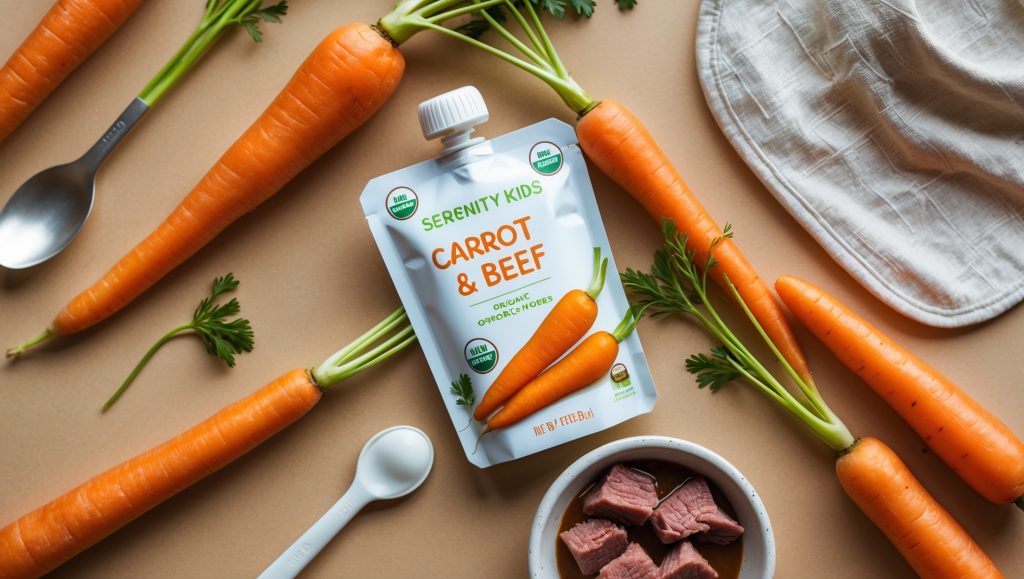
Overview
Finding the right first foods for your baby is an exciting milestone. Serenity Kids Organic Carrot & Beef Baby Food Pouch is a savory, protein-rich option designed for infants who are beginning their journey with solids. This pouch stands out in a market dominated by fruit-forward purees, offering a blend of pasture-raised beef and organic carrots with a touch of onion powder and olive oil. In this comprehensive review, we’ll explore the nutritional profile, taste and texture, convenience, and how it compares to other baby food options, helping you make an informed choice for your family in 2025.
Ingredients & Nutrition
Serenity Kids takes a “less is more” approach with its ingredient list. The Carrot & Beef pouch features:
- Organic carrots
- Grass-fed, pasture-raised beef
- Water
- Organic olive oil
- Organic onion powder
No added sugars, no artificial preservatives, and no fillers — just straightforward, whole-food ingredients. The nutritional breakdown per pouch (113g) includes:
- Calories: 90
- Protein: 4g
- Total Fat: 5g (with 1g saturated fat, from olive oil and beef)
- Carbohydrates: 8g
- Fiber: 2g
- Sodium: 30mg
The inclusion of healthy fats and protein distinguishes this pouch from many fruit-based alternatives, which are often higher in sugar and lower in protein. Serenity Kids emphasizes ethically sourced animal proteins and organic produce, reflecting trends in baby nutrition that value both nutrient density and ingredient quality.
Taste & Texture
Parents often remark that the taste of Serenity Kids Carrot & Beef is more reminiscent of a homemade stew than a standard baby puree. The carrots bring a mellow sweetness, balanced by the savory depth of beef and a subtle hint of onion. The olive oil provides a smooth richness. Most babies who are already comfortable with vegetables and meats respond positively to the flavor, though it can be a new experience for those used to sweeter fruit purees.
Texture-wise, the puree is smooth and silkier than chunky, making it suitable for babies transitioning from runny purees to thicker consistencies. It is easy to swallow and can be offered by spoon or served directly from the pouch for older infants learning to self-feed. Some parents choose to warm the pouch slightly for a more comforting, meal-like experience, while others serve it at room temperature.
Convenience & Storage
This pouch format is designed with busy families in mind. The screw-on cap is easy to open and reseal, allowing for multiple servings if your baby doesn’t finish in one sitting. It is shelf-stable until opened and does not require refrigeration, making it ideal for outings, daycare, or travel.
After opening, the pouch should be refrigerated and used within 24 hours for optimal freshness. The compact packaging slips easily into diaper bags. However, the pouch is not microwave-safe, so if you choose to warm it, it’s recommended to transfer the puree to a bowl and heat gently. The packaging is BPA-free, but local recycling capabilities for the pouch may vary.
Pros & Cons
Pros
- High in protein and healthy fats from pasture-raised beef and olive oil
- Low in sugar compared to fruit-based pouches
- Simple, organic ingredients with no added preservatives
- Savory flavor encourages broad taste development
- Convenient, travel-friendly packaging
- Ethical sourcing and transparency in ingredient origin
Cons
- Savory taste may be unfamiliar for babies used to sweeter foods
- Higher price point than mainstream baby food brands
- Pouch not microwave-safe; requires bowl for warming
- Limited local recycling options for pouch packaging
- Short shelf life after opening (24 hours refrigerated)
Alternatives & Similar Products
If you’re seeking variety or different price points, several other brands offer savory, protein-focused baby foods:
- Once Upon a Farm Savory Blends: These refrigerated pouches blend vegetables and grains, sometimes with legumes, for a plant-based protein option.
- Little Spoon Babyblends: Customizable purees that include blends such as chicken with squash or turkey with sweet potato, delivered fresh (requires refrigeration).
- Beech-Nut Naturals Just Sweet Potatoes & Chicken: A jarred option with minimal ingredients, available at many grocery stores.
- Homemade Purees: Steaming and pureeing your own meats and veggies can be a cost-effective and fully customizable alternative, though it requires more prep time.
Each alternative has its own nutritional profile, storage needs, and price considerations. Comparing ingredient lists and protein content can help you find the best fit for your baby’s palate and your family’s routine.
Verdict
Serenity Kids Organic Carrot & Beef Baby Food Pouch is a thoughtfully crafted option for families seeking nutrient-dense, savory flavors in their baby’s diet. Its emphasis on protein, healthy fats, and organic ingredients makes it a standout in the current baby food market, especially for parents interested in introducing a variety of textures and tastes beyond fruit purees. While the price is higher than some competitors, many parents find the quality and nutritional value justify the cost. As always, consider your baby’s unique preferences and dietary needs when choosing foods to introduce. Serenity Kids Carrot & Beef is a strong contender for babies ready to explore the world of savory solids in 2025.
FAQ
+Is Serenity Kids Carrot & Beef suitable as a first food?
+Does the product contain any common allergens?
+Can the pouch be heated before serving?
+How long can an opened pouch be stored in the refrigerator?
+Is the packaging recyclable?
+Can older babies or toddlers enjoy this pouch?
+Where can I buy Serenity Kids Carrot & Beef pouches?
+Why choose a savory baby food over sweet fruit purees?

Serenity Kids Organic Carrot & Beef Baby Food Pouch continues to impress parents seeking nutritious, convenient options for their little ones. This 2025 edition builds on the brand’s reputation for high-quality, thoughtfully sourced ingredients—grass-fed beef and organic carrots are the stars here. The pouch’s flavor profile is savory yet subtly sweet, making it appealing even to picky eaters, while the smooth texture is perfect for babies transitioning to solids.
What sets Serenity Kids apart is its commitment to nutrient density and transparency. The beef provides essential protein and iron, while the carrots offer natural sweetness and beta-carotene without added sugars or fillers. Parents can feel confident about the ingredient list, which is short, pronounceable, and free from common allergens. The pouch format is a lifesaver during busy days or travel, fitting easily into diaper bags and minimizing mess.
While the price may be slightly higher than mainstream brands, many parents find the peace of mind and nutritional boost worth the investment. For families prioritizing clean, protein-rich baby foods, Serenity Kids Organic Carrot & Beef is a standout choice in 2025.
- Grass-fed beef and organic carrots for balanced nutrition
- No added sugar, preservatives, or common allergens
- Convenient pouch for on-the-go feeding
- Ideal for babies ready to try savory, nutrient-dense foods
For babies who are just starting solids and are a bit younger than 9 months, would you suggest waiting until they have already tried carrots and beef separately before giving them this pouch, or is it suitable as a first exposure to those foods?
It’s great that you’re thoughtful about introducing new foods. For babies just starting solids, it’s safest to offer single-ingredient foods first—try plain carrots and plain beef separately over a few days each, watching for any reactions. If both are well-tolerated on their own, you can then offer the Serenity Kids pouch, since it combines the two. This approach can help you spot any allergies or sensitivities. Always supervise mealtimes and watch for texture readiness, as pouches are usually best for babies comfortable with purees. This isn’t medical advice; if you’re concerned, check in with your pediatrician.
For parents on a tight grocery budget, do you find that products like this offer enough value compared to homemade purees or other store-bought options, considering the price versus convenience and nutrition?
It’s completely understandable to weigh cost, nutrition, and convenience when choosing baby food. Pre-made pouches like Serenity Kids can save time and offer balanced nutrition, but making purees at home is often more budget-friendly and lets you control ingredients. If you’re considering value, try batch cooking and freezing simple purees, which can also be adjusted for your baby’s age and texture needs. For store-bought options, check ingredient lists for added sugars or salt and compare prices per ounce. Always supervise your baby during feeding and watch for any potential allergens. This isn’t medical advice; if you’re concerned, check in with your pediatrician.
Can you clarify if there are any choking risks with the screw-on cap of the Serenity Kids pouch? I have a toddler and sometimes their older sibling likes to help feed them. Just want to make sure the cap isn’t considered a small part under US safety guidelines.
It’s great that you’re thinking ahead about safety, especially with siblings helping at mealtime. The screw-on cap of the Serenity Kids pouch is considered a small part and could pose a choking risk to children under 3, according to US safety guidelines. Always supervise your toddler and their sibling during feeding, and keep the cap out of your toddler’s reach. After opening the pouch, remove and set aside the cap immediately. If your older child is helping, remind them not to hand the cap to the toddler. This isn’t medical advice; if you’re concerned, check in with your pediatrician.
We try to give our child opportunities to touch and smell food before eating since new sensations can sometimes be too much. Is it safe to squeeze some of the puree into a bowl for him to explore, or does that affect shelf life if we put leftovers back in the pouch?
It’s wonderful that you’re supporting your child’s comfort with new foods by letting them explore textures and smells. For safety, you can squeeze some puree into a clean bowl for sensory play and tasting. However, once the pouch is opened and food is exposed to air or hands, bacteria can start to grow. If your child hasn’t eaten directly from the pouch and you use a clean spoon, you can refrigerate leftovers in a sealed container and use within 24 hours. Avoid putting leftovers back into the pouch. This isn’t medical advice; if you’re concerned, check in with your pediatrician.
If I open a pouch but my baby only eats a small amount, is it safe to portion the rest for use throughout the next day, or are there any extra precautions I should follow when storing partially used pouches in the refrigerator?
It’s great that you’re thinking carefully about safe food storage for your baby. After opening a pouch, immediately refrigerate any leftovers in a clean, airtight container—don’t feed directly from the pouch if you plan to save some, since saliva can introduce bacteria. Use the refrigerated portion within 24 hours, and always check for changes in smell, texture, or color before serving. Make sure your baby’s utensils and hands are clean when portioning. This isn’t medical advice; if you’re concerned, check in with your pediatrician.
Is there any concern about the sodium content in this pouch for older toddlers? We’re trying to keep meals healthy as we move toward more independent eating and potty training routines.
It’s great that you’re mindful about sodium as your toddler becomes more independent, especially with potty training routines. For older toddlers, moderate sodium intake is generally safe, but it’s still best to keep it on the lower side since their kidneys are still developing. Try offering this pouch alongside lower-sodium snacks throughout the day, and check the label for the sodium content per serving compared to daily recommendations for toddlers (about 800 mg per day). Encourage water drinking to support healthy hydration, especially during potty training. If you’re ever unsure about your child’s sodium needs, or notice any concerns, it’s always okay to ask your pediatrician. This isn’t medical advice; if you’re concerned, check in with your pediatrician.
Since the pouch can be served directly or by spoon, do you have any tips for minimizing the risk of babies accidentally swallowing or mouthing the cap when they start to feed themselves?
It’s great that you’re thinking about keeping your baby safe as they start self-feeding. To reduce the risk of choking on the pouch cap, always remove the cap before giving the pouch to your baby, and keep it out of reach. Supervise your child closely during feeding, especially if they are under 3 years old. If you want to let your baby try self-feeding, squeeze some puree onto a spoon for them rather than letting them handle the capped pouch. Remember, the caps are small and can be a choking hazard, so supervision is key. This isn’t medical advice; if you’re concerned, check in with your pediatrician.
Since the pouch has to be used within 24 hours once opened, what’s the best way to make sure it stays fresh at daycare if my child doesn’t finish it all at once? Is refrigerating it in the classroom fridge usually safe for daycare settings?
It’s great that you’re thinking about keeping your child’s food safe and fresh at daycare. After opening the pouch, tightly reseal it or transfer the leftovers to a clean, airtight container, then clearly label it with your child’s name and the date and time it was opened. Refrigerate it promptly—within two hours is best—to prevent bacterial growth. Most daycare fridges are safe for short-term storage, but you can ask staff about their fridge temperature (ideally at or below 40°F/4°C) and food storage policies. Always discard any unused portion after 24 hours. This isn’t medical advice; if you’re concerned, check in with your pediatrician.
Are pouches like this one a good substitute for traditional iron-fortified cereals in terms of convenience when we’re on the go, or would you still recommend keeping cereal in our travel bag for quick iron-rich meals?
It’s great that you’re thinking about convenient, iron-rich options for your baby while traveling. Pouches like Serenity Kids can be handy and often provide some iron, but iron-fortified cereals are specifically designed to meet infants’ high iron needs, especially for babies 6–12 months. For outings, you might pack both: use a pouch as an easy snack and keep a small portion of dry cereal and a bottle of water or breastmilk to mix if your baby needs a bigger iron boost. Always supervise your baby and check for allergens or pouch safety. This isn’t medical advice; if you’re concerned, check in with your pediatrician.
If I bring this pouch along for outings during potty training, how long is it safe to keep it unrefrigerated once it’s opened? My son often doesn’t finish the whole pouch at once and I’m trying to minimize waste.
You’re doing your best to support your son’s nutrition and potty training—both can be tricky on the go. Once opened, Serenity Kids pouches should be refrigerated and used within 24 hours; at room temperature, opened pouches are only safe for about 1–2 hours due to the risk of bacteria growth. For outings, offer only what your son is likely to eat in one sitting, and discard any leftovers that have been out longer than 2 hours. Consider bringing a small cooler if you’d like to save leftovers for later. This isn’t medical advice; if you have concerns about food safety or your child’s health, check in with your pediatrician.
Since the pouch isn’t microwave-safe and shouldn’t be heated directly in the packaging, what’s the safest and quickest way to warm it up, especially on busy evenings when everything feels rushed before bedtime?
It’s completely understandable to want a safe, quick way to warm baby food, especially during busy evenings. The safest method is to submerge the unopened pouch in a bowl of warm (not hot) water for a few minutes. Alternatively, you can squeeze the contents into a microwave-safe bowl and heat gently, stirring well to avoid hot spots. Always test the temperature before serving and supervise your baby while eating. Remember, the textures and ingredients in this pouch are suitable for babies starting solids, but always consider your child’s readiness. This isn’t medical advice; if you have concerns, check in with your pediatrician.
The article mentions that the pouch can be served warm by transferring it to a bowl, but I worry about nutrients being lost in the process of heating. Is there a best practice for warming this without compromising the nutritional value?
It’s thoughtful of you to want to preserve nutrients while warming your baby’s food. To minimize nutrient loss, gently warm the pouch contents by placing the sealed pouch or a serving in a bowl within warm (not boiling) water for a few minutes—avoid microwaving, as uneven heating can overheat spots. Stir well and always check the temperature before serving to your baby. Also, discard any leftovers after feeding to ensure safety. This isn’t medical advice; if you’re concerned, check in with your pediatrician.
We’re often out and about, so shelf-stable pouches are a lifesaver. If I open a pouch but my toddler only eats half, is it really okay to keep the rest in the fridge for 24 hours, or have you noticed any change in taste or texture after refrigeration?
It’s great that you’re planning ahead for your toddler’s meals on the go. According to food safety guidelines, opened pouches like Serenity Kids can be refrigerated and safely used within 24 hours, as long as your toddler hasn’t eaten directly from the spout (to avoid introducing bacteria). Most parents—and in my own experience—notice a slight thickening or subtle flavor change after refrigeration, but it usually stays pleasant and palatable for little ones. Always check for any odd smells or changes before serving. This isn’t medical advice; if you have concerns about your toddler’s reaction to refrigerated foods, your pediatrician can offer reassurance.
How does the cost per pouch compare to making something similar at home with organic beef and carrots? I’m always weighing convenience versus budget and wanted to hear your perspective.
It’s great that you’re thoughtfully balancing cost and convenience for your baby. Making purees at home with organic beef and carrots is usually less expensive per serving, especially if you buy ingredients in bulk, though it does take time and kitchen prep. Store-bought pouches like Serenity Kids offer convenience and consistent texture but typically cost more per pouch than homemade options. For infants, always ensure homemade purees are smooth and safe, with no added salt or seasonings. This isn’t medical advice; if you have concerns about nutrition, check in with your pediatrician.
Since the pouches are not microwave-safe and require refrigeration once opened, do you have any toy rotation or activity ideas to occupy my baby while I prepare their meal, especially on busy days?
That’s a thoughtful question—juggling meal prep with a busy baby can be tricky. Try setting up a simple basket of safe, easy-to-clean toys nearby, like silicone stacking cups or textured balls, for supervised play. Rotating a few toys each week can keep your baby interested without overwhelming them. If your baby is old enough to sit safely in a high chair, offer a soft, cold teether or a spoon to explore while you prep the meal. Noisy toys, like a rattle, can also buy you a few minutes. Always supervise closely, especially with younger babies. This isn’t medical advice; if you’re concerned, check in with your pediatrician.
I noticed the pouch needs to be eaten within 24 hours of opening. If my child only eats a few bites before bed, is it safe to leave the rest in the fridge until the next night’s bedtime routine, or is that too long?
It’s great that you’re thinking about food safety for your baby. Once opened, the Serenity Kids pouch should be refrigerated and used within 24 hours to reduce the risk of bacterial growth. If your child has only a few bites before bed, be sure to reseal and refrigerate the pouch immediately, and use the remainder by the next evening—waiting longer could make it unsafe. Always check for changes in smell, texture, or color before serving leftovers. This isn’t medical advice; if you’re concerned, check in with your pediatrician.
Does this carrot and beef pouch work well for babies just starting solids around 6 months, or would it be better for slightly older infants who have already tried single-ingredient meats and veggies?
It’s great that you’re thinking carefully about how to introduce new foods. For babies just starting solids around 6 months, most pediatric guidelines recommend introducing single-ingredient purees first, one at a time, to watch for possible reactions. The Serenity Kids carrot and beef pouch combines multiple ingredients, so it’s best suited for infants who have already tried both carrot and beef separately, without issues. Always check the texture—this pouch is smooth, but supervise closely to ensure safe swallowing. This isn’t medical advice; if you’re concerned, check in with your pediatrician.
If my budget is tight, do you think the protein content and convenient packaging of Serenity Kids make it worth choosing over bulk homemade purees, especially when trying to keep up with the appetites of twins on alternating feeding schedules?
Balancing nutrition, convenience, and cost is a real challenge, especially with twins. If budget is a main concern, homemade purees are usually much more affordable and can still offer plenty of protein—try blending cooked lentils, beans, or meats with veggies. You can batch-cook and freeze portions for grab-and-go convenience. Pouches like Serenity Kids are handy for outings or last-minute meals, but using them daily does add up. Whichever you choose, make sure foods are age-appropriate in texture and avoid added salt or potential allergens unless cleared by your pediatrician. This isn’t medical advice; if you’re unsure, check in with your pediatrician.
Do you recommend introducing savory pouches like this one at a specific time of day, or is it fine to incorporate them into a baby’s routine whenever convenient?
It’s great that you’re thinking ahead about your baby’s feeding routine. You can offer savory pouches like the Serenity Kids Carrot & Beef blend at any time of day based on your family’s schedule—there’s no strict rule about timing. Some parents find that serving savory flavors earlier in the day helps baby accept a wider variety of tastes. Always supervise your baby while eating, and ensure the pouch is age-appropriate (usually for babies 6 months and up, with simple ingredients and smooth texture). This isn’t medical advice; if you have concerns about feeding or allergies, check in with your pediatrician.
We’re on a tight budget and buying organic, protein-rich pouches can add up with two little ones. Do you think Serenity Kids offers enough nutritional value to justify the higher price, or are there more affordable comparable options you recommend?
It’s understandable to prioritize both nutrition and budget with two young children. Serenity Kids pouches do offer a balance of protein and organic veggies, making them nutrient-dense for babies over six months. However, homemade purees using affordable ingredients like carrots, lean ground beef, or beans can provide similar nutrition at a lower cost—just ensure safe texture and no added salt or seasonings. You might also look for store-brand organic pouches with comparable protein content. This isn’t medical advice; if you’re concerned about your child’s nutrition, check in with your pediatrician.
With a toddler who grabs at everything while I’m feeding my baby, I wonder if this puree is easy to dispense with one hand or if I should expect spills when juggling both kids. Any tips for making the pouch work smoothly in busy moments?
It’s understandable to want feeding to go smoothly when you have a busy toddler and a baby together. Serenity Kids pouches are designed for one-handed use, but toddlers’ quick hands can make spills more likely. Try holding the pouch near the top, gently squeezing directly into a silicone spoon or your baby’s mouth. Keep the cap out of reach to avoid choking hazards. You might also set your toddler up with a distraction like a snack or safe toy nearby. Wipe the pouch spout before and after use to keep it clean. This isn’t medical advice; if you’re concerned, check in with your pediatrician.
Our baby has just started solids and isn’t used to savory flavors yet—can you recommend ways to introduce this kind of protein-rich pouch so it’s not overwhelming, or should we wait until our baby is a bit older before trying it?
It’s completely normal to want your baby’s first experiences with new flavors to be positive. To help your little one adjust to this protein-rich, savory pouch, try mixing a small amount into a familiar puree, like sweet potato or apple, so the flavor isn’t too strong. Start with just a tiny taste, and gradually increase the amount over several days. Offer plenty of smiles and encouragement—babies often need several tries before accepting a new flavor. This pouch is generally suitable for babies 6 months and up, but always check for any allergens and supervise meals closely. This isn’t medical advice; if you’re unsure about readiness, reach out to your pediatrician.
I noticed the pouch needs refrigeration after opening and should be used within 24 hours. If my baby only eats small amounts, is it still safe to finish the pouch the next day, or should I be concerned about nutrients or freshness being affected if it sits in the fridge overnight?
It’s great that you’re thinking about food safety and your baby’s nutrition. Once you open the Serenity Kids pouch, it’s safest to refrigerate it right away and use the rest within 24 hours, as the manufacturer recommends. Be sure to squeeze any leftovers into a clean spoon or bowl, rather than feeding directly from the pouch, to prevent bacteria from your baby’s mouth getting into the food. The nutrients and freshness should hold up well if you keep the pouch sealed and cold. Always check for changes in smell or texture before serving again. This isn’t medical advice; if you’re concerned, check in with your pediatrician.
For a 4-year-old who still occasionally enjoys baby food pouches as part of lunch or snack time, would the portion size and nutrition in the Serenity Kids Carrot & Beef pouch still be appropriate, or is it best saved for younger toddlers?
It’s perfectly understandable to wonder if baby food pouches are suitable for a preschooler. At age 4, the portion size in the Serenity Kids Carrot & Beef pouch may be on the smaller side, so it could work as part of a balanced snack or alongside other foods at lunch. The ingredients are age-appropriate and safe, but your child may need more variety and texture to meet their growing nutritional needs. Always supervise eating and watch for any allergies. This isn’t medical advice; if you’re concerned, check in with your pediatrician.
For families considering this pouch as part of a weekly meal routine, would you suggest serving it as a full meal on its own, or pairing it with other foods to meet daily nutritional needs for a 9-month-old? I’m curious about how it might fit into a balanced feeding schedule.
It’s great that you’re thinking about balanced nutrition for your 9-month-old. While the Serenity Kids Carrot & Beef pouch provides protein, vegetables, and some healthy fats, babies at this age often need a wider variety of nutrients and textures for development. Try offering the pouch as part of a meal—perhaps with soft finger foods like avocado slices or mashed sweet potato, and iron-fortified cereal for extra nutrients. Always supervise your baby during meals to prevent choking. The pouch can be a convenient option, but combining it with other foods helps ensure a more balanced diet. This isn’t medical advice; if you’re concerned, check in with your pediatrician.
We’re trying to stick to a budget during potty training since we’re stocking up on new supplies. How does this pouch compare, cost-wise, to preparing homemade veggie and beef purees in terms of convenience and value?
It’s understandable to want nutritious options that fit your budget, especially during busy times like potty training. Preparing your own veggie and beef purees at home is often more economical per serving, especially if you buy ingredients in bulk, but it takes extra time for shopping, prepping, cooking, and cleaning. Serenity Kids pouches cost more per ounce but offer convenience—no prep, easy storage, and less mess, which can be useful when you’re busy with potty routines. For babies over 6 months, both options are safe if ingredients are age-appropriate, pureed well, and served under supervision. This isn’t medical advice; if you’re concerned, check in with your pediatrician.
I noticed that the Serenity Kids pouch includes both beef and onion powder. For families following Montessori methods at home, do you think this savory flavor profile helps broaden a baby’s palate, or should we stick with single-ingredient foods at first?
It’s great that you’re thinking about how flavors fit with Montessori principles and your baby’s development. Starting with single-ingredient foods is often recommended for babies just beginning solids, both for monitoring allergies and letting them experience pure flavors. Once a few single foods are tolerated, introducing savory blends like carrot, beef, and onion powder can help broaden your baby’s palate and support adventurous eating, which aligns well with Montessori’s emphasis on exploration. Always check texture and ingredients for age-appropriateness, and supervise closely to ensure safety. This isn’t medical advice; if you’re concerned, check in with your pediatrician.
I noticed the pouch contains beef and onion powder. As a parent introducing beef for the first time, do you recommend offering only a few spoonfuls at first to watch for reactions, or is it fine to serve the full pouch if my baby has already tolerated other purees?
It’s great that you’re being mindful about introducing new foods to your baby. When offering beef for the first time, it’s wise to start with a few spoonfuls and watch for any signs of allergy or intolerance, even if your baby has tolerated other purees. This approach helps you identify any reactions early and keeps the experience positive for your child. Make sure your baby is developmentally ready for solids, and always supervise meals to ensure safety with new textures. This isn’t medical advice; if you have concerns or notice any reactions, connect with your pediatrician.
Is this Carrot & Beef pouch suitable for babies who are just starting solids, or would you recommend it more for little ones who already handle thicker textures and mixed flavors?
It’s great that you’re thinking carefully about your baby’s first foods. The Serenity Kids Carrot & Beef pouch has a thicker texture and blended savory flavors, which may be best for babies who have already tried single-ingredient purees and are comfortable with more complex tastes and consistencies. For brand new eaters, you might start with smooth, single-ingredient purees, then gradually introduce mixed flavors and thicker blends as your baby shows readiness. Always supervise closely, and check for any possible allergens. This isn’t medical advice; if you’re concerned, check in with your pediatrician.
We usually offer solids right before naptime to help signal that winding-down period. Is there any reason why this pouch might be too stimulating or heavy if given as part of a nap or bedtime routine, especially alongside a story in another language?
It’s thoughtful to consider how foods like the Serenity Kids Carrot & Beef pouch might affect your little one’s nap routine. This pouch is protein-rich but not unusually heavy or sugary, so for most babies around 6 months and up, it shouldn’t be too stimulating before sleep. Offer the pouch in a calm, slowly-paced environment—perhaps dim the lights and keep conversation gentle. Pairing it with a story in another language is a lovely, soothing idea. Watch to see if baby is comfortable and not too full, and always supervise during meals to prevent choking. This isn’t medical advice; if you’re concerned, check in with your pediatrician.
Since the pouch contains onion powder, do you find that flavor to be strong for babies who don’t have much experience with spices or more complex tastes? I want to make sure my child won’t reject it because of the new flavor.
It’s great that you’re thinking about how new flavors might affect your baby’s acceptance of foods. In my experience and based on the Serenity Kids Carrot & Beef pouch, the onion powder is quite mild and balanced by the sweetness of carrots and the savoriness of beef, making it suitable for babies around 6 months and up who are starting solids. If your child hasn’t tried onion or similar flavors yet, you could offer a small taste first or mix the pouch with something familiar. Watch for any signs of dislike and try again another day if needed. Always supervise feeding and introduce new foods one at a time for safety. This isn’t medical advice; if you’re concerned, check in with your pediatrician.
Can this pouch be introduced to toddlers a bit older than the usual baby food stage, especially those who are pickier or have strong preferences about texture? I’m interested in ways to keep sensory meals interesting for a toddler who resists traditional foods.
It’s thoughtful to look for ways to support a picky toddler with sensory food preferences. For older toddlers, this pouch can be a smooth, safe option, especially if they’re sensitive to textures. You might try: offering the pouch alongside a familiar food, using it as a dip for soft veggie sticks or toast strips, mixing it into mashed potatoes or rice for subtle texture changes, or freezing small dots of the puree for a different mouthfeel. Always supervise meals, watch for any new food reactions, and keep portions manageable. This isn’t medical advice; if you’re concerned, check in with your pediatrician.
Since the pouch contains onion powder, I’m a little concerned about introducing savory flavors like this too early. At 10 months, is the mild onion flavor likely to be overwhelming, or have most babies at this stage handled it well without digestive upset or refusal?
It’s completely normal to be cautious about introducing new flavors like onion to your baby’s diet. By 10 months, most babies can handle mild savory flavors, including a hint of onion, especially in well-balanced pouches like this one. Start by offering a small amount to check for any signs of digestive upset or refusal, and watch your baby’s reactions. If your baby seems reluctant, try mixing the pouch with a more familiar puree at first. Always supervise your baby while eating and look out for any signs of irritation or allergy. This isn’t medical advice; if you’re concerned, check in with your pediatrician.
If my four-year-old is picky about textures and usually avoids anything slightly chunky, do you think this puree’s silkier texture would work for him, or would you recommend further blending before serving from the pouch?
It’s understandable to want your picky eater to feel comfortable with new foods. The Serenity Kids Carrot & Beef pouch is already quite smooth, but since your four-year-old is sensitive to even subtle chunks, you might try squeezing a little onto a spoon first to check for any texture surprises. If it still feels too thick or textured, you can blend it further at home or stir in a tablespoon of warm water or broth to thin it out. Always supervise your child during meals at this age to prevent choking. This isn’t medical advice; if you’re concerned, check in with your pediatrician.
If we are concerned about cost, especially since grandparents sometimes serve pouches and sometimes homemade food, how does using Serenity Kids pouches regularly compare budget-wise to preparing similar nutrient-dense meals at home from scratch?
It’s understandable to want the best nutrition for your baby while staying mindful of costs, especially when family helps with feeding. To compare, try these steps: 1) List the main ingredients in the Serenity Kids pouch—like organic carrots and grass-fed beef—and check their prices locally or online. 2) Calculate the cost to make similar small-batch purees at home, including time and kitchen supplies. 3) Consider convenience and safety, as homemade foods require careful prep and storage to avoid spoilage or choking hazards. 4) For older babies who can handle more textures, homemade may be more budget-friendly, but pouches can be useful for outings or quick meals. This isn’t medical advice; if you’re concerned, check in with your pediatrician.
With the pouch format, how do you recommend introducing self-feeding without worrying about little ones chewing on the cap and possibly choking? Would supervised feeding be enough, or should we always remove the cap entirely before handing the pouch over?
Your concern about choking hazards with pouch caps is completely valid. Always remove the cap before giving the pouch to your baby, as caps can be a choking risk, especially for infants and young toddlers. Offer the pouch while your child is seated and supervised, guiding their hands to help them squeeze the pouch gently. For early self-feeding practice, you might squeeze some puree onto a spoon for your baby to hold. Remember, every child develops at their own pace—so adjust as needed. This isn’t medical advice; if you’re ever concerned, check in with your pediatrician.
Is there an ideal age or stage when it makes sense to switch from iron-fortified cereals to protein-based purees like this one for optimal iron absorption, or can they safely be introduced together right from the start of complementary feeding?
It’s great that you’re thinking about your baby’s iron needs during complementary feeding. You can introduce iron-fortified cereals and protein-based purees like the Serenity Kids pouch together when your baby is developmentally ready for solids, typically around 6 months. Offering a variety helps support iron absorption, especially since both plant and animal sources provide iron. Start with single-ingredient options if possible, and watch for any signs of allergies. Always supervise your baby during feeding and choose age-appropriate textures to prevent choking. This isn’t medical advice; if you’re concerned, check in with your pediatrician.
The article mentions that the pouch is shelf-stable until opened, which is super helpful for our busy schedule. Are there any specific signs we should look for to know if a pouch has gone bad after it’s been opened and refrigerated for a day?
It’s great that you’re keeping food safety in mind for your baby. After opening and refrigerating a pouch, check for changes in smell, color, or texture—if it smells sour, looks discolored, or feels slimy, don’t use it. Make sure the cap is tightly closed and use within 24-48 hours as recommended for most baby food. Always use a clean spoon to avoid introducing bacteria. If your child is under one, be extra cautious about storage times. This isn’t medical advice; if you’re concerned, check in with your pediatrician.
I notice that the Serenity Kids Carrot & Beef pouch includes onion powder. Do you think the mild flavor of onion might be too strong for younger babies who are new to solids, or is it generally well-tolerated from six months onward?
It’s great that you’re paying close attention to flavors and your baby’s experience with new foods. Most babies around six months can safely try mild onion flavors in small amounts, as found in the Serenity Kids pouch, and onion powder is generally well-tolerated at this stage. To help your baby adjust, start by offering just a small taste and watch their reaction. If your baby seems hesitant, you can mix the pouch with a familiar, plain puree to gently introduce the new flavor. Always supervise during feeding and watch for any signs of discomfort or allergies. This isn’t medical advice; if you have concerns, please check in with your pediatrician.
My 14-month-old is very sensitive to new textures and usually prefers really smooth purees. You mentioned the Carrot & Beef pouch is silkier than chunky. Is it completely lump-free, or could there be tiny bits that might bother a texture-sensitive toddler?
It’s completely understandable to want reassurance for a texture-sensitive toddler. The Serenity Kids Carrot & Beef pouch is described as smoother and silkier than chunky blends, but there can occasionally be very tiny, soft bits from the beef or carrots. For a 14-month-old who prefers ultra-smooth purees, you might want to try a small taste test first, or blend the pouch further at home for extra smoothness. Always supervise closely, especially if your child is sensitive or has any history of gagging. This isn’t medical advice; if you’re concerned about feeding textures, it’s best to check in with your pediatrician.
The pouch has beef and onion powder—do you have tips for gently introducing this flavor to a baby who’s mostly had sweeter fruits so far? I’d love to encourage more savory tastes without a struggle at every meal.
It’s wonderful that you want to expand your baby’s palate to include more savory flavors. Start by mixing a small amount of the pouch with familiar fruit purees your baby already enjoys, gradually increasing the ratio of savory to sweet over several days. Offer the new flavor at a time when your baby isn’t too tired or hungry, so they’re more open to trying it. Watch for any signs of food sensitivity and always supervise, especially since beef is new. These flavors are generally safe for babies around 6 months and up, but every child is different. This isn’t medical advice; if you’re concerned, check in with your pediatrician.
Can you suggest affordable alternatives with similar protein and nutrition values for families trying to keep grocery costs down, especially if their baby goes through several pouches a week?
It’s understandable to look for budget-friendly options when your baby enjoys several pouches a week. You can puree cooked lean ground beef with steamed carrots and a splash of water or unsalted broth at home, then portion into small containers. Lentils blended with carrots and a bit of olive oil are a plant-based, protein-rich alternative. If using homemade blends, make sure everything is very smooth and free of lumps for babies under 12 months, and always supervise feeding. Store portions in the fridge for up to 48 hours or freeze for later. This isn’t medical advice; if you’re unsure about homemade options for your baby, check in with your pediatrician.
We’re starting potty training with our 2.5-year-old, and I’m trying to streamline mealtimes. Would this Serenity Kids pouch make a good quick lunch for a toddler who’s getting more independent, or is it really just intended for babies under 2?
It’s great that you’re supporting your child’s independence while managing the busy potty training stage. The Serenity Kids Carrot & Beef pouch is safe for toddlers, as its ingredients are whole foods with no common allergens, but at 2.5 years, your child may also benefit from practicing with finger foods or a spoon. You can use the pouch as a quick, nutritious lunch, but try offering it alongside bite-sized veggies, soft crackers, or fruit to encourage self-feeding. Always supervise eating and watch for choking hazards. This isn’t medical advice; if you’re concerned, check in with your pediatrician.
Is this pouch suitable for babies just starting solids, or would the beef and onion be a bit overwhelming for younger infants who are used to milder tastes? I’m wondering if I should wait until my baby is a few months into solids before introducing something this savory.
It’s thoughtful of you to consider your baby’s readiness for new flavors. For babies just starting solids, it’s often best to begin with single-ingredient purees to watch for sensitivities and help them adjust to new tastes. The Serenity Kids pouch contains beef and onion, which may be a bit robust for very young infants or those just beginning solids. You might want to introduce simpler vegetables like carrots or sweet potatoes first, then gradually try more complex blends like this pouch after your baby has been eating solids for a couple of months. Always watch for any allergic reactions and consult your pediatrician if you have concerns; this isn’t medical advice.
I have a child who finds fruit purees too sweet and even some veggies too bold. Would you say this Carrot & Beef combination leans more toward savory and balanced, or is it still likely to feel strong to a sensitive eater?
It’s completely understandable to want gentle flavors for a sensitive eater. The Serenity Kids Carrot & Beef pouch does lean more savory and less sweet than most fruit purees, as it combines mild carrots with beef and a touch of herbs, aiming for balance rather than boldness. If your child tends to find flavors strong, start with a small taste alongside familiar foods, watch for their reaction, and offer plenty of water. Always supervise young eaters and check for any unfamiliar ingredients or allergens. This isn’t medical advice; if you’re concerned, check in with your pediatrician.
Sometimes I prepare several meals ahead of time for quiet mornings. Is it okay to portion out the Carrot & Beef puree in advance and refrigerate, or does it lose quality or freshness compared to serving directly from the pouch?
It’s great that you’re planning ahead to make mornings smoother for your family. You can portion out the Carrot & Beef puree into clean, airtight containers and refrigerate them for up to 24 hours. Make sure you use a clean spoon each time to prevent introducing bacteria. Before serving, check the puree for any changes in smell or texture. For babies under one, avoid keeping leftovers at room temperature. While the puree may taste freshest straight from the pouch, short-term refrigeration shouldn’t significantly affect quality. This isn’t medical advice; if you notice anything unusual or have concerns, check with your pediatrician.
My child often resists beef flavors but loves carrots. Based on your review, do you think mixing this pouch with another veggie puree might make it more appealing for a reluctant eater?
It’s completely understandable to want to help your child enjoy new flavors. Mixing the Serenity Kids Carrot & Beef pouch with a familiar veggie puree, like sweet potato or butternut squash, can gently introduce the beef flavor while emphasizing what your child already likes. Start with mostly the favorite veggie and just a small amount of beef pouch, increasing gradually if your child responds well. Always mix thoroughly for smooth texture and watch for any signs of allergy or discomfort. For babies under 12 months, supervise closely while eating. This isn’t medical advice; if you’re concerned, check in with your pediatrician.
If grandparents are watching the baby and there’s some leftover pouch that was opened in the morning, is it okay if they use it that evening, or is the 24-hour storage guideline really strict? We usually plan meals ahead and want to make sure we are not being too cautious or wasteful.
It’s great that you want to keep your baby safe while also avoiding waste. For opened baby food pouches like the Serenity Kids Carrot & Beef, the 24-hour refrigeration guideline is important—beyond that, bacteria can grow, even if the pouch looks and smells fine. To help grandparents, remind them to reseal and refrigerate the pouch immediately after opening, and label it with the time. If you anticipate leftovers, consider portioning out smaller amounts to avoid cross-contamination. This isn’t medical advice; if you’re concerned, check in with your pediatrician.
I noticed the pouch contains onion powder. My little one has a pretty sensitive stomach and strong reactions to certain flavors. Do most kids find the onion noticeable, or is it really mild in taste?
It’s understandable to be careful about new flavors with a sensitive tummy. In the Serenity Kids Organic Carrot & Beef pouch, the onion powder is used in a small amount and most parents report it’s quite mild—many babies don’t notice it. Still, every child is unique. You can try offering a tiny taste first and watch for any reactions. For babies under 12 months, always introduce new foods one at a time and supervise closely. This isn’t medical advice; if you’re concerned, check in with your pediatrician.
We typically spoon-feed at home but sometimes let our older baby try pouches on the go. Should I be concerned about the cap or spout being a choking risk if they attempt to feed themselves directly from the pouch?
You’re right to think about choking risks as your baby becomes more independent with feeding. For older babies, always supervise closely when they use pouches, especially since the caps are small and can be a choking hazard if left within reach. Remove the cap completely and keep it out of your child’s hands. Check the spout for any loose pieces and make sure it’s intact before offering the pouch. Encourage your baby to sit upright while eating to reduce choking risk. This isn’t medical advice; if you’re worried or your child has had choking incidents, talk with your pediatrician.
Does the packaging keep freshness and quality intact if you use just half for an evening snack and refrigerate the rest overnight until the next naptime? How have you handled leftovers with this pouch?
It’s great that you’re thinking about safe storage for your baby’s food. For Serenity Kids pouches, you can refrigerate the unused portion after opening—just twist the cap back on tightly and store it in the fridge. Use the leftover within 24 hours for best freshness and safety, and always check for any changes in smell, texture, or color before serving again. Remember to serve the portion in a clean bowl or spoon rather than letting your baby suck directly from the pouch, to reduce bacteria transfer. This isn’t medical advice; if you have specific concerns, check in with your pediatrician.
Do you have any tips for keeping feeding time fun when using shelf-stable baby food pouches regularly? Sometimes I worry that I’m not providing enough variety or sensory play when I rely on pouches for convenience.
It’s completely normal to want feeding time to be enjoyable and stimulating, even when using convenient options like pouches. To add variety, try squeezing the pouch contents into a bowl and offering a child-safe spoon for self-feeding. Let your baby touch, smell, and explore the puree with their fingers if age-appropriate and supervised. You can also pair pouches with soft finger foods to encourage sensory exploration and introduce new textures. For older babies, talk about the colors and flavors as they eat to build language and interest. This isn’t medical advice; if you’re concerned, check in with your pediatrician.
Since the pouch contains beef and onion powder, is it suitable for a child just starting daycare, or should I wait until my baby is older and more used to mixed flavors before introducing this kind of savory blend?
It’s thoughtful to consider your baby’s readiness for new flavors as they start daycare. If your child is just beginning solids, introducing blends like carrot, beef, and onion powder can be appropriate from around 6 months, as long as each ingredient has been tried separately at home first, with no allergic reactions. Start by offering a small taste at home to watch for any sensitivities. Make sure your baby can manage thicker textures safely, and always supervise meals. If your baby is very new to solids, you might want to introduce simpler purees first. This isn’t medical advice; if you’re concerned, check in with your pediatrician.
Could this pouch be a complete meal on its own, or should I pair it with other foods to make sure my baby is getting enough variety and nutrition during lunchtime?
It’s great that you’re thinking carefully about your baby’s nutrition and variety at lunch. While the Serenity Kids Carrot & Beef pouch offers protein, veggies, and healthy fats, it’s usually best to pair it with other foods to give your baby a wider range of nutrients. You could add soft-cooked grains, mashed fruits, or a few small pieces of another veggie, depending on your baby’s age and readiness for textures. Always watch for choking hazards and introduce one new food at a time to track allergies. This isn’t medical advice; if you’re concerned, check in with your pediatrician.
During busy mornings or outings, can these pouches replace a full meal for my baby, or should I consider them more as a snack alongside other foods to meet nutritional needs throughout the day?
You’re thoughtful to consider whether baby food pouches offer enough nutrition for a full meal. Serenity Kids pouches can be a convenient meal component, especially on busy days, but on their own they may not fully meet all your baby’s nutritional needs, especially as your child grows and begins eating more solids. For babies 6–12 months, try pairing the pouch with iron-fortified cereal or mashed fruits and soft veggies. For older babies, you might also include finger foods. Always supervise your baby during meals, and check for any sensitivities to ingredients. This isn’t medical advice; if you’re concerned, check in with your pediatrician.
Budget is always on my mind with twins. How does the cost of Serenity Kids pouches compare to making a similar carrot and beef puree at home, considering both ingredient quality and time spent meal prepping?
It’s completely understandable to weigh costs carefully, especially with twins. Making your own carrot and beef puree at home can be less expensive per serving, particularly if you buy ingredients in bulk, but you’ll want to factor in the cost of high-quality organic beef and carrots to match the pouch’s ingredient standards. Home prep also takes extra time for cooking, pureeing, and cleaning up, which can be significant with two babies. Store-bought pouches offer convenience and consistent texture, but they often cost more per ounce. For infants under one year, ensure homemade purees are smooth and avoid added salt or seasonings. This isn’t medical advice; if you’re concerned, check in with your pediatrician.
Do you have any suggestions for introducing my 7-month-old to savory pouches like this one if she’s only had fruit-based purees until now? Is it better to mix it with something sweet at first to help the transition, or offer it on its own?
It’s completely normal to wonder how to help your baby transition from sweet fruit purees to savory flavors. You can start by offering the savory pouch on its own so your baby gets used to new tastes, but it’s also fine to mix a little fruit puree in at first to make the flavor more familiar. If you blend, use a mild fruit like pear and gradually decrease the amount over a few days. Offer small tastes and watch for your baby’s cues. At 7 months, always supervise and ensure the puree’s texture is smooth. This isn’t medical advice; if you’re concerned, check in with your pediatrician.
I’m trying to find the best way to boost my baby’s iron intake and I’ve heard cereals are usually fortified. Does this pouch provide a comparable amount of iron, or should parents consider combining it with other sources for optimal nutrition?
It’s great that you’re thinking about your baby’s iron needs. The Serenity Kids Carrot & Beef pouch does contain iron, thanks to the beef, but its iron content is generally lower than what you’d find in iron-fortified cereals. To help your baby get enough iron, you could offer a mix of iron-rich foods such as pureed meats, beans, or lentils, and continue offering fortified cereals as part of meals. Pairing iron-rich foods with vitamin C sources like pureed fruits can improve absorption. Always make sure foods are age-appropriate in texture and free from choking hazards. This isn’t medical advice; if you’re concerned, check in with your pediatrician.
How does the Carrot & Beef pouch compare nutritionally to a simple homemade purée of ground beef and carrots for an older toddler? We’re on a tight budget since starting daycare and potty training supplies, so I’m wondering about the value.
It’s completely understandable to want the best nutrition for your toddler while staying mindful of your budget. Serenity Kids pouches are designed for balanced nutrition, but a homemade purée of ground beef and carrots can be just as wholesome, especially for older toddlers. Homemade lets you control ingredients, texture, and portion size, and it often costs less. Make sure to cook the beef thoroughly and blend to a texture safe for your toddler’s chewing skills. You can also add a tiny bit of olive oil for healthy fats. Store leftovers safely in the fridge. This isn’t medical advice; if you’re concerned, check in with your pediatrician.
Is there a recommended minimum age for introducing this Carrot & Beef blend, especially considering the inclusion of onion powder and beef? Should parents adjust serving sizes or frequency for younger infants just starting solids?
It’s great that you’re thinking carefully about introducing new foods to your baby. For most babies, simple purees like carrot and beef blends can be introduced around 6 months if they’re showing readiness for solids. Because this pouch contains onion powder and beef, start with a small spoonful to check for any reaction, waiting 2–3 days before offering again. For younger infants, offer just a few teaspoons at a time and watch for signs of fullness. Always supervise your baby and watch for possible allergies or sensitivities. This isn’t medical advice; if you have concerns or your baby has specific dietary needs, consult your pediatrician.
Since the pouch needs to be used within 24 hours once opened, could you offer any practical storage tips for families who might be on the go all day and don’t have access to a fridge right away?
It’s great that you’re thinking ahead about safe storage for your baby’s food while on the go. If you won’t have access to a fridge, try packing the opened pouch in an insulated lunch bag with plenty of ice packs to keep it cool for as long as possible—ideally below 40°F (4°C). Use a marker to write the opening time right on the pouch as a reminder. Only open the pouch when your child is ready to eat, and discard any leftovers that have been at room temperature for more than 2 hours to reduce the risk of bacterial growth. This isn’t medical advice; if you’re concerned, check in with your pediatrician.
Since these pouches can be more expensive than homemade purees, do you think they are worth the cost as a backup for days with grandparents, or are there more budget-friendly, protein-focused alternatives you’ve seen work well in diverse family situations?
It makes sense to weigh cost and convenience for backup feeding with grandparents. Ready-made pouches like Serenity Kids can be helpful for occasional use because they are shelf-stable, easy to serve, and offer balanced protein, especially when you need a quick, safe option for babies 6+ months. If you’re looking for budget-friendly alternatives, you could batch-cook and freeze homemade purees with beans, lentils, or well-cooked meats in ice cube trays for easy portioning. For safety, ensure textures are age-appropriate and that any homemade foods are stored and reheated properly before serving. This isn’t medical advice; if you’re concerned, check in with your pediatrician.
Do you think these pouches are budget-friendly compared to making similar meals at home with organic carrots and beef? I’m trying to balance convenience with cost for our weekly meal planning.
It’s completely understandable to want both convenience and value when planning meals for your baby. Making your own purees with organic carrots and beef is usually more cost-effective per serving, especially if you buy ingredients in bulk. However, the Serenity Kids pouches save time and reduce prep, which is valuable for many families. You could try preparing a batch at home to compare the real cost and effort to the pouches for your family. Whichever route you choose, always ensure the food texture is safe for your baby’s age and serve under supervision. This isn’t medical advice; if you’re concerned, check in with your pediatrician.
Since the pouch needs to be refrigerated after opening and finished within 24 hours, is it possible to portion it out for several meals, or do you find it works better as a single serving for most babies?
—wanting to get the most out of each pouch is very understandable. For younger babies with smaller appetites, you can safely portion the contents into clean, airtight containers right after opening and refrigerate them, using each portion within 24 hours. Always use a clean spoon to avoid introducing bacteria. For toddlers, the pouch may indeed serve as a single meal. Watch for signs of fullness and never force extra food. Safety-wise, always discard any leftovers your baby’s spoon has touched. This isn’t medical advice; if you have concerns about food safety or your baby’s intake, check in with your pediatrician.
Does Serenity Kids Carrot & Beef work well for babies with more sensitive palates or possible sensory issues around new textures and flavors, especially since it’s richer and less sweet than most other pouches?
It’s thoughtful that you’re considering your baby’s sensory needs when choosing foods. The Serenity Kids Carrot & Beef pouch is richer and more savory than typical fruit-based pouches, which can be a plus or a challenge for babies sensitive to new tastes or textures. Try offering a tiny spoonful alongside a familiar food, and observe your baby’s response without pressure. If the thicker texture is tricky, you can mix it with a little breast milk, formula, or a smoother puree to help with acceptance. Always supervise closely, especially with new foods, and check for any reactions. This isn’t medical advice; if you’re concerned about sensitivities or feeding challenges, check in with your pediatrician.
If I open a pouch for my older baby but need to head out with the newborn before it’s finished, is it safe to bring the opened pouch along for a couple of hours, or does it need to stay cold immediately?
It’s thoughtful to ask about keeping your baby’s food safe on busy days. Once a pouch like the Serenity Kids Carrot & Beef is opened, it should be refrigerated right away and used within 24 hours, as bacteria can grow quickly in pureed foods at room temperature. If you need to take it with you, pack it in an insulated bag with an ice pack to keep it cold. For very young babies especially, always discard any leftovers your baby has eaten from directly. This isn’t medical advice; if you’re concerned or need specific guidance, check in with your pediatrician.
The article notes the pouch is shelf-stable until opened. In terms of budgeting for weekly meal planning, how long do these typically last unopened, and are there bulk purchase options that make sense for larger families?
It’s smart to think ahead about meal planning and budgeting for your family. Unopened Serenity Kids pouches are typically shelf-stable for about 12 to 18 months from the production date—always double-check the expiration date on each pouch before use. Store them in a cool, dry place and rotate older ones to the front. For larger families, buying in bulk can be more economical, but be sure you’ll use them before they expire. Always supervise babies while eating and check for pouch damage before serving. This isn’t medical advice; if you’re concerned, check in with your pediatrician.
I see you mentioned that the Serenity Kids pouch can be served at room temperature or warmed up. If I wanted to offer it chilled straight from the fridge during warmer months, do most babies accept the taste and texture cold, or would that be too different from what they expect in the morning?
It’s thoughtful to consider how temperature may affect your baby’s experience and acceptance of new foods. Many babies are open to eating pouch foods chilled, especially during hot weather, but some may be surprised by the colder texture if they’re used to room temperature or warmed options. To help your baby adjust, you could try offering a small spoonful cold and watch their reaction, then gradually increase the amount if they seem comfortable. For younger babies (around 6–8 months), cold foods are generally safe, but always check the texture remains smooth and avoid anything too firm or icy. This isn’t medical advice; if you’re concerned, check in with your pediatrician.
For 2-year-olds with sensitive taste or sensory issues, is the texture thin enough to prevent choking, yet thick enough for them to self-feed from the pouch without making a mess during travel?
It’s great that you’re thinking about both safety and convenience for your toddler with sensory sensitivities. Serenity Kids pouches generally have a smooth, pureed texture—thin enough to swallow safely, but not so runny that it spills easily. For a 2-year-old, supervise closely during feeding to help prevent choking and messes, especially in the car or stroller. If your child prefers a particular texture, you might test the pouch at home first, squeezing a little onto a spoon. Wipe the spout between sips if needed. This isn’t medical advice; if you’re concerned about choking risks or sensory challenges, please check with your pediatrician.
We usually do our bedtime routine in both English and Spanish, sometimes reading stories and sometimes having a snack. Would the Serenity Kids Carrot & Beef pouch work as a light evening snack before sleep, and do you have any tips for incorporating it into a calming, bilingual bedtime ritual?
It’s great that you’re creating a calming, bilingual bedtime routine for your child. The Serenity Kids Carrot & Beef pouch can be a suitable light snack before bed, especially for babies 6 months and older who are developmentally ready for solids. Offer the pouch while sitting together quietly, perhaps incorporating gentle conversation or a lullaby in both languages. You might describe the food’s color and taste in English and Spanish to build vocabulary. Keep the portion small and allow time to digest before lying down. Always supervise eating to prevent choking. This isn’t medical advice; if you have concerns about allergies or digestion, check in with your pediatrician.
I noticed the pouch needs to be refrigerated after opening and used within 24 hours. If my baby only takes a few spoonfuls at a time, can I safely serve small amounts throughout the day, or does it lose its texture or taste after being refrigerated?
It’s understandable to want to make the most of each pouch, especially if your baby eats only small amounts. After opening, you can safely refrigerate the pouch and serve small portions throughout the next 24 hours, as recommended by the manufacturer. To help keep the food fresh, squeeze the amount you need into a clean bowl rather than feeding directly from the pouch. Reseal tightly and return it to the fridge right away. The food may thicken slightly or taste a bit different after chilling, but this is normal and generally still palatable for most babies. This isn’t medical advice; if you’re concerned, check in with your pediatrician.
Are there any budget-friendly tips for families who want to use protein-rich options like this one regularly? I watch a child whose parents are cost-conscious but really value clean, high-protein foods, so I’m interested in options that balance nutrition and price.
It’s wonderful that you want to help families provide nutritious, high-protein foods while staying mindful of cost. You might try blending cooked ground beef, lentils, or beans with steamed carrots and other veggies at home—this way, you can control both ingredients and price. Buying proteins and veggies in bulk, then batch-cooking and freezing small portions, can save money and time. For young children, always use smooth, age-appropriate textures and supervise meals to prevent choking. This isn’t medical advice; if you have concerns about nutrition or allergies, check in with your pediatrician.
I noticed the pouches need to be refrigerated after opening and used within 24 hours. Can I safely save a half-finished pouch for the next day’s daycare lunch, or is it better to only serve it fresh at home?
You’re right to be cautious about food safety for your little one. Once opened, Serenity Kids pouches should be refrigerated right away and used within 24 hours. If you save a half-finished pouch, make sure it was refrigerated immediately and stays cold (below 40°F/4°C) until served. For daycare, check if they can keep it properly chilled and serve it within the 24-hour window. Otherwise, serving it fresh at home is safest. Always discard any pouch if you notice changes in smell, color, or texture. This isn’t medical advice; if you’re concerned, check in with your pediatrician.
I noticed you mentioned some parents warm the pouch slightly before serving. Is there a safe way to do this if I don’t have time to dirty another bowl, or is serving it at room temperature just as good for taste and nutrition?
—many parents want serving baby food to be as easy and safe as possible. You can safely serve the Serenity Kids pouch at room temperature; it’s nutritious and fine for most babies this way. If you prefer to warm it slightly without using another bowl, try placing the sealed pouch in a mug of warm (not hot) water for a few minutes, then knead it gently before opening. Avoid microwaving the pouch, as hotspots can form and packaging may not be microwave-safe. Always test the food’s temperature before offering it to your baby. This isn’t medical advice; if you’re concerned, check in with your pediatrician.
If a baby isn’t a fan of meat-based purees, would switching to iron-fortified baby cereal be just as effective for meeting iron recommendations? Are there situations where purees like this are actually better than cereals for iron absorption?
It’s great that you’re thinking about your baby’s iron intake. Iron-fortified baby cereal can be an effective source of iron, and many babies accept it well. However, the type of iron in meat (heme iron) is absorbed more easily by the body than the iron in cereals (non-heme iron). If your baby refuses meat purees, keep offering them gently, but don’t force it. You can also pair iron-rich cereals with vitamin C-rich fruits to boost absorption. For age-appropriateness, ensure purees and cereals are smooth and free from added sugars or choking hazards. This isn’t medical advice; if you’re concerned, check in with your pediatrician.
My child occasionally struggles with thicker purees. Is the consistency of the Carrot & Beef pouch suitable for younger toddlers moving beyond smooth purees, or should I expect to thin it out with water or breastmilk at first?
It’s great that you’re paying close attention to your child’s feeding comfort and texture readiness. The Serenity Kids Carrot & Beef pouch is thicker than some first-stage purees, making it more suitable for older babies and younger toddlers who are starting to explore a range of textures. If your child is just transitioning from smooth purees, you might want to thin the pouch with a little water, breastmilk, or formula at first to make it easier to swallow. Always watch your toddler while eating to prevent choking, and adjust consistency gradually as your child gets used to thicker foods. This isn’t medical advice; if you’re concerned, check in with your pediatrician.
We go through snacks and meals quickly in our house. Is it possible to buy these pouches in bulk at a lower price per pouch, and are there any tips for getting the best value for families on a budget?
It makes sense to look for budget-friendly options when your family goes through snacks quickly. While I can’t speak to specific retailers, many families do find that buying larger multi-packs or subscribing through online stores can reduce the cost per pouch. Check for sales at local grocery stores, warehouse clubs, or direct from the brand’s website. You can also compare prices per ounce, not just per pouch, to find the best value. Always double-check expiration dates and ensure you have enough storage space. This isn’t medical advice; if you have nutrition concerns, chat with your pediatrician.
If I open a Serenity Kids Carrot & Beef pouch and my baby only eats half, is it okay to refrigerate the rest for later that day? I want to be sure about safe storage since we’re new to using shelf-stable pouches.
You’re right to be careful about food safety with new products. Once you open a shelf-stable pouch like Serenity Kids Carrot & Beef, refrigerate any leftovers right away and use them within 24 hours. Always use a clean spoon when serving to avoid introducing bacteria. Before offering the leftover portion, check for any changes in smell or appearance. For babies under one, it’s especially important to be cautious. This isn’t medical advice; if you’re concerned, check in with your pediatrician.
Our little one is still transitioning from very smooth textures and sometimes gags on anything too thick. Would you say the consistency of this puree leans closer to a runny puree or is it more like a mashed stage? I want to be sure it won’t be too challenging for our baby.
You’re right to be cautious as your baby gets used to new textures. Based on our review, the Serenity Kids Organic Carrot & Beef pouch is a bit thicker than the runniest first purees, with a texture closer to a loose mash but not chunky. For babies still adjusting, you could try thinning it with a bit of breast milk, formula, or water to reach a smoother consistency. Always supervise closely during feeding and watch for signs of discomfort. If your baby continues to gag or struggle with even slightly thicker foods, it’s wise to pause and consult your pediatrician. This isn’t medical advice; reach out to your doctor if you have concerns.
If my baby isn’t quite ready to self-feed from the pouch directly, would there be any benefit in letting them try holding and squeezing it as a way to build hand muscles, even if I still spoon out the food myself?
You’re thoughtful to look for ways to support your baby’s development at their own pace. Letting your baby hold and gently squeeze the pouch can help build hand strength and coordination, even if you’re still spoon-feeding the actual food. To try this, offer the pouch while you supervise closely, let your baby explore the texture with their hands, and praise their efforts. Just make sure the cap is securely out of reach and that the pouch is clean and free from leaks. This isn’t medical advice; if you’re concerned, check in with your pediatrician.
Baby food in pouches can be handy for our busy family, but we also wonder about the cost over time compared to our homemade options. Have you found that Serenity Kids pouches offer good value if we are trying to balance budget and convenience?
You’re thoughtful to weigh both convenience and cost for your family. Serenity Kids pouches are more expensive per serving than most homemade purees, but they do save time and travel well, which is helpful for busy days. Some families choose to use them occasionally—like for outings or backup meals—while mostly preparing food at home to balance expenses. For infants and toddlers, always check the ingredient list for age-appropriateness and potential allergens, and supervise pouch feeding to reduce choking risk. This isn’t medical advice; if you’re concerned, check in with your pediatrician.
Since these pouches can’t be microwaved, what’s the most practical way to warm them up, especially when on-the-go or without access to a full kitchen? Have you found it necessary to warm them, or do most babies accept the puree at room temperature?
—wanting to serve food at the right temperature shows how much you care. Most babies are happy with purees at room temperature, and it’s perfectly safe; warming is optional and mostly for comfort. If you do want to warm a pouch on-the-go, try placing it in a cup or bowl of warm water for a few minutes, making sure the water isn’t too hot. Always knead the pouch gently and test the puree on your wrist before serving to avoid burns. Never microwave pouches, as it can create hot spots. This isn’t medical advice; if you’re concerned about feeding or temperature, check in with your pediatrician.
Does the pouch packaging create any extra clutter for families living in tight spaces, especially if you use multiple flavors? Any clever ways to store or dispose of empty pouches efficiently so they don’t end up scattered around our already crowded kitchen?
It’s completely understandable to want to keep clutter down, especially in a small kitchen. Try designating a small basket or container just for unopened pouches and rotate older flavors to the front for easy access. For empty pouches, keep a small bin or bag (hung inside a cabinet or on a hook) to collect them until you’re ready to toss or recycle. If local recycling isn’t available, some brands offer mail-in recycling programs for pouches. Always keep pouches and caps out of reach of little ones due to choking and mess risks. This isn’t medical advice; if you’re concerned, check in with your pediatrician.
Do you have any advice for introducing a savory blend like carrot and beef to a baby who’s mostly had fruit-based purees so far? Should I mix it with something familiar first, or offer it on its own?
It’s natural to want your baby to enjoy new flavors, especially when moving from sweet fruits to savory blends. You can start by mixing a small amount of the carrot and beef puree with a familiar fruit puree, gradually increasing the savory portion over several days. Once your baby seems comfortable, try offering the savory blend on its own. Watch for any allergic reactions and always supervise during feeding. Make sure the texture is suitable for your baby’s age and stage. This isn’t medical advice; if you’re concerned, check in with your pediatrician.
Are these pouches appropriate as a regular lunch option for a 2-year-old, or would you recommend them more as an occasional meal? I’d like to balance convenience with making sure she gets enough variety in her diet.
It’s wonderful that you’re thinking about both convenience and your child’s nutrition. The Serenity Kids pouches can be a helpful, nutritious meal option in a pinch, but for a 2-year-old, it’s ideal to offer a variety of textures and whole foods at lunch to support development and prevent picky eating. You might use the pouch alongside cut-up fruits, soft veggies, or small sandwiches. Rotate different proteins, grains, and produce throughout the week. Always supervise meals to avoid choking hazards. This isn’t medical advice; if you’re concerned, check in with your pediatrician.
My toddler is very sensitive to strong flavors and textures. How intense is the onion powder in the Serenity Kids pouches? Have you heard if babies who dislike even mild seasonings do okay with this?
It’s understandable to be cautious when your toddler is sensitive to flavors and textures. The onion powder in Serenity Kids Organic Carrot & Beef pouches is present in a very small amount, just enough to add depth without making the flavor strong. Many parents of sensitive eaters report their children tolerate the mild seasoning well, but every child is different. If your toddler is new to these flavors, try offering a tiny taste first and watch their reaction. Always supervise closely and consider any allergies. This isn’t medical advice; if you’re concerned, check in with your pediatrician.
For an active toddler who tends to get wired before bed, would including this carrot and beef pouch as part of an early evening meal help create a calmer bedtime routine? I am curious if the protein and healthy fats make a difference compared to fruit-based baby snacks.
It’s thoughtful that you’re considering how evening snacks affect your toddler’s bedtime routine. Including the Serenity Kids carrot and beef pouch as part of an early evening meal may help: the protein and healthy fats can support stable blood sugar and may help some children feel satiated, compared to fruit-based snacks that are higher in sugar. Offer this pouch with other familiar foods about 1–2 hours before bedtime. Avoid introducing new foods right before bed in case of allergies or sensitivities. Observe how your toddler responds, as every child’s system is unique. This isn’t medical advice; if you’re concerned, check in with your pediatrician.
I noticed the packaging is not microwave-safe. If I want to warm the puree for my baby, is there a specific method you recommend to avoid overheating or losing nutrients?
You’re thoughtful to consider both warmth and safety for your baby’s food. To gently warm the puree, first squeeze the desired amount into a heat-safe bowl. Place the bowl in a container of hot (not boiling) water for a few minutes, stirring occasionally and checking the temperature before serving. This avoids hot spots and helps keep nutrients intact. Never microwave the pouch itself, as it can overheat or melt. Always test the puree’s temperature on your wrist before feeding, and supervise your baby while eating. This isn’t medical advice; if you’re concerned, check in with your pediatrician.
I notice you mentioned the packaging is not microwave-safe. For a child who is sensitive to temperature, can you suggest gentle ways to warm this food evenly without overheating or changing the texture?
It’s great that you’re mindful of your child’s sensitivity to temperature. Here are some gentle ways to warm the food: 1) Place the unopened pouch in a bowl of warm (not hot) water for a few minutes and check the temperature before serving. 2) If you prefer, squeeze the contents into a heat-safe bowl and gently warm it by stirring over a bowl of warm water, not direct heat. 3) Always stir well to ensure even temperature and test a small spoonful before offering it to your child. Remember, this is not medical advice; if you have ongoing concerns, please consult your pediatrician.
Does the pouch stay fresh if it’s used for several small servings throughout the day, or would you recommend transferring the leftovers to another container to minimize clutter in the fridge?
—it’s understandable to want both freshness and convenience when feeding your baby. Once opened, the Serenity Kids pouch should be refrigerated and used within 24 hours. You can serve small portions directly from the pouch, but to keep things extra safe and avoid bacteria from saliva, squeeze the desired portion into a clean bowl or spoon instead of letting your child suck from the pouch. If you’re storing leftovers, sealing the pouch tightly works, but transferring to a small airtight container can help minimize fridge clutter and make portioning easier. Always ensure it’s kept cold and discard after 24 hours. This isn’t medical advice; if you’re concerned, check in with your pediatrician.
If my baby has shown some sensitivity to texture, do you find the silkier consistency of this pouch helps with food transitions? Have you seen success pairing these pouches with specific utensils or feeding toys to encourage acceptance?
It’s understandable to want smoother food options when your baby is sensitive to texture. The Serenity Kids Carrot & Beef pouch does have a notably silky consistency, which can make it easier for texture-sensitive babies to accept. Try offering small spoonfuls using a soft-tipped baby spoon or silicone feeder—these gentle utensils can reduce aversion and make self-feeding more inviting. For babies just starting solids (around 6 months), always supervise closely and watch for choking. Gradually introduce new textures as your baby becomes more comfortable. This isn’t medical advice; if you’re concerned, check in with your pediatrician.
When trying to keep our apartment clutter-free, I’m careful about buying in bulk. Do you know how long an unopened Serenity Kids Carrot & Beef pouch can be stored before it expires, and if it’s truly okay to keep several on hand for emergencies?
It’s great that you’re mindful about both space and safety when buying baby food. Unopened Serenity Kids Carrot & Beef pouches are typically shelf-stable for about 12 to 18 months, but always check the ‘best by’ date on each pouch before storing. Keep them in a cool, dry place away from direct sunlight, and avoid any pouches that are damaged or swollen. Having a few on hand for emergencies is generally safe, as long as you cycle through them before they expire. This isn’t medical advice; if you have concerns about storage or your baby’s needs, check in with your pediatrician.
With the pouch needing refrigeration after opening and only lasting 24 hours, how do you suggest minimizing food waste if my baby eats small portions? Are there creative ways to use up leftovers within a day without cluttering the fridge?
It’s wise to want to minimize waste, especially with perishable baby foods. Try spooning small amounts from the pouch into a bowl so the untouched portion stays fresh longer. If your baby eats solids, you can mix leftovers into mashed veggies, oatmeal, or scrambled eggs for added nutrition (for babies over 8 months). Another idea is to freeze leftovers in a silicone ice cube tray and use them within a day for easy single servings. Always supervise and ensure foods are age-appropriate and safe. This isn’t medical advice; if you’re concerned, check in with your pediatrician.
We travel a lot as a family, so shelf-stable foods are a must. Once opened, could I safely put the partially used Serenity Kids pouch back in a cooler bag for a park trip if we can’t refrigerate it right away?
It’s great that you’re thinking about food safety while traveling with your baby. Once opened, Serenity Kids pouches should be refrigerated right away and used within 24 hours, since bacteria can grow quickly at room temperature. If you don’t have access to a fridge, a well-insulated cooler with plenty of ice packs is the next best option. Try to use the opened pouch within two hours if kept cool, and discard any leftovers if you’re unsure how long they’ve been out. For babies under one, extra caution with food storage is important. This isn’t medical advice; if you’re concerned, check in with your pediatrician.
With twins on very different nap routines, I sometimes have to prep food in advance for one while the other is still asleep. Since the Serenity Kids pouch isn’t microwave safe, does transferring it to a bowl for gentle warming affect the taste or texture noticeably?
It’s understandable to want both convenience and quality when feeding twins on different schedules. If you transfer the Serenity Kids pouch contents to a bowl and gently warm it (such as by placing the bowl in a container of warm water), the taste and texture should stay very similar to serving it straight from the pouch. Stir well to distribute any warmth evenly, and always check the temperature before serving to avoid hot spots. For babies under one year, avoid adding extra seasonings or ingredients for safety. This isn’t medical advice; if you notice any changes in your child’s eating or have concerns, consult your pediatrician.
If my baby isn’t keen on the taste of beef just yet, but I’m concerned about getting enough iron, do you think gradually mixing in purees like this with cereals could help, or would it be better to stick to iron-fortified cereals at first?
It’s completely understandable to want to make sure your baby gets enough iron, especially if they’re not yet loving the taste of beef. You can try mixing small amounts of the Serenity Kids carrot and beef puree into familiar foods like iron-fortified cereals—this gentle approach can help your baby get used to new flavors while still boosting iron intake. Start with just a tiny bit and increase gradually as your baby accepts the taste. Both iron-rich purees and fortified cereals are safe and suitable for most babies around 6 months and older, with supervision and appropriate texture. This isn’t medical advice; if you’re concerned, check in with your pediatrician.
I noticed the pouch is shelf-stable until opened, but after refrigerating, can it be warmed up again later for a bedtime snack? Just wondering what your advice is on reheating and serving for older toddlers.
—wanting to serve healthy snacks like this for your toddler is wonderful. After opening and refrigerating the Serenity Kids pouch, you can gently reheat it for a later snack, but do so only once and serve immediately. Warm it in a bowl of hot water or briefly in the microwave (check temperature and stir well to avoid hot spots). Always discard any leftovers your toddler doesn’t finish to avoid bacterial growth. For older toddlers, this method is age-appropriate, but supervise to ensure the pouch or contents aren’t too hot. This isn’t medical advice; if you’re concerned, check in with your pediatrician.