
Overview
The Melissa & Doug Wooden See & Spell Puzzle is a staple in many early childhood classrooms and family playrooms, renowned for its classic approach to hands-on learning. Designed for children ages 4 and up, this educational toy blends sturdy wooden construction with engaging, self-correcting letter puzzles to boost early literacy skills. In 2025, with families seeking screen-free, evidence-informed learning tools, the See & Spell Puzzle remains a top pick for supporting language development at home.
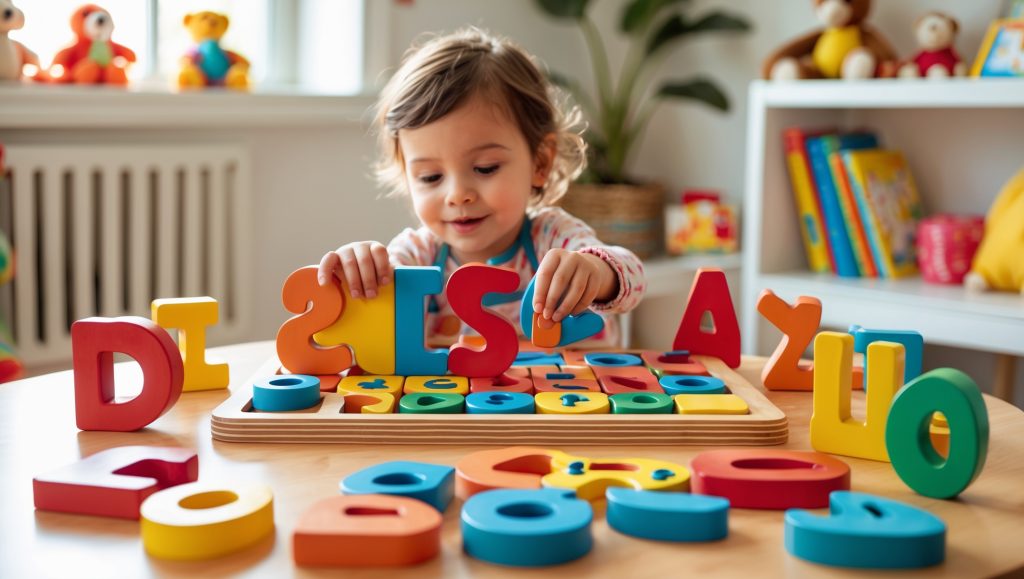
This toy consists of double-sided wooden boards featuring images and corresponding word cutouts, along with colorful wooden letters. Children match the letters to the correct spaces, spelling simple words while expanding their vocabulary, practicing phonics, and improving letter recognition. The tactile, interactive format makes it ideal for young learners who thrive on hands-on exploration and repetition.
What’s Inside / Build Quality
Inside the box, you’ll find:
- 8 double-sided wooden puzzle boards (16 words total)
- Over 50 colorful wooden letter pieces
- A sturdy wooden storage box with compartments
The boards feature familiar, age-appropriate illustrations (e.g., dog, fish, bus, cake) with corresponding word cutouts. The wooden letters are thick, easy to grasp, and painted in vibrant, non-toxic colors. The craftsmanship is robust: smooth edges, durable materials, and a weighty feel set this set apart from flimsier plastic puzzles. The storage box helps keep pieces organized, though some families may want additional containers or bags for easier cleanup and travel.
Learning & Development Benefits
Research consistently highlights the value of hands-on, manipulative-based literacy activities for young children. The See & Spell Puzzle supports several key areas of early language development, including:
- Letter Recognition: Matching letters to their spaces helps children identify letter shapes and names in a playful context.
- Phonemic Awareness: The process of spelling simple words encourages children to connect sounds (phonemes) with their corresponding letters (graphemes).
- Vocabulary Building: Each puzzle features a picture and word, supporting word-object associations and expanding everyday vocabulary.
- Fine Motor Skills: Picking up and placing wooden letters strengthens finger muscles and hand-eye coordination.
- Self-Correction & Confidence: The puzzle format allows children to check their work and try again independently, nurturing a sense of accomplishment and persistence.
Parents and educators can further support language growth by narrating the play (“You spelled cat! What sound does ‘C’ make?”), encouraging children to say the word aloud, or creating stories based on the puzzle images.
Setup & Use
Getting started with the See & Spell Puzzle is refreshingly simple:
- Open the wooden storage box and lay out the puzzle boards and letter pieces.
- Invite your child to pick a board and identify the pictured object.
- Encourage them to name the object, say the word, and match the correct letters to the cutout spaces.
- Offer gentle prompts or praise as they complete the word, then move on to another board.
Families can adapt the play for different ages and stages. For younger children, focus on letter matching and naming. For older preschoolers, introduce more challenging boards, ask them to sound out each letter, or create simple spelling games (e.g., “Can you spell this word without looking at the picture?”). The compact size makes it easy to use at the table, on the floor, or even bring along for car rides or waiting rooms.
Pros & Cons
Pros
- Sturdy wooden construction ensures durability and longevity.
- Supports multiple aspects of language development (phonics, vocabulary, letter recognition).
- Self-correcting design fosters independent play and problem-solving.
- Vibrant, non-toxic colors are visually appealing and safe for young children.
- Includes a generous variety of words and letters for extended play value.
- Minimal setup required; easy to store and transport.
Cons
- Some letter pieces are small and may pose a choking hazard for children under 3.
- Limited to basic, three- and four-letter words; may not engage older or advanced readers for long.
- Loose pieces can be misplaced; organization is key.
- Replacement letters are not available directly from the manufacturer.
Alternatives & Similar Toys
For families seeking variety or specialized learning goals, here are several alternatives to the See & Spell Puzzle:
- LeapFrog Fridge Phonics Magnetic Letter Set: Features magnetic letters and an electronic base that plays letter names and sounds.
- Hape Alphabet Puzzle: A colorful wooden alphabet puzzle focusing on letter recognition and order.
- Educational Insights Alphabet Acorns: Hands-on letter matching and vocabulary with acorn-shaped containers and hidden objects.
- Janod Magnetibook – Alphabet: A portable magnetic book for building words and practicing spelling on the go.
- VTech Touch & Learn Activity Desk Deluxe: Combines interactive touch panels, sounds, and writing activities for letter and word learning.
Each alternative offers a slightly different approach—electronic sound feedback, magnetic play, or more extensive vocabulary—so families can choose what best fits their child’s interests and developmental level.
Verdict
The Melissa & Doug Wooden See & Spell Puzzle continues to earn its reputation as a go-to language development toy for families and educators in 2025. Its durable, tactile design supports the foundational skills essential for reading and writing success, while the engaging, open-ended format encourages independent learning and confidence. While it’s best suited for preschoolers and early elementary children just beginning their literacy journey, its classic appeal, quality craftsmanship, and educational value make it a smart addition to any home or classroom. Just be mindful of small pieces for younger siblings, and consider supplementing with more advanced tools as your child’s reading skills grow.
FAQ
+What age range is the See & Spell Puzzle best for?
+Can this toy help with speech delays?
+Are replacement letters available if we lose pieces?
+Is the paint used on the letters non-toxic?
+How can I clean the See & Spell Puzzle?
+Can older children use this puzzle for more advanced spelling?
+Does the toy require batteries or have electronic components?

Review: Melissa & Doug Wooden See & Spell Puzzle – Boosting Language Skills Through Play (2025)
The Melissa & Doug Wooden See & Spell Puzzle continues to stand out as a favorite among parents and educators for nurturing early literacy in children. This hands-on toy combines the tactile satisfaction of wooden puzzle pieces with the cognitive challenge of word formation, making learning both engaging and effective. Each sturdy board features familiar images and cut-out spaces for corresponding letters, encouraging kids to recognize patterns, practice letter sounds, and build foundational spelling skills. The brightly colored letters are easy to grasp, perfect for little hands, and the classic wooden construction ensures durability for years of play. Children are naturally drawn to the puzzle’s inviting visuals and interactive format, which fosters independent exploration as well as cooperative play. The See & Spell Puzzle is especially valuable for reinforcing phonics, enhancing vocabulary, and supporting fine motor development. Whether used at home or in classrooms, it’s a practical, screen-free tool that makes language learning a joyful experience for preschoolers and early elementary students.
- Encourages hands-on word building and letter recognition
- Supports language development and fine motor skills
- Durable wooden pieces ideal for everyday play
- Perfect for home or classroom learning environments
If my child has sensory sensitivities and prefers softer materials, are there ways to incorporate household objects into pretend spelling activities without overwhelming them with the wooden pieces?
It’s thoughtful to adapt spelling play for your child’s sensory needs. Try using soft felt letters, cut-out fabric shapes, or large foam alphabet pieces from around the house as gentle alternatives. You can also shape letters with playdough or pipe cleaners for a more tactile, squishy feel. Lay out a soft blanket as a play surface to buffer any noise or hard edges. Always supervise carefully if using small or stretchy materials, especially with younger children. This isn’t medical advice; if you’re concerned, check in with your pediatrician.
Storage is a big issue for us since we need to send toys back and forth between home and daycare. Is the included storage box sturdy and secure enough for regular travel, or would you recommend using something else?
It’s understandable to want a sturdy storage solution when toys travel frequently. The Melissa & Doug Wooden See & Spell Puzzle comes with a wooden box that’s sturdy for home use, but it doesn’t have a locking lid or secure closure, so pieces may spill during transport. For regular travel between home and daycare, I’d suggest transferring the puzzle and letters to a zippered pouch or plastic container with a tight-fitting lid to prevent loss and keep everything together. This approach also helps with safety by avoiding misplaced small pieces. This isn’t medical advice; if you’re concerned, check in with your pediatrician.
My child sometimes struggles with sensory sensitivities, particularly to certain textures and materials. Have you found the paint or finish on the Melissa & Doug wooden letters to be suitable for children who may be sensitive, and are there any noticeable odors from the materials?
You’re wise to consider sensory sensitivities when choosing toys for your child. The Melissa & Doug Wooden See & Spell Puzzle uses smooth, sanded wooden pieces with a non-toxic finish, and most children do not notice strong odors. Here are a few steps you can try: 1) When you open the box, air out the pieces for a day or two; 2) Let your child touch and explore just one or two letters first; 3) Observe their reaction before introducing the full set; 4) Always supervise play, especially with younger children (ages 4+ recommended). If texture or scent still feels overwhelming, it’s okay to pause and try again later. This isn’t medical advice; if you’re concerned, check in with your pediatrician.
Do you have tips for introducing this puzzle to a child who gets easily frustrated if pieces stick or fit too snugly? Sometimes my child avoids puzzles if the fit is too tight or the pieces are hard to remove quickly.
It’s understandable to want puzzle time to feel positive, especially if your child is sensitive to tricky or tight-fitting pieces. Try introducing just one word board at a time so it feels manageable, and show your child how to gently wiggle pieces free if they get stuck. You could loosen new pieces slightly yourself before play, or let your child practice with the easiest letters first. Praise their effort, not just completion, and keep sessions short while they build confidence. Supervise closely to ensure safe handling, especially for younger children. This isn’t medical advice; if you’re concerned, check in with your pediatrician.
You mentioned this set is for ages 4 and up, but my child just turned 2 and loves wooden puzzles. Would this toy be safe or developmentally appropriate if I supervised closely, or should I wait until they’re older?
It’s wonderful that your 2-year-old enjoys wooden puzzles and you’re thinking about ways to support their learning. For a child this young, even with close supervision, the Melissa & Doug Wooden See & Spell Puzzle may not be ideal yet: the letter pieces can be small and could pose a choking hazard, and the spelling tasks are generally designed for preschoolers with more advanced fine motor skills and longer attention spans. Instead, consider offering simpler puzzles with larger pieces for now, and save this set for when your child is closer to 4. This isn’t medical advice; if you’re concerned, check in with your pediatrician.
I noticed the puzzle pieces are painted in vibrant, non-toxic colors. As a parent of a toddler who sometimes puts things in his mouth, I want to be sure: have you found the paint durable and safe if a child chews on the letters occasionally?
It’s completely understandable to be cautious when your toddler is still exploring with their mouth. The Melissa & Doug Wooden See & Spell Puzzle uses non-toxic, child-safe paints, but no paint is designed to be chewed off regularly. Check the pieces often for chips or wear, and supervise play, especially if mouthing is common. Wipe pieces with a damp cloth instead of soaking, since excess moisture can weaken paint. For toddlers under three, always watch for choking hazards and consult your pediatrician if you have specific safety concerns. This isn’t medical advice; if you’re concerned, check in with your pediatrician.
We are choosing between this wooden puzzle and magnetic letter boards for language practice at home. Have you noticed any differences in engagement or language progress between these two types of activities?
It’s great that you’re considering different ways to encourage language development at home. Wooden word puzzles like the Melissa & Doug set offer tactile feedback and encourage hands-on matching, which can help younger children (ages 3–6) stay engaged and reinforce letter recognition. Magnetic letter boards, on the other hand, usually allow for more open-ended word building and can grow with your child’s skills, especially for early spellers. For safety, make sure all pieces are large enough not to pose a choking hazard. Switching between both can keep practice fresh and adapt to your child’s interests. This isn’t medical advice; if you’re concerned, check in with your pediatrician.
My child is almost 3 and already showing a lot of interest in letters. Do you think the See & Spell Puzzle can be adapted for younger children, or should we wait until they are closer to 4?
It’s wonderful that your child is already interested in letters at such a young age. The Melissa & Doug See & Spell Puzzle can be adapted for children close to age 3 with some supervision. Start by choosing just a few simple words at a time and encourage matching the letter pieces by shape and color, rather than focusing on spelling. Always supervise due to small parts, and watch for any mouthing of pieces. If your child becomes frustrated, keep sessions short and playful. This isn’t medical advice; if you have concerns about readiness, your pediatrician can help.
Is there a recommended daily or weekly routine for using the See & Spell Puzzle to help build literacy skills, or is more spontaneous, child-led play just as effective for language development?
It’s great that you want to help your child build literacy skills with the See & Spell Puzzle. Both routines and spontaneous, child-led play can support language development; a balanced mix often works best. Try setting aside 10–15 minutes a few times a week for focused play together, encouraging your child to name letters, make words, and talk about puzzle pieces. Let your child lead at other times, exploring freely. For preschoolers, brief, frequent sessions are ideal, and always supervise to ensure safety with small pieces. This isn’t medical advice; if you have concerns, check in with your pediatrician.
Space is pretty limited in our home—how bulky is the storage box, and do you have tips for keeping all the pieces organized when not in use?
I understand how important it is to keep toys tidy, especially when space is tight. The Melissa & Doug Wooden See & Spell Puzzle comes with a wooden storage box that’s about the size of a large book—compact, but it can feel bulky if shelf space is very limited. To keep pieces organized, try using zippered pouches or small containers to separate the letters, and store them vertically on a shelf or in a drawer. You might also label the containers for easier cleanup. If you have toddlers, make sure storage is out of reach to prevent lost pieces or choking hazards. This isn’t medical advice; if you’re concerned, check in with your pediatrician.
For parents hoping to use this puzzle to support both English and another language, do you have suggestions for introducing non-English vocabulary with these boards during daily quiet time or before bed?
It’s wonderful that you want to support bilingual language skills using this puzzle. Try naming the picture in both languages as your child places each letter, and gently repeat the non-English word together. For a playful challenge, say the word in one language and invite your child to spell it in the other. You might also label the puzzle pieces with removable tape showing both language versions. Keep sessions short, especially before bed, and stick to simple words if your child is under 4. Always supervise to ensure safety with small pieces. This isn’t medical advice; if you have concerns, please check in with your pediatrician.
Are there any safety precautions I should keep in mind when rotating this puzzle in and out of our play area, especially with younger siblings who might still put things in their mouths?
You’re right to consider safety, especially with little ones who still explore with their mouths. When rotating the Wooden See & Spell Puzzle, always check that all pieces are accounted for before and after play, since the wooden letters are small and could pose a choking risk. Store the puzzle out of reach of younger siblings when not in use, and supervise play closely if both children are present. Wipe the pieces clean regularly to prevent germs, especially if they might end up in mouths. This isn’t medical advice; if you’re concerned, check in with your pediatrician.
One of my twins is pretty sensitive to textures and sometimes avoids toys that feel rough. How smooth are the puzzle boards and letter pieces, and have you heard from families where sensory preferences made a difference in how much kids enjoyed this set?
Thank you for sharing your concern about your child’s sensory sensitivities—it’s important to consider texture when choosing toys. The Melissa & Doug Wooden See & Spell puzzle boards and letters are generally well-sanded and smooth, though some families have mentioned that the wood can feel a bit grainy or unfinished in spots. If your child is sensitive, try inspecting and sanding any rough edges before play. Offer the pieces for short, supervised sessions to gauge your child’s comfort. If your twins react differently, that’s normal—sensory needs vary. This isn’t medical advice; if you’re concerned, check in with your pediatrician.
There are several wooden alphabet toys out there. Is there a way to use this specific puzzle with a baby who’s not yet talking to promote early language skills, or would something simpler be more appropriate for her current stage?
It’s wonderful that you want to support your baby’s language development early on. For babies who aren’t yet talking, you can use the Melissa & Doug Wooden See & Spell Puzzle together by naming each letter and shape, pointing, and describing the colors or pictures as you play. Let your baby handle the pieces with close supervision to avoid choking hazards, since these parts are small. You might also sing the alphabet song or make letter sounds while exploring the puzzle together. For very young babies, simpler toys with large, soft pieces may be safer and easier to grasp. This isn’t medical advice; if you’re concerned, check in with your pediatrician.
Does the Melissa & Doug See & Spell set have enough storage space in the box to keep everything tidy between daytime and bedtime routines? I’m wondering if it’s practical to pack up quickly when transitioning to sleep.
It’s great that you want an easy cleanup as part of your bedtime routine. The Melissa & Doug See & Spell set does come with a wooden storage box designed to hold all the puzzle boards and letters, making it practical for quick pack-up. To keep things tidy, encourage your child to help put each piece away after play—this can also build responsibility. For younger children, supervise clean-up to avoid losing small letters and ensure all pieces are safely stored to prevent choking hazards. This isn’t medical advice; if you have concerns about safety or routines, check in with your pediatrician.
My son is sensitive to textures and certain sounds. Are the painted wooden letters smooth and quiet enough for a child who dislikes loud clattering noises or rough surfaces, especially when stuck in a car seat for hours?
It’s thoughtful of you to consider your son’s sensory sensitivities when choosing toys for long car rides. The Melissa & Doug Wooden See & Spell letters are smoothly painted and sanded, so most children find them pleasant to touch. To minimize noise, you can bring a soft cloth bag or small pouch to hold and retrieve the letters quietly, instead of using the wooden tray. Let your child explore just a few pieces at a time to avoid overwhelming him with clattering. Always supervise use in the car, especially for younger children, to prevent loss or choking on smaller pieces. This isn’t medical advice; if you’re concerned, check in with your pediatrician.
You mention narrating play to support language growth. Could you give specific examples of phrases or questions that encourage a child with limited speech to attempt more sounds while playing with this puzzle?
It’s wonderful that you’re looking for ways to encourage your child’s speech during play. With the See & Spell Puzzle, you might say simple phrases like, ‘Let’s find the A—ah, ah, apple,’ or ask, ‘Can you say b, b, ball?’ You could also exaggerate sounds: ‘Sssnake starts with S. Ssss.’ Pause after naming a letter or word to give your child time to try repeating. For children with limited speech, keep language clear, use lots of repetition, and celebrate any attempts to vocalize. Always supervise closely, and remember this isn’t medical advice; if you’re concerned about speech, check in with your pediatrician.
My little one gets easily frustrated if puzzle pieces are hard to pick up. Are the letter pieces easy enough for a 2-year-old’s small hands to grasp and manipulate, especially when we’re on the move or in unfamiliar settings?
It’s understandable to want puzzle play to be frustration-free for your toddler, especially in new places. The Melissa & Doug Wooden See & Spell Puzzle has chunky, solid wooden letters that most 2-year-olds can grasp, but some children still find flat pieces tricky at first. Try introducing just a few pieces at a time and model how to pick them up. Play together at home before taking the puzzle on outings. For added ease, place the puzzle on a non-slip mat, and always supervise closely to prevent mouthing pieces. This isn’t medical advice; if you’re concerned, check in with your pediatrician.
Do you have any suggestions for gradually introducing this puzzle to a child who sometimes gets frustrated by activities that require a lot of fine motor skills or visual focus?
It’s understandable to want to make new activities enjoyable for a child who sometimes feels frustrated with fine motor or visual tasks. Try starting with just one or two puzzle words at a time, using only the larger, easier-to-grasp letters. Offer lots of encouragement and celebrate small successes, like matching a single letter. If needed, guide their hand gently to help with letter placement, always pausing if frustration builds. Keep sessions short—five minutes may be plenty at first—and gradually add more pieces as confidence grows. Always supervise closely, especially if your child is under three, since the wooden letters could pose a choking risk. This isn’t medical advice; if you’re concerned, check in with your pediatrician.
How do you recommend storing all those small pieces to avoid losing them, especially with a crawling baby around? Does the box it comes with close securely enough to keep curious hands out when not supervised?
You’re right to be concerned about keeping small pieces safe, especially with a baby who might explore by mouthing objects. The box for the Melissa & Doug Wooden See & Spell Puzzle is not fully childproof and can be opened by little hands. To store pieces securely, try placing all parts in a latchable plastic container with a tight-fitting lid and keep it out of reach and sight when not in use. Always supervise playtime and store puzzle pieces immediately afterward. For now, consider introducing the puzzle only when your baby is older, or use it during one-on-one play with close supervision. This isn’t medical advice; if you’re concerned, check in with your pediatrician.
I’m curious about adapting this puzzle for younger siblings who might want to join in but are a bit under four. Do you have any tips for making the See & Spell activity safe and developmentally appropriate for toddlers who are interested in playing alongside their older brother or sister?
It’s wonderful that you want to include younger siblings in play. For toddlers under four, ensure close supervision to prevent mouthing or choking on small pieces. You can adapt the activity by using only a few large, simple puzzle pieces at a time and modeling how to fit them together. Let toddlers explore the pieces’ colors and shapes, rather than focusing on spelling. For very young children, consider removing small or intricate pieces altogether. Always check for broken or loose pieces before play. This isn’t medical advice; if you’re concerned, check in with your pediatrician.
My kid is a bit sensitive to textures. Are the painted wooden letters really smooth, or do they ever splinter or feel rough? I want to make sure he doesn’t get bothered by handling something scratchy or chipped.
You’re absolutely right to think about texture if your child is sensitive to certain materials. The Melissa & Doug Wooden See & Spell Puzzle letters are generally well-sanded and have a smooth painted finish, but with any natural wood product, occasional rough spots or small splinters can happen, especially with heavy use. Before letting your child play, check each letter by running your fingers along all sides and edges. Lightly sand any rough areas with fine sandpaper if needed. Wipe the pieces with a damp cloth to remove dust and check for paint flaking. Always supervise young children to prevent mouthing or chewing the pieces. This isn’t medical advice; if you’re concerned, check in with your pediatrician.
My child often resists settling in for naps, but she loves tactile activities. Would the See & Spell Puzzle work as a sensory-friendly option for kids who have trouble with traditional puzzles or who get overstimulated by noisy toys?
It’s understandable to look for calming, sensory-friendly activities for nap-resistant kids. The Melissa & Doug Wooden See & Spell Puzzle offers a quiet, hands-on experience with smooth, chunky pieces—great for children who enjoy tactile play and can be overstimulated by noise or lights. Try introducing the puzzle as a wind-down activity before naps, keeping sessions short and positive. Offer gentle guidance and let your child explore at her own pace. For toddlers under 3, supervise closely due to small parts. This isn’t medical advice; if you’re concerned, check in with your pediatrician.
Do you have any tips on storing the loose letter pieces so they don’t end up scattered in the bedroom before bedtime routines? Managing cleanup is a big struggle for us, especially in the evenings.
It’s completely understandable to want to avoid a scramble for puzzle pieces right before bedtime. Try using a shallow, lidded container or a zippered pouch to keep the letter pieces together—this makes cleanup quicker and keeps parts out of little hands at night. You might also set up a simple end-of-play routine: give a five-minute warning, then clean up together as a game or tidy-up race. For younger children, keep storage bins low and easy to open, and supervise cleanup to avoid missing or misplaced pieces. This isn’t medical advice; if you have ongoing concerns about your child’s routines, check in with your pediatrician.
My daughter sometimes finds bright colors or rough textures overwhelming. Are the wooden letters and boards smooth and gentle to touch, and do the colors tend to be vibrant but not too overwhelming for sensory-sensitive kids?
It’s thoughtful of you to consider your daughter’s sensory sensitivities. The Melissa & Doug Wooden See & Spell Puzzle uses letters and boards that are generally smooth, with rounded edges and a gentle wooden texture, making them comfortable for most young children to handle. The colors are vibrant but not neon-bright, aiming to be visually engaging without being too intense. However, every child experiences sensory input differently, so I suggest supervising initial play and checking each piece for rough spots or strong paint odors. This isn’t medical advice; if sensitivities persist or cause distress, please consult your pediatrician.
We’re considering different word puzzles. How does this See & Spell set compare to magnetic letter boards when it comes to helping with early reading skills, especially for a first puzzle?
It’s great that you’re thinking about the best tools to support your child’s early reading journey. The Melissa & Doug See & Spell puzzle provides tactile wooden letters that fit into word boards, which can help younger children (ages 3 and up) with letter recognition, matching, and beginning phonics in a hands-on, self-correcting way. Magnetic letter boards are more open-ended and flexible, useful for spelling practice and creativity once your child knows more letters. For a first puzzle, See & Spell may feel less overwhelming and easier to manage, with sturdy pieces that are safer for little hands (but still supervise for mouthing). This isn’t medical advice; if you have specific concerns, check in with your pediatrician.
For families trying to minimize toy clutter and waste, would you say a wooden set like this is a better long-term investment than several cheaper plastic puzzles? Does the storage box provided truly keep things organized, or should we expect to need extra containers as our child’s toy collection grows?
You’re thoughtful to consider both clutter and sustainability when choosing toys. Wooden sets like the Melissa & Doug See & Spell are generally more durable than many plastic alternatives, so they often last through multiple children and years of play. The included storage box helps keep pieces organized initially, but as your child’s collection grows, you may need extra containers to prevent lost pieces and keep things tidy. For preschoolers, make sure all parts are large enough to avoid choking risks, and supervise during play. This isn’t medical advice; if you’re concerned, check in with your pediatrician.
Storage is important for us, since loose puzzle pieces can cause stress in our house. Does the included storage box truly keep all the pieces separate and easy to access, or have you found it helpful to use small bags or additional organizers to make cleanup smoother for sensory-sensitive kids?
You’re absolutely right—staying organized can make a big difference for sensory-sensitive kids. The included wooden box fits all the puzzle pieces, but it does not have separate compartments, so pieces may get mixed and spill out during play or clean-up. To keep pieces truly separated and easier to access, I recommend using small zippered bags or divided containers inside the main box. Labeling or color-coding bags can also help children know where each set belongs. Always supervise younger children to avoid lost or misplaced pieces, and check for any splintering. This isn’t medical advice; if you’re concerned, check in with your pediatrician.
Our baby is really sensitive to textures and sometimes avoids painted toys. Do you know if the finish on these wooden letters feels smooth, or could it be off-putting for babies who are picky about touch?
It’s completely understandable to want to make play enjoyable for a baby sensitive to textures. The Melissa & Doug Wooden See & Spell Puzzle pieces are generally smooth, with a polished, painted surface that most toddlers find pleasant to touch. However, every baby is different, so I suggest: 1) checking the edges and surfaces for rough spots before play, 2) letting your baby touch a single letter first to gauge their reaction, and 3) supervising closely in case of any discomfort or mouthing, since these puzzles are best for ages 3 and up. This isn’t medical advice; if you’re concerned, check in with your pediatrician.
You mention the paint is non-toxic, but my toddler still mouthes toys, especially when he is overtired before bed. Is there any additional safety information on the paint or finish used for the letters in case they end up in little mouths?
It’s completely understandable to be cautious about toy safety, especially with a toddler who mouths objects. According to manufacturer information, Melissa & Doug use non-toxic, child-safe paints and finishes that meet or exceed US and EU safety standards. Still, it’s best to supervise closely during play and set aside mouthing-prone toys when your child is especially tired. For extra peace of mind, periodically inspect the puzzle pieces for any chipping or wear. This isn’t medical advice; if you’re concerned or notice symptoms after mouthing, check in with your pediatrician.
My child is only 2 years old, but I like the idea of screen-free letter activities. Do you think it’s possible to modify the See & Spell Puzzle for a toddler, or would it be too advanced at this age?
It’s great that you want to introduce screen-free letter play at such a young age. While the Melissa & Doug See & Spell Puzzle is designed for ages 4 and up, you can adapt it for a 2-year-old by focusing on simple letter recognition rather than spelling. Offer just a few large, easy-to-handle letters at a time and talk about their shapes and names. Always supervise closely, since some puzzle pieces could be choking hazards. Let your toddler explore the textures and colors and avoid any pressure to form words yet. This isn’t medical advice; if you’re concerned, check in with your pediatrician.
We try to rotate toys rather than have everything out at once. Would you recommend introducing just a couple of boards at a time for a 2-year-old, or is there a benefit to having the full set available during play?
It’s great that you’re thinking about how to set up a supportive play environment for your toddler. For a 2-year-old, I recommend introducing just one or two See & Spell boards at a time, as this helps prevent overwhelm and keeps their focus on key language skills. Rotate the boards every few days to maintain interest. Supervise closely, since the wooden letters could be a choking hazard at this age. Watch for signs of readiness before adding more boards, and remember every child’s pace is different. This isn’t medical advice; if you have concerns about your child’s development, check in with your pediatrician.
Our child is pretty sensitive to certain textures and sounds. Are the wooden pieces completely smooth, and do they create noticeable noise when dropped or handled, compared to softer puzzle alternatives?
It’s great that you’re considering your child’s sensory needs. The Melissa & Doug Wooden See & Spell puzzle pieces are generally smooth, but some children may notice slight grain or seams. Wooden pieces will naturally make more noise when dropped or tapped together compared to foam or soft plastic puzzles. If your child is sensitive to sound, try introducing the puzzle during quiet time, handling pieces gently together, or placing a soft mat underneath to dampen noise. For textures, let your child touch a single piece first to check their comfort. Always supervise play to ensure safety, especially for younger children. This isn’t medical advice; if you’re concerned, check in with your pediatrician.
If we only have about 10–15 minutes for focused play time after school, do you think the See & Spell Puzzle can still be effective in helping my child with letter recognition, or does it work better in longer play sessions?
It’s great that you’re making time for focused play, even if it’s brief. The Melissa & Doug See & Spell Puzzle can absolutely support letter recognition in short sessions. Here are some tips: try focusing on just one or two words per playtime, encourage your child to name each letter as they fit the pieces, and gently praise their effort. Keep the experience light and positive; young children (ages 4 and up) benefit from frequent, short, enjoyable practice rather than lengthy sessions. Always supervise for safety, especially with younger kids and small pieces. This isn’t medical advice; if you’re concerned, check in with your pediatrician.
With limited storage space in our apartment, does the included wooden box fit all the pieces neatly, or would you suggest getting a separate organizer for keeping things tidy after playtime?
It’s completely understandable to want to keep things tidy in a small space. The included wooden box does fit all the See & Spell puzzle pieces, but it’s a snug fit and pieces can shift around if bumped. To keep everything organized, try these steps: encourage your child to put pieces back after each play session; store the box on a low, stable shelf for easy access and to prevent spills; and if pieces frequently get mixed up, consider using small zip pouches or shallow bins inside the box for extra separation. Everything is large enough for safety with preschoolers, but always supervise younger siblings. This isn’t medical advice; if you’re concerned, check in with your pediatrician.
I am curious if you have suggestions for incorporating the puzzle into a weekly routine. For example, should we do a few words daily, or is it better to focus on longer sessions a couple of times a week, especially with grandparents helping watch the kids?
It’s great that you’re thinking about weaving the puzzle into your child’s weekly rhythm. For most preschoolers and early elementary kids, short, daily sessions—5 to 10 minutes—work well for building language skills without overwhelming them. Invite grandparents to join in, letting your child teach them a new word or take turns picking puzzle pieces. If everyone’s schedule favors longer play once or twice a week, keep it playful and watch for signs of fatigue. Always supervise to ensure safe use, especially with younger children and small pieces. This isn’t medical advice; if you’re concerned, check in with your pediatrician.
You mention narrating play and creating stories with the puzzle images. Do you have suggestions for how long a typical play session should last with this set before a child loses interest or becomes overwhelmed?
It’s great that you want to keep playtime fun and not overwhelming for your child. For most preschoolers (ages 3–6), short sessions of 10–20 minutes with the Wooden See & Spell Puzzle work well, especially when you’re introducing narration or story-making. Watch for signs your child is losing interest—squirming, frustration, or wanting to move on—and offer breaks or switch activities if needed. Let your child lead: some days they’ll want just a few minutes, other days a bit longer. Always supervise, especially with younger children, to ensure safe use of puzzle pieces. This isn’t medical advice; if you’re concerned, check in with your pediatrician.
If our child is already starting to sound out simple words at age 3, do you think the See & Spell Puzzle would still be engaging and challenging enough, or is it mainly geared toward kids just starting with letters and phonics after age 4?
It’s great that your three-year-old is already sounding out words—you’re right to consider how to keep them engaged. The See & Spell Puzzle can still be enjoyable at this age, especially with supervision due to small pieces. Try using it for more advanced play: ask your child to spell the words without matching the shapes, encourage them to create their own words, or use the letters for simple word games. If your child seems bored, supplement with activities that stretch their skills further. This isn’t medical advice; if you’re concerned, check in with your pediatrician.
My toddler sometimes puts toys in their mouth, so I worry about choking hazards. Can you share more about the size of the wooden letters in this set? Are they large enough to safely use with a two-year-old under close supervision?
It’s completely understandable to be concerned about choking hazards with a curious toddler. The Melissa & Doug Wooden See & Spell Puzzle features chunky wooden letters, each about 2 inches across, which is larger than most mouthing-sized objects. While this makes them less likely to pose a choking risk, supervision is still important, especially for children under three. Always check for any damaged or splintered pieces before play. Store the letters out of reach when not in use. While these pieces are designed for preschoolers, every child develops differently. This isn’t medical advice; if you’re concerned, check in with your pediatrician.
My child can be sensitive to tactile input and doesn’t always like the feel of certain wooden toys. Have you heard of any issues with the texture or paint on the See & Spell letters, or is it generally well-accepted by sensory-sensitive kids?
It’s thoughtful of you to consider your child’s tactile sensitivities when choosing toys. Most families and therapists find the Melissa & Doug See & Spell letters to be smooth and finished with non-toxic paint, but sensory reactions can vary. Try letting your child touch a few letters before a full play session, and watch for any signs of discomfort. You can also gently wipe the pieces to remove any residue or dust. If needed, explore letting your child use the puzzle with a preferred fabric glove. This isn’t medical advice; if you’re concerned, check in with your pediatrician.
My 3-year-old gets distracted by bright colors and lots of pieces. Is this puzzle manageable for kids who are easily overwhelmed by too many options? Would it help to offer just one or two boards at a time in the evening?
It’s completely understandable to want playtime to feel calm and manageable for your child. For a 3-year-old who gets overwhelmed, offering just one or two puzzle boards at a time is a great idea—this reduces visual clutter and makes the activity more inviting. You might also try putting the extra pieces in a small container so only the needed letters are out. Play alongside your child at first, gently guiding focus and celebrating effort. Always supervise to ensure safety, especially with wooden pieces. This isn’t medical advice; if you’re concerned, check in with your pediatrician.
I love the idea of boosting early language skills, but I’m looking for toys that offer a similar benefit for younger babies. Are there any Melissa & Doug products you’d recommend that are more suitable for infants under one year old?
It’s wonderful that you’re looking to support your baby’s early language skills from the start. For infants under one year, consider Melissa & Doug’s soft cloth books or chunky wooden shape sorters—these encourage language through simple images, textures, and parent-baby interaction. Choose toys with large pieces, safe materials, and no small parts to prevent choking. Narrating what you see and do together with these toys helps your baby make early language connections. This isn’t medical advice; if you have concerns about your child’s development or safety, consult your pediatrician.
My child sometimes gets overwhelmed with too many pieces out at once. Would it make sense to only introduce a few boards and a small set of letters at a time, or does the puzzle work best when all options are available?
It’s completely understandable to want to prevent your child from feeling overwhelmed during play. Introducing just one or two boards and a small, manageable set of letters at a time is a great approach, especially for younger children or those new to puzzles. Start with simple words and gradually add more boards and letters as your child gains confidence. Offer plenty of encouragement and allow breaks if needed. Always supervise play to ensure safety with small pieces. This isn’t medical advice; if you’re concerned, check in with your pediatrician.
How do you suggest parents adapt this puzzle for little ones who are still mostly babbling and not saying many words yet? Are there ways to use it for language exposure even if my 17-month-old is not quite ready to spell?
It’s wonderful that you want to support your toddler’s language growth, even before they’re speaking much. For a 17-month-old, focus on exploring the puzzle together: name each letter and picture out loud, describe colors and shapes, and make simple animal or object sounds as you play. Let your child handle the pieces for sensory play, but supervise closely to avoid choking hazards. You can also narrate what you’re doing, such as saying, I found the cat! or This is the letter C. At this age, it’s about playful exposure, not formal learning. This isn’t medical advice; if you’re concerned, check in with your pediatrician.
We’re always looking for toys that are sturdy and can handle a bit of rough play. In your experience, do the wooden letters or puzzle boards easily splinter or chip if my 2-year-old tries to chew or bang them together during playtime?
It’s understandable to want toys that are safe and durable for an energetic toddler. While Melissa & Doug wooden letters and boards are generally well-made, any wooden toy can potentially chip or splinter if chewed on or subjected to very rough play. For a 2-year-old, always supervise use to ensure safety, as mouthing pieces is common at this age. Regularly check the puzzle for wear or damage, and remove any parts that show splintering. If your child is an enthusiastic chewer, consider rotating in toys specifically designed for teething. This isn’t medical advice; if you’re concerned, check in with your pediatrician.
My child easily gets overwhelmed by busy colors and textures. Do you think the vibrant colors and tactile feel of the wooden pieces will help engage her, or could this set be too stimulating for children with mild sensory sensitivities?
You’re thoughtful to consider how sensory elements might affect your child’s play experience. The Melissa & Doug Wooden See & Spell Puzzle uses bright but not flashy colors and smooth, sanded wooden pieces, which many children find pleasantly tactile. To help your child, start by offering one puzzle and a few letters at a time in a quiet space. Observe her reactions—if she seems comfortable, gradually add more pieces. If any part feels overwhelming, it’s okay to pause or remove certain pieces. This set is generally safe for ages 4 and up under supervision. This isn’t medical advice; if you’re concerned, check in with your pediatrician.
For families with younger siblings under 4 years old, what precautions would you recommend when rotating the See & Spell Puzzle in and out of playtime to ensure safety and avoid losing the small pieces?
It’s wise to think ahead about both safety and keeping track of the puzzle pieces when little ones are around. First, always store the See & Spell Puzzle out of reach of children under 4, since the small letters can be choking hazards. When rotating toys, count and gather all pieces before and after each use, placing them in a secure container. Supervise play closely if younger siblings are nearby, and consider setting up play sessions for older children in a separate, child-safe area. Finally, regularly check for lost or damaged pieces. This isn’t medical advice; if you have concerns about toy safety, ask your pediatrician.
Does this puzzle work well for younger toddlers who aren’t speaking much yet? I’m curious if it’s still worthwhile for early exposure, or if we should pick simpler letter toys for now since our son is only 13 months.
It’s wonderful that you’re thinking about early language support for your little one. At 13 months, many children are still exploring sounds and may mouth toys, so this puzzle—with its small wooden letters—might not be the safest or most engaging choice just yet. For now, consider larger, soft, or textured letter toys that are safer for mouthing and easier for little hands to grasp. You can also introduce letters through singing, pointing to shapes, and talking about everyday objects. Always supervise closely with any toy containing small parts, and wait until your child is past the mouthing stage before using puzzles like this one. This isn’t medical advice; if you’re concerned, check in with your pediatrician.
Do you have any advice for gradually introducing this puzzle to a toddler with some sensory sensitivities? Are the materials and paint textures known to bother kids who might be sensitive to certain finishes?
It’s great that you’re mindful of your toddler’s sensory needs as you introduce new toys. Start by letting your child explore one puzzle piece at a time, watching how they react to the wood texture and painted surface—Melissa & Doug typically use smooth, non-toxic finishes, but each child is unique. Offer the puzzle in short, low-pressure sessions, and keep a soft cloth nearby if your child prefers a different texture. You might also try playing alongside your child to model calm, positive interactions. If you notice any discomfort, pause and try again another day. This isn’t medical advice; if you’re concerned, check in with your pediatrician.
We like to keep noise to a minimum at home since my child gets overstimulated quickly. When the wooden letters are handled or dropped, do they make a loud clattering sound, or is the puzzle generally pretty quiet during play?
It’s very thoughtful of you to consider your child’s sensory needs. The Melissa & Doug Wooden See & Spell Puzzle does involve wooden letters, which can make a moderate clattering sound if dropped onto hard surfaces. To minimize noise, try placing a soft mat or rug under the play area, encourage gentle handling, and supervise play to prevent pieces from being tossed. For children especially sensitive to sound, you could introduce the puzzle gradually, so they can get used to the texture and occasional noise. This isn’t medical advice; if you’re concerned, check in with your pediatrician.
My child just turned 3 and is usually interested in puzzles, but this set says it’s for ages 4 and up. Would it still be appropriate to introduce it now, and are there specific ways I should adapt the activity to make it suitable for a younger preschooler?
It’s great that you’re eager to support your child’s interest in puzzles and learning. Although the Melissa & Doug Wooden See & Spell Puzzle is labeled for ages 4 and up, many 3-year-olds can enjoy it with some adjustments. Start by choosing shorter, simpler words from the set and offer help matching the letters. Supervise closely, as some letter pieces are small and could be a choking hazard. Focus on play rather than accuracy, letting your child explore the pieces and talk about the letters together. If your child gets frustrated, take breaks and try again later. This isn’t medical advice; if you have concerns, check in with your pediatrician.
This puzzle sounds perfect for quieter mornings when the house is still asleep. I’m wondering, do you have any suggestions for introducing the See & Spell Puzzle to a child who tends to get frustrated with tricky letter matches early in the day?
It’s completely understandable to want a calm, positive start to your child’s day. Try starting with just one or two puzzle words your child already recognizes, celebrating small wins. Sit side by side and offer gentle help if a letter doesn’t fit right away—sometimes naming the letter or tracing its shape together reduces frustration. You could also let your child explore the pieces freely before matching, so there’s no pressure. Always supervise young children due to small parts. This isn’t medical advice; if you’re concerned, check in with your pediatrician.
I noticed the blog recommends narrating play to build language skills. Would you suggest doing this every time we use the See & Spell, or is it important to give kids time to play independently sometimes too? How do you find the right balance?
It’s wonderful that you’re thinking about how to support your child’s language development thoughtfully. Narrating play—describing what your child is doing or seeing—can help build vocabulary, but kids also benefit from time to explore independently. Try starting each session by narrating for a few minutes, then stepping back to let your child try things on their own. For preschoolers, a mix of guided and independent play is ideal. Watch your child’s cues—if they seem engaged solo, it’s fine to let them lead. If you have concerns about speech or language, it’s always okay to check with your pediatrician. This isn’t medical advice.
I noticed you mention the painted letters are non-toxic, but do you have any insight into how well the paint holds up if a child occasionally mouths the pieces?
It’s wise to think about durability and safety with mouthing, especially for younger kids. Melissa & Doug states the paints are non-toxic and designed for children, so occasional mouthing shouldn’t pose health risks. From my experience and user reviews, the paint generally stays intact with gentle use, but frequent mouthing or forceful chewing might eventually cause wear, especially over time. Supervise toddlers closely and check puzzle pieces regularly for any chipping or damage, removing worn parts as needed. The set is best suited for ages 4 and up, so if your child still mouths objects often, consider waiting or choosing a toy made specifically for teething. This isn’t medical advice; if you’re concerned, check in with your pediatrician.
My child is only three and not speaking much yet. Would it be okay to start using the See & Spell Puzzle earlier than the recommended age, and are there any tips to make it more accessible for younger kids with limited vocabulary?
It’s understandable to want to support your child’s language skills, especially when they’re not speaking much yet. The See & Spell Puzzle can be safely used with close supervision, as the large wooden pieces are generally suitable for three-year-olds—just always watch for mouthing or rough play. To make it more accessible, start by naming and talking about each picture together, letting your child handle and explore the pieces, and focus more on matching shapes and colors than spelling. Keep sessions very short and playful to avoid frustration. Remember, every child develops at their own pace—if you have concerns about speech delay, it’s a good idea to check in with your pediatrician. This isn’t medical advice.
How well do the puzzle boards and letter pieces hold up to regular use over time? I am considering this set for an activity shelf, but I want to make sure it will last if used daily.
It’s wise to consider durability for daily play, especially with young children. The Melissa & Doug Wooden See & Spell Puzzle is made from solid wood, which generally stands up well to repeated handling and drops. To help it last: supervise young children to prevent forceful bending or chewing, wipe pieces with a damp cloth rather than soaking, encourage gentle play, and store the set in a dry place to avoid warping. For toddlers, check regularly for splinters or loose pieces to ensure safety. This isn’t medical advice; if you notice damage or have concerns, consult your pediatrician.
This puzzle looks wonderful for language skills, but can you elaborate on the size of the letter pieces compared to the standard choking tube test? I’m trying to make sure it’s safe even if my child is on the younger end of the recommended age range.
It’s great that you’re thinking about safety as well as language development. The Melissa & Doug Wooden See & Spell Puzzle is generally recommended for ages 4 and up, and the wooden letter pieces are typically sized to be larger than the standard choking tube (about 1.25 inches in diameter). Here are some steps you can take: 1) Check each piece by attempting to pass it through a toilet paper roll or official choke tube; 2) Supervise your child closely during play, especially if they are under the recommended age; 3) Store pieces out of reach when not in use. This isn’t medical advice; if you’re concerned, check in with your pediatrician.
My toddler sometimes gets frustrated by puzzles that are too advanced. Is there a way to simplify the See & Spell Puzzle for a two-year-old, maybe by starting with just the pictures and letting her explore the letter pieces separately?
It’s completely understandable to want to make puzzles less overwhelming for your toddler. For a two-year-old, start by offering just one puzzle board and its matching letters, so it feels more manageable. Let her play with the letter pieces freely first, allowing time to explore their shapes and textures. You can also name the pictures together and talk about the sounds, even if she isn’t matching letters yet. Always supervise closely at this age, as pieces are small and could be a choking risk. This isn’t medical advice; if you’re concerned, check in with your pediatrician.
My child tends to get overwhelmed by too many colors or sensory input. Are the images and letter colors on this puzzle set bold and high-contrast, or are they more muted and calming for kids who might experience sensory overload?
You’re thoughtful to consider how sensory input affects your child’s play. The Melissa & Doug Wooden See & Spell Puzzle features fairly bold, high-contrast letter colors and images, which some children enjoy but others may find overstimulating. To make things more manageable, try offering only one puzzle board at a time and limiting the number of loose letters available. Consider using the set in a calm, uncluttered area with gentle lighting. If your child seems overwhelmed, pause and offer sensory breaks as needed. This isn’t medical advice; if you’re concerned, check in with your pediatrician.
We live in a small apartment and toy storage is always a challenge. The review mentions the included box, but are the compartments big enough for little hands to easily put back the letters, or would you recommend an alternative storage solution for daily use?
It’s understandable to want storage that keeps cleanup simple and stress-free in a small space. The included box does fit all the puzzle pieces, but the compartments can be a little snug for young children under five, making it tricky for small hands to put letters back independently. You might try using a shallow, clear plastic container or a divided tray with wider sections for easier access. Labeling sections with pictures or colors can also help kids learn where things go. Always keep storage containers out of reach of children under three if they have lids or small parts. This isn’t medical advice; if you’re concerned, check in with your pediatrician.
You mention the wooden letters are painted with non-toxic colors. Is there any information on how the paint holds up if a toddler who still mouths toys tries to chew on them? I want to be sure it’s safe for my two-year-old.
You’re right to be mindful about toy safety, especially with a two-year-old who is still mouthing objects. Melissa & Doug states that their paints are non-toxic and meet safety standards, but wooden puzzle pieces can show wear or small chips if chewed on. For a toddler, inspect each letter regularly for any signs of splintering or paint flaking, and supervise closely during play. If you see damage, remove the toy until it’s safe. This isn’t medical advice; if you’re concerned or unsure, check in with your pediatrician for guidance.
Since some children in our family have sensory sensitivities, do the puzzle pieces or boards have any particular wood smell or texture that could be noticeable? I want to make sure it is comfortable for everyone before leaving it at my parents’ house.
It’s thoughtful of you to consider sensory sensitivities when choosing toys for your family. The Melissa & Doug Wooden See & Spell Puzzle pieces have a smooth, sanded finish and are free from splinters, but there may be a mild natural wood scent typical of unfinished or lightly finished wooden toys. If you’re concerned, let your child handle a piece briefly first to check for any reactions. You can also gently wipe the pieces with a damp cloth and air them out before use to reduce any scent. Always supervise young children to ensure safe play, especially if anyone tends to mouth objects. This isn’t medical advice; if you’re concerned, check in with your pediatrician.
Before buying, I am weighing this against more affordable cardboard or plastic puzzles. Is the higher price of the Melissa & Doug Wooden See & Spell Puzzle justified in terms of durability and developmental value for a budget-focused parent?
It’s wise to consider both quality and value when choosing puzzles for your child. The Melissa & Doug Wooden See & Spell Puzzle is typically more durable than cardboard or plastic options, making it suitable for repeated use and rougher toddler handling. Wooden pieces are less likely to bend or break, and splintering is minimal with proper supervision. The puzzle’s tactile feel and clear lettering support fine motor and early literacy skills, especially for ages 3 and up. If budget is a concern, cardboard puzzles can still offer learning benefits, but may need replacing sooner due to wear. This isn’t medical advice; if you’re concerned, check in with your pediatrician.
For a child who sometimes struggles with the texture or smell of wooden toys, do you have any ideas on helping them get comfortable with products like the Melissa & Doug See & Spell, or would a high-quality plastic version be a better choice for sensory sensitivities?
It’s understandable to want your child to feel comfortable while learning and playing. For a child sensitive to texture or smell, try letting them explore the wooden puzzle gradually—start with short, supervised play sessions, and offer breaks as needed. You can wipe the pieces with a damp cloth using fragrance-free soap to reduce any strong wooden odor, ensuring they dry fully before use. If your child continues to show discomfort, a high-quality plastic version could be a better fit, as plastic often has a smoother, more consistent feel and less scent. Always supervise young children and watch for small parts. This isn’t medical advice; if you’re concerned, check in with your pediatrician.
My son is sensitive to textures and sometimes avoids toys that feel rough or splintery. Based on your review, how smooth are the letters and boards, and have you found the paint or finish to be consistently safe and comfortable for kids with mild sensory issues?
It’s completely understandable to want toys that feel comfortable and safe for your child’s unique sensory needs. In my experience and review, the Melissa & Doug Wooden See & Spell pieces generally have smooth, rounded edges and a painted finish that feels pleasant to the touch—most children, even those mildly sensitive to textures, tend to accept them well. However, wood grain can vary, so I recommend running your hand over the pieces first and supervising play, especially if your son is sensitive. The paint is labeled non-toxic, but if your child has a history of skin reactions, observe closely at first. This isn’t medical advice; if you’re concerned, check in with your pediatrician.
Given the cost of purchasing quality wooden toys like this, do you think a subscription model ultimately saves money for families wanting to provide rich language experiences, or is investing in a few high-quality sets better for long-term development?
It’s thoughtful to weigh cost and value when choosing toys that support your child’s language growth. If your child is under five, a subscription model can introduce rotating, age-appropriate materials and keep engagement fresh—but you may need to supervise for small parts. However, investing in a few sturdy, high-quality sets like the See & Spell allows repeated use, which supports long-term learning and can be shared with siblings. Consider your child’s interests, storage space, and how often you want to rotate toys. This isn’t medical advice; if you’re concerned, check in with your pediatrician.
I noticed that the puzzle is recommended for ages 4 and up, but my twins are almost 3 and already showing interest in letters. Would you say it’s safe and beneficial to introduce this set a little earlier, or should I wait until they’re officially four?
It’s great to see your twins interested in letters so early. While the Melissa & Doug Wooden See & Spell Puzzle is designed for ages 4 and up, many younger children can enjoy it with close adult supervision. Start by playing together, introducing just a few large, easy-to-handle pieces at a time, and always supervise to prevent mouthing or swallowing small parts. Watch for any frustration or boredom and keep sessions short and fun. Make sure the environment is safe and the pieces are clean. This isn’t medical advice; if you’re concerned about readiness or safety, check in with your pediatrician.
We try to keep screens off after dinner and need hands-on activities, but we have a smaller budget. Compared to similar letter puzzles or magnet sets, do you think the See & Spell Puzzle offers enough long-term value to justify the price for a three-year-old?
You’re thoughtful to look for engaging, budget-friendly activities that fit your screen-free evenings. The See & Spell Puzzle stands out for its sturdy wood pieces, multisensory play, and open-ended language practice—features that can grow with your child from age three through early reading stages. For long-term value, try rotating the puzzle with other inexpensive activities, like homemade letter cards or scavenger hunts, to keep things fresh. Always supervise play at this age for safety, especially with small pieces. This isn’t medical advice; if you’re concerned, check in with your pediatrician.
We try to stick with screen-free activities, but sometimes quick setup and cleanup are key, especially at bedtime or after a rough night. In your experience, how long does it take to get the pieces sorted and put away, and would it work for a short play session?
You’re absolutely right that easy setup and cleanup matter, especially when everyone’s tired. The See & Spell puzzle is straightforward: just open the tray and lay out the boards, then put pieces back into their compartments when done—usually under 2–3 minutes for both. For a short play session, try choosing one or two boards so your child isn’t overwhelmed and cleanup is even faster. The chunky wooden letters are safe for children 4 and up, but always supervise to avoid lost pieces. This isn’t medical advice; if you’re concerned, check in with your pediatrician.
We’re limited on storage space and already have several learning toys. Does the wooden storage box fit all the pieces securely, or do you find families often need extra bags or containers for cleanup and organization with this puzzle?
It’s completely understandable to want toys that are easy to tidy up when space is tight. The Melissa & Doug Wooden See & Spell Puzzle comes with a wooden storage box designed to hold all the boards and letters, and most families find it does keep everything together if pieces are put away after each use. For very young children, supervised cleanup helps ensure no small parts go missing. If you notice pieces spilling or if your child prefers independent play, using a zip-top bag inside the wooden box can add extra security. This isn’t medical advice; if you have specific concerns, check in with your pediatrician.
My 2.5-year-old is sensitive to certain textures and sounds, especially during changes like potty training. Are the wooden letters and boards smooth and quiet enough for kids who are easily overstimulated, or is there another puzzle you would recommend for sensory-sensitive toddlers?
It’s wonderful that you’re mindful of your child’s sensory needs, especially during big transitions like potty training. The Melissa & Doug Wooden See & Spell Puzzle typically features smooth, sanded wooden pieces and boards, which most children find gentle to touch. The letters make only minimal noise when handled or placed, but every child’s sensitivities are unique. Introduce the pieces gradually and observe your child’s reactions—always supervise for safety with younger toddlers. If your child is still uncomfortable, consider soft foam or felt puzzles, which are quieter and have a gentler texture. This isn’t medical advice; if you’re concerned, check in with your pediatrician.
We prioritize non-toxic, durable toys for sensory play. Can you share more details about the safety certifications or materials used in the paint and wood of the Melissa & Doug See & Spell Puzzle, especially for kids who sometimes mouth the pieces?
It’s great that you’re prioritizing safe, non-toxic toys for sensory play—especially since little ones often explore with their mouths. The Melissa & Doug See & Spell Puzzle is made from solid wood and typically uses child-safe, non-toxic paints that comply with U.S. ASTM and European EN71 safety standards. For infants and toddlers who mouth objects, supervision is important, as small pieces can be a choking risk. Ensure the toy is kept clean and check for any loose parts before play. If your child has specific allergies or sensitivities, you may want to reach out directly to the manufacturer for more detailed material information. This isn’t medical advice; if you’re concerned, check in with your pediatrician.
We have a very active toddler and an older sibling who loves puzzles. Do you have tips for keeping the wooden pieces from getting mixed up or lost when rotating toys between kids of different ages?
It’s great that both your children enjoy puzzles, but keeping pieces organized with an active toddler around can be challenging. Try keeping the puzzle pieces in separate, clearly labeled containers or zippered pouches—one for each child. Set up a routine where only one puzzle comes out at a time, and supervise cleanup before switching activities. For your toddler, consider using only a few pieces at a time to reduce overwhelm and loss. Always store small pieces out of reach when not supervised, as they can be a choking hazard. This isn’t medical advice; if you’re concerned, check in with your pediatrician.
My child has some sensitivity to different textures. Are the wooden letters and boards totally smooth to the touch, or do they have any rough edges or strong paint scents that might be bothersome for kids with sensory issues?
It’s great that you’re looking out for your child’s sensory needs. The Melissa & Doug Wooden See & Spell Puzzle pieces are generally sanded smooth and finished with non-toxic paint, but some minor variations in texture or a subtle wood scent may still occur. I suggest inspecting each piece before use, lightly sanding any rough spots, and airing out the set to reduce odors. Always supervise younger children to avoid mouthing the pieces. This puzzle is usually safe for ages 4 and up, but every child’s sensitivities are unique. This isn’t medical advice; if you’re concerned, check in with your pediatrician.
My child sometimes gets frustrated if the letters are too easy or too hard. Are there any suggestions for making the puzzle feel more challenging or adaptable as she gets closer to kindergarten age?
It’s great that you want to adjust the puzzle to better fit your child’s growing skills. Try mixing up the challenge by timing how fast she can complete a word, or gently covering the picture clues so she relies more on memory. You can create new word cards using index cards for extra challenge, choosing words she’s interested in. Let her try spelling words without the puzzle frame for added difficulty. Make sure all materials are age-appropriate and supervise play to avoid small parts. This isn’t medical advice; if you have concerns, please check in with your pediatrician.
My child is sensitive to certain textures and sounds and sometimes avoids toys that feel too rough or make too much noise. Have you found the wooden letters and boards to be smooth and pleasant enough for kids with mild sensory sensitivities?
It’s great that you’re considering your child’s sensory sensitivities when choosing toys. The Melissa & Doug Wooden See & Spell puzzle pieces are generally smooth and finished well, with no sharp edges or rough spots; most children, including those with mild tactile sensitivities, tend to find them pleasant to handle. The pieces make very little noise when played with on a soft surface. I recommend feeling the pieces yourself first, introducing them gradually, and watching your child’s response—pairing them with a familiar, calming activity can help, too. As always, every child is different; if your child has strong reactions, check with your pediatrician or occupational therapist. This isn’t medical advice.
My child sometimes gets frustrated when pieces do not fit easily or the word seems difficult. Do you have tips for adjusting the challenge level or supporting younger or developmentally delayed children so the See & Spell stays positive and confidence-boosting?
It’s understandable to want the See & Spell puzzle to feel encouraging for your child. Try starting with just a few letter pieces and simpler words, offering lots of praise for effort rather than completion. If needed, model matching pieces yourself, or let your child place letters over the puzzle (not fitting them in) to build confidence. For children under 3 or with chewing tendencies, supervise closely due to small parts. Always go at your child’s pace and celebrate progress, no matter how small. This isn’t medical advice; if you’re concerned, check in with your pediatrician.
For parents considering toy subscription boxes that rotate educational puzzles monthly, how does the Melissa & Doug See & Spell compare in terms of literacy development and value if you’re thinking about investing in a single high-quality puzzle versus trialing multiple options through a subscription?
It’s thoughtful to weigh a one-time puzzle purchase against a rotating subscription for your child’s literacy development. The Melissa & Doug See & Spell is a durable, hands-on tool for ages 4 and up, supporting letter recognition and simple word building at your child’s own pace. With subscriptions, your child gets varied exposure to different puzzle styles, which may help sustain interest and broaden learning. If your goal is repeated practice with familiar materials, owning the See & Spell offers consistency and value. For younger kids, always supervise and check for small parts. This isn’t medical advice; if you’re concerned, check in with your pediatrician.
I am curious about how the paint and materials hold up over time, especially since my toddler sometimes mouths toys. Is there any risk of the paint chipping or small pieces breaking off from repeated use?
It’s completely understandable to be concerned about toy durability and safety, especially with a mouthing toddler. Melissa & Doug’s Wooden See & Spell Puzzle uses non-toxic paints and materials, and the pieces are quite sturdy for everyday play. Still, with repeated mouthing and rough handling, even quality wooden toys can show wear—look out for any paint fading, chipping, or splinters over time. Regularly inspect each piece and remove any with damage or loose parts. Always supervise toddlers during play to prevent accidental ingestion. This isn’t medical advice; if you’re concerned or notice damage, reach out to your pediatrician or the manufacturer.
My child is almost three and very interested in letters, but the puzzle is listed for ages four and up. Is there a safe way to introduce the See & Spell Puzzle a bit earlier, or should I wait until my child is older?
It’s wonderful that your almost three-year-old is showing interest in letters. If you’d like to introduce the See & Spell Puzzle early, supervise closely to prevent choking, as the wooden pieces could be a risk for children under three. Start by offering just a few pieces at a time and watch for mouthing behaviors. You might also model how to use the puzzle together, making it a shared activity rather than independent play. Always store the pieces out of reach when not in use. This isn’t medical advice; if you’re concerned or unsure, check in with your pediatrician.
Is this puzzle set a good choice for families on a strict budget when compared to similar literacy toys? Are there any suggestions for maximizing its play value over time without purchasing extra sets?
It’s understandable to want the most value for your money, especially with literacy toys. The Melissa & Doug Wooden See & Spell Puzzle is sturdy and reusable, so it can be a cost-effective choice compared to some flashier electronic options. To maximize play value, try rotating the words to keep things fresh, encouraging your child to make up silly words with the letters, or using the puzzle pieces for letter hunts around the house. You could even sketch your own word cards for new challenges. Always supervise play, especially with younger children, as the wooden pieces can be a choking hazard. This isn’t medical advice; if you’re concerned, check in with your pediatrician.
We already have some letter magnets and other simple letter puzzles. Compared to those, does the See & Spell offer any unique language or fine motor benefits that make it worth adding to a playroom with limited shelf space?
You’re thoughtfully weighing the benefits of toys in a small space, which is so important. The See & Spell puzzle stands out because it links letter recognition directly to word-building with clear visual cues, helping kids connect letters to actual words. Its wooden letters are chunkier than typical magnets, making them easier for young hands to grasp and fit into place—great for fine motor skills. The set encourages children to match letters to outlines, which can support early reading and spelling. If your child is preschool age or older and ready for simple words, it may offer something a bit different. This isn’t medical advice; if you’re concerned, check in with your pediatrician.
Would you recommend introducing all the puzzle boards at once, or is it better to rotate just a couple at a time to avoid overwhelming a toddler? I want to support gradual learning, but I’m not sure what kind of routine works best for this set.
It’s wonderful that you want to support your toddler’s gradual learning. For most young children (ages 3 and up, due to small parts), starting with just one or two puzzle boards at a time helps minimize overwhelm and lets them build confidence. Rotate in new boards as your child shows interest or mastery. Keep initial sessions short and playful, checking for signs of frustration or fatigue. Supervision is important for safety and to help with tricky pieces. This isn’t medical advice; if you’re concerned, check in with your pediatrician.
I’m wondering about the paint on the wooden letters—are they resistant to chipping or chewing for kids who might still put things in their mouths? I want to be sure about long-term safety and durability.
It’s completely understandable to be cautious about toy safety, especially for children who still mouth objects. The Melissa & Doug Wooden See & Spell Puzzle uses paints that are typically non-toxic and designed for children, but wooden letters can still show wear or chipping over time, especially with chewing. For children under 3 or those prone to mouthing, supervise closely during play, inspect pieces regularly for damage, and remove any that become chipped. If your child is in a heavy mouthing phase, you might want to wait until they’re a bit older before introducing this toy. This isn’t medical advice; if you’re concerned, check in with your pediatrician.
My preschooler sometimes resists transitioning from open-ended play to more structured activities like puzzles, especially close to nap or bedtime. Do you have any tips for making the See & Spell Puzzle part of a calming wind-down routine, or should it be reserved for earlier in the day?
It’s completely normal for preschoolers to resist shifting from free play to structured tasks, especially when they’re getting tired. Try introducing the See & Spell Puzzle as a gentle, no-pressure activity—let your child choose a word or simply explore the pieces together. Present it as a quiet, shared time rather than a challenge. Keep sessions brief and stop if frustration appears, since tiredness can make focus harder. You can use the puzzle as part of a calming routine, as long as it stays relaxed and screen-free, but if it feels too stimulating before sleep, it’s fine to save it for earlier. This isn’t medical advice; if you’re concerned, check in with your pediatrician.
If my three-year-old gets really excited during puzzle play before bed and has trouble settling down, do you have any practical tips for winding down with the See & Spell in a calmer way as part of our nighttime routine?
It’s great that your child enjoys the See & Spell, and it’s understandable to want a calmer bedtime routine. Try switching to quieter, slower-paced puzzle play as bedtime approaches—use a soft voice and dimmer lighting to signal winding down. Focus on naming each letter together or gently matching just a few pieces instead of racing to finish words. You could also end by asking your child to choose a favorite word from the puzzle and make up a calm story about it. Always supervise to ensure safety with small pieces, especially at this age. This isn’t medical advice; if you’re concerned, check in with your pediatrician.
As a parent trying to be more eco-conscious, I’m debating between wooden toys like the See & Spell and similar plastic letter puzzles. Besides durability and feel, do wooden puzzles actually offer more sustainability or environmental benefits for families in the US, or is the difference not as significant as it seems?
It’s great that you’re thinking about the environmental impact of your child’s toys. Wooden puzzles like the See & Spell often use renewable materials and can be more biodegradable and recyclable than plastic versions, especially when sourced from sustainably managed forests. For families in the US, the difference can be meaningful if the wood is certified and finished with non-toxic paints. Opt for brands that share details about their sourcing and manufacturing. Always check for smooth edges and safe finishes for young kids. This isn’t medical advice; if you’re concerned, check in with your pediatrician.
My daughter is sensitive to textures and sometimes dislikes puzzles with rough pieces. Are the wooden boards and letter pieces completely smooth, or do they have any raised paint or grain that might bother a child with sensory sensitivities?
It’s understandable to want to ensure toys feel comfortable for your daughter’s sensory needs. The Melissa & Doug Wooden See & Spell puzzle pieces are generally sanded smooth, but some natural wood grain and slight edges may still be noticeable, and the painted letters are typically flush rather than raised. To help, you might first inspect and feel each piece yourself, lightly sand rough edges if needed, and introduce the puzzle slowly, allowing her to explore just one piece at a time. Always supervise, especially with younger children, and check for any small splinters or chips before play. This isn’t medical advice; if you’re concerned, check in with your pediatrician.
My son sometimes gets overwhelmed by too many bright or textured toys at daycare. Is the finish or paint used on these wooden letters calming for children with mild sensory sensitivities?
It’s understandable to want toys that feel gentle for a child with sensory sensitivities. The Melissa & Doug Wooden See & Spell Puzzle uses smooth, unfinished wood with non-toxic, water-based paint, which tends to be less visually and tactilely overwhelming than shiny or highly textured finishes. Try offering just a few letters at a time in a quiet space, watching your son’s reactions. Supervise to ensure he doesn’t mouth the pieces, as with any small parts. Each child’s sensitivities are different, so gentle observation is key. This isn’t medical advice; if you’re concerned, check in with your pediatrician.
How does the durability of wooden puzzles like the Melissa & Doug See & Spell hold up over time compared to similar plastic letter puzzles? I am curious about whether wooden pieces tend to get worn or chipped more easily and how that might affect their long-term value, especially for families with multiple children.
Your concern about durability is very reasonable, especially with toys that may get a lot of use from more than one child. Wooden puzzles like the Melissa & Doug See & Spell are generally sturdy, but over time, the pieces can show signs of wear such as minor chipping or faded paint, especially if they are frequently dropped or chewed on. Compared to plastic puzzles, wood does not usually crack but can dent or splinter if roughly handled. To maximize longevity, supervise young children, avoid getting the pieces wet, and check regularly for rough edges. For safety, remove any damaged pieces to prevent small-part hazards. This isn’t medical advice; if you’re concerned, check in with your pediatrician.