
Introduction
The Montessori approach, developed by Dr. Maria Montessori over a century ago, has become a gold standard for nurturing independence, curiosity, and a love of learning in young children. While Montessori schools are widely respected, families can also apply these principles at home, adapting everyday routines and environments to foster growth, autonomy, and confidence. In 2026, many US parents continue turning to Montessori-inspired strategies to support their child’s development in a rapidly changing world. This guide offers evidence-informed, practical advice for introducing Montessori at home, with actionable tips, toy recommendations, and routines for families seeking to create an enriching, child-centered environment.
Understanding Montessori Principles
Montessori education is grounded in the belief that children learn best through self-directed, hands-on experiences within a thoughtfully prepared environment. Key principles include:
- Respect for the child: Children are viewed as capable individuals with innate curiosity and potential.
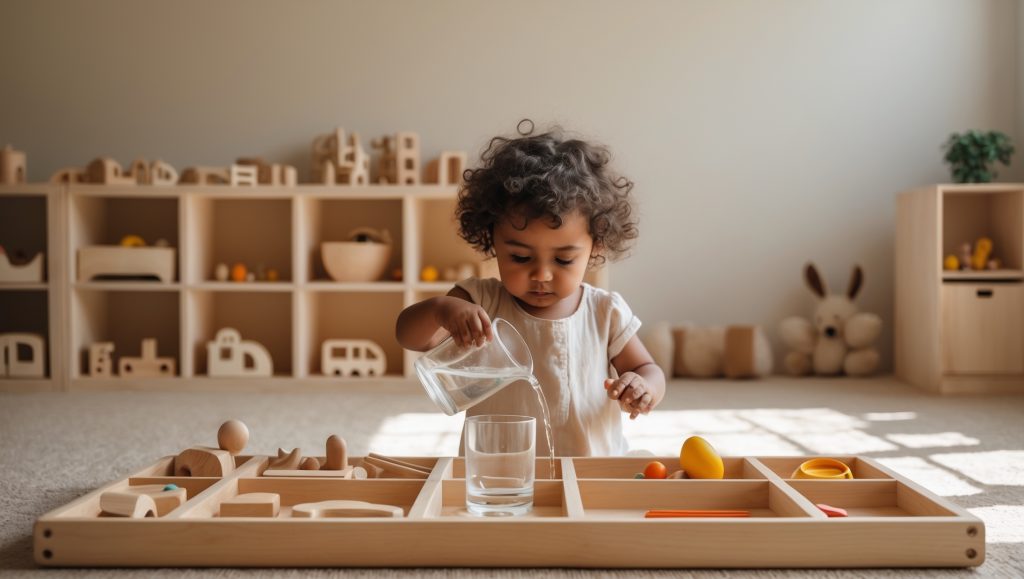
- Prepared environment: Spaces are intentionally organized, accessible, and equipped with materials that promote exploration and learning.
- Independence: Children are encouraged to do things for themselves, fostering confidence and problem-solving skills.
- Observation: Adults closely observe children to understand their needs and interests, intervening only when necessary.
- Hands-on learning: Children engage with real objects and materials, developing practical life skills and a deeper understanding of concepts.
Integrating these principles into home life can help children from infancy through the early school years build solid foundations for lifelong learning and adaptability.
Setting Up a Montessori-Inspired Home Environment
One of the most impactful ways to bring Montessori into your home is by reimagining your child’s surroundings. Here’s how to create a space that supports independence and exploration:
Organize with Accessibility in Mind
- Use low shelves to display toys and materials, making them easily reachable for your child.
- Limit the number of available items to avoid overwhelm. A rotation system helps keep activities fresh and engaging.
- Store everyday items (like cups, plates, and utensils) in lower cabinets so children can access them independently.
Choose Open-Ended, Realistic Materials
- Favor toys and materials made from natural materials like wood, cotton, and metal for their sensory experience and durability.
- Offer real tools for child-sized hands: small brooms, dustpans, water pitchers, or gardening tools.
- Prioritize objects that encourage exploration, creativity, and problem-solving over flashy, battery-operated toys.
Create Child-Sized Spaces
- Provide small tables and chairs, low hooks for coats, and step stools in the bathroom and kitchen to empower self-care.
- Dedicate areas for specific activities (reading nook, art table, movement area) to support focused engagement.
Montessori Routines and Activities for Different Ages
Effective routines and activities grounded in Montessori principles can be adapted for various developmental stages. Here are practical ideas for infants, toddlers, and preschoolers:
Infants (0-12 months)
- Provide a safe, uncluttered play area with a soft mat and a mirror at the baby’s level.
- Offer simple grasping toys, rattles, and fabric books.
- Encourage movement with time on the floor rather than in restrictive containers.
- Allow your baby to participate in daily routines (washing hands, exploring textures at mealtime) as much as possible.
Toddlers (12-36 months)
- Involve your child in practical life activities: pouring water, wiping tables, setting the table, or sorting laundry.
- Use language-rich interactions, naming objects and actions throughout the day to support vocabulary development.
- Introduce puzzles, stacking blocks, and matching games that challenge fine motor and cognitive skills.
- Support self-dressing by providing clothes with easy fasteners and accessible drawers or baskets.
Preschoolers (3-6 years)
- Offer more complex practical life activities, such as food preparation (peeling, slicing with a child-safe knife), plant care, or sweeping.
- Incorporate sensory experiences: sand and water play, sorting objects by size or color, or exploring natural materials outdoors.
- Encourage independence in routines like brushing teeth, packing a bag, or tidying up after activities.
- Provide opportunities for creative expression with open-ended art supplies and musical instruments.
Age-Based Recommendations for Montessori Materials
Choosing the right materials for your child’s stage of development is key to supporting meaningful learning. Here are age-based suggestions, with an emphasis on simplicity and versatility:
- Infants: High-contrast mobiles, wooden grasping rings, soft cloth books, and sensory baskets with natural objects.
- Toddlers: Simple puzzles, stacking/nesting cups, shape sorters, child-size cleaning tools, and practical life trays (pouring, spooning, scooping).
- Preschoolers: Counting beads, threading laces, wooden letters and numbers, nature-themed matching cards, and hands-on science kits.
Regardless of age, opt for items that encourage exploration, repetition, and mastery of skills. Rotate materials every few weeks based on your child’s interests and developmental needs.
Common Mistakes
- Overloading shelves with too many toys or materials at once, which can lead to distraction and overwhelm.
- Choosing toys that “do the work” for the child (e.g., electronic, single-purpose toys) rather than those that invite active participation.
- Underestimating the child’s ability to do practical tasks independently—children often surprise adults with their capabilities.
- Neglecting to model and guide new activities initially; children benefit from seeing tasks demonstrated slowly and clearly.
- Expecting perfection—mistakes are valuable learning experiences and part of the process.
- Forgetting to observe and adapt the environment as your child’s needs, interests, and skills evolve.
Quick Checklist
- Are toys and materials accessible and organized for your child’s easy use?
- Have you included practical life activities in daily routines?
- Is your home environment free of unnecessary clutter and visual noise?
- Are you rotating materials regularly to match your child’s interests?
- Do you provide child-size furniture and tools for self-care and play?
- Have you observed your child’s preferences and adapted the environment accordingly?
- Are you offering a balance of independent play and supportive adult guidance?
FAQ
+What is the main goal of Montessori at home?
+How do I know if a toy is Montessori-aligned?
+Can I combine Montessori with other parenting or educational philosophies?
+Is Montessori only for young children?
+How often should I rotate toys and materials?
+Do I need to buy special Montessori products?
+What role should parents take in a Montessori home?
Conclusion
Montessori at home is more than a trend—it’s a thoughtful, evidence-informed approach that empowers children to become capable, curious, and caring individuals. By creating accessible environments, offering meaningful activities, and respecting your child’s growing independence, you lay the groundwork for a lifelong love of learning. Remember, you don’t need to transform your home overnight. Small, intentional changes can have a big impact. Observe your child, follow their lead, and enjoy the journey of discovery together. For ongoing support, connect with local Montessori parent groups or online communities dedicated to child-centered, respectful parenting in 2026 and beyond.

Montessori at Home: Practical Strategies to Nurture Independence and Learning (2026 Guide)
Adopting Montessori principles at home empowers children to become confident, self-motivated learners. The Montessori method values a child’s natural curiosity and encourages hands-on exploration. By making a few practical adjustments, parents can create an environment that nurtures independence and lifelong learning.
Start by organizing your child’s space so that everyday items are accessible—think low shelves, child-sized utensils, and open baskets for toys. Encourage your child to participate in daily routines, such as setting the table or folding laundry, fostering both responsibility and a sense of accomplishment. Limit choices to two or three options at a time, allowing your child to make decisions without feeling overwhelmed. Finally, embrace the power of observation: watch how your child interacts with their environment and offer gentle guidance when needed, rather than stepping in immediately.
Montessori at home isn’t about perfection; it’s about progress and connection. With patience and consistency, these small shifts can help your child build confidence, problem-solving skills, and a lifelong love of learning.
- Organize spaces so essentials are child-accessible
- Invite participation in daily household tasks
- Offer limited, meaningful choices
- Observe and guide rather than direct
We live in a small apartment and space is limited. Do you have any suggestions for creating Montessori-inspired activity areas without overcrowding our living room, or tips on storage solutions that keep things accessible but tidy?
It’s understandable to want to nurture independence while keeping your home organized and comfortable. Try using one low, open shelf to display a few carefully chosen activities—rotate these regularly to keep things fresh and reduce clutter. Use baskets or small bins for grouping materials, making it easy for your child to access and put away items. Designate a child-friendly mat or tray as a movable workspace, so activities can happen wherever there’s room. Choose toys and materials that are multi-purpose and safe for your child’s age, avoiding small parts for toddlers. This isn’t medical advice; if you’re concerned, check in with your pediatrician.
My baby is 7 months old and just starting to crawl. For Montessori at this stage, how can I safely incorporate lower shelves and accessible materials when she still puts everything in her mouth? Are there specific materials you recommend for this age?
It’s wonderful that you’re thinking about creating a safe, accessible environment for your crawling baby. Start by securing sturdy, low shelves and removing anything with small parts, sharp edges, or potential choking hazards. Choose a few Montessori-aligned materials like soft fabric blocks, silicone stacking rings, or large wooden grasping toys that are too big to swallow and made from non-toxic materials. Rotate these items to keep her engaged and supervise closely as she explores. Always check for loose parts, and wipe toys regularly to keep them clean. This isn’t medical advice; if you’re concerned, check in with your pediatrician.
You mention using real tools and natural materials, which my child loves, but I’m worried about safety with things like small utensils or gardening items. How do you recommend balancing safety and independence for toddlers who are curious and like to put things in their mouths?
Your concern about safety is completely understandable, especially with curious toddlers. To encourage independence while keeping your child safe, start by choosing child-sized, sturdy tools designed for toddler hands—these usually have smoother edges and no choking hazards. Always inspect materials for loose parts or splinters before use, and avoid anything small enough to fit inside a toilet paper tube. Offer real tools under close adult supervision, setting clear boundaries and modeling how to use them safely. Gradually increase independence as your child demonstrates understanding. This isn’t medical advice; if you’re concerned, check in with your pediatrician.
What are your thoughts on balancing the Montessori principle of independence with the need to supervise children who might put small objects in their mouths? How can parents encourage self-directed play while still keeping a close eye on safety, especially with everyday items like small utensils or loose parts?
You’re right to want both independence and safety—finding that balance is tough with little ones. First, choose toys and materials that are large enough not to fit in a child’s mouth, especially for toddlers under three. Next, set up a safe, child-friendly space where all accessible items have been vetted for choking risks. Supervise closely during activities with everyday items, and stay nearby to gently redirect if something unsafe happens. Teach and model safe handling, using phrases like, ‘Utensils stay on the table.’ Remember, each child develops at their own pace. This isn’t medical advice; if you’re concerned, check in with your pediatrician.
Could you share examples of practical life activities suitable for a 9-month-old under the Montessori approach? I want to encourage independence, but I’m not sure what kinds of tasks or routines are realistic for that age group.
It’s wonderful that you’re looking to nurture your baby’s independence so early. For a 9-month-old, Montessori-inspired practical life activities should be very simple and safe. Try letting your baby help wipe their highchair tray with a damp cloth, explore transferring soft objects between bowls, or participate in snack time by offering soft finger foods they can pick up themselves. You can also encourage them to help put away toys in a basket with your guidance. Always supervise closely and choose materials free from choking hazards. This isn’t medical advice; if you’re concerned, check in with your pediatrician.
If my toddler is just learning to walk, are there specific Montessori materials or furniture adjustments I should consider to keep things safe and still encourage independence?
It’s wonderful that you want to support your toddler’s independence while keeping them safe as they learn to walk. Start by placing low, stable furniture like small shelves or a sturdy learning tower that your child can hold onto for balance. Opt for lightweight, non-breakable Montessori materials with no small parts, and keep toys and baskets within easy reach on low shelves. Use soft rugs or mats to cushion falls, and secure furniture to the wall to prevent tipping. Always supervise closely at this stage. This isn’t medical advice; if you’re concerned, check in with your pediatrician.
How can families on a budget implement a toy rotation system with Montessori principles in mind? Are there low-cost or DIY options for creating a variety of open-ended activities without needing lots of specialized materials?
It’s wonderful that you want to offer your child Montessori-inspired experiences, even on a budget. Start by sorting existing toys and household items into small sets, rotating what’s available every week or two to keep things fresh. Look for everyday objects—measuring cups, scarves, wooden spoons—that invite open-ended play and match your child’s developmental stage. You can also DIY simple activities, like threading with pasta and string, or sorting objects by color or size using items from around the house. Always check that materials are safe and appropriate for your child’s age, avoiding small parts for little ones. This isn’t medical advice; if you have concerns, check in with your pediatrician.
If my toddler wakes up early and has limited supervision for the first hour, what are some practical ways to prepare an environment that supports independence but stays mess-free and safe?
It’s great that you want to empower your toddler while keeping them safe and your home tidy. Set up a low shelf or basket with a few simple, quiet toys or board books—avoid anything with small parts or messy materials. Place a spill-proof water bottle and a small snack (if age-appropriate) somewhere your child can reach. Use childproof locks on cabinets and keep unsafe items out of reach. You might also use soft lighting and a floor mat to define the safe play space. This isn’t medical advice; if you’re concerned, check in with your pediatrician.
My toddler is very sensory-seeking and loves touching everything, but sometimes gets easily distracted. Are there any Montessori tips for setting up an environment that supports focus and isn’t too overstimulating?
It’s great that you’re noticing your toddler’s sensory needs and wanting to support their focus. Try creating a simple, uncluttered space with only a few activities available at a time to reduce distractions. Use low shelves to display materials neatly and at your child’s eye level so they can choose independently. Choose toys and activities with a variety of safe textures but stick to natural materials when possible to avoid sensory overload. Soft lighting and calm colors also help keep the environment soothing. Always supervise closely, especially with sensory materials. This isn’t medical advice; if you have concerns, check in with your pediatrician.
Are there specific child-sized kitchen tools or utensils you recommend for toddlers that are both developmentally appropriate and safe, especially in a household where a curious toddler might want to explore while the baby is nearby?
It’s wonderful that you’re supporting your toddler’s independence in the kitchen while considering safety with a baby nearby. For toddlers, look for child-sized utensils with rounded edges—think small nylon knives, wooden spoons, and silicone spatulas. Choose sturdy, non-toxic materials without removable small parts, and avoid anything sharp or breakable. Offer a stable learning tower for supervised access to counters, and keep baby-safe zones clear of tools when not in use. Always supervise closely, especially with siblings in the room. This isn’t medical advice; if you have any concerns, please check in with your pediatrician.
For someone on a tight budget who watches kids in their home, what are the most essential Montessori-inspired items or setups to prioritize to get the benefits without buying a lot of new materials?
It’s great that you want to bring Montessori principles into your home on a budget. Start by creating low, open shelves so children can access toys and materials independently. Use household items like bowls, spoons, or measuring cups for practical life activities, always supervising for safety if there are small parts. Set up a cozy reading nook with a few age-appropriate books at child level. Create simple sorting or matching games using things like buttons or colored paper, being mindful of choking hazards for little ones. Remember, the goal is to foster independence and order, not to have fancy materials. This isn’t medical advice; if you have concerns, check in with your pediatrician.
My baby is 7 months old and not quite crawling yet. How can I adapt Montessori principles for a baby who isn’t mobile? Should I still rotate toys or just focus on tummy time activities?
It’s understandable to wonder how to support your 7-month-old’s development before crawling begins. At this stage, Montessori principles can be adapted by focusing on safe exploration within your baby’s reach. Offer a few simple, sensory toys nearby and rotate them every week or so to maintain interest. Prioritize tummy time on a soft mat with interesting objects just out of reach to encourage movement and strength. You might also introduce low mirrors or fabric books for visual engagement. Always supervise closely and avoid small parts or choking hazards. This isn’t medical advice; if you’re concerned, check in with your pediatrician.