
Introduction
Montessori education is renowned for its child-centered approach, promoting independence, respect, and hands-on learning. While Montessori is frequently associated with classroom settings, its principles can be powerfully applied to mealtimes at home. For families in the United States seeking to encourage healthy food habits, positive relationships with food, and self-confidence in young children, adapting Montessori-inspired food practices offers a nurturing, practical pathway. This guide explores how families can use Montessori principles to support mealtime routines, foster independence, and help children develop lifelong skills and attitudes around food. We’ll highlight evidence-informed strategies, discuss common pitfalls, and offer actionable advice tailored for 2025 families.
Montessori Principles and Mealtime: Foundations for Healthy Habits
Respect for the Child
Montessori philosophy centers on respect for the child as an individual who is capable, curious, and eager to learn. At mealtimes, this respect is demonstrated by involving children in food preparation, giving them choices within boundaries, and allowing them to listen to their own hunger cues. Research suggests that responsive feeding—attuning to children’s signals of hunger and fullness—supports healthy eating patterns and reduces the risk of power struggles at the table.
Independence and Practical Life Skills
Montessori environments offer opportunities for children to participate in real-life activities, including setting the table, pouring water, spreading butter, slicing soft foods, or serving themselves. These tasks foster motor skills, confidence, and a sense of responsibility. Evidence indicates that hands-on involvement in food preparation can increase willingness to try new foods and promote a positive attitude towards eating.
Prepared Environment
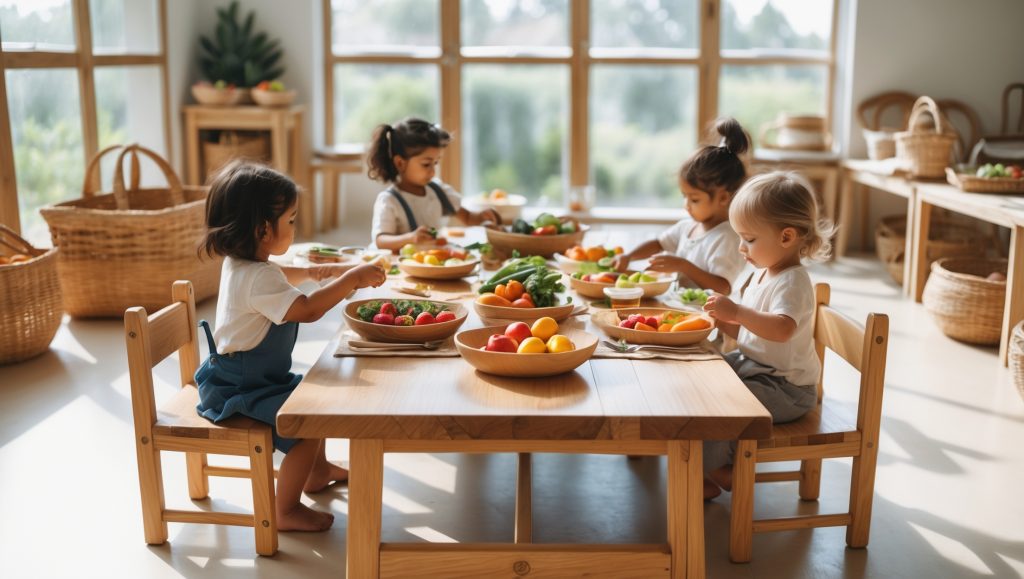
The Montessori “prepared environment” is designed to meet children’s developmental needs and promote autonomy. At home, this means arranging child-sized furniture, keeping utensils and plates within reach, and offering foods in accessible, manageable portions. A thoughtfully arranged eating space helps children feel valued and capable, enabling them to participate fully in mealtimes.
Implementing Montessori Food Practices at Home
Involving Children in Food Preparation
Even toddlers can participate meaningfully in mealtime routines. Children can wash produce, mix ingredients, set napkins, or help serve family-style meals at the table. Providing child-safe tools—such as small pitchers, safety knives, or step stools—empowers children to contribute. Studies show that children who help prepare food are more likely to eat a wider variety of foods and develop a sense of ownership over their meals.
Serving Family-Style Meals
Family-style meals, where food is placed in the center of the table and everyone serves themselves, align with Montessori principles by offering choice, autonomy, and opportunities for learning. Children can practice scooping, pouring, and making decisions about what and how much to eat. This approach supports development of portion awareness and self-regulation.
Encouraging Choice Within Limits
Montessori emphasizes offering children real choices within clear boundaries. At mealtimes, parents might present two nutritious options (“Would you like apple slices or banana with your breakfast?”) or invite children to choose their own toppings for yogurt or oatmeal. This strategy supports autonomy while ensuring that all available choices align with the family’s nutritional values.
Developing Grace and Courtesy
Mealtimes are ideal for practicing grace and courtesy, a Montessori hallmark. Children learn to say “please” and “thank you,” offer food to others, and wait their turn. These social skills foster a positive, respectful atmosphere at the table and contribute to emotional development.
Using Real, Child-Sized Tools
Providing real (but appropriately sized) plates, glasses, and utensils communicates trust in the child’s abilities. Glass cups, ceramic dishes, and small forks encourage care and concentration. When spills or breakage occur, children learn to clean up, developing responsibility and resilience.
Supporting Healthy Eating Habits
Follow the Child’s Appetite
Montessori mealtimes honor children’s natural hunger and fullness cues, rather than enforcing arbitrary portion sizes or pressuring children to clean their plates. Evidence suggests that allowing children to decide how much to eat helps them develop self-regulation skills and reduces risk of overeating.
Introduce a Variety of Foods Without Pressure
Repeated, low-pressure exposure to a range of healthy foods increases acceptance over time. Montessori-style meals often feature simple, whole ingredients presented attractively but without coercion. Children may need several exposures to a new food before tasting it. Patience and gentle encouragement are key.
Limit Distractions to Focus on Connection
Montessori mealtimes prioritize presence and connection. Limiting screens, toys, or other distractions helps children tune in to their bodies, food, and family members. Research links distraction-free meals with better dietary choices and stronger family bonds.
Consistency and Routine
Predictable mealtime routines support emotional security and help children know what to expect. This might include washing hands together, singing a short song before eating, or having meals at regular times each day. Consistent routines foster cooperation and a sense of belonging.
Common Mistakes
- Overcorrecting or Intervening Too Quickly: Stepping in at every spill or mistake can undermine a child’s confidence. Allow for natural consequences and problem-solving whenever safe.
- Offering Too Many Choices: An overwhelming number of options can lead to indecision and frustration. Limit choices to two or three at a time.
- Using Rewards or Punishments for Eating: Offering dessert as a reward or withholding favorite foods as punishment can create unhealthy associations with food.
- Serving Only “Kid” Foods: Children benefit from exposure to a wide variety of textures and flavors, not just foods marketed to their age group.
- Rushing Mealtimes: Hurrying children through meals reduces opportunities for skill-building and connection. Allow enough time for a relaxed pace.
- Ignoring Child Cues: Pressuring children to eat more or restricting intake despite their signals can disrupt natural hunger and fullness regulation.
- Using Inappropriate Tools: Large, slippery, or heavy utensils can be frustrating. Choose tools that fit small hands and are easy to handle.
Quick Checklist
- Arrange a child-friendly eating space with low tables and accessible tools.
- Invite your child to help with age-appropriate food prep (washing, stirring, serving).
- Serve meals family-style when possible, letting children serve themselves.
- Offer choices within limits (e.g., “Would you like carrots or cucumbers?”).
- Use real, child-sized plates, glasses, and utensils.
- Encourage grace and courtesy—model polite table manners.
- Follow your child’s appetite—avoid pressuring or bribing.
- Introduce new foods patiently, without pressure.
- Keep mealtimes screen-free and focus on connection.
- Establish consistent mealtime routines to build security.
FAQ
+How early can I start Montessori-inspired mealtime practices?
+What if my child refuses to eat certain foods?
+Are Montessori mealtime strategies suitable for picky eaters?
+Can I use Montessori principles if my dining area is small or shared?
+What are some age-appropriate food prep tasks for toddlers and preschoolers?
+How can I encourage my child to sit at the table longer?
+Is it safe to use real glass and ceramic dishes with young children?
Conclusion
Bringing Montessori principles to mealtimes is a rewarding way to nurture your child’s independence, confidence, and healthy eating habits. By involving children in food preparation, offering real choices within boundaries, and creating a prepared environment that values their participation, parents can foster positive attitudes toward food and self-care. Remember, progress is gradual; allow your child to take on new responsibilities at their own pace and celebrate small successes along the way. By integrating these evidence-informed practices into your daily routines, you’re supporting your child’s growth not only as an eater, but as a capable, thoughtful, and resilient individual.

Montessori Mealtime: Evidence-Informed Food Practices for Young Children (2025 Guide) offers a thoughtful approach to nurturing healthy eating habits in early childhood. At its core, the Montessori philosophy emphasizes independence, respect, and hands-on learning—ideals that translate beautifully to the dining table. Research supports that when children actively participate in food preparation and serving, they are more likely to develop positive attitudes toward a variety of foods and build lifelong self-regulation skills.
Practical strategies such as offering child-sized utensils, allowing children to serve themselves, and involving them in simple meal prep foster not only fine motor skills but also confidence and curiosity. Current evidence highlights the importance of repeated, pressure-free exposure to new foods, rather than coercion or rewards. Montessori mealtime environments encourage children to listen to their hunger cues, explore textures and flavors, and make choices, which collectively support both nutritional adequacy and a positive relationship with food.
Families and educators can create inviting mealtime routines by preparing attractive, accessible food stations and modeling mindful eating. This approach not only honors each child’s autonomy but also lays a strong foundation for healthy eating patterns that last well beyond the preschool years.
- Encourage self-serving with child-friendly tools
- Offer a variety of nutritious, appealing foods without pressure
- Invite children to help with meal preparation and cleanup
- Model mindful, respectful eating habits daily
My child tends to get very distracted and messy during family-style meals, especially when trying to serve herself. Are there Montessori-inspired routines or tips you recommend for keeping mealtimes structured but still allowing for independence?
It’s completely normal to want mealtimes to be both structured and supportive of your child’s independence. You might try starting with a simple place setting and child-sized utensils to help your child focus. Offer only a few food choices at a time, in easy-to-grasp serving bowls, and model slow, calm serving motions. Establish a gentle routine—such as everyone waiting before serving themselves—and use clear, consistent cues about when meals begin and end. For young children, supervision is key to ensure safety with serving tools and small foods. This isn’t medical advice; if you’re concerned, check in with your pediatrician.
For parents of children with strong food aversions or sensory sensitivities, are there Montessori-based food preparation activities that work well to gently build confidence without overwhelming the child?
It’s wonderful that you want to help your child feel more comfortable around food. To gently build confidence, offer simple activities like washing vegetables, pouring water, or peeling bananas—these let your child interact with food without pressure to eat. Choose soft textures and mild smells at first, and let your child use tools safely sized for small hands. Keep sessions short, and always supervise closely to ensure safety, especially if your child is under 3. Allow your child to opt out at any stage—Montessori principles value respect for each child’s pace. This isn’t medical advice; if you’re concerned, check in with your pediatrician.
My child sometimes refuses to eat meals if certain foods touch or are mixed together. How would you approach this kind of sensory sensitivity using Montessori principles at mealtime?
It’s understandable to want meals to be a positive experience for your child, especially when sensory sensitivities are involved. Following Montessori principles, try offering foods in separate small bowls or compartments, allowing your child to serve themselves and keep foods apart. Let them help prepare and plate the meal in ways that feel comfortable to them. Respect their need for order without pressure, and use calm language to describe textures or flavors. Always supervise for safety and be mindful of age-appropriate utensils and possible allergens. This isn’t medical advice; if you’re concerned, check in with your pediatrician.
Do you have suggestions for storing small portions of different allergens so I can safely offer variety to my 9-month-old at Montessori-style meals without wasting food or risking cross-contamination between items?
It’s great that you’re thinking carefully about introducing allergens safely and sustainably. Try using small, clearly labeled containers for each allergen, keeping them sealed and separate in the fridge. Use a dedicated spoon or utensil for each container to avoid cross-contamination. Portion out only what your baby will need for each meal, and freeze extras in small silicone trays, then transfer to labeled freezer bags. Always supervise your baby closely during meals and introduce one new allergen at a time to monitor for reactions. This isn’t medical advice; if you’re concerned, check in with your pediatrician.
How do you recommend adapting Montessori-style mealtime routines when a family’s schedule isn’t consistent, especially with a newborn’s unpredictable feeding times? Any advice for balancing the toddler’s routine while still respecting their independence?
It’s completely understandable to want consistency for your toddler while juggling a newborn’s unpredictable needs. Try offering your toddler simple choices about when or where to eat, so they feel some control even if timing shifts. Prepare easy, healthy snacks your toddler can access independently if a meal gets delayed. Use visual cues, like a placemat or bell, to signal when it’s mealtime, creating a familiar ritual even if the exact time varies. For safety, supervise eating, especially with younger toddlers, and choose foods that are age-appropriate to prevent choking. This isn’t medical advice; if you’re concerned about your child’s nutrition or adjustment, check in with your pediatrician.
With my 7-month-old just starting solids, how can I use Montessori methods to encourage her independence at mealtime without making too much mess or risking choking? I’d love some practical tips for this specific age.
You’re wise to want to foster independence while keeping your 7-month-old safe. At this age, offer soft, appropriately sized finger foods like steamed veggies or banana slices to minimize choking risks, and always supervise closely. Let her try gripping foods herself, but pre-load a baby-safe spoon to help her practice self-feeding. Use a small, stable cup for water and expect spills as she learns. Place a washable mat or towel under the high chair to make cleanup easier. Remember, mealtime exploration is part of learning. This isn’t medical advice; if you’re concerned, check in with your pediatrician.
I am concerned about safety when letting my young child pour drinks or help with slicing foods. Are there specific tools or setup tricks recommended in Montessori that work well for apartments where counters are high and space is limited?
Your concern about safety with kitchen tasks in a small space is completely valid. For pouring, look for sturdy, child-sized pitchers with handles and weighted bases to prevent tipping—many Montessori options are designed for little hands. Try a non-slip mat on a low table or a step stool with side rails to bring the workspace to your child’s height. For slicing, use a child-safe knife with a rounded edge and supervise closely; try soft foods like bananas first. Clear the area of clutter so there’s only what your child needs. This isn’t medical advice; if you’re concerned, check in with your pediatrician.
My toddler wants to help set the table, but I worry about the cost of child-sized furniture and utensils. Are there any budget-friendly options or simple home adjustments you’d recommend for families who want to start with the basics?
It’s wonderful that you want to support your toddler’s independence at mealtime. You can start by using regular plates and cups made from sturdy materials—simply let your child use smaller dessert plates or short cups for easier handling. Pull up a stable chair or use a booster seat instead of buying child-sized furniture, always supervising for safety. For utensils, child-safe plastic or silicone options from discount stores work well. Keep placemats, napkins, and utensils in a low drawer or bin so your toddler can reach and help set up. This isn’t medical advice; if you have concerns, check in with your pediatrician.
My child is very independent in the kitchen, but I sometimes get worried about letting them use child-safe knives or pour drinks on their own. Are there specific tools or techniques you recommend to make these activities safer for little hands?
It’s completely normal to feel cautious when encouraging independence in the kitchen. Consider using child-sized, non-slip utensils and knives designed specifically for young children, which are typically made of nylon or plastic and have rounded tips. Practice pouring with small pitchers and thick-handled cups to reduce spills and offer better grip. Always supervise closely, especially during cutting, and start with soft foods like bananas or cooked carrots. Remind your child to go slowly, and model safe hand positions. Every child’s readiness is different, so adjust tasks as needed for their age and ability. This isn’t medical advice; if you’re concerned, check in with your pediatrician.
You mention offering foods in accessible, manageable portions. Could you clarify how to present foods like nuts, berries, or small vegetables so they align with Montessori principles while still minimizing choking risks for toddlers?
—it’s wonderful that you’re thinking carefully about safety and independence at mealtimes. For toddlers, always avoid whole nuts due to choking risk; instead, finely chop or grind them and mix into soft foods. Cut berries like grapes or cherry tomatoes lengthwise into quarters, as whole or halved pieces can be dangerous. Small vegetables (like carrots) should be steamed until soft, then cut into bite-sized, easy-to-grasp pieces. Arrange foods in small bowls or trays to encourage self-serve, which is very Montessori. Always supervise closely. This isn’t medical advice; if you have concerns about your child’s readiness for certain foods, check in with your pediatrician.
For parents in bilingual households, are there any Montessori-aligned ways to help children with sensory sensitivities, especially if certain foods in each culture are very different in texture or flavor? How can I respect both traditions without overwhelming my toddler?
It’s wonderful that you want to honor both cultures while supporting your child’s sensory needs. Start by offering small, no-pressure tastes of foods from each tradition, allowing your toddler to choose what and how much to try. Use consistent routines and gentle language in both languages to describe textures and flavors, helping your child anticipate what to expect. Involve your child in simple food prep—touching or smelling ingredients first builds familiarity. Always supervise closely and avoid foods that are choking hazards. Remember, it’s okay to revisit foods later if your child isn’t ready. This isn’t medical advice; if you’re concerned, check in with your pediatrician.
When you suggest letting children serve themselves with family-style meals, how do you prevent big spills or messes, especially with younger toddlers? Do you have tips for making clean-up easier while still encouraging their independence?
Your desire to foster independence while managing mealtime mess is understandable. For young toddlers, offer child-size serving utensils and lightweight, easy-grip pitchers with small amounts of food or liquid to minimize spills. Use non-breakable dishes and consider placing a washable mat or tablecloth under their eating area for easy clean-up. Guide their hands gently at first, and give lots of encouragement as they practice. Encourage them to help wipe up spills with a small cloth—this builds responsibility. Always supervise closely for safety. This isn’t medical advice; if you’re concerned, check in with your pediatrician.
When serving family-style meals, how do you recommend storing leftovers to keep things safe and minimize waste, especially when little hands are reaching into shared bowls?
It’s great that you’re thinking about food safety and avoiding waste during family-style meals. To minimize contamination, start by offering smaller portions in shared bowls and refill as needed. Use clean serving utensils rather than fingers, and gently remind young children to serve themselves with spoons or tongs. Once mealtime ends, promptly transfer any untouched leftovers from serving bowls into clean storage containers and refrigerate within two hours. Discard any food that’s been handled directly or sat out too long. For toddlers, supervise closely to prevent cross-contamination. This isn’t medical advice; if you’re concerned, check in with your pediatrician.
I’m wondering about safety when letting young babies participate in food prep. For a 7-month-old, what are some safe first ways to include them in the kitchen, and are there particular tools or foods I should avoid at this age?
It’s wonderful that you want to safely include your 7-month-old in kitchen activities. At this age, focus on sensory participation: let your baby touch and smell whole fruits or veggies (always supervise, and avoid small or hard foods that could pose a choking risk). You can give them a silicone spatula or spoon to hold—choose baby-safe, large, and BPA-free utensils without small detachable parts. Skip sharp, heavy, or breakable objects and raw foods like eggs. Wipe down all surfaces and wash hands frequently to prevent germs. This isn’t medical advice; if you’re concerned, check in with your pediatrician.
We have limited kitchen space and are on a budget. What are some practical ways to set up a Montessori-inspired eating area at home, especially when it comes to storing child-sized dishes and tools so kids can access them independently?
It’s wonderful that you want to empower your child at mealtime, even with space and budget constraints. Try designating a low shelf or a single lower cabinet for child-sized dishes, cups, and utensils; baskets or small bins on these shelves can help keep items organized and safe. Use lightweight, unbreakable dishes to reduce risk and make handling easier for little hands. Rotate a few items at a time to avoid clutter, and store just enough for one meal or snack. Always supervise young children, especially around glass or when lifting items. This isn’t medical advice; if you have concerns, please consult your pediatrician.
How much guidance should adults give when a 1-year-old helps in food prep, like slicing or mixing? I worry about safety but also want to give them enough freedom to build confidence.
It’s wonderful that you want to nurture your child’s confidence while keeping them safe. For a 1-year-old, close supervision is key—offer safe, age-appropriate tools like a blunt butter knife for soft foods, or let them mix with a large spoon. Model the motions first, then let your child try, guiding their hands if needed. Set up the prep area so hazards are out of reach and keep tasks simple, such as washing veggies or stirring. Remember, every child develops at their own pace. This isn’t medical advice; if you’re concerned, check in with your pediatrician.
With two toddlers who sometimes have mismatched appetites and meal schedules, is it okay to let one help themselves to snacks or meals while the other is sleeping, or should I try to keep meals strictly at the same time for both?
It’s understandable to want a peaceful routine when your toddlers have different appetites and schedules. It’s perfectly fine to allow one child to have a snack or meal while the other sleeps, as long as you offer balanced options and supervise to prevent choking. In line with Montessori principles, letting children listen to their hunger cues supports autonomy, but try to serve main meals at roughly the same times each day for predictability. Just be mindful of potential choking risks for younger toddlers and avoid foods with allergens or unsafe textures. This isn’t medical advice; if you’re concerned, check in with your pediatrician.
Some allergy-friendly foods can be more expensive or go bad quickly. Do you have suggestions for budget-friendly options or ways to safely store small portions when introducing common allergens to our baby using Montessori principles?
It’s great that you’re thinking about both your baby’s safety and your family’s budget. For common allergens, try buying in small quantities or choosing shelf-stable versions like powdered nut butters or canned beans (rinse well to reduce sodium). Store small portions in airtight containers or freezer-safe trays, labeling with dates to track freshness. Offer tiny tastes at a time, following safe serving sizes for your baby’s age and watching for reactions. Always supervise during new food introductions to prevent choking. This isn’t medical advice; if you’re concerned, check in with your pediatrician.
If a child gets frustrated with tasks like pouring or spreading, should I step in to help immediately, or is it better to let them try and figure it out on their own for a while? How do you handle these moments in Montessori mealtimes?
It’s so natural to want to help when you see your child getting frustrated. In Montessori mealtimes, it’s encouraged to wait a moment before stepping in, giving your child a chance to solve the task themselves—this builds their confidence and problem-solving skills. If frustration turns to distress, offer gentle guidance, like a calm word or showing how to hold the tool. For young children, be sure tasks match their abilities and use child-sized, safe utensils to reduce struggle. Always supervise closely for safety. This isn’t medical advice; if you’re concerned, check in with your pediatrician.
My toddler sometimes gets distracted and loses interest during family-style meals. Do you have advice for keeping a 3-year-old engaged and focused while still letting them serve themselves and make choices?
It’s completely normal for toddlers to get distracted at meals, and you’re not alone in wanting to help your child participate and stay engaged. Try offering just two or three food options within easy reach to reduce overwhelm. Give simple choices, like ‘Would you like carrots or rice first?’ Encourage your child to help pass or scoop food, which supports focus and independence. Keep mealtimes short—15–20 minutes is often enough at this age. Make sure foods and serving tools are safe for little hands. This isn’t medical advice; if you’re concerned, check in with your pediatrician.
I’m wondering about the practical side of serving family-style meals with a baby. What are some simple and safe food options I can offer at the table that both my 7-month-old and older siblings can enjoy serving themselves?
It’s great that you want to include your baby in family-style meals and make it enjoyable for everyone. Start with soft, easy-to-grasp foods like well-cooked veggie sticks, banana slices, or soft cubes of avocado that are safe for your 7-month-old and appealing to older siblings. Offer bite-sized pieces of steamed sweet potato or scrambled egg (if already introduced), and avoid foods that are hard, sticky, or round (like whole grapes) to reduce choking risk. Use child-sized utensils and supervise closely so everyone can safely serve themselves. This isn’t medical advice; if you have concerns, check in with your pediatrician.
For families with picky eaters or kids who experience sensory challenges with certain food textures, how can the Montessori approach be adapted to make mealtime less stressful and more inclusive?
It’s completely understandable to want mealtimes to be positive, especially with sensory sensitivities or picky eating. Try offering a choice of textures (like soft vs. crunchy) at each meal, and let your child serve themselves to promote autonomy. Involve them in safe meal prep—washing veggies or arranging foods—which can reduce anxiety about new textures. Keep foods visually separated on the plate so your child isn’t overwhelmed by mixed textures. Always supervise young children to ensure safety with choking hazards. This isn’t medical advice; if you’re concerned, check in with your pediatrician.
My child is just turning two and can be a bit clumsy with pouring and serving. Are there specific suggestions from Montessori practice on how to gradually introduce more independence in these tasks without creating frustration or big messes early in the morning?
It’s wonderful that you want to support your two-year-old’s independence with pouring and serving. At this age, it helps to start small: offer child-sized pitchers with water and easy-to-grasp handles, and begin with just a little liquid to limit spills. Try using non-breakable cups and trays, and demonstrate each step slowly before inviting your child to try. Place a small towel nearby, so clean-up becomes part of the process rather than a frustration. Supervision is key for safety, given the age and developing skills. This isn’t medical advice; if you’re concerned, check in with your pediatrician.
How do these Montessori-inspired mealtime routines adjust as children grow? For example, are there recommended ways to gradually introduce more responsibility or more complex tasks for preschoolers versus younger toddlers?
—you’re thoughtful about matching routines to your child’s stage. For younger toddlers, start with simple, supervised tasks like washing hands, choosing between two foods, or helping to wipe the table. As they reach preschool age, you can offer more responsibility: let them pour water from a small pitcher, serve themselves with child-safe utensils, or help set places with unbreakable dishes. Model and guide each new skill, increasing complexity as your child’s coordination and focus improve. Always supervise closely, especially with glassware or small foods. This isn’t medical advice; if you have concerns about safety or readiness, check in with your pediatrician.
We have a pretty small kitchen and not a lot of extra storage—do you have suggestions for setting up a Montessori-inspired prepared environment that works for limited space, especially when it comes to keeping utensils and dishes accessible for toddlers?
It’s completely understandable to want a Montessori-inspired setup even in a small kitchen. Try placing a low basket or bin on a shelf or part of a cabinet for your toddler’s dishes and utensils—just a few at a time to save space. Choose child-sized, sturdy items and rotate extras as needed. Use a small tray for meal prep tools your child can safely handle, and keep a step stool nearby for supervised access to the counter or sink. Always check that items are safe (no sharp edges or choking hazards) and supervise closely. This isn’t medical advice; if you’re concerned, check in with your pediatrician.
I see that the Montessori approach encourages giving children choices at mealtimes. For families who are still working on establishing a more peaceful pre-bed routine, how would you suggest balancing autonomy with winding down activities right after dinner?
It’s great that you’re thinking about supporting both your child’s autonomy and a calm bedtime routine. To balance choice and winding down, try offering limited, bedtime-friendly food options at dinner so your child still feels involved but choices don’t overstimulate. After dinner, gently transition to quieter, predictable activities—perhaps let your child choose between two calming activities, like reading a story or a gentle bath. Keep routines consistent so children know what to expect, and avoid stimulating foods or activities close to bedtime. Always supervise young children and watch for choking hazards. This isn’t medical advice; if you’re concerned, check in with your pediatrician.
Do you have advice for parents of children who are sensitive to food textures or who are reluctant to touch certain foods? How can Montessori principles help make new foods less overwhelming or support positive food experiences for them?
It’s understandable to want mealtimes to feel less stressful when your child is sensitive to food textures. Start by letting your child explore foods with their hands at their own pace, without pressure to eat. Offer a variety of textures in small amounts, keeping foods separate so your child can choose what to touch. Involve your child in food preparation tasks, like washing veggies, to build comfort and curiosity. Try introducing new foods alongside familiar favorites, and use simple language to describe textures. Make sure foods are age-appropriate and safe to handle, and always supervise young children. This isn’t medical advice; if you’re concerned, check in with your pediatrician.
My preschooler sometimes gets frustrated pouring their own drinks and ends up spilling a lot, which leads to tears right before bedtime. Are there Montessori-friendly strategies or specific tools that can help with this, especially as we wind down for the evening?
It’s understandable to want smoother, calmer evenings, especially when spills lead to frustration for your preschooler. Try offering a small, easy-to-hold pitcher and a sturdy, wide-based cup, both sized for little hands to reduce spills. Start with water and only a small amount in the pitcher to minimize mess. Give your child a tray to contain accidents and demonstrate slow, steady pouring together. Consistent, calm practice earlier in the day can build skills and confidence for bedtime routines. Always supervise to ensure safety and prevent choking hazards. This isn’t medical advice; if you’re concerned, check in with your pediatrician.
As someone concerned about iron intake for my baby, I’m wondering whether Montessori mealtime routines make it practical to offer iron-fortified cereals or if homemade purees are a better fit for encouraging independence and self-feeding.
You’re thoughtful to consider both nutrition and independence for your baby’s meals. In Montessori mealtime routines, both iron-fortified cereals and homemade purees can support self-feeding—serve them in a small, baby-safe bowl with a soft-tipped spoon, and let your baby try scooping or using their hands. You can alternate between fortified cereals and iron-rich purees (like lentils or meats blended with veggies) to meet iron needs and encourage variety. Sit with your baby and model eating, which supports learning and safety. Always watch closely during meals to prevent choking. This isn’t medical advice; if you’re concerned, check in with your pediatrician.
For toddlers with developing fine motor skills, like my one-year-old, what are some safe first utensils or tools we should use for food prep that align with Montessori principles? I want to encourage independence but am worried about safety.
You’re doing a wonderful job supporting your toddler’s independence while keeping safety in mind. For a one-year-old, start with lightweight, short-handled spoons and forks made of silicone or stainless steel with rounded edges. Consider child-safe crinkle cutters or nylon knives for soft foods—these are gentle on small hands and less likely to cause injury. A small, easy-grip mixing bowl and a wooden spoon can let your child help with stirring. Always supervise closely, and introduce new tools one at a time. This isn’t medical advice; if you’re concerned, check in with your pediatrician.
My toddler sometimes refuses to eat if the food texture is different from what he expects, and it can spiral into a power struggle. Can you recommend Montessori-informed strategies for gently supporting picky or sensory-sensitive eaters during family meals?
It’s understandable to feel concerned when mealtimes become stressful due to your toddler’s food preferences. Montessori-informed approaches encourage offering a predictable routine and inviting, mess-friendly self-feeding options. Try presenting familiar foods alongside new textures without pressure to taste. Allow your child to explore food with their hands and describe textures together in simple words. Offer choices like two spoons or finger foods to give a sense of control. Always supervise for safety, and avoid foods that pose choking risks. Remember, gradual exposure is key for toddlers, and it’s normal for preferences to shift. This isn’t medical advice; if you’re concerned, check in with your pediatrician.
Is it okay to start preparing my child for independent eating before age 2, or should I wait until certain developmental milestones are reached, according to Montessori principles?
It’s great that you’re thinking ahead about your child’s independence with eating. According to Montessori principles and current evidence, you can begin supporting independent eating before age 2, as long as your child is showing readiness—like sitting up with support and showing interest in self-feeding. Start by offering soft, easy-to-grasp foods in small amounts, use child-sized utensils, and always supervise closely to prevent choking. Allowing mess is part of the learning process. Every child develops at their own pace, so adjust as needed. This isn’t medical advice; if you’re concerned, check in with your pediatrician.
For younger kids who struggle to sit through a whole family meal due to sensory overload, is it okay to let them leave the table early? How can we foster independence and respect their needs while still practicing the social aspects of Montessori mealtimes?
It’s understandable to want mealtimes to feel positive and inclusive for your child. You can support their sensory needs and independence by offering a comfortable seating option, keeping meals brief and predictable, and letting them signal when they are done eating. You might set a simple, visual timer to help them anticipate the meal’s end, or create a calm corner nearby if they need a break. Involve your child in clearing their place when finished, reinforcing independence and routine. For young children, especially toddlers, it’s developmentally normal to need shorter meal times. This isn’t medical advice; if you’re concerned, check in with your pediatrician.
My child spends some days with her grandparents, who like to cook and serve traditional foods that feel different from what we usually prepare at home. How can we respect both the Montessori principles and our cultural traditions during shared family mealtimes?
It’s wonderful that you want to honor both Montessori principles and your family’s cultural traditions. You might try inviting your child to participate in preparing traditional foods with her grandparents, using child-safe utensils and simple tasks. Offer child-sized serving dishes at the table, so she can practice serving herself, which supports independence. Talk together about the foods—describe their colors, smells, and textures, and share stories about family traditions, fostering connection and respect. For younger children, watch for potential choking hazards, and always supervise closely. This isn’t medical advice; if you’re concerned, check in with your pediatrician.
How can Montessori-inspired mealtime routines be adapted for children who have sensory sensitivities, such as being averse to certain textures or smells? Are there specific tools or techniques that help in these cases?
It’s completely understandable to want mealtimes to feel comfortable and positive for children with sensory sensitivities. Start by offering a variety of foods with different textures and smells, but only one new item at a time and in small amounts. Let your child explore food with their hands before eating—touching or smelling food is part of the Montessori approach and can reduce anxiety. Use child-sized, non-metal utensils and plates to avoid overwhelming sensory input. Consider silicone or wooden tools, which feel gentler. Keep routines predictable and calm, and never force tasting. Always supervise closely and check for potential allergens. This isn’t medical advice; if you’re concerned, check in with your pediatrician.
Would you recommend starting with family-style serving at dinnertime even for a one-year-old, or is it better to introduce this approach gradually? What are some realistic first steps if my child is just beginning to feed themselves?
It’s wonderful that you want to foster independence at mealtimes. For a one-year-old, you can gently introduce family-style serving by starting with just one or two small, soft foods in easy-to-grasp pieces in their own bowl or on their tray. Let your child try using a pre-loaded spoon or their hands, and offer child-safe, unbreakable serving utensils within reach. Always supervise closely to watch for choking hazards and avoid small, hard foods. Keep portions tiny to reduce overwhelm. This isn’t medical advice; if you’re concerned, check in with your pediatrician.
With a busy weekday schedule, how can working parents realistically involve their 18-month-old in meal prep using Montessori methods, without adding too much time or stress to dinnertime?
It’s completely understandable to want your toddler involved in meal prep without making evenings more hectic. At 18 months, keep tasks very simple—offer a damp cloth for wiping veggies, let them transfer pre-cut fruit to a bowl, or stir with a child-sized spoon. Set up a safe, stable stool at the counter and supervise closely. Prep ingredients ahead when possible, so your child’s participation fits into just a few minutes. Remember, even brief involvement supports their independence and senses. This isn’t medical advice; if you have concerns, check in with your pediatrician.
You mention letting kids serve themselves and choose what to eat from what’s offered. How do you suggest handling picky eating or sensory food issues in this approach, especially if a child refuses to try new foods?
It’s understandable to worry about picky eating or sensory sensitivities during mealtimes. Try offering a variety of foods, including at least one familiar and accepted option, and let your child explore at their own pace without pressure. Invite them to serve themselves, but allow them to decline foods—this respects autonomy and often reduces anxiety. Use positive language about food and model trying new things yourself. For younger children, avoid foods that are choking hazards and watch for potential allergens. Over time, gentle exposure can help, but if eating issues significantly limit your child’s diet or cause stress, consult your pediatrician or a feeding specialist. This isn’t medical advice; if you’re concerned, check in with your pediatrician.
We have a pretty set routine around meals, but sometimes my two-year-old isn’t hungry at dinner or wants to eat at odd times. How does following hunger cues fit in with maintaining a family mealtime schedule?
It’s so understandable to want both a predictable routine and respect for your child’s hunger cues. At age two, children’s appetites can vary a lot from day to day. Try offering meals and snacks at regular times, but let your child decide how much to eat. You might involve your toddler in setting the table or choosing between two healthy options, which can invite participation without pressure. If your child isn’t hungry at dinner, trust their cues but avoid offering alternatives right after, so they learn to tune into natural hunger rhythms. Always supervise mealtimes for safety, and remember: this isn’t medical advice—please check in with your pediatrician if you’re worried about nutrition or growth.
Could you elaborate on how to maintain the prepared environment if we have limited dining space and a small kitchen? What are some space-saving tips for making utensils and dishes easily accessible to kids?
It’s great that you’re looking to create a Montessori-friendly mealtime space even with limited room. Try using a low, sturdy shelf or a small rolling cart to store child-sized dishes and utensils within easy reach. Wall-mounted hooks or baskets can keep essentials off counters but accessible. Rotate a few key items rather than offering everything at once to reduce clutter. Encourage your child to help set up and clean up, teaching responsibility. Always check that items are safe for your child’s age, avoiding breakables or sharp utensils for younger kids. This isn’t medical advice; if you’re concerned, check in with your pediatrician.
Is there an ideal age to start letting children serve themselves at family-style meals, or should parents wait until certain fine-motor milestones are reached before expecting a child to pour or serve food independently?
It’s great that you’re thinking about when to encourage independence at mealtimes. Most children can begin simple self-serving between 18 months and 2 years, using small, easy-to-grip utensils. Start with soft foods and unbreakable serving dishes, and offer child-sized pitchers or scoops for pouring and serving. Supervise closely to ensure safety and prevent choking or spills. Adjust expectations to your child’s unique motor skills, giving help as needed and celebrating effort over perfection. This isn’t medical advice; if you’re concerned, check in with your pediatrician.
For parents with limited kitchen space, what are some practical ways to store or organize child-safe food prep tools so they stay within reach but don’t create clutter?
It’s great that you’re thinking about keeping your child’s food prep tools accessible and organized in a small kitchen. Try using a shallow drawer or a labeled basket on a low shelf for their items, so your child can reach them safely. Magnetic strips or hooks on the wall can hold utensils up off the counter, minimizing clutter. Rotating trays (like a lazy Susan) inside a cabinet can also keep things tidy and easy to access. Always check that tools are age-appropriate—no sharp edges, choking hazards, or heavy items. This isn’t medical advice; if you’re concerned, check in with your pediatrician.
I love the idea of family-style meals, but is it okay to offer a 7-month-old the same foods as the rest of the family, or should their options be more restricted at this age? How do I balance safety with encouraging independence?
It’s great that you want to include your 7-month-old in family-style meals while keeping safety in mind. At this age, babies can try many family foods, but their options should be more limited: avoid added salt, honey, choking hazards, and highly processed foods. Serve soft, appropriately-sized pieces—think cooked veggies or small strips of soft fruit. Let your baby try picking up food to encourage independence, but supervise closely and model safe eating. Family-style serving can still happen by placing safe foods on their plate or tray for self-feeding. This isn’t medical advice; if you’re concerned, check in with your pediatrician.
For caregivers like me on a budget, are there recommendations for do-it-yourself or low-cost tools that still support the independence and involvement Montessori encourages at mealtimes?
It’s wonderful that you want to encourage your child’s independence at the table while being mindful of your budget. You can use child-sized spoons, forks, and cups—many safe options are available at thrift stores or dollar shops. Repurpose small bowls or plates from home for easy handling. Create a simple placemat from a cut piece of fabric to help your child set their place. Store mealtime items on a low shelf so your child can access them safely. Always supervise young children with dishes and utensils to prevent choking or accidents. This isn’t medical advice; if you’re concerned, check in with your pediatrician.
Do you have any advice on adjusting food preparation tasks for children of different ages? For example, are there certain kitchen tools or activities that work best for toddlers versus preschoolers when following Montessori principles?
It’s great that you’re thinking about matching kitchen tasks to your child’s age and stage. For toddlers (around 18 months to 3 years), offer simple, safe tasks like washing produce, tearing lettuce, or using a child-safe butter knife to spread soft foods, always with close supervision. Choose tools with large handles and avoid anything sharp or heavy. For preschoolers (ages 3 to 5), you can introduce child-sized peelers, safe graters, and allow them to help pour, stir, or mash soft foods, still keeping a close eye on safety. Adjust activities as skills grow, and always be mindful of choking hazards or allergens. This isn’t medical advice; if you’re concerned, check in with your pediatrician.
As a parent trying to integrate more natural materials at home, I’m wondering if you have thoughts about the sustainability and safety of wooden versus plastic utensils and dishes for toddlers using Montessori mealtime practices. Are there practical reasons to choose one over the other in terms of durability or promoting independence?
It’s thoughtful that you’re considering both sustainability and safety for your child’s mealtime. Wooden utensils and dishes can feel warmer and more natural, supporting sensory learning and aligning with Montessori’s focus on real materials. Choose items with smooth finishes and food-safe sealants to avoid splinters and stains; supervise closely, as wood can break if dropped repeatedly. Plastic options tend to be lighter, more durable, and dishwasher-safe but check for BPA-free labeling and avoid any with sharp edges. Both can promote independence if sized for toddler hands. This isn’t medical advice; if you have specific safety concerns, check with your pediatrician.
I’m concerned about the safety of using wooden versus plastic utensils with young children, especially when they’re just learning. Are there specific safety guidelines or brands that align with Montessori principles and ensure the materials are safe for toddlers?
It’s great that you’re thinking carefully about your child’s safety during mealtime. For toddlers just learning to eat, choose shallow, smooth-edged utensils—whether wooden or plastic—with handles sized for small hands and no sharp points. Make sure wooden utensils are sealed with food-grade, non-toxic finishes and have no splinters; avoid any with cracks. For plastic, pick BPA- and phthalate-free options. Always supervise young children while they eat, as both types can be chewed on or thrown. Montessori emphasizes real, simple tools, so focus on safe, functional utensils rather than brands. This isn’t medical advice; if you’re concerned, check in with your pediatrician.
If I want to let my three-year-old help with meal prep but I have a small apartment kitchen, what affordable tools or storage ideas would you recommend to make a safe, child-friendly environment?
It’s wonderful that you want your three-year-old involved in meal prep, even in a small kitchen. Start by designating a lower kitchen drawer or bin for child-safe utensils like a small nylon knife, measuring cups, and a mixing bowl—these can be used safely with supervision. Use a sturdy, non-slip step stool to help your child reach the counter, making sure it’s stable and close to your work area. For storage, clear containers or baskets on shelves within your child’s reach can hold simple snacks, napkins, or utensils. Always supervise, and avoid sharp or heavy tools. This isn’t medical advice; if you’re concerned, check in with your pediatrician.
How can I safely encourage my 4-year-old to help slice soft foods at the table? Are there specific child-friendly tools that work well, and how do I make sure she’s actually safe while learning to use them?
It’s wonderful that you want to involve your 4-year-old in mealtime prep—it really supports independence and confidence. Start by choosing very soft foods like ripe banana or steamed carrots, and use a child-safe knife with a rounded edge and non-slip handle (there are Montessori-inspired options designed for preschoolers). Demonstrate slowly how to hold the food and knife, keeping fingers tucked safely away. Always supervise closely, offering gentle reminders about safety. Provide a stable, non-slip cutting board and keep the process calm and unhurried. This isn’t medical advice; if you’re concerned, check in with your pediatrician.
Can you share any guidance for parents who are concerned about sustainability when choosing Montessori-aligned mealtime tools? Is there a big difference between wooden and high-quality plastics in terms of environmental impact and child health?
Your concern about sustainability is so important when choosing tools for your child’s mealtime. First, opt for natural materials like untreated wood or bamboo, which are generally more biodegradable and have less environmental impact than plastics. Second, if you do choose plastic, look for durable, BPA-free options that can be reused for years—avoid single-use items. Third, always check for smooth surfaces and avoid small, breakable parts for safety, especially with babies and toddlers. Health-wise, both wooden and high-quality plastics are considered safe when properly maintained, but wooden items may harbor bacteria if not cleaned well. This isn’t medical advice; if you’re concerned, check in with your pediatrician.
I love the idea of family-style meals, but I worry about spills and safety with my energetic two-year-old. Are there specific serving dishes or utensils that make this easier and less messy for young toddlers?
It’s completely normal to feel concerned about messes and safety with a busy two-year-old at the table. You can try using small, sturdy serving bowls and plates made of silicone or stainless steel—these are durable and less likely to break if dropped. Opt for child-sized, easy-grip serving utensils, which help little hands scoop and serve more confidently. Place just a small amount of food in each dish to minimize spills, and use a non-slip placemat to keep dishes steady. Always supervise closely and avoid sharp or heavy items within your child’s reach. This isn’t medical advice; if you’re concerned, check in with your pediatrician.
Are there specific recommendations for introducing family-style serving to children who may be overwhelmed by strong smells or unfamiliar textures, especially when grandparents share unique cultural dishes?
It’s so thoughtful that you want to include your child in family-style meals while honoring their sensitivities. Try starting with small portions of new or strongly-scented foods on a separate plate, letting your child observe and touch before tasting. Give simple choices, such as serving utensils or which dish to try first, to support their sense of control. Model curiosity and openness with unfamiliar dishes, and reassure your child that it’s okay not to eat everything. For young children, supervise closely and watch for potential allergens or choking hazards. This isn’t medical advice; if you’re concerned, check in with your pediatrician.
We try to keep our mealtime setup simple because my sensory-sensitive child can get distracted or upset by clutter. Do you have suggestions on arranging a Montessori ‘prepared environment’ that minimizes overwhelm but still encourages independence?
You’re thoughtful to prioritize both simplicity and independence for your sensory-sensitive child. Start by offering just one or two types of utensils and a single plate or bowl, using neutral colors to reduce visual clutter. Stick to a tidy, consistent place setting each day so your child knows what to expect. Place a small pitcher and cup within easy reach to encourage self-pouring, and keep serving portions modest to avoid overwhelming smells or textures. Always supervise closely and adjust the setup if your child seems overstimulated. This isn’t medical advice; if you’re concerned, check in with your pediatrician.
My toddler is sensitive to certain textures and gets upset if foods touch. How might Montessori family-style meals work for kids with sensory issues around food?
It’s understandable to want mealtime to feel positive, especially with a sensory-sensitive toddler. Montessori family-style meals can help by letting your child serve themselves, so they control what and how much goes on their plate. Offer foods in separate bowls and use plates with dividers to keep textures apart. Encourage gentle exploration without pressure to eat everything. Stay patient and model calm curiosity about food. Always supervise closely and avoid foods that are choking hazards or known allergens. This isn’t medical advice; if you’re concerned, check in with your pediatrician.
If my child is very sensitive to certain food textures or smells, are there Montessori-based strategies for involving them in meal prep without overwhelming them?
It’s understandable to want your child involved in mealtime while respecting their sensitivities. Try inviting your child to help with non-food prep first, like rinsing utensils or arranging napkins, to ease them into the kitchen environment. Gradually offer choices, such as selecting vegetables or washing produce, without expecting them to touch or taste. Encourage sensory exploration at their pace—perhaps smelling or touching with a spoon, not hands. Keep activities short and predictable, and always supervise closely. Choose tasks appropriate for your child’s age and avoid strong-smelling or sticky foods if they trigger discomfort. This isn’t medical advice; if you’re concerned, check in with your pediatrician.
For someone watching a neighbor’s toddler a few afternoons each week, how would you suggest adapting these Montessori meal routines if the mealtimes fall close to nap times or pick-up times, and the child is sometimes distracted or tired?
It’s thoughtful to consider how routines fit into a toddler’s natural rhythms, especially when they’re tired or transitioning. Try offering a calm, predictable pre-meal routine—such as hand-washing or a song—to help signal mealtime, even if it’s brief. Serve small, manageable portions and allow the child to self-feed at their own pace. If they’re too tired, offer a snack rather than a full meal and respect their cues; it’s okay if they eat less. Always supervise closely, especially if they’re drowsy, to prevent choking. This isn’t medical advice; if you’re concerned, check in with your pediatrician.
Is it necessary to invest in special Montessori furniture or kitchen tools to create a prepared environment, or are there budget-friendly ways to adapt what we already have at home for our toddler’s independence?
It’s great that you want to support your toddler’s independence at mealtimes. You don’t need expensive Montessori furniture—there are simple, budget-friendly ways to adapt your space. Try using a sturdy step stool (with supervision) so your child can reach the sink or counter. Offer child-sized utensils, even if they’re basic plastic or metal ones. Arrange dishes and snacks on low shelves or drawers for easy access. Use a small table and chair or even a cushion at your family table for a child-friendly eating spot. Always supervise, especially with sharp tools or heavy furniture. This isn’t medical advice; if you have concerns, check in with your pediatrician.
I have twins on different sleeping and eating schedules, which makes family-style meals tricky. Do you have any suggestions for adapting Montessori mealtime routines when not all children are present or hungry at the same time? How can I still encourage their independence?
It’s understandable to feel challenged when your twins have different rhythms. You can still nurture independence by setting up a child-accessible snack or meal station, allowing each twin to serve themselves when hungry. Offer safe utensils and pre-portioned, age-appropriate foods to prevent choking hazards. Encourage each child to help with simple prep or cleanup tasks when they’re ready to eat. Try having at least one shared meal a day, but let go of strict timing when it’s not possible. This isn’t medical advice; if you’re concerned, check in with your pediatrician.
Do you have recommendations for handling the mess when toddlers are learning to pour or serve themselves? Sometimes I get discouraged by all the cleanup and wonder if there are Montessori tips for making this more manageable.
It’s so normal to feel overwhelmed by mealtime messes, especially when supporting your toddler’s independence. Try using a shallow tray or placemat to define the workspace and catch spills. Give your child small, easy-to-hold pitchers with just a little liquid to start. Teach clean-up as part of the routine—keep a small sponge or towel nearby for your child to use. Supervise closely, especially with glass or heavier dishes, and choose age-appropriate, unbreakable materials. Remember, mess is part of learning, and with practice, it usually lessens. This isn’t medical advice; if you’re concerned, check in with your pediatrician.
How would you suggest adapting Montessori mealtime routines if our schedule is unpredictable? Some days we eat earlier or later, and I wonder how this impacts routines like family-style meals or letting kids follow their own hunger cues.
You’re thoughtful to consider how an unpredictable schedule might affect your child’s mealtime routines. First, try to keep core routines, like setting the table together or involving your child in serving, even if mealtimes shift. Second, offer regular snacks if meals are delayed, but keep them simple so your child is still hungry for the main meal. Third, let your child listen to their hunger cues by checking in with simple questions about how their body feels. Finally, reassure your child about what to expect, even if plans change. For toddlers and preschoolers, flexibility with structure can be comforting and developmentally appropriate. This isn’t medical advice; if you’re concerned, check in with your pediatrician.
When trying to involve toddlers in food prep using real kitchen items, are there certain household tools you recommend for safety and ease of use, especially if our budget is tight and we can’t buy a lot of specialty Montessori products?
It’s wonderful that you want to involve your toddler in food prep, even on a budget. For safety and ease, start with common household items like a small (not sharp) butter knife for soft foods, a sturdy stool for reaching countertops, and plastic or metal mixing bowls that won’t break. Let your child wash fruits with a colander or tear lettuce by hand—tasks that are safe and build confidence. Always supervise closely and keep sharp or heavy objects out of reach. This isn’t medical advice; if you’re concerned, check in with your pediatrician.
When letting a young child use tools like child-safe knives or pouring pitchers, what are some practical ways to keep things safe without hovering or making them nervous during mealtimes?
It’s wonderful that you want your child to gain independence while staying safe at the table. Start by modeling the use of each tool slowly, showing how to hold and move them safely. Choose utensils with rounded edges and easy-to-grip handles, and make sure the materials are age-appropriate and free of choking hazards. Set up their workspace at their height, with a non-slip mat to prevent spills. Stay nearby and offer calm, encouraging feedback rather than hovering—let them know it’s okay to make small mistakes. This isn’t medical advice; if you have concerns about safety or readiness, ask your pediatrician.
With busy work schedules, how can parents realistically implement Montessori-inspired family-style meals on weeknights without spending a lot of time on elaborate setups or prep?
It’s understandable to want meaningful family meals without adding stress to busy evenings. Try setting up a simple tray with easy-to-grasp foods like cut fruit, cheese, or steamed veggies, so your child can serve themselves. Use child-sized utensils and dishes for independence and keep portions small for less mess. Involve your child in quick tasks like placing napkins or pouring water. Limit the number of options to just 2–3 to avoid overwhelm. Always supervise young children to prevent choking and ensure safety. This isn’t medical advice; if you’re concerned, check in with your pediatrician.
Are there suggestions for children who are sensitive to certain textures or smells when preparing or serving food, so they can still participate and develop positive habits around mealtimes?
It’s wonderful that you want to support your child’s sensory needs at mealtimes. Try letting your child help with food prep using tools or gloves if touching textures is tough. Offer new foods alongside familiar ones and allow them to observe, smell, or touch at their own pace without pressure to eat. Use neutral language about food smells, and open windows or use ventilators if strong scents are overwhelming. Always supervise and ensure food pieces are safe and age-appropriate. This isn’t medical advice; if you’re concerned, check in with your pediatrician.
When involving my child in food preparation, I worry about safety, especially with things like using a child-safe knife or pouring water. Are there guidelines for what tasks are appropriate by age, or tips to help minimize risks while still fostering independence?
It’s completely normal to worry about safety when inviting your child into the kitchen. For toddlers (18 months–3 years), offer simple tasks like washing fruits, tearing lettuce, or transferring food with hands. Preschoolers (3–5 years) can use child-safe knives to slice soft foods and try pouring from small, lightweight pitchers. Always supervise closely, use stable surfaces, and keep sharp or hot items out of reach. Encourage hand washing before and after handling food. Start with one skill at a time, and adjust tasks based on your child’s coordination and comfort. This isn’t medical advice; if you’re concerned, check in with your pediatrician.
My toddler is super interested in using real utensils but constantly throws spoons or splashes water when trying to pour. How do you keep things Montessori without it turning into endless cleanup, especially when you’re too tired to supervise every second?
It’s completely understandable to want a Montessori mealtime experience without constant mess or stress, especially when you’re exhausted. Try offering your toddler child-sized utensils and unbreakable dishes to make handling easier and safer. Limit the amount of food or water they can pour at once—small pitchers or cups mean smaller spills. Place a washable mat or towel under their chair to catch messes and make cleanup easier. If you need a break, allow some independent practice during less hectic times, and offer more supervision with messier tasks when you have more energy. This isn’t medical advice; if you’re concerned, check in with your pediatrician.
My child is very sensitive to textures and sometimes refuses certain foods during family-style meals. Do you have any Montessori-based advice for supporting children with sensory preferences during mealtimes without pressure?
It’s understandable to want your child to feel comfortable at the table, especially with texture sensitivities. In line with Montessori principles, offer a few simple choices of foods with different textures and let your child serve themselves what feels right—no pressure to try everything. You might invite your child to explore new foods with their hands first, or touch a new food to their lips before tasting. Keep portions very small and respect refusals, as this supports autonomy. Always supervise closely, especially with younger children or new foods. This isn’t medical advice; if you’re concerned, check in with your pediatrician.
I’m interested in letting my 2-year-old help with slicing soft foods, but I’m concerned about small pieces ending up on the floor or in her mouth unsupervised. Do you have tips for supervising this process while still fostering independence as suggested in Montessori?
It’s wonderful that you want to nurture your toddler’s independence while keeping safety in mind. Try sitting together at the table and offering just a few pieces at a time on a toddler-safe cutting board. Use a child-safe knife and guide her hands as needed. Always supervise closely to ensure she isn’t putting too much food in her mouth at once or dropping pieces on the floor. Encourage her to help clean up any spills, making it part of the process. This supports both autonomy and safety. This isn’t medical advice; if you have concerns, please check in with your pediatrician.
Could you elaborate on whether purees or iron-fortified cereals are easier to incorporate into family-style meals for babies who are just starting solids? I’m wondering which option fits best with the Montessori emphasis on independence.
It’s great that you’re thinking about how to support your baby’s independence at mealtimes. For Montessori-style family meals, soft finger foods or spoonable purees can let babies participate more directly, but iron-fortified cereals can also be offered in a bowl for self-feeding with a pre-loaded spoon. Try placing small portions of both options on your child’s tray and let them explore, helping as needed. Make sure foods are smooth and safe to avoid choking risks, and always supervise closely. This isn’t medical advice; if you have concerns about nutrition or readiness, check in with your pediatrician.
Family-style meals seem ideal, but with a tight budget and limited storage space, I’m wondering if you have suggestions for affordable, minimal kitchen tools or setups that still allow young kids to participate the Montessori way?
You’re thoughtful to want your child involved in mealtimes, even with budget and space constraints. Try using a single, shallow serving bowl and a large spoon for kids to practice scooping and serving themselves—no special sets needed. Let your child use a small, unbreakable cup and plate (plastic or stainless steel) at their place, keeping safety in mind for young ages. Seat your child at a low table or use a sturdy booster on an existing chair to make participation easier. Keep a damp cloth nearby for easy spills cleanup, which also lets your child help with post-meal routines. This isn’t medical advice; if you’re concerned, check in with your pediatrician.
Do Montessori mealtime routines offer guidance on supporting children who may only tolerate a narrow set of textures or colors on their plate? How can we apply the principles without adding pressure or stress?
You’re thoughtful to consider your child’s comfort with different foods. Montessori mealtime routines encourage offering a variety of foods in a calm, predictable environment—without forcing or pressuring children to eat. Start by inviting your child to help prepare or serve food, letting them explore at their own pace. Place small portions of different textures or colors on their plate alongside their preferred foods, but don’t insist they try them. Maintain a routine, so mealtimes feel safe and familiar. Always supervise young children, especially with new textures, to minimize choking risks. This isn’t medical advice; if you’re concerned, check in with your pediatrician.
What strategies might help if my child is sensitive to certain food textures but still wants to participate in preparing or serving food at the table?
It’s wonderful that your child wants to be involved at mealtimes, even with texture sensitivities. Start by letting them handle non-food items first—like setting napkins or pouring water—to build comfort. Offer opportunities to help with foods they tolerate, such as washing smooth fruits or snapping green beans. Gradually introduce new textures in a non-pressured way, perhaps by encouraging them to touch or help plate foods without asking them to taste. Always supervise to ensure safety, especially with slippery or small items. This isn’t medical advice; if you’re concerned, check in with your pediatrician.
What advice do you have for parents of sensory-sensitive children who might be overwhelmed by food textures or strong smells during meal prep and eating? How can we adapt Montessori practices for kids like this?
It’s understandable to want mealtimes to feel comfortable for sensory-sensitive children. Try offering familiar foods alongside new ones, allowing your child to explore at their own pace. Involve them in meal prep with simple, low-mess tasks like washing veggies or stirring, so they feel in control. Use child-sized tools and give choices about seating or utensils to increase comfort. Limit strong-smelling foods at first, and keep the environment calm with predictable routines. Always supervise, and watch for choking hazards with certain textures. This isn’t medical advice; if you’re concerned, check in with your pediatrician.
Could you share thoughts on how to manage mealtime routines if our family’s schedule is unpredictable or changes day to day? How much flexibility does the Montessori approach allow for in terms of routine and timing?
It’s understandable to want a mealtime routine when your schedule varies. The Montessori approach values consistency, but it also encourages flexibility to meet each child’s needs. Try offering meals and snacks at roughly similar intervals whenever possible, and give your child advance notice before transitions. Involve your child in simple meal setup tasks, even if the time changes. Offer familiar foods to maintain comfort, and ensure safe, age-appropriate serving sizes. Ultimately, it’s okay if timing shifts—the key is a calm, predictable process rather than a strict clock. This isn’t medical advice; if you’re concerned, check in with your pediatrician.
When letting children help with food prep and serving themselves, how do you minimize risks from small pieces of food or serving utensils? Are there guidelines on what ages can handle certain foods or tasks without increasing choking hazards?
Your care about safety during mealtimes is so important. Start by offering only age-appropriate foods—soft, easy-to-chew pieces (about pea-sized) for toddlers under 4, and always avoid common choking hazards like whole grapes, nuts, or hard veggies. Provide child-sized, blunt utensils and closely supervise young children as they serve or prepare food. Assign safe, simple tasks (like washing produce or stirring) to toddlers, and wait until preschool age to introduce cutting soft foods with kid-safe knives. This isn’t medical advice; if you’re concerned, check in with your pediatrician.
My toddler has delayed speech and sometimes gets frustrated at the table. How can I respectfully encourage independence during mealtimes without making him overwhelmed or upset when he struggles to communicate what he wants?
It’s completely understandable to want to support your toddler’s independence while respecting his communication challenges. Offer simple choices using visual cues, like pointing or showing two foods, so he can express preferences nonverbally. Use consistent mealtime routines and clear gestures to help him anticipate what comes next. Encourage self-feeding with safe, easy-to-grasp utensils and foods that don’t pose a choking risk. Stay present and patient, describing actions aloud (“You’re reaching for more apples”) to model language without pressure. This isn’t medical advice; if you’re concerned, check in with your pediatrician.
My child can get distracted and wants to play with utensils or water while helping. Any advice from a Montessori perspective on guiding her toward more focused mealtime participation, especially when we need a calm transition to bedtime?
It’s understandable to want calmer, more focused mealtimes, especially before bedtime. From a Montessori perspective, try gently setting clear expectations before meals—let your child know you’ll eat together, then have playtime after. Offer child-sized utensils and a simple place setting, limiting extra items to reduce distraction. Invite her to help with a small, specific task like placing napkins or pouring water (with close supervision), then sit together, modeling calm eating. Keep the environment quiet and free from toys or screens. These routines help children transition smoothly to bedtime. This isn’t medical advice; if you’re concerned, check in with your pediatrician.
My toddler is picky and sometimes refuses to touch new foods. Does the Montessori approach offer any effective ways to encourage trying new things without turning mealtimes into a power struggle, especially for kids sensitive to textures?
It’s understandable to want peaceful mealtimes while helping your toddler try new foods, especially when sensory sensitivity is involved. The Montessori approach encourages offering a variety of foods in small, manageable portions and letting your child explore them at their own pace—even just touching or smelling counts as progress. Try serving new foods alongside familiar ones without any pressure to eat. Involve your child in simple food prep, like washing veggies, to increase curiosity. Always supervise closely and avoid foods that are choking hazards for toddlers. This isn’t medical advice; if you’re concerned, check in with your pediatrician.
With family-style meals, how do you suggest structuring the table for a 9-month-old who’s just starting solids, especially when allergen foods are introduced—should all foods be within their reach, or are there safety boundaries to keep in mind?
It’s great that you’re thinking carefully about safe, inclusive mealtime for your baby. For a 9-month-old just starting solids, place only age-appropriate, soft foods within easy reach—avoid choking hazards and keep common allergens initially separate, introducing them one at a time as recommended. Use a small plate or sectioned tray for your baby, and sit nearby for close supervision. Family-style dishes can be present for modeling, but let adults serve small amounts onto your baby’s plate. This isn’t medical advice; if you’re concerned, check in with your pediatrician.
My toddler has some language delays, so we often struggle with following multi-step instructions during activities like food prep. Do you have suggestions for simplifying Montessori mealtime tasks so they remain accessible and engaging for a child who isn’t yet talking much?
It’s understandable to want mealtime routines to feel comfortable and successful for your toddler. Try breaking down each food prep task into single, clear steps—showing rather than telling as much as possible. Use hand-over-hand guidance and visual cues, like pointing or nodding, to reinforce what comes next. Offer choices with gestures (holding up two utensils, for example) to include your child in decision-making even without words. Keep materials simple and safe—large, easy-grip utensils, and always supervise closely. This isn’t medical advice; if you’re concerned, check in with your pediatrician.
If my 4-year-old gets overstimulated by a noisy kitchen and wants to retreat to a screen during food prep, are there sensory-friendly strategies that can help them participate while minimizing screen dependence?
It’s completely understandable to want to help your child feel comfortable while keeping mealtime positive. Try offering noise-canceling headphones or playing gentle background music to reduce kitchen noise. Create a cozy, quieter corner nearby with a small table and simple food-prep tasks—like washing soft fruit or stirring batter. Break tasks into short, predictable steps, and allow breaks if it gets overwhelming. Always supervise closely and avoid small or sharp objects at this age. This isn’t medical advice; if you have ongoing concerns, chatting with your pediatrician can be helpful.
For busy families whose children have asynchronous sleep or meal times, is family-style serving still the best option? Or are there other Montessori approaches that work better when siblings rarely sit down at the table together?
You’re navigating a tricky schedule, and it’s understandable to look for flexible solutions. Family-style serving supports independence, but if shared meals are rare, Montessori still encourages giving children choices and involvement. Try prepping child-sized portions in advance so kids can serve themselves, even if eating at different times. Create a consistent mealtime routine with child-accessible dishes and safe utensils. Involve children in meal prep or clean-up to foster responsibility and connection. Always supervise young children for safety, and adapt tasks based on age. This isn’t medical advice; if you’re concerned, check in with your pediatrician.
When introducing family-style meals at home for a 10-month-old, how do you handle the mess when they want to serve themselves but mostly end up throwing food? Do you have tips for encouraging self-feeding without it getting overwhelming for the parent?
It’s understandable to feel overwhelmed when your little one wants to participate but makes a mess. Try placing a washable mat or towel under the high chair for easy cleanup, and offer small, manageable portions so there’s less to throw. Use child-sized utensils and dishes to encourage independence, but supervise closely to ensure safety with small foods and potential allergens. Model serving and gentle scooping alongside your child, and use positive language about trying, rather than focusing on spills. Remember, this phase is part of learning and skill-building. This isn’t medical advice; if you’re concerned, check in with your pediatrician.
My preschooler sometimes only wants to play with the food instead of eating it, especially when he helps with prep. Does the Montessori approach have guidance on addressing this while still encouraging involvement?
It’s understandable to want to balance your child’s curiosity with healthy eating habits. The Montessori approach values hands-on exploration, but mealtime routines and clear boundaries can help. First, invite your child to help with food prep, then transition to a designated eating area with a calm reminder that this is time for eating, not playing. Offer child-sized utensils and encourage self-feeding, but gently redirect play with statements like ‘Food is for eating, not for playing.’ Keep meals distraction-free and short, and supervise closely to ensure safety. This isn’t medical advice; if you’re concerned, check in with your pediatrician.
Does the Montessori emphasis on family-style eating and shared dishes conflict with the current guidelines for gradually introducing allergens one at a time for babies? How do most families handle this balance, especially in busy households with older siblings?
That’s a thoughtful question—balancing Montessori mealtime values with safe allergen introduction can feel tricky. For babies starting solids, serve their portion separately with only the new allergen being introduced, while letting older kids and adults enjoy shared dishes. Prepare a small, allergen-free serving for your baby before mixing ingredients together. Supervise closely during meals and introduce one new allergen at a time, waiting a few days before the next. Once you’ve safely introduced common allergens, you can gradually include your baby in more family-style meals. This isn’t medical advice; if you’re concerned, check in with your pediatrician.
My daughter seems hesitant to join family-style meals and prefers foods that are separated on her plate. Does the Montessori approach have suggestions for easing sensory-sensitive kids into more flexible mealtime routines?
It’s completely understandable to want to support your daughter’s comfort at mealtimes. The Montessori approach encourages gentle, respectful steps: Start by inviting her to serve herself very small portions of each food, keeping them separate if she prefers. Gradually introduce mixed foods, but always offer control—she can choose whether to try them. Let her help with meal prep, so she can see and touch ingredients in a low-pressure way. Keep mealtime routines predictable, and praise her for exploring new foods, even tiny bites. Always watch for choking hazards and tailor textures and portions to her age. This isn’t medical advice; if you’re concerned, check in with your pediatrician.
My baby has some sensory hesitation with textures, and I’m wondering how to respectfully introduce allergens like nut butters in different forms as part of a Montessori mealtime. Should I start with tiny tastes during food prep together or wait until she’s more comfortable handling new foods?
It’s understandable to want to support your baby through sensory hesitations, especially when introducing allergens. You might begin by offering tiny amounts of smooth nut butters mixed into familiar foods, like yogurt or oatmeal, allowing her to explore with hands or a spoon during calm, supervised prep together. Gradually increase texture exposure as she shows comfort, perhaps offering a small smear on toast fingers. Always supervise closely and be sure all allergenic foods are served in safe, age-appropriate forms to minimize choking risk. This isn’t medical advice; if you’re concerned about allergy introduction or her reactions, please consult your pediatrician.
How do Montessori-inspired mealtime routines adapt as children grow? For instance, does the approach change much between a two-year-old and a five-year-old when preparing their own breakfast in the mornings?
Your question highlights how much children change in just a few years. As kids grow, Montessori-inspired mealtime routines evolve to match their developing skills. For a two-year-old, offer limited choices and pre-prepared foods they can assemble safely with supervision—think peeling a banana or pouring pre-measured milk. By five, children can help set the table, spread toppings, or measure ingredients for simple recipes, always with guidance and safety checks for choking hazards or allergens. Use child-sized utensils and encourage clean-up, adjusting tasks to their abilities. This isn’t medical advice; if you’re unsure about what’s safe for your child, check in with your pediatrician.
When doing Montessori family-style meals, how do you recommend balancing independence with hygiene, especially if my toddler is still learning to use the potty and may need frequent handwashing? Any tips for keeping things clean without interrupting the flow of mealtime?
It’s great that you want to nurture your toddler’s independence while staying mindful of hygiene. Before meals, help your child wash their hands together as a calming, routine start. Keep a damp washcloth or wipes at the table for gentle, quick clean-ups if needed. If potty trips are frequent, calmly pause for another handwash and return to the table together—modeling this as just part of caring for our bodies. Consider serving food in small, easy-to-handle portions to reduce mess. These steps support independence while keeping things as clean as possible. This isn’t medical advice; if you’re concerned, check in with your pediatrician.
My daughter sometimes gets overwhelmed with the variety of textures and strong flavors in the family-style meals her grandparents prepare. How can we use Montessori principles to support her when she’s feeling hesitant or sensitive at mealtimes?
It’s completely normal for young children to feel overwhelmed by new or strong tastes and textures, and your awareness is important. Try offering just a few food choices at a time, letting your daughter serve herself small portions to explore at her own pace. Invite her to touch or smell foods before tasting, without pressure to eat. You can describe what you’re experiencing (“This is crunchy, this is soft”) to help her process sensory input. Keep mealtimes calm and predictable, and always supervise closely to ensure safety—especially with new textures. This isn’t medical advice; if you’re concerned, check in with your pediatrician.
My toddler has some language delays and sometimes gets overwhelmed with too many choices at meals. Do you have suggestions for how to offer food options in a Montessori-inspired way without making it confusing or stressful for her?
It’s understandable to want mealtimes to feel calm and encouraging, especially for a toddler with language delays. Try offering just two or three food options at a time, letting her point or gesture if words are tricky. Use simple, consistent phrases and show the foods visually, perhaps on a small plate or tray. Let her explore food with her senses, but avoid overwhelming textures or strong flavors. Always supervise closely, and make sure foods are cut into safe sizes to prevent choking. This isn’t medical advice; if you’re concerned, check in with your pediatrician.
Sometimes my child resists trying new foods, especially if they look or feel unfamiliar. Do you have strategies for helping picky eaters feel comfortable participating in family-style meals while following Montessori principles?
It’s understandable to feel concerned when your child resists new foods, especially at family meals. To support your child, invite them to help set the table or serve themselves, which fosters autonomy in line with Montessori ideas. Offer new foods alongside familiar favorites, without pressure to taste—observing or touching the food is progress. Describe food textures and colors together to turn the experience into a gentle learning moment. Be sure to offer age-appropriate foods cut into safe sizes and avoid choking hazards. Remember, mealtime is about connection, not perfection. This isn’t medical advice; if you’re concerned, check in with your pediatrician.
For a four-year-old who sometimes struggles to stay seated through family-style meals, do you have suggestions for encouraging participation without making mealtimes feel forced or stressful? I want to support independence but also keep a calm atmosphere around the table.
It’s wonderful that you want to support your child’s independence while keeping mealtimes calm. Try offering small, manageable tasks like passing napkins or helping serve food, which can increase engagement. Give gentle reminders about staying seated, but also allow short standing breaks if needed. Keep meals relaxed by limiting expectations about eating amounts or perfect manners at this age—four-year-olds are still learning. You might also create a simple mealtime routine with a clear beginning and end, so your child knows what to expect. This isn’t medical advice; if you’re concerned, check in with your pediatrician.
If my toddler is just beginning to potty train, is it okay to keep snacks and meals on a set schedule, or should we be more flexible depending on potty needs throughout the day?
It’s great that you’re thinking about how mealtime routines might support your child’s potty training. Generally, keeping meals and snacks on a consistent schedule is beneficial for toddlers, as it helps regulate their digestion and gives them predictable cues for toileting. However, during potty training, be flexible—if your child shows signs of needing the potty outside those times, pause meals or snacks as needed and encourage them. Always supervise, offer plenty of water, and keep foods age-appropriate to prevent choking. This isn’t medical advice; if you’re concerned, check in with your pediatrician.
Some toddlers, like ours, are sensitive to certain food textures and smells, especially now with all the changes of potty training. How can we apply Montessori mealtime strategies to help with picky eating or sensory issues without making mealtimes stressful?
It’s completely understandable to want peaceful, stress-free meals while supporting your toddler’s sensory sensitivities. To gently apply Montessori mealtime strategies, offer a variety of foods with different textures and smells, allowing your child to touch or explore each one without pressure to eat. Present small, manageable portions and let your toddler serve themselves to promote autonomy. Keep routines predictable, but allow your child to say no, respecting their cues. Involve them in simple food prep as appropriate for their age—handling ingredients can boost comfort with new sensations. Always supervise closely and avoid foods that pose choking risks. This isn’t medical advice; if you’re concerned, check in with your pediatrician.
My one-year-old just started daycare, and mealtimes often feel rushed compared to home. How can I adapt Montessori mealtime practices to fit into a busy daycare schedule without sacrificing opportunities for independence?
It’s understandable to want your child’s independence to grow, even in a faster-paced daycare setting. Try offering your child simple choices—like picking between two snacks—so they still have a say. Encourage them to use a child-sized spoon or cup, even if meals are brief. If possible, collaborate with caregivers to let your child help with easy tasks, like wiping their spot or carrying their plate. Focus on one small independence skill at a time to avoid overwhelm. Always ensure foods and utensils are age-appropriate and safe, and that supervision is maintained. This isn’t medical advice; if you’re concerned, check in with your pediatrician.
We use both Spanish and English at home and I’m curious how to model mealtime conversations in both languages without disrupting the Montessori focus on respectful, calm environments. Any tips for balancing language exposure with the routines you describe, particularly for younger children?
It’s wonderful that you want to nurture both languages and a peaceful mealtime atmosphere. Try alternating languages at different meals or during specific parts of the routine, like using Spanish for offering food and English for expressing thanks. Use clear, simple sentences and maintain eye contact, modeling intentional and respectful communication. Keep conversations focused on the sensory experience of eating to support Montessori principles. For toddlers, short, calm phrases in either language are best, and always allow time for your child to respond. This isn’t medical advice; if you have concerns about language development, check in with your pediatrician.
My toddler is still working on speech and sometimes gets frustrated expressing choices at the table. How would you suggest offering meal options within boundaries for a language-delayed child in a Montessori-inspired way, especially when they struggle to communicate their preferences?
It’s completely understandable to want mealtime to feel positive even when your toddler has trouble communicating. Try offering just two food options at a time, presenting them visually and naming each clearly. Use simple choices like holding up a banana and a piece of toast while saying, ‘Would you like banana or toast?’ You can also teach simple hand signals or pictures for favorite foods, making it easier for them to indicate a choice. Always supervise closely, especially if your child is still mouthing objects or eats with their hands. This isn’t medical advice; if you’re concerned, check in with your pediatrician.
We have a small kitchen and limited storage. If I want to set up a Montessori-inspired eating area for my child, what are your essential items or space-saving ideas for creating a child-friendly mealtime environment?
It’s great that you’re looking to create a Montessori-inspired mealtime space, even with limited room. Try using a small, child-sized table and chair that can tuck into a corner when not in use. Store child-safe plates, cups, and utensils in a low drawer or basket your child can reach safely. Use a placemat to define their eating space, and keep a small towel nearby for spills. Keeping only a few items out at a time reduces clutter and helps your child focus. Make sure everything is age-appropriate, free from choking hazards, and easy to clean. This isn’t medical advice; if you’re concerned, check in with your pediatrician.
My toddler is just starting daycare soon, and I’m wondering if you have tips for helping a 1-year-old transition from eating at home Montessori-style to group meals in a daycare setting. How can I support her independence even if the daycare has a more traditional routine?
It’s natural to want your toddler to feel confident and independent during mealtimes, even when routines change. Start by practicing with daycare-like setups at home, such as sitting at a small table with other family members and using similar utensils or containers. Encourage her to feed herself and tidy up afterward, even if it gets a bit messy. Talk to daycare staff about small ways she can participate, like choosing her spoon or helping throw away napkins. Remind her that it’s okay if things feel different, and celebrate tiny steps toward independence. Since she’s only one, always check the safety of containers and watch for choking hazards. This isn’t medical advice; if you’re concerned, check in with your pediatrician.
How do you recommend adjusting the Montessori prepared environment for a baby who isn’t yet walking? Is it still possible to foster independence with seating or table arrangements before toddlers are mobile?
It’s wonderful that you want to nurture independence even before your baby is mobile. For non-walking babies, try using a low, stable weaning table and chair so your baby can practice sitting with support; always supervise closely for safety. You can also offer meals while your baby sits on your lap at a table, allowing them to reach for food and utensils. Consider a floor mat for picnics, letting your baby explore textures and self-feeding while seated with you. All materials should be age-appropriate with no small parts and easy to clean. This isn’t medical advice; if you’re concerned, check in with your pediatrician.
I’m curious about how early in the morning it’s okay to involve a toddler in food preparation without waking up the rest of the family. Are there any quiet, mess-free meal prep tasks that work well for kids during early hours?
It’s great you’re thinking about including your toddler in morning routines while being mindful of the family’s rest. For quiet, low-mess tasks, try letting your child wash soft fruit in a bowl of water, tear lettuce or spinach, or arrange pre-cut items on a plate—these are safe and suitable for toddlers 18 months and older with close supervision. Using silicone mats or trays can help contain any spills. Wooden or plastic child-safe knives can be introduced around age 2-3 for very soft foods, but always supervise closely. Every child is different, so start with simple tasks and see what works best. This isn’t medical advice; if you’re concerned, check in with your pediatrician.
Do you have any tips on introducing Montessori mealtime practices to children who are particularly sensitive to food textures or have strong sensory preferences?
It’s thoughtful of you to consider your child’s sensory sensitivities during mealtimes. Start by offering small amounts of familiar and new foods with varied but gentle textures, allowing your child to explore them at their own pace. Involve your child in food prep, such as washing or arranging foods, so they can get comfortable with different textures before tasting. Use child-sized utensils and plates, which support independence and reduce overwhelm. Respect their limits—never force tasting—and praise any attempt to interact with new foods. Always supervise to prevent choking, and keep textures safe for your child’s age. This isn’t medical advice; if you’re concerned, check in with your pediatrician.
We have twins with very different sleep schedules—one wakes up way earlier than the other. How can we still use Montessori mealtime principles when their eating times don’t always overlap? Is it okay for them to eat separately, or should I try to synchronize meal routines?
It’s understandable to want your twins’ routines to feel harmonious, but each child’s natural rhythm matters too. With Montessori mealtime principles, it’s absolutely okay for your twins to eat at slightly different times—respecting their individual needs supports independence. Offer each child a calm, prepared eating space when they’re ready, involve them in food choices or setup, and maintain consistent routines around mealtime activities (like handwashing or cleanup) for both. For safety, always supervise, especially if one is eating while the other is nearby. This isn’t medical advice; if you’re concerned or their schedules feel unsustainable, check in with your pediatrician.
Do you have any tips for adapting Montessori mealtime routines when twins are on completely different nap and feeding schedules? One of my kids is ready for lunch while the other is still napping, so I struggle to do family-style meals together.
Balancing twin schedules is a common and understandable challenge for parents. You might try offering individual mealtimes, letting each child serve themselves when awake, while maintaining consistent routines for both. Prepare lunch in advance so it’s easy to serve when each twin is ready, and use a small, child-friendly table for independence and safety. Occasionally, aim for one shared snack or meal when schedules overlap, but don’t feel pressured to force every meal together. This isn’t medical advice; if you’re concerned, check in with your pediatrician.
My child sometimes refuses to eat certain textures or foods, and mealtimes can get stressful. How might the Montessori approach handle picky eating or sensory issues, especially when offering a variety of foods family-style?
It’s understandable to feel frustrated when mealtimes become a struggle. The Montessori approach encourages offering a variety of foods family-style, allowing your child to serve themselves and make choices—this helps them feel more in control and less pressured. Try inviting your child to help with simple food prep, so they become familiar with new textures before eating. Offer small portions of new foods alongside favorites without insisting they try everything. Respect your child’s cues and avoid forcing bites, as pressure can increase anxiety. Always supervise for safety, especially with younger children who may have difficulty with certain textures. This isn’t medical advice; if you’re concerned about sensory issues or nutrition, check in with your pediatrician.
I love the idea of involving children in food prep, but my child gets overwhelmed by strong smells or sticky textures. Are there any specific ways to modify the Montessori approach to food preparation for sensory-sensitive kids, especially when it comes to tasks like mixing or handling ingredients?
It’s wonderful that you want to include your child in food prep while honoring their sensory sensitivities. Start by letting your child choose which tasks feel comfortable, such as rinsing produce or pouring dry ingredients, and gradually introduce new sensations at their own pace. Offer tools like spatulas, tongs, or gloves to minimize direct contact with sticky or strong-smelling foods. Keep prep sessions short and predictable, with a clear cleanup routine afterward. For younger children, always supervise closely and avoid small or sharp objects. This isn’t medical advice; if your child’s reactions seem intense or persistent, consider consulting your pediatrician or an occupational therapist.
How can families adjust Montessori-inspired mealtime routines for a very young child, say an 18-month-old, who might not be able to use a safety knife or pour water independently yet?
It’s wonderful that you’re thinking about adapting Montessori mealtime for your toddler’s abilities. For an 18-month-old, allow your child to explore food with their hands and practice using a spoon, even if it’s messy. Offer small, soft finger foods that are easy to pick up and safe to chew. Let them help wipe their tray or place napkins on the table. You can demonstrate pouring with a small cup and help guide their hands for practice, always supervising closely. Adjust expectations to their stage—skills come with time. This isn’t medical advice; if you have specific concerns, check in with your pediatrician.