
Overview
The Montessori Object Permanence Box is a beloved classic in the world of Montessori-inspired toys, praised for its simple yet profound impact on a child’s early development. Designed for children around 6 to 12 months old, this toy introduces the concept of object permanence—the understanding that objects continue to exist even when out of sight. In 2025, as parents increasingly prioritize evidence-informed and developmentally appropriate toys, the Object Permanence Box stands out for its blend of cognitive challenge and hands-on engagement.
This review explores the construction, learning benefits, ease of use, and alternatives to the Montessori Object Permanence Box, helping families make informed decisions about this enduring toy for their babies and toddlers.
What’s Inside / Build Quality
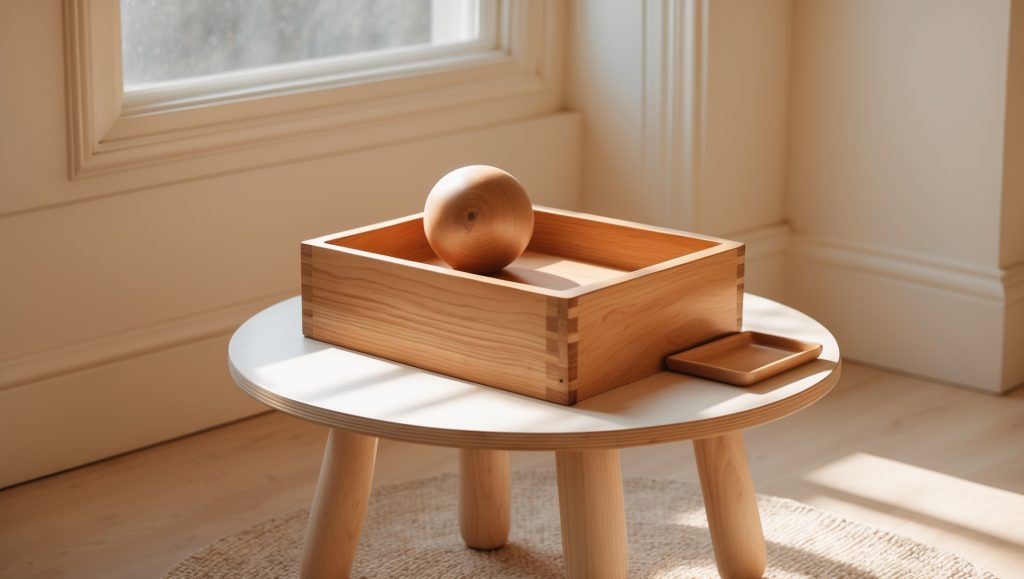
Most Montessori Object Permanence Boxes are made from sustainable, natural wood, reflecting the Montessori principle of using real, tactile materials. The standard set typically includes:
- The Box: A small, sturdy wooden box with a round hole on top and a tray or drawer at the front.
- The Ball: A smooth, wooden ball sized for little hands, often finished with child-safe, non-toxic paint or left natural.
- Tray/Drawer: The tray catches the ball after it drops through the hole, allowing the child to retrieve it easily.
Build quality varies by brand, but reputable manufacturers focus on:
- Rounded edges and corners for safety
- Thick, splinter-free wood for durability
- Securely attached tray or drawer that slides smoothly
- Non-toxic finishes compliant with U.S. safety standards
In 2025, some versions also include a soft felt pad in the tray to reduce noise and prevent the ball from bouncing out, which can be helpful for sensitive infants or quieter play environments.
Learning & Development Benefits
The Montessori Object Permanence Box is expertly designed to support multiple domains of early childhood development:
- Cognitive Growth: By repeatedly dropping the ball into the hole and watching it reappear, babies learn that objects (and people) exist even when they cannot be seen—an essential milestone in cognitive development.
- Fine Motor Skills: Grasping, releasing, and manipulating the wooden ball builds hand-eye coordination and dexterity.
- Cause and Effect: Babies quickly grasp the relationship between their action (dropping the ball) and the result (the ball reappearing in the tray), fostering early problem-solving skills.
- Concentration: The repetitive, focused nature of the activity encourages sustained attention and patience.
- Independence: The design supports self-directed play, inviting children to explore and practice at their own pace, in keeping with Montessori philosophy.
Research in child development consistently highlights the importance of hands-on, self-motivated exploration for building foundational cognitive and motor skills in infancy. The Object Permanence Box embodies these principles, making it a time-tested choice for families seeking screen-free, educational play.
Setup & Use
Setting up the Montessori Object Permanence Box is refreshingly simple, with no assembly required for most models. Here’s how to get started:
- Choose a Safe Space: Place the box on a soft play mat or low table within your baby’s reach. Ensure the surface is stable to prevent tipping.
- Introduce the Toy: Demonstrate the action by slowly dropping the ball into the hole and watching it roll into the tray. Narrate your actions to model language.
- Encourage Exploration: Invite your child to try. Early on, you may need to guide their hand or gently prompt them, but with practice, most babies delight in repeating the activity independently.
- Rotate Toys: The Object Permanence Box can be used daily but is also well-suited to toy rotation. Bringing it out periodically helps maintain interest as your baby’s skills progress.
Cleaning is straightforward: wipe the wooden surfaces with a damp cloth, avoiding harsh chemicals or submersion in water. Check regularly for loose parts, splinters, or wear, especially if the toy is used by multiple children.
Pros & Cons
Pros
- Promotes essential cognitive and motor development for infants
- Durable, sustainable materials with child-safe finishes
- Simple, timeless design aligned with Montessori principles
- Encourages independent, self-paced learning
- Easy to clean and maintain with minimal setup
- Quiet activity, suitable for shared or small spaces
Cons
- Limited play variety—may not engage older toddlers for long periods
- Some models can be noisy when the ball hits the tray (unless padded)
- Small parts require supervision for children under 3
- Cost can be higher than non-Montessori alternatives
- Wood may show wear with heavy use or if exposed to moisture
Alternatives & Similar Toys
If you’re considering the Montessori Object Permanence Box, you might also explore these alternatives, each offering related developmental benefits:
- Imbucare Boxes: Variants with different shapes (rectangle, triangle, cylinder) for advanced fine motor and shape-matching practice.
- Ball Drop Toys: Multi-level ball runs introduce gravity and cause-and-effect with more visual engagement, suitable for older infants and toddlers.
- Peekaboo Board Books: For a literary approach to object permanence, these books combine tactile exploration with early language exposure.
- Simple Shape Sorters: For babies ready to match multiple shapes, wooden or plastic sorters build on the skills developed with an object permanence box.
- DIY Bottle Drop: Repurpose a clean plastic container with a hole in the lid for a budget-friendly, homemade alternative (always supervise to ensure safety).
When choosing alternatives, prioritize materials, ease of cleaning, and age-appropriateness to ensure safe and enriching play.
Verdict
The Montessori Object Permanence Box remains a standout choice for U.S. families in 2025, especially for those seeking evidence-informed, screen-free toys that foster real developmental growth. Its understated design belies its powerful impact—supporting cognitive milestones, fine motor refinement, and independent exploration from the earliest months. While it may not offer the flashy features or prolonged novelty of some modern toys, its value lies in its focus and purpose.
For parents and caregivers aiming to build a thoughtful toy collection that grows with their child, the Object Permanence Box earns high marks for quality, educational benefit, and lasting appeal. It is a worthy investment for the first year and beyond, with the added bonus of being a beautiful keepsake or hand-me-down for future siblings or friends.
FAQ
+What age is best for introducing the Montessori Object Permanence Box?
+Is the Object Permanence Box safe for my baby?
+How do I clean and care for the box?
+Can this toy be used for more than one child?
+What skills does the Object Permanence Box help develop?
+Is it worth the price compared to other toys?
+Are there any ways to extend the play as my child grows?

Review: Montessori Object Permanence Box – A Classic Toy for Lasting Development (2025)
The Montessori Object Permanence Box remains a beloved staple in the world of developmental toys, and the 2025 edition continues this tradition with subtle improvements. This simple yet ingenious toy helps babies as young as 6 months begin to understand that objects still exist even when out of sight—a foundational cognitive leap. With its smooth wooden construction and safe, non-toxic finishes, the box invites repeated exploration. Dropping the ball into the hole and watching it reappear in the tray is endlessly fascinating for little ones, fostering not just object permanence but also fine motor skills, hand-eye coordination, and concentration.
Parents will appreciate how this classic toy encourages independent play in a screen-free, hands-on way. Its sturdy, minimalist design fits beautifully in any playroom and withstands years of enthusiastic use. The 2025 version features slightly larger openings and a gentler ball release, making it even more accessible for tiny hands. If you’re looking for a developmental toy that grows with your child, the Montessori Object Permanence Box is a practical, enduring choice that delivers lasting developmental benefits.
- Supports early cognitive and motor development
- Durable, safe, and eco-friendly materials
- Encourages independent, screen-free play
- Timeless design fits any play space
I’m interested in the safety standards mentioned for the wooden materials and finishes. If my child still tends to mouth toys occasionally, how confident can I be that mainstream Object Permanence Boxes are non-toxic, or should I look for specific safety certifications?
It’s wonderful that you’re thinking carefully about toy safety, especially since young children often mouth objects. For the Montessori Object Permanence Box, look for products labeled as non-toxic and finished with water-based paints or natural oils. Check for certifications like ASTM F963 (U.S.) or EN71 (Europe), which test for lead and harmful chemicals. Avoid boxes with chipped paint or rough edges, and supervise play to prevent small parts from becoming a hazard. If in doubt, contact the manufacturer for details on materials. This isn’t medical advice; if you’re concerned, check in with your pediatrician.
We’re setting up a play area near the bathroom to encourage independence during potty training. Would it be distracting or beneficial to keep the Object Permanence Box in that spot for short play sessions? I’d love advice on balancing toys and potty learning in that area.
It’s great that you’re supporting your child’s independence during potty training. Having the Object Permanence Box nearby can actually help, as it gives your child a familiar, calming activity while waiting or after using the potty. Keep play sessions short—just a few minutes—so the main focus stays on bathroom routines. Make sure the toy is age-appropriate and easy to clean, and supervise play to prevent small pieces from getting mixed with bathroom items. Notice how your child responds and adjust if it seems distracting. This isn’t medical advice; if you’re concerned, check in with your pediatrician.
My toddler is constantly on the move and loves anything hands-on, but sometimes gets frustrated if toys are too repetitive. Can you suggest ways to keep the Object Permanence Box engaging as my child gets closer to two years old?
It’s great that you want to keep your energetic toddler engaged and challenged. To add variety, try rotating different objects (like soft balls or blocks) that fit safely in the box to surprise your child. Encourage them to use both hands or switch hands to drop objects in, which builds coordination. Create simple games, such as counting each ball together or racing to see how many objects they can put through in a minute. For children nearing two, you can also introduce basic color or shape sorting, as long as all pieces are too large to swallow and free from choking hazards. This isn’t medical advice; if you have concerns, check in with your pediatrician.
I noticed some versions include a felt pad to reduce noise when the ball drops. My newborn naps in the same room where my older child plays—do you think the standard wooden version is too loud for light sleepers, or is the felt-lined tray worth seeking out?
It makes sense to want a quieter play space for your newborn’s naps. The standard wooden object permanence box can make a noticeable clunk when the ball drops, which might disturb light sleepers, especially in a shared room. Choosing a version with a felt pad is a simple way to soften the noise. Alternatively, you could add your own felt or soft fabric to the tray, always making sure it’s securely attached and safe for your child’s age. Supervise play to prevent mouthing or choking hazards. This isn’t medical advice; if you’re concerned, check in with your pediatrician.
After reading about the benefits of the Object Permanence Box, I’m wondering how to introduce it to a six-month-old versus a twelve-month-old. Are there any adjustments to how I would present the toy or guide play depending on my baby’s age?
It’s great that you’re thinking about how to tailor play to your baby’s developmental stage. For a six-month-old, start by demonstrating how the ball drops into the box and encourage your baby to watch, as they may not yet grasp or release objects easily—supervise closely to prevent mouthing small parts. For a twelve-month-old, let your child try dropping the ball themselves and explore opening the drawer or retrieving the ball, supporting their growing motor skills and problem-solving. Always check that the toy is age-appropriate, free of small parts, and clean. This isn’t medical advice; if you’re concerned, check in with your pediatrician.
My 10-month-old is still in the messy eating stage and sometimes gets distracted by toy textures during meals. Would you suggest letting a baby use the Object Permanence Box around mealtimes, or might it become a distraction from eating? How do you recommend balancing play and meals at this age?
It’s completely normal to notice your 10-month-old getting distracted by toys and textures, especially during meals. At this age, it’s best to keep mealtimes focused on eating, with minimal distractions—so I’d suggest saving the Object Permanence Box for playtime rather than introducing it during meals. Try to create a calm, consistent mealtime routine by putting toys away and sitting together, which helps babies learn to focus on eating. After meals, you can offer the box as part of supervised play, ensuring safe exploration. This isn’t medical advice; if you’re concerned about attention or eating, check in with your pediatrician.
Sometimes my baby gets overwhelmed by sudden noises. Would the versions with a felt pad really make a noticeable difference for a noise-sensitive infant, or are there other ways to soften the sound when the ball drops?
It’s understandable to want to minimize startling sounds for a noise-sensitive baby. The versions of the Montessori Object Permanence Box with a felt pad do make the ball drop significantly quieter, which can be gentler for sensitive infants, especially under 12 months. If you have a wooden version without a pad, you could add a piece of felt or soft fabric where the ball lands, or use a softer ball, like one made of rubber or cloth, to reduce noise. Always supervise play and check that any added materials are securely attached and free of choking hazards. This isn’t medical advice; if you’re concerned, check in with your pediatrician.
My baby can be easily startled by loud or banging sounds, even during play. If the ball drops too hard in the tray, could it be counterproductive, or does it help build noise tolerance over time?
It’s completely understandable to want to protect your baby from startling noises while supporting their development. To help your baby adjust, place the Object Permanence Box on a soft surface or use a soft ball to reduce the sound. Start with gentle demonstrations so your baby knows what to expect. Watch your baby’s reactions and pause if they’re distressed, building up their tolerance gradually. For young babies especially, supervision is important to ensure safety and comfort. Every child has a unique sensory threshold, so let your baby’s cues guide the pace. This isn’t medical advice; if you’re concerned, check in with your pediatrician.
My baby is easily startled by loud noises. Would it help to look specifically for versions with noise-dampening features, or are there other Montessori toys you might recommend for kids with sensory sensitivities?
It’s completely understandable to want to support your baby’s sensory comfort, especially if they’re sensitive to loud noises. For a baby who is easily startled, choosing an object permanence box with felt lining or soft wood can help reduce clattering sounds. Always supervise play and check for safe, age-appropriate materials without small parts. You might also explore other Montessori toys like soft stacking cups or fabric balls, which offer sensory stimulation without sudden noises. This isn’t medical advice; if you’re concerned, check in with your pediatrician.
Given that the Object Permanence Box is made of natural wood and has moving parts, how do safety and durability standards compare between individually purchased ones and subscription toys, especially after repeated use by multiple families?
It’s wise to consider both safety and durability when choosing toys like the Object Permanence Box. For individually purchased boxes, check for smooth finishes, tightly fitted pieces, and non-toxic paints, as some brands meet higher safety certification standards. Subscription toys are often inspected between uses, but wear can happen—look for clear policies on cleaning, sanitizing, and retiring damaged items. Always supervise babies, especially if small parts loosen over time. No matter the source, visually inspect the toy for splinters, cracks, or loose balls before each use. This isn’t medical advice; if you’re concerned, check in with your pediatrician.
How do you handle safety if a child still mouths objects a lot or throws the ball around? Is the wooden ball generally large enough to avoid choking risks, and are there particular brands or designs that you find safest for very active or curious kids?
It’s great that you’re thinking about safety, especially if your child frequently mouths or throws objects. First, always supervise play with the object permanence box, as even larger balls can pose a risk if a child is determined. Most Montessori-style wooden balls are about 1.75 inches in diameter, generally too large to be a choking hazard, but double-check the size against a toilet paper roll—if it fits inside, it’s not safe. Look for smooth, unfinished wood without small detachable parts, and avoid any with paint that could chip. For very active kids, choose brands known for sturdy construction and rounded edges. This isn’t medical advice; if you’re concerned, check in with your pediatrician.
The article mentions most kids use this between 6 and 12 months, but is there any developmental benefit for a two-year-old who already knows about object permanence? Can I adapt activities with this box to keep engaging my older toddler?
It’s great that you’re looking for ways to keep your two-year-old engaged with familiar toys. While a two-year-old typically understands object permanence, you can adapt the box for new skills. Try using the box for simple sorting games, color matching, or asking your child to put in and name different objects. You can also encourage turn-taking if playing together, or introduce counting as they drop objects in the box. Always supervise to ensure pieces are safe and not too small. This isn’t medical advice; if you’re concerned, check in with your pediatrician.
We usually tidy up right after bedtime stories, and I am wondering if the ball and box pieces are easy to keep organized, or if you have advice for making cleanup part of the routine using this toy, especially with a busy toddler.
It’s great that you’re involving your toddler in tidying up after bedtime stories. The Montessori Object Permanence Box usually has just two pieces—the box and the ball—which makes cleanup straightforward. Try making cleanup a short, playful game: show your toddler how to place the ball in the box and then put the box on a shelf together. Use simple language like ‘Let’s help the ball go home!’ and be consistent each night. For toddlers under 3, supervise cleanup to prevent choking risk with the ball, and store pieces out of reach when not in use. This isn’t medical advice; if you’re concerned, check in with your pediatrician.
I’m curious how you would suggest a bilingual family might incorporate the Object Permanence Box into both English and Spanish bedtime routines. Are there specific language cues or phrases you recommend using during play to reinforce both languages effectively?
It’s wonderful that you want to support both English and Spanish in your bedtime routines. During Object Permanence Box play, you can narrate actions in both languages, like saying ‘Where did the ball go? Aquí está la pelota.’ Use simple phrases such as ‘Put in’ and ‘Pon adentro,’ or ‘Open the door’ and ‘Abre la puerta.’ Take turns describing the toy and actions in each language, and invite your child to do the same. For younger children, keep sentences short and clear, repeating key words. Always supervise closely and ensure the toy’s parts are safe for your child’s age. This isn’t medical advice; if you’re concerned, check in with your pediatrician.
At what age would you recommend starting to introduce the Object Permanence Box if my baby seems less interested in grasping and more focused on watching? Should I wait until she shows more dexterity, or is watching enough at first?
It’s great that you’re attuned to your baby’s interests and developmental cues. For most infants, the Object Permanence Box can be introduced around 6–8 months, but it’s perfectly normal if your baby is more interested in watching than grasping at first. You can begin by demonstrating how the toy works and letting her observe; curiosity and visual engagement are valuable early steps. Place the box within her sight and allow her to reach for it when she’s ready. Supervise closely to ensure safety, especially with small parts. This isn’t medical advice; if you’re concerned about her motor development, check in with your pediatrician.
I live in a small apartment with limited storage. Do you have recommendations for storing larger wooden toys like the Object Permanence Box, or suggestions for how to incorporate it into play spaces without adding clutter?
It’s understandable to want to keep your space tidy while supporting your child’s development. Try designating a single low shelf or basket for active toys like the Object Permanence Box, rotating others out of sight to reduce clutter. You can also use multi-purpose furniture, such as a storage ottoman, to keep toys accessible but hidden when not in use. Incorporating the box into a daily play routine and putting it away together can help teach organization. Always ensure storage solutions are safe, stable, and free of hazards for your child’s age group. This isn’t medical advice; if you’re concerned, check in with your pediatrician.
My three-year-old is easily distracted during our bedtime routine. Would including the object permanence box help build his focus before sleeping, or should we stick to books and quieter activities at that age?
You’re thoughtful to consider ways to help your three-year-old wind down at bedtime. At this age, most children benefit from calm, predictable routines—quiet activities like reading or gentle music usually support better sleep. The Montessori object permanence box is designed for younger babies and involves placing balls in a box, which can be stimulating rather than calming for a preschooler. For bedtime, stick to soothing, screen-free activities in dim lighting. If your child needs a hands-on task, try simple puzzles or soft toys, but keep it low-key. This isn’t medical advice; if sleep issues continue, check in with your pediatrician.
My 2-year-old is transitioning out of baby toys, but I wonder if the Montessori Object Permanence Box still offers enough challenge and engagement at this age. Do you have suggestions on how to adapt its use for toddlers a bit older than the typical range mentioned?
It’s great that you’re looking to keep your toddler engaged as they grow. For a 2-year-old, you can adapt the Montessori Object Permanence Box by introducing more complex objects (like balls of different textures or colors), encouraging your child to name or match the items before dropping them in, or turning it into a turn-taking game to build social skills. You might also try hiding objects and asking your child to guess what’s inside, which supports memory and language. Always supervise play and check that objects are safe and not choking hazards. This isn’t medical advice; if you’re concerned, check in with your pediatrician.
We try to keep our play area clutter-free, and storage is always a concern. Does this object permanence box tend to take up a lot of space, or is it a compact toy that’s easy to put away after use?
It’s great that you’re mindful about keeping your play area clutter-free. The Montessori object permanence box is usually quite compact—most versions are about the size of a small tissue box—so it shouldn’t take up much space. You can easily store it on a low shelf or in a bin when not in use. After playtime, show your child how to help put it away to encourage tidiness. Always check that the box and its ball are safe for your child’s age to avoid any choking hazards. This isn’t medical advice; if you have specific concerns, consult your pediatrician.
I saw that some versions include a drawer while others have just a tray. Is one design better for encouraging independence or easier for young toddlers to use, especially in a daycare environment where cleanup and repeated play happen all day?
—choosing the right design can really support independence and ease of use for little ones. The classic tray version is usually simpler for young toddlers, allowing them to retrieve the ball easily and repeat the action, which is ideal for quick cleanup and repeated use in a busy daycare. The drawer version adds a step—pulling out the drawer—which can challenge older toddlers’ fine motor skills, but might be trickier for those under 18 months and slow down the flow of play. Always supervise closely, and be sure the toy is sturdy with no small parts that could pose a choking risk. This isn’t medical advice; if you’re concerned, check in with your pediatrician.
I noticed some boxes include a felt pad to reduce noise. My daughter is quite sensitive to loud sounds—do you think this version would be better for her, or is the regular wooden box usually quiet enough?
You’re thoughtful to consider your daughter’s sensitivity to sounds. For children who are sensitive to noise, choosing a version with a felt pad can make a big difference—the felt helps muffle the sound of the ball dropping, making play more comfortable and less startling. If you already have a regular wooden box, you can line the tray with a soft fabric or felt yourself. Always supervise during play, and check that any padding is securely attached and free of choking hazards. This isn’t medical advice; if you’re concerned, check in with your pediatrician.
I noticed the article mentioned some boxes have a felt pad to soften the ball’s landing. My child is very sensitive to loud noises, so I’m wondering if this really makes a significant difference for noise reduction, or if there are other ways to make this toy quieter?
You’re thoughtful to consider your child’s sensitivity to sound. The felt pad can noticeably muffle the noise when the ball drops, making play gentler for little ears. If you want to reduce noise further, you could add extra layers of felt or a soft cloth inside the box where the ball lands. You might also use a lighter-weight wooden or rubber ball instead of a solid one. Always supervise play and check materials for choking hazards, especially for babies under 12 months. This isn’t medical advice; if you’re concerned about your child’s sensitivities, check in with your pediatrician.
You mentioned child-safe, non-toxic finishes on the wood. If I were to consider a plastic alternative, are there specific safety standards or certifications I should look for to ensure it’s just as safe for mouthing and handling?
You’re right to prioritize safety, especially since babies love to mouth their toys. For plastic alternatives, look for products labeled BPA-free, phthalate-free, and free from PVC. Check for certifications like ASTM F963 (in the US) or EN71 (in Europe), which cover safety for children’s toys. Choose toys made for your child’s specific age range, as these are tested for choking hazards and durability. Always supervise play and inspect toys regularly for cracks or loose parts. This isn’t medical advice; if you’re concerned, check in with your pediatrician.
Budget is a factor for us, and I’ve seen a few object permanence boxes at different price points. Are there less expensive versions that still offer safe materials and a gentle sensory experience, or is it worth investing in a higher-end brand for a more sensitive child?
It’s understandable to want a safe, nurturing toy that also fits your budget. Many affordable object permanence boxes use natural wood and non-toxic finishes, but check for smooth edges and safety certifications regardless of price. For sensitive children, prioritize boxes with gentle finishes, larger balls, and soft movement to avoid startling noises. Supervise play to ensure the toy’s pieces aren’t choking hazards if your child is under 3. You don’t always need a high-end brand—just inspect materials and craftsmanship carefully. This isn’t medical advice; if you’re concerned, check in with your pediatrician.
Do you have any insight on how the performance or child development benefits of the Object Permanence Box might change if it’s made from plastic rather than the traditional wood? I’m weighing eco-friendliness against ease of cleaning in a busy household.
Balancing eco-friendliness with practicality is a thoughtful approach. Both plastic and wood versions can support object permanence and fine motor skills if the design is safe and age-appropriate. Choose a box with smooth edges, no small detachable parts, and non-toxic materials. Wood has a sensory advantage—it feels warmer and offers varied texture, which can enhance tactile exploration. Plastic is easier to sanitize, making it practical in busy homes. Either way, always supervise babies during play. This isn’t medical advice; if you’re concerned, check in with your pediatrician.
I’m interested in the learning benefits, but space is a concern in our home. Is the box easy to store, or would you suggest a different Montessori toy for families with limited room?
It’s completely understandable to want toys that fit easily into your space while still offering learning benefits. The Montessori Object Permanence Box is fairly compact—typically about the size of a shoebox—so it’s easy to store on a shelf or in a drawer when not in use. If every bit of space counts, consider smaller Montessori toys like stacking cups or simple wooden grasping rings, which also support fine motor skills and object permanence. Always ensure any toy is safe for your child’s age, with no small parts for babies. This isn’t medical advice; if you’re concerned, check in with your pediatrician.
We have some sensory sensitivities in our home, especially with sudden noises. Do you think the versions with the felt pad in the tray really make a noticeable difference for reducing sound, and are there other quieter alternatives you would suggest?
It’s very thoughtful of you to consider sensory sensitivities when choosing toys. Versions of the Montessori Object Permanence Box with a felt pad do noticeably dampen the sound when the ball drops, making play much quieter and more comfortable for noise-sensitive children. For extra quiet, look for boxes with both a felt pad in the tray and a soft ball, like a plush or rubber ball instead of wood. As alternatives, you might try homemade object permanence activities using fabric or silicone containers and soft objects. Always ensure any pieces are large enough not to be a choking hazard and supervise play. This isn’t medical advice; if you’re concerned, check in with your pediatrician.
We are working on establishing a calm bedtime routine, but my baby tends to get overstimulated before naps and at night. Do you have any suggestions for using the Object Permanence Box in a way that promotes winding down, or is it better reserved for playtimes earlier in the day?
You’re doing a great job noticing your baby’s cues and wanting to support calmer sleep times. The Object Permanence Box is wonderfully engaging, but its movement and cause-and-effect nature can be stimulating for many babies, especially just before sleep. For winding down, try reserving this toy for earlier in the day and choose quieter bedtime activities like soft singing, gentle rocking, or reading simple books. If you’d like to include the box in your routine, keep the environment very calm and limit play to a few minutes, watching for signs of excitement. This isn’t medical advice; if you have ongoing sleep concerns, check in with your pediatrician.
I’m curious how you recommend fitting Object Permanence Box play into a daily routine for a baby who struggles with nap transitions. Could this toy help make wind-down time smoother, or might it be too stimulating right before sleep?
It’s understandable to want smoother nap transitions for your baby. The Object Permanence Box is best used during awake, alert playtimes rather than right before naps, as it can be quite engaging and may make it harder for little ones to wind down. Try offering the box after naps or mid-morning when your baby is well-rested. For pre-nap routines, focus on calm, soothing activities such as gentle rocking, lullabies, or soft books. Always supervise play to ensure safety, especially since small parts can be a choking hazard. This isn’t medical advice; if you’re concerned, check in with your pediatrician.
For households with multiple children, do you recommend sticking to wooden versions for their sustainability and durability, or are there situations where a high-quality plastic version might be preferable, such as for easier cleaning or outdoor use?
You’re thoughtfully weighing durability and practicality for your family. Wooden Montessori Object Permanence Boxes are sturdy and sustainable, making them great for long-term, safe indoor use—especially with multiple children. However, high-quality plastic versions can be more practical if you need a toy that’s easy to sanitize or suitable for outdoor play, since they resist moisture and are often lighter. Always check that any version is free from small, detachable parts and non-toxic materials, especially if you have toddlers or babies. This isn’t medical advice; if you’re concerned, check in with your pediatrician.
Does the wooden ball ever pose a choking risk if my baby is still mouthing objects regularly, or are all reputable brands careful about making the ball large enough to avoid that?
It’s great that you’re thinking about safety while your baby explores and mouths toys. Most reputable Montessori object permanence boxes use balls larger than the standard choking hazard size (about 1.75 inches in diameter), but it’s still important to double-check the size yourself. Always supervise play, especially with babies under 1 year, and inspect the ball regularly for cracks or damage. If you have any doubts, you can measure the ball or contact the manufacturer directly. This isn’t medical advice; if you’re concerned, check in with your pediatrician.
We love incorporating Montessori toys at home, but I’m wondering how to gently introduce the Object Permanence Box to my 7-month-old who still mostly mouths toys rather than using them purposefully. Any practical suggestions for making the first few play sessions engaging and safe?
It’s wonderful that you’re tuning into your baby’s developmental stage and want to make play safe and meaningful. At 7 months, mouthing is completely normal and an important way for babies explore. Start by placing the Object Permanence Box within your baby’s reach during tummy time, allowing plenty of supervised mouthing of the ball and box. Demonstrate dropping the ball in and let your baby try, even if they mostly mouth or bang the pieces. Keep sessions short—just a few minutes—and always supervise closely due to small parts. Wipe down the toy before and after play in case it goes in your baby’s mouth. This isn’t medical advice; if you have concerns about safety or readiness, check with your pediatrician.
Occasionally, my parents bring over small cultural snacks that can be a bit crumbly or greasy. Is it okay for babies to use the Object Permanence Box immediately after snack time, or should we wait and wash their hands first to prevent potential issues with the wood or safety?
You’re right to think about both safety and toy care after snack time. For infants and young toddlers, it’s best to wash their hands before using the Object Permanence Box, especially if snacks are oily or crumbly. This prevents slippery hands, accidental mouthing, and keeps wooden surfaces from absorbing grease or developing sticky spots. Wipe down the box regularly with a damp cloth to maintain hygiene. Always supervise play to avoid any small food bits mixing with toy parts. This isn’t medical advice; if you’re concerned, check in with your pediatrician.
You mention the durability and safety of the wood materials used. Are there brands that are more budget-friendly without sacrificing safety features like rounded edges and non-toxic finishes, especially since babies often mouth their toys right after eating?
It’s great that you’re prioritizing both budget and safety for your baby’s toys. First, look for Montessori object permanence boxes labeled with safety certifications such as ASTM or EN71, which require rounded edges and non-toxic finishes. Second, choose brands that openly list their materials as BPA-free, lead-free, and finished with water-based paints. Third, check buyer reviews for mentions of product quality and durability. Finally, always wash hands and clean toys regularly, especially if they’ve come in contact with food. Most of these boxes are designed for babies 6 months and up, but always supervise play to avoid choking hazards. This isn’t medical advice; if you have concerns, check in with your pediatrician.
Is it okay to let my 7-month-old use the Object Permanence Box independently, or should I be nearby in case he gets frustrated or tries to put the ball in his mouth? I want him to be safe but also learn on his own.
It’s wonderful that you want your baby to explore and learn safely. At 7 months, most babies are still exploring objects by mouthing, so close supervision is important with toys like the Object Permanence Box. Sit nearby while your baby plays, watching for signs of frustration or any attempt to put the ball in his mouth, since it could be a choking hazard. Offer gentle encouragement and help if he seems stuck, but also give him small chances to try on his own. Always check the toy for any small or loose parts before playtime. This isn’t medical advice; if you’re concerned, check in with your pediatrician.
I’m curious about the durability—if we’re looking at several babies using this toy over the years, how well does the Object Permanence Box typically hold up? Would investing in a higher-priced model make a noticeable difference for long-term family use?
It’s thoughtful to consider durability when planning for multiple children to use a toy. The Object Permanence Box is generally sturdy, but quality can vary: lower-priced models may use thinner wood or weaker finishes that can wear down faster with frequent use. For long-term family use, consider models with solid wood construction, reinforced edges, and non-toxic finishes, as these tend to better withstand drops and repeated handling. Always check for loose parts or splinters between uses, especially for babies under 18 months. Investing in a higher-priced, well-reviewed version can be worthwhile for safety and longevity. This isn’t medical advice; if you’re concerned, check in with your pediatrician.
How much time per day is ideal for a six-month-old to spend playing with the Object Permanence Box? Should I offer it daily as part of a routine or just when my baby shows interest?
It’s wonderful that you’re tuned into your baby’s curiosity and routine. For a six-month-old, short, supervised play sessions of 5–10 minutes are ideal, as their attention spans are still developing. You can offer the Object Permanence Box once or twice a day, watching for your baby’s cues; if they seem engaged, let them explore, but it’s fine to put it away when they lose interest. Making it part of a gentle daily routine can help, but flexibility is key at this age. Always supervise closely, and check that the toy’s parts are large enough to avoid choking hazards. This isn’t medical advice; if you have concerns, check in with your pediatrician.
If I want to create object permanence activities for a slightly older child, maybe closer to 18 months, what household items or variations would you suggest to keep the activity interesting and continue building on those cognitive skills?
It’s great that you want to make object permanence activities engaging for your 18-month-old. Try hiding small toys under cups and letting your child find them, swapping the cups around to add a memory challenge. Use a tissue box with scarves or soft cloths inside for your child to pull out and discover. You can also create a peekaboo game with bigger boxes or baskets, encouraging your child to look for hidden items. Always supervise closely, and ensure pieces are too large to swallow and free from choking hazards. This isn’t medical advice; if you’re concerned, check in with your pediatrician.
Our home is bilingual, and sometimes bedtime routines include quiet playtime to help our baby wind down. Would you recommend using the Object Permanence Box before naps or bedtime, or could that be too stimulating for some babies?
It’s great that you’re thinking about how play impacts your baby’s routines. The Montessori Object Permanence Box can be calming for some infants, but for others, the dropping and retrieval action may feel exciting or energizing, especially before sleep. Try observing your baby’s reactions: if they seem more alert or active afterward, it might be better to use the box earlier in the day. If they stay calm and focused, a brief, supervised session before naps could be fine. Always supervise closely and make sure no small parts are accessible. This isn’t medical advice; if you’re concerned, check in with your pediatrician.
Our toy storage is pretty limited, and we’re trying to choose multipurpose or compact items. How big is the Montessori object permanence box, and do you know if any versions are designed to easily fit on smaller shelves or in baskets?
It makes sense to want compact, versatile toys when storage is tight. Most Montessori object permanence boxes are fairly small—typically around 5 to 6 inches wide and deep, and 3 to 4 inches high—so they usually fit well on standard shelves or inside baskets. Look for versions without attached trays or oversized balls, as these tend to be even more compact. When shopping, check product dimensions and consider a box with a removable lid or ball for easier storage. Just make sure the ball is large enough to avoid choking hazards if your child is under three. This isn’t medical advice; if you’re concerned, check in with your pediatrician.
I noticed that some versions add a felt pad to soften the noise—do you think this makes a big difference for babies who are sensitive to loud sounds, or is it mostly a nice-to-have?
You’re thoughtful to consider your baby’s sensitivity to sound. For little ones who startle easily or dislike sudden noises, a felt pad can genuinely make a difference by muffling the clatter when the ball drops. If your baby seems sound-sensitive—covering ears, crying, or startling often—the softer, quieter version is likely more comfortable. For most babies, it’s a nice extra but not essential. Always supervise play and check that any added materials are securely attached and safe for mouthing. This isn’t medical advice; if you’re concerned, check in with your pediatrician.
Can you recommend a way to incorporate the Object Permanence Box into a toddler’s daily routine, especially during potty training? I wonder if a few minutes of focused play could help with the transition and encourage more independence.
You’re thoughtful in wanting to support your toddler’s independence during potty training. Try setting aside a few minutes to play with the Object Permanence Box right after each successful potty attempt—this can serve as a calming, rewarding activity and helps reinforce routines. Keep the box nearby in a safe, clean spot to encourage self-directed play, and let your child use it with your supervision. For toddlers, always check for small parts and stay close by. This isn’t medical advice; if you’re concerned, check in with your pediatrician.
We have a very active little one who sometimes puts toys in her mouth and throws them around. Should I be concerned about the safety of the wooden ball, or are there specific features I should look for to ensure it’s safe?
It’s completely understandable to be mindful about toy safety, especially with an active baby who explores by mouthing and throwing. For the Montessori Object Permanence Box, check that the wooden ball is large enough not to pose a choking hazard—generally, it should be at least 1.75 inches in diameter for babies under three. Make sure the ball and box have smooth, splinter-free surfaces and are coated with non-toxic, child-safe finishes. Always supervise playtime, particularly for children under 18 months. If the ball shows any cracks or wear, replace it right away. This isn’t medical advice; if you’re concerned, check in with your pediatrician.
My baby is very sensitive to sounds and sudden noises, especially before naptime. You mentioned some boxes have a felt pad to make them quieter. Are there any other modifications or specific brands you recommend for a more calming bedtime routine?
It’s understandable to want a calm environment for a baby who’s sensitive to noise, especially before naps. Besides choosing a box with a felt pad, look for versions that use soft wood and have smooth, well-fitted components to prevent clattering. You can also line the inside with an extra layer of felt or soft fabric for extra quietness—just be sure any materials are securely attached and non-toxic. Always supervise play, especially with babies under 12 months, and avoid small parts that could be choking hazards. This isn’t medical advice; if you’re concerned, check in with your pediatrician.
Do you have any tips for storing Montessori toys like the Object Permanence Box in small living spaces without losing the accessibility aspect that supports independent play?
It’s great that you want to keep Montessori toys accessible while making the most of a small space. Try using low, open bins or baskets on a shelf at your child’s level so they can reach and return the Object Permanence Box independently. Rotate which toys are out to avoid clutter and overstimulation—store extras in a closet or under-bed container. Label bins with pictures for toddlers to encourage sorting and cleanup. Make sure all toy materials are safe and age-appropriate, avoiding baskets with sharp edges or breakable parts. This isn’t medical advice; check in with your pediatrician if you have concerns.
Do you have any recommendations for safely storing the ball and box after playtime so it doesn’t cause clutter or get lost around the house? We have limited space, so practical storage tips would be helpful.
It’s great you want to keep play areas tidy and safe, especially in a small space. Try placing the ball and box together in a soft fabric basket or a clear plastic bin with a secure lid—they’re easy to grab and put away. Store the container on a low shelf within your child’s reach to encourage independent cleanup, but out of reach of younger siblings if choking is a concern. Consider labeling the bin or basket with a photo for easy identification. Always check that storage options are free from sharp edges or loose parts. This isn’t medical advice; if you have any safety concerns, check in with your pediatrician.
My toddler gets overstimulated by loud noises. Is the version with a felt pad in the tray noticeably quieter, and does it still offer the same learning benefits as the standard wooden version?
It’s completely understandable to want a quieter toy for your toddler if they are sensitive to noise. The Montessori Object Permanence Box with a felt pad in the tray is noticeably quieter because the felt muffles the sound of the ball dropping, making it gentler for noise-sensitive toddlers. This version still offers the same learning benefits as the standard wooden one, such as hand-eye coordination and object permanence. For toddlers, both options are age-appropriate and safe when used with supervision to prevent choking hazards. This isn’t medical advice; if you’re concerned, check in with your pediatrician.
We are raising our baby to speak both English and Spanish at home, and I am wondering if you have any suggestions for integrating simple language routines with the Object Permanence Box—maybe incorporating both languages during play? Does using bilingual cues enhance the developmental benefits of this toy?
It’s wonderful that you’re supporting your baby’s bilingual development and looking for ways to make playtime more enriching. With the Object Permanence Box, you can easily integrate both English and Spanish by naming the ball, the box, and actions in each language—for example, say “ball” and “pelota” as you hand it to your child, or “in the box” and “en la caja” as they drop it in. You might also use simple phrases, switch between languages on each turn, or ask questions like “Where did it go?” and “¿Dónde está?” This kind of routine supports language learning and strengthens cognitive flexibility without making play confusing. Always supervise closely, especially with infants, to ensure safety. This isn’t medical advice; if you’re concerned, check in with your pediatrician.
If space is tight and we need to limit the number of toys in our living room, how does the Object Permanence Box compare to similar developmental toys in terms of storage and versatility for toddlers?
It’s understandable to want toys that don’t take up too much room but still support your toddler’s development. The Montessori Object Permanence Box is compact—typically smaller than many stacking or sorting toys—and easily fits on a shelf or in a basket. It also encourages repeated play, teaching cause and effect, hand-eye coordination, and concentration. For versatility, you can rotate balls or small safe objects for added challenge, but always supervise to prevent choking hazards. This toy is best for babies around 8 to 18 months. This isn’t medical advice; if you’re concerned, check in with your pediatrician.
My toddler is extremely active and tends to bang or throw toys during play. How sturdy is the Montessori Object Permanence Box in practice, and does the felt pad really help reduce the noise enough for a busy household?
It’s understandable to want a toy that stands up to your toddler’s energetic play. The Montessori Object Permanence Box is generally sturdy and made to handle repeated use, but like most wooden toys, it’s best with supervised play to prevent damage from hard throwing or banging. The felt pad does dampen the noise when the ball drops, making it quieter than many similar toys, though it won’t eliminate all sounds if the box itself is thrown. For safety, watch for loose parts or splinters after rough play, and if your toddler is still mouthing toys, check for safe finishes. This isn’t medical advice; if you’re concerned, check in with your pediatrician.
We try to limit screen time to about 30 minutes daily and encourage more hands-on play, especially after preschool. Does the object permanence box work well as a self-directed activity for winding down before dinner, or is it better used earlier in the day?
It’s great that you’re encouraging hands-on play and being mindful about screen time. The Montessori object permanence box is a gentle, self-directed activity that works well for winding down before dinner, especially for toddlers around 6–18 months. Set up the box in a calm, safe space and let your child explore at their own pace, staying nearby for supervision. Keep sessions short—about 5 to 10 minutes—so it remains engaging but not overstimulating. Always check for small parts and use age-appropriate versions to ensure safety. This isn’t medical advice; if you’re concerned, check in with your pediatrician.
My toddler can be startled by loud sounds. Do you find the versions with the felt pad in the tray make a significant difference for sensory-sensitive kids, or are there other features I should consider for quieter play?
It’s understandable to want to make playtime comfortable for a sensory-sensitive toddler. Versions of the Montessori Object Permanence Box with a felt pad in the tray do help soften the sound when the ball drops, which many parents find reduces startling reactions. For even quieter play, choose wooden balls instead of heavier ones, supervise closely to control the pace of play, and introduce the box in a calm, familiar environment. Always check that all pieces are large enough to avoid choking hazards and are free from allergens. This isn’t medical advice; if you’re concerned, check in with your pediatrician.
We have a very limited play space at home and try to keep clutter to a minimum. How bulky is the standard Object Permanence Box, and do you know if any foldable or more compact versions exist, while still being true to Montessori principles?
It’s great that you’re thinking carefully about your play space and your child’s needs. Most standard Object Permanence Boxes are quite compact, usually measuring around 5 to 6 inches wide, so they generally fit well in small spaces. While traditional Montessori designs are sturdy and not foldable, you might find smaller travel versions made from wood or safe materials—just make sure they aren’t so tiny that the ball becomes a choking hazard for babies under 3. Always supervise play to ensure safety. This isn’t medical advice; if you’re concerned, check in with your pediatrician.
I’m curious if there are any tips for storing Montessori toys like the Object Permanence Box when space is limited. Can it be repurposed for other types of play as my child grows, or will it mostly just take up space after the first year?
It’s great that you’re thinking about both play value and storage space. To save room, consider stacking smaller toys inside the Object Permanence Box when not in use, or using it as a container for other baby-safe items. As your child grows, the box can become a pretend mailbox, a treasure chest, or a sorting bin for larger beads or balls. Always check for loose or small pieces that could be a choking risk as your child gets older. This isn’t medical advice; if you’re concerned, check in with your pediatrician.
We are on a budget with twins, so before buying, I’m curious if there are safe DIY alternatives to the wooden Object Permanence Box that still support similar development, or is the tactile quality too important to compromise?
It’s so thoughtful to look for budget-friendly ways to support your twins’ development. You can absolutely make a safe DIY version that helps nurture object permanence. Use a sturdy cardboard box with a hole cut just big enough for a baby-safe ball; make sure there are no sharp edges or loose parts. Tape the box securely, and supervise play to prevent mouthing or tearing. You can also use a plastic container with a soft lid and a slit for dropping objects. While solid wood offers unique tactile feedback, most babies will benefit just as much from a safe, well-made DIY option. This isn’t medical advice; if you’re concerned, check in with your pediatrician.
We have a very small nursery and are worried about adding more toys. How big is the typical Montessori Object Permanence Box, and does it store easily? Is it worth making space for if we already have stacking toys?
You’re thoughtful to consider space and value before adding new toys to your nursery. Most Montessori Object Permanence Boxes are compact, typically around 5–6 inches per side, making them easy to store on a shelf or in a small bin when not in use. If you have stacking toys, the Object Permanence Box offers a different developmental focus: it helps babies around 6–12 months understand that objects still exist even when out of sight. If space is very limited, you might rotate toys rather than display them all at once. Always supervise to ensure safe play, especially for babies still mouthing objects. This isn’t medical advice; if you’re concerned, check in with your pediatrician.
My son is sensitive to loud noises, especially when he’s tired. Does the felt pad version really make the box quieter, or should I look for one with even softer materials to avoid startling him during playtime?
It’s completely understandable to want a peaceful playtime environment for your son, especially if he’s sensitive to noise. The felt pad version of the object permanence box does noticeably soften the sound when the ball drops, making it much quieter than wooden or plastic bases. For extra quiet, you could add an additional felt or soft fabric layer, making sure it’s securely attached and doesn’t pose a choking risk. Always supervise during play to ensure safety, especially with small parts and loose materials. This isn’t medical advice; if noise sensitivity persists or worsens, it’s a good idea to check in with your pediatrician.
Our family is on a tight budget and lives in a small apartment, so I am curious if the Object Permanence Box takes up much space. Are there any compact or travel-friendly versions you would recommend that still provide all the developmental benefits?
It’s completely understandable to want toys that fit both your space and your budget. The Object Permanence Box is usually quite compact—most are about the size of a small tissue box, making them easy to store or bring out as needed. If space is especially tight, look for miniature or foldable versions, or even consider simple DIY alternatives using a small box and a soft ball. Always make sure that any homemade version has smooth edges and uses non-toxic materials if your baby is still mouthing objects. This isn’t medical advice; if you’re concerned, check in with your pediatrician.
I would love to keep our play area minimal. Is the Object Permanence Box versatile enough to be used beyond the typical 6–12 month age range, or might it be too simple for older toddlers who are seeking more challenge?
You’re thoughtful about choosing toys that grow with your child and suit a streamlined play area. The Object Permanence Box is most engaging for babies around 6–12 months as they learn about cause and effect, but older toddlers often seek more complex activities. To extend its use, you could: 1) introduce different-sized balls (safe and non-chokable), 2) encourage your child to use tongs for placing the ball, 3) hide small safe objects in the box for retrieval, or 4) use it for counting games. Always supervise play, especially with small parts. This isn’t medical advice; if you’re concerned, check in with your pediatrician.
My son is sensitive to loud noises and sudden sounds startle him. Do you find the versions with felt pads inside the tray really make a difference for sensory-sensitive babies, or should I consider other quiet Montessori alternatives at this age?
It’s very thoughtful of you to seek out quieter options for your son’s comfort. Versions of the Montessori Object Permanence Box with felt pads inside the tray do help soften the sound when the ball drops, which can be gentler for sensory-sensitive babies, especially around 7–12 months. When trying one, introduce it slowly and watch his reactions. You might also consider alternatives like fabric posting toys or soft stacking cups, which tend to be quieter. Always supervise play and check for age-appropriate, safe materials. This isn’t medical advice; if you have ongoing concerns, please consult your pediatrician.
My toddler tends to throw toys when he gets frustrated. Do you think the object permanence box is sturdy enough to handle this kind of rough play, or should I be extra careful about the materials when choosing one?
It’s completely normal to worry about durability when your toddler is exploring through throwing. The Montessori Object Permanence Box is generally quite sturdy, but quality can vary, so check that the one you choose is made from solid wood with smooth, rounded edges. Make sure all parts are well-secured and too large to be choking hazards. Supervise play closely to keep everyone safe and help your child practice gentler ways to explore. This isn’t medical advice; if you’re concerned, check in with your pediatrician.
Would you recommend buying this over stacking cups or shape sorters for a tight budget? I want to make sure I’m picking the most versatile developmental toy for my toddler.
It’s great that you’re carefully considering which toy will offer the most value for your toddler. Stacking cups and shape sorters are both highly versatile and support a wide range of developmental skills, including fine motor coordination, problem-solving, and early math concepts. The Montessori Object Permanence Box is excellent for understanding object permanence, but its play options are more limited. For a tight budget, stacking cups or a shape sorter might give you more play and learning opportunities over time. Be sure to choose options with safe, sturdy materials and no small parts for toddlers. This isn’t medical advice; if you’re concerned, check in with your pediatrician.
Is there any guidance on what to look for in terms of ball size when purchasing a Montessori Object Permanence Box to make sure it does not pose a choking risk? I want to feel confident the toy is appropriate for my 8-month-old who sometimes mouths toys.
It’s completely understandable to want your baby’s toys to be safe for mouthing at this age. For an 8-month-old, choose a ball that is at least 1.75 inches (about 4.5 cm) in diameter, which is larger than the standard choking tube used for safety testing. Avoid any balls or parts that could fit entirely into a toilet paper roll. Make sure the material is smooth and non-toxic, and always supervise play, especially with babies who explore by mouthing. This isn’t medical advice; if you’re concerned, check in with your pediatrician.
We have a very limited space in our apartment and already have so many toys. Is the Object Permanence Box bulky, or does it store away easily? Any creative storage tips for families with lots of toddler gear?
It’s understandable to want toys that fit easily into a small living space. The Montessori Object Permanence Box is usually compact—about the size of a shoebox—and can be tucked onto a shelf or inside a basket. Try storing it with other small wooden toys in a clear bin, or use stackable containers to keep similar items together. Rotating toys in and out (rather than keeping them all accessible) also helps reduce clutter and keeps your toddler engaged. Always make sure storage bins are safe and accessible for little hands. This isn’t medical advice; if you have safety concerns, check in with your pediatrician.
If budget is a concern, are there alternative toys that foster similar object permanence skills and can be easily used as part of a consistent bilingual bedtime routine?
It’s wonderful that you’re looking for ways to support your little one’s development, even on a budget. You can use everyday items like a small box with a lid and a soft ball to mimic the Montessori Object Permanence Box—simply hide and reveal the ball during play, narrating in both languages. Peek-a-boo games with a cloth or scarf are another great way to practice object permanence while encouraging bilingual language exposure. Always supervise your baby, choose safe, non-choking materials, and keep routines gentle and predictable. This isn’t medical advice; if you have concerns about your child’s development, check in with your pediatrician.
You mentioned the importance of self-directed play with this toy. Should I introduce the Object Permanence Box during independent playtime only, or is it better to sit with my baby and guide them through the activity at first?
It’s great that you’re thinking about how to support your baby’s learning with the Object Permanence Box. For most babies around 6 to 12 months, it’s helpful to sit nearby during the first few play sessions—show how the ball goes in and comes out, then let your baby try on their own. After a few demonstrations, allow more independent exploration but stay close for safety, since small parts require supervision. Gradually, as your baby gets familiar and confident, you can give them more space to play solo. This isn’t medical advice; if you’re concerned, check in with your pediatrician.
With so many versions of this toy on the market, do you know if any specific brands go above and beyond US safety regulations regarding small parts? I’d feel more comfortable knowing which companies prioritize this aspect.
It’s wonderful that you’re prioritizing your child’s safety when choosing toys. While most reputable Montessori brands follow US safety standards, some, like Lovevery and Hape, are known for exceeding regulations with rigorous third-party testing and high-quality materials. Look for brands that use non-toxic finishes, large single-piece designs, and clear age recommendations (usually 6+ months) to minimize choking risks. Always supervise play and inspect for any loose or broken parts after each use. This isn’t medical advice; if you’re concerned, check in with your pediatrician.
As a parent navigating both potty training and playtime, how do you recommend integrating toys like the Object Permanence Box into our daily routine without overwhelming my toddler?
Balancing potty training and playtime can feel like a lot, so it’s great you’re looking for gentle ways to combine both. Try setting up short, low-pressure play sessions with the Object Permanence Box right after a potty break, keeping it to 5–10 minutes. Let your toddler lead—if they’re not interested, it’s okay to pause and try again later. Keep the toy within reach but not in the bathroom, ensuring play stays fun and separate from potty tasks. Always supervise closely, especially for children under 18 months, to ensure safety with small parts. This isn’t medical advice; if you have concerns, please check in with your pediatrician.
I want to be extra cautious with choking hazards. Are there specific brands or certifications you recommend that guarantee the ball and drawer components are large enough and constructed to prevent accidents for babies in the 6–12 month range?
It’s wonderful that you’re prioritizing your baby’s safety during play. For babies 6–12 months old, look for permanence boxes specifically labeled for under-1s, and check that all pieces are at least 1.25 inches (3 centimeters) in diameter to minimize choking risk. Choose brands that meet ASTM F963 (US) or EN71 (EU) toy safety standards, as these require rigorous testing for small parts and non-toxic finishes. Always supervise play at this age and inspect toys regularly for wear or damage. This isn’t medical advice; if you’re concerned, check in with your pediatrician.
My child sometimes gets overwhelmed by loud noises—how effective have you found the felt pad addition at reducing noise, and would you recommend it for a child with mild sensory sensitivities?
It’s thoughtful that you’re considering your child’s sensory sensitivities. Adding a felt pad to the Montessori Object Permanence Box can noticeably soften the sound when the ball drops, making playtime quieter and less startling. To try this, securely attach the felt pad to the inside of the box where the ball lands. Supervise use to ensure your child doesn’t pick at or mouth the felt, especially under age 3. You might also introduce the toy in a calm environment and observe your child’s reactions. This isn’t medical advice; if you’re concerned, check in with your pediatrician.
You mentioned some versions have a felt pad to reduce noise. My baby startles easily with loud sounds at daycare. Is the felt pad enough to keep play quiet, or are there any other ways to make this toy more sensory-friendly for sensitive kids?
It’s completely understandable to want to make playtime calmer for a baby who startles easily. The felt pad does help reduce noise when the ball drops into the box, but for extra quietness, you could also place the box on a soft rug or folded towel and use soft, lightweight balls (like plush or silicone) instead of wooden ones. Always supervise closely to ensure all materials are safe and free of choking hazards for your baby’s age. This isn’t medical advice; if you have ongoing concerns, check in with your pediatrician.
For parents with kids who become overwhelmed easily by repetitive actions or need more visual cues, do you have suggestions for introducing the Object Permanence Box in a way that keeps things calm and engaging, rather than overstimulating?
It’s completely understandable to want playtime with new toys to feel calm and supportive for your child. To ease into the Object Permanence Box, try introducing it in a quiet, distraction-free space and keep sessions short—just a few minutes at first. Use only one ball and demonstrate slowly, allowing your child to watch before trying themselves. If they need more visual cues, you can brightly mark the ball or opening, or use gentle hand-over-hand guidance. Always supervise closely, especially if your child is under 12 months or tends to mouth objects. This isn’t medical advice; if you’re concerned, check in with your pediatrician.
You mentioned that some versions have a felt pad to make play quieter. For children who are sensitive to loud sounds, do you think adding extra padding would affect how engaging or effective the toy is?
You’re thoughtful to consider your child’s sensitivity to sounds. Adding extra soft padding, like another layer of felt or a thin foam pad, can help reduce noise without taking away from the object permanence learning experience. Just make sure the material is securely attached and free of small, loose parts that could be a choking hazard, especially for babies under 18 months. Watch how your child responds—if they remain interested in dropping the ball and retrieving it, the toy is still effective. This isn’t medical advice; if you’re concerned, check in with your pediatrician.
My toddler is just over a year old and can get frustrated easily if a toy is too challenging. Would the Object Permanence Box still be engaging for a 16-month-old, or is it mainly suited for younger babies?
It’s very normal to want toys that match your toddler’s abilities and temperament. At 16 months, the Montessori Object Permanence Box can still be engaging, but you might notice your child seeking more of a challenge. Try introducing the box with encouragement and model dropping the ball in, letting your toddler mimic you. Gradually step back as they gain confidence. If frustration arises, keep sessions short and positive, or add simple variations—like using different objects or hiding two balls to increase interest. Always supervise play to ensure safety with small parts. This isn’t medical advice; if you’re concerned, check in with your pediatrician.
Would it be beneficial to let my child play with the Object Permanence Box in a quieter, dimly lit room to reduce sensory input, or is it better to stick with a more typical play setting? I’m curious if the environment affects the benefits for a child who is sensitive to sensory input.
You’re thoughtful to consider your child’s sensory needs during play. For children sensitive to sensory input, using the Object Permanence Box in a quieter, softly lit room can help them focus and feel comfortable. Start by limiting background noise and bright lights, and observe your child’s cues. If your child seems more engaged and less overwhelmed, this environment is likely a good fit. Always supervise play to ensure safety, especially with younger children. Adjust the setting as needed based on your child’s reactions. This isn’t medical advice; if you’re concerned, check in with your pediatrician.
For families with a sensory-sensitive baby, do you find it’s better to introduce this toy right at six months, or is it common to wait until closer to a year if they need more time to warm up to new textures and activities?
It’s thoughtful to consider your sensory-sensitive baby’s comfort with new toys. Many families find it helpful to introduce the Montessori Object Permanence Box gradually, starting as early as six months if your baby shows readiness, but it’s perfectly fine to wait until closer to a year. Begin by letting your baby explore the box and ball separately under close supervision, focusing on watching rather than touching at first. Offer the toy during calm times, and watch for signs of interest or overwhelm. Always check that the materials are smooth, non-toxic, and safe for mouthing. This isn’t medical advice; if you’re concerned, check in with your pediatrician.
I noticed you mentioned that most Object Permanence Boxes are made from sustainable wood. As a parent trying to choose between wooden and plastic toys, could you share more about the environmental impact of each, especially in terms of durability and end-of-life disposal?
It’s great that you’re considering the environmental impact of your child’s toys. Wooden object permanence boxes are usually more durable and less likely to break into small, unsafe pieces, making them safer for infants. Wooden toys made from sustainably sourced materials can often be composted or recycled at end-of-life, while plastic versions may last long but are harder to recycle and may contribute to long-term landfill waste. If you choose wood, check for non-toxic finishes and smooth edges. Always supervise young children, regardless of material. This isn’t medical advice; if you’re concerned, check in with your pediatrician.
We live in a small apartment and have to be careful about toy storage. Is the Object Permanence Box compact enough to store easily, or are there brands that offer a more space-saving design for smaller living areas?
It’s understandable to want toys that fit well in a small space. The classic Montessori Object Permanence Box is usually quite compact, typically about the size of a small shoebox, making it easy to store on a shelf or in a drawer. When shopping, look for brands that mention ‘compact’ or ‘mini’ versions, and check dimensions before buying. Some versions come with a removable tray or nest together with other Montessori toys, saving space. Make sure the box is sturdy and safe for your child’s age, especially if there are loose parts. This isn’t medical advice; if you’re concerned, check in with your pediatrician.
Do you have suggestions on gradually introducing the Object Permanence Box if my baby is on the younger side of the recommended age range? Should I modify the activity or supervise differently in the early stages?
It’s wonderful that you’re mindful about introducing the Object Permanence Box at the right pace for your baby. For younger babies (around 6–8 months), begin by placing the ball into the box yourself, letting your baby watch and explore gently. Next, guide their hand to help them drop the ball, and let them retrieve it with your support. Keep sessions brief and watch closely for signs of fatigue or frustration. Always supervise closely to prevent choking risks, as the balls can be small. Adapt the activity to your baby’s interest and motor skills—there’s no rush. This isn’t medical advice; if you’re concerned, check in with your pediatrician.
You mention that some 2025 versions have a felt pad to reduce noise for sensitive infants. Would this be helpful for a child who gets easily overwhelmed by loud sounds, and are there other sensory-friendly options you recommend for older kids?
It’s understandable to want a quieter environment if your child is sensitive to loud sounds. The felt pad in Montessori object permanence boxes does help dampen the noise, which can be calming for sound-sensitive infants or toddlers. For older kids, look for toys made with soft materials, have quieter mechanisms, or offer adjustable volume, such as plush building blocks, weighted stuffed animals, or fidget tools designed for quiet play. Always check for age-appropriate sizing and avoid small parts if your child is under 3. This isn’t medical advice; if you’re concerned, check in with your pediatrician.
I’m curious about how to incorporate the Montessori Object Permanence Box into a bilingual bedtime or nap routine. Would you recommend using this toy right before sleep, or is it better before a different part of the daily schedule so it doesn’t overstimulate babies?
It’s thoughtful to consider how play fits into your baby’s sleep routine. The Montessori Object Permanence Box is engaging and might be stimulating for some babies, especially before naps or bedtime. You could try using the box during active playtime earlier in the day, when your child is most alert. If you want to include it near bedtime, keep the session brief and calm, using soft voices in both languages to reinforce vocabulary. Always supervise closely, especially if your baby is under 12 months, and check for small parts. This isn’t medical advice; if you’re concerned, check in with your pediatrician.
We try to keep things calm at home because my baby sometimes gets upset with busy or unpredictable toys. Would the Object Permanence Box be gentle enough, or are there quieter, less stimulating alternatives you might suggest for families like ours?
It’s wonderful that you’re tuned in to your baby’s need for a calm environment. The Montessori Object Permanence Box is simple and quiet, with predictable movements and no flashing lights or sounds, making it a gentle choice for most babies around 6–12 months old. Use it in a peaceful space with just one ball at a time to keep things soothing. If you want even less stimulation, try soft fabric boxes for peekaboo or simple stacking cups, always checking for age-appropriate safety (no small parts, smooth edges). This isn’t medical advice; if you’re concerned, check in with your pediatrician.
Can you suggest any modifications or ways to incorporate the Object Permanence Box into a daily play routine without it becoming repetitive? I worry my daughter might lose interest after a while.
It’s thoughtful of you to keep playtime engaging for your daughter. Try switching out the ball for different safe objects of similar size and texture to add novelty. Introduce a hide-and-seek element by partially covering the box or letting her ‘find’ it in a new spot. Use the box during story time for a themed surprise, like placing a familiar toy linked to the story inside. Involve her in cleaning up, letting her put the ball away herself. Always supervise closely, especially with small parts. This isn’t medical advice; if you’re concerned, check in with your pediatrician.
Do you think the Montessori Object Permanence Box is still engaging for toddlers who are a bit older than 12 months, or would you suggest moving on to a more complex toy at that stage?
It’s great that you’re thinking about your toddler’s ongoing engagement and development. Many children older than 12 months can still enjoy the Object Permanence Box, especially if they are refining their hand coordination or like the cause-and-effect aspect. To keep it interesting, try introducing new objects for them to drop in, naming colors or counting together, or practicing with one hand to challenge dexterity. If your child seems ready, you can gradually introduce more complex Montessori toys focused on sorting, stacking, or problem-solving. Always supervise play and check for wear or small parts. This isn’t medical advice; if you’re concerned, check in with your pediatrician.
My toddler is very sensitive to loud noises. Are there particular brands of the Montessori Object Permanence Box you would recommend that offer the soft felt tray or other quiet features? I’m concerned about it being too startling in a small apartment.
It’s thoughtful to consider your toddler’s sensitivity to noise when choosing toys. For a quieter experience, look for object permanence boxes with a felt-lined tray or a rubber stopper to muffle the sound of the ball dropping. Some brands use soft wood and include a ball made of fabric or rubber, which also helps reduce noise. Always check product descriptions for details about noise reduction, and if in doubt, you can line the tray with a folded cloth yourself. Make sure any modifications are safe and suitable for your child’s age to prevent choking hazards. This isn’t medical advice; if you’re concerned, check in with your pediatrician.
Can you give any tips for families with limited storage space? The wooden construction sounds sturdy but I am curious if the box is fairly compact, or if it takes up a lot of room when not in use.
It’s great that you’re thinking about practical storage alongside your child’s development. The Montessori Object Permanence Box is generally compact—most measure about the size of a tissue box—so it won’t take up much room. To save space, keep it in a low-access bin or on a shelf within your child’s reach during playtime, then tuck it away when not in use. If storage is especially tight, consider rotating it with other toys to minimize clutter. Always ensure small parts are stored safely if your child is under three. This isn’t medical advice; if storage or safety concerns arise, feel free to check in with your pediatrician.
Is this box easy to store when not in use? We have limited space and I’m trying to choose toys that won’t add to clutter but can still support good developmental play.
It’s completely understandable to want toys that nurture development without taking up much space. The Montessori Object Permanence Box is generally compact—about shoebox-sized—so it can fit on a shelf, in a drawer, or inside a small storage bin. After playtime, keep the ball and box together in a closed container to prevent lost parts and reduce clutter. Rotating toys in and out of storage can also help keep your space tidy and maintain your child’s interest. Always supervise infants and check for loose pieces. This isn’t medical advice; if you’re concerned, check in with your pediatrician.
You mentioned several learning benefits, but are there other budget-friendly alternatives that provide similar cognitive and motor skill development for babies around 6 to 12 months old?
—finding affordable options for your baby’s development is important. You can use simple household items like plastic cups for stacking and hiding objects, or cut holes in a cardboard box to create a homemade drop box. Safe kitchen utensils, such as wooden spoons and measuring cups, let babies practice grasping and banging. You might also fill a sealed container with beans or rice for supervised shaking and listening. Be sure all items are large enough to avoid choking hazards and always supervise play. This isn’t medical advice; if you have concerns, check in with your pediatrician.
For families with limited space, do you have suggestions on storing the Object Permanence Box and similar Montessori toys so they are easily accessible but not cluttering up our living area?
It’s understandable to want Montessori toys handy for your child, without adding clutter to your living space. Try designating a low, sturdy basket or shallow bin on a shelf at your child’s eye level for the Object Permanence Box and similar items. Rotate out a few toys at a time, storing the rest out of reach in a closet or under-bed box. After each play session, encourage your child to help return the toy to its spot—this builds independence and order. For safety, avoid stacking toys where they might fall or using containers with lids that close tightly. This isn’t medical advice; if you’re concerned, check in with your pediatrician.
My baby is very sensitive to noise and texture, so I appreciate the detail about felt pads in some models. Do you find that wooden boxes with these modifications are quieter than comparable plastic versions, or should I look for plastic if we need an especially quiet toy?
It’s great that you’re considering your baby’s sensitivities when choosing toys. Montessori object permanence boxes with felt pads tend to be quieter than standard wooden models, but many plastic versions are even softer in sound overall. For babies who are very sensitive to noise, you might want to test both types if possible—feel the texture, drop a ball in, and listen together in a quiet room. Always check the toy for smooth edges and small parts, and supervise play. This isn’t medical advice; if you have concerns about your baby’s sensitivities, please consult your pediatrician.
We have twins with very different sleep routines, so sometimes one is playing quietly while the other is asleep nearby. Is the felt pad or any design variation noticeably quieter, and would you recommend it for families trying not to disturb sleeping siblings?
It’s completely understandable to want to keep playtime quiet when one twin is napping nearby. The felt pad version of the Montessori Object Permanence Box does make a noticeable difference in noise, as the ball drops onto a softer surface, reducing clatter that might wake a sleeping sibling. If you choose this option, supervise closely to ensure small parts are not mouthed, especially if your twins are under 12 months. Also, set up the play area a bit farther from the sleeper if possible for extra peace. This isn’t medical advice; if you’re concerned, check in with your pediatrician.
My baby is sensitive to loud noises. Do you have any tips for reducing the sound when the ball drops in the box, especially if ours doesn’t include a felt pad in the tray?
It’s thoughtful of you to want to make the toy gentler for your noise-sensitive baby. Try lining the tray with a soft, safe material like a folded cloth, thin felt, or even a piece of baby blanket cut to fit—just be sure it fits securely and doesn’t pose a choking risk. You can also use a soft rubber or silicone ball instead of the wooden one, as these make less noise. Always supervise play, especially if adding any materials, to ensure safety. This isn’t medical advice; if you’re concerned, check in with your pediatrician.
We have limited storage space at home. How big is the Montessori Object Permanence Box on average, and does it fit easily with other toddler toys when not in use?
It’s understandable to be mindful of storage space with toddler toys. Most Montessori Object Permanence Boxes measure around 5 to 6 inches wide, 5 inches deep, and 3 to 4 inches tall, making them quite compact. You can usually stack them on shelves or store them in toy bins with other items. They’re safe for babies around 6 to 12 months, with supervision, and contain no small parts, so they can be stored alongside similar-sized toys. If you have major concerns about space or clutter, rotating toys weekly is a helpful strategy. This isn’t medical advice; if you’re concerned, check in with your pediatrician.
I see that the box and ball are made of wood and designed for babies as young as 6 months. Are there alternative versions with larger or softer balls for extra safety, or do you recommend sticking with the classic wooden design as described here?
It’s great that you’re thinking carefully about safety for your baby. If you’d like extra reassurance, you can look for object permanence boxes that use larger, softer balls—some Montessori-inspired brands offer fabric or silicone options that are less likely to be a choking hazard and gentler for early grasping. Always check that any alternative is free of small parts, non-toxic, and sized to prevent swallowing. For babies under 12 months, close supervision is key, whether you use the classic wooden design or a softer version. This isn’t medical advice; if you’re concerned, check in with your pediatrician.
We usually take turns having my baby at home and at grandma and grandpa’s house, where they eat meals like sticky rice and dumplings. Would the Object Permanence Box be easy to clean if food residue gets on it, and is the finish truly kid-safe for frequent handling after meals?
It’s great that you’re thinking about your baby’s safety and cleanliness with toys used around food. The Montessori Object Permanence Box is usually made from smooth, sealed wood, so you can gently wipe it with a damp cloth after meals. Avoid soaking it to prevent warping and let it air dry completely. Most reputable versions use non-toxic, child-safe finishes, but it’s important to double-check with the manufacturer about safety certifications. Always supervise your baby, especially if there’s food residue, to prevent mouthing or choking on small parts. This isn’t medical advice; if you have any concerns, check in with your pediatrician.
My daughter is sensitive to noise and textures. Would the versions with the felt pad be a better choice for her, or are there other quiet alternatives you recommend?
It’s thoughtful of you to consider your daughter’s sensitivities when choosing toys. The Montessori Object Permanence Box with a felt pad is a quieter option because the ball lands softly, which can help reduce startling sounds and minimize rough textures. Before using, check the felt for any loose fibers that could irritate her skin. You might also look for object permanence toys made from soft cloth or silicone, which are gentle and quiet. Always supervise play to ensure safety, especially for children under 12 months. This isn’t medical advice; if you’re concerned, check in with your pediatrician.
My baby is pretty sensitive to noise. Does the addition of a felt pad in the box tray noticeably cut down on sound, and is it as durable as standard wood-only designs? I worry about pieces wearing out or becoming more difficult to clean.
It’s understandable to want a quieter toy if your baby is sensitive to noise. Adding a felt pad inside the Object Permanence Box does noticeably soften the sound when the ball drops, making it gentler for sensitive ears. Most quality felt pads are securely attached, but over time they may wear down faster than wood, especially with frequent cleaning or mouthing. For hygiene, choose felt that’s washable and check regularly for loose fibers, especially with babies under 18 months. This isn’t medical advice; if you have more concerns about your baby’s sensitivities or toy safety, check in with your pediatrician.
You mention that reputable manufacturers focus on thick, splinter-free wood and securely attached trays. Is there any way for parents to make sure the ball and tray are safe for teething babies, or any brands that go above and beyond in this area?
It’s great that you’re thinking about safety with teething babies and toys like the Montessori Object Permanence Box. To ensure the ball and tray are safe, check that all pieces are made from untreated, food-grade wood and non-toxic paints or finishes. Inspect the toy for small parts or rough edges before each use, and supervise your baby during play to prevent choking. Some brands offer third-party safety certifications—look for those with clear labeling. Avoid toys with detachable or loose balls for children under 12 months. This isn’t medical advice; if you’re concerned, check in with your pediatrician.
As someone trying to reduce plastic in our household, I’m curious about the long-term durability of wooden permanence boxes versus plastic ones. Do wooden versions last longer and hold up better to repeated play, or does plastic have advantages?
It’s great that you’re thinking carefully about durability and sustainability in your toy choices. Wooden object permanence boxes are generally sturdy and can last through years of play, especially if made from solid, well-finished wood; they also avoid concerns about chemicals sometimes found in plastics. Over time, wood might show dents or scratches, but these rarely affect function. Plastic versions can resist water and are often lighter, but may crack under force or degrade in sunlight. For babies (6–18 months), always check for splinters, loose parts, or chipped paint with wood, and supervise play. This isn’t medical advice; if you’re concerned, check in with your pediatrician.
With our busy mornings, is it better to include the Object Permanence Box as part of a daily routine before daycare, or is it more beneficial for winding down after pickup? Any advice on scheduling playtime with this toy?
It’s great that you want to thoughtfully fit play with the Object Permanence Box into your family’s schedule. For most infants and young toddlers (around 6–12 months), this toy works well when your child is well-rested and alert, such as after breakfast but before heading to daycare. However, if mornings are rushed, a calm, supervised play session after pickup—when your child is ready to focus—can also be beneficial. Try observing when your child is most engaged and not overtired. Keep sessions short (5–10 minutes) and always supervise to ensure safety. This isn’t medical advice; if you’re ever concerned, check in with your pediatrician.
For parents looking to encourage regular use of this toy, do you recommend introducing it as part of a daily play routine, or should children interact with it more freely when they show interest? Any advice on finding the right balance?
It’s great that you want to support your child’s exploration with the object permanence box. For babies around 6–12 months, try making the toy available in a safe, supervised play area and invite your child to use it during daily playtime, but it’s also important to let them approach it when they’re curious. A simple routine—such as offering it at the same time each day—can build familiarity, yet following your child’s cues helps nurture their motivation. Always supervise for safety and check for small parts. This isn’t medical advice; if you have concerns about your child’s development, please consult your pediatrician.
We have twins with totally different nap routines—one wakes up as the other nods off! Can you recommend a way to use the Montessori Object Permanence Box so both get the most out of it, without disrupting each other’s sleep schedules?
Balancing twins’ needs with clashing nap schedules can be challenging, and your thoughtfulness is wonderful. Try designating a quiet play area for the awake twin, using the Montessori Object Permanence Box with soft supervision while the other naps. Keep the box on a soft mat or carpet to minimize noise, and offer turns independently, so each child has focused exploration time. Rotate which twin gets the first session daily for fairness. Always supervise closely, especially for babies under 12-18 months, to prevent choking hazards. This isn’t medical advice; if you’re concerned, check in with your pediatrician.
I noticed you highlighted different brands and build quality. Are there any specific safety certifications or features I should look for when choosing a Montessori Object Permanence Box for a very curious, energetic toddler?
It’s wonderful that you’re prioritizing safety for your energetic toddler. Look for object permanence boxes that meet ASTM or EN71 toy safety standards, which ensure materials are non-toxic and parts are safe for young children. Choose boxes made of solid, splinter-free wood with smooth, rounded edges to prevent injuries. Ensure the ball is large enough not to pose a choking risk—typically at least 1.75 inches in diameter for toddlers under three. Check that any finishes are water-based and free from harmful chemicals. This isn’t medical advice; if you’re concerned, check in with your pediatrician.
You mention that some newer versions have a soft felt pad for quieter play. Do you find that feature important for babies who are easily overwhelmed or for keeping noise down during a sibling’s nap time?
You’re thoughtful to consider your baby’s sensory needs and your family’s routines. A soft felt pad can really help by reducing the sound when the ball drops, making playtime gentler for babies who startle easily or for quiet times like a sibling’s nap. Try introducing the toy in a calm setting and watch your baby’s reaction to the sounds it makes. Place the toy on a soft rug to further muffle noise. Always supervise, and check that the felt is securely attached and safe for mouthing. This isn’t medical advice; if you’re concerned, check in with your pediatrician.
Our household can get pretty noisy, so I’m interested in the versions with felt padding in the tray. Does adding felt affect how easy it is for babies to retrieve the ball, or does it change the learning experience in any way?
It’s thoughtful to consider how noise might affect your baby’s play and learning. Adding felt padding in the tray can soften the sound when the ball drops, which may be helpful in a busy household. The felt might make the surface slightly less slippery, so retrieving the ball could be just a little easier for very young babies, but it generally won’t change the learning experience of object permanence. Always supervise play to ensure safety, especially with small balls. This isn’t medical advice; if you’re concerned, check in with your pediatrician.
Our daughter is pretty sensitive to noise and quick movements. You mentioned some versions have a felt pad to soften the sound—are there other features I should look for to make this toy more sensory-friendly for her?
It’s thoughtful of you to consider your daughter’s sensitivities as you choose toys. Besides a felt pad to dampen noise, look for an object permanence box with a soft-closing lid or hinge and smooth, rounded edges to reduce abrupt sounds and sharp movements. Choose a version with a wooden or rubber ball, as these usually make less noise than plastic balls. Ensure the finish is non-toxic and the parts are large enough to avoid choking hazards. Always supervise play, especially with younger children. This isn’t medical advice; if you’re concerned, check in with your pediatrician.
You mentioned that some versions come with a soft felt pad to quiet the noise. My baby startles easily with loud sounds—do you think the standard wooden version is fine for sensitive babies, or should I specifically look for one with the padding?
It’s completely understandable to want to protect your baby from startling noises, especially if they are sensitive to sound. For babies who startle easily, I recommend choosing a version with a soft felt or padded insert to help muffle the ball’s drop. If you only have access to the standard wooden box, you could line the inside yourself with a piece of felt or soft fabric. Make sure any material you add is securely attached and free of small parts to prevent choking hazards. Always supervise your baby during play. This isn’t medical advice; if you’re concerned, check in with your pediatrician.
My toddler sometimes gets frustrated with loud toys and my newborn is super sensitive to noise. You mentioned some versions have a felt pad for quieter play. Have you found that’s enough to keep play gentle, or should I look for specific brands that focus more on noise reduction?
It’s very thoughtful of you to consider your children’s sensitivity to noise. The felt pad versions of Montessori Object Permanence Boxes do help dampen the sound when the ball drops, making the play experience gentler. For extra quietness, look for designs with thicker felt or added padding under the tray. You can also place the box on a soft mat or rug to absorb impact. Always check for secure, non-loose parts to ensure safety for both your toddler and newborn. This isn’t medical advice; if you’re concerned, check in with your pediatrician.
My baby just turned 7 months, and I’m curious how often we should introduce the Object Permanence Box each day for the best developmental benefit. Is there a recommended amount of playtime or should we just follow her interest?
It’s wonderful that you’re tuning in to your baby’s needs and development. At 7 months, short, supervised sessions (about 5–10 minutes) with the Object Permanence Box once or twice a day are ideal—let her curiosity lead, and pause if she seems tired or frustrated. Watch for mouthing and always supervise, since small parts can be a hazard at this age. Allow her to explore at her own pace; learning is most powerful when it’s joyful and self-directed. This isn’t medical advice; if you have concerns about her development, connect with your pediatrician.
My little one just turned 12 months and loves dropping things into containers, but she sometimes gets frustrated if she can’t get the ball out of the box right away. Is there a recommended way to help her build patience or should I adjust how we introduce the Object Permanence Box at this stage?
It’s understandable to want to support your daughter as she navigates frustration with new toys. At 12 months, it’s common for little ones to get impatient when a result isn’t immediate. Try demonstrating how to retrieve the ball slowly, narrating your actions. Offer encouragement and let her try, helping her only if she asks. If needed, leave the box lid off at first or use larger balls, making retrieval easier. Supervise closely to prevent any choking hazards. This is a normal learning phase, and with gentle support, her patience will grow. This isn’t medical advice; if you’re concerned, check in with your pediatrician.
My 10-month-old loves to mouth and chew on toys, especially wooden ones. Since the Object Permanence Box comes with a ball and wooden box, do you have any specific cleaning tips to keep it extra safe and hygienic during messy mealtimes?
It’s great that you’re thinking about keeping your baby’s toys clean, especially since mouthing is such a normal part of exploration at this age. For wooden toys like the Object Permanence Box and ball, wipe them down daily with a damp cloth and mild soap—avoid soaking or submerging to prevent warping. After messy play or mealtimes, spot-clean any sticky areas right away. Let the pieces air dry fully before returning them to your child. Inspect regularly for splinters or cracks. Always supervise play to ensure safety. This isn’t medical advice; if you’re concerned, check in with your pediatrician.
If my child sometimes gets frustrated with the noise the ball makes in the tray, would adding a felt pad affect the developmental benefits of the toy, or is it perfectly fine for sensory-sensitive babies?
It makes sense to want to help your sensory-sensitive baby feel comfortable during play. Adding a felt pad to the Object Permanence Box tray is perfectly fine and won’t take away from the developmental benefits—your child will still practice hand-eye coordination and learn about cause and effect. Just make sure the felt is securely attached and doesn’t pose a choking hazard. You might also let your child watch or help choose the felt, which can make the change feel positive. As always, supervise play and adapt to your baby’s unique needs. This isn’t medical advice; if you’re concerned, check in with your pediatrician.
My parents look after my baby a few afternoons a week and sometimes offer homemade snacks from our culture before playtime. Would it be okay to let them use the Object Permanence Box right after eating, or should I worry about sticky hands or possible food residue affecting the wood?
It’s wonderful that your baby can share meaningful snack times with their grandparents. To keep the Object Permanence Box in good condition, try wiping your child’s hands with a damp cloth before play—this helps avoid sticky residue and keeps the wood safe from stains or moisture. For younger babies who often mouth toys, you might also want to wipe the box itself occasionally with a baby-safe, damp cloth (making sure it dries fully afterward). Always supervise closely, especially after snacks with potential allergens. This isn’t medical advice; if you’re concerned, check in with your pediatrician.
I noticed the Montessori Object Permanence Box is usually made of wood, but I’ve seen some plastic versions on the market too. From a sustainability perspective, do wooden versions offer clear environmental advantages compared to plastic, especially considering the US recycling situation and long-term use?
Your thoughtfulness about sustainability is important and sets a great example for your child. Wooden Montessori Object Permanence Boxes are generally more eco-friendly because wood is biodegradable and tends to last longer, often being passed down or donated. In contrast, most plastic toys are harder to recycle in the US and may end up in landfills. If you choose wood, look for smooth finishes and non-toxic paints to ensure safety for babies who mouth toys. Always supervise play, and check for splinters on older wooden toys. This isn’t medical advice; if you’re concerned, check in with your pediatrician.
Some of the higher-quality boxes seem expensive. Do you think there’s a big difference between budget options and pricier brands, especially when it comes to safety and durability?
It’s understandable to wonder if investing more makes a real difference for your baby’s safety and play experience. Higher-priced Montessori object permanence boxes often use sturdier, smoother woods, non-toxic paints, and better construction, which can reduce choking risks and splinter hazards—important for babies under 12 months who love to mouth toys. Budget options may work well if they meet safety standards, but always check for loose parts, rough edges, and safe finishes. Supervise play regardless of brand. Ultimately, choose what best fits your needs and peace of mind. This isn’t medical advice; if you have concerns, check in with your pediatrician.