
Introduction
Open-ended toys—such as building blocks, stacking cups, play silks, and simple dolls—have long been celebrated for their ability to spark imagination, creativity, and flexible thinking in children. In 2026, as families seek more meaningful ways to connect, these toys are being integrated into daily routines, including family meals and snack times. This article explores the intersection of open-ended play, mealtime routines, and family bonding, offering evidence-informed insights and practical recommendations for parents and caregivers in the US.
What Are Open-Ended Toys?
Open-ended toys are materials that can be used in multiple ways, without a fixed outcome. Unlike toys with a single purpose or battery-powered features, open-ended toys rely on children’s creativity, problem-solving, and imagination. Examples include:
- Wooden blocks – Stack, build, balance, or sort in endless ways.
- Play silks – Become capes, picnic blankets, tablecloths, or costumes.
- Stacking cups – Nest, stack, scoop, or use for sorting foods.
- Simple dolls and animal figures – Inspire storytelling, role play, and social-emotional learning.
- Loose parts – Shells, stones, and rings that children can incorporate into their play or meal routines.
These toys are not only versatile but also durable, often made from natural materials that are safe for young children and can be shared across siblings and developmental stages.
Benefits of Integrating Open-Ended Toys Into Mealtime Routines
1. Encouraging Creativity and Exploration
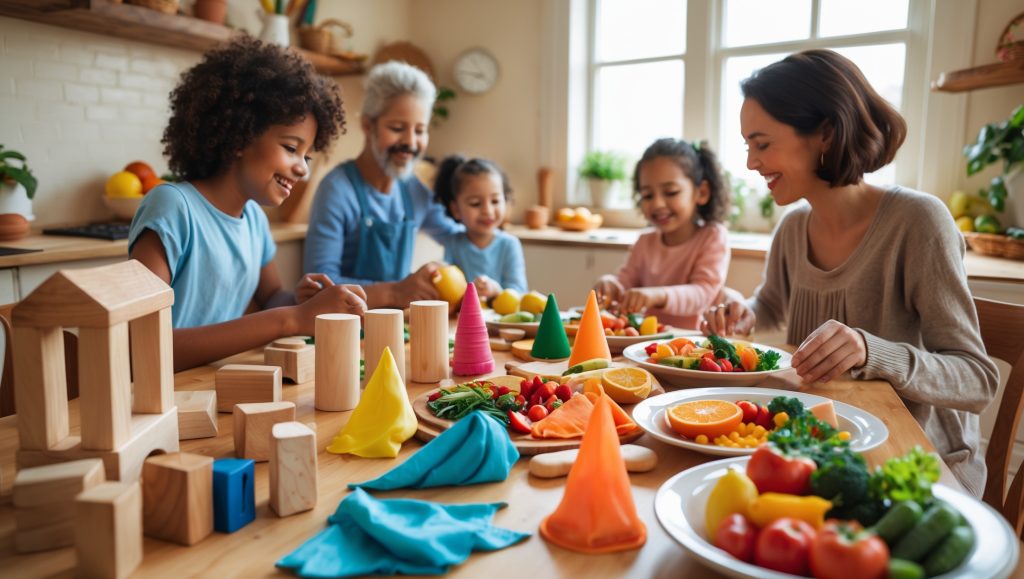
Allowing children to engage with open-ended toys before or after meals, or even as part of mealtime routines, can nurture creativity. For example, a child might use blocks to build a restaurant, use play silks as placemats, or create imaginative stories about their food.
2. Supporting Social and Emotional Development
Open-ended play during mealtimes can foster conversation, cooperation, and empathy. When children role-play serving food to dolls or family members, they practice turn-taking, sharing, and understanding others’ perspectives.
3. Building Positive Family Connections
Integrating toys into family meals can encourage participation from all ages, making mealtimes more engaging and less stressful. Siblings can collaborate on building projects, or parents might join in imaginative games, strengthening family bonds.
4. Enhancing Sensory and Fine Motor Skills
Handling blocks, stacking cups, or sorting loose parts supports fine motor development and sensory exploration. Children can also use these toys to organize or present their food, encouraging independence and confidence.
Choosing Age-Appropriate Open-Ended Toys
Not all open-ended toys are suitable for every age. Consider the following age-based recommendations:
- Infants (6–12 months): Large, easy-to-grasp stacking cups or soft cloth blocks. Avoid small pieces to reduce choking risks.
- Toddlers (1–3 years): Wooden blocks, play silks, simple animal figures, and nesting cups. These encourage stacking, sorting, and pretend play.
- Preschoolers (3–5 years): More complex building sets, loose parts, and role-play materials. Children at this stage can invent elaborate stories and use toys for collaborative play.
- School-Age Children (6+ years): Open-ended toys can support more advanced construction, planning, and creative storytelling, especially when integrated into themed family meals or celebrations.
Always check manufacturer age recommendations and supervise young children during play, especially when toys are near food.
Integrating Open-Ended Toys with Family Meals
Here are some practical ways to blend open-ended play and food routines:
- Pre-meal Play: Set up a small basket of toys near the dining area. Invite children to play while waiting for food, easing transitions and reducing impatience.
- Role-Play Restaurant: Encourage children to use blocks or figures to create a pretend restaurant, take orders, and serve family members.
- Food Sorting and Presentation: Use stacking cups or small containers for children to sort cut fruit, veggies, or snacks, building independence and food curiosity.
- Storytelling with Toys: Invite children to create stories about the foods on their plate using animal figures or dolls, which can make new foods less intimidating.
- Family Rituals: Use play silks as special placemats or tablecloths for birthdays or holiday meals, involving children in setting the table creatively.
These activities can make mealtimes more enjoyable, reduce mealtime battles, and support children’s learning in real-world contexts.
Evidence-Informed Perspectives on Play and Mealtimes
Research highlights the importance of play for cognitive, social, and emotional development. Open-ended toys, in particular, allow children to:
- Develop executive function skills, such as planning and self-control.
- Strengthen language and communication through storytelling and shared play.
- Practice negotiation, empathy, and conflict resolution with siblings or adults.
- Build resilience by experimenting with different outcomes and learning from mistakes.
Integrating play into daily routines, including meals, can create a positive family atmosphere. Evidence suggests that enjoyable family meals are associated with better dietary habits, improved language development, and greater family cohesion. When play is woven into these routines, children may feel more relaxed, open to trying new foods, and eager to participate in family traditions.
Common Mistakes
- Using toys as a distraction from eating: Relying on toys to encourage children to eat more or try new foods can backfire, making mealtimes about play rather than food.
- Offering toys with small parts at the table: Small pieces can pose choking hazards, especially for young children.
- Overstimulating the table: Too many toys or loud, flashy items can make it hard for children to focus on eating or family conversation.
- Ignoring safety and cleanliness: Toys should be washed regularly, especially if they are used near food.
- Forgetting age-appropriateness: Not all toys suit every developmental stage. Review recommendations and observe your child’s interests and abilities.
- Making play mandatory: Some children prefer quiet meals or may not want to play during food times. Respect individual preferences.
Quick Checklist
- Choose toys made from safe, washable materials.
- Keep a small basket of open-ended toys near the dining area.
- Rotate toys regularly to maintain interest.
- Supervise young children with toys during meals, especially with siblings of different ages.
- Focus on connection and conversation as the primary goal of family meals.
- Encourage creativity, but don’t pressure children to engage in play.
- Clean toys after food play to maintain hygiene.
- Observe your child’s cues and interests—adapt routines as needed.
FAQ
+Is it okay for young children to play with toys at the dinner table?
+How do I choose the right open-ended toys for my child’s age?
+Can open-ended toys help picky eaters?
+How can I keep toys clean if they’re used near food?
+Should every meal include toys and play?
+What are examples of open-ended toys for mealtime routines?
+How do I prevent arguments over toys at the table?
Conclusion
Integrating open-ended toys into family meals and food routines can enrich your child’s development, foster deeper family connections, and make mealtime more enjoyable for everyone. By choosing age-appropriate, safe, and versatile toys, and by focusing on creativity and connection rather than distraction, parents can create a flexible, joyful environment around food. Remember to observe your child’s interests, maintain safety and cleanliness, and adapt routines as your family grows. In 2026, as families seek meaningful experiences at home, combining open-ended play with shared meals offers lasting benefits for children and adults alike.

Open-ended toys and family meals are two powerful tools that can help families in the US foster creativity and connection in 2026. Open-ended toys—such as building blocks, modeling clay, or art supplies—invite children to use their imagination, problem-solve, and experiment without rigid rules. When families integrate these toys into mealtimes, the dining table transforms into a space for both nourishment and creativity. For instance, children might create centerpieces from blocks or clay, or draw placemats before the meal. These activities spark conversation, laughter, and a sense of accomplishment.
Family meals themselves remain a cornerstone for emotional well-being. In our fast-paced, tech-driven world, sharing a meal is a rare opportunity to unplug and truly connect. When open-ended toys are part of the experience, everyone—adults included—can participate in playful creativity, making the meal more engaging and memorable. This approach not only strengthens family bonds but also teaches children valuable life skills like cooperation, communication, and flexible thinking. By embracing both open-ended play and shared meals, families can nurture a home environment where creativity and connection flourish every day.
- Encourage kids to create table decorations before meals.
- Use open-ended toys as conversation starters at the table.
- Rotate creative activities to keep mealtimes fresh and engaging.
- Set aside devices to focus on play and connection during meals.
My son gets overstimulated easily, especially by bright colors or loud toys. Are certain types of open-ended toys better for children with sensory sensitivities during mealtimes?
You’re thoughtful to consider your son’s sensory needs during family meals. For children who are easily overstimulated, choose open-ended toys that feature muted colors and soft, quiet materials, such as wooden blocks, fabric squares, or simple stacking cups. Offer just one or two toys at a time to reduce sensory input and keep the play area calm. Always supervise to ensure safety, especially with small parts. Remember, it’s okay to have some meals without toys if that feels less overwhelming for your child. This isn’t medical advice; if you’re concerned, check in with your pediatrician.
How can I safely include loose parts like stones or shells during mealtimes with a curious 2-year-old who still puts things in their mouth? Should I just avoid those options or are there safer alternatives you recommend?
Your caution about loose parts with a 2-year-old is very wise, since little ones at this age are still prone to mouthing objects. For now, it’s safest to avoid small or hard loose parts like stones or shells during meals, as they can pose choking hazards. Instead, consider safe, food-based alternatives such as chopped fruit or cooked pasta shapes—these let your child explore textures and creativity while staying safe. Always supervise closely during exploration. This isn’t medical advice; if you’re concerned, check in with your pediatrician.
I am curious how I might incorporate traditional foods like dumplings or tamales with open-ended play during family meals. Do you have suggestions for encouraging grandparents to take part in these activities, especially when they may value more structured meal times?
It’s wonderful that you want to blend family traditions with playful, creative mealtimes. Try inviting grandparents to share stories or demonstrate how to fold dumplings or wrap tamales, turning the process into a hands-on activity for everyone. Provide child-safe dough or play food alongside real ingredients for little ones, so they can mimic without safety risks. Allow grandparents to lead a simple step, like shaping or decorating, which keeps some structure. Reassure everyone that it’s okay for things to get a bit messy—connection is the goal. This isn’t medical advice; if you’re concerned, check in with your pediatrician.
Are there any budget-friendly open-ended toys you recommend for toddlers that are still high quality and durable, especially for families who want to keep costs low while encouraging creativity at mealtimes?
It’s great you’re looking for affordable, durable toys to boost your toddler’s creativity at meals. Consider sturdy wooden blocks, large stacking cups, or silicone building toys—these tend to last and offer lots of open-ended play. You can also repurpose safe kitchen items, like plastic measuring cups or wooden spoons, for imaginative play during family meals. Always check items for choking hazards and supervise closely with younger toddlers. This isn’t medical advice; if you’re concerned, check in with your pediatrician.
What is the best way to prevent older siblings’ small toy pieces from ending up within reach of a 7-month-old at the dinner table? I want them to play together but worry about choking hazards.
You’re right to be cautious—choking hazards are a real concern at this age. Try designating a special basket or tray just for baby-safe toys at the table, and have older siblings keep their small pieces in a separate, out-of-reach container. Before meals, do a quick check to clear any stray pieces from the area. Encourage shared activities that use larger, safe objects, like soft blocks or textured balls, when everyone is together. Always supervise closely, and remember that under one year, anything small enough to fit through a toilet paper roll is too small for your baby. This isn’t medical advice; if you’re concerned, check in with your pediatrician.