
How We Chose
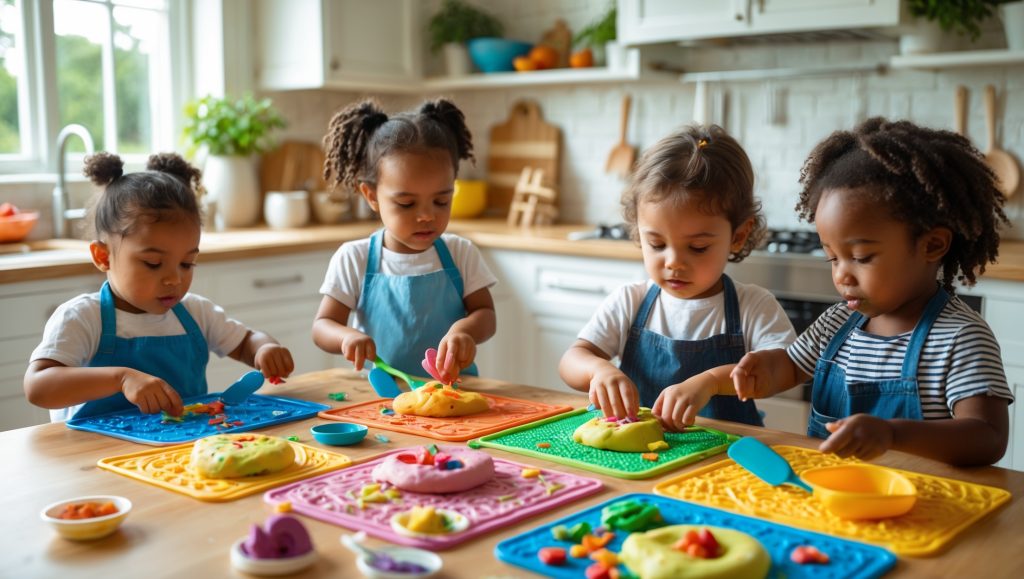
Our selections were guided by expert recommendations in child development, parent reviews, ingredient safety, and hands-on testing. We prioritized sensory food play options that encourage exploration, are easy to clean, and support healthy relationships with food. Each pick is designed to fit into real family routines—whether you’re introducing new tastes, supporting picky eaters, or just adding a dash of fun to mealtime.
#1. Taste-Safe Edible Dough — Mold, Squish, and Taste!
Why it stands out
This edible, non-toxic dough lets kids explore texture and shape while being safe for curious nibblers. It’s a hands-on way for little ones to engage every sense, especially touch and taste.
Best for
- Toddlers eager to mouth everything
- Introducing new textures
- Messy play without worry
Key notes
- Age/Stage: 12 months and up
- Materials/Ingredients: Food-grade flour, vegetable oil, natural coloring, salt
- Strengths: Taste-safe, easy to make at home, soft texture
- Trade-offs: Can dry out quickly, not allergen-free
#2. Food-Themed Sensory Mats — Explore Textures Underfoot
Why it stands out
These silicone mats feature raised patterns inspired by fruits, veggies, and grains. They invite kids to walk, sit, or run fingers across a variety of food textures—perfect for introducing sensory input in a low-pressure way.
Best for
- Children sensitive to food textures
- Preschoolers learning about new foods
- Floor play or under high chairs
Key notes
- Age/Stage: 18 months and up
- Materials/Ingredients: Food-grade silicone
- Strengths: Durable, easy to clean, encourages movement
- Trade-offs: Not for mouthing, requires supervision for younger kids
#3. Reusable Food Paints — Artistic Edible Fun
Why it stands out
Edible, plant-based food paints transform snack time into an art project. Kids can paint toast, fruits, or rice cakes, experimenting with color and taste at the same time.
Best for
- Picky eaters who benefit from playful food exposure
- Creative snack times
- Sensory art activities
Key notes
- Age/Stage: 2 years and up
- Materials/Ingredients: Vegetable purees, food-grade colorants, water
- Strengths: Safe to eat, fosters creativity, low mess
- Trade-offs: Limited shelf life once opened, can stain clothes
#4. Crunchy Snack Sampler Packs — Sound & Texture Discovery
Why it stands out
Sampler packs featuring a range of crunchy crackers, freeze-dried fruits, and puffs let kids explore different sounds and mouthfeels, supporting oral sensory development and food acceptance.
Best for
- Kids hesitant about texture variety
- Structured sensory snack sessions
- On-the-go sensory play
Key notes
- Age/Stage: 10 months and up (supervised)
- Materials/Ingredients: Whole grains, fruit, minimal additives
- Strengths: Promotes oral exploration, easy portion control
- Trade-offs: Watch for choking hazards, check for allergens
#5. Sensory Food Exploration Kits — Guided Discovery
Why it stands out
Curated boxes with themed activities and recipe cards (e.g., ‘Colors of the Rainbow’, ‘Around the World Grains’) support multisensory learning and food literacy through taste, smell, and touch.
Best for
- Families wanting structured sensory activities
- Expanding food variety in fun ways
- Bonding over new recipes
Key notes
- Age/Stage: 3 years and up
- Materials/Ingredients: Varies by kit, usually includes sample foods, activity materials, cards
- Strengths: Educational, encourages trying new foods, fun for siblings
- Trade-offs: More prep/cleanup, some kits can be pricey
#6. Textured Feeding Spoons — Engaging the Senses
Why it stands out
These spoons feature bumpy, ridged, and smooth surfaces along the handle and bowl, promoting tactile engagement and supporting children with oral sensitivities.
Best for
- Babies learning self-feeding
- Kids needing oral sensory input
- Making mealtimes playful
Key notes
- Age/Stage: 6 months and up
- Materials/Ingredients: Silicone, BPA-free plastic
- Strengths: Dishwasher safe, encourages exploration
- Trade-offs: Not all kids prefer textured utensils, may not fit all mouths
#7. Edible Sensory Beads — Scoop, Pour, and Taste
Why it stands out
Made from tapioca or gelatin, edible beads offer slippery, squishy fun for scooping, sorting, and even tasting (with supervision). Great for both tactile and oral exploration.
Best for
- Sensory bins for toddlers
- Kids who love water play
- Early science and sorting games
Key notes
- Age/Stage: 18 months and up (with supervision)
- Materials/Ingredients: Tapioca pearls, gelatin, water, food colorings
- Strengths: Taste-safe, encourages fine motor skills
- Trade-offs: Slippery when wet, possible choking hazard
#8. Crunchy Veggie Chips — Real Food, Real Texture
Why it stands out
Lightly salted and baked, these veggie chips offer a satisfying crunch along with new flavors and colors. They help bridge the gap for kids reluctant to try fresh veggies.
Best for
- Snack time exploration
- Reluctant vegetable eaters
- Picnic or lunchbox variety
Key notes
- Age/Stage: 2 years and up
- Materials/Ingredients: Root vegetables, minimal oil, salt
- Strengths: Real veggies, easy to serve
- Trade-offs: Can be salty, not a substitute for fresh produce
#9. Suction-Base Divided Plates — Hands-On Mealtime Play
Why it stands out
With multiple compartments and grippy bases, these plates turn mealtime into a sorting, dipping, and mixing adventure—perfect for kids who love to play with their food.
Best for
- Messy eaters
- Introducing new foods alongside favorites
- Encouraging self-feeding
Key notes
- Age/Stage: 6 months and up
- Materials/Ingredients: Silicone, BPA-free plastic
- Strengths: Reduces spills, encourages variety
- Trade-offs: Suction may weaken over time, not all surfaces compatible
Buying Tips
- Check for allergens: Always review labels, especially for edible play products.
- Prioritize easy cleaning: Silicone and dishwasher-safe materials make life simpler.
- Start small: Introduce one new texture or activity at a time to avoid overwhelm.
- Supervise, especially with younger kids: Even taste-safe items can pose a choking risk.
- DIY options can be great: Homemade doughs or paints allow ingredient control for sensitive kids.
Verdict
Sensory food play opens a world of learning, curiosity, and joy for children—and peace of mind for parents who want safe, engaging mealtime experiences. From edible doughs to textured mats and playful utensils, these picks in 2026 support development and family connection. Remember: it’s not about perfection or mess-free meals, but about nurturing confidence and curiosity with every bite, squish, and crunch.
FAQ
+Are these sensory food play options safe for babies under 12 months?
+Can I make edible sensory play materials at home?
+How can sensory play help with picky eating?
+What should I do if my child has food allergies?
+How do I clean up after sensory food play?
+Are crunchy snacks and veggie chips okay every day?
+Can sensory food play work for older kids?

Exploring food through sensory play is becoming a cornerstone of early childhood development in 2026. Parents across the US are embracing hands-on, taste-focused experiences that encourage kids to touch, taste, smell, and even listen to their food. These activities not only introduce children to new flavors and textures—they also foster creativity, fine motor skills, and a positive relationship with eating. From edible finger paints to DIY tasting trays featuring global snacks, sensory food play transforms the kitchen into a joyful learning space.
Among the top picks this year are homemade fruit gummies, crunchy veggie “paintbrushes,” and build-your-own yogurt parfait stations. Such activities allow kids to experiment with colors, shapes, and tastes, making mealtime both educational and fun. Parents are also turning to international food samplers, edible doughs, and textured snack mixes to widen their children’s palates. Whether your child is a picky eater or an adventurous taster, these sensory-rich foods help build confidence and curiosity around food. The best part? Most of these ideas require simple ingredients and minimal prep, making them accessible for busy families eager to nurture their child’s love for food.
- Homemade fruit gummies for squishing and tasting
- DIY global snack samplers to spark curiosity
- Edible finger paints and textured veggie “paintbrushes”
- Build-your-own yogurt parfait stations for creative layering
How long does the homemade edible dough typically last before it dries out, and do you have any tips for storing it so kids can play with it over several days?
—it’s understandable to want your homemade edible dough to last as long as possible for continued play. Typically, edible dough can last 3 to 5 days if stored properly. To keep it fresh, place the dough in an airtight container or zip-top bag and store it in the refrigerator. Before each play session, check for any changes in texture, smell, or color to make sure it’s still safe. Remind kids not to share dough if anyone is sick. This isn’t medical advice; if you’re concerned, check in with your pediatrician.
My little one is starting daycare soon and tends to put everything in his mouth. For a just-turned one-year-old, would you recommend starting with the edible dough or the crunchy snack sampler packs for safe, supervised sensory play at home?
It’s completely normal to be concerned when your one-year-old explores by putting things in their mouth. For a just-turned one-year-old, starting with edible dough is generally safer because it’s designed to be taste-safe and less of a choking risk than crunchy snack pieces. Always supervise closely, check ingredients for possible allergens, and offer only a small amount at a time. Crunchy snacks can be introduced as your child becomes more confident with chewing and swallowing, but always watch for signs of gagging. This isn’t medical advice; if you’re concerned, check in with your pediatrician.
Are the reusable food paints suitable for kids with common food allergies? I noticed the ingredients are plant-based, but wanted to clarify if they’re usually free from things like gluten or nuts.
It is thoughtful to consider allergies before introducing new sensory play items. Many plant-based reusable food paints are formulated to avoid common allergens like gluten and nuts, but ingredients can vary. Always check each product label for specific allergen information, and choose paints that are clearly marked as free from the allergens your child needs to avoid. For extra safety, do a patch test on your child’s skin before play, and supervise younger children closely. This isn’t medical advice; if you’re concerned, check in with your pediatrician.