
Overview
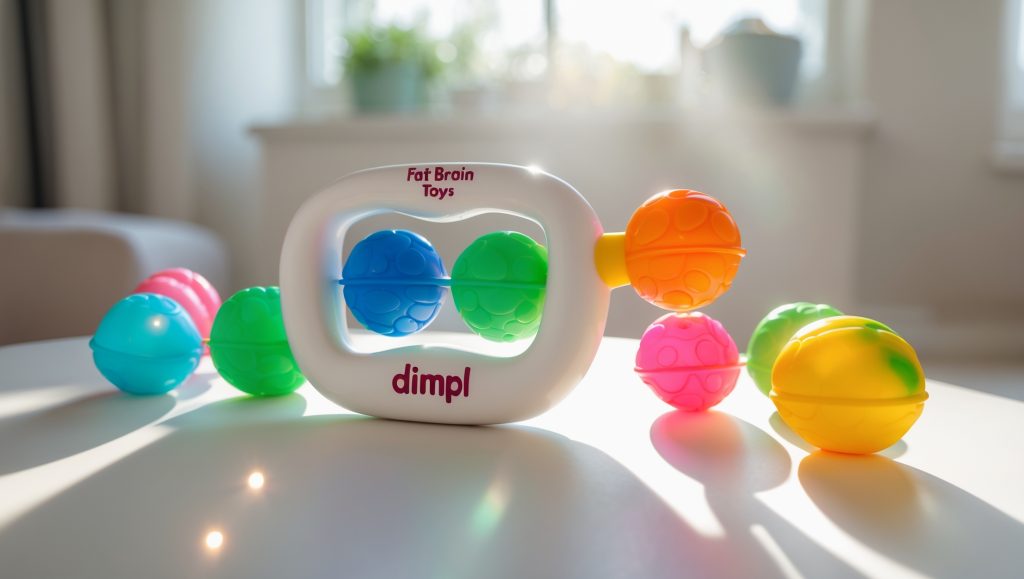
Fat Brain Toys Dimpl has become a staple in the world of sensory play for babies and toddlers in 2025. With its simple yet captivating design—five brightly colored silicone bubbles embedded in a sturdy plastic frame—Dimpl offers endless opportunities for little hands to poke, pop, and explore. Designed for infants as young as 6 months, this toy supports tactile discovery, fine motor development, and independent play. In our review, we’ll dive into what makes the Dimpl so appealing, how it supports early learning, and whether it’s a worthy investment for families seeking engaging, evidence-informed toys.
What’s Inside / Build Quality
The Fat Brain Toys Dimpl arrives ready to play, with no assembly required. The package contains a single, handheld Dimpl toy, measuring approximately 5 x 5 x 1 inches. The frame is crafted from BPA-free, food-grade ABS plastic, and features five soft, food-grade silicone bubbles in eye-catching colors: blue, green, pink, orange, and yellow. Each bubble is securely set into the frame, preventing removal even under repeated pressing, pulling, or gnawing (a common occurrence with teething babies!).
During our hands-on testing, the Dimpl displayed excellent durability. The silicone bubbles withstood repeated poking and popping, and the frame showed no signs of cracking or warping even after being dropped, chewed, or washed multiple times. All materials meet or exceed US safety standards, and the toy’s smooth edges and secure construction provide peace of mind for caregivers.
Learning & Development Benefits
Sensory play is an essential part of early childhood development, and the Dimpl is purpose-built for this stage. Here’s how it supports growing minds and bodies:
- Fine Motor Skills: Pressing, poking, and popping the silicone bubbles strengthens finger muscles and refines hand-eye coordination.
- Tactile Exploration: The contrast between silky-smooth silicone and rigid plastic gives infants a rich sensory experience, increasing tactile awareness.
- Cause & Effect Learning: Babies quickly learn that pressing one side makes a satisfying pop on the other, reinforcing cognitive links between action and outcome.
- Visual Stimulation: Bright, high-contrast colors attract attention and support early color recognition.
- Calming and Focus: Many families report that the repetitive popping can soothe fussy babies and help toddlers focus during quiet time.
While the Dimpl is not a language toy per se, it provides countless opportunities for caregivers to narrate play, introduce color names, and encourage turn-taking, further supporting early development.
Setup & Use
One of Dimpl’s major strengths is its simplicity. There’s no setup required—simply remove from packaging, give a quick wash with warm soapy water, and hand it to your child. The compact size and lightweight design make it perfect for at-home use, car rides, doctor visits, or as a distraction while waiting in line.
Care is straightforward: the Dimpl can be hand-washed or placed on the top rack of the dishwasher. Its durable build means it stands up to repeated cleaning, which is essential for babies who frequently mouth their toys. For younger infants, caregivers can demonstrate the popping action to spark interest. For toddlers, Dimpl can be used in simple games (e.g., “Can you find the blue bubble? Can you pop each color?”) to extend play and learning.
Pros & Cons
Pros
- Engaging sensory experience for babies and toddlers
- Promotes fine motor skills and cause-effect learning
- Durable, safe, and easy to clean
- Portable and lightweight; ideal for on-the-go
- No batteries, noise, or assembly required
- Attractive, modern design appeals to children and adults
Cons
- Limited play value for children over 3 years old
- Only one play mode (popping bubbles); may not hold attention for all children
- Higher price point compared to some similar fidget toys
- Can attract lint and dust on silicone bubbles
Alternatives & Similar Toys
For families seeking sensory play options, here are a few notable alternatives to the Fat Brain Toys Dimpl:
- Fat Brain Toys Dimpl Duo: A two-sided variation with textured bubbles and color/shape labels, suitable for slightly older toddlers.
- Melissa & Doug K’s Kids Take-Along Shape Sorter: Combines tactile play with shape and color recognition in a soft, portable design.
- Infantino Sensory Balls: A set of textured balls offering varied tactile experiences for infants and young toddlers.
- Simple “Pop It” Fidget Toys: Silicone poppers in various shapes and colors, generally better suited for preschoolers and above.
- Manhattan Toy Winkel Rattle & Sensory Teether: A classic sensory and teething toy with interlocking loops and a gentle rattle.
Each alternative offers unique features, but the original Dimpl stands out for its streamlined simplicity and satisfying tactile feedback, especially for babies and young toddlers.
Verdict
The Fat Brain Toys Dimpl earns its reputation as a sensory play essential in 2025. Its combination of safe materials, durable build, and engaging tactile experience make it a go-to choice for parents seeking screen-free, open-ended play for infants and toddlers. While older children may outgrow its simple design, for the target age range (6–24 months), it delivers significant developmental benefits with minimal fuss. The higher price is justified by its quality and longevity, making it a solid investment for families or as a thoughtful gift. For those looking to foster exploration, soothe fussy moments, or encourage fine motor growth, the Dimpl remains hard to beat.
FAQ
+What age is the Fat Brain Toys Dimpl best for?
+Is the Dimpl safe for teething babies?
+How do you clean the Dimpl?
+Does the Dimpl make any noise?
+Is the Dimpl suitable for travel?
+Can older children play with the Dimpl?
+Does the Dimpl come in different colors or styles?

Fat Brain Toys Dimpl has quickly become a beloved staple in the world of sensory toys for babies and toddlers. Its simple yet ingenious design features five colorful silicone bubbles set into a sturdy plastic frame, inviting little hands to push, pop, and explore. This tactile experience is more than just fun—it’s a vital part of early childhood development. The Dimpl encourages fine motor skills, hand-eye coordination, and sensory curiosity in even the youngest children. Its lightweight, BPA-free construction makes it safe and easy for babies to handle, while the vibrant colors capture and hold their attention. Parents will appreciate its durability and portability, making it an ideal companion for car rides, stroller walks, or quiet play at home. The Dimpl’s minimalist design means there are no small parts or batteries to worry about, and it’s a breeze to clean. For families seeking a toy that supports growth, soothes fidgety fingers, and stands up to daily use, the Fat Brain Toys Dimpl is a must-have addition to the toy box in 2025.
- Promotes fine motor and sensory development
- Safe, durable, and easy to clean
- Perfect for travel and on-the-go play
- Captivating colors and simple, engaging design
Some of the other kids I watch have sensory sensitivities and might not like certain textures or sounds. In your experience, have any children strongly disliked the popping feel or noise, or is it generally universally appealing?
It’s thoughtful of you to consider sensory sensitivities in the children you care for. While most babies and toddlers find the Dimpl’s soft silicone and gentle popping sound enjoyable, some children with sensory differences may be sensitive to the tactile feel, resistance, or subtle noises. If you’re unsure, introduce the toy gradually and observe each child’s reaction—offer it without pressure, and let them choose if they’d like to engage. Providing alternatives nearby can help them feel in control. Always supervise closely, especially with younger children or those with heightened sensitivities. This isn’t medical advice; if you’re concerned, check in with your pediatrician.
Does the Dimpl work well for car rides or stroller walks during early morning outings, or is it best suited for at-home play only? I’m looking for quiet, portable options to keep my little one engaged before breakfast.
You’re thoughtful to plan ahead for peaceful, engaging outings. The Dimpl is very portable, lightweight, and silent, making it a great fit for car rides or stroller walks, especially in the early morning when you want to keep things calm. Just be sure your child is securely buckled in and can easily reach the toy without dropping it. For babies under three years old, always supervise use—Dimpl is designed without small parts, but active supervision is safest. This isn’t medical advice; if you’re concerned, check in with your pediatrician.
How does the Dimpl compare to more structured educational toys when it comes to supporting early learning? I am curious if something so open-ended might miss out on cognitive benefits that letter or shape sorters claim to provide.
It’s thoughtful to consider how open-ended toys like the Dimpl stack up against more structured educational options. The Dimpl encourages sensory exploration, fine motor skills, and hand-eye coordination through its simple design, which is ideal for babies and toddlers under three. While it doesn’t directly teach concepts like letters or shapes, it supports foundational cognitive skills like cause and effect and problem-solving. You can also pair it with other toys as your child grows, gradually introducing more structured learning activities. Always supervise young children and check for wear to ensure safety. This isn’t medical advice; if you’re concerned, check in with your pediatrician.
If my toddler is sensitive to certain textures and doesn’t always like silicone toys, do you have suggestions for gently introducing the Dimpl, or should I look for something with a different feel?
You’re thoughtful to consider your toddler’s texture sensitivities. Try letting them watch you play with the Dimpl at first, so they see it’s safe and fun. Offer it alongside favorite toys with familiar textures, letting them touch it only if they choose. Brief, low-pressure play sessions can help your child get used to the silicone at their own pace. If your toddler shows ongoing discomfort or aversion, it’s okay to pause and explore toys made from different materials, like wood or fabric. This isn’t medical advice; if you’re concerned, check in with your pediatrician.
I’m on a tight budget and like the idea of sensory play. Are there other affordable alternatives you’d recommend that offer similar motor skill and tactile benefits as the Dimpl?
It’s great that you want to support your child’s sensory development, even on a budget. You can make simple sensory play items at home: try a ziplock bag filled with hair gel and buttons (sealed tightly for safety), or offer a muffin tin with different textured household items for your child to explore. Homemade playdough and water play with measuring cups also encourage fine motor skills. Always supervise closely, especially with babies and toddlers, to prevent choking or messes. This isn’t medical advice; if you’re concerned, check in with your pediatrician.
How easy is it to clean the Dimpl after long trips, especially if it ends up on the floor or gets sticky? I’m wondering about practicality for busy travel days.
It’s completely understandable to want toys that are easy to clean, especially during busy travel days. The Dimpl is made of durable, food-grade silicone and hard plastic, so you can usually wipe it down with baby wipes or a damp cloth on the go. For stickier messes, a quick rinse under warm water with mild soap works well—just make sure to air dry thoroughly. Always check for any trapped moisture in the seams. The simple design means there are no small parts to trap dirt, making it practical for toddlers. This isn’t medical advice; if you’re concerned, check in with your pediatrician.
If my child tends to chew and bite on toys or pushes pretty hard on sensory items, does the Dimpl hold up well over time, or should I expect it to need a replacement sooner than later?
It’s completely understandable to wonder about durability, especially with babies and toddlers who love to chew and press hard on toys. The Dimpl is made of food-grade silicone and sturdy plastic, designed for mouthing and frequent pressing, but no toy is completely chew-proof. Regularly inspect the silicone bubbles for any tears or loose edges, and supervise play to ensure safety. If you notice wear, especially for strong chewers, consider rotating Dimpl use with other textured toys. For children under 3, always check for small parts or damage that could be a choking risk. This isn’t medical advice; if you’re concerned about your child’s habits, check in with your pediatrician.
If a child is especially drawn to chewing and gnawing during teething, are there any concerns about wear and tear on the silicone bubbles over time? How long does the material generally last in those situations?
It’s understandable to be concerned about how well the Dimpl holds up to lots of chewing during teething. While the silicone bubbles are made to be durable and are BPA-free, heavy chewing can eventually lead to some wear or thinning, especially with daily use. Inspect the Dimpl regularly for any tears or loose pieces, and remove it if you notice damage. For extra safety, always supervise babies during play, especially if they tend to gnaw. Every child is different, but with typical use, most families find the Dimpl lasts several months to a year. This isn’t medical advice; if you’re concerned, check in with your pediatrician.
I noticed the Dimpl is recommended for babies as young as 6 months. Would this toy still be interesting or beneficial for a child who is turning three, or would you suggest something else for older toddlers?
It’s great that you want to keep your child’s play both engaging and developmentally supportive as they grow. While the Dimpl is designed to be safe and stimulating for babies from 6 months, many three-year-olds still enjoy the sensory popping action and bright colors, especially if they like fidgeting or need calming activities. You can boost its appeal by introducing simple games, like color sorting or counting pops together. However, for older toddlers, consider also rotating in toys that encourage more complex problem-solving, pretend play, or fine motor skills. As always, supervise play and check for wear and tear. This isn’t medical advice; if you’re concerned, check in with your pediatrician.
The Dimpl looks perfect for younger kids, but is it still engaging for a preschooler? If my four-year-old is getting bored with basic popping toys, is there a way to make it more challenging for her developmental stage?
It’s wonderful that you want to keep your four-year-old engaged and challenged. At this age, children often crave more complex play. You can add challenge to the Dimpl by turning it into a game—try timing how fast your child can push all the bubbles, naming colors as she pops, or creating simple patterns to copy. You could also encourage counting, sequencing, or even inventing stories about each color. Always supervise to ensure safe play, especially with younger siblings around. This isn’t medical advice; if you’re concerned, check in with your pediatrician.
Since potty training often means lots of bathroom trips, I’m concerned about keeping toys like the Dimpl clean and sanitary. Is this toy easy to wash thoroughly, and is it safe to bring into the bathroom on a regular basis?
It’s completely understandable to want to keep your child’s toys clean during the busy potty training stage. The Dimpl is made from food-grade silicone and sturdy plastic, so it can be washed easily with warm, soapy water—just be sure to rinse it thoroughly and let it air dry. Bringing it into the bathroom is generally safe if you supervise and clean it after each use, as bathrooms have more germs. For children under three, always check for any trapped water in the toy. This isn’t medical advice; if you’re concerned, check in with your pediatrician.
Does the Dimpl fit easily into a diaper bag without taking up too much space? I like keeping different sensory items on hand, but our bag fills up fast.
It’s great that you’re thinking about practical ways to keep sensory play accessible on the go. The Fat Brain Toys Dimpl is compact and lightweight, measuring about 5 inches across, so it usually fits easily into most diaper bags or even a medium purse. To save space, try packing just one or two small sensory items and rotate them regularly. Place the Dimpl in an outer pocket for quick access, and make sure it stays clean by using a zip-top bag or pouch. The Dimpl is designed for babies and toddlers and is free from small parts, making it safe for little hands. This isn’t medical advice; if you’re concerned, check in with your pediatrician.
My toddler has some sensory sensitivities and is delayed in talking. Would you recommend Dimpl for kids who sometimes get overwhelmed with new textures, or could the popping sensation be too stimulating for certain children?
It’s completely understandable to want toys that support your child’s unique sensory needs and communication development. The Dimpl can be a good option for toddlers with sensory sensitivities because its silicone bubbles are soft and offer gentle, predictable feedback, but every child’s tolerance is different. Start by introducing the toy slowly, letting your child watch or touch the bubbles at their own pace. Offer it for short play sessions and observe their response; if they seem overwhelmed, give them a break and try again another day. Always supervise play, especially if your toddler tends to mouth objects. This isn’t medical advice; if you’re concerned, check in with your pediatrician or occupational therapist for personalized guidance.
My preschooler sometimes gets overstimulated by toys with bright colors and lots of tactile input. Do you have suggestions for introducing the Dimpl without overwhelming them, or should I consider sensory toys with more muted colors and fewer textures?
It’s completely understandable to want to introduce sensory toys thoughtfully when your child is sensitive to stimulation. Try offering the Dimpl during calm moments, and let your preschooler explore it at their own pace without pressure. Start with short play sessions, and observe for signs of discomfort or overload. If the colors or textures seem too much, you might set the toy aside or opt for versions with softer hues and simpler designs. Always supervise play, especially if your child is prone to mouthing items. This isn’t medical advice; if you’re concerned, check in with your pediatrician.
I like that the Dimpl is easy to bring along, but how do you usually keep it clean when you’re out and about, like at doctor visits or waiting rooms? Does it attract dust or pet hair, given the silicone bubbles?
You’re thoughtful to want to keep your child’s toys clean while on the go. The Dimpl’s silicone bubbles can attract some dust or pet hair, especially if dropped or carried in an open bag. To keep it clean, try wiping the surface with a baby wipe before and after use, or use a damp cloth if you’re at home. If it gets sticky, a quick rinse with water and mild soap at your next opportunity will help. Keep it in a zippered pouch or resealable bag in your diaper bag to limit exposure. Always supervise your baby, especially if cleaning supplies are within reach. This isn’t medical advice; if you’re concerned, check in with your pediatrician.
How does the Dimpl compare with similar sensory toys in terms of long-term value? For families on a budget, is this something that really stands out, or are there more affordable options that offer similar developmental benefits?
It’s great that you’re considering both developmental value and budget when choosing sensory toys. The Dimpl stands out for its durability, simple design, and appeal to both babies and toddlers, which can make it a worthwhile investment over time. However, similar benefits—like fine motor practice and sensory exploration—can be found in less expensive options such as silicone poppers or homemade texture boards. For infants and young toddlers, always ensure toys are free from small parts and made of safe, non-toxic materials. This isn’t medical advice; if you’re concerned, check in with your pediatrician.
Does the Dimpl’s design or durability change at all if you purchase it through a subscription box compared to buying it directly? I want to be sure I’m getting the same quality and safety features you mention in your review.
It’s great that you’re prioritizing quality and safety for your child. The Fat Brain Toys Dimpl, whether bought directly or included in a reputable subscription box, should have the same design, materials, and safety standards. Check the packaging for official branding and safety certifications, and supervise play to ensure age-appropriateness (typically safe for babies 6 months and up). If you notice any differences in construction, loose parts, or unclear labeling, pause use and contact the seller. This isn’t medical advice; if you’re concerned about safety or quality, check in with your pediatrician.
For children who are especially sensitive to textures, have you seen any feedback about how the silicone feels compared to other sensory toys? I wonder if the contrast between the plastic and silicone is soothing or might actually be distracting for some little ones.
It’s great that you’re considering how your child’s sensory preferences might affect their experience with the Dimpl. Many parents report that the soft, food-grade silicone bubbles feel smooth and slightly squishy, which can be calming for some texture-sensitive kids compared to rougher or sticky materials. The contrast between the hard plastic frame and the silicone bubbles can be engaging, but for children who are highly sensitive, it might take some trial to see if the sensation is soothing or overstimulating. Start with short, supervised play sessions to observe your child’s reaction. Always check for any skin sensitivities or allergies to silicone. This isn’t medical advice; if you’re concerned, check in with your pediatrician.
You mention that the Dimpl is easy to clean and durable, which is great. But with limited room, do you think it’s something that could double as a car seat or diaper bag toy without needing to own extra duplicates for different spaces?
You’re wise to think about minimizing clutter while meeting your child’s needs. The Dimpl’s compact size and simple design make it suitable as a multi-purpose toy for the car seat, stroller, or diaper bag. Keep it handy in your go-bag and wipe it down regularly, especially after outings. For safety, always supervise play in the car seat and make sure the toy can’t be thrown or dropped where you can’t retrieve it easily. This flexible use is age-appropriate for babies and toddlers, as long as you check for any signs of wear. This isn’t medical advice; if you’re concerned, check in with your pediatrician.
Would you say this toy still holds appeal for a 3-year-old, or is it mainly engaging for younger toddlers? My child is almost 4, and I am curious if this would still be a worthwhile sensory tool at her age.
It’s great that you want to find engaging sensory toys for your almost 4-year-old. The Dimpl is most captivating for babies and young toddlers, but some preschoolers still enjoy its popping action for fidgeting or calming down. For a 3- to 4-year-old, try introducing it during quiet time or transitions, and watch if your child naturally gravitates toward it. If your child seems bored quickly, consider more complex sensory tools with puzzles or fine motor activities. Always supervise play, and be sure the toy remains in good condition without any loose silicone bubbles. This isn’t medical advice; if you’re concerned, check in with your pediatrician.
My home is already overflowing with toys, so I’m curious if you’ve found the Dimpl to be enough on its own for keeping a toddler engaged during longer stretches, or does it tend to work best alongside other sensory toys?
It makes sense to wonder if one sensory toy can truly keep your toddler engaged for a long time. Many parents find the Dimpl holds a child’s attention well for short bursts—its simple pop-and-push action is very appealing for toddlers, especially around ages 1 to 3. For longer stretches, try rotating the Dimpl with a couple of other safe toys to keep things fresh, or introduce interactive games with it like color naming or counting. Always supervise play to ensure safety, especially if your child likes to mouth toys. This isn’t medical advice; if you’re concerned, check in with your pediatrician.
I’m always looking for toys that don’t overcrowd our living space. Does the Dimpl hold kids’ attention for a long time, or do you find little ones quickly lose interest compared to other sensory toys?
It’s understandable to want toys that truly engage your child without taking up too much space. The Dimpl generally holds babies’ and toddlers’ attention for periods of focused play, especially in short bursts—its simple design invites repeated poking and exploration. You can rotate it in and out with other toys to keep interest fresh. For older toddlers, pairing it with simple games, like naming colors or counting, can extend its appeal. Always supervise play, as recommended for children under 3. This isn’t medical advice; if you’re concerned about attention or play skills, check in with your pediatrician.
I’m curious how the Dimpl would fit into a daily play routine for a baby with sensory processing sensitivities. Have you observed whether the popping sensation is generally calming or could be overstimulating for some children?
It’s thoughtful of you to consider how toys like the Dimpl can affect babies with sensory sensitivities. The Dimpl’s popping sensation is calming for many children, but some may find the texture or sound overstimulating. Start by introducing it during calm, quiet times and observe your baby’s responses—offer it for just a minute or two and watch for signs of enjoyment or discomfort. Let your baby lead; if they turn away or seem unsettled, set the toy aside and try again later. Always supervise play, especially since every child reacts differently. This isn’t medical advice; if you’re concerned, check in with your pediatrician.
Is the Dimpl easy to pack away or store in a small basket for early morning access, or is it the sort of toy that gets lost easily among other things? Trying to keep our clutter down when setting up a morning play spot.
You’re thoughtful to consider clutter and easy access for your child’s morning playtime. The Dimpl is compact and lightweight, making it easy to toss into a small basket without taking up much space. Its bright colors and simple shape help it stand out, so it’s less likely to get lost among other toys. You might designate a specific basket or shallow bin for sensory toys to make morning set-up quick. For toddlers, keep the basket at their level for independent play, but always supervise play for younger babies. This isn’t medical advice; if you’re concerned, check in with your pediatrician.
Is the Dimpl suitable for older babies as they grow? For example, can a 12- or even 18-month-old still find it engaging, or will they outgrow it quickly?
It’s great that you’re thinking ahead about keeping your child engaged as they grow. The Dimpl is designed for babies and toddlers, and many 12- to 18-month-olds still enjoy its tactile bubbles and bright colors. At these ages, kids love repetitive actions like popping, which helps fine motor skills and hand-eye coordination. To keep it interesting, sit with your child and name colors or count pops together. Always supervise play, especially if your child is mouthing toys, though the Dimpl is made without small detachable parts. This isn’t medical advice; if you have specific concerns, please check in with your pediatrician.
I often send my toddler to his grandparents, and they like to introduce traditional snacks while supervising play. Is it safe for the Dimpl toy to be around food, and how easy is it to clean thoroughly after sticky fingers or oils from cultural treats?
It’s wonderful that your toddler enjoys special time with grandparents and new foods. The Dimpl toy is made from food-grade silicone, which is generally safe around snacks, but like all toys, it’s best for play rather than eating. After sticky hands or oils, wash the Dimpl in warm soapy water, rinse thoroughly, and let it air dry; it can also be wiped with baby-safe disinfectant wipes. Always check for trapped food bits in the crevices. Supervise closely and avoid letting your toddler chew on the toy during snack time. This isn’t medical advice; if you’re concerned, check in with your pediatrician.
My child sometimes gets easily overstimulated by toys with bright colors and textures. Have you noticed if the Dimpl ever becomes too much for sensitive children, or do its simple features seem calming even for those with sensory sensitivities?
It’s wonderful that you’re tuning in to your child’s sensory needs. The Dimpl’s simple design, with its soft silicone bubbles and lack of lights or sounds, is generally calming and age-appropriate for most sensitive babies and toddlers. To ease your child in, start with short, supervised play sessions and watch for any signs of discomfort. If the colors feel too intense, try playing in a softly lit room. Remember, every child is unique—if you notice signs of overwhelm, it’s fine to take breaks or try again another day. This isn’t medical advice; if you’re concerned, check in with your pediatrician.
The durability sounds impressive, but I’m wondering how often I should be washing the Dimpl if my baby is using it daily and tends to chew on everything. Is there a recommended cleaning routine to keep it safe for regular teething babies?
You’re absolutely right to prioritize cleanliness, especially with a teething baby who explores with their mouth. For daily use, it’s a good idea to wash the Dimpl at least once a day with warm, soapy water, paying attention to all surfaces your baby might chew on. Rinse thoroughly to remove any soap residue. Let it air dry completely before giving it back to your child. If your baby drops it on the floor or outside, clean it right away. Always check for cracks or damage, as broken parts could pose a safety risk. This isn’t medical advice; if you’re concerned, check in with your pediatrician.
The article mentions Dimpl is for infants as young as 6 months, but do you think it still holds their interest as babies get older, maybe closer to 18 months? Or would you recommend switching to a different toy as they grow?
It’s great that you’re thinking ahead about keeping your child engaged as they grow. The Dimpl toy is designed to be simple and safe for young babies, but many toddlers still enjoy its sensory features at 18 months—pushing and popping the bubbles can continue to be satisfying and help with fine motor skills. As your child’s coordination and curiosity develop, you can also introduce more complex toys with different textures, stacking, or problem-solving elements, always checking age guidelines and avoiding small parts. Continue supervising play to ensure safety. This isn’t medical advice; if you’re concerned, check in with your pediatrician.
I noticed that the Dimpl toy is described as calming and good for quiet time. Have you found it effective for keeping early risers occupied during those pre-breakfast hours when the house is still quiet?
It’s completely understandable to look for ways to keep early risers peacefully engaged in the morning. The Dimpl toy’s simple, repetitive popping action can be soothing and is often appealing for toddlers and older babies during quiet time. To use it effectively, place the Dimpl within easy reach in a safe, supervised play space before bedtime. Remind your child it’s a special toy for quiet mornings, and model gentle play if needed. Always supervise younger babies to ensure safe use, as mouthing and throwing are common at this age. This isn’t medical advice; if you’re concerned, check in with your pediatrician.
I noticed the Dimpl is made with food-grade materials and is described as safe even for teething babies. Can it be safely sanitized in the dishwasher, or is hand washing preferred to maintain its durability?
—it’s important to keep teething toys clean and safe for your little one. The Dimpl is made from food-grade silicone and ABS plastic, which are generally durable, but hand washing with warm, soapy water is recommended to preserve the materials and prevent wear. If you do use the dishwasher, place it on the top rack and use a gentle cycle, but avoid high heat settings as they may affect the toy’s longevity. Always allow it to air dry thoroughly before the next play session. This isn’t medical advice; if you’re concerned, check in with your pediatrician.
Are there adaptations or play ideas for using the Dimpl with older toddlers who have language delays but still enjoy sensory play? My child is almost three, and I want to make sure the toy will still be appealing and helpful as they grow.
You’re thoughtful to want to keep sensory play engaging and supportive for your older toddler with language delays. For a child nearing three, the Dimpl can still be useful with a few tweaks: try encouraging your child to request different bubble colors using gestures or simple words, play turn-taking games to build social language, or hide small toys under the bubbles for a fun naming game. You might narrate your actions (“Push the blue!”) to model language without pressure. Always supervise closely, especially if your child tends to mouth objects. This isn’t medical advice; if you’re concerned, check in with your pediatrician.
My toddler is very sensitive to sudden noises and certain textures. Does the popping sound or the feel of the silicone ever seem overwhelming for sensory-sensitive kids, or is it generally gentle enough for little ones who might be easily startled?
It’s understandable to want gentle toys for a sensory-sensitive toddler. The Dimpl’s popping sound is usually quite soft compared to louder fidget toys, but each child reacts differently, so it’s wise to introduce it gradually. Let your child explore it at their own pace, and watch for any signs of discomfort. The silicone bubbles are smooth and flexible, generally well-tolerated, but you can encourage your toddler to touch with one finger first, then build up as they feel comfortable. Always supervise play, especially with young children, to watch for any strong reactions. This isn’t medical advice; if you’re concerned, check in with your pediatrician.
Is there any scent from the silicone bubbles or plastic frame when the toy is new? My baby can be sensitive to strong smells, so I’m curious about that initial experience out of the box.
It’s completely understandable to be cautious about scents when your baby is sensitive. Most new Fat Brain Toys Dimpls have a very mild, neutral odor from the silicone and plastic, which typically fades quickly after unpacking. When you open the box, let the toy air out in a well-ventilated space for a day or two before offering it to your child. Wipe the surfaces gently with a damp cloth and mild soap—just be sure to rinse thoroughly and dry before play. The materials are BPA-free and designed for infants, but always supervise play and observe your baby’s reaction. This isn’t medical advice; if you’re concerned, check in with your pediatrician.
Our child tends to get overstimulated by toys with lots of sounds or movement. Do you think the Dimpl’s popping action could be too stimulating, or is it generally calming even for kids who are sensitive to sensory input?
It’s understandable to want toys that won’t overwhelm your child, especially if they’re sensitive to sounds or busy movement. The Dimpl’s popping action is simple, quiet, and slow-paced, making it a calming option for many sensory-sensitive babies and toddlers. Try introducing it during quiet play, giving your child time to explore at their own comfort level. If your child seems hesitant, demonstrate gently without pressure. Always supervise to ensure they don’t mouth the toy if they’re still in the habit, as a general safety precaution. This isn’t medical advice; if you’re concerned, check in with your pediatrician.
If my child gets really attached to the Dimpl, should I still try to rotate it out regularly, or is it okay to leave it out all the time? I’m worried rotating might disrupt their routine.
It’s understandable to want to avoid disrupting your child’s routine, especially if they find comfort in their Dimpl. If your child is particularly attached, it’s okay to leave the Dimpl out most of the time, as long as they are still exploring other toys and experiences. Consider gently introducing new toys alongside the Dimpl, rather than rotating it out completely. You might encourage short play sessions with other sensory items, then allow return to the Dimpl for reassurance. For babies and toddlers, consistent access to a favorite toy can support emotional security, and the Dimpl’s design is generally safe under supervision. This isn’t medical advice; if you’re concerned, check in with your pediatrician.
Could you clarify how often you should clean the Dimpl toy if it gets a lot of use, especially since teething babies tend to gnaw on it? Is daily washing recommended, or will a quick rinse every few days suffice?
You’re right to be thoughtful about cleaning, especially with teething babies who put toys in their mouths. For heavy daily use, I recommend a gentle wash with warm soapy water once a day, especially if the Dimpl has been on the floor or around food. A quick rinse between washes is fine if it looks clean, but daily washing helps prevent buildup of saliva and germs. Always check for any trapped water and let it air dry thoroughly to avoid mold. This routine is safe for babies and toddlers—just supervise for small parts or wear over time. This isn’t medical advice; if you’re concerned, check in with your pediatrician.
My child tends to mouth and chew on toys for comfort. The article mentions the bubbles are food-grade silicone, but I’m wondering if there are any long-term durability issues or things to watch for if the toy is chewed often?
It’s completely normal to be concerned about the durability and safety of toys your child chews on for comfort. Food-grade silicone, like that in the Dimpl, is designed to be safe for mouthing, but frequent chewing can eventually cause wear. Check the toy regularly for any signs of tearing, loose pieces, or changes in texture, and discontinue use if any damage appears. Always supervise young children during play to prevent choking risks. Clean the Dimpl often to minimize germs, especially if your child mouths it frequently. This isn’t medical advice; if you’re concerned about chewing or safety, check in with your pediatrician.
As a parent trying to prioritize sustainability, do you have thoughts about the tradeoff between the durability and washability of plastic sensory toys like the Dimpl and the more biodegradable nature of wooden toys? Is one clearly better for the environment in the context of daily toddler use?
You’re thoughtful to weigh sustainability against daily practicality. Plastic sensory toys like the Dimpl tend to be more durable, easier to clean, and can withstand repeated mouthing and spills—important for babies and toddlers. Wooden toys are often biodegradable but might be less washable and more prone to damage over time. For everyday use, especially with young children, plastic options offer safety and longevity, reducing the need for frequent replacements. If choosing plastic, look for high-quality, non-toxic materials and consider passing the toy on when your child outgrows it. This isn’t medical advice; if you’re concerned, check in with your pediatrician.
For babies prone to sensory overload or who get overwhelmed by bright colors and multiple textures, do you find the five colors and both silicone and plastic materials might be too much stimulation at once? Would it be suitable for a baby who prefers simpler, more muted toys?
You’re right to consider your baby’s sensory preferences when choosing toys. For babies sensitive to bright colors and varied textures, the Dimpl’s five bold colors and combination of silicone bubbles in a plastic frame could feel overwhelming. Try introducing the toy gradually—start with just one or two bubbles and observe your baby’s reaction. Offer the toy in a calm, low-stimulation environment. If your baby shows signs of discomfort, it may help to stick with single-color or all-silicone toys for now. Always supervise play to ensure safety, especially if your baby mouths toys. This isn’t medical advice; if you’re concerned, check in with your pediatrician.
How does the Dimpl stack up against more traditional educational toys like stacking cups or shape sorters when it comes to supporting overall development? I’m trying to decide which type of toy is better as a first investment.
It’s great that you’re considering which toy will best support your child’s development. The Dimpl is wonderful for sensory exploration and fine motor skills, especially for babies as young as 6 months, thanks to its safe, chewable silicone bubbles. Stacking cups and shape sorters build similar hand coordination but also add early problem-solving and spatial awareness as your child gets older. For a very first toy, the Dimpl is simpler and safer for younger babies (no small parts), while stacking cups and shape sorters offer more challenge for older infants and toddlers. You could start with Dimpl, and then add the others as your child grows. This isn’t medical advice; if you’re concerned, check in with your pediatrician.
Can the Dimpl be clipped onto a stroller or diaper bag for outings, or is it mainly designed for play at home? I’d love to know how portable it really is for families always on the go.
It’s great that you’re thinking about how toys can fit into your family’s busy lifestyle. The Fat Brain Toys Dimpl is lightweight and has a sturdy, single-piece design, making it easy to bring along. It doesn’t come with a built-in clip, but you can thread a stroller strap or carabiner through one of the larger openings to attach it securely to a stroller or diaper bag—just check that it’s fastened well so it doesn’t get lost. The Dimpl is safe for babies as young as 6 months, but always supervise little ones while on the go. This isn’t medical advice; if you’re concerned, check in with your pediatrician.
Is Dimpl a good alternative to digital games or apps for keeping kids busy during car rides? I want to reduce screen time for my 4-year-old but still need something that really holds his attention when we travel.
It’s great that you want to balance your child’s screen time, especially on car rides. The Dimpl is a screen-free, hands-on toy that many 4-year-olds find engaging because of its popping bubbles and satisfying textures. Try offering the Dimpl alongside a few other compact, safe toys to keep things novel. Rotate options during the trip to maintain interest. Always supervise your child in the car and make sure toys are easy to reach but not a hazard. This isn’t medical advice; if you’re concerned, check in with your pediatrician.
Do you have recommendations for organizing or storing sensory toys like the Dimpl in a small apartment so they stay accessible but not overwhelming in the play area?
It’s great that you want to keep sensory toys accessible yet manageable for your child. Try using a small open basket or shallow bin so your child can easily see and reach the Dimpl and similar toys. Limit the number of toys out at once—rotate a few each week to keep things fresh and the area tidy. Store toys on a low shelf or in a soft fabric bin to avoid hard edges, especially for crawling babies or toddlers. Always check that storage containers don’t have lids that could trap fingers or small parts that could be choking hazards. This isn’t medical advice; if you’re concerned, check in with your pediatrician.
Is there any concern about the bubbles wearing out or becoming loose after long-term use, especially if my toddler chews on them during teething?
It’s understandable to want toys that stay safe and sturdy, especially with a teething toddler. Over time, frequent chewing or intense play might cause some wear to the silicone bubbles, though Fat Brain Toys designs the Dimpl for durability. Check the bubbles regularly for signs of thinning, splitting, or loosening. If you notice any damage, remove the toy to prevent choking hazards. Always supervise chewing, and consider rotating teething-safe toys. This isn’t medical advice; if you’re concerned, check in with your pediatrician.
Our bedtime routine already includes a couple of calming toys, but I am wondering if Dimpl is more soothing than something like a soft stacking toy or stuffed animal for toddlers who have trouble settling down.
It’s great that you’re attuned to your toddler’s bedtime needs. The Dimpl toy offers unique tactile input that can help some children self-soothe, especially if they find repetitive popping motions calming. Try introducing Dimpl during wind-down time and see if your child prefers its sensory feedback over cuddly textures or stacking activities. For toddlers, all toys at this stage should be free of small parts and used under supervision, especially at bedtime. Every child is different; observe what seems to settle your little one best. This isn’t medical advice; if sleep troubles continue, please consult your pediatrician.
Space is sometimes at a premium in our diaper bag and stroller organizer. Do you find the Dimpl to be easy to store and transport compared to other tactile toys, or does its shape present any challenges on the go?
It’s completely understandable to want toys that won’t take over your limited bag space. The Dimpl’s flat, lightweight design actually makes it easier to slip into a diaper bag or stroller pocket than many bulkier sensory toys. Try sliding it between changing pads or tucking it in a side pocket where the silicone bubbles won’t get squished. Just be sure to keep it away from sharp items that could damage the silicone. For babies under 12 months, always supervise play and regularly check for wear. This isn’t medical advice; if you’re concerned, check in with your pediatrician.
My toddler has shown some sensitivity to certain textures in toys before. Could you describe a bit more about how the silicone bubbles feel and whether they might be too intense or overwhelming for a child with mild sensory concerns?
It’s completely understandable to want to ensure sensory toys are comfortable for your child. The Dimpl’s silicone bubbles are soft, smooth, and have a gentle, squishy texture—most children find them pleasant, not rough or sticky. You might start by letting your toddler explore the bubbles with just a finger at first, rather than pushing them right away. Watch for your child’s reactions; if they seem hesitant, give them time and show how you touch the bubbles yourself. Always supervise play, especially if your child is new to this texture. This isn’t medical advice; if you’re worried about your child’s response, it’s best to talk to your pediatrician.
We’re on a bit of a budget and short on space. Does Dimpl hold up well to being packed in diaper bags or stored in tight spots, and is it versatile enough to justify the investment for bedtime routines?
It’s completely understandable to want toys that last and serve multiple purposes, especially when space and budget are tight. The Fat Brain Toys Dimpl is compact and sturdy, so it stands up well to being squeezed in diaper bags or small storage spaces. Its silicone bubbles are durable and easy to clean, making it safe for babies and toddlers (usually 6 months and up). For bedtime, you can use Dimpl as a calming tactile activity—let your child pop the bubbles quietly while unwinding with you. Just supervise to make sure it doesn’t become a distraction if your child tends to get stimulated at night. This isn’t medical advice; if you have specific concerns, check in with your pediatrician.
My oldest is sensitive to texture and can get upset if something feels too squishy or rigid. Based on your experience, do most kids easily adjust to the feel of the silicone bubbles, or could this be overwhelming for some?
You’re thoughtful to consider how the Dimpl’s texture might affect your child. Many children enjoy exploring the soft, squishy silicone bubbles, but for some with tactile sensitivities, the sensation can be surprising or even uncomfortable at first. Start by letting your child watch you press the bubbles before encouraging them to touch. Let them explore at their own pace—maybe just one finger at first. Keep sessions brief and positive, and never force interaction. The Dimpl is designed for safe use in babies and toddlers, but always supervise, especially if your child tends to mouth toys. This isn’t medical advice; if you’re concerned, check in with your pediatrician.
How does the Dimpl compare in durability and ease of cleaning to other compact sensory toys? We sometimes need to stash toys in a diaper bag or car, so I’m looking for something that can withstand frequent travel and cleaning.
It’s great that you’re thinking ahead about durability and cleanliness for on-the-go toys. Compared to many compact sensory toys, the Dimpl is made of sturdy BPA-free plastic and silicone, so it holds up well to being tossed in bags or used frequently. The simple one-piece design means there are no small parts to break or lose, and you can easily wipe it down or gently wash it with soap and water—just air dry thoroughly. For babies and toddlers, always supervise and check for any wear, especially if your child is teething. This isn’t medical advice; if you’re concerned, check in with your pediatrician.
Is the Dimpl small enough to keep in a bedside basket for easy bedtime access, or would you recommend storing it elsewhere to avoid distractions at night? We are trying to keep our routine both simple and clutter-free.
You’re wise to think about keeping bedtime routines calm and clutter-free. The Dimpl is small enough to fit in a bedside basket, but its bright colors and tactile bubbles can be quite stimulating, especially for babies and toddlers. To support restful sleep, I suggest storing the Dimpl out of sight at night and using it for sensory play during the day instead. Keeping only soothing bedtime items near the bed can help reinforce your sleep routine. This isn’t medical advice; if you’re concerned, check in with your pediatrician.
I often take toys along when picking up kids from school or going to appointments. Does the Dimpl fit easily into a diaper bag or stroller pocket, or is it bulky to carry around throughout the day?
It’s great that you plan ahead to keep your little one engaged on the go. The Dimpl is designed with portability in mind—it’s lightweight, flat, and about the size of a small plate, so it typically fits easily into most diaper bags or stroller pockets. Before packing, check that the Dimpl is clean and dry, and avoid squeezing it in with heavy items to protect the bubbles. Always supervise younger babies with it when out to ensure safety. This isn’t medical advice; if you’re concerned, check in with your pediatrician.
If I want to incorporate the Dimpl into a Montessori-inspired play routine at home, do you recommend any specific activities or ways to present it to help foster independent exploration for a toddler?
It’s wonderful that you want to encourage your toddler’s independent play in a Montessori-inspired way. Try placing the Dimpl on a low, accessible shelf where your child can choose it freely. Offer it alongside a small tray to encourage carrying and returning, fostering responsibility. You might observe quietly as your child discovers pushing, popping, and exploring each bubble, resisting the urge to direct. Rotating the Dimpl with other simple toys can maintain interest and avoid overwhelm. Always supervise play for safety and be mindful if your child still mouths objects. This isn’t medical advice; if you’re concerned, check in with your pediatrician.
My little one is a bit behind on fine motor skills and gets frustrated with small buttons and switches. Is the Dimpl easy enough for kids who are still learning to use their fingers, or does it require more strength and coordination than it looks?
It’s completely understandable to want toys that encourage fine motor skills without causing frustration. The Dimpl is designed specifically for babies and toddlers, with large, soft silicone bubbles that are easy to push and pop—no strong grip or advanced coordination required. Start by showing your child how to use their whole hand or palm, and play alongside them as they explore. Keep sessions short and positive, letting them take breaks if needed. The Dimpl is free from small parts and suitable for little ones, but supervision is still important. This isn’t medical advice; if you worry about your child’s development, your pediatrician can offer guidance.
I have a 4-year-old who sometimes gets very absorbed in screen time. Would it make sense to introduce the Dimpl as a calming alternative during our daily quiet time, or is it more suitable for much younger children?
It’s great that you’re looking for calming, screen-free options for your 4-year-old. The Dimpl is designed for babies and toddlers, but many preschoolers still enjoy the soothing, repetitive motion of popping the bubbles, especially during quiet time. You can offer it alongside other fidget or sensory toys, and see if your child finds it engaging. Make sure to supervise play and check for any wear and tear, since older kids can sometimes use more force. This isn’t medical advice; if you have concerns about sensory needs or screen time, check in with your pediatrician.
My child tends to get easily absorbed in sensory toys like Dimpl. Should I set limits on how much time he spends with it each day, especially if we’re also limiting screen time? How do you recommend finding the right balance?
It’s great that you’re noticing how absorbed your child gets with sensory toys like the Dimpl. To find a healthy balance, try setting up a simple daily routine that lets your child enjoy sensory play while also leaving space for movement, outdoor time, and social interaction. For very young children (under 3), short bursts of focused play—around 10-20 minutes at a time—are usually best, followed by a change of activity. You can gently encourage breaks by offering a snack, reading a story, or exploring new textures together. Always supervise to ensure safety, especially if your child is mouthing toys. This isn’t medical advice; if you’re concerned, check in with your pediatrician.
If my baby chews a lot on toys during teething, how often should I be washing the Dimpl, and is it dishwasher safe or just hand-washable for best results?
It’s completely understandable to want to keep teething toys as clean as possible when your baby is chewing on them so much. For the Dimpl, aim to wash it daily or after each heavy chewing session. Hand-washing with mild soap and warm water is generally safest, as harsh dishwasher cycles could warp or damage the silicone bubbles or plastic base. Always rinse thoroughly to avoid any soap residue. Let it air dry completely before giving it back to your baby, and supervise play to ensure no small pieces detach. This isn’t medical advice; if you’re concerned, check in with your pediatrician.
Have you seen differences in how children with sensory sensitivities respond to the Dimpl compared to other popular sensory toys? I’m trying to find something both my twins can enjoy together despite slightly different preferences.
You’re thoughtful to seek toys that suit both of your twins’ sensory needs. In my experience and based on observations, the Fat Brain Toys Dimpl tends to be well-received by children with sensory sensitivities because its silicone bubbles offer gentle, satisfying feedback without overwhelming sounds or complex textures. Try introducing it during calm playtimes and let each twin explore at their own pace. Watch how each responds to the different sizes and resistance of the bubbles, and allow for turn-taking or simultaneous play to encourage sharing. Always supervise play for younger toddlers, especially to ensure safe mouthing. This isn’t medical advice; if you’re concerned, check in with your pediatrician.
Does the compact size of the Dimpl make it easy to store near the potty, and have you found it helpful to have a designated bathroom toy to support the potty training routine for toddlers?
It’s great that you’re thinking about ways to make potty training a positive experience for your toddler. The compact size of the Dimpl does make it easy to store on a bathroom shelf or in a nearby drawer, so it’s handy during potty time. Having a special, easy-to-clean toy like the Dimpl can help your toddler stay engaged while sitting on the potty. Choose a toy that’s free of small parts and easy to sanitize after each use. Always supervise bathroom play to ensure safety. This isn’t medical advice; if you’re concerned, check in with your pediatrician.
My toddler is extremely active and loves anything that can be taken apart or chewed on. Did you notice if the silicone bubbles stay securely attached over time, even with a particularly rough toddler’s handling?
It’s very understandable to want toys that can hold up to energetic play and teething. In my experience and review of the Dimpl, the silicone bubbles are securely attached to the sturdy plastic frame—even after frequent popping, chewing, and tugging by toddlers. For added safety, always supervise play, especially with heavy chewers, to watch for wear over time. Regularly inspect the toy for any loosening or damage, and keep it clean to prevent germ buildup. If your child is especially strong or determined, replacement may be needed sooner. This isn’t medical advice; if you’re concerned, check in with your pediatrician.
We’re on a fairly tight budget planning for double of everything. In your experience, would buying two Dimples be worth it, or do twins typically do well sharing one, especially if they’re on different play schedules?
It’s completely understandable to be mindful of your budget while preparing for twins. In my experience, many twins are able to share one Dimpl, especially if their playtimes don’t always overlap. You can try setting up a simple rotation or offering another safe, stimulating toy when one child is using the Dimpl. At ages 6–24 months, most babies are still learning about taking turns, so close supervision helps avoid squabbles. Always check for wear and tear to keep playtime safe. This isn’t medical advice; if you’re concerned or notice ongoing conflict, check in with your pediatrician.
You mention the Dimpl is great for infants as young as six months. Do you think older toddlers or preschoolers—like a four-year-old—would still find it engaging, or is there an age when it becomes less beneficial for development?
It’s natural to wonder if a toy like the Dimpl will still appeal to a preschooler. While the Dimpl is designed with infants and young toddlers in mind, many four-year-olds may still enjoy the simple, soothing act of poking and popping the bubbles, especially for sensory regulation or calming. For this age, try introducing more advanced games—like color matching or counting—using the Dimpl, or encourage imaginative play. Always supervise to ensure safe use, even though there are no small parts. As children grow, their developmental needs change, so you might notice they gradually outgrow repetitive sensory toys. This isn’t medical advice; if you’re concerned, check in with your pediatrician.
For parents who want to encourage bilingual language development, do you have any tips for using the Dimpl during nap or bedtime routines to naturally introduce vocabulary in both languages? I’m hoping to make our wind-down time more interactive without overstimulating my child.
You’re thoughtful to support bilingualism while keeping bedtime calm. Try naming the Dimpl’s bubbles, colors, or actions in both languages softly as your child explores it, using a slow, soothing tone. Choose just a few new words each night to avoid overstimulation. Let your child gently press the bubbles as you narrate, pausing to give them time to listen. Keep lights dim and limit active play—think gentle touch and calm voices. Always supervise closely with infants or toddlers, and ensure toys are age-appropriate for sleep routines. This isn’t medical advice; if you’re concerned, check in with your pediatrician.
How does the Dimpl compare to other fine-motor toys that are popular right now, like pop tubes or textured balls? I’m trying to decide which would be best for encouraging both sensory play and independent use.
It’s great that you’re thoughtfully comparing options to support your child’s sensory and fine motor development. The Dimpl offers simple, satisfying popping with large, soft silicone bubbles that are easy for little hands to press, making it excellent for independent play from about 6 months and up. Pop tubes require a bit more strength and coordination, which may suit older toddlers, while textured balls promote grasping and rolling but typically need more supervision for younger babies due to mouthing or size. All three can be safe and engaging with proper age-matching and supervision, but for early independence and sensory feedback, Dimpl stands out. This isn’t medical advice; if you’re concerned, check in with your pediatrician.
Can you share any advice on how to clean and care for the Dimpl to make sure it lasts as long as possible? I’m trying to make more sustainable choices, so longevity is important for our family.
You’re absolutely right to focus on keeping toys clean and lasting to support sustainability. To care for the Dimpl, regularly wipe it with a damp cloth and mild soap, making sure to rinse thoroughly and air dry. For a deeper clean, you can wash it gently with warm soapy water—avoid harsh chemicals or dishwashers, as these can damage the silicone and plastic. Always check for cracks or loose parts, especially before giving it to younger children. Store the toy in a cool, dry place out of direct sunlight to prevent fading or warping. This isn’t medical advice; if you’re ever unsure about cleaning agents or materials, your pediatrician can help.
Does this toy work just as well to keep kids occupied during car rides as it does at home? We travel a lot and I’m hoping for something that can actually distract my daughter when she’s getting antsy in the back seat.
It’s understandable to want something safe and engaging for your daughter during car rides. The Dimpl is lightweight and easy for little hands to hold, making it a good option for travel. Before your trip, let your child play with it at home so she’s familiar with how it works. For car rides, keep the Dimpl within her reach and make sure it’s not attached to anything that could be a hazard in sudden stops. Always supervise to prevent mouthing or dropping. While it can offer distraction, every child’s attention span varies, especially in a moving car. This isn’t medical advice; if you have specific concerns, check in with your pediatrician.
We’re pretty tight on space and budget with twins, so I’m wondering how the Dimpl compares to similar sensory toys when it comes to durability and how long it’ll realistically keep older toddlers interested before being outgrown.
You’re wisely thinking ahead about both your twins’ needs and your family’s space and budget. The Dimpl stands out for its sturdy, BPA-free construction, holding up well to daily use, even with twins. For older toddlers (around 2–3 years), interest might shift as they seek more complex toys, but the Dimpl can still work as a soothing fidget or travel toy. To maximize value, rotate it with other sensory items and supervise play to avoid rough treatment or chewing. Always check for wear and loose parts as your kids grow. This isn’t medical advice; if you’re concerned, check in with your pediatrician.
Would you recommend using the Dimpl for car rides with a 2-year-old who gets bored really quickly? I’m just wondering how long it actually holds their attention on errands, or if anyone has tips for keeping it novel.
It’s understandable to want something engaging for your 2-year-old during car rides. The Dimpl is a safe, age-appropriate choice—the simple popping action can keep some toddlers entertained for several minutes at a time, though attention spans do vary. To keep it novel, try introducing it only in the car or switching it up with another small toy occasionally. You might also narrate colors or counting as your child plays to add interest. Always supervise closely and make sure your child stays securely buckled. This isn’t medical advice; if you’re concerned, check in with your pediatrician.
My child sometimes gets overstimulated by bright colors or loud toys. Even though Dimpl is meant to be calming, do the bright colors or the popping sound ever lead to sensory overload for sensitive children?
It’s completely understandable to be cautious about sensory toys if your child is sensitive to colors or sounds. With Dimpl, you might start by offering it in a quiet, familiar space to see how your child responds. Try limiting play to short sessions at first, watching for signs of overstimulation. If the popping sound is too much, you can gently press the bubbles yourself to show it’s okay, or look for similar items with softer bubbles. The colors are bright but not flashing or changing, which most sensitive children tolerate, but every child is different. This isn’t medical advice; if you’re concerned, check in with your pediatrician.
My child is very sensitive to certain textures. Is the contrast between the soft bubbles and hard plastic ever overwhelming for some kids, or have you found it generally soothing and enjoyable even for those with sensory sensitivities?
It’s very thoughtful of you to consider how textural differences might affect your child. Many children, even those with sensory sensitivities, find the Dimpl soothing because its bubbles are soft and inviting, but some may find the contrast with the hard frame surprising at first. You might introduce it slowly by letting your child explore with their hands at their own pace. Stay close to observe their reactions, and offer reassurance if they seem hesitant. If your child prefers only certain textures, you can model gentle play or place a thin cloth over it to reduce intensity. Always supervise young children and watch for any signs of discomfort. This isn’t medical advice; if you’re concerned, check in with your pediatrician.
If I am trying to build a travel kit on a budget, do you think the Dimpl offers more value compared to fidget boards or similar sensory toys for toddlers? It would be great to know how it stacks up for price and versatility.
You’re thoughtfully weighing value and versatility for your travel kit, which is great. The Dimpl is compact, easy to clean, and suitable for toddlers aged 1+, making it safe and simple for travel. It encourages tactile exploration without small detachable parts, unlike some fidget boards that may have loose pieces or require more supervision. While a basic fidget board can offer more activities, it’s often bulkier and pricier. For a budget-friendly, minimalist kit, the Dimpl offers strong value—just one toy but lots of sensory engagement. This isn’t medical advice; if you have concerns about your child’s needs, check in with your pediatrician.
We have a small play space and a lot of toys already—does the Dimpl store easily, and is it worth the investment compared to other low-clutter sensory toys?
It’s understandable to want toys that fit easily into a small play area while adding real value. The Dimpl is compact—about the size of a small plate—and can be stored in a bin or on a shelf, making it one of the lower-clutter options for sensory play. Its smooth design means no loose parts, so it’s safe for babies and toddlers (ages 6 months and up) and easy to wipe clean. If you’re deciding between sensory toys, consider that the Dimpl offers engaging textures and colors without taking up much space. This isn’t medical advice; if you have any concerns, check in with your pediatrician.
Do you think the repetitive popping sound would be distracting or calming during a potty training session? I’m curious if you’ve heard from parents using this toy specifically to help kids sit longer on the potty.
It’s thoughtful to consider what might help your child feel more comfortable during potty training. Some parents have shared that the rhythmic, repetitive popping of the Dimpl can actually be calming for toddlers, giving their hands and minds something gentle to focus on while sitting. If you introduce it, try using the toy only on the potty so it becomes a special part of the routine. Watch how your child responds—if they seem distracted from the task, you can always pause its use. The Dimpl is safe for toddlers, but always supervise to prevent tossing or mouthing. This isn’t medical advice; if you’re concerned, check in with your pediatrician.
The Dimpl sounds really engaging, but I wonder about the longevity compared to classic wooden toys. In terms of sustainability and reducing plastic use, have you found that wooden sensory toys offer similar developmental benefits, or is the Dimpl still the better option for babies in the US?
It’s great that you’re mindful of both your child’s development and sustainability. Wooden sensory toys can offer similar benefits—like tactile exploration and fine motor skill development—especially when they include textures, knobs, or moving parts. For babies under 12 months, ensure all toys (wooden or plastic) are smooth, large enough to prevent choking, and finished with non-toxic materials. The Dimpl’s unique silicone bubbles do provide a distinct pushing sensation that some wooden toys may not replicate, but both options can be engaging and enriching with proper supervision. This isn’t medical advice; if you’re concerned, check in with your pediatrician.
Since the Dimpl seems to be designed for babies as young as 6 months, do you find older toddlers still interested in it, or do they lose interest once their fine motor skills improve? Wondering if it has much longevity as our child grows.
It’s great that you’re thinking ahead about toys that will grow with your child. Many older toddlers, especially up to age 2 or 3, still enjoy the Dimpl for fidgeting, color recognition, and imaginative play, though the way they interact with it changes. Try offering it during car rides or quiet time for sensory input. You can encourage your toddler to name colors or count as they pop the bubbles, keeping the activity engaging. As children develop more complex fine motor skills, the Dimpl may become less novel, but it often remains a soothing, safe fidget toy. This isn’t medical advice; if you have concerns about your child’s play or development, check in with your pediatrician.
I noticed the Dimpl is recommended for babies as young as 6 months, but do you think it’s still engaging and beneficial for older toddlers, say around age 3? Would you suggest any modifications to keep it interesting as my child gets older?
It’s great that you’re thinking ahead about keeping your toddler engaged as they grow. For a 3-year-old, the Dimpl can still be beneficial for practicing finger strength and coordination. To keep it interesting, you might introduce simple games like naming colors, counting pops, or timing how fast your child can press all the bubbles. You could also encourage imaginative play, pretending the bubbles are buttons or coins. Always supervise play, especially if younger siblings are nearby, and check the toy regularly for wear. This isn’t medical advice; if you’re concerned, check in with your pediatrician.
We’re on a bit of a budget and looking for toys that can do double duty. Would you say the Dimpl is versatile enough for both independent play and simple parent-led games, or do you think there are better value options for families trying to stretch their dollar?
It’s great that you’re looking for toys that offer both independent and shared play. The Dimpl is quite versatile: babies can explore it on their own, and you can join in with simple games like naming colors or counting bubbles together. For even more value, consider everyday objects (like stacking cups or nesting bowls) that also encourage sensory play and parent-child interaction. Whichever you choose, make sure they’re safe for your child’s age—no small parts or sharp edges. This isn’t medical advice; if you have specific concerns, please check in with your pediatrician.
My 7-month-old is starting to explore things with her mouth and hands nonstop. Do you have any recommendations for how long she should play with the Dimpl at one time, or can it be used as much as she wants during the day?
It’s great that you’re noticing your baby’s curiosity and sensory exploration at this stage. For a 7-month-old, the Dimpl is designed to be safely mouthed and handled, but supervised play is best. Short, frequent sessions—about 10 to 15 minutes at a time—are ideal, allowing your baby to explore without becoming overstimulated or bored. Watch for signs of tiredness or frustration and offer breaks. Clean the toy regularly, as it will go in her mouth. This isn’t medical advice; if you’re concerned, check in with your pediatrician.
We live in a small apartment and are careful about toy clutter. How does the Dimpl compare in size and storage convenience to other sensory toys you’ve tried?
It’s great that you’re mindful about toy clutter in a small space. The Dimpl is compact—about the size of a small plate—so it fits easily into drawers, diaper bags, or on a shelf, and doesn’t have loose parts. Compared to bulkier sensory toys or sets with many pieces, the Dimpl is much easier to store. Its simple, one-piece design also minimizes clean-up and the risk of lost parts. This makes it especially suitable for babies and toddlers in apartments where space is limited. This isn’t medical advice; if you’re concerned, check in with your pediatrician.
I have twins on very different nap schedules, so some toys end up waking one while the other plays. Is the Dimpl noisy enough to be distracting, or is the popping sound gentle enough for a sleeping sibling nearby?
You’re right to consider noise, especially with twins on separate nap routines. The Dimpl’s silicone bubbles make a soft popping sound, much quieter than most electronic or rattling toys. To minimize noise, encourage gentle presses instead of quick pops, and offer it during tummy time or stroller play, when the other twin is farther away. Always supervise babies, as the Dimpl is safe for mouthing but watch for rough handling. This isn’t medical advice; if you have concerns, checking with your pediatrician is always a good idea.
We like to rotate toys to keep things fresh and manageable in our play area. Do you have suggestions for how often to include the Dimpl in a weekly routine to support fine motor development without overwhelming my child?
You’re thoughtful about balancing stimulation and routine for your child, which is wonderful. For most babies and toddlers, offering the Dimpl 2–4 times per week in short, supervised sessions (10–20 minutes) supports fine motor skills without becoming overstimulating. Observe your child’s interest—if they seem bored or fussy, it’s okay to skip a session. Make sure the play area is clutter-free, and always check the toy for any wear if your child is mouthing it. This isn’t medical advice; if you’re concerned, check in with your pediatrician.
My child can get overwhelmed by bright lights and loud noises. The article mentions the Dimpl being soothing, but are the colors or the popping sound ever too intense for sensitive toddlers, or is it generally well-tolerated for those with mild sensory sensitivities?
It’s thoughtful of you to consider your child’s sensory needs. The Dimpl’s colors are bright but not flashing, and the popping sound is soft and gentle compared to most other toys. For sensitive toddlers, introduce the toy in a quiet, calm space and observe your child’s first reactions. Let them approach and touch it at their own pace. If your child seems startled, try placing a soft cloth underneath to further muffle the sound. Always supervise playtime, especially for children under 3 or those with heightened sensitivities. This isn’t medical advice; if you’re concerned, check in with your pediatrician.
If my toddler is already two and very active, will the Dimpl still hold their interest, or is it better suited for infants and younger babies? I’m trying to limit toys to just those that truly grow with my child.
It’s great that you’re looking for toys that will grow with your child and match their energy. The Dimpl can still be engaging for many two-year-olds, especially those who enjoy tactile play or need a calming fidget. Try introducing it during quiet times or as a tool for focus. You can also use it for simple color-naming games or counting practice. Since it’s designed without small parts and is easy to clean, it’s safe for active toddlers. Every child is different, so observe if your toddler returns to it over time. This isn’t medical advice; if you’re concerned, check in with your pediatrician.
Some sensory toys can be super stimulating, and my toddler sometimes gets extra wound up before naps. In your experience, does Dimpl tend to calm kids, or could it have the opposite effect if used too close to sleep time?
You’re right to notice how sensory toys can sometimes make winding down for sleep tricky. With Dimpl, many toddlers find the simple popping action soothing, but for some, especially if they love tactile play, it could make them more alert or excited. Try offering Dimpl earlier in the day or at least 30–60 minutes before naps to see how your child responds. Watch for signs of overstimulation, like extra giggles or energetic movement, and keep playtime supervised. Every child reacts differently, so it’s okay to adjust as needed. This isn’t medical advice; if you’re concerned, check in with your pediatrician.
When you include the Dimpl in a toy rotation, do you recommend grouping it with other fine motor toys or mixing it with different types of play materials, like blocks or books, for more balanced playtime? I’m hoping to create a variety in each rotation bin.
You’re thoughtful to want a balanced play rotation for your child. For babies and toddlers, it’s great to include the Dimpl alongside a mix of toys—try pairing it with blocks, a soft book, and perhaps a rattle or stacking rings. This way, your child gets different textures and skills in one session. Keep groups small (3–5 items), and always check that items are age-appropriate and safe from choking hazards. Supervise play, especially with new toys. This isn’t medical advice; if you’re ever unsure about toy safety or development, your pediatrician can help.
Can the Dimpl be safely cleaned in the dishwasher, or is hand-washing with soap and water the only recommended method? I’m always looking for toys that are easy to keep hygienic since my toddler tends to get everything pretty sticky.
It’s great that you’re prioritizing clean, safe toys for your toddler. According to the manufacturer and most expert recommendations, the Dimpl is best cleaned by hand-washing with warm soapy water, then air drying; this helps preserve the silicone buttons and plastic frame. Avoid the dishwasher, as high heat and strong detergents could degrade the materials or cause warping. For everyday messes, a quick wipe with a damp cloth works too. Always check for residue or trapped water before giving it back to your child. This isn’t medical advice; if you’re concerned, check in with your pediatrician.
Do you have any tips for pairing the Dimpl with language activities in both English and another language during playtimes? We’re trying to use toys that naturally support vocabulary development in a bilingual home.
It’s wonderful that you’re thoughtfully supporting bilingual language development during playtime. Try naming each color or shape on the Dimpl in both languages as your child presses or points, pausing to let them respond or repeat. Use simple phrases like ‘blue bubble’ or ‘burbuja azul,’ switching languages to build associations. Play turn-taking games: you say a word in one language, your child replies in the other. Sing familiar songs or rhymes, incorporating Dimpl presses for each key word. Keep sessions short and fun, and always supervise, especially if your child is under three. This isn’t medical advice; if you’re concerned, check in with your pediatrician.
My toddler is a bit older than the suggested starting age of 6 months. Is there a point where kids tend to lose interest in the Dimpl, and do you have any suggestions for transitioning it out or keeping it engaging for older toddlers?
It’s great that you’re thinking about keeping playtime interesting as your child grows. Many toddlers start to lose interest in simple toys like the Dimpl around ages 2 to 3, as their fine motor and cognitive skills develop. You can keep the Dimpl engaging by turning it into a counting or color-naming game, or by using it as part of a sensory bin with other textured items. If your child seems ready to move on, you might introduce more complex cause-and-effect toys or simple puzzles. Always supervise play, especially if other small toys are added. This isn’t medical advice; if you’re concerned, check in with your pediatrician.
With so many toys out there, budget is a factor for our family. Do you think the Dimpl is versatile enough to justify the investment, or would something less specialized provide similar developmental benefits for a toddler?
It’s completely understandable to want the best value when choosing toys for your toddler. The Dimpl stands out because it supports fine motor skills, sensory exploration, and cause-and-effect learning—all in one simple design, and it’s safe for little hands and mouths. If budget is tight, you could try making your own sensory play activities at home with safe household items (like fabric swatches, silicone lids, or sponges), but the Dimpl’s durability and portability might make it more convenient long-term. Always supervise play and check items for choking hazards. This isn’t medical advice; if you’re concerned, check in with your pediatrician.
For babies with heightened sensory needs, does the Dimpl provide enough stimulation on its own, or would it be better to have access to a wider variety of textures and activities that subscription boxes might offer?
It’s thoughtful of you to consider your baby’s unique sensory needs. While the Dimpl offers satisfying tactile and visual stimulation through its silicone bubbles, babies with heightened sensory needs often benefit from a wider variety of textures, sounds, and activities. You might rotate the Dimpl with other safe, age-appropriate toys—like textured cloths, rattles, or teething rings—to provide richer sensory input. Always supervise play and avoid small parts for babies under three. This isn’t medical advice; if you’re concerned, check in with your pediatrician.
You mentioned the Dimpl can be calming for some kids during quiet time. Have you found it helpful for toddlers who are very active and have trouble sitting still during routines like car rides or waiting rooms? How long does it usually hold their attention?
It’s completely understandable to look for calming tools when your energetic toddler struggles with waiting or sitting still. The Dimpl’s sensory bubbles can engage busy hands and provide gentle tactile stimulation, making it a helpful option for routines like car rides or waiting rooms. For toddlers (1+), always supervise, and choose toys with safe, secure parts. In my experience, the Dimpl can hold a toddler’s attention anywhere from 5 up to 15 minutes, sometimes longer, depending on their mood and environment. Every child is different, so you may find attention spans vary. This isn’t medical advice; if you’re concerned, check in with your pediatrician.
Is the Dimpl durable enough to handle frequent washing if we use it as part of our bedtime routine every night? I want to make sure it stays clean since our nightly wind-down often involves snuggling in bed, and toys sometimes end up in my toddler’s mouth.
It’s great that you’re thinking about keeping your toddler’s toys clean during bedtime routines. The Dimpl is made from food-grade silicone and durable plastic, so it can usually handle frequent washing with mild soap and warm water—just avoid harsh cleaners or boiling. After washing, let it air dry completely before your child uses it again. Always inspect the toy for wear or damage, especially if it’s mouthed often. For younger toddlers, supervise play to ensure safety, especially if they’re chewing on it. This isn’t medical advice; if you’re concerned, check in with your pediatrician.
My toddler has a significant language delay, and I’m always looking for ways to encourage more words during play. You mentioned caregivers can narrate play with Dimpl—do you have any specific example phrases or prompts to make the most of this toy for language development?
It’s wonderful that you’re finding ways to support your toddler’s language during play. When using the Dimpl, you can model simple phrases like ‘Push the blue bubble,’ ‘Pop, pop—it goes in and out,’ or ‘Can you find the yellow circle?’ You might also describe what your child is doing: ‘You pushed it! Now it’s flat.’ For turn-taking, try saying, ‘My turn, your turn.’ Keep sentences short, clear, and repeat key words. Always supervise play, and check the toy for any wear if your child still mouths objects. This isn’t medical advice; if you’re concerned, check in with your pediatrician.
Since the Dimpl is described as having securely set bubbles, did you notice any gaps where little fingers or teeth could dig in over time and loosen them? I want to avoid any surprise hazards as the toy gets lots of use.
It’s great that you’re thinking ahead about safety with frequent play. During my review, the Dimpl’s bubbles seemed firmly sealed into the frame, with no visible gaps for little fingers or teeth. To keep things safe, check the toy regularly for any changes—look for loose bubbles or stretching after play, especially if your child chews or tugs hard. Only use it under adult supervision, and avoid use if your baby is a strong chewer or if the toy shows any wear. Safety is especially important with infants and toddlers. This isn’t medical advice; if you’re concerned, check in with your pediatrician.
Would you say the Dimpl works well during independent playtimes, or is it better used together with a parent for maximum developmental benefits? I want to incorporate it into our daily routine thoughtfully.
It’s wonderful that you want to use the Dimpl thoughtfully in your child’s routine. The Dimpl is great for independent play, especially for babies and toddlers 6 months and up, since its simple design lets little ones safely explore textures and cause-and-effect on their own. To maximize developmental benefits, try joining your child at times—narrate their actions, take turns pushing the bubbles, and introduce color or counting words. Alternate between supervised independent play and brief parent-child sessions so your child gets both autonomy and social interaction. Always supervise closely if your child is mouthing toys or is under 12 months. This isn’t medical advice; if you’re concerned, check in with your pediatrician.
For parents who have older siblings at home, is it safe for children under three to play with the Dimpl together? Are there any safety precautions we should keep in mind about small parts if the toy is shared among kids of different ages?
It’s great that you’re thinking about how different ages play together safely. The Dimpl is designed for babies and toddlers and doesn’t contain small parts, so it’s generally considered safe for children under three. Still, always supervise play between siblings—older kids might play more roughly or use the toy in unexpected ways. Check the toy regularly for damage or loose silicone bubbles, and remind older siblings not to put any parts in their mouths. If you notice any wear or concern, it’s best to remove the toy until checked. This isn’t medical advice; if you’re concerned, check in with your pediatrician.
Is the Fat Brain Toys Dimpl easy to clean after being used by a teething baby, especially if it’s taken along to places like grocery stores or doctor’s visits? I usually look for toys that can handle regular washing without any damage.
You’re absolutely right to prioritize cleanliness for toys that go everywhere with your teething baby. The Fat Brain Toys Dimpl is made from silicone and sturdy plastic, both safe for babies and easy to clean. After outings, you can wash it with warm, soapy water and let it air dry—just avoid harsh chemicals. For quick cleans, wipe it down with a baby-safe disinfectant. Always inspect for damage after frequent washing, but the toy holds up well with regular use. As with any baby toy, supervise play and ensure all parts remain intact. This isn’t medical advice; if you’re concerned, check in with your pediatrician.
My toddler sometimes gets frustrated with toys that are too hard to push or pull. Are the silicone bubbles on the Dimpl easy enough for little hands to press, even for children who are still developing their hand strength?
It’s understandable to want toys that don’t add to your child’s frustration. The Dimpl’s silicone bubbles are specifically designed to be soft and easy to press, making them suitable for toddlers—even those still building hand strength. Start by showing your child how to press the bubbles with an open palm or several fingers, rather than just one. Sit together and model gentle pushes, encouraging your toddler to try with both hands. Allow them to explore at their own pace, and provide praise for any effort. Always supervise play for safety, especially with younger toddlers. This isn’t medical advice; if you’re concerned about your child’s grip or hand strength, check in with your pediatrician.
You mentioned the Dimpl isn’t really a language toy, but I’m trying to boost my son’s vocabulary during playtime. Do you have any specific suggestions for how I could use the Dimpl to encourage more talking or turn-taking with a language-delayed toddler?
It’s wonderful that you’re looking for ways to support your son’s language skills during play. While the Dimpl isn’t designed as a language toy, you can still use it for language-rich interactions: 1) Name colors or sizes as you press each bubble and wait for your child to try repeating or choosing; 2) Take turns pushing bubbles, modeling simple phrases like ‘my turn,’ ‘your turn,’ or ‘pop the blue’; 3) Expand on your child’s actions by commenting, for example, ‘You pushed the big green one!’; 4) Use lots of praise for any effort to communicate, even nonverbal. Always supervise to ensure safety, especially if your child mouths toys. This isn’t medical advice; if you’re concerned, check in with your pediatrician.
Can you offer any tips for introducing the Dimpl to a fussy or anxious toddler during the daycare drop-off routine? I’d like to use it as part of our goodbye ritual, but I’m not sure the best way to do this.
You’re thoughtful for wanting to ease your toddler’s daycare transition with the Dimpl. Try showing excitement about the toy as you arrive, then invite your child to press a few bubbles together before you say goodbye. Make it a predictable part of your routine, like a quick Dimpl countdown (“Let’s pop three bubbles, then a big hug!”). Let your child hold and fidget with the Dimpl as you leave, since it’s safe for toddlers and soothing for anxious hands. Stay calm and consistent; this helps your child feel secure. This isn’t medical advice; if you’re concerned, check in with your pediatrician.
For families with limited space, do you think it makes sense to invest in several Dimpls for multiple children, or do kids tend to play with them cooperatively? Is one toy enough to entertain siblings, or will it become a source of conflict?
It’s thoughtful to consider how siblings might share a toy, especially when space is tight. Many children do enjoy playing cooperatively with a single Dimpl, taking turns pushing the bubbles, especially if they’re toddlers or preschoolers. To encourage positive sharing, set gentle guidelines: model taking turns, supervise play to help with any disagreements, and praise cooperative moments. If your children are under age 3, always supervise closely, though the Dimpl is designed to be safe for little hands. If your kids often compete over toys, having more than one Dimpl may help prevent conflicts, but many families find that one is enough. This isn’t medical advice; if you’re concerned, check in with your pediatrician.
For a child who gets fixated on one toy, like the Dimpl, what’s a gentle way to encourage them to try rotating to other sensory activities without causing frustration?
It’s great that you’re noticing your child’s interests and want to gently broaden their play experiences. Try introducing new sensory activities alongside the Dimpl, so your child sees them as companions, not replacements. Offer choices between two sensory toys, letting your child feel in control. Use playful language—invite them to compare how each toy feels or sounds. Rotate toys quietly, putting one away and bringing out another, to spark curiosity without pressure. For toddlers, keep activities age-appropriate and supervise closely, especially with any small parts. This isn’t medical advice; if you’re concerned, check in with your pediatrician.
Does the Dimpl toy seem like a good option to include in a bedtime routine to help calm a very active three-year-old, or is it more energizing than soothing at that age?
It’s great that you’re thinking about calming activities for your three-year-old’s bedtime routine. The Dimpl toy can be soothing for some children, especially if you offer it as a quiet, hands-on fidget while winding down. Try dimming the lights and letting your child gently press and pop the bubbles for a few minutes before bed. Watch to see if it helps your child settle, or if it becomes too exciting—in that case, save it for earlier in the day. The Dimpl is safe for a three-year-old, with no small parts, but always supervise bedtime play. This isn’t medical advice; if you’re concerned, check in with your pediatrician.
With my child starting daycare soon, I’m curious if the Dimpl is compact enough to fit in a standard diaper bag or cubby, or if it takes up too much space. Any insight on storing it when you’re juggling lots of small comfort toys?
Your focus on keeping comfort toys manageable during daycare transitions is very thoughtful. The Fat Brain Toys Dimpl is quite compact—about the size of an adult’s hand—so it usually fits easily in a standard diaper bag or cubby. Try storing it in a zippered pocket or a small pouch to prevent it from picking up lint or crumbs. When juggling several items, group small toys together in a mesh bag for easy transfer in and out of your child’s cubby. Always check that toys are clean and age-appropriate; the Dimpl is sturdy, with no small parts, but regular supervision is still important at daycare. This isn’t medical advice; if you’re concerned, check in with your pediatrician.
Our twins are almost 2 but their fine motor skills seem a bit different. Is the Dimpl still engaging and challenging enough for older toddlers, or would it be outgrown pretty quickly compared to other sensory fidget toys?
It’s understandable to want toys that keep both your twins engaged as their skills develop. The Dimpl is simple but can still be fun for nearly-2-year-olds, especially for practicing pushing, poking, and switching hands. If you notice one child needs more challenge, you might offer the Dimpl along with toys featuring smaller buttons, locks, or stacking pieces to boost finger coordination. Watch for any mouthing if your twins are still teething, and always check for wear and tear. Every child develops fine motor skills at their own pace. This isn’t medical advice; if you’re concerned, check in with your pediatrician.
Are there any features of the Dimpl that make it suitable for older kids who still need sensory input, or is it best just for younger babies and toddlers?
It’s great that you’re thinking about sensory needs for older kids. While the Dimpl is designed primarily for babies and toddlers, its simple push-and-pop action can still provide satisfying tactile and fidget input for some older children, especially those who respond well to repetitive sensory play. For school-age kids, make sure the toy remains interesting and isn’t too basic, and always supervise to ensure it’s used safely and not chewed on. Consider introducing more complex sensory toys if your child seeks varied textures or more stimulating activities. This isn’t medical advice; if you’re concerned, check in with your pediatrician.
I noticed you mention the Dimpl is designed for babies as young as 6 months. Is there an upper age where it stops being effective or interesting for most kids, or have you seen older preschoolers still enjoy it as a fidget or sensory tool?
That’s a thoughtful question—many parents wonder how long sensory toys like the Dimpl will stay engaging. While the Dimpl is ideal for babies 6 months and up due to its safe materials and large, easy-to-press bubbles, many older preschoolers (up to about age 4 or 5) still enjoy it as a simple fidget or calming sensory tool. If your child loses interest, try introducing new games, like color matching or counting, to extend its use. Always supervise play, especially with younger siblings around. This isn’t medical advice; if you’re concerned, check in with your pediatrician.
I’m curious about rotating sensory toys like the Dimpl—do you recommend setting a weekly schedule for introducing it, or is it better to let my toddler choose it whenever they want? I want to make sure it stays novel but available enough to benefit their fine motor skills.
It’s wonderful that you’re thinking about balancing novelty and access for your toddler’s sensory play. Allowing your child to choose the Dimpl when they show interest helps support autonomy and keeps playtime engaging. If you notice their interest waning, you might put the toy away for a few days, then reintroduce it to renew excitement. For variety, you can rotate a few different sensory toys weekly, but strict scheduling isn’t usually necessary at this age. Just be sure to supervise use and check for any wear if your child still mouths toys. This isn’t medical advice; if you’re concerned, check in with your pediatrician.
Is the Dimpl easy to clean if it gets food residue on it, especially things like sticky rice or sauce when the grandparents sometimes let my toddler snack while playing? Are there any parts where food might get stuck or is it truly simple to wash thoroughly?
It’s very understandable to want toys that are easy to clean when snacks and playtime overlap. The Fat Brain Toys Dimpl is designed as a single piece made of silicone and plastic, without crevices or small moving parts, so it can be cleaned with warm soapy water and rinsed thoroughly. For sticky foods like rice or sauce, use a soft brush or cloth to gently scrub the dimples and edges. Let it air dry completely before the next use to avoid moisture buildup. Always supervise your toddler during snack-play to minimize choking risks. This isn’t medical advice; if you’re concerned, check in with your pediatrician.
Do you have any suggestions for storing the Dimpl to keep it handy but out of sight when my child needs a break from bright, stimulating toys?
It’s thoughtful that you want to give your child breaks from stimulating toys like the Dimpl. Try keeping the Dimpl in a small basket with a lid, stored on a high shelf or inside a cabinet your child can’t reach. You could also use a fabric toy bin or a zippered pouch placed in a drawer, making sure it’s clean and dry to prevent any mold. If your child is still mouthing objects, avoid storage with small removable parts or near cleaning supplies. This isn’t medical advice; if you’re concerned, check in with your pediatrician.
If a child has sensory sensitivities and sometimes avoids certain textures, do the silicone bubbles feel sticky or have any scent that could deter sensitive little ones?
It’s completely valid to be cautious about textures and scents when your child has sensory sensitivities. The Dimpl’s silicone bubbles are generally smooth, not sticky, and made without added fragrances, which most children tolerate well. If you’re concerned, you can gently wash the Dimpl with unscented soap and lukewarm water before first use to remove any manufacturing residue. Let your child explore it at their own pace, perhaps just with their fingertips at first. Always supervise play to ensure comfort and safety. This isn’t medical advice; if you’re concerned, check in with your pediatrician.
My child has some mild sensory sensitivities and sometimes avoids certain textures. Do the combination of silicone and rigid plastic ever seem overwhelming to sensory-sensitive toddlers, based on your experience?
It’s great that you’re considering your child’s sensory needs. In my experience, most toddlers find the silicone bubbles on the Dimpl appealing, but some sensory-sensitive children may initially react to the contrast between soft silicone and hard plastic. Start by introducing the toy slowly—let your child touch just the silicone part first, then gradually explore the rest. Watch their reactions closely and offer breaks as needed. Always supervise play, especially for younger toddlers, to ensure safety. This isn’t medical advice; if you’re concerned, check in with your pediatrician.
You mention the Dimpl is dishwasher safe, but if my baby is teething and constantly chewing on it, should I be sanitizing it daily or is a simple soap and water wash enough?
It’s completely understandable to want to keep toys extra clean when your baby is teething and mouthing them often. For daily cleaning, washing the Dimpl with warm, soapy water is usually sufficient to remove germs and saliva, especially since the toy is made for frequent handling. You can sanitize it in the dishwasher once a week or more often if your baby has been sick. Just be sure the toy is fully dry before giving it back to your baby. Always supervise play to prevent any chewing-related wear. This isn’t medical advice; if you notice unusual symptoms, check with your pediatrician.
For toddlers who are a bit older, like around 2 or even 3 years old, do you think the Dimpl still holds their interest, or would you recommend transitioning to a different sensory toy at that stage?
It’s great that you’re thinking about how to keep your older toddler engaged as they grow. Many 2- to 3-year-olds still enjoy the Dimpl, especially for fidgeting or calming play, but their play needs do shift. Try offering the Dimpl during quiet times or as a sensory soother, while also introducing more complex toys like stacking cups, textured puzzles, or toys that encourage pretend play. Always supervise play and ensure toys don’t have small parts that could pose a choking risk. This isn’t medical advice; if you’re concerned, check in with your pediatrician.
Do you have any tips on how to adapt the Dimpl for slightly older siblings, say ages 3 to 4, so it still feels engaging and developmentally appropriate for them when they join in on sensory play with their baby brother or sister?
It’s wonderful that you want both siblings to enjoy sensory play together. For 3- to 4-year-olds, try turning Dimpl time into simple games, like guessing which color will pop next, counting pops, or creating short color patterns for them to follow. Encourage story play, pretending the bubbles are magic buttons or ingredients. Let them help their younger sibling, teaching gentle play and sharing. Always supervise closely, and check for wear and tear to keep play safe for everyone. This isn’t medical advice; if you’re concerned, check in with your pediatrician.
You mention that the silicone bubbles are securely set and withstand a lot of chewing. For families with children who have a strong urge to mouth objects, how often should we check the toy for wear or potential safety issues?
It’s great that you’re thinking about your child’s safety, especially with strong mouthing habits. For toddlers and babies who like to chew, examine the Dimpl toy every 1–2 days for any signs of cracking, loosening, or tearing of the silicone bubbles. Look closely at the edges and seams in case parts are starting to separate. Always supervise play, and keep the toy out of reach if you notice any damage. Regular cleaning also helps you spot early changes. This isn’t medical advice; if you’re concerned about safety, check with your pediatrician.
For families on a tight budget, does the Dimpl offer enough value by itself, or do you think it’s worth waiting for a sale or opting for a multipack of similar toys instead?
It’s understandable to want the best value for your budget when choosing toys. The Dimpl is thoughtfully designed for babies and toddlers, offering safe, engaging sensory play with its easy-to-clean silicone bubbles and sturdy frame. If your child responds well to tactile play, a single Dimpl can be enough to support fine motor skills and sensory exploration, especially in the first year or two. To add variety, you could rotate this toy with everyday safe household items for sensory play. Waiting for a sale or considering a multipack may be worthwhile if you have multiple children or want more options down the line. This isn’t medical advice; if you’re concerned, check in with your pediatrician.
My toddler is in that super picky eater stage and sometimes gets fussy during meal prep. Would the Dimpl be a good distraction in the high chair, or is it better used away from food? I’m looking for something safe to keep him busy while I cook.
It’s so common for toddlers to get fussy during meal prep, and wanting a safe distraction is completely understandable. The Fat Brain Toys Dimpl is made from food-grade silicone and is designed without small parts, making it generally safe for high chair play with supervision. You could offer the Dimpl during meal prep to keep your toddler’s hands busy, but watch closely to ensure it doesn’t end up in food or a mouthful of sticky mess. After mealtime, a quick rinse should keep it clean. Remember, every child is different and safety comes first—if you have any concerns, check in with your pediatrician.
You mentioned Dimpl is easy to wash, which sounds perfect for snack time messes. When you clean it after yogurt or sticky food play, does the silicone really come clean with just soapy water, or does it hang onto smells and residue after repeated use?
It’s great that you’re thinking about keeping sensory toys clean after messy play. For the Dimpl, washing with warm soapy water usually removes yogurt or sticky residues completely, thanks to the high-quality, food-grade silicone. Rinse thoroughly to avoid any soap film, and let it air dry. If you notice lingering smells after repeated use, try soaking the Dimpl in a mixture of baking soda and water for 15–20 minutes before rinsing. Always check for any wear and supervise babies during play to ensure safety. This isn’t medical advice; if you’re concerned, check in with your pediatrician.