
How We Chose
We know that picky eating isn’t just about what’s on the plate—it’s about the environment, the tools, and the approach. For this guide, we researched evidence-informed recommendations, consulted child nutrition experts, and gathered feedback from families across the U.S. Our top picks combine practical products, supportive routines, and positive mealtime resources to help you approach picky eating with confidence in 2025.
#1 EZPZ Mini Mat — Mess-Free, Fun Mealtimes
Why it stands out
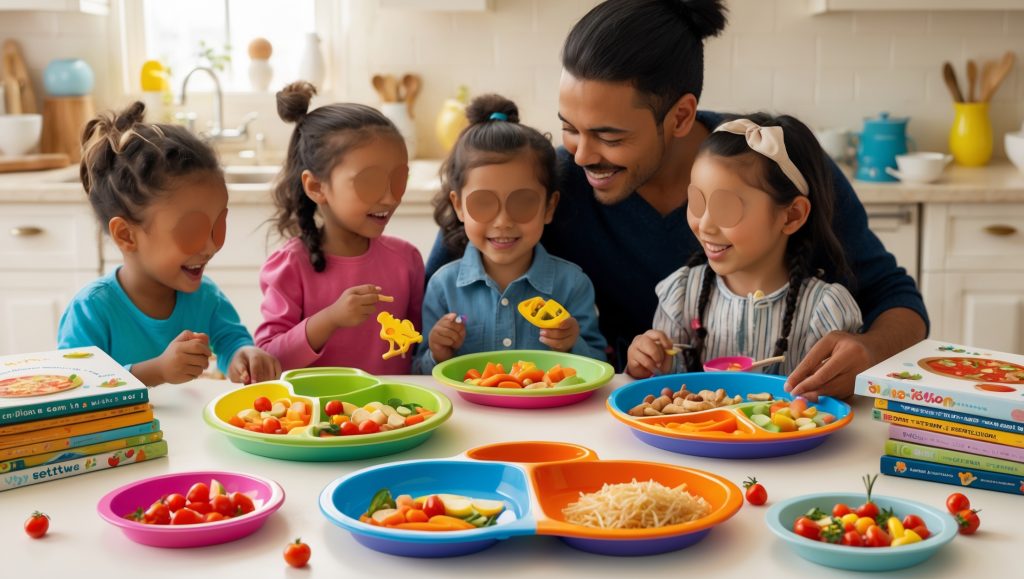
The EZPZ Mini Mat is a parent favorite for making mealtimes less stressful and more engaging. Its all-in-one placemat and plate design suctions securely to most tables and highchair trays, minimizing mess and keeping food in place. The three compartments encourage food variety, making it easier to serve new foods alongside favorites—a top tip from feeding specialists.
Best for
- Toddlers and preschoolers
- Families introducing new foods
- Parents looking for easy cleanup
Key notes
- Age/Stage: 6 months and up
- Materials/Ingredients: 100% food-grade silicone, BPA/PVC/phthalate-free
- Strengths: Suctions to table, dishwasher safe, promotes food variety
- Trade-offs: May not fit all highchair trays; slightly bulky for travel
#2 ‘First Bite: How We Learn to Eat’ by Bee Wilson — For Parent Inspiration
Why it stands out
This engaging book offers insight into how children develop eating habits, weaving together stories, science, and practical advice. While not a children’s storybook, it’s a favorite among parents seeking to understand (and gently shift) picky eating patterns from a big-picture perspective.
Best for
- Parents and caregivers seeking evidence-informed insight
- Families who want to adjust their approach to food
Key notes
- Age/Stage: Adults (parent resource)
- Materials/Ingredients: Paperback, eBook, audiobook
- Strengths: Research-backed, relatable stories, practical perspective
- Trade-offs: Not a direct how-to guide; best for those who enjoy reading
#3 Learning Resources Farmer’s Market Color Sorting Set — Playful Food Exploration
Why it stands out
This toy set uses pretend play to introduce a wide variety of produce in a low-pressure, fun way. Children can sort, count, and ‘shop’ for colorful fruits and veggies. Feeding experts recommend food play as a step toward trying new foods, especially for hesitant eaters.
Best for
- Preschoolers and early elementary kids
- Children nervous about new foods
- Parents looking for screen-free, hands-on activities
Key notes
- Age/Stage: 3 years and up
- Materials/Ingredients: Plastic fruits/veggies, baskets
- Strengths: Encourages food familiarity and play, durable
- Trade-offs: Not edible; requires parental guidance for real-world transfer
#4 OXO Tot Stick & Stay Suction Bowl — Less Spills, More Confidence
Why it stands out
This sturdy suction bowl helps little hands focus on eating—rather than knocking food everywhere. The weighted base and easy-release tab make it practical for both parent-led and self-feeding, supporting children as they try dips, sauces, or new textures without frustration.
Best for
- Babies transitioning to solids
- Toddlers learning to self-feed
- Mess-prone eaters
Key notes
- Age/Stage: 6 months and up
- Materials/Ingredients: BPA-free plastic, silicone base
- Strengths: Secure suction, dishwasher safe, easy for parents to remove
- Trade-offs: Works best on smooth surfaces; may not fit all highchairs
#5 ‘The Very Hungry Caterpillar’ by Eric Carle — Storytime Meets Food Fun
Why it stands out
This classic picture book isn’t just a bedtime favorite—it’s a gentle way to introduce a range of foods in a playful, positive context. Many feeding therapists use storybooks to reduce food anxiety and spark curiosity, and this timeless tale is a great jumping-off point for food-related conversations at home.
Best for
- Babies, toddlers, and preschoolers
- Families building positive food associations
Key notes
- Age/Stage: 6 months to 5 years
- Materials/Ingredients: Board book, paper
- Strengths: Engaging, visually appealing, great for mealtime reading
- Trade-offs: Not a direct feeding tool; best paired with real food experiences
#6 Bumkins Waterproof Sleeved Bib — Stress-Free, Mess-Friendly
Why it stands out
Mess is part of learning! This full-coverage bib protects clothing from spills and splatters, helping parents say ‘yes’ to food exploration. Easy to wipe down and machine washable, it encourages independence and reduces cleanup stress—two keys for positive mealtimes with picky eaters.
Best for
- Babies and toddlers
- Families practicing baby-led weaning or sensory food play
Key notes
- Age/Stage: 6 months to 3 years
- Materials/Ingredients: Waterproof polyester, BPA-free
- Strengths: Lightweight, long sleeves, easy to clean
- Trade-offs: Some designs may stain over time; not for older kids
#7 Crayola Washable Markers & Paper — Food Art to Foster Curiosity
Why it stands out
Drawing, coloring, and talking about foods—without any pressure to taste—can help build familiarity and reduce anxiety around new foods. Many feeding therapists suggest food-themed art as a positive first step for hesitant eaters. These classic, non-toxic markers make it easy to get creative at the table or during playtime.
Best for
- Preschoolers and early elementary kids
- Families working on food acceptance in playful ways
Key notes
- Age/Stage: 3 years and up
- Materials/Ingredients: Non-toxic washable markers, paper
- Strengths: Open-ended, affordable, encourages food talk
- Trade-offs: Not a direct mealtime tool; requires supervision for younger kids
#8 Bite-Sized Frozen Veggies & Fruit — Easy Wins for New Tastes
Why it stands out
Pre-cut, frozen veggies and fruits are a convenient way to offer variety with minimal prep. Serving them cold or slightly thawed can offer new textures, which some picky eaters prefer. Many parents find that the novelty of shape (peas, berries, mango cubes) and temperature helps reduce resistance.
Best for
- Toddlers and older children
- Busy families
- Parents looking for simple, nutritious options
Key notes
- Age/Stage: 12 months and up (ensure safe size/texture for child’s stage)
- Materials/Ingredients: Plain, unsweetened frozen produce
- Strengths: Convenient, budget-friendly, variety of options
- Trade-offs: Some textures may be challenging for certain children; always supervise for choking risk
#9 Feeding Littles Online Course — Practical, Research-Informed Guidance
Why it stands out
This popular online course provides bite-sized, evidence-informed lessons for parents dealing with picky eating, plus a supportive community. Videos and handouts cover strategies for reducing stress, building positive routines, and encouraging kids to try new foods—without pressure.
Best for
- Parents and caregivers of babies, toddlers, and preschoolers
- Families seeking step-by-step support for picky eating
Key notes
- Age/Stage: Infants to age 5 (different modules by age)
- Materials/Ingredients: Online videos, printable resources
- Strengths: Research-backed, flexible, supportive community
- Trade-offs: Not free; requires internet access
Buying Tips
When tackling picky eating, focus on products and resources that lower stress and promote exploration—not pressure. Look for:
- Durability and safety: All feeding tools should be free of BPA, phthalates, and other harmful materials. Check age recommendations and supervise as needed.
- Easy cleaning: Dishwasher-safe items and washable bibs make life easier.
- Positive messaging: Books and courses should encourage curiosity and confidence, not shame or quick fixes.
- Realistic fit: Choose options that work for your child’s current stage and your family’s routine.
Verdict
Picky eating is a common phase, but the right tools and strategies can make it less daunting for everyone at the table. Our top 9 picks for 2025 combine practical feeding gear, creative play, and evidence-informed parent resources. Remember: progress is gradual, and small steps—like trying a new plate or reading a food-themed story—add up over time. Celebrate curiosity, allow for mess, and keep meals low-pressure. With patience and the right support, you can help your child explore and enjoy a wider range of foods in their own time.
FAQ
+How do I know if my child is a picky eater?
+Do divided plates and suction bowls really help with picky eating?
+Are frozen fruits and veggies as nutritious as fresh?
+How can I encourage my child to try new foods without pressure?
+What role does play have in reducing picky eating?
+How long does picky eating typically last?
+Should I hide vegetables in my child’s food?

Picky eating is a common parenting challenge, but with the right approach, you can help your child develop a healthier relationship with food. Understanding that children’s preferences can change over time is key—patience and consistency are your best allies. Here are the top tools and tips for 2025 that truly make a difference:
- Colorful, divided plates help make meals visually appealing and allow kids to explore new foods without them touching favorites.
- Interactive meal prep encourages kids to participate in cooking, increasing their interest in trying what they helped create.
- Routine exposure to new foods—offering small tastes regularly without pressure—gradually reduces resistance.
- Positive reinforcement like praise or sticker charts can motivate even reluctant eaters to try something new.
- Family-style serving gives kids autonomy, letting them choose what and how much to eat from a selection of healthy options.
- Modeling adventurous eating as parents sets a powerful example—kids are more likely to mimic your attitude toward food.
- Limit distractions at the table to focus on the meal and family connection.
- Respect appetite: never force eating, but do maintain structured meal and snack times.
- Seek professional support if picky eating persists and affects growth or family dynamics.
- Involve kids in grocery shopping and meal planning.
- Offer new foods alongside familiar favorites.
- Stay calm and avoid power struggles at the table.
- Remember: progress is gradual—celebrate small victories!
Some families may be on a tighter budget—are there any lower-cost alternatives or DIY versions of the products you recommend, particularly when it comes to encouraging food play or reducing mealtime stress?
It’s great to hear you’re looking for budget-friendly ways to support your picky eater. You can make DIY food play tools, like using safe kitchen utensils (measuring cups, muffin tins) for sorting and exploring foods. Create sensory bins with dry pasta or rice, always supervising young children to avoid choking or mess. For stress-free meals, try making a simple visual schedule using paper and markers to help kids know what to expect. Homemade placemats or choice boards with pictures cut from magazines can give a sense of control. Remember to keep play materials clean and check for choking hazards, especially with toddlers. This isn’t medical advice; if you’re concerned, check in with your pediatrician.
I’m curious if you have budget-friendly alternatives for the recommended products, especially for quiet morning use when I don’t want to rely on screens or electronics.
It’s great that you’re looking for quiet, screen-free options for your child’s mornings. Try using simple kitchen tools like silicone cupcake liners for sorting snacks, or repurpose an ice cube tray for fun finger foods—these are safe for most ages and easy to clean. Offer soft foods like banana slices for toddlers to minimize choking risk. Encourage your child to help set up their breakfast with a small spoon or tongs for practice with fine motor skills. Always supervise younger children with any small items. This isn’t medical advice; if you’re concerned, check in with your pediatrician.
I’m curious about the difference between plastic and wooden pretend food sets. Do wooden sets encourage the same kind of hands-on interest and food familiarity, or do you find that the sensory feel of plastic is actually more effective with hesitant eaters?
It’s great that you’re thinking about how different materials might affect your child’s comfort with new foods. Both wooden and plastic pretend food sets can support hands-on play and food familiarity, but each offers unique sensory experiences. Wooden sets often have a warmer, natural texture and tend to be more durable, while plastic sets are lighter and sometimes more colorful or detailed, which can appeal to some kids. For hesitant eaters, it helps to observe which texture your child prefers, and ensure pieces are large enough to avoid choking hazards. Always supervise play, especially for toddlers. This isn’t medical advice; if you’re concerned, check in with your pediatrician.
When introducing the Learning Resources Farmer’s Market Color Sorting Set for food play, do you have tips on how to connect pretend food activities with trying actual veggies at meals, especially if my child resists new foods even during play?
It’s understandable to want to bridge pretend play with real-life tasting, especially when your child is cautious with new foods. Start by matching the play food to real vegetables during mealtime, pointing out colors and shapes together. Invite your child to help set the table or serve pretend veggies alongside the real ones, making it a fun, no-pressure activity. You might encourage gentle touch or smell of the real veggie without expectation to taste. For young children, supervise closely to avoid mouthing play pieces. This isn’t medical advice; if you’re concerned, check in with your pediatrician.
We like to introduce new foods slowly, but my child gets anxious with large portions or bold colors on their plate. Would using something like the Farmer’s Market Color Sorting Set help, or could it be too overwhelming for sensitive kids?
You’re thoughtful to consider how your child reacts to new foods and colors. For sensitive kids, toys like the Farmer’s Market Color Sorting Set can be helpful if used gently: 1) Start by introducing one or two colors at a time, 2) Let your child explore the pieces with their hands before connecting them to actual foods, 3) Keep the play area calm and free from clutter, and 4) Always supervise to avoid mouthing or choking on small parts if your child is younger. Remember, every child is different—go at their pace. This isn’t medical advice; if you’re concerned, check in with your pediatrician.
How do you recommend introducing these tools and routines to a family where meals are often rushed or on-the-go? I’m worried we won’t have time for all the positive approaches mentioned in the article.
It’s completely understandable to feel concerned about fitting new routines into a busy family schedule. Try introducing one small change at a time, like offering a new utensil or snack container during a typical on-the-go meal. Choose tools that are portable and easy to use, avoiding anything with small parts for younger children. Even a quick moment for your child to help pick a snack or pass a food item can foster positive mealtime habits. Remember, consistency matters more than duration. This isn’t medical advice; if you have specific concerns, your pediatrician can help tailor suggestions.
Is there any research comparing the long-term benefits of open-ended food play versus structured, educational toys for picky eaters? I wonder which type builds more confidence and willingness to try new foods.
It’s great that you’re thinking about how different play approaches might help your picky eater gain confidence with food. Current research suggests that open-ended food play—like sensory exploration with different textures, colors, and smells—can gently encourage kids to try new foods over time, especially in early childhood. This kind of play supports positive associations and reduces anxiety around unfamiliar foods. While structured, educational toys help with learning, open-ended food play appears more directly linked to increased food acceptance. Always supervise young children during food play to prevent choking, and avoid common allergens unless already cleared. This isn’t medical advice; if you’re concerned, check in with your pediatrician.
If we want to start building a collection of tools for mealtimes but need to stick to a tight budget, which of your top picks would be most essential to prioritize first for a toddler just starting solids?
It’s great that you’re thoughtfully planning for positive mealtimes on a budget. For a toddler just starting solids, prioritize a sturdy, easy-to-clean high chair and a set of soft-tipped, silicone feeding spoons. These support safety and comfort as your child learns to self-feed. Next, consider divided plates with suction bases to help with messy meals and reduce spills. Avoid utensils with sharp edges or small detachable parts to ensure safety. This isn’t medical advice; if you’re concerned, check in with your pediatrician.
Our kitchen storage is pretty limited. Are any of these feeding tools notably bulky or difficult to store away when not in use? I want to make sure I pick options that fit in a small space.
It’s thoughtful to consider storage when choosing feeding tools for your kitchen. From the article, divided plates and silicone placemats usually stack flat or can hang, making them space-efficient. Small utensils and collapsible snack containers also fit easily in drawers. You might want to skip items like high-capacity blenders or large suction bowls, as they can take up more room. Always check for removable parts or folding designs for safe, compact storage. This isn’t medical advice; if you’re concerned, check in with your pediatrician.
When introducing new foods alongside favorites as you suggest, do you recommend doing this right before bedtime? I’m trying to create a calmer evening routine, so I’m wondering if trying new foods at dinner could make bedtime harder for a picky eater.
You’re right to consider how mealtime affects your child’s bedtime routine. Introducing new foods is usually best earlier in the day, when kids are less tired and more open to trying something unfamiliar. For dinner, stick mostly to safe, familiar foods and add only a tiny taste of something new if you wish. Keep the mood low-key and avoid pressure, especially in the evening. Always supervise to watch for allergic reactions or choking, especially with young children. This isn’t medical advice; if you’re concerned, check in with your pediatrician.
How do you recommend involving a preschooler with sensory sensitivities when using the Farmer’s Market Color Sorting Set? My child gets overwhelmed by bright colors and different food textures.
It’s understandable to want your sensory-sensitive preschooler to feel comfortable with new activities. Start by offering just one or two soft-colored pieces from the sorting set, observing their reactions and letting them explore at their own pace. Let your child help choose which colors or shapes to use, and keep sessions short to avoid overwhelm. If certain textures bother them, try handling those yourself while narrating what you’re doing, so your child can watch without pressure. Always supervise play to ensure safety and check that all pieces are age-appropriate without small parts. This isn’t medical advice; if you’re concerned, check in with your pediatrician.
I watch a five-year-old who is very uneasy around new textures. Do you have any suggestions for families dealing with sensory sensitivities when introducing unfamiliar foods, especially with tools like the EZPZ Mini Mat or the pretend play set?
You’re thoughtful to support a five-year-old with sensory sensitivities around food textures. Try introducing new foods alongside familiar ones, using the EZPZ Mini Mat to keep items separate so they don’t mix. Use the pretend play set for playful, low-pressure exposure—let the child explore textures with their hands before tasting. Offer very small portions and describe the texture together, making it a game. Always supervise, and be mindful of choking hazards and allergies at this age. This isn’t medical advice; if concerns persist, it’s wise to consult a pediatrician or occupational therapist.
We have a small kitchen with limited counter space, so bulky items are tough for us. How do the EZPZ Mini Mat and the OXO Tot suction bowl compare in terms of storage and overall practicality for everyday use?
It’s understandable to want practical mealtime tools that fit a smaller kitchen. The EZPZ Mini Mat is made of flexible silicone and is relatively flat, so it can slide into a drawer or cabinet easily. The OXO Tot suction bowl is more compact vertically, but is bulkier to stack and store. For everyday use, both are dishwasher-safe and designed for toddlers, but the Mini Mat might require a larger drawer for its footprint. Always supervise little ones to prevent spills or attempts to remove the mat or bowl. This isn’t medical advice; if you’re concerned, check in with your pediatrician.
How do you suggest balancing screen-free food play, like with the sorting set, when my child already asks for a lot of tablet time after school? Should hands-on activities be part of an after-school routine?
It’s understandable to want a healthy balance between screen time and hands-on play after school. Try offering screen-free activities like the sorting set as a first option, perhaps right after snack or before dinner, and keep sessions short and fun—ten to fifteen minutes is enough for most preschoolers. Invite your child to help set up, making it feel like a choice rather than a chore. Ensure the activity is age-appropriate and supervise for safety (watch for small pieces). Hands-on food play can be a wonderful part of the routine, giving your child a sensory break from screens. This isn’t medical advice; if you’re concerned, check in with your pediatrician.
My toddler is 16 months old and throws his bowl constantly, no matter how well it suctions. Does the EZPZ Mini Mat work better for this age group than regular suction bowls? I’m trying to figure out what actually stays put during the tossing phase.
It’s understandable to want a mealtime setup that keeps food (and dishes) where they belong, especially with an active toddler. At 16 months, throwing dishes is developmentally normal—even the best suction bowls or mats, including the EZPZ Mini Mat, may not fully withstand determined little hands. You can try serving small portions directly on the high chair tray, using heavier dishes, or offering finger foods that don’t require bowls. Try to keep reactions neutral when tossing happens. Always supervise to prevent choking or injuries. This isn’t medical advice; if you’re concerned, check in with your pediatrician.
Do you have any suggestions for rotating the food play sets, like the Farmer’s Market Sorting Set, so they stay engaging without causing too much clutter at home? I want to encourage food exploration but keep our toy collection manageable.
It’s wonderful that you want to encourage food exploration while keeping clutter under control. Try storing food play sets in clear bins and rotating just one set out each week, keeping the others tucked away. You can mix and match pieces from different sets occasionally to create novelty. Involve your child in cleaning up after play, making it part of the routine. For younger children, supervise to avoid misplaced or lost small parts. This isn’t medical advice; if you’re concerned, check in with your pediatrician.
Our kitchen storage is limited and some divided plates or bowls seem pretty bulky. Which of the tools you recommend are easiest to stash away or travel with for parents who don’t want to add clutter?
It’s definitely important to keep things simple when storage space is tight. In the article, silicone mats and collapsible divided trays are highlighted as space-savers—they’re flexible, stack flat, and fit into shallow drawers or bags for travel. Also, using small, stackable snack containers can help create dividers on regular plates without extra clutter. For utensils, look for compact sets in travel cases. Always check that materials are age-appropriate (BPA-free, no small parts for little ones), and supervise mealtimes. This isn’t medical advice; if you have specific concerns about feeding tools, your pediatrician can help.
I have a toddler who’s just starting potty training and also tends to be picky at mealtimes. Do any of these tools or tips work well when adjusting routines, like encouraging my child to eat before or after sitting on the potty, or should I keep meals and potty separate at this age?
You’re thoughtful to consider how mealtime and potty training routines might affect your toddler. At this age, it’s best to keep meals and potty time separate so your child can focus on one skill at a time. Stick to regular, low-pressure mealtimes, and try offering a snack about 30 minutes after potty time if your child isn’t hungry right away. Use positive encouragement, not pressure, for both eating and potty training. Keep routines predictable so your toddler feels secure. Always supervise, and remember, toddlers may eat less during big changes. This isn’t medical advice; if you’re concerned, check in with your pediatrician.
The article mentions that the OXO Tot Suction Bowl has a weighted base and an easy-release tab. Have you noticed if children tend to figure out how to remove it quickly, or does it really help cut down on accidental spills during self-feeding practice?
You’re thoughtful to ask about how effective the bowl is for real self-feeding practice. In my experience, most toddlers under age three find the weighted base and suction strong enough to prevent frequent spills, especially when supervised. Some older or more persistent kids may eventually figure out the easy-release tab, so it helps to place the tab facing away from them. Start with short, supported practice sessions, and always supervise to ensure safety. Wash the bowl regularly to maintain suction strength. This isn’t medical advice; if you’re concerned, check in with your pediatrician.
Our family travels a lot and space is tight. Is the EZPZ Mini Mat practical for on-the-go meals, or do you suggest other portable options to support consistent routines for picky eaters when we’re away from home?
It’s great that you’re looking to keep mealtime routines consistent, even while traveling. The EZPZ Mini Mat is smaller than many plates and sticks well to flat surfaces, so it can help create a familiar setup for picky eaters at restaurants or hotels. However, it’s not the most compact option, as it’s less flexible to pack. For tighter spaces, consider a silicone placemat that rolls up or lightweight divided containers with secure lids. Always check that any item is age-appropriate, easy to clean, and free of small parts. This isn’t medical advice; if you have concerns, check in with your pediatrician.
I watch a picky eater who is really sensitive to different food textures, and sometimes even playing with toy foods bothers him. Do you have advice on introducing something like the Farmer’s Market Color Sorting Set without overwhelming a child with sensory issues?
You’re thoughtful to consider this child’s sensory sensitivities. Start by letting him watch others play with the Farmer’s Market Color Sorting Set before inviting him to join. Offer just one piece at a time, and let him choose whether to touch or simply look. Respect his pace—he might prefer to sort by color using a spoon or tongs instead of his hands. Clean and inspect pieces to ensure there are no strong odors or rough edges. Always supervise, especially if he’s under three or likes to mouth objects. This isn’t medical advice; if you’re concerned, check in with your pediatrician.
For families on a tight budget who want to invest in just one of these tools, which would be most versatile for both dinner time and bedtime routines, particularly when trying to build positive associations with food in a bilingual home?
It’s thoughtful to look for a budget-friendly, versatile tool to support your family’s routines. From the article, a divided plate with fun, simple designs can work well for both dinner and bedtime routines. At meals, it encourages tasting new foods without mixing flavors, and at bedtime you can use it to introduce or reinforce food words in both languages through play or pretend picnics. Choose a plate made from safe, non-toxic materials and without small detachable parts, especially for younger children. This isn’t medical advice; if you’re concerned, check in with your pediatrician.
Our family is debating between investing in long-lasting wooden toys versus plastic ones for meal and food play. Does the choice impact how well kids engage in pretend food activities, or is it mostly a sustainability decision?
It’s great that you’re thinking carefully about your child’s play environment. Both wooden and plastic toys can support imaginative food play, but here are a few things to consider: 1. Choose items with safe, smooth surfaces—avoid sharp edges or small detachable parts, especially for toddlers. 2. Wooden toys tend to be more durable and eco-friendly, which may appeal to your family’s values but doesn’t necessarily boost engagement. 3. Plastic toys often come in brighter colors and detailed shapes, which some children find inviting. 4. For either type, look for non-toxic finishes and easy-to-clean materials, since pretend food often ends up in little mouths. This isn’t medical advice; if you’re concerned, check in with your pediatrician.
We’re working on introducing chunkier foods, but my baby is sensitive to certain textures and gets fussy. Do any of the recommended tools help make new textures less overwhelming, or should I approach texture transitions in a different way?
It’s understandable to feel concerned when your baby struggles with new textures. Try using the mesh or silicone feeders mentioned in the article to safely introduce chunkier foods—these let your baby explore different textures with less risk of gagging. Start by mixing small, soft chunks into familiar purees and offer plenty of chances to touch and play with food outside of mealtimes. Keep portions very small and stay patient, letting your baby lead the pace. Always supervise closely and avoid hard or round foods that could be choking hazards. This isn’t medical advice; if you’re concerned, check in with your pediatrician.
Does your approach for introducing new foods with tools like the EZPZ Mini Mat differ for cereals versus purees, especially when we’re focused on iron intake for children just starting solids?
It’s great that you’re focused on both iron intake and practical feeding tools as you start solids. For cereals, you can offer iron-fortified infant cereal on a spoon or let your child self-feed small amounts on the EZPZ Mini Mat, encouraging exploration and independence. With purees, place small portions in the mat’s sections, allowing your child to touch, smell, and taste at their own pace. Always supervise closely, ensure the texture is age-appropriate and avoid any choking hazards. Both cereals and purees can be offered with the same tools, but adjust the texture and portion size to your child’s developmental stage. This isn’t medical advice; if you’re concerned, check in with your pediatrician.
For parents who are concerned about iron levels, especially if their child resists meat purees, are there strategies to make cereals more appealing? Or would it be more effective to focus on purees in this case, based on your research with families?
It’s understandable to worry about iron if your child isn’t eating meat purees. You can boost iron intake by making iron-fortified baby cereals more appealing—try mixing them with a fruit puree your child enjoys, or offering them at different temperatures and textures to see what your child prefers. Let your child explore with their hands, as some kids are more willing to taste new foods when they can touch them first. Both cereals and meat purees provide iron, but if meat is a struggle, focusing on cereals (and pairing them with vitamin C-rich fruits to boost absorption) is a practical first step. Always supervise meals for safety, especially with new textures. This isn’t medical advice; if you’re concerned, check in with your pediatrician.
Could you clarify how to work up to introducing new foods for highly active toddlers? Is there a suggested routine or order for presenting new versus familiar foods to support their sensory needs?
It’s great that you want to support your active toddler’s sensory needs while expanding their diet. Start by introducing new foods alongside familiar favorites; place a small amount of the new food next to something they already like, so the plate still feels safe. Offer new foods at predictable times, such as with lunch or snack, and let them explore at their own pace—touching, smelling, or tasting is progress. Keep mealtimes calm and brief, since toddlers have short attention spans, and avoid pressuring them to try new items. Always supervise to prevent choking, choose soft textures, and avoid potential allergens unless previously cleared. This isn’t medical advice; if you’re concerned, check in with your pediatrician.
Can you share any tips for involving grandparents with different approaches to mealtimes, especially if they introduce cultural foods that might be new or seem intimidating to a picky eater?
You’re thoughtful to include grandparents and honor family traditions, even when mealtimes feel tricky. Try inviting grandparents to share stories about the cultural foods—they can talk about their childhood or why the dish matters. Let your child help with safe, simple prep steps, like rinsing veggies or setting the table, so the meal feels more familiar. Offer small tastes alongside favorite foods, and reassure your child that it’s okay just to try a bite. For younger kids, watch for choking hazards and strong spices. This isn’t medical advice; if you’re concerned, check in with your pediatrician.
We try to keep mealtime routines simple instead of using a lot of gadgets. Did your experts mention whether routines or tools make a bigger difference when trying to help kids try new foods?
That’s a thoughtful question—finding what works best for your family is important. Our experts emphasized that simple, consistent mealtime routines often make a bigger impact than gadgets when encouraging kids to try new foods. Here are some steps: 1) Keep meal times regular and predictable, 2) Serve a small portion of new foods alongside familiar favorites, 3) Involve your child in meal prep to increase curiosity, and 4) Offer new foods without pressure. For young children, avoid choking hazards and supervise closely. This isn’t medical advice; if you’re concerned, check in with your pediatrician.
We do not have the Farmer’s Market Color Sorting Set, but my child loves using our cooking utensils for pretend play in the kitchen. Do you have any tips on how to adapt regular household items to encourage more food exploration for a picky eater?
It’s wonderful that you want to encourage your child’s curiosity with everyday items. You might offer safe kitchen tools—like measuring cups, plastic bowls, or a clean muffin tin—for pretend sorting and serving. Let your child use tongs or a large spoon to move real or play food, building comfort with new textures. Create simple taste tests where your child can touch, smell, and (if they want) sample small bites. Always supervise closely and avoid sharp tools or small parts that could be a choking risk. This isn’t medical advice; if you’re concerned, check in with your pediatrician.
How can I encourage my picky eater to actually explore new foods during dinnertime, given that she often refuses to sit at the table after a missed nap? Would using the book ‘First Bite’ help with evening routines, or is it more for background understanding?
It’s understandable to feel frustrated when your child resists dinnertime, especially after a missed nap. Try serving new foods alongside familiar favorites so she feels comforted by what she recognizes. Offer tiny, no-pressure tastes—she can touch, smell, or lick rather than eat. Keep mealtimes brief and positive, and allow her to leave the table if she’s overwhelmed. For tired evenings, stick to low-effort routines like soft music or dim lighting to help her stay calm. ‘First Bite’ is helpful for your understanding, but it isn’t designed as a hands-on tool for daily routines. This isn’t medical advice; if mealtime stress continues, reach out to your pediatrician.
If my child is just turning two, are the recommendations in the article suitable as-is, or would you suggest modifying the amount or type of new foods introduced at this age?
It’s great that you’re thinking carefully about your two-year-old’s needs. At this age, it’s best to introduce new foods gradually, offering one new food at a time alongside familiar favorites and watching for any signs of allergies. Keep portion sizes small and textures soft to reduce choking risks, and always supervise meals. Some tools or tips in the article—like food cutters or interactive mealtime routines—are suitable, but avoid anything with small detachable parts or complex utensils. This isn’t medical advice; if you have concerns about your child’s eating or reactions to foods, check with your pediatrician.
For families trying to manage both picky eating and toy clutter, would you suggest investing in a lasting toy like the Farmer’s Market set, or does a subscription box with frequently changing toys offer better long-term engagement for kids?
You’re juggling a lot trying to support your child’s eating while keeping playtime manageable. For picky eaters, a lasting toy like the Farmer’s Market set can encourage pretend play and familiarity with foods over time, which is helpful for ages 2 and up. This kind of open-ended toy gives repeated learning chances and limits clutter. Subscription boxes add novelty, but can lead to more mess and overwhelm. If you choose a box, rotate out old toys to keep things fresh without overcrowding. Always check that toys are safe for your child’s age group and supervise play, especially with small parts. This isn’t medical advice; if you’re concerned, check in with your pediatrician.
My toddler loves to throw their plate on the floor when frustrated. Is the EZPZ Mini Mat actually strong enough to withstand a determined 3-year-old, or do you have tips for discouraging this habit?
It’s understandable to want mealtime to be less messy and stressful. The EZPZ Mini Mat does have good suction, but a determined 3-year-old can sometimes still pry it up. You might try serving smaller portions directly on the mat (no plate), using a heavy, flat-bottomed dish, or offering cups and spoons for self-feeding to give your toddler more control. Consistently and calmly redirecting or removing the plate if it gets thrown, then trying again later, can help set expectations. Always supervise at the table, and choose non-breakable dishware for safety. This isn’t medical advice; if you’re concerned, check in with your pediatrician.
Could you share more about how often you suggest doing play-based food exploration, like with the Farmer’s Market Sorting Set? Is there a particular routine or schedule that works best for building familiarity without making it a chore?
It’s wonderful that you want to make food exploration fun and pressure-free for your child. Try offering play-based food activities like the Farmer’s Market Sorting Set two or three times a week, keeping sessions short—around 10–15 minutes. Choose relaxed times, like after school or on weekends, and let your child lead the play. Rotate different pretend foods or textures to maintain interest without overwhelm. For toddlers and preschoolers, supervision is key to ensure safety with small parts. This isn’t medical advice; if you’re concerned, check in with your pediatrician.
We’re interested in limiting plastic use at home. Are there alternative versions of the Farmer’s Market play set in other materials, or suggested ways to do the same sort of food exploration without adding more plastic toys to our space?
It’s great that you’re thinking about both your child’s development and the environment. You could try using real fruits and vegetables for hands-on exploration—wash and supervise closely, especially with young kids, to avoid choking hazards. Wooden or felt play food sets are a safer alternative to plastic and are widely available. For younger children, check for non-toxic finishes and avoid small pieces. You can also craft pretend foods together from recycled materials or fabric, making it a creative family activity. This isn’t medical advice; if you’re concerned, check in with your pediatrician.
My child is very sensitive to certain textures and sounds, especially when just waking up. Are any of these tools designed with sensory sensitivities in mind, particularly to avoid overstimulation in the morning?
It’s understandable to want gentle options for your child’s sensitive mornings. In the article, the silicone divided plates and soft-grip utensils are highlighted for their smooth textures, which can be more comfortable for kids sensitive to certain sensations. Try serving familiar, soft-textured foods at breakfast to reduce overwhelm. Minimize noise by avoiding tools with loud clattering parts, like metal trays, and opt for quieter silicone or plastic versions. Always supervise young children with any feeding tools, especially if they’re still exploring with their mouths. This isn’t medical advice; if you’re concerned, check in with your pediatrician.
We have a small kitchen and limited storage space. Can you suggest any practical tips for organizing or storing some of these feeding tools and toys, especially those that tend to be a bit bulkier?
It’s completely understandable to want to keep your kitchen organized, especially with limited space. Try using stackable bins or clear containers to group similar feeding tools and toys together and save space. Consider installing a few sturdy adhesive hooks inside cabinets or on walls for hanging bibs, utensils, or lightweight suction plates. Collapsible silicone bowls or plates can be a great choice as they shrink down after use. Place heavier or less-used items on higher shelves, out of children’s reach for safety. Always check that storage areas are free from hazards like sharp edges or small parts. This isn’t medical advice; if you’re concerned, check in with your pediatrician.
With routines playing such a big part in managing picky eating, do you have suggestions for working families who can’t always keep set mealtimes? How important is consistency, and is there flexibility for varying schedules?
You’re right to wonder about routines when family schedules are unpredictable—it’s a common challenge for working parents. Consistency helps kids know what to expect, but some flexibility is absolutely okay. Try to keep at least one daily eating ritual, like a sit-down breakfast or snack together, even if dinner times vary. Give your child a simple heads-up before meals, so transitions feel smoother. Focus on a calm, no-pressure atmosphere more than the clock. Remember, you can adapt routines to fit your family’s life. This isn’t medical advice; if you’re concerned, check in with your pediatrician.
When working on picky eating with a toddler who hears both English and Spanish at home, should routines like the ones you mention be adjusted to help them connect words for foods in both languages, or does that make things more confusing at mealtimes?
It’s wonderful that you’re thinking about supporting your toddler’s language development at mealtimes. Using routines in both English and Spanish can actually help your child make connections between words and foods, rather than confuse them. Try naming foods in both languages during meals, using consistent routines such as offering choices or describing textures. Involve your child by letting them point or repeat the names if they’d like. Keep routines simple and predictable, as toddlers thrive on repetition and familiarity. Always supervise closely, especially with new foods or textures. This isn’t medical advice; if you’re concerned, check in with your pediatrician.
Budget is always a concern for us with two little ones. Are there any lower-cost alternatives to some of the tools mentioned here for parents wanting to support healthy eating habits but not spend too much?
It’s completely understandable to want to encourage healthy eating without overspending, especially with two young kids. You can use regular divided plates or muffin tins to present a variety of foods and make meals more appealing. Let your children help wash and arrange fruits or veggies—no special tools needed. If you’d like to try food cutters, simple cookie cutters from dollar stores work well and are safe with supervision for ages 3 and up. Stick to safe, washable utensils and avoid small, detachable parts with toddlers. This isn’t medical advice; if you have specific concerns, please check in with your pediatrician.
My child is very sensitive to textures and sometimes avoids not just foods, but even touching play food toys. Are there strategies or specific products from your list that work especially well for kids with sensory sensitivities?
It’s understandable to feel concerned when your child is sensitive to textures, both in food and during play. In these cases, start by introducing soft, easy-to-handle items like silicone food toys or textured sensory mats from our list, so your child can explore at their own pace. You might also encourage gentle, non-food sensory play—such as pressing soft dough or exploring water beads (supervised, age 3+ to avoid choking hazards). Let your child watch others interact with new textures, without pressure to join. Always follow your child’s comfort level and keep mealtimes stress-free. This isn’t medical advice; if you’re concerned, check in with your pediatrician.
Do you have any advice for balancing the needs of a newborn and a picky toddler at mealtimes? I often end up giving my toddler their favorite foods for a calmer mealtime, but I want to introduce more variety without chaos.
It’s understandable to want calm mealtimes, especially with a newborn and a picky toddler. Try offering a small portion of a new food alongside one or two favorites, so your toddler feels safe but has a chance to try something different. Involve your toddler in simple meal prep, like stirring or choosing veggies, to boost curiosity. Keep mealtime routines predictable—toddlers feel secure when they know what to expect. Aim for family meals when possible, modeling enjoyment of different foods. Always avoid choking hazards for toddlers and supervise both children during meals. This isn’t medical advice; if you’re concerned, check in with your pediatrician.
I’m curious about incorporating some of these tips for kids who have strong preferences for certain textures. Are there sensory-friendly options or tools among your recommendations for children who dislike the feel of silicone plates or certain plastic textures?
It’s understandable to want options that respect your child’s texture sensitivities. For children who dislike silicone or certain plastics, try using smooth ceramic or tempered glass plates, which are less likely to trigger sensory aversions and are safe for older toddlers with supervision. Stainless steel utensils can also offer a neutral feel. Let your child help choose their dishes, as having some control may reduce discomfort. Always check for breakability and supervise mealtimes for safety. This isn’t medical advice; if you’re concerned, check in with your pediatrician.
The article mentions combining new foods with favorites using the sectioned plates. How do you suggest introducing these new foods without causing mealtime battles, especially if my child reacts strongly to unfamiliar flavors or textures?
You’re thoughtful to want peaceful mealtimes while encouraging new foods. Start by offering very small portions of the new food in a separate section of the plate, alongside familiar favorites. Let your child explore the food with their senses—touching or smelling is progress, even if they don’t taste it yet. Avoid pressure or bribing; casually model trying the food yourself. Keep mealtimes low-key, and praise curiosity rather than consumption. For toddlers and preschoolers, always supervise to avoid choking risks and choose soft textures as a first step. This isn’t medical advice; if you’re concerned, check in with your pediatrician.
Do you have any suggestions for adapting these picky eating tools or routines for families with limited kitchen storage? Some of the products look a little bulky, and space is tight in our home.
It’s understandable to want solutions that fit a small kitchen while supporting your child’s eating habits. Try selecting just one or two multipurpose tools, like a compact divided plate or stackable containers, to reduce clutter. Opt for routines that focus on involving your child in meal prep using items you already own, like mixing bowls or spoons. Store smaller items in bins or baskets to keep counters clear, and rotate tools as needed rather than keeping everything accessible. Always check that items are appropriate for your child’s age and safe for handling. This isn’t medical advice; if you’re concerned, check in with your pediatrician.
Do you have any recommendations for choosing between toys that focus on open-ended play, like building blocks or pretend food sets, versus more structured educational toys when it comes to encouraging kids to explore new foods? I want to support my child’s curiosity but also help them overcome picky eating.
It’s wonderful that you’re looking to nurture both your child’s curiosity and their openness to new foods. Open-ended toys like pretend food sets can gently introduce new foods in a playful, pressure-free way—let your child “prepare” or serve you different foods, talk about colors and textures, and make up silly food stories together. Building blocks are great for creativity but may not directly support food exploration. Structured educational toys can help too, but keep experiences positive, not lesson-like. For toddlers and preschoolers, always choose toys free of small parts and made from safe materials. This isn’t medical advice; if you’re concerned, check in with your pediatrician.
I noticed the EZPZ Mini Mat is recommended for 6 months and up, but my child has some fine motor challenges and struggles with big plates. Is it suitable for a child still working on basic self-feeding skills, or should I look for something different?
It’s completely understandable to want a feeding tool that matches your child’s current abilities. The EZPZ Mini Mat is designed for infants from 6 months, but if your little one is still developing basic self-feeding skills and finds large surfaces tricky, you could try using a smaller divided plate or a bowl with higher sides to help contain food. Pair this with a child-sized spoon or fork with an easy-to-grip handle. Always supervise meals to ensure safety, especially if your child is working on coordination. This isn’t medical advice; if you’re concerned, check in with your pediatrician.
Sometimes my toddler likes to chew on silicone mats or plates during meals. Has the EZPZ Mini Mat been tested for durability against biting, and is there any risk of small chunks breaking off and becoming a choking hazard?
It’s understandable to worry about your toddler chewing on mealtime items. The EZPZ Mini Mat is made from high-quality, food-grade silicone and is generally designed to withstand normal chewing without breaking into pieces. However, no product is completely bite-proof, so always supervise your child during meals. Regularly inspect the mat for any signs of wear, tearing, or loose pieces, and replace it if you notice damage. For toddlers, avoid letting them walk around with the mat, and keep small objects out of reach during meals. This isn’t medical advice; if you’re concerned, check in with your pediatrician.
For parents who are gradually introducing allergens, do you recommend loosening up the mealtime routines suggested in your guide, or are there specific routines that support a smoother, safer introduction for little ones?
Your focus on safely introducing allergens is so important. Instead of loosening routines, try to keep mealtimes calm and predictable when offering new allergens—this helps little ones feel secure. Serve new allergen foods one at a time, ideally at breakfast or lunch so you have time to watch for reactions. Take notes on what your child tries and any reactions, and avoid introducing multiple new foods at once. Always supervise closely, especially with younger children, and be mindful of textures and choking risks. This isn’t medical advice; if you’re concerned, check in with your pediatrician.
Our Spanish-English household tries to keep a calming wind-down routine before naps and bedtime. Could any of these picky eating strategies or products fit into that, or would they make the transition to sleep harder for a toddler?
It’s wonderful that you’re mindful about your toddler’s wind-down routine. To keep bedtime calm, reserve new foods or mealtime incentives for earlier in the day, not right before sleep. If your routine includes a snack, offer familiar, easy-to-eat options and avoid strong flavors or messy foods that might overstimulate. Some tools, like calming dinnerware colors or involving your child in simple meal prep before naps, can be soothing if kept low-key. Always supervise toddlers with food, and watch for choking hazards. This isn’t medical advice; if you’re concerned, check in with your pediatrician.
Is the Learning Resources Farmer’s Market set durable enough for long-term use if multiple kids of different ages want to play with it, or are there similar options that might be more budget-friendly for larger families?
It’s very understandable to want toys that last when several children are playing together. The Learning Resources Farmer’s Market set is generally sturdy and made for frequent use, but it’s best for children ages 2 and up due to small parts. For larger families, consider rotating play—having only a few children play at once—to reduce wear and tear. There are also wooden food sets available, which can be more durable and sometimes more budget-friendly. Always check for age ratings and inspect toys regularly for loose pieces. This isn’t medical advice; if you’re concerned, check in with your pediatrician.
For the Learning Resources Farmer’s Market set, do you have tips on making pretend play with food more meaningful for a child with sensory sensitivities who might be overwhelmed by too many textures or colors at once?
It’s great that you’re supporting your child through sensory sensitivities during play. Start by offering just one or two pretend foods in neutral colors and smooth textures, then gradually introduce new items as your child feels comfortable. Allow your child to explore at their own pace, perhaps by sorting or matching foods before pretending to cook with them. Keep play sessions short, and gently narrate the experience to help your child feel secure. Always supervise, especially if your child tends to mouth toys. This isn’t medical advice; if you’re concerned, check in with your pediatrician.
My toddler sometimes rejects foods based on how they feel rather than taste. Does your list include any tools or strategies that specifically help with sensory sensitivities around food textures, or would you suggest a different approach for kids who have strong reactions to certain textures?
It’s completely understandable to want support when your toddler is sensitive to food textures. From the article, tools like divided plates and toddler-friendly utensils can help by making unfamiliar textures feel less overwhelming. You can also try offering new foods alongside familiar favorites, encourage gentle food play (touching, squishing), and introduce textures gradually—starting with smoother or softer foods before moving to lumpier ones. Always supervise to ensure safety and avoid choking hazards. This isn’t medical advice; if you’re concerned about strong reactions or limited variety, it’s a good idea to check in with your pediatrician.
Is the Learning Resources Farmer’s Market Color Sorting Set sturdy enough to survive daily play from a rough two-year-old, or should I wait until my son is a bit older? I want to encourage food play but worry about small pieces.
It’s great that you want to encourage food play while keeping your son’s safety in mind. The Farmer’s Market Color Sorting Set is generally well-made, but for a rough two-year-old, supervision is important since the set contains small pieces that could pose a choking risk. If you choose to use it now, limit play to times when you can closely watch him and remove any pieces that seem too small. Alternatively, you might wait until he’s a little older and less likely to mouth objects. This isn’t medical advice; if you’re concerned, check in with your pediatrician.
I noticed both the EZPZ Mini Mat and the OXO Tot Stick & Stay Bowl are listed. For families trying to minimize clutter and stick to a budget, is one more versatile than the other, or do they serve different purposes at mealtimes?
It’s thoughtful to consider both versatility and budget when choosing feeding tools. The EZPZ Mini Mat is a combined placemat and plate, making it great for toddlers learning to keep food separate and reducing mess—especially helpful for self-feeding. The OXO Tot Stick & Stay Bowl, on the other hand, is deeper and better for foods like oatmeal or soup, with a suction base that helps prevent spills. If you want a single item, the Mini Mat might be more multifunctional for finger foods and snacks, but the bowl is useful for anything runny. Both are safe for toddlers with supervision, but always check for wear and avoid microwaving if not recommended. This isn’t medical advice; if you’re concerned, check in with your pediatrician.
We have a child who is sensitive to different textures and sometimes refuses certain foods because of how they feel. Would the divided plates and food play sets you recommend help with this type of sensory picky eating?
It’s completely understandable to want strategies for a child who is sensitive to food textures. Divided plates can help by letting your child see and touch foods separately, which reduces overwhelm from mixed textures. Food play sets are another useful tool—encourage your child to explore textures with their hands in a no-pressure way before eating. Start with soft or familiar textures and gradually introduce new ones. Always supervise, especially with younger children, and be mindful of small parts. This isn’t medical advice; if you’re concerned, check in with your pediatrician.
The EZPZ Mini Mat sounds really helpful, but my little one tends to play with the placemat more than eat from it. Are there any strategies in your guide for balancing sensory play and encouraging actual eating at mealtime?
It’s understandable to want your child to focus on eating instead of turning mealtime into playtime. Try placing only a small amount of food on the EZPZ Mini Mat to reduce distraction and keep portions manageable. Give gentle reminders that mealtime is for tasting, not for playing with the mat. You can also involve your child by letting them help set up the meal, encouraging a sense of routine around eating. For toddlers, especially, keep supervision close to ensure safety and avoid any choking hazards. This isn’t medical advice; if you’re concerned, check in with your pediatrician.
I noticed the EZPZ Mini Mat is recommended for toddlers and up, but my youngest is just turning 6 months and starting solids. Are there any specific safety tips for very young babies using these silicone mats, or should I wait until she’s a bit older before introducing it?
It’s great that you’re thinking carefully about safe mealtime tools for your little one. For a 6-month-old just starting solids, silicone mats like the EZPZ Mini Mat are generally safe when used under close supervision. Make sure the mat is free of cracks or tears, washed thoroughly before each use, and placed on a clean, stable surface. Avoid putting very hot foods directly on the mat, as babies’ mouths are sensitive. Always supervise meals to prevent mouthing or chewing on the mat itself. If your baby tries to lift or mouth the mat excessively, consider waiting a few more weeks. This isn’t medical advice; if you’re concerned, check in with your pediatrician.
The article mentions the EZPZ Mini Mat might not fit all highchair trays. Is there a way to check if it will fit before buying, or can you suggest a similar product that’s more universal or travel-friendly for families on the go?
It’s smart to check compatibility before buying feeding gear for your little one. To see if the EZPZ Mini Mat fits your highchair, measure the tray’s flat surface and compare it to the mat’s base dimensions, which are usually listed on the product site. For a more universal or travel-friendly option, consider silicone suction plates or bowls with smaller footprints—they’re usually more adaptable and easier to pack. Always choose BPA-free, food-safe materials suitable for your child’s age, and supervise meals. This isn’t medical advice; if you have concerns, check in with your pediatrician.
Is the EZPZ Mini Mat really sturdy enough to handle an enthusiastic two-year-old who loves flipping plates, or does it eventually lose suction after lots of use and dishwasher cycles?
It’s completely understandable to want a sturdy plate for a determined toddler. The EZPZ Mini Mat is designed for little ones and generally stays put well on smooth, clean surfaces. For best results, press down firmly on the mat so it suctions fully before serving food. Check that the table or high chair tray is smooth and residue-free, as textured or oily surfaces can weaken suction. Over time and with frequent dishwasher use, some parents notice reduced grip, so hand washing occasionally and inspecting for wear can help maintain the seal. This isn’t medical advice; if you’re concerned, check in with your pediatrician.
I noticed the recommended age for the Farmer’s Market Color Sorting Set is 3 years and up, but my child is just turning one and loves pretend play. Is it safe or developmentally appropriate to introduce this kind of food play earlier, or should we wait?
It’s wonderful that your one-year-old is showing an interest in pretend play already. For children under three, the main concern with sets like the Farmer’s Market Color Sorting Set is small parts, which can be a choking hazard. If you want to encourage food play at this age, use only large, soft, and non-toxic items under close supervision. Simple, safe kitchen tools (like big wooden spoons or plastic bowls) can satisfy their curiosity. As your child grows, you can gradually introduce more complex pretend food sets. This isn’t medical advice; if you’re concerned, check in with your pediatrician.
For families with younger toddlers who are just turning two, would the Learning Resources Farmer’s Market Color Sorting Set still offer enough age-appropriate engagement, or should I look for something designed for slightly younger children to encourage food exploration?
It’s great that you want to encourage food exploration with your two-year-old. The Farmer’s Market Color Sorting Set can be engaging for toddlers at this age, especially with close supervision. Try introducing the set together, naming each food and color, and allowing your child to explore the textures. Use the pieces for pretend-food play alongside real fruits and vegetables, and always monitor for mouthing, as some pieces may pose a choking risk. If your child seems overwhelmed, simpler chunky food toys or real, soft foods for hands-on play can also be helpful. This isn’t medical advice; if you’re concerned, check in with your pediatrician.
With limited kitchen storage in our apartment, I’m always hesitant to bring in larger feeding tools. How bulky is the EZPZ Mini Mat compared to standard plates, and do you have suggestions for storing these types of feeding products so they don’t take up too much space?
It’s understandable to want to keep your kitchen organized and uncluttered, especially with limited space. The EZPZ Mini Mat is about the size of a standard placemat, but it’s flatter and more flexible than most toddler plates, so it can be stacked or even rolled slightly. To save space, you might store it upright alongside cutting boards, in a zip-top bag in a drawer, or hang it from a hook if your kitchen allows. Always make sure it’s clean and dry before storing, especially if it’s used for younger children. This isn’t medical advice; if you have ongoing concerns, check in with your pediatrician.
Storage space can be tricky for us. Between the Mini Mat and the suction bowl, which one would be less cumbersome to store in a small kitchen? Do either of them stack or fit easily in a drawer?
You’re wise to think about storage when choosing feeding tools for your child. Generally, the Mini Mat is flatter and more flexible than most suction bowls, so it can slip easily into a drawer or even be stacked with plates. Suction bowls are often bulkier and may not nest as well, especially if they have attached lids or bases. If space is tight, try laying the Mini Mat flat or rolling it gently to fit your storage. Always check for materials that are safe for your child’s age and free from allergens. This isn’t medical advice; if you’re concerned, check in with your pediatrician.
I noticed the book recommendation for parents, which sounds insightful. For families short on time, do you have other quick resources from your research that can help parents adjust their mealtime routines or mindset about picky eating?
It’s completely understandable to look for quick, practical resources when time is tight. You might try short podcasts or audio summaries about positive mealtime routines—these can be listened to during chores or commutes. Printable visual guides, like charts or infographics on food exposure, can also be posted in your kitchen for quick reminders. Joining a supportive online parent community can help you exchange real-life tips in minutes. For quick mood resets, practice mindful breathing before meals together. Always keep activities age-appropriate and supervise young children, especially with food. This isn’t medical advice; if you’re concerned, check in with your pediatrician.
We’ll be on a long road trip soon with our two-year-old, and I’m wondering if the EZPZ Mini Mat is practical for eating in the car or on the go. Is there a more compact option you’d recommend for travel situations when space is really limited?
You’re wise to plan ahead for mealtime on the road with your toddler. While the EZPZ Mini Mat is great for reducing mess at home, it may be bulky for travel and might not suction well to car surfaces. For road trips, consider a small silicone placemat or a divided snack container with secure lids—these are easy to pack, light, and can help keep foods separate. Always supervise your child closely when eating in the car to prevent choking, and avoid foods that are choking hazards. This isn’t medical advice; if you’re concerned, check in with your pediatrician.
Do you have any suggestions for parents whose kids are also experiencing sensory sensitivities along with picky eating? I noticed some products encourage food play and variety, but I am not sure how well those work for children who are sensitive to textures or strong smells.
You’re right to consider how sensory sensitivities can impact picky eating—it’s a common and valid concern. For kids who are sensitive to textures or smells, start by offering new foods in very small amounts alongside familiar foods, without pressure to taste. Allow your child to explore by touching or smelling foods first before trying them. Focus on foods with more neutral textures and mild smells, and avoid strong flavors or mixed textures at first. Food play can be helpful, but keep it low-pressure and optional; some children may only want to watch at first. Always supervise, avoid foods that pose choking risks, and adapt to your child’s comfort level. This isn’t medical advice; if you’re concerned, check in with your pediatrician.
We have a small kitchen and limited storage space. Are the EZPZ Mini Mat and the OXO Tot Suction Bowl stackable or easy to store if I buy both?
It’s understandable to want feeding tools that fit your small space. The EZPZ Mini Mat is made from flexible silicone, so it can be rolled or laid flat in a drawer, though it doesn’t stack easily. The OXO Tot Suction Bowl is stackable with other bowls of its kind and generally compact. To save space, consider storing the mat vertically or hanging it, and nesting the bowl inside your existing dishes. Always supervise mealtime and check that storage doesn’t compromise cleanliness. This isn’t medical advice; if you have concerns, check in with your pediatrician.
Some of these tools look great, but as a parent on a tight budget, I wonder which options are the most versatile or offer the biggest impact for the price. If you had to start with just one or two, which would you recommend?
It’s understandable to want the best for your child while sticking to a budget. If you’re choosing just one or two tools, I’d suggest starting with divided plates and fun utensils—these are versatile, reusable, and help make new foods less intimidating for most ages. Both encourage self-feeding, portion control, and positive mealtime routines without breaking the bank. Always choose BPA-free, dishwasher-safe items appropriate for your child’s age to ensure safety. This isn’t medical advice; if you have specific concerns, check in with your pediatrician.
If space is tight in my kitchen, do you think the OXO Tot Stick & Stay Suction Bowl or the EZPZ Mini Mat is easier to store, especially when dealing with gear for both a little one and a toddler?
It’s great that you’re thinking ahead about storage, especially with two young kids’ gear to juggle. The EZPZ Mini Mat is usually flatter and more flexible than the OXO Tot Stick & Stay Suction Bowl, which makes it a bit easier to stack or slip into a drawer. For age-appropriateness, both are safe for babies and toddlers, but always check for wear and wash them well to avoid food buildup. Whichever you choose, keep suction mats and bowls out of reach when not in use, as little ones can sometimes get curious. This isn’t medical advice; if you’re concerned, check in with your pediatrician.
We have limited kitchen storage space—do the EZPZ Mini Mat or OXO Tot Stick & Stay bowls stack well, or are they bulky to store if we want more than one for siblings?
It’s great that you’re thinking ahead about both practicality and sibling needs. The EZPZ Mini Mats are made from silicone and tend to be flat, but they don’t nest easily when stacked, so several can take up more room. OXO Tot Stick & Stay bowls are sturdier and stack a bit better, but their bases may make the stack taller than regular bowls. For limited storage, try to keep just one per child out and store extras elsewhere, or use vertical storage solutions. Both options are safe for toddlers, but always check for wear over time. This isn’t medical advice; if you have more specific concerns, your pediatrician can help.
Are all the recommended products easy to clean and store away quickly between meals? In a small space, convenience matters, and I’d love to avoid lingering messes or clutter after mealtime.
Your focus on convenience and minimizing mess in a small space is completely understandable. Most of the products in the article are designed with easy-clean surfaces, and many are dishwasher safe or wipe down quickly. For quick storage, consider stacking silicone plates or collapsible utensils, which take up less room. Keep a small dedicated bin or drawer for mealtime tools to prevent clutter. Look for items without too many pieces or crevices, especially for young children, as these are safer and easier to sanitize. This isn’t medical advice; if you’re concerned, check in with your pediatrician.
I see that the Farmer’s Market Color Sorting Set is made of plastic, but I’m concerned about sustainability and long-term use. Have you found that parents prefer plastic or wooden toy foods in terms of both child appeal and environmental responsibility?
Your concern about sustainability and your child’s play experience is very valid. Many parents find plastic sets like the Farmer’s Market Color Sorting Set bright and easy to clean, which appeals to younger children, but worry about the environmental impact. Wooden foods are more eco-friendly and durable, though they may have fewer color options and sometimes small parts for toddlers. If environmental responsibility is a priority, wooden sets are a strong choice, but always check for non-toxic finishes and sturdy construction. For families with infants or young toddlers, ensure all pieces are large enough to prevent choking. This isn’t medical advice; if you have specific concerns, check in with your pediatrician.
If I’m on a budget and considering individual toys versus a subscription box that swaps items monthly, which option tends to have a bigger impact on picky eating habits at home, based on what you learned from families for this article?
It’s great that you’re thinking about cost-effectiveness and impact for your child’s eating habits. Based on feedback from families, choosing a few thoughtfully selected individual toys—like pretend food sets or child-safe utensils—often worked just as well as pricier subscription boxes for encouraging picky eaters. Start with items that let your child explore new textures and colors through play, and rotate them to keep interest high. Always supervise play, especially with small pieces, and make sure toys are age-appropriate. This isn’t medical advice; if you’re concerned, check in with your pediatrician.
For families who want to try toy and tool rotation but are on a tight budget, which of the items mentioned here would you prioritize first? Are there any lower-cost alternatives or DIY options for encouraging picky eaters?
It’s great that you’re looking for budget-friendly ways to support your picky eater. Based on the article, I’d prioritize using divided plates or fun utensils first, as these are affordable and help make mealtimes less overwhelming. For rotation, try placing just a few items out at a time and swap them weekly to keep things novel. DIY options include making your own placemats with your child’s artwork, or using silicone muffin cups to separate foods. Always ensure items are safe and easy to clean. This isn’t medical advice; if you’re concerned, check in with your pediatrician.
Do you have advice on how to incorporate the Learning Resources Farmer’s Market set into an after-school or weekend routine, especially for kids who are already a little resistant to mealtime?
It’s great that you want to make mealtimes more positive for your child. Try using the Farmer’s Market set for pretend grocery shopping together before snacks, letting your child ‘buy’ a fruit or vegetable to try. Turn tasting into a playful activity, like matching the toy food to real options on their plate. Invite your child to help wash or arrange real produce alongside the toy set, building comfort with new foods step by step. Always supervise play, especially with younger kids and small parts. This isn’t medical advice; if you’re concerned, check in with your pediatrician.
For families who rotate between toy subscriptions and buying specific play sets like the Farmer’s Market Color Sorting Set, do you think the benefits for picky eaters are affected if the set is only available for a few weeks at a time versus owning it permanently?
You’re thoughtful to consider how toy access might impact your picky eater’s experience. Kids often need repeated, low-pressure exposure to new foods and food-themed play to build comfort, so a set that’s only around for a few weeks may offer fewer opportunities for this. If your child enjoys a borrowed set, try incorporating similar pretend play with household items or other toys when it’s gone. Keep mealtimes relaxed and explore food-related play in other ways too. For ages 3 and up, always supervise small parts to prevent choking. This isn’t medical advice; if you’re concerned, check in with your pediatrician.
When it comes to picky eating and trying to boost iron, especially in early stages, would you say purees or cereals fit better into the routines and products you suggest here, or does it depend more on the individual child’s preferences?
It’s great that you’re thinking about both iron intake and your child’s eating habits. For younger babies just starting solids, iron-fortified cereals and purees made from iron-rich foods (like meats or beans) can both be good options. Try offering small tastes of each and watch which texture your child prefers—preference can make a big difference in what they’ll accept. Always supervise to avoid choking and choose age-appropriate textures. If your child refuses one texture, it’s fine to focus on the other. This isn’t medical advice; if you’re concerned, check in with your pediatrician.
I’m curious if you have suggestions for using common kitchen items, like measuring cups or wooden spoons, for pretend food play when we don’t have a special food playset at home. How can we encourage creativity using what’s already in our drawers?
It’s great that you want to encourage creative pretend play with what you already have. You can offer measuring cups and wooden spoons as safe, open-ended props for your child’s kitchen pretend play. Let your child scoop, pour, and mix dry foods like oats or pasta (supervise closely, especially with young children to prevent choking). Use washed, empty containers as ‘pots’ or ‘serving dishes.’ Try play scenarios like ‘restaurant’ or ‘cooking show’ to inspire stories. Always supervise and avoid sharp or breakable items. This isn’t medical advice; if you’re concerned, check in with your pediatrician.
Budget and storage are pretty tight at our place, so I wanted to check: are any of the tools you recommend particularly compact or multi-purpose for families who don’t want to buy too many items?
It makes perfect sense to want practical tools that fit your space and budget. Consider a silicone divided plate, which is dishwasher-safe, compact, and works for both meals and snacks. Stackable, lidded containers are another great option for prepping, storing, and serving food while saving space. If your child is old enough for utensils, look for collapsible or nesting sets that store easily. Always ensure that items are age-appropriate and free from choking hazards. This isn’t medical advice; if you have specific concerns, check with your pediatrician.
For families following a tighter budget, do you recommend any lower-cost or DIY alternatives to the play-based options like the Learning Resources Farmer’s Market set? I love the idea of food play but want to keep expenses down.
It’s wonderful that you want to encourage food play on a budget. You can create your own pretend foods using felt, colored paper, or even clean recyclables—kids can help with the crafting, turning it into a fun activity. Try using real (but inexpensive) fruits and veggies for sensory play; just supervise closely and avoid choking hazards, especially with children under 3. Repurpose safe kitchen items for pretend play, like plastic bowls or wooden spoons. You might also organize a toy swap with other families to expand your options. This isn’t medical advice; if you’re concerned, check in with your pediatrician.
For families on a tight budget, is it better to invest in one higher quality feeding tool like the suction mat, or buy a couple of different lower-cost options to cover different needs? Would you prioritize mess control or sensory play features?
It’s understandable to want the best value while supporting your child’s eating habits. If your budget only allows one tool, a quality suction mat can be a smart choice—it helps with mess control and creates a predictable, stable eating space, which is reassuring for many picky eaters. For toddlers and preschoolers, mess control often takes priority over sensory play, since less stress at mealtime can encourage positive experiences. Choose a mat that’s easy to clean, free from small parts, and made of food-safe materials. This isn’t medical advice; if you’re concerned, check in with your pediatrician.
We’ve tried offering toys like the Farmer’s Market set for food play, but my child tends to put everything in his mouth, even the pretend food. Are these plastic items safe for mouthing, or should we look for alternatives if our toddler is still at that stage?
It’s completely understandable to be concerned about your toddler mouthing toys during food play. For children under three, it’s safest to choose pretend food made from non-toxic, BPA-free materials that are labeled as safe for mouthing and free from small parts that could be a choking hazard. Always supervise your child during play, and inspect toys regularly for wear or damage. Soft silicone food toys designed for infants or washable fabric play food may be good alternatives at this stage. This isn’t medical advice; if you’re concerned, check in with your pediatrician.
Would any of these tools or toys create extra clutter in a small apartment kitchen, or are they easy to store when not in use?
It’s thoughtful to consider kitchen space when choosing tools for picky eating. Many of the items suggested—such as divided plates, silicone mats, and small utensils—are lightweight and stackable, making them easy to tuck into a drawer or cabinet. If you’re short on space, choose collapsible or multi-use items (like a plate with sections that doubles as a placemat). Avoid large or single-purpose gadgets that don’t fit your routine. Always store tools out of reach of young children for safety. This isn’t medical advice; if you’re concerned, check in with your pediatrician.
Is the Learning Resources Farmer’s Market Color Sorting Set suitable for a two-year-old if I’m supervising, or is it really better to wait until age three? I want to encourage food play early but also be sure it’s safe and engaging for a younger toddler.
It’s wonderful that you want to encourage positive food play early on. The Learning Resources Farmer’s Market Color Sorting Set is designed for ages three and up mainly because of potential choking hazards from small pieces. If you choose to use it with your two-year-old, always supervise closely and only offer larger pieces, keeping any small parts out of reach. You could also use the set for simple color sorting together, rather than independent play. For this age, focus on activities that engage the senses, like sorting soft real foods or larger toy fruits. This isn’t medical advice; if you have safety concerns, check in with your pediatrician.
With the Learning Resources Farmer’s Market Color Sorting Set taking up space, do you find it worth having additional food-related toys, or is it better to stick to just one versatile play kit for introducing new foods?
It’s understandable to want to keep toy clutter down while supporting your child’s openness to new foods. Having one versatile food-related play kit, like the Farmer’s Market Color Sorting Set, can be enough for most kids—especially if you rotate activities and use the pieces in creative ways (like pretend shopping or cooking). More sets aren’t usually necessary but can be swapped in as your child’s interests change. For preschoolers, ensure pieces are large enough to prevent choking and avoid small parts for toddlers. This isn’t medical advice; if you’re concerned, check in with your pediatrician.
We travel a lot to visit family, and some of these tools seem bulky for packing. Are there any lightweight or compact alternatives to the EZPZ Mini Mat or the OXO Tot Suction Bowl that still work for picky eaters?
It’s understandable to want feeding tools that are easy to pack when traveling with a picky eater. Try looking for silicone placemats that roll up tightly or thin travel plates with raised edges—these are lightweight and usually dishwasher-safe. Collapsible silicone bowls can work well and take up less space than rigid ones. For utensils, consider compact travel sets with cases to keep them clean. Always make sure any items you choose are free of choking hazards, BPA, and easy to wash on the go. This isn’t medical advice; if you’re concerned, check in with your pediatrician.
In your experience or research, do you find that play-based sets truly help kids with language delays become more interested in trying new foods, or are there better approaches for engaging reluctant eaters with communication challenges?
You’re thoughtful to consider how to support a child with both picky eating and language delays. Play-based food sets can help some kids by making mealtimes less stressful and giving them new words and play opportunities, but progress may be gradual. Try modeling pretend play with the sets and naming foods, textures, or actions. Offer real foods alongside pretend ones for comparison. Keep sessions short, positive, and pressure-free, and always supervise for safety, especially with small pieces. Some children may benefit from visual supports or food exploration activities instead. This isn’t medical advice; if you’re concerned, check in with your pediatrician or a speech-language pathologist.
The article recommends offering a variety of new foods, but for parents concerned about iron, would you suggest focusing more on cereals or pureed meats and veggies for younger picky eaters? I wonder which tends to be accepted more easily by kids just starting solids.
It’s understandable to want to make sure your little one gets enough iron, especially with picky eating. For babies just starting solids (around 6 months), iron-fortified cereals are often easier to accept because of their smooth texture and mild taste, but pureed meats and iron-rich veggies are also excellent options. You could start by offering small amounts of iron-fortified cereal, then gradually introduce pureed meats like beef or chicken and pureed lentils or spinach. Try mixing new foods with familiar favorites to increase acceptance. Always supervise during meals and check food consistency for age-appropriateness to avoid choking. This isn’t medical advice; if you’re concerned, check in with your pediatrician.
My toddler is 13 months and loves to throw bowls, but we have a smaller highchair tray. Do the suction mats and bowls in your list fit on compact trays, and is there anything you’d recommend if we eat out often and need something portable?
It’s understandable to want practical solutions when your toddler loves to throw things at mealtime. Many suction mats and bowls are designed to fit smaller trays, but double-check product dimensions before buying—round or square suction bowls tend to work best on compact surfaces. For eating out, consider a portable silicone placemat with built-in sections; these roll up easily and stick to most tables. Always supervise, since even strong suction isn’t foolproof against determined toddlers. Choose BPA-free, easy-to-clean options, and avoid small detachable parts for safety at this age. This isn’t medical advice; if you’re concerned, check in with your pediatrician.
For families on a tight budget, is it more worthwhile to buy one of these specialized feeding tools or to focus on the food play and exposure ideas you mentioned in the article?
It’s understandable to want the best support for your child while managing costs. For most families, focusing on food play and exposure ideas can be more effective and budget-friendly than buying specialized feeding tools. Try involving your child in grocery shopping, letting them help wash vegetables, and offering small tastes in fun, low-pressure ways. Use everyday utensils and dishes, making meals playful with what you already have. Always supervise young children to ensure safety with small items. This isn’t medical advice; if you’re concerned, check in with your pediatrician.
Do you have any strategies for keeping mealtimes positive and consistent when kids split time between parent and grandparent homes, especially when different foods are offered and routines vary?
It’s completely understandable to want mealtimes to feel positive and predictable, even when routines and foods differ between homes. Try agreeing on a few shared mealtime routines, like a familiar pre-meal ritual or set snack times, with both households. Share information about your child’s safe foods and any strong dislikes to keep options consistent. Let your child help with small meal tasks or choosing between two foods for a sense of control. When possible, communicate openly with grandparents about what’s working and gently encourage flexibility. Always supervise young children with new foods for safety, especially if there are allergies or choking risks. This isn’t medical advice; if you’re concerned, check in with your pediatrician.
Our child is sensitive to different textures, including utensils and plates. Do any of the recommended products stand out for kids with sensory issues around touch and mealtime?
It’s understandable to want mealtime tools that help your child feel more comfortable with textures. From the article, silicone grip plates and soft-touch utensils may be especially helpful—they’re gentle, flexible, and often less overwhelming for kids with tactile sensitivities. Start by letting your child explore these items with their hands before using them for food. You might also try introducing one new item at a time to prevent overload. Always supervise young children to ensure safety, especially with small utensils. This isn’t medical advice; if you have ongoing concerns about sensory sensitivities, please talk with your pediatrician or an occupational therapist.
If my toddler is already a bit picky and we want to start involving her grandparents in mealtimes with our family recipes, would you suggest starting with the pretend play set or focusing more on serving small portions of the real food using these plates and bowls?
It’s wonderful that you want to include grandparents and family recipes in your toddler’s meals. For a picky toddler, try serving very small portions of real food on familiar, child-friendly plates and bowls at first. This helps her get used to the sights and smells of your family dishes without pressure. Invite her to participate by touching or helping serve, but don’t insist on eating. Pretend play sets are great for building comfort and interest in new foods, so you can use both approaches—real foods at meals, pretend play at other times. Always supervise closely, watch for allergies, and adapt foods to her chewing ability. This isn’t medical advice; if you’re concerned, check in with your pediatrician.
Do you have any insights on how to adjust some of these picky-eating strategies for older kids, like those in elementary school, who may already have strong food preferences?
It’s understandable to want strategies that resonate with older kids who have established preferences. For elementary-aged children, involve them in meal planning and simple food prep, giving them some control and ownership. Offer taste tests or food challenges with gentle encouragement, not pressure. Encourage open conversations about why they like or dislike certain foods, respecting their opinions. Try presenting new foods in familiar ways, like adding a new veggie to a favorite pasta. Always prioritize safety—supervise chopping, and be mindful of allergies. This isn’t medical advice; if you’re concerned, check in with your pediatrician.
My 10-month-old is just starting to try chunkier foods but still tends to push the plate off the highchair. Does the EZPZ Mini Mat actually stay put if they try to peel up the edges, or do you find bowls with deeper sides work better at this age?
It’s normal to feel frustrated when your baby pushes food and plates off the highchair. At 10 months, most babies are still exploring textures and testing boundaries, so some plate tossing is expected. The EZPZ Mini Mat is designed to suction well to flat, smooth surfaces, but persistent little hands can sometimes peel up the edges. You might find bowls with deep, sloped sides and strong suction bases helpful, as they can be harder for babies to lift. Always supervise closely and avoid heavy dishes or anything with small, detachable parts for safety. This isn’t medical advice; if you’re concerned, check with your pediatrician.
Our toddler is 2.5 and we are on a budget with limited kitchen space, especially now that we have extra gear for potty training. Which of these picky eating tools offer the best value and can be easily stored or used for different stages?
It’s great that you’re thinking ahead about space and getting the most from each tool. For a 2.5-year-old, look for stackable divided plates and silicone suction bowls—they’re compact, durable, and work well as your child grows. Small, easy-to-clean toddler utensils with chunky handles can also be used for years. A foldable booster seat is valuable both for mealtimes and small kitchens, and it can be tucked away when not in use. Always supervise at mealtime and check that items are free from small parts or harsh chemicals. This isn’t medical advice; if you’re concerned, check in with your pediatrician.
For a family really focused on boosting iron, do you have advice on how to rotate iron-fortified cereals and iron-rich purees in a weekly meal routine? I want to support good habits without making meals feel repetitive or pressured.
It’s great that you want to support your child’s iron needs while keeping meals enjoyable. Try offering iron-fortified cereals at breakfast two or three times a week, and rotate between different brands or flavors for variety. For purees, alternate iron-rich options like lentils, beef, or spinach mixed with vitamin C-rich fruits or veggies at lunch or dinner every other day. Let your child help choose which cereal or puree to try, and keep mealtime relaxed, avoiding pressure to finish. Always supervise young children and check textures for age-appropriateness to prevent choking. This isn’t medical advice; if you’re concerned, check in with your pediatrician.
When introducing tools like suction bowls for self-feeding, what safety precautions are recommended to make sure all parts stay attached securely, especially if a child tries to pull them apart and potentially access small pieces?
It’s great that you’re being proactive about safety while encouraging self-feeding. When using suction bowls, always check that the bowl and its suction base are made of one solid piece or that any removable parts are securely locked in place. Before each meal, inspect the bowl for cracks, loose sections, or weakened suction. Supervise your child during meals to prevent them from prying off the bowl and accessing any small parts. Choose products labeled for your child’s age group, avoiding bowls with detachable small pieces for toddlers. This isn’t medical advice; if you’re concerned, check in with your pediatrician.
My toddler is a late talker, and sometimes switching between Spanish and English routines at bedtime seems to unsettle him. Are there certain routines or tools from your list that could work better for kids who are easily overwhelmed during transitions?
It’s understandable to want smoother transitions at bedtime, especially with a late-talking toddler who may feel overwhelmed by changes. Try using a consistent visual schedule (like a simple picture chart) to show each bedtime step, which can help bridge language differences. Offer a favorite comfort item discussed in the article, like a soft toy, to provide security. Stick to the same order of routines and use short, gentle cues in one language at a time to reduce confusion. Always supervise your toddler and avoid small items that could pose a choking hazard. This isn’t medical advice; if you’re concerned, check in with your pediatrician.