
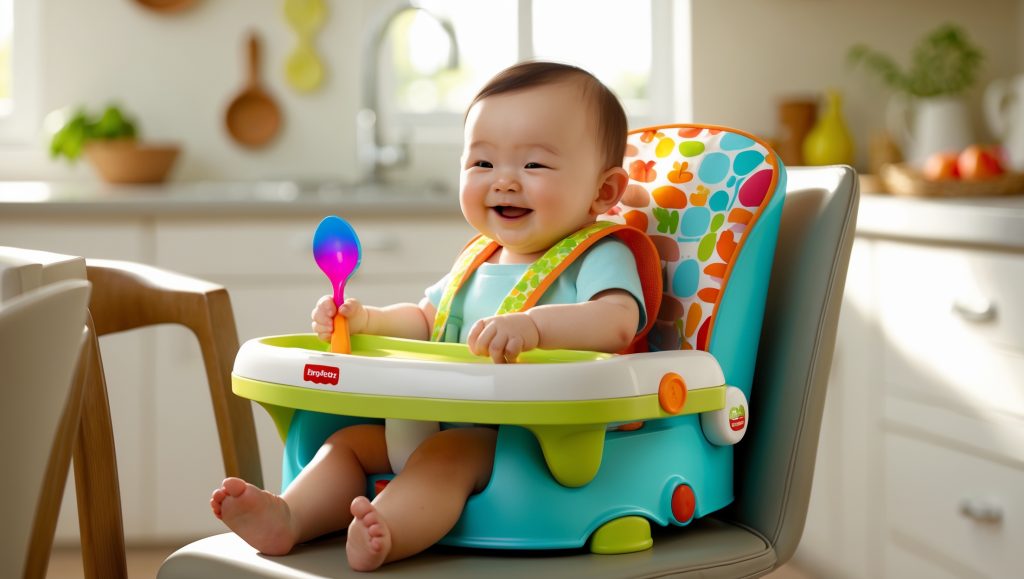
Overview
The transition to solids is a major milestone for babies and their caregivers. Creating a positive, engaging mealtime environment can set the stage for healthy eating habits and social development. The Fisher-Price Healthy Care Deluxe Booster Seat has been a top choice among parents in the US for years, thanks to its blend of practicality, safety, and child-friendly design. In this detailed review, we’ll explore how this booster seat can support both parents and little ones as they embark on the exciting journey of introducing solids in 2025.
What’s Inside / Build Quality
Unboxing the Fisher-Price Healthy Care Deluxe Booster Seat reveals a thoughtfully designed product with the following components:
- Booster seat base with adjustable height
- Removable tray with a snap-on lid
- 3-point harness for safety
- Chair straps for securing the booster to most standard dining chairs
- Dishwasher-safe tray and lid for easy cleaning
- Foldable design with built-in carry strap for portability
The seat is made from sturdy, BPA-free plastic, and all parts are free of sharp edges and small detachable pieces. The build quality is solid, with a stable base that resists tipping and a tray that clicks on securely. The materials feel robust enough to withstand daily use, spills, and the occasional toddler tantrum.
Learning & Development Benefits
While the Fisher-Price Healthy Care Deluxe Booster Seat is not a toy in the traditional sense, it plays a valuable role in supporting children’s learning and development during the introduction of solids. Here are the key benefits:
- Fosters mealtime routines: Consistent seating helps establish predictable rituals and routines, which are comforting and developmentally appropriate for infants and toddlers.
- Promotes independence: With an accessible tray and a secure seat, little ones can practice self-feeding skills, enhancing hand-eye coordination and fine motor control as they explore different textures and foods.
- Encourages social interaction: By joining the family at the table, babies observe and participate in social cues, communication, and turn-taking during shared meals.
- Supports sensory exploration: The tray becomes a safe space for sensory play with new foods, allowing babies to touch, smell, and taste at their own pace.
- Builds positive food associations: A comfortable, secure seat can help babies associate mealtime with safety and enjoyment, laying the groundwork for lifelong healthy habits.
Setup & Use
The Fisher-Price Healthy Care Deluxe Booster Seat is designed for straightforward assembly and everyday convenience. Here’s what to expect:
- Initial setup: No tools required. Attach the tray to the seat, adjust the height if needed, and secure the chair straps to your dining chair. The straps are easy to tighten and release.
- Safety first: Always use the 3-point harness to secure your child. The harness is adjustable and easy to buckle.
- Cleaning: The removable tray and lid are top-rack dishwasher safe. The seat itself can be wiped down with a damp cloth. No fabric covers mean less mess and easier sanitation.
- Portability: The booster folds compactly and features a convenient carry strap, making it a good companion for travel, restaurants, or visits to grandparents.
- Age range: Suitable for babies who can sit unassisted (typically around 6 months) through toddlerhood, up to roughly 50 lbs.
Pros & Cons
Pros
- Sturdy, tip-resistant design ensures safety at the table
- Removable tray with snap-on lid is dishwasher safe for easy cleaning
- Portable and lightweight, folds up with a carry strap for travel
- Adjustable height fits a wide range of dining chairs
- No fabric parts—less risk of stains and odors, more hygienic
- Affordable compared to full-sized high chairs
Cons
- Tray can be tricky to snap on/off for some users
- May not fit all chair types (very thick or unusual designs)
- No reclining feature—only suitable for babies who sit upright independently
- Not as padded or plush as some high-end high chairs
- Seat may be less comfortable for very long meals
Alternatives & Similar Toys
If the Fisher-Price Healthy Care Deluxe Booster Seat isn’t quite the right fit for your family’s needs, consider these popular alternatives for introducing solids and supporting independent feeding:
- Inglesina Fast Table Chair: A portable, clip-on high chair that attaches directly to most tables, great for travel and small spaces.
- OXO Tot Perch Booster Seat: Features a foldable design and soft cushion; easy to wipe clean and suitable for toddlers.
- Summer Infant Deluxe Comfort Folding Booster: Adjustable height, removable tray, and compact folding for portability.
- Chicco Pocket Snack Booster Seat: Three height adjustments, removable tray, and a compact fold for on-the-go families.
While these options offer various features, the Fisher-Price Healthy Care Deluxe Booster Seat stands out for its blend of durability, simplicity, and value.
Verdict
For families beginning the solids journey in 2025, the Fisher-Price Healthy Care Deluxe Booster Seat is a reliable, practical choice. Its robust build, easy-to-clean design, and portable features make it a favorite for busy households. While it lacks some of the plush comforts of pricier high chairs, its focus on safety, simplicity, and supporting independent feeding is spot-on for families who value function and developmental benefit. If you’re looking for an affordable, low-maintenance booster seat that helps bring your baby to the table—literally and figuratively—this model is well worth considering.
FAQ
+Is the Fisher-Price Healthy Care Deluxe Booster Seat safe for infants?
+How easy is it to clean the booster seat?
+Does the booster fit all dining chairs?
+Can the booster be used for travel or dining out?
+Is there a weight or age limit?
+Does the seat recline?
+What makes this booster seat different from a high chair?

Fisher-Price Healthy Care Deluxe Booster Seat – Making Mealtime Engaging for Little Ones (2025)
The Fisher-Price Healthy Care Deluxe Booster Seat continues to be a favorite among parents seeking a practical and engaging solution for mealtime with young children. This booster seat stands out for its thoughtful design, combining safety, convenience, and fun. The adjustable tray is easy to clean and dishwasher-safe, a huge plus for busy families. The seat’s compact, portable build allows it to attach securely to most dining chairs, making it perfect for use at home or on the go.
What truly sets this booster seat apart is the inclusion of playful elements—colorful toys and interactive attachments that keep little ones entertained while parents prepare meals or enjoy family time. The three-point harness and non-skid feet provide peace of mind, ensuring your child stays safe and comfortable. Parents also appreciate the hassle-free setup and simple folding mechanism for storage or travel. Overall, the Fisher-Price Healthy Care Deluxe Booster Seat offers a balanced blend of practicality and entertainment, making family mealtimes smoother and more enjoyable for everyone.
- Easy-to-clean, dishwasher-safe tray
- Interactive toys keep children engaged
- Portable and simple to attach to most chairs
- Secure, comfortable harness system
In your experience, does switching between booster seats and regular chairs ever impact a toddler’s willingness to participate in mealtime routines, or is consistency more important for fostering independence?
You’re thoughtful to consider how seating choices might affect your toddler’s mealtime experience. Many toddlers thrive with clear routines, so using the same seat can help signal that it’s time to eat, which often supports participation and independence. If you need to switch between booster and regular chairs, try to keep other elements consistent—like mealtime order or the location at the table. Involve your child by letting them help set up their seat or choose where to sit when appropriate. For safety, always supervise and check that seating is stable and age-appropriate, especially if using different chairs. This isn’t medical advice; if you’re concerned, check in with your pediatrician.
Did you notice if the booster seat fits securely on all types of dining chairs, especially wider or padded ones? My kitchen chairs are a bit bulky and I want to be sure the straps will actually keep the seat stable for a very wiggly toddler.
Your concern about keeping a wiggly toddler safe in a bulky chair is very valid. In our review, we found that the Fisher-Price Healthy Care Deluxe Booster Seat straps are adjustable and fit most standard dining chairs, but they may not be long enough for extra-wide or heavily padded seats. To help: 1) Measure your chair’s width and depth before purchasing. 2) Test the seat’s fit with both the base and back straps fully extended. 3) Always double-check strap tightness before each use. 4) Supervise your child at all times, especially if they tend to wiggle. This isn’t medical advice; if you’re concerned, check in with your pediatrician.
We are raising our toddler to speak both Spanish and English, and I am curious if the Fisher-Price Healthy Care Deluxe Booster Seat can help us establish consistent bilingual routines during meals. Do you have any tips for using the booster seat to engage our child in both languages at the table?
It’s wonderful that you want to support your toddler’s bilingual development during mealtime. Try using the booster seat as a cue for family routines by choosing one language for each meal or alternating languages on different days. Offer choices in both languages, like “¿Quieres agua o leche? Do you want water or milk?” Label foods and utensils in Spanish and English as you serve them. Keep mealtime conversations simple and interactive, encouraging your child to respond in either language. Always supervise closely for safety, especially with young children in booster seats. This isn’t medical advice; if you have concerns, check in with your pediatrician.
We often switch between our dining table and a breakfast nook, so we need something portable. Is it easy to detach and move the seat from chair to chair, and how heavy or awkward does it feel when carrying it around?
It’s great that you’re thinking about portability for mealtime flexibility. The Fisher-Price Healthy Care Deluxe Booster Seat is designed to be lightweight and easy to detach using its simple strap system, making it straightforward to move from chair to chair. Many parents find it manageable to carry, even one-handed, since it’s compact and doesn’t feel bulky. Just be sure to always re-secure the seat tightly to each new chair and supervise your child during use, especially with younger toddlers. This isn’t medical advice; if you’re concerned, check in with your pediatrician.
Could you share your advice on establishing a toy rotation schedule at the table? For example, is it better to introduce toys at certain meals or stick to just new utensils to maintain routine?
It’s great that you want to keep mealtime both engaging and consistent for your child. To balance novelty and routine, try rotating just one or two simple, washable toys at select meals—perhaps lunch or dinner—rather than every meal. Alternate with child-friendly utensils at other times, so your little one enjoys both the fun and the skill-building. Always choose toys without small parts and wipe them down after each use. For toddlers, visual predictability can help: maybe a favorite teether for lunch and a new spoon for dinner. This isn’t medical advice; if you’re concerned, check in with your pediatrician.
We’re on a pretty tight budget and considering whether this booster seat is a good long-term investment. Around what ages did your own kids outgrow it, and is it adaptable for babies as they grow into toddlers?
It’s completely understandable to want a booster seat that will last as your child grows. The Fisher-Price Healthy Care Deluxe Booster Seat is typically suitable for babies who can sit up unassisted (about 6 months) up to roughly 3 years old, or 50 pounds. Start with the tray and backrest for younger babies, then remove them as your child grows to use it as a toddler seat at the table. Always ensure straps are secure and supervise mealtimes. This isn’t medical advice; if you have concerns about fit or safety, check in with your pediatrician.
Is there anything unique about the safety harness or tray locking mechanism compared to other booster seats you’ve tried, particularly when a child tries to wiggle free?
—keeping a wiggly child safe at mealtime is such a common concern. The Fisher-Price Healthy Care Deluxe Booster Seat features a three-point harness that is easy for adults to secure but tough for little hands to undo. The tray locks with an audible click, which helps ensure it is properly in place and harder for toddlers to pop off on their own. Always double-check both the harness and tray are securely fastened before each use. This seat is designed for children who can sit up unassisted, usually around 6 months and up. This isn’t medical advice; if you’re concerned, check in with your pediatrician.
I’m comparing a few booster seats and want something that encourages independence but also fits our budget. Based on your experience, does the Fisher-Price Healthy Care Deluxe offer good long-term value for families who use it mostly for relaxed, quiet mornings?
You’re thoughtful to want a booster seat that supports independence and fits your budget. The Fisher-Price Healthy Care Deluxe offers a simple tray your child can learn to remove with supervision, easy-to-clean surfaces, and a stable, low-profile design that encourages little ones to sit at the table safely. It adjusts as your child grows and folds compactly for storage, making it practical for daily, relaxed use. Always supervise young children while seated, and check that straps are secure. This isn’t medical advice; if you have specific concerns, check in with your pediatrician.
Is the tray big enough to handle the inevitable mess from a two-year-old who insists on self-feeding, or should I plan on having a splat mat under the chair every meal?
It’s very normal to wonder about managing mealtime messes with a self-feeding two-year-old. The Fisher-Price Healthy Care Deluxe Booster Seat does have a generously sized tray, which helps contain most food, but toddlers at this age are naturally enthusiastic eaters and spills are common. I’d recommend: 1) Using the tray but expecting some food to end up on the floor; 2) Placing a washable splat mat or towel under the chair for easy cleanup; 3) Supervising closely, since toddlers may drop or throw food. This approach keeps things safe and manageable. This isn’t medical advice; if you’re concerned, check in with your pediatrician.
Is the Fisher-Price Deluxe Booster Seat portable enough for families who visit grandparents or go out to eat often? Does the folding design actually make it easy to store in the trunk or a closet?
It’s great that you’re thinking about convenience while on the go with your child. The Fisher-Price Deluxe Booster Seat is designed to be portable, with a folding tray and compact shape that make it easy to carry and fit in most car trunks or closets. To use it effectively, fold and latch the tray securely, use the carrying strap for transport, and always check that all parts are locked before moving it. When dining out or visiting family, ensure the booster fits safely on the host’s chair and supervise your child at all times. This isn’t medical advice; if you’re ever unsure about your child’s safety or booster fit, check in with your pediatrician.
There are quite a few booster seats in this price range. Besides safety and ease of cleaning, how does the Fisher-Price Healthy Care Deluxe Booster Seat compare in terms of durability and how long it actually lasts as your child grows?
It’s thoughtful to consider how long a booster seat will last for your growing child. The Fisher-Price Healthy Care Deluxe Booster Seat is designed to adjust as your child grows, with a removable tray and three height settings, so it often fits toddlers from around 6 months up to about 3 years old (or 50 pounds). Many parents report it remains sturdy over time, even with daily use. For safety, always check straps and locks regularly for wear. If your child is particularly active, inspect for loosened parts. This isn’t medical advice; if you’re concerned or need guidance for your child’s needs, check in with your pediatrician.
My child can get overstimulated by sensory input at dinner, making pre-bedtime tough. Does the design of this booster seat support a more soothing mealtime for kids who are sensitive to touch or new foods?
You’re thoughtful to consider your child’s sensory needs at mealtime. The Fisher-Price Healthy Care Deluxe Booster Seat has a smooth, hard plastic surface with minimal textures, which can help reduce unexpected tactile sensations. Its simple design and lack of distracting patterns may feel calming for kids who are easily overstimulated. Try keeping the tray clear except for food, serving familiar foods alongside new ones, and allowing your child to explore at their own pace. Always supervise, especially if your child is younger or mouths objects. This isn’t medical advice; if you’re concerned, check in with your pediatrician.
With all the straps and moving parts, I worry about safety if my little one tries to wiggle out or push against the tray. Have you found the harness and tray system secure enough for active toddlers who don’t always want to stay put?
It’s completely understandable to be concerned about safety, especially with wiggly toddlers. For the Fisher-Price Healthy Care Deluxe Booster Seat, make sure the three-point harness is snug but comfortable, and double-check that the seat is securely strapped to a stable chair before each use. Always lock the tray in place until you hear a click, which helps prevent accidental detachment. Supervise your child closely during meals and avoid leaving them unattended, as even secure boosters can’t prevent all escapes. This setup is designed for children who can sit up unassisted (usually 6 months and up), but if you notice persistent attempts to get out, consider other seating options. This isn’t medical advice; if you’re concerned, check in with your pediatrician.
When using the chair straps, do they fit securely on unusual or rounded dining chairs, or are there certain types of kitchen chairs this booster does not work well with?
It’s great that you’re making sure your child’s booster seat is safely secured. The Fisher-Price Healthy Care Deluxe Booster Seat comes with adjustable straps designed for most dining chairs but may not fit perfectly on unusually rounded or very narrow-back chairs. Here are a few steps to help: 1) Before use, check that both the seat and back straps can be tightened snugly around your chair. 2) If your chair is rounded, ensure the straps lay flat and don’t slip; avoid chairs with significant curves or open backs. 3) Always double-check stability before placing your child in the seat. If the fit isn’t secure, choose a different chair. This isn’t medical advice; if you’re concerned, check in with your pediatrician.
The tray and lid are dishwasher-safe, which sounds very convenient. In your experience, does frequent cleaning in the dishwasher affect the plastic’s longevity or cause any warping or discoloration over time?
It’s great that you’re thinking ahead about durability and safety. Most parents find the Fisher-Price Healthy Care Deluxe Booster Seat tray holds up well with regular dishwasher cleaning, but over time, frequent high-heat cycles may cause mild cloudiness or slight warping—especially if placed on the bottom rack. To help preserve the plastic, wash on the top rack and use gentle cycles. Check for any cracks or damage before each use, as safety is key for little ones. This isn’t medical advice; if you notice significant wear or have concerns, it’s a good idea to consult the manufacturer or your pediatrician.
My child is very sensitive to textures and sometimes refuses to sit if the seat feels uncomfortable. Does the plastic material seem gentle enough for sensory-sensitive kids, or is a separate cushion needed for extra comfort?
It’s completely understandable to want your sensory-sensitive child to feel comfortable during mealtime. The Fisher-Price Healthy Care Deluxe Booster Seat is made of smooth, hard plastic, which may feel too firm or cold for some children with tactile sensitivities. You could try placing a thin, washable cushion or a folded towel on the seat—just ensure it fits securely and doesn’t interfere with your child’s safety harness. Always supervise closely to prevent slipping. For young children, avoid bulky or loose padding that could pose a safety risk. This isn’t medical advice; if you’re concerned, check in with your pediatrician.
I noticed the article mentions that all parts of the booster seat are free of sharp edges and small detachable pieces. Could you clarify if the snap-on lid or any parts of the tray ever come loose during cleaning or everyday use? I am a bit concerned about small parts being a potential choking hazard for curious toddlers.
Your concern about choking hazards is completely understandable, especially with curious toddlers. According to the article, the Fisher-Price Healthy Care Deluxe Booster Seat is designed so that the snap-on lid and tray parts are securely attached and do not have small detachable components that could pose a risk. During cleaning, it’s best to follow the manufacturer’s instructions, ensuring all pieces are reassembled properly before use. Always supervise your child during meals, and routinely check all parts for wear or looseness. This isn’t medical advice; if you’re concerned, check in with your pediatrician.
If you have tried other booster seats before, how does this model compare in terms of both safety and daily usability for active toddlers? I want to make sure my choice supports independence but also keeps my child secure.
It’s wonderful that you’re prioritizing both safety and independence for your active toddler. Compared to many booster seats, the Fisher-Price Healthy Care Deluxe model stands out for its sturdy 3-point harness and wide, stable base, which help keep energetic little ones secure. For daily use, the smooth surfaces and dishwasher-safe tray make cleanup quick, and easy-to-adjust straps simplify moving it between chairs. The simple buckling system is age-appropriate for most toddlers but always needs adult supervision to ensure your child stays buckled. This isn’t medical advice; if you have specific safety concerns, please consult your pediatrician.
At what age did you find the 3-point harness was no longer sufficient to keep your child safely strapped in, especially if they tend to wiggle a lot? I want to make sure my active toddler stays secure during mealtime.
It’s great that you’re paying attention to your child’s safety during mealtime. Most parents find the 3-point harness is effective from about 6 months up to 2–2.5 years, but extra-wiggly toddlers may start attempting to slip out sooner. Check that the harness is properly adjusted and snug each time—sometimes a tighter fit helps. If your child starts trying to stand or twist, always supervise closely and pause mealtime if needed. Once your child consistently tries to escape, it may be time to transition to a different seat or method. This isn’t medical advice; if you’re concerned, check in with your pediatrician.
Our child sometimes has strong sensory preferences and dislikes sitting on certain materials. Is the plastic seat comfortable for kids who are sensitive to textures, or would you suggest adding a cushion that’s safe and easy to clean?
It’s great that you’re considering your child’s sensory preferences during mealtime. The Fisher-Price Healthy Care Deluxe Booster Seat is made of smooth, hard plastic, which may not feel comfortable for children who are sensitive to texture. You might try introducing the seat slowly, perhaps letting your child explore it before mealtime. If your child still resists, consider adding a thin, waterproof, wipeable cushion designed for booster seats—make sure it attaches securely and is free of small parts. Always supervise your child to ensure safety. This isn’t medical advice; if you’re concerned, check in with your pediatrician.
My toddler is starting to have some sensory sensitivities, particularly with new textures and materials. Can you comment on how the surface and tray materials of this seat might impact kids who are a bit hesitant at mealtimes?
It’s understandable to be mindful of sensory sensitivities at mealtimes. The Fisher-Price Healthy Care Deluxe Booster Seat uses smooth, hard plastic for both the seat and tray, which may feel cool or slippery to touch. To help your toddler adjust, try letting them explore the surfaces with their hands before meals, and gradually introduce foods with familiar textures first. Placing a soft, washable cloth on the seat or tray (while supervising closely) can make the experience less overwhelming. Always check for any sharp edges or cracks, and avoid loose covers that could be a choking hazard. This isn’t medical advice; if you’re concerned, check in with your pediatrician.
If we travel to family dinners or restaurants, does the foldable design and carry strap make it truly portable, or is it still a bit bulky to bring along with all our other baby gear?
It’s very understandable to want mealtime gear that’s easy to bring along when you’re juggling so much else. The Fisher-Price Healthy Care Deluxe Booster Seat does fold compactly, and the carry strap allows you to sling it over your shoulder, which many parents find helpful for travel. Here are a few tips: pack it last so it stays accessible, adjust the carry strap for your comfort, and try practicing folding and unfolding at home so you’re not fumbling in public. For most families, it’s manageable, but if you have to carry a lot of baby items, it may still feel a little bulky. Always check that the seat is securely fastened wherever you use it. This isn’t medical advice; if you’re concerned, check in with your pediatrician.
Do you have advice for children who are sensitive to touch or textures during mealtime? Since the tray becomes a place for sensory exploration, I am wondering how to help a sensory-sensitive child get comfortable using the booster seat while trying new foods.
It’s understandable to want mealtimes to feel safe and positive for a sensory-sensitive child. Start by letting your child explore the booster seat and tray when no food is present, so it feels familiar. Gradually introduce new textures, beginning with foods your child already tolerates and adding small amounts of new ones nearby. Allow your child to touch, smell, or play with the food without any pressure to eat. You can also use a soft cloth or placemat on the tray if the plastic feels uncomfortable. Always supervise closely, especially with younger children or those mouthing non-food items. This isn’t medical advice; if you’re concerned, check in with your pediatrician.
I noticed you mention it supports mealtime routines. For caregivers who only watch children part-time, like a few afternoons a week, do you have any tips on maintaining consistency in mealtime habits using this seat?
—wanting to keep routines steady is so helpful for kids, even in part-time care. Try to use the booster seat in the same spot and at the same times whenever possible. Keep a familiar bib or placemat just for their visits to signal mealtime. Offer foods and utensils similar to what they get at home for consistency and comfort. Always supervise closely and make sure the seat’s straps are secure before eating. This isn’t medical advice; if you have concerns or notice feeding difficulties, please reach out to your pediatrician.
the focus on sensory exploration, but I worry about food or crumbs getting stuck in small crevices of the tray and seat. How easy is it to check and clean all the nooks and crannies to avoid any build-up that could become a choking hazard?
It’s great that you’re thinking about both sensory exploration and safety during mealtimes. The Fisher-Price Healthy Care Deluxe Booster Seat is designed with smooth surfaces and a simple tray, which helps reduce areas where food can hide. After each meal, remove the tray and wipe down all parts, paying extra attention to seams and under the seat. Use a small, soft brush or damp cloth to reach tighter spots, and check regularly for any stuck crumbs. All parts are made from food-safe materials and the tray is dishwasher-safe, which can help with thorough cleaning. This isn’t medical advice; if you’re concerned about hygiene or choking risks, please check in with your pediatrician.
My child can be sensitive to new textures and stimuli at the table. Do you find that the tray’s design or materials help children who may be cautious about touching certain foods, or would you recommend adding anything to make sensory exploration more comfortable?
It’s great that you’re thinking about your child’s sensory comfort at mealtime. The Fisher-Price Healthy Care Deluxe Booster Seat has a smooth, easy-to-clean plastic tray with minimal crevices, which tends to be less overwhelming for texture-sensitive children. You might start by offering familiar foods on the tray and gradually introduce new textures in small, separated portions using silicone mats or small containers if needed. Consider letting your child explore the empty tray first, so they can get used to the feel without food present. Always supervise closely, especially with small items. This isn’t medical advice; if you’re concerned, check in with your pediatrician.
How secure is the 3-point harness for a very active toddler? My little one sometimes tries to wiggle out of seats, so I want to be sure it keeps them safe while still being comfortable during longer mealtimes.
It’s completely understandable to want your active toddler to be both safe and comfortable at mealtimes. The 3-point harness on the Fisher-Price Healthy Care Deluxe Booster Seat is designed to keep young children secure by fastening over the hips and between the legs, which helps prevent most attempts to stand or wiggle out. For a very active child, make sure both the seat and tray are properly attached and the straps are snug but not too tight. Always supervise your child while they’re in the seat, and regularly check the harness for wear or looseness. This seat is generally appropriate for toddlers who can sit up unassisted, but if your child is strong or especially squirmy, extra vigilance is key. This isn’t medical advice; if you’re concerned, check in with your pediatrician.
Since mealtimes are often staggered at our house, how easy is it to thoroughly clean the tray and straps between back-to-back feedings without slowing everyone down?
You’re right to want quick, thorough cleaning when meals happen in shifts. The Fisher-Price Healthy Care Deluxe Booster Seat’s tray is dishwasher-safe, so for back-to-back feedings, a fast rinse under hot water with mild soap works well. The tray’s smooth surface and lack of deep crevices help prevent food buildup. Wipe the straps with a damp cloth and soapy water—avoid soaking them to reduce wear. For infants and toddlers, always check for leftover residue or hidden crumbs to ensure safety. This isn’t medical advice; if you have concerns about cleaning or allergies, check in with your pediatrician.
My toddler gets overwhelmed by noise and new textures during mealtimes. Does the tray design help keep food contained for sensory exploration without too much mess, or does food tend to spill off the sides?
It’s completely understandable to want mealtimes to feel safe and manageable for your toddler, especially with sensory sensitivities. The Fisher-Price Healthy Care Deluxe Booster Seat tray is deep and has raised edges, which helps keep most foods contained for tactile exploration. To minimize mess, start with a small selection of familiar foods near the center of the tray and introduce new textures one at a time. Supervise closely, and consider using a silicone mat for extra spill protection if needed. Always check for age-appropriateness and avoid small, hard foods that could pose a choking risk. This isn’t medical advice; if you’re concerned, check in with your pediatrician.
For a toddler who sometimes has mild sensory issues, is the tray surface smooth and comfortable to touch? Some textured plastics bother him, so I’m a little concerned about how tactile-friendly it is.
It’s completely understandable to want a tray surface that won’t bother your toddler’s senses. The Fisher-Price Healthy Care Deluxe Booster Seat tray is made from smooth, hard plastic with a gentle, non-gritty finish that most children find comfortable to touch. Before regular use, try letting your child explore the tray with clean hands and watch for any signs of discomfort. You might also wash it first to remove any residue. If your child is especially sensitive, supervise closely the first few times and consider placing a silicone mat over the tray for extra softness. This isn’t medical advice; if you’re concerned, check in with your pediatrician.
My toddler is sensitive to different textures and sometimes pushes away from new foods. Does the tray’s design allow for sensory play with non-food items too, or is it best to keep it meal-specific?
It’s completely understandable to want a flexible space for your toddler, especially when sensory sensitivities are involved. The Fisher-Price Healthy Care Deluxe Booster Seat tray is smooth and easy to clean, which makes it suitable for supervised sensory play with safe, non-food items like soft toys or water beads. You might try introducing new textures slowly, using familiar objects first. Always supervise closely to prevent choking or accidental ingestion, especially with small items. If you prefer, reserve a separate tray for play to help your child know when it’s mealtime versus playtime. This isn’t medical advice; if you’re concerned, check in with your pediatrician.
We live in a small apartment, so space is tight. How much room does the booster seat take up when strapped to a dining chair, and can it be stored away easily when not in use?
It’s understandable to want mealtime gear that fits well in a small apartment. The Fisher-Price Healthy Care Deluxe Booster Seat attaches securely to most dining chairs and does not have bulky legs, so it usually takes up only the space of your existing chair. When mealtime is over, the seat’s back folds down and the tray can be stored underneath, making it compact for tucking into a closet or corner. Always ensure the straps are out of reach of little ones when storing. This isn’t medical advice; if you have specific safety or space concerns, your pediatrician or the manufacturer’s guidelines can help.
My toddler sometimes gets overwhelmed by new textures and foods. Does the hard plastic surface of this seat seem to aggravate any sensory issues, or would another seat material (like wood or padded options) be better for sensitive children?
It’s understandable to want your toddler to feel comfortable and secure at mealtime, especially if they are sensitive to textures. The Fisher-Price Healthy Care Deluxe Booster Seat is made of smooth hard plastic, which is easy to clean but can feel cold or unyielding to some children. You could try adding a soft, washable cushion (checking it fits safely and doesn’t interfere with straps), or let your child sit on the seat for short periods first without eating to get used to it. For highly sensitive toddlers, seats with gentle padding or soft fabric may be more soothing, but always ensure the seat meets safety standards and is easy to keep clean. This isn’t medical advice; if you’re concerned, check in with your pediatrician.
My twins have very different reactions to new food textures, and one is especially sensitive to sensory input. Is the tray comfortable and secure enough for little ones who like to explore food with their hands, or does it get messy and hard to clean under the edges?
It’s completely normal for twins to react differently to new textures, especially if one is more sensitive to sensory input. The Fisher-Price Healthy Care Deluxe Booster Seat features a smooth, removable tray that is generally comfortable for little hands to explore food. To minimize mess, make sure the tray clicks securely in place and remove it promptly after meals to clean any food trapped underneath. Wipe down both the top and underside regularly to prevent buildup. For sensitive eaters, offer small portions and soft textures at first, watching for any signs of discomfort. Always supervise during meals, and remember: this isn’t medical advice; reach out to your pediatrician if you have concerns.
For families on a tight budget, do you feel this seat offers advantages over lower-cost options found at big box stores? I’m considering recommending it to a neighbor, but I want to understand if the features justify the price difference.
It’s thoughtful of you to help your neighbor weigh their options. The Fisher-Price Healthy Care Deluxe Booster Seat does offer sturdy construction, an easy-to-clean tray, and adjustable features that can grow with a child—benefits that can make daily use simpler and safer for babies and toddlers. Some lower-cost seats may lack these conveniences or may not be as durable over time. For families with active little ones or those sharing the seat across siblings, this seat’s reliability might justify the added cost. Always double-check for safety certifications and inspect for small parts before use. This isn’t medical advice; if you’re concerned, check in with your pediatrician.
I noticed the Fisher-Price booster seat is made from BPA-free plastic. If I’m trying to minimize plastic use for environmental reasons, is there a similar wooden booster seat that supports the same developmental benefits without compromising on safety and easy cleaning?
You’re thoughtfully considering both your child’s health and the environment. Wooden booster seats do exist, but they’re less common and often lack features like one-piece trays or fully wipeable surfaces seen in the Fisher-Price seat. If you choose wood, look for models with smooth finishes and food-safe, non-toxic sealants for easy cleaning and safety. Always check that the seat has a secure harness and fits your child’s age and weight. Supervise mealtime closely, since wooden seats may not have as many stability features. This isn’t medical advice; if you’re concerned, check in with your pediatrician.
As a parent who likes to establish routines, I’m wondering if you have any tips on using the booster seat as part of a consistent morning routine. Are there features that make it easy to quickly set it up or clean it before everyone starts their day?
It’s great that you want to build a consistent morning routine around mealtimes. The Fisher-Price Healthy Care Deluxe Booster Seat is designed for quick setup—just use the adjustable straps to secure it to most chairs, and the tray snaps on easily. To save time, wipe down the plastic parts or pop the tray in the dishwasher after each use, so it’s ready for the next meal. For toddlers and older babies (6 months+), always check that the seat and straps are clean and firmly fastened before each use for safety. This isn’t medical advice; if you’re concerned, check in with your pediatrician.
We have a small kitchen with limited storage space. Does the foldable design of this booster really make it compact enough to store easily when not in use, or does it still take up more room than you’d expect?
It’s understandable to want a booster seat that fits well in a small kitchen. The Fisher-Price Healthy Care Deluxe Booster Seat does fold down quite flat—remove the tray, fold the seat, and you can slide it under a table or tuck it in a closet. For most families, it’s noticeably more compact than traditional high chairs and doesn’t have bulky legs or frames. Just make sure the tray is stored safely and out of reach of young children. This isn’t medical advice; if you have concerns, check in with your pediatrician.
My neighbor’s child can be pretty sensitive to new textures and sometimes resists sitting in new seats. Does this booster seat have any specific features that help kids with sensory challenges adjust comfortably to mealtime?
You’re thoughtful to consider how a new booster seat might feel for a child with sensory sensitivities. The Fisher-Price Healthy Care Deluxe has a smooth, wipeable surface and doesn’t have a lot of textured or rough areas, which many sensory-sensitive children find easier to tolerate. To help your neighbor’s child adjust, try letting them explore the seat with their hands first, without pressure to sit. You can gradually introduce sitting by placing a favorite toy or comfort item on the seat. Also, allow short, positive practice sessions before actual meals. Always supervise, especially with toddlers, and check for proper fit and safety straps. This isn’t medical advice; if you’re concerned, check in with your pediatrician.
I am curious how the adjustable height feature on this booster seat works in practice. As my child grows, is the seat able to accommodate different table heights comfortably, or do you find there is a point where it just does not fit as well for older toddlers?
Your focus on comfort and fit as your child grows is thoughtful. The Fisher-Price Healthy Care Deluxe Booster Seat offers three height adjustments, which means you can raise or lower the seat to help your child sit at most standard tables. Start with the lowest setting for younger children, then increase the height as your child gets older or as you change table styles. For taller tables or bigger toddlers, you may eventually find the highest setting less ideal, especially if your child is nearing preschool age or taller than average. Always supervise your child and check that straps are secure. This isn’t medical advice; if you’re concerned, check in with your pediatrician.
Did you notice if the booster seat accommodates children who are sensitive to certain textures or who dislike sitting in confined spaces, especially during the sensory exploration stage of solids?
You’re thoughtful to consider your child’s sensory needs when choosing a booster seat. The Fisher-Price Healthy Care Deluxe Booster Seat has a smooth, wipeable surface with no fabric, which can help avoid overwhelming textures. If your child dislikes confined spaces, start with short, positive sessions and keep straps loose (while still safe and secure). Bring comforting items, like a familiar cloth, and let your child explore the seat when it isn’t mealtime. Check frequently for any discomfort or signs of distress. This seat is generally suitable for most toddlers, but always supervise and ensure harnesses aren’t too tight. This isn’t medical advice; if you’re concerned, check in with your pediatrician.
My baby is a little sensitive to new textures and smells. Has anyone used this booster seat to help ease sensory challenges at mealtime, particularly with unfamiliar foods when grandparents cook?
It’s completely understandable to want mealtimes to feel comfortable and positive for a sensory-sensitive baby. The Fisher-Price Healthy Care Deluxe Booster Seat offers a secure, consistent seating space, which can help your baby focus on eating, not the environment. Try introducing new foods slowly while keeping familiar favorites close by on the tray. Let your baby explore new textures with their hands before eating, which is safe under supervision and age-appropriate for most babies starting solids. Use the booster only with close adult supervision, especially if grandparents are trying new recipes. This isn’t medical advice; if you’re concerned, check in with your pediatrician.
Do you have any suggestions for encouraging a baby to try self-feeding in the booster seat if they seem hesitant to touch new foods? I want to make sure we get the most developmental benefit out of each mealtime.
It’s wonderful that you’re supporting your baby’s self-feeding skills. Start by offering soft, easy-to-grasp foods like banana slices or steamed veggies directly on the booster tray, so your baby can explore textures safely. Sit together and model touching and tasting the foods—babies often imitate what they see. Keep portions small and avoid pressure, letting your baby play with the food first if needed. Make sure the foods are age-appropriate, avoiding choking hazards and allergens. Always supervise closely during mealtimes. This isn’t medical advice; if you’re concerned, check in with your pediatrician.
Do you have any tips for getting really stubborn food stains out of the tray and straps? My little guy can make a mess, and I want to keep everything as clean as possible without damaging the seat.
You’re right to want a clean, safe seat for your little one—those stains can be stubborn! First, try soaking the tray and removable straps in warm, soapy water before scrubbing gently with a soft brush. For tougher stains, make a paste of baking soda and water and gently rub it on, but avoid harsh chemicals or abrasive pads that could damage the material. Let everything air dry thoroughly to prevent mold or mildew. Always check for any cracks or worn parts that could trap food. Remember, this isn’t medical advice; if you’re concerned about cleaning products or stains, your pediatrician can offer more guidance.
Do you have advice for making cleanup easy when using household items for pretend play during meals? Sometimes my toddler wants to play with measuring cups or containers—how do I balance fun and practicality?
It’s great that you want to encourage your toddler’s curiosity while keeping cleanup manageable. Try offering just a few easy-to-clean items, like plastic measuring cups, at a time. Place a spill-proof mat or towel under their seat to catch messes. After mealtime play, involve your child in a quick clean-up routine—make it fun by singing a song together. Avoid items with small parts or sharp edges to keep things safe for toddlers. This isn’t medical advice; if you’re concerned, check in with your pediatrician.
How secure does the 3-point harness feel if my toddler gets a little wiggly? I worry because she likes to twist around while eating and I want to be sure she’ll stay in safely.
It’s completely understandable to want extra security when your toddler is a busy eater. The Fisher-Price Healthy Care Deluxe Booster Seat’s 3-point harness is designed to hold a child in place at the hips and between the legs, which generally limits standing up or twisting out. Make sure to snugly adjust the straps each time—check the fit before every meal. Always attach the booster firmly to an adult chair using its seat and back straps. For added safety, stay close during meals and avoid placing the seat on soft or unstable surfaces. This isn’t medical advice; if you’re concerned about your child’s safety, check in with your pediatrician.
Are there any safety recommendations for very active toddlers who might try to wiggle out during meals? I want to be sure the 3-point harness is secure enough for a two-year-old.
It’s great that you’re thinking about keeping your active toddler safe at mealtime. First, always buckle both the waist and crotch straps of the 3-point harness snugly, ensuring you can’t fit more than two fingers between the strap and your child’s body. Place the booster seat on a sturdy, non-slippery chair and use the rear and bottom seat straps to secure it tightly. Supervise your toddler during meals to prevent them from trying to climb out. For a two-year-old, the booster’s harness is generally appropriate, but check the fit regularly as your child grows. This isn’t medical advice; if you’re concerned, check in with your pediatrician.
Does the Fisher-Price Healthy Care Deluxe Booster Seat fit securely on different types of dining chairs? Our chairs have pretty narrow seats, and I’m always a little nervous about tipping, especially with a wiggly toddler.
Your concern about safety with a wiggly toddler and narrow chairs is completely understandable. The Fisher-Price Healthy Care Deluxe Booster Seat uses adjustable straps to secure the seat to most dining chairs, but very narrow or lightweight chairs may not provide the most stable base. Before each use, check that the booster is centered and the straps are tightened snugly underneath and behind the chair. If your chair feels unstable or tips easily, try placing the booster on a heavier, sturdier chair. Always supervise your child during mealtime, and ensure the tray and harness are properly fastened. This isn’t medical advice; if you’re concerned, check in with your pediatrician.
My toddler is really sensitive to certain textures and tends to get overwhelmed during meals. Does the removable tray help with introducing new foods and sensory experiences in smaller steps?
You’re thoughtful to consider your toddler’s sensory needs at mealtimes. The removable tray on the Fisher-Price Healthy Care Deluxe Booster Seat can be helpful for gradually introducing new foods and textures. You might start by placing just one or two new items on the tray at a time, keeping other foods separate to avoid overwhelming your child. The tray’s smooth, easy-to-clean surface makes it less stressful if there are spills or if your child wants to touch food before tasting. Always supervise closely, remove small pieces that could be choking hazards, and adapt portions to your child’s age. This isn’t medical advice; if you’re concerned, check in with your pediatrician.
As someone trying to stick to a budget, can you suggest low-cost toy options or homemade sensory items that pair well with the booster seat routine for engaging little ones during mealtime?
It’s wonderful that you’re looking for budget-friendly ways to make mealtimes engaging. Try giving your child safe kitchen utensils like silicone spatulas or measuring cups to explore while seated—just be sure there are no sharp edges or small, detachable parts. You can make simple sensory items like a sealed plastic container filled with dry pasta or rice for shaking (always supervise closely to avoid spills or choking hazards). A small washcloth for gentle squeezing or wiping is another tactile option. For babies under 12 months, ensure all items are too large to swallow and free from choking hazards. This isn’t medical advice; if you have concerns about safety or development, check in with your pediatrician.
I love that the seat folds up, but with limited storage in our kitchen, how compact does it get? Is it small enough to stash out of sight between meals, or does it take up noticeable space?
It’s understandable to want a booster seat that doesn’t crowd your kitchen. The Fisher-Price Healthy Care Deluxe Booster Seat folds down to about the size of its seat base, which is fairly compact—roughly 15 by 13 by 8 inches. Most families can slide it into a pantry, under a table, or even on a shelf between meals. Make sure to keep the tray and straps clean and dry before storing, and confirm the spot is out of children’s reach if unsupervised. This isn’t medical advice; if you have specific space or safety concerns, your pediatrician can help guide you.
I’m trying to decide between the Fisher-Price Healthy Care Deluxe Booster Seat and a basic high chair, especially since we rotate our baby gear regularly due to budget and space. Is there a clear advantage of the booster for rotation schedules or for families using limited equipment?
You’re thinking carefully about space and budget, which is so important for families. The Fisher-Price booster seat can be a good fit for rotation schedules because it’s lightweight and folds up, making it easier to store or swap out compared to a traditional high chair. It attaches securely to most dining chairs, which saves space and allows flexibility in different rooms. Cleaning is simple, which is helpful if you’re rotating gear with other children. Just ensure your child meets the seat’s minimum age and weight guidelines, and always supervise during use. This isn’t medical advice; if you’re concerned, check in with your pediatrician.
How easily does the seat fold down and store away when you need your dining space back? We have a small kitchen and I’m weighing options that won’t take up much room between meals.
It makes sense to want a booster seat that won’t clutter a small kitchen. The Fisher-Price Healthy Care Deluxe Booster Seat is designed to fold down quite flat in just a few steps: first, remove or lower the tray, then collapse the seat back, and finally fold the carrying straps under the base. Most adults find this process takes less than a minute. It fits easily in a closet or under a table. Always double-check that any locking mechanisms are properly secured before storing, and keep all parts away from young children when folded. This isn’t medical advice; if you’re concerned, check in with your pediatrician.
I notice some booster seats can be hard on a household budget. Would you say this Fisher-Price model offers good value compared to similar products, particularly for families trying to balance quality and affordability?
It’s very understandable to want the best for your child while also staying mindful of your budget. The Fisher-Price Healthy Care Deluxe Booster Seat stands out for its durability, easy-clean design, and versatility, which can make it a long-lasting choice as your child grows from about 6 months to toddlerhood. Consider how it attaches securely to most chairs and doesn’t require bulky high chair space—this can save money and space. The tray is dishwasher-safe, which helps with safety and hygiene. Always check that the seat is properly installed and supervise young children during use. This isn’t medical advice; if you have specific concerns, check in with your pediatrician.
Do you happen to know at what age or weight kids usually outgrow this seat? I’d like something that will last at least through the end of the toddler years before needing to invest in something else.
It’s great that you’re planning ahead for your child’s needs and safety. The Fisher-Price Healthy Care Deluxe Booster Seat is typically suitable for children up to about 50 pounds or until they are around 3 years old, though some parents use it a bit longer if their child still fits comfortably and safely. Make sure your child’s thighs fit under the tray and the straps secure them snugly. Always supervise mealtimes, and transition to a regular chair once your child outgrows the seat by size or weight. This isn’t medical advice; if you have concerns about fit or readiness, check in with your pediatrician.
We have a tiny dining area and our chairs are a bit narrower than standard. Do you know if the booster seat straps can be adjusted enough for slimmer chairs, or does it need a certain minimum width to stay secure?
It’s completely understandable to want your booster seat to fit securely in a small dining space. The Fisher-Price Healthy Care Deluxe Booster Seat comes with adjustable straps designed to fit most chairs, including narrower ones. Try placing the seat on your chair and tightening the straps fully to see if it stays snug—there shouldn’t be much wiggle room. Make sure the straps are routed correctly and the seat feels stable before use. If your chair is unusually narrow or has an open back, supervise closely and check manufacturer guidance for minimum chair size. This isn’t medical advice; if you’re concerned, check in with your pediatrician.
My daughter is sensitive to certain textures and sometimes dislikes plastic surfaces. Do you have advice for children who may have sensory issues with this type of seat, or suggestions for making it more comfortable?
You’re thoughtful to consider your daughter’s sensory needs at mealtime. To make the plastic seat more comfortable, try placing a soft, washable towel or a fitted cotton cover over the booster seat—just be sure it’s secure so it doesn’t become a slipping hazard. Let your daughter help pick the fabric if possible, giving her some control over the texture. Wipe down any surfaces before each use to remove residue that may bother her. Always supervise, especially with added fabrics, to ensure safety. This isn’t medical advice; if you’re concerned, check in with your pediatrician.
We have a small kitchen and dining area, plus some trips coming up to grandparents’ houses. How compact is the foldable design in practice—does it fit easily in tight storage spaces, or is it bulky even when folded?
It’s understandable to want something truly compact when space is tight and you’re often on the go. The Fisher-Price Healthy Care Deluxe Booster Seat folds down to a fairly slim profile, with the tray snapping onto the back, making it easy to stow in a closet, under a counter, or in a car trunk. Most parents find it fits well in small storage areas like pantry shelves. Just be sure to store it out of reach of little ones to avoid pinched fingers when folding or unfolding. This isn’t medical advice; if you have specific space constraints or travel needs, feel free to discuss options with your pediatrician or retailer.
As a parent starting solids, I’m weighing iron intake from baby cereals versus purees. Does the Fisher-Price Healthy Care Deluxe Booster Seat make it easier to offer both types of foods in one meal, or is one option typically more manageable with this seat’s tray and setup?
It’s great that you’re thinking carefully about how to support your baby’s nutrition and mealtime experience. The Fisher-Price Healthy Care Deluxe Booster Seat’s tray is wide and easy to clean, so you can comfortably offer both iron-fortified baby cereals and purees side by side at one meal. Try using small divided bowls or silicone suction plates to keep textures separate and minimize mess. Always supervise closely, since early eaters love to explore with their hands and may tip containers. Both foods are manageable with this seat, so you can choose what fits your baby’s dietary needs. This isn’t medical advice; if you have feeding concerns, check in with your pediatrician.
We sometimes do meals right before naps or bedtime, and our little one is sensitive to textures and noises. Is the seat comfortable enough for children who might have sensory sensitivities, and do you have any calming mealtime tips that work well with this booster seat?
It’s understandable to want a calm, comfortable mealtime—especially with a child sensitive to textures and sounds. The Fisher-Price Healthy Care Deluxe Booster Seat has a smooth, wipeable surface and a secure design without padding, so add a soft towel or fabric cover (approved for baby use) for extra comfort if your child likes it. To reduce noise, set up meals in a quiet spot, and remove or silence any noisy toys or distractions. Keep routines predictable: serve familiar foods and offer one new texture at a time. Sit nearby for reassurance, and use gentle, steady movements when buckling or unbuckling. Always supervise closely, and remember, this isn’t medical advice; if you’re concerned, check in with your pediatrician.
My child can be pretty sensitive to different textures and sounds, especially right after waking up. Is the material or tray loud when in use, or does it have a softer feel for sensory-sensitive children?
It’s completely understandable to want a calm mealtime, especially for sensory-sensitive kids. The Fisher-Price Healthy Care Deluxe Booster Seat has a smooth, hard plastic tray that may produce some sound when dishes or utensils are placed on it, and the seat itself is made of sturdy plastic. To make it gentler for your child, try placing a silicone placemat or soft cloth on the tray to dampen noise and change the texture. Always supervise, as extra items should be age-appropriate and safe from choking hazards. This isn’t medical advice; if you’re concerned, check in with your pediatrician.
My child has some mild sensory sensitivities and is just starting solids. Does the tray’s material or texture ever bother sensitive kids, especially if they tend to touch their food and surface a lot during meals?
It’s great that you’re thinking ahead about your child’s comfort during mealtimes. The Fisher-Price Healthy Care Deluxe Booster Seat tray is made of smooth, BPA-free plastic, which most babies tolerate well, but some sensory-sensitive kids might notice its firmness or coolness. Try letting your child explore the tray with clean hands before meals to help them adjust. You could also place a silicone placemat or textured mat on the tray to soften the surface, as long as it’s flat, food-safe, and doesn’t introduce choking hazards. Always supervise closely, especially with new textures. This isn’t medical advice; if you’re concerned, check in with your pediatrician.
My child can be sensitive to different textures and sometimes resists sitting on certain surfaces. Is the plastic of this seat smooth, or would you recommend adding a cushion for kids who might be picky about how the seat feels?
It’s understandable to want your child to feel comfortable at mealtime, especially if they’re sensitive to textures. The Fisher-Price Healthy Care Deluxe Booster Seat has a smooth, molded plastic surface, which many kids tolerate well, but some sensitive children may still find it too firm or cool. If your child resists sitting on it, you could add a thin, non-slip cushion or towel—but make sure it doesn’t interfere with the safety straps or cause sliding. Always supervise closely, and check that any added material is free from small parts or allergens. This isn’t medical advice; if you’re concerned, check in with your pediatrician.
Can this booster seat grow with a child beyond the toddler years, or is there a general age or weight when you need to switch to a different type of seat? Any tips for when or how to transition?
—it’s so important to think ahead as your child grows. The Fisher-Price Healthy Care Deluxe Booster Seat is designed for infants and toddlers, typically up to about 50 pounds or when your child can sit safely at the table without extra support. Watch for signs like feet comfortably reaching the floor and sitting steadily without slouching. When transitioning, involve your child in choosing a new seat and practice sitting together at the table with supervision. Always check for manufacturer guidelines and ensure the new seating option is stable and appropriate for your child’s age and size. This isn’t medical advice; if you’re concerned, check in with your pediatrician.
I noticed you mentioned the booster seat helps create consistent mealtime routines. Do you have any suggestions for how often to rotate other mealtime toys or items to keep things fresh and engaging for my toddler without overstimulating them?
It’s great that you’re thinking about keeping mealtime routines both engaging and manageable for your toddler. Try rotating toys or items every 2–3 days, or even weekly, to maintain novelty while avoiding overstimulation. Stick with just one or two simple, easy-to-clean toys at a time during meals. Watch your child’s reactions for signs of boredom or distraction—if they seem restless, it might be a good time to swap items. Always choose age-appropriate, non-choking hazard toys and supervise your child closely. This isn’t medical advice; if you’re concerned, check in with your pediatrician.
The portability sounds useful if I bring the seat to a neighbor’s house, but how compact is it when folded? Is it easy to store in a small apartment or car, or does it take up more space than expected?
You’re right to consider space when choosing baby gear, especially for small apartments or travel. The Fisher-Price Healthy Care Deluxe Booster Seat folds down to a fairly compact shape—its tray snaps onto the back, and the seat itself becomes quite flat. To store, just wipe it clean, detach the tray, and fold the seat; it should fit easily in most car trunks and even some larger tote bags. For tight closets or apartment corners, stand it upright or slide it under a table. Always double-check all parts are locked before transport. This isn’t medical advice; if you’re concerned, check in with your pediatrician.
As a parent on a budget with very limited kitchen storage, can you comment on how compact the seat is when folded, and whether it’s practical to store it between meals or bring it along when visiting family?
It’s understandable to want a booster seat that won’t clutter your space or strain your budget. The Fisher-Price Healthy Care Deluxe Booster Seat folds down quite flat, making it practical for tucking into a closet or corner between meals. To store it, simply detach or fold the tray, wipe it down, and fold the seat—no tools needed. Lightweight and with a carry strap, it’s easy to bring along for family visits. Just check that all parts are securely latched before moving it, and always supervise young children during use. This isn’t medical advice; if you have specific safety concerns, please consult your pediatrician.
Is the tray’s surface suitable for babies with strong sensory sensitivities? I’m curious if the texture or material might bother kids who are sensitive to new sensations when eating or playing with their food.
You’re right to consider the sensory experience if your child is sensitive to textures. The Fisher-Price Healthy Care Deluxe Booster Seat tray is made of smooth, hard plastic, which is generally neutral but may feel cold or slippery at first. Allow your child to explore the tray with dry hands before introducing food, and consider placing a familiar silicone placemat or cloth over the tray if needed. Always supervise mealtime, especially if your baby mouths objects, to avoid choking or reactions to new materials. This isn’t medical advice; if you’re concerned, check in with your pediatrician.
With so many booster seats on the market that advertise educational features, do you think it is better for development to stick with something straightforward like this model, or should we look for one with more interactive toys attached to the tray?
Your question shows how thoughtfully you’re considering your child’s development during mealtime. For most infants and toddlers, mealtime itself is a learning experience—handling new foods, practicing self-feeding, and joining family routines. A straightforward booster seat like the Fisher-Price Healthy Care Deluxe keeps the focus on eating and social interaction, which is age-appropriate and supports self-regulation. If you add toys, make sure they are safe, easy to clean, and don’t distract from mealtime. Sometimes less is more, especially when building healthy eating habits. This isn’t medical advice; if you’re concerned about your child’s development, check in with your pediatrician.
Does the 3-point harness actually feel secure enough for more active babies? I worry about my little one trying to wiggle out during meals.
It’s completely understandable to want your baby to stay safe and secure at mealtime, especially if they’re active. The Fisher-Price Healthy Care Deluxe Booster Seat’s 3-point harness is designed to hold young children in place, but for extra security: 1) Always double-check that the straps are snug but comfortable before each use, 2) Adjust the harness as your child grows to keep it properly fitted, and 3) Supervise mealtimes closely—no harness can replace adult attention. For babies who are especially wiggly, sitting close by can help you intervene quickly if needed. This seat is intended for children who can sit up unassisted, usually around 6 months and up. This isn’t medical advice; if you’re concerned, check in with your pediatrician.
If I want to foster social interaction at the table, should I be rotating the booster seat’s position to face different family members, or is consistency better for a young child? Have you seen any benefit from letting toddlers pick their own spot at mealtime?
You’re thoughtful to consider how seating affects your child’s social experience at mealtime. For toddlers, consistency usually helps them feel secure, so keeping their booster seat in the same spot most days is beneficial. Occasionally rotating their position—perhaps once a week—can gently encourage interaction with different family members without overwhelming them. If your toddler shows interest, offering a simple choice between two safe spots can foster independence. Always ensure the seat is securely fastened and away from edges. This isn’t medical advice; if you’re concerned, check in with your pediatrician.
How secure is the 3-point harness if my baby suddenly reacts to a new food and I need to quickly help them out of the seat? Is it easy to release the straps swiftly in case of a mess or mild reaction?
It’s completely understandable to want quick access to your baby in case of an unexpected reaction during mealtime. The Fisher-Price Healthy Care Deluxe Booster Seat’s 3-point harness is designed for secure restraint, but the buckle mechanism is also straightforward—just press and release, so you can unclip the straps swiftly with one hand if needed. Practice unlatching it a few times beforehand to build confidence. Always supervise closely during meals and introduce new foods one at a time. Remember, this isn’t medical advice; if you have safety concerns or your baby has a severe reaction, contact your pediatrician right away.
When it comes to encouraging independence in self-feeding, does the tray stay in place firmly enough, or have other parents experienced it sliding around while their child eats? I am wondering how secure it feels during energetic mealtimes.
It’s understandable to want your child’s booster seat tray to feel stable, especially when encouraging self-feeding. Based on the article, the Fisher-Price Healthy Care Deluxe Booster Seat tray is designed to lock into place securely, which helps prevent sliding during lively meals. For extra security, make sure the tray clicks fully into both sides before serving food, and check for any crumbs or debris that might affect the fit. Always supervise younger children, as strong tugs or pushing can sometimes dislodge trays in any seat. This isn’t medical advice; if you have ongoing worries about safety, it’s best to check with your pediatrician.
Setting mealtime routines has been tricky in our house. Did you notice if using the Fisher-Price booster helped your child better recognize when it was time to eat, or was it more about their general schedule and less about the seat itself?
It’s very normal to find mealtime routines challenging with little ones. In my experience, using the Fisher-Price booster seat did help reinforce the idea that sitting in the seat meant it was mealtime, especially for toddlers who thrive on clear cues. Try giving a gentle warning before meals, then leading your child to the booster at the same time each day. Make mealtimes predictable by starting and ending at roughly the same times, and keep distractions away during eating. For young children, always supervise them in the seat and check for secure straps. This isn’t medical advice; if you’re concerned, check in with your pediatrician.
If my child is on the smaller side for a 2-year-old, can the height adjustment and harness be tightened enough to ensure she sits safely and comfortably during meals?
It’s understandable to want your daughter to feel secure and comfortable at the table. The Fisher-Price Healthy Care Deluxe Booster Seat features a three-point harness and adjustable height settings, which can usually be tightened to fit smaller toddlers. Start by adjusting the seat to the lowest height if her feet don’t reach the floor, and tighten the harness snugly so there’s no slack—but make sure you can still fit two fingers between the strap and her body. Always supervise her during meals and check that the seat is securely attached to your chair. This isn’t medical advice; if you’re concerned, check in with your pediatrician.
If my child is on the younger side of using this seat, are there any additional adjustments or tips for supporting smaller babies at mealtime, especially those who might still be a bit wobbly when sitting up?
It’s great that you’re looking to make mealtimes safe and comfortable for your little one. For younger or slightly wobbly babies, always use the booster seat’s harness system snugly to help with support. Add a rolled towel or small, firm cushion behind your baby’s back to provide extra stability, but make sure nothing shifts or poses a suffocation risk. Place the booster on a stable, non-slip chair, and supervise closely during meals. Keep in mind, this seat is best for babies who can sit with minimal support—wait until your child is developmentally ready. This isn’t medical advice; if you’re concerned, check in with your pediatrician.
I noticed you mentioned robust materials, but how does this booster seat compare to similar options in terms of price and durability? Would you say it’s a worthwhile investment for families on a tighter budget?
It’s great that you’re considering both durability and affordability for your family. Compared to many similar booster seats, the Fisher-Price Healthy Care Deluxe is generally lower in price while still offering sturdy, easy-to-clean materials. Step-by-step: 1) Check if your child meets the weight and age guidelines for safe use. 2) Inspect the seat for secure straps and no sharp edges before each use. 3) Clean regularly to keep it hygienic. For families on a tighter budget, this seat often lasts through daily use and multiple children, making it a practical choice. This isn’t medical advice; if you’re concerned, check in with your pediatrician.
I noticed the booster seat has adjustable height settings. Is there a recommended age or weight limit for using the highest setting, or could it be suitable for a taller preschooler who still needs a little boost?
It’s great that you’re thinking about both comfort and safety for your preschooler. Typically, the Fisher-Price Healthy Care Deluxe Booster Seat is designed for children up to 50 lbs (about 22.7 kg), and the adjustable height is for accommodating different table or child heights rather than a specific age. For preschoolers, ensure your child still fits securely in the seat with the safety straps fastened and feet comfortably supported. Always supervise mealtime and check that the booster is firmly attached to the chair. This isn’t medical advice; if you’re concerned about fit or safety, check in with your pediatrician.
The booster seat uses a 3-point harness for safety. How secure does that feel when a very active toddler is seated? Have you found that it limits wiggling or attempts to stand during mealtime?
It’s understandable to want reassurance about your toddler’s safety during meal times. The Fisher-Price Healthy Care Deluxe Booster Seat’s 3-point harness is designed to keep active toddlers seated, and in my experience, it does a good job of limiting most wiggling and preventing standing. For best results, always double-check that the harness is snug but comfortable and that the seat is securely attached to the chair. For especially energetic children, remain nearby during meals to provide supervision. Remember, no harness can fully replace adult supervision. This isn’t medical advice; if you’re concerned, check in with your pediatrician.
For families who alternate mealtime routines between parents and grandparents, how easy is the seat to adjust and move between different houses or car rides? Does frequent folding and unfolding cause any wear or issues with durability?
It’s very reasonable to want a booster seat that’s simple to adjust and transport for different caregivers. The Fisher-Price Healthy Care Deluxe Booster Seat is designed to be lightweight and folds compactly, making it straightforward to carry between homes or for car travel. Straps adjust easily to fit various chairs, and no tools are needed. The seat is made from sturdy plastic, and most families find it holds up well to frequent folding and unfolding, though gentle handling is wise to prevent stress on hinges or straps. Always check for small parts or cracks before use, and supervise toddlers during meals. This isn’t medical advice; if you’re concerned, check in with your pediatrician.
We have a small kitchen, so I’m wondering if the foldable design makes a big difference in how much space it takes up. How compact does it get when folded for storage?
It’s understandable to want to maximize space in a small kitchen. The Fisher-Price Healthy Care Deluxe Booster Seat folds down to a fairly compact size—about the height and width of the seat itself, with the tray able to snap onto the back for easier storage. Here’s what you can do: 1) Fold and snap the tray on before storing. 2) Tuck it into a cabinet or under a table—most parents find it fits easily on a shelf or in a closet. 3) Always check for secure closure so parts don’t come loose. The seat is designed for toddlers, with smooth surfaces for safe storage. This isn’t medical advice; if you’re unsure about fit, you can measure your space first.
Is this booster seat comfortable enough for a long daycare lunch session, or would you recommend something with more padding for kids who are sitting still for over 30 minutes? My little one tends to get fussy if he’s not comfy.
You’re absolutely right to prioritize your child’s comfort during longer mealtimes. The Fisher-Price Healthy Care Deluxe Booster Seat is designed for safety and easy cleaning, but it does have a fairly firm, hard plastic seat with minimal padding. If your child tends to get fussy sitting still for extended periods, you might try adding a thin, washable cushion (making sure it fits securely and doesn’t affect the safety straps). For very young toddlers or those sensitive to textures, a seat with built-in, wipeable padding could be more comfortable for daycare lunches. Always supervise and check for secure fit and choking hazards. This isn’t medical advice; if you’re concerned, check in with your pediatrician.
Is it better to store a small bin of safe household items near the dining area for quick access to pretend play during meals, or does that risk distractions from eating routines?
It’s thoughtful to encourage pretend play, but I understand your concern about mealtime routines. For toddlers and young children, mealtime is best kept focused on eating to help them learn about food and develop healthy habits. You could save the bin of safe household items for after the meal as a reward or transition activity. If your child needs extra motivation to stay engaged, try narrating the meal or offering one small, quiet toy only after they signal they’re done. Always supervise to prevent choking hazards or distractions from eating. This isn’t medical advice; if you’re concerned, check in with your pediatrician.
My toddler is 16 months and pretty picky, often refusing to sit for meals. Do you have any tips for making the booster seat more inviting or engaging for a child who avoids mealtimes?
It’s understandable to want mealtimes to feel less stressful when your toddler resists sitting in their booster seat. Try letting your child pick a favorite toy or non-messy item to bring to the table for comfort. You might also invite them to help set up their booster seat or place a colorful placemat and cup to add interest. Serve bite-sized, familiar foods alongside one new item, and keep mealtimes brief and positive—ten to fifteen minutes is reasonable for this age. Always supervise closely and avoid small objects or foods that could be choking hazards. This isn’t medical advice; if you’re concerned, check in with your pediatrician.
We eat meals at different relatives’ homes fairly often. Given the booster’s portability, is it easy to attach to a variety of dining chairs, and have others found it stable on chairs without armrests?
It’s great that you’re looking for a portable, stable seat for your child during family meals. The Fisher-Price Healthy Care Deluxe Booster is designed to fit most dining chairs, including those without armrests. Here are a few tips: 1) Before each use, check that both the seat and back straps are snugly secured around the chair. 2) Position the booster on a flat, sturdy chair—not on unstable or folding chairs. 3) Always supervise your child while seated, especially if the chair has no armrests. 4) For babies and toddlers, use the built-in safety harness every time. This isn’t medical advice; if you’re concerned, check in with your pediatrician.
Is this booster seat suitable for babies as young as 6 months, or would you recommend waiting until they can sit up completely unassisted? I’m curious about the recommended age range.
It’s great you’re thinking about your baby’s readiness and safety. The Fisher-Price Healthy Care Deluxe Booster Seat is generally recommended for babies who can sit up unassisted, which often happens around 6 months, but every child develops at their own pace. Before using the seat, make sure your baby can sit steadily without support and has good head and neck control. Always use the harness and supervise your baby during meals. If your little one is still wobbly, waiting a bit longer is safest. This isn’t medical advice; if you’re concerned, check in with your pediatrician.
I noticed the seat is foldable and portable, which is great for smaller spaces. How does storage and portability compare to wooden booster or high chair options, especially for families living in apartments or who travel often?
You’re thoughtful to consider how different seats fit your space and lifestyle. The Fisher-Price Healthy Care Deluxe Booster Seat folds flat, making it easier to store in a closet or car trunk compared to most wooden boosters or high chairs, which are usually bulkier and heavier. For apartment living, this plastic booster can be tucked away or even hung on a hook. When traveling, it’s lightweight and has a carry strap, whereas wooden options often don’t fold and can be cumbersome. Just double-check all locking mechanisms before use for safety. This isn’t medical advice; if you’re concerned, check in with your pediatrician.