
Overview
Introducing solids is a milestone filled with excitement, curiosity, and a little bit of mess. Finding the right toys to support your baby’s sensory exploration and fine motor skills during this stage can make mealtime more enjoyable—for both little ones and caregivers. The Green Toys My First Stacking Cups set stands out as a multi-purpose, eco-friendly toy that encourages hands-on learning while being safe enough to use alongside first foods. In this comprehensive 2025 review, we’ll delve into how these cups can complement the journey of introducing solids, from build quality to developmental benefits, and help you decide if they’re the right addition to your family’s play (and mealtime) routine.
What’s Inside / Build Quality
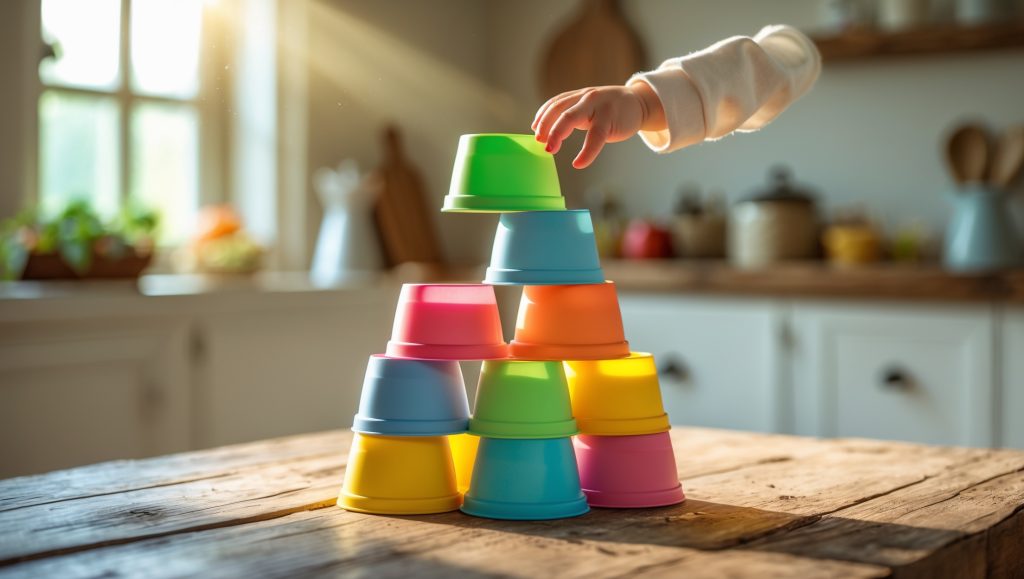
The Green Toys My First Stacking Cups set comprises six brightly colored cups in graduated sizes, each made from 100% recycled plastic—primarily recycled milk jugs. The cups are lightweight yet sturdy, featuring smooth edges and a matte finish that’s gentle on little hands (and mouths). Notably, the materials are free of BPA, phthalates, and PVC, and the product meets or exceeds US and international safety standards.
Each cup is designed with a different color and a number embossed on the bottom, making them visually engaging and useful for early numeracy as your child grows. The construction is seamless; there are no small parts, sharp corners, or detachable pieces, making them safe for mouthing and easy to clean (top-rack dishwasher safe). The nesting design also means they store compactly—ideal for small kitchens or diaper bags.
Learning & Development Benefits
While these stacking cups may look simple, they pack an impressive punch in terms of developmental support, especially during the stage when babies are discovering new textures, tastes, and hand-to-mouth coordination. Here’s how:
- Fine Motor Skills: Scooping, grasping, stacking, and unstacking the cups help strengthen hand muscles and refine finger control.
- Sensory Exploration: The different sizes and textures encourage tactile exploration. Some parents use empty cups to offer small tastes of pureed foods, mashed fruits, or safe finger foods—adding a playful twist to solids introduction (always supervised).
- Object Permanence & Spatial Awareness: Nesting and stacking foster early math concepts and spatial reasoning.
- Early Numeracy: The numbered bottoms introduce counting and one-to-one correspondence as your child grows.
- Open-Ended Play: The cups double as bath toys, sand scoops, or even snack holders, adapting to your child’s changing interests.
Setup & Use
The Green Toys My First Stacking Cups require no assembly—simply open the package, wash before first use, and they’re ready for action. They’re lightweight enough for babies as young as 6 months to handle, but robust enough to withstand the inevitable drops and throws. Here are a few ideas for integrating them into your solids introduction routine:
- Pre-Meal Play: Let your baby explore the cups while you prepare food, turning waiting time into sensory play.
- Interactive Feeding: Offer small tastes of purees or mashed food in different cups; this can make solids introduction more engaging and less intimidating for cautious eaters.
- Water Play: Use the cups in the bath or at the sink to rinse hands and faces after messy mealtimes.
- On-the-Go: The compact design fits easily in a diaper bag, making the cups a great travel or restaurant distraction.
Cleaning is easy—just pop them in the top rack of your dishwasher or hand wash with warm, soapy water.
Pros & Cons
Pros
- Made from 100% recycled, food-safe plastic in the USA
- BPA, phthalate, and PVC free—safe for mouthing and food contact
- Promotes fine motor, sensory, and early math skills
- Easy to clean (dishwasher safe) and durable
- Open-ended—useful for bath, sand, or snack time
- Compact nesting design for easy storage and travel
Cons
- No lids—cannot be used for storing food or liquids on the go
- Limited to scooping, stacking, and pouring—may lose novelty for older toddlers
- Colors may fade with frequent outdoor/sun use
- Not suitable for microwave or freezer use
Alternatives & Similar Toys
If you’re looking for other options that support similar developmental goals during solids introduction, consider these alternatives:
- Skip Hop Garden Stacking Cups: Feature holes for water play, slightly softer plastic, and garden-themed designs.
- Mushie Stacking Cups: Made from BPA-free polypropylene, with minimalist Scandinavian colors and a slightly smaller profile—great for younger babies.
- Fat Brain Toys Suction Kupz: Silicone cups that suction to highchairs and tables, ideal for sensory exploration and less likely to be dropped.
- OXO Tot Stick & Stay Suction Bowl Set: While not stacking cups, these bowls are designed for self-feeding and encourage hand-eye coordination with suction bases for stability.
Each of these options offers unique features—consider what best fits your child’s age, preferences, and your family’s feeding routines.
Verdict
The Green Toys My First Stacking Cups are a standout choice for parents seeking a safe, sustainable, and developmentally appropriate toy to enhance the early stages of solids introduction. Their versatility, durability, and eco-friendly design make them a long-lasting addition to any playroom or kitchen. While they may not replace specialized feeding tools or bowls, their ability to bridge play and early eating experiences is both practical and delightful. For families focused on open-ended play, gentle sensory exploration, and supporting motor skills as babies learn to navigate new foods, these stacking cups are a smart, affordable investment for 2025.
FAQ
+Are the Green Toys Stacking Cups safe for babies to chew on?
+Can the cups be used for serving food or snacks?
+Are these cups dishwasher safe?
+What age range are these stacking cups best for?
+Can the cups be used in the bath?
+Where are Green Toys products manufactured?
+Do the cups contain any small parts?

Green Toys My First Stacking Cups shine as a delightful and practical choice for families introducing solids to their little ones. Made entirely from recycled plastic, these cups are safe for babies to mouth, chew, and explore—an essential feature when every new object goes straight to their lips. The thoughtful design supports fine motor development as babies learn to grasp, stack, and nest the cups, while also encouraging early problem-solving skills with each attempt to build or topple their creations.
During solids introduction, these cups become even more valuable. Their lightweight, easy-to-clean construction means they double as playful serving dishes for soft fruits, cereal puffs, or homemade purees. Parents will appreciate how seamlessly play and mealtime can blend, offering babies both sensory and practical experiences. The open-ended nature of stacking cups ensures they remain a favorite long after the first foods phase, evolving with your child’s abilities and imagination.
With their eco-friendly materials, dishwasher-safe durability, and versatile use, Green Toys My First Stacking Cups are a warm recommendation for any parent seeking a toy that truly supports exploration during those exciting first bites.
- Made from 100% recycled, food-safe plastic
- Supports fine motor skills and sensory play
- Dishwasher safe for easy cleaning
- Perfect for both play and serving first foods
Are there any safety concerns if my baby sometimes mouths the cups while sitting in their high chair in the early morning? I saw you mentioned they’re dishwasher safe, but should they be sanitized more often if they’re doubling as feeding tools?
It’s completely natural to be mindful about safety as your baby explores new objects, especially during mealtimes. If your baby mouths the stacking cups while in their high chair, make sure to wash them thoroughly after each use, just as you would with any item that comes into contact with food or saliva. Since they are dishwasher safe, running them through a hot cycle daily is usually sufficient, but if your baby is under six months or has a weaker immune system, you might consider occasional sanitizing with boiling water. Always check for cracks or wear, and supervise play during meals to prevent choking. This isn’t medical advice; if you’re concerned, check in with your pediatrician.
How do these Green Toys stacking cups compare with silicone stacking cups for babies just starting solids? I know silicone is flexible but sometimes harder to stack, so I’m wondering which might be less frustrating for little ones.
It’s great that you’re thinking about what will make solids introduction easier for your baby. For little ones just starting solids, the Green Toys stacking cups are made from sturdy, food-safe plastic, which helps them keep their shape and stack easily—often making them less frustrating for young babies than floppy silicone cups. Try offering just two or three cups at a time, and supervise, especially if your baby is mouthing them; both materials are generally safe if certified BPA- and phthalate-free. Check for any sharp edges or tears before each use. As always, this isn’t medical advice; if you have concerns about feeding or toy safety, check in with your pediatrician.
Do you think it’s better to have a few different types of open-ended toys like stacking cups and nesting bowls on rotation, or just stick with one type at a time to avoid overstimulation during solids introduction?
You’re thoughtful to consider how toy variety might affect your child during solids introduction. For most babies around 6 months and older, offering two or three different open-ended toys—like stacking cups and nesting bowls—on gentle rotation encourages exploration while preventing boredom. Try introducing only one or two toys at a time during mealtime play, then switch them every few days to keep things fresh without overwhelming your baby. Always supervise for safety and check for small parts or rough edges. This isn’t medical advice; if you’re concerned, check in with your pediatrician.
Curious if you’ve noticed whether children who are sensitive to certain textures enjoy playing with these cups, especially since they’re matte and not glossy. Have you seen any reactions or preferences from kids with mild sensory sensitivities?
You’re thoughtful to consider texture sensitivities when choosing toys. In my experience, some children with mild sensory sensitivities do prefer the Green Toys stacking cups because of their smooth, matte finish—it tends to feel less slippery and isn’t visually overwhelming like glossy plastic can be. If your child is sensitive, try introducing one cup at a time during calm play, allowing them to touch or hold it at their own pace. You might also let your child explore the cups dry and then with water or food, observing if their response changes. Always supervise to ensure safety, especially for babies still mouthing objects. This isn’t medical advice; if you have concerns about your child’s sensory needs, please check in with your pediatrician.
I noticed the cups are labeled safe for little ones starting at 6 months. Would you recommend these for children a bit older, like 18 months, or are there ways to make play with stacking cups more challenging for toddlers?
It’s great that you’re thinking about ways to support your child’s development as they grow. Stacking cups are still engaging and beneficial for children at 18 months. To make play more challenging, try introducing simple sorting games by color or size, hiding small (age-appropriate) objects under the cups for a guessing game, practicing counting as you stack or unstack, and encouraging imaginative play like pretending the cups are dishes. Always supervise play and ensure all pieces are free of cracks or damage. This isn’t medical advice; if you’re concerned, check in with your pediatrician.
My child is especially sensitive to certain textures and gets overwhelmed easily during meals. Do the stacking cups have any rough surfaces or unexpected seams that might bother a texture-sensitive baby, or are they completely smooth all around?
It’s completely understandable to want meal tools that won’t upset a texture-sensitive baby. The Green Toys My First Stacking Cups are designed with smooth, rounded edges and do not have rough surfaces or sharp seams. Most parents report the cups feel soft and uniform, but to be extra sure, you could check each cup yourself before offering them to your child. Always supervise your baby during play and mealtimes, and if you notice any new sensitivities or reactions, it’s wise to consult your pediatrician. This isn’t medical advice; if you’re concerned, check in with your pediatrician.
Does the matte finish ever stain or hold onto odors after sampling colorful baby purees or strong foods, especially if my toddler gets a bit enthusiastic during solids introduction?
It’s understandable to want reassurance about stains and odors, especially with eager little ones exploring new foods. The Green Toys My First Stacking Cups are made from food-safe, BPA-free plastic with a matte finish, which generally resists stains and odors well. After mealtime, wash the cups promptly with warm soapy water or place them in the dishwasher (top rack) to prevent residue from setting. Avoid letting purees dry on the surface, as this can make cleaning harder. Regular inspection for trapped food in crevices is helpful. Always supervise during play and meals, and if persistent stains or odors appear, it’s okay to replace the cups. This isn’t medical advice; if you’re concerned, check in with your pediatrician.
How would you recommend adjusting the way we use these stacking cups now that my baby is 10 months old and starting to prefer more textured foods? Should we avoid certain foods with these cups to keep things safe and easy to clean?
It’s great that you’re thinking about both safety and your baby’s growing interest in textures. At 10 months, you can encourage sensory exploration by offering soft, easily mashable foods like cooked vegetables or diced fruits in the cups. Avoid sticky foods, nut butters, or foods that might get trapped in the seams, as these are harder to clean and could harbor bacteria. Always supervise closely to prevent choking. After each use, wash the cups thoroughly with warm, soapy water. This isn’t medical advice; if you’re concerned, check in with your pediatrician.
With limited storage in our apartment, multipurpose items are a must. If we use these stacking cups for mealtimes and also to entertain during potty training, do they stack up well compared to other compact bath or snack toys you’ve reviewed?
It’s great that you’re looking for versatile toys to suit your space and routines. The Green Toys My First Stacking Cups can work well for both mealtimes and as a distraction during potty training because they’re easy to clean, nest compactly, and are safe for babies and toddlers (BPA-free, no sharp edges). To use them safely, supervise younger children, especially if using with snacks or liquids, to prevent spills or choking. Unlike some bath-specific toys, these cups dry quickly and don’t have holes that trap water, reducing mold risk. For multipurpose use, they’re as compact and practical as other toys I’ve reviewed. This isn’t medical advice; if you’re concerned, check in with your pediatrician.
My toddler sometimes puts everything in their mouth, including toys. Are the embossed numbers on the bottom of the Green Toys cups smooth enough that there’s no risk of small pieces coming off over time?
It’s completely normal to be concerned when your toddler mouths toys, as safety is a top priority at this age. The Green Toys stacking cups are designed for toddlers, and the embossed numbers are molded directly into the plastic rather than attached, so there are no small, detachable pieces. Check the cups regularly for any damage or rough edges, especially after washing or heavy use. Always supervise play, and ensure any toy used for mouthing is free from cracks or wear. This isn’t medical advice; if you’re concerned, check in with your pediatrician.
At what age would you say the developmental benefits of these cups start to taper off? I am trying to budget carefully and wonder how long these would stay relevant as my child grows and their interests shift.
You’re wise to think about how long a toy will stay engaging for your child. Green Toys stacking cups offer the most developmental benefits—like improving fine motor skills, coordination, and cause-and-effect understanding—between about 6 months and 2 years. After age 2, children may use them more for pretend play, but interest might decline as their play becomes more complex. Always supervise young children to avoid misuse, especially if they’re still mouthing objects. This isn’t medical advice; if you’re concerned, check in with your pediatrician.
We have limited kitchen space and try to keep toy clutter down. Does the nesting design of the Green Toys cups truly save room, or have you found them taking up shelf space over time with daily use during meals?
It’s understandable to want to minimize clutter, especially with limited kitchen space. The Green Toys stacking cups are designed to nest snugly inside one another, which does help save space compared to separate items. After regular daily use during meals, you may notice the cups sometimes stay separated, but taking a moment to stack them after washing keeps storage compact. For safety, always ensure the cups are fully dry before nesting to avoid moisture buildup. This isn’t medical advice; if you’re concerned, check in with your pediatrician.
If I’m introducing solids to my 7-month-old but also have a very curious toddler who likes to join in, do you have suggestions for keeping both kids safely engaged with these stacking cups during mealtimes, especially when they want to play together?
It’s great that you want both your baby and toddler to enjoy mealtime play together safely. Try placing a mat under your high chair for easy clean-up when your toddler joins in. Offer each child a separate set of stacking cups if possible—your toddler can stack or nest them, while your baby explores with you close by. Always supervise closely, as toddlers might get excited and share small pieces of food. After mealtime, wash the cups thoroughly to prevent any buildup. These cups are safe for both ages, but be mindful of food allergies and choking risks. This isn’t medical advice; if you’re concerned, check in with your pediatrician.
My child sometimes gets overwhelmed with too many textures or colors at once. Would you recommend offering all six cups at once, or starting with just a couple to avoid sensory overload?
It’s very thoughtful of you to notice your child’s reactions to sensory input. To reduce overwhelm, start by offering just one or two cups in neutral or soft colors, allowing your child time to explore at their own pace. Once they seem comfortable, gradually introduce more cups or brighter colors, always watching for signs of distress. Keep your play sessions brief, and consider using the cups with familiar foods or textures to create a sense of safety. These cups are age-appropriate for supervised play, but always check for any damage or sharp edges. This isn’t medical advice; if you’re concerned, check in with your pediatrician.
You mentioned using the cups for pre-meal play. Do you have tips on making the transition from playtime with the cups to actually starting the meal, or ways to keep things from getting messy?
It’s great that you’re thinking about easing transitions and minimizing mess during mealtime. To help your child shift from play to eating, try giving a gentle verbal cue, like ‘Now it’s time to eat,’ as you move the cups aside. You can keep a damp washcloth nearby for quick hand wipes and consider designating one cup as a ‘food cup’ once mealtime starts, removing the others. For younger babies, supervise closely to avoid putting non-food items in their mouths. Using a large bib or placing a mat under the highchair also helps with cleanup. This isn’t medical advice; if you’re concerned, check in with your pediatrician.
Would these cups be suitable for introducing early counting games with a 1-year-old at daycare, or are they better saved for when children are older and more interested in numbers?
It’s great that you want to encourage early counting skills with your 1-year-old. At this age, most children are not yet ready to understand numbers, but you can absolutely use the Green Toys stacking cups for simple counting games—like counting as you stack or nest them together. Keep it playful and focus on repetition and language, not accuracy. Always supervise closely, as 1-year-olds may put objects in their mouths, but the cups are designed without small parts and are safe for this age. This isn’t medical advice; if you’re concerned, check in with your pediatrician.
For parents with little ones who have mild sensory sensitivities, do the matte texture and bright colors of these cups tend to be well tolerated, or have you found that subscription boxes might introduce a gentler variety of textures?
It’s understandable to want gentle sensory experiences for your little one. The matte texture and bright colors of the Green Toys stacking cups are generally well tolerated by infants and toddlers, as the finish is smooth rather than rough, and the colors are vibrant but not overwhelming. If your child is sensitive, try offering the cups during calm playtimes, letting them explore at their own pace. You can introduce new textures gradually—perhaps by pairing the cups with softer fabrics or more muted toys. Always supervise closely, especially if your child puts toys in their mouth. This isn’t medical advice; if you’re concerned, check in with your pediatrician.
Our storage space is limited, so I appreciate the cups’ nesting design. Could you share if the set tends to scatter around the house, or do they generally stack and store together well, even with regular use by a very active toddler?
It’s great that you’re thinking about keeping play spaces tidy with a busy toddler. The Green Toys stacking cups are designed to nest snugly, which helps them stay together when not in use. To help prevent cups from scattering, try teaching your child to stack and tidy them as part of playtime clean-up. Store the nested set in a shallow bin or basket that’s easy for little hands to access. With toddlers, expect occasional scattering, but the cups are sturdy and simple to gather up. This isn’t medical advice; if you have specific concerns, check in with your pediatrician.
Is there a way to adjust routines with these stacking cups to encourage more iron-rich eating, like with cereals, without making meals too messy or overwhelming for a sensitive eater? I’m trying to plan our daily schedule.
It’s wonderful that you’re considering both nutrition and your child’s comfort as you introduce iron-rich foods. Try setting up a routine where the stacking cups are used to gently present small amounts of iron-fortified cereal alongside familiar foods, letting your child explore at their own pace. Offer just one or two spoons per cup to keep portions manageable and avoid overwhelming them. Encourage dipping or scooping with supervision, and have a damp cloth nearby for easy clean-up. Always supervise closely to prevent choking and ensure all cup surfaces are clean. This isn’t medical advice; if you’re concerned, check in with your pediatrician.
For families trying to minimize toy clutter in small spaces, do you find the nesting feature of these cups actually makes a big difference in daily use, or do they usually stay scattered around after play and meals?
It’s completely understandable to want to keep toy clutter under control, especially in smaller spaces. The nesting feature of these stacking cups really can help: after play or meals, show your child how to stack them together and make it a clean-up game. For little ones, model and encourage this step-by-step, and as your child grows (around 18 months and up), they often enjoy helping. Keep the nested cups in a single accessible basket or shelf for easy routines. Remember to supervise babies for choking hazards and wash the cups regularly since they’re used at mealtimes. This isn’t medical advice; if you’re concerned, check in with your pediatrician.
Do you have tips for introducing these to a child who is sensitive to certain textures or resistant to touching new objects, especially during mealtime? I am curious how to encourage positive interactions without forcing it.
It’s understandable to want your child to feel comfortable exploring new objects during mealtime. Start by placing the Green Toys Stacking Cups nearby, allowing your child to observe them without pressure. Offer the cups outside of mealtimes first so they can explore at their own pace. Gradually incorporate the cups into mealtime routines, perhaps by using them to serve familiar, preferred foods. Encourage gentle play, like stacking or tapping, and praise any small interactions. Always supervise to ensure safety, especially for babies who may mouth or chew on the cups. This isn’t medical advice; if you’re concerned, check in with your pediatrician.
For families with limited kitchen or diaper bag space, how compact do these cups get when nested together? Would they be practical to bring along for a weekend trip or flights?
It’s great that you’re thinking about practicality and space-saving options for outings. The Green Toys My First Stacking Cups nest completely inside each other, forming a single small cylinder that’s about the size of a large coffee mug. To travel light: stack and secure them with a rubber band or inside a zip bag, and pack them at the top of your diaper bag for easy access. Their lightweight, durable plastic means they won’t add much bulk or weight, making them suitable for trips and flights. For safety, always supervise play and check for cleanliness after use. This isn’t medical advice; if you have specific concerns, please consult your pediatrician.
Would you recommend incorporating the stacking cups into every meal, or is it better to introduce them occasionally to keep them novel for sensory exploration? I’m curious about how to balance routine and excitement.
It’s great that you’re thinking about how to balance routine and novelty for your child’s sensory play. For babies starting solids, you might offer the stacking cups at some, but not every, meal—perhaps once daily or a few times a week. This keeps the cups interesting and encourages focused exploration. Rotate them with other safe, easy-to-clean sensory objects to support curiosity and learning. Always supervise closely and check that the cups are clean and intact, since mouthing and food contact are likely at this age. This isn’t medical advice; if you have concerns about your child’s development or safety, check in with your pediatrician.
Is there a recommended age to switch from mostly iron-fortified cereal to more pureed meats or vegetables for iron intake, particularly when using fun tools like stacking cups to make meals engaging?
That’s a thoughtful question about supporting your baby’s iron needs during solids introduction. Around 6 months old, pediatricians generally recommend starting to offer a wider variety of iron-rich foods, such as pureed meats and beans, alongside or gradually replacing iron-fortified cereals. You can use stacking cups to make mealtime playful—serve small portions in each cup, allowing your baby to explore new textures. Always supervise closely, ensure foods are pureed smoothly for younger babies, and avoid choking hazards. Remember, every child develops at their own pace, so it’s okay to introduce new foods gradually. This isn’t medical advice; if you’re concerned, check in with your pediatrician.
Have you tried using these stacking cups outside the kitchen, like for potty-training rewards or water play in the bath? Curious if they hold up just as well in those busy toddler situations.
It’s great that you’re thinking about using toys like stacking cups for multiple purposes with your toddler. These cups are quite durable and safe for water play in the bath, as they’re easy to clean and have no sharp edges or small parts—just be sure to supervise closely, especially with younger toddlers. For potty-training rewards, using the cups as part of a fun stacking or sorting game can work well, as long as they’re cleaned regularly if moved between rooms. Always check for any wear and tear over time. This isn’t medical advice; if you have concerns, check in with your pediatrician.
I’m trying to keep our toy budget in check. Are there other similar multipurpose cup sets you’d suggest comparing price-wise, or do these stand out enough to justify the cost?
It’s great that you’re being thoughtful about your family’s budget and quality toys. Besides Green Toys’ stacking cups, you might also look at cup sets from Munchkin or IKEA, which are usually budget-friendly and food-safe. Compare for dishwasher safety, smooth edges, and non-toxic materials. Look for sets without holes to avoid mold if using in the bath. For babies starting solids, always supervise play and ensure no small parts. This isn’t medical advice; if you’re concerned, check in with your pediatrician.
Do you have any advice on how to work these cups into a mealtime routine without them becoming a distraction at bedtime or during wind-down? Sometimes toys end up making my son more alert instead of calming him down.
It’s completely understandable to want to keep playtime fun without it interfering with your child’s sleep cues. Try introducing the stacking cups only during meals or snack times, keeping them out of reach before naps or bedtime. You might store the cups in the kitchen and use a simple ‘all done’ signal—like a song or gesture—when mealtime ends. This helps your child associate the cups with eating, not winding down. For little ones under 1, always supervise closely during play, and avoid letting them take toys to the crib. This isn’t medical advice; if you’re concerned, check in with your pediatrician.
My youngest is teething and puts everything in her mouth, while my toddler is sensitive to certain textures and sounds. Have you noticed any sensory issues with the Green Toys cups for babies or older siblings?
It’s completely understandable to be mindful about sensory sensitivities and mouthing during playtime. The Green Toys Stacking Cups are made from food-safe materials, so they’re generally safe for teething babies to mouth under supervision. Their smooth, BPA-free plastic is easy to clean and doesn’t have harsh edges, which can be reassuring for parents of mouthing infants. For toddlers who are sensitive to textures or sounds, the cups are lightweight and fairly quiet when nested or stacked—there aren’t any loud clacking noises or rough surfaces. Always supervise play, especially with young babies, and watch for any new sensitivities. This isn’t medical advice; if you’re concerned, check in with your pediatrician.
My toddler is sensitive to certain textures and sometimes gets overwhelmed during meals. Have you found that the stacking cups are helpful for kids with sensory sensitivities, or could they be a distraction during the introduction of solids?
It’s understandable to want supportive tools when your toddler is sensitive to textures at mealtimes. Stacking cups can offer gentle sensory exposure by letting your child touch and explore different foods in a playful, low-pressure way. Try introducing one cup at a time with a familiar food, allowing your toddler to scoop, pour, or touch at their own pace. Keep mealtime calm and limit the number of cups to avoid overwhelming them. Always supervise closely to ensure safety and prevent mouthing of non-food items. This isn’t medical advice; if you’re concerned about your child’s sensory responses, please consult your pediatrician.
My baby sometimes gets frustrated by toys that are tricky to stack or separate. Are these cups easy enough for a 7-month-old to handle on their own, or would they need a lot of help at first?
It’s understandable to want toys that your baby can enjoy without too much frustration. At 7 months, many babies are just beginning to develop the coordination needed for stacking and separating cups. The Green Toys Stacking Cups are lightweight and easy to grip, but your baby may still need some help at first. Try demonstrating how to stack or separate the cups, and let your baby explore them freely—nesting, banging, or mouthing is very normal at this age. Always supervise play to ensure safety, especially since babies explore with their mouths. This isn’t medical advice; if you’re concerned, check in with your pediatrician.
My baby tends to put toys in her mouth all the time. Is it safe to use these cups for both play and offering small food tastes throughout the day, or should I limit their use to just one activity before washing?
It’s completely normal for babies to explore toys with their mouths, especially at this stage. With the Green Toys stacking cups, it’s safest to choose one use (play or food) between washes to prevent germs transferring from floors or surfaces to your baby’s mouth. If you want to use them for both play and feeding, wash them thoroughly with hot, soapy water between activities. Always supervise your baby during play and feeding, and check that the cups are intact without cracks. This isn’t medical advice; if you’re concerned or your baby has specific health needs, check in with your pediatrician.
I noticed you mentioned the cups are easy to store, but could you share more about how compact they really are? We have a small kitchen and I’m trying to figure out which toys make sense to keep easily accessible during meal prep.
It’s great that you’re thinking about practical storage with a small kitchen. The Green Toys stacking cups nest inside each other, forming a single compact stack—about the height and diameter of a standard coffee mug. You can keep the whole set in a drawer, on a shelf, or even in a deep cup holder nearby. This makes them easy to grab during meal prep without cluttering your workspace. Since they’re lightweight and have no loose parts, they’re safe for babies practicing with solids under supervision. This isn’t medical advice; if you have storage or safety concerns, your pediatrician can offer more guidance.
If my child tends to get overstimulated by too many colors or textures during meals, would you suggest introducing only a couple of the stacking cups at once, or is it better to provide the full set to encourage exploration?
It’s so thoughtful that you’re considering your child’s comfort with sensory input at mealtimes. For little ones who may get overstimulated, I recommend starting with just one or two stacking cups in calm, neutral colors. This helps keep the environment manageable and lets your child explore at their own pace. Gradually add more cups as your child becomes more comfortable, always watching for signs of overwhelm. For babies under 12 months, supervise play closely to ensure safety, especially when cups are used with food. This isn’t medical advice; if you’re concerned, check in with your pediatrician.
We have limited storage in our kitchen and diaper bag. How compactly do these cups nest, and can they fit in a standard diaper bag with other everyday essentials like bottles and wipes?
It’s understandable to want toys that won’t take up too much space. The Green Toys My First Stacking Cups nest fully inside each other, forming a single compact unit about the size of the largest cup—roughly the size of a standard baby bottle. For most diaper bags, they should fit alongside bottles, wipes, and a few other essentials, though you may want to test your specific bag for fit. The cups are lightweight and suitable for babies starting solids, with no small parts or sharp edges. This isn’t medical advice; if you’re concerned, check in with your pediatrician.
My toddler sometimes gets overstimulated by brightly colored toys or mixing play with food. Did you notice if the colors or the dual use for food and play caused any distractions or sensory overwhelm during meals?
You’re thoughtful to notice how sensory input can affect your toddler at mealtimes. The Green Toys My First Stacking Cups are vibrantly colored, which some sensitive children might find stimulating. To help, you might (1) offer just one or two cups at a time to reduce visual clutter, (2) separate meal use from play use so your child knows what to expect, and (3) watch for signs of overwhelm like tossing or ignoring the cups. Always supervise to prevent choking or misuse. Every child is different—if your toddler seems distracted or overwhelmed, adjusting your approach is okay. This isn’t medical advice; if you’re concerned, check in with your pediatrician.
For parents concerned about space and clutter, would you say the stacking cups offer a noticeable advantage in terms of storage over typical wooden stacking toys? I have a small kitchen and need things that store compactly.
It’s completely understandable to want toys that don’t add clutter, especially with limited kitchen space. The Green Toys stacking cups nest snugly inside each other, so they take up about as much room as a single cup, which is often less bulky than many wooden stacking toys that don’t nest or have larger bases. You can keep them in a small drawer or even in a zip-top bag. Their lightweight, plastic design also means fewer heavy or sharp edges. Always supervise babies during play, and make sure the cups stay clean if used with food. This isn’t medical advice; if you have specific concerns, check in with your pediatrician.
When offering tastes of food in these cups, is there any guidance on portion sizes or how to avoid overwhelming a baby who is just starting with allergens like peanut butter or eggs?
It’s thoughtful to be cautious about portion sizes and potential allergens when introducing solids. Start by offering a very small smear—about a quarter teaspoon—of peanut butter or well-cooked egg in the cup. Watch your baby’s reaction, and if all goes well, you can gradually increase the amount over subsequent days. Always supervise, ensure foods are thinly spread to reduce choking risk, and introduce only one new allergen at a time, waiting 3–5 days before trying another. The Green Toys cups are safe for food use, but always check for signs of wear. This isn’t medical advice; if you’re concerned, check in with your pediatrician.
When introducing solids, how do the developmental benefits of using stacking cups with cereals compare to pureed foods in terms of supporting iron intake for infants? I’m curious if one option tends to encourage better nutritional habits or iron absorption than the other, especially during the early months.
Your question about supporting iron intake and healthy habits during solids introduction is very thoughtful. Stacking cups can make self-feeding fun and help with motor skills, but when it comes to iron absorption, the type of food matters more than the feeding tool. Offer iron-rich cereals (ideally fortified infant cereals) whether spoon-fed or provided for self-feeding—both methods allow for good iron intake as long as the food is offered consistently and safely (watch for choking risks; keep textures soft for beginners). Purees can be easier for younger infants (around 6 months), while cereal in cups encourages exploration as skills develop. This isn’t medical advice; if you’re concerned, check in with your pediatrician.
You mention that some parents use these cups to offer tastes of different foods. Is it safe to use the same cup for both twins, or should we dedicate separate ones for each baby to keep things hygienic?
That’s a thoughtful question, especially with twins starting solids. For hygiene reasons, it’s best to give each baby their own stacking cup when offering tastes—this helps prevent sharing germs, even if they’re healthy. After each use, wash the cups with warm soapy water, as recommended for baby feeding gear. Always supervise babies to prevent mouthing or chewing on toys in a way that could become unsafe. This isn’t medical advice; if you’re concerned about illness transmission or allergies, check in with your pediatrician.
My little one can get overwhelmed with too many items at once. Is it better to only offer a couple of cups during solids introduction, or do you suggest giving the full set from the start to support exploration?
It’s very thoughtful to notice your child’s reactions and want to make exploration enjoyable. For younger babies or those who get overwhelmed easily, start by offering just one or two stacking cups at a time during solids introduction. This helps your baby focus and reduces overstimulation. As your little one gets more comfortable and interested, you can gradually add more cups, letting them explore at their own pace. Always supervise closely, especially with small parts, and ensure cups are clean and free of food residue. This isn’t medical advice; if you’re concerned, check in with your pediatrician.
Our baby is just starting solids at 6 months. Would these cups still be engaging and safe for older toddlers, or are they mostly suited for the early months of food introduction?
It’s great that you’re thinking ahead about your child’s play needs as they grow. While Green Toys My First Stacking Cups are perfect for babies starting solids at 6 months due to their safe, easy-to-clean design, they also remain engaging for older toddlers. Toddlers can use the cups for pretend play, stacking challenges, and water or sand play, which support fine motor skills and problem-solving. Always supervise play, especially if using cups with water or food. The cups are free from small parts and made from safe materials, but check regularly for wear. This isn’t medical advice; if you notice chewing damage or concerns, check with your pediatrician.
We have a pretty small kitchen space—are the cups compact enough to store alongside feeding bowls and spoons, or do they take up more room than other feeding accessories?
It’s completely understandable to want feeding tools that fit well in a small kitchen. The Green Toys My First Stacking Cups are designed to nest inside each other, so when stacked, they take up about as much space as a standard bowl—often less than a set of separate baby bowls or plates. You can store them easily with other feeding accessories. Just make sure to keep them in a dry spot and check for any wear over time. This isn’t medical advice; if you’re concerned, check in with your pediatrician.
Do you have any tips for integrating these cups into a nap time or bedtime routine, maybe for calming pre-meal play before getting ready to wind down?
It’s great that you’re thinking about calming routines before meals or sleep. You can try stacking and unstacking the cups together slowly, focusing on gentle movements and soft voices. Let your child explore tapping or nesting the cups, which can be soothing for toddlers 6 months and older. Consider letting your child ‘wash’ the cups or put them away as part of the wind-down process. Always supervise closely, especially if your child is still mouthing toys, to ensure safety. This isn’t medical advice; if you’re concerned, check in with your pediatrician.
Have you found that picky eaters enjoy exploring new foods more when presented in these cups? Mine gets overwhelmed easily by new textures—does the playful approach really make a difference at mealtime?
You’re definitely not alone—many parents worry about how to make new foods less overwhelming for little ones, especially those sensitive to texture. Using playful tools like Green Toys Stacking Cups can help: try placing just a small taste of a new food in one cup and familiar favorites in others, letting your child explore at their own pace. The cups’ smooth, food-safe plastic is great for babies and toddlers, but always supervise to prevent spills or mouthing of large pieces. Letting your child serve themselves or stack between tries can make mealtime feel like play, reducing pressure. This isn’t medical advice; if you’re concerned, check in with your pediatrician.
For those with limited cabinet space, do the nesting cups really save a lot of room compared to other similar toys? I try to keep clutter to a minimum since I’m watching kids in a fairly small apartment.
Your focus on minimizing clutter in a small apartment is so understandable. The Green Toys stacking cups do nest completely inside each other, which keeps them much more compact than many other baby toys or even some bulkier stacking sets. To save space, you can always store them as a single unit, pop them into a small basket, or keep them in a drawer. For children under three, supervision is important, but there are no small detachable parts to worry about. This isn’t medical advice; if you’re concerned, check in with your pediatrician.
If my child is past the early solids stage but still loves stacking and scooping, is it appropriate to keep these cups as part of our wind-down routine before bed? Or should I look for something less stimulating?
It’s great that you’re thinking about how play affects your child’s bedtime routine. Stacking cups can be soothing and repetitive, which is often comforting for toddlers, but for some children, any active play close to bedtime can be stimulating. Try using the cups during wind-down by focusing on slow, gentle stacking or nesting together, keeping voices calm and lights dim. If you notice your child getting more alert or energized, consider shifting cup play earlier and introducing quieter activities like reading before bed. Always supervise to be sure pieces are safe for your child’s age. This isn’t medical advice; if you’re concerned, check in with your pediatrician.
My toddler sometimes resists clean-up before bed. Are these cups easy enough for a young child to tidy up independently, or would that take a lot of adult help to keep the routine smooth at night?
It’s so common for toddlers to resist clean-up, especially when they’re tired after a long day. The Green Toys stacking cups are designed to be lightweight and easy to handle, making them manageable for most toddlers to nest or stack with minimal help. Try showing your child how to nest the cups together as a simple game, and offer gentle reminders during clean-up time. You might want to model the process a few times, then gradually let your child take over. Always supervise to ensure safety, as little ones can get frustrated or distracted. This isn’t medical advice; if you’re concerned, check in with your pediatrician.
I love the eco-friendly aspect, but our space is limited. How compact do these cups actually nest for storage, especially if you’re juggling a high chair and other feeding gear in a small kitchen?
It’s great that you’re looking for eco-friendly options that fit your space. The Green Toys My First Stacking Cups nest tightly inside one another, making them about the size of the largest cup—roughly the height and width of a standard coffee mug. Here’s how to store them efficiently: 1) Stack all cups together after use, 2) Store them in a small basket or drawer near your feeding area, 3) Use the nested set to rinse fruits or as a rinse cup at the sink if space is very tight. These are safe for babies 6 months and up, with no small parts. This isn’t medical advice; if you’re concerned, check in with your pediatrician.
You mentioned that the cups are suitable from 6 months, but at what age do you find kids start losing interest in them? I want to invest in toys that will truly last as both my children grow.
It’s great that you’re thinking about choosing toys that will stay engaging as your children grow. Most children enjoy stacking and nesting cups from around 6 months up to about 2 or even 3 years old, though interest may fade as they develop more advanced play skills. To extend their usefulness, try introducing new challenges—like water play, color sorting, or simple counting games—as your kids grow. Always supervise younger babies to avoid mouthing hazards, and regularly check for wear. This isn’t medical advice; if you’re concerned, check in with your pediatrician.
Would you say these stacking cups could replace some of the calming activities we do after dinner, like reading or simple puzzles, or are they more energizing and best kept for playtime earlier in the day?
It’s thoughtful of you to consider how different toys affect your child’s wind-down routine. Stacking cups can be both calming or energizing, depending on how they’re used. For after-dinner quiet time, you might try slow, gentle stacking or sorting games together, which can be soothing for many toddlers. Keep the activity simple to avoid overstimulation—avoid loud banging or competitive play in the evening. Always supervise closely, especially for little ones under 3, to ensure safety with small parts. This isn’t medical advice; if you’re concerned, check in with your pediatrician.
How can I incorporate these cups into a toy rotation schedule alongside other open-ended toys, like blocks or sensory balls, so that my baby stays interested without getting overstimulated during mealtime?
It’s wonderful that you want to keep your baby engaged while also preventing overstimulation. To rotate toys like stacking cups, blocks, and sensory balls, try offering just one or two types per mealtime, switching them out every few days to keep things novel. Place only a few items within reach, and observe your baby’s cues for interest or fatigue. Use the cups for simple exploration or gentle water play, always supervising closely, especially if your child is under 12 months. Avoid introducing too many toys at once and keep textures varied but not overwhelming. This isn’t medical advice; if you have concerns, please check in with your pediatrician.
My little one sometimes gets frustrated when toys are too big for her to grip easily. Do you think the smallest cup in this set is truly manageable for a 7-month-old’s hands, or will she grow into them more over the next couple of months?
It’s very normal to notice your baby struggling with grip as her fine motor skills are still developing. The smallest cup in the Green Toys set is designed with little hands in mind, but at 7 months, some babies may still find it a bit challenging depending on their individual dexterity. Try offering the smallest and next-smallest cup during play, and let her explore at her own pace. Demonstrate gripping and tapping, and offer plenty of encouragement. Always supervise closely to ensure safety, especially if she mouths the cups. Most babies will find these easier to manage in the coming months as their skills improve. This isn’t medical advice; if you’re concerned, check in with your pediatrician.
My child is very sensitive to different textures and sometimes reacts to new materials. Has anyone reported issues with babies resisting the matte finish or firmness of these cups, especially if they are used for both food and play?
It’s understandable to be cautious when your child is sensitive to textures. In my review and from available feedback, most babies seem comfortable with the matte finish and firm feel of the Green Toys stacking cups, but individual reactions can vary. You might introduce the cups during play first, letting your child explore at their own pace, before using them with food. Watch for any signs of discomfort and offer alternatives if needed. Always supervise closely, especially if your child is mouthing new objects. This isn’t medical advice; if you’re concerned, check in with your pediatrician.
If my child is already showing interest in stacking and putting objects together at 12 months, will these cups still offer enough challenge and engagement, or would you recommend starting with something more complex?
It’s wonderful that your 12-month-old is curious and starting to stack and assemble objects. At this age, Green Toys My First Stacking Cups can still be engaging—they support hand-eye coordination, problem-solving, and early math concepts like sorting and volume. To increase the challenge, you could encourage stacking by size, nesting, or water play during bath time. If your child seems ready for more, you might also introduce simple blocks or shape sorters, but supervision is important due to small parts. This isn’t medical advice; if you’re concerned, check in with your pediatrician.
We live in a small apartment and try to choose toys that serve multiple purposes. You mention these cups can be used for bath play and snacks too. Have you noticed if regular use with water or snacks affects the cups’ durability or cleanliness over time?
It’s great that you’re thinking about multi-use toys in a small space. Based on testing and feedback, the Green Toys stacking cups hold up well with regular use for both water and dry snacks. To keep them clean and safe, wash them thoroughly after each use—especially after snacks, as crumbs can get stuck in small crevices. They’re dishwasher safe, which helps maintain hygiene. Regular checks for any wear, cracks, or residue are wise, especially for younger babies who mouth objects. This isn’t medical advice; if you’re concerned, check in with your pediatrician.
If a child tends to put everything in their mouth and sometimes throws toys from the high chair, did you notice whether these Green Toys stacking cups hold up well against bite marks or dents over time? I’m always worried about long-term durability and how easily toys can be cleaned if they land on the floor mid-meal.
It’s completely understandable to worry about durability and cleanliness when your child mouths and tosses toys during mealtimes. The Green Toys stacking cups are made from tough, food-safe plastic, so they generally resist bite marks and dents even with frequent use by toddlers. If the cups fall on the floor, they can be washed easily with warm soapy water or placed in the dishwasher. Always check for cracks or sharp edges after heavy use, especially if your child is still teething. Supervise closely for safety, and remember—this isn’t medical advice; if you have concerns, consult your pediatrician.
You mention the sensory exploration benefits—how do these cups work for babies with texture sensitivities or those who might be hesitant to touch pureed foods? Any tips for gradual introduction?
It’s understandable to want a gentle way to support babies with texture sensitivities. Start by letting your baby handle the stacking cups dry, so they get used to the feel without any mess. Next, try placing a small amount of pureed food in one cup alongside a favorite toy, keeping play brief and positive. Gradually increase exposure: let your baby dip just a finger in, or use a spoon to tap the food before touching. Always supervise closely, and wash the cups well between uses. The cups’ smooth, non-porous surface is less likely to overwhelm sensitive babies. This isn’t medical advice; if you’re concerned, check in with your pediatrician.
I noticed you mention using the stacking cups to offer small tastes of pureed foods or finger foods. Do you have any advice on how to introduce this play at mealtime without making things too chaotic or overwhelming for a busy toddler?
It’s wonderful that you want to make mealtimes both playful and manageable for your toddler. Try starting with just one or two stacking cups filled with small amounts of food, so your child isn’t overwhelmed. Offer foods with different textures and colors, but avoid anything too runny or sticky to minimize mess. Let your toddler explore at their own pace, gently guiding them as needed, and keep the rest of the cups aside to reduce clutter. Always supervise closely, especially with new foods, and check that the cups are clean and safe for food. This isn’t medical advice; if you’re concerned, check in with your pediatrician.
I noticed the cups are dishwasher safe. If we use them both for food and play, how often should we wash them, especially if they’re used with messy solids like fruit purees?
It’s great that you’re thinking about keeping things clean as your baby explores solids. When using the stacking cups for messy foods like fruit purees, it’s best to wash them after each use with food to prevent residue buildup and bacteria. If they’re just being used for dry play (like stacking or water play), a quick rinse every few uses should be enough. Always inspect for any stuck-on bits, especially in the seams, and check that the cups are fully dry before stacking them away. This helps keep things sanitary and safe for your baby’s age group. This isn’t medical advice; if you’re concerned, check in with your pediatrician.
Have you noticed if the Green Toys stacking cups hold up well to being used with purees or mashed foods? I’m thinking about letting my baby try scooping small bites with them, but I wonder if staining or cleaning becomes a problem over time.
It’s great that you’re encouraging your baby to explore self-feeding in creative ways. The Green Toys stacking cups are made from sturdy, food-safe plastic, and in my experience, they handle purees and mashed foods well without absorbing stains or odors. After each use, wash the cups in warm, soapy water or place them on the top rack of the dishwasher. Avoid using very hot foods, and always inspect for wear. Supervise closely, especially if your baby tends to chew on objects. This isn’t medical advice; if you notice any persistent residue or have concerns, check in with your pediatrician.
My toddler loves water play and often brings bath toys outside. Do these stacking cups hold up well to repeated use in sand and water, and is there a risk of mold developing if they are not dried right away after messy play?
It’s wonderful that your toddler enjoys sensory play with water and sand. The Green Toys stacking cups are made from sturdy, food-safe plastic, so they handle repeated wet and sandy use well. After messy play, rinse the cups with clean water to remove debris, and try to let them air dry fully—this helps prevent mold and mildew, though their open design means they’re less likely to trap moisture than closed toys. For toddlers, supervise play to avoid using them with substances that could pose choking or allergy risks. This isn’t medical advice; if you’re concerned about mold or hygiene, check in with your pediatrician.
Since my toddler is a little older and already enjoys stacking and counting, would these cups still offer enough new stimulation for an 18-month-old, or are they mainly geared towards younger babies starting solids?
It’s great that your toddler enjoys stacking and counting—those are important milestones to celebrate. At 18 months, your child may still find new ways to use the Green Toys stacking cups, like practicing pouring, sorting by size, and simple color matching. You could introduce basic math concepts by counting together or using the cups for pretend play with water or sand, always with supervision. However, the cups are quite simple, so if your toddler prefers more advanced challenges, they might soon outgrow them. All materials are safe and age-appropriate, but watch for slipping if used in the bath. This isn’t medical advice; if you’re concerned, check in with your pediatrician.
We have a pretty tight budget and a small kitchen, so I try to buy multipurpose toys. How well do these cups hold up to daily use and being tossed in a diaper bag, and do they genuinely save space or replace other similar toys?
It’s great that you’re looking for versatile toys that fit your space and budget. The Green Toys Stacking Cups are sturdy and designed to handle daily play, including being packed into a diaper bag, as they’re made from durable, dishwasher-safe plastic. You can use them for stacking, nesting, scooping water, or even as snack holders, making them genuinely multipurpose. Their nesting design means they take up very little space when stored. If used for food or teething, always supervise and clean thoroughly to ensure safety. This isn’t medical advice; if you have concerns about materials or safety, please check in with your pediatrician.
My little one throws just about everything during mealtime. Have you found that the Green Toys cups are heavy enough to mostly stay put, or should I expect to be picking them up constantly while she plays?
It’s completely normal for little ones to experiment with throwing at this stage. The Green Toys stacking cups are quite sturdy, but they’re still lightweight enough for babies to pick up and toss easily—so you may find yourself retrieving them more than once. To help, offer one or two cups at a time, model gentle stacking or tapping, and keep mealtimes calm and supervised. If your child is under 12 months, always supervise to prevent mouthing large stacks or spills. This isn’t medical advice; if you’re concerned, check in with your pediatrician.
My baby is very sensitive to textures and sometimes prefers wooden toys to plastic ones. Can you elaborate on how the matte finish of these cups feels compared to smoother or more traditional plastic toys, and if kids with mild sensory sensitivities tend to prefer them?
You’re thoughtful to consider your baby’s sensory preferences when choosing toys. The Green Toys stacking cups have a matte, almost velvety finish—unlike shiny, slippery plastic, they feel soft and grippy rather than slick or cold. Many children with mild sensory sensitivities find this texture less overwhelming than traditional smooth plastics. Try offering one cup at a time, letting your baby explore it at their own pace, and observe their reactions. Always supervise closely, especially if your child is mouthing toys. This isn’t medical advice; if you’re concerned about your child’s sensory responses, check in with your pediatrician.
If my child has mild sensory sensitivities and sometimes resists touching new textures, would these stacking cups be an appropriate first step, or would a broader selection from a subscription service provide more gradual exposure?
It’s great that you’re thinking carefully about your child’s sensory needs during play. The Green Toys stacking cups are a gentle introduction since they’re smooth, non-toxic, and easy to handle—making them a safe, age-appropriate choice for children who are sensitive to textures. Start by letting your child simply look at and hold a single cup, then gradually introduce stacking or water play as they’re comfortable. If your child resists, don’t force it—allow them to explore at their own pace. A subscription box with a range of textures could offer broader exposure, but too many new sensations at once may be overwhelming. This isn’t medical advice; if you’re concerned, check in with your pediatrician.
For families with limited kitchen space, do these cups truly nest compactly for storage, or do they tend to scatter around and take up more room than expected?
It’s understandable to want toys that won’t clutter a small kitchen. The Green Toys My First Stacking Cups are designed to nest inside each other, forming a single, compact stack—about the size of the largest cup—so they store neatly without taking up much extra space. If you keep them nested and stored in a bin or on a shelf, they’re unlikely to scatter. Always check that all pieces are accounted for after play, especially with babies and toddlers, to avoid losing parts. This isn’t medical advice; if you have concerns, consult your pediatrician.
Since the cups have embossed numbers and can be used for numeracy play, do you have suggestions for simple number games I could try with my 2-year-old during travel to keep her entertained and learning between meals?
It’s wonderful that you want to make travel time both fun and educational for your toddler. With the stacking cups, try asking her to stack them in order by number, or line them up and count each one together as you go. You can play a simple ‘find the number’ game by asking her to show you a specific number, or hide a small toy under a cup and ask her to guess which numbered cup it’s under. All these games are safe and age-appropriate for a 2-year-old, but supervise closely to prevent mouthing or throwing. This isn’t medical advice; if you have concerns, check with your pediatrician.
My toddler is sometimes sensitive to certain textures and can get overwhelmed easily. Have you found that the matte finish or the shape of these stacking cups helps with sensory sensitivities, or would you recommend something different for kids who need gentler introduction to tactile play?
It’s great that you’re tuning in to your toddler’s sensory needs. The Green Toys stacking cups have a smooth matte finish and rounded edges, which can feel less intense than textured or glossy toys, and many parents find this helpful for kids who are sensitive to touch. Start by letting your child explore one cup at a time, with you nearby for reassurance. You might introduce the cups during calm times, and let your toddler watch you play first. If your child still seems overwhelmed, softer silicone stacking toys or fabric cups might provide a gentler sensory experience. This isn’t medical advice; if you’re concerned, check in with your pediatrician.
Can you share any tips for using the cups with a sensory-sensitive baby, especially first thing in the morning? Bright colors and different textures can be exciting, but sometimes my little one gets overwhelmed easily, so I want to introduce these slowly.
You’re thoughtful to consider your baby’s sensory needs, especially during those tender morning hours. Try offering just one cup at a time, starting with their favorite color or the most neutral shade. Allow your baby to explore the cup with their hands before introducing any water or food. You might dim the lights or keep other distractions minimal to reduce stimulation. Watch their cues and pause if they seem overwhelmed. Always supervise closely, and make sure the cups are clean and free of sharp edges. This isn’t medical advice; if you’re concerned, check in with your pediatrician.
Is there any concern with water getting trapped inside the cups after washing, especially since my child loves using them in the bath as well as for snacks? I worry about mold developing if I don’t dry them thoroughly.
It’s completely understandable to worry about trapped water and mold, especially with little ones exploring both snacks and bath time. After washing, shake each cup well and leave them to air dry separately, not stacked, to let any moisture escape. Wipe inside with a clean towel if they seem wet inside. Check regularly for any signs of mold or odors before use, and only use them for snacks when fully dry. Always supervise bath play to ensure safe use. This isn’t medical advice; if you’re concerned, check in with your pediatrician.
I see that these cups are made from recycled materials and are dishwasher safe. Have you noticed any long-term durability issues, especially if they are used frequently for both solids introduction and outdoor sensory play like sand and water?
Your attention to durability is completely understandable when choosing toys for frequent use. Based on my experience and feedback from other parents, Green Toys My First Stacking Cups tend to hold up well over time, even with daily washing and outdoor sensory play. To keep them in good shape, rinse off sand and debris before placing them in the dishwasher, supervise young babies (especially under 12 months) to prevent mouthing any roughened edges, and occasionally check for cracks or wear that could trap food or become sharp. This isn’t medical advice; if you notice any damage or have concerns, it’s always best to consult your pediatrician.
I’m torn between getting these Green Toys stacking cups or a set of silicone ones we’ve seen elsewhere. Do you think the durability and compact storage of these make them better for families with limited space?
It’s understandable to want toys that fit well in limited spaces and last through lots of play. The Green Toys stacking cups are known for their sturdy, hard-plastic material, which holds up well to rough handling and frequent washing. Their nesting design makes them very compact for storage. Silicone cups can be softer and quieter but may not stack or store as tightly. For babies starting solids, always supervise play and check for pieces that could break. This isn’t medical advice; if you’re concerned, check in with your pediatrician.
My child is easily overwhelmed by new textures and sensory input. Do the smooth matte edges and design of these cups make them less likely to cause sensory overload during early meals compared to other options?
It’s understandable to want mealtimes to feel calm and comfortable for your child, especially if they are sensitive to new textures. The Green Toys My First Stacking Cups have smooth, matte edges and a simple design, which can feel less visually and tactilely overwhelming than brightly colored or highly textured alternatives. To help ease your child in, start by letting them explore a single cup with their hands before using it at meals. Gradually introduce the cups as part of their routine, and keep other stimuli minimal during feeding. Always supervise closely during early solids introduction, and keep cups clean to avoid unexpected residue. This isn’t medical advice; if you’re concerned, check in with your pediatrician.
For a baby who is just starting to explore solids around 6 months, would you recommend offering purees or finger foods directly in the cups, or does that get too messy? I’d love suggestions for incorporating the cups into our mealtime routine without overwhelming my little one.
It’s great that you want to make mealtime both fun and manageable for your 6-month-old. For this age, purees work well in the Green Toys cups—try filling one with a small amount and let your baby explore with a spoon or their fingers. For finger foods, offer just a few soft, easy-to-grasp pieces in the cup to avoid overwhelm. Always supervise closely and choose foods that are safe and appropriate for early eaters (soft, no small hard pieces). You can also use the cups for sensory play outside mealtimes to build familiarity. This isn’t medical advice; if you’re concerned, check in with your pediatrician.
My daughter sometimes gets overwhelmed during sensory play. Are these cups gentle enough for kids who get upset by certain textures, or do they have any features that might be too stimulating for more sensitive toddlers?
It’s understandable to want gentle, non-overstimulating options for your daughter’s sensory play. Green Toys My First Stacking Cups are smooth, lightweight, and free from rough textures or noisy parts, making them suitable for toddlers who are sensitive to touch or sound. Start by offering just one cup at a time and let her explore at her own pace, always closely supervising. If she seems hesitant, you can model gentle stacking or filling with water, then invite her to join when she’s ready. These cups are made from food-safe, BPA-free plastic and have no small parts, which adds to their safety for little ones. This isn’t medical advice; if you’re concerned, check in with your pediatrician.
Do you have any suggestions for building a mealtime routine using these cups? Should I offer them every time we have solids, or would that take away from the focus on eating and turn it into more playtime?
It’s great that you’re thinking about how to support your child’s focus during mealtimes. You might introduce the Green Toys stacking cups at the start or end of the meal rather than throughout, to help set clear cues for eating versus play. For babies starting solids (around 6 months), use the cups to let them explore different textures—perhaps by placing small tastes in each cup under supervision. Try offering the cups at just one meal a day at first, so eating stays the main event. Watch for signs of distraction; if your child is more interested in playing than eating, pause the cups and try again later. This isn’t medical advice; if you’re concerned, check in with your pediatrician.
What are your thoughts on alternating between these stacking cups and classic suction-bottom bowls for meal times? Do the cups provide enough stability on a high chair tray when offering new finger foods, from your experience?
That’s a thoughtful question about making mealtimes engaging and safe. Stacking cups can encourage exploration, but unlike suction-bottom bowls, they don’t anchor to the high chair tray and may tip easily. If you offer finger foods in the cups, stay close to help prevent spills and choking. For new eaters, especially under 12 months, stick with suction bowls for slippery or messy foods, and use the stacking cups for dry, easy-to-grasp snacks as your child’s coordination improves. Always supervise closely and check that the cups remain clean and undamaged. This isn’t medical advice; if you have any feeding concerns, please consult your pediatrician.
Does the design of the Green Toys stacking cups make them easy for smaller hands to grip, or are younger toddlers likely to need some help at first? Would it make sense to offer just one or two cups at a time for a 12-month-old starting solids?
It’s great that you’re thinking about how your 12-month-old will handle new toys during solids introduction. The Green Toys stacking cups generally have rounded, open shapes that fit well in most toddler hands, but some 12-month-olds may need a little help at first as their grasp develops. Starting with just one or two cups at a time is a smart idea—this makes play and cleanup less overwhelming and helps your child focus. Always supervise closely, as mouthing is common at this age. This isn’t medical advice; if you’re concerned, check in with your pediatrician.
Since my child is already four years old and exploring more complex toys, do you think the Green Toys Stacking Cups still hold interest and developmental value at this age, or would they seem too basic for kids beyond the baby and toddler stage?
It’s thoughtful of you to consider whether a toy still fits your child’s growing interests. By age four, many children are eager for more complex challenges, but stacking cups can still have value for creative play—think water experiments, color sorting, or even pretend cooking. Try inviting your child to invent new games with the cups or integrate them into imaginative scenarios. If your child enjoys open-ended or sensory activities, these cups can still fit in, but you might also want to introduce more advanced construction or puzzle toys. Always supervise play, especially with water or small items. This isn’t medical advice; if you’re concerned, check in with your pediatrician.
My kiddo still puts everything in her mouth, so I’m extra cautious with what ends up on the table. Have you had any issues with food getting stuck in the embossed numbers or in the seams, or are they really as easy to clean as advertised?
It’s understandable to be careful with mouthing at this age. The Green Toys Stacking Cups are designed with smooth, rounded edges, but the embossed numbers can sometimes trap bits of sticky food, especially with foods like banana or sweet potato. After mealtimes, rinse each cup under warm water and use a soft-bristled brush to gently clean the grooves and seams. They’re dishwasher safe, which also helps sanitize them. Always check for any stuck residue before giving them back to your child, especially for babies under 18 months. This isn’t medical advice; if you notice persistent buildup or have concerns about hygiene, check in with your pediatrician.
How well do these cups hold up to repeated cleaning after messy allergenic foods like scrambled eggs or nut butter? I am hoping the engraved numbers on the bottoms don’t collect buildup over time.
It’s great that you’re thinking ahead about cleanliness and food safety during solids introduction. The Green Toys Stacking Cups are made from sturdy, dishwasher-safe plastic, so they can handle frequent, thorough washing even after sticky foods like eggs or nut butter. To avoid buildup in the engraved numbers, try using a soft-bristle brush to gently scrub those areas, or rinse them right after use. Always check for any residue and ensure the cups air-dry fully to prevent mold. These cups are suitable for babies 6 months and up, but supervise for safe use. This isn’t medical advice; if you have concerns about allergens or cleaning, check in with your pediatrician.
We are practicing both self-feeding and early potty training with our 2.5-year-old right now. Do these cups work well for kids who are a bit older and more interested in pretend play, or are they mostly geared towards younger babies?
It’s great that you’re supporting both self-feeding and early potty training at this stage. The Green Toys Stacking Cups are safe and sturdy enough for toddlers up to 2.5 years and older, and their simple design encourages creative pretend play, like ‘cooking’ or using them as bath toys. You can introduce new challenges by stacking, sorting by size, or pouring water, which matches older toddlers’ abilities. Always supervise water play and check for wear and tear. While originally designed for younger babies, these cups can still inspire more complex play for your child’s age. This isn’t medical advice; if you’re concerned, check in with your pediatrician.
My child can be sensitive to certain textures. From your experience, do toy subscription services offer alternative options for sensory play that would be just as helpful as these particular stacking cups?
It’s great that you’re thinking about your child’s sensory preferences. Many toy subscription services do offer alternative sensory toys—look for options that include soft silicone cups, textured balls, or fabric toys, which can be gentler for texture-sensitive little ones. When setting up playtime, introduce new textures slowly and observe your child’s reactions, always supervising closely. Check that any toys are labeled for your child’s age and are free from choking hazards. This isn’t medical advice; if you’re concerned about your child’s sensory sensitivity, it’s a good idea to consult your pediatrician.
My child sometimes gets overwhelmed by too many bright colors or textures close to bedtime. In your experience, do these stacking cups tend to overstimulate kids in the evening, or are they a safe choice for a quieter pre-sleep play session?
You’re thoughtful to consider how toys might impact your child’s wind-down routine. The Green Toys My First Stacking Cups are made in gentle, primary colors and have smooth textures, which are generally less likely to overstimulate than flashing lights or noisy toys. For a calmer pre-sleep play session, try offering just a few cups at a time in a soft-lit room, focusing on gentle stacking or nesting rather than active building. Always supervise to ensure safe play, especially with young toddlers. Every child is different, so watch for signs of overstimulation. This isn’t medical advice; if you’re concerned, check in with your pediatrician.
At what age did you find children begin to really engage with the numeracy aspects of the cup set? I have a nearly 1-year-old, and I’m curious if these would stay engaging as she grows beyond the baby stage.
It’s great that you’re thinking ahead about toys that grow with your child’s development. Most children begin to notice and use the numeracy features of stacking cups—like numbers and size order—around 18 months to 2 years, but full engagement with counting and sequencing can develop closer to age 2 or 3. For a nearly 1-year-old, cups are wonderful for sensory play, stacking, and knocking down under supervision; as she grows, you can gently introduce counting games and sorting activities. Always check for safe, smooth edges and supervise play. This isn’t medical advice; if you’re concerned, check in with your pediatrician.
Our baby is sitting with us and both parents and grandparents take turns feeding. Would these cups help encourage self-feeding or should we look for utensils more specifically designed for that transition?
It’s wonderful that your family is encouraging your baby’s mealtime participation. While the Green Toys stacking cups can support exploration—like scooping, pouring, and handling—they aren’t designed as self-feeding utensils, so aren’t ideal for practicing scooping or using forks or spoons. For self-feeding, look for baby-safe spoons or forks with easy-grip handles, soft tips, and no sharp edges, suited to your child’s age and readiness. Let your baby practice holding and dipping with supervision, and keep mealtimes relaxed. Always check for safe materials and avoid small parts. This isn’t medical advice; if you’re concerned, check in with your pediatrician.
For families with limited storage in the kitchen, do the cups truly nest compactly enough to fit in a small drawer, or do they require their own bin or special spot?
It’s understandable to want toys that won’t take up much space in a busy kitchen. The Green Toys My First Stacking Cups are designed to nest fully inside each other, making them quite compact—about the size of the largest cup. Most families find they fit easily in a small kitchen drawer without needing a separate bin or special storage. Just make sure the drawer is dry and free of crumbs to keep the cups clean and safe for your little one. This isn’t medical advice; if you’re concerned, check in with your pediatrician.
My baby is a bit older—close to 18 months—and we’re looking for toys that continue to challenge him. Do you think the Green Toys stacking cups still hold play value for toddlers, or would something more advanced be better at that age?
It’s great that you want to keep your toddler engaged and challenged. At 18 months, many children still enjoy stacking cups—using them for building, nesting, and pretend play like scooping water or ‘serving’ snacks. To add challenge, try setting up simple sorting, color-matching, or even counting games with the cups. You can also introduce more complex stacking toys or puzzles alongside the cups to support problem-solving and fine motor skills. Always supervise to ensure safe play, especially around water. This isn’t medical advice; if you’re concerned, check in with your pediatrician.
My child still puts everything in her mouth, so I wonder how well the embossed numbers on the bottom hold up after repeated use and washing. Is there any risk of the numbers wearing down or becoming hard to clean?
It’s completely normal to worry about toys your child mouths at this stage. The embossed numbers on Green Toys stacking cups are molded into the plastic, so they generally won’t wear down from regular chewing or washing. To keep them clean, wash the cups thoroughly with warm soapy water or in the dishwasher. Regularly check the numbers for any buildup or changes in texture, and supervise closely to ensure safety. If you ever notice cracks or rough edges, set the cup aside. This isn’t medical advice; if you’re concerned, check in with your pediatrician.
My little one has some sensory sensitivities and can be wary of certain textures. Do the cups have any tactile features beyond the matte finish and numbering that might appeal to sensory seekers or should I look for something more textured?
It’s wonderful that you’re attentive to your child’s sensory needs. The Green Toys Stacking Cups mainly offer a smooth, matte finish with raised numbers; they don’t include extra tactile features like bumps, ridges, or varied textures. For sensory-seeking little ones, you might consider adding textured silicone bands to the cups (with supervision), or introducing stacking toys made specifically with multiple textures. Always supervise play to avoid mouthing small add-ons, especially for babies under 18 months. This isn’t medical advice; if you’re concerned or want more ideas tailored to your child, check in with your pediatrician.
My child has some sensory sensitivities and can be picky about textures. Are the matte finish and edges on these stacking cups generally well-tolerated by babies who are sensitive to certain materials or is it better to look for an alternative?
It’s so thoughtful that you’re considering your child’s sensory sensitivities as you introduce new toys. The Green Toys My First Stacking Cups have a matte, non-glossy finish and smooth, rounded edges, which many sensory-sensitive babies tend to tolerate well—there are no sharp seams or rough areas. If your child is especially sensitive, let them explore the cups with you first, watching for any signs of discomfort. Try offering the cups alongside other familiar textures to see which they prefer. Always supervise play, especially with younger babies or if there’s any mouthing. This isn’t medical advice; if you’re concerned, check in with your pediatrician.
Your article mentions using these cups for offering finger foods and purees. Would there be any increased risk if a baby accidentally bites off a piece or if the cup shows wear? Is there anything we should check routinely to ensure continued safety?
You’re right to think about safety as your baby explores with these cups. Green Toys stacking cups are designed without small detachable pieces, which lowers choking risk, but it’s wise to check for signs of wear like cracks or sharp edges before each use. Always supervise mealtimes to prevent chewing on the cups. Make sure the cups stay intact and free from damage, especially if your baby has teeth coming in. Wash them thoroughly between uses to avoid residue buildup. This isn’t medical advice; if you’re concerned, check in with your pediatrician.
Would these stacking cups work just as well for slightly older toddlers who are still adjusting to solids but are a bit rougher with toys? Or are there better options you’d recommend for longevity and sturdiness at that stage?
It’s great that you’re thinking about both safety and durability as your toddler grows more active. Green Toys stacking cups are made from sturdy, food-safe plastic and can handle typical toddler roughness, making them suitable for older toddlers still exploring solids. To support ongoing interest, try rotating the cups with other open-ended toys or using them for water play. Always supervise closely if your child tends to chew or throw toys. If your toddler is especially strong or rough, consider larger, one-piece stacking toys with no small parts for extra safety. This isn’t medical advice; if you’re concerned, check in with your pediatrician.
If my child prefers only soft materials or silicone toys, do you think these cups might feel too firm or hard, or do kids with sensory sensitivities usually adjust well to the texture of the recycled plastic?
It’s understandable to wonder how your child will respond to a new texture, especially if they prefer softer toys. You might start by letting your child briefly touch or tap the cups while keeping a familiar soft item nearby. Show how you handle the cups, modeling curiosity. If your child resists, try placing a favorite soft toy inside the cup for playful familiarity. Gradually introduce the cups for very short periods, observing their reaction. The Green Toys cups are firm but smooth, so monitor closely for any discomfort. Always supervise to ensure safety, especially if your child is mouthing objects. This isn’t medical advice; if you’re concerned, check in with your pediatrician.
When introducing the stacking cups during solids, are there specific ways to check the cups’ safety before each use? I worry about wear and tear turning safe toys into possible choking risks after repeated dishwasher cycles.
It’s understandable to want to be sure your child’s toys remain safe over time. Before each use, check the stacking cups for cracks, warping, or loose pieces—especially after dishwasher cycles, as heat can affect plastic. Run your finger around the rims to feel for rough edges or sharp spots. Make sure the cups still fit together smoothly, without small bits breaking off. For babies starting solids, always supervise play and avoid using any cup that shows damage. This isn’t medical advice; if you’re concerned, check in with your pediatrician.
My child is quite sensitive to different textures and sometimes gets overwhelmed during solids introduction. Have you seen the stacking cups help kids like this become more comfortable with new sensations, or would you suggest other sensory toys in parallel?
It’s understandable to want to help your child feel at ease with new textures during solids introduction. Stacking cups can be a gentle way to explore sensory play—they let little ones touch and experiment with different surfaces and temperatures (like water or dry cereal), all at their own pace. You could try filling the cups with foods of varying textures or even use them for simple water play to build positive associations. If your child seems hesitant, you might also introduce other safe, easy-to-clean sensory toys, like silicone teethers or textured cloths, alongside the cups. Always supervise closely and check for safety with all items. This isn’t medical advice; if you’re concerned, check in with your pediatrician.
My baby can be sensitive to certain textures and seems hesitant with new sensory experiences. Do you think these stacking cups are gentle enough, and do you have tips for introducing them to a more cautious child?
It’s completely understandable to want gentle, positive experiences for your baby, especially when they’re sensitive to textures. The Green Toys stacking cups are made of smooth, food-safe plastic with no sharp edges, making them generally safe for babies around 6 months and up. Start by letting your baby simply look at and touch one cup at a time, perhaps while sitting on your lap. You can demonstrate stacking or water play yourself first, so they see it’s safe and fun. Offer praise for any curiosity or interaction, and avoid forcing play—let your baby take the lead. This isn’t medical advice; if you’re concerned, check in with your pediatrician.
In households with limited storage, how do the Green Toys stacking cups stack up (no pun intended) against wooden stacking toys for compactness, or are there other space-saving alternatives you’d suggest?
You’re wisely thinking about storage and practicality as you choose toys. The Green Toys stacking cups nest tightly into one another, making them more compact than many wooden stacking toys, which often stack vertically and take up more shelf space. To save even more room, consider soft silicone stacking cups or bowls, which can squish down and fit in smaller spaces, or multi-purpose toys (like shape sorters that double as storage boxes). Always check that any alternative is safe for your child’s age—no small parts for under-threes, and easy to clean if used during meals. This isn’t medical advice; if you’re concerned, check in with your pediatrician.
My toddler has some language delays and tends to mouth toys for longer than most kids his age. How long can I safely use these cups during meals before I should switch to something else, or is it okay to keep them around as he gets older?
It’s completely understandable to want safe mealtime options as your toddler explores and develops. For toddlers with language delays who mouth toys, Green Toys My First Stacking Cups are generally safe for extended use, as they’re made from food-safe materials and have no small parts. You can continue to use them through age 2–3 as long as you supervise meals and check the cups regularly for wear or damage. If your child is still mouthing toys past age 3, or if you notice any cracks or rough edges, it’s best to switch to cups designed specifically for older children. This isn’t medical advice; if you’re concerned, check in with your pediatrician.
My toddler is sometimes sensitive to certain materials. Are the cups’ matte texture and recycled plastic gentle enough for babies with sensory sensitivities, or have you heard of any issues with sensory discomfort?
It’s great that you’re thinking about your toddler’s sensory comfort. The Green Toys stacking cups are made from smooth, BPA-free recycled plastic with a matte finish, which is generally well-tolerated and unlikely to cause sensory discomfort for most babies. To be cautious, introduce the cups slowly—let your child explore them with their hands and mouth while you watch for any signs of irritation or aversion. For very sensitive kids, you might compare the texture to other toys they already enjoy. Always supervise play, and remember that each child’s preferences are unique. This isn’t medical advice; if your child seems uncomfortable, consider discussing it with your pediatrician.
Would you recommend using these cups as part of a calming routine after dinner, or could the sensory excitement make settling down before bed harder for some kids?
That’s a thoughtful question about helping your child wind down before bed. For many babies and toddlers, gentle stacking and nesting activities like these cups can be calming, especially if you keep the play slow, quiet, and close to you. Try dimming the lights, using a soothing voice, and limiting the number of cups to avoid overstimulation. Watch your child’s cues—if they get more excited or active, it might be best to save the cups for earlier in the day. Always supervise, especially with younger babies, and check for wear. This isn’t medical advice; if you’re concerned, check in with your pediatrician.
Our storage space is pretty limited, so I’m debating between owning compact toys like the Green Toys stacking cups or signing up for a subscription that rotates toys out. Do you see any clear benefits to one approach for families introducing solids?
It makes sense to weigh space and practicality when choosing toys during solids introduction. Compact toys like Green Toys stacking cups are easy to clean, store, and use for both mealtime play and bath time, supporting sensory and motor skills in a safe, age-appropriate way for babies 6 months and up. Toy subscriptions can provide variety and keep play fresh, but may introduce items less suited for mouthing or food contact. With limited space, a small, versatile set you can easily wash might fit best alongside solids. This isn’t medical advice; if you’re concerned, check in with your pediatrician.
My child sometimes gets overwhelmed with certain textures. Are there noticeable sensory differences between these recycled plastic cups and wooden stacking toys for babies who might be sensitive to touch or temperature when introducing solids?
It’s completely normal to want to help your child feel comfortable during new sensory experiences. Green Toys’ recycled plastic stacking cups tend to feel smoother and lighter than most unfinished wooden toys, and they usually warm up to room temperature quickly, which can be gentler for sensitive hands. Wooden toys may feel rougher or cooler to the touch and might transfer temperature changes more noticeably. To support your baby, introduce each material slowly, let them explore with their hands before using them with food, and always supervise closely to ensure safety. This isn’t medical advice; if you’re concerned, check in with your pediatrician.
Do you have suggestions for adapting play with these cups as a child gets older, maybe into the preschool years? I’m curious how long they tend to stay engaging for kids beyond the solids introduction phase.
—it’s wonderful that you’re thinking ahead about keeping play engaging as your child grows. As children move into the preschool years, you can encourage more complex activities with the stacking cups, such as using them for simple counting games, color sorting, or early math concepts like biggest-to-smallest. Try using the cups in imaginative play, like pretend cooking or scooping water during bath time, always with supervision. For added challenge, hide small (safe, non-chokable) objects inside for guessing games. Many children enjoy these types of cups up to age 4 or 5, especially when play is adapted to their interests. This isn’t medical advice; if you’re concerned, check in with your pediatrician.