
Overview
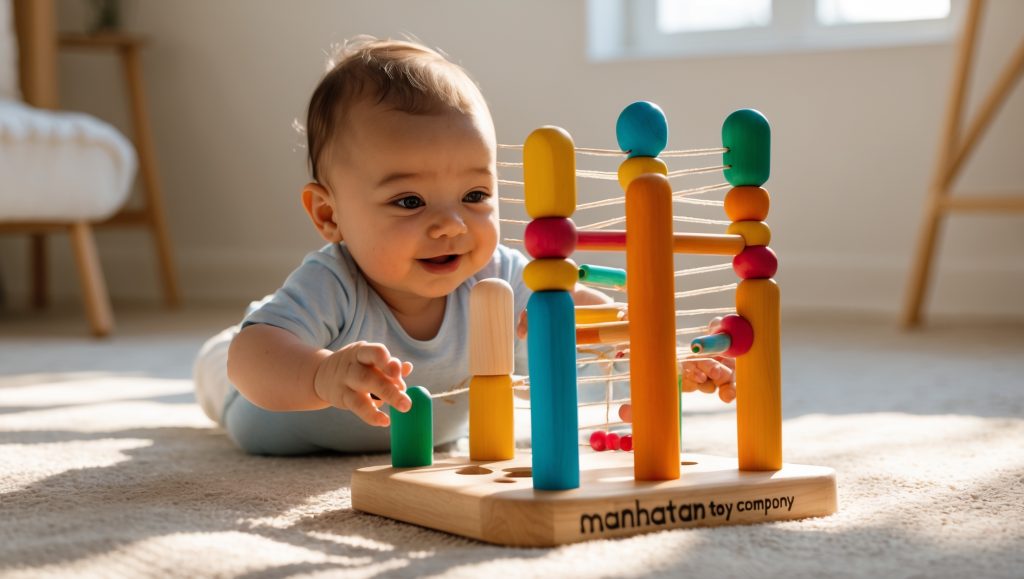
The Manhattan Toy Company Skwish Classic has been a mainstay in the world of baby toys for decades, and in 2025 it continues to captivate both parents and little ones. Uniquely designed with interconnecting wooden rods, elastic strings, and movable beads, the Skwish is as much a sensory experience as it is a toy. Its open-ended construction encourages grasping, shaking, squishing, and rolling, making it ideal for infants exploring their world and developing motor skills. With a design that straddles the line between classic and modern, the Skwish remains a favorite pick for parents seeking safe, stimulating toys for babies approaching or newly starting solids, as well as for those looking to foster early sensory exploration.
What’s Inside / Build Quality
The Skwish Classic arrives fully assembled, encased in simple, recyclable packaging. It’s made from sustainably sourced rubberwood and features water-based, non-toxic finishes in a palette of vibrant primary and secondary colors. The structure consists of multiple wooden rods that are interconnected by elastic cords, allowing the toy to “skwish” in and out with gentle pressure—hence the name. Sliding wooden beads add both tactile and auditory feedback.
Build quality is a highlight. The wood is smooth with no sharp edges or splinters, and the elastic remains taut after months of enthusiastic play. The painted surfaces resist chipping and are safe for mouthing, a frequent behavior in babies exploring new toys. The toy is lightweight, easy for small hands to grasp, and sturdy enough to withstand the inevitable drops and chews.
Learning & Development Benefits
The Skwish Classic is intentionally designed to support a wide range of early development milestones:
- Fine Motor Skills: Grasping, pulling, squishing, and transferring the toy from one hand to another help strengthen small muscles in hands and fingers.
- Hand-Eye Coordination: Tracking the movement of beads and the flexible structure encourages visual and manual coordination.
- Sensory Exploration: Varied textures, vibrant colors, and gentle rattling beads stimulate multiple senses at once—touch, sight, and hearing.
- Cause and Effect: Babies quickly learn that their actions (pulling, squeezing, shaking) result in tangible changes in the toy’s shape and sounds.
- Early Object Manipulation: The lightweight frame makes it easy for babies who are starting to sit or reach to engage in purposeful play.
For families in the stage of introducing solids, the Skwish also offers a safe, non-food item for oral exploration, which can be soothing for teething babies and supportive of oral-motor development.
Setup & Use
No assembly is required; simply remove the Skwish from its packaging and it’s ready for play. Its compact size (approximately 6 inches in diameter) makes it easy to take along in a diaper bag, stroller, or to use as a floor toy during tummy time or early sitting sessions. To clean, wipe with a damp cloth—avoid submerging in water to preserve the wood and elastic integrity.
Supervision is recommended, especially for younger babies who may mouth or chew the toy. While the Skwish is robust, regular inspection for wear is always wise with any baby toy.
Pros & Cons
Pros
- Exceptional sensory appeal with vibrant colors, textures, and gentle rattle sounds
- Promotes fine motor skills, hand-eye coordination, and early cause-and-effect learning
- Lightweight and easy for small hands to manipulate
- Made from sustainable rubberwood and non-toxic finishes
- Durable construction withstands frequent use and mouthing
- Compact and travel-friendly design
Cons
- Not suitable for dishwasher or full submersion cleaning
- Elastic strings may loosen with very prolonged or rough use
- Some babies may lose interest after the first year as play needs evolve
- Beads are not removable for separate play or cleaning
Alternatives & Similar Toys
If your baby loves the Skwish Classic, or if you’re looking for a similar developmental toy, here are a few alternatives worth considering:
- Hape Rainbow Rattle: A wooden clutching toy with flexible segments and a gentle rattle, great for tactile and auditory play.
- PlanToys Baby Car: A rolling, squeezable car made from sustainable materials, perfect for grasping and pushing as baby becomes mobile.
- Grimm’s Wooden Bead Grasper: A flexible ring of wooden beads, safe for mouthing and ideal for developing grip strength.
- Fat Brain Toys OombeeCube: A shape sorter with chew-safe silicone pieces, offering early problem-solving and sensory exploration.
Each of these toys offers its own spin on sensory play and motor skill development, but the Skwish stands out for its distinct shape-transforming action and classic design.
Verdict
The Manhattan Toy Company Skwish Classic remains a gold standard in infant toys for 2025, especially for families seeking open-ended, safe, and developmentally supportive playthings. Its combination of tactile, visual, and auditory stimulation, plus its durable, eco-friendly build, make it a wise investment during the early months of sensory exploration and as babies transition to new developmental stages. While it may not entertain older toddlers for long, its value in the first year is undeniable. For parents introducing solids, the Skwish offers a safe, engaging alternative to food-based play and supports the kind of exploration that underpins healthy growth.
FAQ
+Is the Skwish Classic safe for teething babies?
+What age range is best for the Skwish Classic?
+How do you clean the Skwish Classic?
+Can the Skwish be used during tummy time?
+Does the Skwish Classic contain any small parts?
+Is this toy eco-friendly?
+Can older siblings enjoy the Skwish?

Review: Manhattan Toy Company Skwish Classic – A Sensory Marvel for Babies in 2025
The Skwish Classic by Manhattan Toy Company remains a standout favorite among parents and child development experts in 2025. This ingeniously designed toy captivates infants with its unique blend of vibrant colors, elastic struts, and smooth wooden beads. Its lightweight, open-ended structure encourages babies to grasp, squish, and manipulate, fostering fine motor skills and hand-eye coordination from a very early age.
What sets the Skwish Classic apart is its sensory-rich experience. The gentle rattling sound, combined with the satisfying resistance when squished, provides multi-sensory stimulation that is both calming and engaging. It’s crafted from renewable wood with non-toxic finishes, reassuring parents who prioritize safety and sustainability. The Skwish’s durability ensures it withstands endless play, teething, and the occasional tumble from the high chair.
Practical for on-the-go families, its lightweight and flexible design make it easy to pack in diaper bags or strollers. The Skwish Classic is not just a toy—it’s a thoughtful tool that supports early development while delighting little ones. In a world of high-tech gadgets, this timeless classic continues to prove that simplicity and quality craftsmanship never go out of style.
- Encourages sensory exploration and fine motor development
- Safe, eco-friendly materials and non-toxic finishes
- Durable and easy to clean
- Perfect for travel and everyday play
For parents with sensory-sensitive babies, do the sounds from the sliding beads tend to be overwhelming in smaller, echo-prone rooms, or are they generally perceived as gentle and unobtrusive?
You’re right to consider how sensory-sensitive babies might react to toy sounds in a small room. The Skwish Classic’s beads typically create gentle, soft clicking noises that most infants find unobtrusive. However, in a quiet, echo-prone space, even subtle sounds can seem louder. I suggest first introducing the toy in a larger or carpeted area, watching your baby’s reaction, and limiting playtime if they seem startled. You could also place a soft blanket underneath to dampen sounds. Always supervise play to ensure your baby doesn’t become overstimulated. This isn’t medical advice; if you’re concerned, check in with your pediatrician.
My 15-month-old tends to chew on toys more than actually playing with them. Is the paint on the Skwish likely to wear off with heavy mouthing, or need to be replaced sooner? How long does the finish usually hold up in your experience?
It’s completely normal for toddlers to explore toys with their mouths at this age. The Skwish Classic is designed for mouthing, using non-toxic, water-based finishes that generally hold up well under typical use. Still, heavy chewing over time may cause some fading or minor wear on the paint. Check the toy regularly for peeling, splintering, or loose parts, and replace it if you see any damage. Always supervise play to ensure safety. This isn’t medical advice; if you’re concerned, check in with your pediatrician.
Our pediatrician is strict about avoiding toys with small detachable parts for infants. Based on the build quality described, would you say the Skwish is completely safe from a choking hazard perspective for babies under one year, or should I look for alternatives?
You’re right to be cautious about choking hazards for infants under one year. The Skwish Classic is praised for its sturdy build and the parts are securely fastened, but like any toy with beads and elastic, regular inspection is important. Always supervise your baby during play, and check for any wear or loose parts before each use. If you notice any damage or loosening over time, it’s best to remove the toy. While many parents find it suitable for infants, if you have any doubts, you might prefer a solid, one-piece teether or rattle. This isn’t medical advice; if you’re concerned, check in with your pediatrician.
My baby sometimes gets overwhelmed by noisy toys or very bright colors. Since the Skwish is described as vibrant with rattling beads, do you think it would be too stimulating, or have you found it to be gentle enough for sensitive kiddos?
It’s completely understandable to want toys that won’t overwhelm your sensitive baby. The Skwish Classic, while colorful and containing soft rattling beads, is generally quite gentle compared to louder or more flashy toys. Many parents find its natural wood tones and subtle rattle suitable even for babies who are easily overstimulated. You might want to introduce it during calm moments, watch your baby’s reactions, and limit playtime if they seem unsettled. Always supervise play, especially since the Skwish is safe for mouthing but babies vary in sensitivity. This isn’t medical advice; if you’re concerned, check in with your pediatrician.
I noticed you mention the Skwish is made with water-based, non-toxic finishes. My little one likes to mouth toys right before naps and bed—how often should I clean it, and are there any long-term safety concerns with repeated mouthing?
It’s very normal to be concerned about toy safety, especially when your baby mouths toys often. Since the Skwish is made with water-based, non-toxic finishes, it’s designed to be safe for mouthing, but regular cleaning is still important. Wipe the toy with a damp cloth daily or whenever it looks dirty, and let it air dry thoroughly before use. Avoid submerging in water to prevent wood swelling or damage. Inspect regularly for wear, like splinters or loose parts, particularly if your baby chews vigorously. Always supervise play, and if you notice any damage, set the toy aside. This isn’t medical advice; if you’re concerned, check in with your pediatrician.
With a 2-year-old who likes to throw toys more than play with them sometimes, I’m wondering how well the Skwish can handle rough treatment. Does it lose its shape or get stretched out if it gets squished or tossed across the room repeatedly?
It’s understandable to want toys that can stand up to your toddler’s energetic play. The Skwish Classic is designed to bounce back from squishing and gentle bending, but repeated tossing or rough handling by a strong 2-year-old could eventually loosen the elastic cords or affect its shape. If you notice parts stretching out, set limits on throwing and model gentler play. Always supervise play to avoid bumps or accidents, and check regularly for signs of wear or damage. This isn’t medical advice; if you’re concerned about safety or durability, check with your pediatrician.
You mention that cleaning is as simple as wiping with a damp cloth. For families dealing with frequent spills or heavier soiling, is there any risk of the elastic cords retaining moisture or developing mold if the toy accidentally gets quite wet?
It’s completely understandable to worry about mold or moisture with toys that have elastic cords, especially if spills are a common issue. If the Skwish gets very wet, gently blot it with a dry towel and allow it to air dry thoroughly in a well-ventilated space—avoid sealing it in a bag or box while damp. For heavier soiling, spot clean with mild soap and water, but avoid soaking the toy. Always check for lingering moisture between the wooden beads and cords. For infants, ensure the toy is fully dry before play to prevent any risk of mold exposure. This isn’t medical advice; if you’re concerned, check in with your pediatrician.
With the Skwish being described as sturdy and resistant to drops and chewing, how does its longevity usually compare to popular plastic sensory toys? I’m aiming to invest in toys that last through multiple children, so first-hand insights into long-term durability would be very helpful.
It’s great that you’re thinking ahead about durability for toys your children will use and enjoy over time. The Skwish, made from wood and elastic, often holds up better than many plastic sensory toys, which can crack or degrade with heavy use. To extend its lifespan: store it away from moisture; occasionally check and tighten the elastic cords; and supervise during play to prevent rough handling, especially with toddlers. The Skwish typically withstands teething and daily drops, but like any wooden toy, deep bites or strong impacts may eventually show wear. This isn’t medical advice; if you have safety concerns or notice damage, reach out to your pediatrician or the manufacturer.
My two-year-old loves to mouth toys and occasionally chews on them. Does the paint or finish ever show signs of wear from frequent mouthing, and how do you know when it’s time to replace the Skwish for safety reasons?
It’s completely normal to worry about toy safety when your toddler still mouths and chews on their favorites. The Skwish is designed with baby-safe finishes, but over time, frequent mouthing can cause the paint or wood to wear—look out for chipped paint, splintering, or loose parts. Check the toy regularly for any signs of damage or rough edges, and if you spot any cracks, peeling, or missing pieces, it’s best to replace it to prevent choking or injury. Always supervise play, especially for active chewers. This isn’t medical advice; if you’re unsure or notice unusual wear, it’s wise to consult your pediatrician.
Do you think the Skwish Classic is versatile enough to interest a baby from the early grasping stage through to later milestones, or would frequent access to new toys through a subscription offer stronger ongoing developmental benefit?
It’s thoughtful to consider how long a single toy like the Skwish Classic can engage your baby as they grow. The Skwish supports early grasping, visual tracking, and even two-handed play as motor skills improve, so it does offer ongoing value from newborn through at least 12 months. To keep your baby interested, rotate the Skwish with a few other safe, age-appropriate toys to provide variety without overwhelming them. Watch for signs of boredom or readiness for new challenges, and adjust as needed. Subscription boxes can add novelty, but you don’t need constant new toys—engagement often comes from shared play and how you present each toy. This isn’t medical advice; if you have concerns about development, consult your pediatrician.
With the Skwish Classic being so durable and designed for extended use, would you say it offers better long-term value than rotating new toys through a monthly subscription service? I am weighing the educational benefits of owning quality items versus the variety that subscriptions offer.
It’s great that you’re thinking carefully about how to maximize both value and enrichment for your baby. The Skwish Classic is durable and supports sensory development over many months, especially for babies aged 0–12 months, making it age-appropriate and safe for mouthing and grasping with supervision. To balance long-term value and variety: 1) Use the Skwish as a staple while rotating a few other toys for novelty, 2) Observe your baby’s engagement—some infants benefit from consistency, others from frequent change, 3) Prioritize toys that support different skills (fine motor, visual tracking), and 4) Consider your storage space and budget. This isn’t medical advice; if you’re concerned, check in with your pediatrician.
My little one has some sensory sensitivities and sometimes gets overstimulated by toys with bright colors or rattling sounds. How stimulating is the Skwish, and would it still be suitable for a child who prefers gentler, quieter play?
It’s completely understandable to want toys that honor your child’s sensory preferences. The Skwish Classic is relatively gentle as it has muted colors and a soft rattling sound—less intense than many electronic toys. For a child sensitive to noise, you can supervise play and use the Skwish on a soft surface to dampen sound. Introduce it gradually and watch your little one’s reactions; take breaks if needed. The smooth wooden texture and easy-to-grasp design make it appropriate and safe for infants, but always check for any wear or loose parts. This isn’t medical advice; if you’re concerned, check in with your pediatrician.
I noticed the Skwish uses elastic strings and wooden beads. Are there any specific cleaning tips or safety checks you recommend before returning it to rotation, especially after it’s been in storage or handled by multiple kids?
It’s wise to double-check toys like the Skwish before giving them back to your baby, especially after storage or group play. First, inspect the elastic strings for fraying and the wooden beads for cracks or sharp edges. Gently wipe the wooden parts with a damp cloth and mild soap, then let them dry thoroughly—avoid soaking, as it can damage the wood and strings. Make sure all knots are secure and no small parts are loose, which is crucial for babies under 12 months. Always supervise play. This isn’t medical advice; if you’re concerned, check in with your pediatrician.
Is the Skwish Classic suitable for babies who tend to put everything in their mouths, or should I be concerned about the strings or beads becoming loose over time? How often do you recommend checking it for wear and tear?
It’s completely understandable to be vigilant when your baby loves to explore toys with their mouth. The Skwish Classic is designed for infants and made with non-toxic finishes and securely fastened beads and strings, but no toy is entirely risk-free. I recommend inspecting the toy before each play session for any signs of loose strings, chipped wood, or small parts coming free. Gently tug on the strings and beads to check they’re secure and supervise closely, especially with mouthing. For babies under 12 months, regular safety checks are especially important. This isn’t medical advice; if you’re concerned, check in with your pediatrician.
We are starting potty training with our toddler and looking for toys that can keep her engaged in the bathroom for longer stretches. Do you think the Skwish is suitable for a 2.5-year-old in this context, or is it better suited strictly for infants?
It’s great that you’re looking for ways to make potty training smoother for your toddler. While the Skwish is safe for older babies and toddlers, it’s designed mainly for sensory exploration and grasping—activities that are more engaging for infants. For a 2.5-year-old, try offering simple puzzles, water-safe books, or small, easy-to-clean toys that encourage focused play. Always supervise bathroom play to avoid choking hazards and keep toys clean. This isn’t medical advice; if you’re unsure about the best toys for your child’s stage, check in with your pediatrician.
You mention that the Skwish Classic is great for babies exploring solids and teething. Would it still provide enough challenge and engagement as my baby approaches the toddler stage, or is it best suited just for younger infants?
It makes sense to want toys that keep your growing baby interested and challenged. The Skwish Classic is most engaging for young infants and early teethers, thanks to its easy-to-grasp design and safe, chewable wood. As your child nears toddlerhood, they may start to prefer more complex toys that encourage problem-solving, stacking, or imaginative play. You can keep the Skwish in rotation for fidgeting or quiet time, but supplementing with new toys that match toddler skills will help support ongoing development. Always check for wear and ensure the toy remains safe. This isn’t medical advice; if you’re concerned, check in with your pediatrician.
Is the Skwish Classic easy to store in small apartments when not in use? I’m trying to avoid accumulating bulky toys, so I’d love to know if it fits easily into small baskets or diaper caddies.
It’s understandable to want toys that don’t take up too much space in a small apartment. The Skwish Classic is relatively compact—about 6 inches across—and its flexible wooden rods mean it can compress a bit, making it easy to tuck into small baskets or diaper caddies. Try storing it in a soft bin or mesh bag so it’s easy to grab and keeps dust away. Just be sure to keep it clean and check for loose parts before putting it away. This isn’t medical advice; if you have specific concerns, check with your pediatrician.
After long days, we try to keep bedtime routines low-key. Could the Skwish Classic work as part of a calming bedtime activity, or should it be reserved for more active playtimes?
It’s great that you’re mindful about creating a soothing bedtime routine. The Skwish Classic is engaging and visually stimulating, which can actually be a bit too energizing right before sleep for many babies. Instead, reserve it for daytime playtimes when your baby is alert and ready to explore. For bedtime, opt for quieter, less stimulating activities like gentle rocking, lullabies, or a soft cloth book. Always supervise your baby with toys, and keep bedtime routines predictable and calm. This isn’t medical advice; if you’re concerned, check in with your pediatrician.
Sometimes our baby gets overwhelmed by too many new experiences, especially at family meals with strong food smells and different textures. Does the rattle from the Skwish ever seem to overstimulate sensitive babies, or does it have a calming effect?
It’s understandable to want playtime to feel soothing, especially for a sensitive baby. The Skwish’s gentle rattle is generally soft and pleasant, but each baby is different—some may find even quiet sounds or new sensations overwhelming. Try introducing the Skwish during calm, familiar moments first, allowing your baby to explore it at their own pace. Watch your baby’s cues: if they seem startled or fussy, pause and offer comfort, then try again later. Always supervise, and if your baby is sensitive to sound, limit playtime to shorter sessions. This isn’t medical advice; if you’re concerned about sensory sensitivities, check in with your pediatrician.
My baby mouths everything, especially after eating solids, so I’m careful about which toys come out during meals. Are there any concerns with food residue getting caught in the wood grain or painted areas of the Skwish, or does the smooth finish really hold up to repeated messy handling?
It’s so thoughtful that you’re mindful about toy safety and cleanliness, especially as your baby explores with their mouth. The Skwish’s smooth, non-toxic finish helps resist most food sticking, but food residue can still get into small crevices, especially where the rods meet the beads. After mealtimes, rinse the toy with a damp cloth and mild soap, then dry thoroughly to prevent moisture damage. Inspect for any chipped paint or splinters regularly, as repeated washing can wear down finishes over time. Always supervise during play, and remember that wood toys should not soak in water. This isn’t medical advice; if you’re ever unsure, consult your pediatrician.
Would this be a better alternative to soft silicone teethers for a baby who sometimes gets overwhelmed by loud toys or brightly flashing objects? I’m curious how it compares for sensory-sensitive babies.
It’s thoughtful to consider your baby’s sensory sensitivities when choosing toys. The Skwish Classic is made of smooth wood and elastic, offering gentle colors and quiet play, which can be less overwhelming than toys with lights or loud sounds. For a sensory-sensitive baby, you can introduce the Skwish during calm, supervised playtimes and watch how your child responds to its textures, movement, and the soft rattle sound. For teething, always check for safe finishes and loose parts, and ensure your baby is able to grasp and mouth the toy comfortably. This isn’t medical advice; if you’re concerned, check in with your pediatrician.
I noticed the Skwish is made from rubberwood and water-based finishes, which sounds safe. Are there any concerns about durability or potential wear if it goes through multiple households in a toy-lending subscription program?
It’s great that you’re thinking about safety and durability for shared baby toys. The Skwish is made from sturdy rubberwood and finished with non-toxic, water-based paints, which generally hold up well. For toy-lending programs, check regularly for splinters, loose parts, or peeling finishes, especially after heavy use. Wipe down surfaces between users with baby-safe cleaners to maintain hygiene. If any wear appears, such as cracks or exposed wood, retire that toy for safety. This isn’t medical advice; if you’re concerned, check in with your pediatrician.
In your experience, is the Skwish Classic suitable for older babies who are starting to crawl or pull up, or is it best reserved for those still in the early sitting or tummy time stages?
—it’s normal to wonder if a toy like the Skwish Classic still engages older, more mobile babies. The Skwish is actually quite versatile: 1) For crawling babies, place it just out of reach to encourage movement and tracking. 2) For those pulling up, supervise closely since its lightweight design means it can be knocked over safely, but it isn’t sturdy enough to support weight. 3) Continue using it for fine motor and sensory play during seated or tummy time. Always check for wear and make sure no small parts are loose to maintain safety. This isn’t medical advice; if you’re concerned, check in with your pediatrician.
I noticed the Skwish is recommended for babies starting solids, but does it still hold their interest as they grow into the crawling stage, or do you suggest switching to something else for older infants?
You’re thoughtful to consider how your baby’s interests will change as they grow. The Skwish Classic usually remains appealing into the crawling stage because older infants enjoy squeezing, rolling, and chasing after it. You might try placing it just out of reach to encourage movement, or let your baby explore new ways to grasp and manipulate the toy. As your child masters crawling, consider adding more complex toys—like stacking cups or push-along vehicles—while keeping the Skwish in rotation for variety. Always supervise play and check for wear and tear to ensure safety. This isn’t medical advice; if anything concerns you, check with your pediatrician.
How does the Skwish compare with other sensory toys like silicone poppers or stacking cups when it comes to holding a toddler’s attention during repeated bathroom visits? I want something both durable and engaging for those longer potty training moments.
It’s great that you’re looking for ways to keep your toddler engaged during potty training. The Skwish is lightweight and visually interesting, but some toddlers may lose interest after a few minutes since it doesn’t have the cause-and-effect features of silicone poppers or the open-ended play of stacking cups. For longer bathroom visits, try rotating toys: offer the Skwish one day, and silicone poppers or stacking cups on others. All three are safe for toddlers if supervised and checked for wear, but stacking cups can also be fun with water play (if appropriate). This isn’t medical advice; if you’re concerned, check in with your pediatrician.
I noticed the article mentioned water-based, non-toxic finishes, but I worry about the toy being mouthed all day by teething twins. How well do the painted surfaces stand up to heavy chewing, and should I watch for any wear over time?
It’s completely understandable to want reassurance about toy safety, especially with teething twins who love to explore with their mouths. The Skwish Classic uses water-based, non-toxic finishes designed for babies, but with heavy chewing, even safe paints can wear over time. Check the toy daily for chipped paint or splinters, and wipe it down regularly. Remove the toy if you notice any loose parts or significant paint loss. For children under one, always supervise play. This isn’t medical advice; if you’re concerned, check in with your pediatrician.
Could you share any advice on cleaning the Skwish after it’s been mouthed or out during snack time? I want to keep things sanitary but worry about damaging the wood or elastic cords with frequent wiping.
You’re absolutely right to want to keep the Skwish clean, especially since babies love to mouth their toys. To clean it safely, first wipe it down with a soft, damp cloth using mild soap and water—avoid soaking it, as too much moisture can damage the wood and elastic. After wiping, dry it right away with a towel. You can spot clean sticky areas with a slightly damp cloth. For deeper cleaning, a baby-safe sanitizing wipe (alcohol-free) is okay occasionally, but don’t use harsh chemicals. Always let it air dry completely before your baby plays again. This isn’t medical advice; if you’re concerned, check in with your pediatrician.
My child can be a little overwhelmed by noisy or overly stimulating toys, especially when we try to get her to relax on the potty. Would you say the gentle rattle and colors of the Skwish might be soothing, or could it be too much sensory input?
It’s understandable to want a soothing toy for moments like potty time, especially if your child is sensitive to stimulation. The Skwish has a gentle rattle and subdued, natural colors, which many children find calming compared to loud or flashing toys. Start by introducing the Skwish in a quiet environment for a few minutes to see how your child responds. Offer it during potty time and watch for signs of relaxation or discomfort. Always supervise to ensure safety, as even well-made toys should be monitored. This isn’t medical advice; if you’re concerned, check in with your pediatrician.
I’m curious about how to set up a feeding and play routine for iron intake. Should we offer the Skwish Classic during meals for oral-motor practice, or is it better to use it separately from feeding times when giving iron-rich purees or cereals?
It’s great that you’re thinking carefully about both nutrition and sensory play for your baby. For safety and to support mindful eating, it’s best to separate playtime with the Skwish Classic from feeding sessions. During meals, focus on offering iron-rich foods and let your baby explore textures and flavors without distractions. After or between meals, you can use the Skwish for oral-motor practice and sensory development—always supervising closely, especially with younger babies. Keeping feeding and play distinct helps build healthy eating habits. This isn’t medical advice; if you’re concerned, check in with your pediatrician.
For babies who are easily overstimulated by sound or color, does the Skwish tend to be too stimulating, or is it generally well-tolerated even for those with mild sensory sensitivities?
It’s completely understandable to be mindful of sensory input for babies who are easily overstimulated. The Skwish Classic is generally well-tolerated because it uses muted colors and doesn’t make loud noises—just gentle rattling if shaken. Try introducing it during calm playtimes and watch for any signs of discomfort. Keep sessions short at first, allowing your baby to explore at their own pace. Always supervise, especially with infants under six months, to ensure safety. This isn’t medical advice; if you’re concerned, check in with your pediatrician.
Since the Skwish uses water-based paint and wood, how does it handle frequent wiping or moisture from lots of teething? Have you noticed any fading, wear, or changes to the elastic cords after repeated cleaning or mouthing?
It’s great that you’re thinking about how the Skwish holds up to cleaning and teething. The Skwish’s water-based paints are generally durable and non-toxic, making it safe for mouthing by babies, but with frequent wiping or drool, you might eventually notice some minor fading or softening of the finish over time. The wooden parts usually withstand gentle wiping with a damp cloth, but avoid soaking to prevent swelling or warping. The elastic cords tend to retain their stretch, though repeated moisture exposure could gradually loosen them. Always inspect toys regularly for any signs of wear, especially with babies under supervision. This isn’t medical advice; if you’re concerned, check in with your pediatrician.
How long does your experience show that babies remain engaged with the Skwish Classic before they outgrow it? I am figuring out if it is a lasting investment or if I should plan to rotate it out fairly quickly once their fine motor skills improve.
It’s thoughtful of you to consider how long the Skwish Classic will truly hold your baby’s interest. In most cases, babies are engaged with the Skwish from around 3 months, when grasping and mouthing start, up to about 9–12 months as their fine motor skills become more advanced. To maximize its use, offer the Skwish during tummy time and let your baby explore its textures and movements safely (always supervise, especially if parts are mouthed). As your child grows, you might rotate it out when they show more interest in toys that challenge stacking, sorting, or problem-solving. This isn’t medical advice; if you have concerns, please check in with your pediatrician.
For parents concerned about the environmental impact of baby gear, what should we consider when deciding between wooden toys like the Skwish and more commonly available plastic toys? Does the manufacturing process or end-of-life disposal make a noticeable difference when making sustainable choices?
It’s wonderful that you’re thinking about the environmental impact of your baby’s toys. When comparing wooden toys like the Skwish to plastic options, consider that wooden toys are often made from renewable resources and are usually biodegradable, while plastics can persist in landfills for decades. Check if the wood is sustainably sourced (like FSC-certified) and if paints or finishes are non-toxic. Also, wooden toys tend to last longer and can be handed down, reducing waste. Always supervise for loose parts or splinters, especially with infants. This isn’t medical advice; if you’re concerned, check in with your pediatrician.
Since the Skwish gets a lot of mouthing and chewing, have you noticed if the elastic cords ever fray or lose their tension over time? Just wondering if it holds up with regular use by toddlers.
It’s great that you’re thinking about durability and safety with toys that get a lot of chewing and mouthing. The Skwish Classic is designed for babies and toddlers, so the elastic cords are made to withstand regular stretching and pulling, but over time and with heavy use, you might notice some fraying or decreased tension. To keep things safe: 1. Inspect the toy weekly for any signs of wear or loose ends. 2. Remove from use if you see cords fraying or beads loosening. 3. Clean the toy regularly to keep it hygienic for mouthing. 4. Always supervise younger babies at play. This isn’t medical advice; if you’re concerned, check in with your pediatrician.
My little one has some sensory sensitivities, particularly with certain textures. Based on the Skwish’s materials and the variety of tactile features, do you think it could be overwhelming for babies who are cautious about new sensations, or does it usually help them get more comfortable?
It’s wonderful that you’re being mindful of your baby’s sensory needs. The Skwish Classic has smooth wood and elastic cords with gentle give, which most babies find approachable, but every child is different. Start by letting your baby look at and touch the toy at their own pace, without pressure. You might gently guide their hand or just place the Skwish nearby and observe their reaction. If they seem hesitant, try introducing it during calm moments, and consider touching it yourself to model exploration. Always supervise play, especially for young infants. This isn’t medical advice; if you’re concerned, check in with your pediatrician.
I noticed the Skwish helps with sensory exploration, but what if my one-year-old gets overstimulated? Is it gentle enough for little ones who can be sensitive to bright colors and noise?
It’s thoughtful of you to consider your child’s sensory needs. The Skwish Classic is designed with gentle colors and makes only soft rattling sounds, which are generally suitable for one-year-olds—even those sensitive to overstimulation. Introduce it gradually by offering it during calm, quiet moments, and watch your child’s reactions. Limit play to short sessions if your child seems overwhelmed. Always supervise, and remove the toy if your little one appears distressed. This isn’t medical advice; if you’re concerned, check in with your pediatrician.
Does the article suggest whether purees or cereals are easier for babies to try first, especially when considering iron needs and their developmental stage? I’m trying to figure out if there’s a best option when also offering toys like the Skwish for oral exploration.
You’re thoughtful to consider both nutrition and developmental readiness. The article doesn’t directly compare purees and cereals, but here are some steps to help decide: 1) Around 6 months, iron-fortified infant cereals can be a good first food to meet iron needs, especially for breastfed babies. 2) Pureed meats, beans, or veggies are also suitable if they are smooth and age-appropriate. 3) Always supervise oral exploration with toys like the Skwish, ensuring they’re clean and safe for mouthing. 4) Offer new foods one at a time to watch for reactions. This isn’t medical advice; if you have concerns about feeding or readiness, check in with your pediatrician.
I’m curious about how the Skwish Classic compares to more traditional educational toys that focus on specific skills, like stacking cups or shape sorters. Do you think open-ended toys like this provide a similar level of developmental support, or would you recommend mixing both types for infants?
It’s great that you’re thinking about the developmental value of different toys for your baby. Open-ended toys like the Skwish Classic encourage sensory exploration, grasping, and cause-and-effect learning, while traditional toys like stacking cups or shape sorters often target specific skills such as problem-solving or hand-eye coordination. For infants, a mix of both types can be ideal: offer the Skwish for free play and sensory discovery, and introduce more structured toys as your child gets closer to 9-12 months and shows readiness. Always supervise play and choose toys labeled safe for your baby’s age. This isn’t medical advice; if you’re concerned, check in with your pediatrician.
My 4-year-old is fascinated by her little brother’s Skwish, but I’m careful about balancing her screen time with hands-on play. Does the Skwish still hold developmental value for preschoolers, or would you recommend something more age-appropriate for her sensory needs?
It’s great that you’re mindful of encouraging hands-on play for your preschooler. While the Skwish is designed for infants, a 4-year-old might still enjoy its tactile qualities, but its developmental benefits may be limited at this age. For richer sensory experiences, consider items like kinetic sand, play dough, or age-appropriate building sets that offer more complexity and creativity. You could also try simple crafts or sensory bins, always supervising for safety. This isn’t medical advice; if you’re concerned, check in with your pediatrician.
My child is very sensitive to loud or unexpected noises. Does the Skwish’s rattling sound tend to be soft and subtle, or could it be overstimulating for kids who are a bit sound-sensitive? I want to encourage sensory exploration without overwhelming my four-year-old during playtime breaks from her favorite shows.
That’s a thoughtful question and your awareness of your child’s sensory needs is wonderful. The Skwish Classic’s rattle is generally soft and subtle, designed for gentle auditory stimulation, not loud or startling sounds. For a sound-sensitive four-year-old, you might first introduce the toy in a quiet space, allowing her to handle it gently and get used to the noises it makes. Watch her reactions and offer lots of reassurance if she seems startled. If needed, demonstrate how it sounds before she tries it herself. Always supervise play, especially if she’s newly exploring it. This isn’t medical advice; if you have concerns about sensory sensitivities, consider checking in with your pediatrician.
Should I include the Skwish Classic in my baby’s playtime routine every day, or is it better to rotate it with other toys to keep her interest and avoid overstimulation?
Your thoughtfulness about balancing your baby’s playtime is wonderful. Rotating the Skwish Classic with other toys is a great idea to keep your baby engaged and prevent overstimulation, especially for infants around 3–12 months. Try offering the Skwish during one or two play sessions a day, then swap in toys with different shapes, textures, or sounds. Watch your baby’s cues—if she seems bored or fussy, a change might help. Always supervise play, as babies explore with their mouths. This isn’t medical advice; if you’re concerned, check in with your pediatrician.
I try to include some toy time as part of our daily speech and play routines. About how long do most toddlers typically stay interested in the Skwish Classic, and do you have ideas to stretch its use for my little one’s language growth?
It’s great that you’re including purposeful play to support your child’s language development. Many toddlers tend to focus on the Skwish Classic for about 5–10 minutes per session, since its visual and tactile features are engaging but not overwhelming. To stretch its use for language growth, try naming colors or actions as your child manipulates the toy, singing simple songs about what you’re doing with it, or encouraging turn-taking by passing it back and forth. Always supervise closely, especially for children under three, due to mouthing and small parts. This isn’t medical advice; if you’re concerned, check in with your pediatrician.
We are raising our baby in a bilingual home and I’m curious if you have any advice for weaving the Skwish into nap or bedtime routines that involve stories or lullabies in both languages. Is there a way to use the toy that supports language learning without getting my baby overstimulated before sleep?
It’s wonderful that you want to nurture both languages while keeping bedtime calm. To use the Skwish in your routine, try these steps: 1) Hold the Skwish gently and describe its colors and shapes softly in each language, using simple, calming words; 2) Let your baby lightly explore the toy while you sing or tell a quiet story, helping connect words with gentle touch; 3) Keep the play short—just a minute or two—then set the Skwish aside before moving on to lullabies or books. This keeps stimulation low and bedtime soothing. The Skwish is safe for most babies, but always supervise play and check for wear. This isn’t medical advice; if you’re concerned, check in with your pediatrician.
Is the Skwish easy to clean after being dropped outside or while we are on the go? We spend a lot of time exploring outdoors, so I want to be sure it stays safe and sanitary for mouthing.
It’s wonderful that you’re thinking about keeping your baby’s toys safe and clean during outdoor adventures. The Skwish is made mostly of wood with an elastic cord, so you can usually wipe it down with a damp cloth and mild soap after it’s dropped outside—just avoid soaking or submerging it. For stubborn dirt, use a soft brush to reach tight spots. Make sure to dry it thoroughly before giving it back to your baby, as moisture can affect the wood and cords. Always inspect for any splinters or damage before use. This isn’t medical advice; if you’re concerned, check in with your pediatrician.
My little one is sensitive to noises and gets startled easily. Are the beads on the Skwish particularly loud or jarring, or are they more subtle? I’d love to know if other sensory-sensitive families have found success with this toy.
Your concern about noise sensitivity is completely understandable. The beads on the Skwish Classic make a gentle clicking sound when moved, but they are generally considered quite subtle compared to many other toys. For sensory-sensitive babies, you can introduce the Skwish slowly—let your baby explore it in a quiet environment, and watch their reaction to the sound. If needed, you can demonstrate how it works first, so the noise is less surprising. Always supervise play, especially for younger babies, to ensure safety. This isn’t medical advice; if you’re concerned, check in with your pediatrician.
The Skwish is described as ideal for oral exploration and teething. Are there any concerns about the wooden parts splintering or the paint wearing off over time if the toy is chewed frequently by a teething baby?
It’s understandable to be cautious about what your baby puts in their mouth, especially during the teething phase. The Skwish Classic is made with baby-safe, non-toxic finishes, and the wood is designed to withstand normal chewing, but regular inspection is important. Check the toy often for splinters, chips, or peeling paint, especially if it’s used daily or by a strong chewer. Stop use immediately if you notice any damage to the wood or finish. Always supervise young babies with the toy, and remember it’s best suited for infants who are not yet strong enough to bite off pieces. This isn’t medical advice; if you’re concerned, check in with your pediatrician.
You mention the toy is great for babies who are just starting solids. Is there a recommended minimum age for introducing the Skwish, or could it also work well for younger infants, say, around three months old who are still mostly just grasping and mouthing?
It’s great that you’re thinking about what toys are safe and helpful for your baby’s development as they grow. The Skwish Classic is generally suitable for infants around three months old, as it is lightweight and easy to grasp for little hands, making it appropriate for early mouthing and grasping practice. Be sure to supervise closely, especially at this age, and check regularly for any loose parts. Always wash the toy according to manufacturer instructions to keep it clean. This isn’t medical advice; if you’re concerned, check in with your pediatrician.
My child is sensitive to loud or unpredictable noises. Since the Skwish has rattling beads, is the sound gentle enough for a calming, pre-bedtime activity, or might it be too stimulating for some kids?
You’re right to consider how noise can affect your child’s bedtime routine. The Skwish Classic’s rattling beads make a soft, subtle sound—many parents find it gentle enough for sensitive babies, but some children may still find even quiet noises distracting or stimulating. Try introducing the toy during the day first to see your child’s reaction, and use it in a calm, quiet space. If your child seems unsettled, reserve the Skwish for playtime and opt for silent, soft-textured toys before bed. Always supervise play, especially with infants, and watch for any signs of overstimulation. This isn’t medical advice; if you’re concerned, check in with your pediatrician.
My baby sometimes gets overwhelmed by loud or busy toys. Does the Skwish make much noise when shaken, or would it work for a baby who is sensitive to sounds and overstimulation?
You’re thoughtful to consider your baby’s sensitivity to noise and stimulation. The Skwish Classic is mainly made of wood and elastic cords, so it produces only soft, gentle rattling sounds when shaken—not loud or jarring noises. For babies sensitive to busy or noisy toys, its simple design and muted colors help reduce overstimulation. Always supervise your baby during play and observe how they respond to new toys. This isn’t medical advice; if you’re concerned, check in with your pediatrician.
With limited storage in a small apartment, I am curious how the Skwish Classic compares in size to other popular sensory toys. Does its design allow it to be easily tucked away in a toy bin, or does its shape make it awkward to store along with other baby essentials?
You’re wise to consider storage when choosing baby toys, especially in a small apartment. The Skwish Classic is about 6 inches across, which is slightly bigger than some rattles but still compact compared to many sensory toys. Its flexible rods compress a bit, allowing it to fit into most toy bins or baskets, though the round shape may not nestle as neatly as flat or soft toys. Try storing it on top of other items rather than underneath to avoid squishing. As always, check for wear and keep it away from pets or sharp objects. This isn’t medical advice; if you have concerns, check in with your pediatrician.
Are there any tips for cleaning or maintaining the Skwish Classic if it comes home from daycare dirty every day? I want to keep it safe for my baby but also make sure it lasts throughout the daycare year.
You’re absolutely right to want to keep your baby’s Skwish Classic clean and safe. Each evening, wipe it down with a damp cloth and a little mild, baby-safe soap, then rinse with another damp cloth to remove residue. Let it air dry fully before handing it back to your child. Avoid soaking it, as excess water may damage the wood and elastic. Regularly inspect for splinters or loosening parts, especially after lots of use at daycare. For added safety, always supervise play and check for wear. This isn’t medical advice; if you’re concerned, check in with your pediatrician.
Our little one gets easily bored with toys after a few minutes. Do you recommend introducing the Skwish during specific routines, like tummy time or meal prep, to encourage longer engagement and support his language development?
It’s completely normal to want toys that hold your baby’s attention and support development. Try introducing the Skwish during tummy time to encourage reaching, grasping, and vocalizing; keep sessions brief at first, gradually increasing as your baby shows interest. You can also hand the Skwish to your baby in a high chair while you prep meals, narrating your actions or describing the toy’s colors and movements to boost language exposure. Rotate it with other toys to keep things fresh, always checking for safe play and supervision. The Skwish is suitable from birth, but watch for mouthing and keep it clean. This isn’t medical advice; if you have concerns about attention span, talk to your pediatrician.
Is the Skwish Classic safe to leave with my baby in the highchair while they’re exploring new foods, or should it only be used outside of meal times to avoid distractions or choking risks?
It’s thoughtful to consider safety and focus during meal times. The Skwish Classic is designed without small parts, reducing choking risks, but it is best used under supervision, especially when your baby is eating. To help your baby learn to focus on new foods and reduce distractions, I recommend offering the Skwish Classic only outside of meal times. This also minimizes any risk of food getting on the toy, which could make it slippery or introduce allergens. Always supervise closely and clean toys regularly. This isn’t medical advice; if you’re concerned, check in with your pediatrician.
With two little ones under two, I’m always juggling floor toys during tummy time and while feeding my newborn. Does the Skwish make any unusually loud noises when shaken that might startle a newborn or disrupt quiet time routines?
It’s thoughtful that you’re considering noise levels for your little ones’ routines. The Skwish Classic makes a gentle rattling sound when moved—more of a soft clack than a loud rattle—thanks to its wood and elastic design. It’s generally quiet enough not to disturb a sleeping newborn or disrupt calm times, but every baby has different sensitivities, so you may want to test it during a less crucial quiet moment first. Always supervise play, especially with babies under one, to ensure safety with moving parts. This isn’t medical advice; if you’re concerned, check in with your pediatrician.
My toddler sometimes gets overwhelmed by toys that make loud noises or have lots of bright flashing lights. The Skwish seems more subtle, but is it still interesting enough for toddlers with some sensory sensitivities?
It’s completely understandable to want toys that won’t overwhelm your toddler’s senses. The Skwish Classic is gentle both visually and audibly, with muted colors and soft wooden rattling instead of loud sounds or flashing lights. For toddlers with sensory sensitivities, try introducing the Skwish during calm playtimes and let your child explore at their own pace. Show them how it moves and squishes, but allow them to decide how much to interact. Supervise play to ensure safety, especially since some kids may mouth the toy. This isn’t medical advice; if you have concerns about your child’s sensory needs, check in with your pediatrician.
I noticed the Skwish doesn’t require assembly, but is it easy to keep clean with multiple kids handling it throughout the week? Are there any particular cleaning recommendations to make sure it stays hygienic between uses?
It’s great that you’re thinking about cleanliness, especially with several children sharing toys. The Skwish Classic’s smooth wooden rods and elastic cords can generally be wiped down with a damp cloth and mild soap—just make sure to remove any excess moisture right after. Avoid soaking it in water or using harsh chemicals, as that could damage the wood or finish. For regular use in a shared setting, a quick wipe every few days should be sufficient, and always inspect for any loose parts before giving it to younger children. This isn’t medical advice; if you’re concerned, check in with your pediatrician.
I’ve been debating between the Skwish and a traditional teething ring for our twins, since they both love chewing on toys at completely different times of the day. Has anyone compared how well these two options hold up during teething phases with multiple babies?
It’s completely understandable to want the best comfort and durability for your twins during teething. The Skwish is a safe, lightweight toy with smooth wood and elastic, so it’s fun to grasp and chew, but it’s not as soothing on sore gums as a traditional silicone or rubber teething ring. With twins, you might notice the Skwish holds up well to frequent mouthing but can get dented or stained more easily than dedicated teethers. For teething relief, offer both options—alternate between the Skwish for play and traditional rings for chewing, always supervising to ensure safety. This isn’t medical advice; if you’re concerned, check in with your pediatrician.
My toddler is about 15 months old and has started throwing toys pretty aggressively during play. Do you think the Skwish Classic can hold up to this kind of rough use, or should it be reserved mainly for gentler handling at this age?
It’s completely normal to feel concerned when your toddler starts throwing toys as part of play. The Skwish Classic is designed to be sturdy and can generally handle some rough handling from toddlers, but repeated aggressive throwing could eventually damage it or nearby objects. Offer the Skwish during calmer play and introduce soft, safe items specifically for throwing, like plush balls. Supervise play closely to redirect if play gets too rough, and explain which toys are for gentle use. For 15 months, always check toys for any signs of wear. This isn’t medical advice; if you’re concerned, check in with your pediatrician.
Our toddler tends to chew on toys when she’s a bit anxious or bored, especially during potty training breaks. Is the Skwish Classic sturdy enough for a child who puts things in her mouth, or is it mainly intended for younger babies?
It’s understandable to want toys that are safe and sturdy for a toddler who chews, especially during stressful times like potty training. The Skwish Classic is made for infants and up, using smooth, unfinished wood and elastic cords; it is generally sturdy and non-toxic. For older toddlers who aggressively chew, though, monitor for any splintering or wear over time. Always supervise play, especially since small parts could loosen. Regularly inspect the toy for damage and discontinue use if you notice any breakage. This isn’t medical advice; if you have concerns about chewing habits or toy safety, please check in with your pediatrician.
Does the Skwish Classic still appeal to older toddlers, like a 3-year-old, especially as part of a calm-down routine before bed? Or is it mostly engaging for younger babies?
It’s great that you’re thinking about calming routines for your toddler. While the Skwish Classic is designed with infants in mind, some 3-year-olds still enjoy its gentle squish and sliding beads as a soothing fidget toy, especially during quiet time or winding down. You can encourage gentle squeezing or rolling in their hands as part of a bedtime routine. Just be mindful that older toddlers may be ready for more advanced sensory tools, so observe if your child loses interest. Always supervise play to ensure safety. This isn’t medical advice; if you’re concerned, check in with your pediatrician.
My little one is starting to play more independently, but I worry about her safety. Are the beads on the Skwish securely attached, or is there any risk they could pop off and become a choking hazard?
It’s completely understandable to be concerned about toy safety as your baby explores more independently. The Skwish Classic is designed for infants and features securely attached beads that are held in place with strong, elastic cords. For peace of mind, always inspect toys regularly for any wear or loosening parts, especially if your child is in the mouthing stage. Use the Skwish with supervision for babies under 12 months, and keep an eye out for any damage after rough play. This isn’t medical advice; if you notice any toy damage or have concerns, please consult your pediatrician.
My child has some sensory sensitivities and is sometimes overwhelmed by vibrant colors or rattling noises. Based on your review, do you think the Skwish might be overstimulating for kids who are sensitive to sensory input?
It’s completely understandable to be mindful of toys when your child is sensitive to sensory input. The Skwish does have bright colors and a gentle rattling sound, which could be overstimulating for some sensitive babies. You might first introduce it during calm, quiet times and observe your child’s reactions. If your baby shows signs of discomfort (turning away, fussiness), remove the toy and try again later for short periods. For younger infants, always supervise play and check for small parts. Every child is different, so watch their cues closely. This isn’t medical advice; if you’re concerned, check in with your pediatrician.
My child tends to get easily overstimulated by noise and new textures. Is the rattling sound and the combination of sensory features on the Skwish gentle enough for more sensitive toddlers, or should I be cautious about introducing it all at once?
It’s completely understandable to want to introduce new toys gently when your child is sensitive to sound and texture. The Skwish has a soft, non-jarring rattle and smooth wooden beads, but every child reacts differently. Try offering the toy during calm moments and allow your child to explore it at their own pace, starting with short sessions. Observe their reactions and remove the toy if they show signs of discomfort. Always supervise play, especially for toddlers, to ensure safety. This isn’t medical advice; if you’re concerned, check in with your pediatrician.
Our playroom is overflowing with baby gear right now. How does the Skwish hold up in terms of storage? Is it compact enough to stash in a small bin, or does it tend to get tangled up with other toys?
It’s understandable to want toys that don’t add clutter to your playroom. The Skwish is lightweight and moderately sized, so it usually fits in standard toy bins or baskets. Its flexible design helps it compress a bit, but because of its open, bead-studded structure, it may tangle with toys that have loops or strings. To keep things tidy and avoid snags, try storing it with other solid toys or in its own small container. Always supervise babies to ensure safe play and storage. This isn’t medical advice; if you’re concerned, check in with your pediatrician.
Our family likes to compare toys before buying, especially for our first grandchild. How does the Skwish Classic compare to fabric sensory balls or plastic rattles in terms of durability and developmental benefits, particularly for babies who are beginning to explore new foods and textures?
It’s wonderful that you’re thoughtfully comparing toys for your grandchild. The Skwish Classic stands out for its durable wooden construction, which often holds up better than fabric sensory balls or plastic rattles, especially with repeated mouthing and grasping. While fabric balls can offer softer textures and are machine-washable, they may wear out faster, and plastic rattles sometimes crack with rough handling. For developmental benefits, all three support sensory exploration and fine motor skills, but Skwish’s unique structure encourages two-handed play and tactile investigation. Always supervise play, especially when babies are exploring new foods and textures, to ensure safety around small parts or breakage. This isn’t medical advice; if you’re concerned, check in with your pediatrician.
I noticed the Skwish is great for babies exploring solids, but is it also appropriate for calming activities with older toddlers who still enjoy sensory play before bedtime?
It’s wonderful that you’re looking for calming sensory options for your toddler. The Skwish can still be appropriate for older toddlers as part of a relaxing bedtime routine. Try offering it during quiet time in a softly lit room, showing your child how to gently squeeze and roll it, or incorporate deep breaths as you play together. Always supervise play to ensure safety, especially if your child still mouths toys. Remember, each child is different, so watch for signs of overstimulation or excitement. This isn’t medical advice; if you’re concerned, check in with your pediatrician.
Would you recommend using the Skwish as part of a regular daily routine, like during tummy time or before naps, or should it be more of a free play item? I am trying to build some consistency for my infant.
It’s wonderful that you want to create consistency and routines for your infant. The Skwish can be a great addition to daily play, especially during tummy time, as it encourages reaching and grasping. Try offering it for a few minutes while your baby is on their tummy, watching closely to ensure safe play. Because of its stimulating colors and textures, avoid using it right before naps or bedtime, as it might be too energizing. For infants under 12 months, always supervise play to prevent mouthing of any parts. This isn’t medical advice; if you have concerns about routines or toy safety, check in with your pediatrician.
Since babies often accumulate quite a few toys, would you consider the Skwish a staple for daily playtime, or is it more of a once-in-a-while sensory activity in your experience?
It’s great that you’re thinking about which toys truly support your baby’s development. The Skwish can be a daily playtime staple for young babies, especially around 3–8 months, because its lightweight design and easy-to-grasp structure encourage reaching, mouthing, and sensory exploration. You might rotate it with other toys to keep things fresh, but leaving it accessible during supervised floor time is perfectly safe and stimulating. Just check regularly for wear and keep it clean since babies often chew on it. This isn’t medical advice; if you have any concerns about your baby’s play habits, your pediatrician is a good resource.
My toddler has a tendency to put everything in her mouth and chew on it for ages. How does the Skwish hold up to heavy chewing, and has anyone noticed if the elastic or paint wears down quicker when used this way?
It’s completely natural to be concerned about your toddler’s chewing habits, especially at this age. The Skwish Classic is designed for babies and uses non-toxic, water-based finishes, but frequent, heavy chewing can cause the paint to wear more quickly over time. The elastic bands are sturdy, but they may eventually fray if persistently chewed. Check the toy regularly for loose parts or damage, and supervise your child during play to ensure safety. If you notice any signs of wear, it’s best to remove the toy. This isn’t medical advice; if you’re worried about chewing or mouthing, consult your pediatrician.
How long did your babies stay interested in the Skwish Classic as they grew? Is it just fun for pre-sitters, or do older infants who are crawling and starting to pull up still engage with it, especially during wind-down routines at bedtime?
It makes sense to wonder how long a toy like the Skwish Classic will keep a baby’s interest as they grow. In my experience and from what many parents report, younger infants love Skwish for grabbing and mouthing, but older babies—especially crawlers and early standers—still enjoy it for shaking, rolling, and exploring during quiet play. For bedtime routines, it can be a soothing fidget for gentle handling, though always supervise to ensure safety. Just make sure it remains intact and clean as your baby gets stronger. This isn’t medical advice; if you’re concerned, check in with your pediatrician.
Do you think the Skwish is suitable for babies with high sensitivity to noisy toys? I know it rattles a bit, but I am curious if the sound level is subtle enough for more sensitive babies.
Your concern about sound sensitivity is very thoughtful. The Skwish does have a soft rattle when shaken, but compared to traditional rattles, its sound is quite gentle and not sharp or loud. For a baby with high sensitivity, you could try introducing it during quiet times, letting your baby explore at their own pace. Observe your baby’s reactions closely; if they seem startled, you can dampen the noise by placing a soft cloth underneath during play. Always supervise, especially if your baby is prone to being easily overwhelmed. This isn’t medical advice; if sound sensitivity seems to cause distress, please check in with your pediatrician.
I have a little one who seems sensitive to loud sounds and certain textures. Are the beads on the Skwish very noisy when shaken, or is it more of a gentle rattle? Wondering if it’s suitable for a baby with sensory sensitivities.
It’s understandable to want toys that are comfortable for your baby’s unique sensory needs. The Skwish Classic makes a soft, gentle rattling sound—it’s much quieter than most traditional rattles, and the beads slide smoothly rather than clattering. Its wood and elastic design also means there are no sharp or harsh surfaces, which can help with texture sensitivities. For very young babies or those who are especially sensitive, it’s a good idea to supervise play at first and observe their reactions. This isn’t medical advice; if you’re concerned, check in with your pediatrician.
If a daycare has limited storage space or a tight toy rotation schedule, is the Skwish Classic easy to store and keep organized? Does its shape or design make it tricky to fit into bins or cubbies with other toys?
You’re right to wonder about storage and organization, especially in busy daycare settings. The Skwish Classic’s flexible, compressible design lets it flatten somewhat, which can help it fit into most bins or cubbies, though its unique shape may not stack as easily as blocks or flat toys. Step-by-step, consider storing it in an open basket with other soft, lightweight items, compressing it gently before putting it away, ensuring it’s dry and clean, and keeping it separate from toys with small parts to prevent tangling. It’s safe for babies, but always supervise play and inspect for wear. This isn’t medical advice—if you have concerns, reach out to your pediatrician.
With so many baby toys marketed as educational these days, what sets the Skwish apart in terms of fostering independent play versus guided play? I’m curious if it’s better for solo floor time or for playing together with a parent.
It’s great that you’re thinking about how toys support both independent and interactive play. The Skwish stands out because its lightweight, open-ended design encourages babies to explore on their own—grasping, shaking, and rolling it during solo floor time. For guided play, you can join in by gently moving it, describing colors, or modeling how to squish and release. For younger babies (around 3–6 months), always supervise to ensure safety, especially as they mouth objects. As they grow, Skwish can still be used together to practice sharing and turn-taking. Every child is different, so try both solo and social play to see what your baby enjoys most. This isn’t medical advice; if you’re concerned, check in with your pediatrician.
We’re working on stretching out independent play during quiet time. Have you seen the Skwish used as part of a daily play routine for toddlers, or is it mostly just for occasional sensory play?
It’s wonderful that you’re encouraging more independent play during quiet time. The Skwish Classic, while often featured for sensory exploration, can definitely be part of a daily play routine for toddlers. Try presenting it as a ‘special quiet time toy,’ rotating it with other safe toys to maintain interest. Invite your toddler to use it for pretend play—rolling, stacking, or ‘feeding’ it to stuffed animals. Always supervise younger toddlers, as some may mouth the elastic cords or beads. Remember, every child’s attention span varies, so celebrate small increases in solo play. This isn’t medical advice; reach out to your pediatrician if you have any concerns.
My toddler still puts everything in her mouth and loves to chew on her toys, but sometimes I worry about the paint chipping off with all the drool and gnawing. Even though the Skwish uses water-based, non-toxic finishes, how well does the color actually hold up over a few months of heavy use?
It’s completely understandable to worry about what your toddler might be putting in her mouth. The Skwish Classic is designed for younger babies, using water-based, non-toxic finishes, and most parents find the color stays put through regular mouthing and handling. However, with heavy or rough chewing, some fading or minor wear may occur over several months—this is typical for wooden toys with safe finishes. Always inspect the toy regularly for any signs of splintering or chipping, and supervise play to ensure safety. If you ever see loose pieces or significant paint wear, it’s best to retire the toy. This isn’t medical advice; if you’re concerned, check in with your pediatrician.
We do a lot of floor play between snack and nap time. Is there an ideal time of day you recommend introducing the Skwish to a toddler who can be selective about play, or should I just let her discover it on her own whenever she’s interested?
It’s great that you’re tuning in to your toddler’s play preferences. For selective toddlers, introducing the Skwish during a calm, unhurried time—like your regular floor play between snack and nap—can help, since they’re likely to be rested and open to new toys. Place the Skwish nearby without pressure, allowing her to approach it at her own pace. You might demonstrate gentle squeezing or rolling to spark curiosity. If she isn’t interested, it’s okay to try again another day. Always supervise for safety, especially with toddlers who still mouth toys. This isn’t medical advice; if you’re concerned, check in with your pediatrician.
I’m always on the lookout for toys that last beyond a few months. How long do babies typically stay interested in the Skwish Classic before moving on to other toys, and does it still hold up well for older infants or toddlers?
It’s great that you’re looking for toys with lasting appeal and durability. Most babies remain interested in the Skwish Classic from around 3 months up to about 12–18 months. Early on, the Skwish is perfect for grasping and mouthing, and as your baby grows, it encourages more complex exploration like shaking and rolling. Some toddlers may still enjoy its unique movement, but interest often shifts as they become more mobile. The Skwish is well-made and safe for this age range, but always supervise play to check for any wear or loose parts. This isn’t medical advice; if you’re concerned, check in with your pediatrician.
We tend to clean our baby’s toys frequently, especially anything that goes in the mouth. Could moisture or repeated cleaning cause the beads or elastic cords to come loose, making the toy less safe over time?
It’s great that you’re thinking carefully about toy safety and cleanliness. To help keep the Skwish Classic safe: first, use a damp cloth for cleaning instead of soaking or submerging the toy, since excess moisture could affect the wooden parts and elastic cords. Second, after cleaning, dry the toy thoroughly to prevent water from getting trapped in crevices. Third, inspect the beads and elastic cords regularly for loosening, fraying, or damage—especially since babies love to mouth and pull. If you ever notice parts becoming loose, set the toy aside. This isn’t medical advice; if you’re concerned, check in with your pediatrician.
Our family is working on downsizing and being mindful of what comes into the house. Is the Skwish easy to store compared to similar plastic toys, and does its wooden construction hold up better to being tossed in a crowded toy bin?
It’s great that you’re thinking carefully about what toys fit your family’s lifestyle. The Skwish is lightweight and has a flexible, compressible design, so it fits more easily into tighter spaces than bulkier plastic toys. Its wooden beads and rods are generally more durable under everyday rough-and-tumble use, though you’ll want to check periodically for splinters or loose parts, especially if your child is teething or under 1 year old. Store it in a bin away from moisture to keep the wood in good shape. This isn’t medical advice; if you’re concerned, check in with your pediatrician.
Does the Skwish Classic hold up well to repeated cleaning, especially after messy mealtimes when my 10-month-old is prone to getting sticky food on all her toys? Is there a recommended cleaning routine for food-related grime?
It’s understandable to want to keep your baby’s toys clean, especially during this messy stage. The Skwish Classic is largely made of wood with elastic cords, so for food messes, you can wipe it down with a damp cloth and mild soap, then dry it thoroughly—avoid soaking it in water, as this can damage the wood. For sticky spots, use a slightly dampened cloth with gentle scrubbing. Always inspect after cleaning to ensure no water is trapped and all parts are safe. At 10 months, close supervision is important, especially after cleaning, to make sure the toy is fully dry. This isn’t medical advice; if you’re concerned, check in with your pediatrician.
Could this toy be suitable for slightly older siblings (like toddlers) who might want to play together, or is it designed strictly for infants? I am wondering if it could help with quiet cooperative play in the mornings.
It’s wonderful that you’re thinking about ways for your children to play together quietly. While the Skwish Classic is primarily designed for infants, toddlers (ages 1–3) can also enjoy exploring its texture, squeezing, and rolling it around, especially under supervision. To encourage cooperative play, you could invite them to build simple games like rolling it back and forth or naming the colors together. Just be sure to watch for any rough play, as the toy is lightweight but not intended for climbing or throwing. If your toddler still mouths toys, check for signs of wear or loose parts. This isn’t medical advice; if you’re concerned, check in with your pediatrician.
The Skwish is easy to wipe down, but my newborn tends to drool and sometimes my toddler’s sticky hands get on everything. How well does the paint hold up to frequent cleaning, and have you noticed any fading or wear after lots of wipes?
You’re right to think about durability, especially with drool and sticky toddler hands. The Skwish Classic uses a water-based, non-toxic finish, and in my experience, the paint holds up well to frequent gentle wiping with a damp cloth. For best results, avoid harsh cleaners or scrubbing, which can cause wear over time. Try to let toys air dry fully before play, and inspect regularly for any chipping, especially if your toddler is rough. This toy is designed for babies, but always supervise to ensure any worn areas don’t become a hazard. This isn’t medical advice; if you’re concerned, check in with your pediatrician.
I usually pack a small bag of toys when helping out with my neighbor’s baby. Does the Skwish easily fit into a diaper bag, or is it a bit bulky? I’m trying to keep things streamlined when I’m on the go with little ones.
It’s great that you’re thinking about convenience and keeping things manageable when traveling with little ones. The Skwish Classic is lightweight and designed for little hands, but it is a bit larger than some pocket-sized toys—about 6 inches in diameter. To help keep your bag streamlined, try packing it alongside softer items, or consider placing it in an outer pocket for easy access. It’s generally not too bulky for most standard diaper bags, but if you’re tight on space, you might want to check its fit with your usual setup. This isn’t medical advice; if you’re concerned, check in with your pediatrician.
I noticed that the Skwish Classic is made from sustainably sourced wood, but I’m curious about its end-of-life impact compared to plastic toys. Are wooden toys like this actually biodegradable or recyclable in regular household recycling in the US, or do they become landfill waste just like most plastics?
It’s great that you’re thinking about the environmental impact of your child’s toys. While wooden toys like the Skwish Classic are often biodegradable and break down more naturally than plastics, they usually can’t be recycled in standard household recycling bins in the US. If the toy is untreated and free from paint or finishes, composting or municipal wood recycling may be possible, but most end up in landfills if thrown out with regular trash. Whenever possible, consider donating or repurposing before disposal. This isn’t medical advice; if you have concerns about materials or safety, consult your pediatrician.
Our little one sometimes gets overwhelmed by noisy or brightly colored toys. The Skwish has a lot going on visually and with the rattling beads—have you found it to be overstimulating, or is it balanced enough for sensitive toddlers?
It’s completely understandable to be mindful of overstimulation, especially for sensitive little ones. The Skwish, while visually dynamic and featuring gentle rattling beads, is generally considered balanced for most toddlers because it lacks loud sounds and harsh lights. To gauge your child’s comfort, introduce the toy during calm moments and watch their response. If they seem overwhelmed, try playing together, modeling slow movements, or offering the Skwish for short periods. Always supervise play, especially due to small parts and younger toddlers’ mouthing phase. This isn’t medical advice; if you’re concerned, check in with your pediatrician.
My little one puts everything in their mouth, especially now that we’re introducing solids. Could you elaborate on how secure the attached beads and elastic cords are? I just want to double-check if there’s a risk of any parts coming apart during mouthing or teething.
It’s completely normal to be extra cautious when your baby is mouthing and teething. The Manhattan Toy Company Skwish Classic is designed for infants and is safety tested, with beads and elastic cords securely fastened to withstand typical mouthing and tugging. Always inspect the toy before each use for any signs of loosening or wear, especially if your baby is an enthusiastic chewer. Supervise playtime to ensure no small pieces become loose, and clean the toy regularly to avoid buildup. If you notice any damage or loose parts, remove the toy immediately. This isn’t medical advice; if you’re concerned, check in with your pediatrician.
I saw the bit about wiping it down, but what happens if the Skwish gets sticky or covered in gunk from snacks? Is there any safe way to deep clean it since you can’t submerge it?
That’s a very understandable concern—babies love to explore with sticky hands and snacks! For deeper cleaning, try using a damp cloth with mild soap to carefully wipe all surfaces, paying close attention to crevices where food might get stuck. Use a soft brush or cotton swab to gently work into tighter spaces, but be sure not to soak the toy. After cleaning, wipe down with a cloth dampened in plain water to remove any soap residue, then let it air dry completely. Always supervise cleaning to avoid damaging the wood or elastic. This isn’t medical advice; if you’re worried about sanitation, check with your pediatrician.
I’m curious about your take on open-ended toys like the Skwish compared to more traditional educational toys with set activities. Have you found that infants benefit more from one approach than the other, especially when it comes to early motor skill development?
It’s great that you’re thinking carefully about what supports your baby’s early development. Open-ended toys like the Skwish encourage infants to explore, grasp, shake, and manipulate at their own pace, which is wonderful for building fine motor skills and hand-eye coordination. Traditional educational toys with set activities can also be helpful, especially when they are age-appropriate and offer clear cause-and-effect feedback. For infants, choosing toys that are safe to mouth, easy to hold, and free from choking hazards is key. Offering both types can give your baby a balanced sensory and motor experience. This isn’t medical advice; if you’re concerned, check in with your pediatrician.
Budget is always tight with two under three, so I try to choose toys that will last and won’t need to be replaced quickly. Given its build quality, does the Skwish tend to outlast other sensory toys, or have you found it needs to be replaced as the baby grows?
It’s completely understandable to want durable toys when you have two little ones so close in age. The Skwish is known for its sturdy wood-and-elastic build, and many parents report it holds up well through daily play—even with energetic toddlers. To make it last, check the elastic bands occasionally for wear, wipe clean with a damp cloth, and supervise during rough play, especially for younger babies who might mouth the toy. The design is safe for infants and still engaging for toddlers, so it usually won’t need replacing as your children grow. This isn’t medical advice; if you’re concerned, check in with your pediatrician.
As I introduce solids focused on iron sources like cereals and purees, I wonder if frequent use of oral-motor toys such as the Skwish affects a baby’s willingness to try these foods. Have you seen any differences in iron intake depending on when toys like this are offered?
It’s wonderful that you’re mindful of both sensory play and iron-rich foods for your baby’s development. There’s currently no strong evidence that safe oral-motor toys like the Skwish reduce a baby’s willingness to try new solids or affect iron intake. You can offer the Skwish for sensory exploration before or after meals, but try to keep mealtimes focused on food so your baby learns to associate eating with nourishment. Always supervise to prevent mouthing toys during meals, as this can be a choking risk. This isn’t medical advice; if you’re concerned about your baby’s iron intake or feeding, check in with your pediatrician.
My child is sometimes put off by rough or hard textures. Since the toy is wooden, does it feel comfortable and smooth in small hands, or should I expect any rough spots after a few months of chewing and squeezing?
It’s very thoughtful of you to consider how your child reacts to different textures. The Skwish Classic is designed with smooth, rounded wooden rods and elastic strings, making it gentle for babies’ hands and gums. Most parents find it stays splinter-free and safe, even after months of mouthing and squeezing, but it’s wise to regularly inspect for any wear or rough patches, especially if your child chews a lot. If you ever notice chipped paint or roughness, set it aside for repairs or replacement. Always supervise play at this age to ensure safety. This isn’t medical advice; if you’re concerned, check in with your pediatrician.
Since mealtimes with a newly mobile baby can get messy quickly, do you have suggestions for keeping the Skwish clean? Would wiping it with a damp cloth be enough after it inevitably gets dropped or touched with sticky hands?
You’re right to want a simple, safe way to keep the Skwish clean for your little one. After meals, wiping it down with a damp cloth is usually enough for everyday messes, since the Skwish is made from wood and elastic. For stickier spots, use a mild soap with water, but be sure to rinse and dry it well to prevent any moisture damage. Avoid soaking or submerging it, as this can affect the wood and elastic cords. Always supervise cleaning, and check regularly for wear or damage. This isn’t medical advice; if you’re concerned, check in with your pediatrician.
Are there any safety concerns with the elastic cords for especially curious babies who like to twist and stretch things? I’m just wondering if there’s a risk of fingers getting caught or the toy losing its shape over time.
It’s completely understandable to be cautious about safety, especially with curious little ones. The Skwish Classic is designed for infants, with elastic cords that are securely fastened and generally safe for supervised play. To minimize any risk, always check the toy before each use for signs of wear, fraying, or loose parts, and supervise babies closely, especially if they like to twist or stretch toys vigorously. Fingers getting caught is unlikely due to the flexible design, but if you notice any deformation or damage, set the toy aside. This isn’t medical advice; if you’re concerned, check in with your pediatrician.
I noticed the Skwish Classic is described as an open-ended toy. How do its developmental benefits compare to more structured educational toys that have specific learning outcomes in mind for babies around six months old?
—it’s natural to wonder how open-ended toys like the Skwish Classic support your baby’s development compared to structured toys. Open-ended toys encourage babies to explore, grasp, and manipulate, which fosters fine motor skills, sensory exploration, and early problem-solving at their own pace. In contrast, more structured toys often target specific skills, such as shape sorting or cause-and-effect. For a six-month-old, both types can be beneficial: open-ended toys spark curiosity and creativity, while structured ones provide clear feedback. Always supervise play and check for age-appropriate, safe materials. This isn’t medical advice; if you’re concerned, check in with your pediatrician.
My toddler has some speech and language delays and often seems overwhelmed by loud or busy toys. Do you think the gentle rattling of the Skwish Classic is suitable for kids who are easily overstimulated, or would you recommend something even quieter for sensory-sensitive little ones?
You’re thoughtful to consider your toddler’s sensory needs while supporting their development. The Skwish Classic’s gentle rattle is generally soft and less likely to overwhelm than many electronic toys, making it a good option for sensory-sensitive children. Try introducing it during calm playtimes and watch your child’s reaction—some children find the quiet clacking soothing, while others may still prefer a completely silent toy. Always supervise play, especially since toddlers may still mouth toys. If you notice any distress or ongoing discomfort, it’s okay to stick with quieter or tactile-only options. This isn’t medical advice; if you’re concerned, check in with your pediatrician.
How does the Skwish Classic compare to soft fabric sensory toys in terms of engaging a baby who is sensitive to loud or high-pitched sounds? I want something that stimulates without becoming overwhelming, especially during quieter routines.
You’re thoughtful to consider your baby’s sensitivity to sounds during quiet times. The Skwish Classic is generally quieter than many toys, producing only soft, gentle rattling from its beads, unlike some fabric toys that may crinkle or squeak. Try introducing the Skwish during calm routines, letting your baby explore its smooth wooden texture and elastic movement with supervision. If your baby reacts to even subtle sounds, observe closely and consider alternating with silent, soft fabric toys. Always choose toys appropriate for your child’s age and check for small parts. This isn’t medical advice; if you’re concerned, check in with your pediatrician.
We’re working on cutting down the number of toys in our home. Do you find the Skwish can really hold a baby’s attention over time, or is it one of those toys that ends up ignored after a few weeks?
It’s great that you’re trying to simplify your toy collection. Many families find the Skwish keeps babies engaged thanks to its unique shape, moving beads, and springy texture, which encourage repeated exploration as motor and sensory skills grow. To maximize its appeal, try rotating it in and out of sight every few weeks, playing together to show new ways to squeeze or roll it, and using it during tummy time for extra motivation. The Skwish is designed for young babies and is safe under supervision, but always check for wear. This isn’t medical advice; if you’re concerned, check in with your pediatrician.
I noticed the Skwish Classic is made from sustainably sourced wood and non-toxic finishes, but are there other similarly eco-friendly sensory toys for babies that you recommend comparing before making a final purchase?
It’s great that you’re looking for eco-friendly sensory toys for your baby. When comparing options, try Hape’s wooden clutching toys, which use sustainable materials and water-based paints, or PlanToys’ rattles, made from organic rubberwood and non-toxic finishes. For soft toys, Under the Nile offers organic cotton options free from synthetic dyes. Always check age recommendations, ensure parts are too large to swallow, and follow cleaning guidelines for safety. This isn’t medical advice; if you’re concerned, check in with your pediatrician.
Are there any concerns about the elastic cords loosening or the beads becoming a choking hazard after months of heavy use, particularly if my baby is still mouthing everything?
Your concern about loose parts and choking hazards is very valid, especially with a mouthing baby. With toys like the Skwish Classic, regularly inspect the elastic cords for fraying or loosening—if you notice any stretching or knots slipping, it’s time to retire the toy. Check that the wooden beads stay secure and do not show cracks or splinters. Always supervise play, especially if your baby is under 12 months and still mouths objects. This isn’t medical advice; if you notice any wear or have safety concerns, consult your pediatrician or discontinue use.
My baby is drawn to items we use around the house, like wooden spoons and measuring cups. How can we safely incorporate those kinds of objects into our play routine alongside the Skwish to help with motor and sensory development?
It’s wonderful that you want to nurture your baby’s curiosity and sensory skills with everyday objects. Choose household items that are large enough to avoid choking hazards and have no sharp edges, cracks, or splinters. Offer one item at a time and supervise closely, especially if your baby is still mouthing objects. Show your baby how to bang, roll, or stack these items together with the Skwish, encouraging gentle exploration. For babies under one year, avoid anything breakable or with small pieces. This isn’t medical advice; if you’re concerned, check in with your pediatrician.
How does the Skwish Classic compare to silicone-based teethers when it comes to providing safe oral stimulation and supporting oral-motor development? I am debating which to add to our play shelf for my teething little one.
It’s great that you’re thinking carefully about safe and effective options for your teething baby. The Skwish Classic offers gentle wooden rods and elastic strings, encouraging grasping and mouthing, which can support oral-motor skills, but its hardwood construction means it feels firmer than silicone teethers and may not be as soothing on sore gums. Silicone-based teethers are typically softer, easier for younger babies to manipulate, and can provide more relief for tender gums. For infants, always supervise closely and check for wear on any toy, especially with mouthing. This isn’t medical advice; if you’re concerned, check in with your pediatrician.
I love that the Skwish doesn’t require batteries or assembly, but since we live on a tight budget, how does it compare in terms of longevity and play value to other tactile toys in a similar price range? Is it something you find gets used regularly over time?
It’s understandable to want toys that offer lasting value, especially on a budget. The Skwish stands out for its durable wood construction and simple design, which tends to hold up well to daily use. Many parents find that babies revisit it for months as their grasp, teething, and sensory exploration skills grow. Try rotating it with other toys to keep interest fresh. Compared to some plastic rattles or teethers, the Skwish’s versatile features—like its gentle rattle and flexible struts—often keep babies engaged longer. Always supervise play, especially with younger infants. This isn’t medical advice; if you’re concerned, check in with your pediatrician.
We are considering a toy subscription box but noticed the Skwish gets recommended a lot as a stand-alone purchase. Would getting the Skwish separately offer anything unique compared to what typically comes in subscription toy kits for infants?
It’s great that you’re thinking carefully about which toys will best support your baby’s development. The Skwish stands out because of its unique design—its flexible rods, sliding beads, and springy structure encourage grasping, cause-and-effect learning, and sensory exploration in a way that many subscription kit toys may not replicate. If your infant is around 3 months or older and supervised, the Skwish is safe and stimulating, with no small parts. You might consider pairing it with a subscription for variety, but having the Skwish on its own could add a special tactile and visual experience. This isn’t medical advice; if you’re concerned, check in with your pediatrician.