
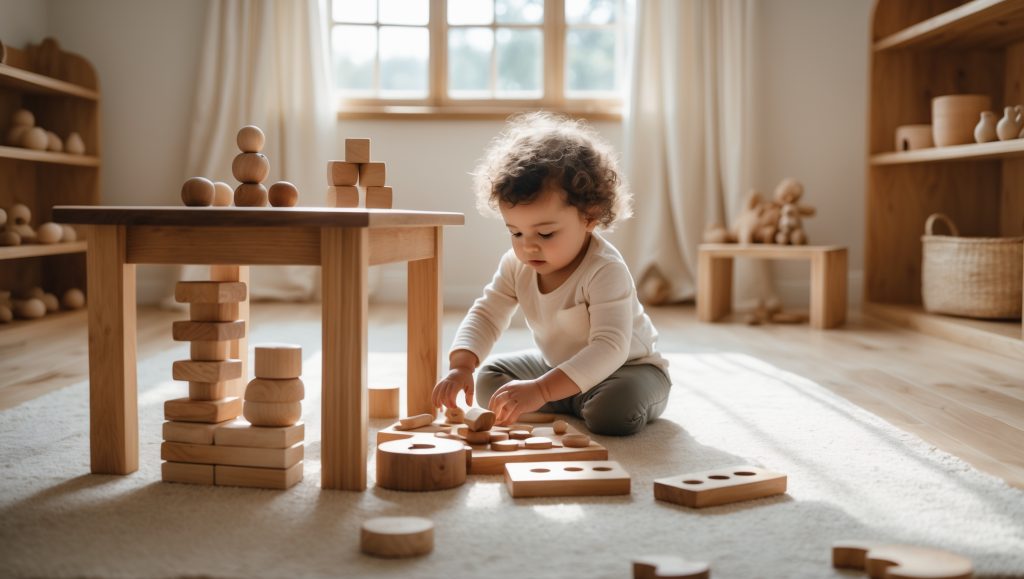
Introduction
Parenting in 2025 brings an ever-growing array of choices when it comes to supporting your child’s learning and development. Amidst the sea of toys on the market, Montessori toys have stood out for decades as a foundational approach that champions independence, curiosity, and hands-on discovery. But what truly makes a toy “Montessori,” and how can families integrate these principles into playtime at home? This in-depth guide will demystify Montessori toys, explain their unique benefits, provide age-based recommendations, and share practical advice for nurturing your child’s growth through purposeful play.
What Are Montessori Toys?
Montessori toys are inspired by the educational philosophy of Dr. Maria Montessori, an Italian physician and educator who emphasized child-led, hands-on learning. These toys are thoughtfully designed to:
- Encourage active, self-directed engagement
- Promote independence and problem-solving skills
- Use natural materials and simple, uncluttered designs
- Offer one clear purpose at a time, avoiding distractions
- Support developmentally appropriate challenges
Instead of flashing lights or electronic sounds, Montessori toys invite children to explore, manipulate, and learn at their own pace. Examples include stacking blocks, shape sorters, puzzles, wooden animals, child-sized kitchen tools, and practical life materials.
Key Benefits of Montessori Toys
Research and decades of observation in Montessori classrooms have highlighted several core benefits of integrating Montessori toys into children’s routines:
Fostering Independence
Montessori toys empower children to make choices, solve problems, and complete tasks on their own. This builds confidence and a sense of capability, which are crucial for lifelong learning.
Supporting Concentration
Because these toys are designed with a single purpose, they help children focus deeply on the task at hand without unnecessary distractions. This ability to concentrate is a foundational skill for academic and personal success.
Encouraging Fine and Gross Motor Skills
Whether threading beads, transferring objects with tongs, or building towers, Montessori toys offer opportunities for children to refine their hand-eye coordination and muscle control in ways that feel natural and enjoyable.
Promoting Logical Thinking and Problem-Solving
By presenting just the right level of challenge, Montessori toys prompt children to think critically and persist in finding solutions—skills that are valuable both in school and in life.
Age-Based Montessori Toy Recommendations
Choosing the right toys for your child’s stage is key to maximizing the benefits of Montessori play. Here’s a breakdown of age-based suggestions:
Infants (0–12 months)
- Grasping toys: Simple wooden rings, interlocking discs, and grasping beads support early motor development.
- Mobiles: High-contrast or black-and-white mobiles stimulate visual tracking and focus.
- Soft rattles: Encourage cause-and-effect exploration and auditory awareness.
Toddlers (1–3 years)
- Stacking and nesting toys: Blocks, cups, and rings develop coordination and spatial awareness.
- Shape sorters and puzzles: Support problem-solving and fine motor skills.
- Practical life tools: Child-sized pitchers, brooms, and spoons foster independence and imitation of daily routines.
Preschoolers (3–6 years)
- Lacing and threading sets: Promote precision and concentration.
- Sequencing and patterning toys: Strengthen logic and early math skills.
- Role-play and real-life materials: Miniature kitchen sets, gardening tools, and dress-up clothes encourage imaginative and practical learning.
Elementary Years (6+ years)
- Advanced puzzles and construction sets: Foster persistence and spatial reasoning.
- Science and nature kits: Support inquiry and hands-on discovery.
- Art and craft materials: Encourage creativity and fine motor refinement.
How to Create a Montessori Play Space at Home
You don’t need an entire classroom or expensive equipment to nurture Montessori principles at home. Here are some practical steps to get started:
1. Prioritize Quality Over Quantity
Fewer, better-chosen toys invite deeper engagement. Rotate toys every few weeks to maintain interest and avoid overwhelming your child.
2. Organize Toys on Open Shelves
Arrange toys neatly on low, accessible shelves. This allows children to choose activities independently and fosters a sense of order.
3. Choose Real, Functional Materials When Possible
Opt for child-safe versions of real tools (like small pitchers and dustpans) to help children participate in daily life. Natural materials such as wood, cotton, and metal provide rich sensory experiences.
4. Create Spaces That Encourage Focus
Keep play areas clutter-free, with one activity per tray or basket. This helps children concentrate and return toys to their place when finished.
5. Follow Your Child’s Interests
Observe what captivates your child and offer toys that build on those interests. Montessori philosophy respects that every child’s learning journey is unique.
Common Mistakes Parents Make with Montessori Toys
- Choosing toys that are too advanced or too simple for the child’s developmental stage, leading to frustration or boredom.
- Overloading the play space with too many toys at once, which can overwhelm children and reduce focus.
- Opting for Montessori-labeled toys that aren’t truly Montessori—some commercial options may not follow the core principles of simplicity, purpose, and independence.
- Intervening too quickly when a child struggles; allowing time for self-correction is crucial for learning and confidence.
- Neglecting practical life activities (like pouring, cleaning, or food preparation), which are central to Montessori but often overlooked in favor of academic toys.
- Using rewards or punishments to motivate play rather than trusting in the child’s natural curiosity and joy of discovery.
- Failing to rotate toys regularly, which can lead to decreased engagement and missed opportunities for skill-building.
Quick Checklist: Integrating Montessori Toys at Home
- Choose toys made of natural materials and with a clear, singular purpose.
- Match toys to your child’s current abilities and interests.
- Limit the number of toys available at one time; store extras for future rotation.
- Display toys on open, accessible shelves at your child’s eye level.
- Encourage independence by allowing children to select and return toys themselves.
- Incorporate practical life tools and activities into daily routines.
- Observe and adapt to your child’s evolving interests and skills.
FAQ
+Can I introduce Montessori toys even if my child attends a traditional daycare?
+Are Montessori toys only for toddlers and preschoolers?
+Do Montessori toys have to be expensive?
+What materials are preferred for Montessori toys?
+How often should I rotate Montessori toys?
+Are electronic toys ever considered Montessori?
+How do I know if a toy is truly Montessori-aligned?
Conclusion
Montessori toys offer families in 2025 a timeless, evidence-informed way to nurture children’s independence, curiosity, and joy of discovery. By understanding the principles behind these toys, choosing thoughtfully for your child’s stage, and creating environments that support focused, hands-on play, you can foster skills and confidence that last a lifetime. Remember, it’s not about having the most toys or the latest trends—it’s about inviting your child into meaningful, purposeful—and above all, joyful—learning every day.

Montessori Toys: A Guide to Purposeful Play and Learning for Children in 2025
Montessori toys continue to shine as essential tools for nurturing a child’s natural curiosity and independence. In 2025, the market offers an impressive array of thoughtfully designed toys, each crafted to support hands-on learning and self-discovery. These toys go beyond simple entertainment; they are built to help children develop fine motor skills, problem-solving abilities, and a sense of order—all while having fun.
Parents and educators across the US are increasingly drawn to Montessori principles because they respect each child’s unique pace and interests. Purposeful play is at the heart of Montessori, and the right toys encourage children to experiment, create, and learn through active engagement. Look for items made from natural materials with simple, open-ended designs, as these best align with Montessori values.
As we look ahead, Montessori toys are evolving with new technologies while retaining their core emphasis on tactile, real-world experiences. Choosing these toys means investing in a child’s confidence, independence, and lifelong love of learning—a gift that truly lasts beyond playtime.
- Encourages independent, hands-on exploration
- Supports cognitive and motor skill development
- Focuses on natural materials and open-ended play
- Adapts to each child’s interests and learning pace
Our living space is pretty limited and we do not have room for a large collection of toys. Could you suggest a basic set of Montessori toys that would cover the main developmental areas for a four-year-old without creating clutter?
It’s completely understandable to want to support your four-year-old’s development without overwhelming your space. Consider choosing a few versatile Montessori toys: 1) A set of wooden building blocks for creativity and fine motor skills, 2) Practical life tools like a child-sized pitcher and cups for pouring, 3) Simple puzzles or shape sorters for problem-solving, and 4) Art materials (crayons, child-safe scissors) for expression. Store toys in a small basket or on a low shelf, rotating them occasionally to keep things fresh. All items should be age-appropriate, non-toxic, and free from small parts that pose choking risks. This isn’t medical advice; if you’re concerned, check in with your pediatrician.
I’m wondering how Montessori toys can be incorporated into a daily routine if my child is already using a lot of traditional toys. Should there be a transition period, or can both types of toys be offered alongside each other?
It’s great that you’re thinking about how to support your child’s play and learning. You don’t need to switch all at once—it’s perfectly fine to offer Montessori toys alongside traditional ones. Try setting up a dedicated shelf with a few Montessori toys your child can choose from independently. Rotate toys every week to keep play fresh and engaging. Observe which toys your child is drawn to and how they interact with them, adjusting as needed. Just be sure that all toys are age-appropriate and safe, especially for younger children. This isn’t medical advice; if you’re concerned, check in with your pediatrician.
I noticed Montessori toys are often made from natural materials like wood, but some brands are pricier than others. Are there any budget-friendly options you recommend that still follow Montessori principles for a 2-year-old?
It’s great that you want to offer your 2-year-old Montessori-inspired toys while being mindful of the budget. Look for simple wooden blocks, stacking cups, and shape sorters—these encourage hands-on learning and can be found at various price points. Everyday household items like wooden spoons, cloths, or safe metal containers can also be used for sensory play, following Montessori principles. Always check that toys are age-appropriate (no small parts, non-toxic finishes, smooth edges) and supervise play. This isn’t medical advice; if you’re concerned, check in with your pediatrician.
How can parents set up a simple pretend play corner using just household items to promote the concentration and problem-solving skills mentioned in the article, without needing to purchase special Montessori toys?
Your interest in fostering concentration and problem-solving through pretend play is wonderful. Start by choosing a small, quiet area and add items like empty containers, wooden spoons, scarves, and safe kitchen tools for open-ended play. Arrange objects on low shelves or baskets so your child can access and tidy up independently. Rotate the materials every week to maintain interest and encourage exploration. For toddlers and preschoolers, keep safety in mind by avoiding small objects and supervising play. This isn’t medical advice; if you’re concerned, check in with your pediatrician.
Our living space is pretty limited and gets cluttered fast. Do you have tips for storing or rotating Montessori toys so my toddler does not get overwhelmed or bored with the same options every day?
It’s great that you’re thinking about your toddler’s environment and how clutter can impact their play and learning. Start by selecting just a few Montessori toys to display at a time (3–5 is usually plenty for toddlers), storing the rest in a bin or closet out of sight. Rotate the toys every week or two to keep things fresh and interesting. Use low shelves or baskets to keep toys within easy reach, and make sure everything is safe for your child’s age—check for small parts or choking hazards. Always supervise play, especially with new toys. This isn’t medical advice; if you’re concerned, check in with your pediatrician.
As my child gets older, should I adjust the frequency of our toy rotation? For example, do preschoolers benefit from a different schedule than infants when it comes to introducing new Montessori activities?
You’re thoughtful to consider your child’s changing needs as they grow. For infants, rotating toys every week or two helps keep things fresh without overwhelming them, since their attention spans are short. Preschoolers, however, often engage more deeply in play and can benefit from slightly less frequent rotations—try every two to four weeks, or whenever you notice their interest waning. Always choose toys that are safe for your child’s age, and supervise as needed. This isn’t medical advice; if you’re concerned, check in with your pediatrician.
Are Montessori toys effective or recommended for toddlers who have sensory sensitivities, especially those who might avoid certain textures or struggle with loud environments? I want to support my child’s growth but also honor their comfort levels.
You’re thoughtful to consider your toddler’s sensory needs while supporting their development. Montessori toys can be helpful because they often feature natural materials, simple designs, and quiet play—qualities that can be more comfortable for sensory-sensitive children. Start by offering toys with familiar or preferred textures and gradually introduce new materials, watching your child’s reactions. Avoid toys with strong smells, rough textures, or noisy features. Always supervise play, especially with small parts or when trying new items. This isn’t medical advice; if you’re concerned or notice intense reactions, check in with your pediatrician.
I am trying to stick to a budget for our toy purchases. Are there any Montessori-inspired toys or practical life materials you would especially recommend that give a lot of developmental value without a big price tag, especially when buying for two children?
It’s great that you’re looking for high-value, budget-friendly options for your children. Consider common household items like measuring cups, wooden spoons, or small pitchers for pouring practice—these encourage fine motor skills and independence and can be shared by siblings. Simple wooden blocks, stacking cups, or baskets for sorting objects offer open-ended play for various ages. Rotate materials to keep things interesting and involve your children in daily activities like folding laundry or watering plants for practical life learning. Always supervise young children with small objects and ensure materials are safe and age-appropriate. This isn’t medical advice; if you’re concerned, check in with your pediatrician.
How can I tell if a Montessori toy is too challenging or too simple for my four-year-old, especially since he gets frustrated easily with certain textures or multi-step tasks? Any signs I should watch for in his play?
It’s wonderful that you’re tuning in to your child’s unique needs during play. Watch if your four-year-old becomes quickly upset, avoids the toy, or asks for lots of help—these can mean it’s too challenging. If he breezes through the activity or quickly loses interest, it may be too simple. For kids sensitive to textures or complex steps, start with toys offering familiar, comfortable materials and single-step tasks, then gradually increase complexity as his confidence grows. Stay close to guide him, ensuring the toys have safe, non-toxic parts, especially if he still mouths objects. This isn’t medical advice; if you’re concerned, check in with your pediatrician.
We are a bilingual household and I’m curious how Montessori toys can be incorporated into our bedtime and naptime routines, especially if we want to reinforce both languages. Do you have suggestions for toys or activities that support this during those quiet moments before sleep?
It’s wonderful that you want to nurture both languages during calming routines. For pre-sleep moments, try soft Montessori-style picture cards or fabric books with simple words or short phrases in both languages—these encourage gentle conversation and vocabulary building without overstimulation. Use a cozy stacking or nesting toy and describe each piece in both languages as you put them away together. You might also introduce a soft, tactile object (like a sensory ball) and whisper descriptive words in both languages as your child explores it. Always supervise with small parts and choose age-appropriate, safe materials. This isn’t medical advice; if you have concerns, please consult your pediatrician.
When introducing Montessori toys to a toddler who resists bedtime and seems overstimulated at night, are there specific types or materials you’d recommend avoiding to help create a calmer evening routine?
You’re thoughtful to consider how toys might affect your toddler’s bedtime routine. Try to avoid Montessori toys with bright lights, loud sounds, or highly stimulating features in the evening, as these can make winding down harder. Opt for simple, soft-textured materials like natural wood or fabric, and choose activities that involve gentle movement or quiet manipulation (like stacking or sorting). Keep playtime calm and brief before bed, and always supervise toddlers with small parts. This isn’t medical advice; if you’re concerned, check in with your pediatrician.
As a parent just starting daycare for my 1-year-old, I wonder how I can balance the Montessori toys recommended here with the more traditional or battery-operated toys my daycare uses. Is it confusing for a child to play with different types of toys at home and at daycare?
It’s completely normal to wonder about consistency between home and daycare toys. Most 1-year-olds can easily explore both Montessori and traditional toys without confusion. At home, you might offer a few open-ended Montessori toys and rotate them to keep things interesting. Let your child freely explore the toys at daycare, as this variety can support flexibility and learning. Make sure any toys at home are safe for your child’s age, avoiding small parts and checking for sturdy construction. Children adapt well, and experiencing different toys can help them build new skills. This isn’t medical advice; if you have concerns about your child’s adjustment, check in with your pediatrician.
My 1-year-old has just started daycare, and I worry about safety with smaller Montessori items like beads or interlocking discs. Are there certain Montessori toys you recommend steering clear of at this age, especially if siblings or other children are around?
It’s completely natural to feel cautious about safety, especially with small toys and a young child. For 1-year-olds, it’s best to avoid Montessori items with small parts like beads, coins, or interlocking discs—these can pose choking hazards. Instead, choose larger items such as chunky wooden blocks, large grasping rings, and soft fabric toys. Supervise playtime closely, especially if older siblings have access to smaller pieces. Always check toys for loose parts or damage before use. This isn’t medical advice; if you’re concerned, check in with your pediatrician.
When it comes to balancing Montessori toys and screen time for a 4-year-old, are there recommended daily or weekly guidelines for how much time should be devoted to hands-on play versus watching educational shows?
It’s great that you’re thinking carefully about balancing hands-on play and screen time for your 4-year-old. For this age, most child development experts recommend prioritizing interactive, hands-on activities like Montessori toys, aiming for several hours of active play each day. Screen time, even for educational shows, is best limited to around 1 hour per day and should be supervised. Make sure toys are safe—avoid small parts and check for sturdy construction. Remember, every child is different; follow your child’s cues and family routines. This isn’t medical advice; if you’re concerned, check in with your pediatrician.
If my budget is tight, are there any everyday household items that align with Montessori principles that I can use for purposeful play instead of buying new toys? I want to make sure my 16-month-old gets the developmental benefits described in your article.
It’s wonderful that you’re looking to support your toddler’s development, even on a budget. For a 16-month-old, many everyday items can offer rich Montessori-style experiences: 1) Let your child practice pouring water between small cups under supervision; 2) Offer wooden spoons, measuring cups, or safe containers for stacking and sorting; 3) Fill a basket with safe household objects of different textures for sensory exploration; 4) Encourage simple self-care tasks like wiping a table with a small cloth. Always supervise closely and check items for choking hazards or sharp edges. This isn’t medical advice; if you’re concerned, check in with your pediatrician.
How would you recommend adjusting Montessori toy choices if my child seems to lose interest in stacking blocks and puzzles quickly? Are there ways to maintain engagement if their focus shifts often?
It’s understandable to feel concerned when your child’s interest in toys changes quickly. Try rotating toys, offering just a few at a time and swapping them out each week to keep things fresh. Observe what activities your child naturally gravitates toward—perhaps they prefer sensory play, pretend play, or movement-based toys instead of puzzles or stacking blocks. You might also vary the materials or textures, such as using wooden, fabric, or silicone toys, and involve your child in setting up play areas. Make sure toys are age-appropriate and safe, with no small parts for younger children. This isn’t medical advice; if you’re concerned, check in with your pediatrician.
Since my twins are rarely tired at the same time, is it okay to introduce Montessori toys meant for older infants to one while the other is still a bit younger developmentally? How much should I worry about age-specific recommendations?
It’s completely understandable to want both your twins engaged, even if they are at different stages. You can introduce Montessori toys to the more developmentally ready twin, but supervise closely if the other is nearby. Make sure the toys have no small parts or choking hazards if either twin is under 12 months. Offer age-appropriate options for the younger twin and rotate toys as they grow. Age recommendations are helpful, but every child develops at their own pace—just follow their cues and prioritize safety. This isn’t medical advice; if you’re concerned, check in with your pediatrician.
How can I safely store wooden Montessori toys in a small living area to prevent tripping hazards while still keeping them accessible for independent play?
It’s great that you’re thinking about both safety and independent play in your small space. Try using low, open baskets or shallow bins to group similar wooden toys together; keep these on a single shelf at your child’s eye level for easy access. Rotate out a few toys each week to limit clutter and keep play fresh, storing extras out of reach. After play, encourage your child to return toys to their spot as part of their routine. Make sure baskets have smooth edges and are sturdy so little fingers stay safe. This isn’t medical advice; if you’re concerned, check in with your pediatrician.
I noticed you recommend age-based Montessori toys, but my child is nearly three and seems ahead in some skills. Should I adjust the travel kit to include toys for older ages, or is it best to stick with those designed for two-year-olds?
It’s great that you recognize your child’s unique development and want to support it. You can include a mix of toys: offer some designed for two-year-olds for comfort and success, and introduce a few that are typically for three-year-olds to gently challenge new skills. Watch closely to ensure the toys are safe—avoid small parts that could be a choking hazard, and supervise closely, especially with travel toys. Adapt as you see your child engage; their interest and ability will help guide you. This isn’t medical advice; if you’re concerned, check in with your pediatrician.
If my child is highly sensitive to noise and textures, which types of household items work best for Montessori pretend play that is calming and not overstimulating?
It’s great that you’re seeking ways to support your sensitive child’s play. For calming Montessori-inspired pretend play, try using soft cloths, wooden spoons, and fabric baskets, as these are gentle on the senses and quiet when handled. Plain cotton napkins or smooth scarves can become capes or doll blankets. Felted wool balls or simple wooden blocks are soothing to touch and don’t make loud noises. Always supervise to ensure safety, especially with small items. Each child’s sensitivities are unique, so observe what feels comfortable for your child. This isn’t medical advice; if you’re concerned, check in with your pediatrician.
Is it okay to mix Montessori toys with more traditional toys that have lights or sounds, or does that confuse the benefits you described in your article?
It’s understandable to want to give your child a variety of play experiences. You can absolutely mix Montessori toys with traditional toys that have lights or sounds, as long as you pay attention to your child’s reactions and interests. Try setting up a calm space with Montessori toys for focused, hands-on play, and offer traditional toys during other parts of the day. For babies and toddlers, limit noisy or flashing toys so they don’t become overwhelming or distracting. Always supervise play and check for age-appropriate safety features. This isn’t medical advice; if you’re concerned, check in with your pediatrician.
How often should I rotate the Montessori toys available to my toddler to keep her engaged? Is there an ideal number of toys to have out at once for a 3-year-old?
It’s great that you’re thinking about how to keep your toddler engaged and support her development. For a 3-year-old, offering around 6 to 8 Montessori-style toys at a time works well—this supports focus without overwhelming her. Try rotating toys every 1 to 2 weeks, or whenever you notice she’s losing interest. When you introduce new items, observe which ones spark curiosity and remove those she’s outgrown or mastered. Always prioritize age-appropriate, safe toys, and supervise play to ensure safety. This isn’t medical advice; if you’re concerned, check in with your pediatrician.
Is it better to bring several smaller Montessori toys or focus on one versatile item when traveling with a toddler, and how do I decide which ones truly support independent play in a new setting?
It makes sense to want the right toys for travel with your toddler. Consider packing one or two versatile Montessori toys—like stacking cups or a busy board—that offer open-ended play and can be used in different ways. Choose items with no small parts to reduce choking risks and avoid anything too bulky. Observe what your child enjoys most at home—familiar favorites often ease transitions and encourage independent play in new places. Above all, keep safety in mind and supervise use in unfamiliar environments. This isn’t medical advice; if you’re concerned, check in with your pediatrician.
Do you have any advice for parents of children with sensory sensitivities on choosing Montessori toys, given that some are made from different materials or have specific textures? Are there certain guidelines to follow?
It’s thoughtful of you to consider your child’s sensory sensitivities when choosing Montessori toys. Start by observing which textures and materials your child seeks out or avoids, and select toys that feel comfortable and familiar. Introduce new materials one at a time, always watching for signs of discomfort. Choose toys with smooth, natural finishes—untreated wood or soft fabrics are often well-tolerated—avoiding rough, scratchy, or strongly scented items. For safety, check that toys are non-toxic and free from small parts if your child is young. This isn’t medical advice; if you’re concerned, check in with your pediatrician.
Do you have any advice for adjusting the Montessori toy recommendations for a 13-month-old who is more interested in throwing and banging objects than sorting or stacking? I want to support her play while keeping things purposeful as you describe.
It’s completely normal for a 13-month-old to explore toys by throwing and banging—they’re learning about cause and effect and testing their strength. Try offering safe, sturdy objects like soft balls, lightweight wooden blocks, or silicone stacking cups that can withstand being tossed or tapped. You can set up a soft basket or box as a gentle target for throwing, turning it into a game. Drumming on safe surfaces like a play drum or a cushion is also purposeful and enjoyable at this age. Always supervise closely to ensure safety, avoid toys with small parts, and remember that this stage is a healthy part of development. This isn’t medical advice; if you’re concerned, check in with your pediatrician.
Could you explain how to balance introducing practical life Montessori materials at home when my 1-year-old is already doing some activities at daycare? I want to avoid overwhelming her but still reinforce those skills.
It’s wonderful that you want to support your 1-year-old’s learning both at home and daycare. To keep things balanced, choose just one or two practical life activities she enjoys at daycare and offer similar ones at home, like simple pouring or wiping. Keep sessions short—5-10 minutes is enough at this age. Follow her lead: if she shows interest, join in, but if she’s tired or frustrated, pause and try another time. Use safe, child-sized materials and always supervise closely. Remember, repetition is helpful, not boring, for young children. This isn’t medical advice; if you’re concerned, check in with your pediatrician.
Budget is a concern for us. Are there simple household items or DIY alternatives you recommend for introducing Montessori-inspired play and coordination practice during meals for a 10-month-old, rather than buying specialized toys?
It’s wonderful that you’re looking for budget-friendly ways to support your baby’s development. For meal-time coordination, you can offer safe, easily graspable spoons or silicone spatulas for your baby to practice handling. Small cups (not breakable), soft washcloths for wiping, or even large pasta shells (under supervision) can encourage fine motor skills. Let your baby try picking up soft, well-cooked foods with their fingers. Always supervise closely at this age to prevent choking hazards. This isn’t medical advice; if you’re concerned, check in with your pediatrician.
How do Montessori toys compare to regular quiet time activities like coloring or sticker books when it comes to fostering independence and concentration during those early hours before breakfast?
You’re mindful about encouraging independence and focus during those quiet morning hours. Montessori toys are designed for hands-on, self-directed play, which can often foster deeper concentration and autonomy than typical quiet time activities like coloring or sticker books. Try laying out one or two Montessori materials for your child to choose from, encourage them to complete simple tasks (like stacking or sorting), and observe their engagement. Rotate toys to keep interest fresh. For toddlers and preschoolers, ensure toys are safe, age-appropriate, and free from small parts. This isn’t medical advice; if you’re concerned, check in with your pediatrician.
Montessori toys can be an investment, and with a little one making constant messes at mealtime, I worry about durability and easy cleaning. Are there more budget-friendly materials or alternatives that still fit the Montessori approach for this age?
Your concern about finding durable, easy-to-clean Montessori options on a budget is very understandable. Try looking for toys made from unfinished wood or food-grade silicone, which can be wiped down easily and often cost less than branded Montessori sets. Everyday household items—like measuring cups, wooden spoons, or cloth napkins—can also support Montessori principles through real-life play and sensory exploration. For babies and toddlers, always check for smooth edges and avoid small parts to prevent choking. This isn’t medical advice; if you’re concerned, check in with your pediatrician.
My toddler sometimes gets overwhelmed by new toys. Is there a particular way to introduce Montessori toys so they feel inviting and not overstimulating for sensitive children?
It’s completely understandable to want your toddler to feel comfortable and not overwhelmed by new toys. Try introducing one Montessori toy at a time, placing it on a low shelf within easy reach instead of a crowded toy box. Demonstrate how to use the toy slowly and simply, then let your child explore at their own pace. Keep the play space calm and uncluttered, and rotate toys every few weeks to maintain interest without overstimulation. Always supervise for safety, especially with small parts or new materials. This isn’t medical advice; if you’re concerned, check in with your pediatrician.
Is it okay to adjust the Montessori toy recommendations for different ages if my child seems to be advancing more quickly, or should I stick closely to the suggested ranges in the article?
It’s great that you’re tuning in to your child’s unique developmental pace. You can thoughtfully introduce Montessori toys from older age ranges if your child shows readiness, but always ensure the toy is safe—watch out for small parts, sharp edges, or materials that aren’t suitable for your child’s age. Start by observing your child’s interest and abilities, then introduce new toys gradually while supervising play. It’s also helpful to rotate toys to match their evolving skills and keep playtime engaging. This isn’t medical advice; if you’re unsure about a toy’s appropriateness, check in with your pediatrician.
My toddler tends to put everything in their mouth, and I am worried about safety with wooden Montessori toys. What should I look for to ensure the toys are safe, especially when buying on a budget?
You’re absolutely right to prioritize safety when your toddler is still mouthing objects. First, choose wooden toys labeled as non-toxic and free from small detachable parts that could be a choking hazard. Next, check that paints and finishes are water-based and food-grade, which is safer if mouthed. Avoid toys with sharp edges or splinters by running your hand over surfaces before use. Supervise play, especially with new toys, and inspect them regularly for wear. This isn’t medical advice; if you’re concerned, check in with your pediatrician.
I love the idea of practical life materials and child-sized kitchen tools in Montessori play, but I worry about the potential for small parts. Are brands that label their toys as ‘Montessori’ generally following US safety standards for young children?
It’s completely natural to be cautious about small parts and toy safety for your child. While many reputable Montessori brands aim to meet US safety standards, labeling a toy as ‘Montessori’ does not guarantee compliance. Always check for ASTM or CPSC safety certifications, review age recommendations, and inspect toys for secure, non-detachable parts. For very young children, avoid anything that could pose a choking hazard and supervise during play with kitchen tools. This isn’t medical advice; if you’re concerned, check in with your pediatrician.
For families on a tight budget, do you have suggestions for affordable Montessori toys or homemade alternatives that still support hands-on learning during travel?
It’s great that you want to support hands-on learning, even while traveling and on a budget. You can create simple Montessori-inspired travel toys using common household items. For example, fill a small container with clothespins for your child to clip on and off, or make sensory bags with ziplock bags, dried beans, and tape for safety. DIY threading activities with large beads or pasta and a shoelace work well for toddlers, but supervise closely to avoid choking hazards. Sorting colored buttons or coins into muffin tins can also encourage fine motor skills. Always choose age-appropriate items and avoid small parts for children under three. This isn’t medical advice; if you’re concerned, check in with your pediatrician.
Do you have any advice on keeping Montessori toys organized, especially in smaller spaces? We sometimes end up with lots of little pieces all over the place by the end of the day.
It’s understandable to feel overwhelmed when small Montessori toy pieces scatter everywhere, especially in a compact living area. Try rotating toys weekly so only a few are out at once, making cleanup more manageable. Use shallow baskets or trays on low shelves so your child can easily see and return items themselves—this builds independence and order. Label containers with pictures or words, and guide your child to clean up together as a routine. Always check that small pieces stay out of reach if you have little ones under three to prevent choking hazards. This isn’t medical advice; if you’re concerned, check in with your pediatrician.
I noticed you recommend simple wooden toys with one purpose. How do I know if a toy is still developmentally appropriate as my child gets closer to 18 months, or should I plan to swap out toys more often during this stage?
You’re thoughtful to consider your child’s changing needs as they grow. Around 18 months, children’s skills develop quickly, so watch for signs like boredom or frustration with a toy—these suggest it may no longer match their abilities. Offer toys that encourage new skills, such as stacking, sorting, or simple pretend play. Rotate toys every couple of weeks to keep your child engaged, and always check for safety, like choking hazards or loose parts. If you’re unsure about a specific toy’s suitability, observing how your child interacts with it is helpful. This isn’t medical advice; if you’re concerned, check in with your pediatrician.
Montessori toys made from wood and natural materials tend to be more expensive than typical plastic toys. Do you have suggestions for families on a budget who still want to offer purposeful Montessori play at home?
It’s wonderful that you want to provide meaningful Montessori play experiences while being mindful of your budget. Start by making simple homemade toys from safe household items, like wooden spoons, fabric scraps, or cardboard boxes for sorting and stacking. Visit thrift stores or swap gently used toys with other families to find affordable natural materials. Focus on offering fewer toys but rotate them, emphasizing quality and purposeful use over quantity. Always check for age-appropriateness, smooth finishes, and avoid small parts for little ones. This isn’t medical advice; if you have concerns, please ask your pediatrician.
My daughter is easily overstimulated by bright colors and noises. Are Montessori toys better suited for babies with sensory sensitivities, or do I need to adapt the environment in other ways too?
You’re thoughtful to notice your daughter’s sensitivities and want to support her playtime. Montessori toys are often designed with muted colors and simple, natural materials, which can help minimize overstimulation. Start by choosing toys made of wood or fabric, with gentle textures and no electronic sounds. Limit the number of toys out at once to reduce visual clutter. Make sure your play area is calm, with soft lighting and few distractions. Always supervise play to ensure safety, especially with young babies. This isn’t medical advice; if you’re concerned, check in with your pediatrician.
What is the best way to safely clean wooden Montessori toys, especially those my toddler might put in his mouth frequently?
It’s great that you’re keeping your toddler’s toys clean and safe. For wooden Montessori toys, use a damp cloth with mild soap and water to wipe them down—avoid soaking, as excess moisture can damage wood. Rinse the cloth and wipe again to remove soap residue. Let toys air dry thoroughly before your child plays with them. Skip harsh cleaners or disinfectants, which can leave residues unsafe for mouthing. Always check for splinters or chips before and after cleaning. This isn’t medical advice; if you’re concerned, check in with your pediatrician.
Does using non-traditional or homemade items for pretend play, like measuring cups or cardboard boxes, offer similar developmental benefits as classic Montessori toys?
Your interest in supporting your child’s development through play is wonderful. Using non-traditional or homemade items like measuring cups or cardboard boxes can absolutely offer similar benefits to classic Montessori toys—they encourage creativity, problem-solving, and independence. Try offering items with different shapes and textures, guiding your child to use them safely (especially with small parts or sharp edges), and letting your child lead the play. Always supervise younger children closely to prevent choking or injury. These experiences can be just as enriching as store-bought toys. This isn’t medical advice; if you’re concerned, check in with your pediatrician.
When it comes to bedtime routines, I notice my toddler gets especially attached to certain Montessori toys at night and resists putting them away. Is it helpful or harmful to let them play with these toys right up until sleep, or should we have a wind-down period without toys beforehand?
You’re not alone—many toddlers become attached to familiar toys at bedtime. To support restful sleep, try setting a gentle routine: gradually transition from active play to quieter activities about 20–30 minutes before bed. You might offer a favorite soft toy for comfort, but put away stimulating or noisy Montessori items. Replace play with calming activities like stories, cuddles, or soft music in a dim room. This helps their bodies and minds signal it’s time to rest. For toddlers, a consistent wind-down routine is both reassuring and developmentally appropriate. This isn’t medical advice; if you’re concerned, check in with your pediatrician.
Is there a way to adapt Montessori toy principles when introducing iron-rich cereals versus purees, especially for babies just starting solids? I am curious whether one option is more supportive of independent eating or concentration during mealtime.
It’s great that you’re thinking about how to support your baby’s independence with solids. To apply Montessori principles, offer iron-rich cereals or purees in a way that encourages self-feeding: 1. Use a shallow bowl and a baby-sized spoon or let your baby use their hands, allowing exploration of textures. 2. Place small portions within easy reach to avoid overwhelm. 3. Create a calm, distraction-free eating space so your baby can focus. Both cereals and purees can support independent eating if presented this way, but soft, scoopable cereals may encourage more active participation for some babies. Always supervise closely and ensure foods are safe for your baby’s stage. This isn’t medical advice; if you’re concerned, check in with your pediatrician.
I see that Montessori toys tend to avoid electronics and flashy features, but are there ever instances when technology-based toys can align with Montessori principles, especially as children get older and more digitally engaged?
You’re thoughtful to consider how technology fits with Montessori principles as your child grows. While traditional Montessori toys focus on hands-on, sensory play, some digital tools can align with Montessori values if they encourage active learning rather than passive screen time. For older children, look for apps or devices that promote creativity, problem-solving, and real-world application, rather than just entertainment. Set time limits and ensure adult supervision, especially for younger children. Always prioritize age-appropriate content and ensure digital tools don’t replace tactile, real-life experiences. This isn’t medical advice; if you’re concerned, check in with your pediatrician.
I see the article recommends stacking blocks and simple puzzles for infants. Would you recommend presenting these types of toys right before meals to help ease transitions for a baby who struggles with sitting still at the table?
It’s great that you’re looking for ways to make mealtimes smoother for your baby. You might try offering stacking blocks or simple puzzles a few minutes before meals, but keep them away during actual eating to avoid choking hazards or distraction. Use these toys as a short, calming activity to help your baby transition from play to mealtime. Keep playtime brief and signal mealtime clearly, such as with a gentle verbal cue or handwashing routine. Always supervise closely, especially with infants, to keep play safe. This isn’t medical advice; if you’re concerned, check in with your pediatrician.
My toddler seems to get frustrated when using tongs for transferring activities. Should I offer easier tools first, or is it better to keep practicing with the tongs to build up her fine motor skills?
It’s understandable to want your toddler to enjoy these activities without feeling overwhelmed. You can absolutely offer easier tools first, such as small spoons or scoops, to help her build confidence and hand strength. Gradually introduce tongs again when she seems more comfortable. Keep the activity fun and frustration-free by using lightweight, easy-to-grasp objects, and stay nearby to encourage her efforts. Always supervise closely, and choose materials that are safe and age-appropriate to prevent choking. This isn’t medical advice; if you’re concerned, check in with your pediatrician.
I noticed you mentioned age-based recommendations. If my child seems ahead physically but not as much with focus or patience, should I choose toys based on her motor skills or stick with her age range for Montessori suggestions?
You’re thoughtful to consider your child’s unique strengths when choosing toys. For Montessori toys, it’s generally safest to follow the age guidelines since they account for not just motor skills, but also attention span, patience, and safety (like small pieces or choking hazards). You can look for toys that offer some physical challenge but still match her developmental level for focus. Try introducing one new toy at a time, observing how she engages, and adjusting if she seems frustrated or bored. Always supervise play, especially if using toys for older ages. This isn’t medical advice; if you’re concerned, check in with your pediatrician.
With limited storage space in our apartment, how can I rotate or organize Montessori toys, so playtime stays fresh and clutter-free but also developmentally appropriate for a three-year-old?
It makes sense to want a tidy space while still supporting your child’s growth. Try sorting toys into a few small bins or boxes by skill (like fine motor or pretend play) and keep only 4–6 items out at a time. Swap toys every week or two to keep things interesting, and store the rest out of sight. Involve your child in putting toys away to teach responsibility. Choose simple, sturdy toys without small parts, and always supervise at this age. This isn’t medical advice; if you have concerns, check with your pediatrician.
How can I introduce Montessori-style toys at home for a preschooler who is very particular about what feels comfortable to touch? Are there materials or types of wood that are generally better tolerated by sensory-sensitive children?
It’s wonderful that you want to support your preschooler’s sensory needs with Montessori-style toys. Start by observing which textures your child already prefers and choose toys made from smooth, untreated woods like maple or beech, which are often less irritating to sensitive skin. Offer one new toy at a time and let your child explore it at their own pace, using gentle supervision. Avoid toys with rough surfaces, splinters, or strong smells, and steer clear of small parts if your child is still mouthing objects. Remember, this isn’t medical advice; if sensory sensitivities seem overwhelming or persistent, check in with your pediatrician or an occupational therapist.
The article mentions using natural materials for Montessori toys, but I worry about toddlers accidentally mouthing or throwing wooden items while I’m busy with the baby. Are there specific safety guidelines or brands you recommend for households with both toddlers and infants?
It’s completely understandable to worry about your toddler’s safety, especially with an infant in the house. First, always choose Montessori toys labeled as non-toxic, made with lead-free paint, and designed for children under three—these are less likely to have small parts or sharp edges. Supervise playtime whenever possible, and rotate toys so only a few are out at a time to reduce clutter and risk. Store toys for older children out of infants’ reach. Soft, lightweight wooden toys can minimize injury from throwing. This isn’t medical advice; if you’re concerned, check in with your pediatrician.
If I want to reduce the number of toys we keep at home without compromising on engagement, how many Montessori toys do you typically recommend having available at once for a toddler?
It’s great that you want to keep your home calm and engaging for your toddler. For Montessori-inspired play, having about 6 to 8 toys out at once is usually ideal for toddlers. Rotate the toys every week or so to keep things interesting and support focused play. Choose toys that match your child’s current interests and developmental stage, and make sure each is safe, with no small parts or choking hazards. Keep the rest stored away, out of sight. This isn’t medical advice; if you’re concerned, check in with your pediatrician.
My child has some sensory sensitivities and prefers softer textures over wooden or metal toys. Are there Montessori-inspired options that use alternative materials while still supporting fine-motor development and independence?
It’s understandable to want toys that meet your child’s sensory needs while still encouraging their growth. For Montessori-inspired play, consider fabric or silicone stacking toys, soft felt puzzles, and cloth buttoning or zipping boards. Sensory bins with soft items like cotton balls or silk scarves can also promote fine-motor skills in a gentle way. Always supervise young children and check for loose parts or potential allergens. This isn’t medical advice; if you’re concerned, check in with your pediatrician.
Do you have tips for managing storage and organization of practical life Montessori materials, such as those used for potty training, so that my child can easily access them but our bathroom space stays neat and inviting?
It’s great that you want your child to feel independent while also keeping the bathroom tidy. Try using a low, open basket or caddy for items like training pants, wipes, and a clean change of clothes—place it within easy reach of your child but not blocking pathways. Limit the number of items available at once to avoid clutter. Use hooks at your child’s height for hand towels. Choose containers that are easy to clean and free of sharp edges. Supervise young children with toiletries and cleaning supplies. This isn’t medical advice; if you have concerns about your child’s readiness or setup, check in with your pediatrician.
My baby just turned 7 months and is starting to crawl and explore more. Are there any specific Montessori toys you recommend for this age that help with both fine and gross motor development?
It’s wonderful that your baby is eager to explore and move—this is a key stage for both fine and gross motor development. At 7 months, consider simple wooden grasping toys, soft balls, and object permanence boxes to encourage hand control and coordination. Low, sturdy push toys can motivate crawling and pulling up, while fabric baskets with safe everyday items let your baby practice picking up and transferring objects. Always supervise closely, choose toys without small parts or sharp edges, and be mindful of choking hazards. This isn’t medical advice; if you’re concerned, check in with your pediatrician.
How do Montessori toys compare to traditional electronic or talking toys when it comes to encouraging language development in toddlers with delays? I want to make sure playtime is both fun and supportive for my child’s needs.
Your care for supporting your child’s language development shines through in your question. Montessori toys tend to encourage open-ended play, inviting toddlers to explore, name objects, and use language creatively, while electronic or talking toys often limit responses to pre-recorded phrases. Try narrating play with your toddler, labeling objects and actions together, and choosing toys that match their developmental level and avoid choking hazards. Rotate toys to keep interest high and minimize distractions. Always supervise play, especially with small pieces. This isn’t medical advice; if you’re concerned, check in with your pediatrician.
I’m sometimes unsure whether a certain wooden toy is actually promoting purposeful play or just simple stacking. Are there specific features or qualities to look for to make sure a toy fits the Montessori approach?
It’s completely normal to want clarity on what makes a toy truly purposeful for your child’s learning. Look for toys that are simple, made from natural materials, and focus on one skill or concept at a time. Montessori-inspired toys should support hands-on exploration and problem-solving, like sorting by size or color, rather than just repetitive actions. Opt for toys that allow your child to use real-world motions—like pouring, lacing, or fitting shapes—at their developmental level. Always check that pieces are large enough to avoid choking hazards and have smooth, safe finishes. This isn’t medical advice; if you’re concerned, check in with your pediatrician.
My toddler is language delayed and gets frustrated with some traditional toys. Are there specific Montessori toys or activities you’d recommend to help encourage communication and interaction without overwhelming him? I’m looking for ideas that promote both play and language engagement at his own pace.
It’s wonderful that you want to support your toddler’s language growth in a gentle, engaging way. Try simple Montessori toys like picture cards with real-life images, which you can name together, or matching objects and cards to build vocabulary. Choose wooden animal or food figurines for pretend play, narrating actions as you go. Knobbed puzzles with clear, recognizable shapes can prompt conversation as you describe pieces. Always follow your child’s lead and keep sessions short to avoid frustration. Use toys without small parts and supervise closely. This isn’t medical advice; if you’re concerned, check in with your pediatrician.
I noticed you recommend natural materials, but some are pricier than plastic versions. Are there specific Montessori-style toys for toddlers that are both affordable and still follow the principles you describe?
It’s great that you’re looking for affordable Montessori-style options that still benefit your toddler. You can create simple sensory baskets with wooden spoons, cloth napkins, and metal measuring cups from your kitchen. Look for secondhand wooden puzzles or stacking toys at thrift stores or online marketplaces. DIY activities like sorting dried beans (with supervision for choking safety) or matching colored lids to containers also follow Montessori principles. Always check for smooth edges and non-toxic finishes. This isn’t medical advice; if you’re concerned, check in with your pediatrician.
Are there any Montessori-inspired toys or activities you’d recommend for children with strong sensory preferences or sensitivities? I occasionally care for a child who dislikes certain textures, so I want to choose toys that will encourage exploration but not overwhelm them.
It’s wonderful that you’re considering sensory needs when selecting toys. For children with strong sensory preferences or sensitivities, try offering simple wooden blocks, stacking cups, or fabric scarves in soft, consistent textures. Let the child explore at their own pace, and introduce one new texture at a time—always observing their reactions. Activities like sorting smooth stones or pouring dry rice (if age-appropriate and with close supervision to avoid choking hazards) can also be calming. Offer choices so the child feels in control. This isn’t medical advice; if you’re concerned, check in with your pediatrician.
I’d like to introduce Montessori toys, but my daughter gets upset by unexpected sounds and bright colors. Are there specific toys or play setups you suggest to minimize sensory overstimulation, while still supporting independent play and learning?
It’s understandable to want to support your daughter’s learning while respecting her sensitivities. Try choosing Montessori toys in muted, natural colors and made from wood or soft fabric, avoiding electronic or noisy features. Set up a calm, clutter-free play space with just a few toys out at a time, rotating them to keep interest without overwhelming her. Opt for simple stacking blocks, shape sorters, and textured balls, ensuring all pieces are large enough to avoid choking hazards. Always supervise play, especially with new materials. This isn’t medical advice; if you’re concerned, check in with your pediatrician.
Are there specific Montessori toy recommendations for toddlers with sensory sensitivities? My child seems bothered by certain textures and gets overwhelmed by too many choices during playtime.
It’s understandable to want playtime to feel comfortable and engaging for your sensory-sensitive toddler. Start by offering just one or two toys at a time to reduce overwhelm, choosing items with smooth, familiar textures like wooden stacking rings or cloth sensory balls. Watch how your child responds to different materials, and avoid toys with rough, scratchy, or sticky surfaces. Try simple, open-ended toys that don’t make noise or flash lights, such as soft blocks or nesting cups. Always supervise closely to ensure safety, especially if mouthing objects is common. This isn’t medical advice; if you’re concerned, check in with your pediatrician.
How do Montessori toys compare to traditional educational toys when it comes to long-term use? Are they versatile enough to still be engaging as my child grows, or should I plan for regular updates to our collection?
It’s completely natural to want your child’s toys to keep them engaged as they grow. Montessori toys are often designed with open-ended play in mind, which can support use across multiple ages and developmental stages. To maximize long-term engagement, choose toys that can be used in various ways as your child’s skills grow—like wooden blocks or puzzles that increase in complexity. Rotate toys to keep things fresh, and observe what interests emerge to guide future choices. Always check for age-appropriateness and safety as your child transitions to new stages. This isn’t medical advice; if you’re concerned, check in with your pediatrician.
Could you clarify how to adapt Montessori toy choices for a child who is easily overwhelmed by loud colors or certain textures? Are there calming options you would suggest for sensitive toddlers?
It’s understandable to want toys that won’t overwhelm your sensitive toddler. Choose Montessori toys in muted, natural colors and smooth, gentle materials like wood or soft fabric. Start with just one or two simple toys at a time, such as nesting cups or a wooden puzzle with large pieces, to avoid overstimulation. Always check for small parts and ensure items are age-appropriate and free from allergens. Observe your child’s reactions and remove anything that seems upsetting. This isn’t medical advice; if you’re concerned, check in with your pediatrician.
Since my one-year-old is having a hard time adjusting to the busy environment at daycare, would using Montessori toys at home help him focus or self-soothe? Or do you recommend certain types of Montessori toys that work best for children with sensory sensitivities in group care?
It’s understandable to want to support your one-year-old’s adjustment to daycare, especially with sensory sensitivities in mind. Using Montessori toys at home can help foster focus and self-soothing by providing familiar, calming activities. Start with simple, sensory-friendly toys such as soft wooden grasping toys, textured balls, or nesting cups—choose items that are safe for mouthing and easy to clean. Limit toys with loud sounds or flashing lights, and introduce just one or two items at a time to avoid overstimulation. Always supervise play at this age for safety. This isn’t medical advice; if you’re concerned, check in with your pediatrician.
Do you recommend any specific types of Montessori toys for families looking to create gentle, bilingual nap routines without relying on screens or electronics? I’m interested in calming activities that also encourage language exposure.
It’s wonderful that you’re seeking calming, screen-free ways to support your child’s language development during nap routines. For gentle bilingual exposure, try soft fabric books with simple words or images in both languages, reading them quietly together before naps. You can also introduce a set of Montessori-inspired picture cards or objects for quiet naming games, focusing on low-noise, tactile materials like wood or felt. Singing lullabies in both languages or softly repeating soothing phrases is another lovely, screen-free approach. Ensure all items are free of small parts and suitable for your child’s age. This isn’t medical advice; if you’re concerned, check in with your pediatrician.
Are there specific household objects that work just as well as store-bought Montessori toys for developing fine motor skills or independence in younger children, or are there certain categories I should focus on?
It’s great that you want to nurture your child’s fine motor skills and independence at home. Everyday items like wooden spoons, measuring cups, and small pitchers are wonderful for pouring, scooping, and transferring activities—just supervise closely and avoid glass or sharp edges. Letting your child practice with safe locks, large buttons, or Velcro fasteners builds dexterity and self-care skills. You can also offer cloths for wiping or sorting laundry by color. Always choose objects that are large enough to avoid choking hazards and suitable for your child’s age and abilities. This isn’t medical advice; if you’re concerned, check in with your pediatrician.
You talked about choosing toys with a single clear purpose. If I’m on a tight budget, would it still be beneficial to use multipurpose wooden toys, or does that go against Montessori principles?
You’re thoughtful to consider both your budget and your child’s development. Multipurpose wooden toys can still support Montessori principles if you focus on open-ended items like blocks or stacking rings, which invite exploration but are not overly distracting. Try presenting only one toy or activity at a time to encourage concentration. Watch for pieces that are safe for your child’s age—no small parts for infants and toddlers—and supervise play. Remember, the key is encouraging purposeful, focused play rather than having every toy serve only one function. This isn’t medical advice; if you have specific concerns, please consult your pediatrician.
We have limited floor space, so I am wondering if you have tips for organizing and storing Montessori toys in a small home without creating too much clutter. What are the essentials to keep out versus rotating in?
It’s understandable to want a tidy and functional play space, especially when floor space is tight. To keep things organized, choose just a few Montessori toys based on your child’s current interests and developmental stage—aim for 4 to 6 accessible at a time. Store the rest in labeled bins or baskets on shelves out of reach, rotating them every week or two to keep play fresh. Use low, open shelves to encourage independence and easy cleanup. Always check that stored items are safe and not a choking risk if your child is very young. This isn’t medical advice; if you’re concerned, check in with your pediatrician.
We have a limited bathroom space. Do you have advice on storing or rotating Montessori potty training materials so they stay accessible but do not overwhelm my 2.5-year-old?
It’s great that you want to keep your child’s potty training area both accessible and calm. Try using a small basket or low shelf to hold just one or two essential items, like a child-sized potty and wipes, within your child’s reach. Store extras like books or training pants elsewhere, rotating them in weekly to maintain interest. If space is tight, a wall hook for a step stool or a foldable potty seat can help. Always make sure items are stable and free from choking hazards. This isn’t medical advice; if you’re concerned, check in with your pediatrician.
When involving grandparents who might not be familiar with the Montessori approach, what are some simple ways to explain the importance of purposeful play, especially when they like gifting toys or foods from our culture?
It’s wonderful that you want to include grandparents and honor family traditions while supporting your child’s development. You might start by sharing that Montessori toys are chosen because they help children learn by doing, using real-life materials. Suggest picking toys made from natural materials, or cultural items that invite hands-on exploration, like wooden kitchen tools or musical instruments. If gifting foods, encourage options your child can safely touch, smell, or help prepare, checking for age-appropriate textures and no choking hazards. Gently explain that purposeful play helps children build independence and confidence. This isn’t medical advice; if you’re concerned, check in with your pediatrician.
In terms of daily routine, is it better to set up a specific Montessori playtime during the day or to leave toys out for self-directed play whenever my child feels like it?
It’s wonderful that you’re thinking carefully about your child’s daily play routine. For most children, a balance works best: consider setting up a regular Montessori playtime when your child is most alert, but also allow some toys to be accessible at other times for spontaneous, self-directed exploration. Offer a tidy, uncluttered space, and rotate toys so your child isn’t overwhelmed. Supervise younger children closely for safety, especially with small parts. Ultimately, observe how your child responds and adjust as needed. This isn’t medical advice; if you’re concerned, check in with your pediatrician.
We do not have a lot of space at home. How should I prioritize which Montessori toys to keep out and rotate for a two-year-old, so she gets the most benefit without our living room looking like a toy store?
It’s wonderful that you’re mindful about both your child’s development and your living space. For a two-year-old, focus on keeping out just a few toys at a time—choose those that support current interests or skills, like stacking, sorting, or simple puzzles. Store the rest out of sight and rotate them every couple of weeks to keep play fresh and engaging. Prioritize open-ended toys made from safe, non-toxic materials with no small parts. Involve your child in choosing what to play with to encourage independence. This isn’t medical advice; if you’re concerned, check in with your pediatrician.
Would you recommend Montessori toys for a child who is sensitive to textures or gets easily frustrated with puzzles and stacking blocks? Are there ways to adapt the activities for a sensory-sensitive toddler?
It’s understandable to want playtime to be positive and comfortable for your sensory-sensitive child. Start by choosing Montessori toys with smooth, familiar textures, avoiding rough or bumpy materials. Begin with simple, open-ended items like soft fabric baskets or wooden rings, and limit the number of pieces to prevent overwhelm. Offer activities at your child’s pace, stepping in with gentle guidance when needed, and celebrate small successes to build confidence. Always supervise closely, especially with new materials, and trust your child to signal what feels right. This isn’t medical advice; if you’re concerned, check in with your pediatrician.
I noticed you recommend natural materials for Montessori toys, but I’m on a tight budget and see a lot of plastic options. Are there affordable alternatives that still capture the Montessori spirit, or is it worth saving up for the wooden versions?
It’s understandable to want Montessori-inspired toys without stretching your budget. Focus on simple, functional toys that encourage open-ended play—plastic toys can still work if they’re sturdy, safe, and free of distracting lights and sounds. Look for secondhand wooden toys, or create DIY options using household items, like bowls and spoons for sorting. Always check for age-appropriateness and avoid small parts for young children. The goal is meaningful play, not the material itself. This isn’t medical advice; if you’re concerned, check in with your pediatrician.
How often should I rotate Montessori toys with my 7-month-old at home? Is there a recommended routine for keeping her interested without overwhelming her with too many choices at once?
It’s thoughtful of you to consider your baby’s engagement and avoid overstimulation. For a 7-month-old, aim to rotate Montessori toys every 1 to 2 weeks, watching how she interacts and adjusting if she loses interest or seems overwhelmed. Start by offering just 3 to 5 toys at a time on a low shelf or mat, so she can easily see and reach them. Observe which toys she uses most, and swap out less-used ones during rotations. Always choose toys that are safe for mouthing, without small parts or loose pieces. This isn’t medical advice; if you’re concerned, check in with your pediatrician.
Are Montessori-inspired toys from reputable brands in the US usually tested for choking hazards, or should parents double-check sizing themselves? I am sometimes unsure which products really follow safety standards for small children.
It is completely understandable to want reassurance about toy safety, especially for young children. Most reputable US brands do test Montessori-inspired toys for choking hazards and must follow federal safety standards, particularly for children under age three. However, because concerns and enforcement can vary, it is wise to double-check toy sizing yourself—look for small parts and use a toilet paper roll as a quick test: if it fits through, it may be a choking risk. Always supervise young children during play and read labels carefully for age recommendations. This isn’t medical advice; if you’re concerned, check in with your pediatrician.
Are there specific types of Montessori toys or materials that you would recommend avoiding for babies with a family history of allergies? I’m thinking of items like wool or certain kinds of wood and wanted to see if this is something to consider for a 9-month-old.
Your careful attention to potential allergens is so important, especially with a young baby. For a 9-month-old, it’s wise to avoid Montessori toys made from wool, untreated or scented woods, or any material that previously triggered reactions in your family. Opt for toys made from smooth, sealed hardwoods or food-grade silicone and check labels for paint or finish ingredients. Always supervise play, as babies this age explore by mouthing objects. If you’re unsure about a material, it’s best to skip it or consult your pediatrician. This isn’t medical advice; if you’re concerned, check in with your pediatrician.
Does the Montessori approach recommend prioritizing sustainably sourced wooden toys even if they might be more expensive than plastic ones, or is it acceptable to use high-quality plastic if it fits the family budget?
It makes sense to weigh both sustainability and your family budget when choosing toys. Montessori principles do value natural materials like wood for their sensory qualities and durability, but the main priority is that toys are simple, purposeful, and safe. If high-quality plastic options are more affordable, choose those with smooth, non-toxic finishes and minimal parts for younger children. Always check for age-appropriate safety standards and supervise play. This isn’t medical advice; if you have concerns, check in with your pediatrician.
Would you have any advice for parents who want to ensure that new Montessori toys are free from common allergens? For example, are there certifications or labels to look for when choosing materials suitable for infants who are just starting solids?
It’s great that you’re thinking about allergens and your baby’s safety. When choosing Montessori toys for infants, check for labels like “BPA-free,” “phthalate-free,” and “non-toxic paint”—these signal safer materials. Look for certifications such as ASTM, EN71, or CPSIA compliance, which cover safety and chemical standards. For wood toys, choose those labeled as unfinished or finished with food-grade oils to avoid potential allergens. Always avoid toys with small parts for infants and supervise play, especially when babies are mouthing objects. This isn’t medical advice; if you’re concerned about specific allergies, check in with your pediatrician.
Is it possible to combine Montessori toys with more traditional educational toys that might have lights or sounds, or does that undermine the Montessori benefits you describe in the article?
It’s thoughtful to consider how different toys might support your child’s development. You can combine Montessori toys with traditional toys that have lights or sounds, as long as you balance them thoughtfully. Try designating specific times for focused play with Montessori toys to encourage independence and concentration. Offer traditional toys in moderation, observing how your child responds—some children may find extra noise or lights overstimulating. For younger children, always supervise play and check that all toys are age-appropriate and safe. Remember, the goal is a mix that supports your child’s unique needs and interests. This isn’t medical advice; if you’re concerned, check in with your pediatrician.
Some Montessori toys use small pieces, which makes me a little nervous about choking hazards for my two-year-old. Do you have tips for choosing age-appropriate Montessori toys that are especially safe for younger toddlers?
It’s completely understandable to be concerned about choking hazards with small toy pieces for your toddler. For two-year-olds, choose Montessori toys labeled for 2+ years and always check that all parts are larger than your child’s mouth—generally, bigger than 1.25 inches in diameter. Opt for toys made from one solid piece or those with securely attached components. Supervise playtime, especially with new or unfamiliar toys. Inspect toys regularly for wear or loose parts, and avoid toys with detachable small pieces. This isn’t medical advice; if you’re concerned, check in with your pediatrician.
Since our living space is limited and we have to store toys for two young kids, are there particular types of Montessori toys that work well for both newborns and toddlers so we can minimize clutter? Any advice for rotating toys so both children stay interested?
It’s very thoughtful to prioritize both your children’s needs while keeping clutter down. Multi-age Montessori toys like stacking cups, wooden blocks, and simple musical instruments can engage both newborns (with supervision) and toddlers, as these encourage open-ended play and exploration. For safety, ensure all toys have no small parts and are made from non-toxic materials. To keep things fresh, try rotating toys every week or two—store some out of sight and swap them in periodically. Observe what interests each child and adjust the selection as they grow. This isn’t medical advice; if you have concerns about safety or development, please consult your pediatrician.
Are there Montessori-inspired toys for 3-year-olds that are especially good for winding down, instead of over-stimulating them? We sometimes find that some toys lead to more energy right before bed.
It’s understandable to want calming play options for your 3-year-old, especially at bedtime. Try Montessori-inspired toys like wooden puzzles with large pieces, simple threading beads, or soft fabric matching games, as these encourage quiet focus. Sensory bins with smooth stones or rice offer soothing tactile play—just supervise closely to prevent choking. Picture card sets for gentle storytelling can also help your child relax. Opt for toys without lights or sounds, as these can be overstimulating. This isn’t medical advice; if you’re concerned, check in with your pediatrician.
Since Montessori toys focus on natural materials, are there certain safety checks or brands you suggest to be sure the toys are non-toxic and sturdy for toddlers who still put things in their mouths?
It’s great that you want to keep your toddler safe while they explore Montessori toys. First, look for brands that clearly state their toys are made from non-toxic, lead-free paints and finishes. Second, check for certifications like ASTM or EN71, which indicate safety standards for children’s products. Third, inspect toys for small parts or loose pieces to avoid choking hazards, especially for under-threes. Fourth, choose toys made from solid wood rather than composites, as these are often sturdier and less likely to splinter. Always supervise toddlers during play. This isn’t medical advice; if you’re concerned, check in with your pediatrician.
I often see electronic toys advertised for toddlers, but you write that Montessori toys avoid lights and sounds. As a parent on a budget, are there any simple household items that can work as Montessori-friendly toys instead of buying new ones?
You’re thoughtful to look for meaningful play options without extra expense. Many household items can serve as Montessori-friendly toys: try sturdy wooden spoons, measuring cups, or nesting bowls for stacking and scooping. A small basket of safe, clean fabrics in different textures allows for gentle exploration. Simple puzzles can be made by cutting cardboard into shapes. For toddlers, always avoid choking hazards and supervise closely. The goal is to offer real, tactile objects that encourage independence. This isn’t medical advice; if you have safety concerns, check in with your pediatrician.
My child has some sensitivities to noise and textures, so I am careful about the toys we use. Are there Montessori-inspired toys or materials that help with potty training and are also a good fit for kids with sensory sensitivities?
It’s wonderful that you’re attentive to your child’s sensory needs during potty training. For Montessori-inspired options, consider soft, washable fabric training pants instead of crinkly or plastic types, and a simple, child-sized potty chair with smooth surfaces. You might use picture cards to guide routines, avoiding sound-making or rough materials. Let your child help with clean-up using gentle cloths, and offer plenty of time for hands-on practice at their own pace. Always supervise closely and watch for signs of discomfort. This isn’t medical advice; if you’re concerned, check in with your pediatrician.
I noticed you recommend practical life materials for infants. If I am worried about food allergies, are there particular sensory activities or toys that help make trying new foods less stressful for my baby?
It’s completely understandable to feel cautious about introducing new foods to your infant, especially with allergy concerns. Try sensory play with food-safe items like smooth silicone spoons, soft fabric napkins, or textured cups to help your baby explore mealtime tools without direct food exposure. You can also let your baby touch or smell new foods before tasting, always watching closely for reactions. Encouraging gentle, supervised play with non-allergenic foods like cooked carrot sticks or banana can build familiarity. Make sure all items are age-appropriate, avoiding small parts or choking hazards. This isn’t medical advice; if you’re concerned, check in with your pediatrician.
My child has a strong reaction to certain textures and sounds. Are there Montessori toys or materials you recommend for children with mild sensory sensitivities, or ways to adapt the play environment using Montessori principles?
It’s understandable to want to support your child’s comfort while encouraging learning through play. Montessori principles value respecting each child’s sensory needs. Start by choosing toys with gentle, consistent textures like smooth wood or soft fabric, and avoid items with rough surfaces or loud sounds. Offer a small selection of materials at a time to reduce overwhelm. You might also create a calm, clutter-free play space with soft lighting and minimal noise. Always supervise play to ensure safety, especially if your child mouths toys or explores with their hands. This isn’t medical advice; if sensitivities persist or worsen, check in with your pediatrician.
If my 3-year-old quickly loses interest in a new Montessori toy, does that mean it was not age-appropriate, or should I introduce it differently? How can I tell if a toy is too challenging versus not challenging enough for their current stage?
It’s completely normal to wonder why your 3-year-old might lose interest in a new toy so quickly. Try observing your child with the toy: if they seem frustrated or confused, it may be too challenging, while ignoring it after a quick glance might mean it’s too simple or not engaging. Reintroduce the toy by showing how it works through slow, simple demonstrations, and keep sessions short to match attention span. Watch for signs of enjoyment, focus, or repetition—these suggest the toy is a good fit. Make sure all toys are safe and sized appropriately for a 3-year-old. This isn’t medical advice; if you’re concerned, check in with your pediatrician.
When introducing Montessori kitchen tools to a baby who sometimes gets frustrated with new textures or the unpredictability of mealtimes, what strategies do you recommend to keep the experience positive and engaging for both of us?
It’s completely understandable to want mealtimes to feel calm and enjoyable for you and your baby. Start by introducing just one soft-edged, age-appropriate kitchen tool at a time, such as a silicone spoon or small cup. Let your baby explore the tool when they’re not hungry, so there’s less pressure. Offer foods with familiar textures at first, gradually adding new ones alongside favorites. Narrate what you’re doing and celebrate small efforts rather than focusing on outcomes. Always supervise closely, especially with any new item, to ensure safety. This isn’t medical advice; if you’re concerned, check in with your pediatrician.
My toddler tends to get overwhelmed by too many toys at once. Is it better to keep only a few Montessori toys out at a time, or rotate them regularly to support focus and independence?
It’s completely normal for toddlers to feel overwhelmed by too many choices. Limiting the number of Montessori toys available at one time helps support focus and independent play. Start by selecting 3–5 age-appropriate toys with different textures or skills, and store the rest out of sight. Every couple of weeks, gently rotate in new options based on your child’s interests and developmental stage. Always supervise to ensure toys are safe and suitable for your toddler’s age, avoiding small pieces. This isn’t medical advice; if you’re concerned, check in with your pediatrician.
How do Montessori toys fit for families living in smaller apartments with limited storage space? Are there certain types or multifunctional options that work best for toddlers in tight spaces?
You’re thoughtful to consider how Montessori toys can work in a smaller apartment. Opt for toys that are open-ended and multifunctional, like stacking blocks, nesting cups, or a single wooden shape sorter, which encourage a variety of play without taking up much space. Choose compact items that can be easily stored in bins or on shelves, and look for toys made from safe, durable materials that are suitable for toddler hands. Rotate toys every few weeks to keep play fresh while minimizing clutter. Always supervise play and check toys for small parts if your child is under three. This isn’t medical advice; if you’re concerned, check in with your pediatrician.
Can Montessori toys help with toddlers who seem easily distracted or sensitive to noise and bright colors? I’m wondering if the natural, simple design really makes a noticeable difference for children with sensory sensitivities.
You’re thoughtful to consider how your toddler’s environment might affect their focus and comfort. Montessori toys, with their natural materials and muted colors, are often helpful for children who are easily distracted or sensitive to noise and bright visuals. You might try introducing one toy at a time in a calm, uncluttered space, and observe how your child responds. Limit background noise and avoid toys with loud sounds or flashing lights. Always check toys for age-appropriate size and safe, non-toxic materials. Every child is unique, so give your toddler time to adjust. This isn’t medical advice; if you’re concerned, check in with your pediatrician.
How do Montessori toys compare to more traditional electronic educational toys in terms of keeping a young child focused during quiet solo playtime, especially early in the day?
It’s great that you’re thinking about what helps your child focus, especially during quiet times. Montessori toys, with their simple designs and hands-on materials, usually support deeper concentration by inviting open-ended exploration without flashy lights or sounds. To encourage focus: 1) Choose toys with a single clear purpose, like puzzles or stacking blocks, for ages 1–4; 2) Set up play in a calm, uncluttered space; 3) Rotate toys to keep interest fresh; 4) Supervise with younger toddlers to ensure safe use and avoid choking hazards. Electronic toys can be engaging but often lead to shorter attention spans due to constant stimulation. This isn’t medical advice; if you’re concerned, check in with your pediatrician.
Some of the Montessori toys mentioned seem to have smaller parts. Are there any safety tips I should know about when choosing these for a 1-year-old who still puts things in her mouth, especially since she plays with other children at daycare?
It’s very natural to be concerned about small parts when your little one is still mouthing toys, especially in a daycare setting. For a 1-year-old, always choose Montessori-inspired toys designed specifically for ages 12 months and up, as these should not have small, detachable pieces. Look for items labeled “choke-safe” and test pieces using a toilet paper roll—if they fit inside, they’re too small. Check toys regularly for wear or loose parts, and avoid items with removable beads or buttons. Supervision is key, especially around siblings or daycare peers with different-aged toys. This isn’t medical advice; if you’re concerned, check in with your pediatrician.
Montessori toys can be an investment. Are there budget-friendly options or simple DIY Montessori activities that can specifically help with potty training for toddlers, or should we focus on non-toy approaches for building these self-care skills?
You’re right that supporting potty training can feel overwhelming, especially with costs in mind. For toddlers, simple DIY Montessori activities—like practicing dressing and undressing with clothes that have real zippers or snaps, or pouring water from a small jug into the potty—can foster independence without expensive toys. Set up a child-sized toileting area with steps and reachable supplies to encourage autonomy. Always supervise for safety, especially with water play and small objects. Non-toy routines, like consistent bathroom schedules and positive encouragement, are just as effective. This isn’t medical advice; if you’re concerned, check in with your pediatrician.
My son sometimes prefers the lights and sounds of electronic toys, but I want to switch to Montessori ones. How do you recommend introducing these toys to a child who is used to more stimulating options?
It’s understandable to want your son to enjoy Montessori toys when he’s used to the excitement of electronic ones. Start by introducing Montessori toys one at a time during calm, screen-free moments so he can explore without distractions. Play alongside him at first, showing genuine interest and modeling how to use the toy. Offer choices, letting him pick between two Montessori toys to give him a sense of control. Celebrate his efforts and discoveries, even small ones, to build positive associations. Choose toys that match his age and abilities, avoiding small parts or choking hazards for younger children. This isn’t medical advice; if you’re concerned, check in with your pediatrician.
Montessori toys often emphasize natural materials and simplicity. Are there any particular safety considerations I should be aware of when selecting Montessori-style toys for infants who like to mouth everything, especially with twins sharing toys?
You’re right to be careful about safety, especially with mouthing infants and twins sharing toys. When choosing Montessori-style toys, look for items made from non-toxic, lead-free materials and finished with safe, food-grade paints or oils. Make sure all pieces are large enough to prevent choking (generally bigger than 1.25 inches in diameter for infants). Inspect toys for splinters, loose parts, or small detachable pieces. Clean toys frequently to prevent the spread of germs between twins. Always supervise playtime at this age, as even the safest toys need a watchful eye. This isn’t medical advice; if you’re concerned, check in with your pediatrician.
If my child is already spending several hours at daycare with toys there, should I still incorporate Montessori toys during our playtime at home, or is it better to give him something different to keep things interesting?
It’s understandable to want your child’s playtime at home to feel fresh and engaging. You can absolutely continue using Montessori toys at home, as the familiar materials can reinforce skills and comfort, but adding a few different toys or activities encourages variety and creativity. Try observing which types of play your child enjoys at daycare and offer both similar and new options at home. For younger children, keep toys age-appropriate and avoid small parts. Rotate toys occasionally to maintain interest. This isn’t medical advice; if you’re concerned, check in with your pediatrician.
My child sometimes gets overwhelmed by too many sounds and lights, which is why we are interested in Montessori toys. But during family gatherings, the environment can be busy. How can we create a calm Montessori-inspired play space for our child even when visiting a lively household like their grandparents’ home?
It’s completely understandable to want to support your child in overwhelming environments. To create a calming Montessori-inspired play space at grandparents’ house, bring a small bag of familiar, simple toys without batteries or loud components. Set up a quiet corner with a soft blanket where your child can play or unwind. Let your child choose one or two favorite items for comfort, and join them for a few minutes to model calm play. Supervise for safety, especially with small parts or new environments. This isn’t medical advice; if you’re concerned, check in with your pediatrician.
Is it okay to blend some electronic or plastic toys into our play routine along with Montessori toys, or would that be confusing for a toddler?
It’s thoughtful of you to consider how different toys affect your toddler’s learning. Blending electronic or plastic toys with Montessori toys is generally fine if you choose age-appropriate, safe options and set clear limits. Offer Montessori toys during focused playtime for hands-on exploration, and introduce electronic or plastic toys in moderation for variety. Watch for overstimulation—if your toddler seems overwhelmed, try shorter sessions. Always supervise play, especially with toys that have small parts or lights and sounds. This isn’t medical advice; if you’re concerned, check in with your pediatrician.
Budget is a concern for us, especially since some sensory-friendly materials can be pricey. Are there affordable DIY alternatives that still follow Montessori principles but cater to kids who need softer or smoother textures?
It’s completely understandable to want sensory-friendly, Montessori-inspired toys without overspending. You can create soft-textured DIY options using safe household items. Try filling a small cotton pouch with rice or dried beans, securely sewn for tactile exploration. Make texture boards by gluing different soft fabrics—like fleece or velvet—onto sturdy cardboard. Felt balls or scarves are gentle for little hands and easy to make at home. Always supervise play and check your creations for loose parts or choking hazards, especially for children under three. This isn’t medical advice; if you’re concerned, check in with your pediatrician.
The article mentions grasping toys and beads for infants, which sounds great for motor development. Can you suggest what to look for regarding size and safety to avoid choking risks, particularly for babies under one year old?
You’re right to focus on safety when choosing toys for infants under one year old, as choking is a real concern. Look for grasping toys and beads that are too large to fit entirely in your baby’s mouth—generally, anything smaller than 1.25 inches in diameter or 2.25 inches in length could be a risk. Choose items that are made from non-toxic materials, with no small detachable parts or loose pieces. Inspect toys regularly for wear or damage that could create hazards. Always supervise playtime closely at this age. This isn’t medical advice; if you’re concerned, check in with your pediatrician.
Some children I watch are drawn to toys that light up or make noise, but I have read that Montessori toys avoid these features. How can I help a child transition toward enjoying quieter, more purposeful play?
It’s understandable to want to help children enjoy quieter play, especially if they’re used to toys that light up or make noise. Start by introducing Montessori-style toys alongside their favorites, allowing the child to explore both without pressure. Demonstrate simple ways to play with the quieter toys, showing your own interest and engagement. Offer choices, like stacking blocks or matching objects by color, to encourage active participation. Create a calm play environment by reducing background noise and limiting the number of toys available at once. Always consider age-appropriateness and supervise for safety, especially with younger children. This isn’t medical advice; if you’re concerned, check in with your pediatrician.
Is it better to stick to a routine with the same calming Montessori toys each night, or would it be more beneficial to rotate them to keep things interesting during our bedtime routine?
You’re thoughtful to consider how bedtime routines and toys can support your child’s relaxation and learning. For most young children, a predictable bedtime routine using familiar, calming Montessori toys helps them feel secure and signals it’s time to wind down. You might periodically introduce one new gentle toy or swap an item every few weeks to keep things interesting without overstimulating your child before bed. Make sure all toys used are safe for your child’s age and free from small parts or choking hazards. This isn’t medical advice; if you’re concerned, check in with your pediatrician.
We have limited space in our apartment and already deal with toy clutter that seems to cause bedtime distractions. Do you have tips for storing Montessori toys in a way that keeps them accessible for independent play but out of sight during naptime and at night?
It’s understandable to want to keep your child’s play environment calm and organized, especially in a small space. Try using low, open baskets or bins on a shelf—choose just a few toys to display at child height and rotate them regularly. You can place the rest in closed containers stored out of sight (closet or under-bed bins) during naps and bedtime. A fabric curtain or soft bin lid can help visually signal that toy time is over. Make sure toys are sorted by type and age-appropriate to reduce overwhelm and ensure safety. This isn’t medical advice; if you have concerns about sleep or safety, please consult your pediatrician.
I noticed Montessori toys tend to be simple and focused, but with limited space at home, how should I choose which ones are most essential for a 4-year-old’s development without cluttering our living room?
It’s completely understandable to want meaningful toys without overwhelming your space. For a 4-year-old, start by choosing a few versatile Montessori toys that target key skills, like a set of wooden blocks for creativity and coordination, simple puzzles for problem-solving, and practical life tools such as child-safe utensils for real-life tasks. Rotate toys every few weeks to keep things fresh and reduce clutter. Always make sure toys are free from small parts that could be a choking hazard, and supervise play as needed. This isn’t medical advice; if you have concerns about your child’s development, check in with your pediatrician.
Is it possible to use Montessori principles with more budget-friendly toy options, or is it important to buy from specific brands for the right benefits?
Your desire to use Montessori principles without overspending is completely understandable. You can absolutely support Montessori learning with budget-friendly options by choosing simple, open-ended toys made from safe materials, and by rotating toys to maintain interest. Everyday household items like wooden spoons or stacking cups can encourage exploration and independence when chosen thoughtfully and used under supervision, especially with younger children. Focus on toys that foster problem-solving and sensory play, rather than brand names. This isn’t medical advice; if you have concerns about safety or suitability, check in with your pediatrician.