
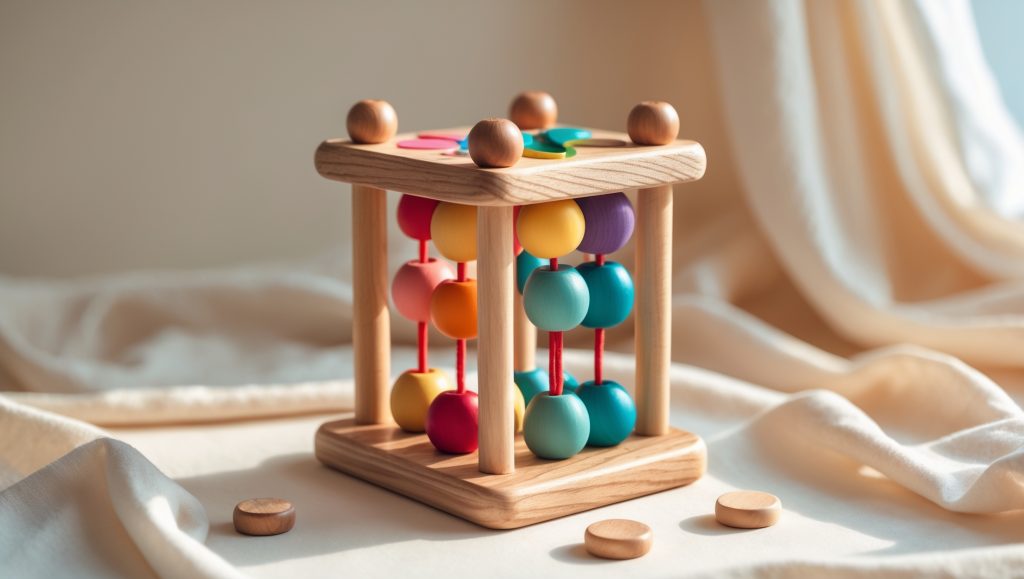
Overview
The Manhattan Toy Skwish Classic stands out as an enduring favorite among parents and child development specialists, thanks to its distinctive design and commitment to safety. First introduced in the late 1980s and refined over decades, the Skwish remains a go-to choice for families seeking a thoughtfully engineered toy that delivers sensory exploration, fine motor development, and safe, open-ended play for infants and toddlers in 2025.
With its elastic lattice of wooden rods, beads, and stretchable cords, the Skwish invites little hands to grasp, squish, and manipulate, producing satisfying visual and auditory feedback. Its unique structure not only delights babies but also aligns with current guidelines for safe play, making it a trusted addition to any nursery or playroom.
What’s Inside / Build Quality
The Skwish Classic measures approximately 6 inches in diameter and weighs less than half a pound—perfectly sized for even the smallest hands. The toy is constructed from renewable, sustainable rubberwood and features elastic cords that allow the structure to compress and return to its original shape, creating a captivating “skwishing” action. Each rod is securely anchored, and the smooth, rounded beads glide along the cords, inviting grasping and tracking.
The finish is non-toxic, water-based, and free from BPA, PVC, and phthalates, aligning with the highest toy safety standards in the US. The wood is sanded to a satin-smooth texture, and all edges are rounded to eliminate sharp points or splinters. The elastic cords, while strong and durable, have just enough give to provide tactile feedback without risking entanglement or breakage.
All materials are tested to meet or exceed ASTM F963 and EN71 safety standards, providing parents peace of mind. The Skwish arrives fully assembled, and its open lattice design ensures easy cleaning with a damp cloth.
Learning & Development Benefits
The Skwish Classic is more than just visually striking—it’s a powerhouse for supporting early development:
- Grasping & Fine Motor Skills: The toy’s rods, beads, and cords are perfectly sized for infants to clutch, encouraging hand strength and dexterity. The sliding beads invite finger isolation and bilateral coordination.
- Visual Tracking & Focus: The contrasting colors and moving parts encourage infants to visually follow motion, supporting early tracking and eye-hand coordination.
- Cause & Effect Learning: Babies rapidly learn that their actions—squeezing, squishing, shaking—produce a response. This builds an early sense of agency and understanding of cause and effect.
- Oral Exploration: Designed for mouthing, the Skwish is safe for teething babies. The shape and size encourage oral-motor exploration, which supports sensory integration.
- Auditory Stimulation: The gentle rattle produced by the moving beads provides pleasing, non-intrusive auditory feedback, inviting repeated engagement.
- Safe Solo and Interactive Play: The toy’s design encourages both independent exploration and caregiver-baby interaction, such as rolling or shaking the Skwish together.
Research underscores the importance of multisensory toys like the Skwish in the first year of life, as they provide critical opportunities for practicing grasping, tracking, and cause-and-effect understanding in a developmentally appropriate, safe manner.
Setup & Use
No assembly is required—the Skwish Classic comes ready to play right out of the box. Simply remove any packaging and hand it to your baby or place it within reach during tummy time, in the crib (under supervision), or in a stroller.
- Age Recommendation: Suitable from birth and up, but most engaging from 3 months through 18 months, as babies develop the ability to grasp, mouth, and manipulate.
- Cleaning: Wipe down with a damp cloth and mild soap as needed. Avoid submerging in water or using harsh cleaning agents to preserve the wood and elastic.
- Supervision: As with all infant toys, supervision is recommended, especially as babies begin to mouth and throw toys.
- Travel: The Skwish is lightweight and compact, making it easy to pack in a diaper bag or stroller caddy for on-the-go play.
Parents have found the Skwish to be an excellent addition to activity gyms, tummy time mats, and car seats (when stationary), as well as a go-to distraction during diaper changes.
Pros & Cons
Pros
- Exceptional build quality from sustainable, non-toxic materials
- Supports multiple areas of development: fine motor, visual, sensory, and cognitive
- No assembly required; easy to clean and maintain
- Lightweight and portable for travel or outings
- Safe for mouthing and teething, with finishes free from harmful chemicals
- Timeless, gender-neutral design that appeals to a wide age range
Cons
- Not machine-washable; requires surface cleaning only
- Some babies may outgrow interest by 18–24 months
- Elastic cords can attract lint or dust over time
- Higher price point than some basic rattles or teethers
Alternatives & Similar Toys
If the Skwish Classic isn’t quite the right fit for your child or your budget, consider these alternatives:
- PlanToys Baby Car: A wooden rolling toy with flexible body, supporting grasping and gross motor skills. Made from safe, sustainable materials.
- HABA Kringelring Clutching Toy: A smaller, ring-shaped wooden toy with colorful beads—easy to grasp and mouth, and similarly finished with non-toxic paints.
- Fat Brain Toys OombeeCube: A soft silicone shape sorter with tethered shapes, ideal for safe mouthing and early problem-solving.
- Manhattan Toy Atom Rattle & Teether: Another innovative option from Manhattan Toy, with flexible arms and a compact, easy-to-clean design.
- Classic Silicone Teething Rings: For families seeking a purely teething-focused option, silicone rings offer easy cleaning and safe chewing.
Each of these toys meets high safety standards and offers a blend of sensory and motor benefits for infants and young toddlers.
Verdict
The Manhattan Toy Skwish Classic remains a standout sensory and fine motor toy for babies and young toddlers in 2025. Its innovative design, safety-first materials, and developmental versatility make it a wise investment for families who value both quality and early learning opportunities. While it may have a higher price point compared to simpler rattles and teethers, its durability and engaging play value justify the cost for many parents. If you’re seeking a toy that will grow with your child through the first year and beyond—while providing peace of mind regarding safety and sustainability—the Skwish Classic is a top contender.
FAQ
+Is the Manhattan Toy Skwish Classic safe for newborns?
+How do I clean the Skwish Classic?
+Is the Skwish a good teether?
+Can the Skwish be machine-washed or sterilized?
+At what age will my child outgrow the Skwish?
+Is the Skwish made from sustainable materials?
+Does the Skwish contain any harmful chemicals?

The Manhattan Toy Skwish Classic (2025 Edition) continues its legacy as a standout choice for early sensory development. Crafted with non-toxic, sustainable materials, the Skwish is both safe and durable, making it ideal for curious infants and energetic toddlers. Its unique structure—elastic strings connecting wooden rods—creates an engaging tactile and visual experience. Babies can grasp, squish, shake, and watch it bounce back to shape, building motor skills and hand-eye coordination. The gentle clacking of the beads introduces sound play without being overwhelming, while the bright, water-based colors stimulate visual interest. Parents will appreciate its lightweight design, easy to clean surface, and the fact that it’s free from BPA, phthalates, and lead. The Skwish is also compact enough to toss in a diaper bag, making it a favorite for travel or outings. This 2025 edition stays true to the original’s beloved features while ensuring compliance with the latest safety standards. For families seeking a thoughtful, engaging toy that encourages exploration and growth, the Manhattan Toy Skwish Classic remains a trusted and delightful choice for little hands and growing minds.
- Safe, non-toxic materials for peace of mind
- Encourages sensory and motor skill development
- Lightweight and portable for on-the-go play
- Timeless design loved by parents and babies alike
My baby still mouths everything at this age, so I’m curious about how the Skwish holds up over time, especially with constant teething and chewing. How often should I check it for wear, and is it durable enough for daily daycare use?
It’s completely normal for babies to explore toys with their mouths, and it’s smart to think about durability and safety. For the Skwish, inspect it every few days if your child is teething or mouthing it often—look for splintering wood, loose parts, or frayed elastic. Wipe it down regularly and supervise play, especially for babies under 12 months. The Skwish is built for frequent use, but daily daycare settings may cause quicker wear, so frequent checks are important. If you notice any damage, set it aside until it’s repaired or replaced. This isn’t medical advice; if you’re concerned, check in with your pediatrician.
I’m trying to decide between the Skwish Classic and silicone-based teethers for my 10-month-old. Is there a developmental or sensory benefit to the Skwish compared to soft silicone toys, especially for babies who still mouth everything?
It’s great that you’re thinking about the best sensory options for your baby. The Skwish Classic offers more than just a teething surface—it encourages fine motor skills, grasping, and visual tracking with its moving beads and shape. For a 10-month-old who mouths objects, the Skwish’s smooth wood and elastic cords provide different textures and resistance than soft silicone, supporting sensory exploration. Always supervise play and check for wear, as wooden toys shouldn’t splinter. Silicone teethers are easy to clean and soothing on gums but don’t offer as much tactile or manipulative play. This isn’t medical advice; if you’re concerned, check in with your pediatrician.
Is the Skwish suitable for babies who tend to put everything in their mouths? You mention that the materials are non-toxic and safe, but I’m wondering if there are any cleaning or safety tips for parents whose babies are especially into oral exploration.
You’re smart to think about safety, especially with little ones who explore the world by mouthing toys. The Skwish is made from non-toxic, baby-safe materials, but it’s wise to check it daily for any splinters or loose elastic. Clean it often with a damp cloth and mild soap—avoid soaking it, since wood can warp. Always inspect for wear and supervise play, especially if your baby is teething or very enthusiastic. This isn’t medical advice; if you’re concerned, check in with your pediatrician.
My toddler sometimes gets overwhelmed by toys with a lot of movement or noise. Do you think the auditory feedback and colorful design of the Skwish would be gentle enough for kids who are a bit sensitive to overstimulation?
It’s completely understandable to want toys that won’t overwhelm a sensitive toddler. The Skwish offers gentle auditory feedback—a soft rattle rather than loud noises—which most children find soothing rather than startling. Its colors are bright but not flashing, and the movements are smooth and slow. Start by introducing it during calm playtimes and let your child explore at their own pace. Always supervise play, especially with toddlers, to monitor their comfort. This isn’t medical advice; if you’re concerned, check in with your pediatrician.
We try to rotate toys every few weeks to keep things fresh and limit clutter. Would the Skwish fit better as an everyday staple, or does it work well when reintroduced periodically as part of a toy rotation?
It’s great that you’re using toy rotation to keep your child’s playtime engaging and manageable. The Skwish is designed for both everyday use and periodic reintroduction—its unique texture, bright colors, and gentle rattling sounds offer ongoing sensory interest for infants and toddlers. For children under 3, daily access is safe with supervision, as there are no small parts or sharp edges. However, rotating it in and out can also make it feel new and exciting again. Watch your child’s interest; if enthusiasm fades, a short break before reintroducing the Skwish can be helpful. This isn’t medical advice; if you’re concerned, check in with your pediatrician.
My toddler likes to put pretty much everything in his mouth, so I’m curious—how well does the Skwish Classic hold up to repeated chewing and gnawing? Are there any parts that might eventually come loose or show bite marks after a lot of teething?
It’s completely understandable to be cautious when your toddler is exploring the world orally. The Skwish Classic is designed for babies who mouth toys and uses non-toxic, water-based finishes, but after heavy chewing, you might notice some cosmetic bite marks or slight roughness. The wooden rods and elastic cords are securely assembled, yet, with vigorous gnawing over time, it’s wise to regularly inspect for any loosening or splintering. Always supervise your child during play and clean the toy as directed. If you see wear or damage, remove it from use to ensure safety. This isn’t medical advice; if you’re concerned, check in with your pediatrician.
I noticed that the Skwish Classic is made from renewable rubberwood and elastic cords. I am curious, is it okay to clean it with a mild baby-safe spray, or should we stick with just a damp cloth?
It’s great that you’re thinking about safe cleaning for your baby’s toys. For the Skwish Classic, using a damp cloth is generally safest to protect the wood and elastic from warping or fraying. If you prefer to use a mild baby-safe spray, lightly spritz the cloth (not the toy) and wipe, making sure the toy doesn’t get overly wet. Always let it air dry completely before your child plays with it again. Avoid soaking or submerging it, as moisture can damage natural materials. This isn’t medical advice; if you’re concerned, check in with your pediatrician.
My pediatrician mentioned introducing more sensory activities, but my little one sometimes gets overstimulated by bright colors or noisy toys. Would the Skwish be gentle enough for a baby who’s sensitive to too much stimulation at once?
It’s understandable to want gentle sensory options for a baby who’s sensitive to too much input. The Skwish Classic is designed with soft colors and makes only quiet rattling sounds, making it less likely to overwhelm. Offer it during calm periods, allowing your baby to explore at their own pace. Watch for signs of overstimulation—such as turning away or fussiness—and take breaks as needed. Always supervise play, especially for infants under 12 months, and check for safe, intact parts. This isn’t medical advice; if you’re concerned, check in with your pediatrician.
If a child is easily overstimulated by noise or bright colors, do you think the Skwish’s visual and auditory features could be too much before sleep, or does its gentle design actually help with winding down for naps and bedtime?
You’re right to consider how stimulation affects your child’s sleep routine. The Manhattan Toy Skwish Classic uses muted colors and soft, gentle sounds, which are typically less likely to overstimulate sensitive infants and toddlers. Try offering the Skwish during calm, quiet times before naps to see how your child responds. Watch for signs of excitement or agitation—if you notice these, it may be best to use the toy earlier in the day. Always supervise, especially with younger babies. This isn’t medical advice; if you’re concerned, check in with your pediatrician.
How would you suggest introducing the Skwish to a baby who gets easily overstimulated by certain sounds or busy toys? Could the gentle rattling be an issue for more sensitive infants around nap and bedtime?
It’s thoughtful to consider your baby’s sensitivity when introducing new toys. Start by offering the Skwish during calm, alert times—perhaps after a nap—rather than when your baby is tired or close to bedtime. Let your baby explore it at their own pace, holding it in your hands first to muffle the rattle if needed. Watch for signs of discomfort, and if the gentle rattling seems too much, try placing a soft cloth over the toy to dull the sound or use it in a quiet, familiar space. Always supervise play to ensure safety, especially with infants. This isn’t medical advice; if you have concerns about your child’s sensory sensitivities, check in with your pediatrician.
My one-year-old is still mouthing most things and sometimes gets frustrated with toys that are too complex. Is the Skwish appropriate for this age, or should we wait a few more months before introducing it in a group daycare environment?
It’s completely normal for one-year-olds to mouth toys and feel frustrated with complex ones. The Manhattan Toy Skwish Classic is designed for infants and toddlers, so it’s generally safe for mouthing, with no small parts and a smooth, non-toxic finish. In a daycare setting, supervise play to ensure safety and consider offering the Skwish during calm, one-on-one or small group times to avoid overwhelm. Encourage gentle exploration and show simple ways to squeeze or roll it. If your child seems frustrated, it’s okay to try again in a few weeks. This isn’t medical advice; if you’re concerned, check in with your pediatrician.
I noticed you mentioned the Skwish is good for sensory play, but is it okay to leave this toy in the crib or playpen for independent play? Are there any safety guidelines about letting toddlers use it unsupervised?
It’s great that you’re thinking about safe, independent play for your child. The Skwish is designed for infants and toddlers and is generally safe when used as intended, but it’s best not to leave any toys, including the Skwish, in the crib during sleep due to suffocation and entanglement risks. For playpen use, brief unsupervised play is usually fine for toddlers over 12 months, but always check the toy for loose parts or damage. Make sure your child can sit up confidently before allowing independent play. This isn’t medical advice; if you’re concerned, check in with your pediatrician.
Could you clarify if the Skwish Classic is suitable for older toddlers as part of a bilingual story or lullaby routine before naps, or would it be overstimulating for that age group during bedtime wind-down?
You’re thoughtful to consider how toys like the Skwish Classic fit into your toddler’s nap routine. For older toddlers, this toy can be included in a bilingual story or lullaby time if used gently and intentionally. Try introducing it as a quiet fidget or visual prop during stories, then set it aside before dimming lights to signal winding down. Avoid active shaking or noisy play right before sleep, as that could be stimulating. Always supervise use to ensure safety. This isn’t medical advice; if you’re concerned, check in with your pediatrician.
If my child is developing at different rates—say, starting to walk but still mouthing toys—can the Skwish remain part of our rotation into the toddler years, or should I phase it out for more complex toys?
It’s perfectly natural to wonder how long a toy like the Skwish can be a good fit for your child as they grow and develop new skills. If your toddler is still mouthing toys, the Skwish remains appropriate due to its safe materials and lack of small parts. You can continue offering it alongside more complex toys—many children enjoy familiar objects for comfort and fine motor practice even as they advance. Always supervise play, especially during mouthing, and check regularly for wear and tear. This isn’t medical advice; if you’re concerned, check in with your pediatrician.
I noticed that the Skwish is made with durable wood and elastic. For families on a budget with limited storage, does this toy hold up well over multiple rotations, and how does it compare in longevity to other popular wooden sensory toys?
You’re wisely considering durability and value as you choose toys for your child. The Skwish’s solid wood and elastic construction generally withstand frequent use and cleaning, making it suitable for passing between siblings or rotating in and out of play. To maximize longevity, store it dry and inspect the elastic for wear, as repeated stretching may eventually loosen it. Compared with other wooden sensory toys, the Skwish tends to last as long—sometimes longer—unless exposed to moisture or rough chewing. Always supervise babies under 12 months, and check for splinters with any wooden toy. This isn’t medical advice; if you’re concerned, check in with your pediatrician.
When my toddler visits her grandparents, they love to introduce her to new flavors and textures, and sometimes playtime and food time overlap. Is it safe for infants to mouth the Skwish after handling foods with strong spices or oils, or should I sanitize it more thoroughly in those cases?
It’s wonderful that your toddler is exploring new tastes and engaging in sensory play with her grandparents. After handling foods with strong spices or oils, it’s best to wash the Skwish thoroughly with warm, soapy water and let it air dry before letting your infant mouth it. This helps remove any lingering food residue or allergens that could irritate your child’s mouth or cause a reaction. Always supervise infants during play to prevent choking. The Skwish is generally safe for mouthing, but extra cleaning ensures it stays hygienic. This isn’t medical advice; if you’re concerned, check in with your pediatrician.
We live in a small apartment and have to be really careful about how many toys are out at once. Does the Skwish Classic nest or pack well with other toys, or does it need its own space? Is it durable enough to survive being tossed into a diaper bag regularly?
It makes sense to want toys that are both space-saving and durable in a small apartment. The Skwish Classic doesn’t nest inside other toys due to its unique, open structure, but it is relatively compact and lightweight, so it can slide easily into a diaper bag or soft bin. It’s generally quite durable—made from wood and elastic—but the rods may flex if squished under heavy items, so try to keep it on top or in a side pocket. For safety, always check for loose beads or fraying cords, especially before giving it to babies under 12 months. This isn’t medical advice; if you’re concerned, check in with your pediatrician.
My child loves sensory toys but sometimes gets overstimulated before bed. Would you recommend saving the Skwish for earlier in the day, or is it appropriate for evening play?
It’s great that you’re noticing how sensory play affects your child’s bedtime routine. For many infants and toddlers, stimulating toys like the Skwish are best enjoyed earlier in the day, as the bright colors, rattling beads, and flexible structure can be quite energizing. Closer to bedtime, opt for activities with softer textures and fewer moving parts to help your child wind down. If you do use the Skwish in the evening, keep sessions shorter and watch for signs of overstimulation. Always supervise play, especially with younger babies. This isn’t medical advice; if you’re concerned, check in with your pediatrician.
My child sometimes gets overwhelmed by bright colors and noisy toys. Since the Skwish offers gentle auditory feedback, are there suggestions for choosing household items that can support pretend play without overstimulating, especially for sensitive infants?
It’s thoughtful to support your child’s sensory needs during play. For sensitive infants, choose simple household items in neutral colors, like wooden spoons, soft cloths, or stacking cups. Avoid items that make sharp noises or have flashing lights. Offer just a few items at a time to reduce visual clutter, and let your baby lead the play at their own pace. Always supervise closely to ensure items are safe—no small parts or choking hazards. This isn’t medical advice; if you’re concerned, check in with your pediatrician.
If my child has mild sensory sensitivities, especially to certain textures or sounds near sleep times, how might the Skwish’s materials and the gentle rattle affect them? Is it generally well-tolerated by sensory-sensitive kids during nap transitions?
Thank you for sharing your concern about your child’s sensory sensitivities, especially around nap times. The Skwish Classic uses smooth, unfinished wood and elastic cords, so there are no harsh or rough textures. Its rattle is soft and subtle, but every child responds differently—consider introducing it during calm play first, not right before sleep. Watch how your child reacts to the sounds and the feel of the toy, and keep it out of the crib during naps if it seems overstimulating. Always supervise use for safety, especially for babies under 12 months. This isn’t medical advice; if you’re concerned, check in with your pediatrician.
Since my child sometimes gets overwhelmed by loud or flashy toys, I appreciate the Skwish’s gentle rattle and natural materials. Do you think the mild auditory feedback is generally well tolerated by babies who are still getting used to different textures and tastes, including early allergen introduction?
It’s understandable to want toys that don’t overstimulate your little one, especially during early sensory experiences. The Skwish’s soft rattle and smooth, natural materials are usually well tolerated by babies who are sensitive to loud sounds or bold visuals, making it a good choice for gentle sensory play. For early allergen introduction, always supervise and ensure your child doesn’t chew off or ingest any parts—fortunately, the Skwish is designed without small, detachable pieces and uses non-toxic finishes. Start with short, supervised sessions and watch your baby’s reactions to new toys and tastes. This isn’t medical advice; if you’re concerned about sensitivities or allergies, check in with your pediatrician.
Do you have any advice on adjusting Skwish play as babies grow? For example, at what stage might a toddler lose interest or benefit from more complex toys, and how can parents transition or scaffold play to keep it engaging as fine motor skills develop?
It’s great that you’re thinking about supporting your child’s development as they grow. For infants (0–6 months), let them grasp, mouth, and shake the Skwish under close supervision to explore texture and sound. Around 6–12 months, encourage banging, rolling, and two-handed play to foster coordination. As toddlers (12–24 months) gain skills, show them how to pull, twist, and stack the Skwish with other safe, age-appropriate objects. When your toddler seems less interested or easily masters Skwish activities, introduce more complex toys with buttons, levers, or puzzles. Always check for wear and avoid small parts for children under 3. This isn’t medical advice; if you’re concerned, check in with your pediatrician.
I’m curious about how the Skwish fits into playtime routines for infants versus toddlers. Should I offer it during independent play, or is it better for parent-led sessions? If we have limited time in the day, is there an ideal length or frequency for Skwish play to support development?
It’s great that you’re thinking about how to make the most of playtime with the Skwish. For infants, this toy is ideal for short, supervised sessions to help them practice grasping and visual tracking; a few minutes at a time, once or twice daily, is enough. As toddlers grow, they may enjoy exploring the Skwish independently or as part of parent-child play, so you can alternate between self-directed and shared play. Always supervise to ensure safety, especially since younger children may mouth toys. Even brief, regular play sessions can support sensory and fine motor development. This isn’t medical advice; if you’re concerned, check in with your pediatrician.
We are working with a small space in our apartment. Does the Skwish Classic fit easily into diaper bags or small storage bins so we can keep clutter down when it’s not in use?
It’s great that you’re thinking about ways to keep your space organized with a little one. The Skwish Classic is lightweight and measures about 6 inches across, so it can generally fit into most standard diaper bags or small storage bins. Try storing it in a zippered pouch or fabric bag to keep it clean and contained. When packing your diaper bag, place the Skwish on top of softer items to avoid squishing its wooden rods. Always supervise your baby during play and check regularly for loose parts. This isn’t medical advice; if you’re concerned, check in with your pediatrician.
Since my twins have different sensory preferences, do you find the contrasting colors and rattle are stimulating without being overwhelming, particularly for babies who might be sensitive to certain sounds or textures?
It’s thoughtful of you to consider your twins’ unique sensory needs. The Manhattan Toy Skwish Classic uses gentle, contrasting colors rather than harsh or flashing ones, which most infants find visually interesting but not overwhelming. The built-in rattle is soft and muted, designed to engage without startling sensitive babies. To introduce it, offer the toy during calm playtimes and watch each child’s reaction. If either twin seems overstimulated, limit play to a few minutes at a time. Always supervise infants, and check for any loose parts before use. This isn’t medical advice; if you’re concerned, check in with your pediatrician.
I am curious if you would recommend keeping a separate Skwish for each home, or is it easy to clean and share between our house and the grandparents’? Would frequent cleaning wear down the materials over time?
It’s understandable to want the best option for both convenience and your baby’s safety. You can share one Skwish between homes, as it’s designed to be durable and can be wiped down with a damp cloth. Wash your hands before handling, and check for any wear after cleaning. Avoid soaking the toy or using harsh chemicals to protect the wood finish and elastic. For infants who mouth toys, extra care with cleaning is important, but gentle, frequent cleaning should not damage the toy. This isn’t medical advice; if you’re concerned, check in with your pediatrician.
My toddler has mild sensory sensitivities and sometimes gets overstimulated by toys that make noise or have strong colors. Would the gentle rattle and contrasting colors of the Skwish Classic be suitable for a child like this, or could it be too much sensory input?
It’s understandable to want toys that won’t overwhelm your toddler’s senses. The Skwish Classic features gentle rattling sounds and uses high-contrast colors, but these are generally softer and less intense than many electronic or brightly flashing toys. You might start by offering the Skwish during calm times, letting your child explore at their own pace. Watch for any signs of overstimulation, such as turning away or covering ears, and pause play if needed. Supervise closely, as every child’s sensory thresholds are unique. If the colors or sounds seem too much, consider using the toy in softer lighting or muffling the rattle with a soft cloth. This isn’t medical advice; if you’re concerned, check in with your pediatrician.
How long did your own children stay interested in the Skwish at this age? I want to make sure it will be engaging enough for a two-year-old, not just infants.
It’s great that you want toys to truly engage your toddler. In my experience and based on what many parents report, most babies are fascinated by the Skwish from around 3 months, and interest often continues well into the second year. For a two-year-old, try rotating it in and out of their toy selection to renew curiosity, encourage imaginative use (like pretend play), and show them new ways to squeeze or twist it. Supervise if your child is still mouthing toys, but the design is generally safe for toddlers. This isn’t medical advice; if you’re concerned, check in with your pediatrician.
I’m weighing the Skwish Classic against simpler wooden grasping toys for our first Montessori shelf. Do you think the added sensory elements and elastic movement justify the investment, or might a plain wooden rattle be just as effective for early development?
It’s great that you’re thoughtfully considering which toy best supports your baby’s development. The Skwish Classic’s elastic movement and varied textures can encourage early motor skills and sensory exploration, which are wonderful for infants around 3–12 months. Step-by-step, you could: 1) Introduce both toys one at a time and observe your child’s interest. 2) Rotate them weekly to keep engagement fresh. 3) Always supervise play, especially as babies mouth objects. Both options are developmentally appropriate, but the Skwish may offer added opportunities for visual tracking and grasp refinement. This isn’t medical advice; if you’re concerned, check in with your pediatrician.
I noticed the Skwish Classic is made from rubberwood and non-toxic finishes. In comparison, how do plastic teething and sensory toys stack up in terms of long-term sustainability and safety for babies? We are trying to make eco-friendly choices for our family, but also want something durable.
It’s wonderful that you’re thinking about both safety and the environment for your child. Natural materials like rubberwood are renewable and biodegradable, making the Skwish Classic more eco-friendly than most plastic toys. Many plastic teething and sensory toys can be durable and safe if made from BPA-free, phthalate-free materials, but they are usually less sustainable and harder to recycle. For babies, always check for smooth edges, securely attached parts, and non-toxic finishes regardless of the material. Supervise teething to avoid choking hazards. This isn’t medical advice; if you’re concerned, check in with your pediatrician.
My baby is teething and pretty determined to gnaw on all her toys. How well does the Skwish hold up to heavy chewing, and should I worry about the paint or finish wearing off if she puts it in her mouth a lot?
It’s completely understandable to want toys that are safe for a teething baby who loves to chew. The Skwish Classic is made with non-toxic, water-based finishes and is designed to withstand mouthing, but heavy chewing over time can cause some wear or chipping. For safety, inspect the toy regularly for any loose parts or worn paint, and supervise play, especially with babies under one year. If you notice significant damage or peeling, it’s best to take the toy away. This isn’t medical advice; if you’re concerned about safety or possible allergens, check in with your pediatrician.
Can the Skwish fit into a daily play routine for a very energetic toddler, or is it more of a sit-down toy? I’m trying to balance active gross motor activities with sensory play.
It’s great that you’re balancing active play with sensory experiences for your energetic toddler. The Skwish can definitely be part of a daily routine—it works well for quiet moments, but also during transitions or wind-down times. For active toddlers, try introducing it during floor play, after outdoor movement, or as a calming toy before naps. Encourage your child to roll, toss, or squeeze the Skwish between bursts of activity, making it part of a movement circuit. Always supervise play, especially since toddlers can be rough, and check the toy for any damage over time. This isn’t medical advice; if you’re concerned, check in with your pediatrician.
My daughter is very sensitive to textures and will avoid toys that feel even a little rough. How smooth are the Skwish’s cords and beads in practice? Are there any parts that might bother a child with mild sensory issues?
It’s completely understandable to want to avoid toys that might feel uncomfortable to a sensory-sensitive child. The Skwish Classic is known for its smooth, polished wooden beads and rods, and the elastic cords are soft and not scratchy—most families find them pleasant to the touch. However, every child’s sensory preferences are unique. I suggest: 1) Touch the toy yourself first to check for any rough spots; 2) Offer it during calm, supervised moments; 3) Let your daughter explore at her own pace, without pressure. For infants and toddlers, always check for potential splinters or wear over time. This isn’t medical advice; if you’re concerned, check in with your pediatrician.
My toddler has some mild sensory sensitivities and sometimes gets overstimulated by certain textures or noises. Does the Skwish tend to make a loud rattling sound, or is it generally quiet enough for kids who are noise sensitive?
It’s great that you’re thinking about your toddler’s sensory needs. The Skwish Classic generally makes a soft, gentle rattling sound from the wooden beads sliding along the rods, but it’s not loud or jarring. For children sensitive to noise, introduce it slowly and observe their reaction in a quiet room. If your child seems overwhelmed, you can play together and help them explore it at their own pace. The toy’s smooth wooden texture and elastic movement are also usually comfortable for sensitive hands. Always supervise play and watch for signs of overstimulation. This isn’t medical advice; if you’re concerned, check in with your pediatrician.
I noticed you mentioned the Skwish Classic encourages open-ended play. For parents who want to balance educational benefits and creative play, how does the Skwish compare to more structured educational toys that focus on letter or number recognition at this age?
It’s great that you’re thinking about both creativity and early learning for your child. The Skwish Classic supports sensory exploration, grasping, and problem-solving, all through open-ended play, which is ideal for infants and young toddlers whose brains benefit most from hands-on discovery. At this age, structured toys that focus on letters or numbers are less developmentally appropriate, as most babies learn best through interaction and play rather than direct instruction. For now, offer a mix: use the Skwish for imaginative play and introduce simple picture books or songs for early exposure to language and numbers. Always supervise play and ensure toys are safe for your child’s age. This isn’t medical advice; if you have concerns, check in with your pediatrician.
that the Skwish Classic meets strict safety standards, but are there any concerns about wear and tear over time, especially after frequent cleaning or rough play from an active four-year-old? How can I tell when it is time to replace or retire the toy?
It’s understandable to want to be sure your child’s toys stay safe with active use and cleaning. For the Skwish Classic, check regularly for splintering wood, loose elastic bands, or peeling paint—especially after washing or rough play. If any parts become loose, edges rough, or paint is chipped, it’s time to retire the toy. While the Skwish is safe for infants and toddlers, a strong four-year-old can put more stress on it, so extra supervision is wise. Always clean with gentle soap and water, not harsh chemicals. This isn’t medical advice; if you’re concerned, check in with your pediatrician.
You mention that the Skwish is designed for even the smallest hands, but is there an ideal age or developmental stage to introduce it? Would older infants who are already crawling still benefit from its features?
It’s great that you’re thinking about the best timing for introducing toys like the Skwish. The Skwish is suitable for newborns and up, as its lightweight design and safe materials make it appropriate from birth. For very young babies, it encourages grasping and visual tracking. As infants grow and start reaching, rolling, and mouthing, the Skwish supports fine motor skills and sensory exploration. Crawling or older infants (up to about 12 months) still benefit from squeezing, shaking, and manipulating the toy, which can help with hand-eye coordination and cause-and-effect learning. Always supervise play, especially as mouthing is common. This isn’t medical advice; if you’re concerned, check in with your pediatrician.
How well does the Skwish Classic hold up with frequent washing? My baby is teething and tends to mouth everything, so easy cleaning is important. Just want to be sure repeated damp cloth cleaning won’t damage the wood or finish over time.
You’re right to prioritize easy cleaning for a teething baby who mouths toys. The Skwish Classic is designed with a water-based, non-toxic finish, so wiping with a damp cloth is generally safe for routine cleaning. To help it last, use a soft, slightly damp cloth rather than soaking the toy, and let it air dry thoroughly before giving it back to your baby. Avoid harsh cleaners, which can wear down the finish or leave residues. Inspect the wood regularly for any changes, like splintering or fading, just to be safe. This isn’t medical advice; if you’re ever unsure about a toy’s safety, check in with your pediatrician.
Given that the Skwish Classic meets current ASTM and EN71 safety standards, do you anticipate any specific ongoing maintenance or inspection is needed to keep it safe for everyday use, especially with frequent cleaning?
You’re right to think about keeping your child’s toys safe during daily use and cleaning. Even though the Skwish Classic meets high safety standards, it’s wise to inspect it regularly for loose strings, splintering wood, or worn elastic—especially if your baby is teething. Use a mild soap and damp cloth for cleaning, and dry thoroughly to prevent mold or wood warping. Avoid soaking or using harsh chemicals, as this could damage the finish or small parts. Always supervise play, especially with infants. This isn’t medical advice; if you’re concerned, check in with your pediatrician.
If my baby tends to put everything in their mouth for long periods, should I be concerned about wear and tear on the finish or beads, even though the materials are non-toxic?
It’s very natural to worry about what your baby mouths, especially with toys that get lots of use. For the Skwish Classic, here are some steps: 1) Inspect the toy regularly for splintering wood or loose beads, especially with heavy mouthing. 2) Wipe it down daily to keep it clean. 3) Supervise play to ensure no small parts come loose. 4) If the finish wears off or beads become damaged, take the toy away until you can check if it’s still safe. The Skwish is designed for infants and uses non-toxic materials, but regular checks are best for safety. This isn’t medical advice; if you’re concerned, check in with your pediatrician.
I’m just starting potty training with my 2.5-year-old and looking for toys that keep her engaged nearby. Does the Skwish Classic work for kids this age, or is it mainly for younger toddlers? Would it still be helpful to have around during potty training?
It’s great that you’re looking for ways to keep your child comfortable and occupied during potty training. The Manhattan Toy Skwish Classic is designed for infants and young toddlers, mainly up to around age 2, but some 2.5-year-olds may still enjoy its sensory features. You could offer it during potty time as a simple, quiet distraction. However, your child might be more interested in slightly more complex toys at this age—try rotating a few favorites nearby, such as simple puzzles or board books. Always supervise for safety and check that toys have no small parts. This isn’t medical advice; if you’re concerned, check in with your pediatrician.
For families with limited toy storage space, how does the Skwish compare to more compact plastic toys in terms of ease of storage and durability if tossed in a crowded toy bin?
It’s understandable to look for toys that fit well in small spaces and can handle everyday rough-and-tumble play. The Skwish is a bit bulkier than compact plastic toys, but its flexible design allows it to compress slightly, making it easier to tuck into bins or shelves. For storage, stack softer items around it to help maintain its shape. Durability-wise, the Skwish is sturdy for a wooden toy and generally holds up to tossing, but it may show wear faster than solid plastic toys if frequently squished under heavy items. Always check for splinters or loose elastic if it’s been banged around. This isn’t medical advice; if you’re concerned, check in with your pediatrician.
Does the Skwish work well for babies who tend to get overstimulated by noisy or bright toys? I’m looking for something that’s engaging but not overwhelming for a more sensitive infant.
It’s wonderful that you’re looking for gentle, engaging toys for your sensitive baby. The Manhattan Toy Skwish Classic is designed with calm, muted colors and makes only soft, natural sounds when handled, making it less likely to overstimulate compared to very bright or noisy toys. For sensitive infants, introduce the Skwish during quiet playtime, monitor their reactions, and offer it for short periods at first. Always supervise play and check for any signs of discomfort or overwhelm. The Skwish is appropriate from birth, but every baby is unique—if you’re unsure how your child will respond, consult your pediatrician. This isn’t medical advice; reach out to your pediatrician with any concerns.
We have limited space in my child’s room and are trying to avoid extra clutter. Is the Skwish Classic small enough for easy storage, or would you recommend a different sensory toy for tight spaces and nighttime routines?
It makes sense to want to minimize clutter, especially in your child’s room. The Skwish Classic is compact—about 6 inches across—so it fits easily on shelves or in small bins, making it suitable for tight spaces. For nighttime routines, you might store it in a basket or drawer to keep the room tidy and calm. If you need something even smaller, consider soft textured balls or fabric squares, which are also safe for infants and easy to tuck away. Always supervise play and keep small parts out of reach for children under three. This isn’t medical advice; if you’re concerned, check in with your pediatrician.
You mention that the elastic cords are durable and safe, but what’s the best way to check if they’re still in good shape after months of play? Are there any signs of wear I should look out for to make sure it stays safe for my child?
It’s great that you’re thinking about your child’s safety and toy durability. Every few weeks, gently stretch and release the elastic cords to check for fraying, thinning, or overstretched areas. Look closely for any unraveling, exposed rubber, or knots that seem loose. Also, inspect the connecting beads for cracks or splinters. For infants and toddlers, make sure all parts are securely attached and free of choking hazards. This isn’t medical advice; if you’re concerned, check in with your pediatrician.
Our daughter has mild sensory sensitivities and sometimes gets overwhelmed by toys that make unexpected noises or have intense colors. Since the Skwish Classic has bright colors and a gentle rattle, would you suggest introducing it gradually, or is it generally calming enough for sensitive infants?
It’s thoughtful of you to consider your daughter’s sensory needs. For a child with mild sensitivities, gradual introduction is wise. Start by letting her explore the Skwish Classic with you nearby, so she feels secure. Offer it in a calm environment, watching her reactions to the colors and gentle rattle. If she seems hesitant, let her touch and look at it without any pressure. Over several short sessions, you can increase her exposure as she becomes more comfortable. The Skwish’s rattle is soft and its colors are bright but not flashing, making it generally suitable for many sensitive infants, but every child is different. This isn’t medical advice; if you’re concerned, check in with your pediatrician.
My child’s grandparents sometimes supervise play and may not be as familiar with newer toys. Does the Skwish require any special safety guidance for older caregivers who might worry about wooden toys or cords?
It’s understandable to want grandparents to feel comfortable and confident with new toys. The Skwish Classic is designed for infants and toddlers and meets safety standards, but it’s always wise to review some basics. Show grandparents how the Skwish has smooth wood, securely attached elastic cords, and no small parts that could pose a choking risk. Remind them to supervise play, especially with younger babies who mouth toys, and check occasionally for any damage or loosening. The Skwish is suitable from birth but always use under adult supervision. This isn’t medical advice; if you notice any concerns or have further questions, please consult your pediatrician.
With so many toys out there designed for sensory play, how does the Skwish Classic compare to silicone teethers or soft fabric clutch toys for travel, especially when space in my diaper bag is tight?
It’s great that you’re weighing options for safe, portable sensory toys. The Skwish Classic stands out because it combines multiple sensory experiences—grasping, visual tracking, gentle sounds, and safe mouthing—in one lightweight design. Compared to silicone teethers, Skwish is bulkier but offers more interactive elements. Soft fabric toys are usually lighter and compress easily, but may have fewer textures or gripping challenges. For tight spaces, consider if your child prefers variety (Skwish) or needs a smaller single-focus toy (teether or fabric clutch). Always check for age-appropriateness, ensure parts are securely attached, and supervise play to avoid any choking risks. This isn’t medical advice; if you’re concerned, check in with your pediatrician.
Our living room is getting crowded with toys, so I’m curious about storing the Skwish. Does its unique shape make it difficult to organize in bins or shelves, or does it compress easily enough to fit into standard toy boxes?
It makes sense to want your living space to feel manageable with baby gear around. The Skwish’s flexible wooden rods do allow it to compress slightly, but it doesn’t flatten entirely due to its sturdy construction. For storage, try placing it in a medium-sized open bin or basket rather than a tightly packed box, so it keeps its shape and avoids damage. Keeping it within easy reach on a low shelf can also encourage safe, supervised play for infants and toddlers. This isn’t medical advice; if you’re concerned, check in with your pediatrician.
My child sometimes gets overwhelmed by sensory toys. Based on your hands-on review, do you find the Skwish’s rattle and moving beads subtle enough for babies who are sensitive to noise and texture?
It’s great that you’re thinking about your child’s sensory sensitivities. Based on our review, the Skwish Classic’s rattle is gentle and not overly loud, making it more suitable for babies who are sensitive to noise. The beads slide smoothly, and the wood feels natural without rough textures. Start by introducing the toy during calm times and watch your child’s response; let them explore at their own pace. Always supervise play, especially with younger infants. Every baby is different, so if you notice signs of overwhelm, put the toy away and try again later. This isn’t medical advice; if you’re concerned, check in with your pediatrician.
Our baby sometimes gets overwhelmed with bright colors and noisy toys. Since the Skwish provides visual and auditory stimulation, do you think it could be too much for sensitive little ones, or is the design gentle enough for kids who tend to get overstimulated?
It’s completely understandable to want gentle, soothing toys for a sensitive baby. The Manhattan Toy Skwish Classic has muted colors and a soft rattle sound, making it less likely to overwhelm compared to flashier or louder toys. Start by introducing it during quiet moments, and watch your baby’s reactions—if needed, limit play to short, supervised sessions. For very young or sensitive infants, you can gently shake or squeeze the Skwish yourself at first, letting your baby observe at their own pace. Always supervise play, especially for babies under 6 months. This isn’t medical advice; if you’re concerned, check in with your pediatrician.
With two teething babies chewing on everything, how well does the non-toxic finish and rubberwood stand up to frequent mouthing and cleaning? Is there a recommended way to sanitize it without damaging the materials?
It’s completely understandable to want reassurance about safety and durability when both your babies are teething. The Skwish Classic’s non-toxic, water-based finish and rubberwood are made to withstand frequent mouthing, but avoid harsh scrubbing to prevent wear over time. For regular cleaning, gently wipe with a damp cloth and mild soap—avoid soaking or submerging, as excess moisture can damage the wood and finish. Always air dry thoroughly. Avoid using bleach or chemical disinfectants. For infants and toddlers, regular visual checks for cracks or splinters are important. This isn’t medical advice; if you have any concerns about your babies’ toys, your pediatrician can help.