
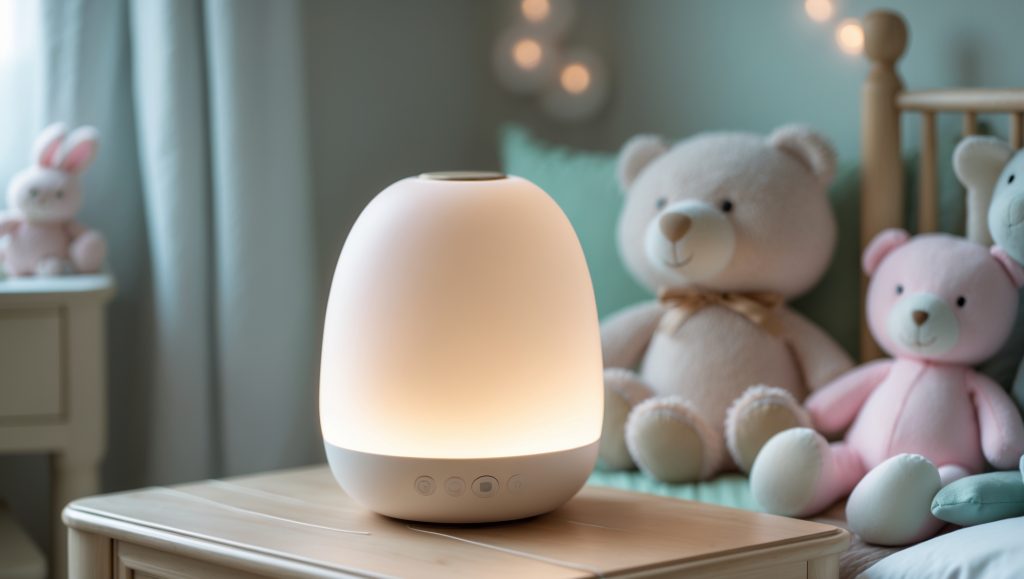
Overview
Creating a soothing bedtime routine is a cornerstone of healthy child development. The Hatch Rest+ 2nd Gen straddles the line between toy and tool, offering a multi-functional device that combines a night light, sound machine, and time-to-rise alert in one sleek, kid-friendly package. While not a traditional toy, it has become a beloved part of bedtime for many families, helping children transition from day to night with routines that are both comforting and fun. In this review, we’ll explore how the Hatch Rest+ 2nd Gen can fit into your child’s nightly rhythm, its build quality, developmental benefits, and if it truly delivers on its promises for families in 2025.
What’s Inside / Build Quality
Out of the box, the Hatch Rest+ 2nd Gen feels sturdy and thoughtfully designed. The device itself is a compact cylinder, about the size of a large mug, with a soft-touch matte finish that’s easy to clean. It features a touch-sensitive top for manual control, a subtle speaker grill at the base, and subtle, child-safe LED lights that emit a customizable glow.
- Device: The main unit has a rechargeable battery (for backup power), making it portable – useful for travel or power outages.
- Power Adapter & Cord: Designed with minimal loose parts and a secure, child-safe power connection.
- Materials: Free from BPA, phthalates, and other harmful chemicals. Edges are rounded and smooth, with no small removable pieces.
- App Integration: Setup instructions include a quick-start guide for connecting to the Hatch app, which parents can use to control features remotely.
Overall, the build feels durable enough for daily use, and the gentle lighting is designed not to overstimulate sensitive young eyes.
Learning & Development Benefits
While the Hatch Rest+ 2nd Gen is not a traditional educational toy, it provides several indirect developmental advantages, especially when used as part of a nightly routine:
- Supports Healthy Sleep Habits: Consistent use of sound and light cues helps children learn to recognize when it’s time to sleep and when it’s time to wake.
- Emotional Regulation: Soothing sounds and calming lights can help reduce anxiety around bedtime, particularly for toddlers and preschoolers who may struggle with transitions.
- Routine & Independence: The time-to-rise feature encourages children, especially those 2 and up, to stay in bed until the light changes, fostering independence and routine adherence.
- Auditory & Visual Stimulation: High-quality nature sounds, lullabies, and white noise provide auditory input, while soft lighting allows for visual comfort without overstimulation.
Parents can use the device as a tool to establish and reinforce bedtime rituals, which research links to improved sleep quality and emotional security in young children.
Setup & Use
Getting started with the Hatch Rest+ 2nd Gen is straightforward:
- Download the Hatch App on your smartphone (iOS or Android).
- Plug in the device and follow the in-app instructions to connect via Bluetooth or Wi-Fi.
- Customize settings: Adjust light color, brightness, sound selection, and set up bedtime/wake-up routines.
- Manual Use: The top touch ring allows you to quickly toggle lights and sounds without the app if needed.
Daily use is simple: parents can set timers, schedules, and even control the device remotely (great for parents of kids who fall asleep at different times). The battery backup is a thoughtful touch, ensuring the routine isn’t interrupted by a power outage.
Pros & Cons
Pros
- Multi-functional: Combines night light, sound machine, and time-to-rise in one sleek device
- Customizable settings via app or manual controls
- Child-safe materials and design
- Promotes healthy bedtime routines and sleep habits
- Portable with battery backup for travel or power outages
- Wide range of soothing sounds and light colors
Cons
- Requires a smartphone for full feature access
- Premium price point compared to basic night lights or sound machines
- App connectivity occasionally drops, requiring a reset
- Not a traditional “toy” for playtime – may not appeal to children expecting interactive features
Alternatives & Similar Toys
While the Hatch Rest+ 2nd Gen stands out for its integrated features, several alternatives cater to families seeking bedtime routine support:
- LittleHippo Mella Ready to Rise Clock: Combines a cute design with sleep training lights and sounds, though with fewer customization options.
- Skip Hop Dream & Shine Sleep Trainer: Features a similar time-to-rise light and soothing sounds, but lacks app integration.
- MyBaby SoundSpa Lullaby: Offers a variety of soothing sounds and a simple night light, at a lower price point (no time-to-rise or app control).
- OK to Wake! Alarm Clock: A classic for sleep training, with a child-friendly interface but fewer modern features.
Each of these options has its own strengths, so consider your child’s preferences and your family’s needs when choosing.
Verdict
The Hatch Rest+ 2nd Gen is an investment in your child’s bedtime routine, offering a combination of smart features, gentle design, and developmental support for healthy sleep habits. While it may not replace traditional toys, its role in helping children (and parents) wind down and embrace consistent bedtime rituals is hard to overstate. If you’re seeking a tech-forward, reliable night light and sound machine that grows with your child – from babyhood through early elementary years – the Hatch Rest+ 2nd Gen is a top contender in 2025.
FAQ
+What age is the Hatch Rest+ 2nd Gen best for?
+Can my child use the Hatch Rest+ independently?
+Does it require Wi-Fi to work?
+Is it safe to leave on all night?
+How loud are the sounds, and can the volume be adjusted?
+Can it be used for naps as well as nighttime?
+What happens if there’s a power outage?

Expert Commentary: Hatch Rest+ 2nd Gen – The Smart Night Light & Sound Machine for Calmer Bedtimes
The Hatch Rest+ 2nd Gen stands out as a thoughtful and highly practical addition to any child’s bedtime routine. As a smart night light and sound machine, it integrates seamlessly into busy family life, helping children wind down with soothing sounds and gentle lighting cues. The customizable color and sound settings empower parents to create a tailored sleep environment, whether their child needs white noise, lullabies, or a warm glow to feel secure at night.
What truly sets the Hatch Rest+ apart is its intuitive app-based control, which allows parents to adjust settings remotely—no more sneaking into the nursery and risking a wake-up. The device also grows with your child, serving as a sleep trainer for toddlers and a reassuring nightlight for older kids. The built-in two-way audio monitor adds another layer of convenience, eliminating the need for a separate baby monitor. For families seeking a reliable, multi-functional sleep aid, the Hatch Rest+ 2nd Gen delivers both comfort and peace of mind, making bedtime a calmer and more enjoyable experience for everyone.
- Customizable night light colors and soothing sound options
- App-controlled for easy, quiet adjustments
- Integrated two-way audio monitor
- Grows with your child from infancy to early childhood
How portable is the Hatch Rest+ 2nd Gen for a road trip or an overnight stay with family? Is it compact enough to fit easily in a diaper bag or will it need its own space in luggage?
—planning ahead for sleep routines during travel can make a big difference for your child’s comfort. The Hatch Rest+ 2nd Gen is larger than most portable sound machines and generally won’t fit in a standard diaper bag; it’s about the size of a small table lamp. For travel, it’s best to pack it in its own section of your suitcase or a tote bag, and handle it gently since it’s an electronic device. Always bring the charging cable, and double-check the power needs for your destination. This isn’t medical advice; if you’re concerned, check in with your pediatrician.
You mention the lack of small removable pieces, which is reassuring. But for storage or packing, how compact does the device and its cord become? I’m looking to minimize what we bring when traveling with a toddler.
It’s great that you’re thinking ahead about safe and practical travel with your toddler. The Hatch Rest+ 2nd Gen is a single, solid unit with no loose parts, so you won’t need to worry about keeping track of small pieces. The main body is about the size of a large mug and generally fits in a diaper bag or carry-on, though it isn’t collapsible. The cord detaches easily and can be coiled up for packing. For travel, consider wrapping the device in a soft cloth to protect it, and always keep cords out of your child’s reach. This isn’t medical advice; if you’re concerned, check in with your pediatrician.
Can you share advice on how to start using the time-to-rise feature when my baby is still much younger than 2? Is it okay to set it up early, or is it better to wait until they’re older?
It’s great that you’re thinking ahead about building healthy sleep routines. For babies younger than 2, the time-to-rise feature can be introduced gently, but keep expectations realistic—very young children won’t fully understand the concept yet. You might use the light as part of your soothing bedtime routine, associating it with sleep cues. Make sure the light and any sounds are set at a safe, comfortable level and keep the Hatch device out of reach. As your child grows and nears 2, you can gradually introduce the idea of waiting for the light to signal morning. This isn’t medical advice; if you’re concerned, check in with your pediatrician.
Is there a recommended age when kids can start using the time-to-rise feature on the Hatch Rest+ 2nd Gen, or is it mostly up to each child’s readiness? I want to be sure I’m encouraging independence but not causing any confusion if my toddler isn’t quite there yet.
It’s wonderful that you want to encourage your toddler’s independence while being mindful of their development. Most children start to grasp the concept of ‘time to rise’ features between ages 2.5 to 3, but readiness varies. Try introducing the feature with simple, visual explanations—use colors or icons your child understands. Start with short time intervals and celebrate small successes. Watch for signs of confusion or frustration; if your child seems unsure, it’s fine to pause and try again later. Always supervise initial use to ensure safety, especially if your child is under 3 years old. This isn’t medical advice; if you’re concerned, check in with your pediatrician.
My child loves having a night light, but I am concerned about sleep disruptions from too much light. Does the Hatch let you fully dim or turn off the light while still playing sound, or does it always emit some glow when in use?
Your concern about light affecting your child’s sleep is very valid. The Hatch Rest+ 2nd Gen allows you to fully dim the night light or even turn it off completely while keeping the sound machine running. You can adjust the brightness to the lowest setting or switch the light off via the app or physical controls, so your child can enjoy soothing sounds without extra glow. Always make sure any night light is set to a dim, warm tone for young children, and check that cords or the device itself remain out of reach. This isn’t medical advice; if you’re concerned, check in with your pediatrician.
You mention the device is free from BPA and phthalates, but I am always cautious about electronic products in the bedroom. Are there any heat or cord safety issues you have noticed during extended use, especially for kids who like to touch everything?
I completely understand your concern about safety, especially with little ones who love to explore. In my experience with the Hatch Rest+ 2nd Gen, the device stays cool to the touch during use and the cord is designed to be sturdy. Still, it’s best to place it out of reach of curious hands, ideally on a high shelf. Always use the original power adapter and regularly check the cord for any wear. For toddlers and younger children, supervision is important around any electronic device. This isn’t medical advice; if you’re concerned, check in with your pediatrician.
We have limited space in the nursery and already have a few gadgets. Is the Hatch Rest+ 2nd Gen bulky, or does it combine enough functions to replace other items like a separate sound machine and nightlight?
It makes sense to want to minimize clutter in your nursery while still meeting your child’s needs. The Hatch Rest+ 2nd Gen is compact and thoughtfully designed, combining a sound machine, nightlight, and time-to-rise feature in one unit, which can help you replace multiple devices. When considering replacing other gadgets, double-check that its light brightness and sound options meet your preferences. Make sure cords are out of reach for safety, and always follow age recommendations for safe sleep. This isn’t medical advice; if you’re concerned, check in with your pediatrician.
Is the device sturdy enough to withstand a curious preschooler who might want to play with it during the day, or should it be kept out of reach except at bedtime?
It’s completely understandable to want to know if the Hatch Rest+ 2nd Gen can handle curious preschooler hands. While the device is made to be durable for daily use, it isn’t designed as a toy and could be damaged if dropped or roughly handled. For safety and to prevent accidental changes to settings, it’s best to keep it out of reach except at bedtime, especially for children under five. Always supervise if your child interacts with it. This isn’t medical advice; if you’re concerned about safety, check in with your pediatrician.
With limited storage space, I try to avoid gifts that will clutter my child’s room. Is the Hatch Rest+ 2nd Gen compact enough that it won’t take up much space on a nightstand, and does it need to stay plugged in all the time?
I hear your concern about keeping your child’s space uncluttered—finding room-friendly gear matters. The Hatch Rest+ 2nd Gen is compact, about the size of a small alarm clock, and fits comfortably on most nightstands without crowding. It’s designed with a built-in battery, so while it works best plugged in overnight for continuous use, you can unplug and move it temporarily as needed. Make sure cords are out of reach for younger children to avoid accidents. This isn’t medical advice; if you’re concerned, check in with your pediatrician.
Can the sound volume and light brightness on the Hatch Rest+ 2nd Gen be dimmed enough to avoid disturbing my light sleeper, or are the lowest settings still noticeable in a small, dark nursery?
You’re right to be careful about minimizing disturbances for a light sleeper. The Hatch Rest+ 2nd Gen lets you adjust both the sound volume and the light brightness in small increments, so you can usually set them quite low. For very sensitive infants or toddlers, try starting with the lowest settings and sit quietly in the nursery at night to test if either is still noticeable. You might also experiment with white noise at a barely audible level or using only the night light, not both, if any sound is disruptive. Always check for any small parts or cords within baby’s reach. This isn’t medical advice; if you’re concerned, check in with your pediatrician.
I’m a bit concerned about devices in the crib area with infants. Are there any safety recommendations for where to physically place the Hatch Rest+ 2nd Gen in a daycare setting to ensure it’s safe for 1-year-olds who are crawling and pulling up?
Your caution about device placement around curious toddlers is very important. For 1-year-olds, always place the Hatch Rest+ 2nd Gen well outside the crib, at least 3 feet away, to prevent access to cords or the device itself. Use cord covers or secure cords high up and out of reach. Position it on a stable surface where crawling or pulling up children can’t topple it. Regularly check that the device remains out of reach as children grow and their mobility increases. This isn’t medical advice; if you have safety concerns, please consult your pediatrician or a childcare safety specialist.
My toddler has a tendency to play with anything in her room, so I’m curious how child-safe the device’s power cord truly is. Are there any tips for keeping the cord out of reach or securing it to avoid tripping or tugging accidents?
It’s completely understandable to want to make your toddler’s room as safe as possible. For the Hatch Rest+ 2nd Gen, here are some steps you can take: 1) Use included cord management clips, or attach adhesive cord covers along the wall to keep the cord out of reach. 2) Position the device on a high shelf far from the crib or play area. 3) Bundle up any excess cord with a twist tie and secure it behind furniture. 4) Regularly check that your toddler can’t pull or trip on the cord, especially as they grow. Always supervise closely and ensure the cord does not dangle within reach of curious little hands. This isn’t medical advice; if you’re concerned, check in with your pediatrician.
I know the Hatch Rest+ 2nd Gen is marketed as safe with no small parts, but how resistant is the device to mouthing or teething if my 10-month-old grabs it? Is the charging cord easily detached or hidden to keep it out of reach when baby-proofing the room?
It’s great that you’re thinking ahead about keeping your curious 10-month-old safe. The Hatch Rest+ 2nd Gen is designed with no small, detachable parts, but the device itself isn’t intended to withstand mouthing, biting, or chewing, so it should be kept out of reach, especially during the teething stage. The charging cord can be unplugged, but for maximum safety, unplug the device when your child is exploring the room, and use cord covers or secure the cord behind furniture. Always supervise closely if your baby is mobile. This isn’t medical advice; if you’re concerned, check in with your pediatrician.
Does the time-to-rise feature on the Hatch Rest+ 2nd Gen have flexibility for different family schedules? My child sometimes wakes up very early—can I adjust the settings for weekends versus weekdays without much hassle?
It’s great that you’re thinking ahead about your child’s changing sleep routines. The time-to-rise feature on the Hatch Rest+ 2nd Gen is designed to be flexible—you can set different wake-up times for weekdays and weekends directly in the app. Simply adjust the schedule for each day to match your family’s needs, and you can update them any time if routines shift. This is especially helpful for early risers, as you can gradually adjust the ‘okay to get up’ signal. Remember to keep the device out of reach of little ones for safety. This isn’t medical advice; if you’re concerned about sleep patterns, check in with your pediatrician.
Are there any specific safety concerns with younger siblings around the cord or buttons, especially since we usually do bilingual bedtime stories together and the kids sometimes get excited or rough near the nightstand?
It’s understandable to want to keep bedtime both fun and safe, especially with excited little ones near the nightstand. For younger siblings, cords can be a strangulation risk—always use the Hatch Rest+ cord shortener or secure cords out of reach. Supervise closely if your child is under three, as small removable parts or pressing buttons could be tempting. Place the device on a stable surface away from crib edges or where it could be knocked down. Teach children gentle hands with electronics during story time. This isn’t medical advice; if you’re concerned, check in with your pediatrician for extra guidance.
How can I use the time-to-rise feature for a younger baby who isn’t old enough to recognize signals, or is this better suited for toddlers?
—it’s thoughtful to consider your baby’s developmental stage. The time-to-rise feature is most effective for toddlers and preschoolers who understand visual cues, but with younger babies, its use is limited. For infants, focus on consistent sleep routines and calming sounds or dim lights to signal bedtime. If you use the feature, keep lights soft and avoid sudden changes that could startle your baby. Always supervise and ensure the device and cords are out of reach. This isn’t medical advice; if you’re concerned, check in with your pediatrician.
Is there a way to set different time-to-rise schedules for weekends versus weekdays? My kids tend to wake up earlier than I’d like on days off, and I would love to use this feature to encourage them to stay in bed a little longer.
You’re not alone—many parents wish they could fine-tune wake-up routines for weekends. The Hatch Rest+ 2nd Gen does allow you to set multiple time-to-rise schedules through its app, so you can program different times for weekdays versus weekends. To do this, open the Hatch app, select your device, and create separate programs for each day set with your preferred light color and sound cues. This feature works well for toddlers and preschoolers with some understanding of routines. Always supervise younger children with the device and check for any small removable parts. This isn’t medical advice; if you’re concerned, check in with your pediatrician.
I noticed the device has a rechargeable battery for backup power. How long does the battery typically last if used overnight without being plugged in? This would really help for power outages or travel situations.
It’s completely understandable to want a reliable backup for your child’s sleep routines. The Hatch Rest+ 2nd Gen’s rechargeable battery can typically last about 8 hours when used unplugged, depending on features like sound, light brightness, and Wi-Fi use. For power outages, try lowering the light and sound volume to stretch battery life. When traveling, fully charge the device beforehand and pack the charging cable just in case. Always supervise use, especially for younger children, and keep cords out of reach. This isn’t medical advice; if you’re concerned, check in with your pediatrician.
Can this device actually help toddlers stay in bed if they are getting up to use the potty, or have parents found that it works better for older preschoolers who already have the hang of nighttime routines?
It’s understandable to hope for support with nighttime routines, especially during potty training. The Hatch Rest+ 2nd Gen can help signal when it’s time to stay in bed, but toddlers who are just learning potty independence may still need frequent bathroom trips and will likely need parental help. For younger toddlers, keep expectations flexible—use the device’s color or sound cues to gently reinforce bedtime, but respond promptly to potty needs. Older preschoolers, who have more routine experience, often respond better to these cues and can stay in bed until it’s time to get up. Always supervise and ensure your child can safely navigate to the bathroom at night. This isn’t medical advice; if you’re concerned, check in with your pediatrician.
Our kids share a bedroom and have different wake-up schedules. Is it possible to program separate time-to-rise cues for each child, or would we need two devices to support different routines in the same room?
It’s understandable to want routines that fit each child’s needs, especially when sharing a bedroom. The Hatch Rest+ 2nd Gen allows you to set only one time-to-rise cue per device, so if your kids need different wake-up signals, you would need a second device for fully individualized routines. If separate devices aren’t practical, consider using different light colors or sounds as cues, but both children would still see or hear them at the same time. Always keep cords out of reach of young children for safety. This isn’t medical advice; if you’re concerned, check in with your pediatrician.
I noticed the device is portable, which could be helpful when my child stays with grandparents over the weekend. How well does the battery hold up during overnight visits, and are there tips to make transitions smoother using the same routines in both households?
It makes sense to want bedtime routines to feel familiar for your child, even when they’re away from home. The Hatch Rest+ 2nd Gen battery usually lasts about 8 hours unplugged, so it should cover overnight use, but you’ll want to bring the charging cable just in case. To smooth transitions, set up the device with your child at the grandparents’ house, use the same sound and light settings as at home, and practice the bedtime routine together a few times before the visit. If your child is old enough, let them help set up their nightlight for a sense of comfort and control. This isn’t medical advice; if you have concerns, please consult your pediatrician.
I have a toddler who likes to press every button and a newborn who is super sensitive to sound. Is it possible to control the volume and light settings separately for each child at bedtime, or do you recommend having two devices for different age needs?
You’re thoughtful to consider both your toddler’s curiosity and your newborn’s sensitivity. The Hatch Rest+ 2nd Gen allows you to adjust both the volume and the light brightness individually using the app, so you can set quieter sounds and dimmer lights for your newborn while creating a more engaging setting for your toddler. If your children share a room, try placing the device out of your toddler’s reach to prevent button pressing, and use soothing, consistent sounds for your newborn. For very different needs or rooms, two devices might make things simpler. This isn’t medical advice; if you’re concerned, check in with your pediatrician.
My toddler is really sensitive to changes at bedtime, and I am wondering if you have any practical tips for gradually introducing the Hatch Rest+ 2nd Gen into our nightly routine without it feeling disruptive or overwhelming for him.
It’s great that you want to help your sensitive toddler adjust smoothly to changes at bedtime. To introduce the Hatch Rest+ 2nd Gen gently, start by bringing it into the room without turning it on for a few nights, letting your child get used to seeing it. Next, demonstrate its sounds and lights during the day so he can explore them with you in a no-pressure setting. Try using just one new feature—like a soft light or gentle sound—at bedtime, keeping the rest of the routine the same. Always supervise to ensure cords are out of reach and settings are age-appropriate. This isn’t medical advice; if bedtime changes feel especially hard, consider consulting your pediatrician.
For families on a tight budget or with limited space, would you recommend prioritizing a multi-functional device like the Hatch Rest+ 2nd Gen over adding more toys or books to the bedtime routine?
You’re thoughtful to consider what will help most at bedtime when space and budget are limited. If your child is struggling with sleep routines, a multi-functional device like the Hatch Rest+ 2nd Gen can be a practical investment: it combines a night light, sound machine, and clock, reducing clutter and providing consistent cues for sleep. For younger children, ensure all device parts are secure and cords are out of reach. Books and calming toys are valuable too, but if you need to choose, a restful environment may bring more immediate sleep benefits. This isn’t medical advice; if you’re concerned, check in with your pediatrician.
My child gets overwhelmed by lights that are too bright or too flashy. Can the Hatch Rest+ 2nd Gen night light be set to a very dim or warm tone, and is there an option to turn off any light transitions or color changes that could be distracting during bedtime?
It’s completely understandable to want a calm, non-distracting night light for your child. The Hatch Rest+ 2nd Gen allows you to adjust the brightness, so you can set it to a very dim level and choose a warm, gentle color that’s less likely to overwhelm sensitive kids. You can also select a single, steady color with no light transitions or color changes, which helps reduce distractions at bedtime. For young children, always ensure cords are out of reach and supervise setup. This isn’t medical advice; if you’re concerned, check in with your pediatrician.
Can the Hatch schedule accommodate different weekend and weekday routines, especially if siblings have staggered bedtimes? I would love tips on managing multiple sleep schedules with one device.
It’s thoughtful of you to consider how to coordinate bedtime routines for siblings with different schedules. The Hatch Rest+ 2nd Gen allows you to set multiple programs, so you can create separate weekday and weekend routines. To manage staggered bedtimes, try setting different lights or sounds as cues for each child—such as one color or sound for the younger child’s bedtime, and a different one for the older sibling. You may need to adjust the routine if bedtimes overlap, and provide gentle reminders or quiet activities for the sibling who stays up later. Always supervise younger children around cords and small parts. This isn’t medical advice; if you’re concerned, check in with your pediatrician.
I’m curious if the time-to-rise feature on the Hatch Rest+ 2nd Gen can be adjusted for younger children who wake up very early, like 5:30 or 6 AM. Is there a way to customize the settings for different ages or shifting sleep schedules as our child grows?
It’s understandable to want a flexible solution as your child’s sleep habits change. The Hatch Rest+ 2nd Gen allows you to fully customize the time-to-rise feature, so you can set any wake-up time that fits your child’s current routine, even as early as 5:30 or 6 AM. As your child grows and their sleep schedule shifts, you can easily adjust the settings in the app to match their age and needs. For toddlers and preschoolers, keep the cues simple and consistent, and always supervise younger children using electronic devices. This isn’t medical advice; if you’re concerned, check in with your pediatrician.
I’m curious how adjustable the sound and light levels are on the Hatch Rest+ 2nd Gen. My child is sensitive to bright lights and sudden noises—do you find the controls precise enough to fine-tune for those needs, or are there preset levels?
It’s completely understandable to want gentle, customizable settings for a sensitive child. The Hatch Rest+ 2nd Gen offers both preset options and precise manual controls for sound and light intensity. You can use the app or device to gradually adjust the volume and brightness, starting at very low levels and increasing only as needed. For children who are sensitive, begin with the lowest settings and test them together, making sure neither the sound nor light is too stimulating. Always supervise younger children around electronic devices. This isn’t medical advice; if you’re concerned, check in with your pediatrician.
As a parent trying to keep bedtime consistent for siblings of different ages, can you share if the Hatch Rest+ 2nd Gen is easy to adjust for multiple children’s routines, or is it best suited to one child’s schedule at a time?
It’s great that you’re looking for ways to make bedtime smoother for all your children. The Hatch Rest+ 2nd Gen is quite flexible—you can set up multiple programs and schedules through its app, making it possible to personalize sound, light, and timers for each child. For siblings, try creating separate routines (like different colors or sounds) and label them in the app for easy switching. Always supervise younger children with the device and keep it out of reach to avoid choking hazards or electrical risks. This isn’t medical advice; if you have concerns about your children’s sleep, check in with your pediatrician.
You mentioned the device supports independence by encouraging kids to stay in bed until the time-to-rise light changes. In your experience, at what age does this feature start to be effective, and do younger toddlers understand the concept?
Your question about when kids understand the time-to-rise light is thoughtful and common. Most children start grasping this concept around age 2.5 to 3, though some may be ready a bit earlier or later. To introduce it, show your child how the light works, use simple language like ‘We stay in bed until the light turns green,’ and practice together during the day. For younger toddlers, keep expectations low—they may need reminders and gentle patience. Always prioritize safety—keep cords out of reach and supervise young children with any electronic device. This isn’t medical advice; if you’re concerned, check in with your pediatrician.
For families on a tighter budget, do you think this replaces both a sound machine and a night light well enough, or would a cheaper combination of separate devices work just as well for a toddler?
It’s understandable to want the best bedtime setup while being mindful of your budget. The Hatch Rest+ 2nd Gen does combine a sound machine and night light in one device, which is convenient, but many families find that a basic, safe night light and a simple sound machine can work just as effectively for toddlers. When choosing separate devices, check that the night light uses a soft, warm glow and has no small, detachable parts. For the sound machine, look for volume controls and continuous play options to avoid sudden stops during sleep. Always supervise cords and placement for safety. This isn’t medical advice; if you’re concerned, check in with your pediatrician.
Do you recommend using the Hatch Rest+ 2nd Gen every night or rotating it with traditional toys or other sleep cues? I want to build a flexible bedtime routine but don’t want my child to become too reliant on any one device.
It’s thoughtful that you want your child to have a flexible bedtime routine. To balance the Hatch Rest+ 2nd Gen with other cues, you might: 1) Use the device most nights, but occasionally swap in other calming elements like a favorite story or soft lullabies; 2) Incorporate traditional comfort items, such as a stuffed animal or blanket, especially for toddlers and preschoolers; 3) Keep a consistent bedtime order (bath, pajamas, quiet time) so your child associates sleep with the routine, not just one device; 4) Gradually lower the reliance on any single cue if you sense your child is becoming too dependent. This isn’t medical advice; if you’re concerned, check in with your pediatrician.
If my baby is sensitive to sound or easily startled by changes in the environment, are there particular noise or light settings on the Rest+ that work best for younger infants just starting with bedtime routines?
It’s understandable to want a calming bedtime routine for a sensitive baby. For younger infants, start with the softest white noise or gentle lullaby options at low volume—steady, consistent sounds tend to be less startling. Keep the night light on its dimmest, warm-hued setting to avoid overstimulation. Introduce any new sounds or lights gradually, observing your baby’s response, and always supervise. Ensure all cords and the device itself are out of reach. This isn’t medical advice; if you’re concerned, check in with your pediatrician.
My child is a bit sensitive to noises, even gentle ones. Are there truly silent light-only options for bedtime, or does the device always emit sound when in use?
It’s completely understandable to want a calming environment if your child is sensitive to sound. The Hatch Rest+ 2nd Gen does allow you to use the light feature by itself, without any sound playing, which can help create a peaceful, silent bedtime setting. You can control this through the app or directly on the device. Just be sure to choose a dim light setting to avoid overstimulation. Always supervise if your child is very young and ensure the device is placed out of reach. This isn’t medical advice; if you’re concerned, check in with your pediatrician.
I’m considering adding the Hatch Rest+ to our bedtime routine, but I worry about plastic use versus more traditional wooden options for nighttime comfort. Did you find any information about the recyclability of its materials or the company’s take-back programs?
It’s thoughtful of you to consider the environmental impact of your child’s bedtime products. The Hatch Rest+ 2nd Gen is mostly made of plastic, and while Hatch’s website doesn’t currently highlight a formal take-back or recycling program for this device, many electronic recycling centers accept small appliances like sound machines. Always keep cords and small parts away from young children for safety. If sustainability is a top priority, you might also look into local e-waste disposal options. This isn’t medical advice; if you have specific concerns, your pediatrician can help guide you.
Have you found that the time-to-rise feature actually helps toddlers stay in bed in the morning, or do parents still need to reinforce that boundary? I’m curious how hands-off it really is for encouraging early independence with sleep routines.
It’s great that you’re looking for ways to foster independence with your toddler’s sleep routine. The time-to-rise feature can be a helpful visual cue, but most toddlers still need gentle, consistent reminders from parents to stay in bed until the signal. Start by explaining the feature together, practice waiting for the signal during the day, and offer lots of praise when your child follows it. If they get up early, calmly guide them back without too much fuss. For younger toddlers, supervision and repeated reinforcement are key as their understanding grows. This isn’t medical advice; if you’re concerned, check in with your pediatrician.
My toddler has a hard time with nap transitions in the afternoon—does the Hatch Rest+ 2nd Gen app let you easily adjust sound or light settings mid-day without disrupting our nap routine? I’m hoping to avoid reprogramming the whole schedule for just one-off changes.
It’s completely understandable to want a smoother nap transition without the stress of redoing your whole routine. The Hatch Rest+ 2nd Gen app does let you manually adjust sound and light settings in real time, right from your phone, so you can make quick changes for a single nap without altering your regular schedule. Just tap to change the color, brightness, or sound as needed, and your usual programs will stay intact for other times. This flexibility is helpful for toddlers, whose needs can change day to day. Always supervise to ensure the device and cords stay out of reach. This isn’t medical advice; if you’re concerned, check in with your pediatrician.
that the device is free from BPA and other chemicals, but just to confirm, has it been tested for compliance with US small parts regulations? I’ve read about some products accidentally falling through the cracks when it comes to labeling for under-threes.
It’s completely understandable to want assurance about small parts safety, especially for little ones under three. According to Hatch’s published materials, the Rest+ 2nd Gen is BPA-free and designed for nursery use—but before introducing it to your child’s space, here are some steps you can take: 1) Check directly with the manufacturer or retailer for documentation on compliance with US small parts regulations (CPSC guidelines for under-threes). 2) Examine the device for detachable or easily breakable parts before use. 3) Always place the unit out of reach of young children, as it is not marketed as a toy. If you have ongoing concerns, this isn’t medical advice; please follow up with your pediatrician or a certified child safety expert.
I noticed the device is portable with a backup battery. Have you found it holds up well to travel, like on family trips or to grandparents’ houses, or is it better suited for staying in one room all the time?
—wanting consistency for your child’s sleep routine on trips is very understandable. The Hatch Rest+ 2nd Gen is designed to be portable, and the backup battery is helpful for short-term use away from an outlet, such as naps at a grandparent’s house or during travel. For longer trips, be sure to recharge it regularly, since the battery is not intended for multiple nights without power. Always supervise young children around cords and the device, and check that it’s placed safely out of reach. This isn’t medical advice; if you’re concerned, check in with your pediatrician.
My child is quite sensory-seeking and sometimes chews on household items. Even though the device isn’t marketed as a toy, should I be worried about them mouthing the device or getting small pieces off, especially the top touch-control part?
It’s completely understandable to be cautious when your child seeks sensory input by mouthing objects. The Hatch Rest+ 2nd Gen is not designed for play and may have small parts, like the top touch-control component, that could pose a choking risk if detached. Make sure the device is always placed out of reach, and supervise closely if your child is nearby. Regularly check that all parts are securely attached and inspect for any wear. For children under three or with strong chewing urges, extra caution is wise. This isn’t medical advice; if you’re concerned, check in with your pediatrician.
My toddler is very sensitive to light and even dim glows can keep him up. Is the Hatch Rest+ 2nd Gen customizable enough in terms of brightness and color so we can truly have a very low-light setting, or is there a recommended work-around for particularly light-sensitive kids?
Your concern about your toddler’s light sensitivity at bedtime is completely understandable. The Hatch Rest+ 2nd Gen does allow you to adjust both brightness and color, and it can be set to an extremely low level—almost off, which may help children who are particularly sensitive. Start by experimenting with the lowest brightness and warmer tones, as these tend to be less stimulating. You can also try using the app to fine-tune the settings from another room, so you don’t disturb your child. If even the lowest setting is too much, consider using only the audio features with the light completely off. Always supervise for safety, and if sleep troubles persist, check in with your pediatrician. This isn’t medical advice.
We’re considering upgrading from a basic white noise machine. Besides the app control and light, is there a clear benefit to this over a regular sound machine for a two-year-old, or am I just paying for extra features we won’t use?
It’s smart to weigh whether extra features are truly helpful for your toddler. For a two-year-old, key benefits of the Hatch Rest+ 2nd Gen are the gradual ‘time-to-rise’ light and the ability to create consistent bedtime routines with custom sounds and schedules, which can help young children learn sleep cues. The night light is dimmable and toddler-safe, and having remote control can be useful for parents. However, if your child sleeps well with a basic machine, you may not need all the upgrades yet. This isn’t medical advice; if you’re concerned, check in with your pediatrician.
My toddler is sensitive to certain noises and bright colors. Are there options within the Hatch Rest+ 2nd Gen to choose only gentle white noise and very warm, dim lighting to accommodate sensory preferences?
It’s wonderful that you’re mindful of your toddler’s sensory needs. The Hatch Rest+ 2nd Gen lets you customize both sound and light settings—choose from gentle white noise options like ‘rain’ or ‘wind,’ and adjust the volume to a low, soothing level. For lighting, you can select warm, amber tones and dim them to your preference, which can help reduce overstimulation. Always supervise changes to ensure your toddler is comfortable and feels secure. This isn’t medical advice; if you’re concerned about sensory sensitivities, check in with your pediatrician.
How does the Hatch Rest+ 2nd Gen compare to more affordable night light and sound machine combos on the market? I am trying to decide if the extra features and app control justify the investment for a growing family, especially if we eventually want one for each child’s room.
It makes sense to weigh the value of advanced features versus affordability, especially with multiple children. The Hatch Rest+ 2nd Gen offers remote app control, two-way audio, and custom schedules, which can be helpful for managing routines or supporting a baby from a distance. More basic models may lack these options but still provide gentle light and soothing sounds. Consider your family’s needs: for infants and toddlers, simplicity and safety (no small detachable parts, cool-to-touch surfaces) often suffice. For older kids or complex routines, extra features may reduce stress at bedtime. This isn’t medical advice; if you’re concerned, check in with your pediatrician.
My toddler sometimes gets overwhelmed by bright colors and sounds at night. Does the Hatch Rest+ 2nd Gen offer enough customization for sensitive kids who might need really dim lights or less stimulating sound options?
It’s completely understandable to want a calm, non-overstimulating bedtime environment for your sensitive toddler. The Hatch Rest+ 2nd Gen does offer a wide range of customization: you can set the night light to very dim levels and choose from gentle, soothing sound options like white noise or lullabies at low volumes. Try starting with the lowest light intensity and softest sound, observing how your child responds. Avoid bright colors and louder, more dynamic sounds at bedtime. Always supervise initial use to ensure your child isn’t disturbed or distressed by any settings. This isn’t medical advice; if you’re concerned, check in with your pediatrician.
We have a toddler who is sensitive to bright lights and loud noises, especially first thing in the morning. How customizable are the light intensity and sound volume on the Hatch Rest+ 2nd Gen? Are there settings gentle enough to avoid sensory overload during early hours?
It’s great that you’re looking for ways to support your toddler’s sensory needs, especially in the mornings. The Hatch Rest+ 2nd Gen allows you to finely adjust both the light intensity and sound volume through its app, making it possible to set very dim lighting and soft sounds. You can program gentle wake-up routines, choosing soothing colors and low volumes to avoid overwhelming your child. Always keep the light at a low setting and sounds at minimal levels for toddlers, and supervise if your child is prone to tampering with devices. This isn’t medical advice; if you’re concerned, check in with your pediatrician.
My child is almost six and has mostly outgrown night lights but sometimes gets anxious after a busy day. Would the sound features and routines on the Hatch Rest+ 2nd Gen still be helpful for kids older than toddlers?
It makes sense to want comforting tools as your child grows and their needs change. For a six-year-old, the Hatch Rest+ 2nd Gen can still be very useful—try using the calming sound features (like white noise or gentle rain) to create a predictable, relaxing bedtime routine. Let your child help pick the sounds or routines, so they feel some control. If needed, use the light feature on its lowest setting just for reading or winding down, then turn it off for sleep. Always check that your child can operate the device safely and that cords are out of reach. This isn’t medical advice; if you’re concerned, check in with your pediatrician.
Is the time-to-rise feature adjustable enough for parents managing two kids with different morning schedules? I’d love to teach each twin to stay in bed until their own wake time, but I’m not sure if that’s possible with this device.
It’s understandable that you want to support both twins’ unique schedules. The Hatch Rest+ 2nd Gen allows you to set only one time-to-rise cue per device, so it isn’t designed for separate wake times in the same room. If your twins share a room and need different cues, you could: 1) consider using two Hatch Rest+ devices, each set for an individual child, 2) use visual aids like different colors for each child (though they’ll need to remember which color is theirs), or 3) try a combined schedule if possible. For preschoolers and up, these cues are most effective, but always supervise with cords and small parts. This isn’t medical advice; if you’re concerned, check in with your pediatrician.
Is the power cord long enough to place the device out of reach on a dresser, and how secure is the child-safe power connection you mentioned? My toddler is very curious about cords and plugs.
Your concern about keeping cords and plugs away from your curious toddler is very valid. The Hatch Rest+ 2nd Gen comes with a power cord that is about 6 feet long, which usually allows you to place it on most dressers out of your child’s reach. For extra safety, make sure the cord is tucked behind furniture or uses cord covers to prevent grabbing. The child-safe power connection is designed to be snug and difficult for little hands to unplug, but it’s best to double-check that it is fully inserted and out of sight. Always supervise your toddler around cords, and avoid letting them play near electrical outlets. This isn’t medical advice; if you’re concerned, check in with your pediatrician.
My toddler is quite sensitive to lights and sounds. Are there settings on the Hatch Rest+ 2nd Gen that can be adjusted for children who might get overstimulated easily before bed?
It’s great that you’re mindful of your toddler’s sensitivity at bedtime. The Hatch Rest+ 2nd Gen allows you to adjust both light intensity and sound volume, so you can choose the softest dim light or even turn the light off completely if needed. For sound, select gentle options like white noise or lullabies at the lowest volume. Experiment with different color tones—warm, muted colors are usually less stimulating for toddlers. Always supervise your child with the device in their room, and check for any small or removable parts. This isn’t medical advice; if you’re concerned, check in with your pediatrician.
If a parent is on a tight budget, how does this device compare to simply using a regular inexpensive night light and a white noise machine? Does it offer benefits that really make the higher price worthwhile for toddlers?
It’s absolutely reasonable to wonder if a pricier device is really worth it. The Hatch Rest+ 2nd Gen combines night light, sound machine, and time-to-rise features in one, which can simplify your bedtime routine and minimize clutter—especially helpful for toddlers who thrive on consistency. You can customize colors and sounds remotely, so you don’t risk waking a sleeping child. A simple night light and separate white noise machine can work just as well for many families, but you’ll miss out on some convenience and toddler-friendly features. No matter which option you choose, always check that the device is safe for your child’s age and free from choking hazards or overheating risks. This isn’t medical advice; if you’re concerned, check in with your pediatrician.
If we are trying to limit the number of bedtime gadgets in the room, do you find that the Hatch Rest+ 2nd Gen can truly replace both a stand-alone sound machine and a traditional night light, or do some families still end up using extras for specific needs?
It’s thoughtful to want to keep bedtime routines simple and avoid too many gadgets in your child’s room. Many families find that the Hatch Rest+ 2nd Gen works well as both a sound machine and night light, thanks to its customizable sounds and adjustable light settings. First, try using just the Hatch for a week—experiment with its volume, light color, and brightness to match your child’s needs. Second, check if your child reacts well to the light’s lowest setting for comfort, and see if the sound options are soothing enough for restful sleep. If you have a baby or toddler, supervise to ensure safety and check for any sensitivities to light or sound. This isn’t medical advice; if you’re concerned, check in with your pediatrician.
My toddler is very sensitive to lights and sounds at bedtime and sometimes gets overstimulated easily. Do you have tips for setting up the Hatch Rest+ 2nd Gen to avoid triggering sensory issues, especially for a picky 15-month-old who already fights sleep?
You’re doing a great job noticing your toddler’s sensory sensitivities at bedtime. Start by setting the Hatch Rest+ 2nd Gen to its dimmest, warm-toned night light; avoid cool or bright colors that may feel harsh. Choose gentle, consistent sounds like white noise or soft rain—avoid tracks with sudden changes, melodies, or animal noises, which can be stimulating. Keep the volume low and place the device at a distance from your child’s crib. Always supervise placement to ensure cords are out of reach. At 15 months, routines matter, so keep settings consistent each night. This isn’t medical advice; if you’re concerned, check in with your pediatrician.
My toddler is really sensitive to lights at night and sometimes the smallest glow keeps him awake. How dim can the Hatch Rest+ 2nd Gen get, and do you feel the lowest light setting is truly non-disruptive for light sleepers?
You’re right to be careful about light for a sensitive toddler—many children react strongly to even faint glows. The Hatch Rest+ 2nd Gen can be dimmed to a very low setting, and in my experience, the lowest level is extremely subtle—almost imperceptible in a dark room. For very light sleepers, try starting with the light completely off and only using it during necessary nighttime routines. If you do use it, keep the brightness at minimum, pick a warm tone (not blue light), and position the device away from your child’s direct line of sight. Always make sure cords and the device itself are out of reach for safety. This isn’t medical advice; if you’re concerned, check in with your pediatrician.
My toddler sometimes resists bedtime routines, especially when there’s a new device involved. Are there tips for gradually introducing the Hatch Rest+ without it becoming a distraction or a negotiation point at night?
You’re not alone—many toddlers notice and react to new bedtime items. To ease the Hatch Rest+ into your routine, first show it to your child during the daytime, letting them touch and explore it without pressure. Next, involve your toddler in picking a gentle light color or sound to give them a sense of control. Use the device consistently at bedtime, but keep the rest of the routine unchanged. If your child gets distracted, set clear expectations: the Hatch is for sleep, not play. This device is safe for toddlers when used out of reach and with parental supervision. This isn’t medical advice; if you’re concerned, check in with your pediatrician.
My toddler gets really curious about anything with lights and buttons, so I’m wondering how the Hatch Rest+ 2nd Gen holds up to little hands constantly touching it or trying to carry it around the room. Is it durable enough for daily toddler play or is it better kept out of reach except at bedtime?
It’s very normal for toddlers to explore anything new, especially devices with lights and buttons. The Hatch Rest+ 2nd Gen is generally sturdy but not designed as a toy, so it’s best to supervise use and keep it out of reach during playtime. You can let your child press buttons together during your bedtime routine to satisfy curiosity safely. Show them how to carry it gently if needed, but avoid letting them tote it around unsupervised to prevent drops or damage. For toddlers under 3, always check for loose parts and avoid letting them handle cords. This isn’t medical advice; if you’re concerned, check in with your pediatrician.
Would you say the time-to-rise feature actually helps reinforce a consistent wake-up schedule for younger children, or does it work best when combined with other parenting strategies? I’m wondering about its real-world impact on building independent morning routines in preschoolers.
It’s great that you’re thinking about building a consistent wake-up routine for your preschooler. The time-to-rise feature can be helpful, especially for children ages 3 and up who can understand simple color cues, but it works best when used alongside other strategies. First, explain the feature and practice together so your child knows what to expect. Pair the light cue with a verbal reminder and morning routine checklist. Reinforce success with praise or a visual reward chart. Always supervise, and check that your child isn’t scared of waking up alone. This isn’t medical advice; if you’re concerned, check in with your pediatrician.
Our apartment has pretty limited storage and I try to keep bedtime items to a minimum. Do you think the Hatch Rest+ 2nd Gen could fully replace a separate night light and sound machine, or is it better used alongside other sleep products for toddlers?
It’s great that you’re trying to keep bedtime simple and clutter-free. The Hatch Rest+ 2nd Gen is designed to function as both a night light and a sound machine, which can help reduce the need for multiple devices in your toddler’s room. Try using it solo for a week, testing a few light colors and sound settings to see what soothes your child best. Make sure the brightness and sound levels are gentle and age-appropriate. Keep any cords well out of reach for safety. If your toddler seems to sleep well, you likely won’t need extra products. This isn’t medical advice; if you’re concerned, check in with your pediatrician.
We tend to travel to visit family a few times a year, and I wonder how truly portable the Hatch Rest+ 2nd Gen is. Does the battery last through a full night if you’re using both the sound and light features, or do you need to have it plugged in most of the time?
It’s great that you’re planning ahead for smooth bedtimes while traveling. The Hatch Rest+ 2nd Gen does have a built-in battery, but when using both the sound and light features together, the battery typically lasts only about 8 hours—sometimes less, depending on brightness and volume settings. For overnight use, especially for naps and bedtime, it’s safest to keep it plugged in if possible. If you’re in a place without easy access to outlets, consider dimming the light and lowering the volume to extend battery life. As always, ensure cords are out of reach of little ones for safety. This isn’t medical advice; if you’re concerned, check in with your pediatrician.
My preschooler is very sensitive to both light and sound. Can the brightness and sound settings on the Hatch Rest+ 2nd Gen be adjusted enough to work for children with mild sensory sensitivities, or would you recommend something else for those needs?
It’s great that you’re considering your child’s sensory sensitivities when choosing a bedtime tool. The Hatch Rest+ 2nd Gen allows you to finely adjust both brightness and sound volume, so you can create a dim, gentle light and keep the sound very soft or even turn it off completely. Try starting with the lowest settings and observe how your preschooler responds—every child is different. For safety, always supervise use and keep cords out of reach. If sensitivities are significant or you notice distress, a very simple night light or no sound at all may be better. This isn’t medical advice; if you’re concerned, check in with your pediatrician.
We are trying to teach our 17-month-old to stay in bed until morning. Is the time-to-rise feature beneficial for kids under two, or is it best used for older toddlers who already understand morning and night?
It’s great that you’re helping your toddler learn healthy sleep routines. At 17 months, most children are still too young to fully grasp the concept of ‘waiting for the light’ or understanding time cues, so the time-to-rise feature usually works best for children over two or those who understand morning and night. For now, focus on predictable bedtime routines, a consistent sleep environment, and gentle verbal cues when your child wakes early. You can introduce the feature now for familiarity, but don’t expect full understanding yet. Always ensure the device is safely out of reach. This isn’t medical advice; if you’re concerned, check in with your pediatrician.
Is this unit portable or compact enough to easily take along for overnight trips or to adapt to different spaces? We sometimes visit grandparents, and I like to keep our routines consistent wherever we are.
It’s great that you’re thinking ahead about keeping routines consistent for your child. The Hatch Rest+ 2nd Gen is designed to be portable—it’s compact and has a rechargeable battery, making it suitable for overnight trips or visits to grandparents. For travel, fully charge the unit beforehand and pack the charging cable. Set up the device in a quiet, safe spot away from small hands, and use the same light and sound settings your child is used to at home. Always supervise young children with electronic devices, and check for small parts if your child is under three years old. This isn’t medical advice; if you’re concerned, check in with your pediatrician.
If my child is particularly sensitive to lights or sounds at bedtime, would using a device like this be better or worse than sticking with a simple wooden toy or low-tech solution to signal bedtime? Any advice for minimizing sensory overstimulation?
It’s great that you’re tuned in to your child’s sensory needs at bedtime. If your child is sensitive to light or sound, here are some steps to minimize overstimulation: 1) If you use the Hatch Rest+, start at the lowest light and sound settings, or try only one feature (light or sound) at a time. 2) Choose gentle, consistent sounds—avoid sudden noises or bright, changing lights. 3) Watch your child’s reactions and adjust or turn off features if they seem bothered. 4) For some children, a simple visual cue like a wooden toy may feel more calming. Every child is different, so observe what works best for yours. This isn’t medical advice; if you’re concerned, check in with your pediatrician.
Does the time-to-rise feature work well for children who are still learning about time concepts, or should it be introduced at a certain minimum age for them to really benefit from the routine?
It’s great that you’re thinking about ways to help your child develop healthy sleep routines. The Hatch Rest+ 2nd Gen’s time-to-rise feature can be helpful even for children who don’t fully understand clocks yet, as the change in light color acts as a simple visual cue. For most toddlers, starting around age 2.5 or 3 is developmentally appropriate, since that’s when they begin to grasp routines. Start by setting the color change at your child’s usual wake time, and gently explain what the light means each morning. Stay consistent and praise your child for waiting until the light changes. Always supervise young children with electronic devices, and make sure they can’t access cords or small parts. This isn’t medical advice; if you’re concerned, check in with your pediatrician.
For parents on a tight budget who already own a basic night light and a white noise machine, do the time-to-rise and app features really make this a worthwhile upgrade for establishing bedtime routines?
It’s understandable to want the best for your child while also being mindful of your budget. If you already have a basic night light and white noise machine, you can still establish effective bedtime routines by keeping things simple: use consistent lighting and sounds, set a regular bedtime, and use visual or verbal cues to signal the start and end of sleep time. The time-to-rise and app features add convenience and can help with older toddlers or preschoolers learning to stay in bed, but they’re not essential for most families. Make sure any products you use are age-appropriate and safe for your child’s sleep environment. This isn’t medical advice; if you’re concerned, check in with your pediatrician.
My baby tends to get fussy with certain sounds and is sensitive to bright lights. Are there any gentle sound and light settings on the Hatch Rest+ 2nd Gen that work well for younger babies who are just adjusting to bedtime routines?
It’s completely understandable to want a soothing bedtime environment for your sensitive baby. The Hatch Rest+ 2nd Gen allows you to lower the brightness and choose soft light colors like warm amber, which is gentler for newborn eyes. Try starting with the white noise or soft lullaby sounds at the lowest volume, as these are usually calming and less likely to overstimulate young babies. Adjust both light and sound gradually to see what your baby prefers. Always supervise and keep the device out of reach. This isn’t medical advice; if you’re concerned, check in with your pediatrician.
Our child tends to be sensitive to repeated background sounds. Are there enough sound options to avoid sensory overload or boredom, and is it possible to set the device to silent mode, using only the light as a cue?
You’re thoughtful to consider your child’s sensory sensitivities. The Hatch Rest+ 2nd Gen offers a wide range of sound choices, including gentle options like lullabies, white noise, and nature sounds, which can help avoid sensory overload or boredom. You can also use the device in silent mode, relying only on the night light as a visual cue—this can be especially helpful for children who are easily overstimulated by sound. Always supervise younger children and ensure the device is placed safely out of reach. This isn’t medical advice; if you’re concerned, check in with your pediatrician.
As we introduce more independence like potty training, can the time-to-rise feature be adjusted for different times each day? For example, could we set it a little earlier if our little one wakes up for a bathroom trip?
It’s great that you’re encouraging your child’s independence during potty training. The time-to-rise feature on the Hatch Rest+ 2nd Gen can be adjusted through the app, letting you set or change wake times daily if you need to start a bit earlier after a bathroom visit. To use it safely for young children, keep cords out of reach and supervise any overnight potty trips until your child is ready. Make sure any changes to the schedule are predictable, so your child knows what to expect. This isn’t medical advice; if you’re concerned, check in with your pediatrician.
My toddler is really active even at night and often wants to press buttons or pick up anything near the bed. How well does the Hatch Rest+ 2nd Gen handle rougher handling from curious little hands, and does the touch control ever become an issue if the child fiddles with it after lights out?
It’s understandable to want a night light that stands up to toddler curiosity and busy hands. The Hatch Rest+ 2nd Gen is designed for durability, but like most electronic devices, it’s still best to place it just out of reach to prevent drops or accidental setting changes. You can use the app to lock the touch controls, which helps prevent your child from turning lights or sounds on and off. Always check that small detachable parts, like power cords, are tucked away safely to avoid choking hazards. This isn’t medical advice; if you’re concerned about safety or your child’s sleep habits, check in with your pediatrician.
My toddler is an early riser, and I’m looking for ways to encourage quieter activities in the mornings. Does the Hatch Rest+ 2nd Gen work well for signaling when it’s okay to leave the bedroom, or have you found that kids tend to get up anyway?
It’s completely understandable to want peaceful mornings while your toddler learns when it’s okay to start the day. The Hatch Rest+ 2nd Gen’s color and sound cues can help signal when it’s time to get up, especially for toddlers aged 2 and up who respond well to routine. Try setting a special light color and gentle sound for wake-up time, and practice together during the day so your child learns what it means. Offer a basket of safe, quiet toys or books for solo play until the light changes. Some toddlers may still get up early, but consistent cues and praise for waiting can help over time. This isn’t medical advice; if you’re concerned, check in with your pediatrician.
Our bedtime routine is sometimes unpredictable, especially when we’re traveling or visiting grandparents. Is the Hatch Rest+ 2nd Gen easy to pack up and set up in new places, and does the child tend to adjust quickly to using it outside their normal bedroom?
You’re not alone—travel and new environments can definitely throw off bedtime routines. The Hatch Rest+ 2nd Gen is fairly compact, so it’s easy to pack and set up in different places. Before your trip, practice using it in new rooms at home to help your child associate its sounds and lights with bedtime. When you arrive somewhere new, use the same settings and cues your child knows. Bring a familiar sleep item too, like a favorite blanket. Always supervise to make sure the device is placed safely away from reach and cords. This isn’t medical advice; if you’re concerned, check in with your pediatrician.
I noticed the time-to-rise feature is mentioned as being suited for children two and up. Is it still useful for babies under 18 months, or should I wait until my child is older before introducing that part of the routine?
You’re thoughtful to consider whether the time-to-rise feature fits your baby’s age. For children under 18 months, this feature isn’t very useful, since little ones aren’t able to understand time cues yet. Right now, focus on simpler cues like dim lighting and consistent bedtime sounds to signal sleep. You can introduce the time-to-rise light as your child approaches 2, when they begin to grasp routines and visual cues. Always keep cords and devices safely out of reach. This isn’t medical advice; if you’re concerned, check in with your pediatrician.
How safe is the device if a toddler grabs or chews on it, especially given all the electronics and battery inside? I am looking for reassurance about daily use in a child’s bedroom.
It’s completely understandable to want reassurance about safety for your toddler. The Hatch Rest+ 2nd Gen is designed to be durable, but no electronic device is meant to be chewed or handled roughly by young children. For daily use, place the device out of your child’s reach, ideally on a high shelf or dresser. Make sure cords are tucked away and not accessible. Regularly check for damage or loose parts, and clean only as directed by the manufacturer. For children under three, extra caution is needed due to mouthing behaviors. This isn’t medical advice; if you have specific safety concerns, please consult your pediatrician.
For families with a limited budget, would you say the Rest+ 2nd Gen offers enough advantages over a traditional white noise machine and simple night light to justify the higher price tag?
It’s understandable to weigh the cost of the Rest+ 2nd Gen against simpler options, especially on a budget. If your main needs are a steady white noise and basic night light, a traditional device may suffice for many families. However, the Rest+ adds features like scheduling, remote control, and gradual light changes, which can support bedtime routines as your child grows. For infants and toddlers, safety is important—ensure cords are out of reach and the device is used as intended. Ultimately, consider which features truly fit your family’s needs and routines. This isn’t medical advice; if you’re concerned, check in with your pediatrician.
For parents working on independent sleep habits before age one, would you recommend introducing the time-to-rise feature now, or is that generally better suited as toddlers get older?
It’s great that you’re supporting your baby’s independent sleep habits. For infants under one, the time-to-rise feature is usually not effective yet, as babies this age aren’t able to understand visual cues or follow time-based routines. Instead, focus on consistent bedtime routines and a calm sleep environment. Save the time-to-rise function for when your child is closer to toddler age, around 18 months or older, when they can start to grasp these cues. Make sure any device in the sleep area is safe and placed out of reach. This isn’t medical advice; if you have concerns about your baby’s sleep, check in with your pediatrician.
My toddler is sensitive to certain lights and sounds. Is it possible to adjust the brightness and volume gradually over time, so we can slowly acclimate our child without causing overstimulation or disrupting the bedtime routine?
Your thoughtful approach to your toddler’s sensitivities is so important. With the Hatch Rest+ 2nd Gen, you can finely adjust both brightness and volume, which helps avoid overstimulation. Start with the lowest settings, then slowly increase brightness or sound a tiny amount every few nights, watching your child’s reactions. Always use gentle, warm hues and soft sounds suited for toddlers—avoid harsh lights or loud noises. Try making changes before bedtime routines so your little one has time to adjust. If there are any signs of distress or sleep disruption, pause and give more time. This isn’t medical advice; if you’re concerned, check in with your pediatrician.
Does this sound machine take up much table space? We are pretty tight on room next to the crib and would need something compact that won’t clutter the nightstand.
It’s completely understandable to want to keep your little one’s sleep area tidy and uncluttered. The Hatch Rest+ 2nd Gen is designed to be compact—about the size of a medium mug—so it should fit easily on most nightstands without taking up much space. You can place it a few inches from the crib, making sure cords are safely out of reach and that the device is stable. If space is especially tight, try measuring the available area before setting it up. As always, keep nightstands free of loose items for safety. This isn’t medical advice; if you have concerns, check in with your pediatrician.
My toddler tends to be very sensitive to light and sound changes at night. How customizable are the brightness and volume settings on the Hatch Rest+ 2nd Gen, especially for kids who get overstimulated easily?
It’s understandable to want to keep your toddler’s nighttime environment calm and soothing, especially if they’re sensitive to light or sound. The Hatch Rest+ 2nd Gen offers highly customizable brightness and volume controls—you can adjust both in small increments via the app or directly on the device. I suggest starting with the lowest light and sound settings, observing your child’s reactions, and gradually making small changes until you find what feels comfortable for them. Always supervise toddlers with night lights to ensure safety, and avoid overstimulating colors or loud sounds. This isn’t medical advice; if your child’s sensitivity seems extreme, check in with your pediatrician.
If my two-year-old is sensitive to light or sound, is there a way to adjust both features on this device to make it less stimulating during bedtime?
It’s great that you’re tuned in to your two-year-old’s sensitivities at bedtime. With the Hatch Rest+ 2nd Gen, you can dim the night light to a very low setting or turn it off entirely, helping minimize visual stimulation. The device also lets you adjust sound volume and select gentler options, like white noise or soft lullabies, which can be set very quietly or muted. Try introducing any change gradually and watch your child’s response. Always supervise to ensure the device is placed out of reach and check for any signs of discomfort. This isn’t medical advice; if you’re concerned, check in with your pediatrician.
Is there a recommended minimum or maximum age for using the time-to-rise feature effectively? My child is only 20 months and sometimes gets confused by routines, so I wonder if this part of the device works best for older toddlers or preschoolers.
It’s great that you’re thinking about how to support your child’s routines. The time-to-rise feature is generally most effective for children around 2.5 to 3 years old and up, since they can better understand the concept of waiting for a visual signal. At 20 months, your child might not yet grasp the meaning, but you can gently introduce it by pairing the light with simple language and celebrating small successes. Keep routines very consistent, use the same color or sound each morning, and be patient as your child learns. Always supervise use and ensure the device is placed safely out of reach. This isn’t medical advice; if you’re concerned, check in with your pediatrician.
Can the time-to-rise feature on this device be easily adjusted for changes in sleep schedules, like during daylight saving or summer vacation routines? I’d like something flexible since our schedule sometimes shifts with travel.
It’s great that you’re thinking ahead about flexible routines for your child. The Hatch Rest+ 2nd Gen’s time-to-rise feature can be easily adjusted using the app, which is helpful for changes like daylight saving, summer vacation, or travel. Just open the app, select the device, and update the wake-up time as needed. You can set different schedules for different days if your routine changes often. Always make sure any changes are age-appropriate—gradually shifting wake times is gentlest, especially for toddlers and preschoolers. This isn’t medical advice; if you have concerns about your child’s sleep, check in with your pediatrician.
For families who already have traditional white noise machines at home and at grandparents’ homes, is the Hatch Rest+ 2nd Gen noticeably different in helping kids settle, or could we stick to our simpler devices?
It’s thoughtful to consider whether upgrading will truly help your child sleep better. The Hatch Rest+ 2nd Gen does offer more features—like customizable lights, scheduled routines, and remote control—that can be helpful if your child is older (over 12 months) and responds well to bedtime cues or visual routines. If your current white noise machines work well and keep bedtime calm, it’s fine to stick with them, especially for younger children who just need consistent sound. Be sure to keep volume low for safe sleep. This isn’t medical advice; if you’re concerned, check in with your pediatrician.
My child is sensitive to certain sounds and lights. Are the volume and brightness settings adjustable enough for children who might get overstimulated, or are there any preset modes for extra-sensitive kids?
It’s great that you’re tuning into your child’s sensitivities around sound and light. The Hatch Rest+ 2nd Gen allows you to adjust both the volume and brightness in fine increments, so you can experiment to find the gentlest settings. You can start with the lowest volume and dimmest light, gradually increasing as needed while watching your child’s reactions. There are also several sound and light options—try neutral sounds like white or brown noise, and soft warm colors. Always supervise use, and make sure your child can’t access small removable parts. This isn’t medical advice; if you’re concerned, check in with your pediatrician.
I’m a bit concerned about minimizing the number of gadgets in the nursery. Does having something like the Hatch Rest+ 2nd Gen eliminate the need for other light-up toys or sound machines, or do parents usually end up keeping multiple items around anyway because their child gets attached?
It’s completely understandable to want a calm, uncluttered nursery for your child. The Hatch Rest+ 2nd Gen combines several features—night light, sound machine, and even a clock—so most families find they can avoid needing separate gadgets. If your child is already attached to a particular toy or sound, you could transition gradually by using the Hatch together with the old item, then phasing the other out. Always check for age-appropriate features and keep cords or small parts out of reach for safety. Every child is unique, so some may take time to adjust. This isn’t medical advice; if you’re concerned, check in with your pediatrician.
We have limited space in our nursery and tend to favor toys that can double as décor. How compact is the Hatch Rest+ 2nd Gen compared to wooden night lights or other multiuse toys, and does its design help reduce overall bedroom clutter?
It makes sense to look for items that maximize space and minimize clutter. The Hatch Rest+ 2nd Gen is compact—about the size of a large mug—and replaces a separate night light, sound machine, and digital clock, helping you avoid multiple gadgets on the nightstand. Its neutral, modern design fits well as décor, especially if you prefer a clean nursery look. If you’re comparing it to wooden night lights or multiuse toys, the Hatch Rest+ is sleeker and less likely to take up extra surface or floor space. Always keep cords safely out of reach for infants and toddlers. This isn’t medical advice; if you’re concerned, check in with your pediatrician.
Could you elaborate on how safe the device’s rechargeable battery is, especially if my baby manages to get ahold of it? I like that it’s marketed as child-safe, but are there details about what would happen if the device was dropped or chewed on by younger children?
Your concern about battery safety is completely understandable, especially with curious little ones around. The Hatch Rest+ 2nd Gen uses a rechargeable battery that is sealed inside the device, so children cannot easily access it. If the device is dropped, the outer casing is designed to withstand typical falls, but damage could still occur if dropped from a significant height or onto a hard surface. Chewing on the device is not recommended; supervise infants and toddlers to prevent this. As with any electronic, regularly inspect for cracks or damage, and discontinue use if you notice any compromise in the casing. This isn’t medical advice; if you’re concerned, check in with your pediatrician.
My toddler is really curious and tends to touch and move things around a lot before bed. Is the Hatch Rest+ 2nd Gen sturdy enough to handle a child who wants to pick it up or press the buttons repeatedly as part of their bedtime sensory play?
It’s great that you want to support your toddler’s sensory exploration at bedtime. The Hatch Rest+ 2nd Gen is designed with a sturdy base and child-friendly materials, so it can handle gentle pressing of buttons and some movement. However, it’s not a toy, and frequent rough handling or dropping could damage it over time. For safety, especially with curious toddlers, place the device out of reach after use or supervise closely during sensory play. Always check for small removable parts and avoid letting your child play with the power cord. This isn’t medical advice; if you’re concerned, check in with your pediatrician.
For parents considering toy rental or subscription services instead of owning, is the Hatch Rest+ 2nd Gen robust enough to withstand regular moving between homes, or is it best suited for long-term use in one child’s room?
It makes sense to wonder about durability if toys or devices are moved often between households. The Hatch Rest+ 2nd Gen is designed for regular home use, but frequent transport could increase the risk of drops or cord damage. If you choose to use it with a subscription or rental service, pack it in its original box or padded bag, unplug it before moving, and double-check for loose parts like the power adapter. For young kids, always set it up out of reach. This isn’t medical advice; if you’re concerned, check in with your pediatrician.
How well does the time-to-rise feature work if our family’s routine shifts on weekends or during travel? Is it easy to update the schedule without waking the child?
It’s completely understandable to want a flexible routine that fits your family’s changing schedule. The time-to-rise feature on the Hatch Rest+ 2nd Gen can be easily adjusted using the app, even from another room, so you don’t have to enter and disturb your child’s sleep space. Before a schedule change—such as a weekend or travel—open the app and update the wake time; the changes take effect instantly and quietly. For younger children, use familiar colors or sounds so any shift in timing is still predictable. Always supervise setup to ensure no parts become accessible to little ones. This isn’t medical advice; if you’re concerned, check in with your pediatrician.
If our bedtime and wake-up routines sometimes shift on weekends, how flexible is the app scheduling? Is it easy to adjust the time-to-rise or sound cues for special occasions without confusing younger kids?
It’s understandable to want flexibility on weekends while keeping routines predictable for your child. The Hatch Rest+ 2nd Gen app lets you easily adjust schedules—changing the time-to-rise light or sound cues is quick and can be done in advance or on the spot. For younger children, try to keep visual cues (like colors) consistent even if the times shift, and explain any changes in simple language to help avoid confusion. Always supervise device use if your child is under 3, and ensure cords are out of reach. This isn’t medical advice; if you’re concerned, check in with your pediatrician.
I noticed you mention the device is made from child-safe materials. How hot does the Hatch Rest+ typically get after running for several hours? I want to be sure it’s safe if my toddler touches it in the night.
It’s great that you’re thinking about your toddler’s safety with nighttime devices. The Hatch Rest+ 2nd Gen uses energy-efficient LED lights, which generally stay cool to the touch even after hours of use. For added safety, place the device out of your child’s immediate reach if possible and supervise any handling. Always double-check that cords are secured and not accessible to small hands. If you notice any part of the device feeling unusually warm, unplug it and contact the manufacturer. This isn’t medical advice; if you’re concerned, check in with your pediatrician.
Some children are sensitive to certain noises or colors. Are there options in the app to fine-tune both the volume and color so it doesn’t become overwhelming, especially for kids with sensory sensitivities?
You’re absolutely right to think about sensory sensitivities when using devices like the Hatch Rest+ 2nd Gen. The app lets you adjust both the sound volume and the brightness and color of the night light, so you can start at the lowest settings and gradually see what your child is comfortable with. Choose softer, warmer colors (like red or amber) and gentle, predictable sounds. Always supervise at first to notice any signs of discomfort, especially in younger children. This isn’t medical advice; if you’re concerned about your child’s sensory needs, check in with your pediatrician.
Does the time-to-rise feature work well for toddlers who tend to wake up super early, or is there a minimum age where it really becomes effective? I’m wondering if my two-year-old would understand when to get out of bed.
It’s a great question—early waking is a common challenge with toddlers. The time-to-rise feature can be helpful for some two-year-olds, but understanding the concept usually starts around 2.5 to 3 years old, when children grasp simple cause and effect. You could introduce it now by showing your child the light color in the morning and practicing together with lots of praise for waiting. Keep expectations gentle and use a baby gate or monitor for safety if your child gets up unsupervised. This isn’t medical advice; if you’re concerned, check in with your pediatrician.
Given that the Hatch Rest+ is not a typical toy, should I alternate it with traditional bedtime toys (like storybooks or stuffed animals) as part of our nightly routine, or use it every night for consistency?
It’s thoughtful to consider how to balance new devices with traditional bedtime comforts. For most children, combining the Hatch Rest+ with familiar items like storybooks or stuffed animals can create a soothing, predictable routine. You might use the Hatch Rest+ every night for its calming lights or sounds, but keep storytime and a favorite toy as part of the ritual. This provides both consistency and the emotional security children find in tactile objects. Always supervise use with younger children and ensure any items in the crib are age-appropriate and safe. This isn’t medical advice; if you’re concerned, check in with your pediatrician.
Our toddler has some sensory sensitivities, especially to lights that are too bright or certain sounds. How customizable are the brightness levels and sound choices? Have you found the lighting truly gentle enough for kids who are easily overstimulated?
It’s so thoughtful of you to consider your toddler’s sensory needs. The Hatch Rest+ 2nd Gen allows you to finely adjust both the brightness and the volume, so you can set the light to a very soft glow and the sound to a gentle, low level. There are also multiple white noise and lullaby options, which you can preview and select based on your child’s preferences. Many parents report that the lowest light settings are quite subtle, making it suitable for children who are sensitive to bright lights. Always supervise the first few nights to see how your child responds, and remember that what works best may take some trial and error. This isn’t medical advice; if you’re concerned, check in with your pediatrician.
My preschooler is pretty sensitive to bright lights and sudden sounds, especially at bedtime. Does the Hatch Rest+ 2nd Gen allow for really dim settings and gentle sound volume changes, or do you find it might still be too stimulating for kids with sensory sensitivities?
You’re right to consider your child’s sensitivities, especially around bedtime. The Hatch Rest+ 2nd Gen does offer very dim light settings—you can adjust brightness down to a faint glow, which many sensory-sensitive children find soothing. Sound volume can be set very low and changes are smooth (not abrupt), so there shouldn’t be sudden jolts. I suggest testing the device during the day first, letting your preschooler help pick a soft light color and sound they find comfortable. Always supervise, and double-check that cords and small parts are out of reach. This isn’t medical advice; if you’re concerned, check in with your pediatrician.